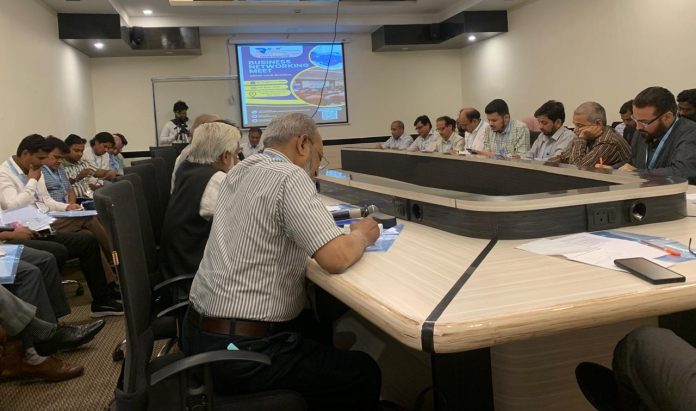
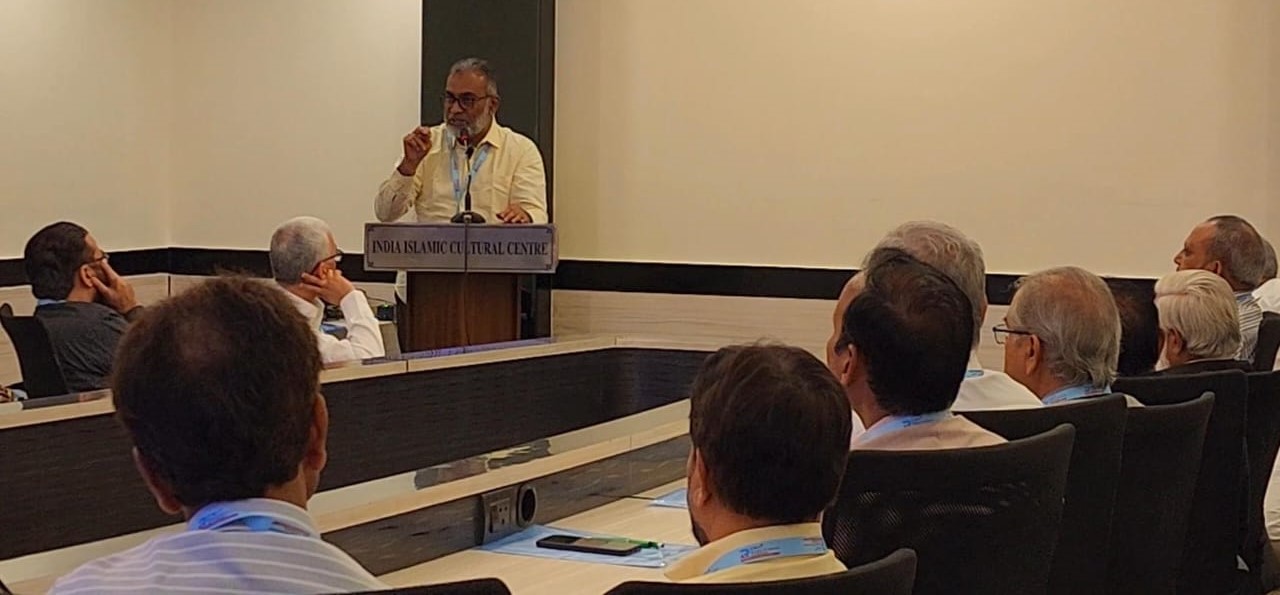
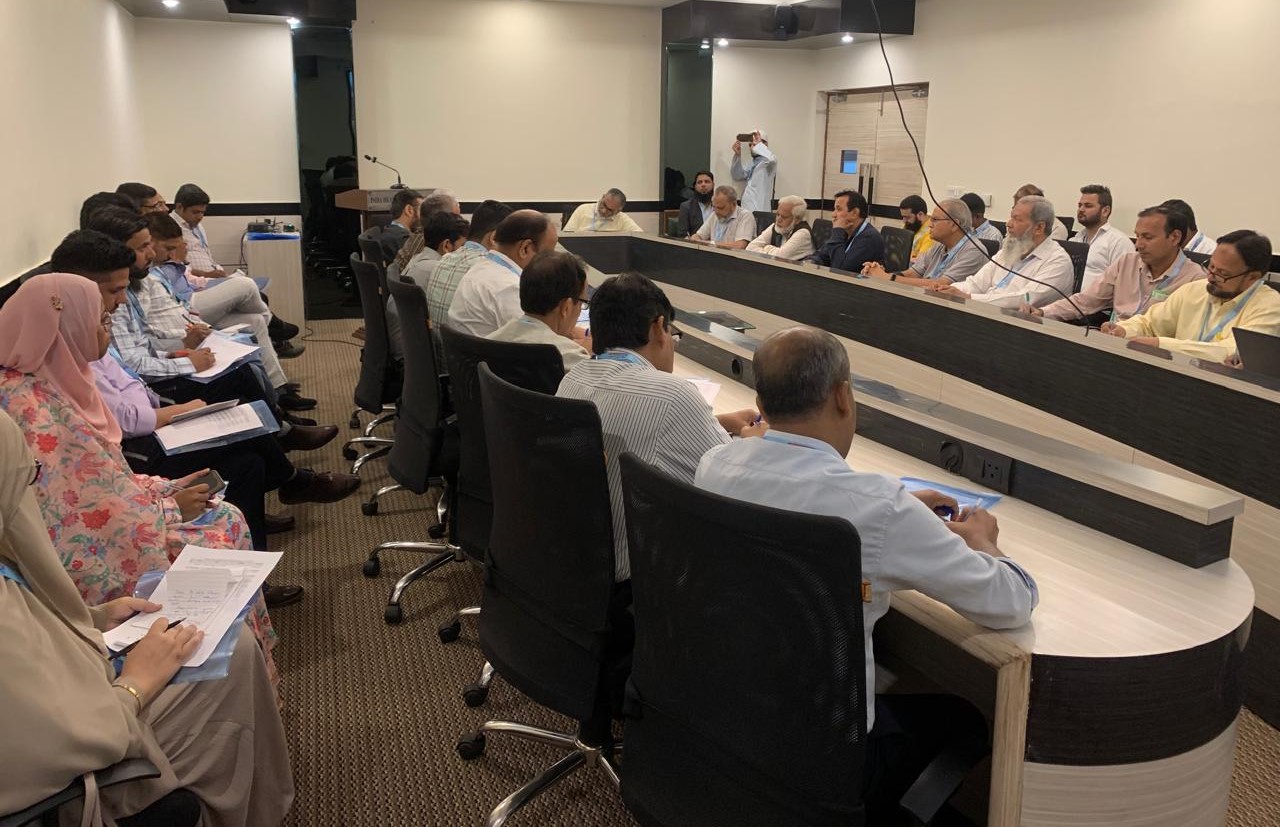
The Rifah Chamber of Commerce and Industry Delhi Chapter organized a business networking event at India Islamic Cultural Centre, here Saturday. The event saw the participation of various manufacturers, traders and service providers and industrialists from Delhi and nearby areas such as Ghaziabad, Noida, and Gurgaon.
The program commenced with a high tea session where attendees mingled and networked with each other over refreshments. Following this, the program began with recitation of the Quran, setting a spiritual tone for the event. Mr. Sultan Salahuddin, State President of Delhi, initiated the proceedings with his opening remarks.
Mr. Salahuddin Ahmad, ex-National Admin of Rifah, conducted a presentation on how manufacturers, traders and services providers could introduce their companies effectively during such networking events. All the manufacturers, traders and service providers presented their companies in accordance with the provided guidelines.
Mr. Sayed Ahmed Saood, a seasoned business coach and strategic management consultant, shared insights into the challenges of marketing and proposed solutions based on his extensive experience in the field. Mr. Rashid Kamal Lari presented his company, Larson Paint, as a sponsor of the event and highlighted its contributions.
The program concluded with a powerful speech by Mr. S. Ameenul Hasan, the Chairman of Rifah, who emphasized how Rifah is evolving into an eco-friendly platform for the benefit of manufacturers, traders and service providers. He also enlightened the audience about the leadership skills of Prophet Muhammad ﷺ and the successful principles of business in Islam.
Mr. Salimullah Khan, Ameer Halqa Jamaat-e-Islami Hind Delhi, expressed gratitude to all participants and the Rifah Delhi team for organizing the event successfully.
The business networking meet facilitated valuable interactions among manufacturers, traders and service providers, providing them with insights, networking opportunities, and a platform to showcase their businesses. It also underscored Rifah’s commitment to fostering a supportive and environmentally conscious business environment.
source: http://www.radiancenews.com / Radiance News / Home> Latest News / by Radiance News Bureau / May 06th, 2024
For the unversed, Rooh Afza was originally created by a Unani hakim as a herbal concoction to beat the heat, however, it went on to become a staple across India and Pakistan.
Hakim Hafiz Abdul Majeed is the founder of Hamdard that created Rooh Afza as a herbal drink that would help people stay cool in the summer.
Hakim Hafiz Abdul Majeed’s education
Born in 1883, Hakim Hafiz Abdul Majeed studied the origin of Urdu and Persian languages. He went on to acquire the highest degree in unani system of medicine.
Hakim Hafiz Abdul Majeed’s career
In 1906, Hakim Hafiz Abdul Majeed decided to set up a herbal shop at House Qazi in Delhi. In 1920, his small shop turned into a production house. Selecting herbs and syrups from traditional Unani medicines, Hakim Hafiz Abdul Majeed created a drink to fight heat strokes – He named it Rooh Afza, which in Urdu means ‘something that refreshes the soul.”
In 1910, an artist called Mirza Noor Ahmad prepared the labels of Rooh Afza in several colours. It was printed under special arrangement by the Bolton Press of the Parsees of Bombay (Mumbai) since there were no coloured printers at that time.
Journey of Rooh Afza
The partition of India in 1947 played a role in the journey of Rooh Afza. Hakim Abdul Majeed’s eldest son decided to stay in India, but his younger brother Mohammad Saeed wanted to live in Pakistan. He started Hamdard from two rooms in Karachi and in no time the business flourished. As per Sadia Rashid, Hakim Mohammad Said’s daughter, her father gifted the business to the people of Bangladesh after their independence in 1971.
Having said that, Rooh Afza gained more popularity in India. The bottles were deigned in Germany and were initially introduced in a glass bottle, but was later changed to plastic. In 2019, Rooh Afza faced shortage in supplies owning to the lesser availability of herbs needed to make the drink.
Other brands under Rooh Afza
Over the years, Rooh Afza launched products like Pachnaul, Safi, Rogan Badam Shirin.
source: http://www.financialexpress.com / Financial Express / Home> FE Leisure> Business News> Lifestyle / by FE Lifestyle / May 13th, 2023
She is the daughter of billionaire Rafique Malik, the company’s chairman. Her grandfather, Malik Tejani, founded it in 1955 in Mumbai. Farah has guided Metro Shoes into a new era of modern retail. The company’s brands include Mochi, Metro, and Walkway.
(Image source: LinkedIn)
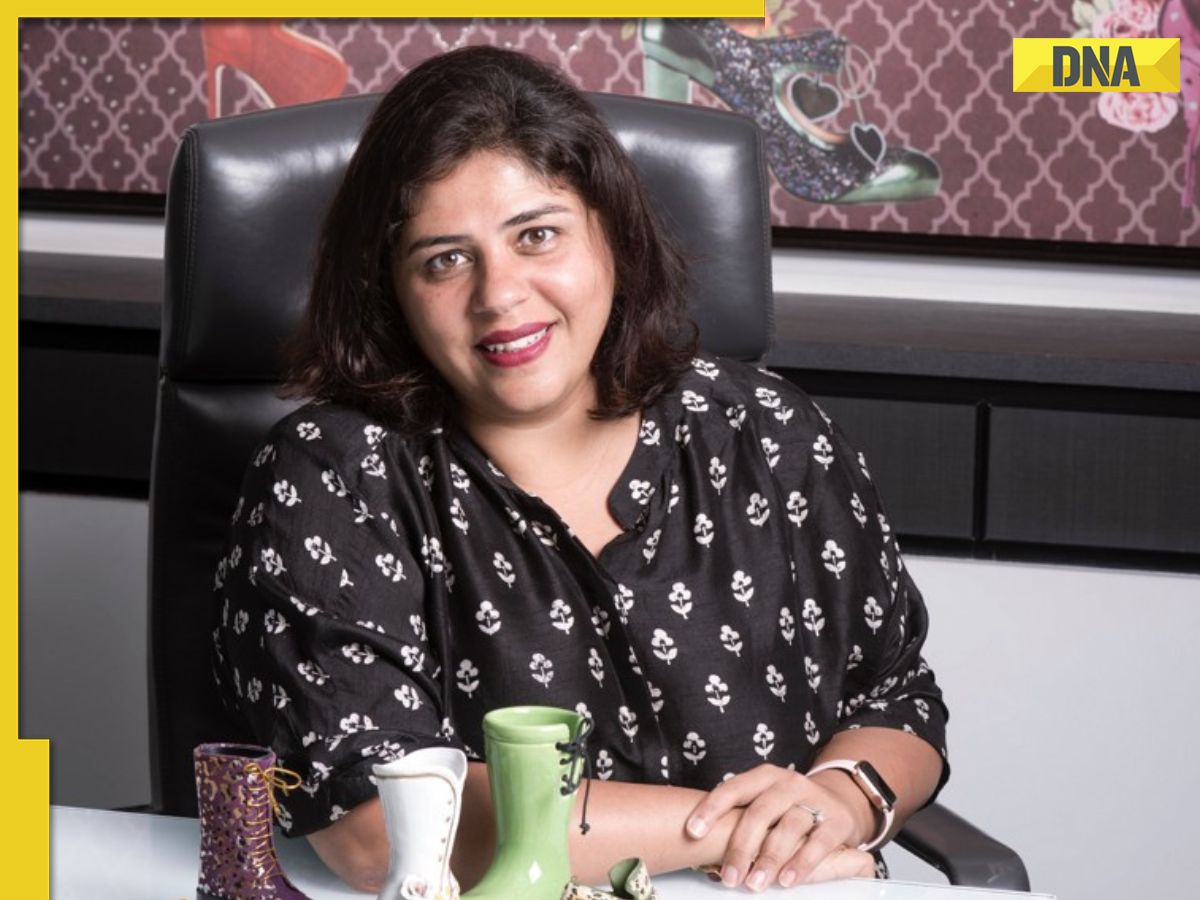
Eid Ul Fitr was celebrated throughout the country. Amid celebrations, you may be left wondering if you are asked about the wealthiest Muslim woman in the country. The name of the country’s richest Muslim woman is Farah Malik Bhanji. She is the managing director of the Metro brand, which sells premium shoes. Her net worth is more than Rs. 26000 crore. Farah Malik plays an important role in giving the Metro brand a new identity.
She is the daughter of billionaire Rafique Malik, the company’s chairman. Her grandfather, Malik Tejani, founded it in 1955 in Mumbai. Farah has guided Metro Shoes into a new era of modern retail. The company’s brands include Mochi, Metro, and Walkway.
As of December 8, the company’s market capitalisation was Rs 35,117 crore. Farah is the second of five daughters. His father, Rafique, has a real-time net worth of Rs 21697 crore as of 12 April.
Farah has more than 20 years of experience in the footwear industry. She has played a key role in reimagining the company for the new era. She began her career in marketing before moving on to revamp Metro Brands Limited’s technology roadmap and supply chain. The company was listed in December 2021. The late billionaire investor Rakesh Jhunjhunwala’s wife, Rekha, owns a minority stake in Metro Brands.
She pays close attention to detail, is well-versed in business, and has a sense of style. The footwear company has experienced growth for both the company and its employees under her leadership. She has played a crucial role in forging connections with international companies like Skechers, Crocs, and Clarks in addition to forging close bonds with more than 250 reliable vendors. She contributed to the network’s growth from 100 stores in 2010 to 598 locations across 136 Indian cities.
At the close of trading on Wednesday, Metro Brands Ltd. saw a rise to Rs. 1058. Rs. 1,440.45 is the stock’s 52-week high level, and Rs. 784.45 is its 52-week low. Metro Brands’ shares opened at Rs 1044 at the start of the trading session on Wednesday. Subsequently, it increased by over 20 rupees, closing at 1058. The company cap is of Rs 28,773 crore.
source: http://www.dnaindia.com / DNA / Home> Business / by Varnika Srivastava / April 12th, 2024
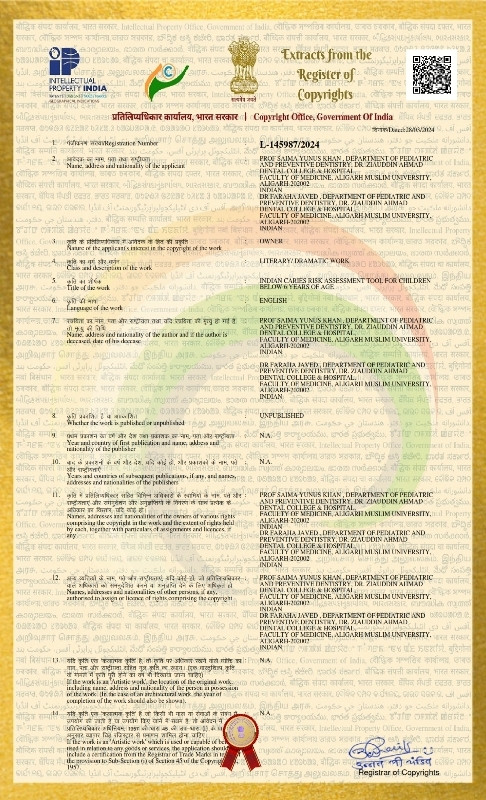
Prof Saima Yunus Khan, Chairperson, Department of Pediatric and Preventive Dentistry, Dr. Z.A. Dental College, Aligarh Muslim University has been awarded the Copyright by the Government of India for her original innovative work on an evidence based Indian Caries Risk Assessment tool for the children up to 6 years of age.
She started to work on the project in 2021, on receiving the John Clarkson Fellowship from the Prestigious International Association for Dental Research.
Being the first Indian to receive this fellowship, she worked in collaboration with Dr. Gerald Niznick, College of Dentistry, Rady Faculty of Health Sciences University of Manitoba, Canada.
According to Dr. Saima, the CRA tool would be beneficial to the Indian children as it addresses the risk factors of early childhood caries of Indian preschoolers. It’s a small compact tool form which can be used with ease by the masses in hospital or field settings.
The Dean, Faculty of Medicine and the Principal, J.N. Medical College, Prof Veena Maheshwari, and the Principal, Dr. Z. A. Dental College & Hospital, Prof R.K. Tewari congratulated Prof. Saima on her exemplary achievement.
source: http://www.amu.ac.in / AMU, Aligarh Muslim University / Home> Public Relations Office (headline edited & additional pix edited) / April 02nd, 2024
It was December 2001. I was at Dr Rafiq Zakaria’s beautiful, book-lined study at Cuffe Parade house in South Mumbai. In that spacious room Allama Iqbal vied for space with William Wordsworth and Mirza Ghalib sat alongside Shakespeare. World religions and their prophets and pundits were there in plenty. So were heroes and heroines of India’s freedom struggle. Present also were a few villains amidst a pantheon of popular leaders. Muhammad Ali Jinnah could not have been absent. He was there too.
In fact, Jinnah those days was in the intellectual air on both sides of the Indo-Pak border. The Outlook magazine had sent Dr Rafiq Zakaria’s book on Jinnah ‘The Man Who Divided India’ to noted Pakistani journalist Najam Sethi for review and he had panned the book. In the review Sethi had also suggested that Dr Zakaria should have heeded advice of his wife Fatma Zakaria who had tried to stop him from wiring the book, suggesting, “I think you should leave Jinnah alone for a while.” Dr Zakaria had written a rejoinder to Sethi’s piece and explained that he could not help but write about a man responsible for not just dividing India but breaking the social cohesion of the subcontinent Muslims. First, Muslims were divided between two countries–India and Pakistan. Subsequently, a part of Pakistan broke away, leaving Muslims divided in India, Pakistan and Bangladesh. The blood-curdling riots that accompanied these divisions had left Dr Zakaria deeply disturbed and could not rest till he took the grief off his chest.
While he gave an interview to me for the ‘Indian Express” on why he wrote this book and the debate it had generated, he told his office staff that he would not entertain any telephone calls or visitors for the next one hour. Dr Zakaria was holding forth forcefully in the closed room when unexpectedly and suddenly the door opened and Fatma Zakaria, in yellow salwar-kameez clutching a page, breezed in. “The secretary is so terrified after you asked her not to disturb you that she pleaded with me to come. This needs your signature and has to be faxed urgently,” Fatma said, got the paper signed and left quickly.
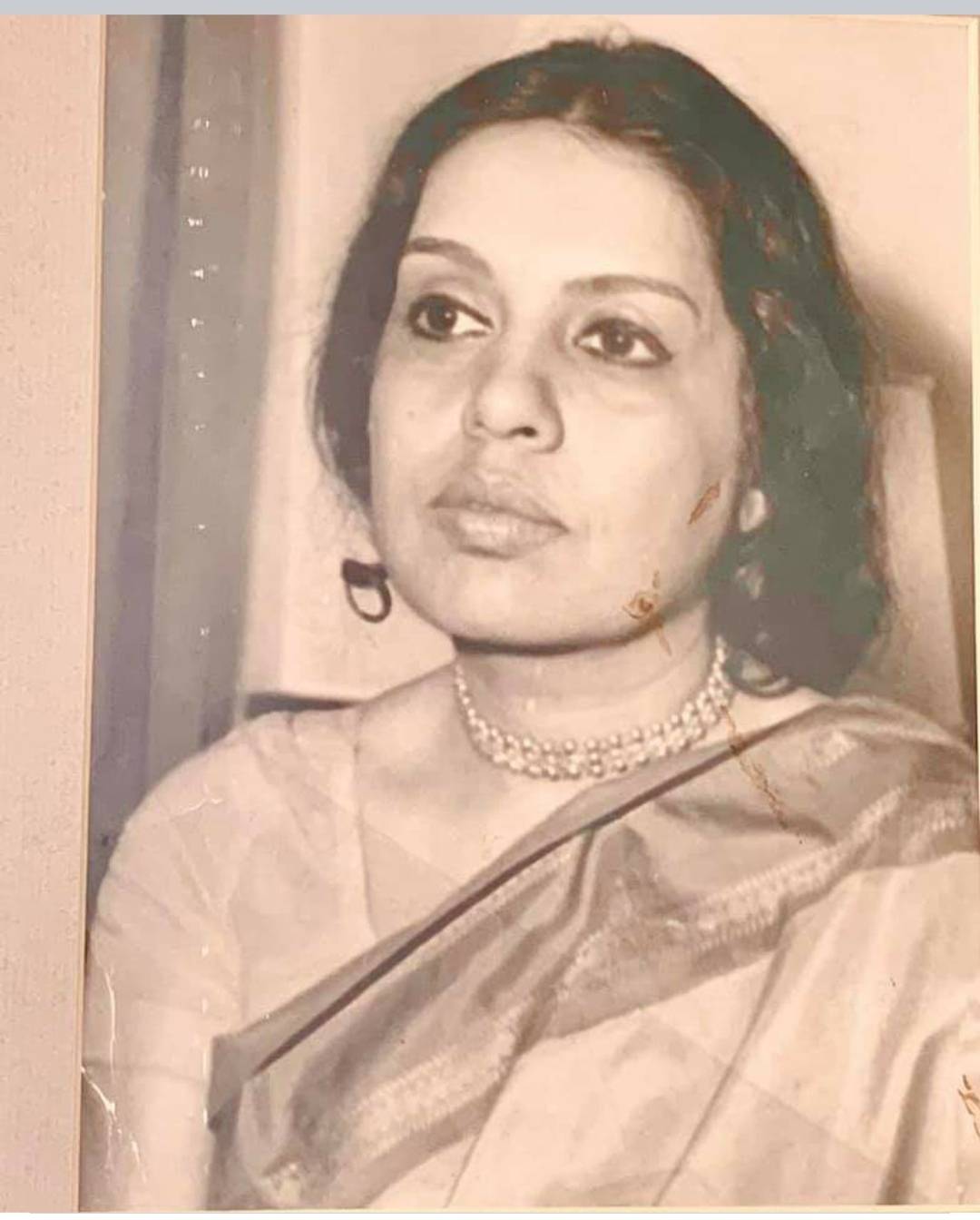
The Zakarias, husband and wife, complimented each other. One half left in 2005. The better half departed yesterday. She was 85. Her famous son, US-based author and Television anchor Fareed Zakaria couldn’t have encapsulated his feelings in a tweet better than this: “My mother, Fatma Zakaria, passed away last night at 85. She lived a long, rich, eventful life, with children and grandchildren whom she adored. She loved this photograph.” The photograph that I use with this essay is the one Fareed Zakaria tweeted. She is survived by, apart from Fareed, her son Arshad Zakaria and step son Mansoor Zakaria and step daughter Tasneem Mehta Zakaria.
Life was never the same again in Mumbai after Dr Rafiq Zakaria had exited. Life at the beautiful educational campus Dr Rafiq Zakaria built in Aurangabad will never be the same again after Fatma Zakaria’s departure. After Dr Zakaria’s death in 2005, Fatma had stepped in to carry on the educational legacy her famous educationist, politician and Islamic scholar husband had left behind.
As you enter the green campus, a sense of gratitude for the Zakarias grips you. For years, Dr Zakaria and then his wife Fatma nursed this seat of learning, endowing it with institutions of repute. Most politicians use their constituencies to scale heights and abandon them once they leave politics and walk into sunset. Few remain clung to their constituencies till they die. Dr Rafiq Zakaria belonged to the second category. “He is the architect of modern Aurangabad and Mrs. Fatma Zakaria was a big pillar of support to him. I don’t think Dr Zakaria could have done so much in the fields of politics, education and scholarship without her,” says eminent Urdu scholar and linguist Prof Abdus Sattar Dalvi who have known the Zakarias for the last five decades. Prof Dalvi had also translated Dr Zakaria’s seminal work Iqbal: Poet and Politician in Urdu.
Fatma was Dr Zakaria’s first reader and critic too. With their children flown out of the nest and into the wider world where they planted victory flags on as varied fields as Investment Banking and Journalism, it was Fatma who provided the much-needed inputs as well as emotional support to Zakaria who heads so many institutions and i wrote so prolifically till his end.
Fatma had worked under legendary editor and ‘dream boss’ of every fledgling journalist, Khushwant Singh, and knew how to curb verbosity in a sentence and straighten a complex paragraph. In book after book that Dr Zakaria churned out, he acknowledged the unpaid services of this able, inhouse editor. She knew Urdu too and could write on arts and literature with as much felicity as she could do political pieces. The biggies she had interviewed included Indira Gandhi, Margaret Thatcher and Jaya Prakash Narayan.
Bachi Karkaria, M J Akbar, Bikram Vora, Jiggs Kalra, Badshah Sen and Ramesh Chandran were her contemporaries when they worked with “The Illustrated Weekly of India” under the stewardship of Khushwant Singh. When I informed Akbar about Fatma’s death yesterday, he reacted with a few words: “What a tragedy. I am saddened.” Akbar was so close to the Zakarias that once I heard him saying, “I feel adopted by the Zakarias.” Perhaps no book launch of Dr Zakaria–and he had at least one or two every year—was held without Akbar as one of the speakers. The speed with which Dr Zakria wrote books, published and launched them left us youngsters amazed. I once joked when he informed me about the launch of yet another book: “Dr Sahab, now I have left count of the number of your book launches and book readings I have attended.” This couldn’t have been possible without the meticulous planning Fatma Zakaria did and tireless support she provided.
It was the launch of Zakaria’s book ” Indian Muslims: Where Have they Gone Wrong?” at the Nehru Centre in Mumbai. The 900-odd capacity auditorium was houseful with young college students (Dr Zakaria and, Fatma after him, was chairperson of the Maharashtra College in Mumbai) occupying a substantial number of seats. As always, Fatma Zakaria didn’t figure among those who graced the stage. When Akbar rose to speak, he inquired about Fatma Zakaria who was seated among the audience. Akbar requested her to come on stage. She refused and was seemingly embarrassed for being invited to the stage. Leaving her to where she felt comfortable, Akbar went on to say: “It is only Dr Rafiq Zakaria who can turn a book launch into a public meeting.”
A couple of years after Dr Zakaria’s death, Islamic scholar and secretary general of the Wisdom Foundation, Dr Zeenat Shaukat Ali, and I were in Aurangabad to participate in a seminar political scientist Dr Zaheer Ali had organized. Historian and ex-VC of Jamia Millia Islamia Prof Mushirul Hasan too had flown in from Delhi. After the seminar, Zeenat Shaukat Ali and I went to see Fatma Zakaria in her office. She was in fine fettle, command of things and ran the show meticulously. We chatted for a while and then she told us not to leave without visiting Dr Sahab’s grave on the same campus.
Zeenat Shaukat Ali and I walked down the paved pathway and reached a small patch of land where Dr Zakaria’s open-to-sky grave squats. With several couplets of Allama Iqbal adorning the place, it resembles a Sufi saint’s last resting place. After a long, eventful life, Fatma Zakaria joined her husband. They will be there till the creator calls them up, along with all of us, on the Judgement Day.
source: http://www.timesofindia.indiatimes.com / The Times of India / Home> India / by Mohammed Wajihuddin in Beyond the Burqa, India, TOI / April 07th, 2021
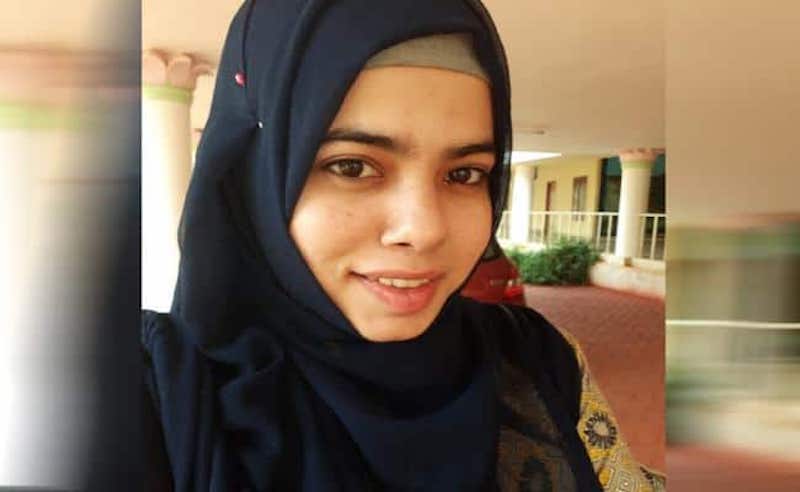
Our Prime Minister Narendra Modi fondly refers to girls as Bharat ki Beti. One such Bharat ki Beti Uzma Fatima, 26, an assistant engineer at the Srisailam Power Plant in the Telangana State left a blazing trail of bravery as she saved 4 of her colleagues from the fire reportedly caused due to short circuit a few days ago.
Modi also says: Beti Bachao, Beti Padhao (Save girl child, educate girl child). Young Hyderabadi Uzma’s bravery can make us say: Beti Padhao, Beti Bachaati (Educate girl child, she will save you)!
Thousands of girls have been raped and burnt to death. Many others have been burnt to death for dowry. But when girls get a chance, they save the families and the nation. Uzma Fatima was a notch higher in the sense that she saved those 4 colleagues, who were not even her own family. She put humanity first!
Uzma Fatima’s father Mohammed Zubair runs a footwear business at Chappal Bazar in Hyderabad. He has three daughters and a son. The elder daughter is married. Uzma Fatima was his second daughter and was unmarried. His youngest daughter is in the eighth standard.
Mohammed Zubair’s son Mohammed Minhaj who is a degree college student told that his family is in a state of shock due to the sudden tragedy. According to him, Uzma Fatima was working in Srisailam Power Station as an Assistant Engineer for the past four years. The CCTV footage of the fire accident shows that Uzma had come out of the fire engulfed place. According to the survivors, she saved 4 (four) of her colleagues. She went back to bring out the other assistant engineers trapped there. She could not come of the tunnel along with eight other colleagues. The brave engineers perished in the fire.
It may be recalled that women were finally given combat roles in the Indian Army after a long struggle. Uzma’s sacrifice proves that women are second to none in bravery. Women are our best bet to save our country within and on our borders. Rani Laxmi Bai of Jhansi proved her bravery in the battlefield against the British. Every girl in our country is a potential Rani Laxmi Bai. They prove it when they get chances. Our Prime Minister Narendra Modi may certainly be feeling proud about the sacrifice of Bharat ki Beti Uzma Fatima.
A fitting tribute to Uzma’s memory would be institute a gallantry award her name and also rechristen Srisailam Power Plant as Uzma Fatima Power Plant. It will not only generate electricity but it will also generate bravery for our future generations of girls to emulate.
The Telangana Chief Minister K. Chandrasekhar Rao (KCR) should pay tribute to Telangana’s daughter Uzma Fatima by naming a major road in Hyderabad after her. The Malakpet Railway Station near her residence can be named as Uzma Fatima Railway Station. Are Modi ji and KCR Garu listening?
source: http://www.beyondheadlines.in / Beyond Headlines / Home> Real Heroes / by Dr. Ahmed Moinuddin Siddiqui / August 25th, 2020
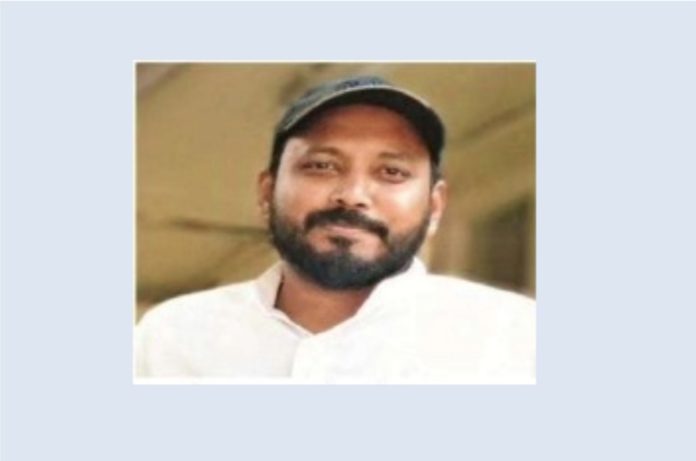
In a remarkable feat, Habibur Rahman, a resident of Malegaon, has outshined 9,000 candidates to clinch the top position in the recruitment exam conducted by the Maharashtra State Waqf Board. Rahman’s achievement underscores his exceptional performance and dedication towards his goal.
The recruitment exam, aimed at filling vacancies for district officers and junior clerks within the Waqf Board, witnessed rigorous competition from aspirants across the state. Rahman’s success stands as a testament to his hard work and preparation.
Expressing his gratitude, Rahman attributed his accomplishment to divine blessings and the unwavering support of his teachers, parents, and relatives. He highlighted the role of study material provided by Sheikh Qamaruddin, editor of Urdu House in Malegaon, in his exam preparation.
Having completed his education from Sheikh Abdul Wadood Primary School and Junior College in Malegaon, Rahman pursued higher studies at Loni’s Parvaraz World Engineering College. While working in Mumbai, he diligently prepared for competitive exams, a journey that has now culminated in his success in the Waqf Board recruitment exam.
Rahman’s stellar performance, in the written examination, is a testament to his academic prowess and determination. His achievement has not only brought pride to Malegaon but has also positioned him as a shining example of excellence in competitive exams.
With Rahman’s success, Malegaon celebrates yet another milestone, reinforcing its position as a hub of talent and academic excellence. As Rahman prepares to embark on this new chapter in his career, his success serves as an inspiration for aspiring candidates across the region.
source: http://www.radiancenews.com / Radiance News / Home> Latest News> Markers of Excellence/ by Zaina Aman / Radiance News Bureau / March 06th, 2024
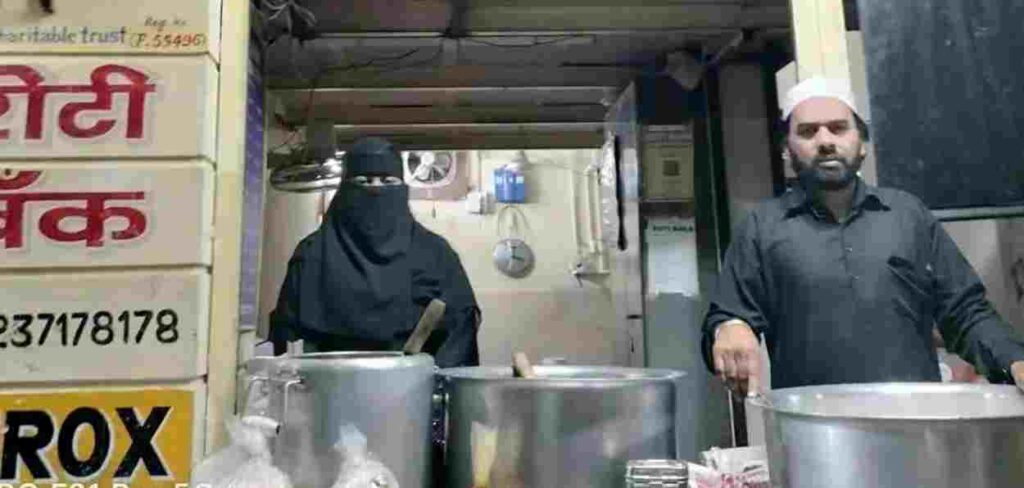
Following the Islamic principle that ‘if your neighbors sleep hungry while you are there, then you are not a true Muslim,’ neighbours in Pune Kondhwa in Maharashtra have replicated the initiatives of “Roti Bank” (bread bank) across many Indian cities and soup kitchens run by religious organization in the West, to address the hunger in the IT hub.
“Ark Charitable Trust’ was launched in August 2019 when many people in the city had lost jobs or livelihoods due to the COVID and hunger was rampant.
The trust was set up by a Kondhwah couple Aliya Shaikh and Nasir Shaikh from their house. The trust has been running a “Roti Bank” to and feeding widows and destitute women who are forced to wander around in search of food of alms to buy it.
Gradually, the Shaikhs realized that feeding people was a temporary solution to the problem of poverty and they started focusing on its root – lack of education. The trust got involved in educating children wandering on streets picking trash and leftover food and enrolled them in various schools
The trust has also provided job works to many widows whom they came in contact with while distributing food.
The Trust distributes food among people of all castes and religions.
Aliya Shaikh says she completed her 12th from Abeda Inamdar College in Lashkar area of Pune.
“I wanted to study, but I got married early, so I could not and then I realized what if I did not study? I can teach the girls living around me. My children today are doing well; studying in schools but what about those who do not have money? That is why I am trying to ensure that no one’s education stops due to financial constrains.”
Nasir also completed his schooling from Moledina High School in Lashkar area. Though he joined class eleventh he had to drop out due to financial problems at home. He started working as a commercial painter.
Nasir says, “Food satisfies the hunger of the stomach, while education satisfies the hunger of the mind. That is why both are considered basic needs.”
After seeing the work of Nasir and Aliya, a neighbor Ayesha Shaikh also joined them.
Ayesha, 65 has retired from a good position in a multinational company. Aliya, 30, works as a beautician and Nasir, 40, is a building contractor. All three work for ‘Ark’ while handling their business and family responsibilities.
In many weddings a lot of food is left over. To ensure this food doesn’t end in trash bins of the city, the Trust has displayed boards in key points in the city with this statement printed on these: ‘If you have leftover food, contact us… We will deliver this food to the hungry stomachs.’
‘Ark’ also gets financial support from various people and institutions on their auspicious occasions.
The three started this work from their homes without any funds. For the first eight days, Aliya used to cook food while Nasir distributed it. For the next eight days, Nasir took to cooking and Aliya to distribution. They would alternate their responsibilities ensuring that no single person has to take workload.
Aliya says, “We kept reaching out to the needy. As the work progressed, other people came forward to help us. Some started helping us financially, other by donating rations like oil, grains, etc.”
Soon many others more people had joined Ark.
Nasir empathises more with poor and says they are very sensitive. Instead of doling out food, the trio started a ‘Roti Bank’ to give dignity to those needing food.
Nasir says, “The work of ‘Roti Bank’ is not a one-day job. We cannot do one program in one month and then do the next program the next month. It has to be continuous work.
“It’s a challenge to feed their children and send them to school. But it’s also satisfying to see that someone’s life is changing because of you.”
“We have seen people cooking using paper as the only fuel. We have seen them struggling to satisfy their hunger,” says Ayesha. Food is provided to 50 families every day through ‘Ark’. Children’s education fees are paid.”
Aliya, Ayesha and Nasir deliver food to the people of Kondhwa, Bhagyodayanagar area. But the needy people of Hadapsar and Katraj area are not able to reach them every day, nor is it possible for Aliya, Ayesha and Nasir to take food boxes there every day.
So all three of them go to that area and distribute enough ration for at least two months on the basis of the given identity card. They also offer ‘Sehri’ and ‘Iftari’ facilities during Ramzan. A satisfied Ayesha says,
“It is a pleasure to be able to reach out and help the needy. Because of the work of Aliya and Nasir, I am associated with a good organization.”
source: http://www.awazthevoice.in / Awaz, The Voice / Home> Stories / by Chhaya Kavire, Pune / April 04th, 2024
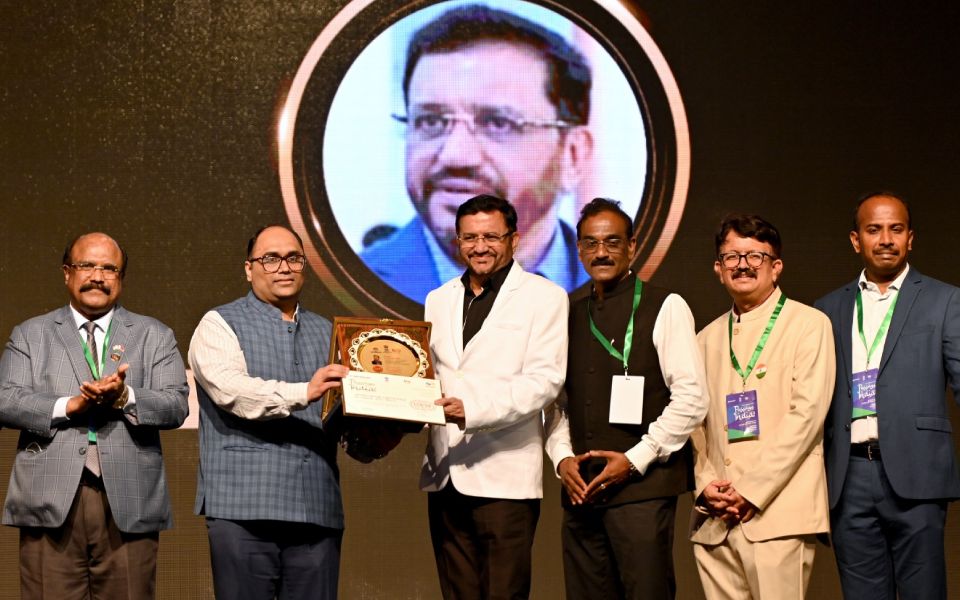
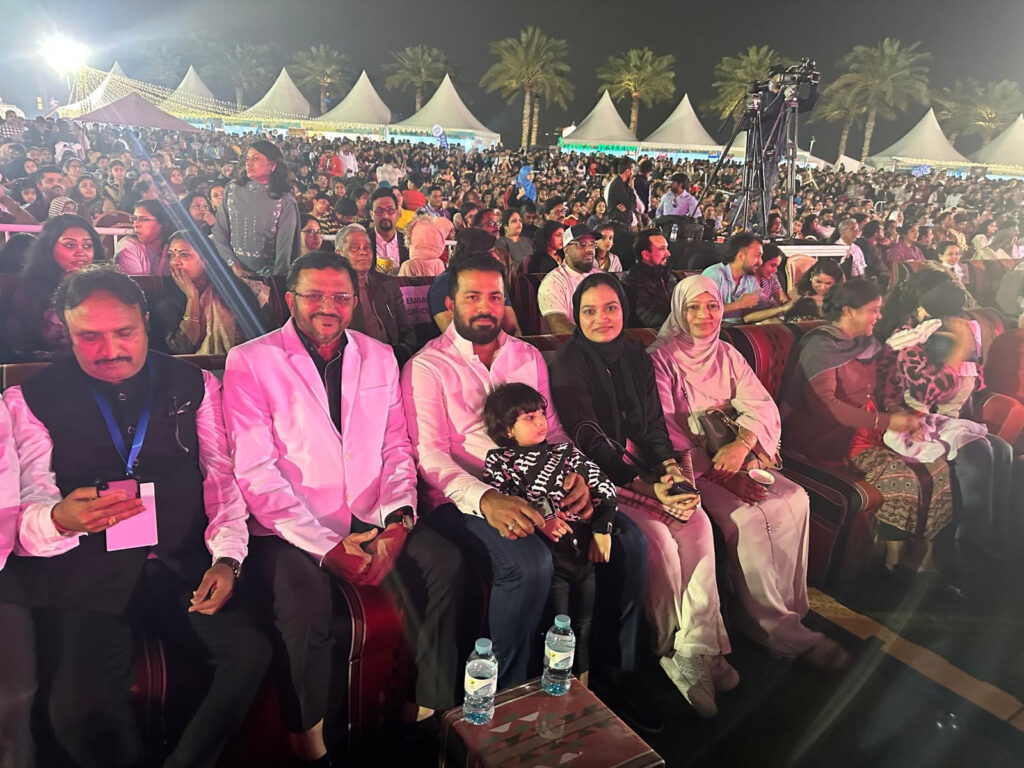
Abdulla Monu Moideen, a Non-Resident Indian (NRI) from Mangaluru in Dakshina Kannada district, Karnataka, was honored with the ICC Long Term Resident Award 24 by the Indian Cultural Centre (ICC) in collaboration with the Indian Embassy in Qatar.
The award ceremony took place at the Museum of Islamic Art Park in Doha, Qatar, where Abdulla Monu, the Managing Director of Euro Group in Qatar, was recognized for his outstanding community service during his over 48-year residency in Doha.
Expressing his gratitude, Abdulla Monu said, “I am deeply honoured to receive this recognition award from ICC Qatar and the Embassy of India. These past 43 years living in Qatar have been nothing short of amazing for me and my family. We are grateful for the opportunities and the wonderful life this beautiful country has given us.”
He continued, “I would like to express my sincere gratitude for this recognition, and I look forward to continuing to contribute to this great nation. Thank you all, and Insha Allah, we will have more wonderful times here.”
source: http://www.english.varthabharati.in / Vartha Bharati / Home> Gulf / by Vartha Bharati / March 11th, 2024

)