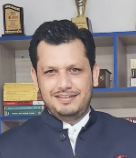
In Kashmir, a short Instagram reel posted last year unexpectedly drew significant attention. The video showed a man in a wheelchair presenting traditional Kashmiri clothing from his home. Its simplicity and warmth resonated widely, resulting in thousands of views within a short span. Behind this viral moment is Shahid, a 36-year-old resident of Gopalpora in Mattan, Anantnag, who now runs an online apparel venture he calls Adorn by Shahid.
Shahid’s life took a difficult turn early in childhood. He remembers being an energetic eight-year-old before sudden pain led doctors to diagnose him with a brain tumor. Although the surgery was successful, it left the left side of his body paralysed, forcing him to pause his studies. He recalls the aftermath as a period marked by long recovery and growing isolation. Many of the friends who once visited gradually stopped coming, which motivated him to pursue his education independently. Over several years, he completed his graduation privately.
As he grew older, Shahid hoped to find stability through a government job. He applied repeatedly, but because of his physical condition, his applications were consistently rejected. These setbacks eventually convinced him to look for a path he could shape himself.
Social media became that path. After observing others promote their work online, he decided to try something similar. With emotional and financial support from his family—especially his parents, siblings, and extended relatives—he launched his online business a year ago. What began as a small initiative gradually developed into a promising venture.
His Instagram account now showcases a variety of Kashmiri garments, including pherans, embroidered suits, shawls, and other traditional pieces. The viral reel that drew widespread attention introduced him to a much larger audience. Shahid says the feedback has been overwhelmingly positive. Since he works from home, managing orders and responding to messages online suits him well. Although he oversees the entire operation, his cousins and niece frequently help him film videos and create reels.
Despite limited mobility, Shahid’s outlook remains grounded and optimistic. He believes that difficulties can affect anyone, but what truly matters is having support and encouragement. For him, running this business represents independence, dignity, and the chance to express himself creatively. The same home where he once spent years recovering is now a workspace where he engages with customers from within and outside Kashmir.
Encouraged by continued online support, Shahid hopes to expand. He plans to open a physical store in the future so customers can visit and interact with him directly. Social media, he says, has given him opportunities he once couldn’t imagine, and he is determined to build on this momentum.
Shahid’s journey reflects resilience shaped by experience and determination. Rather than focusing on the limitations imposed by his childhood illness, he has chosen to rebuild his life through entrepreneurship, family support, and steady persistence.
source: http://www.muslimmirror.com / Muslim Mirror / Home> Positive Story / by Babra Wani / November 30th, 2025
At the India AI Impact Summit, which will be hosted by New Delhi in Feb. 2026, global tech leaders will also address issues surrounding the fear of job losses and equipping job-seekers to meet the needs of the changing job market, says the director, IndiaAI Mission.
The India AI Impact Summit to be held in New Delhi in February 2026 will witness deliberations between world leaders and top global tech leaders, leading to a formal declaration on ways to balance innovation and safety and the areas to be focussed for artificial intelligence innovation, Mohammed Y. Safirulla K., Director, IndiaAI Mission under the Union Ministry of Electronics and Information Technology, has said.
In an interview to The Hindu on the sidelines of a pre-summit conference here on Thursday, Mr. Safirulla said India can take pride in that it is the first country in the Global South to host the summit. New Delhi is hosting the fourth edition of the summit.
Objectives of summit
The objectives of the AI Impact Summit include democratisation of AI and bridging the AI divide, development of indigenous and local AI, aligning global standards and models for AI governance and innovation to needs of the developing world, harnessing AI for social good and development, and positioning India as a leading voice of the Global South on AI. The deliberations will take place across seven working groups, in which experts from over hundred countries will participate.
“We can see that there is a concentration of AI resources in certain countries in the Global North, especially when it comes to high-end data centres. There are biases which are coming out of algorithms because it is developed only from situations focussing on certain countries. We can also notice a language-wise divide since much of it is in English. One of our focusses will be on democratising AI so that no country in the Global South is left behind,” says Mr. Safirulla.
The summit will also address issues surrounding the fear of job losses and equipping job-seekers to meet the needs of the changing job market.
Training for youth
“We will look at how to train the youth coming into the job markets to be ready for AI-related jobs. Also, we need to see how we can use AI to increase the efficiency of the people who are already in the job markets working in various domains or how do we reposition them. We also have to nurture this intentionally in society so that we achieve economic growth,” he says.
Earlier this year, the IndiaAI Mission had opened up the MyGov platform to collect innovative ideas across sectors from researchers, startups, and students. Some of the innovation will be focussed on developing tools to authenticate AI-generated content, ensuring it’s traceable, secure, and free of harmful materials. Deepfake detection tools will also be developed to enable real-time identification and mitigation of deepfakes.
source: http://www.thehindu.com / The Hindu / Home> News> India> Kerala / by S R Praveen / November 20th, 2025
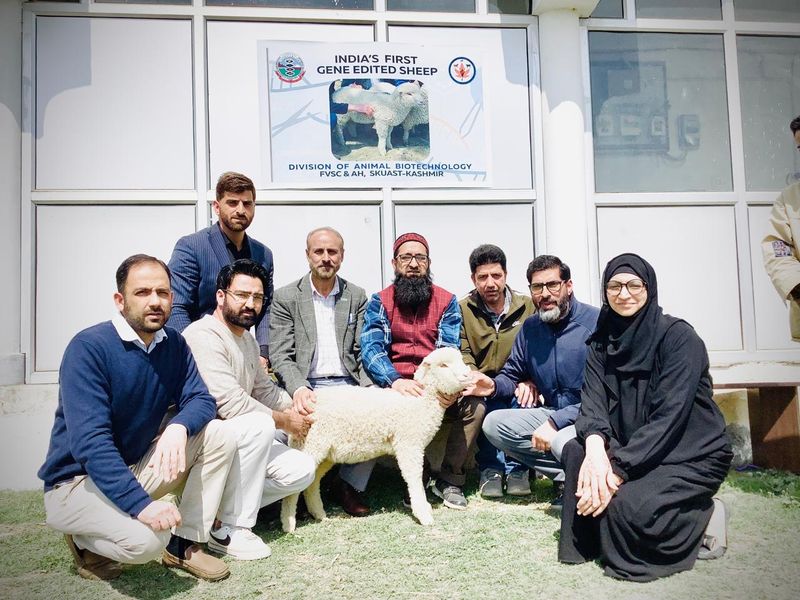
A team from SKUAST-Kashmir with country’s first gene-edited sheep.
In a landmark achievement in the field of animal biotechnology, Sher-e-Kashmir University of Agricultural Sciences and Technology (SKUAST), Kashmir, has successfully produced India’s first gene-edited sheep. University officials are calling it a “historic milestone” in genetic research and livestock development.
“This is a major breakthrough at the national level. It is the first of its kind in India, and everyone at the university is thrilled,” said Dr Riyaz Ahmad Shah, Professor of Animal Biotechnology, who led the expert team behind the project.
Dr Shah revealed that a female gene-edited lamb was born four months ago. The team specifically targeted the myostatin gene, which regulates muscle growth, making changes at the embryonic level. “The gene editing was carried out using CRISPR-Cas9 technology,” Shah explained. This revolutionary tool has broad applications in medicine, agriculture, and biotechnology. Importantly, he noted, “The edited sheep contains no foreign DNA,” distinguishing it from transgenic organisms and easing its path under India’s evolving biotech regulatory framework.
“All international biosafety protocols were strictly followed throughout the process,” he added.
The university views this achievement as a major step in placing India on the global map of advanced genome editing technologies. It also positions SKUAST-Kashmir at the forefront of reproductive biotechnology research.
Experts say the lamb’s muscle growth is expected to be enhanced due to the gene editing, although a few years of observation will be required to fully understand the differences between the edited lamb and a normal one.
Notably, Dr Shah and his team were also behind the creation of “Noori,” India’s first cloned Pashmina goat, in 2012. Noori lived for 11 years before passing away in 2023.
Vice Chancellor of SKUAST-Kashmir, Prof Nazir Ahmad Ganai, recently briefed Lieutenant Governor Manoj Sinha about the development. “This is not just the birth of a lamb, but the birth of a new era in livestock genetics in India,” Prof Ganai remarked.
University officials said the Lieutenant Governor praised the team’s efforts and their contribution to advancing scientific research in the region.
Looking ahead, the university plans to produce more gene-edited sheep. “We’re exploring possibilities in other areas like twin births and disease resistance,” said Shah. “For now, we are closely monitoring the lamb for safety and other parameters. Everything is normal so far.”
The team is also in the process of selecting a name for the pioneering lamb. “We’ll announce it soon,” Shah said.
source: http://www.tribuneindia.com / The Tribune / Home> Jammu & Kashmir / by Adil Akhzer / May 27th, 2025
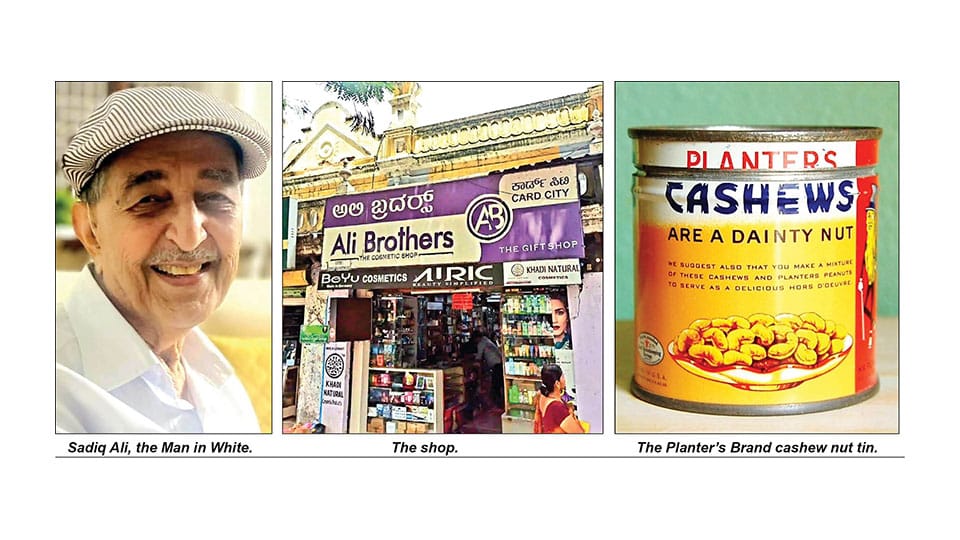
In the passing away of Mr. Sadiq Ali, the proprietor of Ali Brothers, last week, our city has perhaps lost one of its most long-standing icons, because his shop is one of the few shops that have stood almost unchanged, over the longest period of time, in the front façade of our iconic Devaraja Market building.
Out of the nearly seventy business establishments that stand in that row, only about a dozen still stand unchanged and because of my own long-standing familiarity with that place, I can name almost all of them and in the right order too. And, if I have got my observations right, while all the good old, surviving shop owners that I knew of there, slowly stopped showing up at their shops over the years, with the passage of time and passing away of their own good health, Mr. Sadiq Ali was the only shop owner there, who was present in his shop every day, the longest.
He once told me how his father had first started the shop in Mercara and later established the present shop here as a branch and how the original one was wound up later, due to the difficulty the family faced in managing it.
Although I stopped visiting his shop many years ago because of the severe parking problem in the Devaraja Market area, I used to meet Mr. Sadiq Ali quite regularly at the meetings of the Alumni Association of the St. Philomena’s College where we both studied, although two full decades apart. He would never miss any of these meetings and over the past many years, he would be proudly introduced as the oldest alumnus showing up at them!
Riding his trusted blue and white Lambretta, he would be among the first persons to make an appearance at the auditorium and be among the last ones to leave, after shaking hands with all the others there. A most humble and soft-spoken man, he was so soft-spoken that you had to strive hard to hear him. But he stood out most for his two very unique attributes that remained unchanged, all through his life; his attire and his smile. He was always dressed in pristine white and he could never be seen without his disarming smile!
As far as I am concerned, I can safely say that I have known him all my life and I say this because my mother must have carried me in her arms into his shop while I was an infant, until I began to walk in there myself, holding her or my dad’s hand. That is how old my association is, with the man I’m writing about today. He was so close to our family that just a few months ago, he had come home to meet my mother and spend some time with her.
Ali Brothers was the place where we, like most other Mysoreans then, used to do almost all their shopping for soaps, toiletries, cosmetics, chocolates, greeting cards and some condiments too. Being an agent for vehicle insurance, until the advent of online insurance, Mr. Sadiq Ali was the man who used to manage all our vehicle insurance renewals.
He was so meticulous that he would maintain a record of the renewal dates of all his customers’ vehicles and he would call them up well in time, to seek their consent for renewal, which he would do and then personally deliver the policies to them.
Until a very similar store, Mohan Bhandar came on the scene across the road, in the year 1963, all the goodies, dear to my heart then, could only be found at Ali Brothers and nowhere else and these included Cadbury’s chocolates, Parry’s toffees, Kissan jams and tomato sauce, Polson’s butter, corn flakes and most of all, the Planter’s and Cocktail brand of salted cashew-nuts that came in a sealed tin, that had to be opened with its own key, soldered on its top!
In a most interesting arrangement, this slotted key used to peel off a narrow band of metal from around the tin that would leave its top as a very useable lid after the can was opened.
We still have a couple of those cans lying around in our estate house, as relics and memories of the good old days, gone by. While my parents used to keep coins in one of them, in the other, I used to store my spare stock of the carefully selected, round pebbles for the omnipresent catapult, that I would always have around my neck. And mind you, at that time, this contraption was not just omnipresent but my most omnipotent weapon too!
At the end of the day, when it was time for me to be put to bed, my dad had to take it off my neck and place it under my pillow along with its red ammo bag, before tucking me in and beginning his reading of that day’s bedtime story, from my huge collection of Read Aloud series of story books, which I have carefully preserved to this day!
It is a different matter that my state of wakefulness would never ever last through the full story, which invariably had to be continued the next day!
Falling asleep was so easy then, while I was a child and I often ponder over this blissful time, during the times when I lie tossing in my bed, on the few occasions when sleep eludes me now.
That is when I am reminded of Shakespeare who in Henry IV, says; O sleep, O gentle sleep, Nature’s soft nurse, how have I frightened thee, that thou no more will weigh my eyelids down and steep my senses in forgetfulness?
e-mail: kjnmysore@rediffmail.com
source: http://www.starofmysore.com / Star of Mysore / Home> Columns, Over a cup of evening Tea / by Dr K Javeed Nayeem MD / November 16th, 2025
The band is set to make its World Premiere debut at the Tanweer Festival on 21 November in Sharjah, United Arab Emirates.
Rahman earlier dropped the teaser of the band on his Instagram account, which shows the band members dressed in purple, with headscarves covering their hair | By special arrangement
New Delhi:
Academy and National Award-winning composer A R Rahman announced the launch of Rooh-e-Noor, a six-member all-women band, formed under the leadership of his daughter, Khatija Rahman. The band has been launched under Rahman’s KM Musiq audio label, with Kannika Urs heading the project.
Rooh-e-Noor is set to make its World Premiere debut at the Tanweer Festival on 21 November in Sharjah, United Arab Emirates.
Apart from Khatija, the ensemble comprises musicians Pooja Tiwari, Sana Aziz, Shaoni Mojumdar, Amina Rafiq, and Shifa Ruby. Tiwari and Mojumdar are the vocal trainers, Rafiq and Ruby will lead music supervision, and production will be carried out by Sana Aziz, Sarthak Kalyani and Nakul Abhyankar. Rooh-e-Noor means “Soul of Light”, and it has been created to focus on the idea that women’s voices are transformative and can heal, inspire, and uplift.
“Rooh-e-Noor isn’t just a band, it’s a light that connects hearts. Each of these women carries the confidence of modern artistry. Their collective voice is pure, powerful, rooted, and futuristic,” said AR Rahman.
Rahman earlier dropped the teaser of the band on his Instagram account, which shows the band members dressed in purple, with headscarves covering their hair. Khatija is the only member who has also opted to wear a hijab in the video.
A rare sight in the music industry
All-girl bands in India are still few in the music industry. Music producer Mikey McCleary created the band W.I.S.H in 2021, which released their first single Lazeez last year. The last time a girl band took over the Indian music scene was in 2002 when Viva was created.
But soon after its launch, band member Seema Ramchandani left, and the remaining members continued without her for another year.
Rahman’s band—a new step in the world of Indian girl bands, for its distinctive aesthetic—seeks to bring reimagined classics, film compositions, and spiritual renditions.
The teaser shows the girls performing the whirling dervish, a Sufi form of devotional dance. Earlier, Rahman spoke of his own spiritual journey as well as embracing Sufism and its influence on his life and music.
(Edited by Saptak Datta)
source: http://www.theprint.in / The Print / Home> Features> Around Town / by Shubhangi Misra / February 19th, 2025
Irshad Mirza, a prominent Kanpur leather industrialist and chairman of Mirza International, has passed away at the age of 95. Irshad Mirza had been ill for a long time. His death has sent shockwaves through Kanpur and the industry.
Kanpur:
Irshad Mirza, chairman of Mirza International, the country’s largest leather exporter, passed away at the age of 95. Irshad Mirza was ill for the past several years. He breathed his last on Sunday in a private hospital in Kanpur. As soon as the news of Irshad Mirza’s death spread outside the hospital, a crowd of people gathered at his residence in Civil Lines.
Irshad Mirza’s contribution to the leather industry can never be forgotten. He has been honored with several awards including Padmashree. Irshad Mirza was also called the pride of Kanpur. Irshad Mirza has also got his name registered in Forbes magazine.
Irshad Mirza founded Mirza International in 1979. Mirza International manufactures leather, finishing, and tanning. The leather produced by Irshad Mirza’s company was in high demand abroad. The leather produced by the company is exported abroad. He was also the former chairman of the Minority Commission. During this time, he contributed to the betterment of society. Irshad Mirza
His passing has caused a wave of mourning in Kanpur and the industry. He had a strong influence not only in the industry but also among social workers, political parties, and leaders. He also worked extensively for the betterment of society in Kanpur. He also taught how to work in the leather industry.
source: http://www.navbharattimes.indiatimes.com / Nav Bharat Times / Home> Hindi News (translated)> State> Uttar Pradesh> Kanpur / by Abishek Shukla / December 04th, 2022
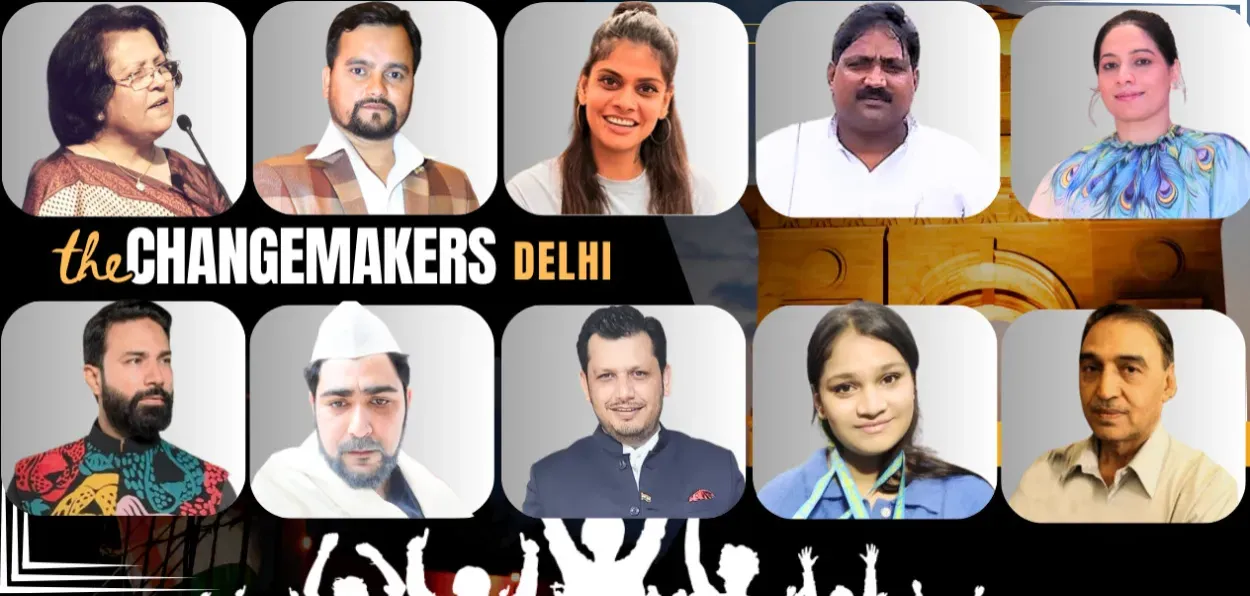
Delhi is the city of enterprising people, many of whom are migrants from smaller towns and cities. Many achieved successes in careers, businesses and professions — but some of them transcended the boundaries of success. They are trailblazers who give it back and inspire others. Here, we feature ten personalities of Delhi whose work makes them extraordinary and the Changemakers:
Sirajuddin Qureshi
Sirajuddin Qureshi a well-known industrialist who laid the foundation of India’s meat industry and food processing. Besides, he is one of the founders of the India Islamic Cultural Centre in Delhi. He is a trailblazer in modernising and scaling up the meat and food processing industry under the aegis of his Hind Group. He set up the first modern slaughterhouse and expanded his food business to 50 countries.
However, his lasting contribution to society is his relentless campaign for promoting education among the Qureshi clan, who were small-time meat sellers and traders. He persuaded his community members to pledge to promote the education of girls and women, opt for simpler weddings and encourage youth to join professions. His social campaign was so successful that today, only 20 per cent of the Qureshi men are meat sellers, and women have higher educational standards.
Azra Naqvi
Azra Naqvi wears many hats, but her core remains attached to Urdu, the language, she claims, she breathes, thinks in, and is in her DNA. Despite having lived a fulfilling life with her husband in many countries, dabbled in different professions and roles, her heart always pined for her favourite language. So, when she got a chance to work as a consulting editor with Rekhta Foundation, she made the most of the opportunity.
Besides fulfilling her passion for Urdu at Rekhta, Azra Naqvi found an innovative use of the WhatsApp application on her mobile. First, she connected 200 Urdu women writers to establish a first-of-its-kind literary organisation, Bainalakwami Nissai Adabi Tanzeem (BANAT). The BANAT has created a sisterhood of Urdu writers. So far, BANAT has published two anthologies based on WhatsApp communication, while a third one is in process. Using the WhatsApp group, Azra Naqvi collected theme-based writings of 40 women writers.
Siraj Khan
‘Yes, We Can’ stands as a reminder that unity and opportunity can transform lives. This non-profit organisation is dedicated to empowering communities, nurturing youth potential, and creating safe spaces for growth. At the heart of this movement is Shiraz Khan, a changemaker from Old Delhi, whose journey of self-discovery and resilience has shaped the ethos of “Yes, We Can”. The seeds of Yes We Can were planted in 2015. For Shiraz Khan and his co-founder, Nandish, the pandemic wasn’t just a crisis; it was also a wake-up call. They realised that people needed support not only in material terms but also in inspiration, guidance, and community.
From grassroots awareness drives to collaborations with youth-led groups, Yes We Can has quickly grown into a space where possibility meets action. Shiraz often says, reflecting the organisation’s focus on building resilience rather than dependency.
Sahar Hashmi
Mental health in India remains a taboo; words like depression, anxiety, or personality disorder are either laughed off or bring shame. Breaking this deafening silence is Sahar Hashmi, the 29-year-old woman from Delhi. She not only overcame her mental illness but also became a beacon of hope for others suffering in silence.
In April 2025, Sahar launched a campaign, “Breaking Stigma: One Mile at a Time”. She took a 2,779 km bike ride from Delhi to Kashmir. This journey was not just about crossing the geographical boundaries, but an emotional journey against the stigma and silence of society on mental health.
Asghar Ali
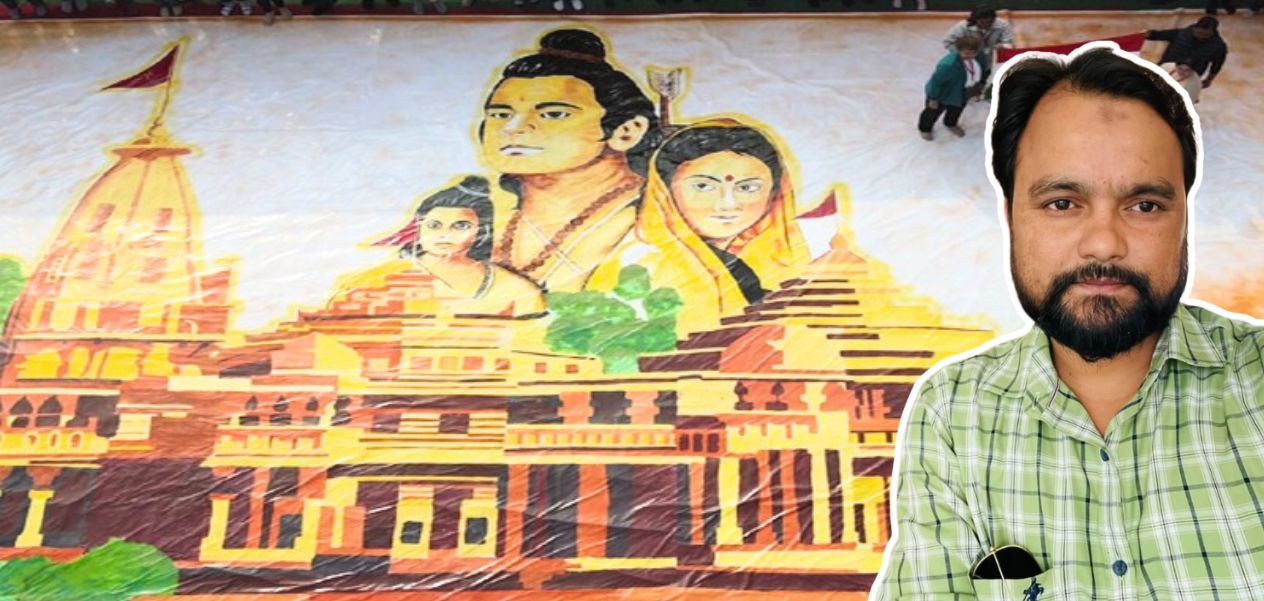
Delhi-based artist Asghar Ali is spreading the message of Ganga-Jamuni tehzeeb (Inclusive Indian culture) in society through his art. Asgar Ali, a Muslim by faith, has more than 50 paintings based on Lord Krishna and his life story to his credit.
Asghar Ali said that since his childhood, he was fascinated and influenced by Shri Krishna, colours of his peacock feathers and the flute. Asgar Ali’s major work is on the childhood form of Shri Krishna (Bal Krishna), his youth, his objectives in the Mahabharata war, as well as his leela (stories).
Asgar Ali had also organised an exhibition of his Krishna-themed paintings at the recently concluded International Geeta Mahotsav at Kurukshetra, Haryana, where people appreciated his work.
Amna Mirza
Amna Mirza is a trailblazing teacher who prefers holding her lectures outside her classroom amidst the pieces of history strewn around in Delhi. She not only makes teaching interesting, but also helps heritage and modernity coalesce. In the rat race of the modern world, Dr Amna Mirza stands tall as a teacher bringing about profound changes in people’s mindsets.
A political science professor at the University of Delhi. Dr Mirza’s journey defies the rigidity often associated with academia. She wears many hats with ease: educator, social worker, cultural custodian, and above all, a proud Delhiite who believes in nurturing the soul of a nation through its people and plurality.
Mohd. Meraj Rayeen
Md. Meraj Rayeen’s inclusive campaign to improve the conditions of indigenous Pasmanda Muslims, who comprise approximately 80 per cent of the Muslim population, is shaping social change.
Rayeen says, “Politics alone cannot be the solution to every problem.” Based on this thought, he founded the ‘Pasmanda Vikas Foundation’ over a year ago. The organisation has undertaken substantial work to change the lives of people and instil new hope and confidence within the community.
This foundation is not into rhetoric in favour of Pasmanda Muslims’ rights on political platforms; It addresses issues such as education, health, economic empowerment, and social justice.
Meraj Rayeeen believes that the development of Pasmandas is possible only with the awakening and cooperation of the community members. but the entire Muslim society, especially the Ashraf class.
Uvais Ali Khan
Uvais Ali Khan is a successful Chartered Accountant and a changemaker whose journey stands as a beacon of determination and service to society.
He quit his job and started his own business in a small apartment in Laxmi Nagar, East Delhi. Borrowing from friends and banks, he began building not just a company, but a platform for change. Uvais believes in a simple but powerful idea: “Providing basic skills to an individual can open avenues for them to get a job. That single opportunity can change the life of a family for generations.
Adeeba Ali
Adeeba Ali’s life is a testimony to the power of the human spirit and willpower. The 17-year-old is not only a rising star in the world of para-shooting but also an inspiration to many others struggling with self-pity and helplessness.
Five years ago, Adeeba fell from the balcony of her house in Nizamuddin. Four years later, she stunned everyone with her stellar performance at the 26th National Shooting Championship held at the Madhya Pradesh State Shooting Academy, Bhopal, in December 2023.
Adeeba’s success is not just a story of winning two medals; it is a story of perseverance that transformed disability into a new identity, not a hindrance.
Syed Sahil Agha
Storytelling is associated with Sufis and Khanqahs; it’s a medium of the message of peace and love, which instils patriotism, unity, and religious harmony, and nurtures the Ganga-Jamuni (inclusive) civilisation. Keeping the tradition in mind, Syed Saahil Agha revived this art and gave it a modern context. Today, he is one of the most well-known names in the world of storytelling.
Syed Saahil Agha conducts storytelling programs in India and abroad. He says, “I realised that people prefer listening over reading, so I thought stories should be narrated so that the public can become familiar with the past and also learn lessons from it.”
He says his aim is not just to narrate stories but also to promote Indian civilisation.
source: http://www.awazthevoice.in / Awaz, The Voice / Home> The Changemakers / by Aasha Khosa / November 09th, 2025
Mangaluru, KARNATAKA / Kozhikode, KERALA / Dubai, U.A.E :
Shabana Faizal with her husband Faizal Kottikollon
New Delhi :
Mangalore-based Shabana Faizal has emerged as the youngest woman among India’s top 10 philanthropists, according to the EdelGive Hurun India Philanthropy List 2025.
She has donated ₹40 crore (approximately $1.5 billion) through the Faisal & Shabana Foundation to education, health, and social development.
Shabana Faisal’s journey from being raised in a small town in Mangalore to co-leading a global enterprise is about he hard work and ambition.
Her entrepreneurial journey began in 1995 as a retailer of unique, speciality and luxury products. After leading the company for eight successful years, she decided to team up with her husband, entrepreneur Faizal Kottikollon, and support him in running the world-class foundry, Emirates Techno Casting (ETC).
Shabana took charge of all human resources and administrative processes at ETC, where she created a significant impact in shaping the company’s business success.
In her role as Vice Chairperson of KEF Holdings, she is actively involved in guiding the business’s growth strategy across global markets. Deeply committed to social improvement, Shabana and her husband founded the Faizal & Shabana Foundation in 2007, with the vision of ‘Giving to Create Impact’.
At 53, Shabana’s work has placed her among some of the most influential women in India’s philanthropy world, including Rohini Nilekani, Kiran Mazumdar-Shaw and Bina Shah.
EdelGive Foundation, in collaboration with Hurun Research Institute, recently released the 12th edition of the EdelGive Hurun India Philanthropy List 2025.
The list honors India’s most generous individuals and families. Over the past three years, 191 philanthropists have donated a total of ₹10,380 crore, representing an 85% increase in contributions.
The education sector continues to lead as the top donor, receiving ₹4,166 crore from 107 donors.
Shabana is the mother of four children – Sophia, Sara, Zakaria, and Zarina – but continues to play an active role in business and philanthropy. Her work makes her one of India’s most influential female philanthropists, exemplifying how professional leadership and a commitment to giving can combine to create widespread social impact.
The EdelGive Hurun India Philanthropy List 2025 states that the top 25 donors contributed ₹50,000 crore in just five years, or an average of ₹46 crore per day. Mumbai leads in philanthropy, contributing 28% of total donations, followed by New Delhi and Bengaluru.
source: http://www.awazthevoice.in / Awaz, The Voice / Home / posted by Aasha Khosa / November 10th, 2025
Well-known Mangaluru-based entrepreneur and philanthropist Hashim Khan (45) passed away due to a heart attack in his native village in Uttar Pradesh on Tuesday.
Khan had travelled to his hometown to attend a family function when he reportedly suffered a massive cardiac arrest.
He is survived by his wife, three sons, and a daughter.
Having arrived in Mangaluru at a young age in search of work, Hashim Khan gradually built a successful business and earned wide respect in the city’s business circles. Beyond entrepreneurship, he was equally known for his acts of generosity and social commitment.
During the Covid-19 pandemic, Khan personally distributed food supplies and essential items to needy families, winning the admiration of many.
His untimely demise has left a deep void among the city’s business community and those who benefited from his charitable work.
source: http://www.daijiworld.com / Daijiworld.com / Home> Karnataka / by Daijiworld Media News Network – Mangaluru / November 05th, 2025
Karnire Town (Mangaluru Taluk, Dakshina Kannada District), KARNATAKA :
Padubidri:
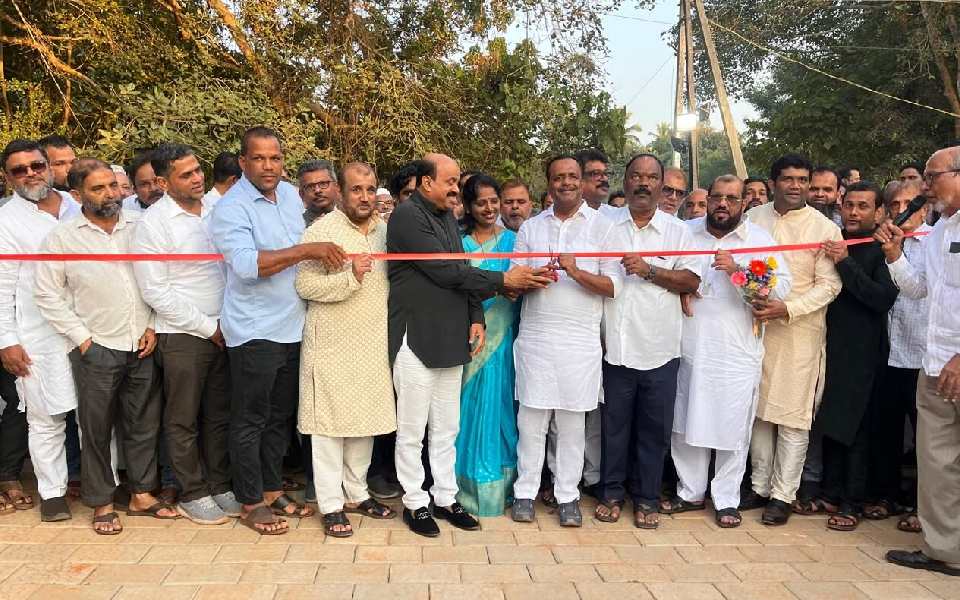
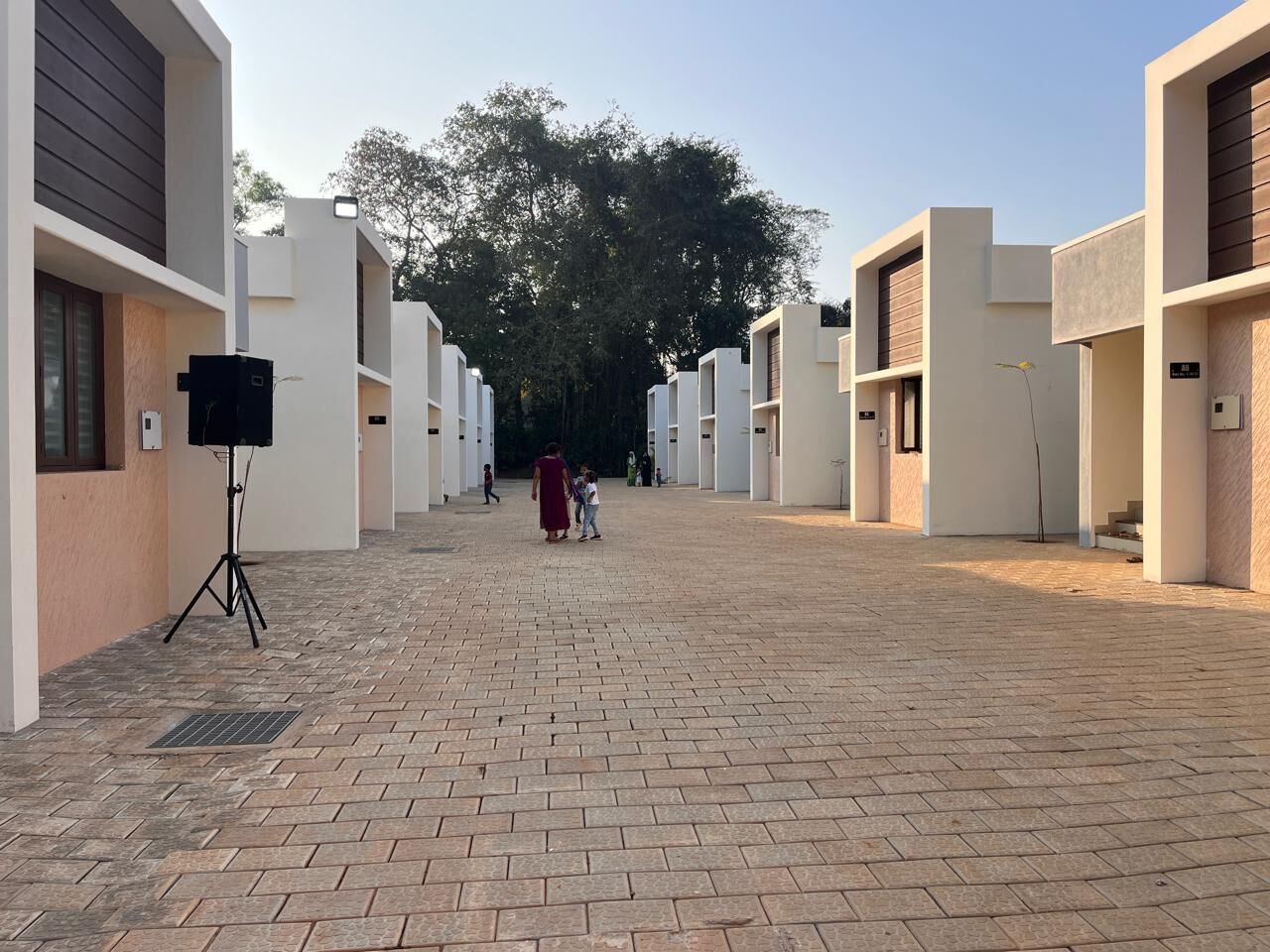
The Haji KS Sayeed Karnire Charitable Trust handed over seven newly constructed houses and laid the foundation stone for fourteen more in Karnire on Sunday.
Assembly Speaker U.T. Khader, who inaugurated the houses, highlighted the significant impact of this initiative, noting that while owning a home is a universal dream, many are unable to realize it.
He commended the project as a model of compassion and inspiration, emphasizing that such achievements go beyond financial capability and reflect a commitment to serving marginalized communities. He expressed hope for more transformative projects from the trust in the future and wished the beneficiaries a life of peace and harmony in their new homes.
Managing Trustee K.S. Sheikh, presiding over the event, detailed the trust’s ambitious project to construct 50 houses on two and a half acres of land. Each house, valued at approximately ₹20 lakh, is fully furnished with modern amenities, including a kitchen, hall, two bedrooms, and a washing machine. Sheikh explained that these homes are provided to deserving families in Karnire who lack proper housing.
He further revealed that with the foundation stone being laid for the construction of 14 more houses. There is a plan to build 50 houses on this land again, on two and a half acres of land.
Kaup MLA Gurme Suresh Shetty lauded the trust for its compassionate service in sheltering the underprivileged.
Former MLA Mohiuddin Bava praised the legacy of Syeed Haji’s hard work, which has turned his family into a beacon of service and harmony. He remarked that the family’s actions have become a model for communal unity.
Federation of World Bunts Vice President Karnire Vishwanath Shetty said, “Even though I have added Karnire to my name, the credit for taking the small village of Karnire to the world level belongs to the Syeed Haji family. Karnire is a town where everyone lives in harmony, regardless of caste, religion or difference. While Hindus have helped in the reconstruction of the mosque here, the Muslim community has also joined hands in the construction of the Hindu temple.”
Speaking in the opening remarks, K.S. Ashraf recalled the guidance of his late parents, expressed his gratitude for their teachings of kindness and service, which continue to inspire the family’s charitable efforts. He said, “We should do good to people. Our father used to preach to wish others well. Seeing his preaching and service, we have continued it. It is a great loss that our father and mother are not with us today. If they were here, they would have been happy now.”
On this occasion, U.T. Khader honored K.S. Sheikh on behalf of Karnire Juma Masjid and Karnire Khidma Young Men’s Association.
Abdul Jalil MH of Design Plus Architects, contractor H.N.G.C. Hussain, and supervisor Ramesh Kotian were also recognized for their contributions.
Karnire Juma Masjid Qatheeb Umarul Farooq Saquafi performed the dua. Family elders M.K. Abdul Hamid Mulki, K.S. Aboobacker were present.
Also present during the program were Balkunje Grama Panchayat President Mamata D. Poonja, Harishchandra Shetty, Karnire Juma Masjid President Muhammad Ali, Adv. Bhaskar Shetty, Kote Shekhabba Kannangar, T.K. Muhammad Kote Palimaru, Karnire Harishchandra Shetty, Khidma Youngmen’s President Khidma B.N, Ismail, K.S. Ashfak.
K.S. Ashraf delivered the welcome address, K.S. Abdul Rahim offered a vote of thanks, and Muhammad Ali Kammaradi moderated the event.
source: http://www.english.varthabharati.in / Vartha Bharati / Home> Karavali / by Vartha Bharati / October 05th, 2025