Category Archives: Indian Muslims in World War I and II (wef. July 09th, 2022)

Armistice Day: Remembering Forgotten Indian Heroes of WW1 Through Urdu Poetry

BRITISH INDIA :

The four years of the World War 1 saw the service of 1.3 million Indians, of whom 74,000 never made it back home.
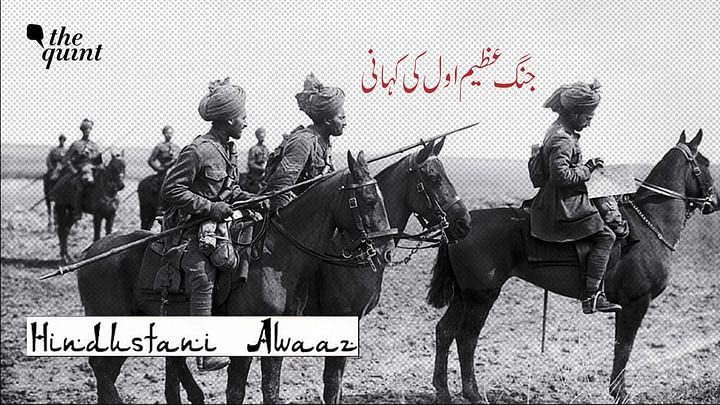
Armistice Day: Remembering Forgotten Indian Heroes of WW1 Through Urdu Poetry

The First World War , or the Great War as it is also called, raged across Europe and several war arenas scattered across the world from 28 July 1914 to 11 November 1918. These four years saw the service of 1.3 million Indians, of whom 74,000 never made it back home. For their families, the war was something they couldn’t quite understand.

Given the large-scale Indian involvement in a war that the majority of Indians could not fully comprehend, we shall once again look into the mirror of Urud to see how the poet viewed the momentous years of the Jang-e Azeem as the Great War came to be called in Urdu.

Several poets, lost in the veils of time and virtually unknown today, made interventions as did the more famous ones who continue to be well known though possibly not in the context of what they had to say about World War I.

Urdu’s Rendition of the Greatest Human Tragedy

Presented below is a sampling of the socially-conscious, politically-aware message of the poets of the times. Not all of these poets are well-known today nor is their poetry of a high caliber yet fragments of their work have been included here simply to illustrate how the poet had his finger to the pulse of his age and circumstance.

Let us begin with Sibli Nomani and his wryly mocking Jang-e Europe aur Hindustani that deserves to be quoted in full:

Ek German ne mujh se kaha az rah-e ghuroor

‘Asaan nahi hai fatah to dushwar bhi nahin

Bartania ki fauj hai dus lakh se bhi kum

Aur iss pe lutf yeh hai ke tayyar bhi nahin

Baquii raha France to woh rind-e lam yazal

Aain shanaas-e shewa-e paikaar bhi nahin’

Maine kaha ghalat hai tera dawa-e ghuroor

Diwana to nahi hai tu hoshiyar bhi nahin

Hum log ahl-e Hind hain German se dus guneh

Tujhko tameez-e andak-o bisiar bhi nahin

Sunta raha woh ghaur se mera kalaam aur

Phir woh kaha jo laiq-e izhaar bhi nahin

‘Iss saadgi pe kaun na mar jaaye ai Khuda

Larhte hain aur haath mein talwar bhi nahin!’

(Consumed with pride, a German said to me:

‘Victory is not easy but it isn’t impossible either

The army of Britannia is less than ten lakh

And not even prepared on top of that

As for France, they are a bunch of drunks

And not even familiar with the art of warfare’

I said your arrogant claim is all wrong

If not mad you are certainly not wise

We the people of Hind are ten times the Germans

Cleary you cannot tell big from small

He listened carefully to what I had to say

Then he said something that can’t can’t be described

‘By God, anyone will lay down their life for such simplicity

You are willing to fight but without even a sword in your hand!’)

That the Urdu poet was not content with mere high-flying rhetoric and was rooted in and aware of immediate contemporary realities, becomes evident when Brij Narain Chakbast declares in his Watan ka Raag (‘The Song of the Homeland’):

Zamin Hind ki rutba mein arsh-e-aala hai

Yeh Home Rule ki ummid ka ujala hai

Mrs Besant ne is aarzu ko paala hai

Faqir qaum ke hain aur ye raag maala hai

Talab fuzool hai kante ki phool ke badle

Na lein bahisht bhi hum Home Rule ke badle

(The land of Hind is higher in rank than the highest skies

All because of the light of hope brought forth by Home Rule

This hope has been nurtured by Mrs Besant

I am a mendicant of this land and this is my song

It’s futile to wish for the thorn instead of the flower

We shall not accept even paradise instead of Home Rule)

Poems Charged With the Spirit of Revolution

Similarly, Hasrat Mohani, in a poem called Montagu Reforms, is scathing about the so-called reforms that were given as SOPs to gullible Indians during the war years, which were mere kaagaz ke phool (paper flowers) with no khushboo (fragrance) even for namesake. The poem ends with a fervent plea that the people of Hind should not be taken in by the sorcery of the reforms.

Ai Hindi saada dil khabardar

Hargiz na chale tujh pe jadu

ya paayega khaak phir jab inse

Iss waqt bhi kuchh na le saka tu

(O simple people of Hind beware

Don’t let this spell work on you

If you couldn’t couldn’t take anything from them now

You’re not likely to get anything at all)

Josh Malihabadi who acquired his moniker of the shair-e- inquilab or the ‘revolutionary poet’ during the war period, talks with vim and vigour of the revolution that is nigh, a revolution that will shake the foundations of the British empire in his Shikast-e Zindaan ka Khwaab (‘The Dream of a Defeated Prison’:

Kya Hind ka zindaan kaanp raha hai guunj rahi hain takbiren

Uktae hain shayad kuchh qaidi aur torh rahe hain zanjiren

Divaron ke niche aa aa kar yuun jama hue hain zindani

(How the prison of Hind is trembling and the cries of God’s greatness are echoing

Perhaps some prisoners have got fed up and are breaking their chains

The prisoners have gathered beneath the walls of the prisons)

Satire, Pain and Passion Punctuate These Poems

The ever-doubting, satirical voice of Akbar Allahabadi— a long- time critic of colonial rule and a newfound admirer of Gandhi, shows us the great inescapable link between commerce and empire that Tagore too had alluded to:

Cheezein woh hain jo banein Europe mein

Baat woh hai jo Pioneer mein chhapey…

Europe mein hai jo jung ki quwwat barhi huwi

Lekin fuzoon hai uss se tijarat barhi huwi

Mumkin nahin laga sakein woh tope har jagah

Dekho magar Pears ka hai soap har jagah

(Real goods are those that are made in Europe

Real matter is that which is printed in the Pioneer…

Though Europe has great capability to do war

Greater still is her power to do business

They cannot install a canon everywhere

But the soap made by Pears is everywhere)

The great visionary poet Iqbal, who is at his most active, most powerful during these years, does not make direct references to actual events in the war arena;

nevertheless, he is asking Indians to be careful, to heed the signs in Tasveer-e Dard (‘A Picture of Pain’):

Watan ki fikr kar nadan musibat aane waali hai

Tiri barbadiyon ke mashvare hain asmanon mein

(Worry for your homeland, O innocents, trouble is brewing

The portents of disaster awaiting you are written in the skies.)

Adopting a fake admiring tone, Ahmaq Phaphoondvi seems to be praising the sharpness of the British brain in Angrezi Zehn ki ki Tezi (‘The Cleverness of the English Mind’) when he’s actually warning his readers of the perils of being divided while the British lord over them.

Kis tarah bapa hoon hangama aapas mein ho kyun kar khunaraizi

Hai khatam unhein schemon main angrezi zehn ki sab tezi

Ye qatl-o khoon ye jung-o jadal, ye zor-o sitam ye bajuz-o hasad

Baquii hii raheinge mulk mein sab, baqui hai agar raj angrezi

(Look at the turmoil and the bloodshed among our people

The cleverness of the English mind is used up in all such schemes

This murder ’n mayhem, wars ’n battles, cruelties ’n malice

The country’s garden is barren, with nothing but dust and desolation)

Towards Freedom and Fervour..

Zafar Ali Khan sounds an early, and as it turns out in the face of the British going back on their promise of self-governance, entirely premature bugle of freedom. While warning his fellow Indians to change with the changing winds that are blowing across the country as the war drags to an end, he’s also pointing our attention to the ‘Toadies’, a dreaded word for the subservient Indians who will gladly accept any crumbs by way of reforms in his poem Azaadi ka Bigul (‘The Bugle of Freedom’):

Bartania ki meiz se kuchh reze gire hain

Ai toadiyon chunne tum innhe peet ke bal jao

(Some crumbs have fallen from the table of Britannia

O Toadies, go crawling on your bellies to pick them)

In the end, there’s Agha Hashar Kashmiri who, in a sarcastic ode to Europe called Shukriya Europe, thanks it for turning the world into a matamkhana (mourning chamber), and for having successfully transformed the east into an example of hell.

Utth raha hai shor gham khakistar paamaal se

Keh raha hai Asia ro kar zaban-e haal se

Bar mazar-e ma ghariban ne chiraghe ne gule

Ne pare parwane sozo ne sada-e bulbule

(A shout is rising from the dust of the downtrodden

Asia is crying out and telling the world at large

On my poor grave there are neither lamps nor flowers

And not the wing of the moth or the sad song of the nightingale.)

(Rakhshanda Jalil is a writer, translator and literary historian. She writes on literature, culture and society. She runs Hindustani Awaaz, an organisation devoted to the popularisation of Urdu literature. She tweets at  @RakshandaJalil

This is an opinion piece and the views expressed above are the author’s own. The Quint neither endorses nor is responsible for the same.)

source: http://www.thequint.com / The Quint / Home> Voices> Opinion / by Rakshanda Jalil / November 11th, 2022
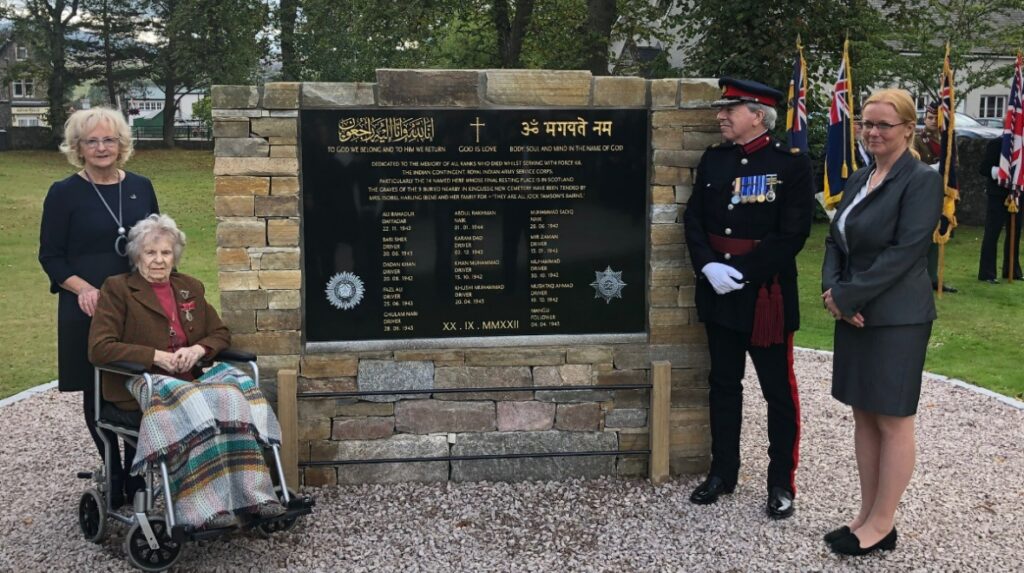
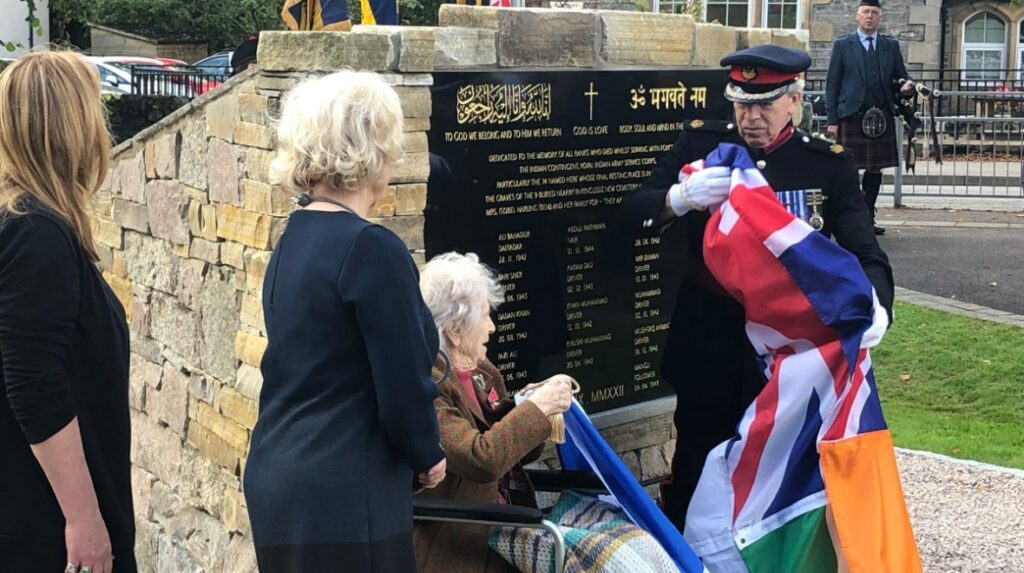
New memorial to Indian Army soldiers who died in Scotland unveiled

INDIA / SCOTLAND:

Nine soldiers from the Indian Army’s Force K6 died in the area after fighting with the British in World War I and II.

Monument: The memorial to the nine soldiers has been unveiled in Kingussie.

A memorial has been unveiled to commemorate a band of war heroes who served with the Indian Army and perished in the Scottish Highlands.

Nine soldiers were buried at a cemetery in Kingussie. The new monument stands prominently in the centre of the town.

People came from all corners of the UK for a pilgrimage to honour the men.

The Indian Army’s Force K6 was a transport unit that used mules to deliver vital supplies to frontline troops. It was despatched to various UK destinations.

The nine soldiers who died during training in the Cairngorms are remembered on the new stone-built tribute.

Among those attending the unveiling was 99-year-old Isobel Harling from Kingussie who had served in the Navy.

Isobel Harling tended the men’s graves for more than 70 years.

She tended the men’s graves for seven decades, influenced by kindly people who had done the same for her brother after he was shot down in Belgium.

Nasim Azad of the Muslim Council of Scotland, who travelled from Edinburgh for the ceremony, was thrilled to have met Isobel.

Ms Azad said: “She decided to take it upon herself to care for them with love but for no return – no return – for 70 years.

“For 70 years she took care of those graves, so it’s an absolute honour to have met such a wonderful, wonderful lady.”

Also attending the multi-faith event was Asif Hassan Sheikh of the Scottish Ahlul Bayt Society.

He said: “Thank you Scotland for looking after these sons who served so faithfully and gave their lives for the cause.”

Puneet Dwivedi of Hindus In Scotland said: “It’s very important to recognise the efforts of the soldier who gave their life for world peace.

“And I’m really impressed with Highland Council and the community here who built this memorial.”

He added: “It’s a changing world and this shows that all colours of people are the same and they’re honoured for their work.”

Memorial project officer Heather Taylor said: “The design was based on pulling together several aspects of faith, hope and charity – the charity that Isobel has shown, the hope that we have for the future tomorrow and the faiths that are represented here today.

“We’ve got an Islamic inscription from the Qur’an. We’ve got a Christian inscription and we’ve also got representation from the Hindu faith as well – all brought together under Isobel’s guidance.”

The men laid to rest at Kingussie New Cemetery are Ali Bahadur, Bari Sher, Dadan Khan, Fazl Ali, Khan Muhammad, Khushi Muhamm, Muhammad, Muhammad Sadiq and Mushtaq Ahmad.

The black granite stone monument is the UK’s first permanent memorial to all ranks of Force K6. It was engraved and adorned with gold leaf by Inverness monument makers Andrew Stewart and Son Ltd.

Craftsman Marc Bruce from Aviemore chose Indian sandstone and mixed shades of locally sourced Cairngorm granite.

Kingussie’s Am Fasgadh Regeneration Company was awarded £20,706 through a Highland Council investment programme to put towards the match-funded Force K6 memorial project.

Isobel Harling was awarded a British Empire Medal for her dedication.

Force K6 came from across India including the country now known as Pakistan.

They arrived in France in 1939 – with their mules – to provide animal transport for the Allies.

During Hitler’s infamous ‘Blitzkrieg’ one company was captured in Gerardmer. The others were evacuated with the British Expeditionary Force from Dunkirk and other ports.

After postings in England and Wales most of the companies ultimately arrived in the Highlands.

The 51st Highland Division remained with the French 9th Army to attempt to deny and delay Rommel’s advancing troops from further gains.

From June 1942 they had several camps in Badenoch and Strathspey from where they supported winter warfare training in the Cairngorm mountains.

The soldiers were popular in the local communities, helping on farms, playing with children, sharing cultural cuisine and demonstrating their flair for horsemanship.

After postings to other locations in the Highlands, they returned to India by early 1944.

Fourteen of the Force K6 men died in Scotland.

For outstanding duty in France, members of Force K6 received an MBE, an Indian Order of Merit, three Indian Distinguished Service Medals and one mention in despatch.

The British Indian Army contributed 1.5 million servicemen in World War I. A total of 74,000 died and up to 100,000 were injured.

In World War II, there were 2.5million service personnel – 87,000 of whom died and up to 150,000 were injured.

The soldiers were Hindu, Muslim, Sikh, Gurkhas, and Indian Christians.

source: http://www.news.stv.tv / STV News / Home> News> Highlands & Islands / by Iain Ramage / September 21st, 2022

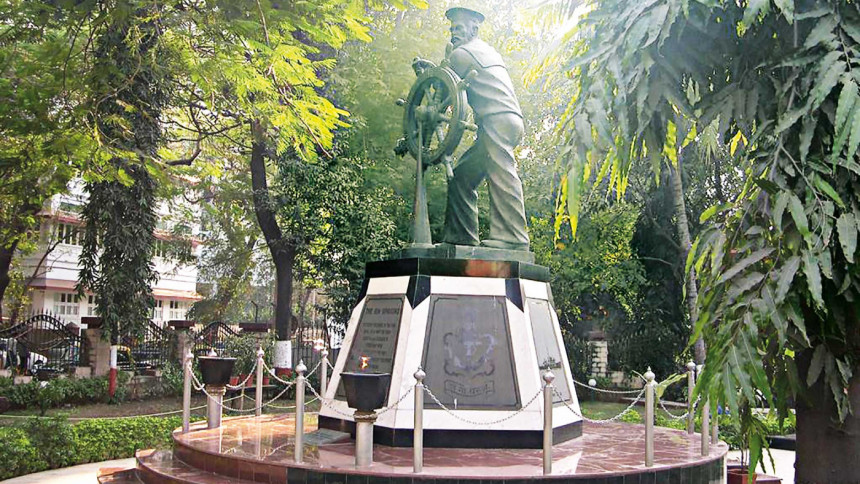
The forgotten mutiny for India’s independence

BRITISH INDIA :

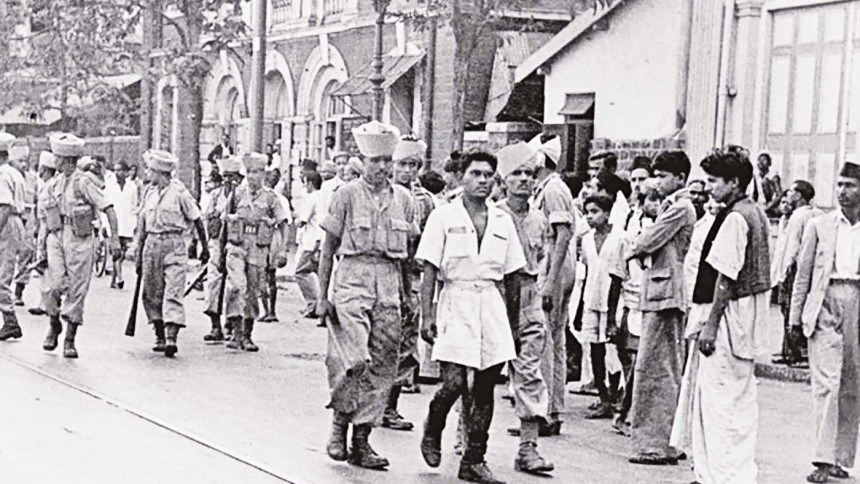
A sailor being arrested after the Naval mutiny.

One of the most important but undervalued events of India’s independence movement was the naval revolt of 1946, about which Indian historian Sumit Sarker wrote, “Had this insurrection succeeded, India’s struggle for freedom might have taken a different turn.” From February 18 to 23 that year, more than 20,000 ordinary sailors, known as ratings, and low-ranking officers of 74 warships and 20 installations took part in a strike, which was termed as a mutiny or rebellion.

After Bengal lost its independence at Palashi’s Mango grove in 1757, the British Raj in India faced two major armed revolts: the first one was exactly after one hundred years, the military revolt of 1857, and the second one was 189 years later, the naval mutiny. Both in 1757 and 1857, the freedom fighters were defeated by the arms and tactics of the British rulers, but the naval mutiny failed because of the politicians in India then. It was not only the ratings’ mutiny that the political leadership had decided not to support – the civilian uprising triggered by the naval mutiny, too, was condemned by them. The scale of the civilian uprising, if it happened in a post-colonial era, would have created a revolution or at least caused the fall of the government of the day.

Three days after the mutiny ended and the civilian uprising was crushed with brutal force, the then British Prime Minister Clement Atlee told the House of Commons on February 26, 1946, “I regret to inform the House that grievous loss of life, injury and destruction of property have resulted from all these disturbances. In Bombay, there have been 223 deaths and 1,037 persons have been injured. The total damage includes the looting or destruction of nine banks, 32 government grain and cloth shops which the public can ill-afford to lose, 30 other shops, 10 post offices, 10 police stations and 1,200 street lamps. The number of vehicles destroyed is not yet estimated. In Karachi, there have been seven deaths and 21 cases of injury. In Madras, up to last night, one person has been killed and another seriously injured” (Source: Hansard). 

Mr Atlee in his statement said, “Both Congress and Muslim League leaders cooperated in condemning and attempting to stop the disturbances, but the Communist Party issued a manifesto at midnight on Thursday thanking the public for its support.” It perhaps explains why, to this day, the political classes of the three countries born from the partition of India are not willing to admit their failure and give those mutineers and civilian martyrs their due credit. Therefore, in 2021, there was no big event in the subcontinent to mark the 75th anniversary of the naval revolt.

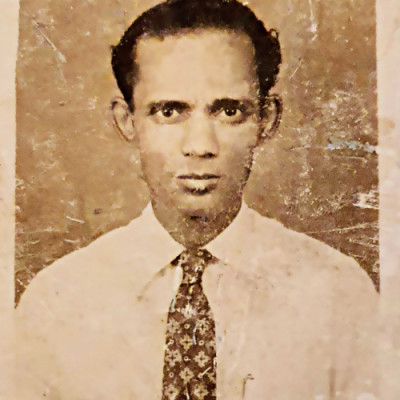
Mohammad Dewan Ali Nazir, Royal Indian Navy, Index no: 34499.

On a personal level, it’s ironic that, despite studying history at the country’s two top universities, I, too, did not take much interest in it during my student life. When I first heard of the rebellion from a mutineer, I had already taken a job and started my professional journey devoid of in-depth history. The mutineer I am talking about was my father, who spoke about his role and feelings about the lost cause during one of my short home visits. My father, Mohammad Dewan Ali Nazir (Royal Indian Navy, RIN, Index no: 34499) was one of the last 3,500 sailors and 300 sepoys who refused to surrender until the last on board of HMIS Akbar.

They were detained after surrendering and were released in August of that year. The mediation and the assurances given by the leaders of both Congress and Muslim League turned out to be nothing but betrayal. Though the uprising was a challenge to the Empire, shaking up the British imperial order, the leaders of the nationalist movement waiting to form an interim government through negotiations were not ready to derail that prospect.

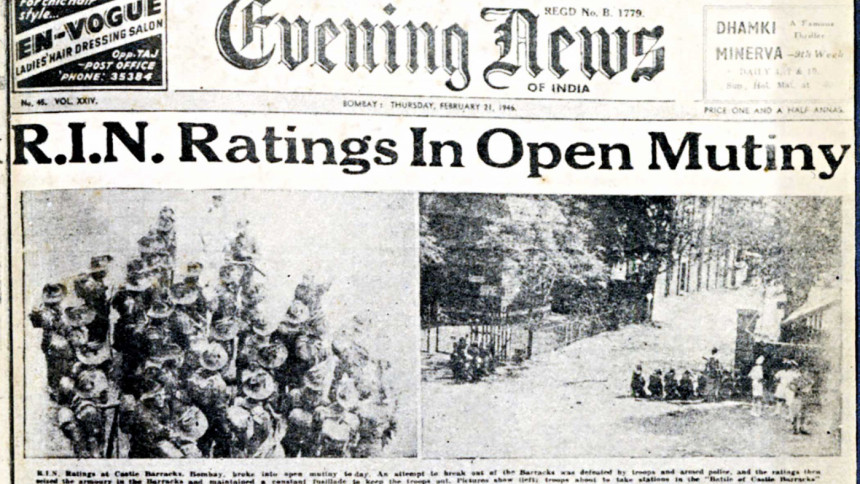
Newspaper clipping of the Evening News.

The leaders of the Congress and the Muslim League did not want a revolution – they wanted a peaceful transfer of power. Among the leading politicians, only Congress leader Aruna Asaf Ali extended her support to the ratings’ strike and tried to persuade her party leaders to take a stand in favour of the strikers, but failed in the face of opposition from Vallabhbhai Patel. On February 22, Vallabhbhai Patel sent a message to the rebels to surrender. Only the Communist Party of India came forward in support of the naval revolt and called a general strike. Reading the memoir of one of the key figures of the revolt, Balai Chand Dutt (BC Dutt), and a few other publications, one can easily imagine how much frustration and pain those mutineers felt because of the national leaders’ silence, which they saw as a betrayal. Perhaps it explains why my father, too, lost interest in politics and didn’t speak much about the heroic uprising that ended in a tragedy. 

Those nationalist leaders, including Gandhi, Jawaharlal Nehru and Muhammad Ali Jinnah, advised them “not to mix up ‘political demands along with service demands’; to ‘remain calm’ and to formulate to the naval authorities their service demands.”

But from the very beginning, those naval ratings were raising political demands – particularly, the Quit India slogan.

Their Charter of Demands asked for: 1. Release of all Indian political prisoners; 2. Release of all Indian National Army personnel unconditionally; 3. Withdrawal of all Indian troops from Indonesia and Egypt; 4. British nationals to leave India; 5. Actions against the commanding officer and signal bosonshead for rough treatment of the crew; 6. Release of all detainees (naval ratings); 7. Speedy demobilisation of the RIN ratings and officers; 8. Equal status with the British navy regarding pay, family allowances and other facilities; 9. Best class of Indian food; 10. No return of clothing kit after discharge from service; 11. Better treatment from officers to subordinates; and 12. Installation of Indian officers and supervisors. (Source: Meanings of Failed Action: A reassessment of the 1946 Royal Indian Navy uprising by Dr Valentina Vitali, University of East London, UK.)

Autobiographies of two rebels  – BC Dutt and Biswanath Bose – suggest that the then (undivided) India could have been a different place if the revolt of that day had succeeded. The rise of communal politics, the division and instability that is spreading in the states and society, would not have happened.

BC Dutt was one of the organisers of the HMIS Talwar, the ship where the mutiny started. He was arrested and tried for writing a new slogan on a ship on February 1, three weeks before the start of the February 18 mutiny. His book, The Mutiny of the Innocents, contains details of how political literature and pro-independence activities were organised much before their strike.

Biswanath Bose’s RIN Mutiny, 1946 also gives detailed descriptions of how the revolt unfolded. But politicians argued that the revolt was mostly due to the resentment among Indian ratings over low wages, poor quality of food and housing, which was lower than that of the Whites, and racial discrimination.

After the mutiny of 1857, the British rulers banned the entry and discussion of political leaflets in all forces, but BC Dutt used to secretly discuss political documents in the ship HMIS Talwar. Two months before the mutiny, on the Naval Day on December 1, when it was open for public visit, they wrote various slogans, including “Quit India” and “Jai Hind” on the ship. Explaining the reason why the mutiny failed, BC Dutt wrote that while all Europeans and Indians were stunned by the course of events and wondering if it was a revolt, unfortunately the political parties had nothing to say. When it was time to lower the British Union Jack and fly the Indian flag, they felt unprepared.

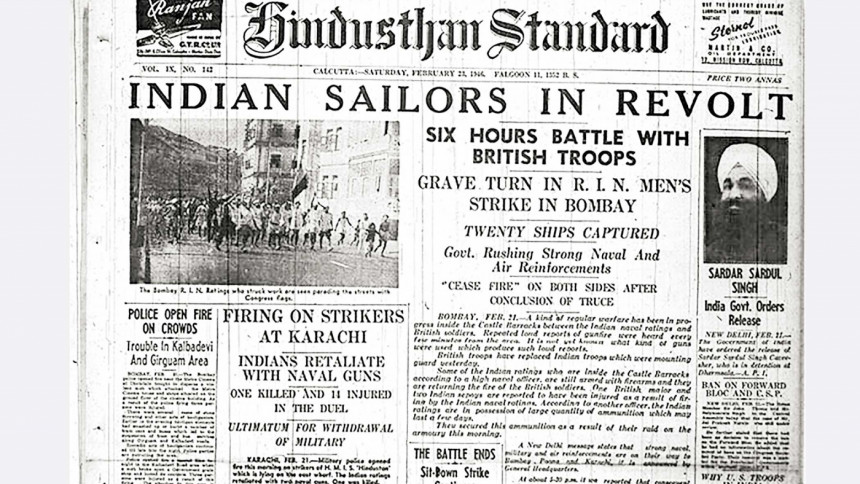
Newspaper clipping of the Hindusthan Standard

On February 22, 1946, when the nationalist leaders were busy arranging the ratings’ surrender, Prime Minister Clement Attlee told the parliament that the sailors had given political slogans and demanded that a political leader be given a chance to speak. He also said in the statement that Congress had nothing to do with the insurgency, but the communists and leftists could try to exploit sympathy.

William Richardson, a British researcher, writes in The Society for Nautical Research that the political movement for India’s independence was at the root of the revolt (The Mutiny of the Royal Indian Navy at Bombay in February 1946, May 1993).

Author of the book 1946: The Unknown Mutiny, Promod Kapoor wrote that the navies fell between the two aspirations of the two rulers. One side wanted their impending departure not to be tarnished by the stigma of rebellion. On the other hand, when power was imminent, the other rulers were anxious to see if there were any signs of chaos in the armed forces. Because in the future, they would have to manage these forces. 

Politicians assured that no one would be punished, no compensation would be paid, and steps would be taken to meet the demands. In reality, the opposite had happened. Rebel leaders were arrested, tried and punished. Other rebels were told to grab third-class train tickets to return home and to never return to Bombay again. Showing various excuses, deductions were made from salary arrears even for minor damages in their uniforms.

Biswanath Bose’s book gives a glimpse of how frustrated and angry these rebels became with the behaviour of the government and the breach of promises by the political leaders. He wrote, “If patriotism is a crime, then we must be criminals.” Expressing his frustration for not being reemployed in the Indian Navy, he wrote a letter to Prime Minister Nehru asking if there was any law banning his return to the force due to dismissal for taking part in the freedom movement, and how, as a leader of the Congress, Nehru could be the prime minister.

Nationalist leaders were so reluctant to give the mutineers their due credit, that the Indian government banned the Bangla play Kallol (Sound of the Wave), based on the mutiny, by playwright Utpal Dutt, and he was imprisoned. The play was first performed in 1965 in Calcutta at the Minerva Theatre and it drew large crowds.

At the beginning of the naval strike, a Central Strike Committee (NCSC) was formed by the representatives of the ships stationed in Bombay. The committee renamed the Royal Indian Navy as The Indian National Navy. The committee was chaired by Signalman MS Khan, and Madan Singh was the vice-president. One remarkable element of the naval rebellion was the unity of various faiths among both the naval force and the civilians who took to the street. They raised slogans “Hindu-Muslim unite” and “Inquilab Zindabad” on the streets of Bombay.

BC Dutt’s book also speaks of this communal harmony. He wrote, “We are from different regions, and from families of Hindu, Muslim, Christian and Buddhist, but after spending years in the Navy, we sailors have become Indians. The irony is that the politics of communal division and hatred is now intensifying across the subcontinent.

(After leaving the job of a naval instructor, my father joined the office of Indian Civil Supply, and after a short stay in Kolkata, he was transferred to East Bengal. He retired as a magistrate and died on August 29, 2001.)

Kamal Ahmed is an independent journalist and writes from London, UK. His Twitter handle is @ahmedka1

source: http://www.thedailystar.net / The Daily Star / Home> In Focus / by Kamal Ahmed / July 25th, 2022

Letter about the burial of Muslim Indian soldiers

UNITED KINGDOM :

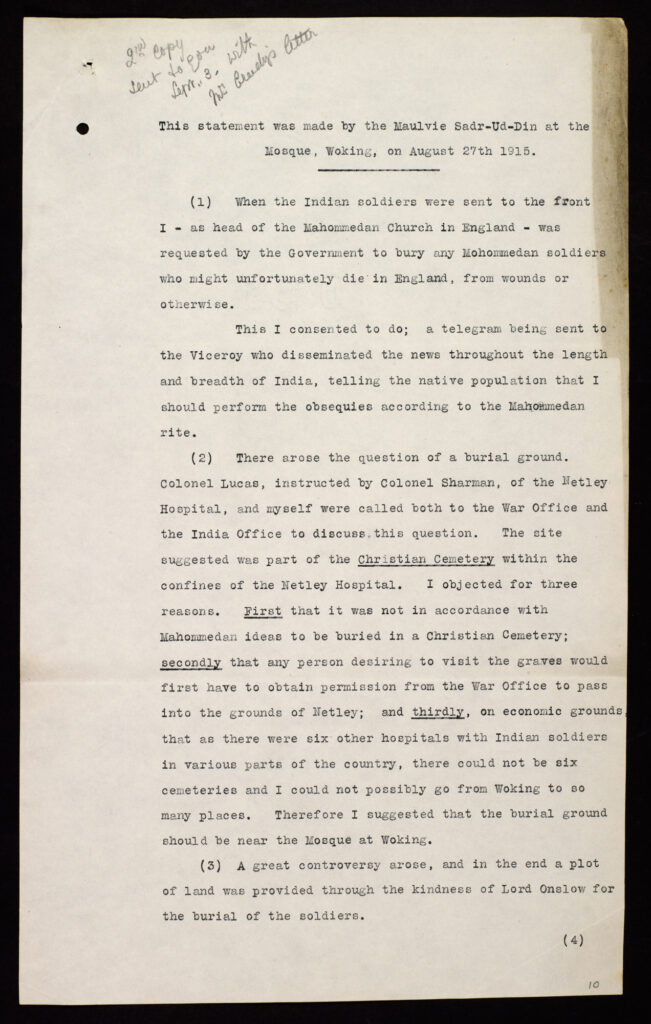
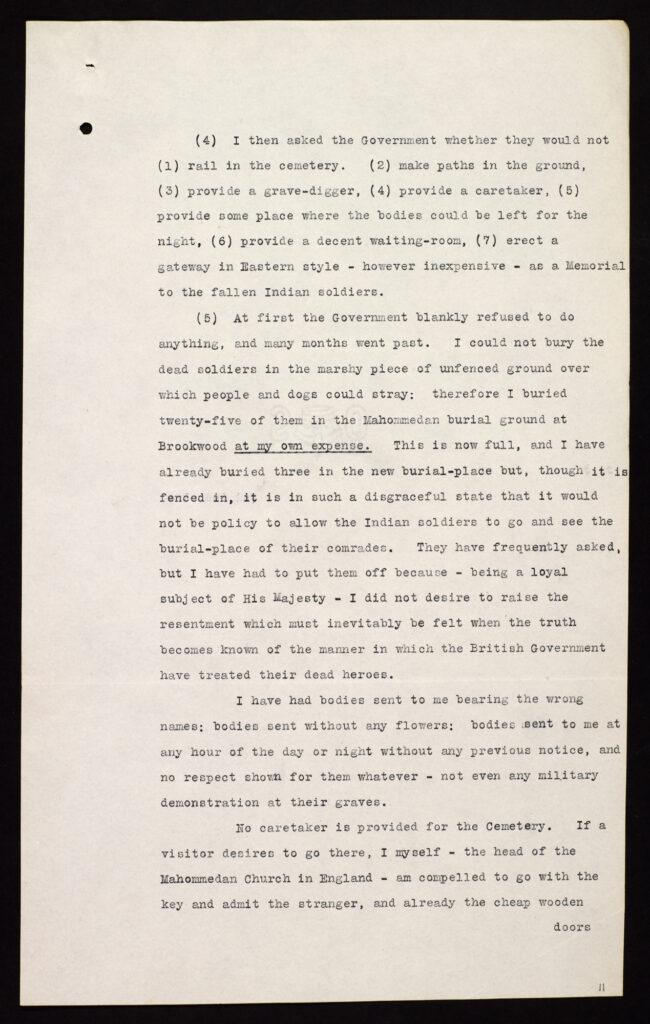
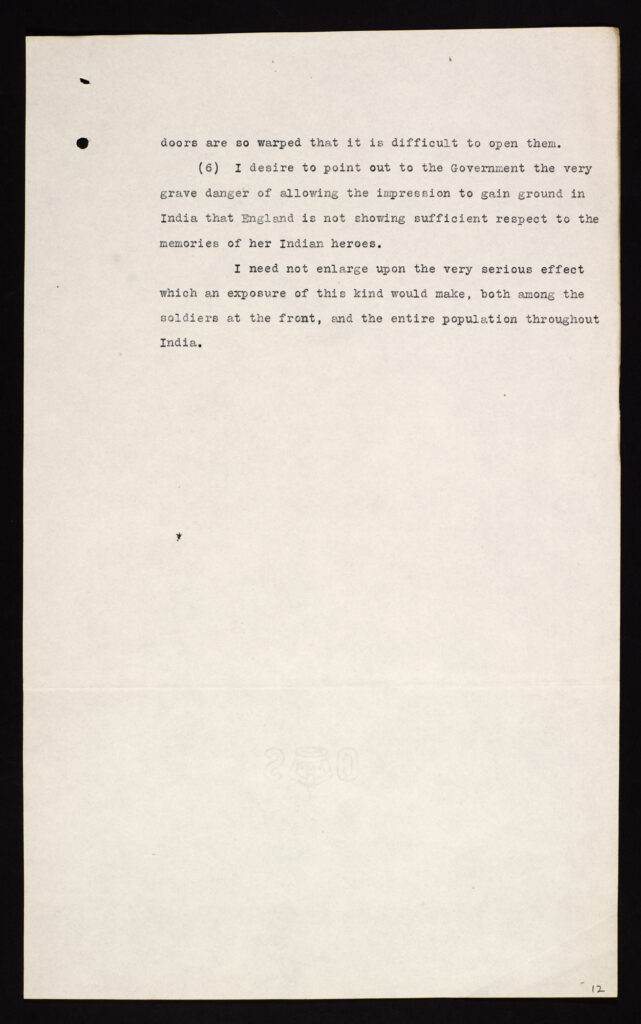
This statement, made by Maulvi Sadr-Ud-Din, provides an insight into the treatment of Muslim Indian soldiers who had fought during World War One and died in hospitals in Britain. Sadr-Ud-Din, from the Shah Jahan Mosque at Woking, was charged with overseeing their burial in England.

What does the statement reveal?

From 1915, there were nine sites in the South of England set up specifically for the treatment of wounded Indian soldiers. This included the Dome Hospital in Brighton and the convalescent camp at Barton-on-Sea. These were hospitals of high standards with up-to-date medical facilities, as well as services dedicated to catering for every religious need.

The Maulvi’s statement, however, raises issues with the posthumous treatment of soldiers who died in these hospitals. He states that the bodies of Muslim soldiers were often sent to him with the wrong name; without flowers; or with no provision for a military demonstration at the grave. Although Sadr-Ud-Din had been allocated a plot of burial land at Woking on Horsell Common, he describes it being in a poor state and maintains that his requests for improvements have been ignored.

Sadr-Ud-Din warns of the ‘grave danger of allowing the impression to gain ground in India that England is not showing sufficient respect to the memories of her Indian heroes’. His concluding words hint at the unease in Indian-British relations at this time and, in particular, the growing nationalist movement which was campaigning against British rule. In response, the government – in a public-relations exercise – commissioned improvements to the burial site at Woking.

These improvements were led, in part, by the suggestions made in Sadr-Ud-Din’s statement. These included a permanent enclosure of the piece of land; making paths in order to distinguish between grave and ground; to employ members of staff in the everyday running of the cemetery; and to build three structures: a morgue, a waiting room and a gateway to not only simplify the burial process, but to also give the area precedence. The gateway, at Sadr-Ud-Din’s request, was designed ‘in Eastern-style […] as a Memorial to the fallen Indian soldiers.’

The majority of these requests were realised, although the morgue and waiting room were never built.

________

source:

Full title:Correspondence about Moulvi Sadruddin, Imam of the Woking Mosque, and the burial of Muslim soldiers in England.

Created:27 August 1915,

WokingFormat:Typescript, Letter

Creator:Maulvie Sadr-Ud-Din

Usage termsCrown Copyright

Held byBritish Library

Shelfmark:Mss Eur F143/80

Full catalogue details

_________

source: http://www.bl.uk / British Library / Home> Collection Items / (This item I feature in ‘All South Asians in Britain Collections’ and ‘All World War One Collection Items’ / (date viewed July 09th, 2022)