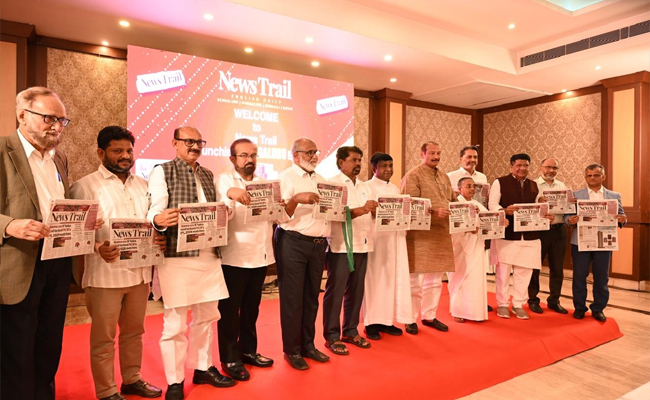
English daily News Trail has launched its Mangaluru edition. The launch function was held on Friday at The Ocean Pearl in the city.
The new edition will cater to readers in coastal and Malenadu regions of Karnataka. The publication is already being brought out from Bengaluru, Qatar and Hubballi.
Among those present at the event were Dr. U.T. Ifthikar Fareed, Chairman, Karnataka State Allied and Healthcare Council; Ivan D’Souza, MLC; Fr Sudeep Paul, Director, Sandesha Foundation; Sister Vishweshwari of Brahmakumari International Centre, Mangaluru; M.A. Gafoor, Chairman, Coastal Development Board; T.M. Shahid Thekkil, Chairman, Minimum Wage Advisory Board; Adoor Ibrahim, former Deputy Commissioner of Mangaluru; S.M. Arshad, Managing Director, Mohtisham Complexes Pvt. Ltd.; and S.M. Rasheed Haji, President, Bearys Chamber of Commerce and Industry.
K.M. Siddique, Director, News Trail; Ashraf Ali Basheer Ahmed, Associate Director; M.A. Siraj, Associate Editor; and Aftab H. Kola, Regional Business Head for the Mangaluru edition, were also present.
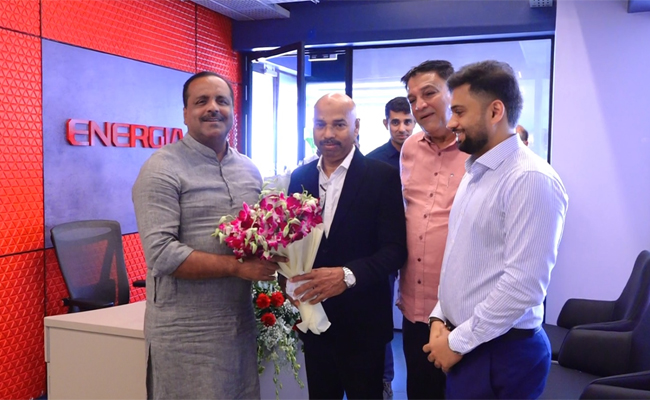
Energia on Sunday inaugurated its Corporate Service Center in Mangaluru, marking a step towards strengthening its global corporate operations and expanding its presence in India.
The new office was inaugurated in the presence of U. T. Khader, Speaker of the Karnataka Legislative Assembly, and NRI Busnessman Dr. Ronald Colaco along with members of Mangaluru’s business and community circles.
The ceremony was led by Shahid Hassan, CEO of Energia, along with Mohin Sheikh, Managing Director, Rajan Mengoth, Operations Director, and Mehboob, Chairman of Energia. Senior officials and team members of the company were also present.
The Mangaluru Corporate Service Center will function as a dedicated support office for Energia’s operations in the Kingdom of Saudi Arabia. The company said the centre will help improve coordination, strengthen back-end support and enhance governance across key corporate functions. It is expected to improve service delivery through structured processes and better operational control.
Energia stated that the new centre will create employment opportunities in Mangaluru, particularly in corporate services and support roles. The company also plans to introduce structured career pathways and skill development programmes for professionals in the region.
While the immediate focus of the centre will be to support overseas operations, Energia said it intends to deepen its long-term engagement in India. The company indicated that it is exploring opportunities in the renewable energy sector in line with India’s expanding clean energy landscape. The Mangaluru office is expected to act as a base for future partnerships and renewable initiatives in the country.
“This Corporate Service Center reflects Energia’s long-term commitment to building strong capability and governance. Mangalore gives us access to high-quality talent, and this office will play a critical role in supporting our Saudi operations while also helping us prepare for future renewable initiatives in India,” said Shahid Hassan, CEO of Energia.
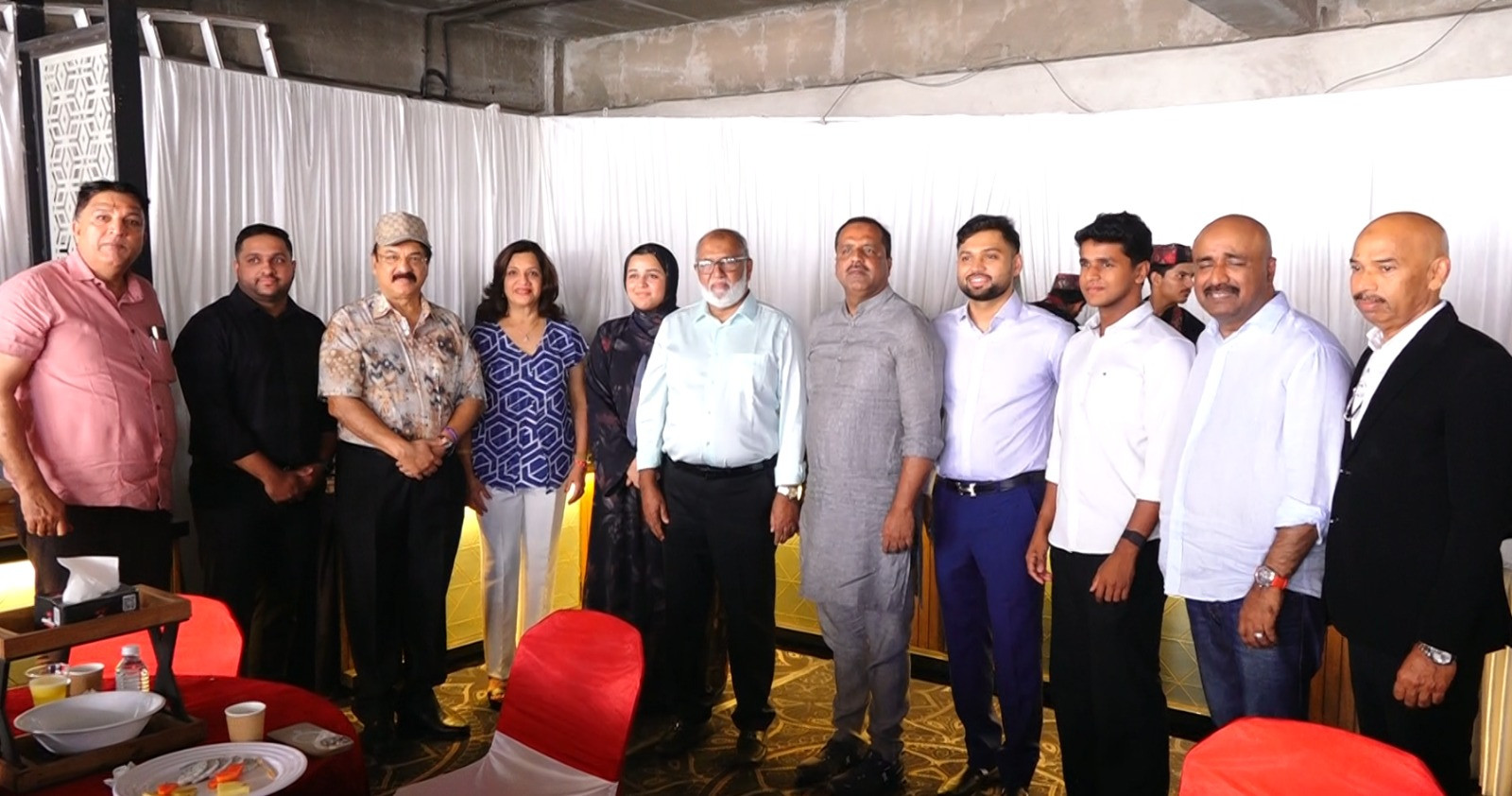
Among those present at the event were Chairman of State Allied and Health Care Council UT Iftikhar Ali, President of New Jumma Masjid Sharif Whitestone, Chairman of Bearys Chamber of Commerce and Industry SM Rasheed Haji, Founder of Team B-Human Asif Deal, Dr Haroon Hussain and others.
Energia is an energy solutions company with operations in the Kingdom of Saudi Arabia and a growing presence in other markets. The company provides integrated energy solutions across sectors with a focus on reliability and long-term value creation.
Enso Wellness – A Platform for Mental and Emotional Health of Bangalore has been awarded the best online platform by International Business Awards 2022-2023.
Mental and emotional health needs and deserves more and more recognition in today’s era to remove the stigma attached to it, says Arouba Kabir Founder, Enso Wellness.
Born in Kashmir, Arouba Kabir setup her organisation in Gurgaon in 2015 with an aim to spread more awareness and become a one-stop solution for those who have been struggling with the issues and challenges of emotional and mental health.
“Pandemic changed the definition and made it globally possible for people to ask for help by using online platforms keeping their identity anonymous as reaching out to a mental health professional is still a stigma,” Arouba said.
Her organization is known for hosting many online series- like Stand up to Stigma, One-minute Mental Health, Ask the Doctor with eminent personalities from across the globe and conducts various online and offline workshops for Kashmiris in the last five years.
“Mental health is as important as physical health-one definitely impacts the other. We need to start talking about mental health as we do talk about physical health and make it normal for people to reach out for help when they need it.”
“And if you want to see the change, we have to be the change, so talking about your emotions, challenges, struggles and visiting a professional definitely does help make it normal,” she said.
source: http://www.awazthevoice.in / Awaz, The Voice / Home> Stories / by ATV, posted by Nakul Shivani / December 13th, 2022
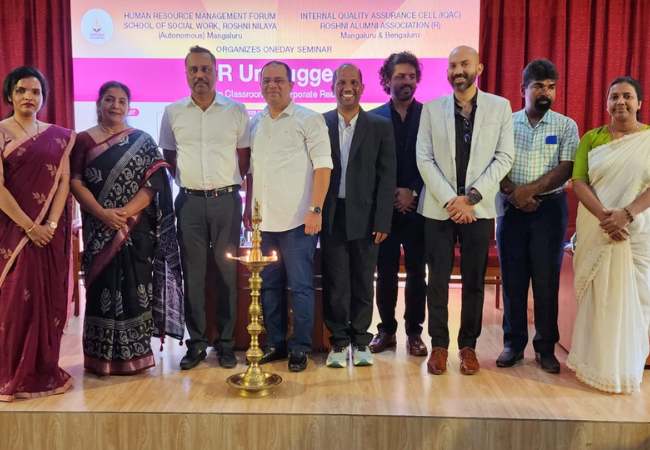
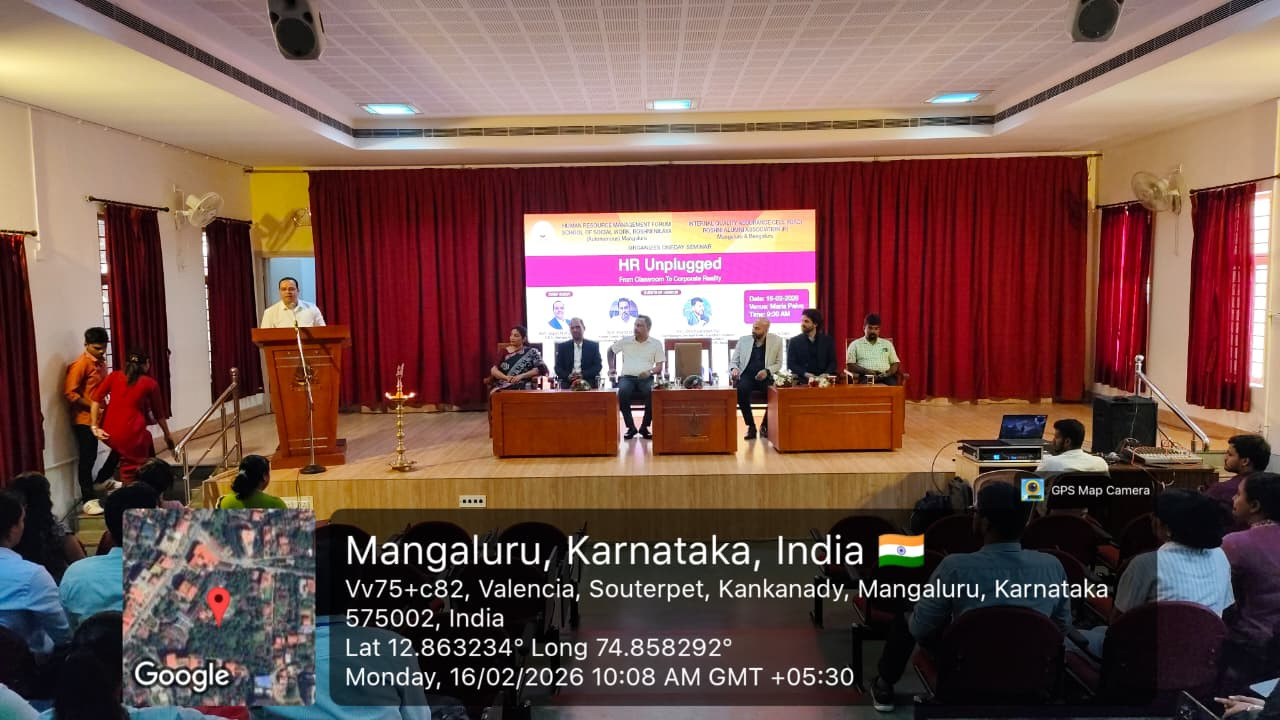
The HRM Forum, in association with the Roshni Alumni Association, organised a seminar titled “HR Unplugged: From Classroom to Corporate Reality” at the School of Social Work, Roshni Nilaya (Autonomous), Mangaluru, on 16th February 2026.
Sujah Mohammed, CEO of Marhaba Group, Mangaluru, delivered the inaugural address, sharing insights from his personal and professional journey. He spoke about the challenges he faced and the determination required to succeed.
Emphasising the importance of communication and interpersonal skills, he urged students to continuously upgrade their knowledge to remain relevant in a fast-changing corporate environment.
Sujah also highlighted professional ethics, leadership qualities, teamwork, and practical exposure through internships as key factors in bridging the gap between theory and practice. He advised aspiring HR professionals to stay confident, adaptable, solution-oriented, and committed to their long-term career goals.
Anand D’Silva encouraged students to make the most of every session, reminding them that life experiences often teach lessons beyond textbooks. He emphasised the value of hard work, genuine knowledge, and dedication, urging students to uphold the values and reputation of Roshni Nilaya in their professional journey. He also advised them to focus on their unique growth paths, remain patient, consistent, and positive, and avoid comparing themselves with others.
Adv. Ganesh Poojary, Partner at KG Pai & Co. and Director at Coreimpact Corporate Services Ltd., conducted an interactive session on labour laws. He started with an activity that required students to categorise various labour laws under the four Labour Codes, promoting critical thinking and engagement. He then explained the codes in detail, especially the Code on Wages, and discussed its implications for employees, employers, and organisational compliance.
During the panel discussion on “Who is HR?”, Ganesh Poojary, Ranjit Christopher Picardo, Associate Director, HR and Global Shared Services Leader, Brady Company India Pvt. Ltd., and Dolfred Norbert D’Souza, Director – Human Resources and Site Leader, APAC, Flexera Software India LLP, highlighted HR as a strategic partner that bridges management and employees. They stressed the role of HR in ethical decision-making, legal compliance, talent development, and shaping organisational culture.
Ranjit Christopher Picardo also led a session on “The Effective Interviewer”, focusing on structured interviews as a tool for effective talent acquisition. He demonstrated a practical framework for interviews and conducted an interactive mock interview with students. He emphasised the high cost of poor hiring and the need for discipline, consistency, and professionalism in recruitment.
The event was attended by over 100 HR students and professionals. Dr. Meena Monteiro, Dean – PG Studies; Dr. Sebastin K V, Dean – Research; Prof. Jinsa Joseph; Prof. Deepika Sanil; Dr. Anuradha Shetty; and Prof. Ramya were present. The session was compered by Saifana Sheik, the welcome address was given by Nagashree, and Prof. Deepika Sanil proposed the vote of thanks.
Indian karateka Zaara Vasim Assadi emerged as the standout performer at the International Karate Open Championship held as part of the Muscat Night Festival, clinching four gold medals in a remarkable display of skill and consistency.
The prestigious tournament saw participation from around 400 athletes representing 24 clubs across multiple countries. Amid intense competition, Zaara, aged just 10, created history by becoming the only girl at the championship to secure gold in all four categories she competed in individual Kata, individual Kumite, team Kata, and team Kumite.
Zaara’s achievement adds to her already impressive record. She has remained undefeated in Kata since the age of five, underlining her long-standing dominance in the discipline. Her performances were widely praised for technical precision, discipline, and composure well beyond her age.
Training at The Champ Sports & Arts in Muscat, Zaara’s journey has become a source of inspiration for young martial artists, reinforcing the idea that dedication and passion can overcome age-related barriers in competitive sport.
The championship also served as a platform for cultural exchange, bringing together athletes and spectators from diverse backgrounds and celebrating the unifying spirit of karate.
Zaara Vasim Assadi is the daughter of Vasim Assadi and Hasra Sana and hails from Udupi. She is the granddaughter of Zikriya Assadi.
source: http://www.english.varthabharati.in / Vartha Bharati / Home> Gulf / by Vartha Bharati / February 02nd, 2026
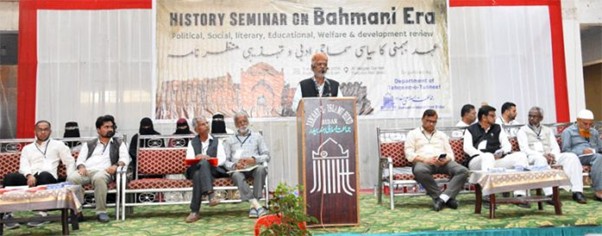
Scholars at a historical symposium in Bidar highlighted the inclusive governance, educational focus, and cultural contributions of the Bahmani kings. The event examined political, social, literary, educational, and developmental aspects of the Bahmani era.
Speaking at the symposium, Muhammad Naseemuddin Faris, retired dean of Maulana Azad Urdu University, Hyderabad, said the Bahmani rulers worked for the welfare of all sections of society. He said the kings governed by building trust across religions and social groups. He added that they maintained cordial relations with neighbouring states and ensured peace and stability.
Faris said the Bahmani rulers established several educational institutions and promoted learning. He noted their encouragement of the Urdu language and literature. He also said the rulers supported spiritual growth by inviting Islamic scholars from Iran, Iraq, and Syria. He highlighted the implementation of the Kharej system, which helped strengthen water conservation practices.
Jamaat e Islami Hind State Secretary Labid Shafi said knowledge of history remained essential for shaping society. He said certain communal groups were misusing history to spread hatred and distort facts. He described the symposium as an important step toward informed understanding of the Bahmani legacy.
Several scholars delivered thematic lectures. Muhammad Fahimuddin spoke on religion and Sufism. Dr Rais Fatima discussed economic prosperity. Dr Manzoor Ahmed traced the development of Urdu literature. Dr Abdul Majeed addressed architecture. Dr Muhammad Samiuddin focused on education. Dr Maimuna Begum examined coinage. Dr Muhammad Majeed spoke on the decline of the kingdom. Dr Ismail Khan discussed Mahmud Gavan. Dr Mushtaq Ahmed analysed political conditions.
Shamshuddin delivered the introductory address. Muhammad Mauazzam presided over the inaugural session. Hafiz Syed Atiqullah recited the Quran. Muhammad Arifuddin proposed the vote of thanks.
source: http://www.radiancenews.com / Radiance News / Home> Latest News> Report / by Radiance News Bureau / February 07th, 2026
Aysha Haneena, who topped Mangalore University in BSc Interior Designing
Mangaluru:
Indian Design School (IDS), Mangaluru, has announced that its student Ayesha Haneena has secured first rank in Mangalore University in BSc Interior Designing and Decoration with a CGPA of 9.4.
According to the institution, Ayesha topped the university examinations, outperforming students from several long-established and experienced colleges. The college described her achievement as a result of dedication, creativity and consistent hard work.
The management of IDS said the rank reflects both the student’s individual excellence and the academic and practical training provided at the institution. They added that the result has brought pride to the college and its faculty.
Ayesha’s performance places her at the top among all students of the programme under Mangalore University for the academic year.
source: http://www.english.varthabharati.in / Vartha Bharati / Home> Karavali / by Vartha Bharati / February 13th, 2026
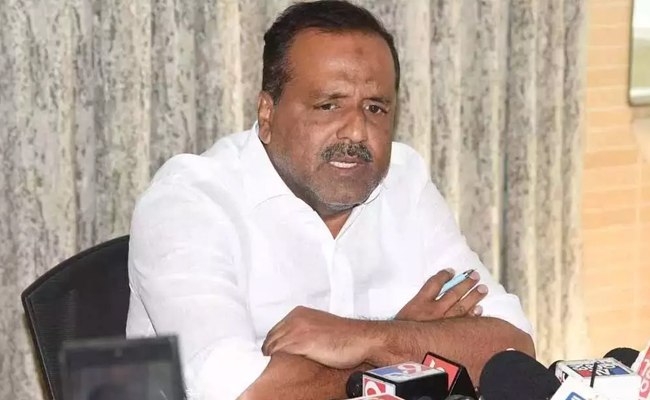
Legislative Assembly Speaker U.T. Khader has been appointed as a member of a four-member Committee of Presiding Officers formed to examine matters related to the Tenth Schedule of the Constitution, which deals with anti-defection provisions, Deccan Herald reported on Wednesday.
According to an official release from the Karnataka Secretariat, the committee was constituted by Lok Sabha Speaker Om Birla.
The panel is chaired by Maharashtra Legislative Assembly Speaker Rahul Narwekar, with Odisha Speaker Surama Padhy and Nagaland Speaker Sharingain Longkumer as members.
The Committee held its meeting on February 9 and 10 at Vidhan Bhavan in Mumbai. During the meeting, members discussed issues related to anti-defection laws and legislative procedures.
source: http://www.english.varthabharati.in / Vartha Bharati / Home> Karnataka / by Vartha Bharati / February 11th, 2026
When Haram Appears Dominant, There Is a Need to Establish Halal – Ali Shareef
Bengaluru:
Emphasising the importance of halal and ethical trade for the economic empowerment of the Muslim community, Mr. Ali Shareef, General Secretary of Lifeline Foundation, stated that mosques should be developed as centres for economic guidance. Where this is not feasible, local schools should be utilised to educate people about the principles of economic development. He stressed that businesses can be initiated even with small capital, and institutions like Jamaat-e-Islami Hind, Lifeline Foundation, and others are actively guiding the community in this direction.
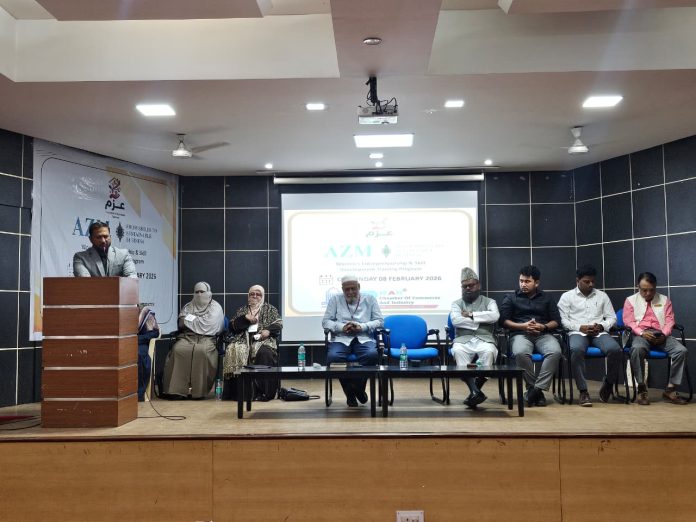
Mr. Ali Shareef was addressing a programme organised for Muslim women engaged in small-scale businesses at the Agriculture Institute of Technology, Bengaluru. The programme was jointly organised by Jamaat-e-Islami Hind, Karnataka, and Rifah Chamber of Commerce, Karnataka, under the theme of community economic development.
Speaking on the occasion, Ms. Fakhra Atiq, Assistant Secretary Markaz JIH and MD Saheliyan, highlighted the importance of business planning and sustainability. She emphasised that proper planning is essential for long-term economic growth and stability and encouraged Muslim women to utilise their skills while remaining mindful of ethical and social boundaries.
Mr. Riyaz Ahmed Kopal, Director of MEWA, introduced various central and state government schemes, urging participants to focus particularly on schemes related to medical services, education, MSMEs, and agriculture. He pointed out that many government schemes fail to reach beneficiaries due to lack of awareness and information.
Delivering the keynote address, Er. Syed Mumtaz Mansoori, President of Rifah Chamber of Commerce, Karnataka, reflected on the responsibilities of women in the light of the Qur’an and Hadith. He cited examples of courageous Muslim businesswomen from early Islamic history, including Hazrat Asma bint Makhzuma, who was engaged in the perfume trade, and highlighted the role of Ansari women who worked in agriculture and supervised date palm cultivation. He also elaborated on various dimensions of trade and commerce.
During the programme, Naheeda, Tayyab Nourishers, Madiha Sheerin, Chocko Turf, Pratibha, and Energy Bar shared their entrepreneurial experiences. Mr. Afnan Hasan, CEO of Hamd Foods and Founder of Pizza Valley, spoke on effective marketing strategies for small businesses.
In his concluding address, Mr. Muhammad Yusuf Kanni, Secretary of Jamaat-e-Islami Hind, Karnataka, remarked that the economic condition of Muslims in the country can be gauged from the fact that many Muslim women are compelled to conceal their identity and work in others’ homes. He explained that the title of the programme, “Azm” (Resolve), symbolises firm determination, strong intent, and perseverance. He emphasised that commitment, planning, and consistent effort are essential for economic empowerment.
Highlighting the initiatives of Jamaat-e-Islami Hind, Karnataka, he mentioned the establishment of Rifah Chamber of Commerce, engagement with traders on a large scale, formation of facilitation societies, efforts toward microfinance initiatives, guidance for small businesses, and a focused approach toward agricultural development. He concluded by stating that sustainable progress is possible only through patience, perseverance, piety, and righteousness.
The programme commenced with a motivational address by Mr. Rafiq Ahmed, National Advisory Member of Rifah Chamber of Commerce. Ms. Tasneem Farzana, Assistant Secretary (Halqa), delivered the opening remarks and explained the objective of the programme, stating that it was named “Azm” to reflect the resolve to support families through halal and ethical trade while seeking the pleasure of Allah and success in the Hereafter.
The responsibilities of the convener were carried out by Ms. Arshiya Fatima Tanzil, while the vote of thanks was presented by Ms. Sameena Bano, General Secretary.
source: http://www.radiancenews.com / Radiance News / Home> Entrepreneurship > Latest News / by Radiance News Bureau / February 10th, 2026
This haunting historical site in Vijayapura deserves better conservation efforts from Archaeological Survey of India as well as deeper research from historians to understand the legends swirling around the monument.
Saath Kabra, the cluster of 63 tombs, in Vijayapura (Photo | Express)
Vijayapura :
Far from being just another tourist destination, ‘Saath Kabra’ in Vijayapura stands out as one of the most haunting historical sites in the region. Often described as a silent witness to a tragic past, ‘Saath Kabra’ is a cluster of 63 tombs arranged on a raised black stone platform, that has generated legends, scholarly debate and enduring curiosity.
The most widespread legend surrounding ‘Saath Kabra’ is linked to the period of Ali Adil Shah II of the Bijapur Sultanate, who is also credited with commissioning the unfinished ‘Bara Kaman’ monument. During his reign, the Bijapur Empire faced a serious challenge from the Maratha leader Chhatrapati Shivaji. To counter this threat, Ali Adil Shah appointed his powerful general Afzal Khan to confront Shivaji.
Afzal Khan, originally from Afghanistan, was known as a formidable warrior. Historical narratives also describe him as deeply superstitious, placing great faith in astrology and spiritual predictions. In 1659, before leaving to face Shivaji, Afzal Khan is believed to have consulted a Sufi Pir, who foretold that he would not return from the campaign. According to local legend, this prophecy deeply disturbed him.
Folklore claims that Afzal Khan, fearing defeat and dishonour, killed more than 60 of his wives by pushing them into a well and later constructed tombs at the site. The alleged motive was to prevent them from remarrying or falling into the hands of enemies and facing humiliation or violence in the event of his death. This story has long been used to explain the existence of the mass graves at ‘Saath Kabra.’
The cenotaph of Afzal Khan
Afzal Khan later travelled to Pratapgarh in the present-day Maharashtra to confront Shivaji. Instead of a direct battlefield encounter, negotiations were arranged. Historical records state that Afzal Khan planned to assassinate Shivaji during a peace meeting. Shivaji, aware of the plot, took defensive measures by wearing armour and concealing iron tiger claws on his fingers. During a traditional embrace, Afzal Khan attempted to overpower Shivaji, but failed. Shivaji retaliated and killed Afzal Khan. Afzal Khan’s body was subsequently buried at the foothills of Pratapgarh Fort.
There is no evidence to support the claim that Afzal Khan murdered his wives or that ‘Saath Kabra’ is their burial site. Vijayapura-based historians Abdul Gani Imaratwale and Krishna Kolhara Kulkarni dismissed the popular narrative as baseless, stating that no credible historical text mentions such an act by Afzal Khan. They emphasised that, in the absence of documentary evidence, the story must be treated as legend rather than history, and that research is required to determine the true origins of the graves.
Dr Imaratwale likes to call the 60 women as ‘half-wives’ as though they were not legally wedded wives, however they enjoyed almost the same privileges that of wives. He said that Khan had four legally wedded wives.
Dr Imaratwale says that such women were accorded considerable respect and were not buried in public graveyards. Separate land was often chosen for their burial, which could explain the clustered graves at ‘Saath Kabra.’
Dr Imaratwale says that it is not credible that a general, who commanded an army of around 40,000 soldiers, would be so fearful of his enemy that he would drown his women one by one in an open well.
Dr Imaratwale suggests alternative possibilities. He said the deaths could have occurred due to mass poisoning or as a result of an accident, such as the collapse of a large structure where the women may have been residing. However, he acknowledged that no information is available to establish the exact cause.
The historians say there is no clear record to confirm whether the women died while Afzal Khan was in Bijapur or during his military campaign. They believe it is more likely that their deaths occurred when Afzal Khan was fighting in Maharashtra. Afzal Khan himself died there, and his body was never brought back to Bijapur. As a result, his cenotaph exists in Vijayapura, built in accordance with his wish to be buried there, a wish that ultimately remained unfulfilled.
Tourists largely confine their visits to prominent landmarks such as the Gol Gumbaz, Bara Kaman and Ibrahim Roza while dozens of other monuments remain overlooked. Located in Navarasapur on the outskirts of the city, ‘Saath Kabra’ is difficult to access. The site includes 63 black stone tombs, an ancient well now filled with silt. Many tombstones are broken or missing, and the entire complex is in a dilapidated state. Poor road connectivity, lack of signboards and absence of maintenance have further contributed to its neglect, with little effort made by the tourism department or the Archaeological Survey of India to promote or preserve the site.
Owing to its eerie atmosphere and disturbing legends, local residents often avoid the monument. Whether it represents a misunderstood burial site, a tragic episode lost to time, or folklore layered over fragments of history, ‘Saath Kabra’remains one of Vijayapura’s most enigmatic monuments, underscoring the urgent need for serious research, preservation and historical clarity.
source: http://www.newindianexpress.com / The New Indian Express / Home> Bengaluru / by Firoz Rozindar / February 08th, 2026