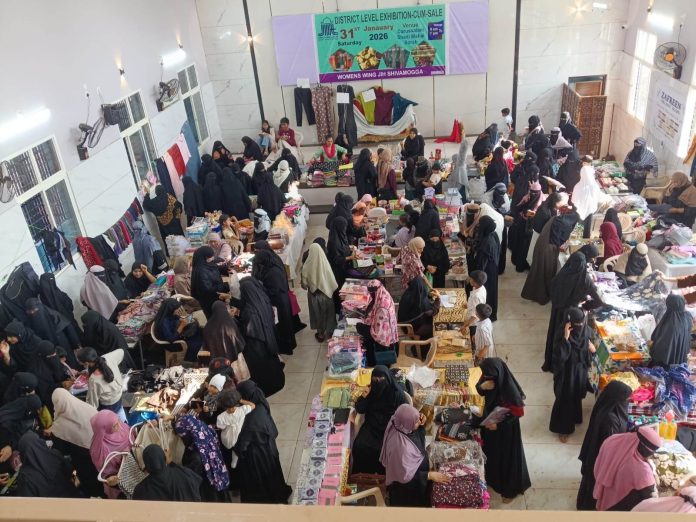
A one-day Exhibition-cum-Sale was organised by the Women’s Wing of Jamaat-e-Islami Hind, Shivamogga District. The exhibition was inaugurated by the State Secretary of the Women’s Wing, Jamaat-e-Islami Hind, Mohtarma Taskeela Khanum.
The objective of such programmes is to economically strengthen and empower women. In the context of rising inflation, unemployment, and poverty, it was emphasised that addressing these challenges is a shared responsibility, and that women must play an effective role alongside men in the nation’s economic development.
The organisers highlighted that such exhibitions provide women with practical business experience, opportunities to interact with people from diverse backgrounds, and support in developing entrepreneurial ideas. These platforms also enable women to engage in halal business practices within the limits of Shari’ah, while facilitating growth through networking and referrals.
Islam permits women to engage in business, including running enterprises from their homes, as reflected in Islamic history through the example of Khadijah bint Khuwaylid رضی الله عنها, a successful businesswoman. Islam also encourages honest and ethical business practices for both men and women.
Nearly 100 women from across the district set up stalls showcasing clothing, handbags, fancy items, abayas, home-made products, and more. A food court offering a wide variety of food items was another major attraction. Members, associates of Jamaat-e-Islami Hind, and women entrepreneurs from different parts of the district actively participated in the exhibition.
The women-exclusive exhibition attracted around 3000 women visitors, who actively shopped at the stalls. The event was described as highly encouraging, as it highlighted the talents, skills, and entrepreneurial potential of women.
Such exhibitions form part of the organisational plan of Jamaat-e-Islami Hind to promote women’s empowerment. Efforts will be made to strengthen the women entrepreneurs’ network.
Feedback received from participants reflected a high level of satisfaction, with many expressing a desire for similar programmes to be organised regularly. Participants particularly appreciated that the exhibition was organised by women, for women, and exclusively for women, creating a comfortable environment that enabled them to conduct business with confidence.
The organisers were widely appreciated, and participants expressed eagerness to remain connected and take part in future programmes. The total sales from all stalls amounted to approximately ₹3 lakh during the one-day exhibition.
The programme concluded on a positive note, reinforcing the importance of such initiatives in promoting women’s economic empowerment and community development.
[The writer of this report is Member Mashavrati Board Karnataka, and District Organiser of JIH Women’s Wing Shimoga]
source: http://www.radiancenews.com / Radiance News / Home> Entrepreneurship> Focus / by Naseema Begum / February 01st, 2026
Chief Minister Siddaramaiah paid his last respects to Hazrat Maulana Sagheerr Ahmed Khan Rashadi, Amir-e-Shariat of Karnataka and rector of Darul Uloom Sabilur Rashad, expressing deep grief over his passing. He conveyed condolences to the bereaved family and prayed for strength and patience during the period of mourning.
Recalling the life and work of the late scholar, the Chief Minister said Maulana Rashadi devoted his entire life to Islamic education, moral guidance, and the cause of communal harmony. He described him as a respected religious scholar and social leader whose influence reached far beyond classrooms and institutions. According to Siddaramaiah, the Maulana’s scholarship and counsel shaped generations of students and earned respect across religious and social communities.
Several senior leaders and officials attended the prayers, including Ministers K J George and Zameer Ahmed, Chief Minister’s Political Secretary Naseer Ahmed, and Additional Chief Secretary Anjum Pervez. Their presence underlined the regard held for the late Maulana within the administration and public life.
Community leaders also joined the gathering. Among them were Dr Belgami Mohammed Sa’ad, state president of Jamaat-e-Islami Hind Karnataka, Maulana Ifteqar Qasmi, president of Jamiat ul Ulema Karnataka, along with scholars and representatives from different walks of life.
The mortal remains of Maulana Sagheerr Ahmed Khan Rashadi were laid to rest at the burial ground within the Darul Uloom Sabilur Rashad campus.
The funeral prayer drew thousands of students from across Karnataka, fellow scholars, and members of the public.
His son, Maulana Zubair Ahmed Khan, led the prayer in an atmosphere marked by grief and reverence.
Speakers described the late Maulana as a symbol of knowledge, humility, and lifelong service whose legacy will guide future generations.
source: http://www.radiancenews.com / Radiance News / Home> Latest News> Report / by Radiance News Bureau / January 14th, 2026
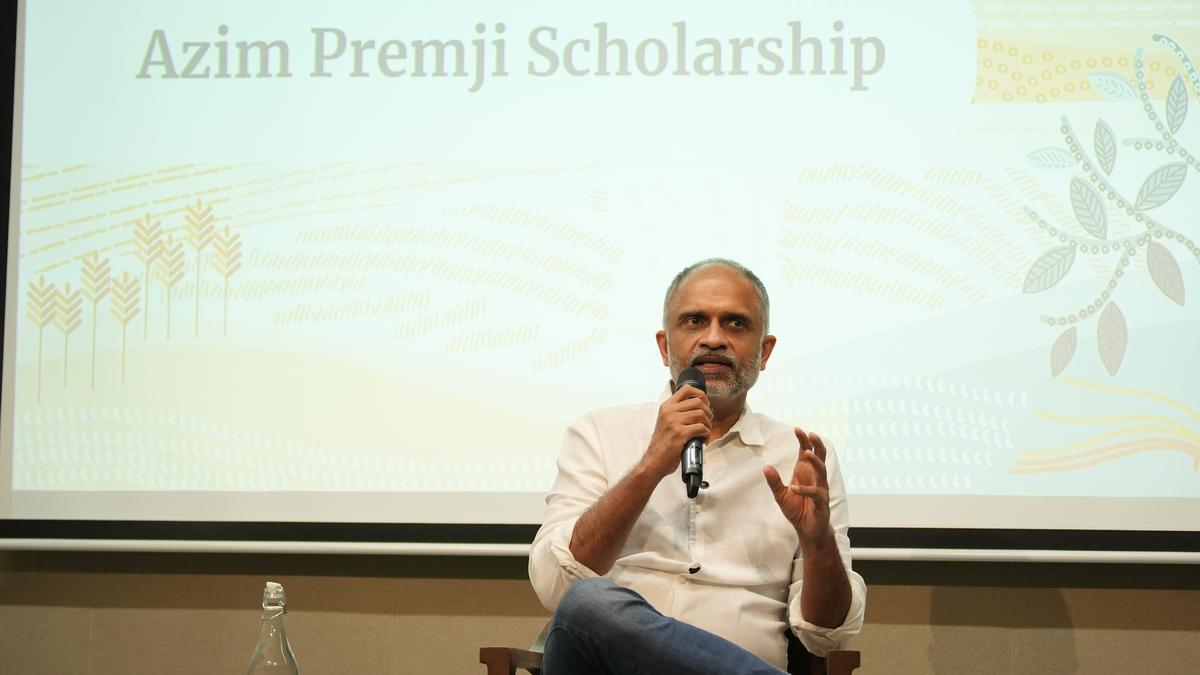
The Azim Premji Foundation on Thursday announced the Azim Premji Scholarship for up to 2.5 lakh girl students from government schools across 18 States for pursuing higher education.
A scholarship of ₹30,000 will be given annually to girl students who have passed their 10th and 12th examinations in government schools and have received admission in a bona fide higher education institution (HEI). These bona fide HEIs will include all government HEIs and selective private HEIs as well. The ₹30,000 scholarship will continue for the duration of the girl’s college/university programme, so long as the girl successfully continues in the programme.
“There is no additional criteria or eligibility for the candidates. We are not conducting any exams or checking the financial backgrounds of the students,” said Anurag Behar, the Chief Executive Officer of the Azim Premji Foundation.
He stated the reason for such a type of screening was that more than 90% of government school children come from disadvantaged backgrounds. The scholarship aims to ease some of the financial burdens of girl students pursuing a higher education, rather than focus on too many checklists or screening processes.
He also noted that while primary school admissions for girls were almost equal to those of boys, higher education admission numbers showed a lesser percentage of girls. “Tuition fees are often waived off or given at a discount for girls from disadvantaged financial backgrounds. But additional expenses like commute, clothes, books etc discourage them from pursuing their higher education,” he explained.
A pilot test of the ‘Azim Premji Scholarship’ was launched in 2024-25 across certain districts of Madhya Pradesh, Uttar Pradesh, Rajasthan, and Jharkhand, where over 25,000 girls were selected for the scholarship. For the academic year of 2025-26, the scholarship has officially been launched across 18 States, some of which include Arunachal Pradesh, Assam, Bihar, Karnataka, Telangana, Tripura, Odisha, and Mizoram.
The application process for 2025-26 will start in September 2025. Students can apply online. The scholarship program is a ₹2,250 crore commitment across three years by the foundation, and is likely to be expanded to cover the entire country in coming years.
source: http://www.thehindu.com / The Hindu / Home> News> Cities> Bengaluru / by The Hindu Bureau / May 16th, 2025
The Foundation has set a target of spending ₹4,000 crore over the next five years to build and operate a 1,000-bed charitable super-speciality and multi-organ transplant hospital in Bengaluru.
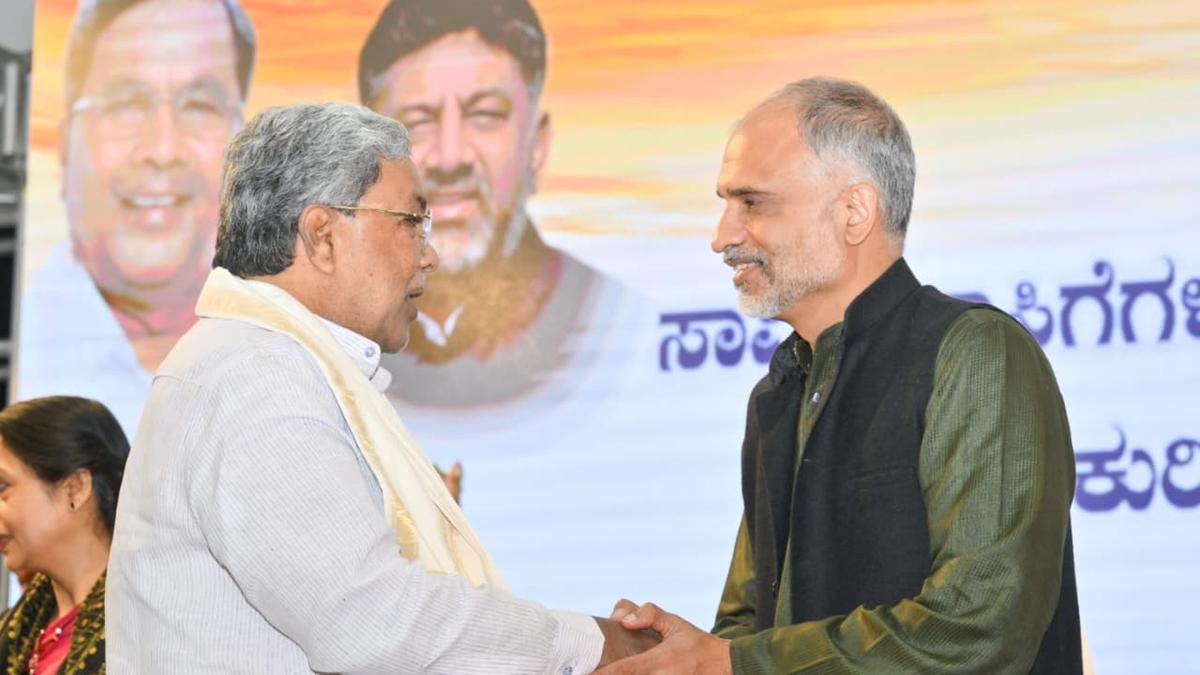
Chief Minister Siddaramaiah with Anurag Beharm, CEO, Azim Premji Foundation, at a ceremony in Bengaluru on Saturday. | Photo Credit: SPECIAL ARRANGEMENT
Chief Minister Siddaramaiah said the Azim Premji Foundation has set a target of spending ₹4,000 crore over the next five years to build and operate a new 1,000-bed charitable super-speciality and multi-organ transplant hospital in Bengaluru.
The hospital will come up on 10 acres within the Rajiv Gandhi Institute of Chest Diseases campus in Bengaluru, which the government has agreed to lease to the Foundation for 99 years, he announced on Saturday after the Medical Education Department and the Foundation signed a Memorandum of Understanding (MoU) for the construction and management of the facility.
Mr. Siddaramaiah said the State was grateful to the Foundation and to Azim Premji ‘for undertaking this noble initiative’, and for deciding to run the facility free of cost. The Foundation will invest ₹1,000 crore on building the hospital and more over the years to run the facility, he said.
Over the last 25 years, the Foundation has supported teacher training, contributed ₹1,500 crore to the government’s egg distribution scheme in schools in 2024, and extended annual scholarships of ₹30,000 each to students from government colleges under the Deepika scheme, the Chief Minister added.
Public systems key
Anurag Behar, CEO, Azim Premji Foundation, emphasised the importance of strengthening public systems, saying private initiatives cannot compensate for weak public infrastructure.
“The foundation believes that public systems are central to a good society. Our commitment is to work with the government to strengthen them,” he said, pointing out that healthcare begins with ASHA workers, primary health centres, and preventive work in communities. “Hospitals are critical, but the first goal must be to prevent people from falling ill,” he said.
Mr. Behar praised Karnataka as ‘one of the three most proactive States’ the Foundation works with. He noted that the Foundation’s 25-year engagement in Karnataka has shown progress most visibly in grassroots work in, among other places, Surpur and Sindagi.
Transplant hub
Medical Education Minister Sharan Prakash R. Patil said the proposed hospital will provide transplant services across multiple organs, with 70% of procedures free of cost and the remaining 30% at minimal rates on the lines of the autonomous Sri Jayadeva Institute of Cardiovascular Sciences and Research and the Kidwai Memorial Institute of Oncology.
He said more than 5,000 patients in Karnataka are currently awaiting kidney transplant, and over 1,000 require liver transplant.
Dr. Patil added that the project aligns with the government’s larger roadmap to strengthen tertiary healthcare. “We have set a target of establishing one medical college, one super-speciality hospital, one trauma centre, and one cancer hospital in every district,” he said.
At present, Karnataka has 22 government medical colleges, 10 super-speciality hospitals, eight trauma centres, and eight cancer centres, and is ‘halfway through’ with the plan. He said the State intends to transition towards a universal health coverage model, as in the UK, in the coming decade.
This article has been updated to rectify a factual error
source: http://www.thehindu.com / The Hindu / Home> News> India>Karnataka / by The Hindu Bureau / January 18th, 2026
Muslim Mirror’s 100 Most Influential Muslims of 2025
New Delhi:
Muslim Mirror has released its much-anticipated annual list of the “100 Most Influential Indian Muslims of 2025,” spotlighting individuals who have made significant contributions to India’s public life across a wide spectrum of fields including politics, culture, education, business, media, religion, sports, and social service. Now in its second edition, the list aims to document influence not merely as power or popularity, but as sustained impact, leadership, and the ability to shape public discourse.
A defining feature of the 2025 edition is the growing prominence of younger achievers, signalling a visible generational shift within Indian Muslim leadership. Alongside established national figures, the list includes emerging voices who have built influence through grassroots activism, professional excellence, digital platforms, legal advocacy, education, and community engagement. Editors associated with the project said this was a deliberate attempt to recognise new centres of influence beyond traditional hierarchies.
The list reflects the diversity and plural character of Indian Muslim society, cutting across geography, ideology, profession, and language. From seasoned politicians and religious scholars to artists, entrepreneurs, academics, and social reformers, the compilation offers a broad snapshot of leadership trends at a time when issues of representation, constitutional values, and social justice remain central to national debate.
Representation Across Sectors
The 2025 list features several eminent academicians and intellectuals who have shaped higher education, policy discourse, and social research. Among them are Abul Qasim Nomani, Ameerullah Khan, Furqan Qamar, Shahid Jamil, and Ubaid-ur-Rahman, recognised for their contributions to education, public policy, and academic leadership.
In the business and entrepreneurship category, the list includes influential names such as Azad Moopan, Azim Hashim Premji, Farah Malik, Irfan Razack, M. P. Ahammed, Mecca Rafiq Ahmed, Meraj Manal, Syed Mohamed Beary, P. Mohammed Ali, Shahnaz Hussain, Tausif Ahmad Mirza, Yusuff Ali, and Ziaullah Sharif. Their inclusion underlines the growing economic footprint of Indian Muslim entrepreneurs, both domestically and globally, spanning sectors from retail and healthcare to infrastructure and consumer goods.
Community leadership remains a strong pillar of the list, with figures such as Arshad Madani, Mahmood Madani, Malik Motasim Khan, Mehmood Pracha, Syedna Mufaddal Saifuddin, Navaid Hamid, Pirzada Md Abbas Siddiqui, Qasim Rasool Ilyas, Sadatullah Husaini, Umer Ahmed Ilyasi, and Yusuf Mohamed Abrahani recognised for their roles in religious guidance, legal advocacy, social mobilisation, and institutional leadership.
Culture, Media, and Public Discourse
In arts and entertainment, globally recognised names such as A. R. Rahman, Aamir Khan, Mammootty, Munawar Faruqui, and Shah Rukh Khan continue to command immense cultural influence, shaping narratives that extend well beyond cinema and music into social consciousness.
The list also acknowledges the growing importance of media and journalism in shaping opinion and challenging dominant narratives. Journalists and commentators such as Arfa Khanam, Irfan Meraj, and Seema Mustafa are recognised for their consistent engagement with issues of democracy, minority rights, and constitutional values.
Religious and Intellectual Scholarship
A significant section of the list is devoted to Islamic scholars and religious thinkers, reflecting their continued influence on moral leadership and intellectual discourse. Names such as A. P. Aboobacker Musliyar, Qasim Nomani, Prof. Akhtarul Wase, Asghar Ali Imam Mahdi Salafi, Asjad Raza Khan, Ibraheem Khaleel Al-Bukhari, Javed Jamil, Khalid Saifullah Rahmani, Khaleelur Rahman Sajjad Nomani, Qamaruzzaman Azmi, Rashid Shaz, Shakir Ali Noori, Shamail Nadvi, and Yasoob Abbas find place for their scholarly work, writings, and public engagement.
Politics and Governance
The political category features leaders cutting across party lines and regions, including Asaduddin Owaisi, Ghulam Nabi Azad, Hamid Ansari, Mehbooba Mufti, Omar Abdullah, Salman Khurshid, Najeeb Jung, Syed Naseer Hussain, Engineer Rashid, Akhtarul Iman, Iqra Hasan, Zameer Ahmed Khan, Rakibul Hasan, K. Rahman Khan, Kadir Mohideen, Mohibullah Nadvi, Md Shafi, Agha Mahadi, Asim Waqar, and Sadiq Ali Shihab Thangal. Their inclusion reflects influence exercised through electoral politics, governance, diplomacy, and legislative advocacy.
Changemakers and Social Reformers
One of the most dynamic sections of the 2025 list is that of changemakers and social reformers, featuring individuals such as Safeena Husain, Shahabuddin Yaqoob Quraishi, Syeda Hameed, Zameer Uddin Shah, Mahbubul Hoque, Sabahat S. Azim, Mehmood Pracha, Faiz Syed, and Zahir Ishaq Kazi, among others. Many of these figures have earned recognition through long-term grassroots work rather than formal authority.
International Booker Prize 2025 winner Banu Mushtaq for Heart Lamp, along with renowned poet Wasim Barelvi, has been placed in the category of Literary Figures.
In sports, iconic names Sania Mirza and Irfan Pathan continue to inspire younger generations through excellence and public engagement beyond the playing field.
Beyond Rankings
The editors emphasised that the list does not claim to be exhaustive, nor does it measure influence solely through fame, wealth, or official position. Instead, it seeks to capture real-world impact, moral authority, intellectual contribution, and the ability to shape conversations within and outside the community.
The annual list has increasingly become a reference point for understanding evolving leadership patterns among Indian Muslims. By foregrounding both established figures and rising talents, the 2025 edition reflects continuity as well as change, underscoring how Indian Muslims continue to contribute meaningfully to India’s democratic, cultural, and social field.
source: http://www.muslimmirror.com / Muslim Mirror / Home> Indian Muslim / by Muslim Mirror / January 15th, 2026
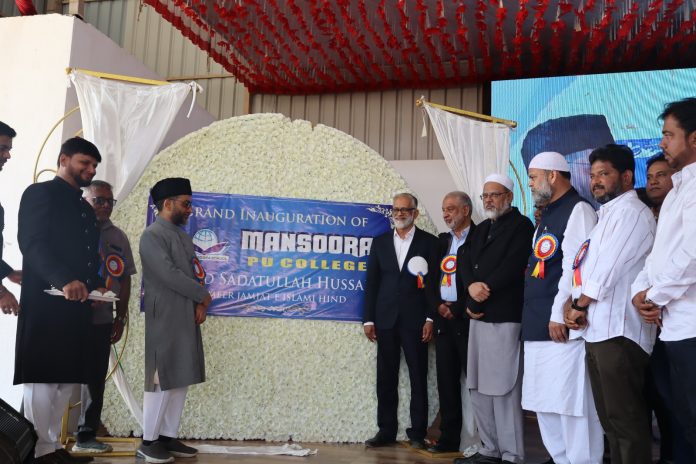
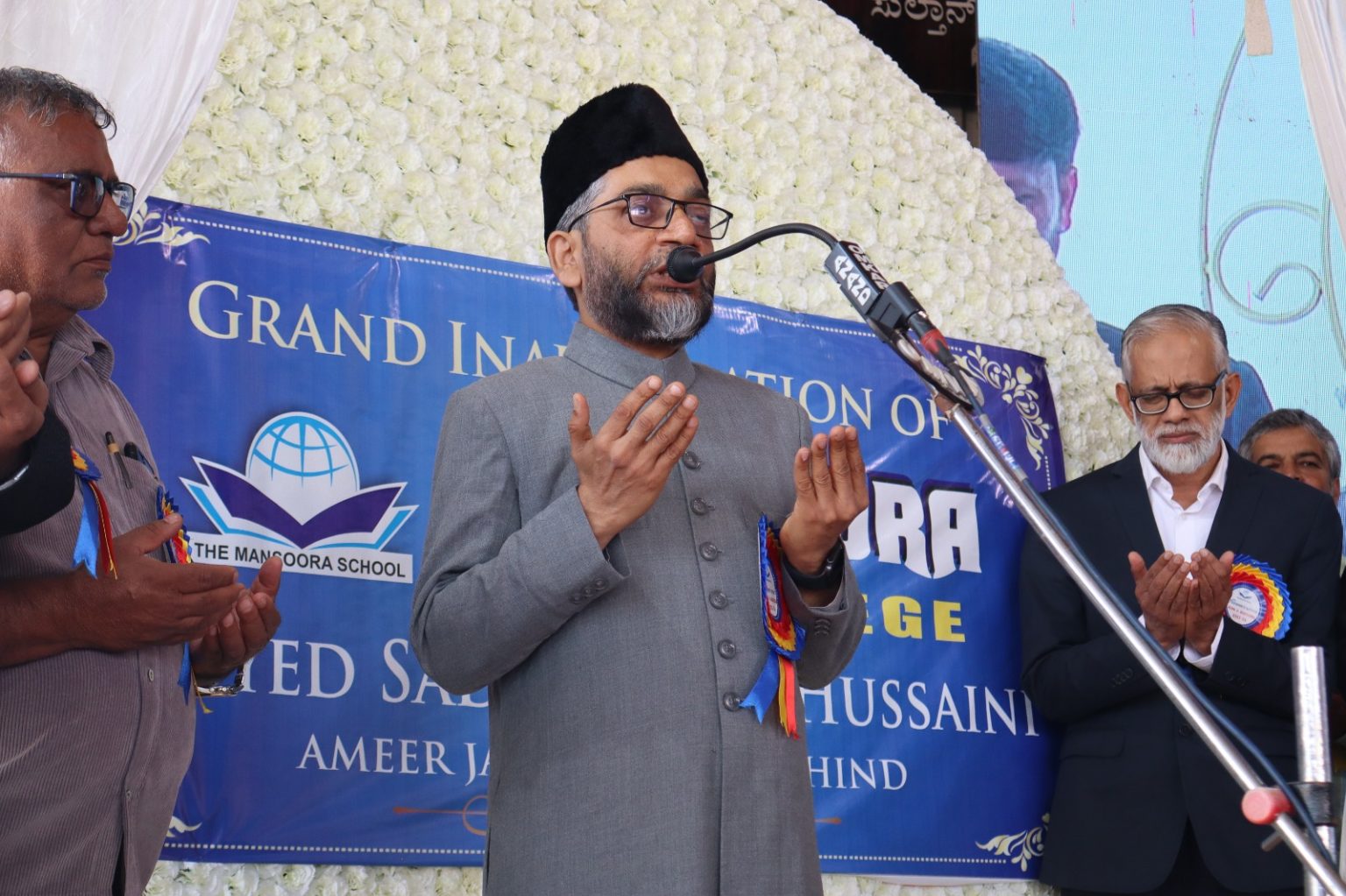
In the gently rolling landscape of Karnataka’s Hassan district, a new academic chapter is being added to a legacy that is already four decades old. With the launch of Mansoora PU College at Alur, an institution long associated with school-level education is extending its vision to the crucial pre-university stage, responding to a growing demand for integrated, value-oriented higher secondary education in the region.
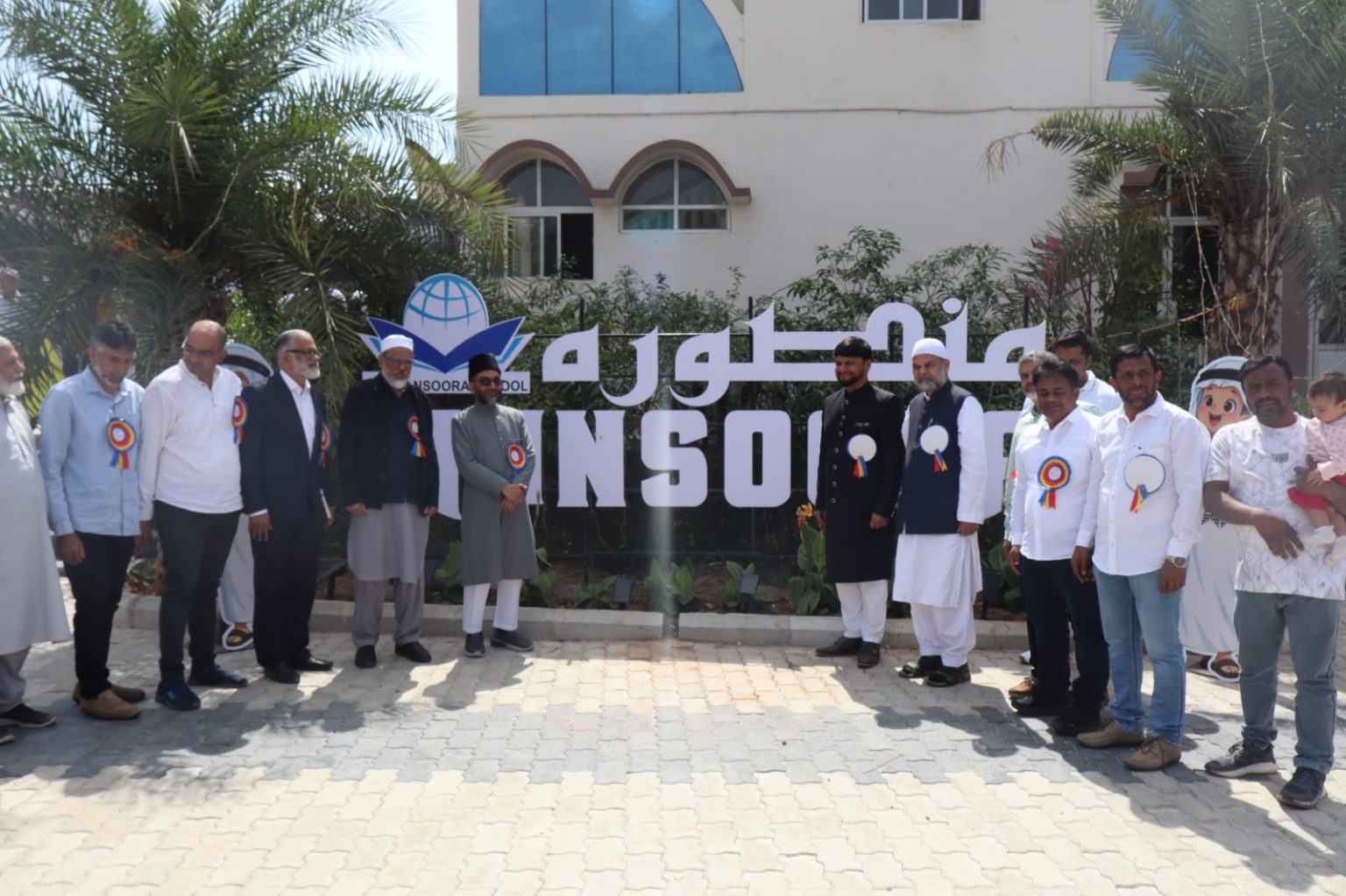
Located on a sprawling campus off the Bengaluru–Mangaluru highway, the new PU college is part of the educational ecosystem nurtured by The Mansoora School, which itself grew out of an initiative started nearly 40 years ago by Jamaat-e-Islami Karnataka circles. What began as the Islamia Arabic College and later evolved into an English-medium school up to Class 10 has now expanded to include pre-university education under the Mansoora name.
Speaking about the motivation behind the expansion, Dr. Taha Mateen, Vice-Chairman – Mansoora Educational Trust, explains that the move was shaped by both continuity and necessity. Many students completing their secondary education were seeking PU colleges that combined academic rigour, competitive exam preparation, and an environment aligned with their cultural and ethical values. “The idea was not just to add another college,” he notes, “but to create a protected, focused academic space where students can prepare seriously for their future.”
Academic Focus with Competitive Readiness Mansoora PU College opens admissions for the 2026–27 academic year with science and commerce streams that reflect current aspirations among students and parents. The college offers PCMB, PCMC, and EBAC combinations, along with integrated coaching for national and state-level competitive examinations such as NEET, JEE, and KCET. This integrated model aims to reduce the burden of parallel coaching by aligning board curriculum with entrance exam preparation.
Faculty recruitment has been positioned as a cornerstone of the project. According to the management, experienced and well-qualified teachers have been brought in, with special attention to mentoring students who may need additional academic support. There is also a stated emphasis on encouraging girls’ participation in science streams, an area where access and retention often remain challenges in semi-rural regions.
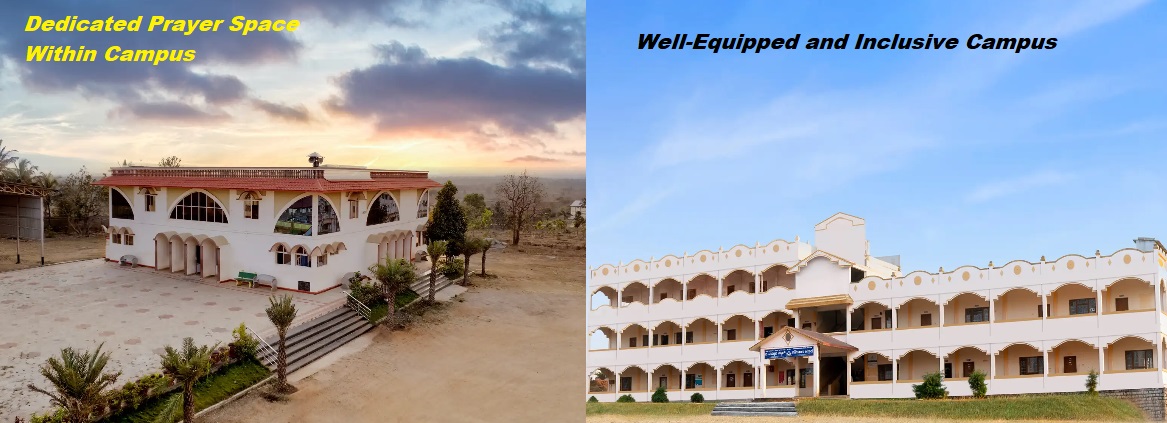
Campus Life and Infrastructure One of the distinguishing features of the new PU college is its fully residential model, with separate hostels and facilities for boys and girls. The girls’ campus includes a residential hostel, exclusive mess, separate classrooms, science and computer laboratories, a library, play areas, and a dedicated namaz hall. Facilities for boys similarly include residential hostels, a masjid, science and computer labs, library, playfields, and a football ground.
The wider campus, described as lush and peaceful, is equipped with CCTV surveillance, first-aid and doctor visit facilities, and structured recreational spaces. The intention, Dr. Mateen explains, is to offer an environment that is academically focused while being insulated from distractions associated with excessive device use and unsupervised digital exposure.
Education with Ethical Grounding What sets Mansoora apart, its trustees argue, is the attempt to integrate modern education with ethical and religious grounding. Alongside regular academics, the broader Mansoora educational framework includes Deeniyath education, Quranic studies with tajweed, memorisation of daily duas, and structured Islamic studies from the middle grades onward. While the PU college itself focuses primarily on board and competitive curricula, it functions within this larger institutional ethos.
Sports and physical education also form part of campus life, with facilities for football, volleyball, karate, skating, and indoor games, reflecting an understanding that academic excellence is closely tied to physical and mental well-being.
Independence and Institutional Identity Interestingly, despite informal support and goodwill from well-known coaching ecosystems, the management has consciously chosen to retain an independent identity. Dr. Mateen points out that the decision to operate under the Mansoora name, without external branding, was deliberate. “We felt the institution has its own credibility and history. We wanted to build on that legacy rather than borrow another’s,” he says.
Access, Fees, and Outreach The college has announced a structured and relatively moderate tuition fee, with early-bird concessions and additional scholarships for meritorious students. Separate hostel fees apply. Admissions are currently open, with limited seats, and the management encourages interested families to visit the campus, interact with faculty, and assess the facilities firsthand.
Situated in Alur, around 200 kilometres from Bengaluru and well connected to Mangaluru, Mansoora PU College positions itself as a regional hub for students seeking a blend of academic ambition, residential discipline, and value-based education.
As Karnataka’s educational landscape continues to diversify, the launch of Mansoora PU College reflects a broader trend: institutions rooted in community histories adapting to contemporary educational demands, while attempting to hold on to the principles that defined their beginnings.
Further details can be obtained from: https://puc.mansoora.in/
source: http://www.radiancenews.com / Radiance News / Home> Education> Features> Focus> Report / by Radiance News Bureau / January 14th, 2026
Noor Aisha has been awarded a Doctorate degree in Bio chemistry, marking a significant milestone in her academic and professional journey. The achievement has been widely welcomed by academic circles, social activists, and well-wishers who see it as a moment of pride and inspiration, particularly for young women aspiring to higher education.
According to the details, Noor Aisha is the first Muslim girl to secure a doctorate degree in Science Stream of Mysore University after several years.
Noor Aisha has remained actively engaged in academic and intellectual pursuits from an early age. Throughout her career, she has demonstrated a keen interest in learning, research. Colleagues and mentors describe her as hardworking, disciplined, and deeply committed to academic excellence.
Speaking on the occasion, her parent Mohammed Ali and Noor Jahan expressed happiness over her success, stating that the achievement is not only a personal accomplishment but also a source of motivation for many students, especially women, who face social and economic challenges in pursuing higher education. They emphasized that Noor Aisha’s journey highlights the importance of perseverance, determination, and family support in achieving academic goals.
source: http://www.radiancenews.com / Radiance News / Home> Education> Latest News> Report / by Radiance News Bureau / January 12th, 2026
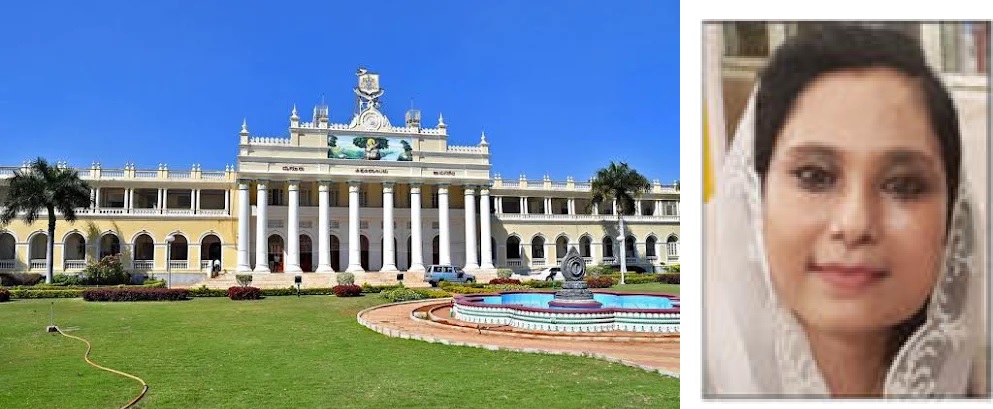
Academic excellence, perseverance, and family support came together at the 106th Annual Convocation of the University of Mysore, where Zikra Urooj emerged as the topper in MSc Genetics and was awarded the prestigious HA Ranganath Gold Medal for securing the highest marks in her discipline.
Zikra Urooj, a student of the Department of Studies in Genetics and Genomics, has brought pride to her family and the institution through her remarkable academic performance. Her achievement stands as a testament to the transformative power of education, particularly for students from modest backgrounds who aspire to excel in higher studies.
A Journey Rooted in Discipline and Determination
Hailing from a humble family, Zikra is the daughter of Hafiz Jameel Ahmed, a respected religious scholar who teaches the Holy Quran and leads special prayers during the month of Ramadan. Despite limited means, her father placed strong emphasis on education, ensuring that his daughter had access to quality higher learning.
Zikra’s success reflects a balanced upbringing that combined faith, discipline, and academic rigor. Her journey underscores how consistent guidance at home and a strong work ethic can help students overcome challenges and reach the highest levels of academic achievement.
Recognition at the 106th Convocation
The gold medal was presented to Zikra Urooj during the University of Mysore’s 106th Annual Convocation, a significant academic event attended by dignitaries, faculty members, students, and parents. The HA Ranganath Gold Medal is one of the university’s most sought-after honours, awarded only to students who demonstrate exceptional academic merit.
University officials praised her performance, noting that such achievements enhance the reputation of the institution and inspire future students to pursue excellence in scientific research and higher education.
Bushra Kausar Shines in Commerce Faculty
The convocation ceremony also witnessed outstanding achievements in the undergraduate segment. Bushra Kausar, hailing from Hassan, topped the Commerce faculty at the undergraduate level by securing three gold medals in BCom.
She was awarded the Shri Krishna Rajendra MMils Ltd. Mysore Gold Medal, Shrimati Padma Narayan Memorial Gold Medal, and the Principal SR Mandre Gold Medal. The awards were presented by the Governor and Chancellor of the University, Tawarchand Gehlot, in recognition of her exceptional academic performance.
Gratitude to Teachers and Parents
Bushra Kausar attributed her success to the unwavering support of her teachers and the encouragement of her parents, Mohammed Ghouse and Salma Parveen. She emphasized that constant motivation at home and academic guidance from faculty members played a crucial role in shaping her educational journey.
Inspiring Academic Excellence
The achievements of Zikra Urooj and Bushra Kausar highlight the University of Mysore’s continued commitment to nurturing talent across disciplines. Their success stories serve as an inspiration for students, particularly young women, to pursue higher education and strive for excellence despite social or economic constraints.
Three more students from the Department of Urdu secured gold medal they are; Sumaiya Begum Mysore, Nazmi from Kerala and Mufti Mokhtar Husain from Mandya.
source: http://www.radiancenews.com / Radiance News / Home> Features / by Radiance News Bureau / January 08th, 2026
A glimpse into how Aahil Ayaz channelled his experiences in tennis and pickleball to start a business
At an age when most youngsters are busy with studies and video games, 17-year-old Aahil Ayaz has chartered a new course to merge his sporting talent with business.
Ayaz began his journey as a successful tennis player at 15, and won the gold in the world pickleball championship India series held recently.
He was not only a semifinalist at the ITF Under-18 Tennis Championship, but also represented Karnataka in the national pickleball tournament, before transitioning to coaching. He recognised the potential for pickleball and saw an opportunity to combine his passion with promotion of this emerging sport.
He founded Stryde Sports to make pickleball a community event in all corners of Bengaluru.
At Stryde Sports, Ayaz not only organised pickleball events, but also offered coaching services and his efforts found support from the World Pickleball Association.
Talking about his foray into the business side of sports, Aahil says, ”I noticed pickleball’s fast growth and a gap in quality events for its community. I wanted to bridge that gap and that is how Stryde Sports started. The idea was simple: create high-quality, community-driven tournaments that elevate the experience for players.”
While many may see their lack of experience as a deterrent, Aahil says he always believed age was never a defining factor for anything. “Coming from a sports background, discipline and competition were already part of my mindset. I realised early on that I wanted to build something that created opportunities for others too. That drive pushed me to start young and keep executing instead of waiting for the right time.”
“Sports taught me discipline, focus, and resilience — qualities that shaped how I approach business today. Coaching tennis and mentoring over 100 students, helped me see the bigger picture of leadership, teamwork, and impact beyond personal performance.”
And while all this may seem quite overwhelming for most, let alone a teenager, Aahil says this is just the beginning. “We are building a platform where young founders can pitch their ideas where successful entrepreneurs invest, mentor, and back new visionaries. Talent is everywhere; it just needs the right stage. This isn’t a project. It’s a movement.”
source: http://www.thehindu.com / The Hindu / Home> News> Cities> Bengaluru / by Kalyan Ashok / December 25th, 2025