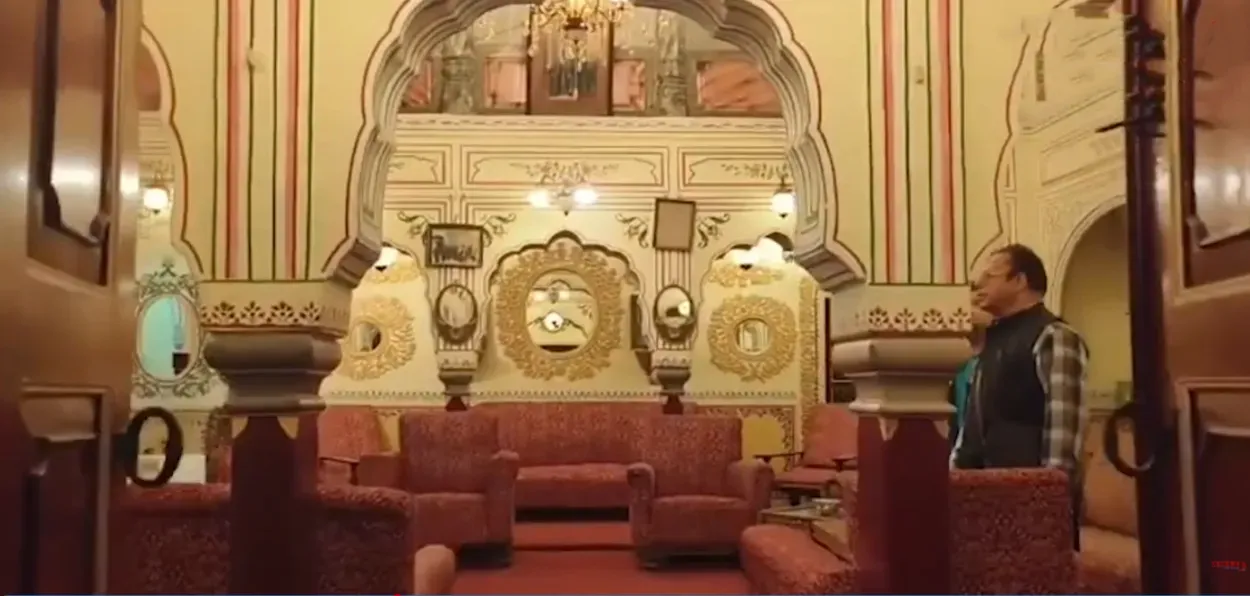
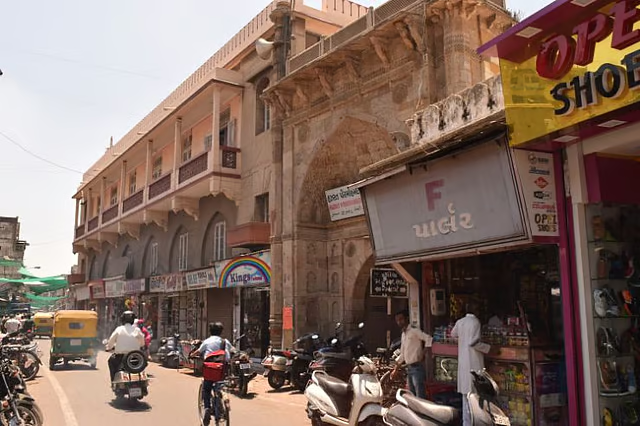
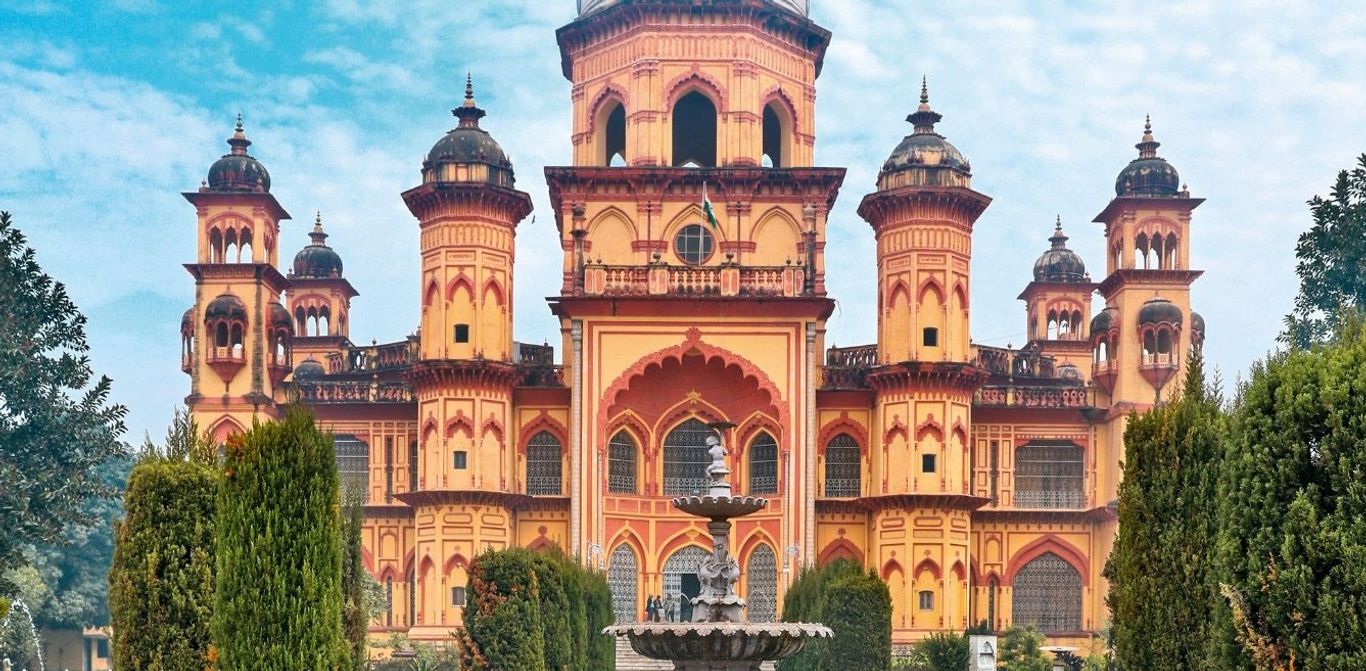
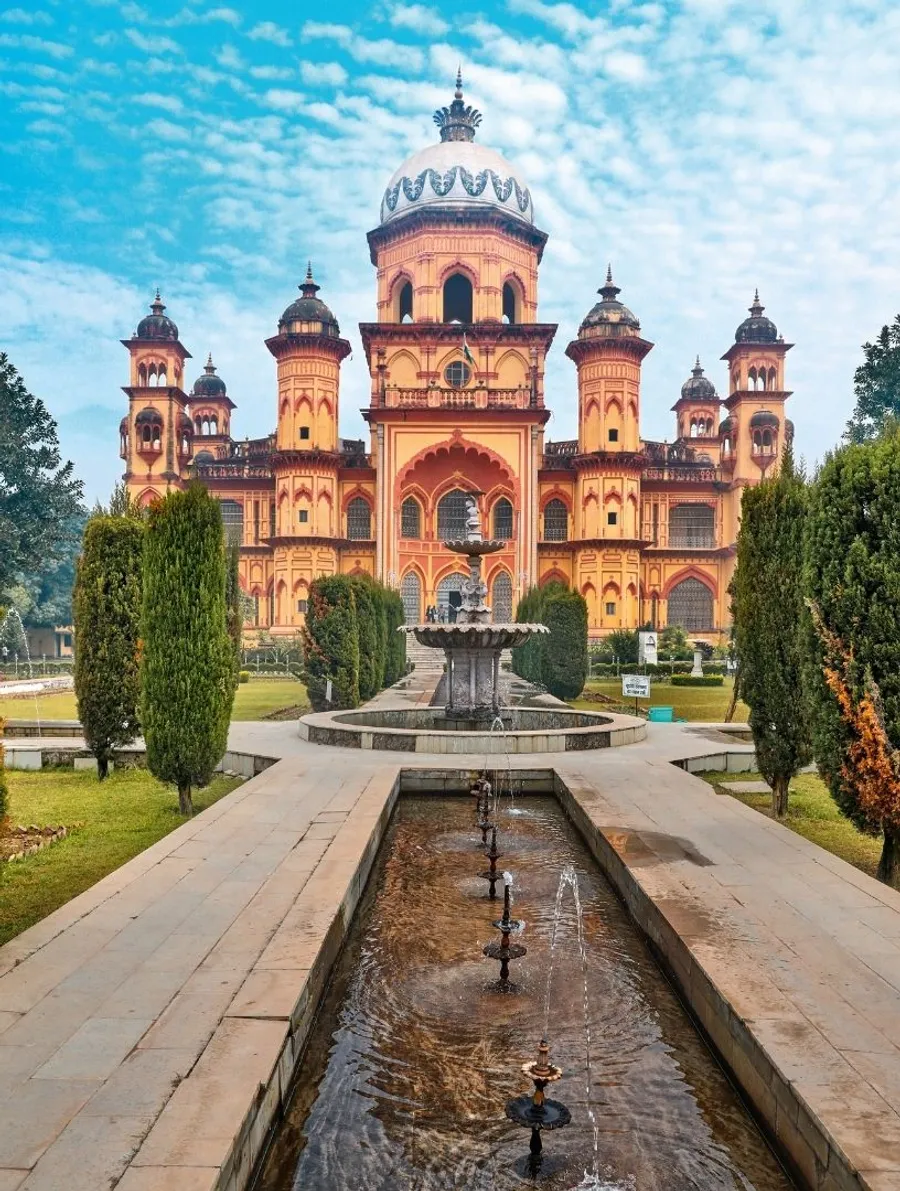
In the bustling streets of Jaipur at Haldio Ka Rasta, Johari Bazar, time suddenly seems to stand still. Amidst ancient stone walls, arched doorways and the stillness of history, stands the Salim Manzil, a majestic building which is a living legacy of more than two centuries.
The mansion houses a relic – a cap of Imam Hussain, the grandson and son-in-law of the Prophet Muhammad; it adds to its importance.
The story behind the ‘blessed cap’ reaching the haveli is interesting and part of its rich history.
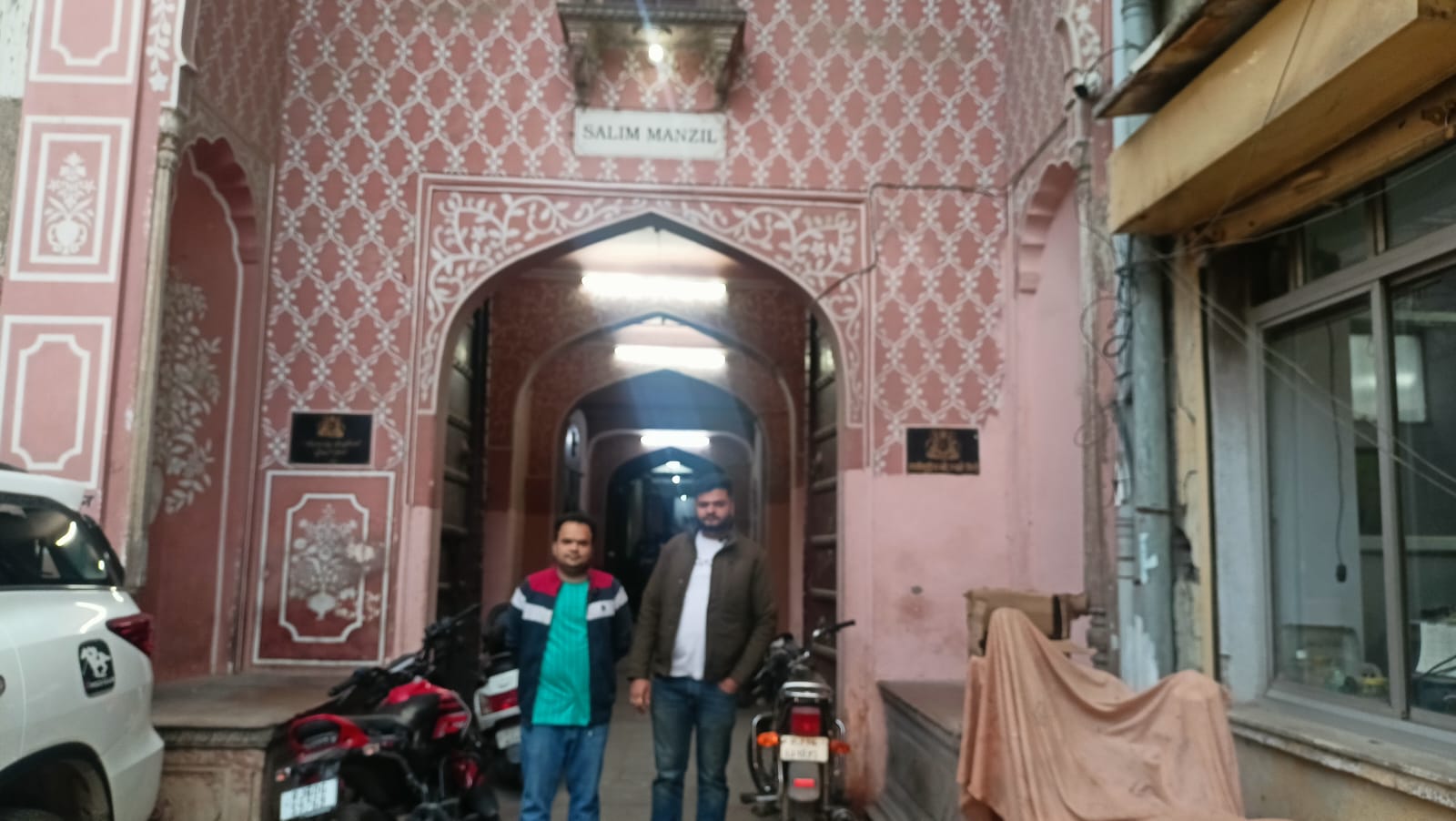
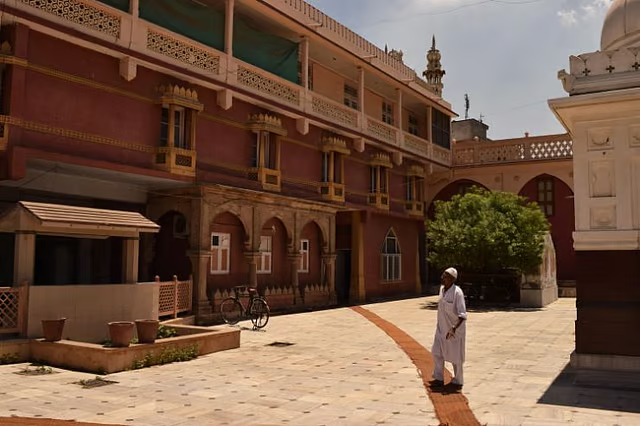
The entrance to Salim Manzil
In the early 17th century, an ancestor of today’s inmates of Salim Manzil treated an Iranian king. The King wanted to reward him with gold, silver and valuable gifts, but he declined the offer and instead requested the cap of Hazrat Imam Hussain.
The King presented the relic and a certificate with the royal seal to him as a reward.
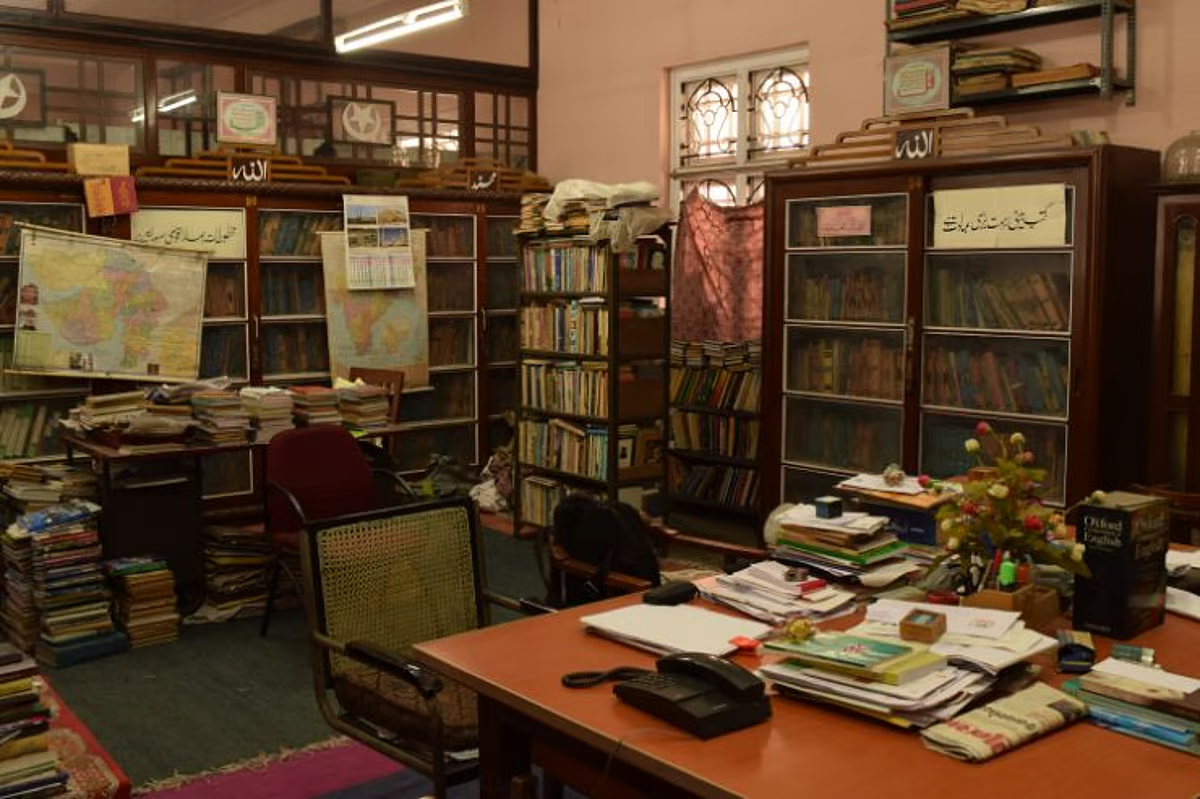
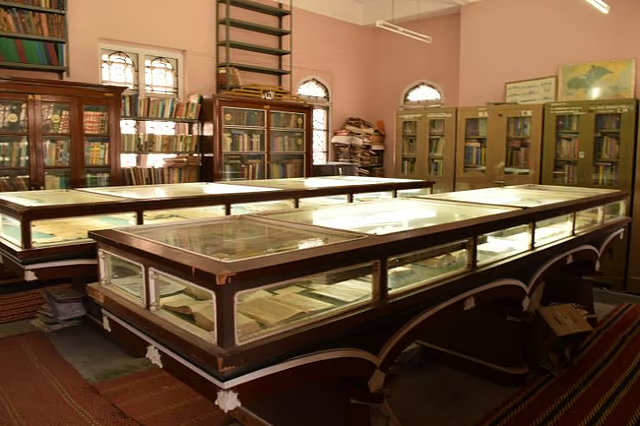
Since 1876, this blessed hat has been preserved in Saleem Manzil in a special glass-framed box kept in a hall called “Kala-e-Mubaraq”.
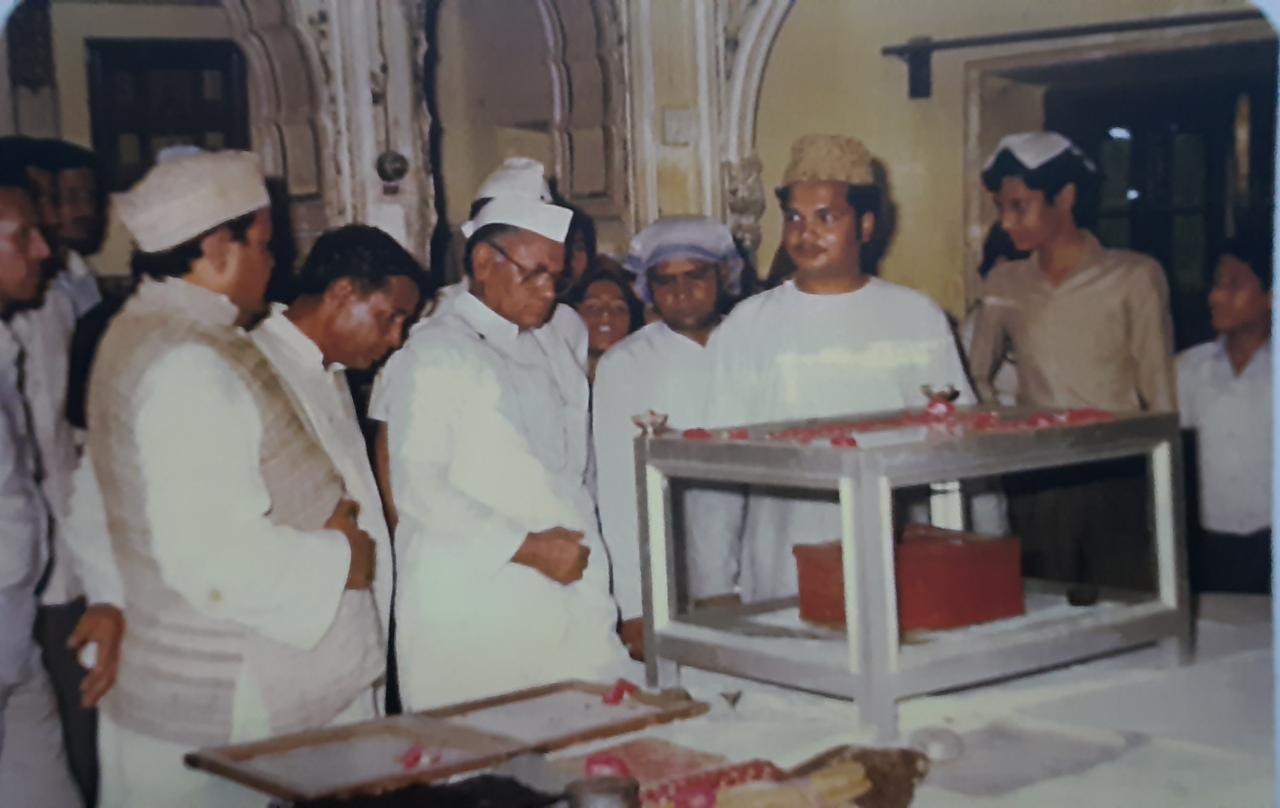
Every year on the 9th and 10th of Muharram, it is opened to the public. In those days, Salim Manzil is turned into a pilgrimage centre, and its air filled with spirituality.
People viewing the Blessed Cap of Hazrat Imam Ali
Today, Moinuddin Khan, 33 and his younger brother, Hussamuddin Khan, 27, are living in the mansion. The two brothers are not only maintaining this legacy, but also modernising its upkeep and display of artefacts.
Moinuddin Khan says that his ancestors came to Jaipur from Delhi around 1812 AD. At that time, Maharaja Jagat Singh of Jaipur State granted them a fiefdom and honour to his elder brother, Hakim Wasil Ali Khan.
This honour was for Wasil Ali Khan’s academic and medical expertise, and he was admitted to the Royal Court. One of the ancestors was the head of the intelligence department of Jaipur State, a sensitive position. He was responsible for the State’s security, political activities and gathering information needed for administration.
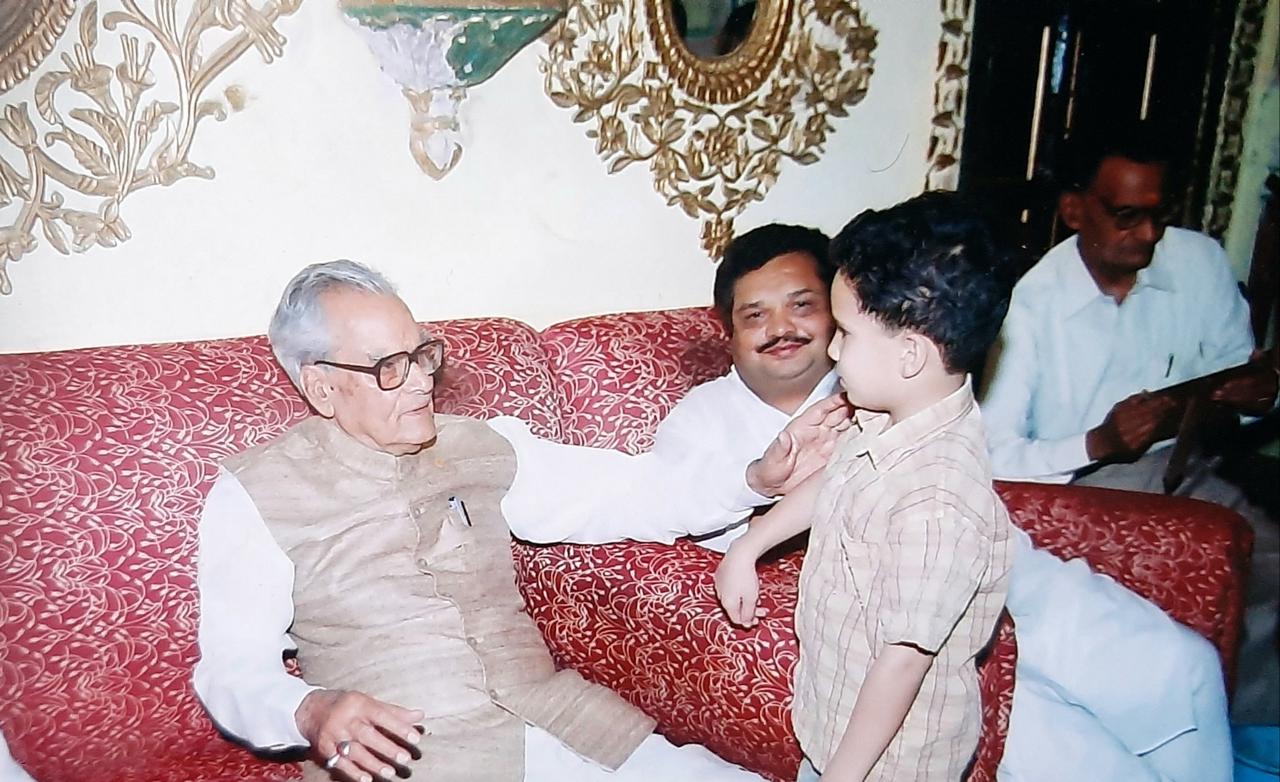
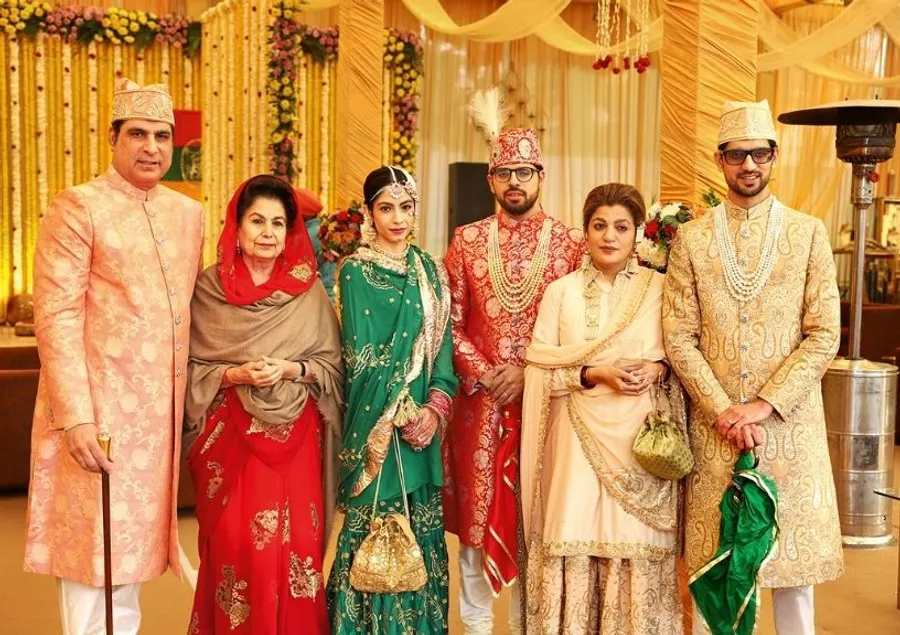
Bharion Singh Shekhawat with the inmates of Salim Manzil
Later, his son, Salim Ali Khan, worked in the same position.
The construction of Saleem Manzil began in 1867, and it was completed within three years. Spread over an area of about a bigha, the building was gifted by the Maharaja of Jaipur. Even today, the haveli’s traditional Rajasthani carvings, arches, high ceilings and lattice windows are a testimony to the architectural craftsmanship of that era.
Over time, many havelis were converted into commercial hotels, but Saleem Manzil retained its original identity. The family also received offers to convert it into a hotel, but they preferred to preserve the spirit of the heritage rather than market it.
Visitors inside the Salim Manzil
The mansion has been used as a set by many filmmakers for movies and web series. Moinuddin says he acted for the role of Sri Krishna in one of the web series. “We have a strong foundation in religion, but we also remain connected with art and dialogue.”
A large hall is decorated, the rooms are filled with the fragrance of perfume and roses, and the pilgrimage begins with Milad Sharif.
Devotees from Gujarat, Maharashtra and other parts of the country also arrive here. In those days, Shia Muslims read prayers and distribute Tabarak.
Moinuddin says that we consider it more of a trust than an inheritance. It is both an honour and a responsibility for us.
Many important persons have visited Salim Manzil. They include President Giani Zail Singh, Chief Ministers Haridev Joshi and Shiv Charan Mathur, Bhairav Singh Shekhawat (Vice President), Natwar Singh (Minister), Najma Haibabullah (Rajya Sabha Chairperson), and Supreme Court Justice Gyan Sudha Mishra.
Head of the family, late Naseemuddin Khan, popularly known as Pyare Mian, founded the All-India Hakeem Ajmal Khan Memorial Society to perpetuate his family’s legacy of Unani medicine and social service.
Today, Moinuddin and Husamuddin Khan are trying to connect this heritage with modern dialogue. They are planning to build a new hall for better management of the pilgrimage during Muharram.
They are sharing information about this heritage with the world through social media and digital means for transparency.
Amid myriad historic monuments of Jaipur, Salim Manzil is unique since it not only preserves the relics of history but is also a pilgrimage centre.
source: http://www.awazthevoice.in / Awaz, The Voice / Home> Stories / by Farhan Israeli, Jaipur / February 21st, 2026
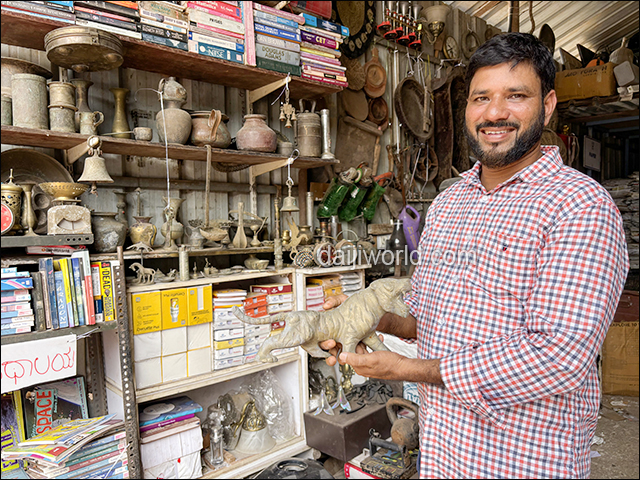
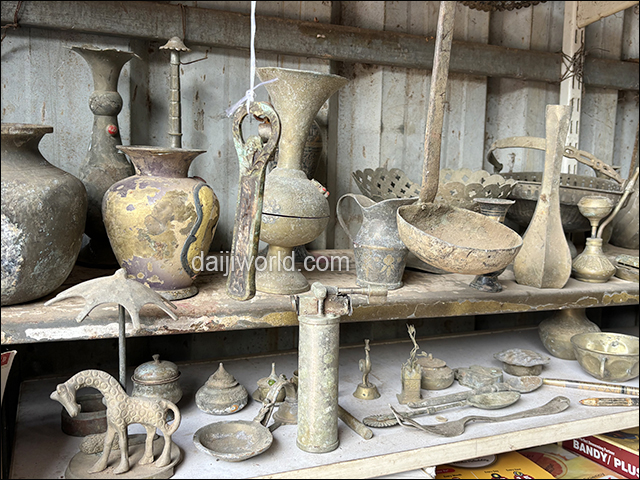
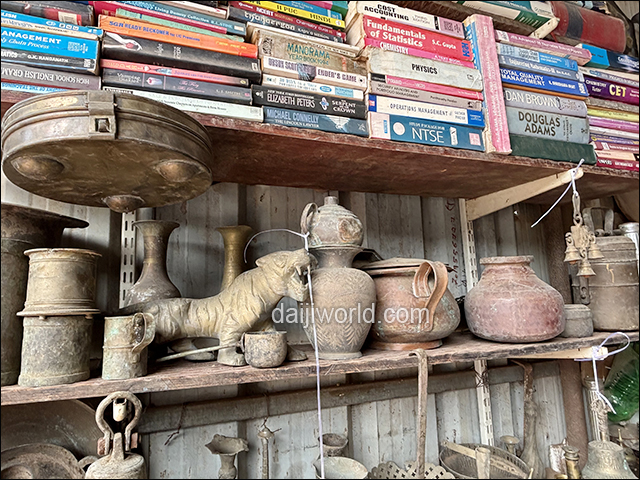
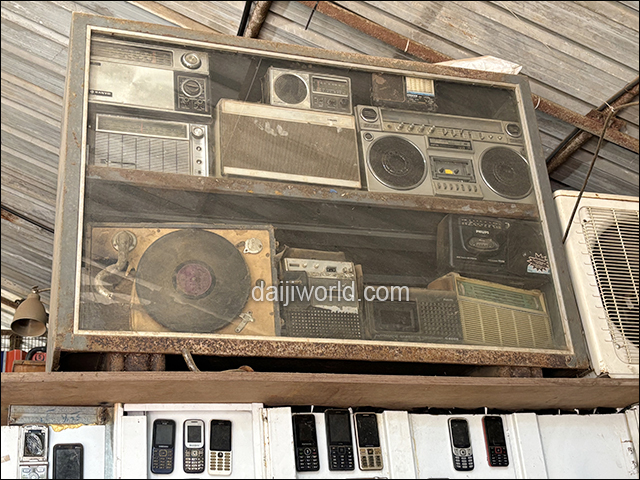
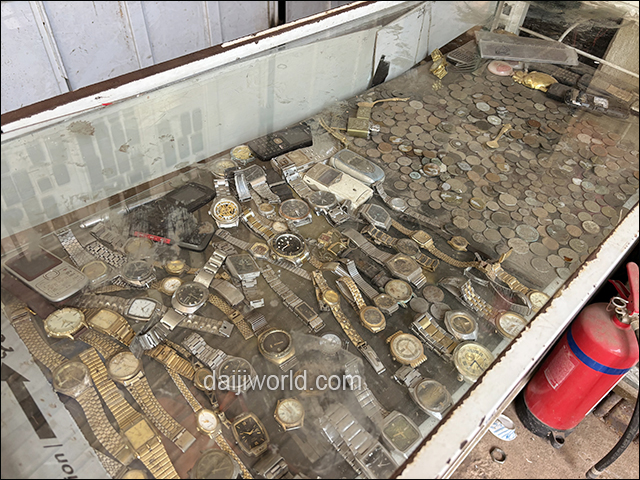
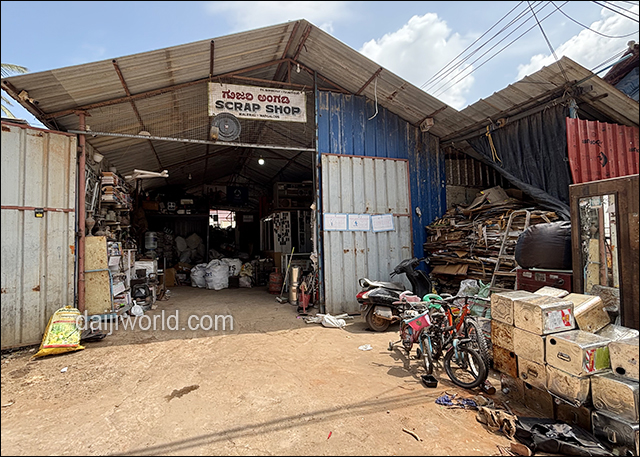
In the heart of Malemar stands a unique museum that has become a treasure trove of memories for the community. What began as a small scrap business two decades ago, and later transformed into a distinctive museum eight years ago, is today capturing the attention of visitors with its fascinating collection of vintage artefacts — all thanks to the dedication of Ibrahim Khaleel.
Originally hailing from Kulur, Khaleel developed the idea of converting his scrap shop into a museum when he noticed antique and traditional pieces entering scrap shops.
Determined to preserve them for future generations, he began collecting items not only from his own shop but also from households and other scrap dealers. Over the years, his efforts have turned discarded objects into priceless memorabilia — truly creating ‘wealth out of waste’.
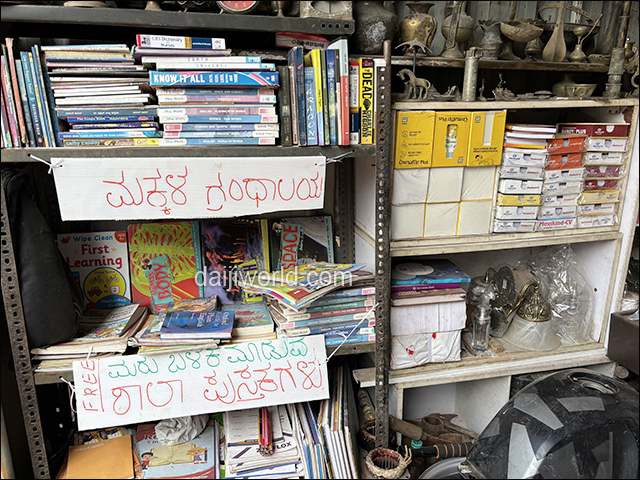
Khaleel’s museum now showcases a wide array of antiques, including coins, watches, tape recorders, gramophones, vintage telephones, lanterns, and traditional household items. He has also created a small library within the museum, where children and students can access books free of cost, making his initiative both nostalgic and educational.
His work has received valuable support from organisations such as Plastic for Change, which helped him organise the scrap shop into different sections. Khaleel has also invested in machines to shred waste paper, ensuring sensitive documents are not misused, and to separate cable wires from copper for effective recycling.
Looking ahead, Khaleel hopes to create a separate, larger space for his museum so that more people can visit, relive memories, and appreciate the craftsmanship and design of a bygone era.
Khaleel’s scrap museum is not just a collection of old objects; it is a space where history lives on, nostalgia is rekindled, and generosity flourishes. For anyone visiting Malemar, it is undoubtedly a must-see destination.
Scrap Shop Turns Museum in Mangalore | Creativity of Ibrahim Khaleel / source: youtube.com
source: http://www.daijiworld.com / Daijiworld / Home> Top Stories / by Daijiworld Media Network – Mangaluru / pics: Dayanand Kukkaje / September 11th, 2025
The evocative recapitulation of eminent personalities provides a quick, candid, exquisite and scrupulous portrayal of those who retain their abiding presence without being physically present in the world.
The unprecedented acceptance of monolingualism has put a big question mark on the existence of numerous languages through which people stitch up a warm social rapport and seek to fulfill their cultural aspirations. India, an awe-inspiring repository of innumerable dialects, languages and different linguistic traditions, finds it nerve-racking to carry through the challenges thrown open by the technology-savvy language-English. The domination of English has taken a heavy toll on regional languages, and Urdu, once considered a significant link language, is no exception. Though Urdu is widely used as a spoken language, and its sensitively rendered poetry gets across the country, its script has been fading away with bewildering speed.
It aches much to realize that the popularity draws its sustenance from its oral rendering, and familiarity with its distinct script has been melting away steadily. Barring some notable exceptions, only faculty members and research scholars associated with various departments of Urdu of the universities and colleges use Urdu as the medium of trifling academic discourse. At a time when Urdu faces the threat of obsolescence, the gleam of hope emerges from the citadel of learning, Aligarh, where academicians not belonging to humanities draw on Urdu to initiate a perceptive discourse on a plethora of issues without bringing rhetorical flourish into play.
Professor Saeeduz Zafar Chagatai (Physics), Professor Faseeh Ahmad Siddiqui (Chemistry), Professor Athar Siddiqui (Zoology), Professor Shaan Mohammad (Political Science), Professor Iftikhar Alam Khan (Museology), Professor Zilur Rehman (Unani Medicine), Professor Mohammad Sajjad( History ), Professor Zafar Mahfooz Nomani (Law) Dr Asad Faisal Farooqui (Mass Communication) and the like seek to strengthen non-fiction prose in Urdu.
Autobiography, memories, diary, letters, sketches and anecdotal scrolls are much-adored genres of non-fiction prose, but in Urdu, they usually betray a strong sense of gushiness and sickening self-adulation. The preponderating narrative of reminisces does not go well with the celebrated author, Professor Athar Siddiqui, whose evocative recapitulation of eminent personalities appeared.
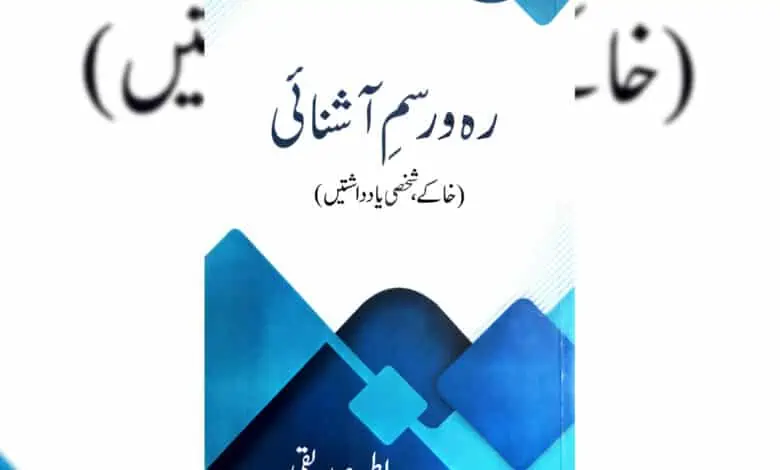
The book Rahe wa Rasm-e-Aashnai (sketches and personal memoirs) provides a quick, candid, exquisite and scrupulous portrayal of those who retain their abiding presence without being physically present in the world.
Professor Athar Siddiqui, a widely recognized scientist, has produced a captivating narrative of his eventful life, Main Keya Meri Hayat kaya, with disarming humility and jotted down travelogues vividly calling attention to down reaching human experiences that frequent foreign travels produce. Interactive media frequently carry intriguing stories featuring commonplace occurrences. The stories with a strong sense of moral tutoring dished out by the digital world need to be shared with non technology conversant Urdu knowing people.
He left Professor Athar Siddiqui to supplement what had been missing and started translating these pulsating stories into Urdu. It was left to Professor Athar Siddiqui to supplement what had been missing, and he translated these pulsating stories into Urdu.
Tahzibul Aklaqh, a prestigious periodical launched by Sir Syed in 1870, started serializing it with a suggestive title Hairat Sarai Ki Kahaniyan (The stories of wonderland), and two volumes of these laconic and absorbing stories have appeared so far.
He meticulously edited two autobiographies of two illustrious alums of Aligarh Muslim University–Dr. Sheikh Mohammad Abdullah (founder of women’s college, AMU) and Nawab Ahmad Saeed Khan Chattari ( former Governor of Uttar Pradesh). He had astutely done over translating books on Shaheryar and Musa Raza.
Athar Siddiqui’s recently published book, Rah-o-Rasam-e – Aashnai,” creatively maps out the accessible and unchartered terrains of thirty-five personalities in candour-driven idiom, and he hardly holds with the popular notion that put a lock on showing the slightest discourtesy to the deceased. The author asserts, “It is widely mentioned that the sketch writer must not use any indecent or improper word for those resting in the peace. If this sort of exhortation is adhered to, then the sketch, personal article and memories will be read as appreciation and admiration-filled text. If history writing sticks to this principle, then the authentic history of any period could not be produced. I do not buy this argument.”
The subtle wised-up mélange focuses on nine creative writers such as Shahryar, Iqbal Matin, Sajida Zaidi, Qazi Abdus Sattar, Professor Mukhtar Uddin Arzoo, Syed Hamid, Lateefuz Zaman and a couple of close relatives, teachers, friends and former vice-chancellors.
Iqbal Matin, whose awe-inspiring artistic sensibility could not get him the recognition across the country he fully deserved, has come in for a refined exploration. Athar Siddiqui’s reminiscence is peppered with unusual but fascinating details about the author. The author living in Aligarh tried desperately to contact Iqbal Matin (Hyderabad) when the letter was the preferred communication medium. He realized that his letters were not delivered to the addressee, who was prone to change houses. Iqbal changed thirty-five houses and bore testimony to his nomadic lifestyle.
Much has been written on Jnanpith awardee and prominent poet Shahryar but a comprehensive and insightful article highlighting his distinctive personal traits and oeuvre is still looked-for. The piece titled “Shahryar as a man and poet” fills the bill with remarkable ease. Athar saheb cites many instances to prove Shahryar’s unflinching loyalty to his friends but never spitting upon the rivals. The voice of modernism with strong traces of neoclassicism, Shahryar never nurtured animosity and did whatever he could for those who looked up to him in their hours of peril. People, even authors and pushover critics tend to read creative texts in the backdrop of personal details; hence when Shahryar suffering from a terminal illness- cancer–composed a couplet; Aasman ab kuch nahi tere karney ke liye/Ham ne sab taiyaariyan karli hain marne ke liye (O sky, now you have nothing to do/I have completed all the preparations for dying) it was considered as the affirmation of impending death. Employing critical acuity, Athar saheb mentioned that the couplet has nothing to do with a nagging sense of personal extinction; the poet laments how we perfected the art of self-destruction reflected in the depletion of Ozone layer manufacturing of weapons of mass destruction.
Athar Siddiqui wrote an immensely readable sketch of Qazi Abdus Sattar, a much overrated and pretentious writer who always took pride in using ornate and florid language in his fiction. His novel Tamam Sultan has been described as magnum opus, but it is hardly more than an oft-repeated titillating story of unrequited love. Athar Saheb and Qazi have had close ties for over fifty years, but Qazi was so intemperate that he pulled ties into pieces as Athar could not attend his facilitation function. It was an act of civility to describe this narcissism as uniqueness of personality.
Prof Zilur Rehman, a widely- respected academician of Unani medicine, is a well-known scholar of Urdu, Persian and Arabic and has more than fifty books to his credit. His books, especially on Ibne Sina, Hakim Ajmal Khan, Sir Ross Masood, Hakim Ehshanullah Khan, and Hakim Abdul Moid, got widespread admiration. In addition to discussing his well-documented and invigorating writings, Athar Siddiqui effortlessly unravels his amenable nature and inimitable passion for books and artefacts. He has a collection of over 70,000 and set up a museum and library, Ibne Sina Academy, which has its website.
Seldom does one attempt to spell out what essentially embodies his wife, going beyond the adulation and berating with a sense of objectivity. This nagging edginess seems to have no bearing on Athar saheb, who painted a stirring wordy portrayal of his wife Zakia Siddiqui, a renowned academician and former principal of Women’s College, Aligarh Muslim University.
One tends to agree with the author when he asserts that during the first ten years wife is treated as the beloved; with the birth of children, she takes over the role of the mother. If harmonious marital life continues, she becomes an inseparable friend who hardly gets perturbed, no matter how annoying one becomes. It is all momentary, and the bond of affinity never weakens.
Athar saheb also evocatively narrated his mother’s life story, and he recollects his memories and anecdotes to document her extraordinary considerate nature. Suhail (son) and Taab (daughter) get pat on the head by the caring and unerring father for their abiding sympathy for others.
The book turns attention to a dozen vice-chancellors and pro-vice-chancellors of AMU, such as Dr Zakir Hussain, Bashir Hussain Zaidi, Badruddin Tyabji, Abdul Aleem, Ali Mohammad Khusro, Syed Hamid, Syed Hashim Ali, Wasiur Rehman, Naseem Farooqui, Mahmoodur Rehman, Hamid Ansari and Abul Hasan Siddiqui.
The author’s appraisal of them looks convincing, but occasionally subjectivity surfaces. The assortment of sketches offers a discerning peep into the life of all who impressed the author. The nuanced and readable prose is used impeccably, and Athar Siddiqui deserves accolades for producing such picturesque vignettes.
Shafey Kidwai is an Indian academic, communication scientist, translator, columnist, and author. He is the chairman of the Department of Mass Communications at Aligarh Muslim University.
source: http://www.siasat.com / The Siasat Daily / Home> Featured News / by Shafey Kidwai / September 26th, 2025
Ohida Khandekar’s Dream Your Museum, an installation and film about her uncle’s collection won the V&A’s Jameel Prize for contemporary art and design inspired by Islamic traditions.
Selim Khandakar with his grand-niece and the trunks housing his collection. | Photo Credit: Anand Kumar Ekboty
Selim Khandakar, 71, has always dreamt of making a museum in his village for the 12,000-plus objects he has collected over 50 years. A small portion of that collection has now reached one of the best museums in the world — the Victoria & Albert Museum (V&A) in London — thanks to his artist niece, Ohida Khandakar.
Ohida, 31, has turned her uncle’s lifelong obsession into an installation and film — Dream Your Museum — which won the V&A’s prestigious Jameel Prize for contemporary art and design inspired by Islamic traditions. The work is not just a tribute to what seems to be her uncle’s calling; it also challenges colonial museum structures and asks whether ordinary, personal objects deserve a place in museums. Can museums be flexible and inclusive spaces, showcasing the narratives of minority communities and customs? Are private collections the exclusive privilege of the rich?
The installation and film, ‘Dream Your Museum’, at the Victoria & Albert Museum (V&A) in London.
Selim worked as a doctor’s compounder in Kolkata and started collecting random objects from the year 1970. A stamp exhibition piqued his interest first, prompting him to start collecting them. He also came across an exhibition of vintage objects from Mallik Bari, one of Kolkata’s heritage homes. “It was a record of what objects were used in the ancient times and how lives were led,” Selim tells me over a Zoom call from his home in Kelepara, a village near Hooghly, West Bengal. “It inspired me to start collecting whatever felt like a record of the common person’s life and times. From bus tickets to stamps to refills of pens, I wouldn’t throw anything away.”
An assortment of rare and mundane items makes up Selim’s collection. Old clocks, inscribed ceramics, vintage records and music players, letters dating back to Partition, perfume bottles, crystal rocks, hand fans, stamps, handbills, ink pots, cameras, train tickets, receipts, even matriculation answer sheets from the 70s!
Selim Khandakar surrounded by the objects he has collected over the years. | Photo Credit: Anand Kumar Ekboty
Gramophones to baby clothes
Much of Selim’s collection is housed in tin trunks and scattered across his home in Kelepara. It sometimes becomes a ‘travelling museum’ for people in the village to explore and interact with the objects as Selim takes them around. There is curiosity, awe, some ridicule, some laughter, and from those who understand history and record keeping, even encouragement.
Ohida’s film captures Selim walking through village fields with his trunk, stopping by the river to rinse some crystal stones, and holding them up to the sun. “Where did you find these, nanu?” asks Maria, his grand-niece, who appears in the film. “In the graveyard,” Selim replies.
Selim Khandakar walking through village fields with his trunk. | Photo Credit: Anand Kumar Ekboty
Ohida, who studied art at the Government College of Art & Craft, Kolkata, and Jamia Millia Islamia, New Delhi, says it is sometimes hard to understand what keeps her uncle going. Is it hoarding, as his exasperated family has often believed? She and Selim don’t think so. Instead, he thinks his collection, much like Dream Your Museum, is about storytelling. “Collecting is my way of showing people from my village a glimpse of things from around the world,” Selim notes. “Like rare coins dating back to the Mughal period or vintage perfume bottles from around the world. Often people here do not get a chance to go to cities to see such things. That’s what has always kept me going.”
Selim Khandakar’s house that was destroyed after a cyclone.. | Photo Credit: Anand Kumar Ekboty
Once displayed in his modest mud house, now destroyed after a cyclone, Selim’s possessions came close to being discarded by his family until Ohida decided to document it digitally. She reacquainted herself with both her uncle and his collection when stuck at home during the pandemic. To her artist’s eye, it is a compelling one, given its range — from gramophones to baby clothes from the 80s. “It even has a bunch of fingernails [Selim’s own] in a box. It reminds me of Marcel Duchamp’s Dadaist Fountain exhibit [1917], where he displayed an upside-down urinal. Such objects challenge conventional notions of what belongs in a museum. These items, including a broken plate passed down through generations, show the power of storytelling through objects.”
Selim laughs when asked about the fingernails. “I had once visited an exhibition where I saw art made with fingernails and thought I would do the same with mine. It made me curious, so I kept them.”
What makes a museum?
Curiosity has been the driving force behind Selim’s obsession and this is what Ohida celebrates in her work. Maria accompanies Selim throughout the film, asking him curious questions about the objects in his collection, an attempt to peek into his mind. Ohida started filming Dream Your Museum as an entry for the 2022 Berlin Biennale, where it was received well, eventually landing her the V&A award.
Filmmaker Ohida Khandakar
Growing up in Kelepara, Ohida hadn’t stepped inside a museum until she came to study art in Kolkata. “I had achieved my dream of studying art and moving beyond a village where many women still had no voice and were married off early. It made me wonder — was there a limit to our dreams? Was there a limit to the dreams of my uncle, a rural, aged Muslim man?”
With the funds from the award, Ohida is now hoping to create a museum for her uncle’s collection and a cultural space in the village. “We need accessible museums that work as alternative spaces for the narratives of rural minority communities; as safe spaces for women without opportunities; to engage those who might not typically visit traditional museums due to a lack of knowledge, distance or financial constraints.”
In Dream Your Museum, her camera gently films Selim among his collections in his crumbling ancestral home. He expresses frustration at having no permanent place even after 50 years to showcase his prized collection. “I’ll now make a museum on the moon,” he declares.
The writer is a freelance journalist and the co-author of ‘Rethink Ageing’ (2022).
source: http://www.thehindu.com / The Hindu / Home> Entertainment> Art / by Reshmi Chakraborty / April 20th, 2025
With over 4,000 manuscripts and 25,000 books, Hazrat Pir Mohammad Shah Library is a sanctuary of knowledge and wisdom.
Stepping into the Hazrat Pir Mohammad Shah Library, the oldest library of the city, feels like entering a secret realm concealed within the narrow lanes of Pankora Naka, Ahmedabad. This hidden sanctuary of wisdom resides within the majestic tomb-shrine complex dedicated to the esteemed Pir Muhammad Shah.
The library’s journey commenced over 250 years ago when Pir Mohammad Shah and his devoted disciples gathered a humble collection of 300 manuscripts. Now, this literary haven proudly safeguards an expansive repertoire of over 4,000 manuscripts, establishing its position as such largest collection in Western India. Moreover, it boasts an impressive assortment of over 25,000 books.
About Mohammad Shah
Let us delve deeper into the enigmatic figure of Mohammad Shah, the driving force behind the library. Born in Bijapur in 1688 AD, he embarked on a transformative journey to Mecca, where he immersed himself in the teachings of practical Sufism.
Eventually, he settled in Ahmedabad in 1711, where he would offer his daily prayers in the Jama Masjid and rest in the humble hut of a benevolent elderly woman. It is in this very location that the awe-inspiring mausoleum-mosque-library complex now stands.
A treasure trove of manuscripts and books
During his lifetime, Pir Muhammad Shah, along with his devoted disciples, amassed a treasure trove of manuscripts and books, encompassing a wealth of academic and spiritual wisdom. This invaluable collection finds its residence in the esteemed “kutubkhana”. The Pir himself was a gifted bilingual poet, penning abundant verses in Persian and Dakhani.
Today, the library stands as a testament to its illustrious past, harboring more than 4,000 manuscripts—the largest collection in Western India, alongside a rich trove of over 25,000 books. Its extensive catalog covers diverse subjects such as spirituality, Quran Knowledge, music, literature, history, geography, language, astronomy, astrology, agriculture, and more.
Within its hallowed halls, one can explore literature in Urdu, Gujarati, Arabi, Parsi, Hindi, and English. The library features a special chamber dedicated to ancient manuscripts, some dating back 800 years, as well as a display of Hazrat Pir Mohammad Shah’s personal belongings, carefully encased in glass to ensure their preservation.
Translations of sacred texts and unique manuscripts
The library’s treasures extend beyond its own collection, offering translations of sacred texts such as the Bible, Rigveda, and Geeta. Visitors are also privileged to behold unique manuscripts, including a handwritten Quran by the illustrious Mughal Emperor Aurangzeb.
This historic repository not only embodies a wealth of knowledge, wisdom, and heritage but also exudes an aura of serenity and tranquility. Explore the mosque, wander through the tranquil courtyard, lose yourself in the pages of ancient tomes, marvel at rare manuscripts, and surrender to the enchantment of bygone era. A captivating journey back in time awaits within these hallowed walls.
source: http://www.knocksense.com / Knock Sense / Home> Ahmedabad / by Zeal Jani / June 27th, 2023
The World Heritage City of Ahmedabad saw many revered men who silently documented the various tales the city’s monuments, structures and literature had to tell.
One such relentless pursuit was that of publisher, author and a keen student of the medieval history of Gujarat, Shahed Kalimi, who not just ran the nearly-century old Kalim Book Depot but also spent 20 years of voluntary service to set up the library at Sarkhej Roza.
A little over a month after he passed, Kalimi’s contributions to Ahmedabad’s heritage were remembered by academicians, renowned historians and heritage enthusiasts at a remembrance meeting organised in the city on Sunday.
Kalimi was the sole force behind revamping the library at one of the ASI-protected monuments of the Heritage City of Ahmedabad, Sarkhej Roza.
AS Saiyed, President of the Sarkhej Roza Committee, narrated Kalimi’s two decades of voluntary contribution at the Sarkhej Roza and lauded him for his dedication and perseverance. “Kalimi was instrumental in reviving the library at the Sarkhej Roza and setting up a publishing department at the Roza through which many books were translated and published under the aegis of the Sarkhej Roza Committee,” Saiyed said.
During his lifetime, Kalimi had translated nearly 50 books from Urdu, Persian and Arabic, into Gujarati, in a bid to bring forth the little pieces of history about Gujarat to the people here.
In fact, two of his last books – A Bird’s Eye View of Sarkhej Roza and Yaad-e-Ayyam, were released during the remembrance meet.
“Kalimi’s sole aim was to bring forth anecdotes of Gujarat’s history to the state. Being an ardent reader of history himself, he translated many books written about Gujarat and its history, Persian and Arabic to Gujarati. He has translated close to 50 works by now about various aspects of Ahmedabad and Gujarat which the state would have otherwise lost,” said Professor MH Bombaywala, curator and founder, Peer Mohammad Shah Library, one of the oldest in Ahmedabad who was present at the meeting.
Being an ardent enthusiast of medieval history of Gujarat, Kalimi turned his place of work – the Kalim Book Depot – around by diligently sourcing, procuring, even translating if needed to make history books available to people here.
Students of History and even architecture and design often frequented his book store, which was once upon a time, a fulcrum for intellectuals to gather and discuss new, radical ideas through expressions of poetry and Shayari.
The Kalim Book Depot will be a century old in 2026 and till date is known for rare books. “We have retailed the Urdu versions of Ramayana, Mahabharata and the Bhagavad Gita to people. Father used to procure a series of Urdu books from warehouses of libraries, book exhibitions, flea markets including the Gujari Bazar and wherever he travelled and patiently sorted them, to find the right kind of books for history students and later translate them,” said Mushir Kalimi, Shahed’s son.
“Father’s interest was not in the business but instead in letting the younger generation read and delve into the history about Gujarat to the people of Gujarat by translating works of authors from Persian, Arabic and Urdu languages. Therefore, if he realised someone’s interest in books, he would gift them a second book for free besides the ones they’ve bought,” said Mushir.
Kalimi was working on one of his last books just before he passed — Makbaras and Masjids of Ahmedabad. Mushir along with members of the Sarkhej Roza Committee are working towards publishing the book which will soon be out.
source: http://www.timesofindia.indiatimes.com / The Times of India / Home> News> City News> Ahmedabad News / by Niyati Parikh / TNN / March 28th, 2022
Nawab Kazim Ali Khan tells the tale of the dynasty, its Raza Library, and years of progressive thinking that expanded the region and its many enterprises.
Luxury realtor Sush Clays takes us to a royal wedding in the Noor Mahal Palace, home to the Nawab of Rampur.
Nawab Kazim Ali Khan tells the tale of the dynasty, its magnificent Raza Library, and years of progressive thinking that expanded the region and its many enterprises.
His obsidian eyes halt you till you reach the twinkle in their midst. You look again, and those deep dimples flanking his wide smile reach right into your heart. And then he speaks: he tells you tales of conquering heroes and lands won and lost; princesses from far lands who made India’s sons and daughters; gemstones and swords that filled coffers; a land, united and forged as one by the many layers of the legacy of the past.
Nawab Kazim Ali Khan, much loved among his friends as Navaid bhai, is one of the most precious custodians of India’s history and some of its invaluable treasures.
Raza library in Rampur is one of the most important repositories of Indo-Islamic learning in South Asia
I met him first as Nawab Sahib, in his full reglia, when he leaned down with his statuesque Pathan grandiosity and said gently, “Call me Kazim.” I was facetiously outraged. “I love calling you ‘Nawab Sahib’,” I spluttered laughing. That didn’t last long. The bonhomie that the nawab exudes makes it hard to retain deference and address him by his title.
This was also the first of many conversations on the history of the Rampur dynasty, rewinding its track through accession and succession, the British Raj and India’s Independence, right back to the Marathas and the Mughals.
The Rampur royal family bedecked in heirlooms at the wedding
The Rampur state was created by the Rohila Afghan Pathans of Kandahar. The Yusufzai clan were originally traders. Their leader had two sons, Dawood and Kaisaf Khan. This was when the Marathas, a Hindu warrior sect, were fighting back the Mughal dynasty in the subcontinent. They had reached up to what is now northern Uttar Pradesh in victory.
By the 1700s, the Mughals engaged the services of the Pathans and the first battle pitted the Marathas against the Pathans in Fatehganj. The Maratha Peshwas were defeated and pushed down to Gwalior. In honour of this victory, the Mughals gave the Pathans eight districts in Rohilkhand. Dawood Khan moved to India, and this marked the beginning of the Rohila family saga in India. Faizullah Khan, one of the eight grandsons of Dawood Khan, inherited the kingdom of Rampur and was established as its first nawab.
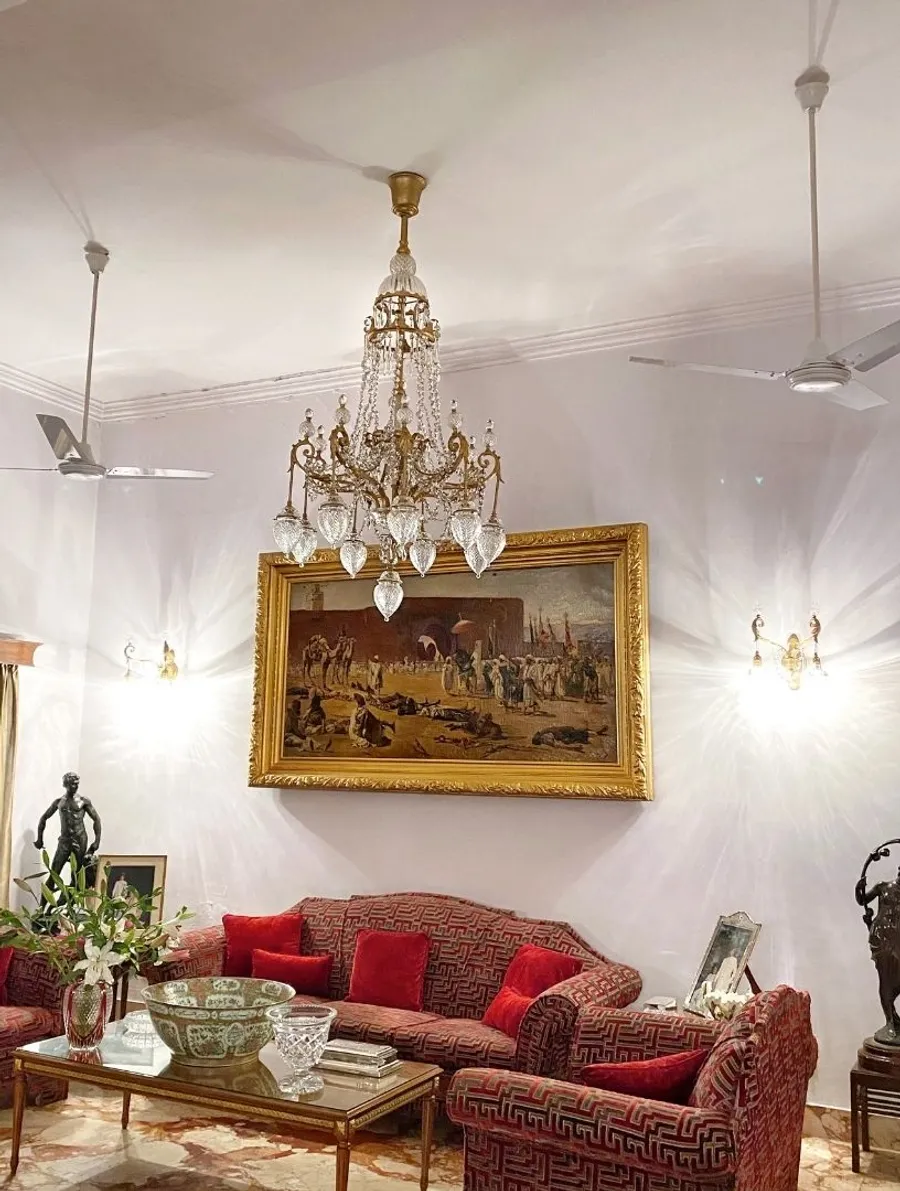
The drawing room in Noor Mahal
During the British Raj, as the city of Rampur expanded, a new undertaking of building the Khas Bagh palace was begun. Built over several years and completed in 1930, it marries a variety of architectural styles. With India’s Independence came a new strain of history into the Rampur family. Nawab Raza Ali Khan was the first to merge his state into the Indian Union in May 1949.
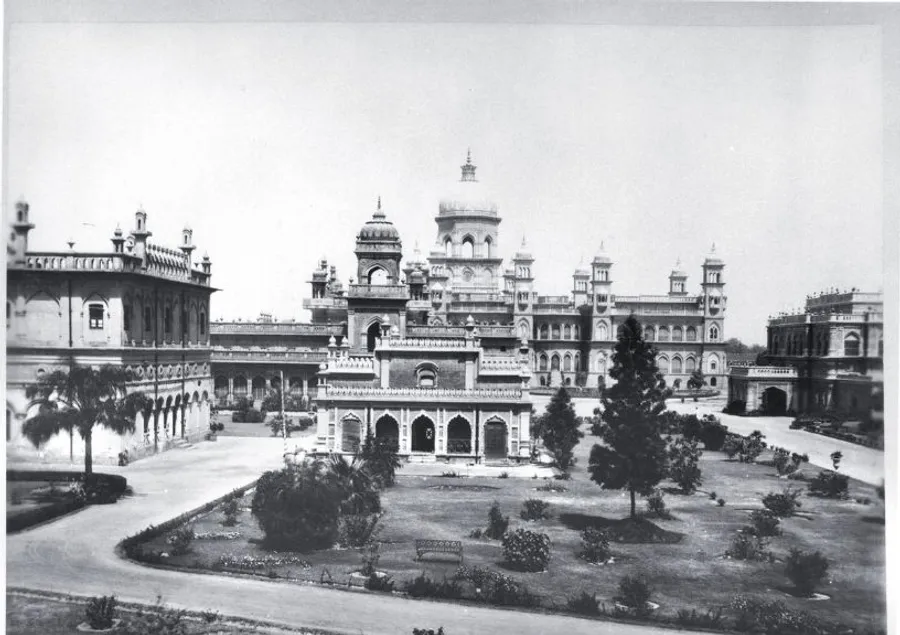
The Raza Library is ensconed in acres of manicured gardens
And finally, in 1960, Noor Mahal, formerly the Viceroy’s representative’s palace, was turned into a haveli—as it stands now—for the birth of Nawab Kazim Ali Khan. He grew up there surrounded by his governess and staff, was fed food cooked in copper vessels, and had a daily appointment between 6 pm and 8 pm with his grandfather in Khas Bagh.
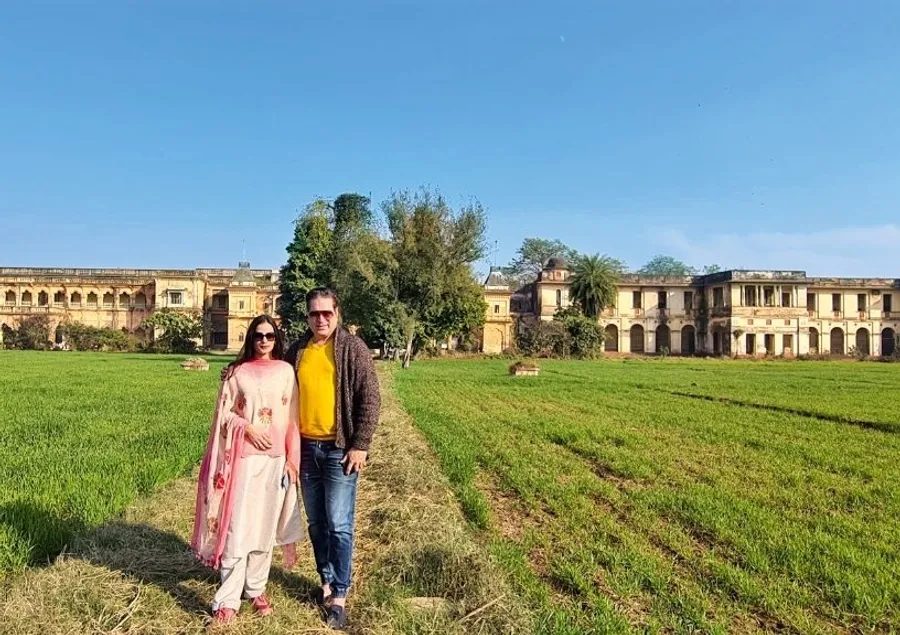
Noor Mahal, where Navaid bhai lives to this day, stands surrounded by his lush never-ending acres of farmland. The haveli holds priceless treasures: intricate vases, jade pieces of pottery, and photographs of the family beautifully installed by Queen Mother Begum Noor Bano and the current queen of Rampur, Begum Yaseen Ali Khan. Built in the classic British Raj style of architecture, with open verandahs circling the palace, Noor Mahal is where the heart of the family resides.
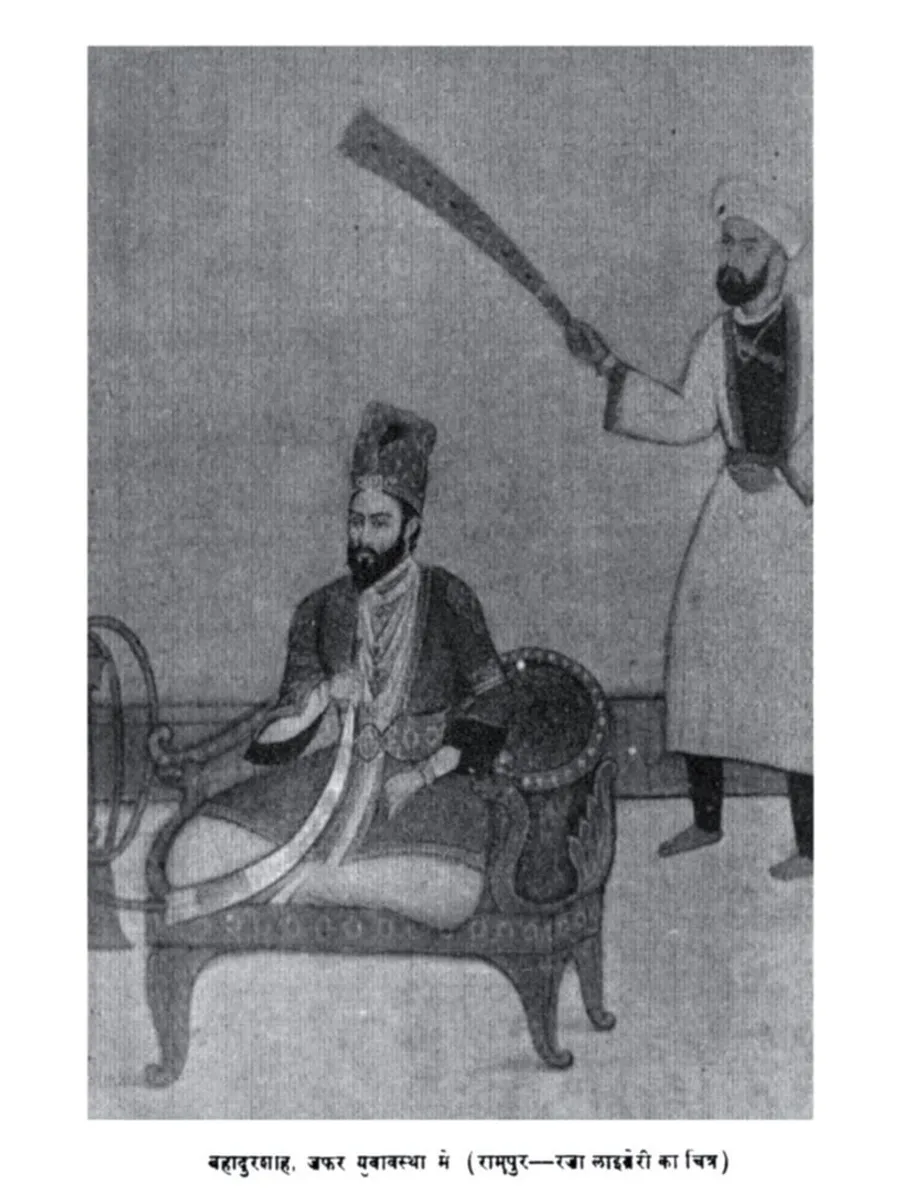
A painting of Bahadur Shah Zafar from the collection of the library
The Raza Library is the crown jewel of the Rampur dynasty. It stands tall and imposing, a precursor to the Indo-Saracenic architectural style, ensconced in acres of manicured gardens. The erudite Rampur nawabs had a passion for learning and collected over 22,000 manuscripts since the library was established in 1774 by Nawab Faizullah Khan.
They were also great promoters of women’s education. Begum Noor Bano, a descendant of Uzbekistan royalty, brought several manuscripts to Rampur as her bridal gift to the family. Today, the Raza Library remains one of the most important repositories of Indo-Islamic learning in South Asia. Its range of manuscripts stretches from Persian to Arabic, Pashto, Sanskrit, and Urdu. The collection includes the al-Qurani Majid, a priceless manuscript dating to the seventh century AD, and an illustrated Ramayana translated to Persian around 1715 AD.
Navaid bhai takes his daughter-in-law on a tour of the treasures of Rampur
Firm believers in the value of secularism and progressive thinking, the Rampur Nawabs were the only Islamic kingdom where the coronation ceremony was performed by a Hindu Brahmin pandit. With the advent of industrialisation, the far-sighted rulers realised that agriculture alone could not sustain the economy. Hence, the land was leased out to several manufacturers, including a distillery that produces the fabulous Rampur Single Malt Whisky today. With the birth of democracy in India, the instinct of the sovereign ruler of the time was to enter politics or the armed forces. Navaid bhai’s grandfather, Nawab Raza Ali Khan, was the honorary colonel of two infantries and an armoured regiment that participated in World War II to protect what was to become Indian territory post Independence.
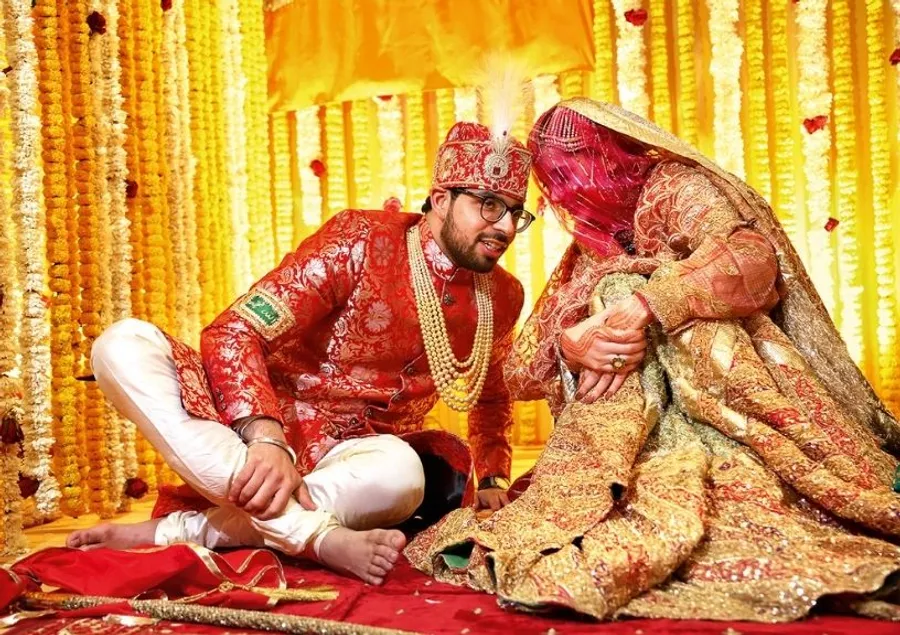
Nawabzada Haider Ali Khan and his bride Shaukat Zamani Begum
Queen Mother Begum Noor Bano was the first female member of the family to successfully contest elections and win the seat of Rampur. This began a new era in the lives of the Rampur family. The seat of the nawabs was then moved to Noor Mahal so that they could move a little away from the swiftly expanding city of Rampur. This brings us to the present day when I find myself at this stunningly historic haveli to celebrate the wedding of Nawab Kazim Ali Khan’s second son.
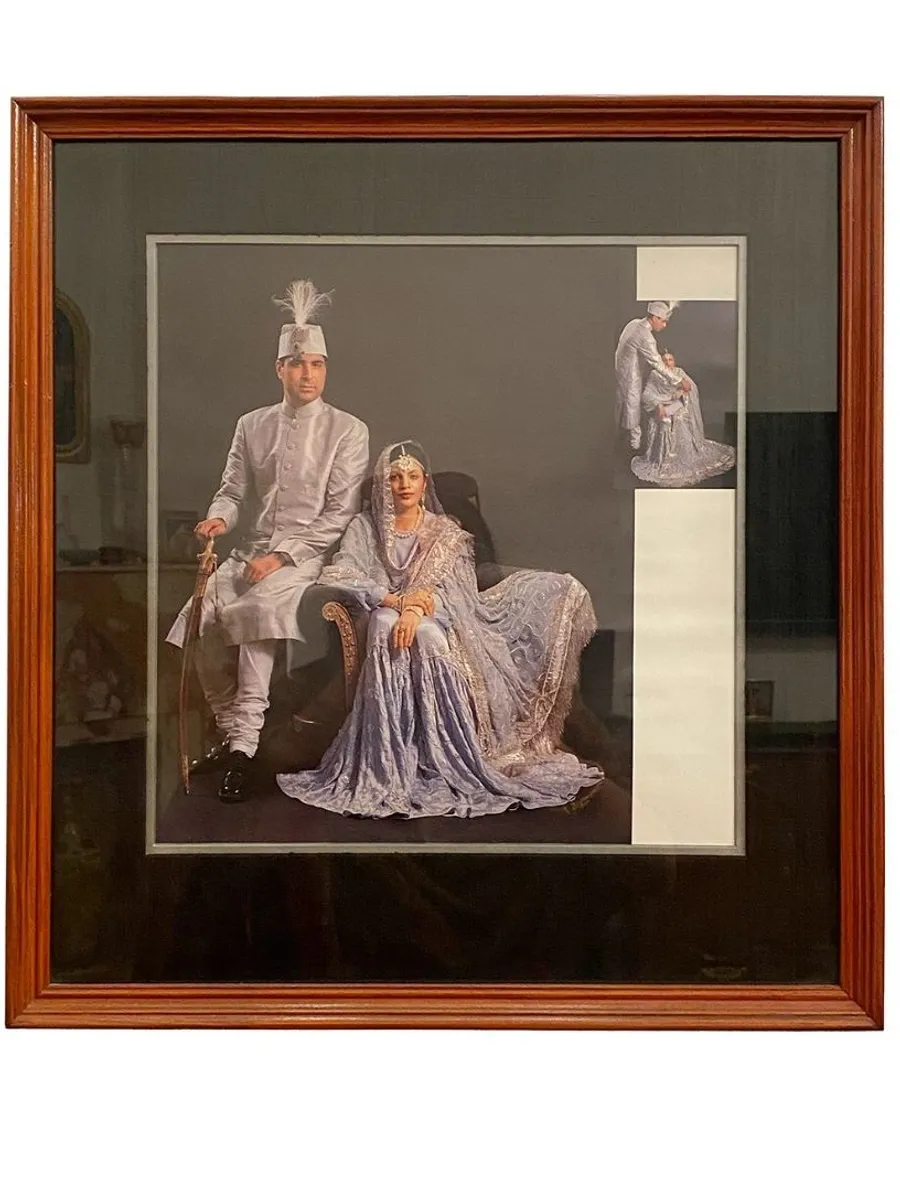
The wedding portrait of Nawab Kazim Ali Khan and Begum Yaseen Ali Khan
The year 2020, with all its woes, brought this one joyous occasion for Navaid bhai to gather an intimate group of family and friends and celebrate the nikah of his second son, Haider Ali Khan, to the beautiful Shaukat Zamani Begum. Sufi music composed by Navaid bhai’s grandfather fills the haveli. An incredible performance of a whirling Sufi dancer puts us in a delicious trance. The exotic aroma of Rampur’s extraordinary cuisine titillates our olfactory nerves. And the melting flavours of the famous chapli kebab make our palates spiral into ecstasy. As our senses are soothed into sublime languor through three days of feasting, dancing, laughter, and love, we awake to the nikah on the final morning.
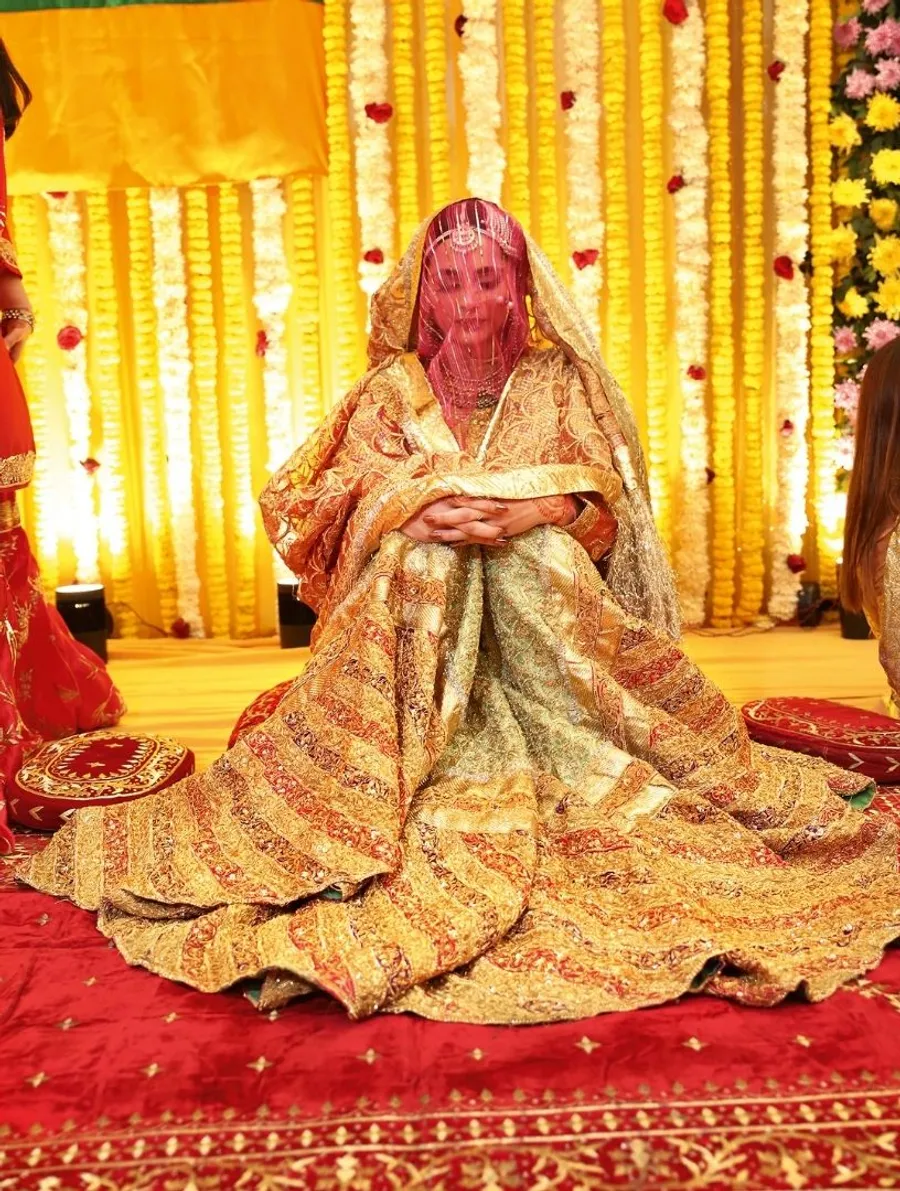
The pure pageantry of the ceremony is a joy to behold. Begum Zamani is clad in an intricately embroidered sharara that requires three bridesmaids to carry it; Nawabzada Haider is dressed up in his Pathan grandeur, with the family’s bejewelled heirloom sword; Navaid bhai is in a stunning rose ensemble and Begum Yaseen in delicate beige—the scene belongs to a different time, a few thousand years before 2020.
The dynasty is inclusive as always, and the rites are performed in Shia and Sunni traditions. And then the gentle, lilting sound of “Qubool hai” from the bride’s veil confirms her assent to the marriage to Nawabzada Haider, sending the guests into raptures.
The Pathani nawabs of Rampur have always adopted the Hindu rituals of their homeland, so they include a henna ceremony and an evening of dancing to celebrate the union.
Begum Zamani clad in intricately embroidered sharara for her nikah
The ceremony verifies everything the nawab has told me about his family, “Of the 300-odd sovereign states of the Union of modern India, there are only a dozen Islamic royal families. Ours has always believed in educating our women, and we have forever held a deep passion for art, literature, and music.” Rampur sparkles as a shining example of myriad traditions evolved into a singular culture, which spans thousands of years and retains a resplendence of its own in modern India.
The writer is the founding partner of Welcome Home Luxury Real Estate Services in New Delhi.
source: http://www.travelandleisureasia.com / Travel and Leisure / Home> Hotels / by Sush Clays / January 20th, 2021
India and Qatar celebrate their age-old maritime ties by showcasing a handcrafted dhow at the FIFA World Cup, as part of the Gulf Arab nation’s traditional boat festival.
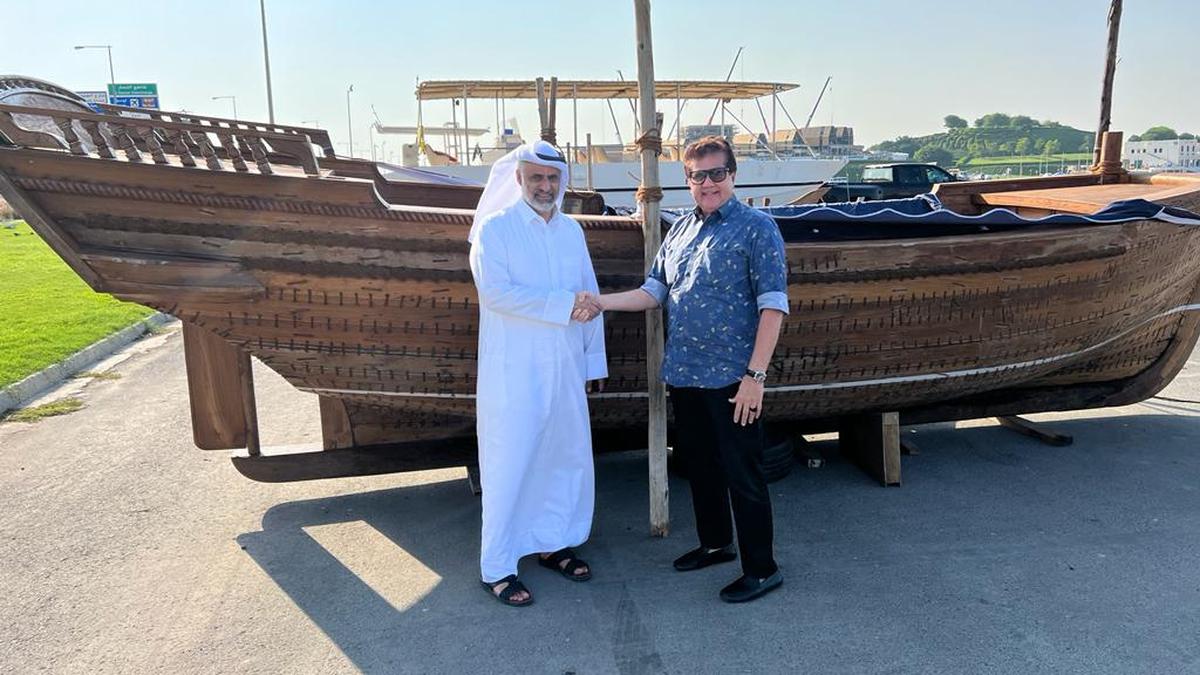
P.O. Hashim, MD, M/S Haji PI Ahmed Koya, Kozhikode, handing over the dhow made by their company to Ahmed al-Hitmi, director, Katara beach department, in Doha, Qatar. | Photo Credit: Special Arrangement
India is reiterating its age-old maritime ties with Qatar, at the ongoing FIFA World Cup 2022, through a handcrafted dhow made by M/S Haji PI Ahmed Koya, a family-run shipbuilding company in Kozhikode.
Held under the patronage of Sheikh Tamim bin Hamad al-Thani, Emir of Qatar, and organised by The Cultural Village Foundation Katara, the 12th edition of the Katara International Dhow Festival in Doha is one among the many off-field events scheduled by the FIFA World Cup. The festival, held between November 20 and December 18, features dhows — boats with a long and thin hull, and one or two masts for sails, commonly used in southern Asia and eastern Arabia — from nine countries, including India, Kuwait, Qatar, Oman, Saudi Arabia, Iraq, Greece, Zanzibar and Turkey.
The Indian pavilion is exhibiting two 20-foot long boats, in addition to displaying boat materials and models, which are for sale.
“My grandfather started this company in 1885, and we have been making boats to order for clients in the Gulf countries for over 130 years. It is a special year for us, because we have built a baghlah dhow for the Qatari government using vintage technology. It showcases our boat-building heritage on an international stage,” says PO Hashim, managing director of the firm, who is in Doha for the handover.
The company also maintains a Dhow Museum of equipment and memorabilia related to the wooden vessels in Kuttichira, Kozhikode.
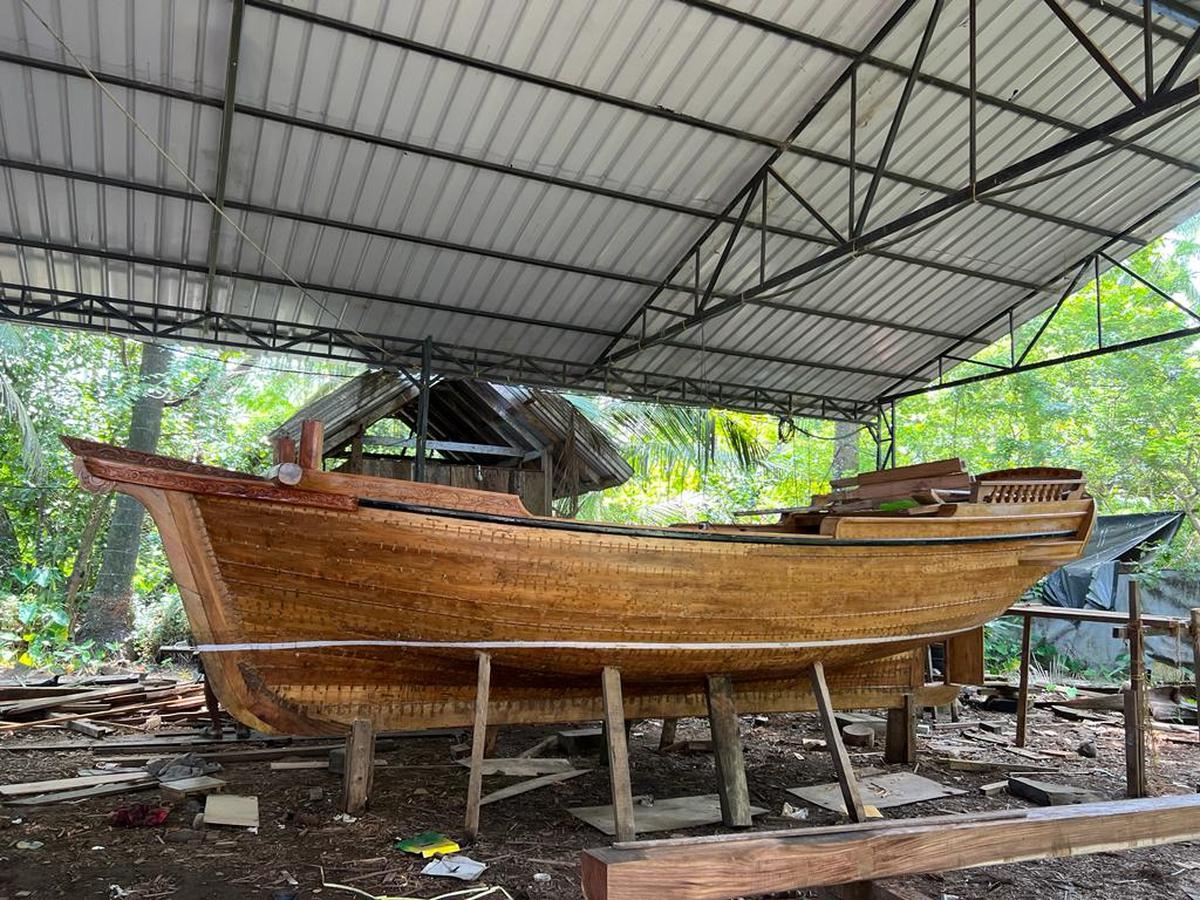
The dhow built by M/S Haji PI Ahmed Koya, Kozhikode, seen in the boatyard before despatch. | Photo Credit: Special Arrangement
How to stitch a boat
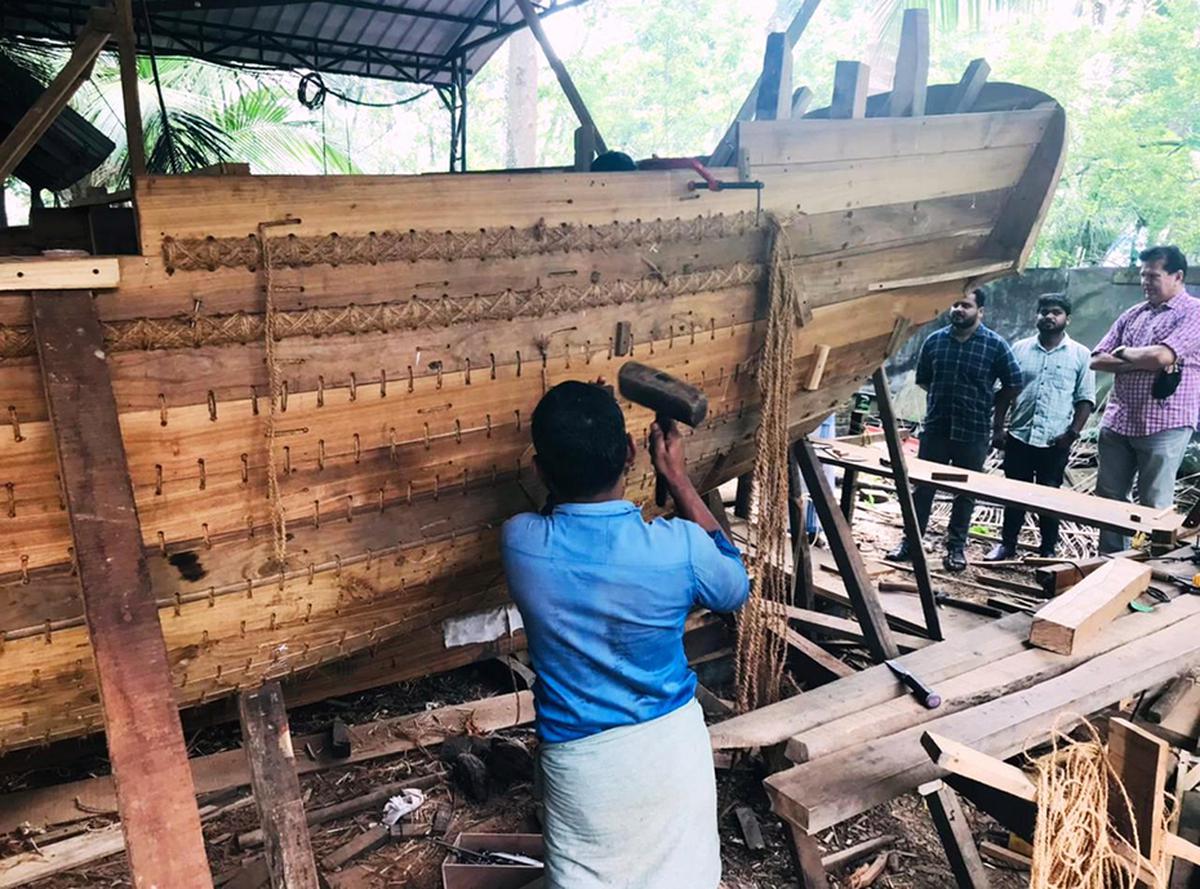
The baghlah (Arabic for mule), measuring 27 feet, is an example of a sewn boat, where craftsmen thread wooden planks together using special coconut-fibre ropes. The technique predates the era of metal fastenings, and samples of sewn boats can be seen in many ancient civilizations, each using a different methodology.
Good quality timber and skilled shipwrights made Beypore in Kerala a magnet for Arab countries, attracting craftsmen from Yemen’s Hadrami tribe and the Omanis from the 15th century. Known as uru in Malayalam, the Beypore dhow was the main form of transport along the spice routes of Malabar and Arabia.
“We were inspired to make this dhow after seeing a similar model made in Oman decades ago,” says Hashim. The Qatar-commissioned boat being displayed at the festival was manufactured at the company’s Pattermadu dhow-making unit at Chaliyam village in Kozhikode.
Over six to seven months, from November 2021, craftsman Gokul Edathumpadikkal and a team of shipwrights were busy assembling the six-foot deep and seven-foot wide vessel, using teak sourced from Nilambur. Most of the carpentry and detailed carving on the outer planks have been done manually.
A dhow is typically built from the outside hull inwards. Shaped planks of wood are connected at the edges in a clinker style, and the overlapping sections are sewn together with coir to form a flexible structure. Internal framing is provided for additional rigidity.
Hashim says that their dhow is made with 2,300 hand stitches of fibre ropes through 5,000 holes to secure the planks. It was shipped by container and handed over to Ahmed al-Hitmi, director, Katara beach department, in Doha, last week.
“Qatar has been actively promoting the dhow as a symbol of the country’s culture and economy before the oil boom. We have been participating in Qatar’s annual dhow festival for 10 years,” he says.
Sailing away
The work of the special dhow using coir rope in progress at Chaliyam. | Photo Credit: Special Arrangement
At one time, there were some 80 types of dhows in the Arabian Gulf and Oman but only about six are still in use today, albeit with engines rather than sails. “There were many types of sailing dhows, ranging from big ocean-going vessels to small inshore fishing boats. They were used for trading from the Arabian Gulf to countries as far away as China, where pearls were exchanged for silk and other luxury items. Each year, fleets of dhows set out for the pearl-fishing grounds in September, returning three months later. The last of the sailing dhows were replaced by engine-powered boats in the 1950s,” says writer Fran Gillespie, who has authored several books on Qatar’s history, culture and archaeology.
Traditionally built dhows, powered with engines, are still in use in the Arabian Gulf for fishing and tourist excursions.
Katara, a sprawling beach promenade in Doha, will be the venue for marine shows, competitions, workshops for children and craftsmen in addition to special performances and operettas by folk troupes through the month as part of the festival.
For the World Cup, flags of the nations of the 32 qualified teams will be put on dhow masts to sail past the Doha Corniche and Museum of Islamic Art (MIA) reaching there by sunset on all days.
“The dhow festival, based on Qatar’s pearl-diving, fishing and maritime history is deeply intertwined with emotion and pride in the hearts of several generations,” says Salem al-Marri, Director of public relations and communications, Katara.
source: http://www.thehindu.com / The Hindu / Home> Society / by Nahla Nainar / November 28th, 2022
Indian calligrapher Ghulam Mohiuddin transcribed this manuscript.
pix: SPA
Jeddah:
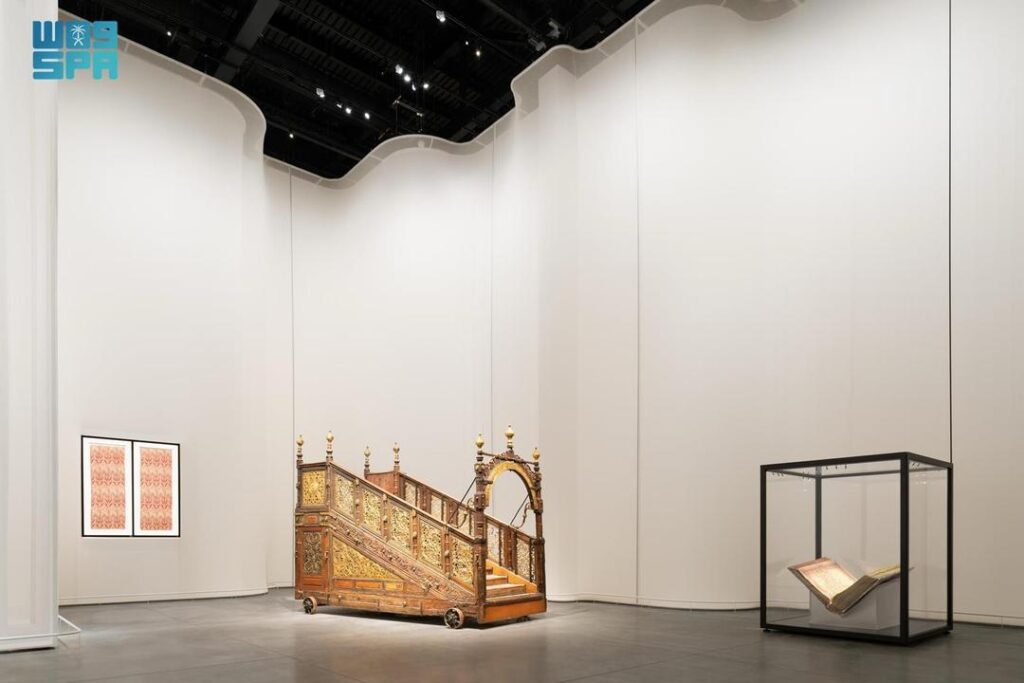
A two-century-old Quran manuscript, transcribed in India, is now on display at the Islamic Arts Biennale at the Western Hajj Terminal of King Abdulaziz International Airport in Jeddah, Saudi Arabia.
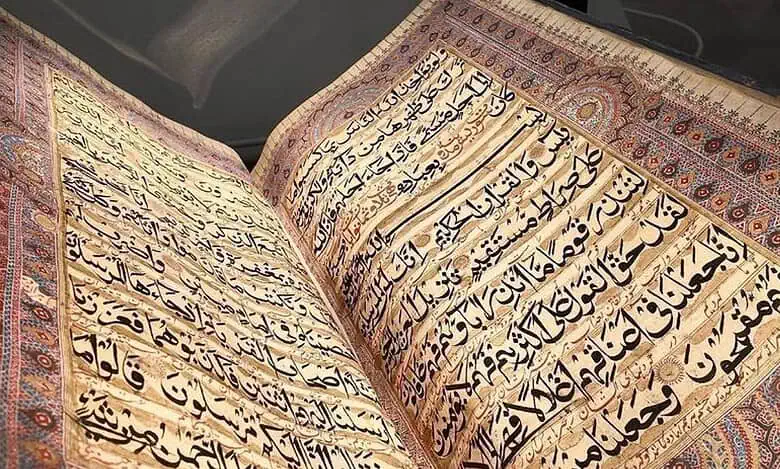
Indian calligrapher Ghulam Mohiuddin transcribed this monumental Quran manuscript on the 6th of Muharram, 1240 AH (August 31, 1824 AD) in northern India. It was designated as a waqf (endowment) for the Prophet’s Mosque in Madinah, reflecting India’s deep historical ties to Islamic art and heritage.
Measuring an extraordinary 139.7 × 77.5 cm, the manuscript is embellished with gold, deep-colored pigments, and a cover originally encrusted with rubies, emeralds, turquoise, and peridot, making it one of the rarest Quran copies on display, the Saudi Press Agency (SPA) reported.
The text is written in black Naskh script, with a Persian translation in red Nastaliq, showcasing the Indo-Persian calligraphic style of the era.
Historical records indicate that the manuscript arrived in Madinah in the mid-13th century AH and was initially placed near Bab As-Salam before being moved to the mosque’s treasury during restoration in 1273 AH (1857 AD).
In 1302 AH (1884 AD), it was rebound by Hajj Yusuf bin Hajj Masoom Nemankani, a scholar and manuscript expert from Uzbekistan who later settled in Madinah.
Now preserved at the King Abdulaziz Complex for Endowment Libraries in Madinah, this rare Indian-transcribed Quran is a key attraction at the Biennale, celebrating India’s historical ties with the Islamic world and its legacy of artistic excellence.
source: http://www.siasat.com / The Siasat Daily / Home> News> Middle East / by Sakina Fatima, X / March 12th, 2025
An online database, it is a collection of qawwalis in cinema, from talkie days to the present.
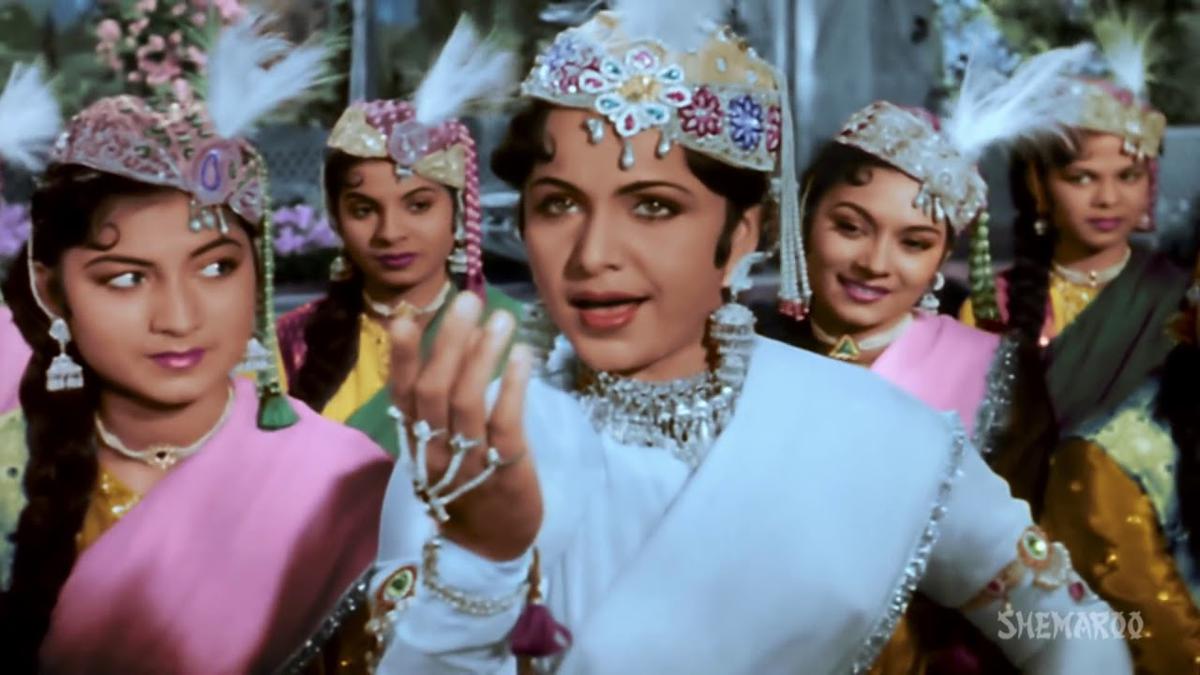
The popular qawwali, ‘Teri mehfil mein kismat azamakar’, from Mughal-e-Azam | Photo Credit: Special Arrangement
The qawwali, a musical genre closely associated with Islamic Sufi tradition, has evolved over the generations to include not just devotion, but romance, comedy and even social commentary in its fold.
Its journey from the courtly environs of erstwhile princely salons, to the dargahs, and then into the Hindi film industry, has largely gone undocumented, though the transition is still in progress. However in recent weeks, the Cinema Qawwali Archive, an online database curated by Delhi-based independent filmmaker and researcher Yousuf Saeed, has been reviving interest in this pop culture import.
“Qaul means a saying or spoken phrase [in Arabic and Urdu]. Those who sang a qaul were called qawwals. All qawwali lyrics may not necessarily send you into a trance, some can also be subtle. But the singing style is surely bold. Off-hand, most people can recall only around 10-20 qawwalis in Hindi cinema, but the actual number is much bigger,” says Saeed in a phone interview.
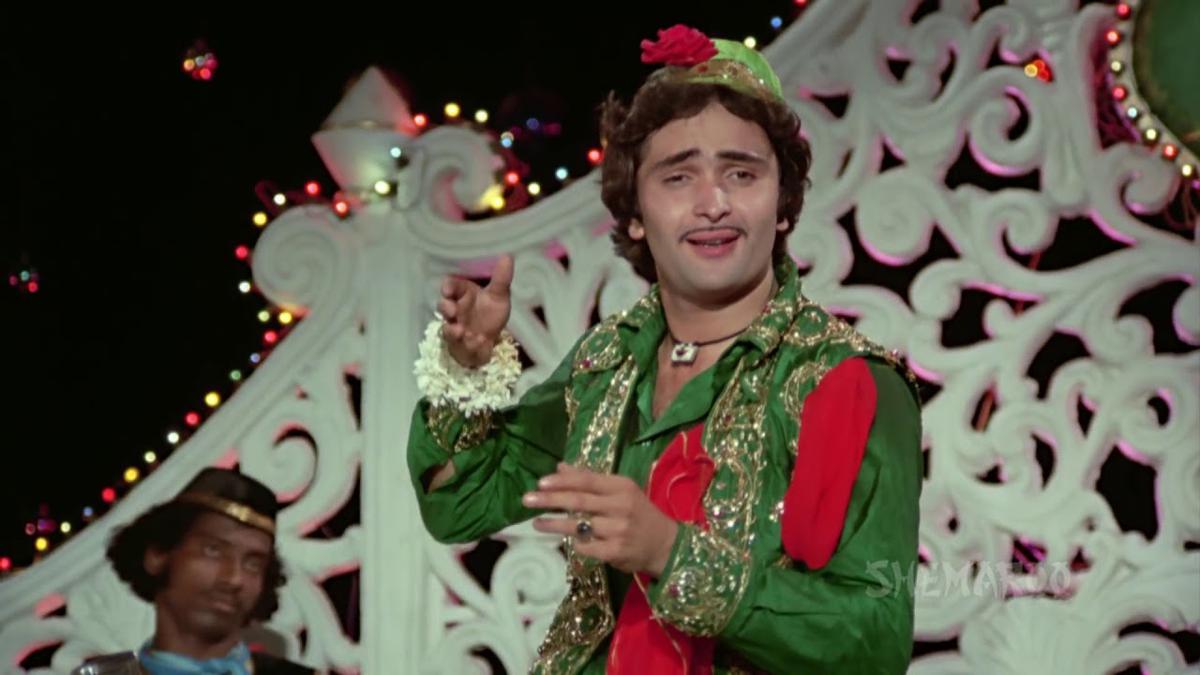
‘Parda hain parda’ from Amar Akbar Anthony
Working on the database for a decade, Saeed has compiled 800 qawwalis so far, with the earliest going back to the 1930s, and latest, until 2022. “The ‘talkie’ pictures came to India in 1931; though the original movies from the early 1930s are lost forever, I did manage to find some from 1936, with unusual names like Miss Frontier Mail (starring ‘Fearless’ Nadia), and the 1939 film Brandy Ki Botal,” says Saeed.
Poetry of the past
Saeed began noticing the qawwali’s ubiquity in Hindi films while working on a series of documentaries on Sufi poet and musician Abul Hasan Yamin-ud-din Khusrau, also known as Amir Khusro (1253–1325 AD). “I realised that quite a few of his qawwalis had been lifted and modified for Hindi films, so I started noting them down, and soon, the list grew to 400 songs. I wanted to make them available on a common database in chronological order,” he says. Among these is the qawwali ‘Zihale Miskin’ sung by Lata Mangeshkar in Ghulami (1985). A simplified version of Khusro’s original, the lilting composition retains the poet’s penchant for multi-lingual lyric arrangements.
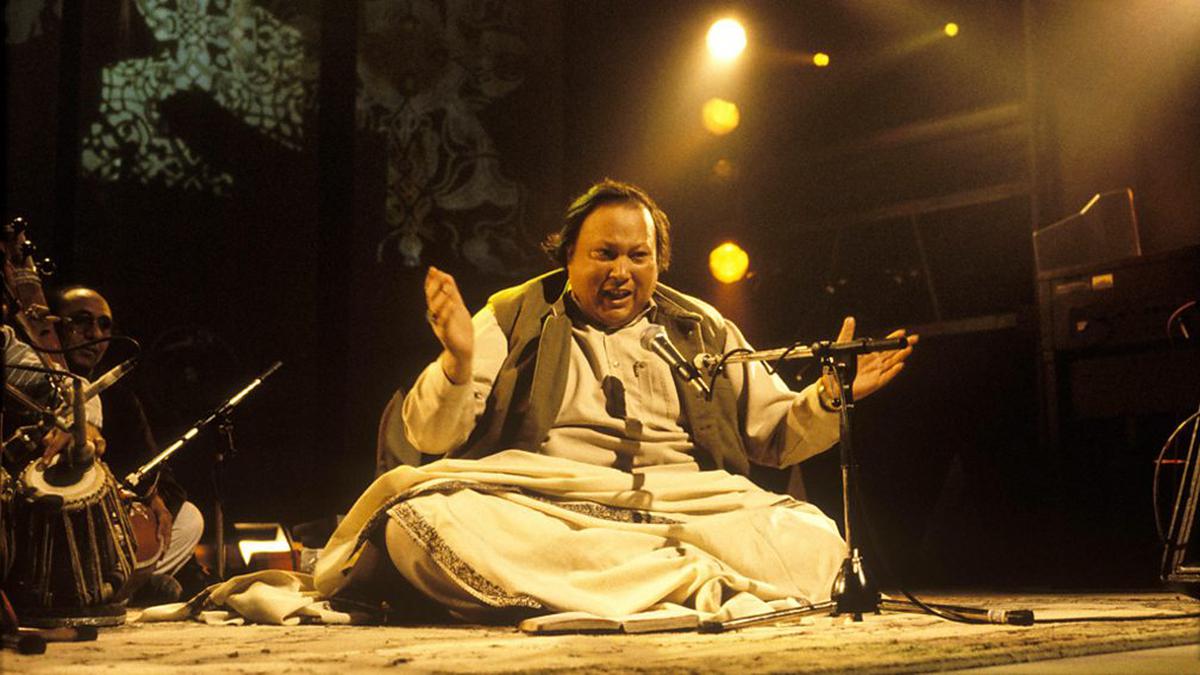
The inimitable Nusrat Fateh Ali Khan | Photo Credit: Getty Images
“’Zihale Miskin’ is very popular, and unusual, because it has one line in Persian and one in Brij Bhasha. Then there are many of Khusro’s Dohas (couplets) that are used in qawwali songs quite often,” says Saeed.
Qawwali, says the filmmaker, is a free-floating art that allows singers and lyricists to combine several genres and poetic forms in a seamless composition. Besides YouTube, Saeed has picked out his selections from DVDs and VCDs (remember those?). “I haven’t had a problem with copyright so far, since quite a few of the songs are already in the public domain. But it’s amazing how I keep discovering new qawwalis everyday. My latest is ‘Shikayat’ from last year’s Gangubai Kathiawadi,” he laughs.
Qawwali down the ages
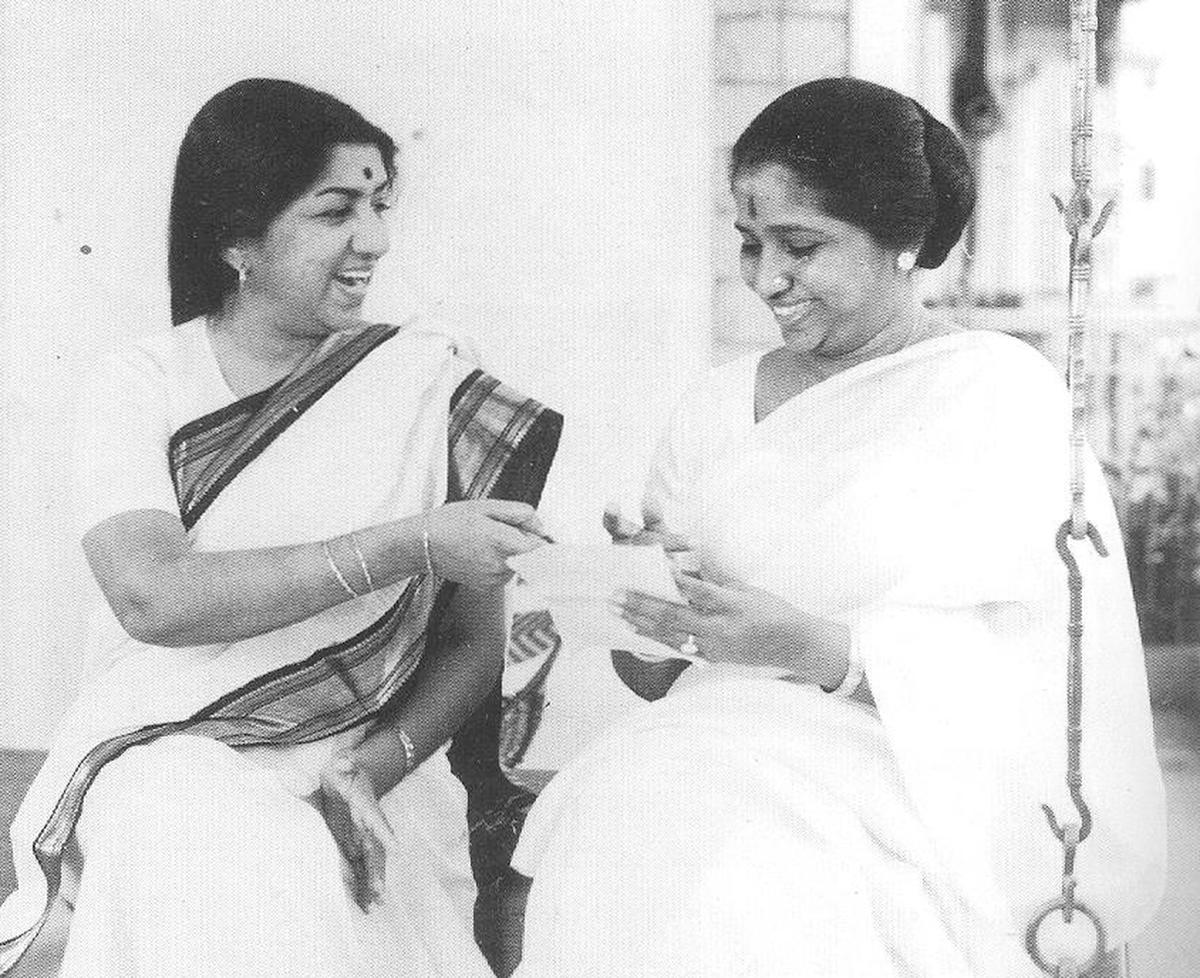
Lata Mangeshkar and Asha Bhosle have sung some popular qawwalis | Photo Credit: The Hindu Archives
Saeed categorises the film qawwali of the 20th century into three periods. The first starts with the black-and-white films of the 1940s until the 1950s, when the lyrics showcased a literary flair for Urdu, by adding ‘ghazals’ into qawwalis. The second stage starts with the coming of colour films, when the qawwali too literally added some hues to its own repertoire. “A lot of things were happening in the 1960s, ‘70s and ‘80s, when qawwalis became more of a device to move the plot ahead. In some films, for example, a qawwali would be staged to highlight comedy, in the backdrop of a fight sequence, or to convey romance between characters,” he says.
The mass entertainer Amar Akbar Anthony (1977), for instance, uses the qawwali both for fun (‘Parda hai parda’) and spirituality (‘Shirdi wale Sai Baba’), to good effect.
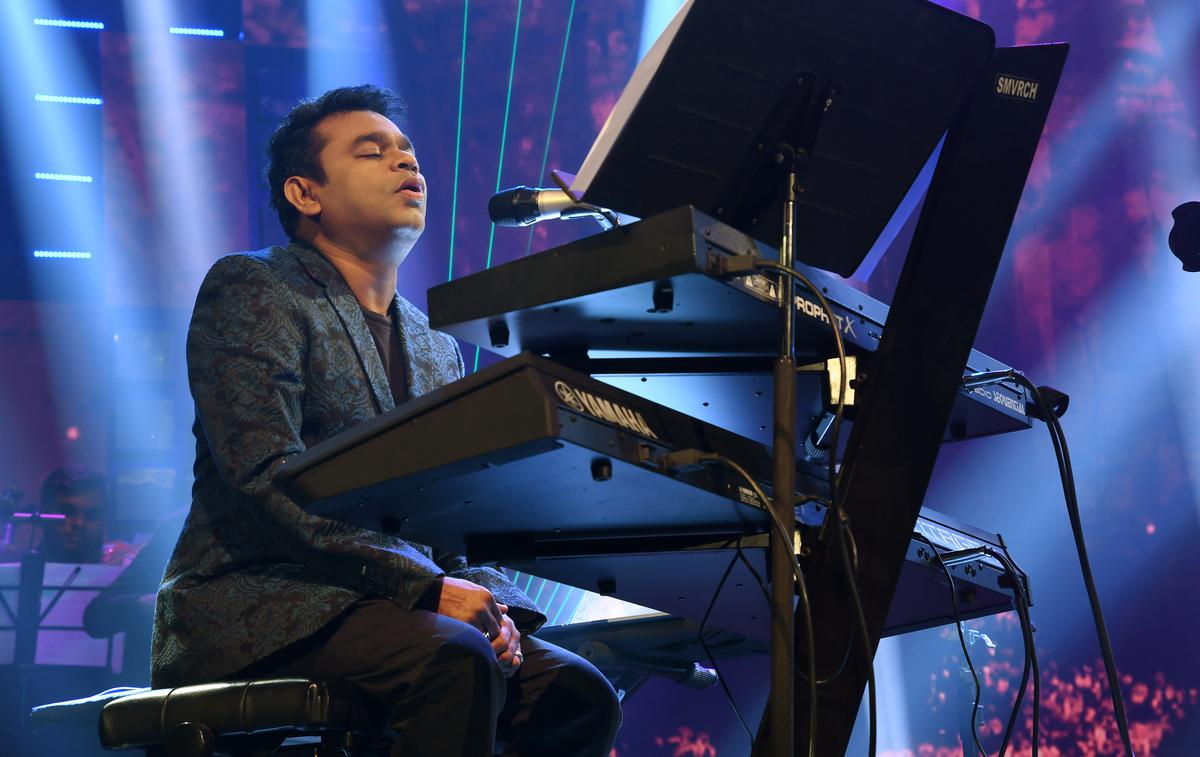
The third phase started in the 1990s, when Pakistani singer/songwriter Nusrat Fateh Ali Khan and India’s A.R. Rahman brought in sea-change by modernising the qawwali with electronica and smooth singing.
Teri Mehfil Mein | Lata Mangeshkar, Shamshad Begum | Classic Duet | Mughal-E-Azam | Bollywood Song
Comment on society
Yousuf Saeed | Photo Credit: Sandeep Sharma
The qawwali has become a social marker of sorts in films, says Saeed, creating a Muslim stereotype where the singers wear slanted fur caps, a kerchief around their neck and clap in a certain style. The Bollywood ‘Muslim social’ film that featured stories with veiled damsels courted by sherwani-clad gentlemen (Mere Mehboob, 1963) was born out of this need to appeal to family audiences from this community.
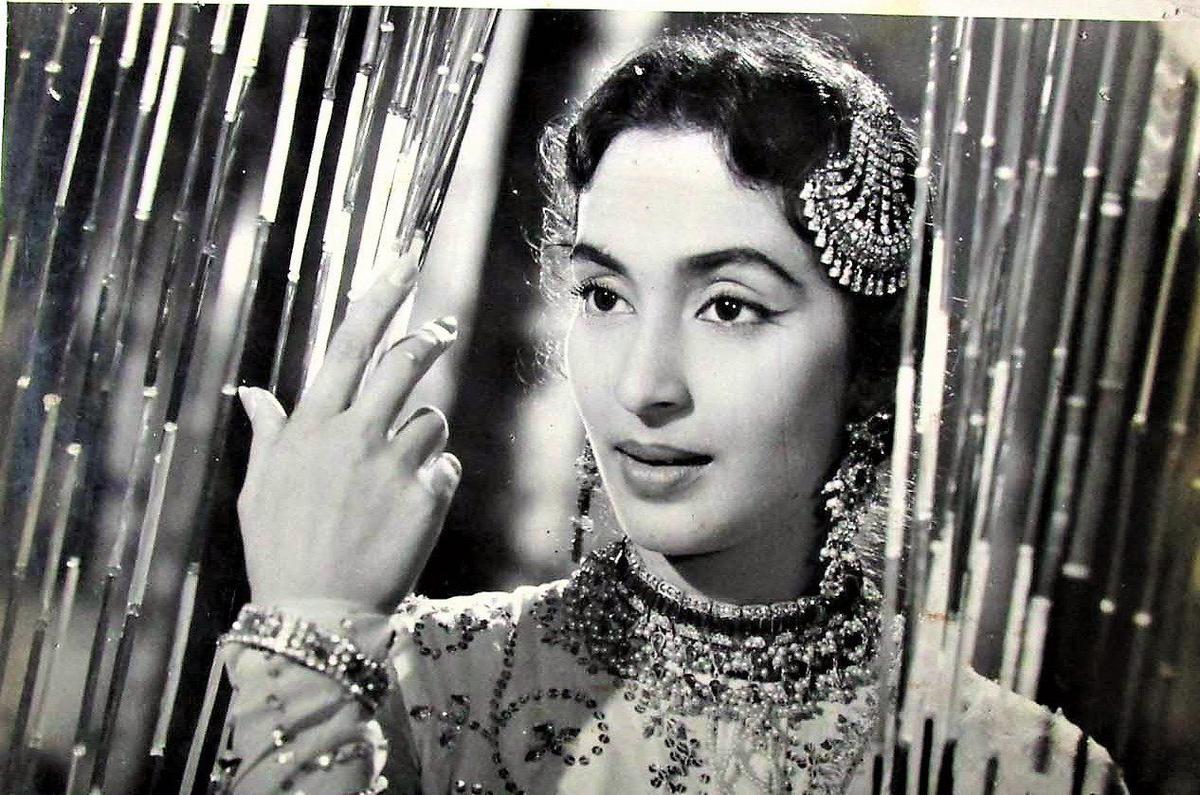
Nutan in the famous qawwali, ‘Nigahen milane ko ji chahta hai’ from the film Dil hi to hai | Photo Credit: Special Arrangement
Female singers have also had strong showing in this genre, from ‘Aahen na bharin shikve na kiye’ (Zeenat, 1945), and ‘Aaj teri mehfil mein’ (Mughal-e-Azam, 1960) to Shikayat’ (Gangubhai Kathiawadi, 2022), all showcasing the skills of chanteuses Sudha Malhotra, Lata Mangeshkar, Asha Bhonsle, Shamshad Begum, and Archana Gore.
Linguistic gymnastics
The Cinema Qawwali Archive also helps visitors to understand the literary changes over the years. “It’s inevitable that the linguistic purity of the early qawwalis is no longer there. But new words like ‘Maula’ and ‘Allahu’ and Arabicised Urdu have become more common in film qawwalis, especially as a choral element. Off the screen, in private qawwali mehfils, singers are often known to sing certain words or phrases again and again on the patron’s farmaish (request) for him or her to attain ecstasy,” he says.
Music director A.R. Rahman gave qawwali a distinct twist with Turkish, Moroccan and Syrian Sufi rhythms. | Photo Credit: RAVINDRAN R
Rahman’s infusion of Turkish, Moroccan and Syrian Sufi rhythms into his songs has helped the qawwali reach out to both the South Asian diaspora and Westerners, says Saeed. “The film Rockstar (2011) made qawwali singers at Nizamuddin Dargah famous, with tourism developing around the shrine. But interestingly, cinema has also used qawwali for its own purpose, by taking it into a secular space,” says Saeed.
Hoping to publish a companion volume on the Cinema Qawwali Archive soon, Saeed says, “People think that the qawwali is dying out, but this isn’t true. They will continue to be written and performed because film directors find it a very fascinating and unique form. Qawwali weaves the story together and keeps it going.”
ROCKSTAR: Kun Faya Kun (Full Video Song) | Ranbir Kapoor | A.R. Rahman, Javed Ali, Mohit Chauhan
source: http://www.thehindu.com / The Hindu / Home> Entertainment> Music / by Nahla Nainar / July 10th, 2023