Tag Archives: Positive News of Muslims of West Bengal

Jabalpur accident: Ramzan saved four lives by jumping into dam

WEST BENGAL / Jabalpur, MADHYA PRADESH :
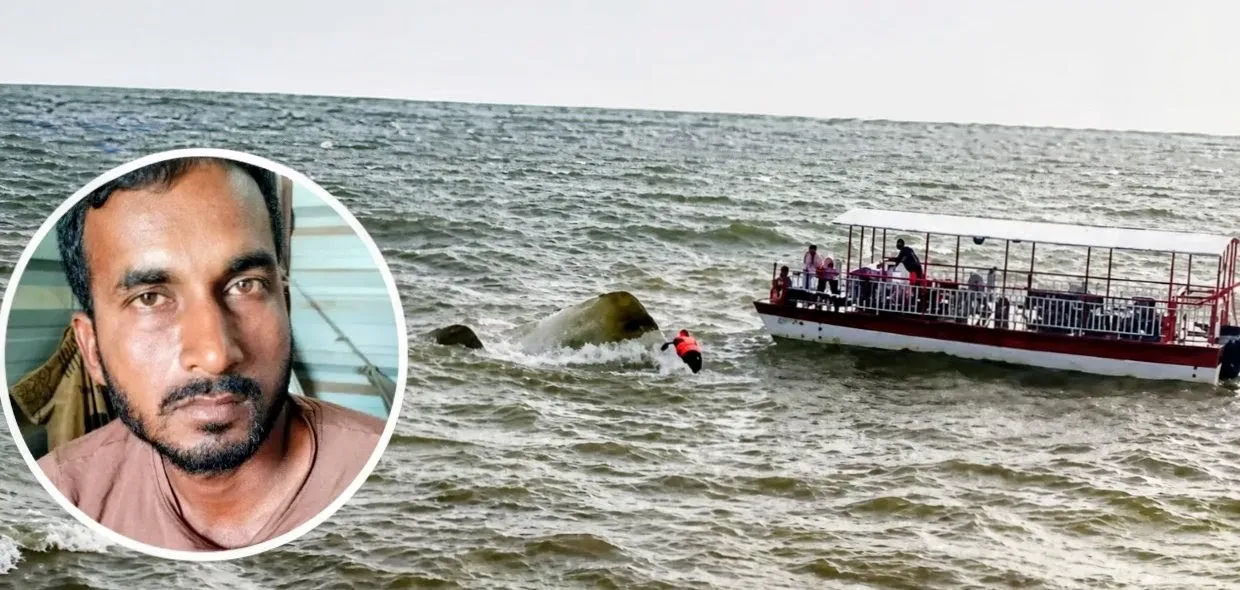
Ramzan (Inset) and rescue boat in the backdrop

Jabalpur

Nine people have died so far in the Bargi Dam accident in Jabalpur, Madhya Pradesh, while relief and rescue operations are underway. As soon as the accident was reported, a labourer was the first to start the rescue operation. Before the rescue team arrived, Ramzan, who was busy constructing a bridge, risked his life to save the lives of many people and did this work with great courage.

In fact, a bridge construction work was going on a short distance from where the accident took place near Bargi Dam. When the workers saw the cruise ship sinking, a laborer immediately jumped into the water without any resources to save the people and started the rescue work.

Ramzan, a resident of West Bengal, said that he saw the cruise ship sinking with his own eyes. He immediately took a rope and jumped into the dam from a height of about twenty-five feet. He pulled out six people, four of whom survived while two could not survive.
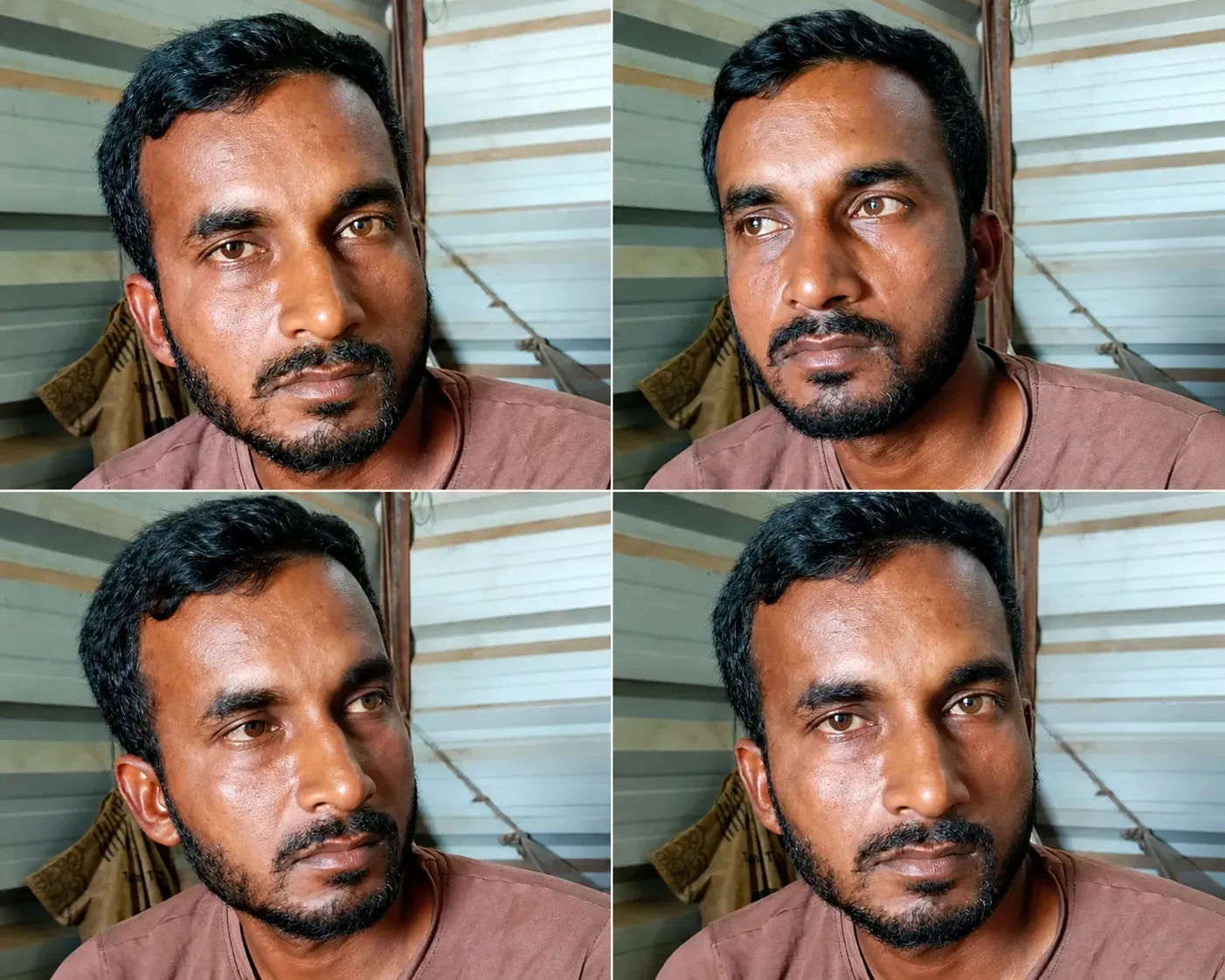
After visiting the scene, the Chief Minister of Madhya Pradesh announced that those who tried to save the drowning people would be given a reward of Rs 51,000 each.

Bandar Kumar Yadav, who was present at the scene, said that he was a resident of West Champaran and about thirty-five workers were working there. Seeing the cruise ship going out of control, he called out to the pilot to stop and asked his colleagues to bring a rope, but the pilot did not listen and went ahead, after which the cruise ship sank.

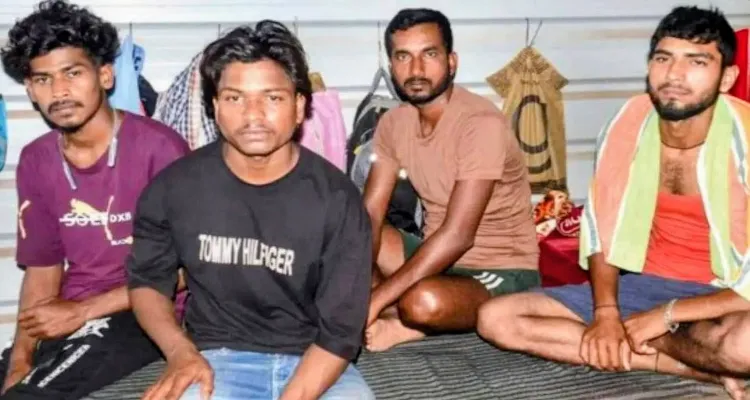
After that, several workers and colleagues went into the water to help Rajkumar from Bihar and Shewanath from Gorakhpur said that the cruise had already capsized before they reached it. Some passengers had already fallen into the water and were pulled out by the workers.

Those working on a project under the central government’s Jal Jeevan Mission, were just a short distance from the spot where the cruise ship capsized. They responded within moments and immediately formed a makeshift rescue team.

Armed with only ropes, the workers, displaying extraordinary courage and human spirit, jumped into the raging waves and were able to safely pull out about a dozen passengers in the critical initial moments of the accident, as described by locals.

Among these selfless heroes was 22-year-old Ramzan from West Bengal, whose daring leap was one of the most iconic scenes of the rescue. He tied a rope to his body and jumped from a cliff about 25 feet high, swimming through the stormy waters to reach the stranded passengers.
“I saw the boat sinking and didn’t waste a moment,” Ramadan said, speaking to The Times of India. “I immediately picked up a rope and jumped into the water. He was able to pull out six people, four of whom survived while two could not be saved.”

The accident occurred on Thursday when a cruise ship capsized in a dam due to strong winds and a storm.

Twenty-five people were rescued safely in the incident, while nine bodies have been recovered. Police are investigating the matter.

source: http://www.awazthevoice.in / Awaz, The Voice / Home> Stories / by Aasha Khosa / May 03rd, 2026
Home chef Farah Kadir gets the cut and the cook right with Beyond Biryani

Shahjahanpur, UTTAR PRADESH / Kolkata, WEST BENGAL :

My Kolkata shelves its biryani cravings for a day as Farah whips up a storm of Yakhni Pulao, Shami Kebab and Nargisi Kofta.

Video and images by Ritagnik Bhattacharya

When Farah whipped up Butter Chicken for 30 family members as notun bou in the Kadir household, she didn’t dream that in about two decades she would be supplying houses around the city with neatly packed boxes of biriyani, korma, pulao and kebabs. “My mother and grandmother were great cooks, so I always enjoyed cooking. It was never something I dreamed of doing professionally,” says Farah, who grew up in Shahjahanpur, Uttar Pradesh. She hails from a family of Pathans, originally from Afghanistan.

“Her legend just kept growing!” says her husband, Rubayat, her greatest fan and critic. “You know how we got married? Her brother-in-law lives in Kolkata and decided she absolutely has to marry a Kolkata foodie. Enter, Rubayat!” he says with a flourish.

They waited until their younger daughter had graduated school to resume full-fledged operation. The pandemic only expedited an eventuality which was long-simmering in the Kadir kitchen. Their friends were habituated to wrangling dinner invitations to Farah and Rubayat’s Ballygunge home for the fare which most regular Mughlai restaurants will find difficult to replicate. When social distancing became the norm, friends demanded that the food be sent to them. And so Beyond Biryani was born.

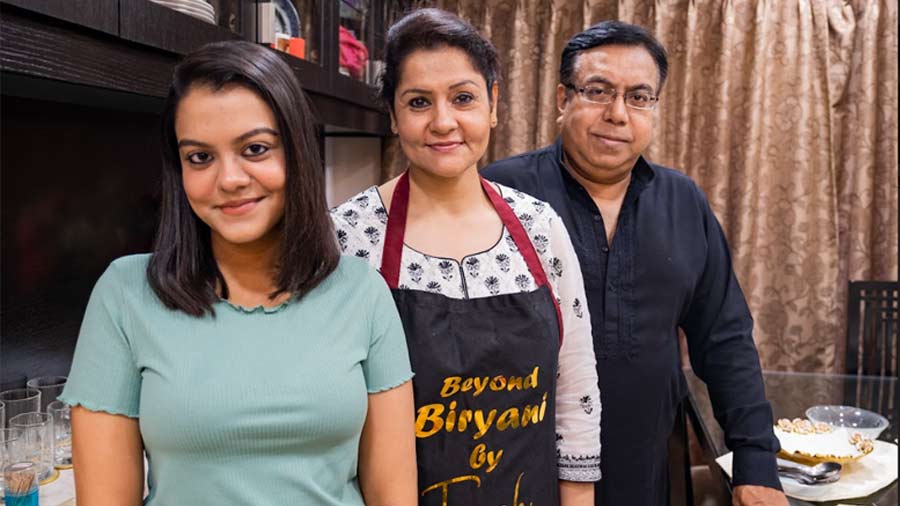
Farah (centre) with her younger daughter Ifrah and her husband, Rubayat

“Calcutta is crazy about biryani but we also want people to explore dishes beyond biryani,” explains Rubayat. He’s always at hand to taste her recipes and to guide patrons on their menu choices. He’s likely to bristle if you ask for an egg in the biryani and grimace if you want to pair the korma with biryani instead of roomali roti. “A boiled egg adds nothing to the biryani! It can be boiled separately and placed inside the rice. Besides, it takes up space in the container and which would you rather have anyway, more rice and aloo or a plain boiled egg?” he demands to know.

Not being a fan of boiled egg in my biryani anyway, I acquiesce. Farah’s biryani, having gained popularity and fame, tends to pop up at dining tables across the city, catching guests by delighted surprise. Following the trail to its source, I’m here today to dig into offerings that go beyond the Kolkata dum.

Yakhni Pulao

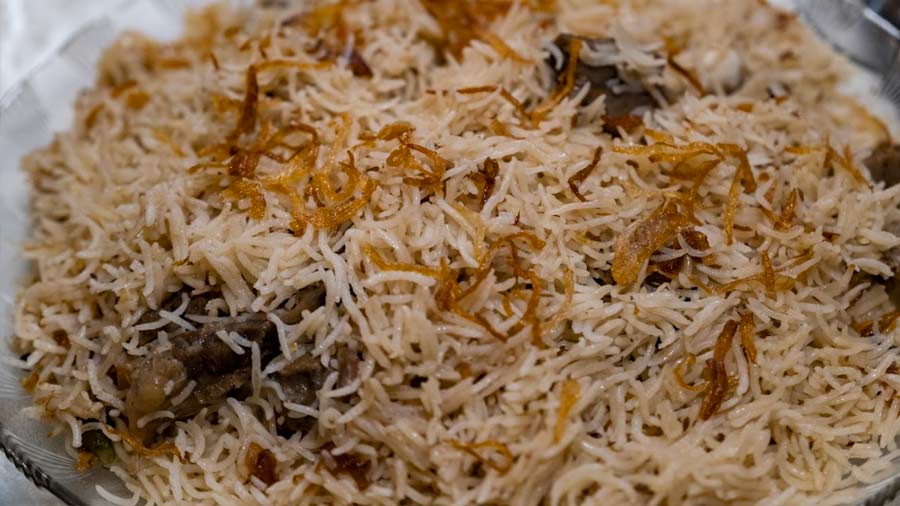
The flavour of the Yakhni Pulao is enhanced by the fact that the rice is cooked in mutton stock. It’s lighter than the biryani, which just means you’ll get to eat a lot more and fall into a bhaat-ghoom that much quicker. This one’s definitely a winner for summer.

Mutton Afghani Kebab

The Mutton Afghani kebab was one of Farah’s mother’s specialities, so it’s straight from the family legacies. Reminiscent of a galouti kebab, this one achieves just the right amount of tender with the help of papaya and not a slab of fat. “I don’t use extra fat or dalda. I cook like I would cook for my family,” explains Farah.

Mutton Akbari

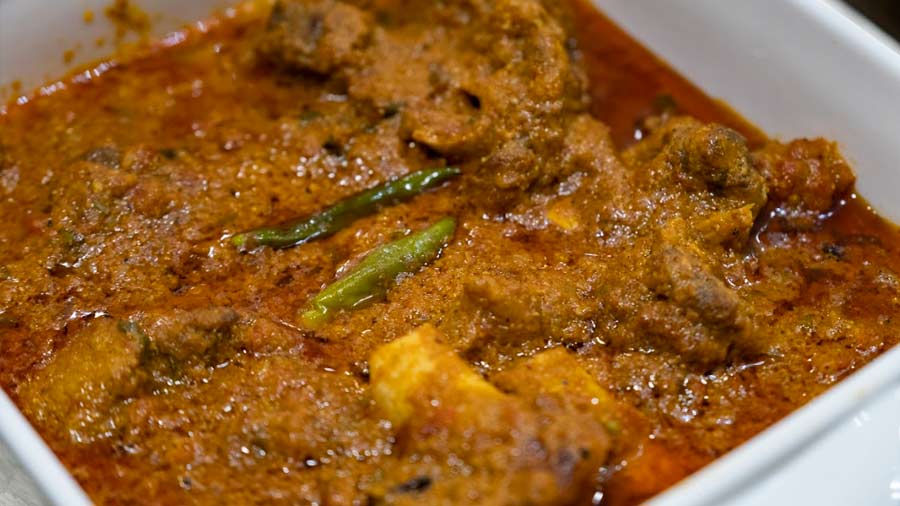
Mutton Akbari, like every great meat dish, is served on the bone, albeit almost falling off it. It cooks in its own juices, and though you might be tempted to moisten your biryani rice with it, like every good Bengali who likes his jhol, Rubayat insists you have it with paratha. Don’t worry, you’ll love that too.

Nargisi Kofta

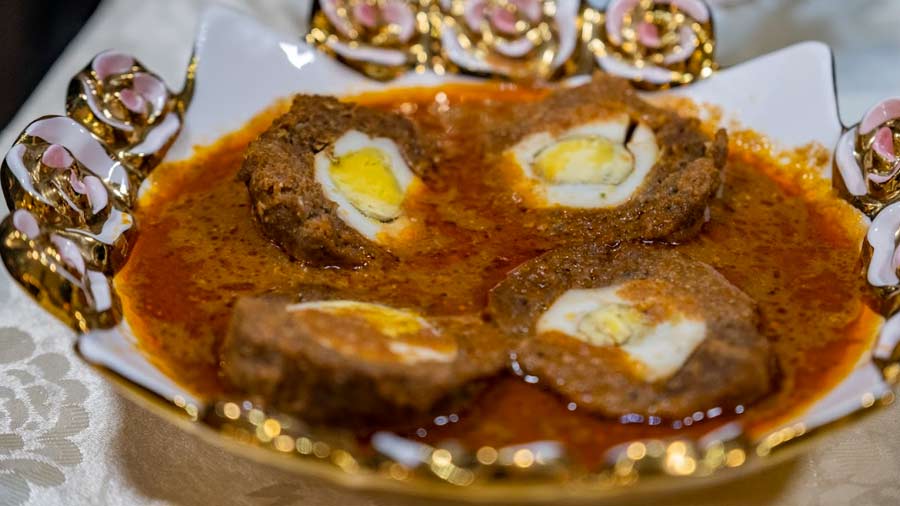
This one, another maternal hand-me-down, is one of the stars of the menu. The Nawabi cousin of the Bengali dimer-devil, Farah’s Nargisi Kofta is fried to a perfect brown and then placed in a surprisingly light gravy. All you need is a plate of fluffy white rice to soak it up with.

Shami Kebab

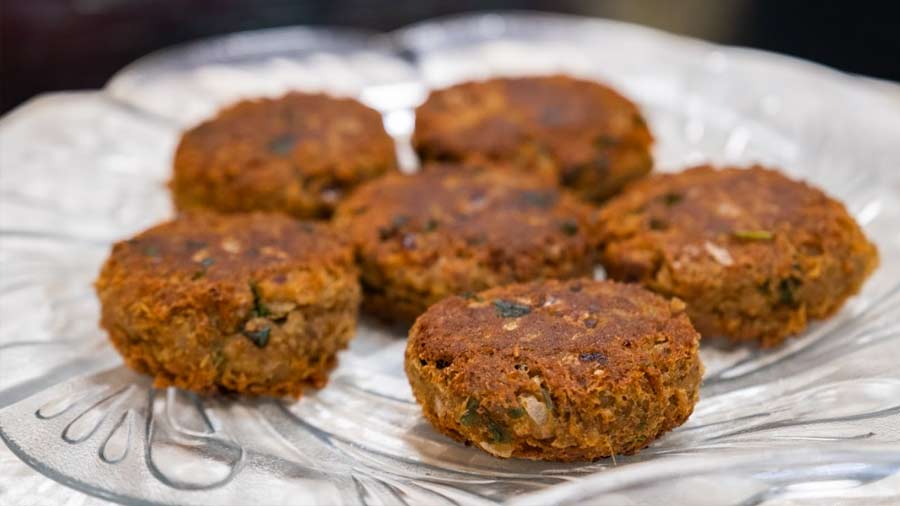
The Shami Kebabs are Farah’s primary claim to fame. “They’re our fastest moving item. These kebabs go all over the world – Canada, America, Bangkok. My elder daughter used to take it back with her when studying in the US. It’s the one dish I cook every day, as mutton, chicken or even soya which is also very popular. In fact, the soya is actually very tasty,” says Farah.

Which brings us to the crucial point that there are a great many vegetarian items on the menu as well. “We have very many vegetarian clients who are regulars too,” says Farah.

Farah’s full of surprises. She is able to make a mean prawn dish without tasting it because she prefers to not eat seafood. “There’s a de-shelled crab in butter garlic which I tasted in Trishna, Mumbai, that I’m trying to get her to recreate. She’s never eaten it, so I have to describe it really well,” says Rubayat, with all the purpose of a man setting out on a mission.

The other element of surprise lies in the size of Farah’s kitchen. It’s a small space attached to an apartment, just as fuss-free and efficient as the cook. It’s clean, compact and no-nonsense, spilling out a feast for a gourmand. In this kitchen, Farah insists on doing everything herself. She sets out every morning to buy meat from a regular Park Circus shop and then methodically goes about the cleaning, chopping and marinating. “The secret lies in knowing which cut of meat to use for which dish. The meat required for biryani, shami kebab and korma are all very different,” explains Farah.

“It’s the cut and the cook which determines the success of a dish,” sums up Rubayat, succinctly. “She has no recipes. It’s all on andaz, which is amazingly never wrong.”

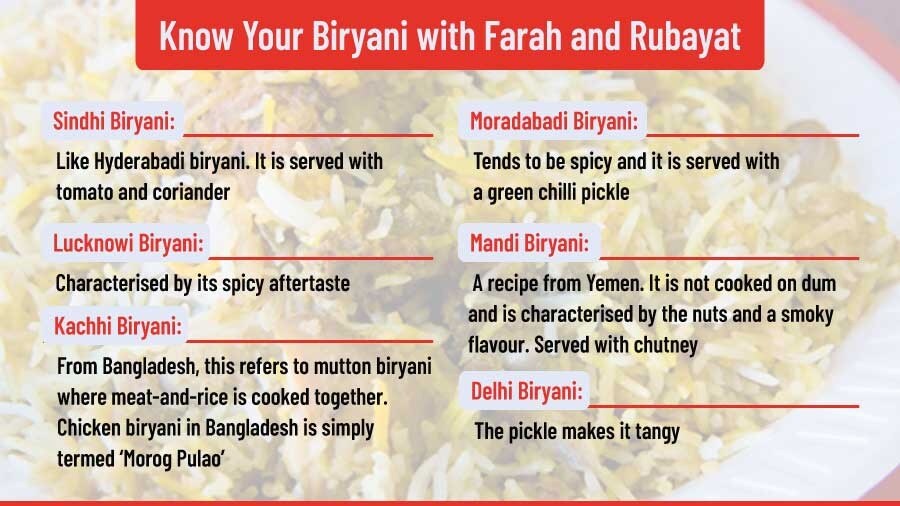
Farah is of the opinion that her dishes are infused with the flavours of Delhi because her grandparents lived in the capital city. Of course, she learnt just how Kolkata likes to have its biryani and proceeded to get it just right. It’s not the only biryani she knows how to make though, in case you’re enthused to go, not just beyond biryani, but beyond the Kolkata Biryani.

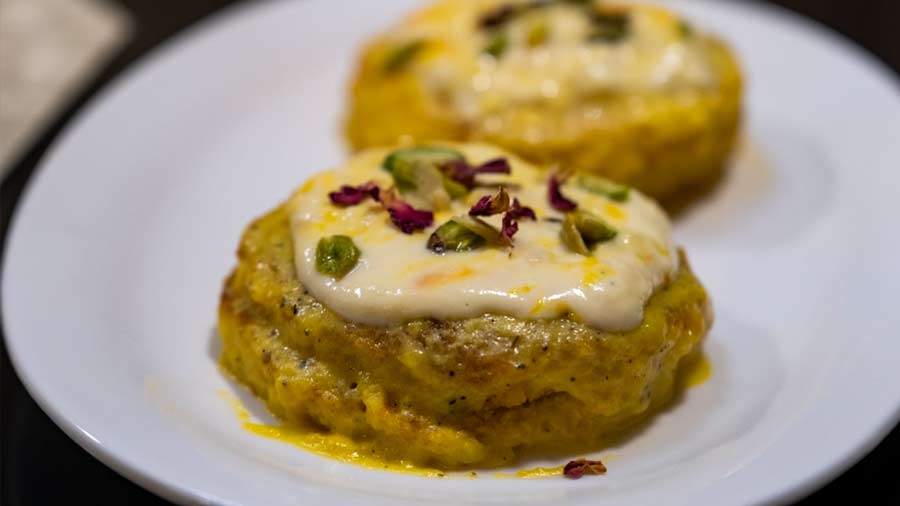
Shahi Tukda

Yes, Farah makes dessert too! Because in Kolkata we need our mishti mukh, even if we can look beyond the biryani.

source: http://www.telegraphindia.com / Telegraph Online / Home> My Kolkata / by Ramona Sen / June 14th, 2022

Why Congress MLA Motab Shaikh thinks he is the luckiest man on earth

WEST BENGAL :

Motab Shaikh

Motab Shaikh, one of the two Congress legislators elected in the recent Assembly elections in West Bengal, says he is “the luckiest man on earth” — and he has good reason to believe so.

In the 2026 West Bengal Assembly elections, Shaikh won from the Farakka Assembly constituency by defeating his nearest rival, Sudhir Chowdhury of the BJP, by nearly 8,000 votes.

The victory was remarkable because the 57-year-old businessman had almost lost his own right to vote before the election. His name had been deleted from the electoral rolls during the Summary Intensive Revision (SIR) process due to a discrepancy in the spelling of his name in earlier voter records.

A former Gram Pradhan, Shaikh had been nominated as the Congress candidate from Farakka, but the Election Commission of India disqualified him as a voter after identifying inconsistencies in his documents.

Shaikh challenged the decision in court. The matter was eventually referred to the Special Appellate Tribunal headed by retired Justice T. S. Sivagnanam. The tribunal accepted his passport and other supporting documents as valid proof of identity and directed the Election Commission to restore his name to the voters’ list.

The order came on April 5, just hours before April 6 — the final date for filing nominations. With little time left, Shaikh entered the fray with only 14 days to campaign.

His victory has acquired larger political significance in the backdrop of the SIR exercise in West Bengal, during which nearly 9.1 million voters — around 11.9 per cent of the electorate — were reportedly removed from the rolls. Opposition parties sharply criticised the process, describing it as “undemocratic,” “non-transparent,” and a case of “mass disenfranchisement.” Several legal challenges related to the exercise are still pending.

Against this backdrop, Shaikh’s win is being seen not merely as a personal triumph but also as a symbolic assertion of voting rights. The tribunal’s observation that a citizen cannot be excluded from the electoral rolls because of a technical discrepancy may influence similar cases in the future.

Despite the political controversy surrounding his election, Shaikh says his priority is governance rather than confrontation.

“I am not interested in quarrelling with the BJP,” he said. “My constituency faces severe water scarcity, and I want to focus on solving that problem.”

source: http://www.awazthevoice.in / Awaz, The Voice / Home> Stories / by Shampi Chakraborty / May 08th, 2026

Dr Munkir Hossain: The unacknowledged Good Samaritan and ‘Sufi Scientist’ of rural India

WEST BENGAL :

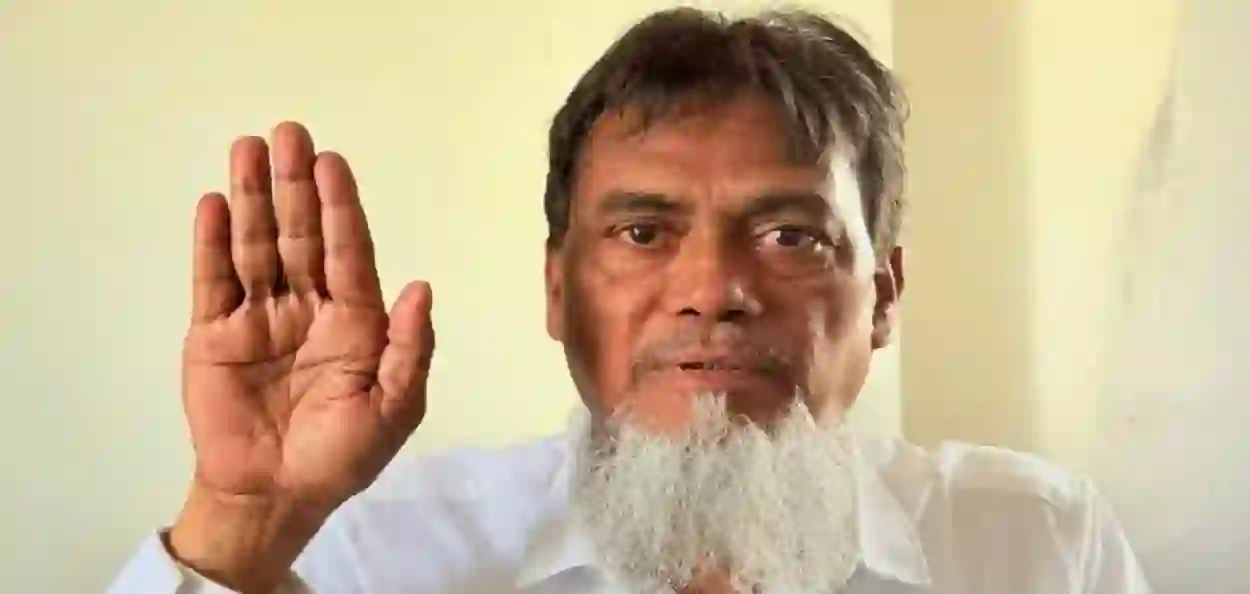
Meet Dr Munkir Hossain, a scholar on a mission to empower the girl child and create religious harmony, hopes that one day India will be led by scholars. A Sufi, who fasts almost throughout the year.

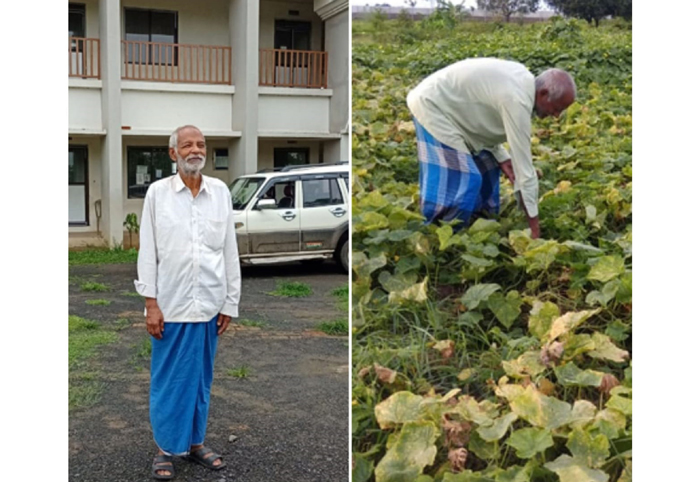
Dr Munkir Hussain in front of the institute cum hostel at a farm in Birbhum District

Kolkata:

If you were to cross him on your way to Birbhum, famous for its terracotta work, you probably wouldn’t give him a second glance. If you saw him tilling the farm land you’ll only see a regular farmer busy at his work. A frail figure in a checked lungi (waist cloth) is a common sight in our country. What is not common though are the achievements of our students from rural India and that too as scientists of international repute.

Yes, of course we have our much admired A.P.J. Abdul Kalam, who made his way from a village to achieve great heights as a scientist and went on to become one of India’s most loved and respected Presidents.

Dr Munkir Hossain, the person described above, has been a post doctorate research scholar at various national and international institutes. After schooling from his maternal village at Bhimpur he went to Burdwan University where he did his master’s in Chemistry and followed it up with a PhD and later did post doctorate studies from the prestigious IIT (Indian Institute of Technology) Bombay.

Who is Dr Munkir?

“I was born in Khutkail village but there was no school there. Luckily my brother was born soon after my birth so my parents left me at my maternal grandparents’ house in Bhimpur which is just across the Pagla river. There was a primary school too. If that had not happened I would have remained illiterate,” chuckles the scientist as he recalls the fond memories of childhood days.

He credits his teachers at the village school for instilling in him the values he has and the thirst for knowledge that took him to far flung places and universities such as Taiwan and Japan.

Dr Munkir has over 55 research articles published in national as well as international science journals of great repute.

He is revered by all those who know him or have heard of him. The Vice Chancellor of Aliah University and former Professor, Department of Chemistry at Jadavpur University in Kolkata, Md Ali recalls the days at Burdwan University when he had enrolled for his MSc while Dr Munkir was doing his PhD there, “As an academician from such modest background Dr Munkir has definitely been an inspiration for others. I come from a village myself and seeing Dr Munkir do his PhD at that time seemed like a huge achievement in itself. I used to admire his sincerity and his simplicity. He led a simple life and used to be dressed in very simple attire, wearing the modest chappal (bathroom slippers) to class. He had no political leaning nor do I think he discussed religion. Though my interactions with him were very limited.”

After retirement in 2016 as a senior research scholar Dr Munkir opted to come back to his village.

Dr Munkir Hossain with BSM’s Samirul Islam

After retirement, bought lands and providing free education for girls

At 67, he has given away all his earnings for the education of poor children on a 60 bighas (acres) plot of land that he bought in Bhimpur.

Dr Munkir had started his venture with the aim to empower the girl child. But he ran short of money. His objective is to spread secular knowledge and create scholars who will provide honest leadership.

“Out of the 26 students from our first batch which appeared for the WB Board’s Madhyamik examination this year, 25 secured first division. Five of them scored between 90 to 100 percent and six students scored between 80 to 90 percent,” shares the scientist like a father proud of his children’s achievements.

“His achievements as a scholar are unparalleled yet he lives in oblivion. He does not even own a mobile phone. He spent his money getting his brother’s daughters married and with the rest he bought a plot of land to promote education. He is a Sufi scholar, a Saadhak,” says Samirul Islam, Assistant Professor at Shyampur Siddheswari Mahavidyalaya and President of Bangla Sanskriti Mancha.

Future plan: A maternity hospital

That’s not all. Dr. Munkir also wants to set up a Maatri Sadan (Mother and Child care) hospital that will have women administrators and hopefully women doctors as well. The institute at present provides free education from school till the post graduate level besides free hostel facilities. It occupies 37 bighas. The remaining 23 bighas of the plot will be used for the Maatri Sadan.

“Let’s not forget that our mother is our first teacher. It is on her lap that we get to hear stories and tales of good and bad, right and wrong. Habits formed during childhood last long. It lays the foundation for a healthy outlook and consequently a healthy society. As of now only girls from the local village are getting education here because we don’t have hostel facility for them. I’m hopeful that soon, like the boys who come from far off places, they too will be able to get quality education and hostel facility with wholesome food free of cost,” he shares with conviction.

The scholar reminds us that society is an extension of our family. “We need to improve social values. We are losing our heritage and culture. Even the villages are not free from such degradation. My intention is not just to give my country educated individuals but youth who can rise above vices like corruption and greed for money or power,” says the man who chose to remain unmarried so that he would be free to serve society.

Epitome of simple living and high thinking

For his own sustenance he takes farmland on lease from the villagers and cultivates onion and vegetables and also grows mangoes. “I was born in a very poor family. We barely could manage one meal a day. So I’m a light eater and hunger does not bother me. But I don’t want other children to be deprived. The only way to get out of poverty is through education,” says the scientist in answer to how he manages to lead such a frugal life.

All his life he owned only two sets of pants and shirts and has toured across the globe in them.

The man himself fasts for 360 days a year, hasn’t skipped his prayers since the time his primary school teachers taught him how to pray and sleeps at the mosque. He is critical of such religious preachers who spread hate and create rift between communities. He stresses on the importance of secular knowledge combined with spiritual knowledge to tide over all the ills plaguing our society today.

“What we see around us today is a result of ignorance. I hope more people come forward and join hands with others to create a society that is not just secular but one that thrives on peace and prosperity,” says the scientist turned social activist with a conviction that’s difficult to ignore.

Taking a cue from Tagore’s Ekla Chalo Re, which Dr Munkir quoted, the indomitable spirit of the scientist is persistent in its resolve to serve the society. He has joined hands with Bangla Sanskriti Mancha that works for the welfare of downtrodden and has been closely associated with the relief work during the lockdown and cyclone Amphan, to provide the relief works to the affected people.

source: http://www.enewsroom.in / eNews Room India / Home> Bengal> Let There Be Light / by Nasreen Khan / July 22nd, 2020

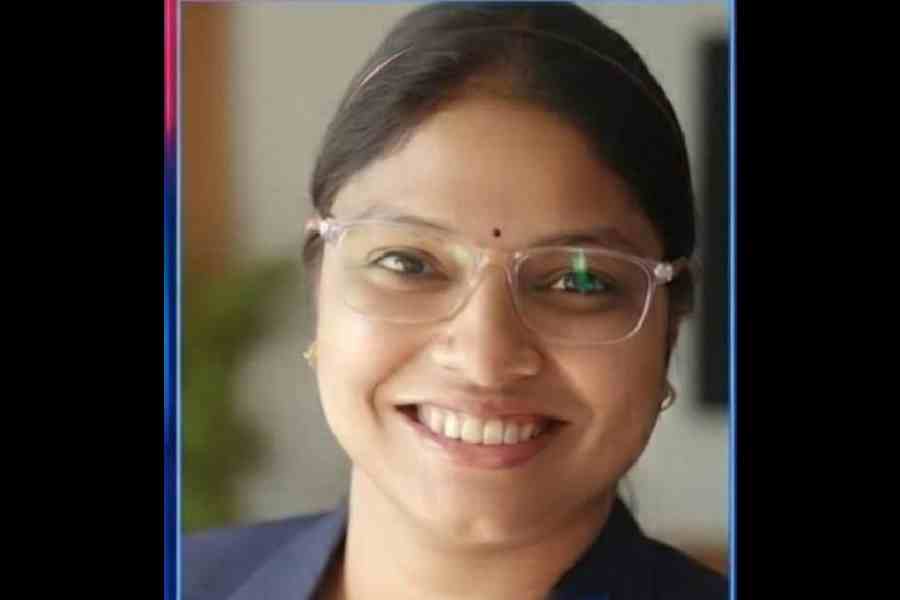
Outcome of resilience and family support: Farmer’s daughter from Murshidabad cracks UPSC

Pakalpara Village (Murshidabad District), WEST BENGAL :

A resident of Pakalpara village, Sana secured an All-India Rank of 764 among 958 candidates recommended in the final list of the 2025 examination, making her eligible for the Indian Revenue Service and other Group-A central government services.

Sana Azmi, a 25-year-old Muslim woman from a modest farming family in Murshidabad’s Sagardighi, brought pride and joy to the region this month by qualifying in the prestigious Civil Services Examination conducted by the Union Public Service Commission (UPSC).

A resident of Pakalpara village, Sana secured an All-India Rank of 764 among 958 candidates recommended in the final list of the 2025 examination, making her eligible for the Indian Revenue Service and other Group-A central government services.

The results of the Civil Services Examination 2025 were declared on March 6.

Though the achievement has been widely celebrated in her village and across Murshidabad district, Sana is dissatisfied with her present rank and has already started preparations to attempt the exam again for a better rank that would enable her to become an Indian Administrative Service (IAS) officer.

The Civil Services Examination, conducted annually by the UPSC, is regarded as one of the toughest in the country with three stages — the preliminary, Main and the personality test/interview. Successful candidates are recommended for appointment to the country’s elite administrative services such as the Indian Foreign Service, Indian Administrative Service, Indian Police Service and Indian Revenue Service.

Born into a large family with limited means, Sana’s UPSC journey has been remarkable on many fronts. Youngest among 10 siblings, Sana grew up in a family focused on education.

That was largely because of her father, Maijuddin Sheikh. A poor farmer with a small patch of land, he had to discontinue his education after Class IX. But he struggled to ensure that all his children, including his seven daughters, received a proper education.

The results of that commitment are now visible.

Two of Sana’s sisters chose to study medicine — one of them, Beauty Khatun, is a doctor at the Burdwan Medical College and Hospital, while another sister is studying MBBS at the North Bengal Medical College and Hospital in Siliguri.

Sana’s success in the UPSC exam has added another feather to the family’s cap.

Sana began her schooling in her native village.

She studied up to Class VIII at Kabilpur High School in a neighbouring village. She later moved to a residential institution run by the Al-Amin Mission, where she completed her Class X and Class XII. She appeared for the Class XII board exams through a high madarsa in Howrah district and stood first in the district.

Then came the big leap.

Encouraged by her family and her own grades, she took admission to the Jamia Millia Islamia in New Delhi, where she graduated in English Honours and completed her MA as well.

During her time in Delhi, she also joined the university’s residential coaching academy for civil services aspirants, where she began a systematic preparation for the UPSC exam.

Remarkably, she cleared the Civil Services Examination in her very first attempt in 2025.

“I had strived hard to crack UPSC, and I thank my family members for their support. I am happy to have done it on my first attempt, but I would not have achieved it without the support of my sister Beauty Khatun. She sent me to Delhi to fulfil my dream. I will take up the job, but ultimately will try to fulfil my dream to become an IAS officer,” said a reclusive Sana, who spoke to the media through her elder brother Md Imran.

Beauty recalled how the family collectively nurtured Sana’s ambition.

“I became a doctor, and another of our sisters is studying MBBS,” she said.

“But we always felt that one of us should become a top civil servant. Sana had that dream. We encouraged her and planned her academic path accordingly. Her admission to Jamia Millia University in Delhi was also part of that plan,” she added.

As congratulations poured in, her mother, homemaker Fulbanu Bibi, couldn’t stop beaming.

“It is a dream come true,” Fulbanu said. “But Sana is not satisfied with the rank she has obtained. Her goal is to become an IAS officer. So she has begun her studies again.”

source: http://www.telegraphindia.com / The Telegraph / Home> West Bengal / by Alamgir Hossain / March 03rd, 2026

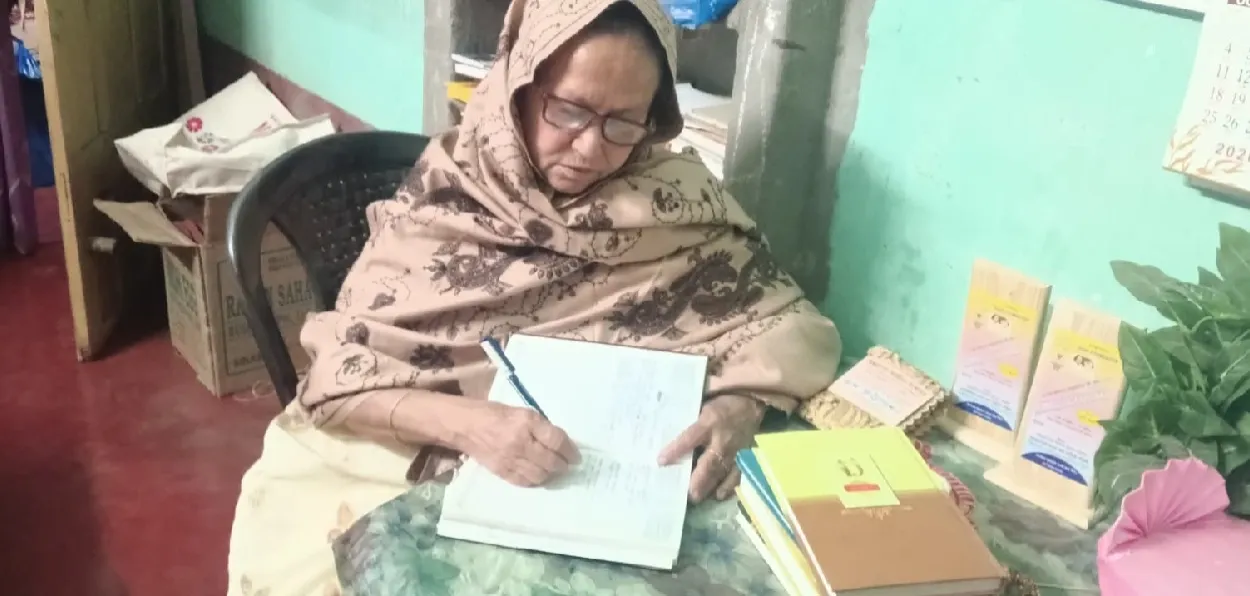
Feroza Begum chronicles hardships of life in her poems and stories

Jubuni Village (Rampurhat subdivision of Birbhum District), WEST BENGAL :

Feroza Begum

Firoza Begum’s language of protest against the harsh realities of rural India, gender inequality, and family adversity is a strong statement. The poet and writer in her, though, has emerged from a phase of struggle.

She was born into a respectable family in Jubuni village of Rampurhat subdivision of Birbhum district, West Bengal. Her parents, Abdul Hakim Mallick and Arestun Bibi, faced poverty, disease, and social uncertainty, due to which her childhood was difficult.

The struggle for survival of her family and relatives during the terrible smallpox epidemic influenced and triggered a humanitarian spirit in her.

In her childhood, when women’s education was neglected in rural society, she completed her schooling. She broke many social barriers. The discrimination and neglect she faced while in school ignited the spirit of rebellion in her, which, in due course, made the language of her writing sharp, protestant and sensitive.

Feroza Begum with an award

In 1974, she married Nurul Haque Mallick, a science-minded teacher. With her husband’s liberal attitude and inspiration, she managed to balance both her family life and pursuit of literature. She made sure her four daughters got educated and financially independent, self-reliant. Although her husband’s death in 2016 left a deep void in her life, she did not stop pursuing literature.

Since 1992, Firoza Begum has been regularly writing poems, songs and essays. Her writings have been published in various literary magazines of Murshidabad, Rampurhat and Kolkata, Pragati, Trinayani, Kalam, Bhabbana, Sangbad Darpan, Roddur, Arpan, etc.

Besides, she is also a regular participant in the radio and television programs and has received recognition beyond her hometown and community.

The poetry collection “Nayantara” published in 2010) and “Aparajita” published in 2014) clearly reflect the struggle of women, the adversities of life, and the human spirit.

She proofread and published the book, despite illness and limitations, and it reflected her perseverance.

 Firoza Begum has received several honours and awards in recognition of her contribution to literary endeavours.

The reception by the Bhabna O Anubhavber Dana newspaper of Rampurhat, the Rokeya Award from the Roddur newspaper, certificates from various radio stations in Kolkata and Baharampur, the Ambedkar Shilpi Ratna Award from New Barrackpore, and the recent “Best Bengali” award from the Asha Foundation are important recognitions of her literary and humanitarian activities.

The life of poet Firoza Begum is not just the autobiography of a writer, it is a courageous document of a struggling woman. Her pen still bears witness to the fact that even in the deep darkness of adversity, education, humanity and literature are capable of illuminating the path of humanity.

source: http://www.awazthevoice.in / Awaz, The Voice / Home> Stories / by Dev Kishore Chakraborty / February 03rd, 2026

Sangeet sabha pays homage to Ustad Munawar Ali Khan

Kolkata, WEST BENGAL :

Tragically, Munawar Ali Khan Sahib died at the peak of his career, at the age of 59 in Kolkata in 1989.

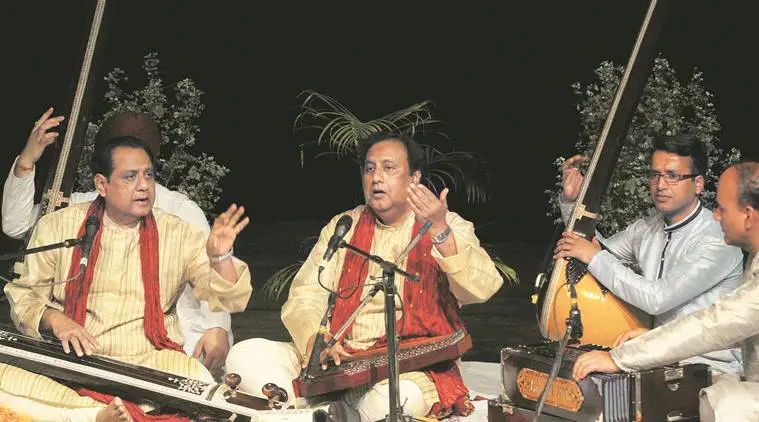
Artistes perform at Tagore Theatre in Sector 18, Chandigarh, on Saturday. Express

Triveni Sangeet Sabha paid a homage to late Ustad Munawar Ali Khan of Kasur Patiala Gharana on Sunday evening at Tagore Theatre. An audio-visual presentation on Ustad Munawar Ali by Niharika Popli was projected. This was followed by vocal recitals by Ustad sahib’s son Raza Ali Khan and his two nephews Ustad Mazar AlI and Awaad Ali Khan. Chandigarh-based Primila Puri, his disciple, also sang.

Ustad Munawar Ali Khan was born in 1930 in Lahore. He was the son of the legendry maestro Padmabhushan Ustad Bade Ghulam Ali Khan and trained under his father and his uncle Ustad Barkat Ali Khan. Munawar Ali Khan had a full-throated, powerful voice with open aakar, which adapted itself to different styles of bandishes like khayal, thumri, dadra and after his father’s death in 1968, he became a worthy representative and the ‘Khalifa’ of the Kasur Patiala Gharana. He created many khyals, thumris, geets and ghazals and sang brilliantly difficult ragas of his gharana and also created a new raga named Malini Basant.

Tragically, Munawar Ali Khan Sahib died at the peak of his career, at the age of 59 in Kolkata in 1989. The Kasur Patiala legacy is now carried on by his son Raza Ali Khan and his nephews Jawaad Ali Khan, Mazhar Ali Khan and Naqi Ali Khan.

source: http://www.indianexpress.com / The Indian Express / Home> News> Cities> Chandigarh / by Express News Service / March 18th, 2018

Havaldar Jhantu Ali Shaikh Honoured With Sena Medal for Supreme Sacrific

WEST BENGAL :

New Delhi:

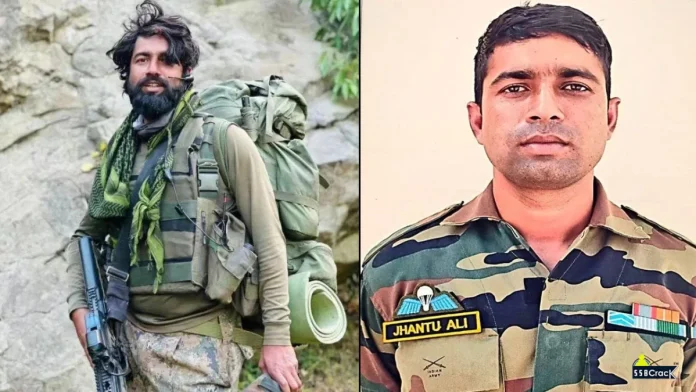
The Indian Army has posthumously awarded the Sena Medal to Havaldar Jhantu Ali Shaikh of the elite 6 Para Special Forces, recognising his exceptional courage and sacrifice during a counter terrorism operation in Jammu and Kashmir. The gallantry award was announced on the occasion of Republic Day 2026.

Havaldar Shaikh, a resident of West Bengal, laid down his life during a fierce encounter with terrorists in the Udhampur district on April 24, 2025. He served with the 6 Para Special Forces, one of the Army’s most demanding combat units. During the operation, he faced heavy fire and suffered grave injuries. He continued the mission despite his condition and ensured pressure on the terrorists until his final moments.

Army officials said his conduct reflected discipline, courage, and devotion to duty. His actions helped protect fellow soldiers and upheld the operational objective. The Sena Medal recognises acts of bravery and exceptional service. His name features among 70 gallantry award recipients announced this year, highlighting the continued sacrifices of armed forces personnel.

The White Knight Corps paid tribute to Havaldar Shaikh and acknowledged his role in counter insurgency efforts in the region. Fellow soldiers described him as committed and fearless, with a strong sense of responsibility toward his unit and the nation.

Havaldar Jhantu Ali Shaikh’s sacrifice holds deep meaning for the country. His story reflects service guided by faith, duty, and courage. His legacy stands as a reminder of the price paid by soldiers who protect national security and civilian lives, even at the cost of their own.

source: http://www.radiancenews.com / Radiance News / Home> Latest News> Report / by Radiance News Bureau / January 27th, 2026

‘I’m Proud to Be a Bengali’: Meet Nilufa Yasmin Who Topped UGC NET 2025 With 100%, Earned CM’s Praise

Katwa Town (Purba Bardhaman District) , WEST BENGAL :

Nilufa Yasmin

Kolkata : 

Nilufa Yasmin has scored a perfect 100% in the University Grants Commission National Eligibility Test (UGC NET) held in June 2025. She has qualified for the Junior Research Fellowship (JRF) in Bengali.

The UGC NET is a national-level exam that determines eligibility for the award of the JRF, a scholarship awarded to postgraduate students to pursue research that leads to a PhD.

Her result is being celebrated as an achievement. It came after two previous unsuccessful attempts. She appeared for the exam along with more than 7,52,000 candidates. Her score of 100% has placed her right at the top.

Belonging to the state of West Bengal, she feels proud of her language and identity.

“I am proud to be a Bengali. I take even greater pride in my subject, which is Bengali language, and I am determined to hold onto it as I move forward in life,” she told TwoCircles.net, with a sense of pride.

Nilufa, 26, comes from Katwa town in Purba Bardhaman district of West Bengal. Her academic performance from school through college has been excellent.

Lauding her success, Chief Minister Mamata Banerjee wrote on X (formerly Twitter), “Congratulations to Nilufa Yasmin of Katwa in Purba Bardhaman for scoring 100 percentile and securing first position in India in UGC-NET June, 2025 in Bengali and to Rikta Chakraborty of Kolkata for securing second position in India in UGC-NET June, 2025 in Mass Communication and Journalism. Your achievements have made our State proud. Congratulations to your parents/ guardians and teachers too.”

Nilufa said this recognition from the chief minister is an honour and a reminder for her to strive even harder in the future.

She is currently pursuing her PhD on Sangeet O Sahityer Melbondhon from the Burdwan University. Her research explores the connection between music and literature.

She has an interest in music. She learnt Rabindra Sangeet during her school years and has taken part in many singing competitions. She has won prizes in various categories, including a gold medal in Rabindra Sangeet, Nazrul Geeti and classical ‘bhaktigeeti’.

“I am inspired by legendary singers like Mohammed Rafi and Lata Mangeshkar,” she says.

She is a singer herself and has hosted a musical show titled ‘Eto Sur Eto Gaan’ on Doordarshan. She shares her singing performances on her You Tube Channel.

Her ambition is to become a professor in Bengali literature.

An avid reader who is inspired by her favourite authors such as Sarathchandra Chattopadhyay, Rabindranath Tagore, Procheta Gupta, among others, she aspires to be a professor of Bengali language and literature.

She has written 16 stories on themes such as women, social issues and romance. She hopes to publish them one day. She also wants to write a book.

Nilufa Yasmin with her parents

Nilufa says she owes her success to her sister and her parents who are in the field of education. She has a message for aspiring young girls and women: “Stand on your own feet first as financial freedom is the greatest form of freedom. Education brings dignity and teaches us to respect others. It is more important to be truly educated than just formally literate.”

She believes that food and language should not be used to create barriers.

Speaking about the alleged harassment and targeting of Bengali-speaking Muslims in different parts of the country, she says, “I am heartbroken by these incidents. One’s language, food and attire are personal choices and fundamental rights. Even though our country is independent, our mindset is yet to attain that freedom. Had we been free in thoughts, then no one would attack another for their language. This causes pain.”

source: http://www.twocircles.net / TwoCircles.net / Home> India News> India Politics> Indian Muslim> Lead Story> TCN Positive / by Nikhat Fatima, TwoCircles.net / August 10th, 2025

Book Launch Sparks Debate on Muslim Representation, Education, and Healthcare

Kolkata, WEST BENGAL :

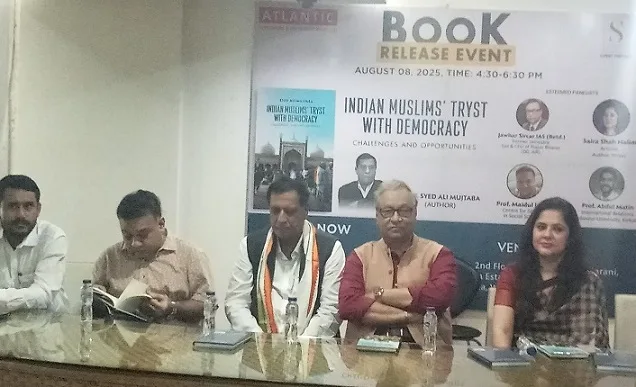
At the launch of the book Indian Muslims’ Tryst with Democracy: Challenges and Opportunities at ICCR Library, Kolkata, academics and public figures underlined that meaningful improvements in government schools and hospitals could significantly uplift India’s Muslim community, especially its poorest segments.

Professor Abdul Matin of Jadavpur University stressed that socio-economic realities leave many Muslims dependent on failing public services. “We keep saying Muslims lag in education — but how do we fix it? When families earn only ₹8,000–₹10,000 a month, they cannot afford private schools. They rely on government schools, which have deteriorated so much that students rarely move up in life,” he said.

Matin pointed out that this crisis is not limited to rural Bengal but also affects Muslim-majority urban areas such as Metiabruz, Khidirpur, Topsia, Park Circus, and Raja Bazar. Once-active Kolkata Municipal Corporation schools, he noted, have shut down, worsening access. The state’s public education system, weakened by years of political interference, has hit all low-income communities hard — with Muslims among the worst affected.

He also painted a bleak picture of healthcare: “In rural Bengal, people travel overnight and queue from midnight for a doctor’s appointment. We must revive mohalla-level schools and clinics.”

Jawhar Sircar, former Rajya Sabha MP and bureaucrat, urged the community to prioritise education over religious symbolism and to resist being reduced to a political vote bank. He encouraged Muslims to join democratic, secular movements fighting to restore India’s plural ethos. On the caste census, Sircar advised patience, saying its 2026 release could be a “game changer” for the community.

Political activist and CPM leader Saira Shah Halim spoke bluntly about systemic discrimination, citing examples from both Delhi and Kolkata. On housing bias, she noted: “People say Muslims are ghettoised — but do they have a choice?” She also criticised the absence of certain MPs, including secular leaders, during critical parliamentary debates on Muslim concerns such as the CAA and the abrogation of Article 370.

From a historical and political perspective, Prof Maidul Islam of the Centre for Studies in Social Sciences, Calcutta, traced a steady decline in Muslim political representation — in the Lok Sabha since 1980 and in the Bengal Assembly since 2011. He alleged that parties deliberately withhold tickets from Muslim candidates, echoing warnings made decades ago by B.R. Ambedkar. The lack of progressive leadership, he argued, further limits the community’s advancement.

The book itself — Indian Muslims’ Tryst with Democracy — offers a detailed examination of these socio-political dynamics, combining historical insight with policy recommendations. Described by speakers as “a guide for collective action,” it lays out both the challenges and the concrete opportunities available for India’s Muslims to achieve equitable development.

 You can order a copy from Atlantic Publishers & Distributors Pvt. Ltd 7/22, Ansari Road, Darya Ganj, New Delhi – 110002. Email-  aparna@atlanticbooks.com – Phone: 011-40775252 Website: www.atlanticbooks.com

source: http://www.theindianawaaz.com / The Indian Awaaz / Home> Quami Awaaz / August 13th, 2025