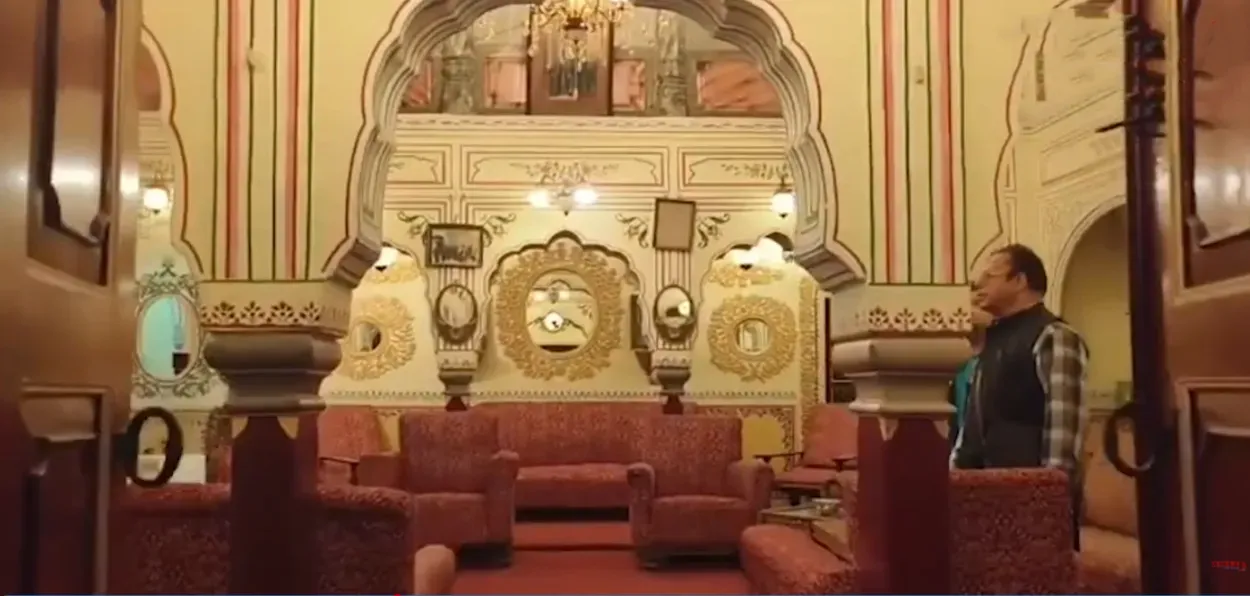
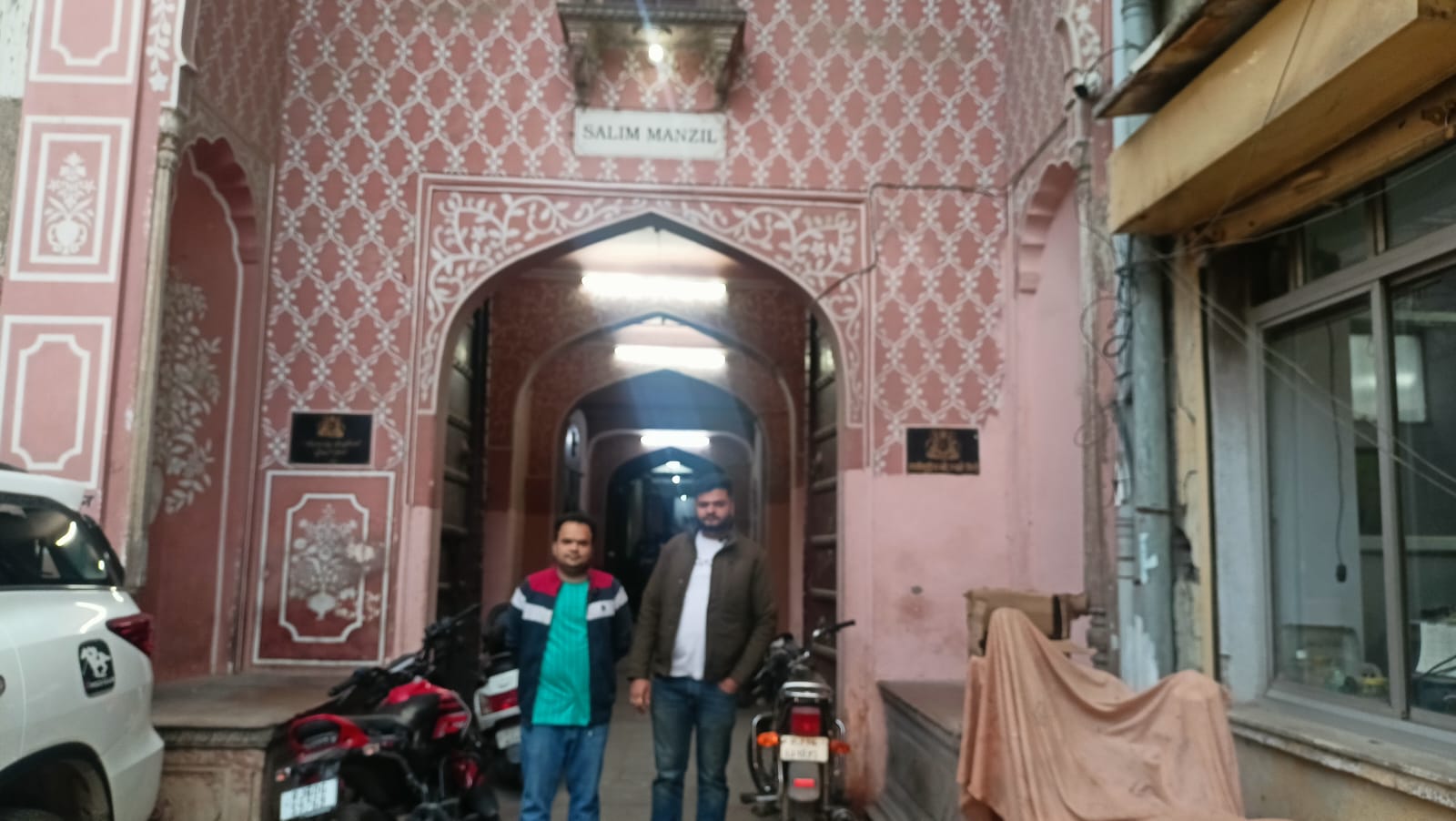
In the bustling streets of Jaipur at Haldio Ka Rasta, Johari Bazar, time suddenly seems to stand still. Amidst ancient stone walls, arched doorways and the stillness of history, stands the Salim Manzil, a majestic building which is a living legacy of more than two centuries.
The mansion houses a relic – a cap of Imam Hussain, the grandson and son-in-law of the Prophet Muhammad; it adds to its importance.
The story behind the ‘blessed cap’ reaching the haveli is interesting and part of its rich history.
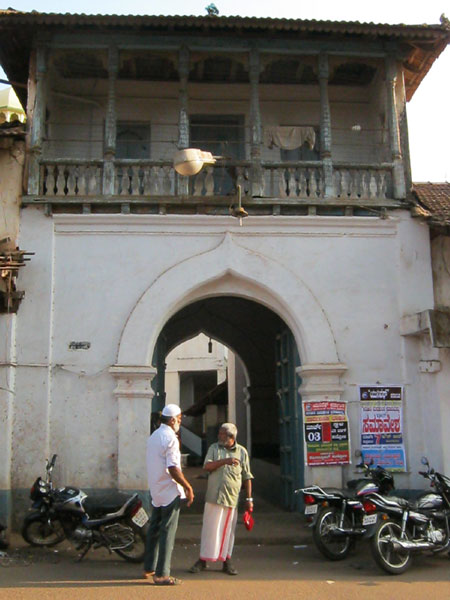
The entrance to Salim Manzil
In the early 17th century, an ancestor of today’s inmates of Salim Manzil treated an Iranian king. The King wanted to reward him with gold, silver and valuable gifts, but he declined the offer and instead requested the cap of Hazrat Imam Hussain.
The King presented the relic and a certificate with the royal seal to him as a reward.
Since 1876, this blessed hat has been preserved in Saleem Manzil in a special glass-framed box kept in a hall called “Kala-e-Mubaraq”.
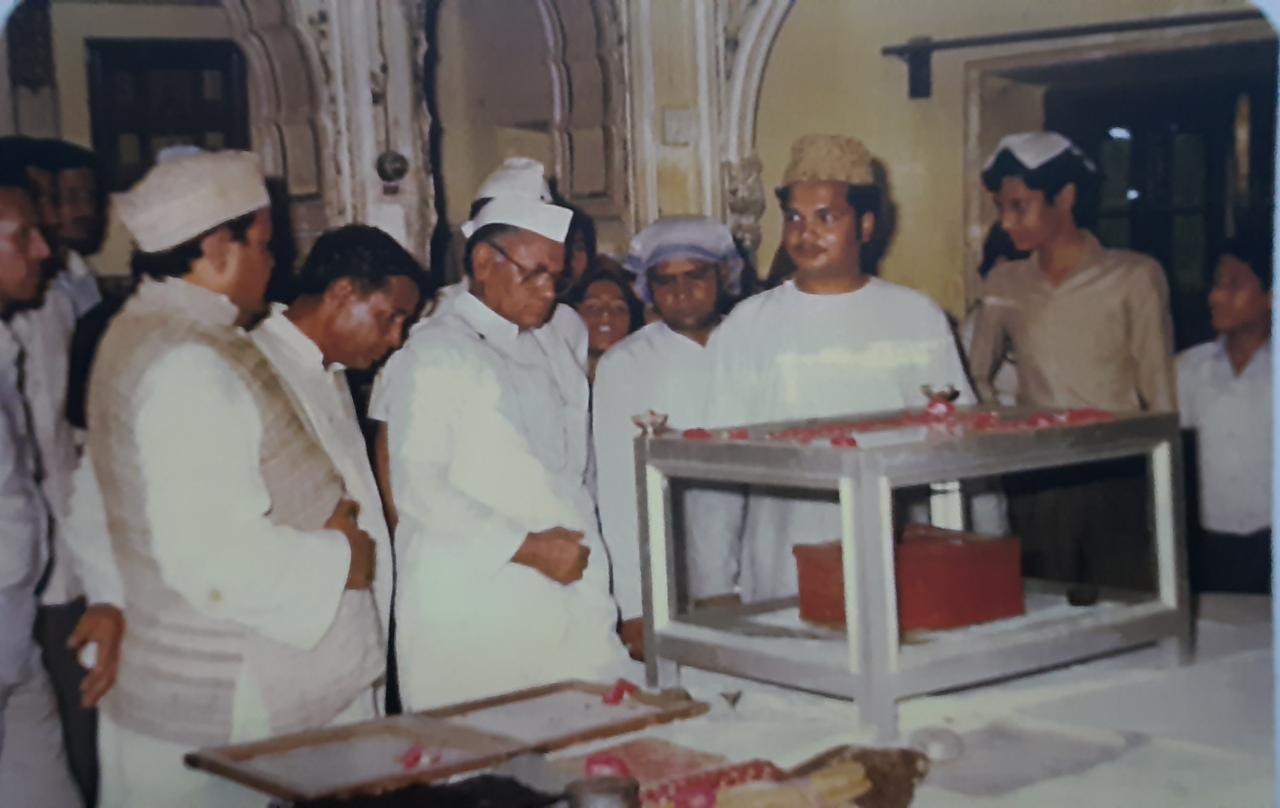
Every year on the 9th and 10th of Muharram, it is opened to the public. In those days, Salim Manzil is turned into a pilgrimage centre, and its air filled with spirituality.
People viewing the Blessed Cap of Hazrat Imam Ali
Today, Moinuddin Khan, 33 and his younger brother, Hussamuddin Khan, 27, are living in the mansion. The two brothers are not only maintaining this legacy, but also modernising its upkeep and display of artefacts.
Moinuddin Khan says that his ancestors came to Jaipur from Delhi around 1812 AD. At that time, Maharaja Jagat Singh of Jaipur State granted them a fiefdom and honour to his elder brother, Hakim Wasil Ali Khan.
This honour was for Wasil Ali Khan’s academic and medical expertise, and he was admitted to the Royal Court. One of the ancestors was the head of the intelligence department of Jaipur State, a sensitive position. He was responsible for the State’s security, political activities and gathering information needed for administration.
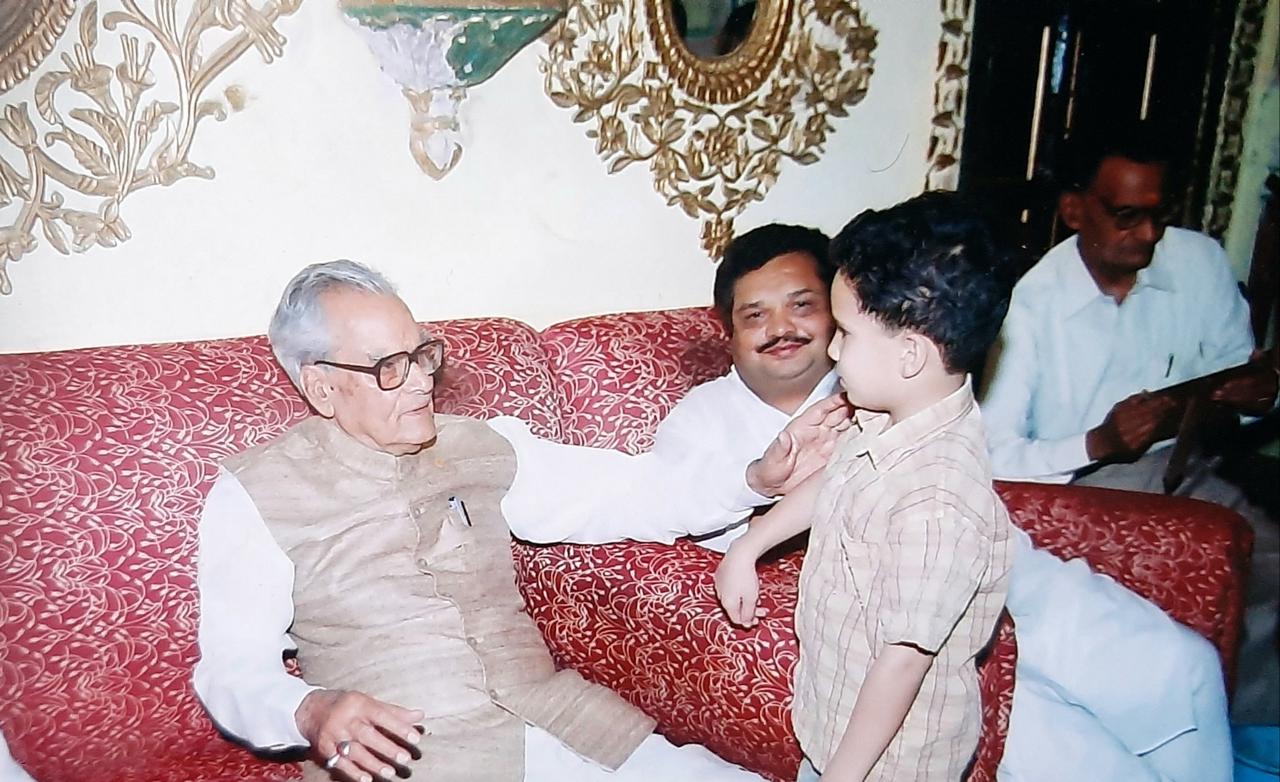
Bharion Singh Shekhawat with the inmates of Salim Manzil
Later, his son, Salim Ali Khan, worked in the same position.
The construction of Saleem Manzil began in 1867, and it was completed within three years. Spread over an area of about a bigha, the building was gifted by the Maharaja of Jaipur. Even today, the haveli’s traditional Rajasthani carvings, arches, high ceilings and lattice windows are a testimony to the architectural craftsmanship of that era.
Over time, many havelis were converted into commercial hotels, but Saleem Manzil retained its original identity. The family also received offers to convert it into a hotel, but they preferred to preserve the spirit of the heritage rather than market it.
Visitors inside the Salim Manzil
The mansion has been used as a set by many filmmakers for movies and web series. Moinuddin says he acted for the role of Sri Krishna in one of the web series. “We have a strong foundation in religion, but we also remain connected with art and dialogue.”
A large hall is decorated, the rooms are filled with the fragrance of perfume and roses, and the pilgrimage begins with Milad Sharif.
Devotees from Gujarat, Maharashtra and other parts of the country also arrive here. In those days, Shia Muslims read prayers and distribute Tabarak.
Moinuddin says that we consider it more of a trust than an inheritance. It is both an honour and a responsibility for us.
Many important persons have visited Salim Manzil. They include President Giani Zail Singh, Chief Ministers Haridev Joshi and Shiv Charan Mathur, Bhairav Singh Shekhawat (Vice President), Natwar Singh (Minister), Najma Haibabullah (Rajya Sabha Chairperson), and Supreme Court Justice Gyan Sudha Mishra.
Head of the family, late Naseemuddin Khan, popularly known as Pyare Mian, founded the All-India Hakeem Ajmal Khan Memorial Society to perpetuate his family’s legacy of Unani medicine and social service.
Today, Moinuddin and Husamuddin Khan are trying to connect this heritage with modern dialogue. They are planning to build a new hall for better management of the pilgrimage during Muharram.
They are sharing information about this heritage with the world through social media and digital means for transparency.
Amid myriad historic monuments of Jaipur, Salim Manzil is unique since it not only preserves the relics of history but is also a pilgrimage centre.
source: http://www.awazthevoice.in / Awaz, The Voice / Home> Stories / by Farhan Israeli, Jaipur / February 21st, 2026
This haunting historical site in Vijayapura deserves better conservation efforts from Archaeological Survey of India as well as deeper research from historians to understand the legends swirling around the monument.
Saath Kabra, the cluster of 63 tombs, in Vijayapura (Photo | Express)
Vijayapura :
Far from being just another tourist destination, ‘Saath Kabra’ in Vijayapura stands out as one of the most haunting historical sites in the region. Often described as a silent witness to a tragic past, ‘Saath Kabra’ is a cluster of 63 tombs arranged on a raised black stone platform, that has generated legends, scholarly debate and enduring curiosity.
The most widespread legend surrounding ‘Saath Kabra’ is linked to the period of Ali Adil Shah II of the Bijapur Sultanate, who is also credited with commissioning the unfinished ‘Bara Kaman’ monument. During his reign, the Bijapur Empire faced a serious challenge from the Maratha leader Chhatrapati Shivaji. To counter this threat, Ali Adil Shah appointed his powerful general Afzal Khan to confront Shivaji.
Afzal Khan, originally from Afghanistan, was known as a formidable warrior. Historical narratives also describe him as deeply superstitious, placing great faith in astrology and spiritual predictions. In 1659, before leaving to face Shivaji, Afzal Khan is believed to have consulted a Sufi Pir, who foretold that he would not return from the campaign. According to local legend, this prophecy deeply disturbed him.
Folklore claims that Afzal Khan, fearing defeat and dishonour, killed more than 60 of his wives by pushing them into a well and later constructed tombs at the site. The alleged motive was to prevent them from remarrying or falling into the hands of enemies and facing humiliation or violence in the event of his death. This story has long been used to explain the existence of the mass graves at ‘Saath Kabra.’
The cenotaph of Afzal Khan
Afzal Khan later travelled to Pratapgarh in the present-day Maharashtra to confront Shivaji. Instead of a direct battlefield encounter, negotiations were arranged. Historical records state that Afzal Khan planned to assassinate Shivaji during a peace meeting. Shivaji, aware of the plot, took defensive measures by wearing armour and concealing iron tiger claws on his fingers. During a traditional embrace, Afzal Khan attempted to overpower Shivaji, but failed. Shivaji retaliated and killed Afzal Khan. Afzal Khan’s body was subsequently buried at the foothills of Pratapgarh Fort.
There is no evidence to support the claim that Afzal Khan murdered his wives or that ‘Saath Kabra’ is their burial site. Vijayapura-based historians Abdul Gani Imaratwale and Krishna Kolhara Kulkarni dismissed the popular narrative as baseless, stating that no credible historical text mentions such an act by Afzal Khan. They emphasised that, in the absence of documentary evidence, the story must be treated as legend rather than history, and that research is required to determine the true origins of the graves.
Dr Imaratwale likes to call the 60 women as ‘half-wives’ as though they were not legally wedded wives, however they enjoyed almost the same privileges that of wives. He said that Khan had four legally wedded wives.
Dr Imaratwale says that such women were accorded considerable respect and were not buried in public graveyards. Separate land was often chosen for their burial, which could explain the clustered graves at ‘Saath Kabra.’
Dr Imaratwale says that it is not credible that a general, who commanded an army of around 40,000 soldiers, would be so fearful of his enemy that he would drown his women one by one in an open well.
Dr Imaratwale suggests alternative possibilities. He said the deaths could have occurred due to mass poisoning or as a result of an accident, such as the collapse of a large structure where the women may have been residing. However, he acknowledged that no information is available to establish the exact cause.
The historians say there is no clear record to confirm whether the women died while Afzal Khan was in Bijapur or during his military campaign. They believe it is more likely that their deaths occurred when Afzal Khan was fighting in Maharashtra. Afzal Khan himself died there, and his body was never brought back to Bijapur. As a result, his cenotaph exists in Vijayapura, built in accordance with his wish to be buried there, a wish that ultimately remained unfulfilled.
Tourists largely confine their visits to prominent landmarks such as the Gol Gumbaz, Bara Kaman and Ibrahim Roza while dozens of other monuments remain overlooked. Located in Navarasapur on the outskirts of the city, ‘Saath Kabra’ is difficult to access. The site includes 63 black stone tombs, an ancient well now filled with silt. Many tombstones are broken or missing, and the entire complex is in a dilapidated state. Poor road connectivity, lack of signboards and absence of maintenance have further contributed to its neglect, with little effort made by the tourism department or the Archaeological Survey of India to promote or preserve the site.
Owing to its eerie atmosphere and disturbing legends, local residents often avoid the monument. Whether it represents a misunderstood burial site, a tragic episode lost to time, or folklore layered over fragments of history, ‘Saath Kabra’remains one of Vijayapura’s most enigmatic monuments, underscoring the urgent need for serious research, preservation and historical clarity.
source: http://www.newindianexpress.com / The New Indian Express / Home> Bengaluru / by Firoz Rozindar / February 08th, 2026
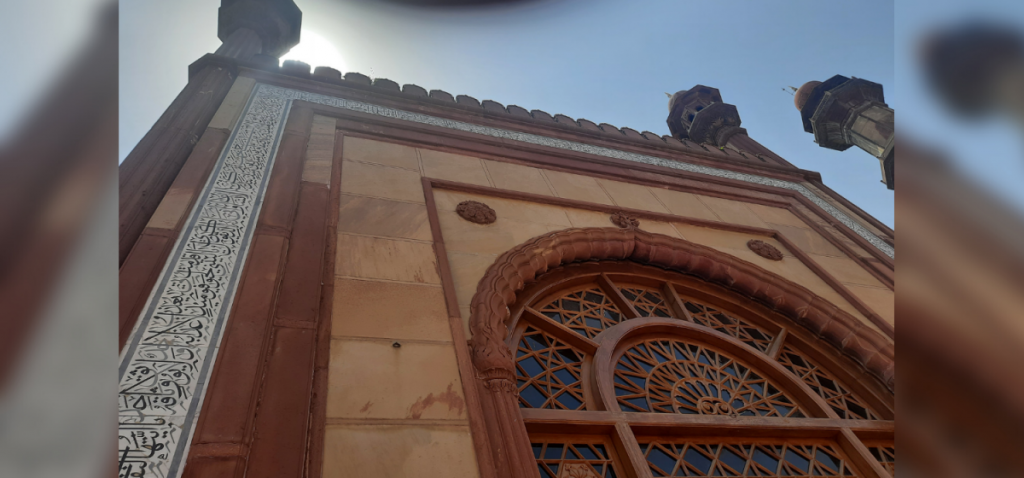
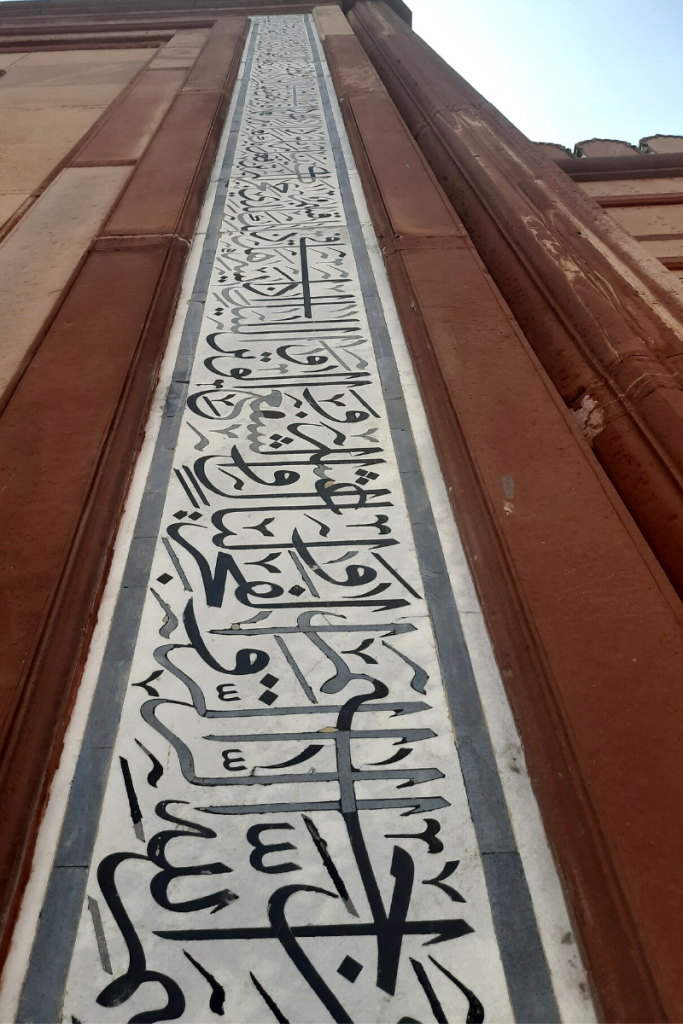
The imposing walls of both the Taj Mahal and Aligarh Muslim University’s Jama Masjid have Quranic verses crafted onto white marbles in black paint.
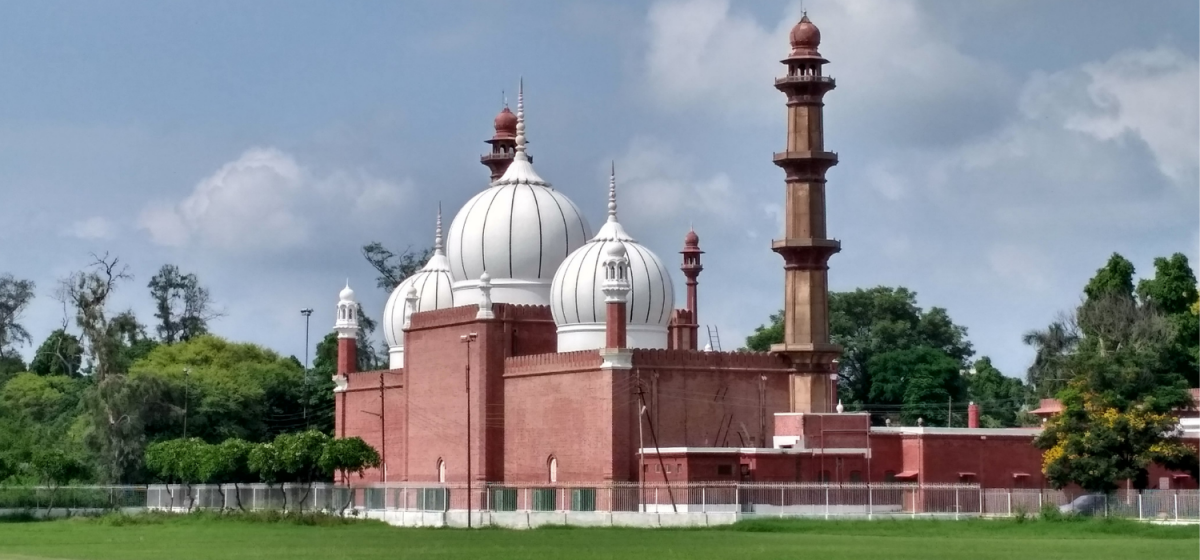
Jama Masjid on Aligarh Muslim University campus. Photo: Author provided.
Constructed nearly 250 years apart, the Taj Mahal in Agra and Jama Masjid at the Aligarh Muslim University (AMU) have an interesting connection.
The construction of the Taj Mahal began in 1632 and was completed in 1653, while the construction of Jama Masjid at AMU began in 1879 and was completed in 1915.
While the Taj Mahal, which is the tomb of Mughal emperor Shahjahan and his wife Mumtaz Mahal, attracts millions of visitors every year, AMU’s Jama Masjid is the main mosque of the university. AMU’s Jama Masjid is, perhaps, the last enduring symbol of the Mughals, constructed when the Mughals lost their kingdom during British rule.
A surprising connection
As one enters the Taj Mahal, beautiful calligraphy adorns all four corners. Several verses from the Holy Quran crafted in black calligraphy on white marble can be seen. This is a unique form of calligraphy, and expert artisans from Persia were involved in creating it. Similar calligraphy can be seem inscribed at the tomb of Mughal King Akbar at Sikandra, Agra, and also at the AMU Jama Masjid.
A closer look at the white marble with Quranic verses in black colour adorning the walls of Jama Masjid in Aligarh Muslim University. Photo: Special arrangement.
In fact, it is believed that the artisan responsible for the calligraphy at the Taj Mahal also brought his expertise to AMU’s Jama Masjid.
Since there is a difference of nearly 250 years between the construction of both architectural wonders, it is interesting to study how this was possible.
During Shah Jahan’s regime, several buildings were constructed, including the Taj Mahal and Delhi’s historic Jama Masjid. The calligraphist used was the same.
Professor Nadeem Ali Rezavi of the Centre of Advanced Studies, Department of History, Aligarh Muslim University, says that the master calligraphist in most of the buildings constructed during Shah Jahan’s regime is the same person.
“His name was Abdul Haq, and later due to his craftsmanship, his rank was elevated. He was given the title of Amanat Khan. In fact, he even signed the bands on this calligraphy with dates,” says Rezavi.
Still, there is a gap of over two centuries between these two buildings, Taj Mahal and AMU’s Jama Masjid.
The connection between the two monuments becomes clear with the involvement of Akbarabadi, one of Shah Jahan’s queens. Her original name was Aiza-un-Nisa. She, in 1650, commissioned the construction of a mosque situated in Daryaganj, Delhi, during the same period. In that mosque, Quranic calligraphy was done by the same artisan in black paint on white marble. This was around the same time as when the Taj Mahal was built.
After nearly two centuries, the Daryaganj mosque was demolished by the Britishers following the 1857 revolt. This was when Britishers gained control over the Red Fort, and the last Mughal emperor Bahadur Shah Zafar was sent in exile to Rangoon. They destroyed many buildings which were supposed to have harboured the rebels. At the site of the destroyed Akbarabadi Mosque, a park was developed and came to be known as Edward Park in 1911, which is now called Subhash Park.
During the same period, Sir Syed Ahmed Khan, the founder of the Mohammadan Anglo Oriental College (which later became AMU) felt the oppression against Muslims after the revolt. He nurtured the idea of setting up an educational institution to try and uplift the community.
A visionary man, Sir Syed had the taste for collecting things, particularly artefacts which had archaeological and historical importance. He was aware of the demolition of the Akbarabadi Mosque in Delhi.
As per the AMU Gazette, the scraps generated at the demolished Akbarabadi mosque were sold to a dealer and later purchased by Sahabzada Suleman Jah Bahadur. These remains were thus sold after over 200 years. These were presented to Sir Syed Ahmed Khan, who planned to use them in the Jama Masjid of the educational institution.
A closer look at the white marble with Quranic verses in black colour adorning the walls of Jama Masjid in Aligarh Muslim University. Photo: Special arrangement.
The white marbles with black calligraphy now present in the Jama Masjid of AMU depict Surah Fajr from the Holy Quran. Thus centuries apart, the two buildings carry the work of the same artisan.
“Even if you compare, it is the same thing and the only difference is in the scale. The artisans are the same who have shown their skills in the construction of the Taj Mahal,” says Prof. Rezavi.
Thus AMU’s Jama Masjid is, perhaps, the last enduring symbol of the Mughals, constructed when the Mughals lost their kingdom during the British rule. On the other hand, the domes of AMU’s Jama Masjid employed techniques of the Mughal era: they are “true domes” as they were built using lime mortar and vousseurs (wedge cornered stones/bricks).
“It is a brick structure, guava-shaped, carrying white marble with black stripes. This is the last true dome. After this, the particular technology faded out, and the buildings constructed after them have concrete domes,” said Rezavi.
Later, in 2016, AMU authorities began the conservation of the Jama Masjid. Now revived at the cost of Rs 90 lakh, the Jama Masjid has a Hauz in the courtyard, three domes, seven arches and two lofty minarets cornered by a Cricket Pavilion at its rear end. Sir Syed, the founder of the institution, was also buried in the same compound.
Faisal Fareed is a senior Lucknow-based journalist.
This article went live on June fifth, two thousand twenty one, at zero minutes past seven in the morning.
source: http://www.thewire.in / The Wire / Home> History / by Faisal Fareed / June 05th, 2021
Tushar Goel’s film, ‘The Taj Story’, has reignited controversy over the Taj Mahal’s origins, claiming it is a Hindu temple rather than a mausoleum built by Mughal emperor Shah Jahan. The film’s debut highlights debates about the interplay of history and ideology in contemporary India.
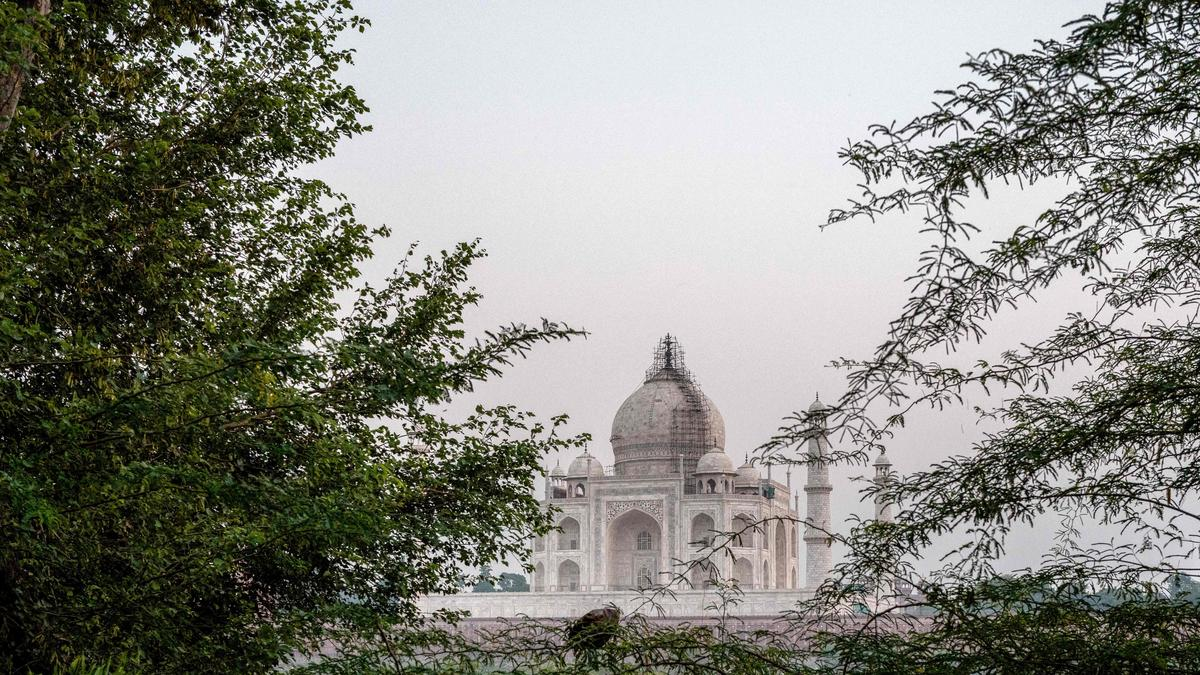
Scaffoldings are pictured as restoration work goes on at the dome of the Taj Mahal in Agra on October 17. | Photo Credit: AFP
A little over 60 years ago, Purushottam Nagesh Oak slept and dreamt. He woke up and claimed that the Taj Mahal in Agra was actually a Hindu palace going back all the way to 4th century. Friends of Mr. Oak, an English teacher-turned-lawyer-turned-journalist but never a historian, told him that the Taj Mahal couldn’t have been a fourth century structure as the technology employed in building the Taj in the 17th century didn’t exist back then. The fantasist turned a pragmatist, and Oak brought his argument forward by a few centuries. The Taj was now claimed to be a Hindu temple. This was in 1989. He wrote articles and a book too, but found no support from historians. Even the Supreme Court dismissed his claims as “a bee in his bonnet” in 2000.
But post-2014, history is like a revolving door, you enter and exit at your ease and pleasure. You pick and choose, you circumvent and invent. Dress it up as a movie and claim you are looking at history anew. That is how we get a movie like Tushar Amrish Goel’s The Taj Story, starring former BJP MP Paresh Rawal; just like we had The Kashmir Files and The Bengal Files, starring Anupam Kher and Mithun Chakraborty, all ideological partners of the Bharatiya Janata Party (BJP).
With The Taj Story, Goel goes where no historian has gone. Proof, evidence and knowledge amount for nothing as the director makes a case for the Mughal monument being actually a Hindu temple, much like the BJP leader Sangeet Som who called it alternately a Shiva temple and a monument built by a man who incarcerated his father. Mr. Som obviously couldn’t make out a Shah Jahan from an Aurangzeb and hence got mixed up. Much like Oak, oops, Goel, who sees no difference between history and mythology, facts and fantasy.
Recorded history
Talking of facts, the Taj Mahal was built by the Mughal emperor Shah Jahan after his favourite wife Arjumand Bano Begum breathed her last after bearing the last of their 14 children. Its chief architect was Ustad Ahmed Lahori. The land for her last resting place was procured from Mirza Raja Jai Singh of Amber who had inherited it from Raja Man Singh, a celebrated general of Akbar, who was Shah Jahan’s grandfather. Shah Jahan compensated Jai Singh with four havelis from the royal property for the massive haveli in which rests Mumtaz Mahal. His firman to Jai Singh, the latter’s agreement and the Mughal emperor’s subsequent letter of granting him four havelis in lieu of one, are all part of history; unlike the claim of The Taj Story which talks in terms of a massacre and genocide of the locals for fulfilling the wishes of an emperor and his consort!
The work on the tomb started in 1632 with the finest craftsmen from across the country and West Asia. The chief mason was Mohammed Hanif from Baghdad who earned ₹1000 a month for his efforts. The pinnacle was built by Qayam Khan of Lahore and its Quranic inscriptions were done by Amanat Khan Shirazi. The mosaic work was done by local Hindu workers. Above all, some 20,000 workmen toiled for 22 years to build the monument to love. Its white marble came from Jaipur, lapis lazuli from Sri Lanka, crystal from China and coral from Arabia. The monument uses the double dome technique, previously seen only in the Humayun’s tomb in Delhi, and never seen in the country before the arrivals of the Turks.
Not the first time
Over the years, many have tried to appropriate credit for its beauty and majesty. In the 17th century, it was claimed by many in the West that the architect of the Taj was Venetian Geronimo Veroneo, a jeweller by profession. Then came the claim by Mughal Beg in Tarikh-e-Taj Mahal that it was designed by Muhammad Effendi, an architect supposedly sent by the Sultan of Turkey. Effendi though was as much an architect as Oak was a historian. In the mid 19th century it was claimed that the monument was the result of the genius of Frenchman Austin de Bordeaux, a jeweller. However, Austin died in 1632, the year the work on the Taj began. With his death all claims of Austin being the Taj’s architect were buried. And facts began to be raised.
As for fantasy, well there is Goel’s film, never mind its claim of presenting the “untold history of the Taj Mahal”. The film, replete with stereotypes of kohl-lined, skullcap-donning Muslims aims at building a nation’s memory on unreasoned mythology, far removed from the well argued debates of history. Much like Oak’s view that Christianity was nothing but Krishan-Niti. Not game for any ridiculous claims in an insipid film which opened with a mere 14% attendance in the first show? Watch M. Sadiq’s 1963-saga Taj Mahal. Sure, you would remember its song, ‘Jo wada kiya woh nibhana padega’, penned by Sahir Ludhianvi and sung with much love by Mohammad Rafi and Lata Mangeshkar. Sadiq’s film with Pradip Kumar and Bina Rai in the lead cast, made no effort at replacing history with mythology.
source: http://www.thehindu.com / The Hindu / Home> Entertainment> Movies> In the limelight / by Zia Us Salam / November 07th, 2025
Diners at Sheraton Hyderabad were recently introduced to the rarely seen Bhatkali cuisine, thanks to home chef Fatima Riyaz. Through an exclusive pop-up, Fatima presented dishes rooted in the coastal town of Bhatkal in Karnataka, highlighting its Nawayathi heritage and centuries of cultural exchange.
Bhatkali food is known for its unique blend of spices, coconut, and rice. “Five out of six dishes have rice in some form,” Fatima explained, noting how coconut adds sweetness and depth to most preparations. Spice levels are high, but carefully balanced with caramelised onions. Signature to the cuisine is Loli, a red chilli-based spice paste slow-cooked in coconut oil and used across dishes.
The Sheraton menu included Mudkale, rice balls with prawns cooked in coconut oil, and seasonal desserts like Chibbad, a local melon served with coconut milk and lime. While seafood dominates the cuisine, Fatima also created vegetarian versions to suit diverse diners.
Her food is deeply personal, drawn from family traditions and her community’s layered history. “Our cuisine reflects Islamic influences, Jain touches, and coastal Indian roots,” she said. The language of her community, Nawayathi, similarly borrows from Marathi and Konkani, echoing cultural ties along the western coast.
Fatima began cooking professionally after the pandemic, inspired by people reviving traditional recipes. Since then, she has taken Bhatkali cuisine to cities through curated pop-ups. “I only cook this cuisine,” she noted. “It is Indian, but with a sweetness that is ours.”
Story by Deccan Chronicle
source: http://www.radiancenews.com / Radiance News / Home> Features> Latest News> Report / by Radiance News Bureau / September 20th, 2025
India prides itself in recognising and celebrating “Unity in Diversity”, and to underline that great aspect Daijiworld Mangalore, after thousands of diverse articles and analyses, has enthralled readers for decades now. I would like to highlight, amidst the assortment of attractive information in this exclusive Special, a lesser-known history and ancient monument of our co-minority community of Mangalore, in two parts. The next part will be on other old historic monuments complementary and connected with Islam in Mangalore. There are always those who thirst to know the little-known history and geography too—for it is part and parcel of our Kudla roots, very ancient and very valuable.
Mangaluru, Kudla, Kodial, Maikala, Mangalapuram—this place of many names—no doubt is a place steeped in multifaceted ancient history. Temples, Churches, Mosques, and more exist which hold history and culture often unknown. Mangalore thrives on worship of the Gods, no doubt! At every nook and corner, historic Temples, Mosques, and Churches can be found. The history of Mangalore connects with different ancient regions, languages, faiths, and religions, multi-faceted and overlapping.
Taking a look at an ancient Mosque—probably the oldest in the region—in Bunder, the heart root of old Kudla/Mangaluru, is indeed very enriching and thrilling. The original roots of real old Mangalore run between Sharavu Ganapathi Temple in Kodialbail and Mangaladevi Temple in Bolar. The famed Muslim ruler of Mysore, Tipu Sultan, is known to have had a role in the development of Sharavu Ganapathi Temple, according to historians who have authored books on Tipu history—a strange dream while he camped nearby caused him to donate land for the temple.
Tuluva and local rulers are known to have protected Muslim/Arab traders in ancient times and have given them free passage through their kingdoms, much before Westerners were heard of in this area. Western rulers too established close trade and cultural ties with Muslim kingdoms and provided space for their lifestyle. It is evident that there has been much intercourse between cultures and beliefs for ages, creating a mosaic that is inseparable in and around Mangalore and beyond. A deeper look at the oldest Masjids of Mangalore and connected historic auxiliaries will enlighten the intricate mosaic.
Zeenath Baksh Masjid, Bunder, Mangalore
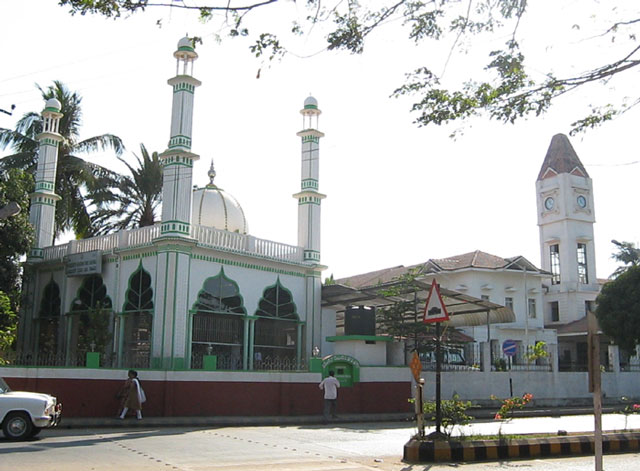
This historic mosque is referred to as “Juma Masjid” and “Beliye Palli”. It is right in the middle of ever-bustling Bunder, the old port of commerce locality sandwiched between Golikatte Road and Port Road, just a stone’s throw from the Gurpur river and North Wharf to its west. Here, a wide range of commodities and condiments were—and are still—traded. The area seems in chaos with old dilapidated buildings amid newer ones and narrow lanes choked with heavy traffic of all descriptions and gutters. One’s olfactory senses will be tested with multiple oriental aromas of spice, coffee, areca, pepper, cardamom, chilies, garlic, ginger, rice, pulses, onions, potatoes… and all kinds of condiments, retail and wholesale—and of course, rotting garbage.
A trader, M M Kini, opposite the mosque, is a licensed dealer in arms and ammunition—it is an old family business. This unique and antique mosque is around the corner from the Bunder Police Station and the famous old renovated Bombay Lucky Restaurant, well known to local folks. The Kanara Chamber of Commerce and Industry (KCCI) is located a few yards opposite.
Bunder, the old port of Mangalore since ancient times, is the backbone of history, communication, and commerce, with thriving seaports and even the Lakshadweep Islands with which it shares a long history. The multi-religious business people around are of a very friendly and easy-going enthusiastic nature. A visit here is like going back in time and also tripping over the new order of life and faith.
The Masjid Zeenath Baksh in Bunder is said to have been established in Mangalore in 644 A.D. It was first established in Mangalore by Habeeb bin Malik, and the first Qadhi (Qazi) appointed was Hazarath Moosa Bin Malik, son of Malik Bin Abdullah. This mosque was probably inaugurated on Friday, the 22nd of the month of Jumadil Awwal (fifth month of the Islamic calendar) in the year 22 of Hijra (644 A.D.).
That this sacred Masjid was established by the holy men of Arabia, who were said to be kith and kin of the “Sahabas” (associates) of Prophet Hazarath Mohammad Rasulallah, makes it about 1400 years old—about a thousand years before the Portuguese brought Christianity here.
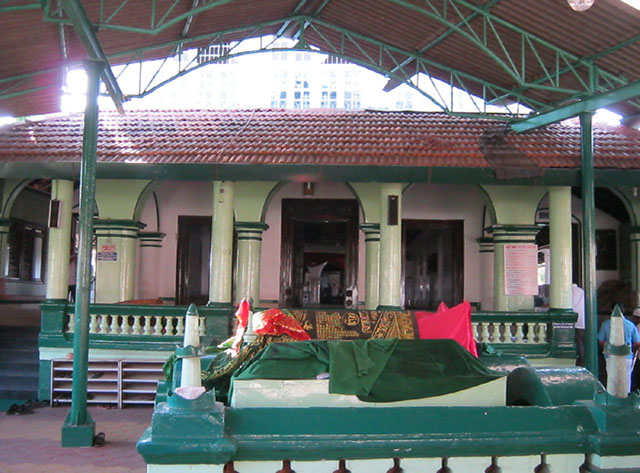
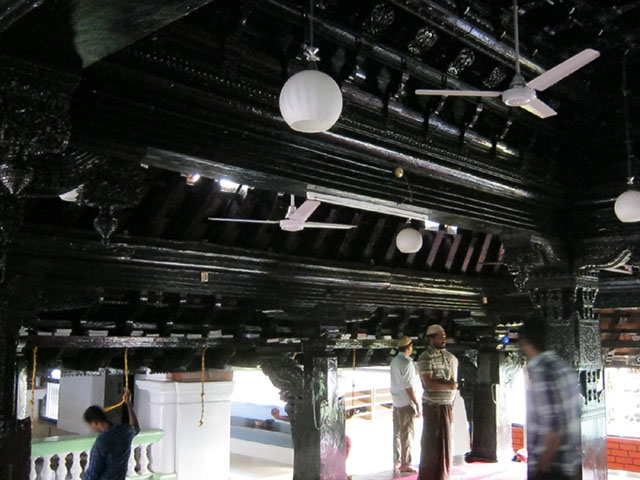
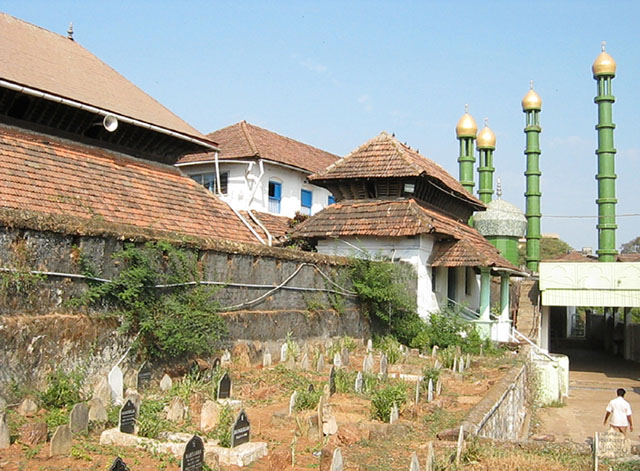
The Zeenath Baksh Mosque is indeed unique. The front portion (with a prayer hall on two levels) is no doubt added on in the 19th century (later too), and the tile roof has Basel Mission tiles. Another structure constructed later has four minarets and a typical dome and houses the 90-plus-year-old tomb of Hazrath Sheikuna Muhammed Moula Jalal Masthan Al Bhukhari, a saintly Khazi laid to rest here. Many young people come here to pray and find their lives changing with renewed goodness. Also, some of his kin’s tombs can be seen.
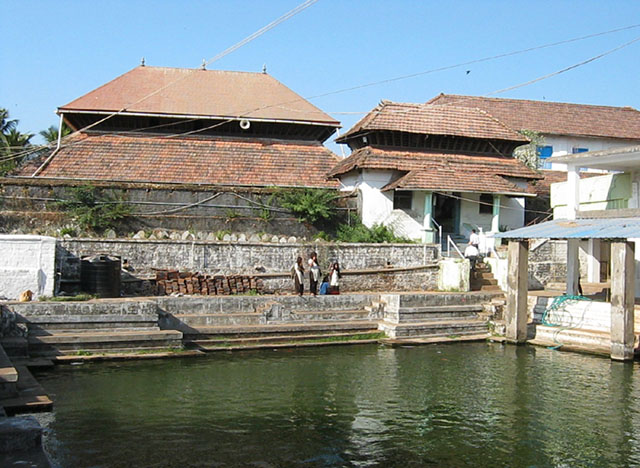
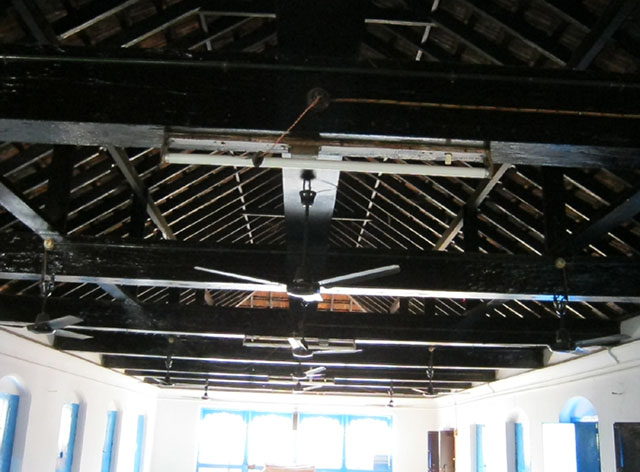
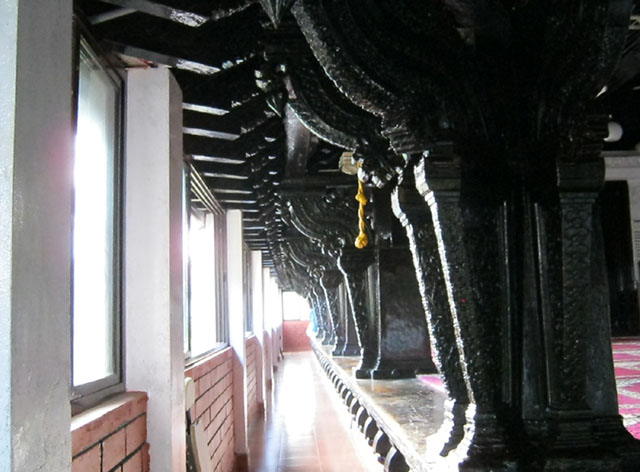
The inner ancient original mosque dates back centuries perhaps, and this old legend of a “Masjid” in the 1780s is said to have been refurbished and renovated systematically by the great Tiger of Mysore, Tipu Sultan, who is well known for such philanthropy. Anyone with a basic knowledge of layouts in the region cannot fail to recognise that this great monument, which spreads over a large area, has many characteristics of a temple—the large water tank (below ground level), the shape of the tiled roof (old Malabar), and the hand-carved woodwork (characteristically local).
Tipu added beautifully carved bulky rosewood pillars and also a carved ceiling—the huge carved works are majestic. The mosque was renamed after Tipu’s daughter, Zeenat Baksh. The prayer hall is on a plinth with an open colonnade running around the building under heavy overhanging eaves with carvings. The renovation coexists in harmony with the older, more ancient staccato structure.
The water tank in the center of the premises has granite steps and provides water for the ablutions or ‘Wuzu’ prescribed before ‘Namaz’. This Juma Masjid is well frequented by devotees for regular five-times Namaz and to visit the tombs. There is also a burial ground that partly encircles the mosque. One can see men and women frequenting this holy place; on festival occasions, this mosque can hold about 2000 people for the Namaz or prayer assembly. During Ramadan fasting and festivals, the religious spirit is at a peak and exemplary.
Tipu Sultan has also built a Masjid at Mangalore 2 km away from this mosque. It is presently called “Idgah Masjid” at the top of the hill (now called Light House Hill, in the town center near Aloysius University gate). Muslims from all over the district gather here and offer prayers on festive days of Eid-ul-Fitr and so on. Subsequently, in 1920, Mangalore Bail family constructed a large assembly hall or Jamath Khana. There are a good number of Muslims in Mangalore, and their concentration in this area is phenomenal.
Present Activity of the Masjid:
Considering the needs of the economically weaker people of the community, the management committee of the mosque has made initiatives to extend free service in various ways for the needy people of the community. Funds are raised from benevolent donors of the community for the purpose of marriages, education, medical relief, shelter, and other social basics. Also, the management committee of this mosque looks after the burial of destitutes free of cost. Efforts are on by the leaders for establishing and running schools and colleges from KG to PG for the benefit of the wider community who are rapidly marching forward in all spheres of activity.
“He is the One GOD; the Creator, the Initiator, the Designer. To Him belong the most beautiful names. Glorifying Him is everything in the heavens and the earth. He is the Almighty, Most Wise.” (Quran, 59:24).
The current perception of Islam and the followers of religion and culture in Kanara and the coastal areas, in the light of new developments and issues that rule, calls for a closer look at the history and practice of Islam in this region. Muslim groups are generally labelled as “minority” and weak, but it must be clearly understood that the population is significantly strong, and their presence here can be traced back to the 7th century A.D., while Christianity is from the 16th century practically, though it is credibly said that Christianity landed in Kerala in the first century (53 A.D.), even before it reached Europe.
There are many facets that Muslims have dominated here for centuries and still do. Their sway is very significant and ancient and needs serious consideration of the rights and values guaranteed by tradition and the Indian Constitution. Islam is now an indelible part of this region, India, and the world over. They cannot be labelled as aliens and are part and parcel of the mainstream.
The Muslim community here, in view of all aspects, is a strong, rooted, and recognised community. It can be observed that the Muslim community’s progressive principles here are indeed very forward, and their outlook is advancing, influenced by the Middle East and Western standards and good education and industry. Many prominent properties and businesses are owned by them. Families are largely active; elders in the families are secure and cared for, and women seek good education. The entire community is enterprising, hard-working, cooperative, and presents a happier picture generally. Religion-wise, they are fervent and keep the tenets strong even in the face of hurdles. The world over, it is seen they are going from strength to strength, and leaderships have to be transparent.
(dated October 16th, 2025 / source : daijiworld.com / by Ivan Saldanha-Shet )
Islamic Monuments of Mangalore: Part 2 / October 23rd, 2025
Mangalore and coastal Karnataka is steeped in multifaceted History and colour, many sources have facilitated the common person of interest to be aware and enjoy the depth of information. Daijiworld has been very generous and it is appreciated. Hindu, Muslim, Christian ……..and many more allow interesting facts and figures in and around mangalore / Canara since ages and fascinates. In the previous episode (Part 1 of 2) we noted the arrival and monument of Islam at Bundar, the original area of Kudla or Mangaluru at present. The matter would not be complete if a brief look at ancient contemporary Islamic monuments are not highlighted. No history is the sole property of any one in particular and is not esoteric in practicality. So, we continue and hope it will round off the interest and study of this history, let us have observations and comments.
KUTCHI MEMON MASJID. BUNDER. Mangalore : This is another ancient Masjid just near and on the way to Zeenath Baksh Masjid right opposite to famed ‘Bombay Lucky Restaurant’; the ‘Kanara Chamber of Commerce and Industry (KCCI) is in the backyard of this Masjid. It is also referred to as ‘Katchi Palli’. It is a wonder that this Mosque is credited with many firsts. Traditionally each of these many Masjids in Mangalore have their own section of regular devotees. Reliable sources say that Kutchi Memon Masjid was basically constructed in 1839 and is now 174 years old going on to be 175 years. The force behind this sacred work were Patels from Kutch in North Gujarat, traders who settled in the area and were masters in the spice trade, they spoke Kutchi language and gradually were assimilated into the Kanara culture, the cause of this development are the historical sea routes to Mangalore from the Arabian Sea. To and fro activity is still very visible it appears.
The wonders at this religious center are : It was the first to get power supply and the fourth in Mangalore to be electrified in the British era, in 1930s , the first to use loud speakers for the ‘azaan’, call to pray and in Urdu, the first where the ‘qutba’ (Friday Sermon) was delivered in Urdu and so on.
There has been development in the precincts of the masjid but the original structure on about 20-25 cents remains still very original. The new extension was first made in 1983 and plans to expand are ongoing. The unique gate way into the masjid has a picturesque oriental architecture. Indeed this area called Bunder is a wonder with many historic monuments still standing the test of time like sentinels spelling out the historical times gone by and hoping for better times for those who are to come.
Woman Saint’s Dargah in the Heart of M’lore : Hazrath Saidani Bibi Sahiba, the only dargah dedicated to a woman saint in Dakshina Kannada has become a refuge of hope without reference to religion, caste, creed or language. Located near A B Shetty circle, on the periphery of the prominent ‘Big Maidan’ (as it was then known) now, Nehru Maidan of Mangalore. This dargah (memorial tomb shrine) is visited by people of all faiths. Most of the people come here with a ‘harake’ (vow) as there is a strong belief that prayers are answered here. Hazrath Saidani Bibi, it is said, was a saintly lady, hailing from a ‘Fouji’ (Military) family during the regime of Tipu Sultan. She was buried in the military area (the present location of dargah on the edge of the City Police HQ – formerly the military barracks), though burial grounds were available, such was her reputation. People say that she was buried in the military area due to high respect and regard the local people of Mangalore particularly the warrior class had for her. Later, her close relatives were buried beside her. Now are seen three other tombs apart from that of Sayyadani Bibi in the dargah. Scores of people of all castes and creeds visit this place every day, giving alms to the poor that sit at this place, an accepted practice.
Another astonishing aspect of this dargah is that it is cared for and protected by retired or serving police officers of Mangalore. Hazrath Saidani Bibi Sahiba Dargah Management Committee is in the forefront of it’s maintenance. This dargah was frequently visited by the police staff and public, the tomb is adjacent to the police headquarters. In 1972, the then Dakshina Kannada SP K U Balakrishna Rau and the then Assistant SP H T Sangliana entrusted the administration of the dargah to Muslim police personnel. A committee was formed for the better administration of the dargah and in the year 1983 the old ‘Mazahar’ (tomb of the saint) was renovated. The dargah was built on land belonging to the Police department, and the property was later handed over to the Wakf Board. Indeed goodness knows no boundaries and so does harmony.
BEARY COMMUNITY IN MANGALORE: The origin of the ‘Beary’ Community is very ancient. It is known that there were many rich traders, from the Malabar coastal belt, connected with the traders of the Arab lands. Arab merchants have been visiting the coastal regions for business purposes even before the time of Muhammad (puh). Now most local Muslims in this region are part of the Beary Community.
The Beary (also known as Byari) is a community concentrated mostly along coastal Dakshina Kannada and Udupi districts in the Southern state of Karnataka. It is an ethnic group, having its own unique traditions and distinct cultural identity and language. The Beary community holds an important place as also Nawayaths of the Uttara Kannada district (who speak a type of Konkani). Bearys incorporate the local Tulu culture of undivided South Kanara and diverse traditions of the Moplahs of Malabar. The Beary community of Kanara or Tulunadu is one among the earliest Muslim inhabitants of the coast, with a clear history of more than 1350 plus years. Muslim Arab traders had a cordial relationship with the rulers of the western coastal belt of India. This is attested to also by the writing of Ibn Battuta, the intrepid North African traveller who passed through India in 1342AD. Lakshadweep too had connections with Mangalore since early times.
The word ‘Beary’ is said to be derived from the Tulu word ‘Byara’, which means trade or business. Since the major portion of the community was involved in business activities, particularly trading, the local Tulu speaking majority called them Beary or Byari, other reasons exist. According to the census of 1891, South Kanara in the Madras Presidency of British India had 92,449 Muslim businessmen consisting of 90,345 Bearys and 2,104 Nawayaths involved in business activities. The first Muslim missionaries to Mangalore can be traced to Malik Bin Deenar, an Arab trader said to be the kin of Sahabas (companions of Prophet Muhammad). He is said to have visited Malabar and landed near Manjeshwar on the northern Malabar coast, very close to Mangalore. He constructed the first Masjid in Kasargod, the Malik Dinar Masjid ( his shrine can still be seen).
Beary Language: Called ‘Beary Basse’ is spoken by the Muslim communities mainly along the Coastal Dakshina Kannada, Udupi and in some parts of Kasaragod district by the Bearys (Byaris). Beary is a language of mixed idioms, phonology and grammar of bothe Tulu and Malayalam. It is considered a dialect since Kannada alphabets are used in writing and is also known as ‘Mappila Bashe’ because of Bearys’ close contact with Mappilas of Malabar. Due to the intensive influence of Tulu for centuries, it is today considered as a language close to Tulu as well. Surrounded by the Tulu speaking community, the impact of Tulu on the phonological, morphological and syntactical structure of the dialect is evident. Beary Bashe can be related to Malayalam, Tulu or Perso-Arabic origin with Arabic influehttps://www.daijiworld.com/chan/exclusiveDisplay?articlesID=6784nce. ‘Beary Basse’ also has words related to Tamil and Malayalam.
The Bearys produced rich literary work using both Beary Bashe and Kannada language. The literature comprises Beary poetry, research articles on Bearys, historical analysis of Muslims, essays, stories and other fields of literature. “English-Kannada-Beary” dictionary is now available. The Bearys have also produced a number of magazines and periodicals from Mangalore and other places of the region. Some periodicals have become popular and a few of them have become a part of Beary history. Generally Kannada script is used to produce Beary literature which is quite popular and abundant in all possible forms. There is a lot of vergin content on electronic media too now, and the future is very bright.
(Part 2 concludes this history)
source: http://www.daijiworld.com / Daijiworld.com / Home> Karnataka / by Ivan Saldanha-Shet / part One October 16th and part Two October 23rd, 2025
Qureshi traces his lineage to chefs who served Awadh rulers more than 200 years ago.
Chef Imtiaz Qureshi receives Padma Shri award in 2016 from former President Pranab Mukherjee
Culinary legend Imtiaz Qureshi, who was credit with making the dum pukht style of cooking popular, died in Mumbai on Friday at the age of 93.
His eldest son and chef Ishtiaque Qureshi said the 93-year-old had issues with his vital organs and was hospitalised for some weeks due to old-age issues.
Who was Imtiaz Qureshi?
Born in a family of chefs in Lucknow on February 2, 1931, he traces his lineage to chefs who served Awadh rulers more than 200 years ago. His culinary journey started at the age of nine when his uncle was tasked with cooking for a British regiment. He later joined Krishna Caterers, a catering company that served the Indian Army during the 1962 war with China. He had even cooked for a state banquet hosted by former Prime Minister Jawaharlal Nehru. Along with this, he cooked for state banquets for visting foreign leaders including Queen Elizabeth II, Bill Clinton and Tony Blair on different occasions.
The Padma Shri awardee was also known for giving a fillip to the culinary excellence of ITC Hotels after he joined there in 1979. He established restaurants like Bukhara and Dum Pukht. Dum Pukht is a traditional slow-cooking technique.
He won the Padma Shri award in 2016. He is survived by two daughters and five sons. All seven of them are working in the culinary field.
‘Lucknow lost its biggest ambassador’
Chef Kunal Kapur posted on X, “His culinary legacy and contributions will forever be remembered and cherished. May his soul find eternal peace and may his memory continue to inspire us all.”
Singer Adnan Sami said, “Sad to learn that Padma Shri Master Chef Imtiaz Qureshi has passed away. He was a culinary genius & a man full of zeal for life!! He was also the modern day father of Awadhi Cuisine & his Biryani was legendary amongst everything else he fed the world. My deepest heartfelt condolences to his family.”
Chef Ranveer Brar paid tribute to the legend, saying, “Lucknow has lost its biggest ambassador. As a Lucknow boy with dreams of becoming a chef, the folklore of Imtiaz Qureshi is something I grew up with. It was around 1999 when I was working as a trainee chef at the Taj in Delhi. I remember once taking the Rs 612/- I had earned to ITC Maurya next door and trying out the Galouti Kebab. It’s an extremely sad moment for me, for everybody in Lucknow. (I) am currently in a state of shock.”
“Every interaction of mine with the maestro, was about Lucknow, his growing up years in Lucknow, his time at the Raj Bhavan, his time when he opened the beautiful Clarks restaurant.. And so much more,” he wrote on Instagram, “Sometimes you just can’t accept that someone’s no more. This is one of those moments…
“The fact that I was eating Imtiaz Qureshi’s food in an ITC hotel was life changing for me. Not only had he pulled the dum pukht technique out of Lucknow, he had given it a personality, an unmistakable refinement,” Brar added. “RIP chef, your legacy lives on forever…”
source: http://www.theweek.in / The Week Magazine / Home> News> Entertainment / by Web Desk / February 11th, 2024
Ishtiyaque, the eldest son of chef Imtiaz Qureshi, a Padma Shri awardee, has worked in various departments, from bakery to butchery.
Chef Ishtiyaque Qureshi preparing kebabs at the Jashn-e-Lucknow food festival in Delhi | Photo: Tina Das | ThePrint
New Delhi:
When he offered his guests a bowl of kheer, a traditional dessert made with thickened milk, chef Ishtiyaque Qureshi had a wicked twinkle in his eyes. He knew he would leave them flabbergasted when he revealed the key ingredient—garlic.
Not just the guests, but even other chefs had no clue that the pearly pods in the dessert were not almonds. The kheer was part of a delectable spread of Awadhi cuisine at the Jashn-e-Lucknow food festival at Delhi’s JW Marriott.
“When he (Ishtiyaque) asked me to taste it, I could never guess what it was. It has truly been quite the experience watching him work tirelessly from morning to night,” said Yashasvi Yadav, a management trainee at JW Marriott.
Yadav had been working closely with Ishtiyaque to prepare 23 dishes using 20 ingredients for the festival held between 21-23 February. With rajanigandha in vases, lanterns, and roses, the tables were set to complement the Awadhi cuisine.
From melt-in-the-mouth Kakori kebabs to the rich dum gosht biryani, and the experimental narangi chicken korma, the slow-cooked dishes had people going for multiple servings.
These dishes reflected the artistry of Ishtiyaque, the eldest son of chef Imtiaz Qureshi, a Padma Shri awardee. Ishtiyaque has been carving out a niche for himself—from opening the Kakori House restaurant in Mumbai to working as a consultant for several popular hotels in India, dabbling with the frozen food industry, and now starting the restaurant Murgori, which serves chicken Kakori kebabs.
Ishtiyaque was on his feet for 14 hours on the first day of the festival, in a kitchen shared with another food pop–up. “We made 23 dishes in just three stoves,” he said, smiling, as he talked to guests in detail about the dishes.
Deeply appreciative of his legacy, Ishtiyaque has, however, charted a course very different from his father, who spent his career with the ITC group.
Ishtiyaque has worked with various brands like The Leela, Kempinski, and InterContinental. He has also been instrumental in the makeover of several brands, including Aafreen, a fine–dining Indian restaurant of JW Marriott Pune.
Ishtiyaque learned from the best—his father—while working through school. “When I was 12, during school holidays, my father skilfully lured me to the Maurya operations. With the temptation of swimming in the pool and eating at the bakery, he put me in the kitchen,” said Ishtiyaque.
He worked in various departments, from bakery to butchery, and credits that hands-on training for building a solid foundation for his career.
Culinary artistry
The young boy didn’t want to cook; he wanted to join college instead. But with a big family to support, another earning member was necessary. He initially worked at ITC Maurya during the day while attending classes at Delhi’s Ram Lal Anand College in the evening.
Ishtiyaque later left for Jeddah, Saudi Arabia, in 1986 after his father helped him get a job there. Three years later, he returned home and interviewed with ITC’s then-chairman, YC Deveshwar, at ITC Maurya in Delhi. He soon found himself at the Dum Pukht restaurant in Mumbai, which was then part of the Sea Rock Hotel.
He also worked with legendary French chef Roger Moncourt, who was the executive chef at ITC Maurya in New Delhi. “I remember he removed beef and pork from the Indian restaurant,” said Ishtiyaque. This separation—which he also recently recommended at a new restaurant—helped increase the clientele for fine Indian dining.
This was around the time when Datta Samant’s trade union raised slogans like ‘Dilliwale murdabad’. Nevertheless, Ishtiyaque found his space, experimenting with slow-cooked delicacies and reviving age-old techniques that define Awadhi cuisine.
Over the years, he has also mastered techniques from the frozen food industry, blending science with culinary artistry—all while carrying forward his father’s legacy.
Food innovations
The father-son duo often cooked together, especially after doctors advised both parents to stop consuming red meat. This led to one of Ishtiyaque’s innovations—the chicken Kakori kebab.
“For three years, they never guessed it wasn’t made of mutton but chicken. That’s when I realised this is a great option for the market, for those who cannot or don’t want to consume red meat,” said Ishtiyaque.
His father always made sure to have dinner at home, where his mother would rustle up delicacies like aloo gosht, saag gosht, or meat cooked with seasonal vegetables. Ishtiyaque prefers home–cooked meals and staying in rather than travelling, even though work often keeps him on the move.
One dish that had people queuing up for second and third helpings was the narangi chicken korma. “While making the list of ingredients, the chef asked me to get oranges. Even the person in charge of the hotel’s vegetable and meat stock was curious why Awadhi food might need oranges,” said Yadav.
The result of Ishtiyaque’s experiment was a refreshing, aromatic stew. “To me, that is fusion food—when you marry one ingredient with another, instead of overpowering the dish or just laying a few strands of microgreens on a plate. That is just scamming,” said Ishtiyaque.
According to him, training chefs today isn’t what it used to be, as people no longer want to invest the same time or energy. The way his father worked and taught now feels like part of a bygone era.
“I was lucky that we could spend his last years together. He was charismatic and an extrovert. Even till the end, he wanted good food and was joking with the nurses,” said Ishtiyaque.
“But I will always be there for my guests,” he added, pausing briefly to speak to someone dining alone.
Ishtiyaque often cooked for his parents and was always eager to hear his father’s feedback. “He would suggest improvements, and sometimes my mother would be like, ‘Your son has cooked, let it be.’ But that is who he was. And I think like him and have the same kind of passion that he did,” he said.
(Edited by Aamaan Alam Khan)
source: http://www.theprint.in / The Print / Home> Features> Around Town / by Tina Das / March 02nd, 2025
His grandfather taught Gordon Ramsay the secrets of dum cuisine. Chef Zoheb Qureshi hails from what is considered as the First Family of food in India. His grandfather, Chef Imtiaz Qureshi, is one of the two chefs to receive a Padma Shri honour and his father, Gulam Qureshi has been the brand custodian at Dum Pukht, ITC Maurya, Delhi for the last 15 years.
Zoheb’s preparations exemplify the philosophy of Giza-e-Khusus meaning cooking delicious food while retaining its nutritive value. He has taken upon himself the daunting task of running the first chef-led online food delivery format in the country, Cross Border Kitchens. He says, “I am on a mission to make people taste what authentic Nehari or Mirch Baigan ka Salan is or what an original dum biryani tastes like.”
In a candid conversation, he talks more about himself and his work:
Your philosophy of food?
It’s a common ground offering people a universal experience. It brings people together belonging to varied cultures and beliefs.
Your fav cuisine?
Awadhi
Your idol?
My father – Gulam Qureshi
Your fav spice?
Cardamom
Your hot selling dish?
Awadhi Gosht Biryani
Lessons learnt in the kitchen?
Every day is a new day in the kitchen that teaches you something new. However, my evergreen lesson that I stand by daily is to never go to the cooking range without all the ingredients.
How do you like to de-stress?
Listening to music calms me down.
How do you define yourself?
Someone who’s forever eager to learn & unlearn.
What are you passionate about?
About different techniques in cooking and travelling to new places to learn about its food culture.
Last meal on earth, what would you choose?
Phirnee
Recipe: Murgh Rampur Biryani
Ingredients:
Chicken (50 gm) piece 400 gm
Basmati rice 250 gm
Brown onions 25 gm
Desi ghee 50 gm
Cloves 4
Cinnamon sticks 2
Bayleaf 1
Green cardamom 4-6
Cream 25 ml
Beaten curd 75 gm
Salt to taste
Yellow chilli powder 10 gm
Mace cardamom powder 15 gm
Ginger garlic paste 25 gm
Rose water 5 ml
Kevda water 5 ml
( screwpine)
Sweet ittar 1 drop
Slit green chillies 25 gm
Mint leaves 25 gm
Ginger julienne 10 gm
Royal cumin seeds 2 gm
Lemon juice 20 ml
Water ½ litre
Whole wheat flour dough
(for lining the lid) 100 gm
Process:
Step 1 : Cooking of chicken
Marinate the chicken with Biryani masala powder, hung curd, rose water, red chilli powder and cook in tandoor
Cook the chicken with jhol, yellow chilli powder, mace cardamom powder, saffron, ittar, kewra and rose water.
Step 2 : Boiling rice
Wash, soak basmati rice for 10 minutes. Boil water in a pan and add the wholespices, salt to taste and lemon juice.
Add the rice and cook till 2/3rd done.
Step 3 : Cooking on Dum
Layer the chicken. Add a mixture of ghee and cream.
Garnish with mint leaves, ginger juliennes, brown onions and saffron dissolved in water.
Line the lid with flour dough and seal the vessel.
Put the vessel on an iron griddle and cook for 15 minutes.
Once the biryani is cooked, serve it with raw onions, lemon, chutney and raita.
source: http://www.thepatriot.in / The Patriot / Home> Specials / by Sharmila Chand / October 04th, 2019
Address : ITC Windsor hotel, Vasanth Nagar, SEE MAP
The restaurant is shedding its colonial hangover by dropping “Jolly Nabobs” from its title and focussing on biryanis and kebabs.
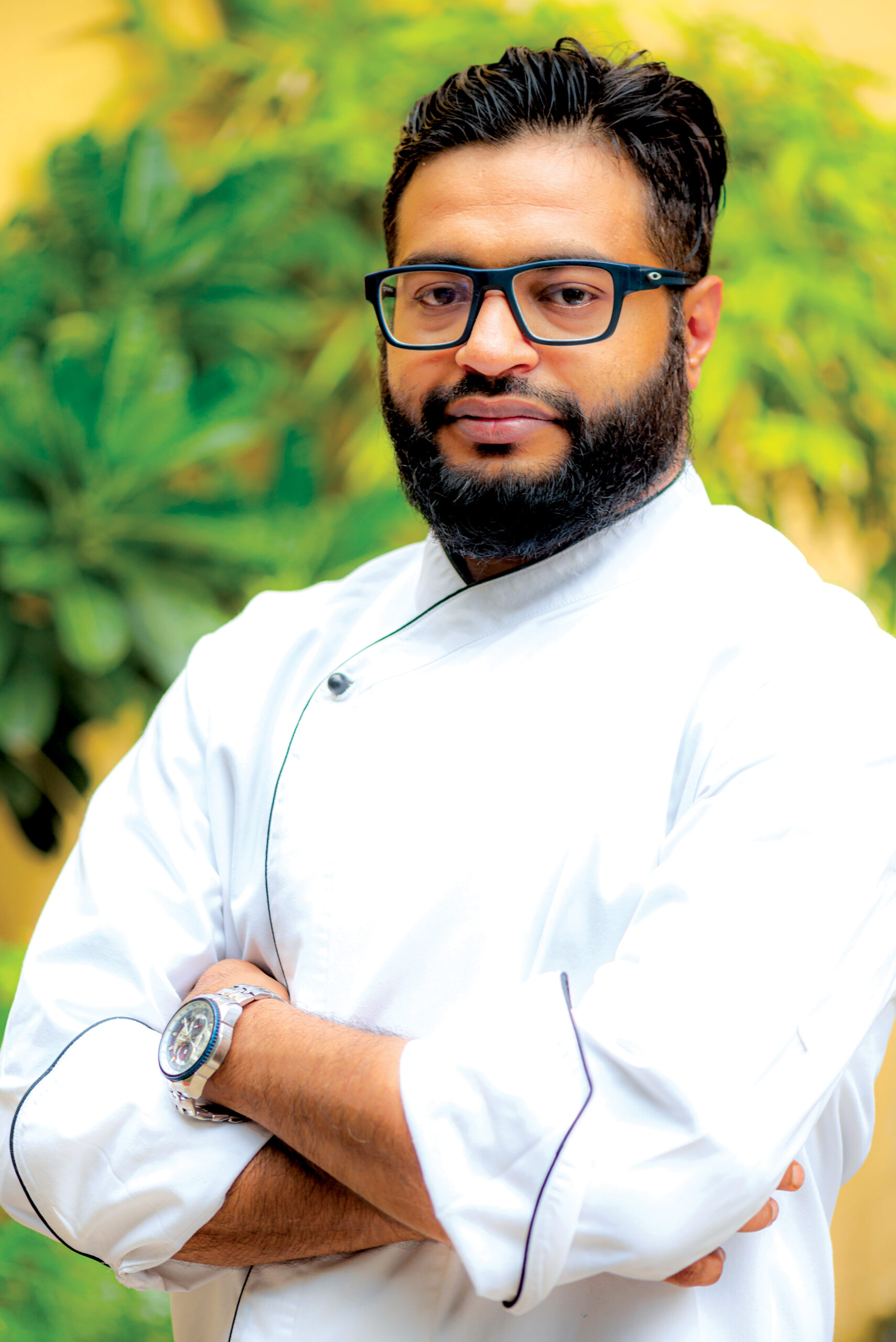
Master Chef Ghulam Qureshi | Photo Credit: Special Arrangement
ITC Hotels’ Dum Pukht restaurant is an institution with a storied legacy. At ITC Windsor in Bengaluru, the restaurant was called Dum Pukht Jolly Nabobs; for the past 25 years, it was known for its Anglo-Indian and colonial-era dishes. Think mulligatawny soup, pomegranate chops, and forest officer’s pulao. But now, with a menu curated by Master Chef Gulam M Qureshi, they are harking back to the brand’s Lucknowi roots. The restaurant is dropping “Jolly Nabobs” from its name and introducing some classic Awadhi dishes. Over a leisurely lunch, Qureshi treats me to the new menu, delighting me with tales of nawabs and begums.
Chef Qureshi is the seventh generation chef from his family. He is the son-in-law of the pioneering chef Imtiaz Qureshi, who was awarded the Padma Shri for his contributions. The family has been cooking for the nawabs of Lucknow for 200 years. The chefs of Awadh invented the dum style of cooking and take great pride in their kebabs and biryanis.
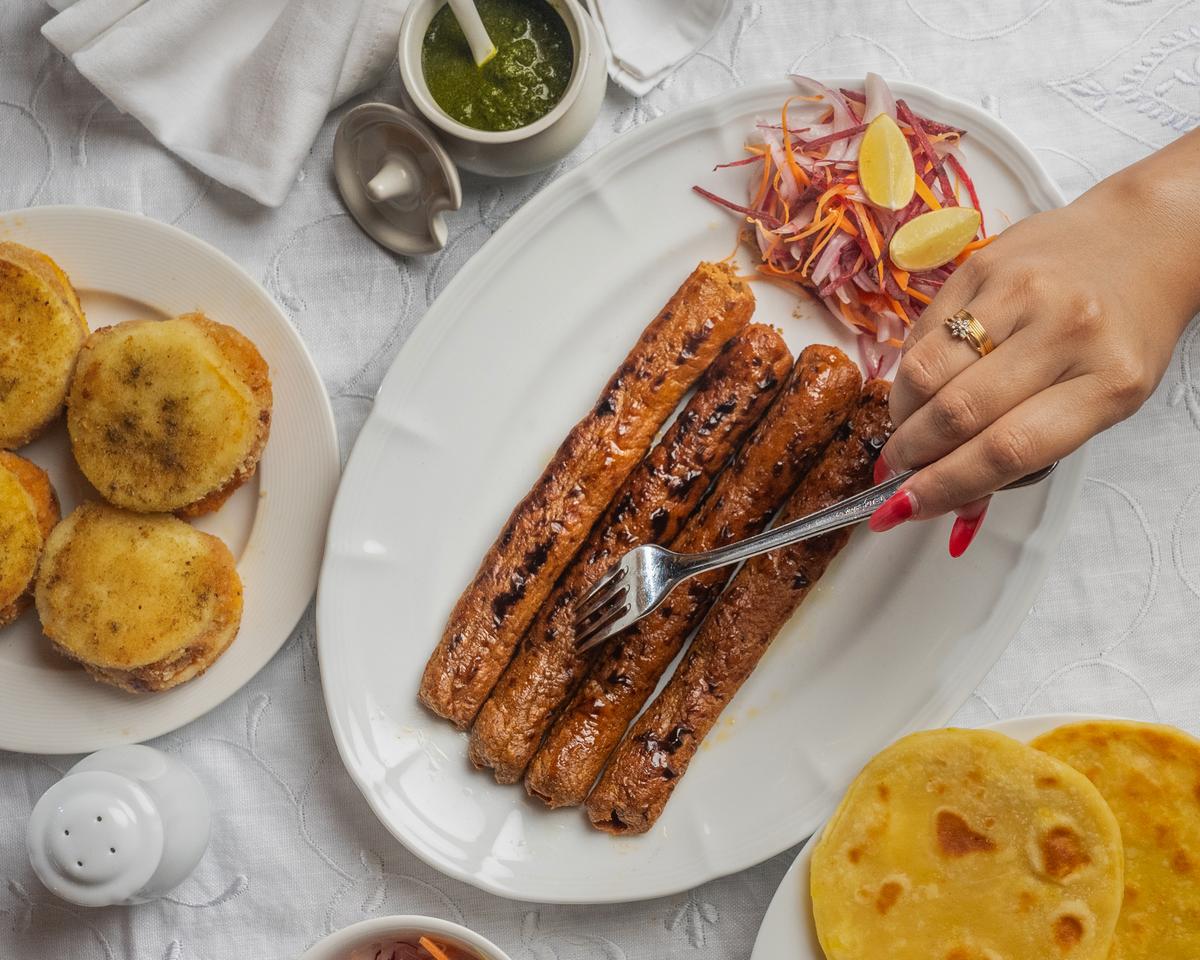
The succulent Kakori kebabs
Our lunch begins with a selection of kebabs. The Kakori is, of course, legendary. Minced lamb, flavoured with cloves and cinnamon, are skewered and char grilled. Saffron completes the dish. The seekh nilofari kebabs are made of lotus stem and puffed lotus seeds. Spices like mace, green cardamom and herbs are used to add masala to the kebabs. We are also served the jumbo prawns cooked in the tandoor and then finished in a dum preparation. Flavoured with cheese and yoghurt, this dish is mild and delicate.
The highlight of the meal is the murgh khushk purdah. The main chicken dish is brought to the table in a platter that is topped with the baked pastry, then carved at the table by the team of chefs.
“My forefathers have been making this dish since the 1820s. The nawabs used to farm the poultry at home, because they were very particular about the quality. On the day of the feast, the chicken was marinated for five or six hours. It was then cooked in the dum with the purdah,” Qureshi shares.
Jaitoon ka tel or olive oil, imported from West Asia, makes the dish light and silky. Under the pastry, succulent pieces of chicken, along with chunks of onions, tomatoes and pineapples, are enveloped in a gravy, which has notes of mace and star anise. It pairs very well with the warqi parantha.
The specialty gucchi pulao
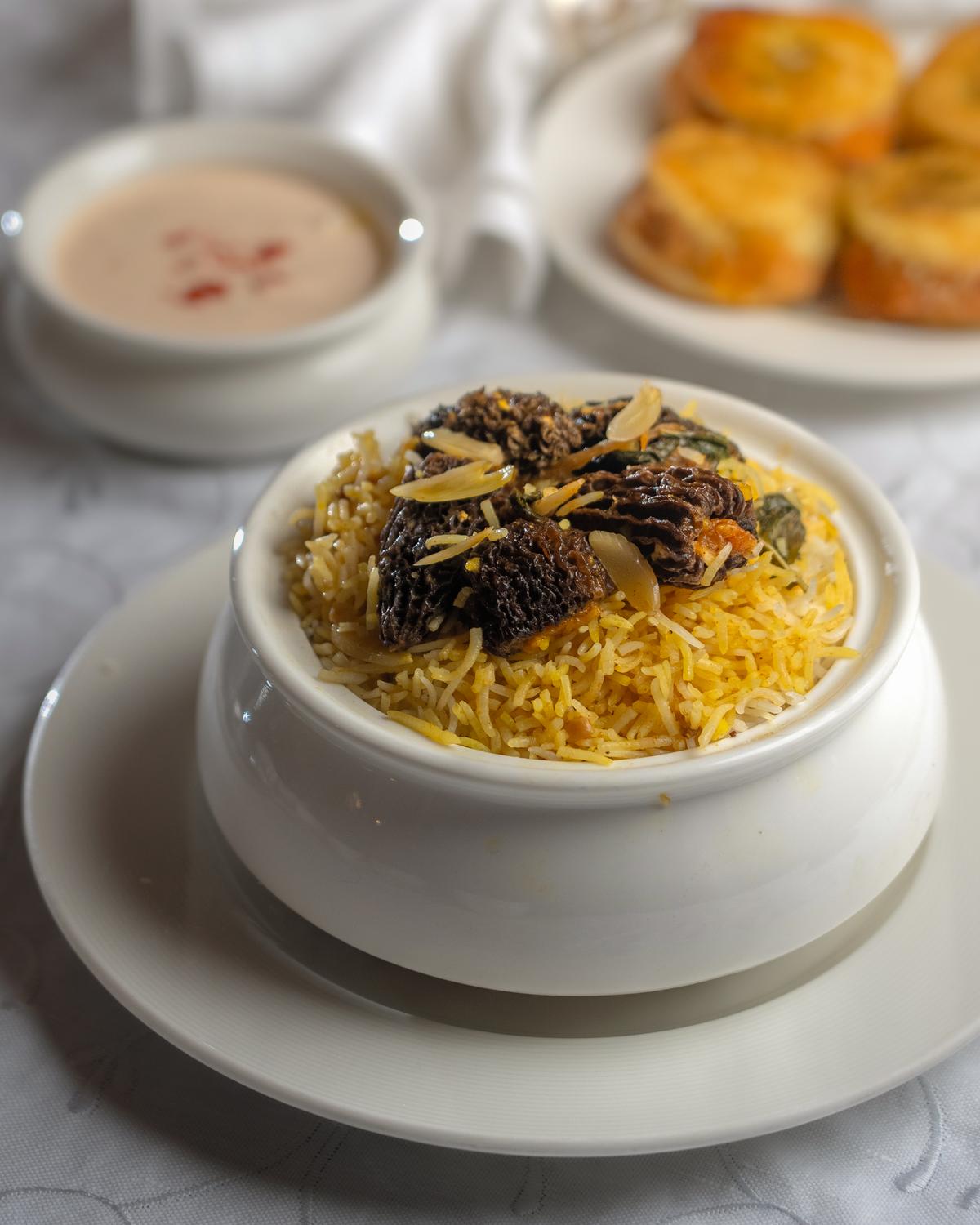
Try the gucchi pulao, made with morel mushrooms that are a delicacy from Kashmir. They are stuffed with cheese and cooked with basmati rice.
We end with shahi tukra and saffron rabri, topped with pistachios, almonds and a silver leaf. While the Anglo-Indian dishes may be missed, I won’t complain about the new direction taken by the restaurant because of the quality and authenticity of the dishes.
Cost for two ₹6,000. At ITC Windsor. For details, call 8061402610
source: http://www.thehindu.com / The Hindu / Home> Food> Dining / by Anagha Maareesha / June 17th, 2024