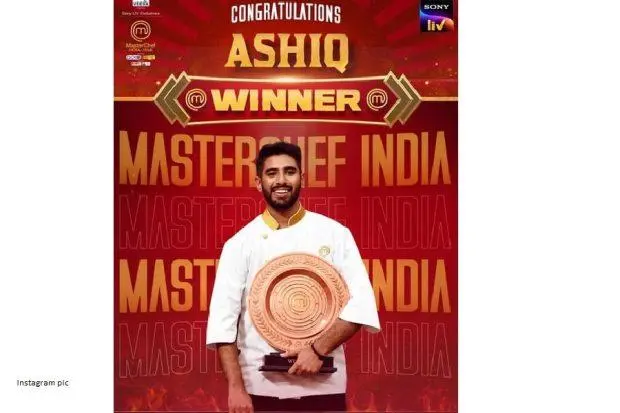
The winner of ‘MasterChef Season 8’ is Mohammed Aashiq, who fought against Suraj Thapa, Rukhsaar Sayeed, and Nambie Jessica Marak in the finale.
MasterChef India Season 8 unveiled the winner on Friday. ( Image Source : X/@ranveerbrar )
New Delhi:
The long-running Indian cooking competition MasterChef has finally come to an end. After eight weeks of delicious challenges, Mohammed Aashiq emerged as the winner of the show. The talented home chefs are mentored by Vikas Khanna, Ranveer Brar, and Pooja Dhingra in thrilling competitions.
Mohammed Ashiq, a 24-year-old contestant, wins MasterChef India’s eighth season. He takes home a coat, the trophy, and a cash reward of Rs 25 lakh. Rukhsaar Sayeed and Nambie Jessica, two home chefs, and Suraj Thapa competed in an exciting finale. Nambie and Rukhsaar won second and first runner-up, respectively.
On social media, judge Ranveer Brar sent his congratulations to Mohammed Ashiq. He wrote, “From an inspirational start to a challenging journey, you never stopped daring for more. Congratulations on becoming the MasterChef Mohd. Ashiq!”
Aashiq sent a press statement and discussed his feelings. “I am immensely grateful for the whirlwind journey I’ve had on MasterChef India. From facing elimination to holding the trophy, every moment was a profound lesson. This experience has completely reshaped my life, and winning this esteemed title feels surreal.”
He added, “Coming back with stronger determination after narrowly missing out last season was tough, but I devoted myself entirely to the culinary craft. This victory isn’t just mine; it’s for every dreamer who defies the odds to chase their aspirations. I owe immense gratitude to the judges- Chef Vikas, Ranveer, and Pooja, fellow contestants, the audience, and all the renowned chefs who pushed me to perform better with each passing day in the kitchen. I’ve grown significantly and noticed a remarkable shift in my cooking skills, all thanks to an incredible boot camp experience.”
Instagram ashiqrex
Who is Mohammed Aashiq?
Mohammed is originally from Mangalore, Karnataka. At the time when Aashiq entered the MasterChef India competition, he was the owner of a juice shop in his village called Kulukki Hub. By combining his passion for cooking with his talent for creating one-of-a-kind meals, Mohammed has been able to support his family financially.
source: http://www.news.abplive.com / ABP Live / Home> Entertainment> TV / by ABP News Service / December 08th, 2023
While the world is fast moving forward with technology, how could search for spiritual journey lag behind. Sometimes you don’t aim to offer your services just to increase your clientele or followers, it’s just a way to open the door to a spiritual journey, especially when you are young.
Mumbai’s Cosmic Tours and a few social media influencers joined hands for this very reason. While Cosmic provided their expertise, the social media influencers dished out their platforms as they embarked upon the journey to the Holy cities of Makkah & Madina.
“It was an attempt to help people connect with their spiritual side,” Baba Ebrahim of Cosmic Tours made their intentions clear.
Based out of Pydhonie, Cosmic has been operating Hajj, Umrah excursions since 1990.
The operator claims they have spread their wings not only in India, but even abroad with just word of mouth publicity.
“Besides India, pilgrims join us from America, UK, New Zealand, Barbados. Currently we have a couple pilgrims from Japan. We are slowly working on that region as well,” the operator said.
Cosmic Tours, however, is aiming to move with time. They feel social media influencers and actors are now paying attention to their spiritual side as well. “Even Shah Rukh Khan went for Umrah recently,” he said.
Check Instagram handle of Cosmic Tours
“They want to connect with the fans who seek spiritual motivation. They not only on Instagram, but are on YouTube as well. They are, in fact, on all over social media channels. They are present in the Metaverse. They are everywhere now, on TV soaps, dance shows and reality shows.”
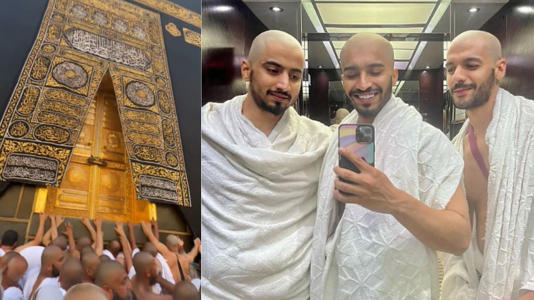
Recently, Cosmic Tours had Faisal Shaikh aka Faisu (29.4 million Instagram followers), Faiz Baloch (9.6 million Instagram followers) and Shayan Siddiqui (7,80,000 Instagram followers) for Umrah.
Check pictures below
If Cosmic Tours is to be believed, there is no particular age group that goes for Umrah. Today, even children go for Umrah. “Earlier, only old people would go for Umrah, but now everyone goes,” he said.
According to them, their only motive in taking social media influencers was not only to target youngsters for Hajj and Umrah, but every individual who is active on social media.
“We are not chasing results. We have already achieved the result. Those who have joined us bear testimony to our services. Apart from our achievements and awards received in this field, it is just that people are acknowledging our effort and services,” he said.
Most pilgrims for Cosmic are repeaters. “We wanted to target their followers, especially the young lot. We want to reach out to people in each and every corner of the world. And that is possible through this move and their own presence on social media,” he said.
source: http://www.freepressjournal.in / The Free Press Journal / Home> Lifestyle / by Mufeed Mahdi Rizvi / April 05th, 2023
In a story that blends Ripley’s Believe It or Not with Mission Impossible, Musaif Shaan Mohamed and his family have kickstarted their incredible adventure that could potentially earn them a place in the Guinness Book of World Records or the Limca Book.
Bengaluru-based Advocate Musaif Shaan Mohamed, known for his extensive road trips in India and neighboring countries, has crossed Dubai and is currently in Oman with his family on a Mission Impossible-style Road tour of 55 countries spread over 3 continents and 57000 km starting November 12th, 2023.
What makes this journey truly exceptional is that it includes not only Musaif but also his 62-year-old father, mother, sister, and his 6-month-old nephew, Wildan Ezlin Adaam. Musaif has traveled the length and breadth of India by road multiple times in the past 10 years and across Nepal, Bhutan, and Myanmar too!
Musaif, a legal professional and Chairman of Campus Continent, is also a motivational trainer who guides MBBS students seeking better growth prospects. Inspired by Jules Verne’s “Around the World in 80 Days” from his school days, he nurtured the dream of traveling around the world, albeit in a slightly extended timeframe.
An Inspiring Tale of Determination:
Musaif’s travel saga is a testament to determination and living life to the fullest. Over the years, his passion for travel grew, leading him to yearn for more adventure. His latest expedition commenced on November 12th this year from Dubai and is a journey that spans several countries, including Dubai, Turkey, Iran, England, Spain, Belgium, France, Germany, Greece, Portugal, and some rarely heard of exotic countries with beautiful landscapes such as Georgia, Albania, Romania, Kyrgyzstan, Moldovia, Azerbaijan, Belarus, Latvia, Austria, Ireland, Russia, Tajikistan, and Kazakhstan. This incredible journey will conclude in India via China, China (Tibet), and Nepal next year.
Customized Ford Endeavor for the Family:
Recognizing the unique needs of his aged parents and an infant, Musaif made the thoughtful decision to customize his Ford Endeavor to make it an all-terrain SUV. A capable team from The Wrench Virtuoso having branches across India and Germany undertook the challenge of customizing the SUV to ensure the family’s comfort, safety, and protection in varying weather conditions, be it rain, shine, hail, sandstorms, or snow. This custom-built vehicle took nearly three months to complete.
Notably, Mr. Nitin Dossa, Chairman, Western India Automobile Association (WIAA) and Federation of Indian Automobile Association (FIA) along with Mr. Edil Katrak flagged off the journey in Mumbai on the 26th of October 2023.
You name it, this SUV has it
Musaif’s commitment to safety is evident as the vehicle includes a side tent, a main tent, foldable chairs, a portable toilet, and a kitchenette. Incidentally, an extended fuel tank is also built-in to ensure there are no stoppages. Every detail has been meticulously planned to ensure the family’s well-being throughout their journey.
A Collaborative Family Effort:
Musaif’s family plays a significant role in this extraordinary expedition. His sister, Dr. Muneefa A.K., a doctor, is responsible for caring for her son and her mother, Mrs. Nafeesath A.K. While Musaif and his father, Mr. Mohammed Kunhi K.M., a retired businessman, manage the driving and handle entry and exit formalities in each country.
For the family, this journey isn’t just about sightseeing; it’s a profound opportunity to learn about diverse cultures, history, and nature. It’s a way to step out of their comfort zones and explore new places.
A Mission of Peace:
While the initial intention of their tour was exploration, their plan evolved in light of recent global conflicts. The primary goal of their world tour is to spread the message of living in peace and harmony.
This is the first part of the five-part series that the family has planned out. The 2nd part will witness Musaif covering 47 countries in Africa, followed by Australia in the 3rd part, and the 4th part of the globe will be the Americas and Canada.
Musaif and his family intend to share their experiences and promote the importance of peace in their travels, reinforcing the belief that travel has the power to transcend borders and foster understanding.
For further information, please contact Mr.Musaif Shaan Mohammed at +91-8884421111 or mail him at info@campuscontinents.com
Disclaimer: This article is a paid publication and does not have journalistic/editorial involvement of Hindustan Times. Hindustan Times does not endorse/subscribe to the content(s) of the article/advertisement and/or view(s) expressed herein. Hindustan Times shall not in any manner, be responsible and/or liable in any manner whatsoever for all that is stated in the article and/or also with regard to the view(s), opinion(s), announcement(s), declaration(s), affirmation(s) etc., stated/featured in the same.
source: http://www.hindustantimes.com / Hindustan Times / Home> News> Brand Stories / November 16th, 2023
Historians and enthusiasts are taking public education into their own hands to tell the story of the country’s Muslim communities.
The Chronicles of Mehrauli heritage walk. Sonia Sarkar for The NationalThe walk takes visitors through Mehrauli Archaeological Park. Sonia Sarkar for The Nationalit is led by Purani Dilli Walo Ki Baatein. Sonia Sarkar for The NationalIt is one of the oldest inhabited places in the subcontinent. Sonia Sarkar for The NationalMehrauli is rich in historical ruins, tombs and monuments from many eras of Delhi’s past. Sonia Sarkar for The NationalThe Qutb Minar heritage tour. Sonia Sarkar for The NationalPigeon-watching on a tour. Photo: Purani Dilli Walon Ki BaateinA kotha, now a private property, in old Delhi taken during the walk titled ‘Tawaifs and Kothas: Exploring Chawri Bazaar’ by Enroute Indian History. Sonia Sarkar for The NationalThe road leading to Jama Masjid in old Delhi, with guide Anoushka Jain showing an old picture of the same road in the 19th century. Sonia Sarkar for The NationalA tour group on the steps of Jama Masjid. Photo: Enroute Indian History
Chaotic narrow lanes lined with opulent old mansions, shops selling spices, dried fruits and kebabs, all overhung by dangling power cables – any trip to Old Delhi, a bustling Muslim hub built by Mughal ruler Shah Jahan, is a full sensory experience.
Abu Sufyan weaves through the crowd with about 20 people in tow, making his way through streets smelling of flatbread soaked in ghee, the call to prayer at a nearby mosque mingling with the bells of a Hindu temple.
He is on a mission to change negative perceptions of Muslims by showing visitors more of their history in the capital.
“People in old Delhi were labelled as ‘terrorists’ and ‘pickpockets’ because they were predominantly Muslims from the lower economic background, and Mughal rulers were vilified as cruel invaders, as they were considered the ancestors to Indian Muslims,” Abu Sufyan, 29, says.
“My walks involve the local community members including calligraphers, pigeon racers, cooks and weavers with ancestral links in the Mughal era to showcase old Delhi’s heritage beyond these stereotypes.”
Abu Sufyan is one of a growing crop of enterprising men and women using the medium of heritage walks to educate the Indian public and tourists on the nation’s lesser-known history.
He started his walks in 2016, when hatred against Muslim communities was on the rise after Prime Minister Narendra Modi’s ruling Bharatiya Janata Party introduced several anti-Muslim policies.
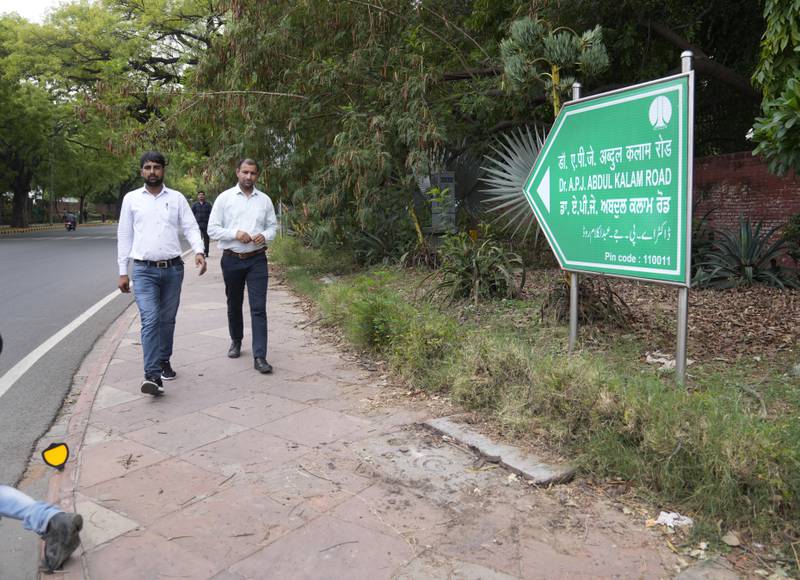
People walk on a road earlier named Aurangzeb Road, after the Mughal emperor, now renamed to Dr. A. P. J Abdul Kalam, India’s former president, in New Delhi, Thursday, June 2, 2022. / AP Photo/Manish Swarup)
In 2015, a BJP politician urged the local civic body in Delhi to change the name of Aurangzeb Road to APJ Abdul Kalam Road. The civic body immediately obliged, removing the reference to the Mughal ruler from the road by naming it after the former president of India, who was always considered a “patriotic” Muslim.
Later, the 2019 Citizenship (Amendment) Act caused further division, as critics said it could be weaponised against Muslims, who are designated as “foreigners” under the National Register of Citizens.
Occasionally, divisions lead to violence: Thirty-six Muslims were killed in Hindu mob attacks for allegedly trading cattle or consuming beef between May 2015 and December 2018, according to Human Rights Watch.
‘A sense of belonging and togetherness’
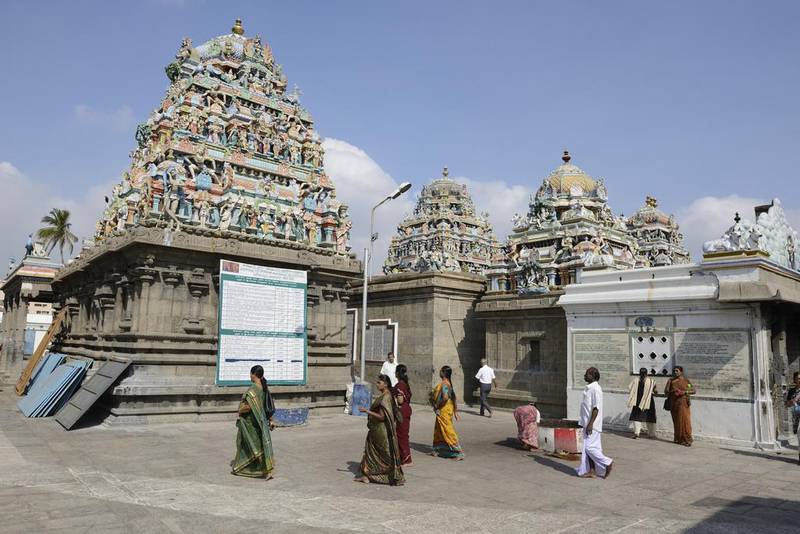
Chennai city is also a major cultural site, offering many things to do and sights to see. Frederic Soltan / Corbis
Over 2,000 kilometres away in Chennai, documentary filmmaker Kombai S Anwar hosts walks in Triplicane to tell stories of Tamil Muslim history, Tamil Nadu’s pre-Islamic maritime trade links with West Asia, the arrival of Arab traders, Mughal emperor Aurangzeb’s rule, the appointment of a Mughal minister’s son Zulfikhar Ali Khan as the first Nawab of Arcot, and the lives of the subsequent nawab’s descendants.
“Predominantly, non-Muslims participate in these walks because they are ‘curious’ about local Muslims and their heritage. During [Ramadan], they are invited to the historic Nawab Walaja mosque, where they experience the breaking of fast and partake in the iftar meal,” Mr Anwar says.
Tickets for heritage walks across India range between 200 and 5,000 Indian rupees ($2-60).
Historian Narayani Gupta, who conducted heritage walks in Delhi between 1984-1997, said any controversy related to history generates more interest.
“Whether history is right or wrong or good or bad, it has to be backed by research findings,” she says.
17th-century Jami Masjid, India’s largest mosque. Unsplash
Saima Jafari, 28, a project manager at an IT firm, who has attended more than 30 heritage walks in the past five years, says it is hard to ignore the historical monuments in the city since they are almost everywhere.
Delhi-based Ms Jafari recalled one of her best experiences was a walk, in 2021, trailing the path of “Phool Waalon Ki Sair”, an annual procession of Delhi florists, who provide sheets of flowers and floral fans at the shrine of Sufi saint Qutubuddin Bakhtiyar Kaki and floral fans and a canopy at the ancient Hindu temple of Devi Yogmaya in Mehrauli.
“When I walked along with others in that heritage walk, I realised that heritage enthusiasts across religion walk together in harmony,” Ms Jafari says.
“One of the best parts of heritage walks is the storytelling that connects places with lives of people of a certain period. Plus, it always gives a sense of belonging and togetherness.”
Anoushka Jain, 28, a postgraduate in history and founder of heritage and research organisation Enroute Indian History, which holds walks to explore the erstwhile “kothas (brothels),” and “attariyas (terraces)” of old Delhi, said during pandemic lockdowns, posts on Instagram helped sparked interest.
“Before the pandemic, barely 40 people participated in two weekly walks as opposed to 50 in each of the four weekly walks which we conduct now,” she says.
But it is not all smooth sailing.
Ms Jain says some people feel uncomfortable when they are given historical facts and research that show Hindu and Jain temples constructed by Rajput rulers were repurposed during the rule of Delhi Sultanate, Qutb ud-Din Aibak.
Iftekhar Ahsan, 41, chief executive of Calcutta Walks and Calcutta Bungalow, adds that sometimes, participants come with preconceived notions that Muslims “destroyed” India for more 1,000 years – but walk leaders hold open conversations to “cut through the clutter” with authentic information.
For some, heritage walks often change perceptions.
“Until I visited mosques in old Delhi during a walk, I didn’t know that women were allowed inside mosques,” law student Sandhya Jain told The National.
But history enthusiast Sohail Hashmi, who started leading heritage walks in Delhi 16 years ago, cautions that some walk leaders present popular tales as historical fact.
A mansion called Khazanchi ki Haveli in old Delhi’s Dariba Kalan is presented as the Palace of the Treasurer of the Mughals by some walk leaders, Mr Hashmi says. The Mughals, however, were virtual pensioners of the Marathas – Marathi-speaking warrior group mostly from what is now the western state of Maharashtra – and later the British and had no treasures left by the time the mansion was built in the late 18th or early 19th century.
Another walk leader had photo-copied an 1850 map of Shahjahanabad, now old Delhi, passing it off as his own research, he adds.
“The walk leaders must be well-read and responsible enough to ensure that the myths are debunked,” Mr Hashmi says.
source: http://www.thenationalnews.com / The National / Home> World> Asia / by Sonia Sarkar / June 01st, 2023
Housed in the Le Grande Hotel in Tashkent, the restaurant is a definite stopover for tourist groups from India and is popular for its Bollywood nights
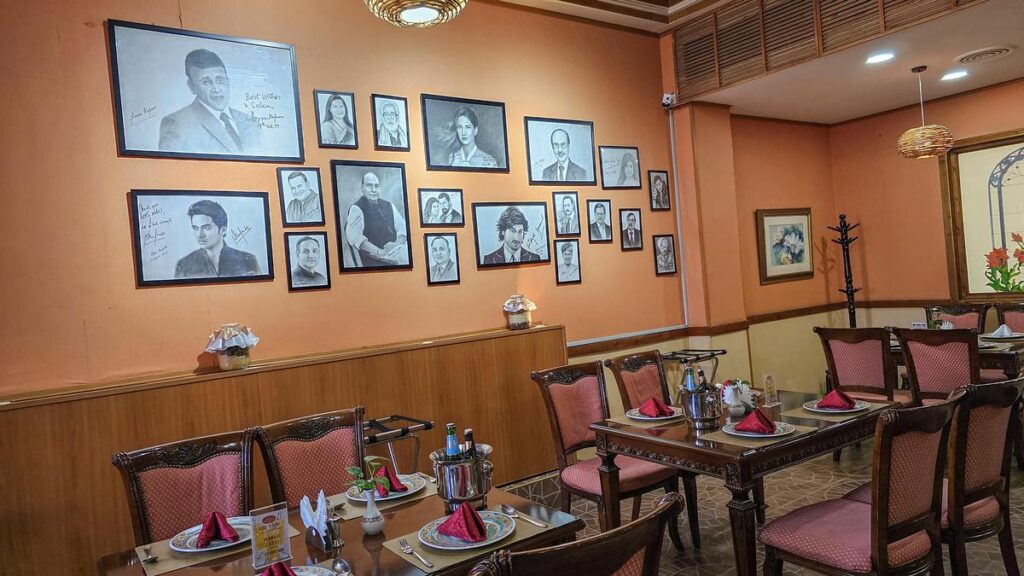
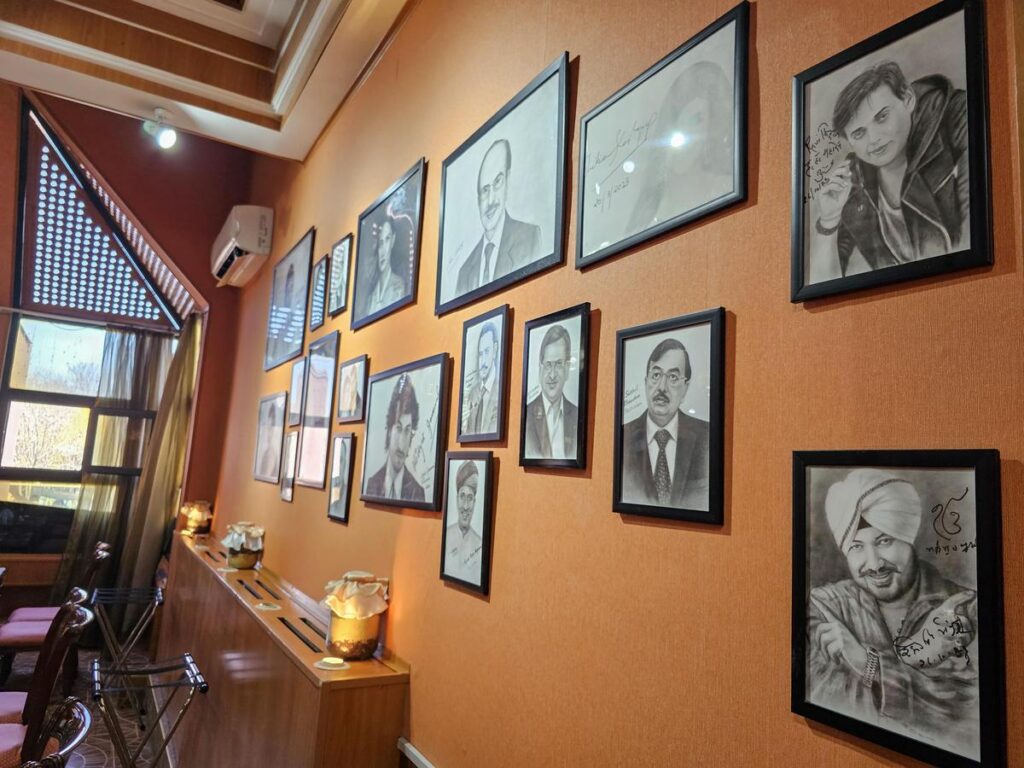
Wall dedicated to Indian celebrities who visited Raaj Kapur restaurant in Tashkent. | Photo Credit: PTI
In the heart of Tashkent, a city known for its rich history, stands an Indian restaurant celebrating the legacy of legendary Bollywood actor Raj Kapoor and the love of the Uzbeks for him even 35 years after his death.
Styled on the Bollywood theme, the ‘Raaj Kapur’ restaurant which is one of the three major Indian restaurants in Tashkent, is not new but at least 16 years old and is a hit among not only Indian tourists but also locals for its lip-smacking dishes.
Three superstars from the Kapoor family — Randhir Kapoor, Rishi Kapoor and Shashi Kapoor — have also dined at the restaurant on different occasions.
“People in Uzbekistan are crazy about Bollywood and generations of people from Uzbekistan and Russia – even the young – are aware of Raj Kapoor and his cinema and regard him as Bollywood’s numero uno. The restaurant attracts more crowd for its name and less for Indian food, which most visitors discover after enjoying a meal,” Sameer Khan, Resident manager, Raaj Kapur restaurant told PTI.
‘A definite stopover’
Housed in the Le Grande Hotel in Tashkent, the restaurant is a definite stopover for tourist groups from India and is popular for its Bollywood nights where Uzbeks also groove on top chartbusters from the 90s.
While Khan, who is originally from Mumbai, manages the property, the idea of the restaurant was first conceptualised by Jay Al Atas, an Indonesian who fell in love with Indian food during a visit to the country and was also impressed with the craze for Raj Kapoor in Russia and Uzbekistan.
“A lot of Indian tourist groups come here on a regular basis while Uzbeks enjoy the food on occasions and also love clicking pictures here. Whenever a Bollywood celebrity from India comes here, there is a bustling crowd,” he added.
The restaurant is also the official caterer for the majority of Indian events — be it the Shanghai Cooperation Organisation (SCO) summit in Samarkand, Prime Minister Narendra Modi’s visit or ones like a recent Bollywood night which saw performances by Daler Mehandi and Ravi Kishan.
Five chefs from different parts of India are behind the variety-loaded menu at the restaurant.
“We offer all kinds of cuisine that are available in India. Our bestselling dishes are butter chicken, biryani, cheese naan and dosa,” said chef Kalamuddin Sheikh who hails from Orissa.
Wall dedicated to Indian celebrities who visited Raaj Kapur restaurant in Tashkent. | Photo Credit: PTI
Celebrity guests
A wall in the restaurant boasts of the renowned people who have visited the restaurant be it politicians like Sushma Swaraj and Rajnath Singh or Bollywood celebrities like Mithun Chakraborty, Shibani Kashyap, Daler Mehandi, Gulshan Grover, among others.
“We have placed signed sketches of the celebrities from India who have visited us. The restaurant is a big hit here,” Sohail Khan, Quality Manager at the restaurant told PTI.
source: http://www.thehindu.com / The Hindu / Home> Life & Style> Food / by PTI / October 30th, 2023
Siddiqui Masroor Azar and his family have lived in their Dh85,000 apartment for two years.
Siddiqui Azar and wife Nikhar Khan live in a two-bedroom apartment in Jumeirah Garden City with their two-year-old daughter. All photos: Chris Whiteoak / The National
My Dubai Rent takes you inside a reader’s home to have a look at what they get for their money, how much they pay and asks them what they like and don’t like.
Two years ago tourism boss Siddiqui Masroor Azar decided to swap his Abu Dhabi apartment for Dubai life.
The Indian citizen, who works as a lead data scientist at a bank, pays Dh85,000 ($23,140) for a two-bedroom apartment in Jumeirah Garden City, which he shares with his wife, Nikhar Khan, who owns a tourism company, and their two-year-old daughter.
The couple also run a YouTube channel, Indians Abroad, which they launched during the Covid-19 pandemic, that shares guides to Dubai with their followers.
They speak openly about the cost of living in the emirate, as well as the rules and regulations around visa applications.
One of their videos, in which they share a six-day itinerary for Dubai, as well as the most affordable places to eat and visit, has already garnered more than 1.2 million reviews.
Here, the 36-year-olds invited The National to take a tour of their property to show us why Dubai is the city for them.
What can you tell us about your apartment?
It’s a two-bedroom apartment that has a living room and a kitchen.
It’s around 1,500 square feet.
The building also has a rooftop pool, where we have great views of the Burj Khalifa.
Where did you live before?
This is our fourth apartment since we moved to the UAE in 2016.
Our first apartment was in the Al Nahda area in Dubai.
Then we moved to Abu Dhabi for work and rented an apartment in Al Nahyan.
Two years ago, we returned to Dubai.
Why did you choose this district?
We came back to Dubai because my office moved from Abu Dhabi to Dubai.
The best thing about Jumeirah Garden City is that I don’t get stuck in traffic.
My office is in Jaddaf, so it’s only a 10-minute drive from our apartment.
What kind of facilities do you have around you? We are in the middle of everything.
It takes us around 10 minutes to reach several places including the Dubai Mall, Old Dubai where they have all the restaurants we love, and La Mer Beach.
The Museum of the Future is also two minutes away.
The best thing about Jumeirah is that during winter time we can take our two-year-old daughter to Satwa Park, and it’s about a 10-minute walk.
We also have a pharmacy and supermarket nearby.
The couple brought their blue sofa to Dubai from their Abu Dhabi apartment. Chris Whiteoak / The National
Is it a sociable neighbourhood? It’s a bit difficult to make friends since we live in a city and everyone is busy with their own lives.
We do have a few friends but it’s hard to catch up. If you have time, you can make friends.
How have you made your house a home and personalised it? Before furnishing our apartment, we watched a lot of YouTube videos and explored many websites to find what suited us best.
We brought our blue sofa from our previous apartment as we love how bright and joyful it looks.
We also bought a wooden dining table, as well as plants to put in the living room as it adds a sense of cosiness to the apartment.
Any features you would change? The view from our balcony could have been better. Unfortunately it’s obstructed by surrounding buildings.
Do you think living here delivers good value for money? The rent is high everywhere in Dubai.
Location-wise it’s great because it’s close to all the places that we like to visit, so it makes it worth it.
If you compare our apartment to others that are older, you’ll understand that it’s completely reasonable for its price.
Do you plan to stay in the property?
We’ve been paying rent for years and we wanted to have our own apartment.
So last year we bought a two-bedroom apartment in Jumeirah Village Circle and we will be moving next year.
It took us around three years to save to buy the property but we’re excited.
source: http://www.thenationalnews.com / Th National / Home> Living in the UAE / by Eiman Alblooshi / October 08th, 2023
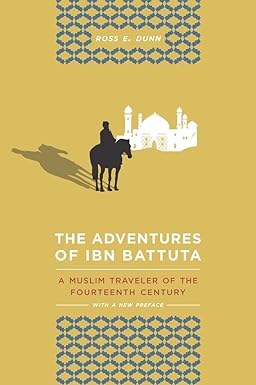
Ross Dunn authored book is into its third edition. / pix: amazon.in
A visit in February 2018 to India’s Kozhikode (Calicut) – an important town in the itinerary of celebrity traveler Ibn Battuta – inspired American historian Ross Dunn to look back on the lives and times of the Arab traveler.
His book, The Adventures of Ibn Battuta, a Muslim Traveler of the Fourteenth Century (University of California Press), which is into its third edition, was a product of this endeavor.
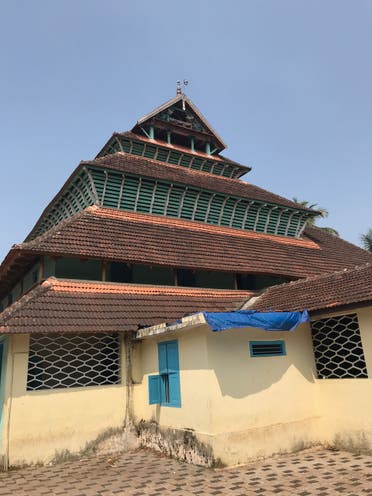
Impressed by Malabar’s reference, Ross Dunn visited Kozhikode in February this year. (Supplied)
Reconnecting with the past
The Professor Emeritus of History, San Diego State University, United States, who is engaged in retracing a few pockets of Ibn Battuta’s journeys believes that the traveler’s accounts help us recreate our past.
Talking to Al Arabiya English, Ross Dunn, also author of many books, minces no words in saying that the Rihla – whose formal title is A Gift to the Observers Concerning the Curiosities of the Cities and the Marvels Encountered in Travels – is of huge documentary value.
This is partly because it illuminates the values, customs, and partly because it records observations of nearly every conceivable facet of life in Muslim, and in some measure, non-Muslim societies.
The eminent professor armed with a PhD degree in African and Islamic history from the University of Wisconsin, is planning to revisit Kozhikode for a conference titled, Travel, Trade, Tradition, and Trajectories, which will focus mainly on Indian Ocean history at the Ibn Battuta International Center for Intercultural and Civilizational Studies from December 4-8, 2018”.
Showering lavish praises on Ibn Battuta’s travels, Ross Dunn said: “The subjects of his lively and sometimes critical commentary include religion, education, state politics, royal ceremony, law, warfare, gender relations, slavery, trade, agriculture, cuisine, manufacturing, geography, transport, and the achievements and failings of numerous jurists, theologians, monarchs, and governors.
The Rihla is the only surviving eye-witness account of the Maldive Islands, Sudanic West Africa, and several other regions as they were in the fourteenth century.”
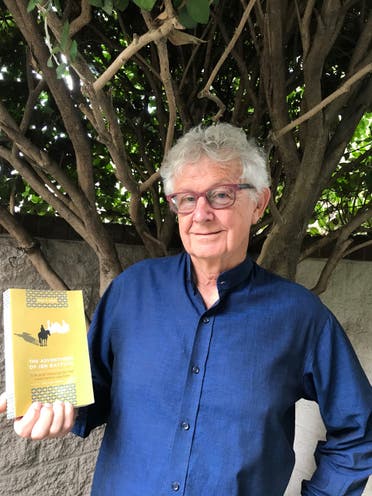
Ross’ book on Ibn Battuta has appeared in three editions and a fourth is being planned. (Supplied)
Tryst with Malabar
Ibn Battuta’s travels took him to Spain, Russia, Turkey, Persia, India, China and all the Arab lands. The richest towns of all were along the Malabar coast, the main source of the pepper that commanded such high prices in the markets of China, Alexandria and Venice but also of the teak used for building ship.
Impressed by Malabar’s reference, Ross Dunn visited Kozhikode in February this year and was wowed by the place. Reminiscing about his visit, the historian cum author narrates: “I visited Miskhal and Muchundi mosques. I was especially interested in the Miskhal masjid because Nakhuda Miskhal, the mosque’s benefactor, lived in Ibn Battuta’s time”.
Miskhal, named Mithqal in the Rihla, was one of the great merchant entrepreneurs of the long-distance Indian Ocean sea trade. “In this town too” Ibn Battuta writes, “lives the famous ship owner Mithqal, who possesses vast wealth and many ships for his trade with India, China, al-Yaman, and Fars.”
Ibn Battuta, who probably visited Kozhikode in 1342, does not mention the mosque, and I have not determined whether it was built before or after his arrival.”
Ross’ book on Ibn Battuta has appeared in three editions and a fourth is being planned. Reason enough for the professor to visit a few more of the great traveler’s destinations.
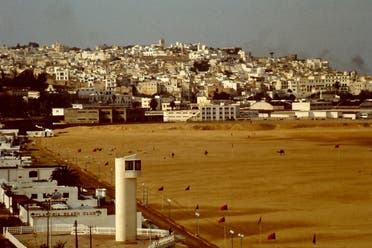
The old city of Tangier, Ibn Battuta’s birthplace. (Supplied)
Ruins of Tughlaqabad
Explains Ross, “Last February my wife and I visited New Delhi briefly, though not long enough for me to spend substantial time exploring the ruins of Tughlaqabad, the area in southern Greater Delhi where Ibn Battuta served as a judge and administrator in the government of Muhammad ibn Tughlaq, Sultan of Delhi”.
But what needs to be done to retrace the journey of Ibn Battuta for the modern world to know about his travel experiences? In the preface to the third edition of The Adventures, Ross describes some of the ways in which the great voyager has become better known in recent years.
“I am aware that millions of American school children learn about him because he is included in probably all the leading world history textbooks. There are a number of scholarly works about him, also children’s books and a few films,” he writes.
According to him, Tim Mackintosh-Smith, the English travel writer and Arabist who lives in Yemen, has written a wonderful three-volume account of his own expeditions to trace Ibn Battuta’s footsteps.
“About a decade ago I participated as a consultant in a Franco-Moroccan project to produce a feature-length movie about the traveler. I made three trips to Morocco in connection with this endeavor, but it has yet to come to fruition owing mainly to the large financing that would be required,” he says.
http://www.english.alarabiya.net / AlArabiya News / Home> Features / by Aftab Alam Kola / September 14th, 2018
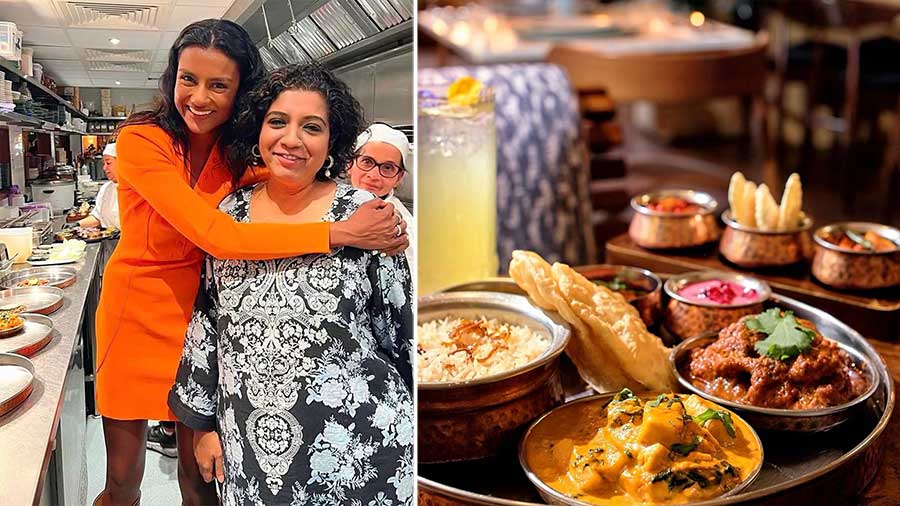
‘Nine women in the Darjeeling Express kitchen made for a powerful visual’, the Kolkata-born British chef and restaurateur tells My Kolkata.
Simone Ashley and Asma Khan at the Darjeeling Express kitchen. (Right) the thali the actress was served @asmakhanlondon/Instagram
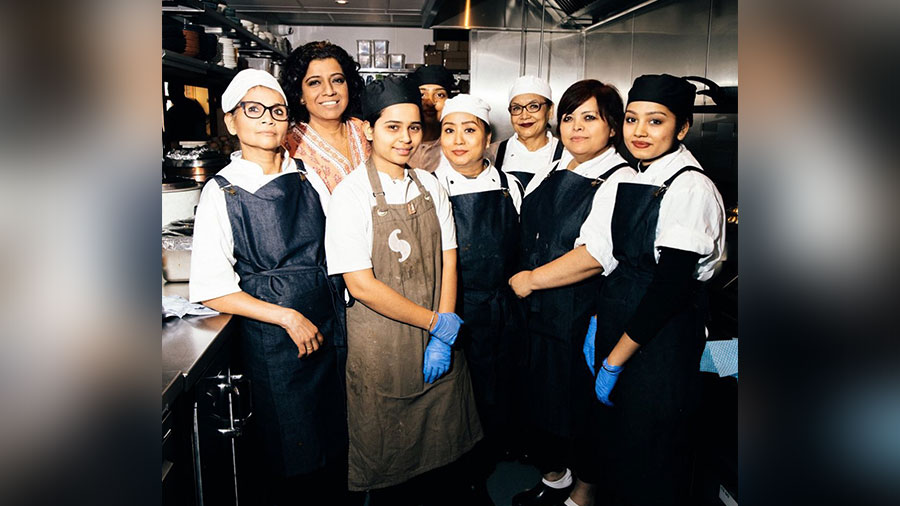
Nine women in the Darjeeling Express kitchen made for a powerful visual when actress Simone Ashley visited the London restaurant, owned by Asma Khan, on August 31.
Ashley, known for her portrayal of Kate Sharma in Netflix’s women-centric hit series Bridgerton, expressed her desire to connect with the all-female kitchen team.
Asma Khan, Kolkata-born British chef and restaurateur, shared her experience with My Kolkata from London, saying, “Simone met the girls with so much affection. They were thrilled to meet her. She’s very sweet, very humble. She also left a generous tip. Recognising and appreciating the women who nourish us holds significance for those of Southeast Asian heritage. Regardless of one’s origins, it’s an integral part of our culture.”
Asma’s mission is to embrace diversity in the hospitality industry
Asma has gained recognition for her unwavering commitment to empowering immigrant women, who form the heart of her kitchen brigade at Darjeeling Express. She articulated her mission to embrace diversity in the hospitality industry in a recent piece for British Vogue , where she wrote: “I have made it my mission to hire individuals from all walks of life, and of varying ages and abilities.”
Simone, who is of Tamil descent, arrived at the restaurant with the film crew of her latest project, including the producer and director. Asma said, “My connection with Simone came through our mutual friend, Charithra Chandran, who plays her half-sister in Bridgerton. We had discussed the possibility of Simone visiting the restaurant before. However, this time, the reservation was arranged by Christine, the wife of David Gelb, the director of Chef’s Table and a personal friend. She inquired about the availability and made the booking.”
‘Bridgerton’ star Simone Ashley is of Tamil descent @simoneashley/Instagram
“She had our thali at Darjeeling Express and was particularly thrilled about the puri (luchi), because we prepare them fresh for the thali. She watched our girls making it, and I’ve heard she’s a very good cook herself,” added Asma, who was a guest judge on a recent season of Padma Lakshmi’s Top Chef. In fact, the episode helped “demystify the thali” and is one of the reasons why the Sunday thali at the London restaurant is “doing so well” , according to Asma.
In recent times, Darjeeling Express has welcomed several notable personalities, including Malala Yousafzai , whom Asma describes as someone “who embodies the invincible spirit of women from South Asia”, Michael Buble , Spotify’s CEO Daniel Ek, and Paul Rudd as well as Schitt’s Creek creator Dan Levy, among others.
source: http://www.telegraphindia.com / The Telegraph Online / Home> Food> Star Chefs / by Karo Christine Kumar / September 02nd, 2023
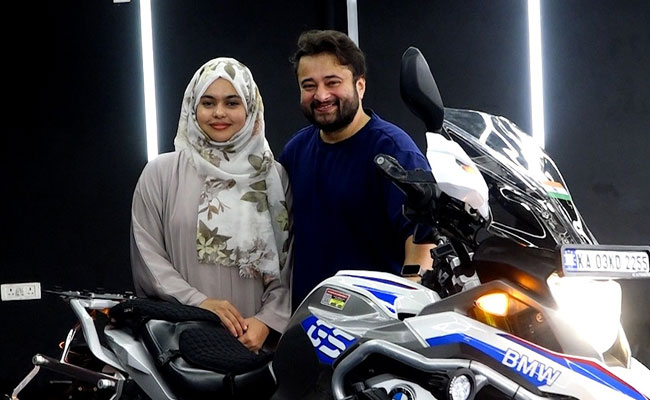
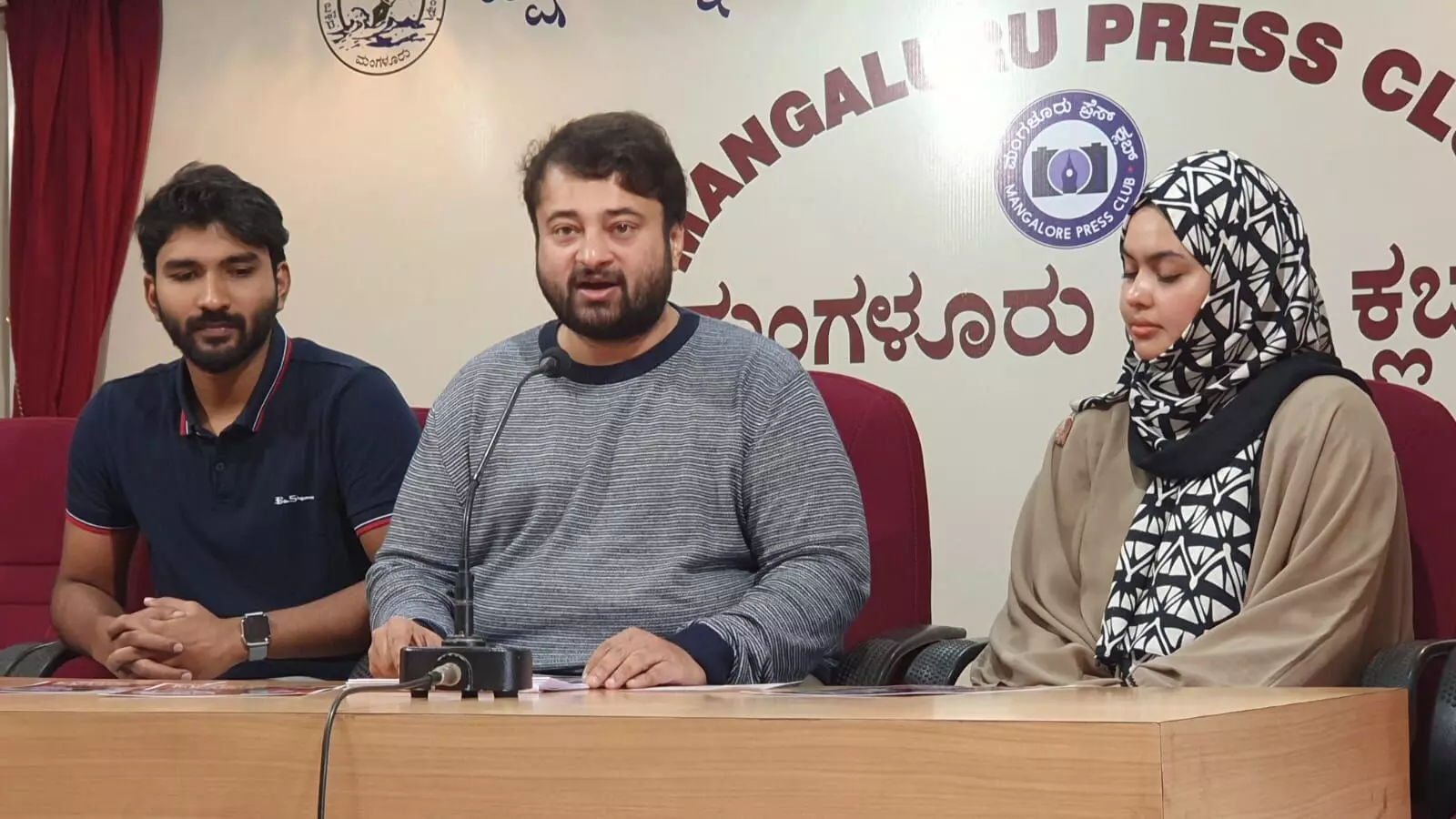
Motivational speaker and life coach, Saif Sultan, along with his wife, Adeela Farheen, is embarking on a remarkable mission to raise awareness about the vital importance of blood donation. The dynamic couple will undertake an arduous 4,000-kilometer motorcycle ride from Mangaluru to Kargil, aiming to spread the message of patriotism, dispel misconceptions about hijab, and highlight the significance of donating blood.
The journey is set to commence on July 29, 2023, at 7:30 am, from Nehru Maida in Mangaluru, under the auspices of esteemed dignitaries, including MLA and State Speaker U T Khader, and Mangaluru Police Commissioner Kuldeep Kumar R Jain. In preparation for their ride, a blood donation camp will be organized on July 28, in collaboration with the Blood Helpline Karnataka and the Red Cross Blood Bank. This initiative not only showcases the couple’s dedication but also encourages others to contribute to this noble cause.
Riding on the BMW GS 310, the couple has made modifications to suit their travel needs before embarking on their journey. Over the course of 19 days, Saif and Adeela will traverse multiple cities, including Honnavar, Belagavi, Pune, Mumbai, Surat, Ahmedabad, Udaipur, Jaipur, Delhi, Amritsar, Jammu, and Srinagar, before reaching their destination in Kargil on August 15. Covering an average distance of 300 kilometers per day, they plan to engage with the public, promoting the importance of blood donation and distributing souvenirs and chocolates to create awareness and foster community participation.
Saif Sultan expressed, “Our primary objective is to raise awareness about blood donation. However, I also hope to dispel misconceptions surrounding the hijab and demonstrate that it is not a symbol of oppression. By showcasing my wife, Adeela, wearing the hijab during our ride, we want to emphasize that Muslim women are educated, empowered, and free to pursue their aspirations within the framework of their faith.”
Reflecting on the inception of their journey, Saif shared, “Originally, I had planned a solo ride to Kargil and was preparing for a 300-kilometer ride to Karwar. But when my wife expressed her interest in joining me, I welcomed the idea with open arms. Our previous trip to Karwar was a transformative experience, allowing us to strengthen our bond and subsequently inspired us to embark on this extraordinary journey together. Our children, Hoodh, 8, and Safa, 6, are also thrilled and supportive of our adventure.”
In addition to raising awareness about blood donation, the couple’s expedition aims to serve as a testament to India’s safety and cultural diversity. Along the way, they will document their experiences through daily blog posts, sharing their insights and encounters with the public. On reaching Kargil, the couple plans to organize a blood donation camp, where Saif will proudly donate blood for the 20th time, and Adeela will contribute for the first time.
As a symbol of solidarity and gratitude, the Indian Army personnel will witness the hoisting of flags, including the flags presented by dignitaries in Mangaluru, along with the Kannada flag on August 15. This gesture honors the memory of the late Kannada superstar Puneeth Rajkumar, with whom Saif had the privilege of meeting on three separate occasions.
This exceptional endeavor by Saif Sultan and Adeela Farheen not only promotes blood donation awareness but also sheds light on the global blood shortage crisis, which affects both low- and middle-income countries, including India. Access to safe and sufficient blood for all those in need remains a challenge worldwide. By encouraging voluntary, unpaid blood donations and fostering active community participation, we can ensure a stable blood supply, particularly during emergencies and disasters.
The couple’s forthcoming plans of touring Thailand next year and Europe the following year reflect their unwavering commitment to exploring the world while advocating for noble causes.
source: http://www.english.varthabharati.in / Vartha Bharati / Home> Karavali / by Vartha Bharati / July 27th, 2023
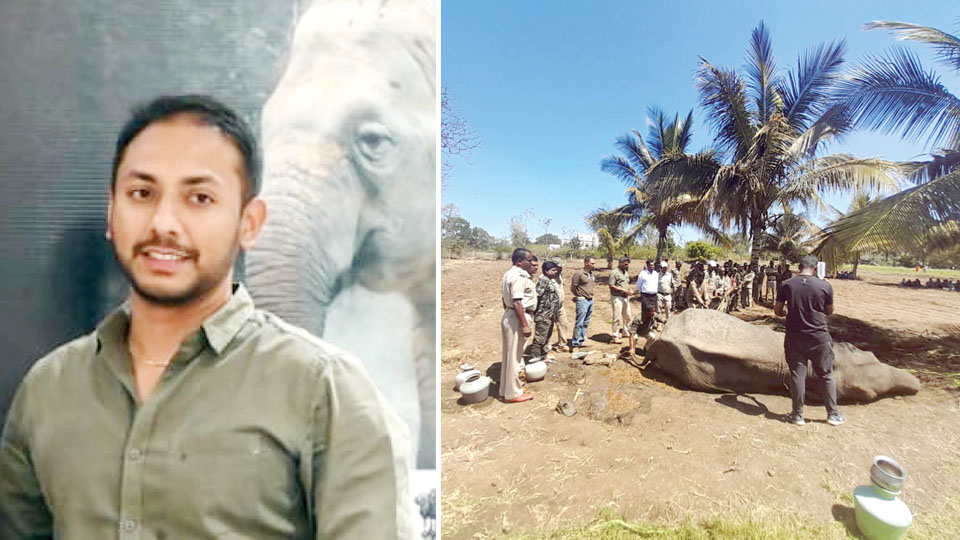
Dr. Mirza Vaseem, Veterinarian at Bandipur National Tiger Reserve, has been selected for the prestigious ‘Gaj Gaurav’ Award for his outstanding service in wildlife conservation.
The award is presented by the Ministry of Environment, Forests and Climate Change, Project Tiger and Elephant Division on the occasion of World Elephant Day to honour frontline workers in wildlife conservation.
“This is for the first time that an Officer from Karnataka is receiving this award which is encouraging,” said Principal Chief Conservator of Forests (PCCF-Wildlife) Subhash K. Malkhede.
In February 2023, Dr. Mirza Vaseem had put in a lot of efforts to save the life of an elephant which was electrocuted and recognising his service, Additional PCCF Kumar Pushkar had nominated the name of Dr. Mirza Vaseem for the award.
World Elephant Day will be celebrated on Aug. 12 at Angul in Mahanadi Elephant Reserve at Odisha.
source: http://www.starofmysore.com / Star of Mysore / Home> News / July 14th, 2023


:quality(70)/cloudfront-eu-central-1.images.arcpublishing.com/thenational/6SURHLI3U5GFHIKZAHWPTRSI7Y.jpg)
:quality(70)/cloudfront-eu-central-1.images.arcpublishing.com/thenational/NMJCTTFTNFA4LG63XQWZD3FJZM.jpg)
:quality(70)/cloudfront-eu-central-1.images.arcpublishing.com/thenational/KIUTISW4DFCIJIZZWPSWFNBO7M.jpg)
:quality(70)/cloudfront-eu-central-1.images.arcpublishing.com/thenational/WK4SP6572FDITEWC3ZFRW4BJMQ.jpg)
:quality(70)/cloudfront-eu-central-1.images.arcpublishing.com/thenational/FQN33UZUQBBHFFOMZBUUHNUZRE.jpg)
:quality(70)/cloudfront-eu-central-1.images.arcpublishing.com/thenational/TQMPVWCPANB3TBZO3ZLBNJDYLY.jpg)
:quality(70)/cloudfront-eu-central-1.images.arcpublishing.com/thenational/XEMAS2AQCRCHHJFMFYRWXRCFSE.jpg)
:quality(70)/cloudfront-eu-central-1.images.arcpublishing.com/thenational/MZL6F5Q2ZZCWFCI5VHCGX3SYH4.jpg)
:quality(70)/cloudfront-eu-central-1.images.arcpublishing.com/thenational/PUNDIPNOZFDMBOW2RXK5I7E6LY.jpg)
:quality(70)/cloudfront-eu-central-1.images.arcpublishing.com/thenational/VSAVCCM56RGUPC7CH7QPSPAOIU.jpg)
:quality(70)/cloudfront-eu-central-1.images.arcpublishing.com/thenational/DK66JSEL3NH63PKODJVBAKGCEU.jpg)
:quality(70)/cloudfront-eu-central-1.images.arcpublishing.com/thenational/ZIX32OMOXFAGHBMOQZBRIABAWM.JPG)
:quality(70)/cloudfront-eu-central-1.images.arcpublishing.com/thenational/ITDY7EFQXVBYVJKHSACRJ73EIE.JPG)