Category Archives: Travel & Tourism

Shaykh Abdul Qadir al-Thani and the Hidden Domains of Puratheel

Kannur, KERALA :

Puratheel. Image credit: Prageeth T N

The road unfolded before us like a ribbon, guiding our car through the lush greenery and coconut groves of Kerala. It was the sacred month of Ramadan, and we had embarked on a journey to the enchanting city of Kannur in search of a pious man. The road ahead promised a culturally rich, soul-stirring experience that would leave an indelible mark on our hearts.

We entered the city after a two-hour long drive; the streets bustled with pedestrians, the sound of traffic filled the air, buyers and sellers haggled in the marketplace. Amidst this vibrant chaos, an air of sanctity was palpable; it carried the essence of a bygone era, where the mingling of diverse traditions shaped the city’s identity. Our guide informed us of Kannur’s deep-rooted connections with the Islamic world, which dated back centuries.

Nestled along the coast of the Arabian Sea, Kannur holds a special place in the tapestry of Islamic culture. The arrival of Arab merchants, who had ventured to the Malabar Coast for trade, had a lasting impact on the locals. Legend has it that Islam took root in Kannur even before the arrival of Malik ibn Dinar, who is famously known as the first companion of the Prophet Muhammad ﷺ to arrive in India (though this cannot be verified historically). The tales passed down through generations speak of King Cheraman Perumal, ruler of the Chera kingdom, who was drawn to Islam after witnessing the miracle of the split moon. He embraced Islam, took the name Tajuddin, and ventured to Mecca, where he shed his worldly concerns. His story, engraved in verse on a wooden tablet at the Arakkal Palace, is a testament to the city’s historical connection with Islam.

Over the centuries, Kannur flourished as a centre for Islamic scholarship and culture, particularly Sufism. It became a hub of spiritual seekers, earning the moniker ‘Baghdad of India’. One notable figure in Kannur’s Sufi tradition is Ghawth al-A’zam (the Greatest Helper), Shaykh Abdul Qadir Al-Thani, whose presence lingers in the serene village of Puratheel, just a short distance from Kannur city, and whose grave we were destined to visit that day.

After parking our car near Varam Kadavu Bridge, we were drawn to a nearby river, its cool, sparkling waters beckoning us under the scorching summer sun. Seeking respite from the heat, I cupped my hands and splashed the cool water on my face, feeling rejuvenated in both body and soul. My colleague, who had visited Puratheel before, remarked that this river served as a natural border for the village, fortifying the sacred site with its life-giving waters. It was this very river that earned Puratheel the epithet dweep, or ‘island’. The flowing waters represented a boundary that was not only physical, but also spiritual, separating this land from the rest of the outside world.

Puratheel. Image credit: Salz Graphy

Standing on the river’s edge, engrossed in its serene beauty, I felt a profound sense of peace wash over me. At that moment, I understood why Puratheel was revered as a place of spiritual import. It provided a sanctuary, a space where seekers could disconnect from the outside world and embark on a meaningful journey of self-discovery. Even as we reluctantly left the riverbank, the serenity of that moment remained with us, and we cherished this reminder of the intense connection between nature, spirituality, and the pursuit of inner peace.

As we wandered through the village, faint sounds of devotional music played from afar. Our guide, prayer beads in hand, began to narrate the story of Shaykh Abdul Qadir Al-Thani.

There once lived an extraordinary man in Afghanistan by the name of Shaykh Uthman Hamdani. A Persian ruler and descendent of the esteemed first Caliph, Abu Bakr Al-Siddiq, this Sultan of Hamadan left all his riches behind to go on a quest for truth. He wandered tirelessly across distant lands, his footsteps guided only by his faith and a thirst for spiritual knowledge.

Shaykh Uthman eventually arrived in Valapattanam, a tranquil village in the northern province of Kerala. One night, during his stay in the village, he experienced a vision. This vision promised him that, should he marry on that very night, he would sire a miraculous child. A year later, in the nearby kingdom of Chirakkal, royal astrologers uncovered a celestial secret. They revealed to their king that a child had been born in the Valapattanam province — a child destined to become the greatest of all miraculous beings. They further prophesied that if the King provided protection and support to this child, his kingdom would prosper.

Intrigued by this prophecy, the King of Chirakkal set out to meet the newborn child, who had been named Abdul Qadir. Recognising the infant’s extraordinary potential, the King assumed responsibility for his upbringing, ensuring that he grew into a virtuous and revered figure. As such, the child was brought to the King’s palace at the tender age of five or six, where he continued his spiritual journey surrounded by the kingdom’s grandeur. His princely childhood abruptly ended at the age of sixteen, when his fortuitous encounter with four strangers changed the course of his life forever. 

The strangers had arrived at his family home in a famished state while Abdul Qadir was away at the palace. With his mother’s permission, they slaughtered cattle she had originally set aside for her son, and chopped down a jackfruit tree in front of the house. They cooked their meal, ate, and saved some of the food to be given to Abdul Qadir when he returned. As the strangers departed, the family were astonished to find that both the cattle and jackfruit tree had been miraculously restored to their original state. When Abdul Qadir eventually came home, his mother informed him of their unusual visitors. Realising that these were no ordinary beings, he set off to find them, eventually encountering four people from Bhatkal, Karnataka. Amongst them was the distinguished Sufi shaykh, Mahmoud Al Khabooshani, who bestowed Abdul Qadir with an ijaza in the Suhrawardi tariqa. This was a licence that would formally permit him to instruct his own disciples in the teachings and practices of the Suhrawardi Sufi order. 

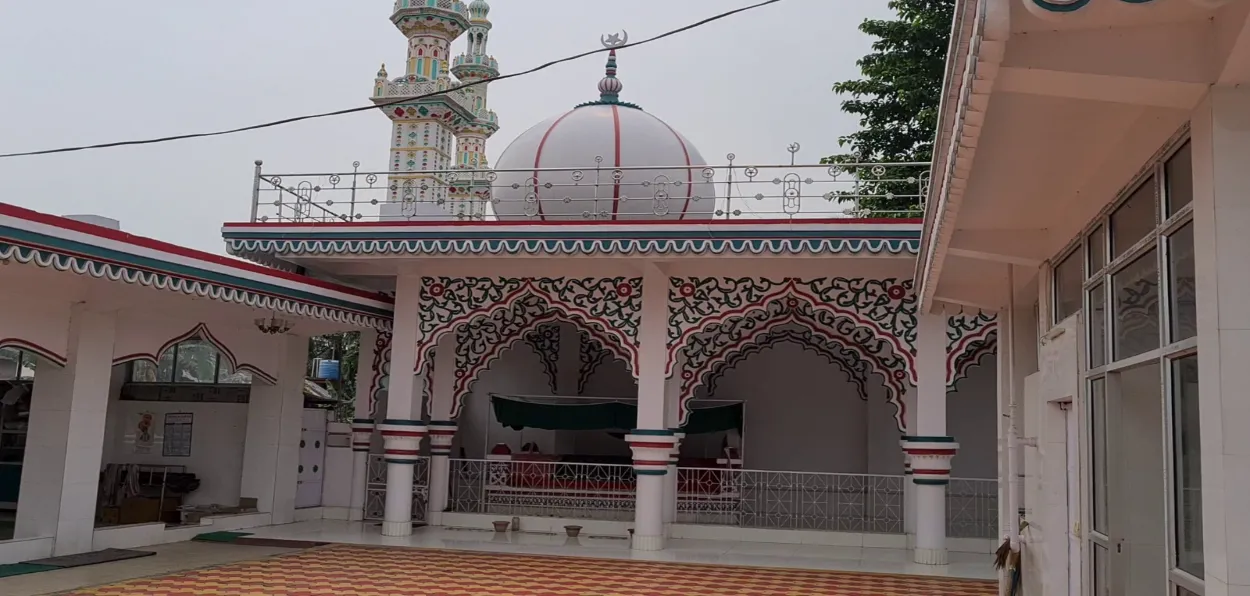
Mosque built by the Shaykh himself

Inspired, Shaykh Abdul Qadir abandoned all material pursuits and devoted himself to worship. When the King grew concerned at the Shaykh’s sudden withdrawal from the palace and other worldly affairs, the Shaykh expressed his desire to continue this path, furthermore requesting that the King grant him a portion of the land to be reserved for regular worship and seclusion. The King assented, and named this land ‘Puratheel’. There, the Shaykh built a mosque and established a settlement, fostering a culture of spiritual seclusion and growth. He eventually became known as Abdul Qadir Al-Thani (‘the Second’), as people reverentially associated him with Ghawth al-A’zam Abdul-Qadir Al-Jilani, esteemed scholar and saint of Baghdad. 

Despite my efforts, I found little information about Abdul Qadir Al-Thani in my research. Even in Malayalam, the native language of Kerala, references were scarce. Only in Arabic did I find a single work, entitled The Holy Maulid, by Shaykh Valappil Abdul Azeez Musliyar. Shaykh Abdul Qadir’s obscurity in the digital realm was, to say the least, disappointing. However, as I stepped into the sacred sanctuary of Puratheel, I was astounded to see its pathways abound with visitors, their footfall echoing with purpose and a yearning for the blessings of a shaykh unknown to Allama Google. This was a realm beyond the age of digital information, where human souls longed for a connection unencumbered by the pretensions of media and search engine rankings. I felt an enigmatic current that drew people to a shaykh who, while evading fame and renown in written histories, had claimed his place in living hearts and memories.

Tombs of Shaykh Abd al-Qadir al-Thani’s descendants

With the setting sun, a melodious call to prayer echoed through the misty valleys, summoning the faithful to gather in the sanctum of the mosque. Inside, the golden glow of flickering lanterns danced across the walls, and the congregation united in prayer between them. The rhythmic recitation of sacred Qur’anic verses rose and fell, followed by murmured supplications emanating from each devotee’s lips.

After the Maghrib (sunset) prayer, a serene calm enveloped the community. We had just shared an Iftar meal to end the day’s fast, replenishing both body and soul with food and prayer. However, the night was far from over. At 12.30am, as moonlight filtered through the mosque’s stained glass windows, bathing the prayer hall in its soft glow, the call to prayer would recommence. As the rest of the world slept on, these worshippers would perform the Taraweeh prayer until 2am, a night prayer reserved for the blessed month of Ramadan, followed by more supererogatory prayers and whispered invocations hoping to forge a bond between this earthly realm and the Divine.

Though Muslims the world over perform these rites every Ramadan, Puratheel has its own unique customs. The Qunut, a special supplication, is recited with every prayer except Maghrib. On Mondays, Thursdays, and Fridays after Maghrib, devotees gather for a dhikr halaqa, or gathering of remembrance, chanting the Divine’s sacred names in melodious union. After the Jumu’ah (Friday) prayers, which are led by a descendent of Abdul Qadir Al-Thani, a ritual of repentance takes place; the Shaykh recites words of istighfar, invocations that seek Divine mercy and forgiveness. Believers repeat the Shaykh’s istighfar, and disclose their struggles and shortcomings to a spiritual mentor as a means of guidance, purification, and self-reflection.

As Ramadan nears its end, the anticipation of seeking Allah’s blessing in the final ten nights of the Sacred Month swells, culminating in the sought after ‘Night of Power’, or Lailat ul Qadr. This is the twenty-seventh night of Ramadan, where in Puratheel, the adhan (call to prayer) resounds seven times to herald the Night of Power’s arrival. The mosque transforms into a radiant beacon, drawing the servants of Allah from near and far.

Puratheel Juma Masjid

When the final sun sets on Ramadan, and Eid ushers in the Sacred Month’s end, the Isha (evening) prayer is delayed until 2am to encourage the faithful to immerse themselves in worship until dawn. Although these customs may seem arduous to some, they are embraced with an unwavering devotion in Puratheel, keeping the legacy of the Shaykh alive. In our age of information and instant gratification, Puratheel reminds us that there are still enigmas to unravel, hidden domains waiting to be explored, and extraordinary souls whose influence transcend the virtual realm. True enchantment lies not in its digital presence but in the transformative encounters that await those who embark on this journey with an open heart and a yearning for the Divine.

Before our trip came to its end, our guide led us inside the mausoleum that housed Shaykh Abdul Qadir Al-Thani’s tomb, where he rested adorned in royal green clothing. Mausoleums of his children, grandchildren, other family members, and companions abound, both in Puratheel and all throughout India.

As we left Puratheel, a sense of tranquillity washed over me, dispelling, for the moment at least, all of life’s uncertainties. I felt that an inner peace had permeated my being, reminding me that we are never truly alone. For a moment, the world stood still and breathless, before exhaling a gentle breeze that brushed against me. I felt tears spring to my eyes, and wondered if nature possessed its own soul.

I left marvelling at the interconnectedness of the human spirit and the natural world. With the wind divulging its secrets and the land preserving ancestral tales, our souls are inextricably tied to that of nature’s. Through timeless bonds, we find solace, guidance, and an earnest understanding of our place in the cosmos. I journeyed forward, guided by whispers of the unseen, embracing the beauty and mystery bestowed upon us by nature.

Edited by Asma

source: http://www.sacredfootsteps.com / SacredFootsteps.com / Home>Asia> India / by Swalih Kuzhinholam / edited by Asma

____________________________________

Swalih Kuzhinholam

Swalih is a writer, Islamic tutor, and cultural explorer based in Kerala, India. He is a graduate of Darul Huda Islamic University in Chemmad, and a former Associate Editor at Thelitcham monthly magazine. His interests lie in culture, society, Sufism, aesthetics, literature and the arts.
Gujarat’s Forgotten Islamic History

GUJARAT :

Islam in India is often portrayed as a byproduct of the 16th century Persian Mughal Empire; but if you look past the Taj Mahal and Jama Masjid of Agra and Delhi, you find that Islam’s roots actually run far deeper in other parts of the country.

The claim that the Mughal Empire is responsible for the spread of Islam in the subcontinent, is often made by far-right (Hindu or Indian) nationalists, and has contributed to the common misconceptions that Islam is a recent phenomenon in South Asia, and that it spread from the north of the country to the south. However, evidence suggests that the religion first reached the shores of the Gujarati-Konkan and Malabar coasts (in the south) almost a thousand years earlier, in the 7th century, through trade in the Indian Ocean with East African and Arab merchants.

One of the oldest mosques in the world, Cherman Juma Mosque, is thought to have been built in Kerala, in the south of the country, in 629 AD, and a few years later the Palaiya Jumma Palli Masjid was built in Tamil Nadu.1 Ibn Battuta, who travelled throughout the Islamicate, even worked as Qadi (judge) in the Delhi sultanate in the 14th century, before his disastrous shipwreck.2 

In this article, I want to concentrate on a part of India that is often overlooked in discussions of Islam: Gujarat. 

A brief history  

Sitting on the Arabian Sea, Gujarat is the most western state of India. Centuries of migration have seen it become a cosmopolitan melting pot. The state’s diverse religious and ethno-linguistic communities are reflected in both Gujarati architecture and the Gujarati language, which is interlaced with Persian, Arabic, Swahili and Sanskrit. Gujaratis, well-known for their influence in trade and business, were prime merchants in the Indian ocean in the centuries prior to the emergence of the East India company. It has also been argued that the lack of written Gujarati sources was due to Gujarati merchants not wanting outsiders to access this exclusive language of trade.3

Handmade ships being built at the timber shipyard, Mandvi, Gujarat. Copyright Sasha Patel. All rights reserved.

Yemeni shipbuilders, Zoroastrian Parsi’s (who fled Iran due to religious persecution in the 8th century), and Ismaili Shias, are just some of the many groups that have settled in Gujarat, and influenced its culture for centuries. In the 10th century, Ibn Hawqal, Muslim Arab geographer and chronicler, even observed mosques in four cities of Gujarat that had Hindu kings, namely, Cambay, Kutch, Saymur and Patan.4

Tensions 

In the decades since partition, and in recent years, communal tensions and violence have flared up periodically in Gujarat. Since 1950, over 10,000 people have been killed in Muslim-Hindu communal violence5 with horrific events such as the Bombay riots (1992) and Gujarat riots (2002)6 still heavily imprinted in recent memory. The cause of the unrest is often attributed to the multitude of diverse communities living in close proximity; however, this is a gross simplification that ignores the role of colonialism in instigating communal violence7 by emphasising religious difference.8 Though no one is suggesting that religious tensions didn’t exist in pre-colonial times, scholars have argued that the lines of religious practise were often blurred (as we shall see). 

This colonial legacy, alongside increased saffronisation of the Indian government9 and increased Hindutva mobilisation, has led to Muslim minority groups being attacked as “outsiders” or “invaders” to support the idea of a ‘Hindu Rashtra(nation)’.10 This ideology tries to omit the centuries long existence and contribution of Muslims within Gujarat and the Indian subcontinent.

Though there are no doubt numerous means by which this contribution can be demonstrated (i.e. social, lingual, economic, culinary (for example did you know that biryani is not actually Indian in roots but was introduced by immigrants from Iran?), here I will concentrate primarily on architectural, since in recent years, right-wing hardliners have sought to politicise monuments by calling into question their ‘true’ antecedents.11 As I will show, there are a number of Islamic monuments within Gujarat that reflect the presence of Islam and contribution of Muslims in India before, during and after the reign of the Mughals. 

Chamapaner-Pavagadh Archaeological Park

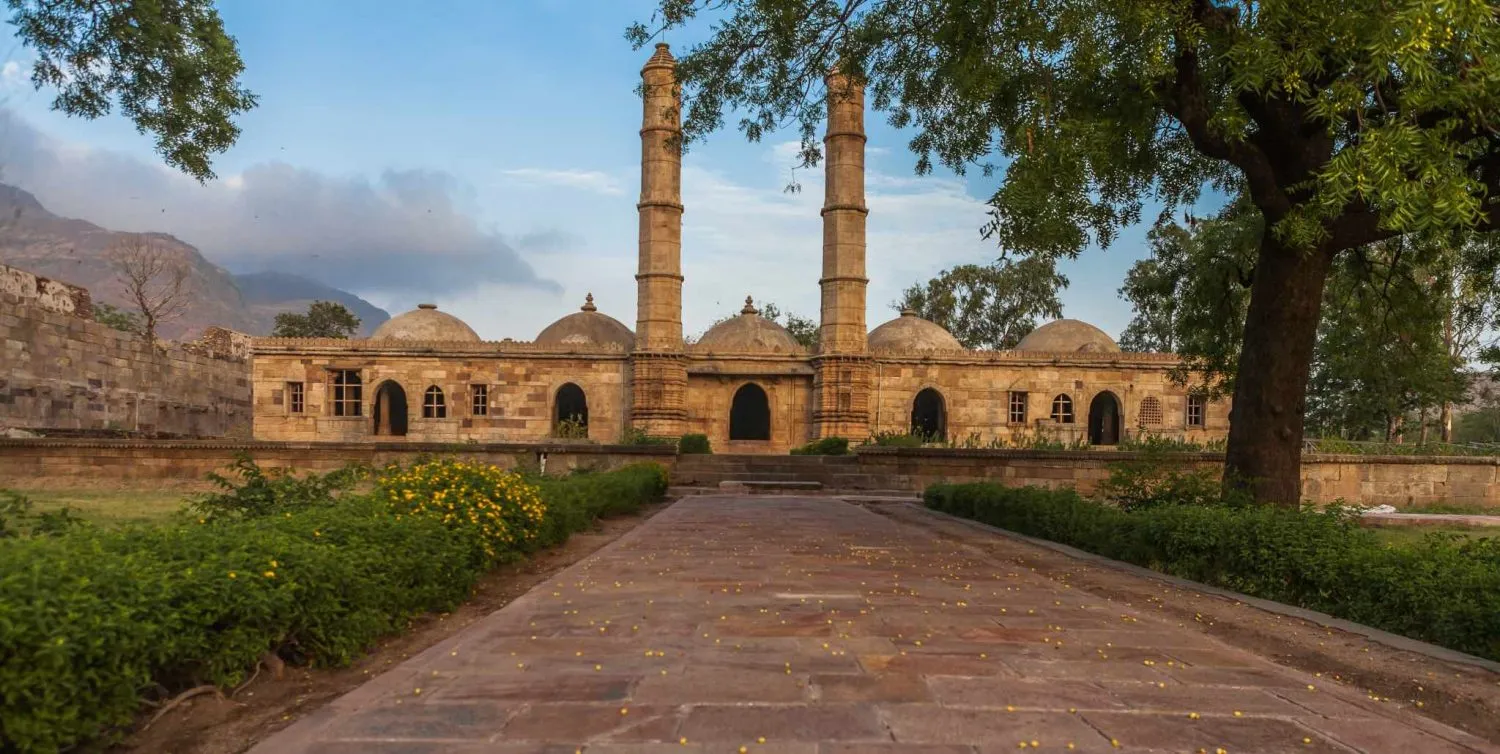
Forty-seven kilometres outside the city of Baroda in Gujarat, is the Champaner-Pavagadh Archaeological Park, a UNESCO world-heritage site, the oldest parts of which were built in the 8th century. Champaner is the 16th century historical city at the centre of the site built by sultan Mahmud Begada of Gujarat. The forts on the hills of Pavagadh surround Champaner. Once the capital of the Gujarat sultanate, before it was moved to Ahmedabad, the site features intricately designed palaces, masjids, mandirs, stepwells and much more. Champaner-Pavagadh is the only complete and unchanged Islamic pre-Mughal city in India, highlighting its historical significance.

Mosque at Champaner. Image CC: Olivier & Pascale Noaillon Jaquet via Flickr.

A fusion of both perceived Islamic and Hindu architecture, in its domes and arches, this site encapsulates the historical context of India prior to imperial rule: cultures defined by regions which incorporated significant aspects of all religions.12

Champaner-Pavagadh today is a pilgrimage destination for Hindus, Muslims and members of other religions, demonstrating how blurred the lines of religion once were in India’s pre-colonial past.  

Hazira Maqbara

Away from the dusty hustle and bustle of the purana shehr, or old town, lies the Hazira Maqbara.It serves as a good example of how Islamic monuments in Gujarat are given little recognition and often overlooked completely. 

Hazira Maqbara

Built in 1586, the monument contains the tomb of Qutubuddin Muhammad Khan, who was the tutor of Jahangir, the son and successor of Akbar. The significance of the mausoleum, as belonging to the teacher of one of the most famous Mughal emperors of all, is barely acknowledged in Gujarati history, let alone recognised in travel guides. For me, the tomb and its surrounding gardens offered a serene experience, that could be described as an ode to the education provided by Qutubuddin Muhammad Khan to the emperor in his lifetime.  

Inside Hazira Maqbara

The mausoleum now seems to be looked after by members of the Ismaili Shia community of Baroda. While visiting, the two men who were acting as ‘guards’ were eager to show us around, perhaps a reflection of the lack of visitors received by this hidden charm of the city. It’s almost ironic that the Hazira Maqbara, a Mughal monument, is even forgotten by the groups who over-emphasise the role of the Mughals in bringing Islam to India.

Laxmi Villas Palace 

Laxmi Villas is the former palace of the Gaekwads of Baroda. The Hindu Gaekwad dynasty ruled the princely state of Baroda from the early 18th century until 1945. Under the rule of Sayajirao Gaekwad III (1875-1939), Baroda was seen as one of the most socially progressive states in India. 

PIX07

Built in 1890, Laxmi Villas embodies the elegant and ostentatious Indo-Saracenic style- a style that was ‘developed’ by colonial architects to combine elements of both Indo-Islamic and ‘traditional’ Indian architecture. The elaborate decoration of the palace leaves no detail untouched; the intricate floral designs on all the arched window frames, mosaics sparkling in gold, and the magnificent Darbar and Hathi(elephant) halls are just some of the delights this palace holds. It also includes gardens designed by William Goldring, a specialist for Kew Gardens, and a miniature train which encircles a mango orchard. Laxmi Villas Palace is an important representation of India’s elite within the context of it’s colonial past, and its inclusion of Islamic elements is significant, in that it acknowledges the presence and contribution of Islam in Gujarat. 

Three different sites, eras and locales; each in its own way represents the long-standing presence of Islam within Gujarat. The lazy attribution of Islam to the Mughals, and the limiting of its contribution in India to the Taj Mahal (though, bizarrely, even this is being challenged), is not difficult to refute- and when invented histories and political narratives (which often politicise monuments) are being used to challenge the rights and existence of minority communities, it must be refuted. In Gujarat, monuments such as Champaner-Pavagadh demonstrate the existence of Islam in India prior to Mughal rule, and the architecture of Laxmi Viilas Palace represents its influence and contribution more than a thousand years since it arrived on the shores of the Indian Ocean.

Footnotes

1 http://tamilnadu-favtourism.blogspot.co.uk/2016/08/palaiya-jumma-palli-kilakarai.html and http://www.heritageonline.in/kilakarai-the-oldest-mosque-in-india/

2 Dunn, Ross E. (2005), The Adventures of Ibn Battuta, University of California Press, p. 245.

3 Riho Isaka, ‘Gujarati Elites and the Construction of a Regional Identity in the Late Nineteenth Century’, in C. Bates (ed.), Beyond Representation.

4 Wink, André (1990). Al-Hind, the making of the Indo-Islamic world (2. ed., amended. ed.). Leiden: E.J. Brill.

5 ʻAbd Allāh Aḥmad Naʻīm (2008). Islam and the Secular State: Negotiating the Future of Shari`a. Harvard University Press. p. 161.

Varadarajan, Siddharth. Gujarat, the making of a tragedy. New Delhi: Penguin Books, 2002.

7 Cohn, B., ‘The Census, Social Structure and Objectification in South Asia’, in B. Cohn (ed.), An Anthropologist Among the Historians (1987).

8 Bayly, C. A. “The Pre-History of ‘Communalism’? Religious Conflict in India, 1700-1860.” Modern Asian Studies 19, no. 2 (1985): p. 177-203.

9 http://www.scmp.com/week-asia/politics/article/2100513/modis-party-stokes-anti-muslim-violence-india-report-says

10 Sumit Sarkar, ‘Indian Nationalism and the Politics of Hindutva’. in Ludden, David (ed.), Contesting the Nation: Religion, Community and the Politics of Democracy in India 

11 Bhattacharya, Neeladri, ‘Myth, History and the Politics of Ramjanmabhumi’, in S. Gopal (ed.), Anatomy of a Confrontation: The Babri Masjid-Ram Janmabhumi Issue. (further reading)

12 Metcalf, T. R., 1994. Ideologies of the Raj. Cambridge: Cambridge University Press.

source: source: http://www.sacredfootsteps.com / Sacred Footsteps.com / Home> Asia / by Sasja Sasha Patel

_________________________________________________________

Sasha Patel

Currently studying History & South Asian Studies (Hindi) at SOAS. Passionate about using the power of history to challenge current political narratives in regards to race & gender. Classical musician who loves reading postcolonial literature & visiting exhibitions. Best travel moment? Journeying through rural Gujarat to the White Salt Desert/ Rann of Kutch, India.

UAE travel group launches Alhind Air – A ‘low-cost airline’ for Indian expats

Kozhikode (Calicut), KERALA / U.A.E :

The group is looking to tap the fast-expanding air traffic between India and the Gulf.

Kerala-based travel service operator Alhind Group with a strong presence in the United Arab Emirates (UAE) is set to launch its airline, aiming to provide economical air travel options for residents.

The group, which has been a significant player in the travel industry for over three decades, has received the Civil Aviation Ministry’s initial nod to start an airline — Alhind Air.

The chairman, Mohammad Haris announced that the Group is in the final stages of obtaining the required approvals.

“Last week, we had a meeting with officials at the Cochin International Airport Limited (CIAL); we submitted all documents required for landing permission at the airport,” he said. “We had earlier received the no objection certificate (NOC) to start the airline. We are hoping to begin operations by January 2025, if not earlier,” said Haris as quoted by Khaleej Times.

Initial operations and fleet

According to the reports, Alhind Air will start its initial operations with three Atr-72 turboprop aircraft, focusing on regional routes in southern India, including connections between Cochin, Bengaluru, Thiruvananthapuram and Chennai with an initial investment of ₹200 crores to ₹500 crores as it adds more planes into the fleet.

“We will have five ATR planes in total to fly on regional routes. We have secured all support from Cochin International Airport for our operations. Once this process is completed, the exercise for hiring pilots, cabin crew, engineers and other ground staff will start, a top official of the group told CNBC-TV18.

The group’s promoter revealed that the Alhind Group offers services including air ticketing, holiday packages, Haj-Umrah services, visas, and money exchange. The group already boasts a turnover of ₹20,000 crore and has a robust sales network that could facilitate the successful launch of the airline.

Pertinently, Alhind Group is one of the leading players in the travel and tourism industry in India and abroad.

The strategic launch into the aviation sector is anticipated to enhance completion, potentially lowering airfares and improving service quality for travellers.

Mohammad Haris stated that the group which is also the General Sales Agent (GSA) for many airlines is looking to tap the fast-expanding air traffic between India and the Gulf.

source: http://www.siasat.com / The Siasat Daily / Home> News> India / by Sayima Ahmad , (Headline edited) / August 22nd, 2024

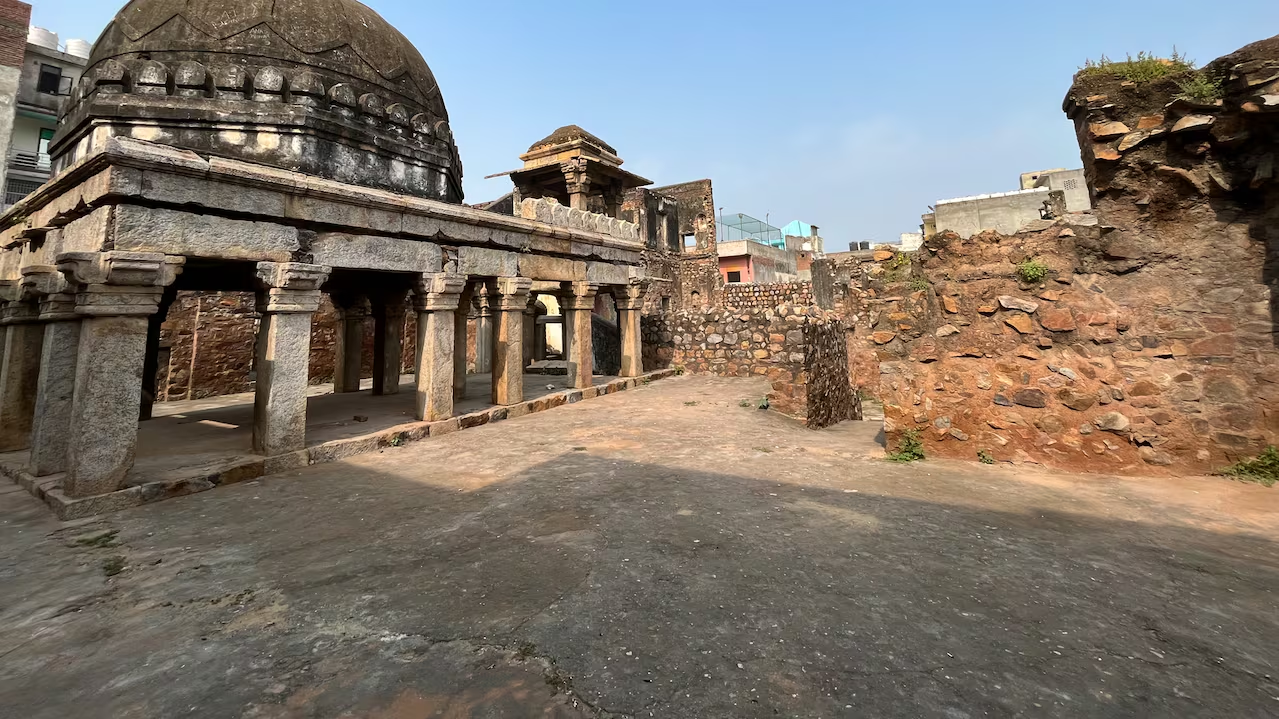
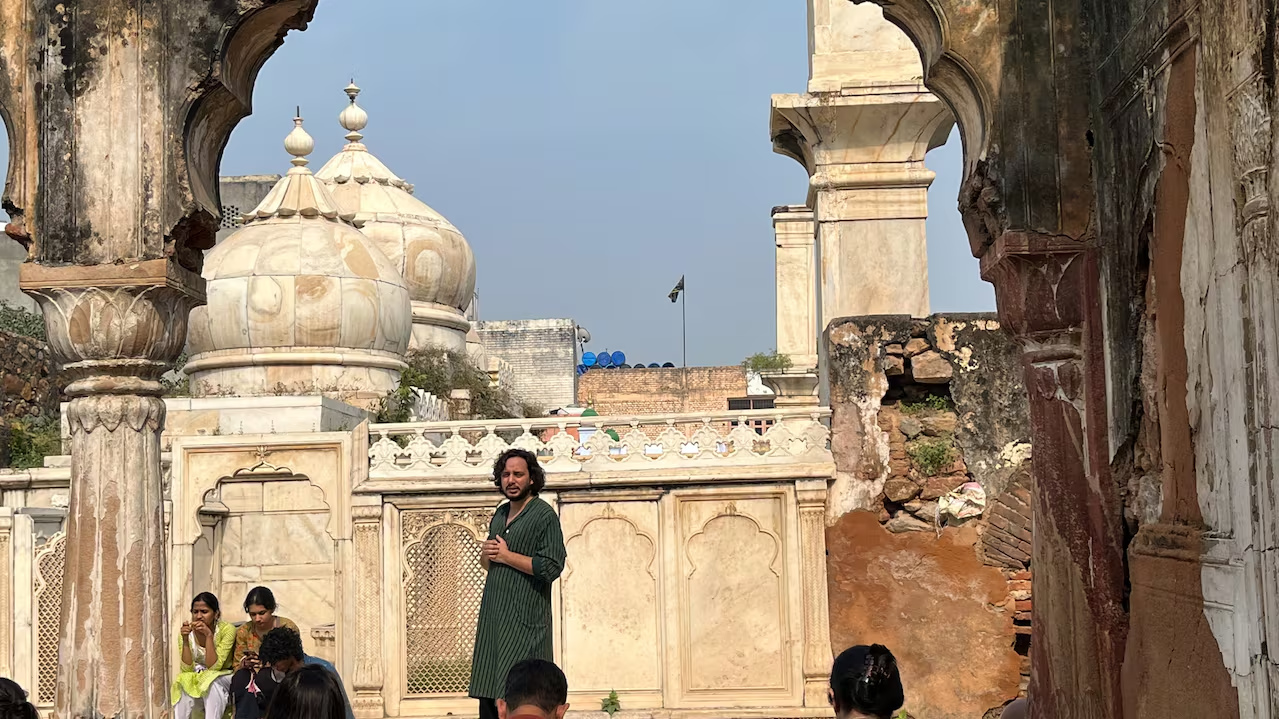
Heritage walks uncover new angles of Indian history

DELHI :

Historians and enthusiasts are taking public education into their own hands to tell the story of the country’s Muslim communities.

Chaotic narrow lanes lined with opulent old mansions, shops selling spices, dried fruits and kebabs, all overhung by dangling power cables – any trip to Old Delhi, a bustling Muslim hub built by Mughal ruler Shah Jahan, is a full sensory experience.

Abu Sufyan weaves through the crowd with about 20 people in tow, making his way through streets smelling of flatbread soaked in ghee, the call to prayer at a nearby mosque mingling with the bells of a Hindu temple.

He is on a mission to change negative perceptions of Muslims by showing visitors more of their history in the capital.

“People in old Delhi were labelled as ‘terrorists’ and ‘pickpockets’ because they were predominantly Muslims from the lower economic background, and Mughal rulers were vilified as cruel invaders, as they were considered the ancestors to Indian Muslims,” Abu Sufyan, 29, says.

“My walks involve the local community members including calligraphers, pigeon racers, cooks and weavers with ancestral links in the Mughal era to showcase old Delhi’s heritage beyond these stereotypes.”

Abu Sufyan is one of a growing crop of enterprising men and women using the medium of heritage walks to educate the Indian public and tourists on the nation’s lesser-known history.

He started his walks in 2016, when hatred against Muslim communities was on the rise after Prime Minister Narendra Modi’s ruling Bharatiya Janata Party introduced several anti-Muslim policies.

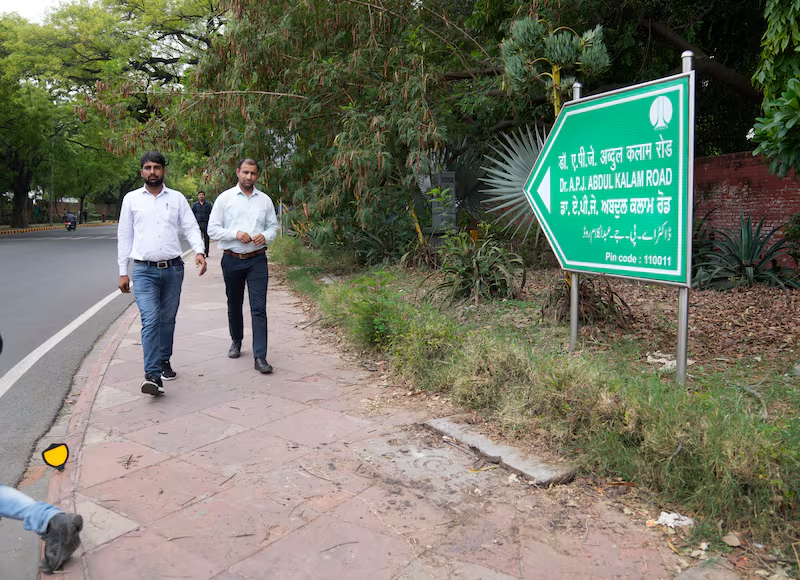
In 2015, a BJP politician urged the local civic body in Delhi to change the name of Aurangzeb Road to APJ Abdul Kalam Road. The civic body immediately obliged, removing the reference to the Mughal ruler from the road by naming it after the former president of India, who was always considered a “patriotic” Muslim.

Later, the 2019 Citizenship (Amendment) Act caused further division, as critics said it could be weaponised against Muslims, who are designated as “foreigners” under the National Register of Citizens.

Occasionally, divisions lead to violence: Thirty-six Muslims were killed in Hindu mob attacks for allegedly trading cattle or consuming beef between May 2015 and December 2018, according to Human Rights Watch.

‘A sense of belonging and togetherness’

Over 2,000 kilometres away in Chennai, documentary filmmaker Kombai S Anwar hosts walks in Triplicane to tell stories of Tamil Muslim history, Tamil Nadu’s pre-Islamic maritime trade links with West Asia, the arrival of Arab traders, Mughal emperor Aurangzeb’s rule, the appointment of a Mughal minister’s son Zulfikhar Ali Khan as the first Nawab of Arcot, and the lives of the subsequent nawab’s descendants.

“Predominantly, non-Muslims participate in these walks because they are ‘curious’ about local Muslims and their heritage. During [Ramadan], they are invited to the historic Nawab Walaja mosque, where they experience the breaking of fast and partake in the iftar meal,” Mr Anwar says.

Tickets for heritage walks across India range between 200 and 5,000 Indian rupees ($2-60).

Historian Narayani Gupta, who conducted heritage walks in Delhi between 1984-1997, said any controversy related to history generates more interest.

“Whether history is right or wrong or good or bad, it has to be backed by research findings,” she said

Saima Jafari, 28, a project manager at an IT firm, who has attended more than 30 heritage walks in the past five years, says it is hard to ignore the historical monuments in the city since they are almost everywhere.

Delhi-based Ms Jafari recalled one of her best experiences was a walk, in 2021, trailing the path of “Phool Waalon Ki Sair”, an annual procession of Delhi florists, who provide sheets of flowers and floral fans at the shrine of Sufi saint Qutbuddin Bakhtiyar Kaki and floral fans and a canopy at the ancient Hindu temple of Devi Yogmaya in Mehrauli.

“When I walked along with others in that heritage walk, I realised that heritage enthusiasts across religion walk together in harmony,” Ms Jafari says.

“One of the best parts of heritage walks is the storytelling that connects places with lives of people of a certain period. Plus, it always gives a sense of belonging and togetherness.”

Anoushka Jain, 28, a postgraduate in history and founder of heritage and research organisation Enroute Indian History, which holds walks to explore the erstwhile “kothas (brothels),” and “attariyas (terraces)” of old Delhi, said during pandemic lockdowns, posts on Instagram helped sparked interest.

“Before the pandemic, barely 40 people participated in two weekly walks as opposed to 50 in each of the four weekly walks which we conduct now,” she says.

But it is not all smooth sailing.

Ms Jain says some people feel uncomfortable when they are given historical facts and research that show Hindu and Jain temples constructed by Rajput rulers were repurposed during the rule of Delhi Sultanate, Qutb ud-Din Aibak.

Iftekhar Ahsan, 41, chief executive of Calcutta Walks and Calcutta Bungalow, adds that sometimes, participants come with preconceived notions that Muslims “destroyed” India for more 1,000 years – but walk leaders hold open conversations to “cut through the clutter” with authentic information.

For some, heritage walks often change perceptions.

“Until I visited mosques in old Delhi during a walk, I didn’t know that women were allowed inside mosques,” law student Sandhya Jain told The National.

But history enthusiast Sohail Hashmi, who started leading heritage walks in Delhi 16 years ago, cautions that some walk leaders present popular tales as historical fact.

A mansion called Khazanchi ki Haveli in old Delhi’s Dariba Kalan is presented as the Palace of the Treasurer of the Mughals by some walk leaders, Mr Hashmi says. The Mughals, however, were virtual pensioners of the Marathas – Marathi-speaking warrior group mostly from what is now the western state of Maharashtra – and later the British and had no treasures left by the time the mansion was built in the late 18th or early 19th century.

Another walk leader had photo-copied an 1850 map of Shahjahanabad, now old Delhi, passing it off as his own research, he adds.

“The walk leaders must be well-read and responsible enough to ensure that the myths are debunked,” Mr Hashmi says.

source: http://www.thenationalnews.com / The National / Home> International Edition> World> Asia / by Sonia Sarkar / June 01st, 2023

Assam highway tomb of freedom fighter Baga Maulvi is shrine of harmony

Marai Village, Siphajr (Darang District) , ASSAM :

Inside the shrine of Baga Baba

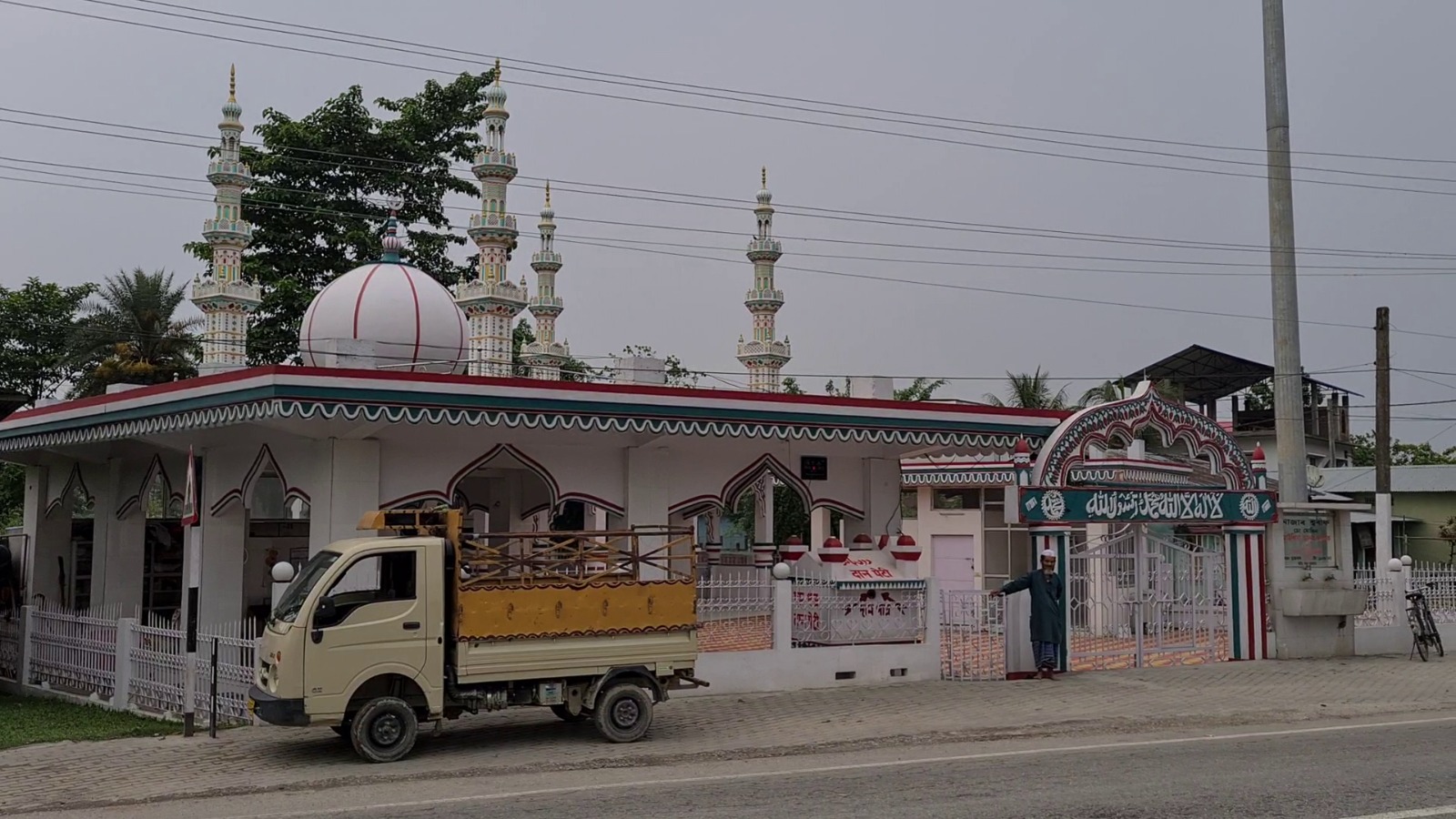
As National Highway-15 traverses through the village Marai of the Darang district in northern Assam, travellers see a shrine that commands the devotion and reverence of both Hindus and Muslims.

This is the shrine of Baba Baga which is visited by people of all faiths, and is especially popular among travelers who have taken the NH-15. Trucks and buses that come from far and wide stop here to offer prayers and make donations. All passenger buses and goods trucks stop here as the shrine management has kept drinking water available.

Baga Baba was born as Abdul Khaleque. He came to Assam in 1916 from the then Sylhet district (now in Bangladesh). Initially, he lived in Gog, Satsali, and Badalguri and finally settled down in Marai village of Sipajhar in 1919.

The shrine of Baga Baba in village Marai 

From there, he launched his mission of spreading Islam in the greater Darang district.  The Sufi cleric also joined the Indian freedom movement; he was also jailed.

Baga Baba died in 1933 and the locals raised a mausoleum (mazar) on his grave.

Speaking with Awaz-The Voice, Hafiz Ali, secretary of Baga Baba Mazar, said: “The cleric lit the torch of Islam here. Along with preaching the religion, he also spread the message of peace, harmony, and brotherhood. Then he sent Maulana Didaruddin Saheb to be educated as a maulana. Everybody believes Baga Baba to be an Auliya (master of some divine power) of Allah. Hindus and Muslims alike come here and pray.

“At present, people from all over Assam and India who travel through this highway donate at this mazar. Today the village has nine mosques. The inflow of people and pilgrims has increased over the years. Hindus and Muslims have equally contributed to it.

Drinking water facility at the shrine for travellers

The construction work of the mazar was initiated by former president Jiban Baruah. There are still many non-Muslims, such as Bhumidhar Saharia, Himanshu Kalita, and others, in the management committee of the Mazar,” he said.

The shrine hosts Milad sharif every Thursday of the week. In addition, a Urs is held every year on 12 of Magh (late January), the death anniversary of Baga Baba. People from different parts of India participate in the Urs. Although the Baga Baba Mazar is located on the northern side of NH 15, there is also a premises of the Mazar on the southern side of the road.

It is worth mentioning that the Baga Baba Mazar has played a significant role in maintaining Hindu-Muslim unity and harmony in the entire Darang district as well as in the greater Marai Bijulibari area.

source: http://www.awazthevoice.in / Awaz, The Voice / Home> Story / by Ariful Islam, Sipajhar / June 25th, 2024

Book Review | Salim Ali: An unlikely beginning, a great end

Mumbai, MAHARASHTRA :

It’s the author’s well-founded belief that Salim Ali’s life offers today’s children a role model.

Here’s hope for those young people who are mediocre with mathematics and other studies, and likely to be uninterested in business. Salim (pronounced Saalim, not Saleem) Ali’s interest in birds began to awaken when he shot a male sparrow, standing guard over its mate’s nest, with an air rifle. Next morning he found that another male sparrow had taken its place, and he shot that too… This went on until he had shot eight male sparrows, and then wonderment took the place of whatever had urged him to shoot those sparrows. This wonderment gave his life a foundation of incredible strength. It enabled him to survive the loss of several salaried jobs, and, later, the loss of Tehmina, his wife, who, throughout their 21 years together, supported his efforts wholeheartedly.

This book is his life story, told simply, and for children. It’s the author’s well-founded belief that Salim Ali’s life offers today’s children a role model.

The author makes no effort to sugar-coat the story. Salim’s initial difficulties with academics are covered in some detail, as well as mediocre performance in school, and his inability, found in many others of his extended family, to run a business successfully. This mediocrity at school had nothing to with his powers of observation, though. For example, it was known that the houbara bustard he saw in Sind (now in Pakistan), under normal hot and dry conditions, has a colour that affords perfect camouflage, enabling it to hide easily in the sand. Salim discovered, however, that the bustard’s colour changes in the rains, enabling it to hide in wet sand as well!

Also included is the story of Salim’s relationship with Colonel Richard Meinertzhagen, a former British Intelligence officer. The Colonel’s claims to being a hero might have been authentic, but his claims as an ornithologist were proven false in the 1990s, decades after his death. It illustrates Salim’s naivete with people, but also warns youngsters of the possibility of charlatanry in science.

My favourite story, though, is about Salim’s encounter with a bandit in the summer of 1945. Near the Tibetan border, poking around among the bushes, he saw a bandit armed with a dagger and a rifle. Escape was impossible, so he resorted to a ruse. He had a collapsible chair, a small folding seat on a stick. He pretended that the stick was a rifle barrel, and clicked the folding seat open to give the impression that he was loading and cocking his own rifle. It worked, for the bandit fled.

So here’s proof that commitment, integrity, and hard work — combined with observation, quick thinking, and luck — will get you where a great academic background won’t. A terrific lesson for youngsters, and packaged well, to boot.

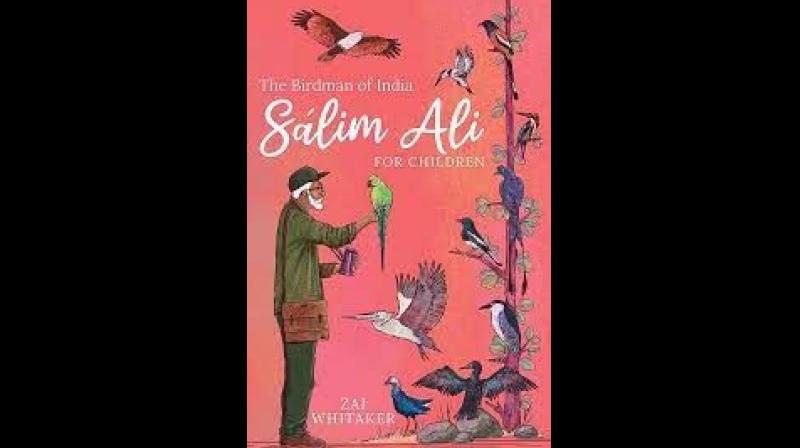
The Bird Man of India: Salim Ali for Children

By Zai Whitaker / Hachette / pp. 142; Rs 350

source: http://www.asianage.com / Asian Age / Home> Books / by Shashi Warrier / August 27th, 2023

Hyderabad Siblings Launch India’s First All-Women Taxi Bike Service

Hyderabad, TELANGANA :

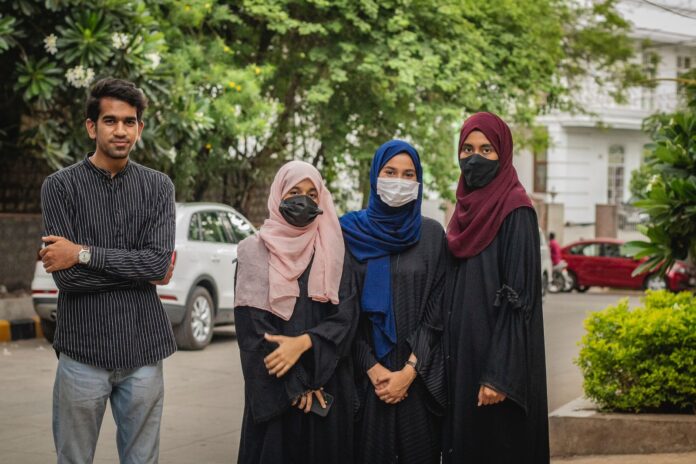
Founders of Dovely

Hyderabad: 

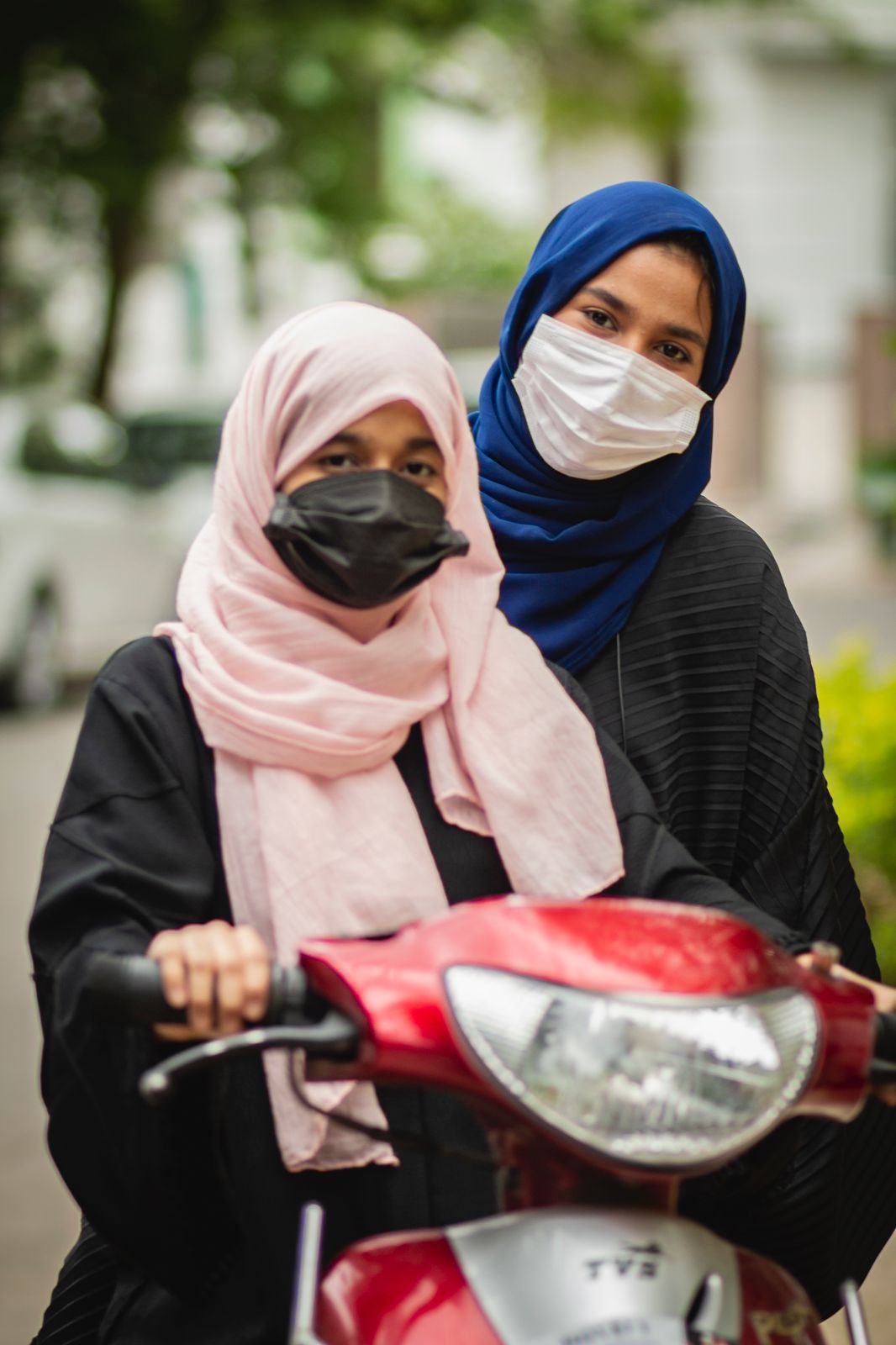
“It was while commuting to college that I began exploring ideas for safe travel for women after personally facing security issues. I researched extensively to find a way for women to commute without harassment and inconveniences,” said Zainab Khatoon, one of the founders of Dovely — India’s only bike taxi service for women, driven by women.

Zainab, along with her friend Masarrat and her siblings Obaidullah Khan and Uzma Khatoon, deliberated extensively and came up with the idea of running taxi bikes for women, where both the passengers and the service providers are women. Together they founded an app (Dovely) to cater to women and girls who want to travel safely in the city.

“‘DOVE’ is a bird, which represents peace and harmony, and ‘LY’ stands for ladies,” shared another founder, Uzma.

They launched the app on June 15, 2022, initially with very few users. However, they now have around 80-100 riders registered, with 20-25 working as full-fledged riders.

Zainab, who heads the company, personally interviews every candidate to ensure they have a valid license and can navigate Hyderabad’s busy streets. Their riding skills are also tested by a team of experts.

“All of the women who are registered with us share the same concern for women’s safety. Besides, they see this as an opportunity to earn income,” explained Zainab.

Most registered bikers are young women aged 18-50. Some are single mothers, seeking to support their families, while others are students — earning pocket money. Their passengers include working women, students and middle-aged women visiting relatives or doctors.

The initial stages were challenging, as many Hyderabad residents were unaccustomed to seeing women bikers, especially those wearing burqa (veil). Some questioned the young bikers why they needed to earn money by becoming drivers when there were other job opportunities. They perhaps overlooked the fact that many girls are passionate about riding.

“Once a woman passenger books a ride with Dovely, she often becomes a regular customer and subscribes to the app,” claimed Zainab.

“Many aunties give us lots of duas (blessings) after we drop them safely at their destination,” she said.

Uzma Khatoon, Zainab’s sister and co-founder of the firm, shared, “I am humbled to be part of many women’s stories and want to help them fulfill their passion through Dovely.”

One young woman, Tasneem (name changed), shared that she tried working with other delivery platforms but quit on the first day because she had to deal mainly with men. She said she feels safe and comfortable working with Dovely.

The founders claimed they get compliments for contributing to a safe commuting experience for ladies. “This feedback from our passengers and partners keeps us going. The feeling that we are empowering women in our own way and ensuring that at least 100 women travel safely every day makes us happy,” said Zainab.

A member of the Dovely team monitors rides, tracking the live location from pick-up to drop-off. However, some women are also unhappy due to the limited number of drivers and busy schedules. The Dovely team hopes to resolve this issue as they recruit more women drivers.

Currently, it provides services through WhatsApp and plans to launch the app on the Play Store after achieving the target of over 200 rides. The app is still being developed, and the four founders are funding their venture — taking baby steps for now.

Dovely operates at ‘zero’ commission, unlike other service providers — who charge drivers. The team feels they have a long way to go.

Currently, services run until 8:30 pm, but they may extend the time if more safety measures are in place for women commuting at night. In the future, they plan to expand to auto-rickshaws and cabs, all managed by women. They also aim to handle transport and logistics led by women.

The Dovely team is driven by the passion to empower women.

source: http://www.twocircles.net / TwoCircles.net / Home> Indian Muslim / by Nikhat Fatima, TwoCircles.net / June 03rd, 2024

Imran Siddiqui honoured with Sanctuary Wildlife Service Award 2018

TELANGANA:

Mumbai:

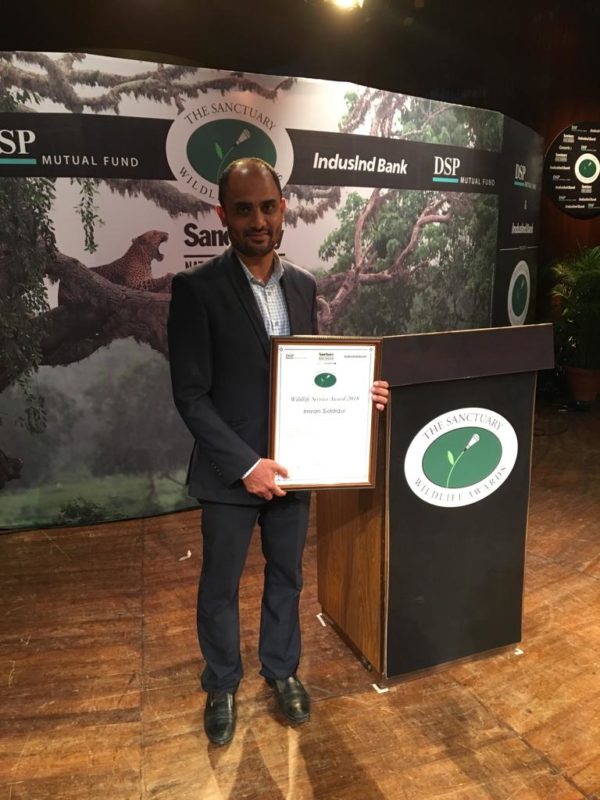
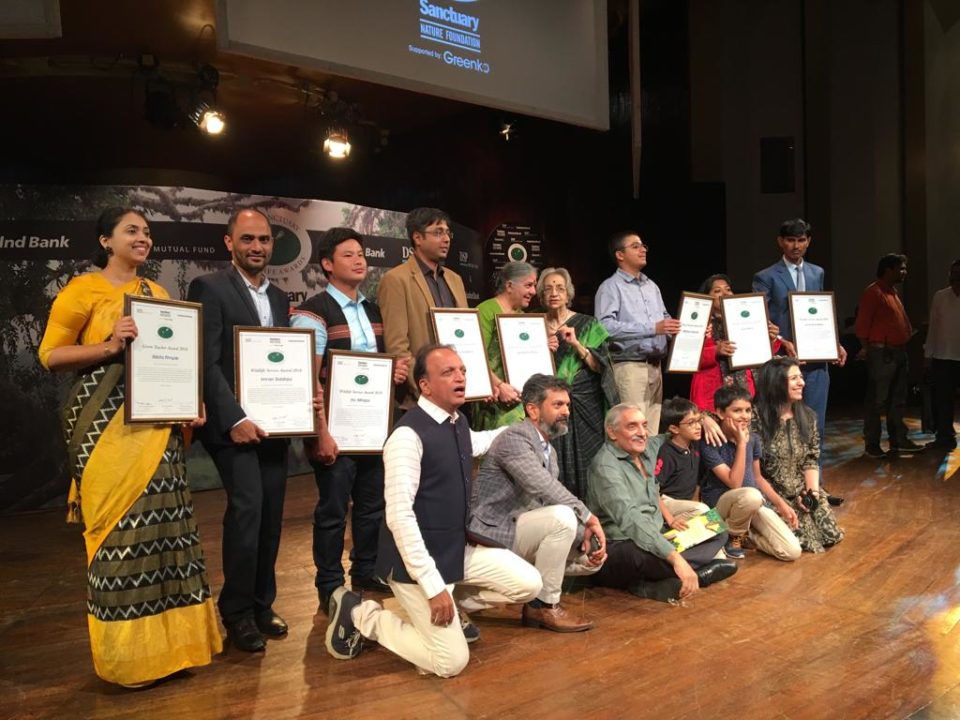
Imran Siddiqui of the Wildlife Conservation Society – India has been honoured with the prestigious Sanctuary Wildlife Service Award 2018.

Imran Siddiqui has come a long way from raising and selling poultry to fund his wildlife obsession.

He is now on the Telangana State Board for Wildlife and works as an external expert for tiger monitoring in Andhra Pradesh and Telangana. He is also the Assistant Director for Conservation Science at WCS-India, and the co-founder of the Hyderabad Tiger Conservation Society (HyTiCoS).

As his life and work reveal, Imran has no respect for man-made boundaries, much like the wildlife he’s so obsessed with. Traversing the rugged landscapes of Kawal, Amrabad and Nagarjunsagar-Srisailam Tiger Reserves and the Gundlabramheswaram Sanctuary, he works in tandem with state forest departments and local communities. His work covers 10,000 sq km of wilderness in Telangana and Andhra Pradesh, with his crew comprising over 35 field staff, 300 volunteers and hundreds of supporters.

Taking a cue from the success of WCS-India in Karnataka and extending it to the neighbouring states of Andhra Pradesh and Telangana, he leads scientific surveys on prey analysis and occupancy surveys on mammals.

He also helps in management planning, engages in snare removal drives, initiates voluntary relocation programmes for forest dwellers, facilitates capacity building workshops for the forest department and influences policy through public interest litigations, high-level committees, community engagement, strong advocacy and creating political will on wildlife.

His efforts have resulted in the speedy disbursal of compensation, besides the initiation of relocation of landless tribals who live within the two tiger reserves of Kawal and Amrabad.

Imran is also largely credited for the declaration of the Kawal Tiger Reserve (where he conducted the fieldwork for his Masters dissertation). For this he had to lobby relentlessly at the political level as well as work tirelessly on the ground to counter misinformation spread by vested interests, and finally win the support of local communities.

A tenacious man on the field and a convincing man in the boardroom, Imran Siddiqui is in no small way responsible for the revival of tigers in this vast but obscure landscape.

The Sanctuary Wildlife Service Award 2018 is a testimony of his untiring efforts to save wildlife and wild places.

source: http://www.india.wcs.org / WCS – Wildlife Conservation Society / Home>News> Current Articles>Archive / by WCS India / December 07th, 2018

A mahal called farangi: A story from another time, of another Lucknow almost forgotten

Lucknow, UTTAR PRADESH:

The Telegraph visits the haveli where the Khilafat and Non-Cooperation movements came to be mergedThe Telegraph visits the haveli where the Khilafat and Non-Cooperation movements came to be merged.

Farangi Mahal in Lucknow. / Photo courtesy: Adnan Abdul Wali

Stepping into Farangi Mahal in Lucknow after skirting rows of low-priced chikankari salwar kameez shops and their steady din is somewhat like stepping into the stillness of a forest after having left a busy city. Only, Farangi Mahal is anything but a forest. It is a cluster of buildings that hold within them a bit of history that has been almost forgotten, as the past often is in India, obscured by new settlements or construction, or billboards, if not demolished altogether.

In Farangi Mahal the past is difficult to see also because of the turn Indian politics has taken.

I am part of a group from Calcutta visiting Lucknow last October.

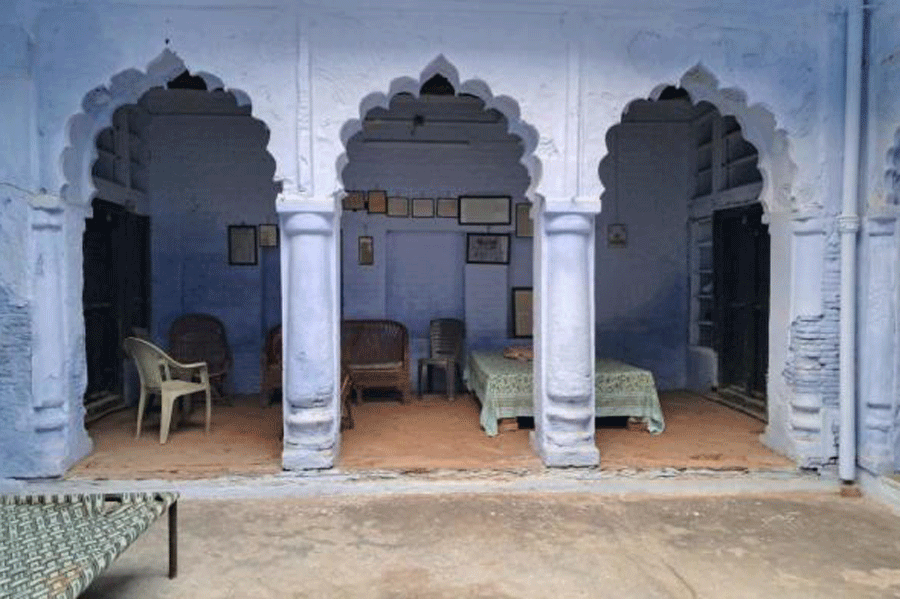
Inside Farangi Mahal, located in the old neighbourhood of Chowk, we enter its elegant and serene courtyard. The lime-and-mortar white exterior is tinged with a blue, peeling off in places. The afternoon sun slants down on the pillared arches and the exposed bricks but does not take away from the fragile beauty of the structure.

Adnan Abdul Wali, a member of the family that owns the house, the Farangi Mahalis, ushers us into the courtyard. His Urdu and Hindi are as impeccable as his courtesy. He is a direct descendant of Maulana Abdul Bari Farangi Mahali, who was a leader of the Khilafat Movement.

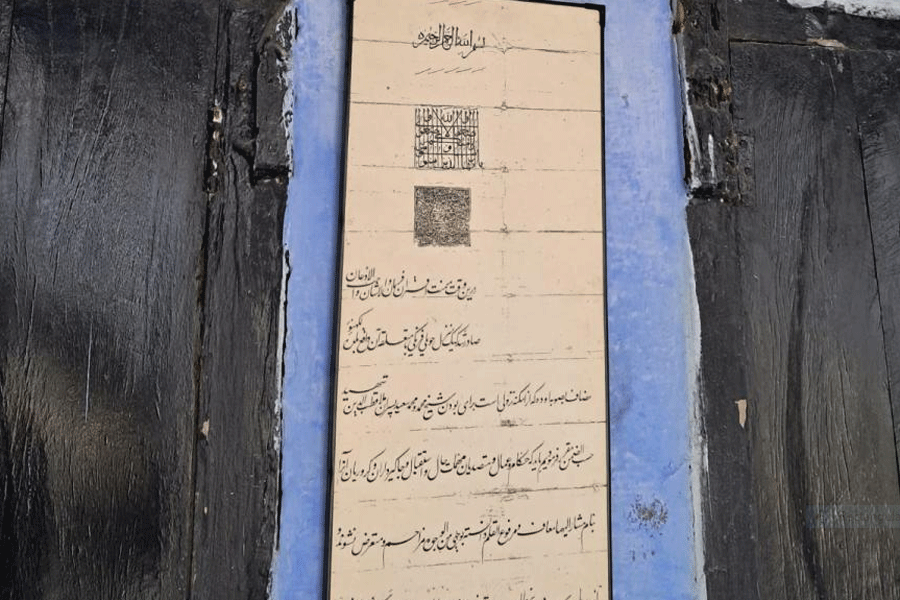
Farangi Mahal’s story, however, goes back beyond the nawabs and the British. It was occupied by French merchants during the rule of Mughal emperor Aurangzeb and that is how it got its name. The merchants, owing to some offence, lost the property and Aurangzeb gave it to Abdul Bari’s ancestors, who needed a safe haven.

The farman issued by Mughal emperor Aurangzeb decreeing that Bari’s ancestors could live here / Photo courtesy: Adnan Abdul Wali

“The Khilafat movement started from here,” says Wali. Farangi Mahal is where the idea of joining the Khilafat Movement and the Non-Cooperation Movement was born and Abdul Bari was the architect of the plan. It was a glorious moment of Hindu-Muslim unity in Indian history and Lucknow played its part in it.

Abdul Bari, an eminent religious scholar who belonged to the tradition of highly respected scholars from his family, was also an astute politician. He had travelled across many Muslim countries and was acutely aware of the impact of British imperialism on the Islamic world.

In March 1919 came the Rowlatt Act, which was to be followed by the horrors of the Jallianwala Bagh massacre in April 1919, one of the events that would lead Mahatma Gandhi to launch the Non-Cooperation Movement. Before that happened, a large number of Muslims in India were already disturbed by the threat of the dismemberment of the Ottoman Empire in Turkey following World War I and the jeopardised future of the Caliph, the Ottoman head of state, who is nominally the supreme religious and political leader of Sunni Muslims across the world. Turkey had been defeated by the Allied Forces, which included the British.

Adnan Abdul Wali, a direct descendant of Abdul Bari and the family that owns the house. / Photo courtesy: Adnan Abdul Wali

Abdul Bari was convinced that in India, Muslims needed to be made aware that the fate of the Ottoman Empire was their religious concern — and the articulation of the Khilafat (Caliphate) cause needed a larger, national platform.

From around 1919, Abdul Bari was raising support in the countryside, says Francis Robinson, a historian who specialises in Islam in South Asia. Abdul Bari had founded a newspaper for the purpose. But more importantly, he wanted to woo Gandhi to the Khilafat struggle.

Gandhi came to stay in Farangi Mahal for the first time in March 1919 and within six months, Abdul Bari had won him over, says Robinson. This also led to a period of a very special friendship between the two men, which was rooted not only in a common political cause but also shared spiritual beliefs and a love for mysticism, as embodied in Sufi philosophy.

Politically, the campaign for Khilafat and Gandhi’s stamp on it saw Abdul Bari reaching the height of his influence during 1919 and 1920.

Abdul Bari and his Farangi Mahal relatives, with the help of the lawyer Chaudhri Khaliquzzaman, drew up the constitution of the All-India Central Khilafat Committee, says Robinson. “He devoted enormous effort first to persuade the Khilafat Committee to adopt non-cooperation as a policy and second, at the Allahabad meetings in June (1920), in persuading the committee to accept Gandhi as chair of the group that was to put non-cooperation into action,” adds Robinson.

From then on till September 1920, Abdul Bari successfully campaigned to organise a significant Muslim presence at the Calcutta Special Congress, which was held from September 4 to 9, 1920. The session passed the resolution of the Non-Cooperation Movement with a demand for Swaraj. The Khilafat Committee and the Congress came together with non-cooperation as the common goal.

After March 1919, Gandhi stayed at Farangi Mahal three times, recounts Wali proudly. Other leaders such as Jawaharlal Nehru, Maulana Abul Kalam Azad and Sarojini Naidu stayed here as well. During Gandhi’s second visit, in September 1919, Muslims in the area abstained from cow slaughter during Bakrid as a mark of respect to Gandhi and appreciation for his support to the Khilafat cause. “Abdul Bari had requested Muslim families to make the gesture,” says Wali.

This was somewhat different from the recent celebration of November 25 as No Non-Veg Day by the BJP government in Uttar Pradesh. The announcement was made to honour the birth anniversary of Sadhu T.L. Vaswani and slaughterhouses and meat shops were required to remain closed that day. There is a world of difference between giving up meat voluntarily and being forced to do so, as there is between non-violence and violence. But such distinctions perhaps do not make much sense anymore in Lucknow, once the capital of nawab-ruled Oudh, now ruled by the BJP with Yogi Adityanath at its helm. Like the No Non-Veg Day, the city has several streets and institutions named after lesser-known Hindu saints.

Abdul Bari is said to have introduced Gandhi to the sufi saint Bakhtiyar Kaki, disciple and successor to Moinuddin Chishti. Three days before his death, Gandhi delivered his last public address at the shrine of Bakhtiyar Kaki in Mehrauli.

Abdul Bari had earlier invited Gandhi to Ajmer, where Chishti is enshrined. At Ajmer Sharif Dargah, Gandhi is said to have experienced his first qawwali on Chishti. It was there that he asked Abdul Bari about Bakhtiyar Kaki. He had first visited Ajmer Sharif in 1921 and would visit it again.

In 1922, after the Chauri Chaura incident, Gandhi withdrew the Non-Cooperation Movement. Abdul Bari did not relent; he was not sparing of Gandhi either, says Robinson, but one has to remember his politics was primarily religious in inspiration. His influence declined steadily from this time and he died in 1926, a disappointed man, according to Robinson.

His name is often seen missing now from the roll call of prominent Khilafat leaders.

And yet Abdul Bari was not only a politician but also an eminent educator, Wali reminds. His ancestors had established a madrasah that became well-known all over the Islamic world and had introduced a syllabus, Dars-e-Nazami, which became a much-respected system of learning.

As a revered teacher in his family tradition, Abdul Bari introduced major changes to the curriculum by stressing the learning of Western sciences and discouraging rote learning.

Wali breaks down. It is very difficult to reconcile the present with the past, he says. Lucknow was never a utopia; communal riots had broken out here around the time of Gandhi’s visits to Farangi Mahal. But now the very fabric of society has changed, he feels. He reads from an Urdu book, and though the meaning of the words remains elusive, the music lingers. Farangi Mahal, with Wali bent over his book, look almost unreal.

But Farangi Mahal still stands, held up by its ancient, sturdy, flat bricks, and memory. Some things stay.

source: http://www.telegraphindia.com / The Telegraph Online / Home> Culture / by Chandrima S Bhattacharya / January 07th, 2024

Dubai: Indian expat chronicles hometown’s history in new book

Amroha, UTTAR PRADESH / Dubai, U.A.E.:

It is the first detailed account of the Indian city of Amroha in English.

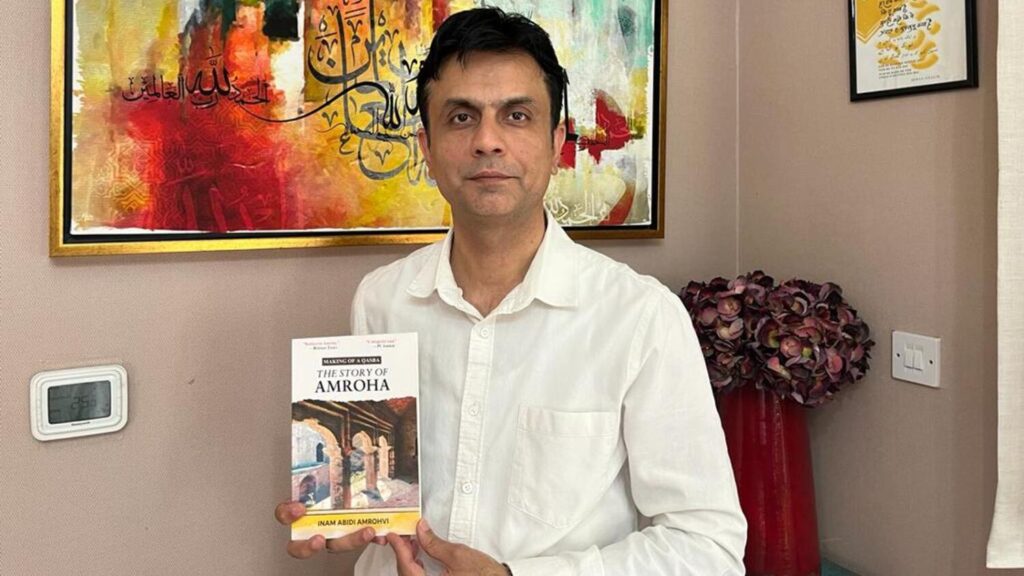
Supplied photo


Inam Abidi, a Dubai resident since 2006, wears two hats with equal passion — one as a cloud consultant by profession, and the other as a writer at heart.

His journey as an author reached its culmination earlier this year with the publication of his first book, Making of a Qasba: The Story of Amroha. This achievement marked the realisation of a long-held dream that had been nurtured since his college days.

The book, painstakingly researched over three years, stands as the first comprehensive historical account of the city of Amroha presented in the English language.

Amroha, Inam’s hometown, is situated in the northern Indian state of Uttar Pradesh, renowned for its association with luminaries like Kamal Amrohvi, Jaun Elia, Sadequain, and Jai Krishna Agarwal.

The Qasba of Amroha holds a distinguished status as a prominent Sufi centre, steeped in history and tradition.

Inam said the idea of the book first struck him 2015 when he was researching for an article about Amroha, with the intention of acquainting his children with their ancestral heritage.

“I looked up everywhere, but couldn’t find much in English,” he recalled. “It was then that I recognised the significant gap in English accounts detailing the city’s rich history. This realisation spurred me to delve into the project of writing a book.”

Over the years, Inam made multiple visits to Amroha, which his family had left in the 1970s when they moved to Lucknow. He engaged in meetings with individuals well-acquainted with the city’s heritage, scoured through a multitude of books in various languages including Urdu, Persian, Hindi, and English, and examined numerous YouTube videos.

Along this journey, he encountered a variety of people, from a former senior government official who initially believed he was co-writing the book and subsequently ceased communication when he learned otherwise, to a rickshaw puller who went out of his way to capture images of historical sites within the city and shared them with Inam.

Regarding the most gratifying part of his experience, Inam shared, “I stumbled upon a rare painting of Amroha and became curious about the artist behind it. It turned out he was also a resident of Lucknow. Meeting Jai Krishna Agarwal, a renowned Indian printmaker from Amroha, was a privilege. Despite being in his 80s, he had vivid memories of the city to share with me.”

In the world of historical accounts, Inam knew controversies were common. He stated, “As a researcher, one grapples with conflicting accounts and the biases of the ruling elite. It’s also challenging to assess past events with contemporary knowledge.”

Inam’s perspective on technology and history is insightful. He believes that technology streamlines the present and prepares us for the future, while history teaches us invaluable lessons from the past.

One aspect that tinges Inam’s achievement with sadness is the loss of his father, who passed away a year before the book’s publication. He reflected, “My father would have been elated.”

source: http://www.khaleejtimes.com / Khaleej Times / Home> Lifestyle> Books / by Mazhar Farooqui / October 27th, 2023