Category Archives: Uncategorized

Jamaluddin Abdullah, My Teacher and Mentor, Passes Away

Malegaon, MAHARASHTRA :

Jamaluddin Abdullah, my teacher and mentor who was revered by his students as Jamaluddin Sir, passed away in Malegaon Tuesday November 18, 2025
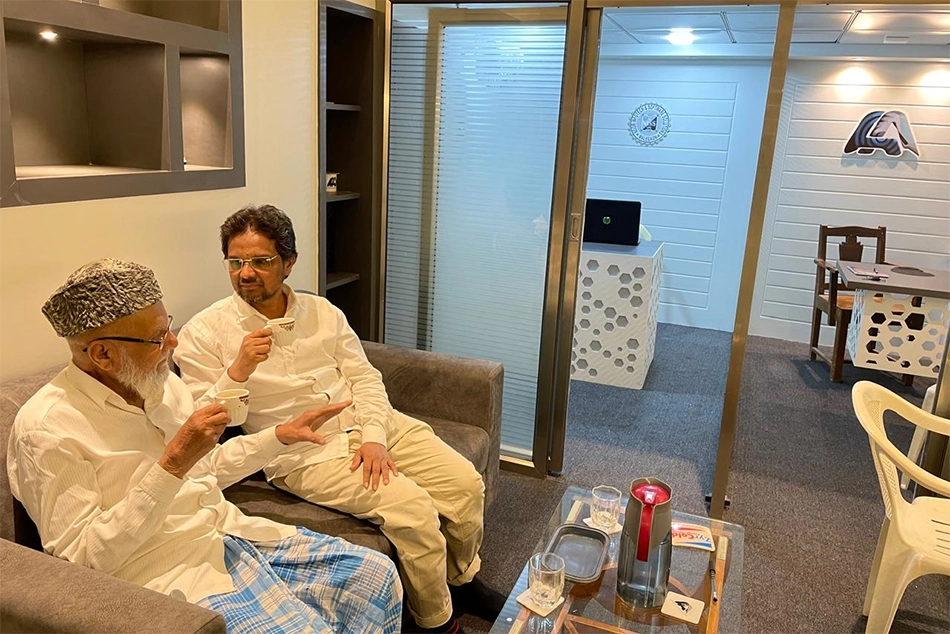
[Jamaluddin Sir with the writer at ummid.com office (Photo: ummid.com)]

Malegaon: 

Jamaluddin Abdullah, my teacher and mentor who was revered by his students as Jamaluddin Sir, passed away in Malegaon Tuesday November 18, 2025.

He was 82, and is survived by three sons and four daughters.

Jamaluddin Sir was ailing since last few years and passed away around 10:00 AM Tuesday. He was buried in the afternoon at the Bada Qabristan in Malegaon in the presence of hundreds of his students, former colleagues, friends and family members.

“One of the Best Teachers”

Jamaluddin Sir was one of the finest teachers of Social Science. Geography is considered as a boring subject for a good majority. However, Jamaluddin Sir had a special skill and unique style of making the subject fascinating.

He retired from A.T.T. High School, the oldest school of Malegaon, in 2002-03 as Assistant Head Master.

“Oh! Jamaluddin Sir? He was a teacher of class!” This was Ayaz Gulshan’s immediate response about Jamaluddin Sir when he was told he is no more.

Sajid Nadir and other students agreed.

“He was one of the best teachers we had”, Sajid Nadir told ummid.com after hearing the sad demise of Jamaluddin Sir.

“He had a good memory even while he was ailing and suffering from various health issues”, Sajid said.

Sajid said he had visited him six months ago with some other students to invite him for a felicitation event organized.

“He asked us to invite this and that teacher, surprisingly listing them all name by name”, he said.

“Jamaluddin Sir also taught English language in lower classes where too he left ever lasting mark on his students because of his unique style of teaching”, Shahid Faizee, my younger broher and one of his students, remembered.

Paying tribute to Jamaluddin Sir, his retired colleague, Mohd Ismail Sir, praised his devotion and dedication to the teaching profession.

“He was one of those teachers who were devoted and enormously dedicated to the teaching profession”, he said.

Maulana Naeemuz Zafar Milli, who was appointed as Arabic Teacher at A.T.T. High School, said since he came from a Madrasa background, the daily school routine work was a tedious job for him.

“But, Jamaluddin Sir was always there to help me out”, he said.

Jamaluddin Sir and Me

I began my education at a Municipal Primary School and was doing remarkably well. I was in the 4th standard when – along with my elder brother, cousin and uncle, I was shifted to Jamia Muhammadia Mansoora. But, we had to discontinue – suddenly and in the middle of the academic year, our education at Jamia Muhammadia Mansoora after three years. Our academic activities were totally disturbed because of the sudden change. We were in dark and unsure how to deal with the situation.

It was then that Jamaluddin Sir came as a savior.
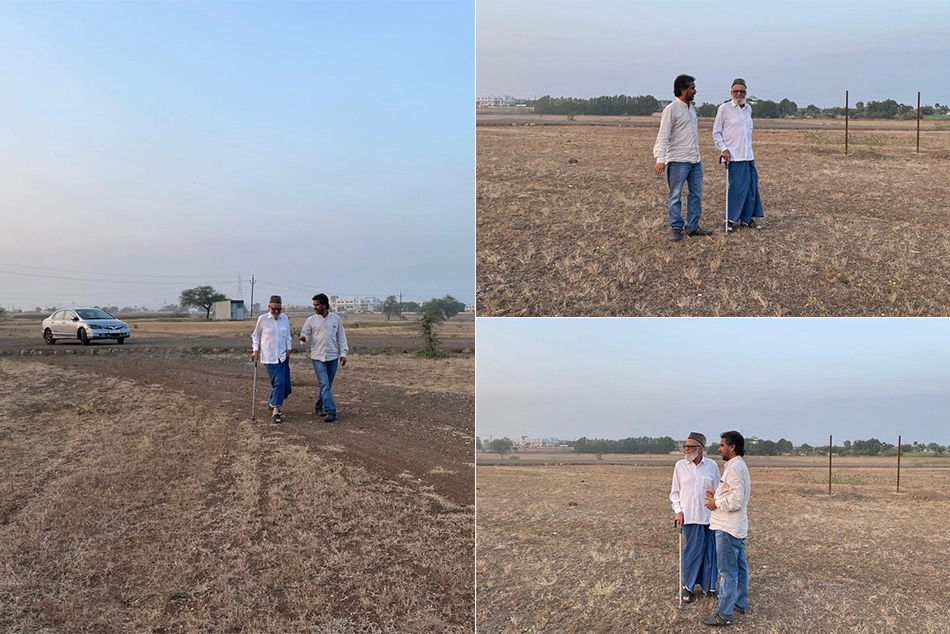
[Jamaluddin Sir inspecting the land where SEWA Educational Campus is coming soon. (Photo: ummid.com)]

Jamaluddin Sir was my father’s closest friend. They were actually three – Jamaluddin Sir, Dr Haroon Firdausi and my father Mohd Anwer Faizee. Their friendship is cited as an example in Malegaon even today.

Because of the strong bond between the trio, they had a special affinity for me also. Dr Haroon Firdausi lived in Kuwait for more than 20 years. He used to regularly write letters for my father and Jamaluddin Sir. Interestingly, he would write common letters for Jamaluddin Sir and my father. But, in the envelope, a small piece written for me was part and partial, even if it was a few lines.

Sensing my father’s worries about our academic uncertainties, Jamaluddin Sir took it upon himself to find a solution and did everything needed to get ourselves admitted at A.T.T. High School and bring our academic activities back to the right track. And, he did this so successfully that we all Madrasa dropouts – my elder brother Dr Abdul Awwal Faizee and cousin Dr Pervez Faizee finally became doctors, and my uncle Abdullah Faizee is regarded as one of the best Electrical Engineers in Malegaon.

And me?

The Special Grace of Allah, The Almighty, has been foremost, but behind whatever little I am able to do today is the mentorship of Jamaluddin Sir.

Jamaluddin Sir’s efforts paved the way for dozens other who dropped out from Madrasa to rejoin schools and continue their education. They are working today as doctors, engineers and teachers in various places.

After the demise of – first Dr Haroon Firdausi and later my father Mohd Anwer Faizee, Jamaluddin Sir’s care for we siblings became manifold.

Whenever we were in any problem the one person to always stand with us would be Jamaluddin Sir, our Jamal Baba.

Our every problem would make him restless, and our every small or big achievement was a cause of big celebration for him.

A Community Leader, A Man of Principles

Besides rendering his duty as a teacher at A.T.T. High School, Jamaluddin Sir was also a community leader. For every small or big problem in his Mohallah Rasoolpura he was there with a helping hand.

Jamaluddin Sir was also a very religious person. He used to offer prayers at Hayat Masjid and Rasoolpura Masjid where he would reach before the call to prayers. The same remained his practice when he became old, and suffered from various age related illnesses and started walking with the help of a stick.

He was also administering the affairs of Rasoolpura Masjid, and would also lead the Panchayat held to resolve family disputes where his decisions were respected and honored.

He used to lead from the front in marriages and other functions. In case of any death in the area, he was the one to perform funeral rites that also included giving bath to the deceased’s body.

As if a teacher in him never died even after retirement, Jamaluddin Sir taught and trained a number of people about funeral rites.

“He called me once when a person died in our locality, and trained me about how to give bath to the deceased’s body”, Raees Ahmed Manzoor Ahmed, a Social Volunteer, said.

He was also a man of principles. Compromising with the management so as to “adjust and get sons and daughters recruited” after retirement has been a norm. There are hundreds of examples in Malegaon when sons and daughters got jobs in the same institute where their father or mother worked. But, Jamaluddin Sir did not “choose this option” for his son.

An Example During Illness

Jamaluddin Sir was very jolly by nature, and would always be found cheering and in happy mood. He, however, lost his charm after the death of his wife in 2020. In later years, he suffered from various age related health issues, but was able to hold his composure.

He had a huge following, and visitors used to frequent his residence to meet him and enquire about his wellness. But, it was he who would initiate the conversation.

Kya haal hai beta? (How are you my son?)”, used to be his question whenever I visited him.

His three sons set an example about how to take care of an ailing father. But, it was Jamaluddin Sir himself who will advise them to do this and that for his good health.

In about five years when he was on and off on the bed, Jamaluddin Sir never gave up and was always ready to do something. Few months ago, I requested him to visit the land I have bought to establish an educational institution. He agreed despite his poor health and came along. But, three weeks before his death when I visited him, it appeared to me, he had realized that the time has come to pack up.

[The writer, Aleem Faizee, is Founder Editor of ummid.com. Aleem Faizee has also worked as a Researcher at Tata Institute of Social Sciences (TISS) and with Action Aid for its research work published as “BROKEN PROMISES -A study on the socio-economic status of Indian Muslims: Seven years post Sachar”. His research work “Mollywood: The Rise and Fall of a Subaltern Cinema” is part of the book “Creative Industries in India” published by Routledge India of Taylor and Francis Group, London. A prolific writer, Aleem Faizee has also wrote for The Times of India as a Freelance Journalist for over 10 years. Aleem Faizee has also served as Honorary Lecturer at J.A.T. Senior College Malegaon for over twenty years.]

source: http://www.ummid.com / Ummid.com / Home> Obituary / by Aleem Faizee / November 19th, 2025
Zakat Centre India–Patna Disburses ₹8.85 Lakhs to 18 Beneficiaries in Its 13th Phase of Support

Patna, BIHAR :

Total Assistance by ZCI-Patna Reached Rs. 51 Lakhs Since August 2023

Patna:

The Zakat Centre India (ZCI) – Patna Chapter announced the disbursement of ₹8.85 lakhs to 18 deserving beneficiaries during its 13th phase of financial assistance. With this round, the Chapter has extended a total of ₹51 lakhs from August 2023 to November 2025 through multiple phases of outreach.

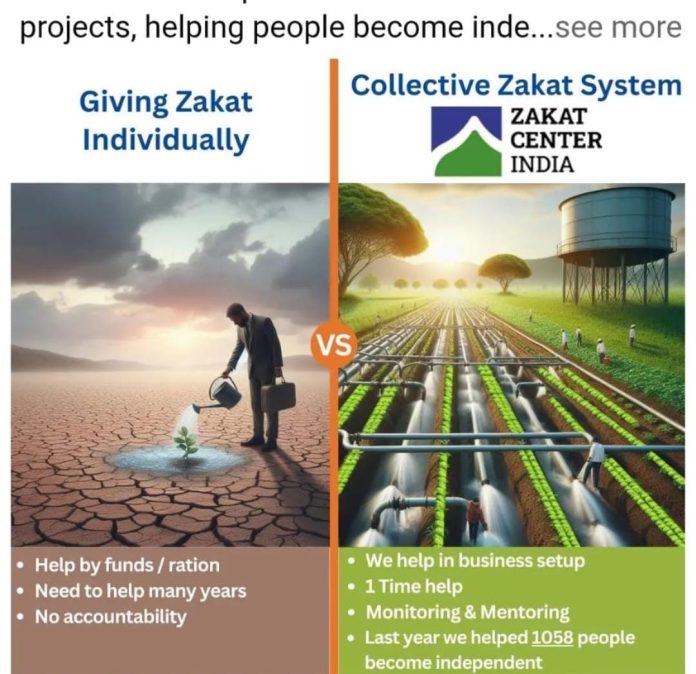
Established in 2023, ZCI–Patna aims to organise zakat collection and ensure transparent and systematic distribution, focusing on sustainable welfare, education, and income generation. Unlike individual zakat practices, ZCI follows a pooled, structured model designed to create long-term social impact.

A review and sanction meeting was convened on 18 November 2025 at Anisabad, Patna, where 25 applications for financial aid were evaluated. Members expressed satisfaction with the Chapter’s progress and resolved to deepen engagement in both zakat collection and beneficiary outreach.

During the meeting, a new Unit Management Committee (UMC) was constituted to strengthen operations. The committee includes Manzoor Ali (IAS Rtd.), Quamruddin Warsi (Chief Manager, SBI, Rtd.), Abdul Wahab Ansari (ADM Rtd.), Mobin Ali Ansari (ADM Rtd.), and Syed Nashoor Ajmal.

Category-wise Disbursement

Income Generating Activities:   Support for 9 individuals to start or expand livelihood ventures – ₹4,55,000

Livelihood Support (Mu’awasat):   Assistance to 3 families with urgent social needs – ₹72,000

Educational Scholarships: Aid for 6 students pursuing higher education – ₹3,58,000

Beneficiaries namely Sonu Aryan (₹90,000), Nadiya Khatoon (₹72,000), Md. Aslam (₹40,000), Nikhat Parween (₹1,00,000), Mozaffar Alam (₹40,000), Saniya Faraz (₹40,000), Faiz Alam (₹50,000), Nuruddin (₹24,000), Lal Babu (₹50,000), Nasima (₹24,000), Shahid (₹50,000), Farzin Khatoon (₹36,000), Sohail (₹45,000), Hena Parween (₹40,000), Mumtaz Alam (₹30,000), Jawaid (₹50,000), Mushtaque (₹50,000), and Riaz Arif (₹40,000) have received the financial aid.

The meeting was attended by key office bearers and senior members, including Syed S. Quadri (President), M. Naushad Ansari (Secretary), Quamruddin Warsi (Treasurer), Manzoor Ali (IAS Rtd.), Abdul Wahab Ansari (ADM Rtd.), Muhammad Anwar (Director, Al-Hira Schools), Ghulam Shahid, Abdul Mubeen Ansari (ADM Rtd.), Shakib ur Rahman, Nashoor Ajmal, Ruby Nishat, and Shahzad Rasheed, among others.

Commitment to Transparent and Sustainable Impact

The ZCI–Patna reaffirmed its dedication to need-based allocation, ethical governance, and supporting individuals in becoming self-reliant. The Chapter emphasised that its long-term vision is to transform beneficiaries into future zakat contributors, thereby strengthening the community through a continuous cycle of support and empowerment.

source: http://www.radiancenews.com / Radiance News / Home> Latest News> Social Service / by M Naushad Ansari / November 20th, 2025

AMU’s Prof. Afzal Anees Receives Eminent Senior Surgical Teacher Award at UP ASICON 2025; Conferred FRCS (Glasgow)

Aligarh, UTTAR PRADESH :

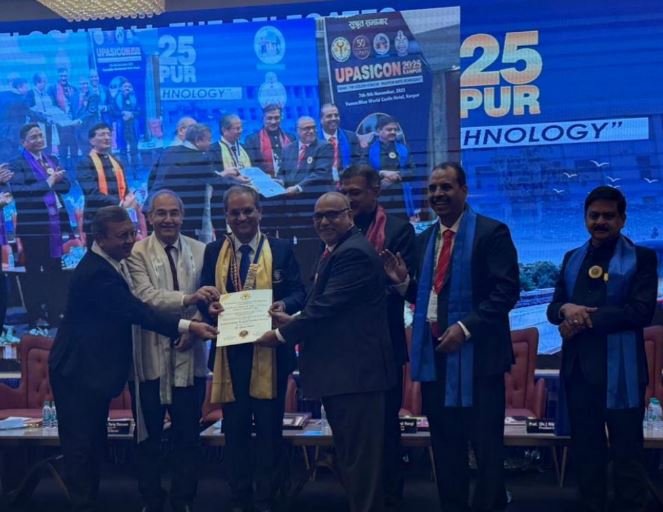
Prof. Afzal Anees being honoured with Eminent Senior Surgical Teacher Award

Aligarh:

Prof. Afzal Anees, Department of Surgery, Jawaharlal Nehru Medical College, Aligarh Muslim University, has been honoured with the “Eminent Senior Surgical Teacher Award” at the Uttar Pradesh Chapter of ASICON, held on November 7. The award recognises his outstanding contribution to surgical education, mentorship and academic excellence.

A distinguished surgeon and respected academician, Prof. Anees has been a guiding force in the Department of Surgery for several decades, shaping the careers of numerous surgical residents and medical students. His leadership, clinical expertise and unwavering commitment to patient care have earned him wide respect across the medical fraternity.

Earlier in May 2025, Prof. Anees was elected as a Fellow of the Royal College of Physicians and Surgeons (FRCS), Glasgow, which is an honour reserved for surgeons who have demonstrated exemplary professional achievement and contributed significantly to the advancement of surgical practice.

source: http://www.radiancenews.com / Radiance News / Home> Pride of the Nation> Awards / by Radiance News Bureau / November 18th, 2025

Prof. Nizamuddin Khan Bags ESDA Environmental Excellence Award 2025

Aligarh, UTTAR PRADESH :

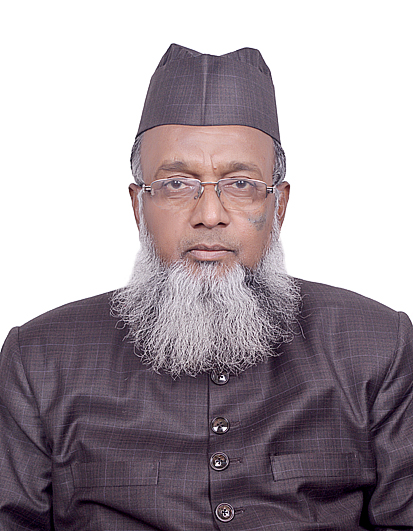
Prof. Nizamuddin Khan, former faculty member of the Department of Geography, Aligarh Muslim University

Aligarh:

Prof. Nizamuddin Khan, retired faculty member of the Department of Geography, Aligarh Muslim University, has been conferred upon the ESDA Environmental Excellence Award 2025 by the Environment and Social Development Association (ESDA), Delhi. The award was presented during the 6th World Environment Summit, recently held in Bangkok, Thailand.

The honour recognises his significant contributions to geography and environmental studies over a distinguished academic career spanning 35 years. A former Chairperson of the Department of Geography at AMU, Prof. Khan has worked extensively on socio-economic and environmental issues at the grassroots level across diverse geographical regions.

He has completed nine major research projects funded by premier national agencies, and published 127 research papers in reputed international and national journals, along with 18 books.

source: http://www.radiancenews.com / Radiance News / Home> Pride of the Nation> Awards> Latest News / by Radiance News Bureau / November 22nd, 2025

Bridging Divides, Building Bonds: How ‘Know Your Neighbour’ Is Redefining Harmony in Kolkata

Kolkata, WEST BENGAL :

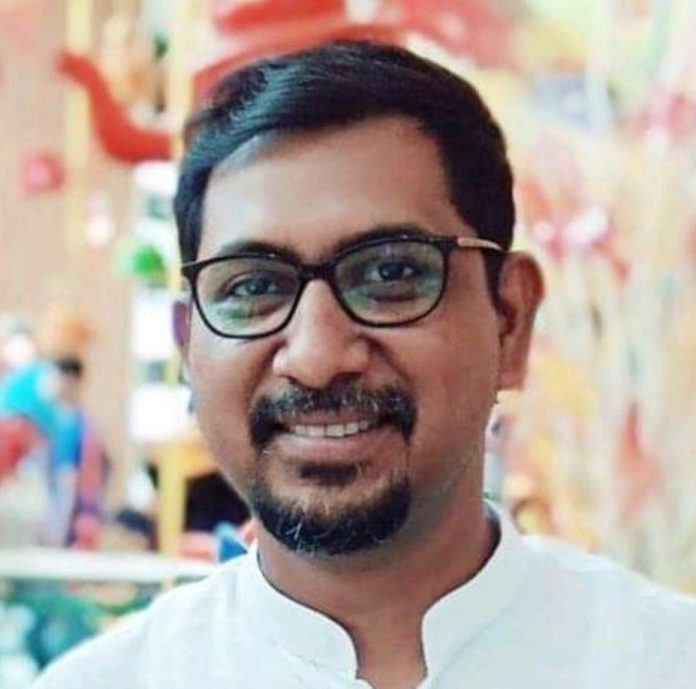
Sabir Ahamed, Programme Director at Pratichi Institute, Pratichi (India) Trust, and Founder Director of the Sabar Institute

Sabir Ahamed is the Programme Director at Pratichi Institute, and Founder Director of the Sabar Institute. His research spans the socio-economic status of Muslims in India, child protection, and education. He is proficient in analysing official datasets (NSS, Census, DISE, AISHS) using tools like Stata and R. Sabir has led largescale research and evaluation projects for the Government of West Bengal, including assessments of Kanyashree Prakalpa, Sabooj Sathi, Duare Sarkar, Lakshmir Bhandar, and the PM Poshan School Nutrition Garden Survey. He is currently leading the Human Development Report 2025 for West Bengal and directed the Second Human Development Report for Tripura. His experience includes work with international organisations like Railway Children UK on projects supported by the European Union and UNICEF. He served as the West Bengal State Lead for a UNICEF-commissioned study on secondary education transitions and was awarded the Just Transition Writing and Research Fellowship at IIT Kanpur (2022–2023). He actively promotes the RTI Act (2005) in West Bengal and is a core member of the Know Your Neighbour campaign. He contributes op-eds to national dailies and has co-edited publications on development issues. Excerpts from his interview with Mohd. Naushad Khan:

Q: How was the idea Know Your Neighbour conceptualised, when and how did it start, and what was the basic objective of this campaign?

We started the initiative because we noticed a deep division between different communities in our city.  The immediate context was the publication of a report titled ‘Living Reality of Muslims in West Bengal’ in 2013. The findings shed lights on the deplorable condition of Muslims in West Bengal, yet a large section of people was unaware the status of Muslims. Many academics and Journalists were surprised to see those facts, especially they were educationally and economically backward. Secondly, historically different communities are living in the city for generations, Partition has created some chasm between Hindus and Muslims. The worst outcome is the spatial segregation – this led to the concept call ‘living together separately’. This gave birth of a plethora of myth and misconception about the Muslims.

We found that even well-meaning and educated people in Kolkata knew very little about the city’s Muslim community, even though it makes up 20% of the population.

We learned that most people didn’t visit Muslim-majority neighbourhoods because they didn’t have friends there or, in some cases, they believed the areas were unsafe.

To break the misinformation about Muslims and its neighbourhood, Know Your Neighbour (KYN) started neighbourhood walk in 2026. Till then, thousands of young people had participated in the walks and discussion.

The main goal is to build familiarity between communities that live close to each other but knew little about the other. The campaign aims to break down stereotypes and overcome the ignorance and distrust that can grow from different religious identities. This ignorance and distrust are the biggest barriers to communal harmony.

Q: Since its inception, how do you see the journey of KYN, and what were the challenges faced so far?

The journey of KYN involves actively bringing people from different backgrounds together. The main way it does this is by organising walks or visits to:

  1. Areas with large Muslim populations, like Metiabruz and Rajabazar, Kidderpore, etc.
  2. Places with shared, syncretic histories, like the Daptaripada area near College Street, where book-binding communities have co-existed.
  3. Sites that remind people of the legacy of past communal violence, such as Selimpada.
  4. Areas facing common problems that affect everyone, like pollution in the Rajapur canal, where both Hindus and Muslims use the water.

The campaign also organises events like Dosti ki Iftar (Friendship Iftar) and joint Durga Puja celebrations, allowing people to learn about and join in each other’s religious festivals.

The main challenge the campaign faces is ignorance, stereotypes, and fear that keep communities separated from each other.

Q: What has been the impact of KYN in Bengal, and how have people responded to this campaign?

Over the years, neighbourhood walks conducted by KYN have made a lasting impression on young minds, promoting peace, social cohesion, and pluralism. Around 1,500 students have joined us in exploring overlooked neighbourhoods across Kolkata through these immersive walks.

The initiative aims to instil core constitutional values – secularism, pluralism, and fraternity – through lived experiences and encounters with historical memory embedded in the urban fabric. These walks offer students a unique opportunity to engage with diverse communities, reflect on shared histories, and foster a deeper understanding of inclusive citizenship.

In collaboration with Maulana Azad College, our language course in Arabic, Persian, and Bengali enabled about 90 students to learn the basic reading of these languages. These programmes strengthen cultural roots and encourage appreciation for linguistic plurality.

We run a WhatsApp support network of over 850 students from marginalised areas, offering career counselling, peer mentoring, job opportunities, and regular workshops to help them navigate academic and professional spaces. We have trained more than 250 students on career counselling.

In partnership with Swayam and Azad Foundation, we’ve held group counselling sessions for children affected by communal tension, providing psychological support and nurturing safe spaces for recovery.

We conducted a hands-on RTI (Right to Information) workshop for students and professionals, teaching them how to use RTI to uncover critical datasets and hold government institutions accountable. Many participants have since used RTI to pursue issues of social relevance.

We host regular book reading and discussion sessions with acclaimed writers and scholars. Sabar Institute’s data for better lives initiative regularly post data on discrimination, lack of opportunity among the disadvantaged communities.

People, including college students, have started visiting Muslim-majority areas, even without our facilitation. The response from students has been particularly rewarding. These students, who had often been told by their parents not to go into minority areas, visited them and reported that they do not feel unsafe.

Q: Why do you think such campaigns are necessary in Bengal and elsewhere in the country?

Campaigns like KYN are necessary to repair growing divisions in our society. They are needed to address the loss of camaraderie between communities. The goal is to stop ignorance and indifference from turning into alienation.

Even among the educated city-dwellers, there is often a lack of friendship and familiarity with people from other communities. Campaigns are necessary to remove the distrust and ignorance that come from religious differences, calling this the biggest barrier to communal harmony. In a time of divisive politics and attacks on secular values, new ways of building unity are needed. Campaigns like KYN are important because they build social solidarity and brotherly or sisterly bonds directly between citizens.

Q: Finally, how can such a campaign add to the concept of a value-based society?

These campaigns are a key part of building a value-based society, as they focus on human connection.

The campaign helps build fraternity, which is a core value in the Indian Constitution. This means it focuses on building strong relationships and bonds of trust among citizens.

Instead of just using rational intellectual arguments for equality, these campaigns use shared cultures, local histories, and neighbourhood connections. This has a broad emotional appeal and helps trigger empathy in people.

By creating deeper emotional solidarity, the campaign helps people connect based on the shared value of equality. Ultimately, by creating new friendships and shared celebrations, these campaigns help to repair and restore the social fabric and build a more inclusive and united society.

source: http://www.radiancenews.com / Radiance News / Home> Face to Face> Focus / by Mohd Naushad Khan / November 20th, 2025

Winners in Throwball Tournament

Mysuru, KARNATAKA :

Mysore/Mysuru :

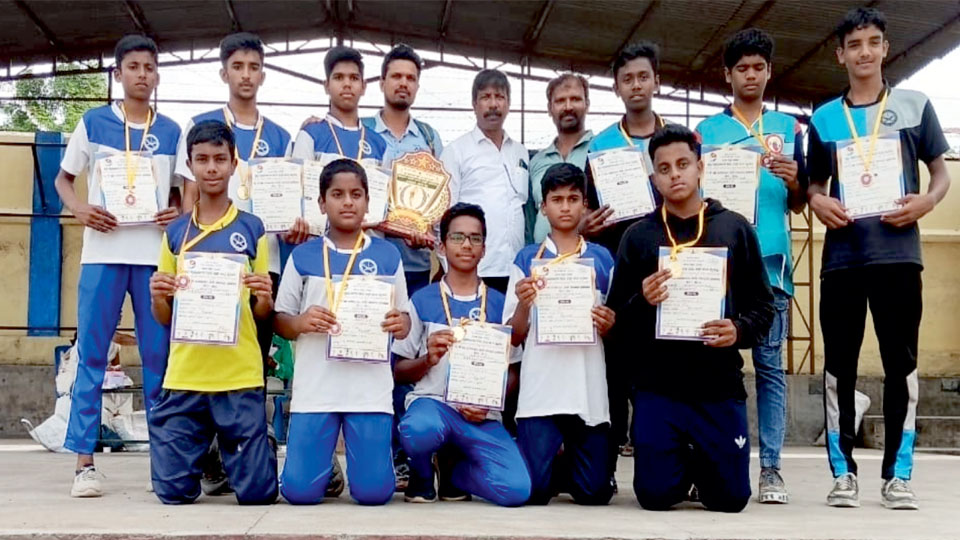
Boys team of Al-Kareem School won the Taluk-level U-17 Throwball Tournament for Boys organised at St. Philomena’s High School recently.

The team defeated Ramakrishna Ashram in the final match.

Members of the team included Mohammed Attaulla (Captain), Farhan Khan (Vice-Captain), Mohammed Junaid, Mohammed Nadeem, Afreed Ahmed Khan, SinnanShariff, Roshan Ali, Mohammed Toufiq, Zaid Ahmed and Zayan Ahmed.

source: http://www.starofmysore.com / Star of Mysore / Home> Sports / November 10th, 2025

Kashmiri Man Who Saved BJP Worker’s Family in Pahalgam Attack Honoured in Chhattisgarh

JAMMU & KASHMIR :

Raipur:

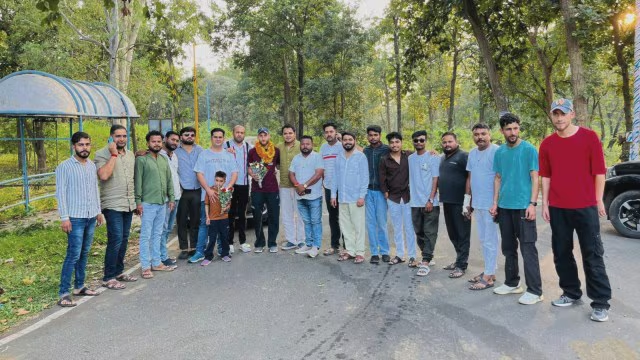
Kashmiri local guide Nazakat Ahmed Shah, who saved the family of a BJP youth worker during the April Pahalgam terror attack, received a warm welcome in Chhattisgarh nearly six months after the incident. The attack in South Kashmir had left 26 people dead and several injured.

Shah, who has been visiting Chhattisgarh for over three decades to sell clothes, became a hero after rescuing the family of BJP youth wing worker Arvind Agrawal. During his first visit to the state since the attack, Shah was felicitated by Agrawal and around 50 residents in Chirmiri, Manendragarh-Chirmiri-Bharatpur district. The group expressed their gratitude with garlands, flowers, and a shared lunch.

Agrawal recalled that Shah’s quick thinking saved his wife and four-year-old daughter. “When the firing began, he asked us to lie down and shielded my daughter and my friend’s son. He took them to safety and returned to rescue my wife,” Agrawal said.

Speaking to reporters after the ceremony, Shah said he felt emotional meeting the families he had saved. “Chhattisgarh feels like home to us. We come here for three months every year for business, and people here have always treated us like family,” he said.

Shah’s act of courage has been widely praised across communities, highlighting the enduring human bonds that transcend politics and geography.

source: www.radiancenews.com / Radiance News / Home> Latest News> Reports / by Radiance News Bureau / November 01st, 2025

Burned but brave: Conductor Rafiq Khan’s heroic act saves lives in Rajasthan bus tragedy

Thaiyat Village, RAJASTHAN :

Twenty passengers burnt alive, 16 critically injured in Jaisalmer-Jodhpur bus fire Tuesday.

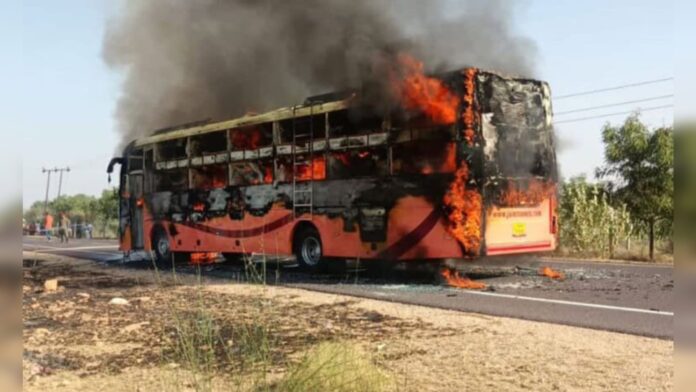
A devastating tragedy unfolded on the Jaisalmer–Jodhpur highway on Tuesday evening when a private air-conditioned sleeper bus carrying nearly 50 passengers went up in flames near Thaiyat village in Rajasthan.

Amid the panic, bus conductor Rafiq Khan displayed extraordinary bravery. Positioned near the back when the smoke appeared, he rushed forward to open the main gate and allow passengers to flee. As he moved toward the front, the ceiling burst into flames and an explosion knocked him down.

Despite sustaining severe burns, Khan crawled through the aisle, managed to unlatch the door, and helped several passengers escape before collapsing. He is now battling for his life at Dr. S. N. Medical College in Jodhpur, where doctors say he has suffered extensive burn injuries.

The fire, which is believed to have started from the rear of the vehicle, spread rapidly, trapping dozens inside. At least 21 people have been confirmed dead, while several others sustained critical burns and remain hospitalized.

According to preliminary reports, the incident occurred shortly after the bus left Jaisalmer for Jodhpur. Passengers noticed smoke rising from the back, prompting the driver to stop on the roadside. However, before most could react, a sudden blast shook the bus and flames engulfed the upper berths. Survivors described chaotic scenes as people screamed for help, some breaking windows in a desperate attempt to escape. The situation was worsened by the fact that the bus had only one functional exit door, which became jammed as the fire spread, leaving passengers trapped inside.

Medical officials confirmed that fifteen injured passengers were brought from Jaisalmer late Tuesday night. Five of them, including Khan, are on ventilator support with burns exceeding 70 percent of their bodies. The remaining have burns between 40 and 50 percent. Identification of the deceased has been difficult due to the extent of the burns, and DNA testing is being carried out to help families claim the bodies. Ten bodies have been kept at the S. N. Medical College mortuary, while others are at AIIMS Jodhpur.

Eyewitnesses and local residents who rushed to the scene recalled horrific visuals of the burning bus and passengers trapped inside. One survivor, Peer Mohammad, managed to smash a window to rescue his wife, sister-in-law, and a child but lost two of his young children who were asleep on the upper berth. “I could see them burning, but the flames were too strong. I tried to go back, but I couldn’t,” he said, breaking down.

Officials suspect that an electrical short-circuit in the air-conditioning system may have triggered the fire, though a detailed forensic and mechanical investigation is underway. The bus owner, driver, and the vehicle body-builder have been detained for questioning, while a technical team from the Central Institute of Road Transport (Pune) has been called to examine possible safety lapses. Authorities are also probing whether the bus had been illegally modified and if its emergency exits met regulatory standards.

The Rajasthan government has announced financial compensation for the victims’ families and injured passengers, but the relief policy has already drawn criticism over the cap imposed on payments to households that lost multiple members. District Collector Pratap Singh stated that a helpline has been set up for the families and that DNA matching and identification will be expedited.

As the state mourns one of its worst transport tragedies in recent years, questions are being raised about the enforcement of passenger safety rules, particularly in private buses converted into AC sleepers. Critics say the incident highlights the urgent need for mandatory fire-safety mechanisms, functional emergency exits, and stricter monitoring of vehicle modifications.

In the midst of this overwhelming loss, the courage of conductor Rafiq Khan stands out.  A man who risked his own life so others could live. His selfless act amid the chaos has earned him praise across the state and beyond, a rare moment of humanity in an otherwise grim tragedy that exposed fatal gaps in India’s passenger transport safety system.

source: http://www.muslimmirror.com / Muslim Mirror / Home> Indian Muslim> Positive Story / by Muslim Mirror Network / October 18th, 2025

Seeds of Change: Muslim Women from Dharwad Who Won the UN’s Biodiversity Prize

Theertha Village (Dharwad District), KARNATAKA :

Seeds of Change Muslim Women from Dharwad Who Won the UN’s Biodiversity Prize / source: youtube.com/Radiance News

Awardee of the prestigious UNDP Equator Prize 2025 – often called the “Nobel Prize for Biodiversity.”

A Global Recognition for Rural Women: In a small corner of Karnataka, far from the corridors of power and the glare of television studios, a quiet revolution has been taking place. In Teertha village of Dharwad district, a group of Muslim women farmers have done what many thought impossible: they have revived traditional agriculture, empowered women, and built a sustainable rural economy – earning them global recognition.

Earlier this year, the Bibi Fathima Self-Help Group (SHG) was named one of the 10 winners of the UNDP Equator Prize 2025. Often described as the “Nobel Prize for Biodiversity,” the award recognises outstanding local initiatives that offer nature-based solutions to climate change and development challenges. Out of 700 nominations from 103 countries, these women stood out.

From Small Beginnings to a Wider Network

The journey began in 2019, when the SHG was formed under the guidance of the NGO Sambhvida. What started as a modest effort soon grew into a larger movement. Today, the Bibi Fathima SHG is part of a federation of 83 self-help groups, linking together nearly 300 women across Dharwad.

At the forefront is Bibi Fathima, a graduate in Arts, whose vision and determination have inspired women from different backgrounds to participate. Under her leadership, the SHG has become more than just an economic unit – it has become a space for learning, cooperation, and social change.

Millet: From Margins to the Mainstream

At the heart of their work lies a humble but powerful grain: millet. Once a staple of Karnataka’s fields and kitchens, millets were pushed to the margins by the Green Revolution’s focus on rice and wheat. The result was water scarcity, soil exhaustion, and loss of dietary diversity.

Their focus on millets also resonates globally. In fact, the United Nations declared 2023 as the International Year of Millets, recognising the grain’s role in ensuring food security and combating climate change. Governments, scientists, and nutritionists around the world are now looking at millets as the “crops of the future.” What the world is beginning to rediscover, the women of Dharwad have been practising for years – placing millets back at the heart of farming and household nutrition.

The women of Teertha decided to turn back to their roots. Through the SHG, they revived millet-based mixed cropping systems, promoting traditional practices that require less water, restore soil health, and provide nutritious food. They did not stop at farming – they built a movement around biodiversity.

The Seed Bank: A Living Library

One of their most significant achievements is the establishment of a community seed bank, where dozens of indigenous varieties of millets and pulses are preserved in earthen jars and carefully catalogued. The seed bank is more than a storage system – it is a lifeline. It ensures that farmers do not have to depend on costly hybrid seeds from outside markets.

The shelves lined with jars of foxtail, little millet, kodo, and pulses symbolise something larger: the preservation of biodiversity for future generations. As one member put it, “Every jar holds not just seeds, but the story of our ancestors and the hope of our children.”

Voices from the Ground

Speaking to Radiance News, Bibi Fathima explained how cooperation has been the backbone of their success.

“No single group can do this alone. We work together – sharing seeds, knowledge, and experiences. The seed bank has become our lifeline. It is not just a storehouse of grains, it is a storehouse of trust,” she told Radiance correspondent Mushtaq.

Her words capture the essence of the movement: solidarity across communities, generations, and villages.

From Seed to Market

The SHG’s innovation extends beyond cultivation. Recognising the need for value addition, they established a solar-powered millet processing unit, managed entirely by women. This unit transforms raw millet into flour, snacks, and packaged products that are finding markets in both rural and urban areas.

Partnerships have been crucial in this journey:

  • With Sahaja Samruddha, the SHG built marketing and certification channels.
  • With the Indian Institute of Millets Research, they accessed technical expertise.
  • With the Devadhanya Farmer Producer Company, they entered wider markets.

This blend of grassroots energy and institutional cooperation has turned a local SHG into a regional model for sustainable farming.

Breaking Stereotypes in a Polarised Society

In today’s climate, Muslims are often asked – sometimes with suspicion – what they contribute to the nation. Muslim women, in particular, are portrayed as silent or confined to the margins.

The Bibi Fathima SHG challenges these stereotypes powerfully. Here are Muslim women, in a rural corner of Karnataka, who are not just participating but leading. They are reviving biodiversity, protecting food security, and building rural enterprises. Their work proves that Muslim women are at the heart of India’s agricultural and social transformation.

Building Bridges: Hindu and Muslim Women Together

Perhaps the most inspiring part of this story is its inclusivity. The network of 83 SHGs is not confined to one community. Hindu and Muslim women farm together, share seeds, and manage enterprises as equal partners.

In an age when some try to inflame communal divisions for political purposes, these women are building bridges of unity through the soil itself. Their fields are places of cooperation, not conflict; of shared harvests, not suspicion. Biodiversity conservation here is not just ecological – it is social.

Faith and Social Service

Their commitment is also rooted in a broader moral principle of service. Prophet Muhammad ﷺ said:

“The best among you are those who are best for society.”

Through farming, seed conservation, and entrepreneurship, the women of Teertha embody this ethos. Their contribution benefits not only Muslims but the entire community, from farmers and consumers to future generations.

A Long History of Muslim Contributions to Agriculture

This achievement is not an isolated story. For centuries, Muslims have enriched India’s agricultural landscape:

  • Irrigation systems built by engineers in medieval India turned barren land fertile.
  • New crops such as guava, pomegranate, and certain citrus varieties spread through trade routes maintained by Muslim communities.
  • Orchards and gardens in the Deccan and Mughal India reflected a philosophy of harmony between beauty and utility.
  • Women in rural households played critical roles in livestock, kitchen gardens, and seed saving – long before these terms became development jargon.

The women of Teertha stand in this tradition, carrying forward a legacy of stewardship and innovation.

Global Recognition, Local Pride

The Equator Prize 2025 is more than a trophy. It comes with a cash award of USD 10,000, but its symbolic value is greater. It tells the world that solutions to climate change and food insecurity are not found only in international conferences, but also in the daily work of rural women.

Later this year, representatives of the SHG will be virtually honoured at the UN Climate Conference (COP30) in Brazil. Their story will stand alongside other grassroots champions from Africa, Latin America, and Asia – proof that local action has global relevance.

Seeds of Hope for Plural India

The journey of the Bibi Fathima SHG is more than a story of millet farming. It is a story of agency, dignity, and unity. It shows that Muslim women are not passive observers but active leaders – biodiversity promoters, community builders, and entrepreneurs.

Their fields are not just producing crops – they are producing harmony, resilience, and hope. At a time when divisions are deepened for political gain, these women remind us that India’s real strength lies in cooperation across communities and in valuing every contribution, no matter how small.

The seeds planted in Teertha are not only for Karnataka’s soil. They are seeds for India’s future.

source: http://www.radiancenews.com / Radiance News / Home> Features> Focus / by Mohammed Talha Siddi Bapa / Radiance News Bureau / September 09th, 2025