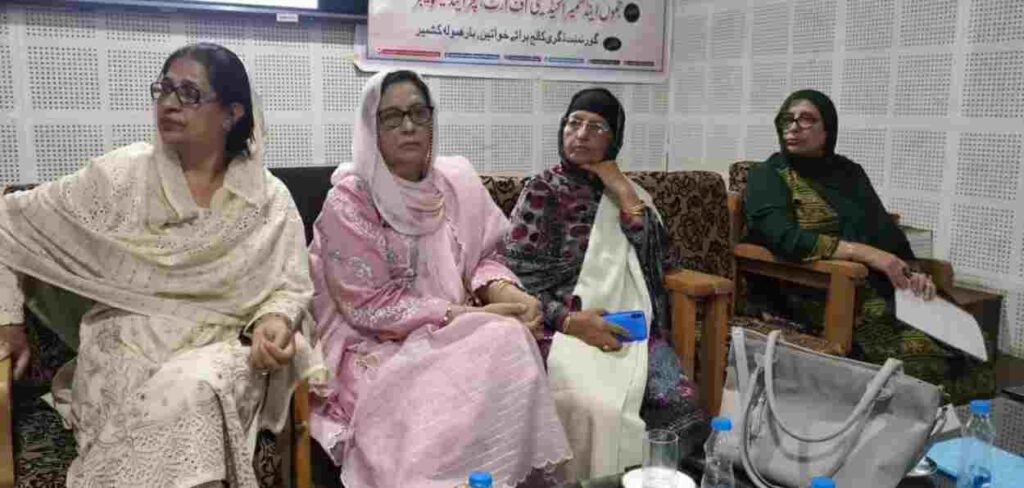
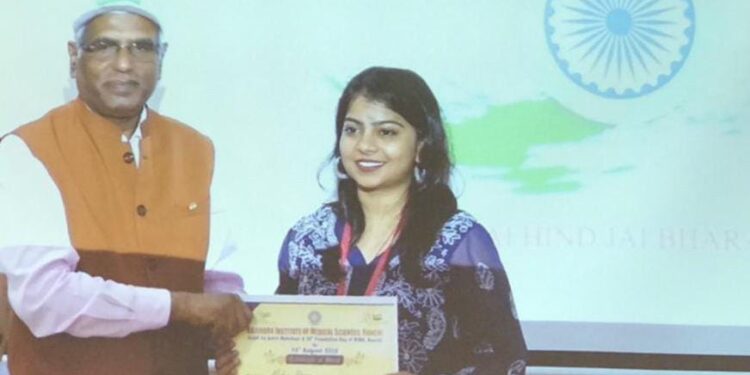
Rukhsana Jabeen (Second from right) at a poetic symposium
Rukhsana Jabeen is one of the very few female litterateurs in Jammu and Kashmir who carved a niche in the Subcontinent’s vast domain of Urdu poetry at the intersection of the 20th and the 21st century. An overarching and unceasing armed insurgency, that muted all expressions in art and literature in the Valley failed to silence her for 33 years.
After serving All India Radio for over 30 years, Jabeen retired as a Director at Radio Kashmir Srinagar in 2015. The participation of a Kashmiri woman in the annual All India Mushaira on the eve of Republic Day or Independence Day was fatally proscribed by terrorists. Jabeen did so without break.
“Whatever came to my mind, I wrote and expressed without thinking a bit about its consequences”, Jabeen revealed to Awaz- the Voice at her winter residence in Jammu.
Born in a family of the decedents of the revered saint and Kashmiri-Persian poet Syed Meerak Shah Kashani in the Khwaja Bazar neighbourhood of downtown Srinagar in 1955, Jabeen did Master’s in Urdu followed by MA and M Phil in the Persian language and literature at the University of Kashmir. In 1983, she joined AIR Srinagar as a program executive.
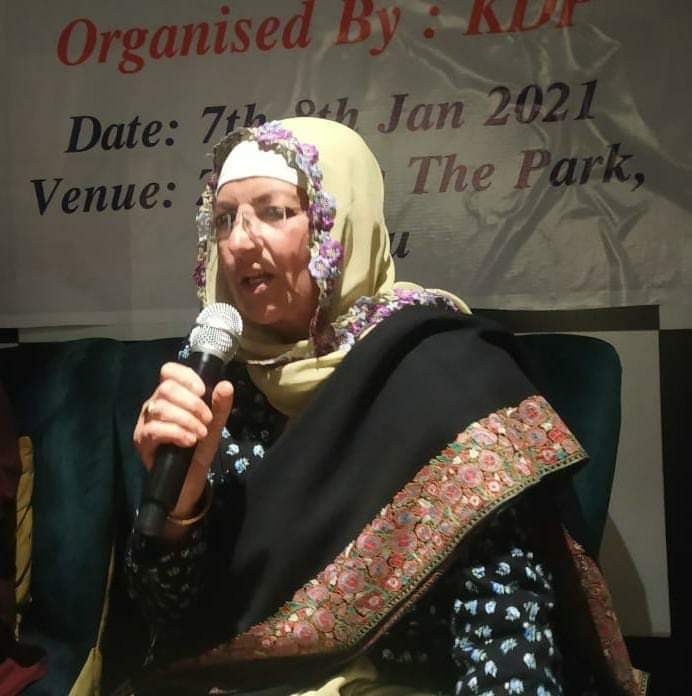
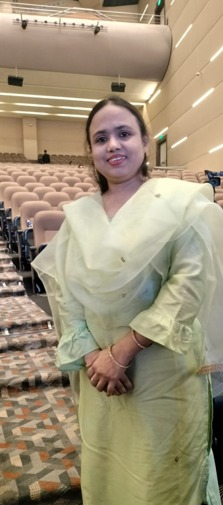
Rukhsana Jabeen at a poetic symposium
“I was not the first woman to enter the station for an all-India job”, Jabeen said “but in our family setting it was like breaking the glass ceiling. Getting selected for the job in a tough patriarchal competition was like a big success for me. Knowing well that I wouldn’t be permitted to apply for it, I kept it all discreetly concealed from my family”.
“I was also selected as a teacher in the State Education Department. As my father learned about my getting a job at the AIR, he insisted I should join as a teacher. I agreed with him that the AIR officers could be transferred to any Indian State, but I lied that female officers were not posted outside their home States. Thereupon my family relented, and I joined as a program executive”, Jabeen said.
In 1994, Jabeen established AIR’s Poonch station close to the Line of Control in Jammu where she served for three years. In 1999, she was promoted to Assistant Station Director (ASD).
Unlike many of her tribe, Jabeen’s tryst with creative literature began late during her university days. A prominent Urdu poet and literary critic and the head of the Urdu Department, Prof. Hamidi Kashmiri, encouraged Jabeen to write prose and poetry in Urdu. “I was thrilled when Hamidi Sahab refined my first Ghazal and got it published in the annual edition of his department’s magazine ‘Baazyaft’. Under his tutelage, I learned about modern sensibility and the post-modernist literary trends”, Jabeen recalled.
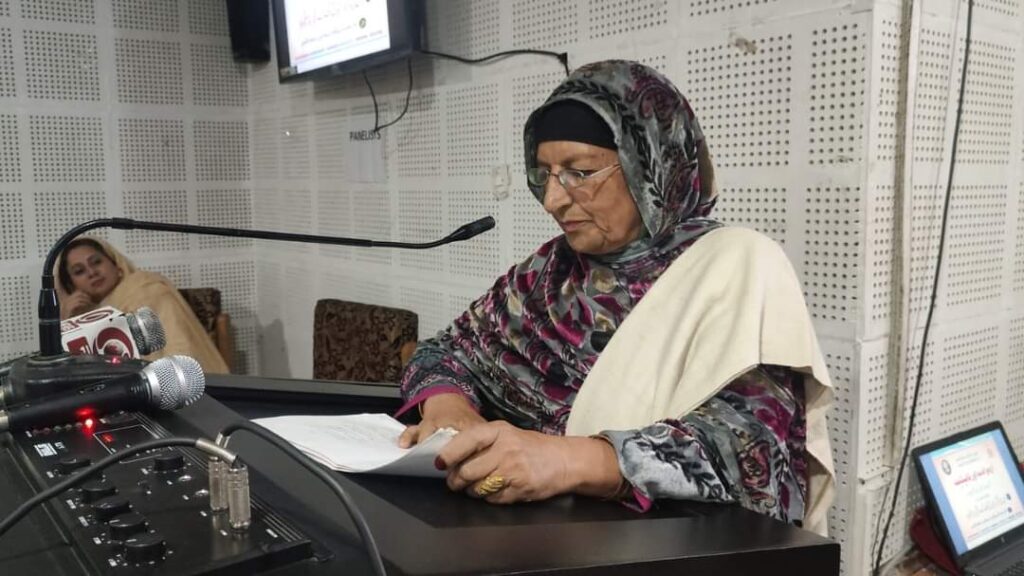
Rukhsana Jabeen recording a radio programme
She narrated how affectionately some celebrated litterateurs like Hamidi at the University of Kashmir and Zubair Rizvi at Radio Kashmir Srinagar gave her select books and literary magazines to hone her talent and faculties as a creative writer.
“One day, incredulously I found five of my poems published together, alongside my profile, in Kumar Pashi’s journal ‘Satoor’. Later, Zubair Sahab disclosed that he had got the same published in the prestigious Urdu magazine. It was an incredible encouragement and my recognition as a poet. Thereafter, a number of my poems were published in the top representative journals like ‘Alfaaz’, ‘Shayir’, ‘Mafaheem’ and ‘Asri Agahi’. Hamidi Sahab and Zubair Sahab steered me to the extensive studies of Shaharyar, Rajinder Manchanda Bani, Nasir Kazmi, and Mohammad Alvi. I am still deeply under the influence of Mohammad Alvi and a few others”, Jabeen added.
Kishwar Naheed, Parveen Shakir, and Fahmida Riaz inspired Jabeen into some new experiments. She was initially also influenced by female Urdu litterateurs like Rafia Shabnam Abidi, Aziz Bano Darab Wafa, and Sajida Zaidi and later shared the stage with them at AIR and all-India poetry symposiums. For over three decades, Jabeen was a regular guest poet at Delhi’s Red Fort and other literary rendezvous, integrating a Sub-continental network of the intelligentsia and defying a hostile ambiance at home.
For several years, Jabeen translated poetry from 22 Indian languages into Kashmiri as a project of the Sahitya Akademi. She participated in many such all-India poetry symposiums at Varanasi and other Indian cities. She remained closely linked to top-notch Urdu poets like Shaharyar, Bashir Badr, Nida Fazli, Makhmoor Saeedi, Ali Sardar Jafri, Kaifi Azmi, Qateel Shifai, Ahmad Faraz besides literary critics like Shamsur Rahman Faruqi, Naiyer Masud and Malikzada Manzoor Ahmad.
“Many of them organized Mushairas in my honour at their homes. It was a unique recognition and hospitality as never before has anyone from Kashmir been entertained to such honours”, Jabeen said. “I invited many of these doyens of Urdu literature to our programmes at Radio Kashmir”.
Ghazal in Urdu and Kashmiri is Jabeen’s forte even as she also tried her pen at the popular genre of ‘Nazam’. “But I no love lost for blank verse and free verse. I believe those who can’t write in Urdu’s traditional meters have little right to write in free verse. Besides, I have seen how many of the aspirants, particularly females, get free verse written by others and read the same as their poetry. They perform such poor poetry at stage. Contrarily, nobody gives out a Ghazal. A Ghazal and Nazam writer is often an authentic poet”, Jabeen said.
In addition to volumes of the translation of short stories from different languages into Kashmiri and a translation of the collection of Hafiz Shirazi, which she accomplished with Dr. Syed Raza of Budgam, Jabeen has three of her collections—two in Urdu and one in Kashmiri—ready to publish.
“But I’m unbelievably indolent. I never get after awards and accolades. I can’t fulfill those formalities. Every year, I decided to publish these three volumes of my poetry but my laziness spoils my endeavour.”
source: http://www.awazthevoice.in / Awaz, The Voice / Home> Story / by Ahmed Ali Fayyaz, Jammu / January 14th, 2024
In the intricate maze of poets, meeting a ‘lady Shayari’ is unique, for while there are many, most of them hide behind scenic curtains; they are brimming with talent but too shy to step out. Meeting Rafat Akhtar ‘Rafat’ was, therefore, an enchanting experience.
Born and raised in Kolkata, the City of Joy, as Rafat calls it, she says that even as a child she was quite sensitive. She captured philosophical moments in life and drew in the rich vibes of nature to weave out her Shayaris in a time to come, much later.
She told Awaz-the Voice, “At a young age, I loved reading Urdu story books and words formed rich suggestions for me. Many vivid powerful words flew through my head during the day, but I never sat down to put them on paper until much later, and then I started to capture my thoughts in a cherished diary. My pen is my best friend; I share my feelings and observations with my pen and whenever I write, I feel relaxed.”
After her marriage and the birth of her daughters, life was busy with the swirl of housework and tending to her children. Time was precious and she had no moments of her own to spare for her writing. As the years rolled by and her daughters grew up, one working and the other in school, Rafat started to feel a deep void in her life.
This time, she knew she needed to do something to fill that emptiness and came to a realization that she was neglecting writing her Shayari which was her inborn gift. At that defining moment, she decided to start writing again.
With a few trembling steps, not very confident about how it would go, she penned down her first Poem ShayariAlfaaz rooh hoti hai Jismo me chupi har jazbo’n ki rooh, har aawaz ki rooh shared it with her family. All those who received it were delighted. In that magnificent moment, her husband loved it; her mother was ecstatic and her two daughters cheered her. Her extended family also was enraptured by her first Shayari.
A poem by Riafar Akhtar Rafat
From then on, Rafat weaved her pathway higher on poetry. Her first published poem was in a Writing App in 2018.
One big event in her literary life was when the admin of the famous Taajira – The Businesswoman Group Rukshi Kadiri Elias allowed her to conduct the whole Mushaira (justuju e sukhan) in 2022. Rafat was particularly rejuvenated with this event after the long depressive draining aftermaths of COVID-19 which had the world shuttered in behind locked doors. That sense of purpose and joy was coming back to her life with a sparkle in her eyes and a spring in her steps.
With her heart stirred and supportive people clapping her on, it made the way easier before her, she was drawn deeper into the world of Shayari.
Here are a few snapshots of her most brilliant poems:
Her most famous Poem is Ae nabz e wujood, tujhe shikwa na jaane magar kis baat ka hai.
She says that a poet’s soul is so sensitive that they will see every side of a situation and they also react more strongly to injustice. She wrote a soul-stirring Shayari,
“Aurat Hona Bhi Kamal Hai” after reading about an atrocity inflicted on a woman:
Lagta hai ek laq daq sa sahra hai
Aur mein nange paao’n chal rahi hoon
Har taraf tapish hai
Pyaas ki shiddat hai
Na koi jazbaat sunne wala
Na koi lahje ki narmi hai
Magar phir bhi mujhe chalte jaana hai...
Rafat Akhtar Rafat
She names some of her favourite poets. Mirza Ghalib famed for his sublime Shayari nd one line from the greatest poet, in particular, stands out, “You will reach your destination even by roaming around but the lost are those who are not getting out of home”. Her other favourites are Allama Iqbal whose Urdu poetry is considered to be among the greatest of the 20th century, Faiz Ahmad Faiz – considered the iconic voice of an era, with his revolutionary zeal tugging hearts – Bollywood’s famed Urdu poet and screenwriter Gulzar with his stunning imaginative and emotional appeal that dynamically hits the crowds, and Ahmad Faraz’s rich poetry. She also is inspired by Urdu writers such as Umaira Ahmad, Nimra Ahmad, and Khaled Hosseini to name just a few.
With warm emotion ringing in her voice, Rafat tells me that her late father was an angel and it was because of him that she was able to complete her graduation and shares how blessed she is to have a very nurturing family from all sides.
Rafat does bring up the point that it was initially a struggle to bring out her Shayari publically because these are viewed negatively by some people in the Islamic community. However, society is slowly evolving and understanding it is not evil nor is it against Islam. It was a bright moment for her when on December 17, 2023; she attended a huge Shayari event in Kolkata of over 500 people half of whom were women. She has also attended massive international Shayari programs with participants from Egypt, London, Mumbai, and other parts of the world and India. These mega-events charged with the electric power of poetry give glimpses of a new rising renaissance.
Rafat is now excited about her new upcoming book, Hurf e Yaqeen. All her Shayaris are inspired by the school of life and nature, graced with a strong imagination to guide readers to the road of reality which makes her poetry more comprehensible and relational to her audience.
She believes in a purpose-driven life and as she tells me, “I still have very far to go; I still have to achieve greater heights.” Rafat will certainly go far in her poetry flight to motivate a new generation as she says, “My vision is to encourage and inspire my readers.” Rafat is still a busy mother and she says, “Taking care of my family and my kids are my priority” and amid her heavy schedules and responsibilities, she keeps on writing.
Rita Farhat Mukand is a Siliguri-based independent writer.
source: http://www.awazthevoice.in / Awaz, The Voice / Home> Story / by Rita Farhat Mukund / December 20th, 2023
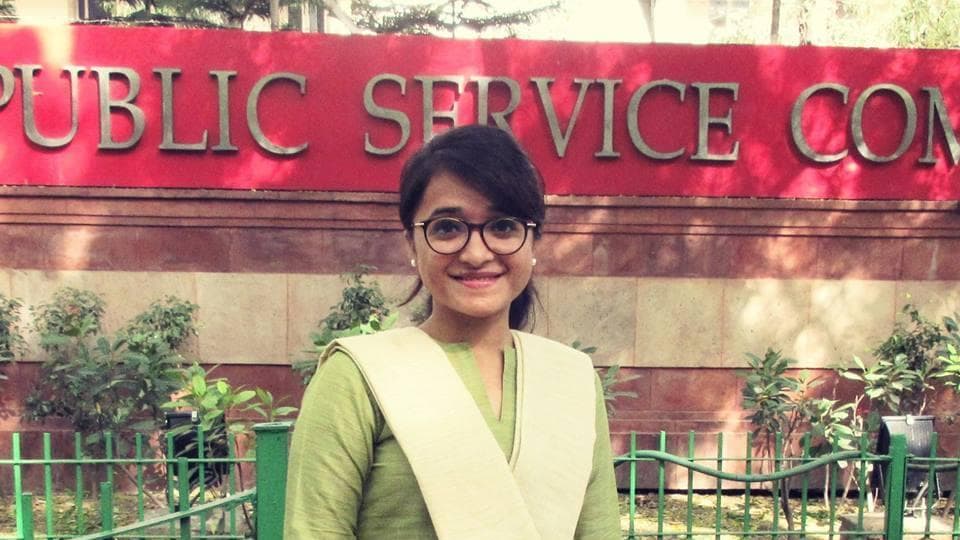
The inspiring story of Ummul Kher, a 28-year-old fragile girl who defeated all odds to achieve her dream. Ummul Kher was born in a Muslim conservative family that belonged to Marwar, Rajasthan. She faced several hardships to reach her goal. She fought a disease called Fragile Bone Disorder from childhood which caused her 16 fractures and underwent 8 surgeries. But that couldn’t break her determination of becoming an IAS officer.
Ummul was five when she migrated to Delhi with her parents and lived in the slums of Nizamuddin, Delhi. Her father was a street vendor. Their family was displaced when the slums of Nizamuddin were demolished and moved to the slums of Trilokpuri.
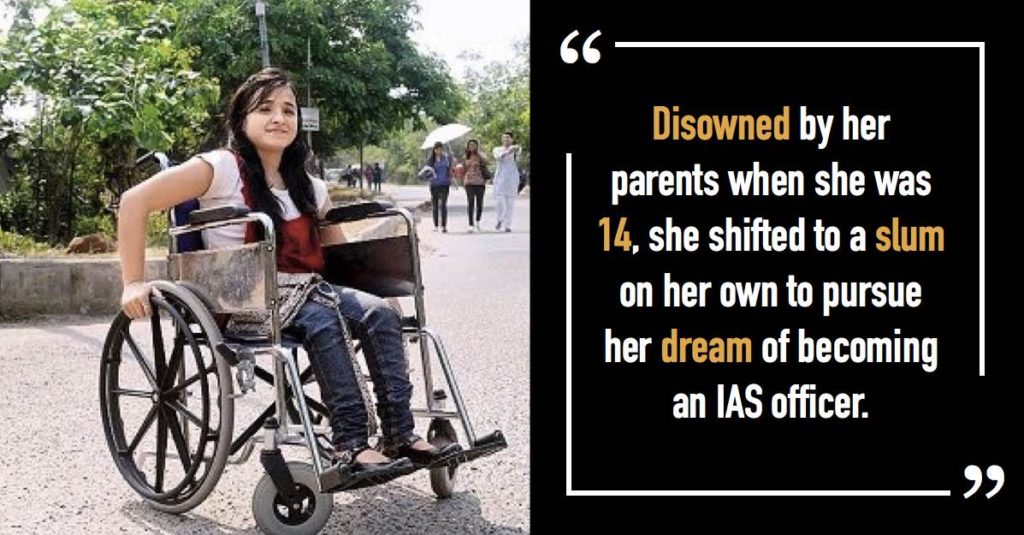
Ummul Kher went to Pt. Deendayal Upadhyay Institute for the Physically Handicapped for schooling till 5th Class and continued her education till 8th in a Government-run Charitable Organisation Trust, Amar Jyoti. Much to her dismay, her family forced her to discontinue her studies after 8th but Ummul decided to move out of her parent’s home and continue her education and started living alone in Jhuggi Jhopri(JJ) cluster, Trilokpuri. She started giving tuitions to slum children to support her living who paid her not much than rs 50-100.
Unfazed, She completed her graduation from Gargi College, Delhi, and got admission to JNU for Masters in International studies. She secured Junior Research Fellowship at JNU which helped her in getting a stipend of Rs 25,000 per month. To serve as an IAS was a dream of Ummul Kher that’s why despite pursuing a Ph.D. she appeared in the UPSC exam and cracked it in her first attempt and bagged All India rank 420.
She Got the posting in IRS Indian Revenue services, where she was posted as the DC, i.e Deputy Commissioner in Indian Revenue Service.
Highlights:
UmmulKher lived alone after 8th std due to her family disowning her for education. During this time, it was Amar Jyoti Charitable Trust that financed her education and also funded her tuition for classes IX and X.
In class XII, Kher achieved 91% and secured admission into a prestigious Delhi University college, Gargi College.
She continued to take tuitions to fund her college education. She also got much-needed money by winning debate competitions in college. She graduated in Psychology (Hons).
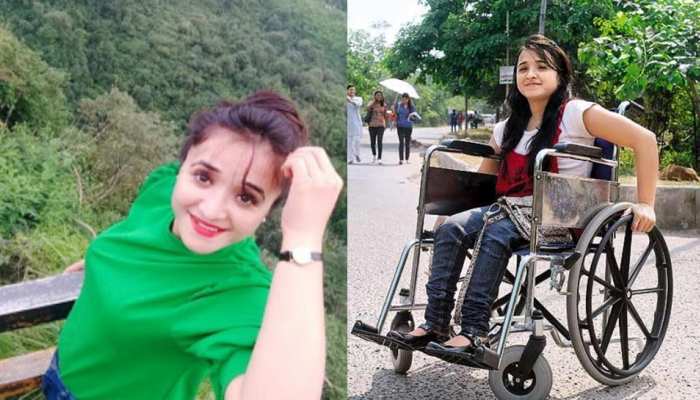
Tragedy struck in 2012 when a small accident confined her to a wheelchair for one year.
After completing graduation, Ummul Kher cleared an entrance exam for a master’s in International Studies at JNU. This gave her sufficient money which meant that she no longer had to give tuition.
In 2013, she secured a Junior Research Fellowship at JNU under which she started getting a stipend of Rs.25, 000 per month.
Since September 2014, Ummul was working as a trainee at Duskin Leadership Training in Shunjuku, Japan.
In 2016, She appeared for UPSC exam first time and cracked it with 420 AIR rank.
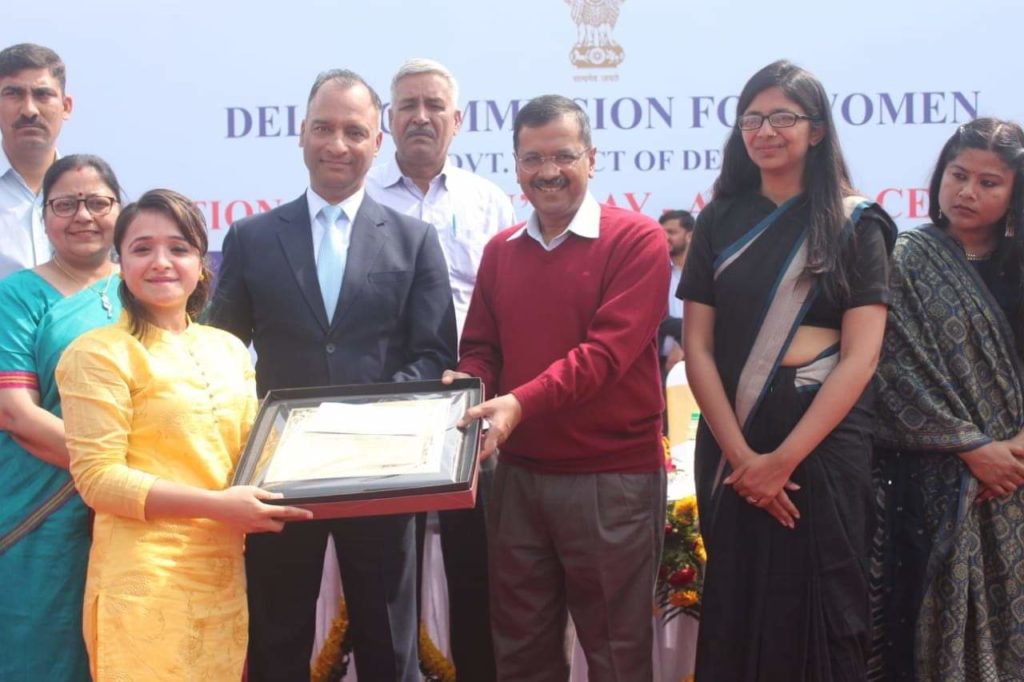
In 2019 She was conferred with Delhi Women Commission’s DCWAward. The Award was handed over by Delhi CM Arvind Kejriwal.
source: http://www.deccandigest.com / Deccan Digest / Home> Featured Sliver, National / by Saba Khan / January 26th, 2022
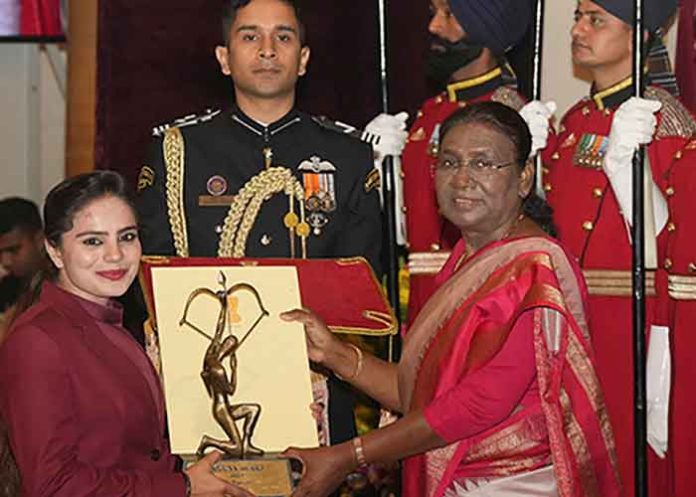
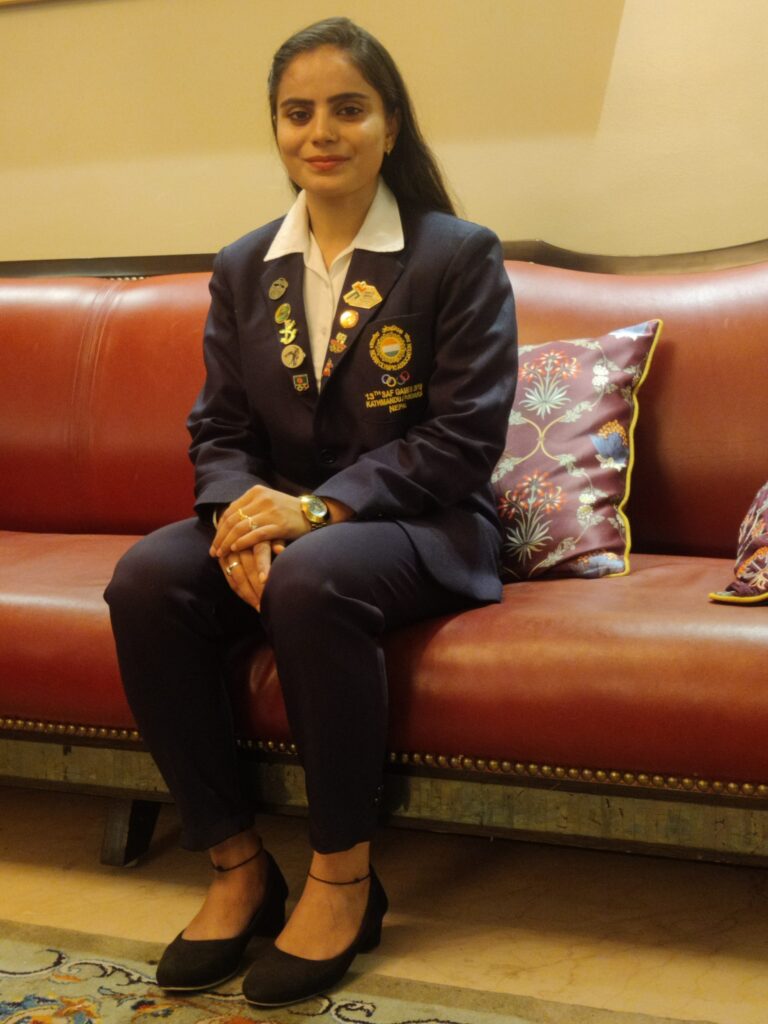
Lovely Professional University (LPU) takes immense pride as Nasreen Shaikh, a first-year MPEd student and the Captain of the Kho Kho Game at LPU and the nation, has been conferred with the prestigious Arjuna Award by Hon’ble President Droupadi Murmu at Rashtrapati Bhawan.
This recognition by the Ministry of Sports & Youth Affairs is a testament to Nasreen’s exemplary leadership, sportsmanship, discipline, and outstanding performance over the past four years.
The Arjuna Award is the second-highest athletic honour in India and is bestowed upon exceptional athletes who have consistently excelled in their respective sports. Among the recipients of the National Sports and Adventure Awards 2023, Nasreen stands out alongside other renowned athletes such as World Cup star cricketer Mohammed Shami.
Nasreen’s remarkable achievements in Kho Kho have earned her numerous national and international medals, highlighting her exceptional talent and dedication to the sport.
Her impeccable skills and unwavering determination have been evident in countless competitions she has participated in thus far. Nasreen is set to lead her team in the upcoming world games, showcasing her exceptional leadership abilities.
Nasreen’s journey to success has not been without challenges. Initially, she faced societal pressure and family objections, hindering her pursuit of her passion for Kho Kho.
However, she defied all odds and emerged as a source of immense pride for LPU and India by winning several top medals. Nasreen vividly recalls the overwhelming joy she experienced when she won her first gold medal for India, with the Indian national anthem resonating through the stadium.
Dr. Ashok Kumar Mittal, Founder ChanUcellor of LPU and Rajya Sabha Member, commended Nasreen on her national honour and expressed his pride in being associated with esteemed sports personalities like her.
He conveyed his heartfelt congratulations and expressed his belief in Nasreen’s ability to continue bringing honour and glory to the nation through her future endeavours. Dr. Mittal also expressed his delight at the Ministry of Sports’ announcement of the MAKA Sports 1st Runner-Up Trophy in the name of LPU.
Nasreen’s accomplishments serve as a testament to the significance of providing support and infrastructure for aspiring athletes. LPU’s unwavering commitment to nurturing sports talents is evident through its world-class sports infrastructure and support systems, including scholarships with 100% fee waivers.
The university boasts a roster of illustrious sports personalities, including ace javelin thrower Neeraj Chopra, accomplished wrestler Bajrang Punia, skilled boxer Jaismine, Indian Hockey Team Members, and many more.
By winning the prestigious Arjuna Award, the 25-year-old India women’s kho kho team captain has brought joy to her struggling father, who dedicated himself body and soul to fuel her passion.
Nasreen Shaikh, a 25-year-old from Shakurpur, will walk down the iconic Durbar Hall of Rashtrapati Bhavan on January 9, to collect the Arjuna Award in Kho Kho, a sport that is not considered mainstream since it isn’t part of Commonwealth, Asian or Olympic Games.
She will become only the second kho kho player to win the National Sports Award in the last 25 years – the other being Sarika Kale Sudhakar in 2020 – after the indigenous sport became irrelevant at the turn of the century and struggled for recognition with the Union sports ministry backing Olympic sports heavily to eye medals in the quadrennial international multi-sports events.
“Kho Kho has changed my life. I have been able to support my struggling father,” said Nasreen as she flipped through a file looking for documents for police verification required to be sent to authorities ahead of the Arjuna Awards ceremony.
Nasreen’s father, Mohammed Ghafoor, came to Delhi in 1980 from Araria in Bihar, polished utensils for a living, worked as thekedaar (contractor) before losses forced him to try his luck at weekly markets. The father of 11 doesn’t rest even a single day and sets up shop in morning and evening all seven days of the week. He sells his wares – mostly utensils — in patri bazaar (roadside weekly markets) in Inderlok, Inderpuri, Minto Road, Patel Nagar, Ranjit Nagar, Karampura, Nangloi, Tri Nagar, Kishan Ganj, Shastri Nagar among other places.
“Generally, people focus on one market a day but I have been taking my wares to two bazaars every day for the last many years since household expenses are huge. I had to bring up kids (seven daughters and four sons) and also fuel Nasreen’s passion,” says Ghafoor.
“I worked a lot for her. It was my responsibility to provide her with the diet. She requires [protein] powders, chana, peanuts, nuts and almonds. I’d go to Lahori Gate to fetch all this and it would cost 5,000-6,000 rupees every time,” explains Ghafoor.
Nasreen is extremely grateful to her father, who is chuffed to see her daughter win the Arjuna Award.
“He even stopped visiting his hometown as it would set him back by a good amount. He made many sacrifices.”
There was also some resistance to her taking up the sport, especially kho kho, but when Nasreen began earning accolades and people around her saw prospects, all of that subsided and she started getting acknowledged in the family and among relatives.
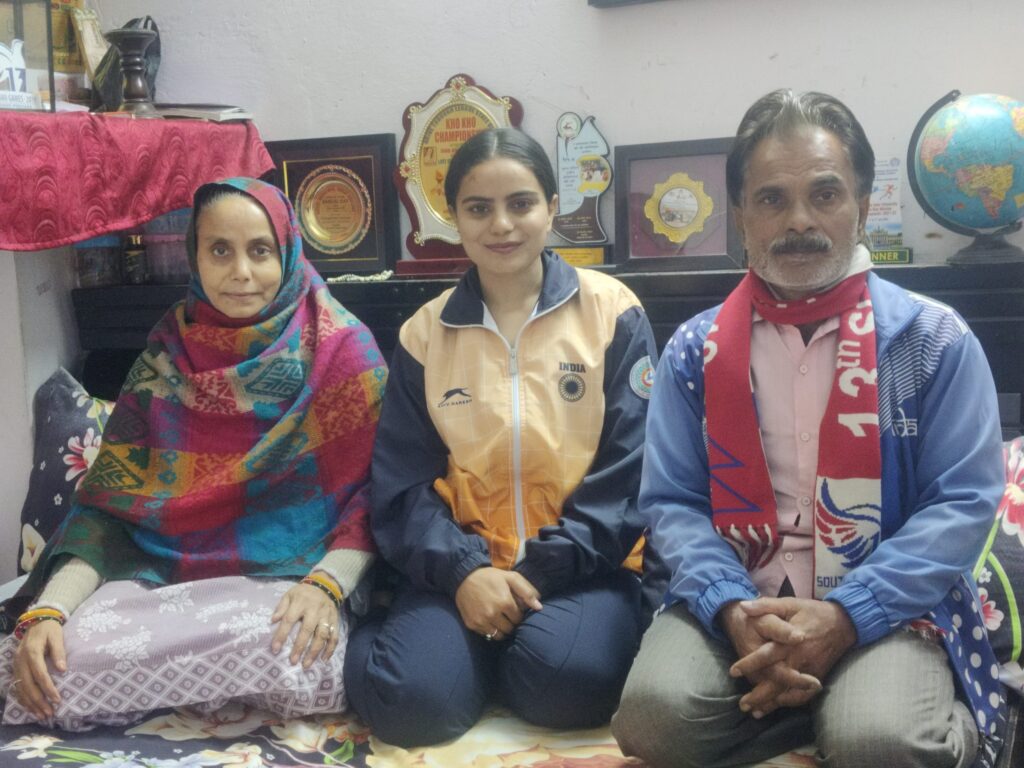
(R to L) Mohammed Gafoor, Nasreen Shaikh and her mother
Hard Worker :
Nasreen’s father Mohammed Ghafoor) sets up shop all seven days of the week in patri bazaars to help fund her daughter’s training. To Nasreen’s right is her mother
“She was committed right from the start and I thought she should be given a chance,”adds Ghafoor.
Nasreen started playing kho-kho when she was in third standard at the Government Senior Secondary School in Kohat Enclave. She was also a very good athlete, winning gold medals in 100m and 200m sprints at school level. By the sixth standard, she was participating in the school nationals as well as the nationals in kho kho.
“Since we were financially vulnerable, I couldn’t play any sport that involved equipment. So, I had to pick kho kho and athletics,” says Nasreen, who graduated from Delhi University’s Daulat Ram College with BA (Pass) degree and is now doing M.P.Ed. (Masters in Physical Education) from Lovely Professional University in Punjab. She also completed B.P.Ed. (Bachelors in Physical Education) from the same university before this.
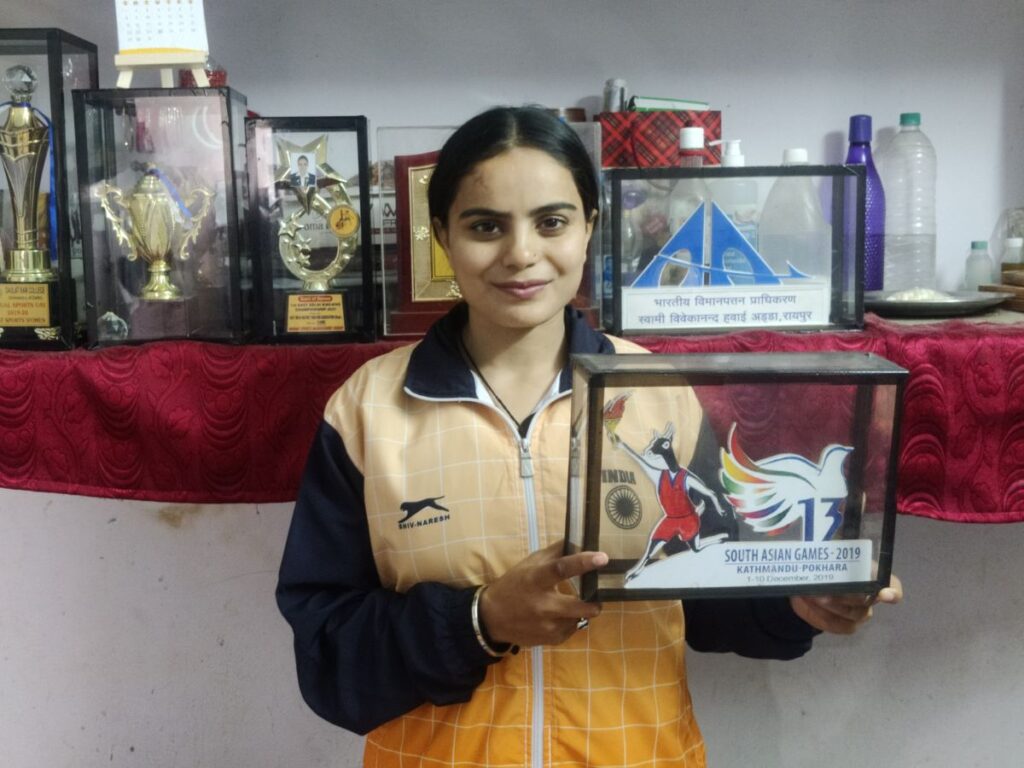
The big moment for Nasreen came in 2019 when she became captain of the Indian kho kho team for the South Asian Games. India won gold under her captaincy. She has so far competed in 50 national events and six international events. Even though the sport isn’t popular, still it is played in 38 countries.
While KKFI has started Ultimate Kho Kho, a franchise-based tournament that provides a platform for youngsters to earn and play, it is restricted only to male players. There are talks of having a women’s league on similar lines too but getting sponsors remains a struggle.
A few months after the high of becoming the national captain, her family struggled through Covid as her father had to sit at home without work. Kho Kho Federation of India, the governing body of the sport, chipped in with Rs 1 lakh and DYWA, an organisation based out of Delhi-6 also gave her Rs 50,000, to help her wade through the difficult time.
She worked on a stipend with Airports Authority of India (AAI).
“The stipend helped my family. But it had to end last year since the support is for only junior players,” says Nasreen, who is currently looking for a job and is hopeful that the Arjuna Award will help her land one.
“The sport has grown. It used to be considered a gali-kucha game. Earlier, we used to put money from our pocket for even travelling but now we are getting something back. Mittal sir (Sudhanshu Mittal, the president of the federation), announces cash prizes after tournaments and that helps. Prime Minister Narendra Modi backed the sport too in one of his speeches and it has boosted our confidence, given us recognition,” she adds.
Nasreen’s success has already inspired her two younger sisters to take up the sport. The four older ones are married and settled as home-makers.
The 18-year-old sister is studying at LPU in Punjab while the youngest, who is 14 years old, is studying in a school in Delhi.
“They both want to play kho kho.”
Her younger brother even gave up studies to cut down on their household expenses and ensure that Nasreen is left with as much money as possible for her training.
When at home, Nasreen leaves her home in hijab every morning on a scooty that she purchased recently and goes to a park in a different neighbourhood to work on her fitness.
“It (Hijab) is a norm here in our locality. But I take it off at the park during workout,” she adds.
The morning session is dedicated to endurance and fitness. She works out between 5 am and 8 am in the park before returning home.
“You need athleticism, endurance, stamina, and flexibility in this game. Everything. That is also a reason why I got hooked to it. If we play this game and become good players, we can participate in other games too like I participated in athletics.”
She works on kho kho skills in the evening session from 4 pm to 8 pm.
The set-up at LPU, she says, has helped her in training immensely.
While the Arjuna Award will be a feather in her cap and give her recognition, there is every likelihood that she will be celebrated as a star athlete in years to come. For the KKFI is planning biopic on her on the lines of those made on MS Dhoni and MC Mary Kom.
Special Player :
Nasreen Shaikh is the second kho kho player to win Arjuna Award in the last 25 years
“We are making a biopic on her. The plan is still in a nascent stage and we are working out the details like who will write the script, and who will direct the film among other things. She could play the protagonist herself or we could hire another actor to play her,” said Mittal, the KKFI President to Patriot.
source: http://www.thepatriot.in / The Patriot / Home> Delhi NCR / by Khurram Habib / January 09th, 2024
Award has been Conferred in Category of Aspirational Districts Prog; Becomes 1st DC of B’la to Win the Prestigious Title
Baramulla :
Bringing laurels for the UT of Jammu and Kashmir in general and for district Baramulla in particular, Deputy Commissioner Baramulla Dr Syed Sehrish Asgar has achieved the coveted Prime Minister’s Award for Excellence in Public Administration-2022, India’s highest award in civil services.
Dr Sehrish has been selected for this prestigious achievement in the category of Aspirational Districts programme as she has brought transformative changes in the identified parameters envisaged in the said programme.
As per reports, key aspects for Aspirational District Programme in Baramulla for which the Deputy Commissioner was awarded by the Prime Minister include establishment of Birth Waiting Wards in Primary Health Centres, Community Health Centres, Upgradation of diagnostic services at all delivery points and Poshan Tracker Tabs for all Anganwadi workers.
The Deputy Commissioner supported farmers through mechanism, plant protection, nursery strengthening, robust root stocks, quality planning material etc and organized marketing facility established at Sopore which is the second largest Fruit Mandi in Asia.
Severe Acute Malnutrition has been reduced in the district to 0.01 percent from 3 percent and Moderate Acute Malnutrition to 0.039 percent from 11.93 percent. A two-year paramedical diploma course has been introduced for 300 border area students to fill up the critical gap in the health sector.
Under financial inclusion, 56,215 PM Jan Dhan Yojana accounts have been opened in Baramulla district.Meanwhile, various stakeholders including Lieutenant Governor have extended their warm appreciations and felicitations to Dr. Syed Sehrish for this achievement besides earning accolades from several other quarters.
(Source: GNS)
source: http://www.globaltoday.in / Global Today / Home> English> Kashmir> News / April 18th, 2023
Govandi’s Daughter Makes the Country Proud by Pursuing MBBS
Mumbai:
In the heart of Govandi, an area grappling with challenges like limited access to education and rising crime, a remarkable tale of triumph emerges. Khan Sadia Kawsar, a resident of this humble locality, is defying odds by pursuing her dream of becoming a doctor, thus becoming a shining example for the aspiring youth of her community.
Despite the dearth of quality educational institutions in Govandi, Khan Sadia Kawsar’s journey stands out as an inspiration. A local official highlighted the prevalent issues, noting that the area often makes headlines for crime-related incidents, with little attention from politicians or concrete initiatives from religious leaders to address the root causes. The suggestion to uplift Govandi’s image centers around establishing better educational institutions and providing improved training for the younger generation.
Khan Sadia Kawsar, a second-year MBBS student, is the daughter of Hafiz Alauddin Sahib, a respected figure in the community and a dedicated honey trader. Despite the challenges, Hafiz Alauddin spared no effort in providing religious education to his children. An accomplished computer engineer himself, he played a pivotal role in guiding Sadia towards her academic pursuits.
Sadia’s academic prowess became evident early on, consistently scoring high marks in school. Her remarkable achievement of securing 98.5% in the twelfth examination from the Govt.Jr.College in B. Kothakota, Andhra Pradesh, paved the way for her current pursuit of a medical degree at the Fathima Institute of Medical Sciences in Kadapa.
Khan Sadia Kawsar’s journey symbolises the triumph of determination and hard work. Her success challenges societal stereotypes, proving that with determination, even the daughter of a humble businessman can achieve great heights. Hafiz Alauddin Khan, reflecting on the challenges he faced to support his children’s education, emphasised the importance of unwavering faith in God and the merit of one’s children.
Originally from Basti district, Uttar Pradesh, Hafiz Alauddin Khan is not only a devoted father but also a prominent scholar and supporter of religious institutions. Along with his contributions to organisations like Darul Uloom Deoband and Jamiat Ulema, he maintained a focus on his small honey business, always expressing gratitude for Almighty’sblessings.
Hafiz Alauddin’s advice to parents echoes a belief in the inherent merit of their children. He advocates trust in God and encouragement of the youths, emphasising that success is destined for those who persevere.
In the face of societal challenges and limited opportunities, Khan Sadia Kawsar’s journey serves as a guiding light, illuminating a path of hope and possibility for the new generation in Govandi and beyond.
source: http://www.clarionindia.net / Clarion India / Home> Editor’s Pick> Features> Indian Muslim / by Mohammad Alamullah, Clarion India / December 18th, 2023
Chhatwan Village (Keotiranway Tehsil, Dharbhanga District),BIHAR:
Photo: Afrin’s success in securing the Special Survey Law Officer position reflects her dedication and hard work. The achievement has illuminated her family’s name, adding to the legacy left by her grandfather.
The festive atmosphere in her village is palpable as the news of Afrin's success spread, making her not only a source of pride for her family but also an inspiration for the younger generation in the region.
Darbhanga:
In an impressive performance, a Muslim girl from Chhatwan village in Keotiranway Tehsil of Bihar’s Darbhanga District, has excelled in the online Computer Based Test (CBT) conducted by the Bihar Joint Entrance Competitive Examination Board for the coveted position of Special Survey Law Officer in the state’s Revenue and Land Reforms Department.
Shagufta Afrin, hailing from a family with a strong academic background, secured an impressive 283rd rank out of 1947 in the examination, specifically in the General Khatoon quota for the Special Survey Law Officer position.
Daughter of Muhammad Shahabuddin Rizvi, an engineer, and Nuzhat Parveen from Chhatwan village in the Keoti assembly constituency, Afrin has made her parents proud. Her success story is on the lips of all and sundry in the village and its neighbouring areas.
The festive atmosphere in her village is palpable as the news of Afrin’s success spread, making her not only a source of pride for her family but also an inspiration for the younger generation in the region. The achievement is particularly significant as it brings recognition to the entire region.
Afrin’s grandfather, the late Muhammad Zubair, served as a joint director of agriculture, and her late grandmother was a dedicated housewife.
Afrin diligently prepared for the competitive exams after completing her civil engineering degree from Delhi.
Afrin’s success in securing the Special Survey Law Officer position reflects her dedication and hard work. The achievement has illuminated her family’s name, adding to the legacy left by her grandfather.
She attributes her success to the unwavering support of her parents. Her younger brother, Aman Rizvi, is pursuing MBBS, while her younger sister, Shumaila Rizvi, is currently in Grade 8.
Numerous well-wishers, including local leaders and activists, have congratulated and extended their good wishes to Afrin.
Prominent personalities such as Muhammad Shamim, Heera Seth, Mukhya Fateh Ahmed, Muhammad Mustafa, Faiz Muhammad, Sajjad Alam, Sagheer Alam, Phool Babu, Iftikhar Ahmed , Muhammad Aslam Khan, and Sagheer Najam have joined in celebrating Afrin’s success and have offered prayers for her continued bright future.
Afrin’s achievement not only symbolises personal success but also serves as a beacon of hope and inspiration for the community, showcasing the potential for excellence.
source: http://www.clarionindia.net / Clarion India / Home / by Team Clarion / December 23rd, 2023
Her work pinpoints the sources of aerosols and their role in driving regional climate change in India, besides equipping the Ministry of Environment with the right knowledge regarding policymaking.
Dr Gazala Habib never imagined she would be a scientist one day. She recalls entertaining the idea of becoming one while watching the 1969 Bollywood spy thriller Yakeen at her home in Raipur, Chhattisgarh, but the moment was short-lived.
In the movie, Dharmendra plays a swashbuckling scientist who battles everything from enemy agents to his own doppelganger as part of a secret mission to save the country. “As much as I wanted to be like him, I also knew that it was out of the question. I came from a small town and a very conservative background, and had not heard of any woman scientist growing up,” says Dr Habib, now 49.
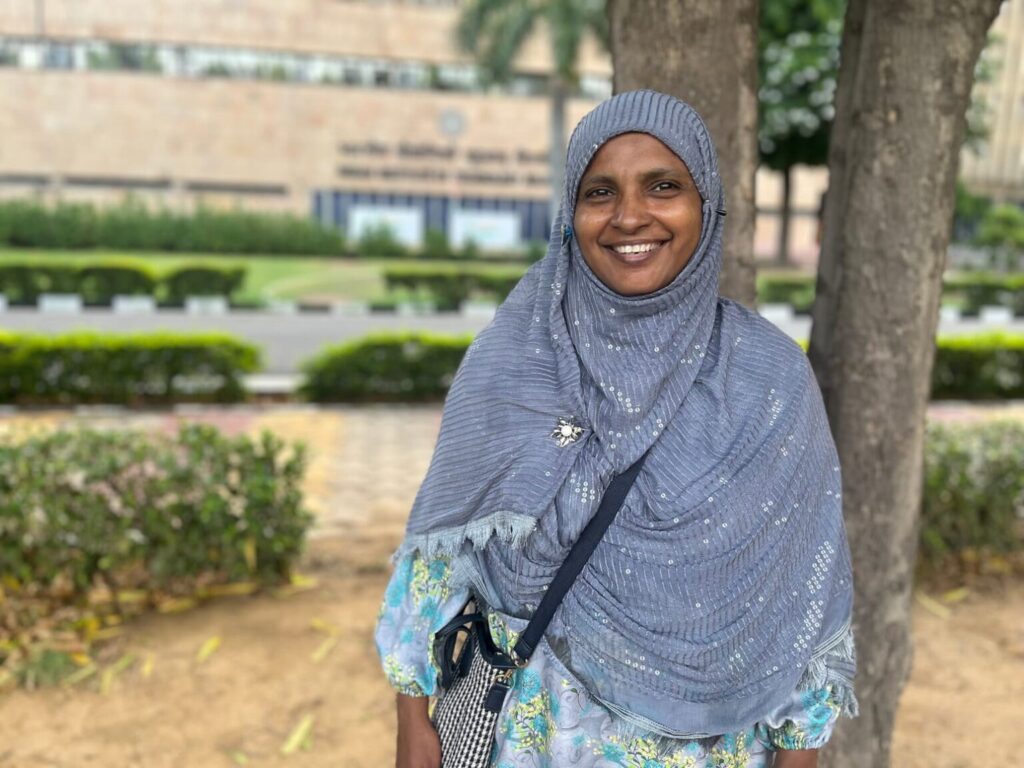
Eventually, Dr Habib did get to live her childhood dream. A professor at the Department of Civil Engineering of the Indian Institute of Technology Delhi (IIT Delhi), her work focuses on measuring air pollutants, particularly aerosols, in ambient air using innovative equipment and approaches.
Dr Habib set up and heads the Aerosol Research and Characterization Laboratory at IIT Delhi
She also set up and heads the Aerosol Research and Characterization Laboratory at IIT Delhi, which undertakes cutting-edge research on sources of aerosols and their impacts on human health. “We strive to fill up the significant gaps in our understanding of personal exposure to particulate matter [PM] in urban areas. This will assist policymakers to better measure the impacts and inform policy initiatives,” she explains.
Dr Habib says only limited studies on PM have been conducted in India, and that too mostly at one or two locations. “None of them provide an overarching assessment of human exposure in an urban context — integrating a variety of typical exposures across a typical day, and being useful in comparing different types of exposures throughout a person’s daily activity,” she details.
Much of the work has been carried out as part of the Emissions Inventory Building Activity under the National Carbonaceous Aerosols Programme-Carbonaceous Aerosol Emissions, Source Apportionment and Climate Impacts (NCAP-COALESCE), a multi-institutional research and capacity building initiative funded by the Ministry of Environment, Forests and Climate Change. Dr Habib is the project incharge and coordinator in IIT Delhi for this programme.
“India does not have a uniform emissions inventory system [to measure total emissions from each pollutant from each sector]. The work under NCAP-COALESCE aims at equipping the Ministry of Environment with the right knowledge to aid sound decision-making on pollution policy,” she says.
To that end, Dr Habib and a team of researchers have developed a Versatile Source Sampling System (VS3), which will measure emissions and help monitor pollutants. The compact unit allows air to be drawn through a preweighed filter at a known rate, thus collecting particles in the air on its surface. The filter is weighed again to determine the mass of particles collected, and by dividing the mass by the total volume of air, the particle concentrations can be measured.
In comparison with other air monitoring equipment, VS3 is more sophisticated, sensitive and capable of measuring emissions, particularly small particulate matter, from a variety of sources such as residential cooking stove, open biomass burning, brick kilns and vehicles. While the technology was developed in IIT Delhi, Dr Habib says it is being used across NCAP-COALESCE partner institutions to understand complexities related to carbonaceous aerosols.
Challenging the traditional mindset
By her own admission, Dr Habib’s journey into the scientific world was not easy. “My father was a telephone operator, and my mother a primary school teacher. I am one of the eight siblings. We did not have luxuries, but my parents, especially my father, prioritised our education,” she says.
Her parents were strict about school, but their expectations relaxed a bit when time for enrolling in college arrived. “There were people in my family who were like, ladkiyon ko zyada padhane ki zaroorat nai hai [there is no need to educate girls much]. At one point, my father also contemplated the idea of my marriage after BSc,” she says.
“They expected my brothers to do engineering, and thought I should do a science degree and start preparing for IAS. But I felt that my brother was more admired by my parents because he was inclined towards engineering. He is 10 minutes older than me, and I thought to myself, if he can do it, why not me?” she adds.
With a little help from her brother, she managed to convince her parents to study engineering. Later, she gained admission to Bachelors of Engineering at the National Institute of Technology, Raipur. Subsequently, she pursued MTech in environmental engineering from Visvesvaraya National Institute of Technology, Nagpur.
Dr Habib’s earliest memories revolve around working with a large group to identify carcinogenic compounds present in emissions generated from burning crop waste in rural India
Rigours of research
Dr Habib believes destiny defined the trajectory of her career. “I was contemplating about PhD, when a junior directed me to a vacancy at IIT Bombay. I managed to apply just in time,” she says.
There were only two vacancies, and on account of a particularly gruelling panel interview, she recalls putting down her chances of selection as next to nil. However, she got selected. Her PhD mentor was Chandra Venkatraman, a Professor of Chemical Engineering and Climate Studies at IIT Bombay, who Dr Habib says “changed her way of thinking”.
“I was very shy and conventional. I remember telling her that I had never travelled alone. I told her I am not the girl who can go out and measure pollution,” she recalls. Venkatraman laid her apprehensions to rest, and Dr Habib eventually joined her mentor to work on a project analysing emissions from residential fuel sources.
The five years at IIT Bombay groomed Dr Habib to become the scientist she is today.
“I remember I started work in January and she immediately put my name up for speaking at an international conference in October. I was from a Hindi medium background, and did not even know English! She taught me to make my first PowerPoint presentation and my first Excel sheet. She taught me not only science, but also communication. Whatever I am today, it is because of her,” says Dr Habib.
Dr Habib’s earliest memories revolve around working with a large group to identify carcinogenic compounds present in emissions generated from burning crop waste in rural India
Her earliest memories revolve around working with a large group to identify carcinogenic compounds present in emissions generated from burning crop waste in rural India. “I learnt a lot from this group about how to collect samples, what kind of machines to use and how to use them,” she says. This was soon followed by her first international trip to France, where she got to work with Olivier Boucher, Director of Research, French National Centre for Scientific Research.
The coursework was demanding, and added to that was the pressure to get married. “I think the rush to get women married is also why a large number of them end up dropping out of PhDs or giving up their careers,” she adds. After consulting Prof Venkatraman, Dr Habib decided to get married only after finishing her PhD, a promise she ended up keeping.
The rigours of research eventually got to her and she remembers a point in her PhD when she became depressed. Her time at the University of Illinois, and then University of San Diego, for postdoctoral work, worsened things. “I felt lonely during my US stint, but rediscovered myself after frequenting a mosque based on a colleague’s advice,” she says.
Entry into academic sphere
In June 2008, Dr Habib joined IIT Delhi as an assistant professor. In November the same year, she got married.She was regularised in her post in 2010, and promoted as an associate professor in 2018. In March this year, she became a professor.
In the last 15 years, she has provided valuable data that helps understand air pollution better. For example, her team measured the impact of PM 10 and 2.5 particle concentration on mortality rates to assess that the numbers attributable to PM 2.5 particle concentration in Ghaziabad was 70% higher than Delhi.
“Exposure to PM has been recognised as a well known human health risk factor, however, its quantification for various regions, including India, is still not well established. In the last few years, we have undertaken many studies to help quantify this data by studying the impact of pollutants on different organs, including heart and lungs, as well as different demographic populations,” she says.
With respect to Delhi’s pollution problem, she says, “In the winters, we cannot stop talking about stubble burning in Punjab and Haryana. If you read the source apportionment papers from Delhi, you will find that pollution due to stubble burning lasts only a few days. The long-term problem that we should be solving is suspension of dust from roads. From a personal exposure perspective, vehicles account for 20 to 30% of PM 2.5 concentration,” she says.
She believes having a policy on effectively managing crop waste is the need of the hour. “In a paper we recently submitted to Nature, we discovered that despite the Pradhan Mantri Ujjwala Yojana, a majority of rural households still use fuel dung for energy. If they use crop waste for biogas generation in addition to cow dung, there is no need of pushing LPG down their throats. It will cost less also,” she adds.
Dr Habib thinks funding needs should be simplified and freed from the shackles of bureaucracy for the research to contribute more effectively to policy. Also, India should follow an integrated approach and make the data publicly available. “What we need is a network programme that brings scientists under one umbrella, gives them standard equipment, procedure and a common goal,” she says.
“Source apportionment studies are being done in India by state Pollution Control Pollution Boards (PCBs) and Central PCB in non-attainment cities, but there is no national network. Every state is following its own rules — so methodologies, data analysis and data curation methods are different. Therefore, you cannot compare data from two cities,” she adds.
At present, Dr Habib’s focus is on setting up a state-of-the-art laboratory where all kinds of devices related to air pollution safety and monitoring can be evaluated for their performance
State-of-the-art laboratory
At present, Dr Habib’s focus is on setting up a state-of-the-art laboratory where all kinds of devices related to air pollution safety (like air purifiers, masks) and monitoring can be evaluated for their performance. “We have just received a grant from the Department of Science and Technology under SATHI [Sophisticated Analytical and Technical Help Institutes]. The laboratory will be developed at IIT Delhi’s Sonipat campus. At present, gate number 3 of IIT Delhi has such a facility,” she says.
Dr Habib swears by the support of her husband, her 13-year-old son and 11-year-old daughter. “There are creches and day care centres on campus now, but they were not available when I had children. I do not think I would have been able to manage it all without my husband,” she says.
She believes that for more girls to study sciences and mathematics in India, discrimination needs to end. “When you put differences in their minds from the beginning, they start believing they are weak,” she says, adding that true equality can be gauged from the representation women receive. “I am still the only woman in the room in most conferences. This needs to change.”
“I never thought I would be able to do this. I had this epiphany a couple of times that I wanted to be a scientist, but the guidance came from somewhere, somehow. It was all god’s plan I say, because I never planned this,” she sums up.
source: http://www.rukhmabai.com / Rukhmabai Initiatives / Home / by Shikha Sharma / August 28th, 2023
Shahina Khanam, a resident of Hesla on Ramgarh-Argadda road, will be awarded a gold medal for being a topper for four years in BDS.
The medal will be awarded by Governor CP Radhakrishnan at the convocation ceremony of Ranchi University on May 2.
Topper Shahina Khanam is the sister of Rinkle Khan, the town vice president of AJSU. The family members are very happy with the news of getting the gold medal and there is an atmosphere of happiness in their house.
Shahina Khanam’s mother, father, brother, sister and other people distributed sweets.
AJSU Nagar Vice President Rinkle Khan said that earlier education was neglected in Muslim society. But now the Muslim society is also rapidly increasing its step towards education.
source: http://www.lagatar24.com / Lagatar / Home / by Manoj Sinha / April 26th, 2023