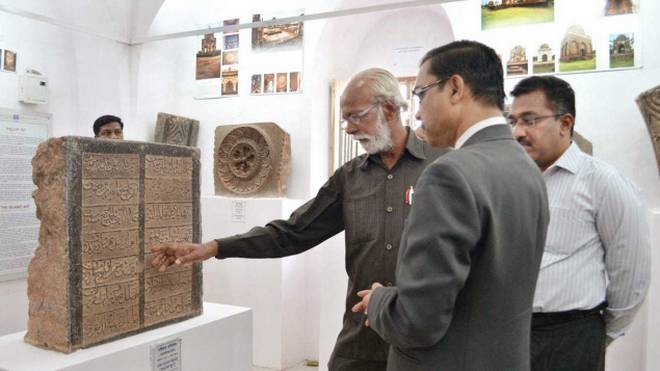
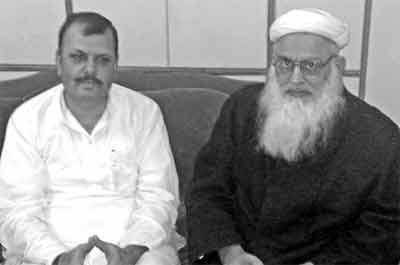
Historian Abdul Samad Bharati showing the stone inscription to visitors in the Bidar ASI museum.— File Photo: T. Gopichand
History textbooks in the State say that Allauddin Hasan Gangu, founder of the Bahmani dynasty, began his life as the slave of a Brahmin in New Delhi. However, other versions of history strongly claim that he hailed from Iran and served in the army of the medieval Delhi kings.
The latest evidence that argues against the slave-to-king theory is a stone inscription unveiled at the Archaeological Survey of India museum in Bidar that opened last month.
The inscription of two sets of seven lines, with neatly carved rectangular borders, starts with hailing King Ahmed Shah Bahmani and how his rule brought prosperity to the region. It speaks of how he was the ninth king of the Bahmani Sultanate founded by Allauddin Hasan Gangu Bahmani . It identifies Hasan Gangu as a descendant of the legendary warrior Esfandiyar Goshtap. It describes him as a proud son of a Bahmani village in Iran. “Experts have dated this tablet between 1350 and 1550,” said Prasanna Kumar, archaeologist with the Bidar ASI office.
“For long, scholars have argued with evidence that Allauddin was a general in Mohammad Bin Tughlaq’s army. He founded the Bahmani Kingdom in Kalaburagi, after rebelling against the Delhi kings in 1347. But, we continue to teach the legend that Allauddin was a slave who became a king by chance. This is unfortunate,” said Abdul Samad Bharati, historian and author of the book ‘Historic monuments of Bidar’. He hoped the Bidar inscription would help change the minds of history writers. “There are two other documents that refute the theory about Allauddin’s humble beginnings, a book published by University of Dhaka that speaks of the life and contribution of the hero and medieval era historian Abdul Mallik Esami, who said Allauddin was an Iranian, who joined the Delhi army,” he said.
International scholars also feel the same. “The whole story of Hasan Gangu being a slave to Gangadhar Shastri is a legend that is not supported by any primary source,” said Sara Mondini, art history scholar from Ca’ Foscari University of Venice, who is on a tour of Ashtur near Bidar. Helen Philon, historian of the Deccan Heritage Foundation, says history books need to accommodate changes over the years. “Farishta, a court historian of the Bijapur Adilshahis accorded legitimacy to such legends and hearsay in the 17 th century. Most historians and writers seemed to have believed Farishta, without considering theories that offered alternative explanations,” she said.
Ashwath Narayana, professor of history in Bangalore University, and a member of the Karnataka state textbook review committee, said history textbooks should change with the emergence of new sources. “If history is an attempt at truth-telling, new research should prompt us to change the way it is written. We will study this inscription and make suitable changes to the history of the Deccan, if need be,” he said.
A stone inscription unveiled at the ASI museum in Bidar is evidence that negates the slave-to-king theory in history textbooks.
source: http://www.thehindu.com/ The Hindu / Home> News> States> Karnataka / by Rishikesh Bahadur Desai / Bidar – April 04th, 2016
Lessons in conservation at the Sibtainabad Imambara
As a young girl, when I was studying in Lucknow, I would often go to Hazratganj to buy storybooks. Browsing through the collection in the market and buying a book would be the highlight of every week. I only had my eyes on the bookshops and never on the name of the market or the dilapidated gateway, which had once been impressive but now looked the worse for wear.
Even on subsequent trips as an adult, I never bothered to think about it till the day a Lucknow-based heritage activist and lawyer, Syed Mohammad Haider Rizvi, invited me to speak at an inter-faith assembly in Sibtainabad Imambara.
As a devout follower of Imam Hussain, I had visited almost every Imambara in Lucknow for the majlis, or assemblies, to commemorate his sacrifice, but never this one. I wondered why I hadn’t even know it existed. I soon found out.
Origin of the Imambara
Amjad Ali Shah was the fourth Nawab of Awadh and ruled from 1842 to 1847. Since he had a religious bent of mind, as a child he learnt Islamic values of faith and piety. His piety as a ruler earned him the sobriquet of Hazrat. The famous Hazratganj of Lucknow is named after him and that’s the area where he chose to build an Imambara which would also house his mausoleum.
It was started in 1847 and completed after his death by his son Nawab Wajid Ali Shah. It was named Sibtainabad as the two Shia imams Hasan and Hussain (grandsons of the Prophet) are known collectively as Sibtain.
When I entered, I found myself inside a huge open area from where I could see a compound with a beautiful Imambara, a congregation hall for assemblies where Imam Hussain is mourned.
The Imambara architecture comprises a main hall (with additional halls depending on the size) where the mourners gather, a raised shahnasheen (platform) where the taziyas and alams (replicas of the shrine of Imam Hussain and his standard) are kept. A pulpit would be kept on one side for the speakers who would speak of the tragedy of Karbala.
The reason I had never been to this Imambara when I was living in Lucknow soon became clear. Once a beautiful Imambara covered with fine carpets, silk curtains, priceless art treasures and exquisite chandeliers, it was vandalised in 1857 during the First War of Independence. Nawab Amjad Ali Khan lay buried here in a vault under the central hall, forgotten by all.
It was even used as a church by the British officers till 1860, while the Christ Church was being built, and Lord Canning attended a service in the building.
In 1919, it was declared a protected monument by the Archaeological Survey of India (ASI). Despite this, it was sold by one Sultan Bahadur in 1921, who claimed to be a descendant of Nawab Amjad Ali Khan, to the Lucknow Improvement Trust (LIT). The LIT, in turn, allotted the surrounding land for residential purposes. The Imambara fell into disuse and disrepair.
The main Imambara post-1947 was used as a workshop and storehouse for furniture as well as by the government census office. A motor workshop had sprung up outside.
In 2008, Rizvi was appointed the joint mutawalli by the Shia Waqf Board and he started the long fight to free it from encroachment and illegal occupation. He took recourse to judicial avenues and slowly, with the help of Right to Information applications and public interest litigations, he succeeded. Then came the task of restoration, which was undertaken by the ASI.
The splendour inside
The approach to the Imambara is through the gateway and into an open space which gives way to an enclosed court. The Imambara stands on a high platform and its arched façade looks very impressive, with its delicate floral stucco and stained glass doors. The inner walls, which had got blackened with neglect and abuse, have been lovingly restored, and its green and white paintings and stucco work are exquisite. The roof and “its beams, which formed a vault over the grave of the late king, had collapsed in a heap of rubble,” according to a 1945 report. It once again supports beautiful glass chandeliers.
A recurring motif on the archways inside the halls is a painting of the Prophet’s celestial steed, the ‘buraq’, that carried him to heaven on the night of ascension. The master mason, Ansaruddin, traced out the designs and restored the paintings and stucco work very carefully.
Preservation of our heritage is our fundamental duty as it is an important source of history of the era in which these buildings were built. If other ‘lost monuments’ received such dedicated and methodical renovation, they could also be rehabilitated and restored to us.
source: http://www.thehindu.com / The Hindu / Home> Opinion> Columns / by Rana Safvi / November 26th, 2017
Centered on the life of freedom fighter Maulana Barkatullah Bhopali, a play ‘Baghi Banjara’ was staged at Shaheed Bhawan on Friday. Scripted and directed by Waseem Khan, the play was staged for the first time in the country.
Abdul Hafiz Mohamed Barakatullah, known with his honorific Maulana Barkatullah (7 July, 1854-20 September 1927), was an anti-British Indian revolutionary with sympathy for the Pan-Islamic movement.
The whole journey from birth to death of the great freedom fighter was beautifully shown in the one-hour-twenty-minute-long play. Barkatullah was born on 7 July 1854 at Itwara in Bhopal.
He fought from outside India, with fiery speeches and revolutionary writings in leading newspapers, for the independence of India. In 1988, Bhopal University was renamed Barkatullah University in his honour. He was educated from primary to college level at Bhopal.
Later he went to Bombay and London for his higher education. He was a meritorious scholar and mastered seven languages: Arabic, Persian, Urdu, Turkish, English, German, and Japanese. Despite a poor background he topped the list of successful candidates in most of the examinations for which he appeared, both in India and England. He became the Quondam Professor of Urdu at the Tokyo University Japan.
He was one of the founders of the “Ghadar” (Rebellion) Party in 1913 at San Francisco. Later he became the prime minister of the Provisional Government of India established on 1 December 1915 in Kabul with Raja Mahendra Pratap as its president. He died in 1927 at San Francisco.
The play was presented by mainly young cast of Swabhiman Shikshan Samiti. Suggestive sets, costumes and lights were used.
A patriotic song ‘rang de basanti chola…,’ of movie ‘Shaheed’ (1965) was used in the play. Gaurav Jaat as Maulana Barkatullah, Badra Wasti as Tarik Nigar, Shakeel Chand as Kadar and others were in lead role.
“For the first time, the play centered on the great freedom fighter is being staged for the first time in India. I don’t know why no play was staged on the tenacious fighter. I wrote the play at the instance of Shriram Tiwari, former director of culture. The writing took one year and the rehearsals lasted for one-and-a-half- months,” said Waseem Khan.
source: http://www.freepressjournal.in / The Free Press Journal / Home> Bhopal / by A Staff Reporter / January 28th, 2017
On August 4, 1914, the British Empire declared war on Germany, making WWI a truly global war. As Britain observes the centenary of the war on Monday, TOI takes a look at one episode of 1915 that rattled Britain and her empire.
On February 15, 1915, the 5th Light Infantry Regiment of the Indian Army was getting ready to embark on a voyage to Hong Kong from Singapore. A little after 3pm, one sepoy Ismail Khan of C company fired at an ammunition lorry from the quarter guard near Alexandra Barracks. Soon, sepoys and VCOs (viceroy’s commissioned officers) of four predominantly Muslim Rajput companies (there were some Jats and Lohias too from Haryana and Punjab) of the eight-company strong regiment mutinied, starting a week of chaos and bloodshed that has come to be known in history as the Singapore Mutiny.
A lot has been written about the mutiny ever since, but very few have been works of scholarship. Fewer still are the official histories of the event. But in India, there’s a great deal of mystique surrounding this episode, which nationalists, historians and others, have linked to the freedom movement. They see some commonality between the 1857 Uprising and this one, and glorify this mutiny, without, of course, considering what the main actors of the event, the rebel sepoys, said in their testimonies to the courts of inquiry.
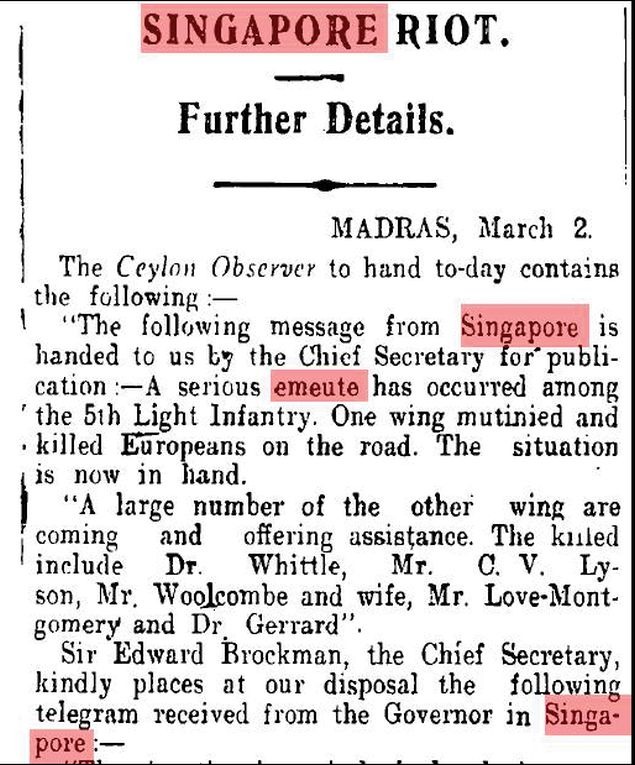
Snapshot of a TOI article from 1915 on the Singapore Mutiny
They gave ambivalent statements, turned coats, played victims, and testified against men already dead in the mutiny or executed by firing squads. They did all this to exonerate themselves and men of their own caste/village from swift colonial justice. Even those sepoys who were identified as mutineers by others spun convincing tales to fool the court.
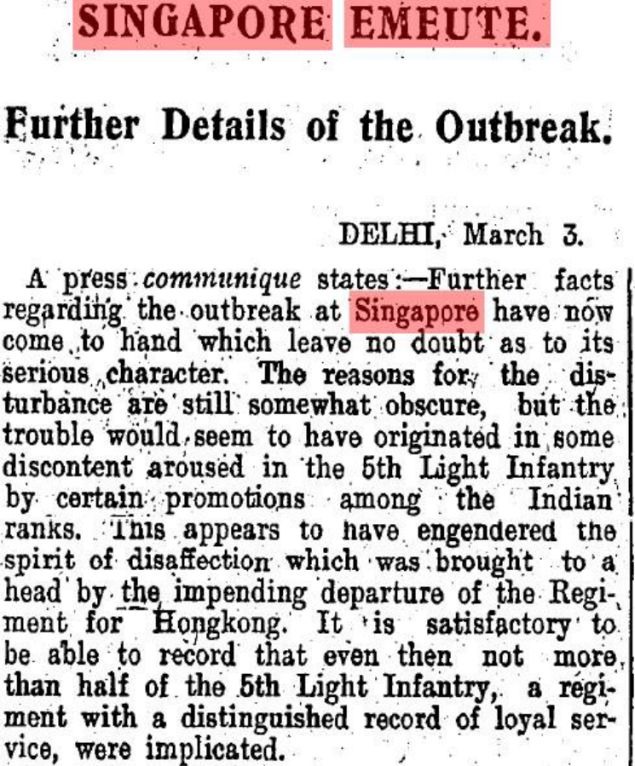
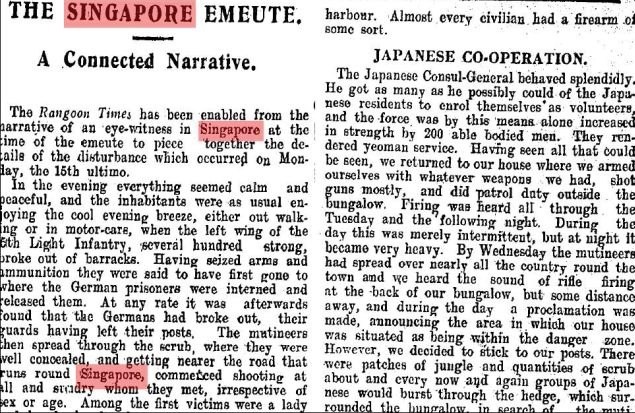
The Times of India had extensively reported the mutiny in 1915, calling it the Singapore Emeute. On March 2 that year, when the mutiny had already been put down and the inquiry was on, the first news of the mutiny had reached India. This paper had reported then: “A serious emeute has occurred among the 5th Light Infantry. One wing mutinied and killed Europeans on the road. The situation is now in hand. A large number of the other wing are coming and offering assistance.”
The mutineers belonged to the right wing of the regiment. The left was primarily composed of Pathans (the sepoys, though, called themselves Hindustani Pathans) who also came from the same regions as the Muslim Rajputs—Punjab and Haryana, including areas that form part of Delhi NCR today. These men didn’t join the mutineers, but ran helter-skelter in the melee and shut themselves in bathrooms/toilets and shops, with many escaping to the forest.
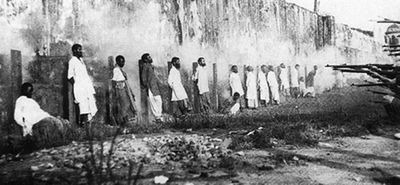
Mutineers being executed by firing squad. It shows some sepoys still standing and some down, as the European militia executioners missed their targets several times.
It was a deja vu moment for the regiment, which, in its previous avatar as the 42nd Bengal Native Infantry regiment, had seen exactly four companies rebel during the 1857 Uprising and the rest staying loyal. That was the reason why the regiment wasn’t disbanded after the Uprising was quelled. In 1915, too, the regiment would escape disbandment because of this reason, and would “honourably discharge its duty and salvage its lost reputation” in East Africa where they would fight the Germans.
But in the week that the mutiny lasted, the rebels killed 12 British officers and 14 European civilians, liberated German prisoners held in a jail (of whom 17 joined them and the rest stayed neutral), and got on board by persuasion or intimidation some men of the Malay States Guides.
On March 3, 1915, The Times of India had a clearer picture of the mutiny. “Further facts regarding the outbreak at Singapore have now come to hand which leave no doubt as to its serious character. The reasons for the disturbance are still somewhat obscure, but the trouble would seem to have originated in some discontent aroused in the 5th Light Infantry by certain promotions among the Indian ranks. This appears to have engendered the spirit of disaffection which was brought to a head by the impending departure of the regiment for Hong Kong. It is satisfactory to be able to record that even not more than half of the 5th Light Infantry, a regiment with a distinguished record of loyal service, were implicated,” TOI had reported.
Snapshot of a TOI article from 1915 on the Singapore Mutiny.
That obscurity, as stated in the TOI report, has remained till date. The mutiny was quelled by the British by February 22 with Franco-Russo-Japanese help. After that, it was the time for conspiracy theories. Though there was little evidence on ground, the mutiny was linked to the Ghadar Conspiracy—efforts by the Ghadar Party to foment rebellion among Indian troops stationed abroad. The Ghadarites themselves took credit for it, though they got news of the mutiny only on March 2—the same day TOI carried the report—after the mutiny was suppressed. And they thought until April that Singapore was under rebel control.
Then there was the German conspiracy theory. At least one German prisoner took credit for inciting the Indian soldiers to mutiny. Plus the sepoys are believed to have received letters from their comrades fighting in Europe that the German king had converted to Islam and that it was not right to fight the forces of a Muslim king.
Then there was the more convincing theory of the sepoys rebelling due to their unwillingness to fight the forces of the Ottoman Sultan, the caliph of Islam.
Snapshot of a TOI article from 1915 on the Singapore Mutiny
But the real factor may have been a combination of terrible lapse in communication and leadership on the part of the British (the CO of the regiment was particularly unpopular among the troops and officers, both Indian and British. After the mutiny, he was dismissed from his post and retired from the Army) and a greater desire among the Indian troops to escape the horrors of European war—the latter observation also made by Japanese historian Sho Kuwajima.
On July 5, 1915, TOI carried the government’s explanation: “In view of the misrepresentations that have been made regarding the mutiny, we are authorized by the governor to state that no report whatever had reached His Excellency or the general officer commanding prior to the mutiny regarding any seditious tendencies in the 5th Native Light Infantry … No charge of disloyalty had ever been made to the government against the 5th Light Infantry … on the other hand, Government had received most positive assurances as to the loyalty of the regiment.”
Yet the sepoys were only loyal to one another in their regiments, battalions and companies as in the case of the Singapore mutineers. They gave no call for freedom or anything of that nature.
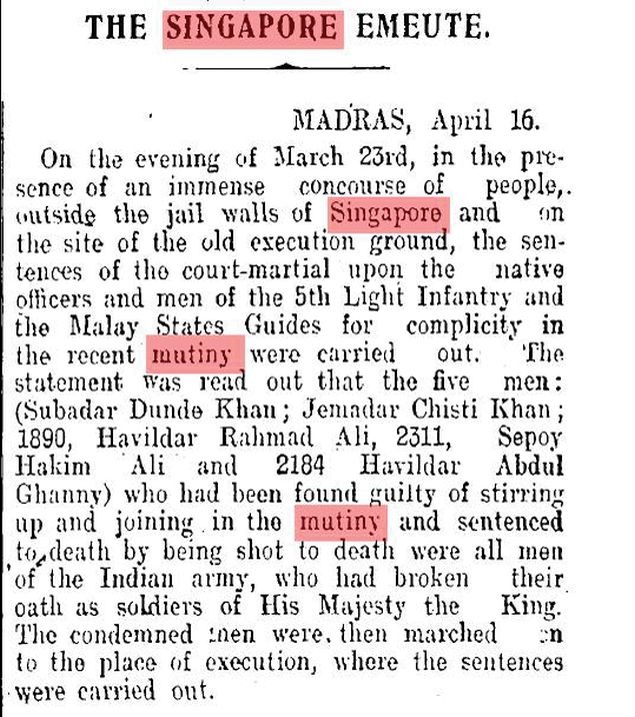
Snapshot of a TOI article from 1915 on the Singapore Mutiny
Nevertheless, in the immediate aftermath, there was disturbing talk about the loyalty of Indian troops, and the wisdom of trusting the security of big colonial possessions like Singapore to Indians was questioned too. But in a strange coincidence, exactly 27 years after the Singapore Mutiny, on February 15, 1942, 80,000 British-led Allied troops surrendered at Singapore to the Japanese of whom 40,000 were men of the Indian Army. Nearly 30,000 of them would eventually join (either voluntarily or under duress) the Indian National Army.
Buried in history
· 47 sepoys, NCOs and VCOs were executed after a general court martial
· The ringleaders were identified as Subedar Dunde Khan, Jemadar Chisti Khan, Havildar Rahmat Ali, Sepoy Hakim Ali and Havildar Abdul Ghani; Dunde Khan and Chisti Khan were shot first on February 21
· 64 others were sentenced to transportation for life or ‘sazaa-e-kalapani’
· No memorial or plaque whatsoever to the mutineers exist anywhere
· Mutineers till today are unfairly vilified in Western accounts
· Since most sepoys on trial and during court of inquiry clammed up, the full truth about the causes of the mutiny are not known till today
(Write to the author at manimugdha.sharma@timesgroup.com)
source: http://www.timesofindia.inditimes.com / The Times of India / News Home> India / by Manimugdha S. Sharma / TNN / August 03rd, 2014
Known as one half of India’s legendary barrister brother duo, he has been hailed as the co-architect of modern Bihar.
However, on his 80th death anniversary on Friday, the legacy of Syed Hasan Imam, a nationalist leader, patriot and a freedom fighter, remains forgotten.
Born in 1871 in Neora village near Patna, Imam died on April 19, 1933 and lies interred on the banks of river Sone in Japla, a small village in the border of Bihar and Jharkhand.
After suffering years of neglect and facing encroachment around his tomb, his grandson, Bulu Imam, now living in Hazaribagh, is striving to restore the lost honour.
“Today, on the occasion of his 80th death anniversary, I feel heartbroken to remember the legacy of my grandfather who, instead of being remembered, let alone celebrated for his immense contribution to the cause of Bihar and India at large, has been consigned to oblivion,” said Bulu Imam.
‘Some honour restored’
“We went to his tomb in Japla and cleaned it up on the anniversary and also put a chhadar on it, trying to restore some honour to his forgotten legacy. There were encroachments around the tomb and Hasan Imam’s house,”“ he said.
“I have evicted all the encroachers and now I am trying to preserve the place as his lasting memorial,” said Bulu Imam over phone from Hazaribagh, Jharkhand.
Syed Hasan was educated in Patna and in the UK, and was called to the Bar in Middle Temple in 1892. When he returned to India, he practiced in Calcutta High Court, where he became a judge in 1912.
After the establishment of the separate province of Bihar with Patna as its capital in 1912, and with the Patna High Court opened in 1916, Imam resigned from the judgeship of Calcutta High Court to practice in Patna, according to The India Gazette’s Who’s Who in India, 1927 edition.
He was elected president, special session of the Indian National Congress, in September, 1918. He was also elected as a delegate to the London Conference on the Turkish Peace Treaty in 1921.
He and Sir Al Imam along with barrister Sachchidananda Sinha and Mahesh Narayan were instrumental in getting the British empire grant a separate province of Bihar out of Bengal in 1911, as announced by King George V at the historic Delhi Durbar that year.
Despite his exemplary contributions to Bihar and to India, Hasan Imam remains a forgotten hero, much like his elder brother Sir Ali Imam.
The two brothers or ‘Imam Brothers’ as they were popularly known, will possibly go down in history as ‘faded icons’, much like their fabulous house, all but gone now.
source: http://www.deccanherald.com / Deccan Herald / Home> Metro / New Delhi – April 20th, 2013
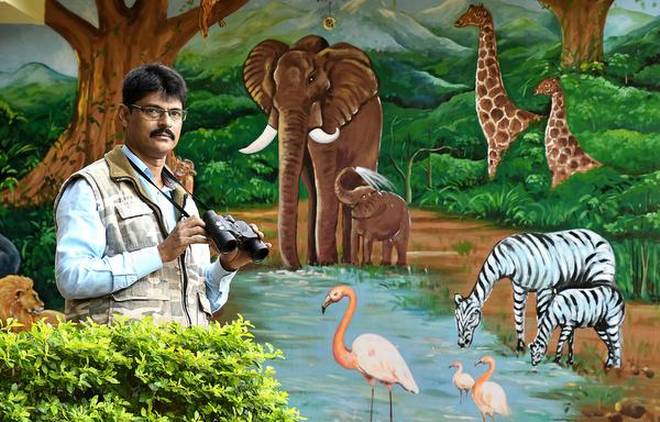
Wild life lover N.I. Jalaluddin is convinced that the way forward in conservation is through young people and he works tirelessly to sensitise them about forests, animals and birds
“My love for Nature started with birds, by observing the kaaka and kuruvi,” laughs N.I. Jalaluddin. As a school boy he was in Kollegal where his father was working. And, as he stared up at the sky, he was often beset by questions about the birds he saw flying. He wondered: ‘How do the migratory birds fly across continents and sometimes over 16,000 kms without any GPS, fuel, or driver?’.
That enthusiasm and curiosity combined with a trek to Mudumalai as a part of WWF camp fuelled his interest further. “I was a regular at BNHS Nature camps in Bandipur, Nagarhole and Masinagudi. And, I decided to talk about Nature and Wildlife among school students from then on.”
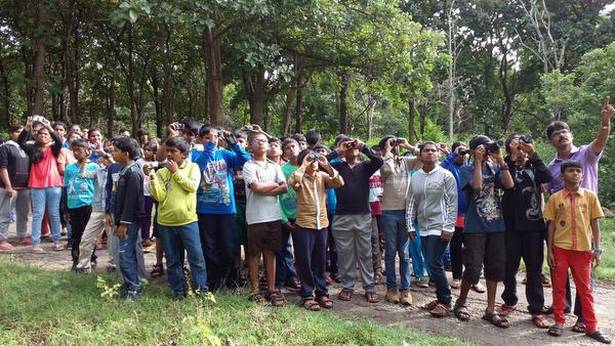
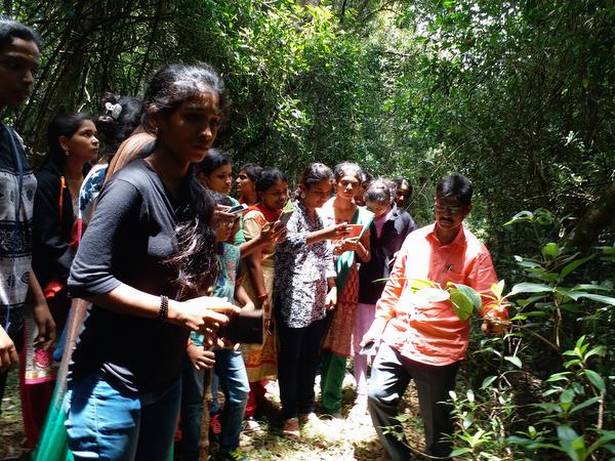
Today, his Nature Conservation Society that spreads awareness among students and the public has completed thousands of Nature camps and reached out to millions of students. Several awards have come his way with the latest one being the Best Service Award by the District Collector. “I work with eco-club students and take them on Nature walks in the Western Ghats,” he says. He educates them about the forests and the rich biodiversity it supports. Then, there is bird watching, and learning about mammals too. “I tell them how to identify pug marks, foot prints, and spoor of animals, and the importance of animal census.”
Jalaluddin talks excitedly about Project Kaliru, an initiative by Tamil Nadu Forest Department to save elephants. As a part of the project, he will cover 46 institutions, schools and colleges, and talk to them about elephants and wildlife. “The elephants lead the forests and set the terrain route for other animals. One of the prime objectives of Project Kaliru is to ensure that there is nil human -animal conflict. Did you know that the elephants as they migrate also bring a variety of plants from another region? The elephant dung has about 40 per cent of undigested food that includes seeds of a variety of fruits and vegetables.”
Awareness is the key, he stresses. “Tribals and animals have co-existed for generations. The conflict arises only in urban zones. In one year, there are over 15,000 deaths by road accidents while the death by human-animal conflict is about 30, which can be easily mitigated.” He is also making a documentary on elephant-human conflict called Wild Witness. “ It’s a dream project for me. One of my students, actor Aravind, who has attended my camps, is helping us out with the camera equipment. DFO Satish and Conservator of Forest S. Ramasubramaniam have been very helpful.” Jalaluddin is a regular at surveys of wildlife population with the forest department. He has rescued many species like snakes, birds, and animals used in illegal trade and handed them over to the forest department for release and rehabilitation. He has spoken out vociferously to save the wetlands. “When I raised my voice against cutting of trees for highway expansion, the authorities threatened to file a criminal case against me. But the Bar Association backed me and we fought it out .” He has intervened and stopped cutting of thousands of trees in the city by litigation, court stay orders, and through dialogues with higher officials. “Youngsters are the change makers, our hope. We have to start with them to care for Nature. Even awareness on banning plastics works better when you take it through them.”
Recently, Jalaluddin took a group of 150 students from Shree Sakthi College of Engineering on a trek to Valparai. “I told them to observe the scratching of animals on trees. It is one of the ways to understand that we are in tiger territory. Engineering colleges should also inculcate nature awareness. A watch tower or a check dam involves engineering skills.”
He recounts some thrilling experiences. “Once, we spotted a leopard in Mudumalai. Another time, we saw a herd of 13 elephants at a very close distance while on a trek at Theppakaadu. Luckily, there was a trench in between, much to the relief of the students,” he laughs. Along with students from Chandra Matriculation School, and Ramakrishna College for Women, he has spotted tigers in Bandipur, Thengumarhada…. “It’s a pity that some schools ignore this aspect of education. We live in the Western Ghats, the hotspot of bio-diversity. When I ask the students about our State animal (Nilgiri Tahr), bird ( Emerald Dove) flower ( Senkaanthal), or tree (palm tree), most them don’t know. A lot of animals, for example wild dogs or dhols have become a rare species now. I have spotted the Emerald Dove or Panchavarna pura so many times at Siruvani foothills. That is also very rare. In Tamil Nadu, we have four Project Tiger programmes in Anaimalai, Mudumalai, Satyamangalam and Kalakkad-Mundanthurai. We have Project Elephant too in Anaimalai and Mudumalai to care for and conserve the elephants.”
People fondly call him Kaatuvaasi or man of the jungle. He brushes it off with a smile, and says, “ I keep doing my work. We have to leave something for the future generation. I feel happy even if one student out of every 10 I talk to, plants a tree. He will in turn talk to another 10 people. Then, there is no stopping. That, is an achievement.”
Awareness programmes
Banning plastic bags, film shooting in reserve forests
Conducting awareness drives through rallies, photo exhibitions and workshops in schools
Supporting the forest department in mitigating human-animal conflict by dialogues with affected villagers
Awarding schools and individuals who contribute to a healthy eco-system
source: http://www.thehindu.com / The Hindu / Home> Sci-Tech> Environment / by K. Jeshi / January 01st, 2018
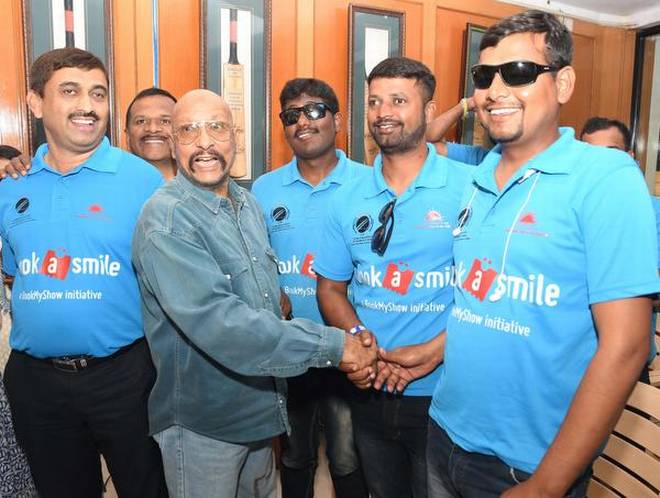
Mahantesh G. Kivadasannavar, founder and managing trustee of Samarthana Trustm, former cricketer Syed Kirmani, cricketers Prem Kumar Prakash Jayaramaiah, Mahender Vaishnav and others at the closure of the coaching camp for the Indian cricket team for blind, in Bengaluru. | Photo Credit: Sudhakara Jain
The tournament to be held from January 7 to 21
Syed Kirmani called on the Indian cricket team for the blind to bring glory to the nation, much like he and his teammates did when they scripted the historic 1983 World Cup triumph.
The Indian team goes to the 5th ODI World Cup for the Blind – to be jointly hosted by United Arab Emirates and Pakistan – as the defending champion.
India, Pakistan, Nepal, Bangladesh, Sri Lanka and Australia will participate in the tournament to be held from January 7 to 21.
“This talented Indian blind team has seven all-rounders, just like our 1983 World Cup side. I saw these guys train recently, and it was amazing to see them dive, make direct hits and hit big sixes. I am sure that they will bring laurels to our country by retaining the World Cup,” Kirmani said on Wednesday.
Kirmani, who donned the gloves with distinction during his long career, added, “The cricketers are as skilled as Virat Kohli, M.S. Dhoni and all the others of this era.”
Prakash Jayaramaiah, star batsman for the team, is confident of putting on a good show. “Pakistan and India are the strongest units. Playing against Pakistan brings out the best in us,” he said.
The 33-year-old, who was born in Channapatna, appealed to the State government to provide jobs to visually impaired cricketers. “When we won the 2017 Blind World Twenty20 in Chinnaswamy Stadium, the State government promised to give us jobs. But that hasn’t happened yet. If we are given a job in a public sector company, we will be able to provide for our families,” Jayaramaiah said.
The game
* A team of 11 players consists of three categories
ducationist par excellence: Kulsum Sayani (Centre) with her sons, radio broadcaster Ameen Sayani (left) and Hamid Sayani. (Courtesy: Sayanis)
She was inspired by Mahatma Gandhi to unite Hindi and Urdu. Kulsum Sayani also worked tirelessly for adult literacy…
“Each one, teach one”, one of the most effective schemes to promote education today was popularised by a woman few remember, but who was a pioneer in the field of adult literacy in India.
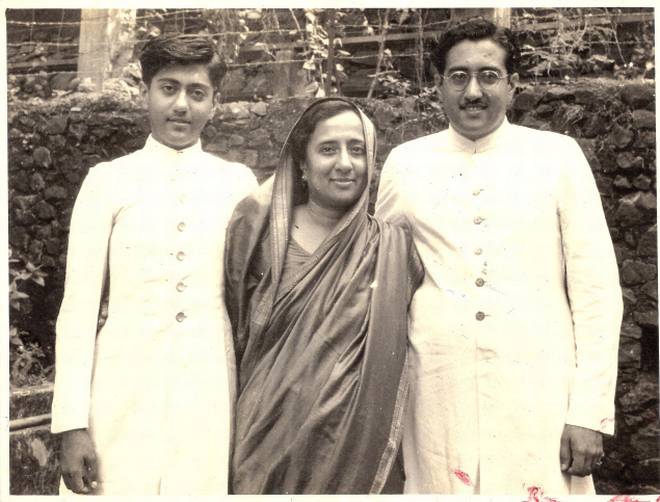
Kulsum Sayani’s name might not ring a bell for many but her life and work are truly remarkable. Mother of the well-known radio personality Ameen Sayani, Kulsum was born in 1900. Her inspiration was none other than Mahatma Gandhi. Her father, Dr Rajabally Patel, was the personal physician to Gandhiji and Maulana Abul Kalam Azad.
During the several protest meets organised against the visit of the Prince of Wales to Bombay in 1921, the city had become volatile. The result was baton charges, arrests and martial laws. There were dozens of people wounded, and seriously injured.
Describing those trying times, Kulsum Sayani wrote, “A new Congress hospital was founded to care for the wounded. My late husband Jan Mohamed Sayani was the first physician to be put in charge of it. We had a small Saxon car with the Red Cross badge prominently showing on it. My husband would go to the hospital daily, practically on totally deserted roads lined up with policemen on both sides. I would be sitting by the phone until he called from the hospital telling me of his safe arrival.”
Sayani’s interactions with Gandhiji and the importance attached to education in her family made her realise the need to eradicate illiteracy. In 1938, with a capital of Rs. 100 she employed two teachers and made the rounds of Muslim localities to get students. Considering the conservative attitude towards female education even now, imagine the effort it must have taken on Sayani’s part to convince families about the importance of educating girls at that time. There were times people used to slam their doors on her face, exclaiming, “Why should women learn to read?”
Her tireless efforts proved that there was a tremendous need to work in the field of education, which needed a more organised set-up. Her experience made her a part of several committees, which were formed to increase literacy among adults in Bombay, now Mumbai. She was associated with the first National Planning Committee that was set up by the Congress government in Bombay in 1938. The Bombay City Social Education Committee, formed in 1939, asked Sayani to take over their 50 centres catering to Muslim women. Slowly and steadily the classes grew and reached 600 in number. Of course, her efforts were not limited to the Muslim community alone. She was also appointed the general secretary of the All India Women’s Conference in 1944 and worked for the empowerment of women.
But it was in spreading the word on education that she is best remembered. The New Delhi edition of ‘The Times of India’ (March 10, 1970) noted, “From 1939 when she (Kulsum Sayani) took charge of the Bombay City Social Education Committee five lakh adults have become literate through one of the five languages – Urdu, Hindi, Gujarati, Marathi and Telugu. Her days are a mad rush of dashing to schools to enthuse children into teaching adults and her nights are spent dreaming up new schemes of literacy.”
Dedicated
Sayani was very pragmatic and initiated several schemes to spread literacy, notably including “Each one, teach one”. She used to visit several schools and encourage young students to devote 15 minutes every day to teach one adult. Under the scheme, students were supposed to teach and read one new alphabet every day to any adult in their family, neighbourhood or domestic helpers. Highly conscious of the importance of moral values, she encouraged students to request adults to tell them a folk tale or a story from the epics.
“The lower middle-class women, who are forced to work, have no help but to abandon their children to the streets after school, while the fashionable ones have no time left for children after bridge and mah-jong parties,” she once said.
Another literacy initiative she initiated was reading out aloud. School students were encouraged to gather friends and adults and each one had to read out aloud. This, she believed, was necessary to improve the confidence and interest of neo-literates. To ensure the success of these schemes she used to visit three to four schools every week meeting and egg students on.
During the freedom struggle hundreds of political prisoners languishing in jails improved their Hindustani by reading out aloud ‘Rahber’, the newspaper she brought out. ‘Rahber’, started in 1940, was aimed at the new learners. It was published in three scripts – Nagari, Urdu and Gujarati. The language of ‘Rahber’ was Hindustani, a mixture of Hindi and Urdu. Those were the times when the Hindi supporters were using heavy Sanskrit words and the proponents of Urdu were lacing the language with Persian and Arabic in their efforts to distinguish the two languages and establish their superiority.
Support
Gandhiji was in favour of Hindustani written in the Nagari or the Urdu script. ‘Rahber’ sought to take forward Gandhiji’s idea of Hindustani. In a letter dated June 16, 1945, Gandhiji addressed Sayani as ‘Beti Kulsum’ and wrote: “I like the mission of ‘Rahber’ to unite Hindi and Urdu. May it succeed.” The newspaper was read by hundreds of political prisoners lodged in jails across the country; anyone interested in learning Gandhiji’s Hindustani picked up the paper.
When the Constituent Assembly deliberations began in the months leading to India’s Independence, the language controversy erupted again. A letter dated July 22, 1947, from Gandhiji to Sayani, shows his resolve to stick with Hindustani. He wrote: “Heaven knows what is in store for us. The old order changeth giving place to new. Nothing is settled. Whatever is decided by the C.A., Hindustani with the two scripts remains for you and me.”
Sayani also represented India at several international forums on education across the world. She attended the UNESCO conference in 1953 in Paris (France) and shared ideas and gained new perspectives after talking with representatives from several countries. Her other interest was to promote peace and increase understanding between India and Pakistan. Her well known status as an activist helped her get audiences with top leaders in both the countries. Among Pakistani politicians, she directly met Pakistani presidents, Ghulam Mohammad and Ayub Khan, among other senior leaders.
In India, her reputation as ‘Rahber’s’ editor helped her get appointments with Nehru, B.G. Kher, V.K. Krishna Menon, Rafi Ahmed Kidwai and Indira Gandhi. She received encouragement and support from politicians of all hues in India for her efforts to forge a friendship with Pakistan. However, after the passing away of Nehru and Rafi Kidwai, who shared her concerns on improving relations with Pakistan, she devoted her energies to propagating Hindustani.
Sayani’s life is an inspiration to many. Married when she was only 18, she managed her family and pursued her social interests with equal elan. Her sons, Hamid and Ameen, both radio broadcasters, created their own identity. Ameen Sayani attributes his “basic grounding in clear and credible communications in Hindustani” to his involvement in assisting his mother in bringing out ‘Rahber’.
Old age and bureaucratic red tape forced her to stop ‘Rahber’ in 1960 after she had single-handedly brought it out for 20 years. She continued to be associated with the Hindustani Prachar Sabha and organised several lectures and seminars
She never lost focus from her lifelong passion to eradicate illiteracy. She received the Padma Shri in 1960 and was also awarded the Nehru Literacy Award in 1969.
Sayani, who died in 1987, belonged to an era when people believed in giving their best to the nation without expecting anything in return.
Sardar Abhay Singh Sandhu nephew of the great freedom fighter and martyr, Bhagat Singh, said here while talking to media persons that the sacrifices of the families of founding Ulama of Majlis Ahrar-e Islam of Ludhiana are unparalleled in the history of India’s war of independence.
He said “this is the only family which has been continuously fighting against the British from 1857 to 1947.”
Maulana Habiburrahman with the son of Bhagat Singh’s brother
He said that there are no two views that the crusader of freedom, Raeesul Ahrar late Maulana Habibur Rahman Ludhianvi, while following in the footsteps of his great grand father Shah Abdul Qadir Ludhianvi was in the forefront of the fight against the British rule.
Sardar Sandhu said that he felt proud that ‘our relationship with this family is very old’. This family helped our family at a time when because of the British, people had been keeping a distance from the family members of Bhagat Singh.
He said that Raeesul Ahrar late Maulana Habibur Rahman Ludhianvi had secretly given shelter to his grand mother (Bhagat Singh’s mother) even at the risk of his own life.
He also said that Shaheed Bhagat Singh’s brother, (late) Sardar Kaltar Singhji greatly respected this family because of this reason. He said that what is needed today is that all the heirs of the crusaders of freedom should once again get united and try to set up a clean and honest political system in the country.
Abhay Singh said that Punjab’s Shahi Imam Maulana Habibur Rahman Sani Ludhianvi deserves congratulations for keeping the traditions of his forefathers alive and he salutes the Shahi Imam who enabled Muslims of Punjab to once again achieve a respectable and high place in the field of politics.
In reply to a question he smilingly said that this Shahi Imam is the pride and glory not only of ours but of the entire Punjab.
source: http://www.milligazette.com / The Milli Gazette / Home> Online News / January 02nd, 2013 (Print edition 16-31 December 2009 )
Nisar Ahmed is part of a 14-member contingent of budding young athletes selected to train at the famed Racers Track Club in Kingston, Jamaica.
Stories of individuals doing extraordinary things despite their difficult circumstances never get old. The sporting history of pretty much any nation is laden with such stories.
Living in a 10×10 feet tin shack near the railway tracks in the Bada Bagh slums of Delhi’s Azadpur area, Nisar Ahmed is looking to forge one such heart-warming story.
Nisar is all set to leave the slum and its surroundings behind and embark on a journey that takes him to the famed Racers Track Club in Kingston, Jamaica, which is where the most iconic personality in modern-day track and field, Usain Bolt, trained.
The son of a rickshaw puller and housemaid, Nisar was chosen with 13 other budding athletes to undergo a one-month training programme at one of the most hallowed track, and field venues in the world reported the Times of India .
These 14 promising athletes in the 15-18 age group from Odisha, Uttarakhand, Delhi, Kerala and Tamil Nadu were chosen for an initiative backed by the Gas Authority of India Limited, a public-sector enterprise, and sports management company, Anglian Medal Hunt.
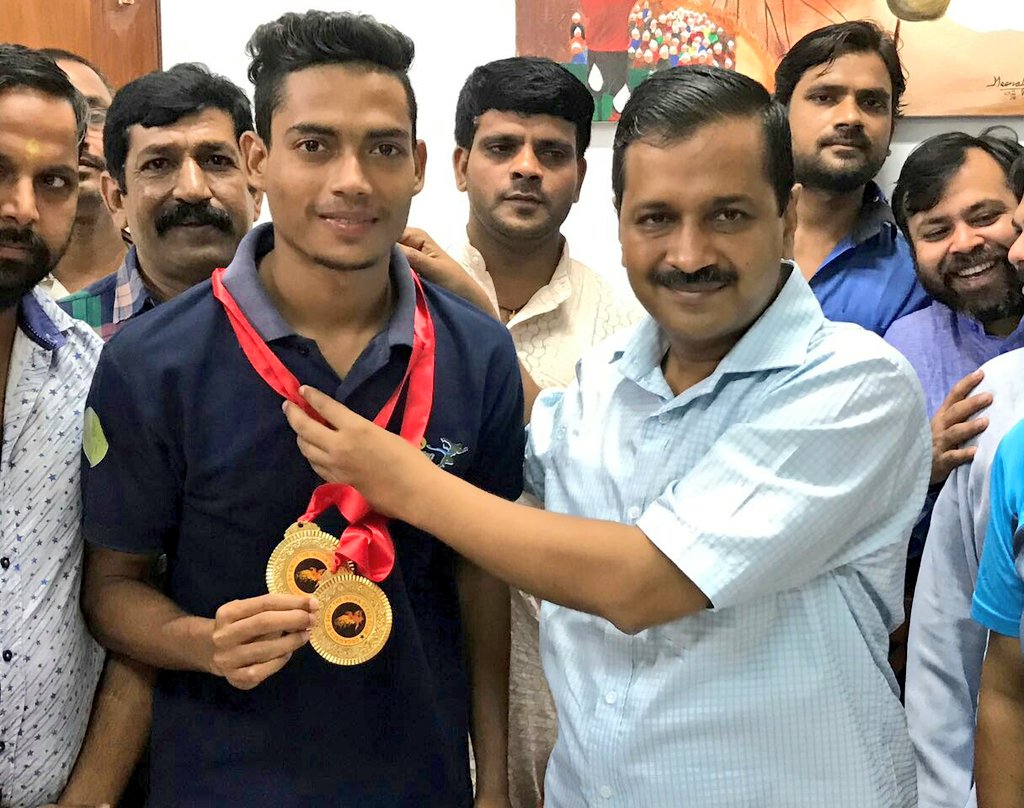
Nisar Ahmed felicitated by Delhi Chief Minister Arvind Kejriwal at a function last year. (Source: Twitter)
After vetting the ability and potential of these athletes, the Kingston-based track club agreed to take them in for a four-week training programme.
It is remarkable that a 16-year-old Nisar has managed to maintain his tremendous athletic ability, even though his parents barely manage to pull in Rs 5,000 every month. Despite the daily poverty the budding athlete and his family endure, Nisar tells the Times of India that his parents “somehow manage” to provide him and his sister with regular food.
A student of the Government Boys Secondary School, Ashok Vihar, Nisar has big dreams, and his talent is unmistakable. At a recent Delhi State Athletics meet, he surpassed two national under-16 records, running 100 metres in 11 seconds, and clocking 22.08 seconds in the 200-metre event.
“I sometimes cry because God has given me a very tough life,” he tells the Times of India. “But it is my poverty that has inspired me to work hard in the face of such challenges.”
source: http://www.thebetterindia.com / The Better India / Home> Quick Bytes> Sports / by Rinchen Norbu Wangchuk / January 02nd, 2018