Tag Archives: Shah Nawaz Khan

Why General Shah Nawaz Khan Deserves to Be Remembered This Independence Day

Punjab (British India) / NEW DELHI :
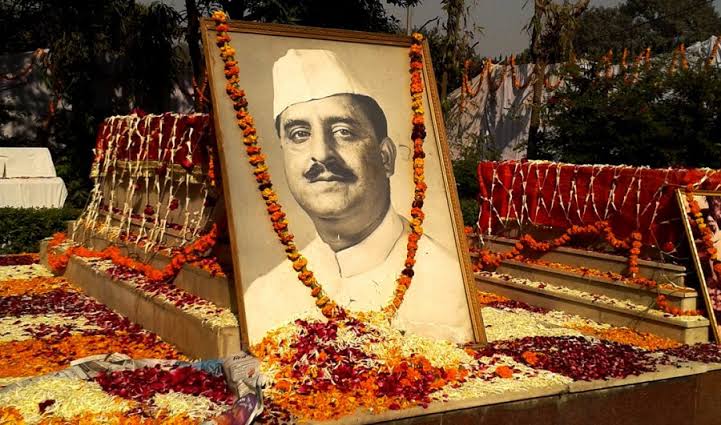
EVERY year on August 15, India’s Prime Minister addresses the nation from the ramparts of the Red Fort in Delhi. It was at this same fort, in 1945, that Major General Shah Nawaz Khan stood trial for waging war against the British Empire. A Muslim officer in Netaji Subhas Chandra Bose’s Indian National Army, he had led troops into battle against colonial forces across Southeast Asia, been captured, and was sentenced to death. His court-martial, alongside Colonel Prem Kumar Sehgal and Colonel Gurbaksh Singh Dhillon, provoked mass protests across the country and became one of the final catalysts for British withdrawal from India. The slogan that echoed through the streets of Delhi became a rallying cry of the independence movement: “Lal Qile se aayi awaaz, Sehgal, Dhillon aur Shah Nawaz.”

After his release, Shah Nawaz Khan chose the path of non-violence at Mahatma Gandhi’s urging, joined the Indian National Congress, and went on to serve as a Union Minister for over two decades. He represented Meerut in Parliament through four terms, held portfolios ranging from Agriculture to Petroleum, and chaired the commission that investigated the circumstances of Netaji Bose’s death. He was buried near the Red Fort with full state honours in 1983.

Beyond politics, Shah Nawaz Khan was connected to one of India’s most recognizable families. The Bollywood actor Shah Rukh Khan’s father, Mir Taj Mohammed Khan, was his cousin and migrated from Pakistan to India alongside him after Partition.

His story traces an arc from armed resistance to democratic nation-building, from a death sentence in a colonial courtroom to the highest levels of Indian government.

Early Life and Military Career

General Shah Nawaz Khan was born on 24 January 1914 in the village of Matur, in the Rawalpindi District of British India (now in Pakistan). His father, Lieutenant Sardar Tikka Khan, served for nearly three decades in the British Indian Army with the 58th  Vaughan’s Rifles (Frontier Force), instilling in him an early exposure to military life.

After completing his early education, Shah Nawaz Khan went on to study at the Prince of Wales Royal Indian Military College in Dehradun, one of the premier institutions established to train future military leaders in colonial India.

From Prisoner of War to Leader of the Indian National Army

In 1940, Shah Nawaz Khan was commissioned as an officer in the British Indian Army. In December 1941, as part of the Second World War, Japanese forces launched a major offensive against Singapore, and the British deployed nearly 60,000 Indian soldiers, including Captain Shah Nawaz Khan.

The British forces were ultimately defeated, and Khan, along with thousands of other soldiers, was taken prisoner of war. During his captivity, he came into contact with Indian nationalists and revolutionaries aligned with Netaji Subhas Chandra Bose. Deeply influenced by their vision of an independent India, he joined the Azad Hind Fauj, also known as the Indian National Army (INA), and rapidly rose to positions of leadership.

Role in the Freedom Struggle

Recognized for his leadership abilities, Shah Nawaz Khan was inducted into the cabinet of the Indian National Army’s (INA) Provisional Government of Free India. Between 1942 and 1945, the Azad Hind Fauj engaged British forces across Southeast Asia and, for a period, established control over large stretches of territory during its campaign against colonial rule.

In December 1944, he was appointed commander of the INA detachment stationed in Mandalay, Burma (now Myanmar). Owing to the close trust placed in him by Netaji Subhas Chandra Bose, he was later selected to lead the Subhas Brigade—a special unit formed from elite INA soldiers.

During military operations in Burma in 1945, General Shah Nawaz Khan and several of his comrades were arrested by British forces. The INA’s senior leadership at the time included Major General Shah Nawaz Khan, Colonel Prem Kumar Sehgal, and Colonel Gurbaksh Singh Dhillon. In 1946, all three were put on trial for mutiny at the Red Fort in Delhi.

These trials ignited widespread public protests across India and became a turning point in the independence movement, significantly intensifying popular resistance to British rule. Facing overwhelming public pressure, the British government was ultimately compelled to release Shah Nawaz Khan and his associates. During this period, he remained in contact with leading figures of the national movement, including Mahatma Gandhi, and was defended in court by Jawaharlal Nehru.

Gandhi’s Colonel of Non-Violence

General Shah Nawaz Khan was regarded as one of Mahatma Gandhi’s close associates, a relationship reflected in Gandhi’s letters and public speeches, in which he frequently referred to him by name. Their association symbolized the bridge between armed resistance and the philosophy of non-violence that shaped India’s independence movement.

On the occasion of the 50th birth anniversary of Netaji Subhas Chandra Bose, Shah Nawaz Khan declared, “While living outside India, we fought for our country’s freedom with arms; now we shall serve India through non-violence.” Mahatma Gandhi echoed this sentiment while addressing members of the Indian National Army in Madras on 22 January 1946 and later reiterated it during his prayer meeting in Mumbai on 18 February 1946.

Contemporary records further document their close interaction. According to a report in the Bombay Chronicle dated 13 March 1946, Shah Nawaz Khan met Gandhi at Birla Bhavan in Delhi on 12 March, where the two held discussions for nearly ninety minutes. On 22 March 1946, Gandhi visited a military camp in Aravalli Kanchan, Maharashtra, and once again mentioned Shah Nawaz Khan while addressing the soldiers. Their engagement continued through personal meetings as well as an exchange of letters, many of which survive as historical evidence of their dialogue.

At Gandhi’s urging, following the dissolution of the Indian National Army in 1946, Shah Nawaz Khan joined the Indian National Congress. Later that year, he worked in Bihar to assist victims of communal violence, alongside Khan Abdul Ghaffar Khan. He remained in the region during this period of unrest, and was present at the funeral of Professor Abdul Bari, who was assassinated in Bihar in March 1947.

Gandhi repeatedly acknowledged and praised Shah Nawaz Khan’s relief and peace-building efforts in Bihar during 1947. He spoke at length about Khan’s work during his prayer meetings on 29 April and 1 May 1947, and earlier, on 15 April 1947, the two were together at Gandhi’s camp in Patna. During one such conversation, Gandhi expressed his faith in him, saying: “I have great hopes for you. I wish to make you a complete soldier of non-violent weapons. You became a colonel under Netaji; in the same way, I want to make you a colonel of non-violence.”

Political Life After Independence

Even after India achieved independence in 1947, Shah Nawaz Khan continued to work in Masurhi, Bihar, focusing on relief and rehabilitation efforts. In a letter dated 7 October 1947, Mahatma Gandhi wrote to him: “Dear General Shah Nawaz, If the work you are doing there does not go to the dogs in your absence, you may leave it to go to the Punjab-Pakistan.” Despite this, Shah Nawaz Khan chose not to return to his ancestral home in what had become Pakistan; instead, his family migrated to India.

Shah Nawaz Khan entered electoral politics in independent India and was elected to the first Lok Sabha (India’s lower house of Parliament) in 1952 from Meerut, representing the Indian National Congress. He went on to win the same constituency in 1957, 1962, and 1971. Over the course of his political career, he served as a Union Minister for a total of 23 years.

Beginning in 1952, he served as Parliamentary Secretary and later as Deputy Minister for Railways. From 1957 to 1964, he held the portfolio of Food and Agriculture. He was again appointed Minister of Agriculture in 1965, followed by his tenure as Minister of Labour, Employment, and Rehabilitation in 1966. Between 1971 and 1975, he served as Minister for Petroleum and Chemicals, as well as Agriculture and Irrigation. From 1975 to 1977, he additionally served as Chairman of the Food Corporation of India while continuing as Union Minister for Agriculture and Irrigation.

In 1956, the Government of India constituted a commission to examine the circumstances surrounding the death of Netaji Subhas Chandra Bose. Shah Nawaz Khan was appointed chairman of this commission, underscoring the trust placed in him by the national leadership. He also authored a memoir on the Indian National Army and Netaji Subhas Chandra Bose, regarded as an important firsthand account of the INA movement.

Representing the Meerut constituency for decades, Shah Nawaz Khan played a stabilizing role in public life, and the city remained free of major communal disturbances during his tenure. From 1977 to 1983, he served as the national in-charge of the Congress Seva Dal, the party’s volunteer organization. He remained associated with the Indian National Congress until the end of his life, continuing his commitment to public service and national unity.

General Shah Nawaz Khan passed away on 9 December 1983 while still serving the Indian National Congress. His life—spanning armed resistance, political leadership, and a steadfast commitment to unity and nation-building—remains a powerful testament to the ideals of freedom, sacrifice, and service. He is remembered not only as a soldier and statesman, but as a figure whose legacy continues to inspire generations in independent India and beyond.

— IAMC

source: http://www.clarionindia.net / Clarion India / Home> Editor’s Pick> Opinion / by Afroz Alam Sahil / August 08th, 2026
Silk Letter Movement: Name of all 59 charged by the British for waging war against the Crown

INDIA :

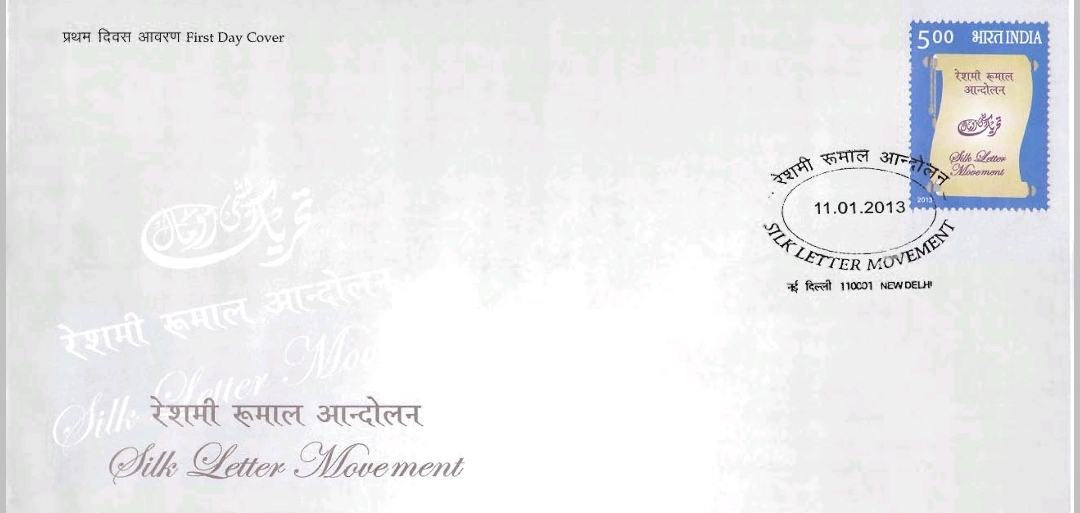
During the First World War, Maulana Mahmood Hasan, and other Islamic scholars planned an armed attack on British India from the Afghanistan frontier. The ambitious plan did not succeed because of the changed geo-political scenario (defeat of Turkey and Germany) and the British getting hold of three silk letters, which gave away the whole planning. After this, 59 people were charged for waging the war against the crown. I am sharing the names of these 59 forgotten heroes of the Indian freedom struggle.

During the First World War, Maulana Mahmood Hasan, and other Islamic scholars planned an armed attack on British India from the Afghanistan frontier.  The ambitious plan did not succeed because of the changed geo-political scenario (defeat of Turkey and Germany) and the British getting hold of three silk letters, which gave away the whole planning.

After this, 59 people were charged for waging the war against the crown. I am sharing the names of these 59 forgotten heroes of the Indian freedom struggle.

Silk Letter Movement : A freedom struggle woven in silk

  1. Abdul Aziz Molvi, son of Haya Gul from Itman Zai, Peshawar
  2.  Abdul Bari B.A., son of Ghulam Jilani from Lyallpur
  3. Abdul Hai Khwaja, son of Khwaja Abdur Rahman from Gurdaspur 
  4. Abdul Haq Shaikh alias Jeewan Das from Shahpur district. He was an official witness.
  5. Abdul Haq Molvi from Rifah-e-Aam Press Lahore. 
  6. Abdul Majeed Khan, son of a Risaldar Manager from the 15th Cavalry Battalion of the army.
  7.  Abdullah Molvi, son of Nihal Khan from Sukkur district. He was an official witness.
  8. Abdul Qadir B.A., son of Ahmad Deen from Lyallpur. 
  9. Abdur Rahim Sindhi Shaikh, son of Lala Bhagwan Das from Hyderabad, Sindh
  10. Abdur Rahim Molvi, son of Rahim Bakhsh, Masjid Cheenian Wali, Lahore.
  11. Abdur Rashid, a migrant student of Mardan and Lahore.
  12. Abdur Razzaq Ansari Hakim, son of Abdur Rahman of Delhi.
  13. Abdul Waahid, son of Siddiq Ahmad from Tanda, United Provinces.
  14. Abul Kalam Azad Molvi, nickname Mohiuddin, son of Maulana Khairuddin from Calcutta
  15. Abu Muhammad Ahmad Molvi alias Molvi Ahmad, son of Ghulam Hussain from Lahore and Chakwal
  16. Ahmad Ali Molvi, son of Habibullah, from Gujranwala district. He was an official witness.
  17. Ahmad Miyan Molvi, son of Abdullah Ansari from Ambetha, district Saharanpur (United Provinces). He was an official witness.
  18. Allah Nawaz Khan, son of Khan Bahadur Rab Nawaz Khan honorary magistrate of Multan, Punjab
  19. Anees Ahmad, B.A. Molvi, son of Idrees Ahmad, assistant secretary at Anglo-Oriental College Aligarh , United Provinces.
  20. Ozair Gul Molvi, son of Shaheed Gul of Durgayee, Northwest Frontier. 
  21. Barkatullah Molvi Muhammad of Bhopal and Japan
  22. Fatah Muhammad Sindhi from Rok, Sindh
  23. Fazlul Hasan Molvi alias Hasrat Mohani from Aligarh .
  24. Fazl Elahi Molvi, son of Meeran Bakhsh from Haripur, thana Wazirabad, district Gujranwala, Punjab.
  25. Fazl Mahmood Molvi, son of Molvi Noor Muhammad from Charsadda, Northwest Frontier.
  26. Fazl Rabbi Molvi from Peshawar.
  27. Fazl Wahid Molvi, son of Faiz Ahmad, alias Haji Turangzai, from Northwest Frontier.
  28. Habibullah Ghazi, the son of Ruhullah from Kakori, district Lucknow, United Province.
  29. Hadi Hasan Syed, from Khan Jahanpur, district Muzaffar Nagar, United Province.
  30. Hamdullah Molvi, son of Haji Sirajuddin from Panipat. 
  31. Hussain Ahmad Madani Molvi, son of Molvi Habibullah from Faizabad and Medina .
  32. Ibrahim Sindhi, M.A. Shaikh, son of Abdullah from Karachi.
  33. Kala Singh, a migrant from Ludhiana (Punjab) 
  34. Khan Muhammad Khan Haji from Peshawar. (died)
  35. Khushi Muhammad, son of Jan Muhammad from Talauli, district Jalandhar, Punjab.
  36. Mahendra Pratap Kunwar, son of late Raja Ghanshiam Singh from Mursan, United Province.
  37. Mahmood Hasan Maulana, former head-teacher at Deoband Madrasa, United Province.
  38. Matloobur Rahman Molvi of Deoband, an employee of the Agricultural Department, UP Govt.
  39. Mohiuddin alias Barkat Ali Molvi from Kasur. 
  40. Mohiuddin Khan Molvi from Moradabad. (Qazi of Bhopal)
  41. Muhammad Abdullah B.A., son of Shaikh Abdul Qadir, Secretary Mianwali District Board.
  42. Muhammad Ali B.A. son of Abdul Qadir from Kasur.
  43. Muhammad Ali Sindhi, the son of Habibullah from Gujranwala.
  44. Muhammad Aslam Attar from Peshawar.
  45. Muhammad Hasan B.A. from Lahore whose father was an employee in the Paisa newspaper.
  46. Muhammad Hashim Molvi Syed from Kora, Jahanabad, Fatahpur. 
  47. Muhammad Masood Molvi, son of Mazhar Hussain from Deoband, United Province. (Official witness)
  48. Muhammad Miyan Molvi, son of Molvi Abdullah Ansari from Ambetha, district Saharanpur, United Province.
  49. Muhammad Mubeen Molvi, son of Muhammad Momin from Deoband. (Official witness)
  50. Muhammad Murtuza Molvi Syed, son of Bunyad Ali from Bijnor, United Province. (Official witness)
  51. Noorul Hasan Syed from Ratheri, district Muzaffar Nagar U.P.
  52. Obaidullah Molvi alias Buta Singh from Sialkot, Punjab.
  53. Sadruddin alias Dr. Abdul Karim Barlasi, son of Amir Ali of Banaras. 
  54. Saifur Rahman Molvi, son of Ghulam Khan from Peshawar district, Northwest Frontier.
  55. Shah Bakhsh Haji, son of Imam Bakhsh Ansari from Hyderabad, Sindh. 
  56. Shah Nawaz Khan, son of Khan Bahadur Rab Nawaz Khan, honorary magistrate, Multan, Punjab.
  57. Shujaullah, son of Habibullah from Lahore.
  58. Wali Muhammad Molvi from Futuheewala, district Lahore.
  59. Zahoor Muhammad Molvi from Roorkee, son of Inayatullah of Saharanpur.

source: http://www.heritagetimes.in / Heritage Times / Home / by Mahino Fatima / August 04th, 2024

Sabhi ka khoon hai shamil yaha ki mitti me: Muslim Freedom Fighters of India

INDIA:

Uncover the remarkable contributions of Muslim freedom Fighters of India to fight for freedom from British colonial rule.

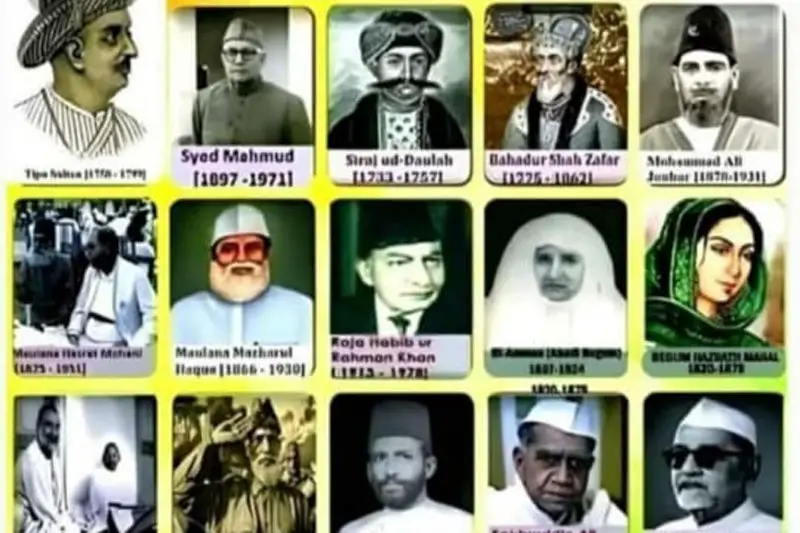
In present times, Indian Muslims find themselves subjected to demonization and unwarranted questioning of their patriotism. Communal elements seek to manipulate history by intentionally excluding Muslims and disseminating false propaganda against them through social media. The vital contributions and sacrifices made by Indian Muslims in the struggle for India’s freedom from British colonial rule are systematically obscured. However, a closer examination of history reveals that not only did Indian Muslims play an essential role in the freedom movement, but they also made significant sacrifices for the cause of anti-colonial nationalism.

Indian Muslims: Unveiling Their Crucial Role

According to a report by the Milli Chronicle, the names of 95,300 freedom fighters are etched on the India Gate in Delhi, and remarkably, 61,945 of these names belong to Muslims, signifying that 65% of these brave individuals were Muslims. The significance of this statistic is eloquently captured by the renowned writer Mr. Kushwant Singh, who boldly states that the story of Indian freedom is etched in the blood of Muslims, emphasizing their disproportionately larger contribution to the struggle, considering their smaller population percentage.

Profiles of Courage: Muslim Freedom Fighters

The annals of history are adorned with the stories of Muslim freedom fighters who put their lives on the line to liberate India from the shackles of British oppression. These individuals, driven by an unwavering determination to secure their homeland’s independence, demonstrated exceptional courage and resilience.

Sultan Haidar Ali Salabat Jung: The First Freedom Fighter


   Sultan Haidar Ali, father of Tipu Sultan, pioneered the fight against British colonial forces. A secular leader, he united both Hindus and Muslims in his quest for freedom, although his efforts were eventually betrayed.

Tipu Sultan: A Trailblazer in Battle


   Son of India’s first freedom fighter Haider Ali, Tipu Sultan pioneered the use of iron-cased rockets, utilizing them effectively to defeat British forces in several historic battles over two decades.

Shaheed Ashfaqullah Khan: A Martyr’s Legacy


   Member of the Hindustan Republican Association (HRA), Ashfaqullah Khan paid the ultimate price for India’s freedom. Notable for his daring attacks on British government trains, his sacrifice remains etched in history.

Maulana Abul Kalam Azad: A Beacon of Unity


   Maulana Azad, a key leader in the anti-colonial nationalist movement, became the youngest President of the Indian National Congress. He rallied Hindus and Muslims alike against British oppression and launched Urdu Weekly Al-Hilal to expose British misrule.

Maulana Hasrat Mohani: Champion of Change

Mohani’s powerful Urdu speeches incited Indians to stand up against British rule. His unyielding spirit saw him arrested and jailed, but his impact on India’s fight for freedom remained profound.

Khan Abdul Ghaffar Khan: The Frontier Gandhi


   A pivotal figure in the Khilafat movement, Khan Abdul Ghaffar Khan established the Khudai Khitmatgars, promoting peace and unity. Jailed for 13 years by the British, his dedication was unwavering.

Sirajud Daula: Battling Against Betrayal


   The last Nawab of Bengal, Sirajud Daula, fought valiantly against British forces. Despite betrayal, he remained a symbol of resistance against British rule.

Vakkom Majeed: Courage Amidst Oppression


   Vakkom Majeed’s resilience during the Quit India movement earned him repeated jail terms, highlighting his unwavering commitment to India’s freedom.

Fazl-e-Huq Khairabadi: Life in Exile


   Sentenced to life in the notorious Kalapani jail on Andaman, Fazl-e-Huq Khairabadi continued his fight for freedom despite insurmountable odds.

Badruddin Tayabji: Founding the INC


    Badruddin Tyabji and Qamruddin Tyabji were instrumental in establishing the Indian National Congress (INC). Badruddin’s wife, Suraiya Tayabji, designed the present Indian flag.

Shah Nawaz Khan: A Triumphant Act


    Major of Azad Hind Force, Shah Nawaz Khan was the first to hoist the tricolor at the Red Fort, symbolizing India’s victorious struggle against British imperialism.

Barrister Saifuddin Kitchlew: A Voice for Justice


    Jailed for 14 years by the British for protesting against the Jallianwala Bagh massacre and the Rowlatt Acts, Kitchlew’s opposition to the two-nation theory set him apart.

Bakht Khan: A Gallant Defender


    Bakht Khan’s courageous defense against the British in Delhi, Bengal, and Lucknow showcased his unwavering dedication to India’s freedom.

Titu Mir: Bengali Rebel


    Titu Mir’s armed resistance against British colonial authorities exemplified his determination to free India from British rule.

Syed Ahmad Barelvi: Organizing Resistance


    Syed Ahmad Barelvi’s efforts in uniting native armies against the British from Delhi to Kabul showcased his strategic prowess.

Zain-ul-Abideen: INA Officer’s Patriotic Slogan


    Zain-ul-Abideen, an officer of the Indian National Army (INA), coined the iconic patriotic slogan “Jai Hind.”

Empowering Women in the Freedom Struggle

The fight for India’s freedom was not limited to men; several Muslim women also contributed significantly to the struggle.

Begum Hazrat Mahal: A Rebel Leader


   Rebelling against the British in 1857, Begum Hazrat Mahal seized control of Lucknow from British forces, showcasing her leadership and courage.

Surayya Tyabji: Designing India’s Flag


   Wife of freedom fighter Badruddin Tayyabji, Surayya Tyabji designed the Indian flag that we proudly hoist today.

Abadi Bano Begum: A Pioneer in Politics


   Abadi Bano Begum, known as Bi Amma, actively participated in politics, matching her male counterparts in the Indian National Movement. Her sons went on to become prominent leaders.

Azizan: A Warrior’s Spirit


   Azizan organized a battalion of warrior women, displaying her remarkable skill in the art of war and refusing to yield to British pressure.

A Timeless Legacy

The contributions and sacrifices of Indian Muslims in the fight against British colonialism are immeasurable. While recounting the names of every Muslim freedom fighter may be an impossible feat, their collective impact remains undeniable. The fact that many chose to remain in India underscores their deep-rooted connection to the land. Despite attempts to distort history, India will forever be the cherished home of its Muslim citizens.

Conclusion

Urdu poet Rahat Indori’s words,

“Sabhi ka khoon hai shamil yaha ki mitti me,

Kisi ke baap ka Hindustaan thodi hai,”

encapsulate the essence of Muslim Freedom Fighters of India’ unyielding commitment to their homeland. The sacrifices and contributions of Indian Muslims in the struggle for independence stand as a testament to their unwavering dedication and indomitable spirit. Their stories deserve to be acknowledged and celebrated, inspiring future generations to honor the diverse tapestry of individuals who fought for a free and united India.

source: http://www.munsifdaily.com / The Munsif Daily / Home> News> Indai> Pan India / by Munsif Web Desk / August 18th, 2023

Sify columnist releases book on Indian Muslim freedom fighters

NEW DELHI :

FreedomFightersMPOs22dec2017

Patna:

In a glittering ceremony, two books on the Muslim community’s contribution to the Indian freedom movement were launched in Patna last week. The function was presided over by Harsh Mander, former IAS officer and human rights activist.

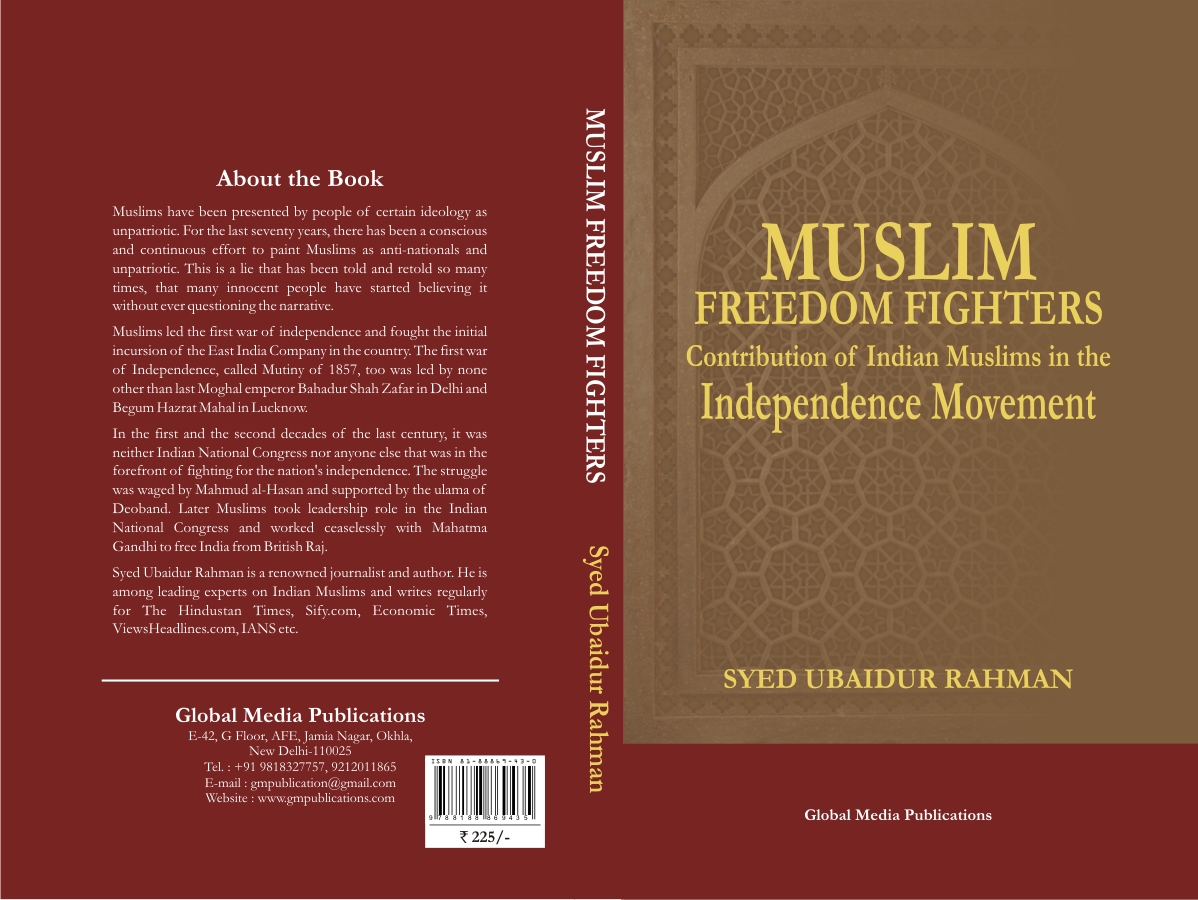
The books ‘Muslim Freedom Fighters: Contribution of Indian Muslims in the Independence Movement’ and its Urdu version ‘Muslim Mujahideen-e-Azadi aur Tehrik-e-Azadi Mein Unki Khidmat’ have been authored by well-known Delhi based author and journalist Syed Ubaidur Rahman.

The two books try to fight the oft-repeated allegations that Muslims are anti-national and have not contributed for the freedom of the nation. The books nail the lie and prove that Muslims not just participated in the freedom movement, they went on to lead the freedom struggle for a long time. The first war of Independence or Mutiny of 1857 was led by Mughal emperor Bahadur Shah Zafar in Delhi and Begum Hazrat Mahal in Lucknow.

The Independence Movement in the first two decades of the twentieth century was led by Mahmud Hasan and ulama of Deoband and they had respect and support of everyone including Hindus and Muslims.

If anyone has any doubt about the Muslim contribution in the freedom movement, the fact that the Indian National Congress had as many as nine Muslims as its president till the year 1947 will remove such doubts.

While speaking on the occasion, Harsh Mander said that the divisive forces in the country are trying to divide the nation on the basis of religion and faith. He said that the danger from such forces for the national fabric and its unity has become grave.

Mander added that the threat to the communal amity in the country was never so high as is today as divisive forces are doing every thing to pit one community against the other and create a fear psychosis among the majority community prompting it to turn it against minorities.

Khursheed Mallick, a Chicago based urologist, philanthropist and director of IMEFNA said that the book is a timely reminder to the nation that Muslims and Hindus both sacrificed for the nation and this fact must be clearly told to our young generation. He said Muslims sacrificed heavily for the cause of the freedom of the nation and efforts must be made to tell the history.

Syed Ubaidur Rahman, the author of the two books, while speaking on the occasion said Muslims have been rather loath to write about the sacrifices they have made for the cause of the Independence and freedom. He said Muslims suffered badly throughout the freedom movement. They were the worst suffers in the wake of the mutiny of 1857 and its aftermath when Muslims were hounded across North India and beyond. Tens of thousands of Muslims lost their lives for the freedom.

Syed added that ulama of Deoband played a stellar role in the freedom movement. Unlike the common perception, they were secular to the core and when they established a government in exile in Kabul in 1915, they appointed Raja Mahendra Pratap as its President and Maulana Barkatullah Bhopali as its Prime Minister.

The book documents the lives of forty renowned Muslim freedom fighters including, Shaikhul Hind Maulana Mahmud al-Hasan, Maulana Barkatullah Bhopali, Hakim Ajmal Khan, Maulana Ubaidullah Sindhi, Maulana Abul Kalam Azad, Maulana Mohammad Ali Jauhar, Dr Maghfoor Ahmad Ajazi, Dr Mukhtar Ahmad Ansari, Ashfaqulla Khan, Maulana Hasrat Mohani, Maulana Muhammad Mian Mansoor Ansari, Asaf Ali, Husain Ahmad Madani, Aruna Asaf Ali (Kulsum Zamani), Peer Ali Khan, Saifuddin Kitchlew, Mohammed Abdur Rahiman, Captain Abbas Ali, Abdul Qaiyum Ansari, Prof. Abdul Bari, Moulvi Abdul Rasul, Nawab Syed Mohammed Bahadur, Rahimtulla Mahomed Sayani, Syed Hasan Imam, Sir Syed Ali Imam, M.C. Chagla, Yusuf Meherally, Justice Fazal Ali, General Shah Nawaz Khan, Allama Fazle Haq Khairabadi, Maulana Shaukat Ali, Syed Mahmud, Maulana Mazharul Haque, Badruddin Tyabji, Col Mehboob Ahmed, Begum Hazrat Mahal, Maulana Shafi Daudi, Rafi Ahmed Kidwai, Syed Mohammad Sharfuddin Quadri, Batak Mian .

The book launch function was organized at Anjuman Taraqqi Urdu and was presided over by Abdul Qaiyum Ansari, chairman of Anjuman Taraqqi Urdu Bihar.

Syed Ubaidur Rahman is a New Delhi based writer and commentator. He has written several books on Muslims and Islam in India including Understanding Muslim Leadership in India.

source: http://www.sify.com / Sify.com / Home> SifyNews> National / by SIFY.com / Friday – December 22nd, 2017