Being the first and only Indian Muslim woman selected as a researcher at NASA, Karishma Inamdar aims for the stars through her space outreach program designed to inspire students for space research work.
Karishma Inamdar, the 25-year-old “rocket scientist,” as she calls herself, was born in the Indian city of Baramati. She was selected in June 2015 as a research associate to join a team of professionals at NASA’s Ames Research Center in California. Having grown up in India, studied in France and worked in the US, she gained a great amount of cross-cultural experience.
Now she wants to guide other students to pursue a career in space.
“Space exploration is a challenge worth challenging, a goal worth achieving and best of all, a journey worth pursuing. If you want to achieve something, the whole universe opens up for you,” the young scientist said.
With the help of her friends, Karishma launched the International Chapter of the US National Space Society (NSS) in India called Dr. A.P.J. Abdul Kalam Initiatives (DKI). The chapter was formed in honor of Dr. A.P.J. Abdul Kalam, the former president of India, a very good friend of NSS and tireless developer of India’s space program.
“The initiative will focus on space outreach and education. DKI is the platform to encourage, engage and educate all the students,” Karishma told Sputnik News.
“As space engineers and scientists, we have a responsibility to inspire the next generation. While working with the talented team of DKI, I realized we are not only working for students but also for humanity,” she said.
It is her dream not only to see the day humanity takes its baby steps off this planet, but also to play a major role in helping others achieve this goal.
Karishma believes that NASA has offered her a lot, and that, under the guidance of many distinguished researchers, she will be able to make a positive contribution to on-going space research work.
The skull of a martyr Sepoy Alam Baig of the first war of Indian independence in 1985 must be brought to India for burial at the site where he was blown into pieces with a cannon for rebelling against the British Army in 1857.
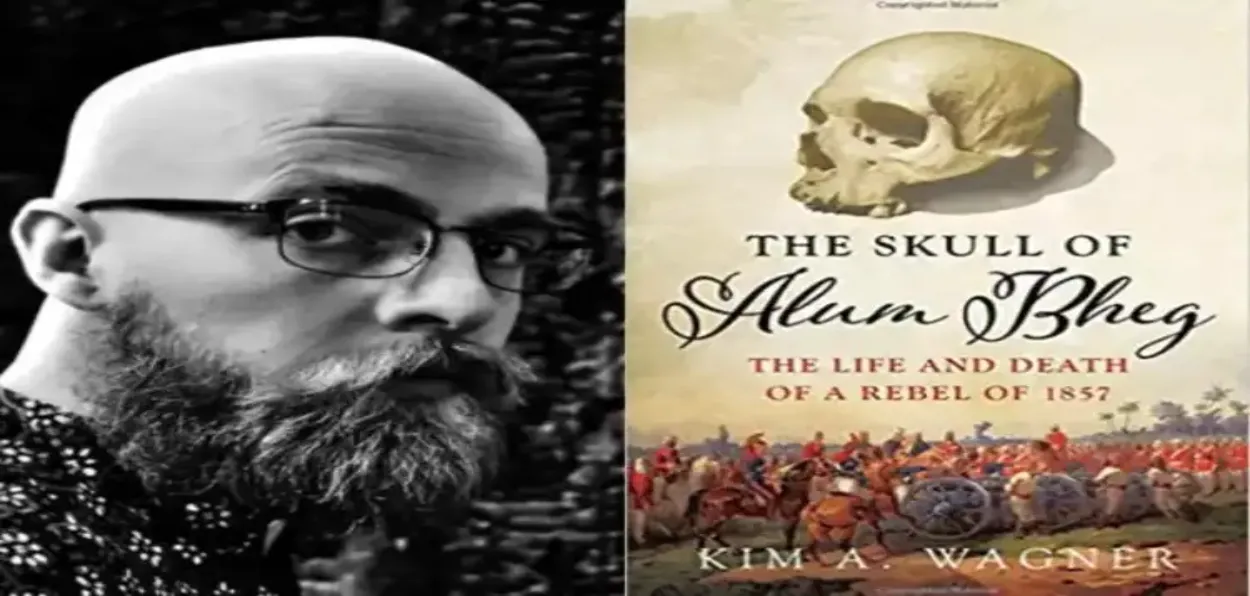
This campaign is being run by British Professor Kim A. Wagner, who teaches Global and Imperial History at Queen Mary University of London and is also the author of the book The Skull of Alum Bheg: The Life and Death of a Rebel of 1857.
Prof Kin Wagner is an authority on the subject as he has published several books like ‘Thuggee: Banditry and the British in Early Nineteenth-Century India’, ‘The Great Fear of 1957: Rumours, Conspiracies and the Making of the Indian Uprising’, and ‘Amritsar 1919: An Empire of Fear and the Making of a Massacre’.
Wagner says this grisly war trophy was found in a pub in south-east England in 1963. The owner handed it over to him in 2014 and he published this book on Alum Bheg in 2017.
Wagner says the skull was brought to Ireland by someone from the British authorities and later changed hands.
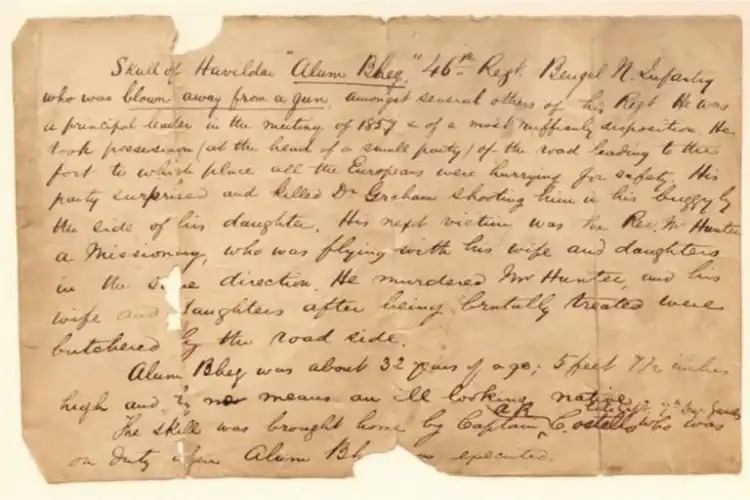
“The handwritten note found with it revealed the skull to be that of Alum Bheg, an Indian soldier in British service who had been blown from a cannon for his role in the 1857 Uprising. His head had been brought back as a grisly war trophy by an Irish officer present at his execution,” writes Kim Wagner.
Prof. S. Sehrwat of the Department of Anthropology, Punjab University had said in a statement that during the revolution of 1857, Havaldar Alam Baig (the way it is spelled in India) was captured and blown up with cannon. His skull was found in England.
He said Wenger had told him about this.
The note found with Alam Baig’s skull
A complete search record of the skull has been found. The scientists are now keen to do a DNA test to ensure the identity of the skull. It is known that Alam Baig was from the Kanpur area of Uttar Pradesh and even a family has claimed him to be their ancestor.
According to Prof Dineshwar Chaubey, who teaches genetics at BHU, Varanasi, two types of tests can be done on Alam Baig’s skull. A Kanpur family living in Delhi has claimed to be related to Alam Baig. Their genes can be matched with it.
Kim Wagner and other historians are campaigning for givinh a due burial to at some place along the India-Pakistan border, where he was done to death.
Wagner says the British had accused Baig of killing a Christian priest family and it was a fabricated charge. The record says that he was a sepoy of the 46th regiment of the Bengal Native Infantry.
Kim Wagner believes that it is the right time to bury Havaldar Alam Baig in his country, at the same spot where he fought in the Battle of Trimu Ghat on the banks of the Ravi River in the border region between India and Pakistan.
He said, “I do not consider the return of Alam Baig’s skull as political. My aim is only to bring the mortal remains of Alam Baig to his homeland so that he may rest in peace long after his death.
Although the historian’s statement has also passed a long time, there is no progress in this matter to date. It is also waiting for the time when the skull of one of the great sons of India will be brought to India and buried in the soil here.”
The Natural History Museum confirmed its likely authenticity and Wagner, with little evidence to go on, traced Bheg’s history using various sources.
source: http://www.awazthevoice.in / Awaz, The Voice / Home > Story by ATV / by Ghaus Siwani, New Delhi / posted by Aasha Khosa / September 02nd, 2023
The 23-hour-and-40-minute countdown for the Sun mission has begun. Aditya-L1 satellite will lift off from Sriharikota on Saturday at 11.50 a.m
Inside: Project director of the ambitious Aditya-L1 Nigar Shaji
Tenkasi :
The contribution of Tamils to India’s Space Odyssey seems to be enduring as a woman scientist from the state’s southern district of Tenkasi will have her tryst with destiny when Aditya-L1 satellite soars into the sky on Saturday.
Nigar Shaji (59), a native of Shengottai, is the project director of the ambitious Aditya-L1, which is the first space-based mission deployed by India to study the Sun.
Speaking to TNIE on Friday, Shaji’s brother S Sheik Saleem said Shaji completed her schooling in English medium at the Shengottai government higher secondary school.
“She did her graduation in engineering from the Tirunelveli government engineering college and joined ISRO in 1987. She resides in Bengaluru and visits Shengottai whenever there are family functions. Shaji’s husband, an engineer, is working in a Gulf country, and her son is also working as a scientist in the Netherlands. Her daughter and our mother are staying with Shaji in Bengaluru. We lost our father 30 years ago,” Saleem said. Incidentally, Chandrayaan 3 project director P Veeramuthuvel is also from Tamil Nadu.
Countdown starts
The 23-hour-and-40-minute countdown for the Sun mission has begun. Aditya-L1 satellite will lift off from Sriharikota on Saturday at 11.50 a.m.
source: http://www.newindianexpress.com / The New Indian Express / Home> States> Tamil Nadu / by Thinakaran Rajamani, Express News Service / September 02nd, 2023
Deralakatte Renjali (Ullal Taluk),Mangaluru, KARNATAKA / Saudi Arabia/ UAE:
Dr Abdul Shakeel has been selected for the coveted Asia Achievers award given by Indian Council for Cultural Relations, Swami Vivekananda Cultural Centre Colombo and High Commission of India Colombo for his social service including providing rice to more than 10000 eligible families cutting across religion and caste during Covid pandemic, adopting students who are financially poor and encouragement to outstanding students.
The award will be presented by Vidura Vikramanayake, minister for religious and cultural affairs, government of Sri Lanka and higher education minister of Sri Lanka Surena Raghavan at the 40th International cultural convention that is organized on August 25 at the auditorium of University of Visual and Performing Arts in Sri Lanka.
Dr Abdul Shakeel is the son of Abdul Khader Harekala and Maimuna couple, residents of Deralakatte Renjadi under Ullal taluk.
He is NRI entrepreneur having business interest in gulf countries. Dr Shakeel is the managing director of MMA Advertisement and interiors Saudi Arabia, Dubai, managing director of Grey Line Interior and Advertisement (UAE) and director of Readymix Concrete, India.
Dr Shakeel reserves 50% of profits of his business for social work through Dr Abdul Shakeel Charitable trust. During Corona pandemic he felicitated doctors, medical profession helpers and social workers who worked risking their own lives. Dr Shakeel supports youth, who are financially poor, to compete in national and international level sports and other activities. He has encouraged hundreds of children to get educated. He has also adopted several children. Dr Shakeel paid the educational expenses of students of backward community who have scored high marks in examinations and also took complete responsibility of their education. He has built houses for homeless people. Dr Shakeel also rendered financial help to those who get stuck in overseas countries. In addition, he has provided employment to hundreds of people in gulf countries.
source: http://www.daijiworld.com / DaijiWorld.com / Home> Karnataka / by Daijiworld Media Network – Mangaluru (MS) / August 25th, 2023
The famous writer Kushwant Singh, once wrote: “Indian Freedom is written in Muslim blood, since their participation in the freedom struggle was much more, in proportion to their small percentage of the population.”
The story and history of India’s independence are written with the blood of Muslims. According to historical references, 65% of those who stood, fought and sacrificed against the British for India’s independence were Muslim freedom fighters, the hams live reported.
A large number of people from all religions and castes took part in the freedom struggle, undoubtedly. However, the struggles of many Muslim prominent personalities who also contributed to India’s freedom and even sacrificed everything including their lives are little known. Muslims have been at the forefront to oppose the British and stood shoulder to shoulder with people from other communities while fighting against them. Getting freedom was not easy, our ancestors had to go face a lot of struggles and difficulties to get us the freedom that we are enjoying now.
The First Call To Oppose British
In the 1750s, Nawab Siraj-ud-Daulah was the first awakened Indian ruler, who stood his ground against the British. He lost the Battle of Plassey in 1757 due to the betrayal of Mir Jafar (Commander of Nawab’s army). With this, Siraj-ud-Daulah’s reign marks the end of the last independent rule in India and the beginning of the East India company’s rule that was unabated for the next two hundred years.
First Freedom Struggle By Muslim Rulers
The first freedom struggle against the British was started by the rulers of Mysore Hyder Ali and his son, Tipu Sultan, during the 1780s and 90s. Both used the first iron-cased rockets and cannons effectively against the British invaders.
Tipu Sultan is considered to be one of India’s first freedom fighters for his fierce fight and brave against the East India Company. He resisted the conquest of the British in southern India and was reluctant to welcome them on his soil. He was the only Indian ruler who understood the dangers that the British posed to India, and fought four wars to oust them from the country.
The Unsung Heroines Of India’s Freedom Struggle
Begum Hazrat Mahal, the unsung heroin, played a very important role in India’s war of Independence. Being a woman, she led a rebellion against the British East India Company in 1857. She shot the British ruler, Sir Henry Lawrence and defeated the British army in a conclusive Battle at Chinhat in 1857.
In the great revolt of 1857, as many as 225 Muslim women sacrificed their lives in the uprising. These unsung Muslim women freedom fighters who have sloganeered, shed blood and given their lives for the country’s independence have now been forgotten to due biases.
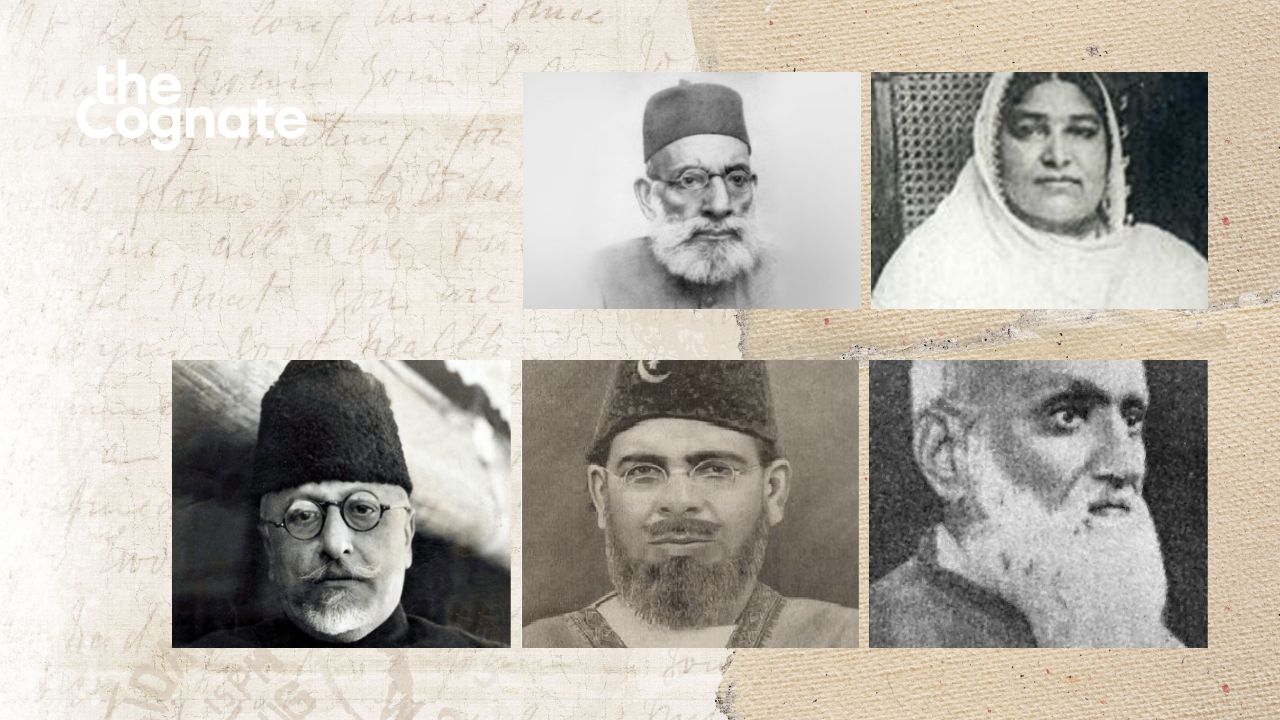
A majority of freedom fighters did a nameless service to the nation and one such lesser-known name was Abadi Bano Begum (Bi Amma). Bi Amma was the first woman to address a political rally wearing an abaya. She took part in National freedom struggles, Khilafat Movement and propagated Hindu-Muslim unity. Following Mahatma Gandhi’s advice, Bi Amma played an. An important role in encouraging women to take part in the freedom movement. Further, she played a pivotal role in the Swadeshi movements.
In the book, Gandhi and the Ali Brothers: Biography of a Friendship by Rakhahari Chatterji, Maulana Mohammad Jouhar says, “Suffice it to say that, although she was practically illiterate, I have, in all experience, of men of all sorts of types, come across none that I could call wiser and certainly that was more truly godly and spiritual than our mother.”
Bi Amma was also the mother of Muhammad Ali Jauhar and Shaukat Ali popularly known as the Ali Brothers whom she raised on her own after her husband died when she was young.
Amjadi Begum, the wife of Muhammad Ali Jauhar and daughter-in-law of Bi Amma, is yet another Muslim women freedom fighter. Mahatma Gandhi also dedicated an article on her titled ‘A Brave Woman‘ where he admired her as a courageous wife of a courageous man.
At the age of 45, Asghari Begum, another forgotten Muslim woman, has also taken part in the 1857 revolt and challenged British rule in the present-day Uttar Pradesh. However, she was captured by the British in 1858 and burnt alive.
Habiba, a Muslim woman’s fought many battles against the British in Muzaffarnagar in 1857. However, she was captured and hanged along with 11 other female warriors at the age of 25.
The Great Revolt of 1857
During the Great Revolt of 1857, Hindus and Muslims under the leadership of the last Mughal emperor Bahadur Shah Zafar tried to oust the British from India. A majority of Hindu sepoys requested Zafar to lead them in the war of Independence. Although the Revolt failed due of several reasons, Muslims have always stood on the front line to oppose the British.
Former Prime Minister of India, Rajiv Gandhi during his visit to Bahadur Shah’s grave, wrote in the visitor’s book: “Although you (Bahadur Shah) do not have land in India, you have it here; your name is alive… I pay homage to the memory of the symbol and rallying point of India’s First War of Independence….”
Muslims came to India and ruled here for over 800 years but they did not steal anything from here as the British, the Dutch and the French did. By bringing plenty of knowledge in literature, architecture, judiciary, political structure, government body and management structure, which is still used in Indian management strategy, they helped India to progress into a unified and civilized nation.
Lighthouse of Rebellion
How many of us know that the organizer and leader of “First Indian freedom struggle” in 1857 was Moulavi Ahamadullah Shah. Known as the ‘Lighthouse of Rebellion’ in Awadh, he Faizabad free from British rule for almost one year, until his death at the hands of British agents on June 5, 1858.
“With being a practicing Muslim, he was also the epitome of religious unity and Ganga-Jamuna culture of Faizabad. In the revolt of 1857, royalties like Nana Sahib of Kanpur, Kunwar Singh of Arrah fought alongside Maulavi Ahmadullah Shah. Maulavi’s 22nd Infantry Regiment was commanded by Subedar Ghamandi Singh and Subedar Umrao Singh in the famous Battle of Chinhat,” according to researcher and historian Ram Shankar Tripathi.
The important role of Muslims in the uprising is the reason that the British government singled out the community for the worst revenge. From the Nawab, the King of Mysore, the last Mughal King, Princes, the landlords, the Ulemas, intellectuals, Urdu journalists, including common people, all members of the Muslim community have made great sacrifices for the freedom of India.
In the uprising of the 1857 revolt, thousands of ulema were slaughtered and the whole of Delhi was emptied of Muslims, according to excerpts from Syed Ubaidur Rahman’s book Biographical Encyclopedia of Indian Muslim Freedom Fighters. They were not even allowed to return to their homes and reclaim their properties.
First Journalist To Sacrifice His Life During The Great Revolt
Moulvi Muhammad Baqir, a scholar and activist of Indian independence activist was the first journalist to be executed following the rebellion in 1857. The editor of Urdu newspapers, Delhi Urdu Akhbar, was washed dead on 16th September 1857 for writing Nationalist articles, without even a trial.
Although India got independence on 15 August 1947, the foundation of the freedom struggle was laid before 1857. Since the time of the Revolt of 1857, which is considered to be the beginning of India’s freedom struggle, Muslim leadership has spearheaded the cause.
First Muslim To Be Hanged For Conspiring Against East India Company
At the age of 27 years, Shaheed Ashfaqulla Khan was the first Muslim to be hanged for conspiring against the British Raj. Khan was hanged to death on December 19, 1927. With this, he became a martyr and a legend among the people because of his love for the country and his unshakeable spirit.
Reshmi Rumal Tehreek (The Silk Movement)
Muslims not only took the lead in the uprising, but also stood in the front line in all other efforts to topple the British colonial regime in India.
After the revolt of 1857, the Muslim leaders changed their strategy of resistance by setting up educational institutions across the country. Reshmi Rumal Tehreek or The Silk Letter Movement (1913-1920) was an initiative by Deobandi Leaders Maulana Mahmud Hasan and Maulana Ubaidullah Sindhi to topple the British Empire.
However, when British intelligence learned about it, hundreds of sympathizers of the initiative were arrested and put in prison for years without any trial. The top leaders including Maulana Mahmud Hasan and half a dozen of his followers were banished to Malta after a faux trial where they faced the worst hardship.
Role of Muslims in Congress’ anti-colonial struggle
Justice Abbas Tyabji, an Indian freedom fighter from Gujarat and associate of Mahatma Gandhi, was the first Muslim president of the Indian National Congress party. Justice Tyabji is also known for leading Salt Satyagraha following Gandhi’s arrest in 1930.
Another Congress president during the colonialism was Maulana Abul Kalam Azad, who is one of the chief Muslim leaders of the anti-colonial nationalist movement. He became the youngest President of the Indian National Congress in 1923 at the age of 35. He faced multiple imprisonments by the colonial state.
From Justice Tayabji to Maulana Abul Kalam Azad, there have been eight Muslim leaders who were in the Indian National Congress’s freedom movement. The other prominent Muslim leaders include, Muhammad Ali Jauhar, Shaukat Ali, Maulana Azad, Dr Mukhtar Ansari, Hakim Ajmal Khan, Maulana Mahmud Hasan and many others. They made every possible sacrifice for the cause of the end the colonial rule.
Frontier Gandhi
Khan Abdul Ghaffar Khan was a Pashtun independence activist who campaigned to end the rule of the British Raj in India. He founded the Khudai Khidmatgar resistance movement against British colonial rule in India. He was also known as Frontier Gandhi for his principles of non-violence and friendship with Gandhi. Khan worked towards the formation of a united, independent, secular India.
Muslim Man Coins “Jai Hind”
The patriotic slogan “Jai Hind” was initially coined by Zain-ul Abideen Hasan, but it was adopted by Netaji Subhash Chandra Bose. It is now used as a way of salutation throughout India. It means “Victory to India” in English.
The Creation Of the National Flag
For a majority of us, the current national flag was designed by Pingali Venkayya. However, it was a Muslim Lady Surayya Tyabji, who created the flag’s final look today.
Although we have recounted several names of the Muslims who have contributed to India’s freedom struggle, there are several thousands of them who fought on the streets against the British Raj.
source: http://www.thecongnate.com / The Cognate / Home> History / by Rabia Shireen / August 15th, 2022
In the freedom struggle, Muslim freedom fighters played a predominant role.
In the Indian freedom struggle, though, Muslim freedom fighters played a predominant role, right-wing organisations are trying to erase their history. In view of it, it is essential to know the important Muslim freedom fighters who fought for Indian Independence.
Indian freedom fighter and former aide of Subhash Chandra Bose Abid Hasan Safrani. (Photo: Siasat)
Abid Hasan Safrani
Abid Hasan Safrani, an Indian National Army (INA) soldier from Hyderabad is one of the unsung heroes of Hyderabad. He not only played role in India’s independence but also coined the slogan ‘Jai Hind’ which was later declared the salutation of the Indian Army and government employees.
Safrani was constantly with the INA fighting from Burma to Imphal in India.
After India attained freedom, then Prime Minister Pandit Jawahar Lal Nehru inducted him into the Indian Foreign Service (IFS). He was posted to several countries including Egypt, China, Switzerland, Iraq, Syria, Senegal and Denmark.
After retirement, Safrani settled at a farm in Shaikpet, Tolichowki. He passed away in 1984.
Maulana Abul Kalam Azad
Maulana Azad, a distinguished Islamic scholar, author, academician and a prominent freedom fighter, was elected as the youngest President of Indian National Congress aged 35, and later led the historic Khilafat Movement.
After Independence, Maulana Azad served as India’s first Education Minister for over 10 years, during which he laid the foundations for the country’s massive academic network. Acknowledging his contributions, his birthday – November 11 – is celebrated as National Education Day.
Siraj-Siraj-ud-Doulah
Siraj-Siraj-ud-Doulah, the Nawab of Bengal was the first Indian king to foresee the threat posed to the future of the country by the English East India Company which entered India in the name of trade but transgressed its limits. He took bold initiatives to thwart the company’s evil designs.
Mir Khasim Ali Khan
Mir Khasim Ali Khan was a warrior Nawab who fought against the East India Company till his end with the conviction that he could ensure safety for his kingdom and liberty and prosperity for his people only by driving the British out of India.
Hyder Ali
Hyder Ali, who is famously known as ‘the Napoleon of South India’ for his relentless fighting against the conspiracies of the East India Company and its henchmen and for checkmating the British ambitions of expansion in South India
Tipu Sultan
Tipu Sultan, the ‘Tiger of Mysore’, was a great visionary who exposed the expansionist designs of the British imperial forces and gave a clarion call to his fellow countrymen and native rulers to unite and fight against the East India Company.
Syed Mir Nisar Ali
The Wahabi movement enjoyed a special status in the history of revolt against British rule in India, and Titu Mir, whose real name was Syed Mir Nisar Ali, added militancy to it. It became the source of inspiration for several movements in the Struggle for Independence of India.
Haji Shariatullah
Haji Shariatullah, who militantly led the Farazi Movement that stood as a source of inspiration for several revolutionaries in the Indian Freedom Struggle
Ghulam Rasool Khan
Ghulam Rasool Khan, the Nawab of Kurnool in Andhra Pradesh, created terror among the officials of the East India Company.
Moulana Peer Ali Khan
Moulana Peer Ali Khan fought against the British military force declaring that sacrificing oneself in the cause of liberation of one’s motherland is a proof of one’s love for his country.
Moulvi Ahmadullah Shah Fyzabadi
Moulvi Ahmadullah Shah Fyzabadi created panic among the British camps. In the First War of Indian Independence of 1857, he fought against the forces of East India Company and registered several victories over them.
Sheikh Bikhari Saheb
Sheikh Bikhari Saheb raged against General Dalhousee’s ‘Doctrine of Lapse’ whose sole objective was to expand the British empire. He stood in support of the freedom loving native rulers and fought against the foreign rulers.
Azimullah Khan
Azimullah Khan was renowned as a strategist in the First War of Independence, 1857.
He retreated to the forests of Nepal along with Nana Saheb, Hazarat Mahal and others, when the First War of Independence had faced the situation of near defeat. Azimullah Khan passed away in October 1859, while making efforts to secure financial and military support to fight back against the British.
Mohammad Bakht Khan
Mohammad Bakht Khan provided leadership to the heroes and heroines of The First War of Independence of India of 1857 against the forces of the East India Company, by taking up the responsibility of Commander-in-Chief.
He streamlined the troops after his appointment as the Commander-in-Chief by the Mughal Emperor, Bahadur Shah Zafar.
Khan Bahadur Khan
Khan Bahadur Khan, the ruler of Rohilkhand, fought against the British to liberate the motherland.
Declining a very high official post offered by the East India Company, Khan Bahadur Khan revolted against the British at the age of 70. He declared Independence at Bareilly, the capital of Rohilkhand on 31 May, 1857.
Bahadur Shah Zafar
Bahadur Shah Zafar, the last Moghul Emperor, led the First War of Independence, which was recognized in history as the symbol of anger among the people of India against the British.
He breathed his last in jail on 7 November 1862.
Mohammad Sher Ali
Mohammad Sher Ali, an embodiment of anti-British spirit , was born in 1842 at Peshawar, presently in Pakistan. He was inspired by the Wahabi movement that arose against the British in his younger age. His family migrated to Ambala from Peshawar in 1863. He was sentenced to death on 2 April, 1868.
Begum Hazrat Mahal
Begum Hazrat Mahal was a prominent woman of the 1857 rebellion. There was a fierce battle between the Company troops and the Begum troops. When defeat became inevitable, Begum Hazrat Mahal retreated to the Nepal forests along with the co-revolutionary leaders like Nana Sahib Peshwa and others.
Begum Hazarath Mahal struggled for the independence of her state till her last breath. She passed away at Kathmandu of Nepal on 7 April 1879.
Moulvi Syed Allavuddin
Moulvi Syed Allavuddin was a spiritual leader. He used to exhort people of Nizam State, one of the strongest princely states of South India, to rebel against the British hegemony. He stood in the forefront of the direct fight against the British Government.
He was a native of Hyderabad, the capital of erstwhile Nizam princely state. Allavuddin intensified his rebellious activities soon after the First war of Independence of India was started in 1857.
British forces arrested and sent Moulvi Allavuddin to the cellular jail in Andaman on 28 June 1859. After leading a miserable life of 25 years as a prisoner, Moulvi Syed Allavuddin passed away in 1884.
On the occasion of Independence Day, all Indians need to pay tribute to all the freedom fighters who took part in the Indian freedom struggle.
source: http://www.siasat.com / The Siasat Daily / Home> News> India / by Sameer Khan / August 15th, 2023
Khan, who works as an engineering co-ordinator at an IT company in Dubai, purchased the ticket along with some of his colleagues and friends.
39-year-old Sakil Khan Sarwar Khan Photo: Big Ticket
Abu Dhabi:
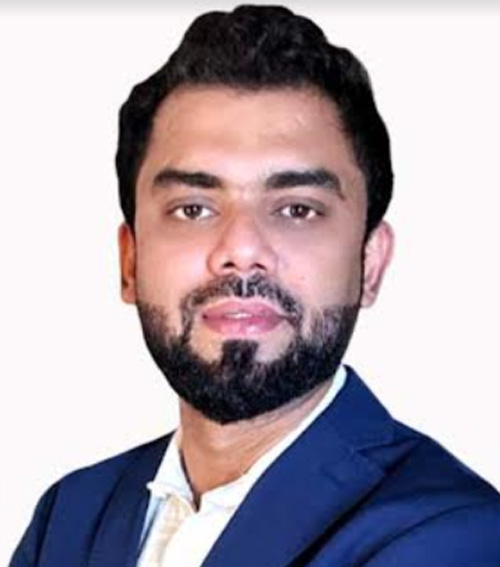
A 39-year-old United Arab Emirates (UAE)-based Indian expatriate from Rajasthan, won the grand prize of Dirhams 15 million (Rs 33,83,29,693) in the Big Ticket Abu Dhabi weekly draw.
The winner Sakil Khan Sarwar Khan— bagged the prize after buying ticket number 191115 for the raffle draw number 254, which he had purchased online on July 25, on his birthday.
Khan, who works as an engineering coordinator at an IT company in Dubai, purchased the ticket along with some of his colleagues and friends. He will be splitting the cash prize among 15 people.
“Usually, I select raffle ticket numbers randomly. This time, though, I purchased the tickets on my birthday and really thought hard about the numbers I chose,” Khan told Big Ticket organisers.
He plans to clear his debts and start a business with the piece of his fortune.
Anyone who purchases a ticket for the upcoming live draw this month will have a chance to win Dirhams 20 million on September 3.
Customers will also be entered directly into the weekly electronic draw for a chance to be one of four winners to pocket Dirhams 100,000 (Rs 22,55,221) every week.
Big Ticket was established in 1992 with an initial first prize of Dirhams one million (Rs 2,25,53,420) and is one of the most popular monthly draws in the UAE.
Tickets can be purchased online through the Big Ticket website or by visiting the store counters at Abu Dhabi International Airport and Al Ain Airport.
source: http://www.siasat.com / The Siasat Daily / Home> News> Middle East / by Sakina Fatima / August 04th, 2023
Indian revolutionaries in Kabul where they announced a government in exile
On 24 April 1918, Ram Chandra was shot dead by Ram Singh in a courtroom in San Francisco, USA. A few moments later, a policeman shot Ram Singh. Who were these Indians? Ram Chandra and Ram Singh were the leaders of a revolutionary Ghadar Party in the USA. They were planning to wage a war against the British Empire with the help of the German government. Ram Singh suspected Chandra of being a traitor and thus he killed him on the last day of the trial.
Though Muslims and Sikhs were also accused of being part of the conspiracy, for some reason the case was famously called the Hindu German Conspiracy case. The German High Commissioner had allegedly provided the revolutionaries with money and arms.
Rabindranath Tagore was also featured in the charge sheet. It was accused that he took money from the revolutionaries in the USA and handed it over to the Japanese government to arrange for arms. It was the costliest court case ever argued in the USA till that time.
Indian revolutionaries had always used foreign territories to wage war against the British Empire. In 1845, Haji Imdadullah Muhajir Makki of Saharanpur went on the Haj with a plan to stay there. He wanted to teach at Makkah. Another Indian and his senior Maulana Ishaq met him in Makkah and asked him to return to India and wage a war against the English East India Company rule. Ishaq was one of the many Indian ulemas, who lived in Makkah and Medina to preach anti-colonialism among the pilgrims.
Imdadullah returned to India, planned a revolt in coordination with several leaders, and joined the War of Independence in 1857. He liberated Shamli for a few weeks before the English recaptured it. Thousands of his followers were killed in the battle and he moved to Makkah.
Imdadullah lived for 30 more years and used Makkah as a base to preach nationalism among Haj pilgrims from India and create links among different colonized nationalities.
Shyamji Krishna Varma, an Arya Samaj leader, established India House in London to train educated revolutionaries for the freedom struggle. V.D. Savarkar, Virendranath Chattopadhyay, Haider Raza, Ali Khan, Bipin Chandra Pal, and Acharya were a few prominent Indian revolutionaries trained at this hostel. They were given fellowships to study in England. Asaf Ali, who later argued the case of Bhagat Singh in court, was also associated with the India House. Savarkar’s book describing events of 1857 S inspired a generation of revolutionaries.
Madan Lal Dhingra was one of the most prominent revolutionaries from this house. He assassinated an English official after which the house had to be closed down. Savarkar was arrested and sent to Andamans. After that, these revolutionaries shifted bases to Berlin, Paris, etc.
Indians, especially Punjabis, living in the USA formed the Ghadar Party in 1913. Ghadar is a term used for the War of Independence of 1857. The party aimed to re-enact the scenario by making the Indian sepoys of the English army rebel.
The revolutionaries contacted Germany and Turkey for money and arms. A date doe revolt was fixed in India for the revolt. Hundreds of the revolutionaries came back to India in 1915, Rash Behari Bose, Jatin Bagha, and M N Roy were also working for the success of the plan. A traitor told the British about the plan. Hundreds of revolutionaries were caught and hanged in what came to be known as First Lahore Conspiracy. Kartar Singh Sarabha was one of the more famous among those hanged. Jatin Bagha was killed. Ras Behari Bose and M N Roy had to leave the country.
The Ghadar Party succeeded in causing a mutiny in Singapore. In February 1915, Indian soldiers killed English officers and captured the island country. It took two days and the help of the Russian and Japanese armies to recapture Singapore from the British. More than four dozen Indians were killed by a firing squad in a public execution. At least 40 of the killed soldiers were Muslims from Haryana.
Raja Mahendra Pratap was an Arya Samaj activist from Hathras. As the war started he travelled to Turkey and Germany where the Sultan and Kaiser respectively gave him letters of authority to form a provisional government of India at Kabul. He reached Afghanistan with a Ghadarite, Barkatullah, where Maulana Ubaidullah Sindhi, a Deobandi scholar, was waiting for them. A provisional government with Pratap as the President, Barkatullah as the PM, and Ubaidullah as the Home Minister was formed in Kabul.
A plan to raise an army was also chalked out. Maulana Mahmood Hasan, a Deobandi scholar, and Maulana Husain Ahmad Madani were coordinating the efforts from Makkah. Letters written on silk cloth were used to communicate which were uncovered by British intelligence. Maulana Mahmood and Madani were arrested from Makkah and sent to Malta as prisoners of war. Hundreds of others were also arrested in what came to be known as the Silk Letter Conspiracy.
The war had ended. M. N Roy, Andul Rab, and MPT Acharya established a military school in Tashkent in the USSR. It trained mostly Muslims who migrated to Afghanistan after a fatwa asked them to in 1915. The people trained here took part in major revolutionary activities in India later on. Mian Akbar Shah is well known for his role in the famous escape of Netaji Subhas Chandra Bose from Kolkata (Calcutta) to Peshawar. He is supposed to be the most important person to have planned and executed the escape in 1941.
Ubaidullah went to the USSR and traveled to several countries before settling at Makkah in the 1930s. He used it as a ground to preach like Maulana Ishaq and Imdadullah before him. In 1938 he returned to India and met Netaji Subhas Chandra Bose. He planned future armed action with Netaji and gave him several contacts with Japan and Germany. Japan already had his old comrades in Raja Mahendra Pratap and Rash Behari Bose.
Around the same time Sardar Ajit Singh, an uncle of Bhagat Singh, and Iqbal Shaidai organized an army in Italy. They had been active in foreign lands since the last World War.
The story of Netaji forming an army in Germany and later leading Azad Hind Fauj formed by Ras Behari Bose in Japan is well-known and needs no retelling.
source: http://www.awazthevoice.in / Awaz, The Voice / Home> Stories / by Saquib Salim / August 11th, 2023
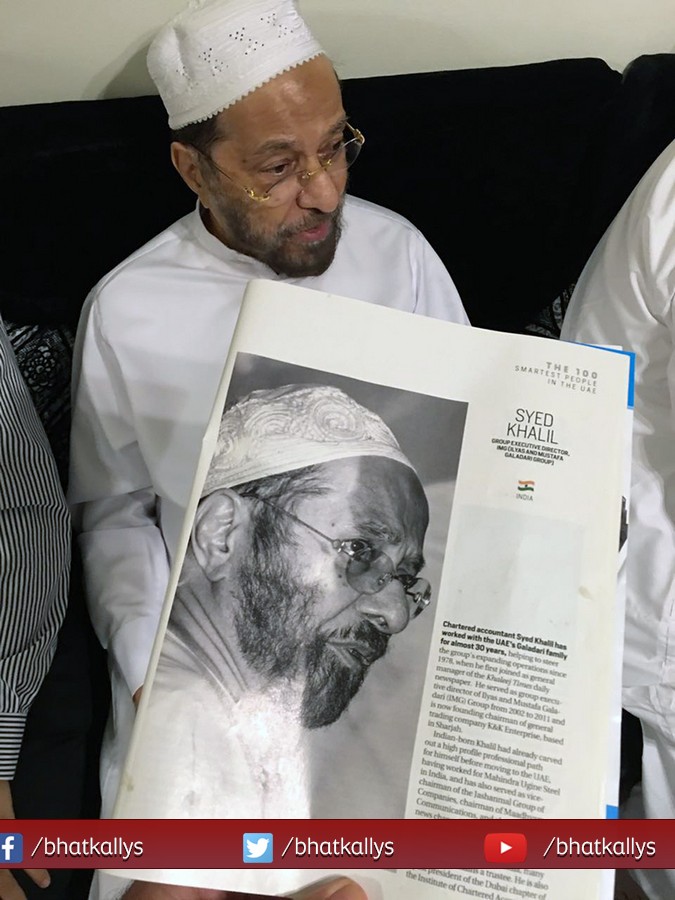
United Arab Emirates, located in the desert, is one among the few places in the world which can be termed as heavenly, with skyscrapers, thrilling roads, beautiful locations and facilities. NRI entrepreneur and educationist from the town, Dr S M Syed Khalilurrhman, has made India proud by succeeding in getting identified as one among the 100 smartest people in UAE.
The weekly, ‘Arabian Business’ being published from Dubai in English and Arabic, has brought out a special issue titled ‘The 100 smartest people in the UAE’. By including Dr Syed Khalilurrahman in the list, the magazine has brought global fame to this town.
pix: bhatkallys.com
Dr Khalilurrhman, who is fondly and commonly identified by the general public here with the name, ‘C A Khaleel’, belongs to Nawayat community from here. The fact that he has risen to being distinctively endowed with the honour of being one of the most smart persons in the UAE has brought laurels not only for the Nawayat community here, but for Kannadigas and Indians. Khaleel evinces lot of interest and concern in international trade, social service, and education of poor children. He rightfully deserves the honour that has come seeking him.
Being in UAE, Khaleel is involved with business field that has been attuned to serve demands of the modern era. On account of his intelligence and close observational powers, he has grown tremendously in stature, and therefore, has been counted among the 100 most intelligent, clever, and wise persons of UAE. Incidentally, this list has 12 persons of Indian origin, and Khaleel has an outstanding personality because of his diverse interests.
Khaleel Saheb, who went to the Gulf in 1978, on account of his unshaken faith and affection on Galadari family, took Galadari Company to dizzy heights with his meritorious service for 30 years. Currently he has been active in his profession as the founder chairman of K&K Enterprises General Trading Company, Sharjah. He has also been serving as president of a number of educational and social service organizations in Karnataka and elsewhere.
Even when being in foreign soil, he always throbs to the needs of India, particularly his hometown, Bhatkal. He has organized a number of programmes in the town to strengthen harmony between Hindus and Muslims. He always keeps thinking about ways and means to relieve the youngsters from worries about unemployment problem, and towards this end, has been planning an industrial revolution in his native place. In his addresses, he has been expressing about the need of medical education here, and the need to establish a good hospital. This worthy son of Nawayat community has won several awards and honours and they come seeking him. He is the recipient of prestgious ‘Rajyostava Awad’ of Karnataka government, honorary doctorate of Aldersgate College, Ireland, and countless felicitations and honours, all of which go to showcase his imposing achievements and exemplary personality.
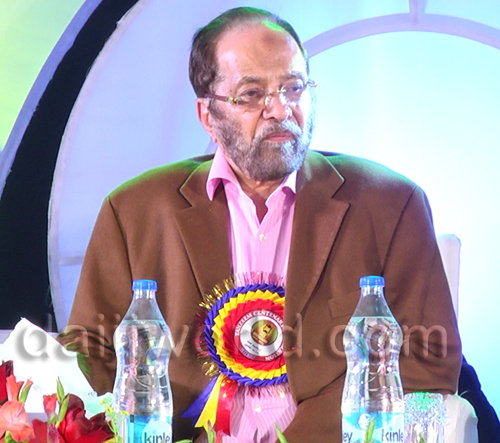
pix: daijiworld.com
Syed Khaleel is credited for being one of the first few chartered accountants from the town. Besides being known for his expertise as an expert in finances, he also is a popular leader in social service, religious, and educational circles. He has served as president of well-known organizations from here like Anjuman educational institutions, Rabita Society etc. Khaleel has won over unbridled love and respect of people from all the communities. He encourages total support for the education of girls and has built mammoth educational institutions. A number of influential political leaders, social and religious heads are in the circles that are close to Syed Khaleel.
In the past too Khaleelurrahman has been conferred with a number of honours and rewards.
Other Indians who have found themselves in the said list include Thumbay Mohidin of Thumbay Group, Rizwan Sajan, chairman and founder of Denube group, Yousuf Ali of Lulu Group, Sunil John, chief executive officer of Asda Barsen-Marstella, Dr B R Shetty, founder of NMC Healthcare, chief executive officer and founder of Plan B Group, Harmeek Singh, chief executive officer of Cocoon Centre for Aesthetic Transformation, Dr Sanjay Parashan, Lasic surgeon, Dr Pramod Was Hekar, managing director of VPS Healthcare, Dr Shamsheer Vayalil, and Sunny Warki, chairman of Gems Education.
source: http://www.daijiworld.com / Daijiworld.com / Home> Top Stories / by Yahya Hallare / by Daijiworld Media Network – Bhatkal (SP) / September 22nd, 2017
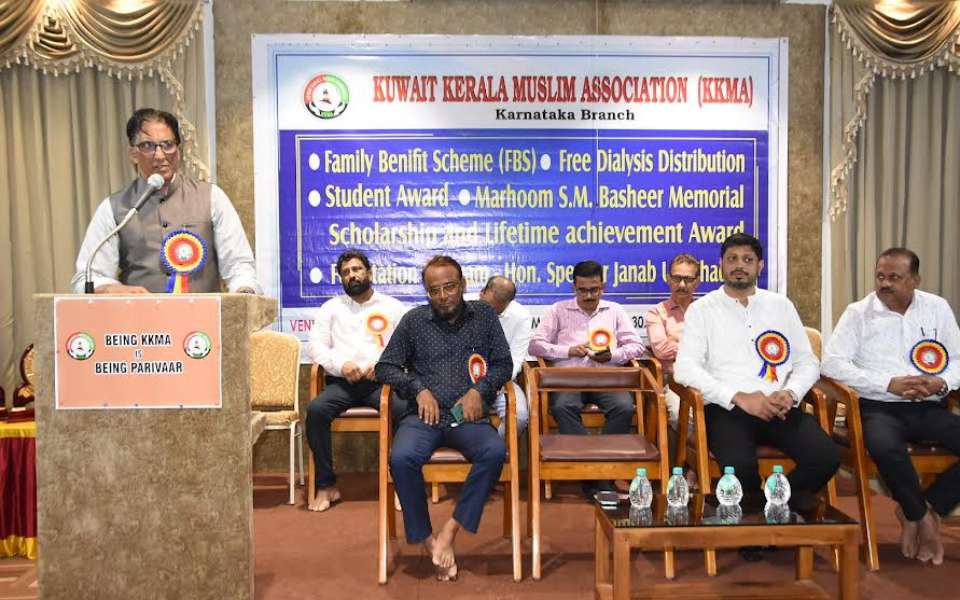
KKMA Student Awards, ‘Family Benefit Scheme Distribution’ held in Mangaluru
Mangaluru:
Kuwait Kerala Muslim Association (Karnataka Chapter) held a ceremony on Sunday, July 30, at the Highland Islamic Forum (HIF) Auditorium in Falnir.
The event aimed to provide assistance and recognition to its members and their families through various welfare schemes and awards.
During the ceremony, the Family Benefit Scheme was distributed to the families of deceased members as a compassionate gesture from the association.
Additionally, the deserving patients were recipients of the Free Dialysis Scheme, providing vital medical support to those in need.
The occasion also saw the distribution of the Late SM Basheer Memorial Student Scholarships, which offer educational support to deserving students.
Moreover, the Lifetime Achievement Award was bestowed upon CAO of Shepherd International Academy, Hasan Yusuf, a respected figure recognized for his substantial contributions to social services over the years.
NA Muneer, the former chairman and trustee of KKMA, delivered the inaugural speech, highlighting the association’s commitment to taking care of its members even after their passing. He emphasized how the association, which began in 2002 and now boasts over 16,000 members, has been able to extend financial assistance totaling more than Rs. 15 crore to 255 families who have lost their loved ones. Muneer applauded the selfless contributions of KKMA members, who, despite being small-time earners, generously contribute from their hard-earned money to support bereaved families. He urged the families of the deceased members to pray for the well-being of KKMA members, who tirelessly work for this noble cause.
Yusuf Rasheed, the KKMA Karnataka president, delivered the presidential address, underscoring the association’s dedication to the well-being of its members and the underprivileged within society. This dedication is evident through the distribution of facilities such as free dialysis and educational scholarships, aimed at uplifting and empowering the community.
The ceremony also witnessed an address by Architect Mohammed Nissar, Chairman of Indian Design School Mangaluru. Nissar encouraged the scholarship recipients to make the most of the opportunity and urged the association to provide guidance to these students so they can pursue professions that benefit both themselves and the wider community.
SM Farooq, KKMA Karnataka State President, paid tribute to his late brother, the esteemed SM Basheer, and recounted how he tirelessly worked for the welfare of KKMA Karnataka Chapter. He also highlighted how the Family Benefit Scheme offered essential support to the families of deceased members during crucial times.
In recognition of his exceptional service to KKMA Karnataka Chapter, SM Farooq was felicitated at the ceremony.
Several students were awarded with the KKMA students award for their academic excellence in various exams while several other deserving students were awarded educational scholarships during the event.
The event concluded with Abdul Latif extending the vote of thanks, expressing gratitude to all participants and supporters. Uzaif compered the event.
Prominent personalities like SM Basha and Munir Kodi were among the dignitaries present during the event.
source: http://www.varthabharati.in / Vartha Bharati / Home> Karavali / by Vartha Bharati / July 3oth, 2023


.webp)