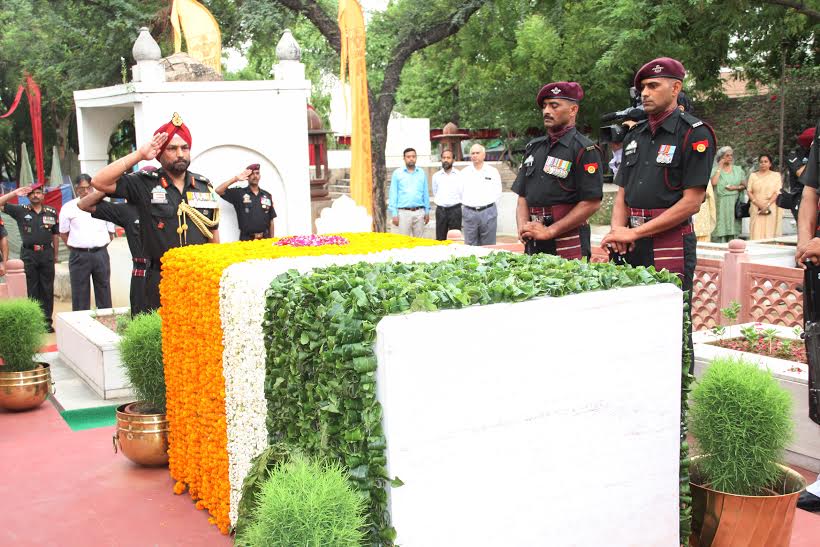
A Wreath Laying Ceremony to commemorate the death anniversary of Brigadier Mohammad Usman, MVC (P) was organised at his Memorial in Jamia Millia Islamia (JMI) Cemetery on 03rd July 2023.
Several Retired and Serving officers including Lt Gen Pushpendra Singh, SM** Col of the PARA Regiment and DG OL & SM, Brig. Rajneesh Mohan Cdr 50 (I) PARA Bde, Lt. Gen Gurbir Pal Singh, AVSM, VSM, DG NCC Delhi, Lt. Gen Velayudhan Sreehari, AVSM, SC, SM, AG’s BR DG (MP&PS), Lt Gen Subriti S Dahiya, SM VSM, Comdt NDC and Maj Gen Prashant Srivastava, AVSM, SM, Addl MS (B) attended the function and paid their tributes by laying a wreath at the Memorial of Brig. M. Usman, MVC (P).
A wreath was also placed at the Memorial of Brig. M. Usman PVC (P) on behalf of JMI Vice Chancellor Prof. Najma Akhtar (Padma Shri), as her tribute to the memory of the gallant officer. NCC cadets and officers were also present to witness the solemn occasion and pay their respects.
Under Brig. Mohammad Usman, MVC (P) Para Brigade successfully defended the city of Naushera against Pakistani Tribal forces, and then valiantly recaptured the city of Jhangar.
Late Brigadier Mohammad Usman, also known as the savior of Naushera, was responsible for the recapture of Jhangar & Naushera (Jammu & Kashmir) during 1947- 48 war with Pakistan.
The gallant officer attained martyrdom on 03rd July 1948 when an enemy artillery shell landed close to him in Naushera.
source: http://www.jmi.ac.in / Jamia Millia Islamia – JMI / Home / by Public Relations Office / July 03rd, 2023
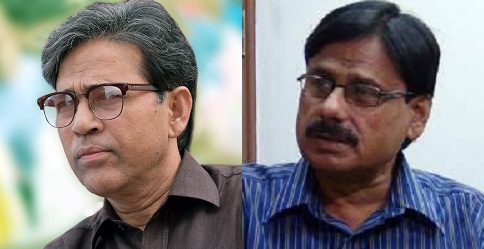
It is a matter of great pride for the Jamia Millia Islamia (JMI) that Dr. Abdul Naseeb Khan and Dr Khalid Javed of the university have been conferred with Uttar Pradesh Urdu Academy Award (Rs.One Lakh and citation).
Vice Chancellor Prof. Najma Akhtar extended her heartiest congratulations to both the awardees.
Dr Abdul Naseeb Khan who is currently working as the Secretary to the Vice Chancellor, JMI has been given ‘Award for Translation’. He has to his credit translations of Ghalib’s Urdu poetry, Premchand’s stories, urdu novels, critical urdu writings and several modern urdu poets. He has also been a recipient of Delhi Urdu Academy award for translation in the year 2018. He holds PhD on translation of modern urdu poetry into english.
Dr Khalid Javed a Professor, Urdu Department, JMI received the award for Urdu Fiction. He has also been a recipient of Delhi Urdu Academy Award for Fiction in the year 2018. He has authored three very famous novels- ‘Maut Ki Kitab’, ‘Nematkhana’ and ‘Ek Khanjar Paani Me’. His story ‘Aakhri Dawat’ translated as ‘The Last Supper’ by Abdul Naseeb Khan is on the syllabus of Urdu in Princeton University, USA. His ‘Maut Ki Kitab’ has also been translated as the ‘Book of Death’ by Abdul Naseeb Khan.
Besides, Prof. Khalid Mahmood, a Retired Professor of the Dept. of Urdu, JMI has also bagged a prize for his book ‘ Nuqush-e-Mani’ .
source: http://www.eduadvice.in / Edu Advice / Home> News Details> Latest News / by Edu Advice / December 18th, 2021
Prof Farah Ghaus, Department of Anatomy, J.N. Medical College, Aligarh Muslim University (AMU) has been recognized by The Knowledge Review magazine as ‘one of the Most Influential Women Leaders – Shaping India’s Future, 2023’, for delivering noteworthy pedagogical facilities for the last two decades and leveraging exceptional leadership qualities via extensive expertise, progressive ideas and unrelenting dedication, and thus have left an impact on the industry.
The inspiring story of Dr Ghaus has been featured in the magazine, and she has been presented with a certificate for the same.
Notably, Dr Ghaus holds a prominent position in the field of Anatomy, serving as a member of the advisory board for ‘Inderbir Singh’s Human Embryology 12th and 13th editions’.
She is a life member of various anatomical societies and her book ‘Development of Maxillary Sinus-A Morphological Study in Human Fetuses’ is a testament to her expertise in the subject.
source: http://www.amu.ac.in / Aligarh Muslim University, AMU / Home> AMU News / by Public Relations Office, Aligarh (headline edited) / June 28th, 2023
The official statement revealed that Mohd Adil Khan, an architect from Lucknow, “never imagined” that his first purchase could make him the winner of the grand prize
He decided to buy the lottery ticket when he came across the ad while scrolling social media
An Indian expat Mohd Adil Khan, living in UAE, has won the first FAST5 Grand Prize. Now, he will be receiving AED 25,000 (Rs 5.5 lakh approx) every month, for the next 25 years.
The official statement revealed that Mohd Adil Khan, an architect from Lucknow, “never imagined” that his first purchase could make him the winner of the grand prize. With his big win, Mr Adil aims to buy a house for his family and also wishes to explore other investment opportunities.
The statement added that he decided to buy the lottery ticket when he came across the ad while scrolling social media one day.
Mr Adil, who went to Dubai from Saudi Arabia in 2018, said, “This was the first time I brought any raffle draw tickets. One day, while strolling through my family photos on social media, I came across an Emirates Draw ad. Filled with hope, he purchased one ticket for the following weeks.” He says that just the thought of receiving AED 25,000 in his bank account every month, is nothing less than “incredible.” Mr Adil added, “I never imagined that my first purchase would make me the first FAST5 Grand Prize winner. The thought of receiving AED 25,000 every month in my bank account for 25 years is incredible.”
It is for the very first time that he has won something as big as this grand prize, which will reportedly aid him in making “good investment decisions.”
He said, “I have never come across such a unique prize offering from any other drawer. This win will take away my financial worries and guarantee a stable secondary income, which will help me make good investment decisions.”
Rejoiced by his big win, Mr Adil expressed that now he can fulfil his dream of bringing his family to live with him in the UAE.
source: http://www.ndtv.com / NDTV / Home> News> Indians Abroad / by NDTV News Desk / July 29th, 2023
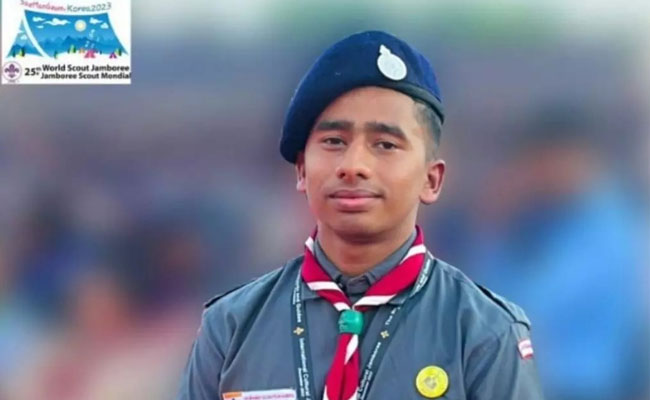
Muhammad Saif, a student of St Aloysius College, has been selected as the International Service Team (IST) representative of India for the upcoming 25th International Scouts and Guides Jamboree, scheduled to be held in Saemangeum, South Korea.
The prestigious event is set to take place from August 1 to August 12.
Hailing from Karuvelu in Bantwal taluk, Saif is the son of Abdul Khader Haji and Sameena. His selection as the IST representative of India is a significant achievement and honor for him and his family.
The International Scouts and Guides Jamboree is a global gathering that brings together scouts and guides from various countries to promote international friendship, cultural exchange, and mutual understanding among young people.
Saif’s participation as the IST representative will not only showcase India’s presence at the Jamboree but also provide him with a unique opportunity to interact with scouts and guides from different parts of the world.
source: http://www.varthabharati.in / Vartha Bharati / Home> Karavali / by Vartha Bharati / July 26th, 2023
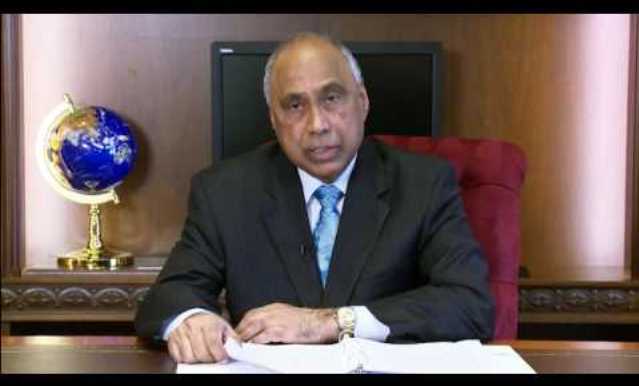
In the realm of Indian Muslims and the Indian Muslim diaspora, the name of Frank F. Islam commands instant recognition and reverence. An illustrious entrepreneur, philanthropist, and a prominent civic and intellectual figure, he has become an indomitable force for the advancement of Indian Muslims through his unwavering commitment to education. His influence extends far and wide, gracing numerous boards and councils at prestigious institutions such as Johns Hopkins University, American University, and George Mason University.
His philanthropic endeavors have left a mark of grandeur on his alma mater, Aligarh Muslim University, where he has erected the splendid Frank and Debbie Islam Management Complex. Not stopping there, his native village, Kaunra Gahni, bears witness to his magnanimity with the establishment of the Frank and Debbie Islam Health Clinic, a project dedicated to the betterment of its people.
As the visionary leader of FI Invest Group, a venture he founded after selling his information technology firm, QSS Group, in 2007, Mr. Frank Islam exudes a profound understanding of global economic affairs. His keen eyes closely monitor the economic activities of two colossal nations, the United States and India, while he remains deeply immersed in the intricacies of American politics and economy. His connections with former President Barack Obama and the current President Joe Biden stand testament to his prominence in political circles. An accomplished writer, he has penned two books, solidifying his intellectual prowess.
Undoubtedly, the economic condition of a country charts its future trajectory, and in this domain, Mr. Frank F. Islam emerges as a seasoned expert. In this exclusive interview with Alize Najaf, he graces us with invaluable insights into the economic dynamics of India and beyond.
AN: Your dedication to uplifting Indian Muslims through education and philanthropy is truly commendable. Could you share with us some of the impactful projects you’ve undertaken in this regard?
Mr. Islam: Certainly. I’ve had the privilege of contributing to the development of my alma mater, Aligarh Muslim University, by constructing the Frank and Debbie Islam Management Complex. Additionally, in my native village Kaunra Gahni, we’ve established the Frank and Debbie Islam Health Clinic, which aims to provide essential healthcare services to the community.
AN: Your journey as an entrepreneur is remarkable. How did you establish the FI Invest Group, and what advice would you give to aspiring young entrepreneurs?
Mr. Islam: Building a strong and talented team has been pivotal to my success in business. Aspiring entrepreneurs should surround themselves with like-minded individuals who share their vision and values. It’s essential to believe in oneself and the team while daring to dream big. Woody Allen once said, “90% of life is just showing up.” I believe in focusing on the remaining 10% and maximizing efforts to achieve one’s goals.
AN: Turning our focus to economics, the relationship between the United States and India is growing stronger. Is the strategy to counterbalance China a driving force behind this development?
Mr. Islam: While China’s influence is a factor in strengthening U.S.-India relations, it’s not the sole driving force. The convergence of India and the United States is based on shared interests and values as the world’s largest democracies. From artificial intelligence to climate change, there are numerous common areas of focus.
AN: Agriculture plays a significant role in the economy of developing countries. How important is agricultural production for a country’s economic development?
Mr. Islam: Agricultural self-sufficiency is vital for any nation to sustain its population without relying heavily on imports. The Covid-19 pandemic taught us the value of self-reliance during supply chain disruptions. While developed economies rely less on agriculture for employment, developing nations often have a larger population dependent on the sector.
AN: The economic reforms introduced by Dr. Manmohan Singh and Prime Minister Narasimha Rao are often credited with changing India’s economic trajectory. What is your view on their impact?
Mr. Islam: The economic reforms of the 1990s were transformative for India. They set the country on a path to becoming the fifth-largest economy and beyond. Prime Minister Rao and Dr. Singh’s vision played a pivotal role in this positive transformation.
AN: What are your predictions for India’s economic growth in the next five years?
Mr. Islam: All indications point to substantial economic growth for India in the coming years. According to the IMF, India is expected to contribute 15% to global growth this year. The organization further estimates a 6% growth rate for India in the current year, setting the stage for further progress.
AN: India’s economic growth still lags behind China’s. What factors do you think are responsible for this difference?
Mr. Islam: China had a head start in initiating economic reforms, while India opened its economy later. China’s unwavering focus on manufacturing and global investments played a significant role in its economic growth. However, India possesses the potential to surpass China with appropriate policies and continued reforms.
AN: It’s evident that your expertise in economics is vast. Do you have any plans to contribute to India’s economic progress?
Mr. Islam: After selling my company, my wife and I founded our family foundation to dedicate ourselves to philanthropy. We believe in giving back to society, primarily focusing on education and healthcare in Uttar Pradesh, my home state. By supporting institutions like Aligarh Muslim University, we aim to contribute to India’s progress from the grassroots level.
AN: Thank you, Mr. Frank F. Islam, for sharing your insights and expertise with us. It has been an enlightening conversation.
Mr. Islam: Thank you for having me, Alize. It was a pleasure discussing these critical economic matters.
source: http://www.muslimmirror.com / Muslim Mirror / Home> Interviews / by Alize Najaf / July 30th, 2023
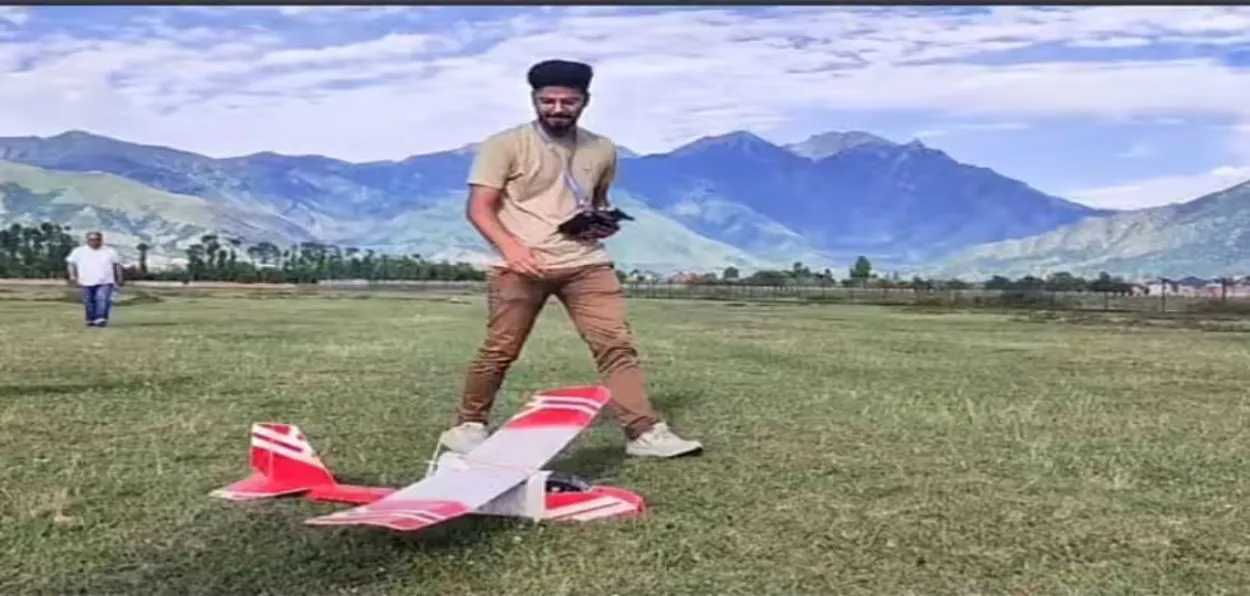
Abaan Habib with his drone in a location in Himachal Pradesh
New Delhi :
Optimism and hope fills the hearts and minds of today’s Kashmiri youth and they are ready to take off on the fight of their dreams. Abaan Habib is one of them; he has developed an extraordinary drone that can transport blood for medical emergencies from one hospital to another.
After years of hard work, Abaan Habib, a resident of Zakura area of Srinagar, created the flying machine that has the potential to save countless lives and improve access to health care in remote areas and during natural calamities.
Abaan said he was inspired to work out his invention after he saw the devastation and human suffering in the 2014 floods that nearly drowned the city of Srinagar.
Abaan says, “After witnessing the devastating floods of 2014, I wanted to find a solution to transferring blood samples and pouches between hospitals.”
He worked hard on his drone technology for five years. Initial tests conducted in Himachal Pradesh were successful as the drone connected 20-25 hospitals to the central hospital, covering a distance of over 70 km.
He says: My message to the youth is to follow your passion. Only through the persistence and dedication of young minds can a society bring about meaningful change in the world.
Abaan’s drone experiment also extended to inter-state connectivity, connecting hospitals in Shimla with Chandigarh. Aban decided to debut the drone in Himachal Pradesh first, collect data and demonstrate its benefits before expanding its use to the Kashmir Valley.
The geographic conditions of both states present unique challenges in providing timely blood transfusions to patients in need. Aban recognized this and took advantage of this void in the atmosphere. We can take advantage of the atmosphere to help the needy.
Abaan not only worked on the project but also collaborated with corporate entities outside Kashmir. These collaborations have provided additional expertise and resources to further develop and implement its drone technology.
However, to run the drone service on a commercial scale, he says, he needs financial support.
Abaan Habib hopes that with his drone, he will not only be able to save lives but also create business and career opportunities for the youth of the valley.
Abaan’s drone invention holds great promise in revolutionizing healthcare access in remote areas. As Abaan tries to secure funding and navigate regulatory challenges, the potential impact of its technology cannot be overstated.
With every step forward, Abaan brings us closer to a future where life-saving medical equipment can reach even the most inaccessible areas, offering hope and a chance for survival to those in dire need.
This project of his was presented by Habib Abaan last year. At that time he was a 12th standard student at Green Valley Educational Institute in Kashmir. He said, “We have a tinkering lab at school, which helped me a lot in understanding the process and learning the art of making drones.”
My parents gave me freedom and therefore my idea of education is quite different from others. Unlike other parents, my family did not force me to choose a career like a doctor or an engineer. They allowed me to go as I pleased. My inclination was towards drone technology.”
He says, “I have seen many natural calamities in Kashmir since my childhood, one such natural calamity was the flood of 2014 when Kashmir was flooded. People required relief supplies and we saw how the government machinery failed miserably due to lack of infrastructure. They were very disturbing scenes, everyone knows that this effort of dropping aid from helicopters is not enough.”
It was then that I thought of drones and how helpful they could be in such situations. If we build small drones that are autonomous and equipped with artificial intelligence to deliver relief supplies to disaster areas, they can deliver aid without much cost.
Abaan Habib said that JKEDI and JKTPO encouraged him but he is yet to receive any financial support from the government.
Abaan Habib also went to Gujarat to attend an event organized by DRDO where we showed off his drone to the then Army Chief General Makund Major Naravane. “He appreciated my efforts,”
He says young entrepreneurs should be prepared to face rejection or failure; spend their money and not fall for loans and subsidies, for he believes “debts are the root of failures.”
Abaan;s father H U Malik told Rising Kashmir that they are operating at 25 locations in Himachal Pradesh and they want to replicate the same model in Kashmir keeping in view its geographical conditions.
“Even Abaan is working to link SKIMS Hospital; SMHS with GMC Baramulla and for that fly van has already been designated for the project,” he said.
Malik says it is his son’s dream to see this project working in Kashmir. “We want to connect SKIMS hospital with other tertiary, district hospitals of the valley. We appeal to concerned authorities to help us and we are ready to follow all SOPs in this regard,” he said.
source: http://www.awazthevoice.in / Awaz, The Voice / Home> Story / by Aasha Khosa / July 20th, 2023
Today, Google Doodle commemorates the birthday of Zarina Hashmi, an influential Indian American artist who would have turned 86 today.
The doodle, designed by guest illustrator Tara Anand from New York, pays homage to Hashmi’s artistic style by incorporating her signature geometric and minimalist abstract shapes.
source: http://www.economictimes.indiatimes.com / The Economic Times / Home> English Edition> Business News> Magazine> Panache / by ET Online / July 16th, 2023
Faizal E. Kottikollon, Founder and Chairman of KEF Holdings, has been appointed to the prestigious board of directors at the Sharjah Research, Technology, and Innovation Park (SRTIP). This appointment represents a significant milestone for KEF Holdings, with Faizal Kottikollon bringing his expertise and entrepreneurial vision to contribute to the development of SRTIP under the leadership of Sheikha Bodour Bint Sultan Bin Mohammed Al Qasimi.
SRTIP is poised to become a leading hub for cutting-edge research, technological advancements, and innovation in the region. The inclusion of Faizal Kottikollon on the board of directors reinforces KEF Holdings’ commitment to innovation and sustainable impact in the fields of offsite construction, healthcare, education, and clinical wellness.
The esteemed board of directors comprises distinguished individuals such as His Royal Highness Prince Khaled bin Alwaleed bin Talal bin Abdulaziz Al Saud, Sheikh Dr. Majid bin Sultan Al Qasimi, Dr. Abdulaziz Saeed bin Butti Al Muhairi, Dr. Hamid M.K. Al Naimiy, Hussain Mohammed Al Mahmoudi, Dr. Susan Mumm, Najla Ahmed Al Midfa, Ahmed Obaid Al Qaseer, Khaled Issa Al Huraimel, Dr. Aisha Bint Butti Bin Bishr, Adel Abdullah Ali, Samer Salim Al Sayegh, Abdulaziz Basem Al Loughani, Mudassir Sheikha, and Alisha Moopen. Together, they will shape the strategic direction of SRTIP.
Faizal Kottikollon expressed his enthusiasm for the collaboration with SoiLAB, a venture within SRTIP, which aims to cultivate an environment conducive to creativity, technological advancement, and lasting impact on innovation, entrepreneurship, and technological progress not only in Sharjah but also beyond.
Faizal is the son of renowned Malayali entrepreneur and philanthropist PK Ahammed, Chairman of Peekay Group of Companies. He is married to Shabana Faizal, daughter of Late B Ahmed Haji Mohiudeen, Founder of B A Group, Thumbay, and a prominent business and community leader.
About KEF Group
KEF Holdings invest in businesses that are innovative, sustainable, cost-effective, and deliver positive disruptive solutions across core business sectors encompassing infrastructure, healthcare, and technology, to benefit society and build a better tomorrow.
It has a 20-year legacy of building successful businesses. It began its journey in 1995 with the opening of Al Ahamadi General Trading in Ajman, following this it launched a world-class Foundry, and a valve trading company JC Middle East. It then created Emirates Techno Casting, an integrated facility incorporating cutting-edge engineering and design lab, the world’s largest automatic molding line, steel refining furnace, machine shop, and research and development lab, rated among the top 3 technologically advanced foundries in the world.
In 2012 Tyco International, bought the business for USD 400 million, becoming the impetus for the launch of KEF Holdings’ two new verticals KEF Investments and KEF Infra. KEF Investments, have built a global investment portfolio by capitalizing on low-risk, high-income opportunities in growing markets.
In the year 2018, KEF Infra announced a strategic merger with Katerra, the Menlo Park US-based technology company, revolutionizing the design and construction industries.
Staying true to its belief of being a social enterprise the company, in close collaboration with stakeholders in the public and private sectors, actively drives, funds, and supports high-impact social activities undertaken by the Faizal & Shabana Foundation.
source: http://www.english.varthabharati.in / Vartha Bharati / Home> Gulf / by Vartha Bharati / July 18th, 2023
Distinguished Indian scholars have congratulated Grand Mufti of India, Sheikh Abubakr Ahmad on being conferred with Hijrah Award, the Malaysia’s highest civilian honour for Influential Muslim Scholars worldwide.
Indians have also welcomed Malyasian Government’s gesture on giving honour to the proponents of moderate Islam.
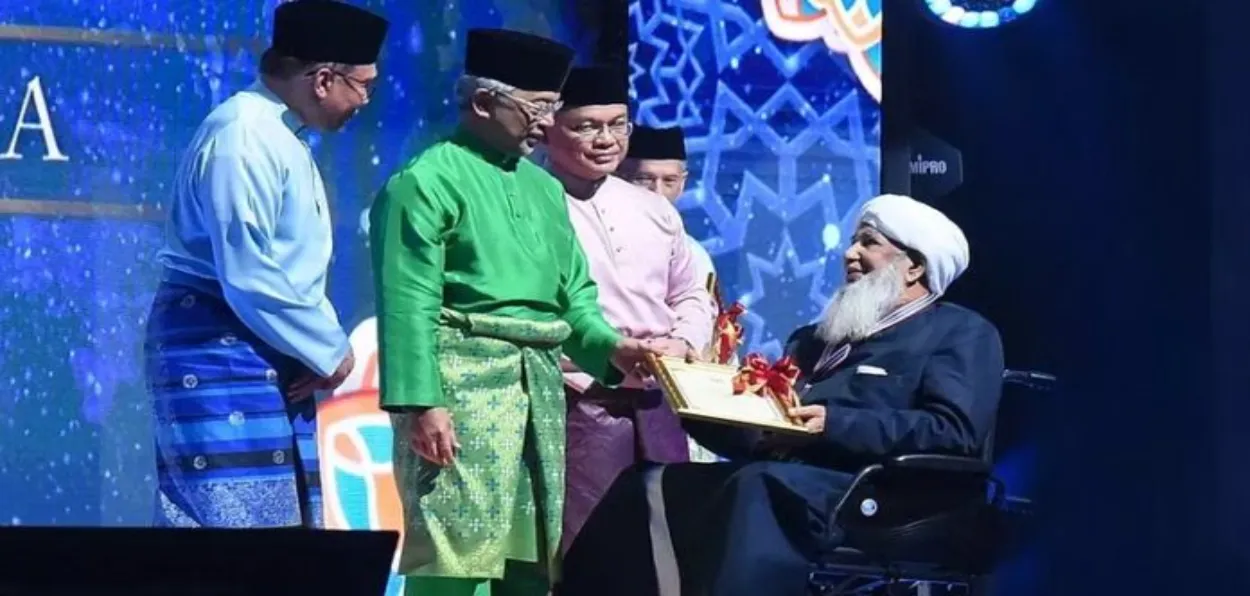
Grand Mufti of India, Sheikh Abubakr Ahmad was conferred with Hijrah Award, Malaysian King Al-Sultan Abdullah Sultan Ahmad Shah presented the award at a grand ceremony held at the Kuala Lumpur World Trade Centre.
The event was attended by Prime Minister Anwar Ibrahim, Minister of Religious Affairs Dr Muhammad Nahim bin Mukhtar among many others.
In a grand ceremony Sheikh Abubakar was felicitated with the prestigious international award for his significant contributions in the field of Islamic knowledge, social development, and peacebuilding.
The Hijrah award committee also acknowledged the educational activities Sheikh Abubakr and his organizations initiated among various communities in India.
Upon receiving the award, Sheikh Abubakr Ahmad expressed his delight and stated that this is an international recognition for Indian community and their contributions to humanity.
Last year, Hijrah award was given to Dr Sheikh Mohammed bin Abdul Karim Al Issa, Secretary General of the Muslim World League, who recently visited India upon the invitation of Indian Government.
Dr Abdul Hakeem, son of Sheikh Abubakr Ahmad, said congratulatory messages are coming in from all over the world, people of various faiths are saying he is deserving of the award for his services as a scholar for the downtrodden and the backward community.
Sheikh Abubakr Ahmad has successfully established a multi-discipline institute for education, health, agriculture, technology, hospitality, and spirituality together in one city.
He has also contributed to the Prime Minister Modi’s vision of a smart city. “The award is an honour to India as Sheikh has always represented India’s multi-cultural diversity and unity in several countries in the world,” he added.
President of Interfaith Harmony Foundation of India, Dr Khwaja Iftekhar Ahmad said: Sheikh Abubakr is running a chain of religious and modern education institutes in Kerala including an orphanage. This puts him in the category of a highly distinctive Indian Muslim religious scholar, who deserves many honours for his services towards the field of education.
He has done a remarkable thing by establishing in a few hundred acres of land a knowledge city in Kerala. It is an eye-opener for those who wish to contribute in the field of education.
“I congratulate the King of Malaysia for conferring him the award. It is an honour for Indian and an honour for the freedom that minorities enjoy in India,’’ he added.
Haji Syed Salman Chishty, Chairman – Chishty Foundation, said: “It is a well-deserved recognition for his significant contributions to Islamic knowledge, social development, and peacebuilding. His educational initiatives have positively impacted various communities in India, and this award is a proud moment for the Indian community and their contributions to humanity.
Grand Mufti Sheikh Abubakr Ahmad’s dedication to promoting Islamic knowledge and fostering social development has truly made a lasting impact. The recognition bestowed upon him by the Malaysian King Al-Sultan Abdullah Sultan Ahmad Shah highlights the global influence of his work as an influential Muslim scholar.
The Hijrah Award’s history of honoring notable figures like Dr Sheikh Mohammed bin Abdul Karim Al Issa further solidifies the significance of this recognition. With influential personalities like Sheikh Abubakr Ahmad and Dr Sheikh Mohammed bin Abdul Karim Al Issa collaborating and fostering dialogue between nations, it enhances interfaith relations and promotes mutual understanding.
Zafar Mahmood, noted Islamic scholar and former civil servant, said: “The Malaysian award is a recognition of Sheikh Abubakr Ahmad for his remarkable work in the field of education and social harmony. Recognition of efforts in the field of education uplift is heartwarming. It also elevates our spiritual level because of the spiritual mandate.’’
Sheikh Abubakr Ahmad is widely respected not only in religious fraternity of Muslims but by the people of all communities. His contribution in interfaith dialogue is noteworthy.
source: http://www.awazthevoice.in / Awaz, The Voice / Home> Story / by Awaz, The Voice / July 20th, 2023