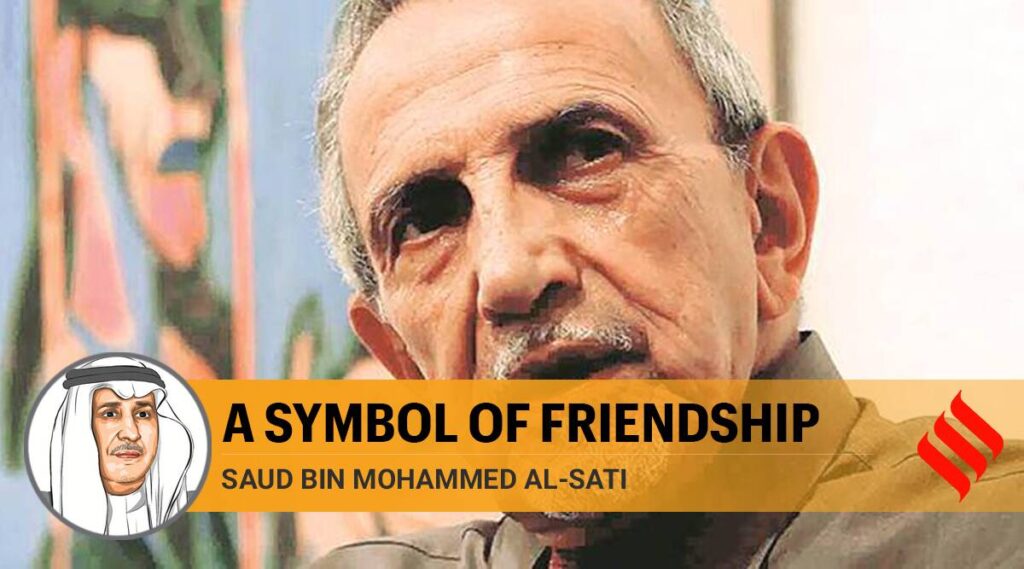
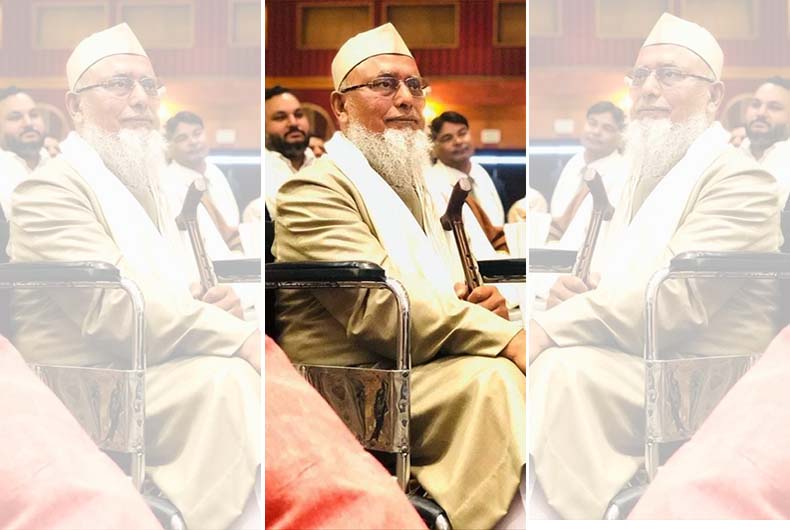
Ebrahim Alkazi will continue to live in the hearts of Saudis and Indians who are on the quest to deepen the friendship and cultural heritage they share.
Ebrahim Alkazi (1925-2020)
Last week, we lost Ebrahim Alkazi, a legend of Indian theatre with Saudi Arabian roots. I fondly remember my first experience of meeting him in the spring of 2014 at his house in New Delhi. I was touched by his unique character and his passion for the arts. He greeted me with a few words spoken in the distinct Qassimi dialect. Alkazi was also a noted art connoisseur and collector, credited for fundamentally transforming Indian theatre and having etched a name for Indian theatre worldwide. His legacy will forever remain a testament to the rich intellectual and cultural links between Saudi Arabia and India.
Alkazi’s father, Hamad, was a trader from Unaiza in Saudi Arabia’s Qassim region, who subsequently settled in Pune where Ebrahim was born in 1925. Despite his early immersion in theatre, he gradually pursued his love for visual arts. He showcased the avant-garde artist in him throughout India, the US and Europe through his path-breaking work before becoming the director of the National School of Drama in Delhi and the Asian Theatre Institute in 1962. He will always be remembered for his contributions in the field of arts that resonate with our cultural bonds. The strings that bind Saudi Arabia and India are many and have become stronger and more diverse over time. However, the cultural ties that the two countries share are perhaps the deepest. Pre-Islamic Arab poetry has many references to Indian swords and several other Indian goods.
The two countries have a fascinating history of intellectual exchanges. Science, arts, literature, and languages – the mutual influence has indeed been profound. For instance, many Indian texts in the field of medicine, mathematics and astronomy were translated over the centuries into Arabic. The father of Indology is none other than the Arab scholar Al-Biruni. His monumental work Ta’rikh al-Hind is undoubtedly the most comprehensive pre-modern encyclopaedic work on India.
Another notable text, the Panchatantra, was translated by the Arabs who took it to Europe and the rest of the world, as were Hitopadesha and Chanakya’s Arthashastra. India’s famous medical treatises such as Charaka and Susruta were translated into Arabic as well.
The Arab travellers were also prolific writers and wrote extensively on India, its people and diverse cultures. Writers such as Sulaiman, Ibn-ul-Faquih, Al-Masudi and Al-Idrisi documented in great detail their impressions of south India, its people, customs and traditions. The world-famous Arabian Nights also called Alf Laila in Arabic and Adventures of Sindbad the Sailor too describe southern India. According to Ibn Nadeem, a 16th-century Arab writer, Sindbad was written in India.
These deeply-rooted cultural ties have continued to grow. For instance, Yoga has become an increasingly popular sport in Saudi Arabia. Since November 2017, the International Yoga Day is celebrated in an open area in the centre of Riyadh. In 2018, India was a guest of honour at our annual cultural festival of Al Janadriyah. The theme of the Indian pavilion at the festival was “Saudi ka Dost Bharat” (India is a friend of Saudi Arabia). This last decade has been seminal in expanding our friendship into a strategic partnership.
A most significant milestone in our ties with India was the visit of His Royal Highness Crown Prince to India in February 2019, which re-affirmed the deep commitment of the two nations to strengthen their strategic engagement.
Our shared cultural bonds are also deepened by the religious ties between our peoples. The annual pilgrimage to Makkah has facilitated the exchange of cultures and traditions as well. But above all, our ties have been strengthened by pioneers like Ebrahim Alkazi. He will continue to live in the hearts of Saudis and Indians who are on the quest to deepen the friendship and cultural heritage they share.
This article first appeared in the print edition on August 12 under the title “A symbol of friendship”. The writer is the ambassador of the Kingdom of Saudi Arabia to India
source: http://www.indianexpress.com / The Indian Express / Home> Opinion> Columns / by Saud Bin Mohammed Al Sati, Ambassador Kingdom of Saudi Arabia to India / August 12th, 2020
Aligarh, UTTAR PRADESH / NEW DELHI / Ghazibad District (U.P) :
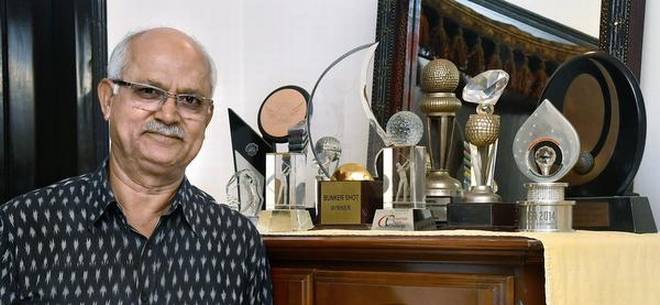
Hockey Olympian Zafar Iqbal on how his life has unfolded, from being the son of an academician to his days spent on the golf course today
The general impression of a hockey player in India is that of a talented sportsperson from the hinterland, modestly educated, and fighting poverty and lack of resources in the stuggle to reach the top. Zafar Iqbal breaks the mould in more ways than one.
The former Executive Director (Properties and Facilities) with the erstwhile Indian Airlines is one of the few in the sport to have managed a life outside hockey post-retirement. He credits his parents and upbringing for helping him get the balance right all through, in his articulate, but gentle manner.
“My father never stopped me from playing sports, but he was quite strict when it came to studies as well. He knew there was fame and popularity in sport; money, not so much, and so wanted us to be self-sufficient enough to manage our lives even after our sporting days were over. I am glad I listened to him,” says the 63-year old, who says he has worked enough in his life to be able to sit back and enjoy retirement.
How the world knows him
One half of the famous Shahid-Zafar pair that tormented teams’ defences for years, the talented left winger would set up the legendary Mohammed Shahid for his stylish goals. They needed little or no communication to know exactly what needed to be done.
The subtle stickwork, though, was always backed with a strong understanding of physics, thanks to his degree in civil engineering from Aligarh Muslim University and an even stronger realisation that the sport would always be his passion, but not something that would help him lead a life of comfort in the long run.
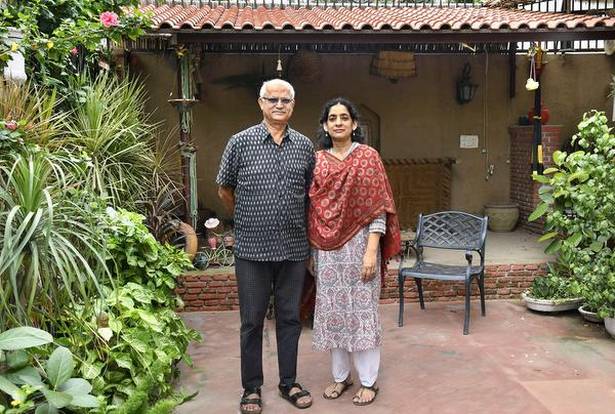
A resident of Vaishali in Ghaziabad – he moved to the house once he had retired – Iqbal’s major commitment through the day now is to golf. “I started learning golf a few years before retiring and I am still not satisfied with my game. I wake up around 4.30 in the morning and from 5.15 to almost 11.30-12, I am at the golf course. It’s the best part of my day,” he says, laughing.
As the son of Prof. Shahbuddin, dean of the science department at Aligarh Muslim University, Iqbal did not lack resources or an atmosphere of learning at home. Today, he’s surrounded by books on history that he enjoys, and has read the texts of all the major religions, including the four Vedas.
Having made his national debut in 1977, and getting his degree in 1978 – the same year he joined Indian Airlines – he was finally free to pursue hockey full-time. “That was also at my father’s insistence. I had job offers from the Indian Railways and Uttar Pradesh State Electricity Board, but he advised me to join the airlines, saying that I might not get immediate rewards but would surely be successful in the future. I realised he was right when I was finally appointed ED,” Iqbal recalls.
Players off the field
He talks about how he tried to push his teammates as well to have a life outside the sport. “I used to tell them to continue with their studies and office work after active sports, because not everyone can be a coach or administrator for life. Unfortunately, there were many, much bigger players who could not rise to a senior post. I told them it might be tough initially, but office work is no rocket science. Also, as players we are used to quick decisions on field, so it is easier for us to make the switch. They didn’t listen to me, though,” he rues.
It was in 1977 that he moved to Delhi and decided to make it his home. “For me, coming from a small town like Aligarh, Delhi was this huge, fast place where everything was big and far. In AMU everything was available at your doorstep; here, I had to travel 16 km by bus, every day, from the Indian Airlines Colony in Vasant Vihar for training at the stadium. But when I see it now, I feel it was so laid-back then,” he exclaims.
It wasn’t just the distance that awed the 22-year-old. His training camps with Indian Airlines at the National Stadium were equally overwhelming. “Players like Ashok Kumar, Aslam Sher Khan, B.P. Govinda – whose photographs we kept in our rooms and pockets – were suddenly our teammates. Inam-ur-Rehman, my idol, was the coach. He was a disciplinarian, treating everyone equally, regardless of his achievements on the field. That helped inculcate respect for the game and discipline on the field,” Iqbal admits.
The presence of other sportspeople also helped. The National Stadium, he explains, used to be a multipurpose venue with a track for athletics and no turf in the main arena. It had the likes of the legendary athlete Sriram Singh training there. “The hockey field was on the left and cricket on the right, with Bishan Singh Bedi and many more practising. It was all open and we used to interact,” he says.
Old ways
Empty roads, few vehicles, no paranoia about hygienic food or water, the absence of pollution – the Delhi he remembers is restricted to nostalgia now. Even the most secure areas of the city – in and around Parliament, which he had to cross to reach National Stadium – had easy access, including Race Course Road, which he recalls used to be open to the public back then.
“I sometimes wonder what progress we have actually made. Everyone seems to be running all the time and everyone is addicted to mobiles. We seem to have become breathing mechanical bodies,” he says.
The discipline of a sportsperson, though, continues to guide his life. Iqbal is a member of two golf courses in NCR – Army Golf Club and the Noida Golf Course – but also visits the one at Hindon. On a week-long break to Chennai to visit his son, Yasir, an assistant professor of physics at IIT, he still managed to find people who would help him play his daily round, at the Cosmopolitan Club. He hasn’t the same luck in Mumbai though, when he visits his daughter, Samia, who moved to the city for her work as a copywriter.
For the rest, he is happy to accompany wife Fauzia (who also retired from the commercial department of what was Vayudoot and consequently Air India) around or spend time occasionally with his friends.
As a member of the governing body of the Sports Authority of India, as well as consultant with the University Grants Commission in the sports curriculum committee, he has stayed in touch with sports administration, pushing the agenda of games as an essential part of the development of a person.
As a former India coach (1993-94), selector (over three tenures), and government observer for many years, he has given back to the sport that helped him become an Olympic champion. But in his pursuit of golfing excellence, Zafar Iqbal continues to live a sporting life.
This ends our 10-part series on former sportspeople who are based in Delhi.
source: http://www.thehindu.com / The Hindu / Home> News> Cities> Delhi – Now & Then / by Uthra Ganesan / September 04th, 2019
Noted Persian scholar Prof Syed Ainul Hasan is the new Vice-Chancellor of Maulana Azad National Urdu University. According to a communication received from the Union Education Ministry to the varsity, the President in his capacity as the Visitor of MANUU appointed Prof Hasan, as the fifth VC of MANUU for a five-year term.
Prof Ainul Hasan is a professor, Persian & Central Asian Studies, Jawaharlal Nehru University, New Delhi. Earlier, he also served as the Dean, School of Language, Literature and Culture Studies, JNU. He is also the president, All-India Persian Scholars’ Association. He has more than 34 years of teaching experience and produced 87 research scholars.
A visiting professor of Rutgers State University, New Jersey (US) under Fulbright, Prof Hasan authored 13 books. He is a specialist in Indo-Iran, Indo-Arab relations and comparative literature.
Prof S M Rahmatullah, In-charge VC and Prof Siddiqui Mohd Mahmood, Registrar I/c, congratulated Prof Hasan on his appointment. They hoped that under his leadership MANUU will attain new heights of academic excellence.
source: http://www.telanganatribune.com / Telangana Tribune / Home> Hyderabad / by Telangana Tribune / July 24th, 2021
Professor Mohd Zahid Ashraf will receive this award under the Biological Sciences category. His work, as per a JMI statement, has contributed towards developing strategy for an early diagnosis and treatment of thrombosis at extremely challenging environmental conditions at high altitudes.
New Delhi:
Professor Mohd Zahid Ashraf (Source: JMI)
Jamia Millia Islamia (JMI) Professor Mohd Zahid Ashraf, Head, Department of Biotechnology will be conferred with the Visitor’s Award 2020. The professor will be awarded for his research on resolving the mystery of blood clotting on exposure to hypoxia at high altitudes. Professor Ashraf will be awarded by President Ram Nath Kovind at a function to be organised at the Rashtrapati Bhavan.
Professor Ashraf will receive this award under the Biological Sciences category. His work, as per a JMI statement, has contributed towards developing strategy for an early diagnosis and treatment of thrombosis at extremely challenging environmental conditions at high altitudes.
“The outcome of his research has given insights to our understanding of blood clot formation on ascension to mountains, sports, pilgrimage and soldier’s working under hostile environments,” the JMI statement said.
Congratulating Professor Ashrah, the Vice Chancellor of JMI Najma Akhtar said that it is a recognition for the research accomplishments by the university and Professor Ashraf’s achievements will motivate other faculty members towards pursuit of excellence in research along with academics.
The Vice Chancellor said that the university is committed towards the government’s mission to increase science education, research and promote STEM.
JMI professor to be awarded Visitor’s Award
Professor Ashraf is an elected Fellow of National Academy of Sciences, Allahabad and the Indian Academy of Sciences, Bangalore. He is a member of distinguished Guha Research Council.
Professor Ashraf, the JMI statement says, is also the recipient of ICMR’s Basanti Devi Amir Chand and DBT’s National Biosciences Award for his seminal work on high altitude related thrombosis in the Indian population.
This is the second time a JMI Professor has been selected for the Visitor’s Award. Earlier in 2015, the Cosmology and Astrophysics Research Group headed by Professor M Sami of Centre for Theoretical Physics, JMI had also received the Visitor’s Award for research carried out in the field of contemporary issues in Astrophysics and Cosmology.
source: http://www.ndtv.com / NDTV / Home> Education / by Mridusmita Deka / July 19th, 2021
Syedus Saadat Salaar’e Ajam: Dast’e ou Maemar’e Taqdeer’e Ummam
(Syed of Syeds and a leader of Iran; who shaped the destiny of nations) (Allama Iqbal)
Many great saints, sages, and savants came to Kashmir for promoting and propagating ‘Islam’. Among these personages, ‘Syed Ali Hamdani (R.A)’ is the most prominent and is considered as the founder of Islam in the valley.
Syed Ali Hamdani enjoys the prestige of being Najeeb-ur-Tarafaen Syed- ( a true Syed whose lineage has never seen non- Syed) with his father Syed Shaha-bu-deen Hamdani, a decedent of Imam Hussein (A.S) and his mother Syeda Fatima, a decedent of Imam Hassan (A.S). Born on 12 Rajab-ul-Murajab 714 AH (12 October 1314 A.D) in Hamadan (Iran), and died on 6th Zilhujjah 786 AH (19 January 1384 A.D) in Kunar (a province in Afghanistan), Syed Ali Hamdani was Sufi Saint of Kubravi order, a scholar, a theologian, a socialist, a writer, a poet, and a preacher par excellence.
Having several titles, ‘Ali Sani’, Amir-I- Kabeer, Shah-e-Hamdan, Qutub-ul-Aktaab, etc. Syed Ali Hamdani belonged to an educated family and received basic education under the supervision of his maternal uncle Ala-ud-Daula Semnani for thirteen years. For Spiritual training, Syed Ali Hamdani proceeded to Sheikh Shrafuddin Mahmud Mazdigani who instructed him to set out on a journey, meet the saints, get guidance from them, and spread the message of Islam. He traveled frequently, spent the better part of his life traveling, and contributed enormously to the dissemination of the Islamic message.
According to tradition, he toured around the world three times and carried teachings of Islam to many countries, which include China, Afghanistan, Uzbekistan, Pakistan, etc. He also chose the valley of Kashmir and sowed here the seeds of love, peace, and harmony that influenced masses to accept the message of Prophet (PBUH), that is – ‘There is no God but Allah. Muhammad (PBUH) is the messenger of the God.’
The valley of Kashmir is blessed in the sense that Syed Ali Hamdani came here thrice and made it the center of his activities. He came to Kashmir for the first time during the reign of Sultan Shihab-ud-din in 774 A.H (1372 B.C) and stayed here for a brief period of four months.
Sultan Qutubudin (brother of Sultan Shahabuddin) welcomed the second visit of Hamdani in 781 AH (1379 A.D). This time Hamdani was accompanied by 700 missionaries who assisted him in establishing mosques, seminaries, and centers of preaching across the length and breadth of the valley. This visit was thus, a landmark in the growth of Islam. After spending 2years, he went back to Turkistan via Ladakh.
He visited the valley again in 785AH (1383 A.D) but had to return earlier on account of illness. On return from this visit, he reached Kunar and after few days bade adieu to materialistic life (on 6th Zilhujjah 786 AH). His earthly remains were taken to Kolab in Khitlan (Tajikistan) and buried there.
Before leaving Kashmir, he deputed his son Mir Muhammad Hamdani (r.a) to take forward the sacred mission of enlightening the hearts of people with the faith of Islam. Mir Muhammad Hamdani later institutionalized the Islamic mission in Kashmir. He supervised the construction of famous institutions like, Khankah e Maula (Srinagar), Khankah e Faizpanah (Tral), Khankah-I-Aala (Pulwama), Khanqah, (Wachi Shopian), etc, which played an important role in spiritual, social, and educational reforms throughout the history of Kashmir. Even at present, these institutions continue to be the fountainheads of excellence and spirituality.
Hamdani’s economic impact on Kashmir is incredibly profound. His role in the economic upliftment of the Kashmiri nation is historic and crucial. He aimed to make Kashmiri self-sufficient by imparting skills. Thus, along with religious preachers, he brought with him numerous artists and artisans who settled down in Kashmir and taught the craft of Pashmina textile and carpet making to the local population. The establishment of the shawl industry and its subsequent prevalence in this part of the world has been possible because of him. The introduction of the craft, handicraft, calligraphy, Copper-work, and Silverwork in Kashmir is also the benevolence of Hamdani on the Kashmiri people. He familiarized people with trade and commerce on the pattern prevailing in central Asia that boosted them economically. In addition, he revived agricultural, irrigational, and industrial systems by suggesting new techniques. In this way, Hamdani changed the life patterns of the Kashmiri people and shaped the destiny of Kashmir. Apart from appreciating Hamdani’s role in Kashmir’s Islamic revolution, Allama Iqbal immortalized his socio-economic, and cultural contribution as- Khitah ra ‘aan shah’e darya aasteen; Daad ilm wa sannat wa tehzeeb wa deen (Shah Hamdan provided (to Kashmiris) knowledge, industry, culture, and religion through his inclusive approach and oceanic vision).
Hamdani was a man of letters and despite having a busy schedule, he proved to be a great poet and writer. In poetry, he used pen names; ‘Ulai’ and ‘Ali’ and Chihli-Asrar is one of his anthologies consisting of 40 poems mostly based on spirituality. He wrote hundreds of pamphlets in Arabic and Persian to reach the maximum audience and to preserve his ideas, philosophy, and message (which include guidance for Kings and rulers) for the future generation. Abdul Wahab Noori, author of the book Fatuhaati Kubraviyah quotes Syed Ali Hamdani saying; ‘I have not been appreciated in this world but hundred years after my death, people will start benefiting from my writings and appreciate my value’. And without any doubt, these pamphlets exist as documents of guidance for all. These writings are scattered in different libraries of the world and scholars in particular and people, in general, are benefited from them.
Among these writing, Awrad-Fathiyah is one of the great Arabic works of Syed Ali Hamdani. It is a reflection of Hamdani’s concern for Muslims of Kashmir. Syed Ali Hamdani on noticing unsure faith and witnessing the plight of Kashmiri Muslims asked them to recite Awrad loudly to reinforce the belief and to get rid of sufferings by invoking Almighty Allah.
So immense is the contribution of Syed Ali Hamdani that one column will not suffice to cover it. A detailed account of his role in the preaching of Islam and influence on different aspects of the lives of Kashmiris has brought forth many books. Nevertheless, what is important for us is to understand his message, imbibe his teachings, and practice them in everyday life besides bearing in mind his multi-dimensional role.
source: http://www.muslimmirror.com / Muslim Mirror / by Zeeshan Rasool Khan / July 17th, 2021
Mufti Ebrahim Desai, the world-renowned South-African-Indian Islamic scholar, and jurist, who established the Darul Iftaa Mahmudiyyah in Durban, South Africa where he trained students to become muftis passed away Thursday 15 July in Durban. He was 58.
Mufti Ebrahim Desai had been issuing fatwas in various fields for more than 25 years, mainly through the askimam.org website.
Born on 16 January 1963 in Richmond, South Africa, Mufti Desai memorized the Quran at the Waterval Islamic Institute and studied traditional Dars-i Nizami course at the Jamia Islamia Talimuddin in Gujarat, India. He specialized in fiqh (Islamic jurisprudence) under Mufti Ahmed Khanpuri and also studied with the former Grand Mufti of Darul Uloom Deoband, Mahmood Hasan Gangohi, the author of the multi-volume Fatawa Mahmudiyyah.
Mufti Saheb taught Fiqh, Principles of Fiqh, Tafsir, Hadith at Madrasah Ta῾limuddin, Isipingo Beach, South Africa for 10 years. He also headed the Fatwa Department at Jamiatul Ulama, KwaZulu-Natal. He was a senior Sheikhul Hadith at Madrasah In’aamiyyah, Camperdown for another 10 years. In 2011, Mufti Ebrahim Desai Saheb moved to Durban permanently and laid the foundation for Darul Iftaa Mahmudiyyah, Sherwood, Durban. In the early 1990s, he started Ask Imam Fatawa Portal, an online Islamic questions and answers database of Darul Iftaa Mahmudiyyah.
Mufti Desai was an Islamic finance expert who served as sharia advisor to various Islamic financial institutions.
He was featured among The 500 Most Influential Muslims compiled by the Royal Islamic Strategic Studies Centre and referred to as the “South African Grand Mufti of Indian descent.”
Mufti Ebrahim Desai had authored two books, “Introduction to Hadith: A general introduction to Hadith and its sciences” and “Introductions to Islamic Commerce”. His fatawa have been compiled in a book titled “Al-Mahmood”. Another compilation of his talks at the Shariah Compliant Business Campaign is also available titled “Shariah Compliant Business Campaign”. The latest compilation of contemporary verdicts is also available titled “Contemporary Fatawa”.
Muslims around the world expressed their sadness over his death.
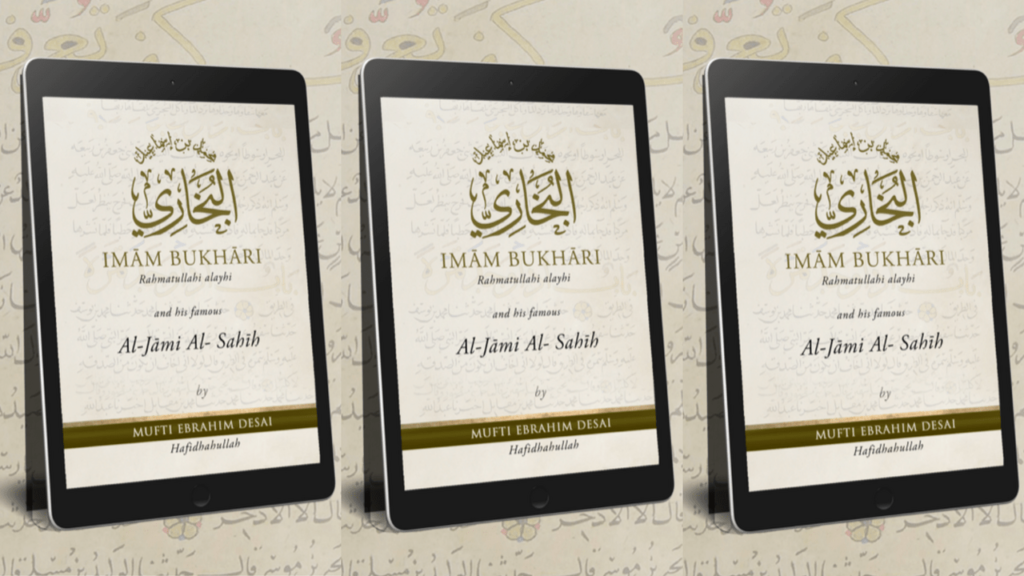
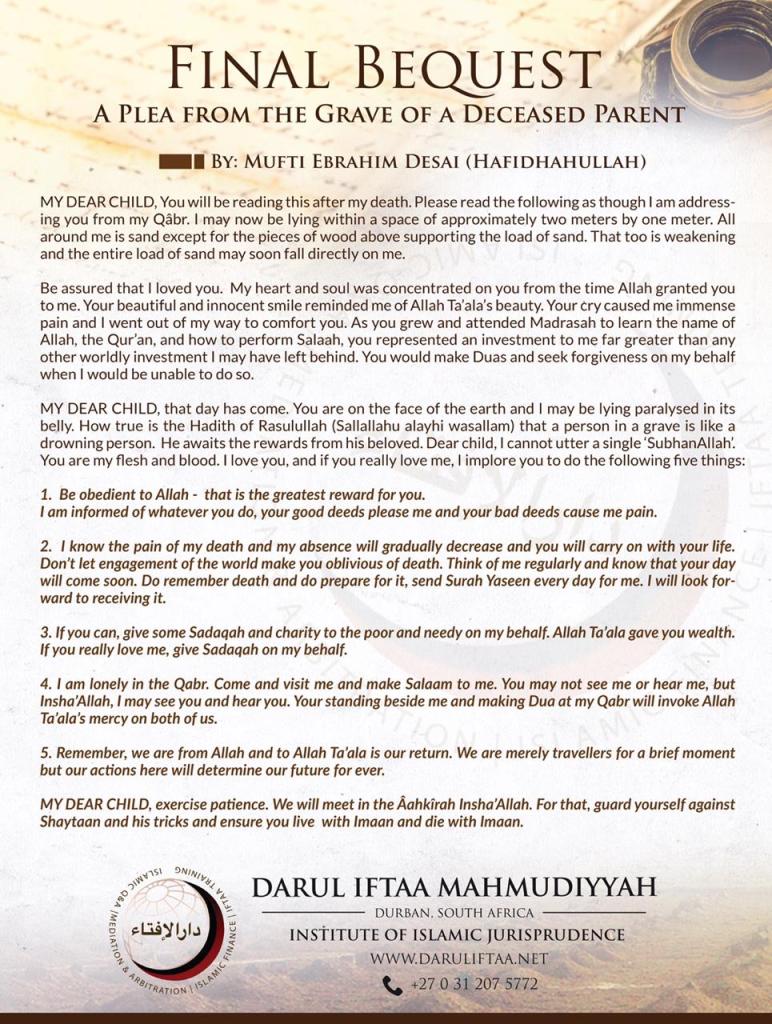
Final Bequest: A Plea from the Grave of a Deceased Parent by Mufti Ebrahim Desai
source: http://www.thecognate.com / The Cognate / Home> News / by Shaik Zakeer Hussain / July 16th, 2021
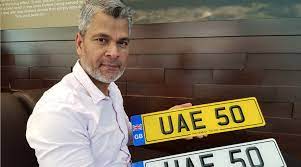
UAE-based motoring historian and author Mohammed Luqman Ali Khan with the ‘UAE 50’ number plates in Abu Dhabi. — Photo by Ashwani Kumar
The special plate was first released in January 1955 by Bristol County Borough Council.
Since it’s the Emirates’ golden jubilee year, it will be quite a sight to see an Emirati or a UAE resident driving around London with a ‘UAE 50’ number plate.
Such a unique number plate actually exists and it is grabbing the attention of bidders globally, said UAE-based motoring historian and author Mohammed Luqman Ali Khan, who has seen the registered plate and the official documents.
The UK-registered number plate is up for grabs through an online auction — and the bid is expected to break the world record for the most expensive plate.
The special plate was first released in January 1955 by Bristol County Borough Council. Currently, it is owned by a private British collector in the UK, who is a serial investor. Khan is now coordinating with the owner and looking for potential bidders in the UAE.
“This is the Year of the 50th and the Expo 2020 Dubai (is kicking off soon). There is no bigger occasion and a better opportunity to acquire this historic British number plate,” said Khan, while flaunting a copy of the number plates in white and yellow colours.
The UK is a popular destination for UAE nationals and residents, with some of them shipping their supercars when they travel abroad. Now, imagine an Emirati or a resident taking a luxury car bearing the ‘UAE 50’ plate to the streets of London.
“It will be a majestic sight. I hope the number plate is bought by someone from the UAE,” said Khan, who has been a resident of the country for more than 10 years.
The UAE holds the most world records when it comes to number plate prices. ‘UAE 50’ is being sold on www.specialnumberplates.com, and Khan is hopeful of finding a potential bidder before the auction ends closer to the Expo opening date.
The Indian expat has curated events such as the UAE and the British International Concours d’Elegance. In 2018, he discovered the first official state motor car — Rolls Royce Phantom V in Vienna, Austria — and is documenting the story through a pictorial book titled ‘Sheikh Zayed’s Rolls-Royce 5VE15’. He has written ‘Automobiles of the Nizams’ and is working on ‘Automobiles of Sheikh Zayed’, ‘Rolls-Royce in Arabia’ and ‘Nizam’s Throne Rolls-Royce 2117’.
ashwani@khaleejtimes.com
source: http://www.khaleejtimes.com / Khaleej Times / Home> Year of the 50th / by Ashwani Kumar, Abu Dhabi / July 06th, 2021
Tokyo Olympics: Anurag Thakur to launch official Team India Cheer song for Tokyo Games created by A R Rahman, Ananya Birla [Pic credits: India Today]
Tokyo Olympics: Anurag Thakur to launch official Team India Cheer song for Tokyo Games created by A R Rahman and Ananya Birla – The Indian Olympic Association will launch the official l Team India Cheer song for Tokyo Games created by A R Rahman and Ananya Birla on Wednesday at 3.30 PM. Sports Minister Anurag Thakur (Union Minister of I&B and Youth affairs, Sports Minister) will launch the official song in presence of IOA President Narinder Batra, Rajeev Mehta (IOA secretary) and MoS for home, Youth affairs and Sports Nisith Pramanik. The event will live stream on Team India and SAI.
Music maestro AR Rahman has teamed up with young singer Ananya Birla to work on ‘Hindustani Way’, a song that aims to boost the morale of Indian players who are all set to participate in Tokyo Olympics 2020.
“All of us are really excited to have made this special song and hope our athletes can feel the entire nation rooting for them, the Hindustani way, when they hear it. It was a pleasure working with Ananya on this project and we hope to convey all our support and best wishes to Team India through it! Jai Hind,” Rahman, who has composed the track, said.
Tokyo Olympics: Anurag Thakur to launch official Team India Cheer song for Tokyo Games created by A R Rahman and Ananya Birla
The track is jointly written by Ananya, Nirmika Singh, and Shishir Samant.
Expressing happiness on singing such an inspiring song, Ananya said, “It is a true honour to write and sing a song to cheer our Indian Olympic contingent at Tokyo 2020. The grit and fortitude of the Indian Olympic team in the face of such a challenging year is inspiring.”
“It was surreal to have had the opportunity to collaborate with my role model, AR sir on such a prestigious project, from whom I have learnt so much. We are here cheering, the Hindustani Way,” she added.
The Tokyo Olympics will be held from July 23 to August 8. The event was slated to be held last year, but it had to be postponed due to the COVID-19 pandemic.
#Cheer4India | Launch of The Official Team India Cheer Song for Tokyo 2020
(with ANI inputs)
source: http://www.insidesports.co / Inside Sport / Home> Latest Sports News / by James Kuanal / July 13th, 2021
Sheikh Amini started his services as the Chief Editor of Al-Daie and the teacher of Arabic literature at Darul Uloom Deoband from 15th Shawwal 1402 AH (6th August 1982).
Sheikh Waheeduz-Zaman Kairanavi (1930-1995) was one of the few exemplary teachers of Arabic language and literature whom the 20th century witnessed in India. During his long teaching services at Darul Uloom Deoband, not only he trained his students how to speak and write eloquent Arabic language but he also trained them how to live an ideal life in the society as a good human being. He educated them in the way that wherever they went, they became the cause to enhance the glory and reputation for him and for their seat of learning, i.e. Darul Uloom Deoband.
Waheeduz-Zaman Kairanavi always encouraged his students and wished to see them at the peak of success. Whenever an opportunity of exposure and publicity came to him, he always pushed his students forward to let them prove their mettles.
In 1982, when there was a vacancy for Chief Editorship of Arabic Islamic fortnightly Magazine, Al-Daie, published from Darul Uloom Deoband, he preferred one of his capable and qualified students, Sheikh Noor Alam Khalil Amini (1952-2021), then the teacher of Darul Uloom Nadwatul Ulama, Lucknow to take this important responsibility. Later, the scholars of Arabic language and literature witnessed how ideal this choice was!
“Early days as Editor”
Sheikh Amini started his services as the Chief Editor of Al-Daie and the teacher of Arabic literature at Darul Uloom Deoband from 15th Shawwal 1402 AH (6th August 1982). As the Chief Editor, he published the first issue of the magazine on 7th Muharram 1403 – 25th October 1982 and went on to work tirelessly for 40 years (1403-1442 AH) as Chief Editor of the magazine. His standard Islamic, academic, literal and thoughtful write-ups for Al-Daie, in a well-expressed and eloquent Arabic language, enhanced the beauty of the magazine.
Moreover, collecting the standard and thoughtful articles by Arab writers and the excellent publication of Al-Daie in accordance with his amazing fervor, the magazine took no time to reach the peak of its success. Not only the Indian sub-continent scholars, but also the Arab scholars, poets and the men of letters welcomed the magazine with open arms.
Thus, the magazine played a key role, as a mouthpiece of Darul Uloom Deoband, in introducing Deobandi thought (Which is strictly following the path of Ahlus-Sunnah Wa-Al-Jamah) and presenting the institution’s academic activities in the Arab world.
“Columns on important subjects”
Sheikh Amini had fixed several columns in Al-Daie such as Kalimatul-Muharrir, Kalimatul-Adad, Al-Fikr Al-Islami, Dirasaat-Islamiyyah, Ilaa-Rahmatillah, Mahalliyat, Anba’aul-Jamiah, Ishraqah etc.
Besides these columns, there were also some other columns like Isdaratun-Hadithah, Al-Adabul-Islami, Al-Aalamul-Islami etc. in Al-Daie, if articles on such topics were included for publication.
Sheikh Amini used to write for the columns like Kalimatul-Muharrir, Kalimatu-lAdad, Al-Fikr Al-Islami, Ilaa-Rahmatillah, Isdaratun-Hadithah and Ishraqah in an eloquent Arabic language in the light of reliable references and accurate statistics. For the Kalimatul-Muharrir, it was his practice to write a brief article on current issues related to India or the Muslim world containing one or two pages sometimes. At the end of the article, there used to be written [Al-Tahreer] in the brackets. Next to it, the time and date were noted to let the readers know at what time and date the article was written. It was his practice to write the time and date at the end of his any write-up.
For the second column: Kalimatul-Adad, mostly he wrote a detailed article on social, political or Islamic burning issue. The article sometimes was on virtues of the month of Ramadan and fasting -Sawm, greatness of the migration of the prophet Muhammad (SAWS), need and importance of prayer etc. Article of this column sometimes revealed the cunningness of America and its illegitimate child, Israel.
He also used to show up the positive and negative aspects of the steps taken by the leaders of the Muslim and Arab world. He never hesitated to express his opinion about the stand and the decisions of the Indian government on any grave issue. The article would consist of 5/6 pages and sometimes even more pages than that. The Urdu translation of some of the articles written for this column is now part of his Urdu book “Kiya Islam Paspa Ho Raha Hai?”
“Al-Fikrul-Islami”
He had great love for the scholars of Deobandi school of thought as they were true flag bearers of Islam. It was his mission to introduce their academic works and prominent services for Islam in Arab world. For this purpose, he translated Urdu books of those prominent scholars and published on the pages of Al-Daie in parts under the column of Al-Fikrul-Islami. This series continued for many years.
In this way, he translated dozens of books into Arabic language. The books are published from Darul Uloom Deoband and its Sheikhul Hind Academy. For few years, he had stopped writing for the aforesaid column. For this column, Abu Aaidh Al-Qasmi Al-Mubarakpuri (the patronymic of the famous Islamic scholar and teacher of Darul Uloom Deoband, Sheikh Muhammad Arif Jameel Qasmi Mubarakpuri, who is Assistant Editor of Al-Daie too) is translating “Tafseere Usmani” nowadays. This is a great and well-known Quranic commentary (Tafseer book) of Allamah Shabbir Ahmad Usmani (May Allah grant him Jannah!). As of Shaban 1442, the translation of the first 4 parts has been published under this column.
“Obituaries”
Sheikh Amini also wrote hundreds of articles for the column, “Ilaa-Rahmatillah”. Under this column, he wrote on famous scholars, thinkers, preachers, poets, men of letters and social and political personalities who had passed away in the near past from the Indian sub-continent as well as Arab world. In this article, he used to write the account of the deceased’s life, his services and the scholarly works etc. Like his other articles, the article of this column also had distinctive method as well as uniqueness and singularity of expression. The article would encompass all the features of the life of the diseased. The article used to be very lengthy. Sometimes, it was like a short biography of the diseased. He wrote on almost three hundred personalities as of March 2010.
Some articles written for the said columns were translated into Urdu language by the author and by some of his students and got them published in various Urdu magazines and newspapers. The readers liked them very much. They showed their desire that these Urdu articles should be compiled in the form of a book. Considering the sentiments of the readers, the author published the collection of 37 articles namely “Pase Marg Zindah” in 932 pages in May 2010. Of the same series, another collection of 24 articles namely “Raftagane Naa-Raftah” is soon to be published.
“Book Reviews”
Under the column of “Isdaratun-Hadithah”, he used to write a review on newly published books. His review too was very inclusive, comprehensive and lengthy. In this column, he used to elaborate the value of the reviewing book, its publication, introduction of author and his works in detail. As an example, the review of “Tohfatul-Alma’aee Commentary of Sunan Al-Tirmidhi” of Mufti Sa’eed Ahmad Palanpuri (Rahimahullah) can be read. This review is published with Tohfatul-Alma’aee, at the end of the 8th volume of the book.
The column: “Ishraqah” was on the last page of the magazine. Its remainder part used to be published on the last pages just back to the last one. For this column, Sheikh Amini used to write a well-grounded and demonstrative article, be on academic, religious, social or political topic, in the light of his thought, knowledge, experiences and observations or some situations and incidents influencing him. It was decorated with applicable idioms, appropriate synonyms, and beautiful similes. This article used to be the sample and model of an eloquent Arabic literature. It was highly valued and appreciated not only by the Indian readers of Al-Daie, but also by Arab scholars. It is pleasing that the hundreds of articles written for this column have been compiled and published this year namely: “Min Wahyil-Khaatir” in five huge volumes. It consists of 2600 pages as a whole. It was published just few weeks before the sad demise of Sheikh Amini. It is a precious and valuable gift for those who have interest in Arabic language and literature to read.
It is appropriate to record here that before the publication of Al-Daie, Darul Uloom published a quarterly magazine namely “Dawatul-Haq” as its mouthpiece, under the editorship of Sheikh Waheeduz-Zaman Kairanavi. After abolishing its publication, “Al-Daie”, a fortnightly magazine, was launched. Its first issue was published on 11th Rajab 1396 (10th July 1976), under the editorship of Sheikh Mufti Badrul Hasan Qasmi (ex-teacher of Darul Uloom Deoband and currently resident in Kuwait). Following his resignation, Sheikh Amini was appointed as its Chief Editor and the teacher of Arabic literature at Darul Uloom Deoband as stated above. Previously Al-Daie was published as a fortnightly magazine; but the governing body of Darul Uloom decided to convert it into monthly. Then from Safar-Rabiul Awwal 1414 AH (August 1993), it is regularly published as a monthly magazine.
May Allah accept the efforts of Sheikh Amini and grant him His choicest place in Jannah! Aameen!
[The writer, Khursheed Alam Dawood Qasmi, works at Moon Rays Trust School in Zambia, Africa. Sheikh Noor Alam Khalil Amini died on May 3, 2021 in Deoband.]
source: http://www.ummid.com / Ummid.com / Home> Life & Style / by Khursheed Alam Dawood Qasmi / June 11th, 2021
The Pulitzer Prize-winning journalist was covering the situation in Kandahar over the last few days.
Noted Indian photojournalist Danish Siddiqui was killed on Thursday night during a clash between the Afghan special forces and Taliban attackers . Tolo News, a leading news channel of Kabul, reported that Mr. Siddiqui, working for Reuters news agency, was covering the clashes between the two sides in Kandahar over the last few days and he died in Spin Boldak district, which has a contentious international border crossing between Pakistan and Afghanistan.
In a statement, the Ambassador of Afghanistan to India Farid Mamundzay conveyed his condolences to the Siddiqui family and Reuters. “Deeply disturbed by the sad news of the killing of a friend, Danish Siddiqui, in Kandahar last night. The Indian journalist and winner of Pulitzer Prize was embedded with Afghan security forces. I met him 2 weeks ago before his departure to Kabul,” he said.
Mr. Siddiqui was travelling in an armoured humvee with Afghan soldiers and he had shared videos over the past few days that showed the vehicle coming under attack on several occasions. In his last report filed on July 13 from Kandahar under highly difficult circumstances, Mr. Siddiqui had recorded the experience of Afghan commandos who conducted a raid to save a kidnapped policeman. The border crossing in Spin Boldak had hit the headlines after the Taliban reportedly occupied it temporarily. In response, Afghan forces launched attacks which soon escalated into a war of words between Afghanistan and Pakistan. Reporters of news channel France24 said that the injured Taliban fighters were being treated in Pakistani hospitals.
Compassionate coverage
Mr. Siddiqui was known for his compassionate photographic coverage of current developments in South Asia. In recent years, his photographs of the Rohingya refugees who were displaced by the Myanmar military from the Rakhine province, drew global attention to the plight of the displaced community that is currently living in camps in Bangladesh. The photographs of the Rohinyga refugees was recognised with a Pulitzer Prize.
Earlier this year, he used innovative methods like drones to capture the scale of the second wave of COVID-19 in India. His photographs that showed funeral pyres burning in open spaces drew global attention to the tragedy that India faced during March-May 2021.
Minister’s condolence
In a message of condolence, Information and Broadcasting Minister Anurag Thakur shared an image captured by Mr. Siddiqui during his assignment covering the Rohingya tragedy. “Danish Siddiqui leaves behind an extraordinary body of work. He won the Pulitzer Prize for Photography and was embedded with the Afghan Forces in Kandahar. Sharing one of his pictures below. Sincere condolences,” said Mr. Thakur.
source: http://www.thehindu.com / The Hindu / Home> News> International / by Special Correspondent / New Delhi – July 16th, 2021