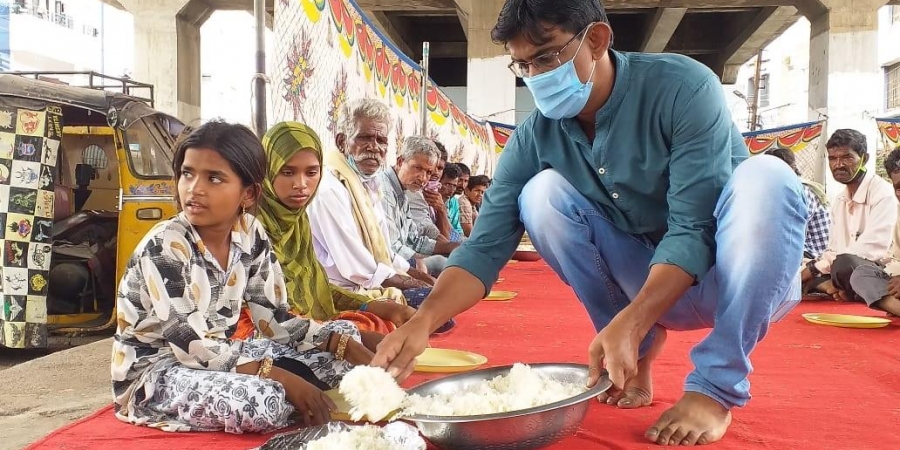
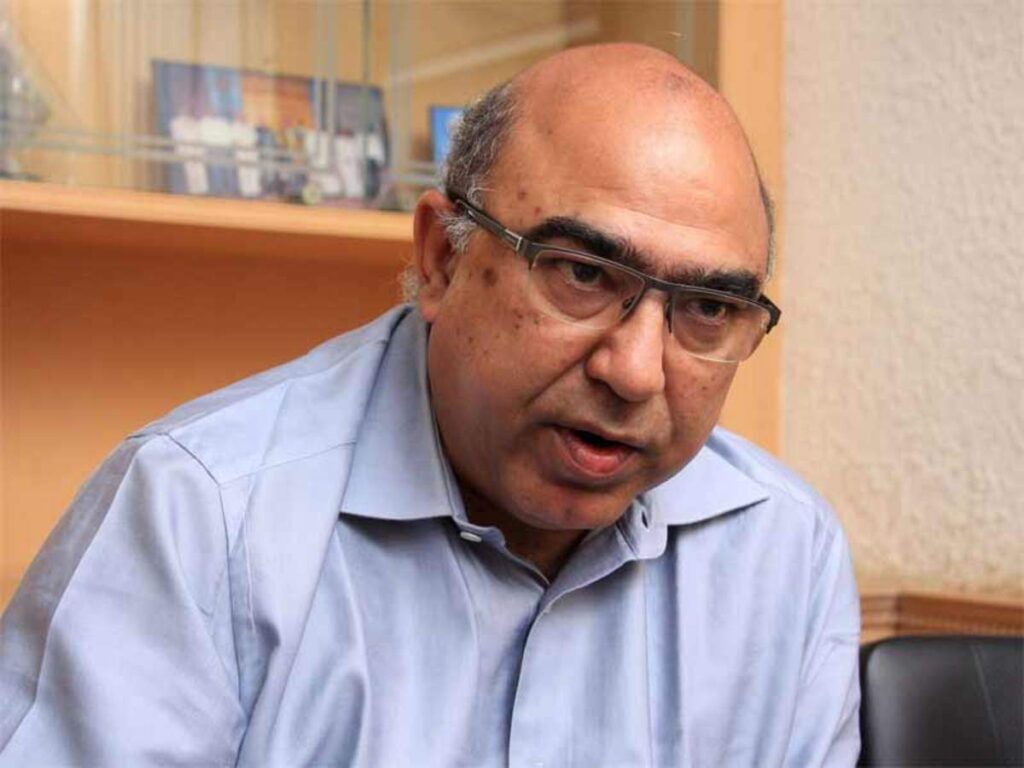
Azhar says he was poor himself when he started the initiative. He is still working from Hyderabad because he feels that hunger has swelled after the lockdown.
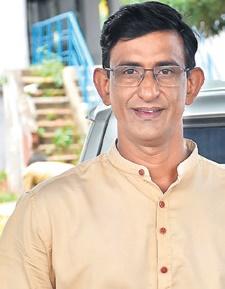
Azhar Maqsusi, a social activist from the city, whose initiative ‘Hunger Has No Religion’ by Sani Welfare Foundation feeds about 1,500 people every day in five cities across the country was granted the United Kingdoms Commonwealth Points of Light Award recently. The award recognises outstanding individual volunteers – people who are making a change in their community.
“Azhar’s contribution to society is incredible and has meant the difference between a meal or no meal for millions. There are many similar missions of selfless sacrifice and service, some emerging as a result of the pandemic, but the powerful ‘Hunger has no Religion’ has run for eight years, reaching the most vulnerable and delivering a powerful underlying message to all. I cannot be happier for him and members of the Sani Welfare Foundation,” said Dr Andrew Fleming, British Deputy High Commissioner, Hyderabad.
“I am thankful that I have been chosen by the almighty to feed people. I have fed the poor for 10 years now and will continue this until hunger is eradicated,” Maqsusi said. “I am also thankful for the support of my family, friends and others who have recognised my service,” he added. Azhar says he was poor himself when he started the initiative. He is still working from Hyderabad because he feels that hunger has swelled after the lockdown.
source: http://www.newindianexpress.com / The New Indian Express / Home> Good News / by Express News Service / July 06th, 2021
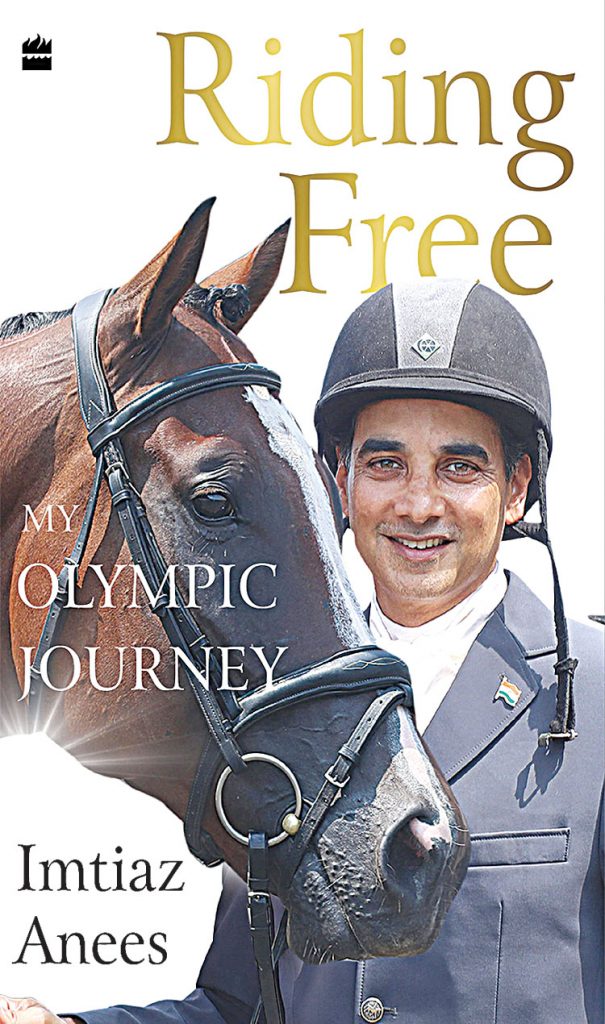
HarperCollins is proud to present the story of an Indian equestrian rider and his Olympic dream ‘RIDING FREE: MY OLYMPIC JOURNEY’ by Imtiaz Anees.
“The story of a true sportsman whose heart beats for his country. The pulse and emotion of this book are totally relatable. A beautiful real-life story of struggle, relationships, dreams and how Imtiaz overcame all hurdles to reach his goal.” – Sania Mirza, Indian Tennis Player, Olympian, Arjuna Awardee.
“A gentleman’s gentleman, Imtiaz’s cool and clam disposition hides the grit and determination – the dedication and discipline that built the foundation for him to compete with the best at an international level.” – Karan Johar, Film Director.
“It’s one thing to have a dream. It’s entirely another thing to follow your dream with passion and courage. Don’t miss this story of Imtiaz in his quest towards his Olympic dream.” – Viren Rasquinha, Former Indian Hockey Captain, Olympian, Arjuna Awardee.
“Imtiaz’s story is as heart-warming as it is inspiring. It’s so much more than sports – it’s about the power of dreams, self-belief, teamwork and perseverance. I must admit I have a soft spot for any story with animals in it. The bond between man and horse makes this story truly special.” – Alia Bhatt, Film Actor.
“The gap between the impossible and possible is your commitment to do what you want to achieve and enjoy the journey. Think unreasonable, believe, work hard and see how the universe comes together to make it happen. My memoir is about achieving the impossible and I truly hope it inspires you enough to ‘Never give in’.”- Imtiaz Anees.
“Imtiaz’s single-minded pursuit of his Olympic dream, the challenges he counters, the people who offer support to him and the milestones he achieves reads like a work of fiction. Riding Free proves that nothing is impossible if you dare to dream and match it with hard work. We are excited to be publishing this incredible story on the eve of the Tokyo Olympics.” – Sachin Sharma, Senior Commissioning Editor, HarperCollins India.
Here is an extract from the book:
My heart was pounding as the starter began the countdown: ’10-9-8-7-‘
This was the most exciting moment of my life-the realization of my boyhood dream and the culmination of many hours of hard work, figuring out how to tackle whatever obstacles the course threw at me.
I was where thousands of eventing riders around the world dreamt of being. At the greatest sporting event in the world-the 2000 Sydney Olympics-and ready to start the cross-country event.
‘6-5-4-3-‘ the countdown continued, and then it was ‘2-1’ and off we went! Spring Invader, my horse, leapt forward on cue and we were thundering down the course, while I had thoughts for nothing but the first jump coming up and getting the take-off and landing right.
About the book
‘My heart was pounding … yet I was sitting still! This was the most exciting moment in my life and the culmination of my boyhood dream. I was where thousands of eventing riders around the world had dreamt of being-the Olympics.’
This is the story of a young boy with an impossible dream-competing at the Olympics. From the age of four, Imtiaz Anees took to horse-riding like fish to water. It soon became a passion, one that continued through his life, beginning with his first competitive win at the age of six, eventually winning multiple equestrian events both nationally and internationally. Imtiaz is the only Indian rider to complete an equestrian three-day event at the Olympics, in Sydney in 2000, at the age of thirty, in an elite sport long associated with royalty and wealth and primarily the army in India.
In Riding Free, Imtiaz re-traces the major milestones of his riveting twenty-year-long journey. The stories he tells are heartfelt, emotional and inspirational for the next generation of dreamers-a way to ‘give back’, in small measure, the enormous goodwill and help he received from all kinds of people in his Olympics journey. Behind Imtiaz’s success are also the struggles and setbacks that pushed him to work harder and achieve peak performance. In a sport where the result depends on both man and animal, the deep bond Imtiaz shares with his horses will leave animal lovers spellbound. Here is a story that will inspire every athlete to ‘never give in’
Imtiaz Anees is an equestrian Olympian, trainer, competitor, NBC commentator, qualified Level 2 instructor and coach educator. As the only equestrian Olympian in India, he wants to share his knowledge and experience with all other riders and offers internship programmes to teach equine management. He runs an equestrian training centre-Seahorse Equestrian, a boutique stable with sixteen horses, located on a beautiful beach in a small fishing village in Nargol, Gujarat.
source: http://www.theweek.in / The Week / Home / by PTI / by PR Newswire prnewswire.com / July 12th, 2021
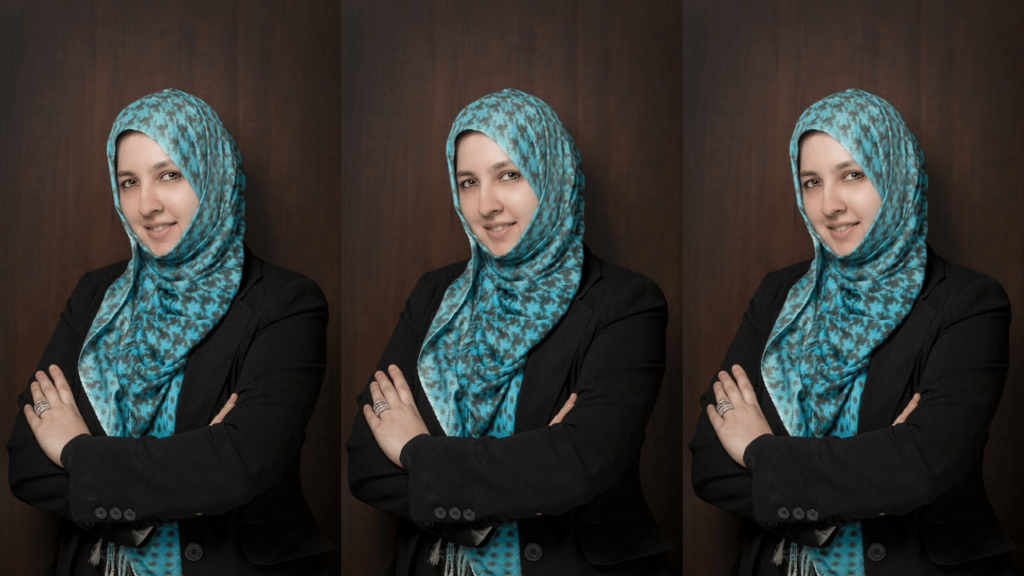
Noor Ayesha, Founder-CEO, Iqra International School
“Women should give themselves a chance, there’s so much that they are capable of, we need to leave behind a legacy and contribute to our ummah and the world at large.”
Noor Ayesha is an award-winning educator, an empowering leader, a mother of three, and the founder of a school that nurtures more than 650 children. Iqra International School – awarded the ‘Most Promising school for Quality Education in Bangalore’ was founded by Noor Ayesha with the aim of delivering value-based education in order to cultivate in each child, the aspiration to ‘learn and live values’.
“To be a great leader, you have to be a great reader,” says Noor Ayesha. She believes that Muslims moved from the golden age to the “dust age” due to the gradual fading of value-based education guided by Islamic principles.
Noor Ayesha was conferred with the Rashtriya Shiksha Ratan Award by The Indian Society for Industry and Intellectual Development and the ‘Fakhr-e-Watan’ Award for her academic and social services. She has been a speaker at the Eldrok Summit 2019, Early Childhood Association Summit 2019, Asia Education Summit 2016, Asia Leadership & Services Awards 2016, and at various MFERD conferences. She has also been chosen as the Global Goodwill Ambassador of India for Global Goodwill Ambassadors (GGA).
She believes that one must always have goals – professional, personal, and spiritual. “When you have determination and passion, Allah makes ways. Always,” she says.
Ayesha, along with her team at IIS has disproven the prejudiced notion that the niqab and hijab are obstacles to development and that veiled women are incapable. “We are proof that Muslim women are no less than anyone,” she asserts. She also strongly believes that there is “no shortage of capacity in the Muslim society but there is a need to unearth it and move forward.”
She efficiently managed the school single-handedly for many years, with the support of her team, comprising only of women. “Many of them who thought nothing of themselves are now leading the institution and representing Iqra at various conferences.” Ayesha gladly affirms. “Women should give themselves a chance, there’s so much that they are capable of, we need to leave behind a legacy and contribute to our ummah and the world at large.”
She points out that the inherent flaws in the existing education system have resulted in educated individuals leading privileged lives but vehemently failing in giving back to society, which she believes is the primary purpose of education. At Iqra, students are instilled with a sense of responsibility towards society, along with the quality education they acquire.
Iqra International School is a dream come true for Ayesha’s father, who has always envisioned being able to educate the children of the community. “We felt that a mosque’s imam would be better at his role of a leader if he was additionally equipped with worldly knowledge,” she explains. The school was set up as a result of Ayesha’s commitment to fulfilling her father’s dream and the dire need for a school that would nurture students with Islamic values along with quality education, with the added advantage of facilitating students with a campus that is within the city.
The school was conferred with the ‘Best Innovative International Preschool in Bangalore’ award at the Asia Education Summit & Awards 2016, the ‘Most Promising School for Quality Education in Bangalore’ award at the Asia Leadership and Services Awards 2016, ranked No.1 in India for “Individual Attention to Students” at the India School’s Merit Awards 2016, ranked No.1 in India for ‘Holistic Development’ at India’s School Merit Award 2017, awarded Excellence in Flexible Education Programme at The India K12 Awards 2019, declared “Brand of the Year” in National Brand Awards 2019, and was conferred with the International School Award 2019-2022 by the British Council.
“As a school, we are in no competition with any other Islamic schools, as we are all working towards the same beautiful cause – ‘nurturing children to learn and live Islam’,” Noor Ayesha asserts. “We just do our very best and leave the rest in His (God’s) hands.”
Iqra International School provides quality education with the IGCSE curriculum, seamlessly integrated with the QIAS (Quran, Islam, and Arabic Studies) curriculum. They also have an intensive hifdh program for students who perform exceptionally well in the Quran classes. The school also has 25- 30 students from other faiths, who have no problem with learning the Quran, the Arabic language, or using the Islamic salutation of peace.
“Alhumdulillah, two years ago, 3 of our brilliant students became huffadh. All 3 students were excellent in the IGCSE academics as well. I must also mention how good they were at football. Most of our football championships were won with two of them scoring the highest goals. Pursuing religious knowledge only makes it easier to become brilliant at gaining worldly knowledge. A balance between the two could be gained and this was proven by these children who made it possible,” she narrates.
The majority of Iqra’s staff have their own children studying at Iqra. “Even before a problem gets addressed by parents we would’ve already found a solution to it or in many cases solved it because we are all mothers ourselves with our own children studying at our school”, Ayesha says.
They also make sure students get ample exposure to other global cultures and beliefs by conducting inter-faith programs, inter-school competitions, Mock United Nations (MUN), and other such activities.
Before establishing Iqra, Ayesha conducted extensive research in the field of international education, particularly Islamic education, including the works of Dr. Dawud Tauhidi’s Tarbiyyah project that elaborates the purpose of Islamic education – its ideal impact and practicality.
“It’s not just the name ‘international’, our school has been international in all aspects from day one, from the research to the books and the curriculum,” she says.
The project has been completely funded by her father, from its inception until recently. Ayesha explains that the biggest challenge they faced was the difficulty in finding experienced teachers. In order to solve this, they set up ISTARI (Iqra Staff Training and Research Institute), as a result of which, they’ve been able to train and hire passionate and well-trained teachers.
“The trust and support from our school parents and the entire Iqra community, in general, has been immense right from the beginning, and that has helped Iqra reach wherever it has today, Alhumdulillah,” she contends.
Currently, Noor Ayesha is the Founder-Managing Director at Iqra International School, Director at Fantasy Group, Founder & CEO at OURAH, Director at Iqra Games Village, Director at the Centre of Integrative Medicine and Clinically Applied Hijamah Therapy(ICAHT), and Vice-Chairman in the Universal Educational Trust.
She is also the Member of the Advisory Board at Aspire Residential Public School, Kochi, Patron Principal at Early Childhood Association (ECA), Member of the Advisory Board at Eastern Public School, Bhopal, Member of the Islamic Educators Communication Network operated by Islamic Schools League of America (ISLA) and Council of Islamic Schools in North America(CISNA).
She completed her schooling in Baldwin Girls’ High School, Bachelor in Computer Science Engineering from Visvesvaraya Technological University, and MBA in HRD and Project Management from Cardiff Metropolitan University, Wales UK. She is currently pursuing her Doctorate in Educational Leadership and Policy from July 2021 at the University of Toronto, Canada.
source: http://www.thecognate.com / The Cognate / Home> People> Rushda Fathima Khan / July 12th, 2021
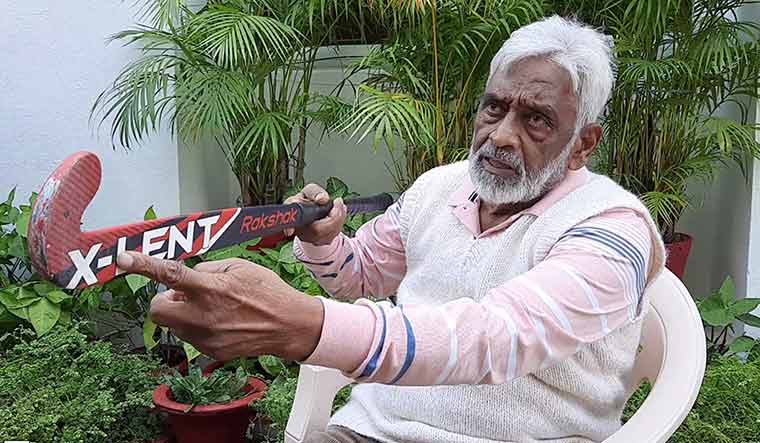
Great memories: Olympian hockey player Inam ur Rehman | Mujeeb Faruqui
We came from a modest background and my father (Abdur Rahim Siddiqui) was a religious, honest, disciplined and upright man. I got the virtues of devoutness, honesty and truthfulness from him and they have stood me in good stead. I would like to narrate an incident from my early playing days as an example. I was playing for East Bengal in 1963. A night before we were scheduled to play a crucial match against arch rivals Mohun Bagan, which was the top club then, I was called to the home of the Mohun Bagan president Dhiren Dey, the owner of Dey’s Medicals.
I was offered a Rolex to not score the next day. I said: ‘Dada, you keep the watch and if a goal is to be scored tomorrow, I will score it.’ As it turned out, I scored and East Bengal went on to become champions that season. This incident later became public and brought all the Bhopal players a lot of respect in Bengal. I played 10 years in Bengal, though I joined Mohun Bagan the next year at higher wages.
I was instrumental in Mohun Bagan winning all four major national tournaments in 1964. As a result, I was called up to the 1964 Olympic trial camp. During the camp in Jalandhar, Ashwini Kumar, the president of the Indian Hockey Federation, offered me a job with the Punjab Police (Kumar was a senior cop) though I was still only a student. But, keeping in mind the focus on education in my family—my siblings studied till doctorate level—I refused as I was not yet a graduate.
Kumar was unhappy and this resulted in me not being selected in the Olympic side despite being highly rated and performing outstandingly against Olympics host Japan the previous year. There was also the historic reason of Bhopali players migrating to, and doing well for, Pakistan. The resultant negative sentiment further hampered my chance of making it to the 1964 team.
In retrospect, I feel that my decision to refuse Kumar’s offer turned out to be a historic blunder not only for me, but for all Bhopal hockey players. He had made me an irresistible offer that would have allowed me to continue my studies. I was also offered an attendant to take care of all my needs, but naive as I was, I simply decided to say no. Had I said yes, the negative sentiment against Bhopal players may have reduced and many more talented Bhopal players would have found places in international and Olympic tournaments.
I was included in the Mexico 1968 camp and this time, luckily, our coach was dada Dhyan Chand. I was dropped again, but Dhyan Chand refused to sign the team list unless I was selected. Thus, a Bhopali made it to the Olympic squad after 20 years. But, I was not fielded in any of the initial matches. Then there came a crucial match against Japan, which we had to win to get into the semi-final and I was included in the team given my record against them.
The Japanese team walked off to protest a penalty stroke awarded to us after I was pushed down, and were disqualified. The movements by me that could have led to goals were then calculated and we were awarded five goals. I was not fielded in the semifinal and the Indian team lost to Australia. Then for the bronze medal, I played again and we easily beat Germany (2-0). Pakistan won gold; we were far better than Pakistan and would have easily beaten them had we reached the finals. I later joined Indian Airlines and formed its first team by drafting in seven boys from Bhopal. I captained the team for many years and it became one of the top teams in India.
As told to Sravani Sarkar
source: http://www.theweek.in / The Week / Home> The Week / by Inam Ur Rehman – as told to Sravani Sarkar / July 18th, 2021
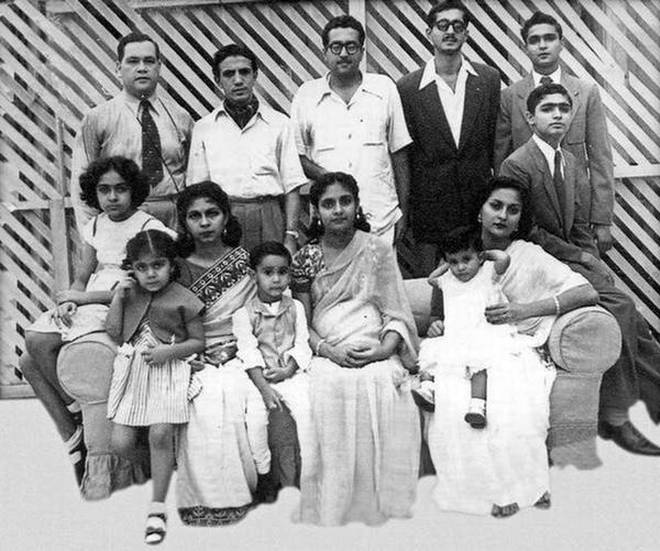
The Padamsee extended family with Ebrahim Alkazi and Alyque Padamsee standing second and fourth from left, respectively | Photo Credit: From ‘Enter Stage Right – The Alkazi/Padamsee Family Memoir’ . courtesy the Alkazi Theatre Archives
The Alkazi and Padamsee clans have played, and continue to play, an extraordinary role in the history of modern Indian theatre
“Oh god, it’s a page turner!” That was the cry from various family members on reading the first draft of Feisal Alkazi’s family memoirs published earlier this year. Titled Enter Stage Right — The Alkazi/Padamsee Family Memoir (Speaking Tiger, 2021), it is an irresistible, exciting read. The narrative details are gripping, the pace exciting, and viewing the times described in the book of the two families in pre- and post-Independence India through the lens of Feisal allows us to enter a world that we can relate to from stories that our parents and grandparents told us of the times they lived through.
Legendary names
Both names are legendary; the Alkazi and Padamsee clans contributed hugely to the formation and recognition of modernism in both Indian theatre and art. It all started when Bobby, or Sultan, Padamsee, the eldest Padamsee brother — the two families had 17 siblings between them, several of whom would distinguish themselves in theatre and the arts — had to return to Bombay after just six months as a student at Oxford due to the outbreak of World War II. What followed was a period of creative efflorescence as
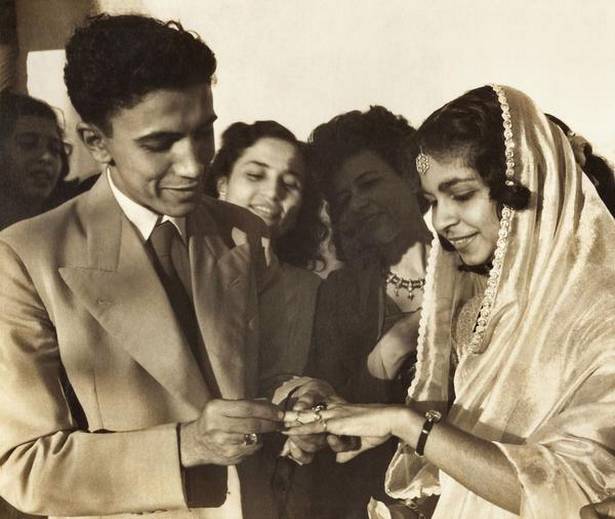
E. Alkazi weds Roshen, October 1946 | Photo Credit: Photo Credit: From ‘Enter Stage Right – The Alkazi/Padamsee Family Memoir’ . courtesy the Alkazi Theatre Archives
Bobby penned more than 100 poems, drew, painted watercolours and, one day in 1943, gathered a group of keen college students around his mother, the Padamsee matriarch Kulsumbai’s, horseshoe-shaped dinner table weighed down with mouth-watering Khoja cuisine. Bobby announced a plan to launch their own theatre group, the aptly named Theatre Group, as an alternative to commercial theatre, inspired by the group theatre movement of 1930s’ New York. One of those in attendance at that dinner was the young Ebrahim Alkazi.
Human angle
The group would flourish over the next few years, and court controversy with productions like an adaptation of Oscar Wilde’s Salomé, in which Bobby’s 19-year-old sister, Roshen, performed the risqué dance of the seven veils. Bobby would die by suicide aged just 24 in 1946, but the group went on, reaching its zenith in the coming decades, and three of his disciples married his sisters to found a cosmopolitan clan — including Ebrahim, who married Roshen. These were heady times of enormous intermingling, set in the dying days of the Raj and the dawn of Nehruvian India. The search for a new way of living creatively through a rich cultural life that was looking for a unique national identity drew in a very intense and close-knit community and family theatre with a galaxy of close friendships between authors, poets, painters, musicians and actors. As Feisal comments in the memoir, “Going to London together in 1947, there was a Roman Catholic like [F.N.] Souza, a Muslim like my dad, a Jew like Nissim Ezekiel, great friends like Krishna Paigankar and Akbar Padamsee, the idea that they were from different communities was not in anybody’s mind at all… we were always in and out of each other’s houses as well, in my family it was all the artists as well as the theatre people. We grew up with that — it gives a human angle to all these great giants that art historians write about.”
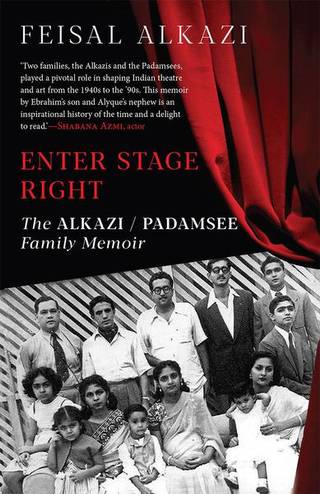
The cover of ‘Enter Stage Right — The Alkazi/Padamsee Family Memoir’
After training at the Royal Academy of Dramatic Art in London in 1947, Ebrahim returned home and rejoined Theatre Group. However, following a rift with others in the group, he left and founded his own Theatre Unit company at the Bhulabhai Desai Memorial Institute in the 1950s. The Institute played an important role in nurturing modern Indian art and drama, and Ebrahim
found a space for uninhibited creativity there, before he moved to Delhi in 1962 to head the National School of Drama for 15 years. Over the years, his contribution to widening the scope, subject matter and audience for Indian theatre would be extraordinary, as would those of his brother-in-law Alyque Padamsee, Mahesh Elkunchwar, and Safdar Hashmi. Alyque, known for directing productions ranging from the English version of Girish Karnad’s Tughlaq to Jesus Christ Superstar, has also been called the father of Indian advertising, and played Jinnah in Richard Attenborough’s Gandhi. His first wife was Pearl Padamsee, a stage and film actor, director — her oeuvre included Godspell, the first big musical produced in Mumbai — and producer. Their daughter, Raell Padamsee, runs her own production house, ACE, in Mumbai.
Home to stage
The rich family legacy also continues through Ebrahim’s son Feisal, who started devising plays with friends in Barry John’s Music Theatre Workshop in the early 80s. Although theatre is his first love, Feisal wears many hats — theatre and television director, author, educationist, counsellor, filmmaker and founder of Ruchika Theatre. His works include Noor, a sympathetic, gendered lens on Noor Jahan and Mumtaz Mahal; A Quiet Desire, the story of Rabindranath Tagore and of his brother and sister-in-law Kadambari; the adaptation of Kipling’s The Jungle Book into a coming-of-age story, retitled Yeh Bhi Jungle, Woh Bhi Jungle, in which the character Mowgli epitomises every important transition of adolescence in his search for identity.
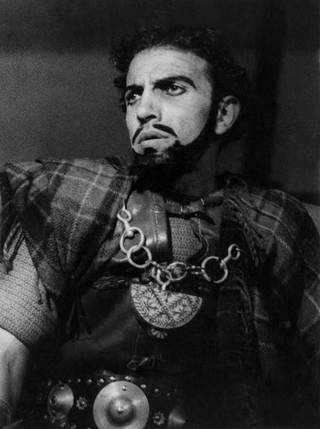
E. Alkazi as Macbeth in a production directed by him | Photo Credit: From ‘Enter Stage Right – The Alkazi/Padamsee Family Memoir’ . courtesy the Alkazi Theatre Archives
Along with his sister, Amal Allana, and her husband, Nissar Allana, Feisal has strongly believed in the mixing of generations in creative work. “I make it a point that the infusion of the next generation in all the years of Ruchika is so crucial. All our kids are there and the people who started it… to keep the generations going and learning from each other.” Radhika, Feisal’s wife, an accomplished actress and arts educator, says, “It was so new to me, this world — in the family, in the home, in the drawing room — your furniture would be on stage, your clothes would be on the stage.” When Zohra Sehgal worked with Feisal in the Ruskin Bond serial Rusty, she found herself wearing a costume that was from Radhika’s trousseau. Feisal recalls her saying, “Hamare gharon mein aise hi chalta hai” (This is how it is in our homes).
The story of these two families, who played such a vital role in the history of theatre and art, is an imperative chapter in the country’s socio-cultural history.
The writer is a Delhi-based artist, arts educator, curator and researcher.
source: http://www.thehindu.com / The Hindu / Home> Society> Spotlight / by Kristine Michael / July 10th, 2021
Forgotten amidst waves of bad news, including geopolitical conflicts, environmental disasters and the global pandemic, is the humanitarian crisis caused by a civil war that began in 2014 in the fabled country of Yemen. For several centuries, the southern Arab country was a bridge between Kerala and lands to the west such as West Asia, Africa and Europe.
It was enterprising merchants from modern-day Yemen who began to make use of the monsoon winds to come to Muziris. The word monsoon comes from the Arabic mawsim, which means season. These businessmen lived a pretty globalised lifestyle by splitting their time between the Malabar Coast and southern Arabia at a time when there were no identity cards, passports, visas or even a concept of a nation-state. Some of these Arabs chose to settle down in the Malabar Coast and marry local women.
In a paper for the Indian History Congress in 1976, noted historian S M Mohamed Koya was able to trace the origins of the Malabar Muslim community.
“Some of these Arabs may have come from Hijaz, Oman and Bahrain. However, they were chiefly businessmen from Yemen and Hadramaut and many .Mappila families, particularly those known as ‘tangal’ families trace their origin to this area,” Mohamed wrote.
Interestingly enough, at the time of their migration to India, these merchants probably spoke Hadramautic, a language that belongs to the Old South Arabian subgroup of Semitic. “A large number of Mappila families find their origin in the interior Hadramaut town of Tarim, a wealthy town dominated by Sayyids which was once the intellectual and religious centre of Hadramaut,” Mohamed, who was a professor at the University of Calicut for decades, added.
In the paper, Mohamed stressed the fact that the traders started coming to India well before the advent of Islam, but their presence and established relations with the people of Malabar helped spread the religion in Kerala. “As pre-Islamic traders, the Arabs provided a friendly situation that facilitated the introduction of Islam and as Muslims, they introduced the faith,” he wrote.
Ponnani’s Makhdum family
Ponnani, a historic town that was once a major trading port, is also linked to Yemen. The town, at the peak of its glory, was home to the revered Makhdum family of Islamic theologians. Under Zain-ud-Din Makhdum and his grandson Zain ud-Din Makhdum II, Ponnani became a major centre of Islamic studies and is believed to have attracted students from Java, Sumatra, the Malay Peninsula and Ceylon.
It was also in this coastal town that the Arabi Malayalam or Ponnani script was invented. Since only 28 letters of Arabic orthography were available for 53 phonemes of Malayalam, additional letters established for Persian were used for this script.
Several old Mappila folk songs and works of literature were written in the Ponnani script, which stayed popular among Kerala’s Muslim community until the middle of the 20th century.
It has been on the wane since Indian independence and is taught mainly in a few madrassas in northern Kerala and the Lakshadweep Islands. There is no clear evidence though that this script has a Yemeni connection, but it was the script of choice for the Makdhum theologians.
This brilliant article by Kozhikode-based journalist Nijeesh Narayanan provides insights into the script, which is now in serious peril.
Zain ud-Din Makhdum II’s Tuhfat Ul Mujahideen chronicles the struggles between the people of the Malabar Coast and the colonial Portuguese. The book, originally written in the Ponnani script, describes the fierce resistance put up by the Kunjali Marakkar’s navy along with the Zamorin of Calicut against the Portuguese.
Culinary and cultural impact
There is little doubt that Yemeni elements have given an extra layer of depth to Kerala cuisine. Meen Pathiri and Irachi Pathiri are the results of Malayali and southern Arabic cuisine coming together.
Another dish that found its way from Hadraumat in Yemen to Kerala is Mandi or the famous Malabar Biriyani. Interestingly enough, the Yemeni version of the dish is usually made with chicken or lamb, and not with beef. If the Yemenis did bring Saltah, their delectable stew and the national dish, to Kerala, it did not manage to survive in its original form in the state, although many Malabari families have their own variations with different names.
Professor Mohamed in his paper wrote about how the mingling of the Yemeni immigrants with Malayalis has enriched the society of Kerala. He wrote, “Culturally the Malayalis were as far removed from the Arabs as the high topical scenery of Kerala is removed from the austere landscape of Arabia. But once wedded, the offspring of that union, the Mappilas have remained loyal to both parents.”
Before Yemen slipped into its latest civil war, there was a small and vibrant Malayali community in the country. One can only hope that the geopolitical puppet masters that have brought so much misery to the country allow it to once again live in peace. It is only when peace returns to the country that its millennia-old links to Kerala can be traced and re-established.
(The writer is the author of ‘Globetrotting for Love and Other Stories from Sakhalin Island’ and ‘A Week in the Life of Svitlana’).
source: http://www.onmanorama.com / OnManorama / Home> Lifestyle> Column / by Ajay Kamalakaran / June 28th, 2021
The right blend of star and actor, he was part of the discovery of cinema in India as a means of mass communication seen today
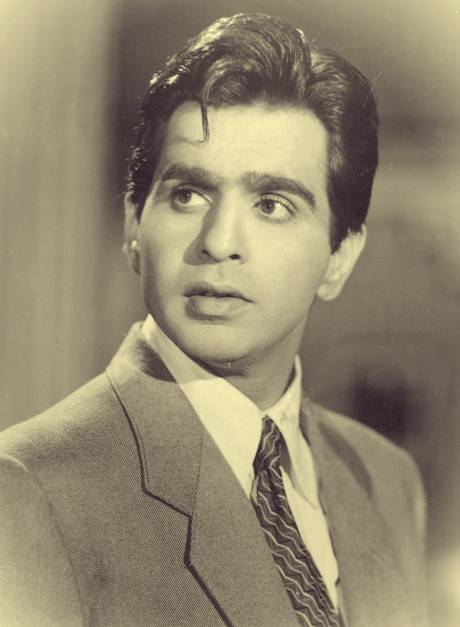
When Marlon Brando was struggling to find a footing in Hollywood, a shy Pathan boy from Peshawar was practising method acting in what was then the Bombay film industry, helping it come out of the Parsi theatre’s influence. As Dilip Kumar transcends to a new stage , the pole star of the golden age of Hindi cinema would be remembered for setting a template of acting for generations to come.
A veritable cultural icon who inspired economist Meghnad Desai to draw parallels between his films and the newly independent India’s tryst with socialism and capitalism in his seminal work, Nehru’s Hero: Dilip Kumar in the Life of India, there is a bit of Dilip Kumar in everyone’s life.
Discovered and later rechristened by Devika Rani of the famed Bombay Talkies, Dilip Kumar, along with Raj Kapoor and Dev Anand, were part of the discovery of cinema in India as a means of mass communication as we see it today. They had had few examples to follow and perhaps it worked to their advantage as each one carved out his own niche.
Out of the three, Dilip Kumar’s naturalistic style never became stale or dated. The right blend of star and actor who could keep both the public and the purist engaged with his craft, he kept his performances subtle, understated but always believable.
Not just his younger contemporaries like Rajendra Kumar, Manoj Kumar and Dharmendra, generations of dependable actors, from Amitabh Bachchan to Shah Rukh Khan and Aamir Khan to Irrfan, built edifices of their performances on the foundation laid by Dilip Kumar. Mr. Bachchan, who played Dilip Kumar’s son in Shakti, once said there was such finality to Dilip sahib’s performances that once he enacted a scene, there was no alternative to it. Irrfan once told this journalist that he often wondered when trained actors like him found it difficult to deal with scars left by tragic roles, how Dilip Kumar, who learnt the craft on his own, came to terms with it. Well, he did approach doctors in London, who advised him to consider lighter roles.
Film historians often label the thespian as the tragedy king for his moving portrayal of a loner who loses everything in love in a series of films such as Jugnu, Deedar and Devdas, but the eight-time Filmfare Award winner was equally compelling as a winsome romantic in Shabnam, Azaad and Kohinoor. Not to forget his intense performances as a revolutionary in Shaheed and a trade union leader in Paigham.
Be it the lawyer who rapes a village girl in Mehboob Khan’s Amar, the journalist who becomes black-marketeer in Zia Sarhady’s Footpath, the atheist in love with a mendicant in Kidar Sharma’s Jogan or the wheel-chair bound Raja Sahib in Aadmi, a role earlier essayed by Sivaji Ganesan, the Padma Vibhushan constantly lunged for complex characters where he was expected to evoke multiple emotions in a single frame.
He experimented not just with characters but also directorial styles. Both Amar and Footpath deal with moral guilt but while Mehboob Khan visualised a mass entertainer, Zia’s treatment was neo-realist. With Tapan Sinha’s Sagina Mahto, he ventured into parallel cinema and earned praise from his contemporaries.
At the time of Mughal-e-Azam, he was the top draw, but the narrative demanded Kumar to play second fiddle to Prithviraj Kapoor, a senior and a friend of his father. He delivered a restrained performance, a subtle counterpoint to the bombastic Kapoor that is etched in the minds of cinegoers. The way he caresses the luminous face of Madhubala with a feather is perhaps the most elegant romantic sequence filmed without a dialogue.
The one that stands out and inspired many adaptations is the dacoit in Gunga Jumna, his ambitious home production where the sophisticated Kumar transformed into an Awadhi speaking rustic who’s forced to pick up the gun.
He played serious roles with such dignity that he didn’t need to be loud to make people laugh. He brought his craft to comic roles as well. In Ram Aur Shyam, the scene that still leaves everyone in splits is the one where Shyam starts playing a poor copy of Ram.
It is this constant urge for variety and chiselling of the craft that the megastar, despite the world at his feet, chose to do only around 60 films spanning over almost five decades. He refused Guru Dutt’s Pyaasa for he found the character similar to Devdas. He said no to David Lean for Lawrence of Arabia as he was not keen to commit the amount of time that the director was asking from him.
In a BBC interview, he once said that when the director came to him with a 30-year-old character, he tried to find and build the first 29 years of his life from the script so that, “I start identifying with the character. Often directors leave it to me to interpret the character.”
Known to help out his colleagues in finding a rhythm that suited the narrative, the actor is said to have ghost directed many films such as Gunga Jumna, Ram Aur Shyam and Aadmi.
He took the preparation for a character to a different level. For “Madhuban Mein Radhika Nache Re” from Kohinoor, where he played sitar on screen, he trained with sitarist Ustad Halim Jaffar Khan for six months.
It is said while filming for Dil Diya Dard Liya, he ran four rounds of the studio because in the next sequence he was supposed to snatch a rifle from Pran, playing the villain, in a state of breathlessness.
Even in his second innings, when his mannerisms became marked, he impressed with power-packed performances in Shakti, Mashaal and Karma.
Off-screen, as a philanthropist, he always maintained that “industrialisation has made us narrow-minded”. He would always say “being developed and being civilised are two different things”.
In the late 1960s, when an argument was made about films promoting alcoholism and that they could be used to promote population control, Dilip Kumar said he was for promoting good values through films but that didn’t mean films become “instructional” or a “vehicle for propaganda”.
A connoisseur of the finer things of life, he had an abiding love for poetry and literature. Often, when he had to sidestep a controversial topic, he would come up with an Urdu couplet that would capture his emotion on the subject. Once when he was asked about his relationship with Madhubala, Kumar invoked Sahir Ludhianvi: “Mohabbattark ki maine, garebaan see liya maine, zamane ab toh khush ho, zehar ye bhi pi liya maine” (Love I have renounced and sewn the collar [of the soul/ conscience] that was ripped; O world, now you be happy, for this poison as well I have sipped).
Deeply entrenched in Indian ethos, he never got over his childhood connection with his home town Peshawar where the young Yusuf Khan would be found dribbling a football or listening to stories at Qissa Khawani Bazaar. He remained a symbol of the undivided India as the Pakistan government bestowed upon him its highest civilian honour, the Nishan-e-Imtiaz. He wrote to the then Prime Minister Atal Bihari Vajpayee that if he considered it prudent, he would surrender the award. However, many feel it made his wait for the coveted Bharat Ratna longer.
source: http://www.thehindu.com / The Hindu / Home> Entertainment / by Anuj Kumar / New Delhi – July 07th, 2021
Mr. Siraj Thakor, from Toronto, Canada, has undertaken the monumental task of creating an online database of all the Islamic Heritage Sites of India. He likes to preserve it digitally and make it available to all to cherish the Islamic past of this great country.
Mr. Siraj is looking for volunteers to assist him with the information on Islamic Heritage Sites in India. In response to his call, someone wrote to me with detailed information about a graceful mosque that lies in ruins in the Gaya district of Bihar.
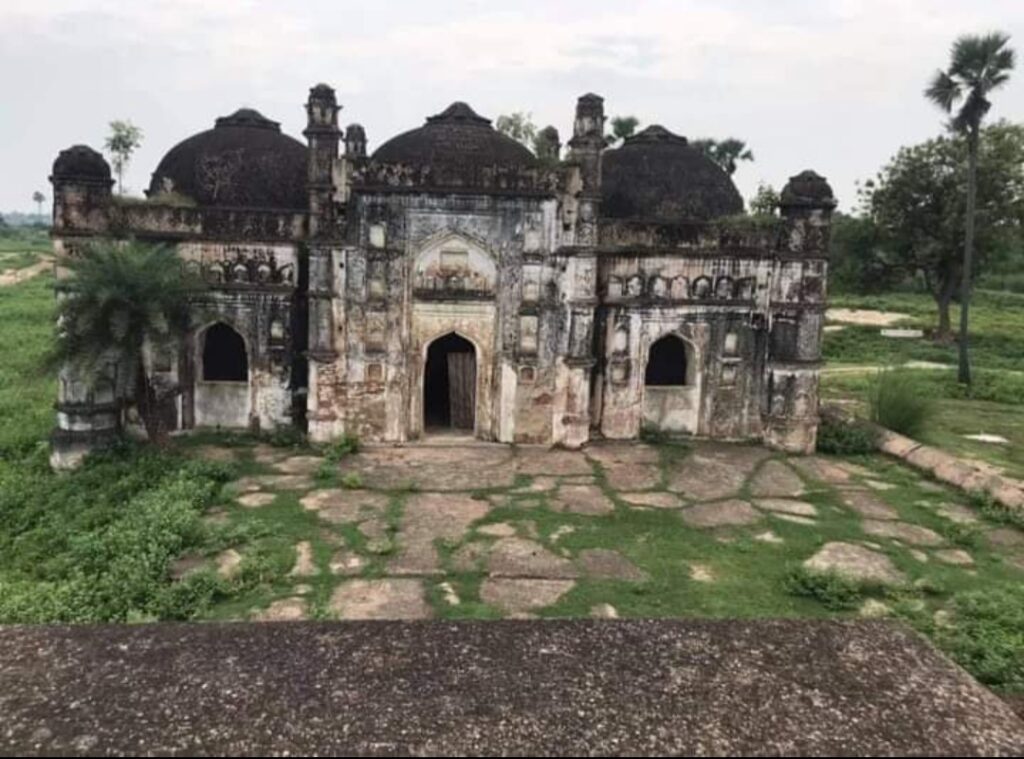
This mosque popularly called ‘Lodi mosque’ was built around 1536 AD during the Lodhi rule in India. It is believed that Sultan Ibrahim Lodi, one of the rulers of the Lodhi dynasty had taken initiatives to get this mosque constructed.
This mosque is about 25 km from Gaya on Gaya-Patna road. It is exactly near Kundwa village at Khijrasarai block in Gaya district. It is situated on the banks of the river Falgu, a kilometer from village Kundwa. On the West of the river is Lodhipur village colloquially called Lodpur, while on the east is Kundwa village.
The mosque becomes functional only during ‘Eid’ and ‘Bakrid’ festival when some Muslims from Kundwa village come to offer prayers in this mosque.
For the rest of the years, this mosque remains a picture of neglect and want for maintenance. There is no Azaan called from this mosque as there is no one to take care of this house of worship. Some people have illegally occupied the land around this mosque but there is none to challenge such encroachments.
This historical mosque comes under the Archaeological Survey of India but neither ASI nor the Bihar government nor the Waqf Board, have any concern in protecting this Islamic heritage site.
It is in this context people like Mr. Siraj Thakor, who is Past President of the American Federation of Muslims of Indian Origin (AFMI), comes into the picture. He wrote to me:
“Dear Brother Syed Ali Mujtaba, ASAK, I am a Past President of the American Federation of Muslims of Indian Origin (AFMI), We have undertaken the monumental task of creating an online database of all the Islamic Heritage Sites of India to preserve it digitally and make it available to all. I would take this opportunity to request you to be part of our team to collect info on Islamic Heritage Sites in your area. Alternatively, can you put in touch with someone or the organization which would be interested in such a historical task and leaves a legacy for the Indian Muslim generation to come? Wassalaam- Siraj Thakor.”
Mr. Siraj has started an All India campaign to document such historical Islamic heritage sites in ruins. If you have any similar story of any such Islamic heritage site near you, please write to him directly with photographs; (thakorsiraj@hotmail.com. You can even contact him on ‘WhatsApp’ -+1 416-277-7082.
This is a huge initiative and the efforts of people like Mr. Siraj needs to be strengthened by giving him a helping hand. Anyone, anyone where in the country who feels concerned about vanishing Islamic Heritage Sites in India must come forward and join his team.
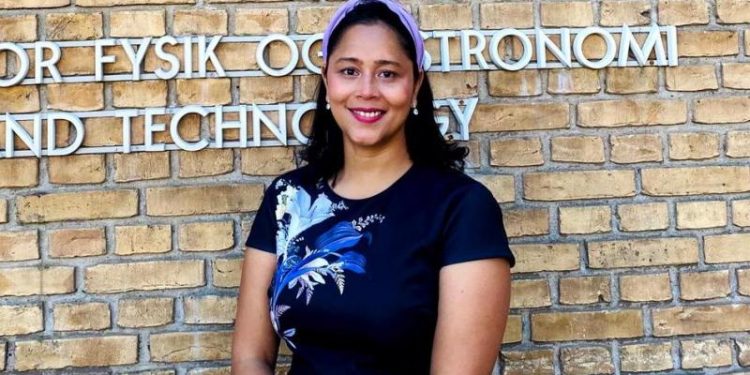
Shaeema Zaman Ahmed, a youngster from Guwahati, brought laurels to Assam and India for her visionary work on quantum physics research, for which she was awarded the PhD from Aarhus University, in Denmark, on June 28.
After her earlier schooling at Maria’s Public School, Guwahati, and her Masters in Physics from Delhi University, Shaeema was at the forefront of science outreach and astronomy education with Zlife Education in New Delhi.
Thereafter, she was offered a Marie Sklodowska-Curie PhD fellowship at Aarhus University, Denmark, and was part of the Quantum-enhanced Sensing via Quantum Control (QusCo) EU programme.
Her work focussed on investigating the use and impact of quantum games and simulation tools in quantum physics education, science outreach, and quantum control research.
She was part of the design process in Quantum Moves 2 and Lab Manager and simulation tools like the Quantum Composer.
Her research studies on these tools explored how simulations can improve student learning of quantum mechanics.
Additionally, her work also addressed the potential of a citizen science game as a method to crowdsource solutions to solve quantum control problems, and the impact of the use of simulations in quantum physics outreach training.
The work was carried out under the supervision of Prof Jacob Friis Sherson, and the external examiners were Prof Sabrina Maniscalco from the University of Turku, Finland and Prof Stefan Heusler from the University of Münster, Germany.
Shaeema is the daughter of Guwahati-based paediatrician, Dr Shabina Ahmed and anesthesiologist, Dr Khafiluzzaman Ahmed.
The defence was viewed online, including her teachers at her alma mater, Maria’s Public School, Guwahati.
In a message to her alumnus, Nellie Ahmed Tanweer, Founder Director of the School, said “…the pride you bring to your school further inspires the next generation …
source: http://www.nenow.in / North East Now / Home> Northeast News> Assam / July 04th, 2021
Indian motorsports’ governing body FMSCI has nominated its own president Akbar Ebrahim for the Dronacharya Award besides sending Jehan Daruvala’s name to the government for Arjuna Award after inexplicably ignoring him last year.
Racer turned coach Ebrahim’s name was also recommended for Dronacharya last year but none of FMSCI’s nominations for the national sports awards was short-listed by the government appointed selection panel.
However, Ebrahim was not heading the FMSCI back then and some within the FMSCI feel his name should not have been included in the nominations this time as he is holding office.
“It is ironical isn’t it. Effectively the president only decides on the nominations and he has nominated himself . Two names were discussed initially but the Council decided to send only Ebrahim’s name.
“Last year was fine but his name shouldn’t have been gone this year as he is holding office. As far as Jehan’s nomination is concerned, I am glad it has happened this year as his named should have been there last year itself,” a FMSCI official told PTI.
Top rally driver Gaurav Gill is Indian motorsports’ first and only recipient of a national sports award, having got the Arjuna in 2019. His co-driver Musa Sherif has been nominated for the Rajiv Gandhi Khel Ratna but he is highly unlikely to be considered for the country’s highest sporting honour.
Jehan’s name on the other hand should have been sent last year. India’s biggest racing star at the moment, Jehan stands the best chance of getting the award.
“He is one deserving candidate and should be honoured by the government,” the FMSCI official added.
The 22-year-old is into his second year in Formula 2 and has multiple podium finishes to his name. He won the sprint race in Bahrain last year and has scored two podiums, a second and third place, this season.
He is also a Red Bull junior driver.
In 2019, Jehan finished third in the Formula 3 Championship, which is another support series to Formula 1.
source: http://www.timesofindia.indiatimes.com / The Times of India / Home> News> Sports News> Racing News / by PTI / June 29th, 2021