Achan Village (Pulwama District), JAMMU & KASHMIR :
Pulwama :
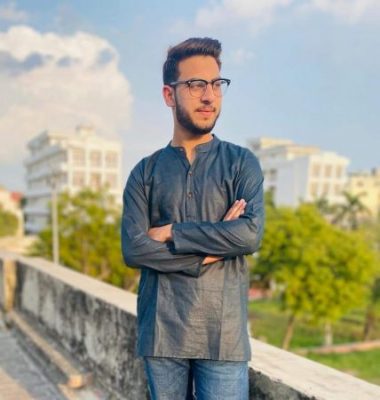
A young budding writer from South Kashmir’s Pulwama district has received over 70 awards and certificates so far from different institutes of the world for his writing skills. The young writer aspires to become a human rights activist.
Faheel-Ul-Islam (18), son of Rafiq Ahmad Mir of Achan village in Litter Tehsil of Pulwama district, who is pursuing his Bachelor’s in Political Science at Aligarh Muslim University, a writer, wants to bring changes in the society where the youth as per him have degraded their morality and wants to work for the uplift of future generation.
Faheem said that he was in Class 11th when he started writing and since then he has co-authored around one dozen books. “Recently my book titled ‘The Midnight Silence’ got published, which is now available online as well as offline,” he said.
He said a book, which is a collection of 30 poems is multi-dimensional and the topics that have been touched include ‘our valley, our youth, hope, nature and many other things’.
“Since the last four years, my articles got published in the leading international, national and local papers and magazines,” he said, adding that he has continuously writing on all unethical things like drug addiction, suicide, rape and other issues.
“The sole motive of my writing is just to awake our youth, on which our future depends and I want to transform them to such an extent so that they too can contribute their part for the welfare of the society,” he added.
Faheem further stated that the most prestigious awards he has received so far include Indian Excellency Award by bringing hope in youth, Indian Humanitarian Award for my social work and Bravo International Award for inspiring and motivating youth to transform the morally degraded society.
“I have planned to publish a new booked titled ‘Concealed Chinars’ in which I will provide an opportunity to 20 such writers who are unable to publish their writings due to financial issues,” he said
He further added after completing his bachelors, his plan is to pursue masters in Human rights so that he can help the people in highlighting their issues.
“Besides studying and writing, I am presently working as a Radio Jockey at Kashmir Online Radio where I always try to change our youth who have been involved in futile exercises,” he added.
“My message to the youth of Jammu and Kashmir will be that don’t waste your time in futile exercises and try to contribute the society,” he said, adding that “if our youth will work positively, our future will be prosperous”.
source: http://www.therealkashmir.com / The Real Kashmir News / Home> Pride of Kashmir / September 17th, 2020
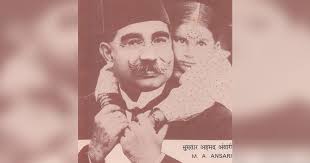
Dr Mukhtar Ahmed Ansari was a staunch Congressman and author of a book titled ‘Regeneration in Man’. Wednesday marks his 81st death anniversary.
India’s political leadership during the British Raj was dominated by lawyers and journalists. A noted exception was Dr Mukhtar Ahmed Ansari (1880-1936), one of Delhi’s richest men, who dexterously balanced his busy medical practice with a deep involvement with politics.
Ansari was a close companion of Gandhi and an icon of the Khilafat movement. The few scholars who have studied his life have focused solely on his role as a Congress leader, and on his skills on the negotiating table of high politics. His exploits with the scalpel have been ignored. More than 80 years after he died, on May 10, 1936, it is remarkable that forget any serious study, there is hardly any discussion about the hundreds of operations he conducted in India in which he grafted animal testicles – from bulls, monkeys and sheep – onto human beings.
Adviser to princes
Dr Ansari studied at Queen’s Collegiate school in Benares and at the Muir Central College in Allahabad (which was later incorporated into Allahabad University). He later joined the Nizam College in Hyderabad where he was given a scholarship in 1900 to study medicine in the UK. After earning a medical degree at the University of Edinburgh, he worked in London at Charing Cross hospital, the Lock Hospital and St Peter’s Hospital. He returned to India in 1910, and set up his practice in Calcutta before shifting to Delhi.
He acted as medical adviser to the princes of Alwar, Rampur, Joara and Bhopal. His two older brothers were well-known hakims, who practised the traditional unani system of medicine. They were close to the scholars at the respected Islamic school in Deoband. His own circumstances and family background proved crucial in his positioning as a key functionary during the Khilafat movement of 1919. This movement was launched by Indian Muslims to urge the British government to preserve the authority of the Turkish Sultan as Caliph of Islam with the disintegration of the Ottoman Empire after World War I.
A new science
Along with his political activity, Ansari turned his mind to a matter that has obsessed physicians for centuries: the quest for medical interventions to help ageing clients produce heirs. In the early 20th century, medical journals in Europe and America were increasingly documenting cases of xenotransplantation – the transplantation of living cells, tissue or organs from one species to another. It was through such articles that Ansari became interested in this field.
In his role as a medical practitioner, Ansari was also constantly faced with a large number of patients suffering from a “real or imaginary decline in their mental, physical and sexual powers”. His brothers attempted to treat such with traditional medicines. But Ansari looked to Europe for possible answers.
In 1921, 1925 and 1932 he visited Vienna, Paris, Lucerne and London and spent a considerable amount of time in laboratories, hospitals and clinics. He met and observed urologist Dr Robert Lichenstern, Eugen Steiach, Dr Serge Voronoff – all of whom are considered pioneers in the field of grafting animal testicles onto humans. He also collected vast amounts of literature on the subject, sourcing books and journals from Germany, France, Switzerland, Austria and the US.
This procedure may now be ridiculed but in the Roaring Twenties there was quite the rush of men wanting to undergo these regenerative surgeries. Ansari offered a treatment to his clientele in India that was only available to the elite in the West.
Rejuvenating the nation
According to Ansari, there were a few key reasons why the people of India suffered from poor health. These included unhygienic surroundings, poverty and the lack of medical facilities, as well as seclusion and segregation of the sexes, and rules confining the choice of marriage partner to a limited circle.
In his 1927 presidential address to the Congress in Madras, he dwelt on the problem of healthcare in India.
He said:
“Sixty percent of the revenues of India is absorbed by the Military Department in the name of Defence of the country but the government ought to know that there can be no defence of the country when people are allowed to exist in such a state of utter physical degeneration. The real defence lies in tackling the problem of manhood and improving the general health of the nation.”
In the last decade of his life, Ansari conducted such testicle grafting operations on around 700 people. These included property agents, merchants, jewellers, bankers, provincial civil servants, sportsmen and labourers.
In a letter to Aziz Ansari, his cousin, the doctor wrote that Eugen Steinach “urged me to publish my researches (sic) and not to hide my light under the bushel”.
Ansari meticulously noted down around 440 cases of grafting that he had done. He monitored or kept in touch with these individuals for a period of three to four years after the surgery. In one case, he wrote that a wrestler whose testicles were badly damaged by an opponent and lost his “sexual power” for eight years underwent grafting and found that his sexual appetite was restored. In another case, a man in his early 50s, who was a heavy drinker and had contracted sexual diseases in his 30s, found his health to be deteriorating drastically. After Ansari grafted slices of a bull’s testicles onto the man’s gonads, he gained weight, became healthy, and started leading a normal life with a new wife. Through such case studies, Ansari emphasised that his surgeries resulted in the rejuvenation of patients, which added to the productivity of the nation.
He gave Gandhi a copy of his book Regeneration in Man, who read it with great interest in one day. Describing it as evidence of “research and great labour”, Gandhi, whose aversion to western medical practices is well known, asked his friend: “What is revival of youth worth if you cannot be sure of persistent physical existence for two consecutive seconds?”
But for the short, well-built, moustachioed doctor who played the role of Othello in a play while a student at the University of Edinburgh, these procedures were part of a larger vision for a “universal campaign against the disability of old age”.
source: http://www.scroll.in / Scroll.in / Home / by Danish Khan / May 10th, 2017
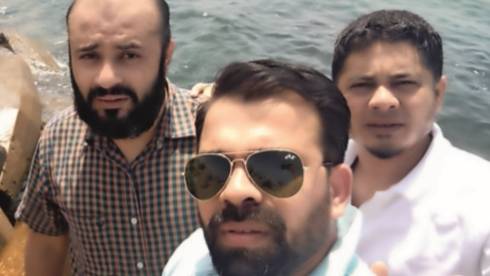
Shahid Rukhnuddin, Mudassir Kola and Mohiddin Anas / supplied image / khaleejtimes.com
Shahid Ruknuddin, Mudassir Kola and Mohiddin Anas had been fishing when they saw the Omanis crying for help.
Three Indian friends risked their own lives to save two Omanis from drowning after their boat reportedly capsized on Seeb Beach.
On the night of August 29, Shahid Ruknuddin, Mudassir Kola and Mohiddin Anas, based in Oman’s Seeb, went fishing.
For the first time, the trio tried fishing from the sea walls and not the seashore.
However, the trio couldn’t catch any fish, felt uncomfortable hearing sounds coming from the dark and decided to leave. But it was then they could spot two Omanis shouting for help. Ruknuddin jumped into the water, Kola followed him while Anas informed the police. The timely act helped save the lives of two Omanis.
Anas said it was destiny that they were at that spot at the right time. “I have been fishing since 2014 but for the first time we went to the sea walls. It was Ruknuddin’s idea to go there.
“Right from the start, we kept hearing some sounds. It was dark and a bit scary. I told Ruknuddin and Kola that maybe the fishermen were trying to scare us by making such sounds.
“We were not finding any fish and decided to leave. But whenever I switched off my flashlight, the sound got louder,” Anas said. The trio wondered if someone was in trouble and seeking help in Arabic.
So they decided to check all the spots. “For 15 minutes, we flashed our torch in different parts of the sea to spot any person. Our search was in vain and we decided to give up. Just when we were leaving, suddenly Kola spotted a face. They were two Omanis in the water seeking help. They were at a distance and we shouted at them with little Arabic we know.
“I informed the police. But we know even if police would reach the shore quickly, it would take a while to reach our spot. We kept encouraging them to try and swim towards us, but we felt they were exhausted,” Anas said. It was then that Ruknuddin jumped into the water and helped save the Omanis.
Recollecting the experience, Ruknuddin said: “It’s a great privilege that Allah gave me this opportunity to save lives. I jumped into the waters without thinking about anything else. By Allah’s grace, I was able to help two people.”
Anas added: “Ruknuddin is the real hero. He never thought about his life. He jumped into the water which had sharp rocks beneath.
“He got injured in the process but was strong.”
ashwani@khaleejtimes.com
source: http://www.khaleejtimes.com / Khaleej Times / Home> Region> Oman / by Ashwani Kumar, Khaleej Times, Abu Dhabi / September 03rd, 2020
Farsi, or Persian, was once counted among the great global sultans of language and culture. In a corner of Calcutta, the flame still glows. We chart the bygone glory of the tongue, and speak to some who keep its flicker alive.
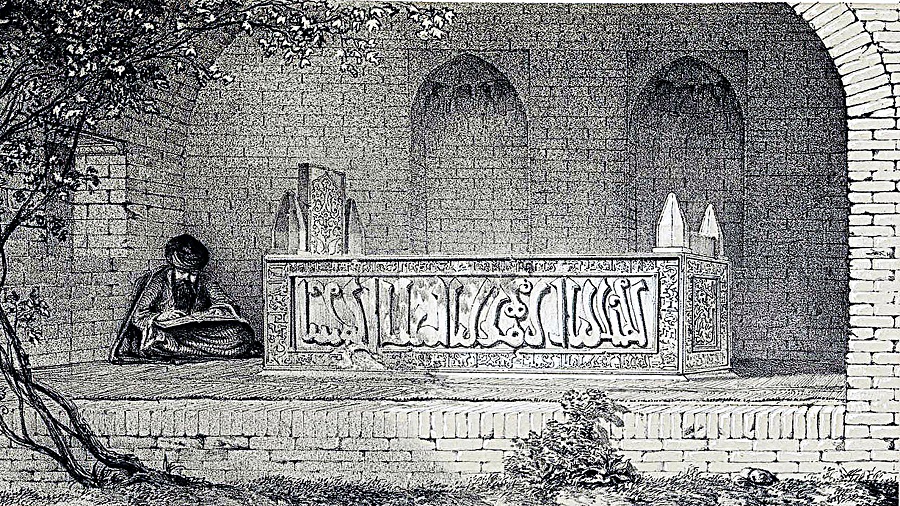
LANGUAGE LEGACY : The tomb of the great Persian poet Sheikh Saadi in the Iranian city of Shiraz, sketched by the 19th century French painter Eugene Flandin . Voyage en perse, avec flandin, ed. gide et baudry, 1851 : from Wikimedia Commons
Bani adam a’za-ye yekdigar-and/ke dar afarin-aš zeyek gowhar-and. All human beings are members of one frame, or body/Since all, at first, from the same essence came/When life and time hurt a limb/Other limbs will not be at ease/ You who is not sad for the suffering of others/Might not deserve to be called human.”
The portals of the Iran Society, a 75-year-old centre for Persian studies in Calcutta, reverberated with the musical rendition of verses one afternoon. The recitation of 13th-century poet Saadi Shirazi’s verse by Persian teacher Abid Hossain leaves a delegation from Tajikistan speechless.
Tajikistan is one of the central Asian countries where Persian is spoken and used officially, the others being Iran (earlier Persia), Iraq, Afghanistan, Ujbekistan and Azerbaijan. The Tajik delegates, a team of five experts, have been collecting samples of Persian literature, especially poetry, from across the world. “We didn’t know that this region, so far away from the Persian Gulf, had once been a seat of Persian literary activities. We knew about Delhi, Kashmir, Punjab, but not of Calcutta, Dhaka or Chittagong,” says Abdughani Mamadazimov, who teaches international relations at the Tajik State University in Dushanbe and is the leader of this delegation.
Persian or Farsi was introduced in the Indian subcontinent by the Persianate rulers of Central Asia in the 13th century. The language was not only the lingua franca of the classes — just like English in modern India — but also the language of creative literature and philosophy. In fact, the word Hindu, connoting people living in a geographical region beyond River Indus, is of Persian origin. So is the word Hindavi (later Hindi), used for the language spoken by the people in large parts this land. After having played a key role in communication and literature, the language was replaced by English in late 19th century. And now it faces ignominy or oblivion.
During the Muslim conquest of Persia in the mid-7th century, the Parsis took refuge in Gujarat and parts of western India to avoid religious persecution. And that is how Farsi floated into India. “Persian language, with pre-historic roots in southwestern Iran, is one of the oldest Indo-European languages,” says Amit Dey, a senior historian and professor at Calcutta University. He continues, “The Arabs conquered Persia but failed to impose Arabic on the conquered. The Persians were forced to accept the Arabic script but did not sacrifice their language. Instead, Farsi turned into a prestigious cultural language in various empires in Western Asia, Central Asia and South Asia. New literature, espe-cially Farsi poetry, developed as a court tradition in the eastern empires. Thus, Farsi became a vehicle of cultural conquest defying Arabic political hegemony.”
As a result, some of the classics of literature, such as Rumi’s Mathnawi, Firdausi’s Shah Nama, Omar Khaiyyam’s Rubaiyat, Hafez’s Divan and Saadi Shirazi’s Gulistan, were written in Farsi in the medieval period. Farsi also became the vehicle of Sufi mysticism, defying all orthodox religious boundaries.
Its secular, liberal and strong cultural moorings helped Farsi survive political threats from Arabic and other languages. Even rulers of Turko-Afghan origin in medieval India, including those of the Delhi Sultanate and the Mughal regime, accepted it as the language of the court and diplomatic discourse. “They chose Farsi rather than their mother tongue Turkish, or Arabic. Persian flourished in the Indian subcontinent, unlike in northern Africa where the conquered nations were Arabised,” says Dey.
According to him, the decision to embrace Farsi was actually a political move by the rulers to get the better of the orthodox ulemas or Muslim theocrats — mostly proponents of Arabic and Turkic.
Patronage of the language encouraged the flow of Persian texts and Persian speakers — soldiers, merchants, administrators, scholars, poets, Sufi saints, artists and artisans — to South Asia between the 11th and 18th centuries.
Irrespective of their ethnic, religious or geographical origin, these migrants from central and western Asia had skills in Farsi that would help them earn a livelihood in courts and bureaucracy.
Farsi reached its pinnacle in south Asia when Mughal emperor Akbar established it as the official or state language in 1582.
Mind you, this was despite the fact that the Mughals were native speakers of Chagatai Turkic. “He used the language as a tool to knit together diverse religious and ethnic communities in his court as well as his burgeoning kingdom, culturally,” adds Dey.
Not just Muslim aristrocrats, but also scribes of upper caste Hindu lineage — Brahmins, Kayasthas and Khatris — who served as clerks, secretaries and bureaucrats, learnt the language and got acculturated in Persian etiquette for social mobility. Ghazals, nazms and qawwalis (at Sufi shrines) in Farsi were wholeheartedly accepted as forms of literary and musical expression by the educated of all faiths and ethnicity.
Akbar and Jahangir commissioned Persian translations of the Ramayana and the Mahabharata. Dara Shikoh went a step further when he took up the task of translating the Upanishads into Persian, aided by veteran bureaucrat Chander Bhan. Persian romances, such as Laila Majnu and Yusuf Zuleika, were translated into many Indian languages.
The medieval Bahamani Sultanates and successor Deccan Sultanates and even the Hindu Vijayanagara kingdom had highly Persianised culture. The Sikh gurus as well as the Maratha ruler Shivaji were well-versed in Persian. The language had been used by the Bengal Sultanate as one of the court languages and in the chancery’s administration mainly in urban centres in Gaur, Pandua (today’s Malda), Satgaon (a port in Hooghly) and Sonargaon (near Dhaka), long before the Mughal period.
One of the principal patrons of Farsi in the early 15th century Bengal was Sultan Ghiyasuddin Azam Shah who established contact with the legendary Persian poet, Hafiz. Poet Alaol composed literature in the language and translated Persian classics into Bengali.
Royal patronage encouraged a section of non-Muslim elites in Bengal, especially the Bengali Hindu gentry and aristocracy, appropriate aspects of Persian culture, such as dress, social practices and literary taste. Rammohun Roy wrote treatises in Persian and started India’s first Persian newspaper Mirat-ul-Akhbar in 1823. The country’s first Persian printing press was also set up in Calcutta.
In the initial phase of the British administration, Persian was used as the language of the courts, correspondence and record-keeping. Governor-General Warren Hastings, well versed in the language, founded the Calcutta Madrasa where Persian, Arabic and Islamic Law were taught. The remnants of Persian judicial terms adalat, mujrim, munsif and peshkar are still used in courts across India.
The sharp decline of Persian began when English was made the language of governance through Lord Macaulay’s education policy in 1835. The emergence of vernacular languages, especially Urdu, ushered in further decay of Persian.
Says Dey, “Persian was, after all, a language of the elite. Urdu first emerged as the common language of soldiers of heterogeneous origin (Mughals, Rajputs, Pathans, Turks, Iranians, etc.) in the Mughal camp, and then became a language of the masses.” Urdu borrowed elements from Persian — idioms, styles, syntax, script — and mixed these with the local dialects, such as Poorvi and Brajbhasha. “Sufi saints like Nizamuddin Aulia also chose Urdu for discourse with his followers,” he adds. Furthermore, many madrasas started focusing on religious education with more emphasis on Arabic scriptures.
Notwithstanding its decay, Farsi survives in Hindi and Bengali as thousands of loan words used in everyday life. Sample these: abohawa (weather), jomi/zamin (land), maidan (ground), rang (colour), maja (fun), kalam (pen), chashma (spectacles), pyaz (onion), pulao (flavoured rice), jharu (broom), badmash (rogue) and so on.
It also survives as a discipline in “foreign language” departments of many universities in Calcutta, Delhi, Mumbai, Lucknow, Hyderabad, Guwahati and Patna. Says Iftekhar Ahmed, head of the department of Persian in Calcutta’s Maulana Azad College, “There are plenty of jobs for students of Persian in Central Asia and the Middle East. Some of the graduates are even hired by giant tech companies such as Amazon and Google.” Institutes like the Indian Institute of Persian Studies, Delhi, and Calcutta’s Iran Society are trying to keep the language and its heritage alive.
The Iran Society, founded by M. Ishaque, a Persian scholar, is the country’s oldest functioning centre for Persian studies.
The society offers a Farsi course and is a treasure trove of old and rare Persian books and journals. Fuad Halim, a council member of the society, says, “Most of our students are researchers of medieval Indian history, which is primarily documented in Persian. But there are some retired people too who join the course just for the sake of learning.”
Pritam Goswami and Prateeti Bhattacharya are two such PhD scholars. Pritam is researching the evolution of food habits of Bengalis which include food of the Nawabs of Murshidabad and Dhaka. Prateeti is working on the position of women in the Delhi Sultanate. She says, “Since there is a lot of misconception and misrepresentation of the history of the period, I want to read the original documents and treatises penned in Farsi.” Subhashini Majumder is a retired state land revenue officer who joined the course because she wants to read Rumi and Saadi in Persian.
The institute has been serving as a window to the Persian world hidden in the heart of the city. While visiting the institute at Kyd Street (now known as Dr Md Ishaque Road), Tajik scholar Abdughani expresses hope that the institute and the language can “build a bridge between secular Indians and secular central Asian nations.”
According to him, Persian is a language that has defied all borders and divisions. He adds, “It’s a neutral language of poetry, philosophy and culture that has united political and sectarian divisions for thousands of years.”
source: http://www.telegraphindia.com / The Telegraph, online / Home> Culture> Heritage> Big Story / by Prasun Chaudhuri / September 13th, 2020
In today’s era of social media, people are slowly losing the essence of celebration; rather they prefer to be amused and entertained. Celebration is an active state of expressing reverence and appreciation.
Here’s me celebrating the centennial anniversary of “Zinda Tilismath” and acclaiming their achievements in the field of Unani Medicine.
Unani medicine is popular in South Asian countries and its use is currently growing in other parts of the world. The history of Unani medicine can be traced back to the ancient Greek practitioners Hippocrates and Galen. Over the next few centuries, their principles were soon taken up by the by numerous Arab and Persian scholars. The very famous Ibn Sina, who is also known as Avicenna was an Arab philosopher and physicist, who wrote Kitab-al-shifa (Book of Healing) and the Canon of Medicine. This system, earlier known as “Galenics”, later became to be known as Unani Tibb, (Unani being the Arabic word for “Greek” and Tibb an Arabic word for “medicine”)
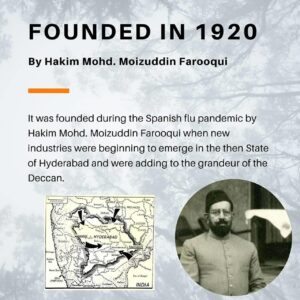
In India Hakeem Mohammed Moizuddin Farooqui founded the factory, Karkhana Zinda Tilismath which is known to produce one of the world’s best products of Unani Medicine.
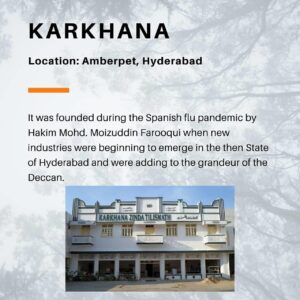
Karkhana Zinda Tilismath is located in Amberpet, Hyderabad and this year celebrates its centenary. The outset of Karkhana Zinda Tilismath in Hyderabad not only promoted the Unani medicine but also led to an industrial revolution and opened job opportunities for many.
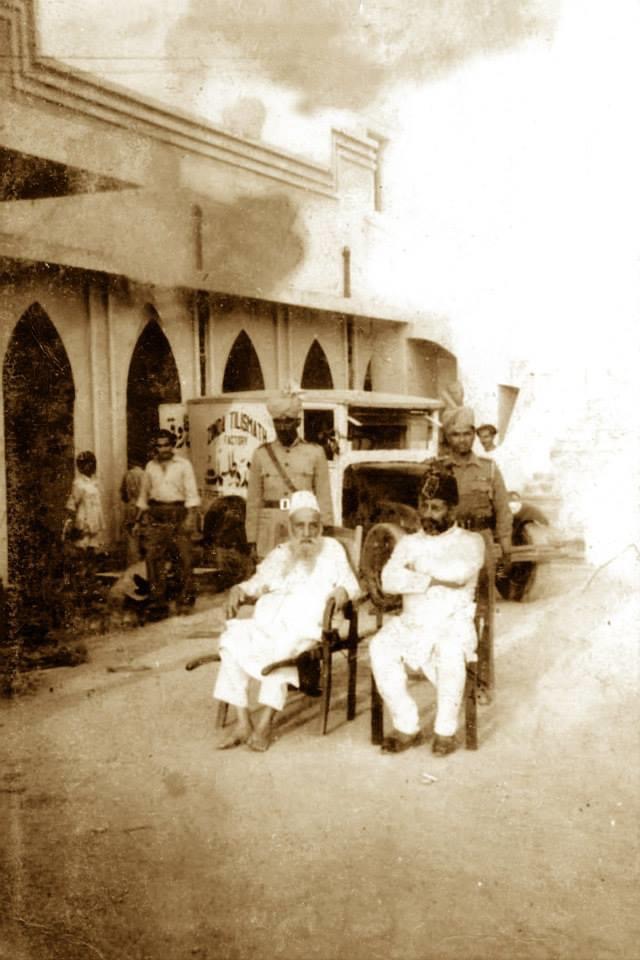
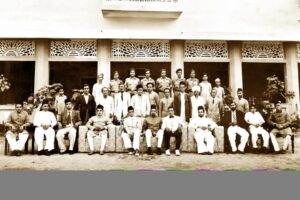
Hakim Mohammed Moizuddin Farooqui with his eldest son Minhajuddin Farooqui and staff members. Labour Welfare Officer of factory, CM Ansari can be seen in this Photo.
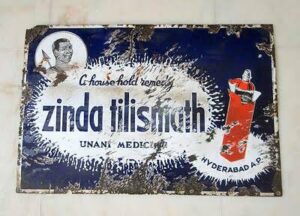
In 1920, Hakeem Mohammed Moizuddin formulated his very first Herbal medicine which was named “Zinda Tilismath” (an Urdu word for living magic). Many Hyderabadis and others who romanticize Unani medicine in India and around the globe pledge that this potion has a magical cure for all ailments. This magic started in 1920 when three hundred thousand vials in the 1950s-60s were made and recently the sales of the potion have shot up to seven hundred thousand bottles.
Zinda Tilismath consists of only five ingredients – eucalyptus, which is the main ingredient at 70 per cent and camphor, menthol, thymol, and ratanjyoth (a bark of a tree to give colour to this medication). This herbal medicine is unusual as it can be applied both externally and can also be consumed by adding few drops in to the milk or other drinks. A laboratory in Pune has confirmed that “Zinda Tilismath” can be used for preventing swine flu.
Apart from the zinda tilismath, there are other products also manufactured by the factory including zinda balm, Faroooky tooth powder and zint (throat lozenges) which had to compete with halls, Vicks and the strepsils throat lozenges.
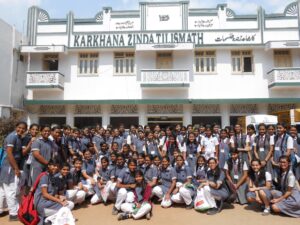
The door of the factory is always open and plays host to school children, exhibiting their benefits of herbal medication. They also allow pharmacy students to conduct their research and studies on their medicine.
Girls of St. George’s Grammar School on an Industrial Visit- November 3, 2015
Currently, the third generation of this prominent Unani Hakeem Mohammed Moizuddin Farooqui is running the company and are striving to maintain their reputed family business.
source: http://www.heritagetimes.in / Heritage Times / Home> Medicine / by Dr. Zareen Fatima / September 03rd, 2020
Disability rights activist Arman Ali represented India at a professional exchange programme offered by the United States, its consulate in Kolkata announced.
Ali took part in the US
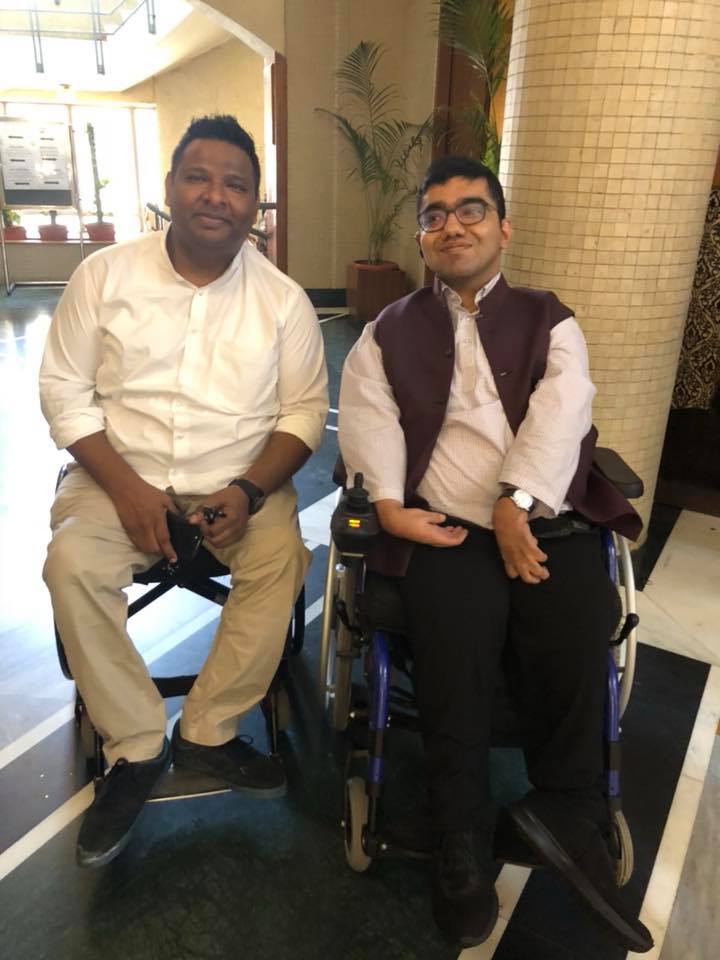
Arman Ali (left), presently the executive director of the National Centre for Promotion of Employment for Disabled People in New Delhi, is also on the board of NGO Shishu Sarothi in Guwahati. Photo courtesy: Facebook/Nipun Malhotra
Department of State’s International Visitor Leadership Programme (IVLP), which was held virtually this year owing to the COVID-19 outbreak.
The programme commemorated 30 years of the Americans with Disabilities Act and, apart from Ali, Fadi El Halabi from Lebanon and David Anyaele from Nigeria wwere chosen as representatives, the statement said.
In the virtual programme, representatives gave online presentations and took part in meetings and cultural activities. Ali delivered a presentation on his work and contributions in a virtual discussion hosted by the Graduate School USA and Harkin Institute at Drake University in Des Moines, Iowa.
The Gold Star initiative highlights the work of IVLP alumni who have made a significant impact in their home communities, and this year focused on alumni doing exceptional work in advancing disability rights.
Ali, presently the executive director of the National Centre for Promotion of Employment for Disabled People in New Delhi, is also on the board of NGO Shishu Sarothi in Guwahati.
In the previous years, representatives had visited the US to experience the country and cultivate relationships with their American counterparts, the statement added.
source: http://www.connectedtoindia.com / ConnectedToIndia.com / Home> News> Global / CtoI News Desk / July 29th, 2020
RIDING ON TOP, TWO MAVERICKS KEEP THEIR GAMES ON POINT. LA POLO GETS IN CONVERSATION WITH ARJUNA AWARDEE, SIMRAN SINGH SHERGILL AND SHAMSHEER ALI
They could very well be professional archenemies on the field, but off the field, Syed Shamsheer Ali and Simran Singh Shergill are remarkably comparable as they both would make for perfect Indian polo poster boys.
Though the two have a similar passion for the sport, they both have a very different approach towards life – while one comes across as a simpleton the other one balances the mood with his flamboyance. At LA POLO, when we spent an entire day with the two highly proficient players to discover their stories and, we couldn’t help but wonder how the two peas in a pod were just the right personalities to grace the cover of our first edition.
Syed Shamsheer Ali, +5 (current) handicap player He has played polo for more than 25 years now, and if his memory serves him correctly he played his first tournament at the age of 11. At a very young age, Syed Shamsheer Ali along with his brothers Bashir and Hamza were trained by Nawab Syed Shujat Ali to become polo champs and, till date, the discipline and dedication instilled by his abba (father) are his biggest strength.
Mr Ali recalls his early days and says, “We had a very strict upbringing, I still hit the bed by 9 pm to wake up early the next day. I fell from the horseback at the age of 10, when my father told me not to stop and keep playing. I had a pony named Biscuit and while growing up we never allowed any late nights. Our childhood was spent in stables, practising the game and I have never touched alcohol or cigarettes in my life because we followed a strict diet to stay fit. Polo is a demanding game and requires a lot of discipline, which was taught to us by our father. I started playing when I was 11. In the year 2000, I played at the Jaipur zonal playoff for India against Singapore, Pakistan, New Zealand and we won the three games. We won against Pakistan and it was a crucial game for us because winners qualified for the main event at the World Cup. It was a turning point in my life as I became a 4 goal player that time, and around 80,000 people watched that game and cheered us till the end. I was 12 when I played my first international tournament in Columbia with my brother. For the 2003 World Cup, we were taken to Argentina by the Indian Polo Association for the match and the exposure changed a lot in me as a player. I still remember my first salary as a polo player was from Sehgal Studs; and it was INR 30,000 for the first week and I was just 17 at that time. That was also the year I got married to my wife Nazia.”
lapolo.in
“On the field, you have to fight it out, but off the field, you have to be a gentleman,” says the Hyderabadi top notch as he mentions that he would like to pass on the lesson of sportsmanship to the next generation of players who aspire to take this professionally. “Polo is a very competitive sport and could be very dangerous. My advice to youngsters is that they shouldn’t be attached to the sport so much that it affects their well-being – winning and losing is a part of this game and it shouldn’t get to their heads.”
The biggest challenge for a polo professional in India is to source the right kind of horses as 70 to 80 percent of the game depends on the horses. Mr Ali says, “Polo in India has changed over the years and people have bought horses from abroad. It started with Major Adiraj Singh getting horses for McDowell’s and Jindals and Sahara followed suit. Whereas, we still buy Indian horses and groom them to play against these horses. On an average, it takes at least two to three years to train a horse depending on the temperament of the horse. There aren’t many horse trainers in India, and some of the best horses are trained by the 61st cavalry of Indian Army. I have around 10 home bred horses. I had a mare named Triveni that stayed with me for the longest time and it was an excellent Indian breed. We were in Argentina for six years and returned sometime back.”
A typical polo season in India is for six months, and during summers the horses are fed and trained well for the next season. Mr Ali adds, “We need more publicity for polo, as people don’t know about the game. It is not covered on TV and people in South India are hardly aware of it. We need more sponsors coming in to support polo, so people can maintain the stables without selling their horses. The discussions of a Champions Polo League is on right now and all the players have come forward to support Mr Chirag Pariekh as he is trying to get the arena polo format on TV. The new format could be the T 20 version of polo, with a smaller ground, bigger balls and people can watch it closely. Aspirants and professionals playing right now need money to survive, and even though there are a handful of teams like Jindal, Sahara, Sona etc doing very well we need more attention.” In his free time, Mr Ali plays tennis with his daughter and travels with this family. He also claims to be a foodie and loves to eat sushi, fish, biryani and haleem.
Simran Singh Shergill, +6 (current) handicap player His love for horses as a kid brought him closer to the world of polo, and today the 6 feet 2 inches Simran Shergill Singh is one of the finest players in the country with 6 handicaps. He has also received the prestigious Arjuna Award in 2019 from India’s President, Mr. Ram Nath Kovind. The passion for polo started as a hobby and turned into a profession for this happy-go-lucky man, and he has no qualms about how his life shaped up. He says, “My father was in the army and he was posted in the President’s Bodyguard regiment, which is a horse regiment. As a kid, I was very fond of horses and I started going there to ride, then started with show jumping and later got interested in playing polo. Then I stopped for a bit and finished my school. I went to Hansraj college in Delhi and finished my MBA at IMT. As soon as I finished my school, I met mister Jindal at a cinema hall and asked him if I could come and ride in the summer. Once the polo season started, there was a team short of a player and I played a game that time. My game was noticed by someone and then I was asked to play somewhere else and so it started for me. A year later, in 2003 we were sent to Argentina for training in polo and that was very beneficial for me and there I played my first international tournament. I got 2 goals in a year, which was considered very good and I started getting job offers.”
Mr Shergill considers buying his first set of horses as a memorable incident in his life, and he says that in the past years of playing polo he has developed an unconditional love for horses. “In polo, every player has to develop a rapport with the pony and one of my favourites is a mare called Pines from New Zealand. It belongs to Mr Jindal and it’s one of the finest horses in India right now.
Also, two horses that have played with me for a very long time were named Jimmy and Carrot, and I was extremely fond of them. Around 70 to 75 per cent game of polo revolves around horses, so the team with better horses has a higher chance of winning. Horses like athletes need to be trained properly, fed properly and exercised properly. They get hurt too, so they have to be treated well.”
“When I play polo I don’t feel like I’m going to work, it’s not a 9 to 5 job but more like a lifestyle for us,” mentions Mr Shergill, adding, “My first salary was 12,000 and after that I started saving money to play it seriously. I feel I am still young, and I could get better at playing so that’s what I would like to do. I am not a stressful person by nature and I try to lead my life as simple as possible. My biggest fears are injuries and bankruptcy. I am not a very ambitious person by nature and I am very content at my work, although I am very competitive and I would like to get better at my game.” The skilled rider highlights some of the most challenging aspects of the game and says, “It is an expensive game, it’s not accessible to everyone. It is a very dangerous sport; the main concern is not to get injuries. Most of us have got injuries while playing — broken bones, concussions and other issues are quite common with players. Even in summers, when horses are not playing we have to take care of them and our lives revolve around horses. The only misconception people have about polo is the glamour aspect of the game, which is good for the publicity but there are a lot of things that need to reach out to people. In cities like Jaipur the game is covered in sports pages, but in Delhi and other cities it is getting more coverage on the party page, so the seriousness of the game shouldn’t be mixed with the social aspect of it.” Mr Shergill is married to a lovely lady named Francesca and has a son named Veer, who loves to spend time with him at the polo farms. He claims to be a foodie and tells us that he does wonders with eggs, but to keep a check on his weight he has to run around a lot.
TWO HORSEMEN
A self made and a meant to be made. Two different backgrounds playing on the same ground. A reigning member of the team Jindal Panthers – Simran Singh Shergill and a player backed up by the game of polo – Shamsheer Syed Ali. Speaking less and rich of the journey that goes beyond play and sway off the field. Of hidden quest and dramas that lie behind their cloaked masks. They put it on in public. The spotlight follows and then goes in dark. Thrilled hearts cheer and in time they disappear. The mallets swing on horses with wings. The trophy commemorates and victory celebrates. And hidden are the gaps and phases of the all attractive ubiquitous sport. Those inner workings which remain untold. The nights spent in stables remain as fables. Unheard. A conjugation of uncommon species. The outcome is?
lapolo.in
“Horses are my teachers of both theory and practical classes of psychology,” says Simran, wearing a modest mask this time. “Our lives are on the line each time we ride on fine horses in the rectangular field.” Shamsheer Ali- Artistry and horse riding have little in common unless you are Shamseer Syed Ali. His mornings starts with the tapping of balls on the mallet while jogging in his farm at Hyderabad. Growing among the brothers carrying the same profession, he is the eldest of all three. His grandmother kept his name “Chamma” and some people call him “Shama” too. He says the horses want your devotion to them and “I give all my time to them, playing or practising.”
The time for sitting on the saddle and playing polo arrived very early in his life. He was 11 when he first played his polo match for India against New zealand, South Africa, Singapore and Pakistan. Qualifying all of them he ascended India to the finals of the world cup in 2000. At 12 when he played the game on international grounds in Columbia.
lapolo.in
Emphasizing on the hardships of his journey, he has seen things shattering in daylight. “Owning and breeding horses for 6 years which are born for polo in Argentina and losing everything on a gunpoint left us with no choice than to return to India with no establishment.” He expresses melancholy.
Now he has grown responsible and humble, may be marrying at 17 has inculcated one of the things in him “ On the field you fight it out. Off the field, you are a gentleman.”
Simran Singh Shergill
When life gives Simran Singh Shergill fascination turned into reality, he becomes unstoppable until he squeezes everything out of it. The commentator mentions his name repeatedly as he gallops with his horse after the ball to send it into the goal post and he misses the shot for a few moments, the tapping sound of horseshoe stops and the crowd shifts its expression to quietness. And Simran screeches his own name gazing at the skies. He has been more harsh on himself than the cacophonous times in the journey of his life. People might expect the highest handicap (+6) polo player in the whole of Asia to be drifting off success money and laurels. But he is riding off for a long game, watching life beyond the fields.
“I would always want to be an untamed child”, Simran says as he sits in a polo field that appears alone and silent as the visitors make their way to the royal after party sitting against the red sun which is about to disappear too. He looks ban and slightly dark. “I have hated losing, on the fields, and in life”. Probably it’s why he has won most of his matches playing for Jindal Panthers in his 23 ( and counting) years career. As the dusk starts to cover him inch by inch, he is filled with a variety of expressions on remembering tales of his childhood days, “For four years, I was left with a bike and few mallets and no horses. So I used them on my bike and rode all the way to Jindal Forms in Noida after my schooling hours.” Now he rides on one of the finest horses and his favourite-from New Zealand pines. Playing a royal dream which has always demanded thoroughbred horses and huge expense to feed and buy accessories for the game, it’s been a memorable journey that uncovers the story of a student of class 11th with limited resources covering a desolated way that made him one the most celebrated players in the history of Indian polo .
Born into a family dedicated to Indian Army, gained him access to ride horses and embrace them as his father was posted to a regiment called president’s bodyguard. Little he has started learning and loving the ponies, that he was restricted to ride them anymore because his father was posted outside Delhi. Ever since he was a slightly chubby new rides horse, he has been allured to swing mallets and control horses in every possible manner. But this fascination of his had to wait. At an early age of 13, he started with show jumping and eventually secured 2nd place in the nationals. But that never appealed to him. “Luck can be mustered with passion and dedication ”. He says imploringly almost childlike, “It has happened to me. And it got me far.” There’s A charming side to disclose , if you`re for it, in his confident demeanor. He faced a sudden encounter with Naveen Jindal in his school days cinema hall. He had always knew of his polo farm, and the very next moment, he didn’t stop himself of enquiring if he can come and ride in his summer vacations. The nostalgia for whipping and riding had just taken a step closer to the far end. And his game started getting bigger and noticeable with every passing month.
A year later, he was sent to Argentina for training in polo. A professional polo player took command of his horse and his team.
Of their toughest time and recovery
Shamsheer: We never knew it was coming. To shatter everything. One good day turned bad when my brother and I were robbed of everything on a gunpoint in Argentina. And the universe conspired against us. We left for India without any horses and resources. But you see, these thighs have got an endless rigidity riding horses, so kneeling was hard for us. All the three brothers unitedly brought horses to make a fresh and tough start.
Simran: Injuries are what really ties you down. There was a big international match in Delhi and I was selected to play for the Indian team. But I was injured a week before that. Someone hit me with the mallet and I tried to play a match but the pain became irresistible after the half time. And the recovery time kept me off the field for long.
Rivals of each other or someone else
Shamsheer: Simran and I both were at the same handicap. We like to compete but he is far better mounted than me with the horse power he has. Playing for the Jindals opens the gate of a stable that shelters the best horses in the country.
Simran: In the past few years, I have seen rivalry and competence both. There is Chamma (Shamsheer) who possesses an unique and useful talent of tapping the ball on a mallet and riding across the polo field keeping it in the air. When I was at -2 handicap, he was already at +1 handicap (number line in polo goes from -2 to +10). When I reached +2, Chamma was at number 5. There is competence but speaking of rivalry, it is with my best ally Abhimanyu Pathak. Playing together and against at times has inculcated a deep insight of each other’s skill and strength.
A fear more than the opponents on field
Shamsheer: In this most aggressive and contact sport I see two things coming when the sport gets personal sometimes. With horse- At parallel speeds you can push or hit each other to the sides. With Body – You can go and hit another player with your shoulders. Both the tricks don’t make you liable for a foul.
Simran: It’s only when everyone leaves the field safely, I am relieved.
The age when first salary came into pocket
Shamsheer : I was 17 when a patron paid me 30,000 after playing for a week for them.
Simran : The winters or season of polo gave me an opportunity to play in some tournaments and they used to pay me 12000 with the completion of every series, helping me to buy horses gradually.
Who should become a polo player
Shamsheer : People who love horses. I wouldn’t say it’s expensive, it’s quite affordable if you visit a polo club. You just have to pay a nominal fee to ride along with a mallet and ball and make a head start for polo.
Simran : There is no place in sports or otherwise for mediocrity. Anyone who wants to make sports a profession must strive for excellence. It’s important to chase your passion and not the things that come along with it. A polo player is playing the most royal game and he must be fixed on his game. A polo player seeing his life without polo.
Shamsheer: The imagination is all black at this stage. But I would have invested in real estate or have started a company. Would have done something big only.
Simran: Every tradition has its own beginning and my family followed one – joining Indian Army. I always think it’s a great way of earning a living. I could have joined it too. A disciplinary fascination is there in me.
As a messenger of polo
Shamsheer: They say, the dog is the best friend of a man but I would say that even horses can be the same. You run vigorously on them, turn in any direction, stop at any instant. They listen to us. One should come and witness the blend of understanding between a man and an animal.
Simran: This is a game you play more off the field. Playing for self grooming. I meet my groom more than my parents. Knowing him for more than 15 years. And that keeps me grounded. If his daughter is getting married and my horse falls sick, I spend the whole night in the stable. We work in the dark to perform in light.
source: http://www.lapolo.in / La Polo / Home> Polo-Tournaments
Social workers today, repatriated the mortal remains of prominent social worker Nandi Nazar, from UAE to India, a free service that he provided to hundreds during his lifetime.
Nandi Nazar, aged 61, passed away early Sunday morning due to a heart attack, according to community sources. Born on January 1, 1958 in Kozhikode, Nandi Nazar would’ve turned 62 this New Year.
Fondly called Nandi ‘Ikka’ meaning big brother, he came from Koyilandi in Kozhikode district in Kerala, India and had been in UAE since 1992. Photo Courtesy: Nandi Nazar FB
Musliyar Kandy Abdul Nazar popularly known as Nandi Nazar, offered voluntary services through a community welfare group called Change a Life, Save a Life for this, through which he touched the lives of people in UAE as well as in India.
Hundreds of Indian community members, businessmen and friends and family members came together to pay final respects to the veteran businessman and social worker, fondly called Nandi ‘ikka’, meaning older brother among Malayali Muslims.
Well respected in the community, the prominent social worker supported various community activities of Dubai Police and the Indian Consulate in Dubai. Phot Courtesy: Nandi Nazri/ FB
Nazri helped several people who sought visa amnesty or were in any kind of distress. He was very vocal in his support of the provision of free repatriation services of mortal remains and of bedridden patients.
During the devastating Kerala floods in 2018, Nandi and his associates sent tonnes of relief materials to victims in his home state.
Community members and Indian social workers shocked at his untimely passing, gathered together and held a special memorial prayer for the deceased who is survived by his wife, two daughters and a son.
source: http://www.connectedtoindia.com / Connected to India / Home> News> UAE / Ctol News Desk / Decemeber 30th, 2019
The late former British secret agent Noor Inayat Khan plays a Veena.(File/AFP)
English Heritage described her as “Britain’s first Muslim war heroine in Europe”
Khan was the first female wireless operator sent to Nazi-occupied France but was captured, tortured and shot dead
London :
A woman of Indian-origin dubbed “the spy princess” on Friday gets a new memorial in Britain honoring her espionage work and refusal to betray secrets in World War II.
English Heritage is putting up a Blue Plaque honoring Noor Inayat Khan outside 4 Taviton Street in the Bloomsbury area of central London where she lived from 1942-43.
In 2012, Queen Elizabeth II’s daughter Princess Anne unveiled a bronze bust of Khan in nearby Gordon Square Gardens.
Her biographer, Shrabani Basu, said Khan, born into a princely Indian Sufi family and descended from Tipu Sultan, the 18th century ruler of Mysore, was an “unlikely spy.”
She believed in non-violence and religious harmony but gave her life in the fight against fascism when her adopted country needed her, she said. “It is fitting that Noor Inayat Khan is the first woman of Indian origin to be remembered with a Blue Plaque,” said Basu, who wrote “Spy Princess: The Life of Noor Inayat Khan.”
“As people walk by, Noor’s story will continue to inspire future generations. In today’s world, her vision of unity and freedom is more important than ever.”
Khan was the first female wireless operator sent to Nazi-occupied France but was captured, tortured and shot dead aged 30 at the Dachau concentration camp in September 1944.
English Heritage described her as “Britain’s first Muslim war heroine in Europe.” She was killed after refusing to give away secrets under repeated torture by the Gestapo.
Khan was posthumously awarded the George Cross and is one of only four women to have directly received Britain’s highest non-combat award for gallantry.
English Heritage has acknowledged that the proportion of women celebrated by its blue plaque scheme remains “unacceptably low.” It is planning to unveil tributes to the secret agent Christine Granville at a west London hotel where she lived and the sculptor Barbara Hepworth in north London.
Another is planned for the headquarters of the National Union of Women’s Suffrage Societies, which campaigned successfully for women to be allowed to vote.
source: http://www.arabnews.com / Arab News / Home> World / by AFP / August 29th, 2020
Coinciding 74th Independence Day on Aug. 15, scholars recollect help of Turkey to India’s national freedom struggle
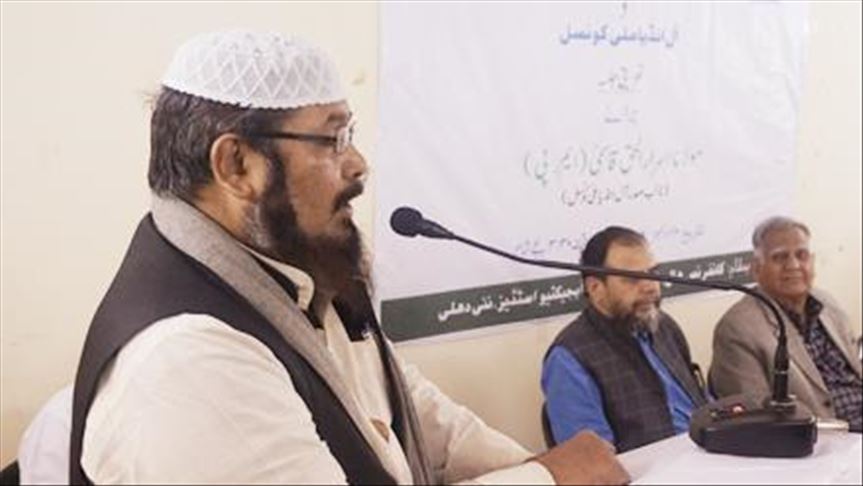
Abdul Hameed Nomani, General secretary of the All India Muslim Majlis Mushawarat
New Delhi:
Celebrating country’s 74th Independence Day on Aug. 15, under the shadow of recent communal riots in capital Delhi and anti-citizenship law stir, many Indian scholars have called for recalling the role of Muslims during India’s freedom struggle.
Author and scholar Waseem Ahmed Saeed said over time, the contribution of Muslim freedom fighters in India has been forgotten.
In his book titled Kala Pani: Gumnam Mujahideen-e-Azadi 1857, Saeed said from the 1757 Battle of Plassey in Bengal, Tipu Sultan’s Seringapatam battle in South India in 1799 to the massive revolt in 1857 against the British was led by Muslims.
Saeed, who has authored a book on the subject in the Urdu language, said while India’s official history celebrates Udham Singh for killing Michael O’Dwyer, the lieutenant governor of Punjab in India, in revenge for the 1919 Jallianwala Bagh massacre in Amritsar, it does not recognize Sher Ali Afridi, who killed Lord Mayo, British viceroy and governor-general of India from 1869-1872.
Speaking to Anadolu Agency, many Muslim scholars and historians said the role of their ancestors in the freedom struggle has been overlooked.
According to Syed Jamaluddin, director of historical research projects at the Institute of Objective Studies, a think tank, there is no adequate coverage of the role of the Indian Muslims in the national movement.
“The contribution of Muslim revolutionaries, poets and writers is not known today. Similarly, little is known about the contribution of people like Ali Musliyar and Bi-Amma, who made significant contributions,” he told Anadolu Agency. He is currently editing a book on the Muslim role in India’s freedom struggle.
Saeed recalled in his book that it was the ruler of Bengal Siraj-ud-Daulah, who first fought and lost to the British in 1757, which became a cornerstone for the imperial power to colonize India.
He said that even after losing this battle, there were many rebellions led by Muslims until 1850.
Muslim revolts against British
Jamaluddin mentions the Fakir-Sannyasi rebellion, a joint revolt against colonial power by Muslim and Hindu ascetics, for preventing them from collecting religious tax from locals. It started in 1764 and continued until the 1850. He said the rebellion even spread its wings to southern India’s Madras (now Chennai) presidency.
But most prominent and popular movements that hit the British hard in the early 20th century in the subcontinent was the Reshmi-Rumaal Tehreek (Silk Cloth Movement) led by Maulana Ubaidullah Sindhi with the help of Turkey, Germany, and Afghanistan.
Speaking to Anadolu Agency, a prominent Muslim scholar Abdul Hameed Nomani said that despite his best efforts, Sindhi’s contribution has not been included in the official Indian history.
Along with an Indian prince Raja Mahender Pratap Singh, Sindhi, and Maulvi Barkatullah had established the exiled government of India in Afghanistan in 1915.
“The movement picked up around the same time when Subhash Chandra Bose [renowned Indian freedom fighter] was allying with Germany and Japan to oust the British from India. While Bose is celebrated nationwide, not much is known about Sindhi and his supporters,” said Nomani, who is also the general secretary of the All India Muslim Majlis Mushawarat, an umbrella group of prominent Muslim organizations.
It was named Silk Cloth Movement because Sindhi and other leaders used to send letters and directions to their cadres written on silk cloth.
Later, Sindhi went to Turkey and joined the country’s national struggle.
“The movement led to the formation of Indo-German-Turkish mission to encourage local tribes on the borders of Afghanistan to attack Britishers and their interests. While the key figures were arrested by the British, the movement remains a key event in the freedom history,” he added.
He said even though in 2011 the government released a postal stamp to commemorate Sindhi’s movement, there has been no vigor to record the sacrifice of Sindhi and his allies Mahmud Hasan and Husayn Ahmad.
“Only passing reference has been made about the role of Muslims in India’s national struggle,” rued Nomani.
source: http://www.aa.com.tr / Anadolu Agency / by Cheena Kapoor / August 14th, 2020