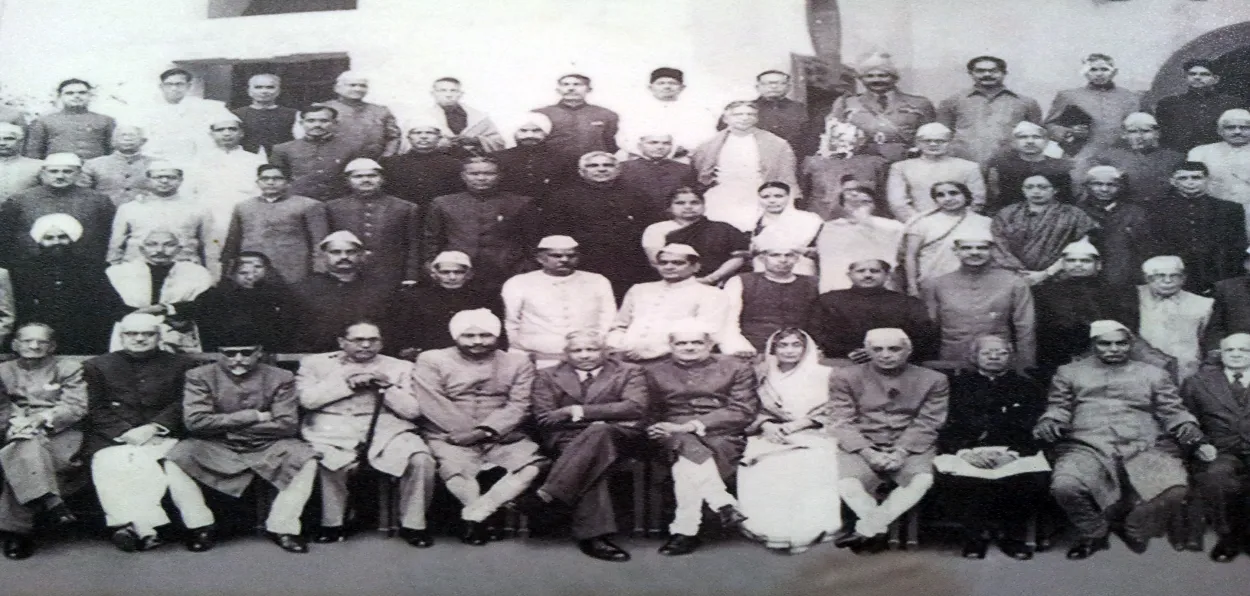
When Muslim leaders reaffirmed the Idea of India in the Constituent Assembly

INDIA:

Members of the Constituent Assembly

“We are Indians first and we are all Indians and will remain Indians. We shall fight for the honour and glory of India and we shall die for it. (Applause). We shall stand united. There will be no divisions among Indians. United we stand; divided we fall. Therefore we do not want a reservation. It means division. I ask the members of the majority community who are present here today: Will you allow us to stand on our legs? Will you allow us to be a part and parcel of the nation? Will you allow us to be an equal partner with you? Will you allow us to march shoulder to shoulder with you? Will you allow us to share your sorrows grief and joy? If you do, then for god’s sake keep your hands off reservation for the Muslim community.” Tajamul Hussain of Patna told this to the members of the Constituent Assembly in 1949.

The speech was a befitting reply to the erstwhile rulers of India, the British crown, and the Muslim League. When the Constituent Assembly was formed, in 1946, to frame a constitution of India, the whole exercise was criticised by the colonial rulers and Muslim League alike.

The case made against the assembly was that it was not a representative body of all Indians. To some extent, the allegation was true. The elections were not held under the Universal Adult Franchise; members were not directly elected. Moreover, seats for Muslims, Sikhs, Parsis, Anglo-Indians, Europeans, and Princely States were fixed. Muslims would vote among Muslim candidates, Hindus among Hindu candidates, and so on.
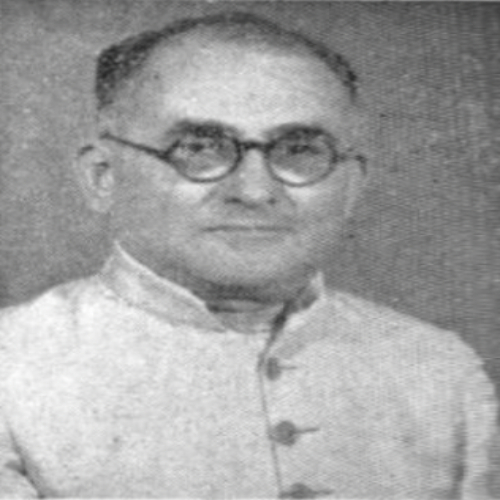
Tajamul Hussain

To make matters worse for the nationalists, the British-backed Muslim League won 73 out of 78 seats reserved for Muslims even when Congress secured 205 of the total 296 seats. Jinnah-led League boycotted the assembly and thus claimed that the Constituent Assembly was a Hindu body where only 4 Muslims (all Congress members) were present. The British Prime Minister Winston Churchill also called the assembly a ‘Hindu body’.

The British government tried to paint the Indian Constituent Assembly as anti-Muslim. It said, “Should a constitution come to be framed by a Constituent Assembly in which a large section of the Indian population had not been represented, the British Government could not, of course, contemplate…..forcing such a constitution upon any unwilling parts of the country.” 

Sir Stafford Cripps also expressed a similar opinion when the Muslim League boycotted the assembly. The argument was far from the truth. It was a boycott only by the Muslim League and not by the Muslim community.

In July 1947 after the Partition was finalised at least 27 Muslim members, originally elected on the Muslim League tickets, joined the assembly. They decided not to go to Pakistan and Indian leaders welcomed them.

Naziruddin Ahmad, a former Muslim League member, while joining the assembly declared, “There was no need for any doubt whatsoever regarding the fact that we have come here as loyal and law-abiding citizens of India.” Interestingly one such Muslim League member was later included in a seven-member drafting committee chaired by Dr. Bhim Rao Ambedkar.
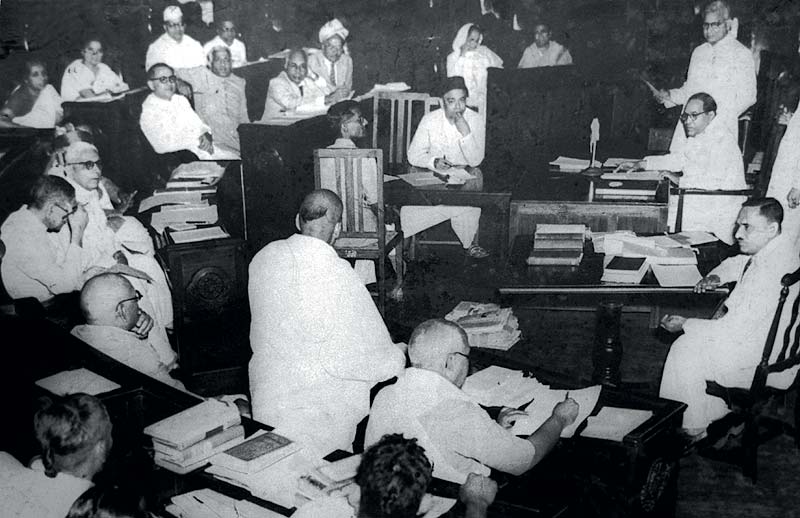
Constituent Assembly in session

Several Muslim members like Maulana Abul Kalam Azad, Mohammed Sadulla, Hasrat Mohani, B. H. Zaidi, B. Pocker Sahib Bahadur, etc. played significant parts in the deliberations of the Constituent Assembly. They were members of several committees, moved amendments, brought resolutions, and debated matters of importance. These members made their presence, and in turn of Muslims, felt in the assembly.

Muslim members raised their voices for the integration of the country. The shock of partition was great and they wanted to give a message that Muslims are as much citizens of India as other community members are. 

Hasrat Mohani told the assembly, “Why do you call the Muslims a minority? They can be termed as a minority only when they function as a communal body. So long as Muslims were in the Muslim League, they were in a minority. But if they elect to form a political party without any restriction leaving it open to any community, then you should remember that whenever political parties are formed, the Muslims would fight by forming coalitions. Therefore, I say that Muslims would not like to be called a minority. To say that Muslims are in the minority is to insult them. I cannot tolerate this even for a moment.” 

B. H. Zaidi, who represented Rampur, also argued against any special treatment for Muslims. He felt that it would further alienate Muslims from the mainstream. In the assembly, he said, “There has been no occasion in the history of India when the Hindus have persecuted a minority” and affirmative action should be based on economic disparity. He said, “There is one minority in this country which has always been, and which is existing in every country, and will go on existing, and that is the minority of the good and the just, of the people who are humane and liberal-minded, and who work for the regeneration of mankind and the progress of humanity. There is that minority today in this country, and to that minority Sardar Patel and the Prime Minister of India, and you sir, who adorn the Chair, belong, and the Members of this House.”

In the Constituent Assembly Muslims contested the ideas of minority, reservations, and exceptionalism on different occasions. There is no denying that a few Muslims under the leadership of Mohammad Ali Jinnah partitioned India, but it is also a fact that several Muslims played their roles in making India a democratic republic. 

source: http://www.awazthevoice.in / Awaz, The Voice / Home> Stories / by Saquib Salim / January 25th, 2024

Four J&K cops get Shaurya Chakra

INDIA:

In total, the President approved 80 gallantry awards, including six Kirti Chakra and 16 Shaurya Chakra on the eve of the 75th Republic Day.

Havildar Abdul Majid has been awarded Kirti Chakra posthumously (HT File)

Four Jammu and Kashmir Police personnel have secured Shaurya Chkara, according to a list approved by President Droupadi Murmu on Thursday.

In total, the President approved 80 gallantry awards, including six Kirti Chakra and 16 Shaurya Chakra on the eve of the 75th Republic Day. Out of the six Kirti Chakra, three were conferred posthumously, and of the 16 Shaurya Chakra, two posthumously.

The Kirti Chakra is India’s second highest peacetime gallantry award after Ashok Chakra. Shaurya Chakra is the country’s third-highest peacetime gallantry award.

Jammu and Kashmir Police personnel Mohan Lal, Amit Raina, Faroz Ahmad Dar and Varun Singh have also been awarded the Shaurya Chakra.

“A proud moment for @JmuKmrPolice! DySP Mohan Lal, ASI Amit Raina, SI Faroz Ahmad Dar, Constable Varun Singh, received Shaurya Chakras from the Hon’ble President of India. I salute the awardees for valiantly performing their duties & fearlessly combating terrorism & other crimes,” lieutenant governor Manoj Sinha said in a post X, formerly Twitter.

Havildar Abdul Majid of the Parachute Regiment’s ninth battalion (special forces), who was killed during an encounter in November last year, has been conferred Kirti Chakra posthumously.

Majid, who hails from Poonch, was among the five soldiers, that included two captains, who lost their lives during the encounter in jungles of Kalakote in Rajouri district on November 22 and 23.

72 gallantry medals to J&K Police, highest among state forces

In total, Jammu and Kashmir Police have secured 72 gallantry medals on the Republic Day.

The officers were awarded for their meritorious work and leading anti-militancy operations and maintaining law-and-order situation under tough circumstance.

According to details available, the list includes Mohammad Rafee Rather, Dy SP; Shammi Kumar, Dy SP; Zakir Hussain, selection grade constable; Ishfaq Ahmad, inspector; Muzaffer Ahmad Bhat, head constable; Sajad Ahmad Malik, Dy SP; Sukh Dev, sub-inspector; Manzoor Hussain Peer, HC; Javaid Ahmad Chopan, HC; Azad Ahmad Bhat, selection grade constable; Farooq Ahmad Bhat, follower; Qazi Shamas-Ul-Muzaffar Amin, Dy SP; Mohinder Singh, ASI; Naseer Ahmad, SgCT; Mohammad Altaf Baghat, SgCT; Tanushree,SP; Muzaffar Ahmad, HC; Mohmad Hussain Sofi, CT; Mukesh Kumar, CT; Rohit Kumar, Dy SP; Mohammad Ashrif, Dy SP; Amit Raina, ASI; Nazir Ahmad, HC; Sudhanshu Verma, IPS SP; Mudasir Bashir Sheergojreey, HC; Mohan Lal, Dy SP; Tariq Ahmad Laloo, ASI; Javid Ahmad Lone, SI; Elyas Ahmad Khatana, SgCT; Yogesh Singh, SgCT; Mohammad Saleem Dar, CT; Aqib Bashir Dar, CT; Irfan Majeed Naik, CT; Faizan Ali, Dy SP; Aftab Ahmad, SgCT; Mudasir Ahmad Malik, CT; Sajad Ahmad Bhat, CT; Rakesh Kumar Singh, probationary sub inspector; Irfan Ahmad Bhat, CT; Aftab Ahmad, SgCT; 1st BAR Dilawar Hassan Magray, SgCT; Shabir Ahmad, SgCT; Mansoor Ahmad Sheikh, CT; Yasir Rashid Bhat, inspector; Mushtaq Ahmad Wani, CT; Abdul Rahman Khan; Farooq Ahmad Awan; Mumtaz Ali, inspector, Farooq Ahmad Awan, HC; Mohammad Ayaz, HC; Aijaz Ahmad Sheikh, CT; Sumit Kumar Sharma, Dy SP; Amit Raina, ASI; Farooq Ahmad Awan, HC; Aijaz Ahmad Khan, HC; Waseem Sulaman Yatoo, SgCT; Omer Hussain Wada, HC; Ghulam Nabi Bhat, CT; Mohmad Maqsood Lone, HC; Azad Ahmad Bhat, SgCT; Zafar Mahdi, Dy SP; Mohd Ashraf Sheikh, SgCT; Mohammad Yousif, SSP; Parmeet Singh, ASI; Ishtaq Ahmed Bhat, CT; Nissar Ahmad Darzi, Dy SP; Azim Iqbal, inspector; Danish Allahi Rather, SgCT; Afaq Ali Dewani, HC; Rajan Kumar, HC; Sajad Ahmad Talee, CT and Mohd Shafi, CT.

Kashmir inspector general of police VK Birdi congratulated the officers.

“IGP Kashmir Shri V K Birdi #congratulates the officers & jawans of J&K Police who have been #awarded with 72 #Gallantry Medals this #RepublicDay eve. Matter of #pride for J&K Police,” police wrote on its official handle on X.

source: http://www.hindustantimes.com / Hindustan Times / Home> News> Cities> Chandigarh / by HTC, Srinagar / January 26th, 2024

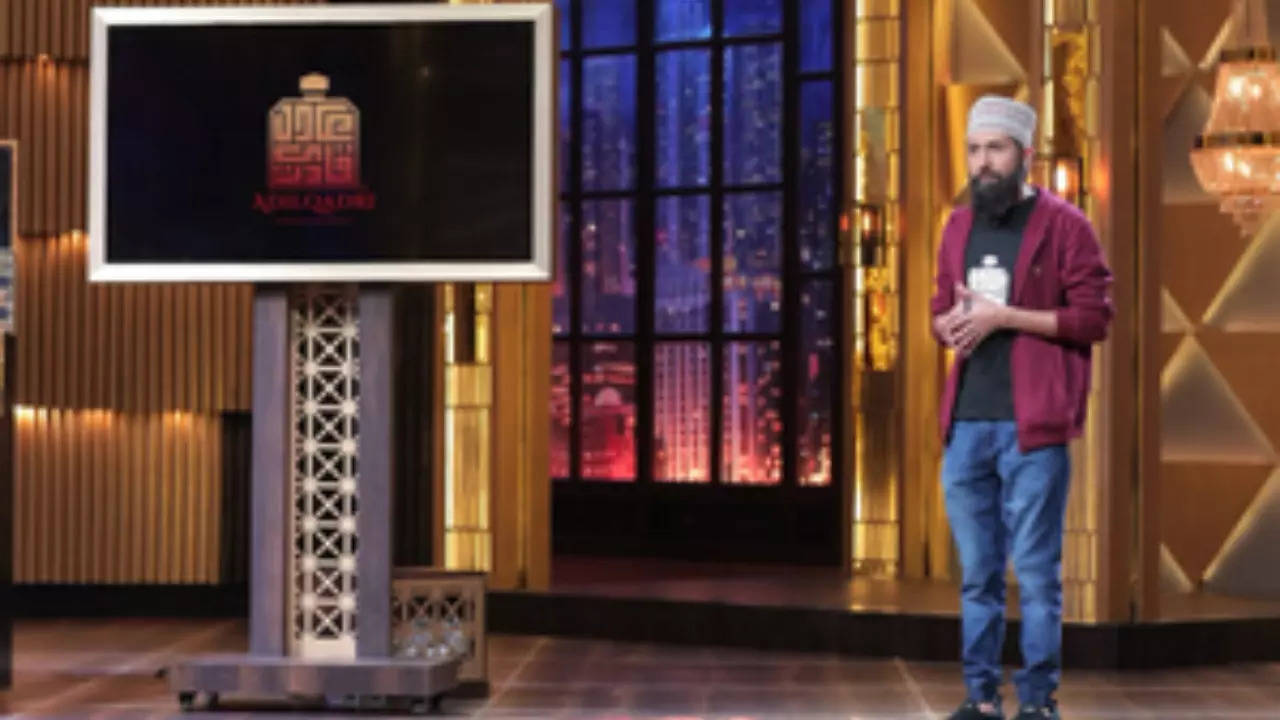
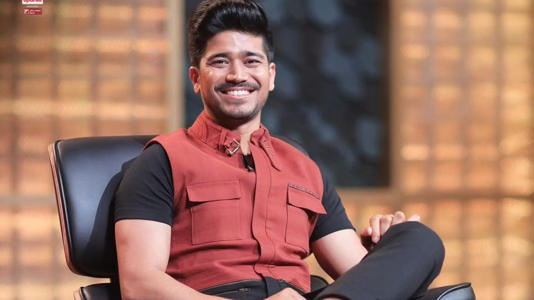
Azhar Iqubal says fame was a big reason to take up ‘Shark Tank India’

Azhar will be seen as one of the ‘sharks’ on Shark Tank India 3. / Azhar Iqubal says fame was a big reason to take up ‘Shark Tank India’© Provided by India Today

In Short

  • Inshorts CEO Azhar Iqubal speaks to IndiaToday.in about joining the latest season of ‘Shark Tank India.’
  • Azhar is seen as one of the 12 ‘sharks’ on the popular show.
  • Shark Tank India airs on SonyTV and SonyLIV.


The latest season of Shark Tank India will see Inshorts CEO Azhar Iqubal taking up charge as a ‘shark’. He would be one of the 12 leaders who would be picking up upcoming businesses to mentor. In a chat with IndiaToday.in, Iqubal shared how he had been inspired by many entrepreneurs while he was trying to build his career, and hopes to do the same with this show. He also said that fame was one of the primary reasons behind saying yes to ‘Shark Tank.’

Azhar Iqubal on joining Shark Tank India 3

“Shark Tank India takes entrepreneurship to masses. I have been inspired by many business people when I started out. I am a college dropout and if I can even give the confidence to someone to take that bet, it would be an achievement for me,” he shared.

Azhar Iqubal further added that he has followed the previous seasons, sometimes even on repeat: “I still remember the dialogues,” he added with a laugh. The entrepreneur also revealed that it was his ‘idea’ to take their business to Shark Tank India , and hence it was him who landed on the stage, instead of his co-founder.

When asked about his decision to drop out of IIT and start his business, Azhar Iqubal shared that his father was earning Rs 25k then. And he knew that even if he doesn’t complete college, he would get a job as a teacher for aspirants with double the salary: “I knew I had that backup so I could play that shot. I could lead a better lifestyle even if things didn’t work out. I decided to do business because I wanted to earn big. I realised that everyone rich in the country is an entrepreneur and I wanted the same for me.”

The previous ‘sharks’ have always spoken about how they became popular after the show. When asked if that was the reason he decided to be on the show, Azhar Iqubal laughed, “It was a big reason and I think every person wants that. Money, power, and fame is everything one wants, and enjoys. And if you are getting fame for something good, nothing better than that. I would be lying if I said it was not important.”

‘My mother shared that after being 10 years in Business …’

The business leader went on to recall a sweet moment where his mother told him how he has finally gained ‘recognition’ after so many years of being in business: “After the promos of the show dropped, people in my hometown started calling her. My mother shared that after 10 years of being an entrepreneur, people have finally recognised me and know that I have done something.”

Talking about himself, the businessman shared how he is a ‘number-driven’ man. Even when deciding to invest, Iqubal shared that he asks for numbers as he’s quite ‘objective’ and doesn’t take emotional decisions. 

On a final note, the businessman shared that Shark Tank India 3 will see a great mix of old and new sharks, and hence, there would be a lot of changed dynamics: “Also, you would see a lot of pitchers from small towns on the show, which will be quite inspiring and entertaining for everyone,” Azhar Iqubal concluded.

Shark Tank India airs on SonyTV and SonyLIV.

source: http://www.indiatoday.in / India Today / Home> News> Televison> Reality TV / by Sana Farzeen, Mumbai / January 23rd, 2024

Adil Qadri’s ‘attar’ concept creates waves in ‘Shark Tank India 3’

Bilimora, GUJARAT:

Adil Qadri's 'Attar' Concept Makes Waves on 'Shark Tank India 3' | - Times  of India

Mumbai (IANS) :

The season three of the business reality show ‘Shark Tank India’ will see a self-made entrepreneur Adil Qadri, who has introduced the Sharks to a desi way of using attars.

Despite failing school in fourth grade due to asthma, Adil’s business has processed a whopping 10 lakh orders, averaging 3,000 per day.

From a software repairer to an SEO expert, he’s now the face of a brand that’s putting Bilimora on the map. Indeed, Adil proceeded to establish a business, defying the odds posed by his asthma.

His brand ‘ADILQADRI’ introduces a new way of using attars, emphasising long-lasting effects and premium packaging. However, Rs 6 crore debt sparks conflict among the Sharks.

Talking about his experience on ‘Shark Tank India’, Adil Qadri (Founder and CEO) said: “Appearing on Shark Tank India with our brand ADILQADRI was a whirlwind, a roller coaster of emotions and opportunities. The intense pitch sharpened my ability to face sharks’ questions and honed my strategic thinking.”

“Their feedback provided invaluable insights for refining my business model. The experience underscored the importance of composure in high-stakes situations, molding me into a resilient and articulate entrepreneur,” he added.

‘Shark Tank India 3’ will soon air on Sony LIV.

–IANS / sp/prw

source: http://www.bhaskarlive.in / Bhaskar Live / Home> Entertainment / by IANS / January 18th, 2024

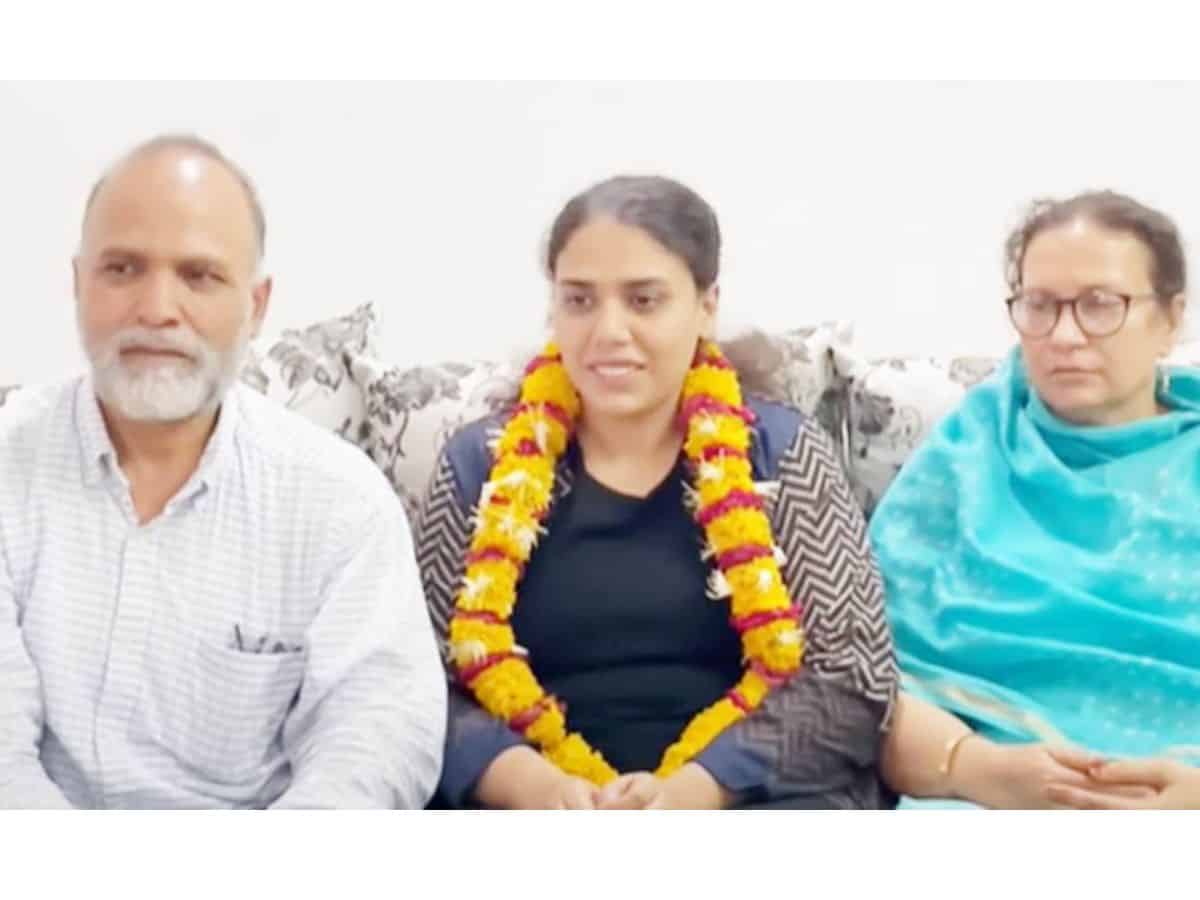
First Muslim woman IPS officer for Telangana to assume charge soon

MADHYA PRADESH / Hyderabad, TELANGANA:

Ayesha Fatima will be the first Muslim woman police officer of IPS cadre for Telangana state.

Hyderabad:

The Centre has allocated additional 10 IPS officers to Telangana state. This development came following an appeal made by chief minister Revanth Reddy to Union Home Minister Amit Shah during their maiden meeting in New Delhi earlier this month.

Ayesha Fatima is among the new IPS officials for Telangana. Ayesha is the 2022-batch Muslim woman from Madhya Pradesh who secured 184th rank in the UPSC examination.

Ayesha pursued her education at Vindhyachal School in Dewas, which falls in the Malwa region of the state, until 11th grade. She completed 12th grade at Model Public School. Her father, Naziruddin Sheikh, is a government teacher, and her mother serves as a school director.

Ayesha, the second daughter in her family, excelled in competitive exams like JEE, becoming an electrical engineer after graduating from SGSITS college, Indore in 2015.

Despite her engineering accomplishments, Ayesha felt the urge to contribute to society and embarked on her UPSC journey in 2019. After facing initial setbacks, she finally achieved long-awaited success.

Ayesha Fatima will be the first Muslim woman police official of IPS cadre for the state.

Notably, Telangana CM told Amit Shah only 76 IPS officers were allotted to Telangana during the bifurcation of Andhra Pradesh.  The CM had requested the Home Minister to sanction 29 additional IPS posts to the state in view of creation of new districts and for supervision of various departments.

source: http://www.siasat.com / The Siasat Daily / Home> News> Telangana / by Irfan Mohammed / January 17th, 2024

Spirit of Freedom: Habeeb Yusuf Marfani donated everything he had to Netaji’s INA

Dhoraji, SAURASHTRA / RANGOON:

Spirit of Freedom: Habeeb Yusuf Marfani donated everything he had to Netaji’s INA
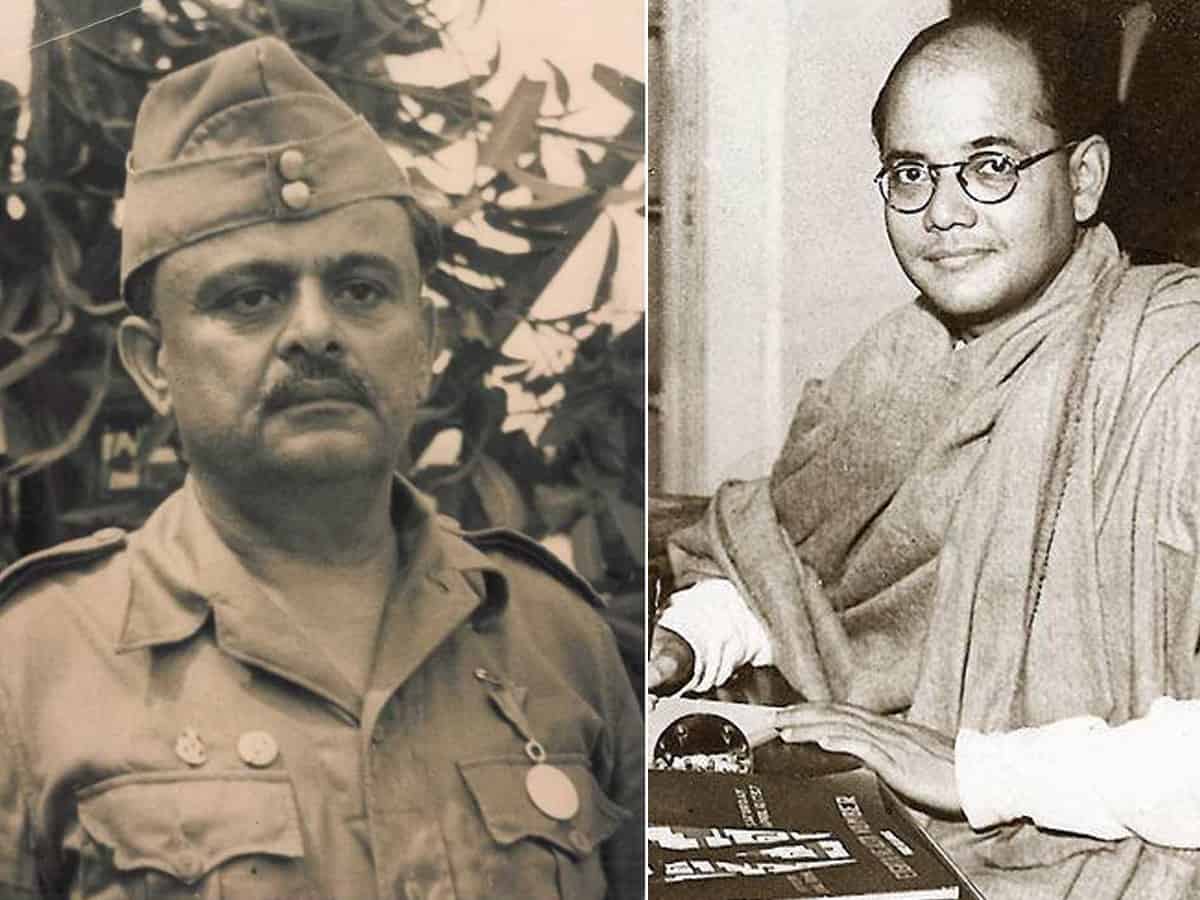
(Left) Habeeb Yusuf Marfani (Right) Subhas Chandra Bose

When Netaji Subhash Chandra Bose launched his fight for the freedom of India from British rule, several likeminded people offered him their whole hearted support and help. But these people and their sacrifices have now been largely forgotten. One such man was Abdul Habeeb Yusuf Marfani, a wealthy businessman who donated all of his fortune totalling one crore and three lakh rupees, to the Indian National Army (INA). Back then it was a princely sum and it helped the INA immensely.

Marfani hailed from the town of Dhoraji in Saurashtra but later the family settled in Rangoon where they set up a flourishing and diverse range of businesses. During the Second World War, When Netaji took charge of the Indian National Army and revived its flagging strength Marfani was the first to come forward to donate a massive amount to the leader for strengthening his army. Netaji honoured him by awarding the Sevak-e Hind medal.

He was the first person who was presented with this medal by Netaji himself. Marfani’s donation was in the form of cash as well as jewellery and property deeds. Reportedly Netaji was very moved by the patriotism and generosity displayed by Marfani. He declared: “I feel very happy about what Seth Marfani has done for the liberation movement. It is extremely commendable.”

Later Netaji realised that after the donation Marfani had become a pauper. So he asked Marfani what he wanted in return for donating his entire property. Marfani replied: “Give me the uniform of a soldier of the INA. I have donated my valuables. Now allow me to give my blood. I only want freedom for India and nothing else.”

His grand gesture inspired many others to come forward with donations. Several of the donations came from poor people like farmers, daily wage earners and coolies too. They donated whatever they could even if it was a few meagre rupees. In fact, Netaji was caught in two minds about whether it was right to take away the small earnings of these poor people. But at that stage one of his aides told him that he should not reject their sentiment or they will feel hurt and therefore Netaji obliged.

The qualities of generosity and sacrifice are held in high esteem in all cultures throughout the world. All people recognise that it takes a big heart and a great soul to be so generous. Whenever Netaji and his deeds are remembered, it is important to also remember the deeds of the men who stood behind the scenes and supported the freedom struggle with everything that they had.

source: http://www.siasat.com / The Siasat Daily / Home> Featured News> by Abhijit Sen Gupta / January 22nd, 2024

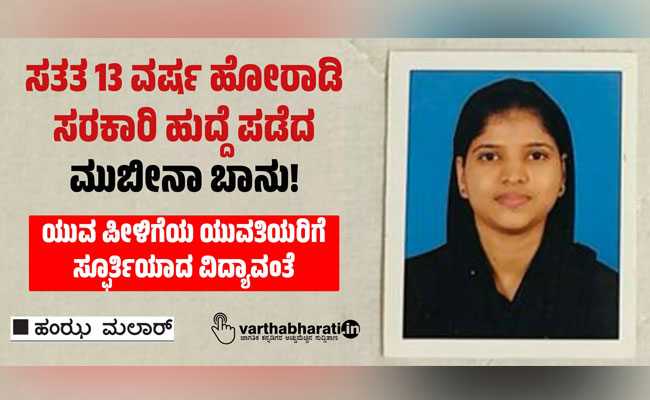
Meet Mangaluru’s Mubeena Banu who secured government job after 13-year-long legal battle

Hokkodgoli (Arambodi Village, Belthangady Taluk) Mangaluru, KARNATAKA:

Mangaluru:

In a remarkable tale of perseverance and determination, Mubeena Banu, a Muslim woman from Hokkodigoli in Arambodi village, Belthangady taluk, has secured a government post after a 13-year-long legal battle.

Mubeena Banu, the tenth child of Muhammad H, a beedi contractor, and D. Zainaba, pursued her education in her village from 1st standard to 2nd PUC. She later completed her graduation from a private college in Moodbidri and earned her post-graduation (MA) from Mangalore University, Konaje. In 2008, with the aim of fulfilling her parents’ dream, she applied for the post of Supervisor in the Women and Child Welfare Department.

Despite her qualifications, she faced a setback when she was not selected for the post in 2010. Undeterred, Mubeena Banu investigated the reason for her exclusion and discovered a discrepancy in her marks. Her BA degree marks were recorded incorrectly as 71.79% instead of the actual 75.36%. Despite facing resistance from senior officers, Mubeena persisted in her efforts, seeking support from former MLAs Vasant Bangera and Ramanatha Rai.

Having relocated from Mittabailu to Melkar and working as a lecturer in a private educational institution, Mubeena approached Speaker UT Khader for assistance in her final attempt. She filed a complaint with the Lokayukta and approached the Karnataka Administrative Tribunal (KAT). Through persistent efforts, KAT ruled in favor of Mubeena Banu.

On January 10, 2024, the Women and Child Welfare Department issued an appointment order to Mubeena Banu for the position of Supervisor at the Office of Child Development Project Officer, Bantwal Taluk. Mubeena, who initially applied from Arambodi village, is now in Sajipa Muda village of Bantwal taluk with her husband, marking the culmination of her arduous journey.

Reflecting on her journey, Mubeena expressed gratitude to her late father, a social worker who emphasized education, and her mother for their unwavering support. She acknowledged the financial assistance from her parents and husband Ismail Khader during her numerous trips to Bangalore Vidhana Soudha and departmental offices. Mubeena also highlighted the crucial support from Lokayukta officer Amanullah, Speaker UT Khader, and his close assistant Libzat.

In her own words, Mubeena Banu said, “UT Khader always supported my persistence and struggled to get that government post, which I missed due to the mistake on the part of the officials. Maybe it can be said that after he intervened, the path of my struggle became easier.”

source: http://www.english.varthabharati.in / Vartha Bharati / Home> Karavali / by Vartha Bharati / January 22nd, 2024

Irfan Ahmad Khan, Islamic scholar who promoted interfaith ties, dead at 86

Sahranpur, UTTAR PRADESH / Markham (Illinois, Chicago) , U.S.A:

unnamed_291.jpg
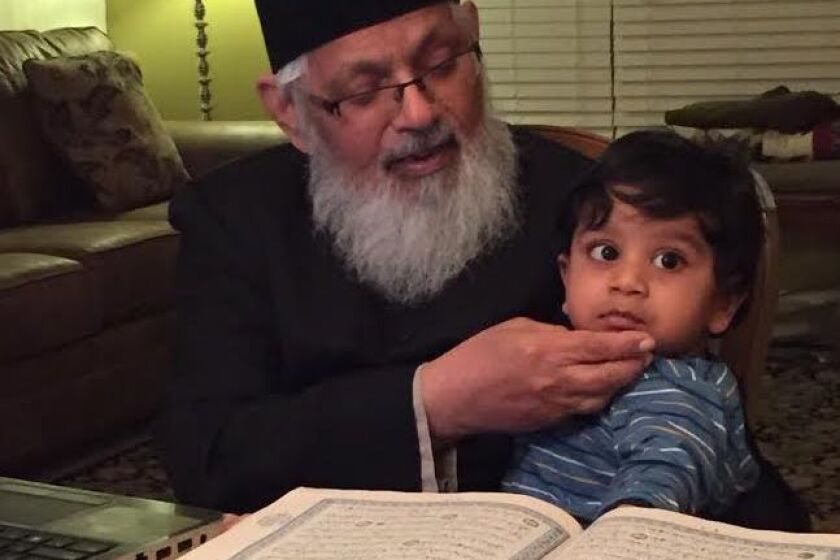
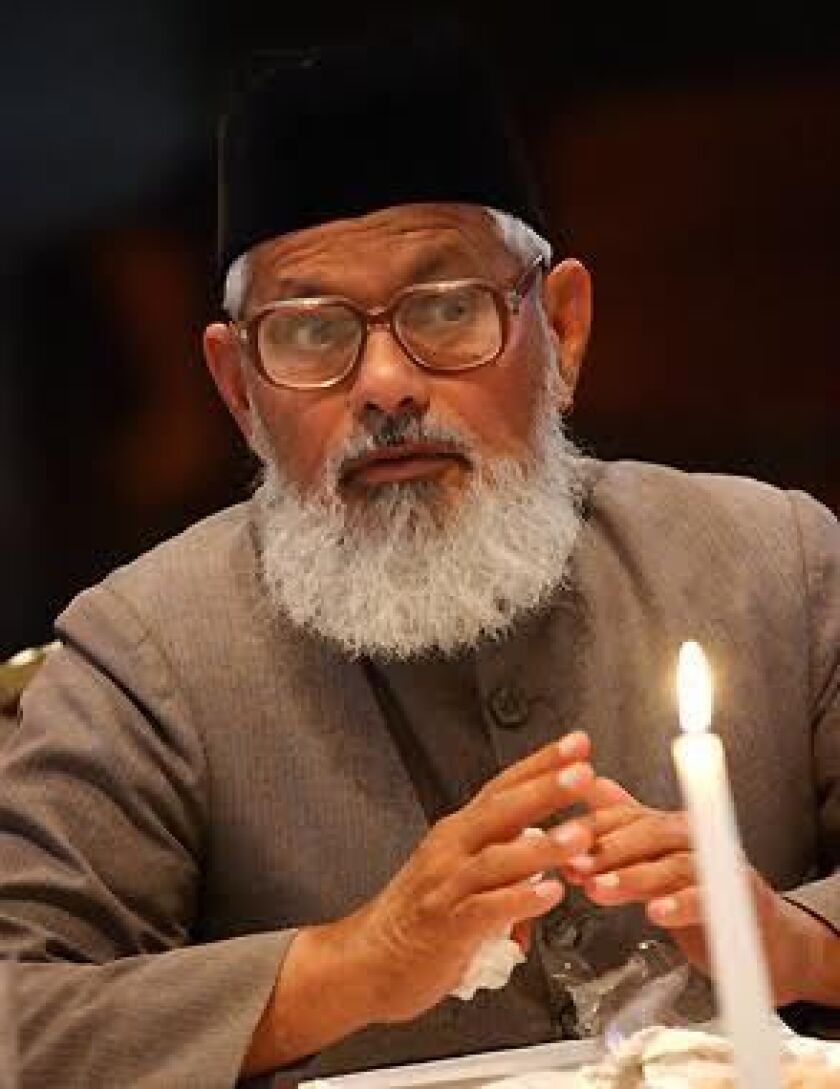
Irfan Ahmad Khan taught many people about the Quran, including his great-grandchild Sulayman Ahmed Ansari. | Provided photo

Irfan Ahmad Khan wrote books, taught college classes, gave lectures and counseled inmates after their release from jail to help people learn about the Quran.

One of the best-known Quranic scholars in Chicago’s South Asian Muslim community, he also worked to promote understanding among different religions through interfaith groups.

“My father’s aim was not for material gain or fame,” said his daughter Humera Hai. “Spiritual peace and harmony was his main aim.”

He would go hours out of his way to drive medicine to a sick person or to resolve disputes, Hai said.

Mr. Khan, 86, who had been having heart problems, died April 3 in Chicago, said his grandson Saeb Ahsan.

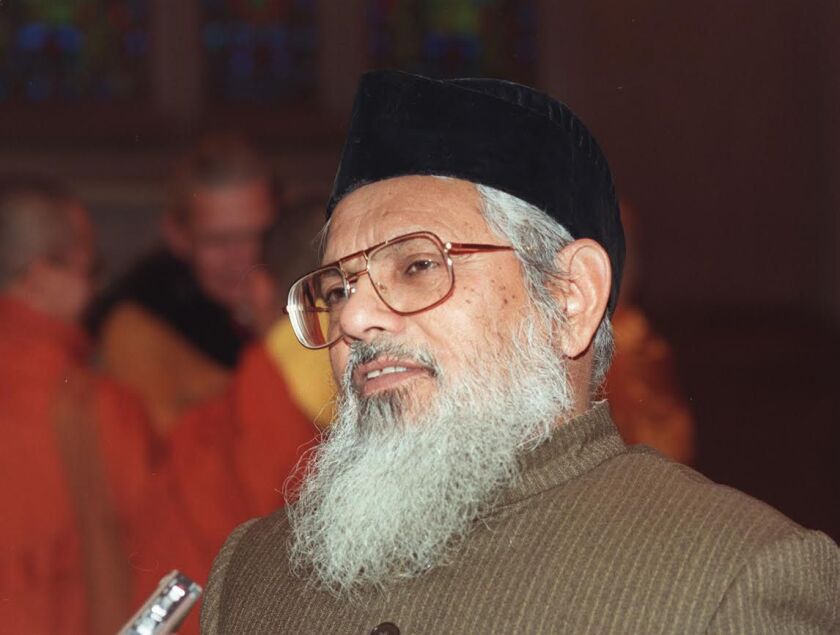
Irfan Ahmad Khan in 1996. | Sun-Times files

Mr. Khan, who lived in Markham, spoke and wrote in English, Urdu, Hindi and Arabic. He also could read and write in Farsi and Latin.

His books included “An Introduction to Understanding the Quran,” “An Exercise in Understanding the Quran” and “Reflections on the Quran.” He also edited a journal on Islamic thought.

He was born in 1931 in British India, in Saharanpur in the state of Uttar Pradesh. His father was a well-to-do merchant and landlord. He expected his son to take a role in the family businesses, but “He wanted to study,” said his daughter.

In 1952, he earned a degree in physical sciences from India’s Aligarh Muslim University and continued his Islamic studies in the city of Rampur. He taught at the Indian university from 1958 to 1973.

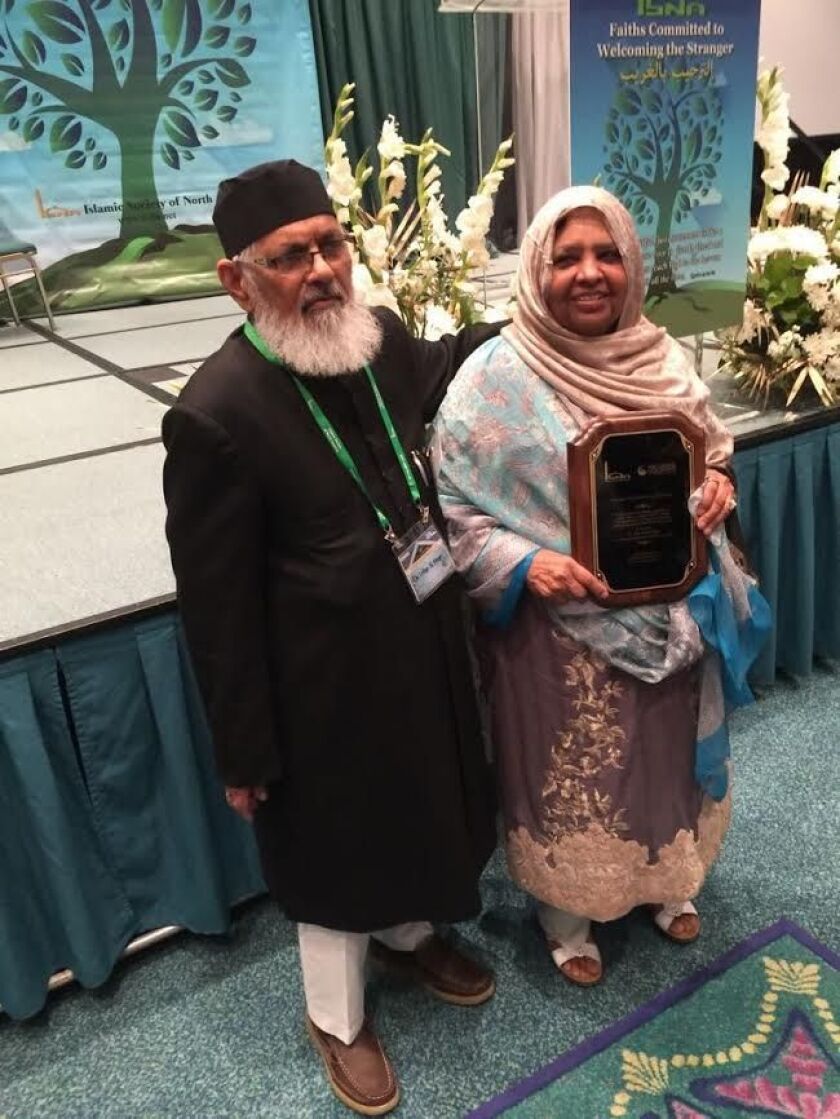
Irfan Ahmad Khan and his wife Shamim. | Provided photo

Mr. Khan married Shamim Akthar Khan in 1957.

“He was always so gentle, so kind,” his wife said.

In 1974, he arrived in Chicago to study at the University of Illinois at Chicago. His wife, who was raising their seven children in India, had to await immigration clearance and wasn’t able to join him full-time until 1981, Hai said. “Both of them struggled” with being apart, their daughter said.

Mr. Khan, who admired the philosophers Immanuel Kant and Rene Descartes, earned a master’s degree in philosophy from UIC in 1977 and a doctorate in philosophy in 1986, according to the university.

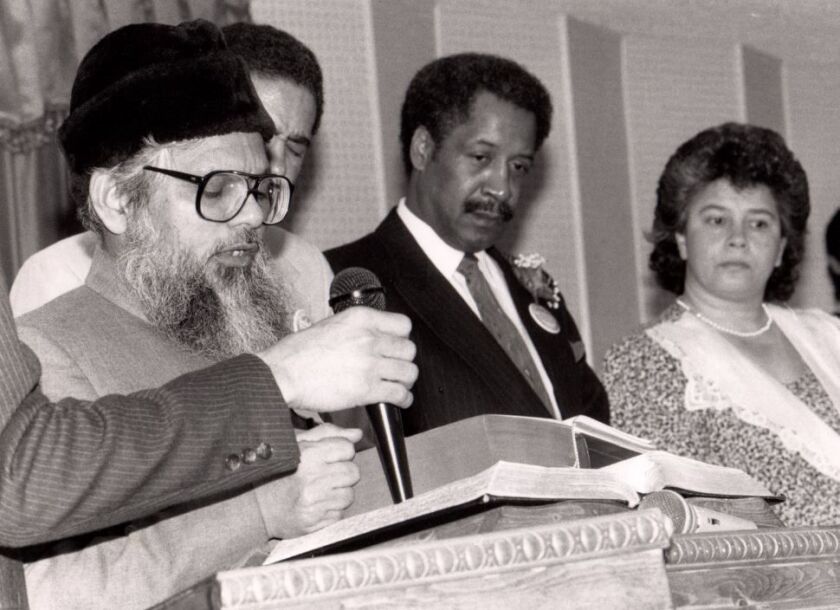
Irfan Ahmad Khan, with then-Mayor Eugene Sawyer in the background. | Provided photo

He taught Islamic philosophy at UIC and lectured at schools including the University of Chicago, the School of the Art Institute of Chicago and the University of Iowa, his family said.

He was founder and president of the World Council of Muslims for Interfaith Relations, an emeritus board member of the Parliament of the World’s Religions, founding president of the Interreligious Engagement Project for the 21st Century and director of the Association for Quranic Understanding.

“His message was that there was a commonality in many faiths — a commitment to justice and fairness,” said Abdullah Mitchell, a lawyer and friend who said Mr. Khan was known for his outreach to the African-American Muslim community.

His lectures were delivered with energy and humor, and he always was approachable, said another friend, Afaq Mujtaba.

Mujtaba said young people in the South Asian Muslim community referred to him as “Uncle,” a term of affection and respect.

When Mujtaba’s mother died, “The way he consoled me, I will remember for the rest of my life,” he said.

Mr. Khan made multiple pilgrimages to Mecca and traveled to educational and interfaith conferences in Asia, Africa, Australia and Europe.

Islamic scholar Irfan Ahmad Khan worked to build relationships with other religions and interfaith groups. | Provided photo

His grandson said Mr. Khan would tell him, “Develop your relationship with God” and “Keep your studies’ focus; don’t necessarily get married too early.”

He enjoyed Red Lobster, Reza’s Restaurant on Ontario Street and anything that tasted of mango, his grandson said. Every morning, he ate toast and drank strong English breakfast tea with milk and lots of sugar. He liked it in a china cup and saucer, the hotter the better.

Once, when a student brought him tea, he removed his topi — a traditional hat — and placed it atop the drink like a tea cozy to keep it warm. But Mr. Khan forgot where the tea was. So the student brought him a second cup. “He picked up his hat,” said his son Farhan, “and he found the other tea.”

Irfan Ahmad Khan. | Provided photo

He always made sure his sherwani — a formal, knee-length coat — was pressed and crisp.

Though he usually focused on philosophical questions and lectures, his family found it endearing when Mr. Khan would catch a glimpse of an Indian or Pakistani soap opera on TV and then comment, with serious deliberation, on the motivations of the characters.

“This person is not being honest,” he’d say. “They are trying to take advantage.”

He is also survived by daughters Nusba Parveen, Husna Ahmad, Bushra Islam and Saba Khan, son Salman, brothers Ehtasham, Afzal, Iqbal and Rehan, sisters Ayesha Jamal and Rehana Bilquis and 21 grandchildren and two great-grandchildren. Services have been held.

source: http://www.chicago.suntimes.com / Chicago Sun*Times / Home> Obituaries> News> Religion / by Maureen O’Donnell / April 14th, 2018

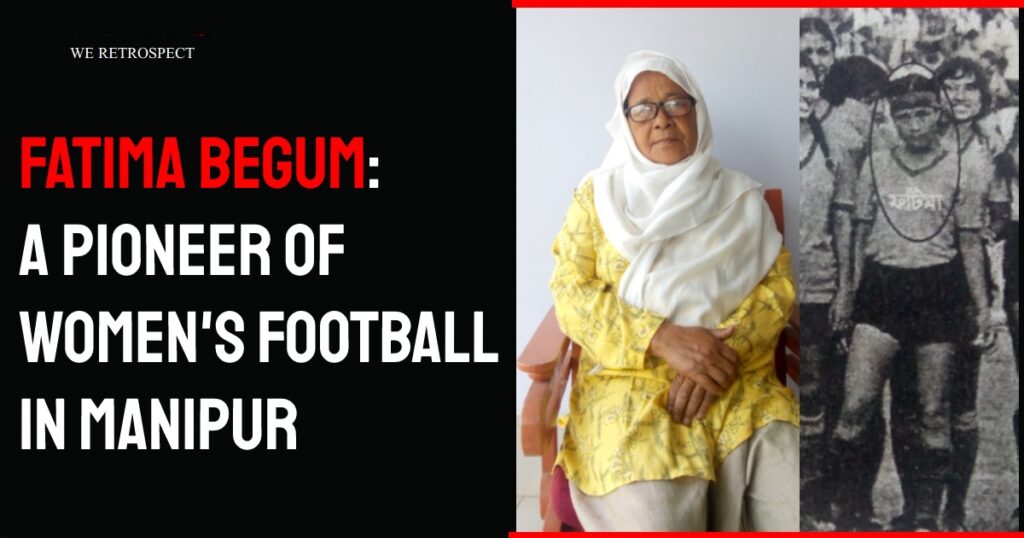
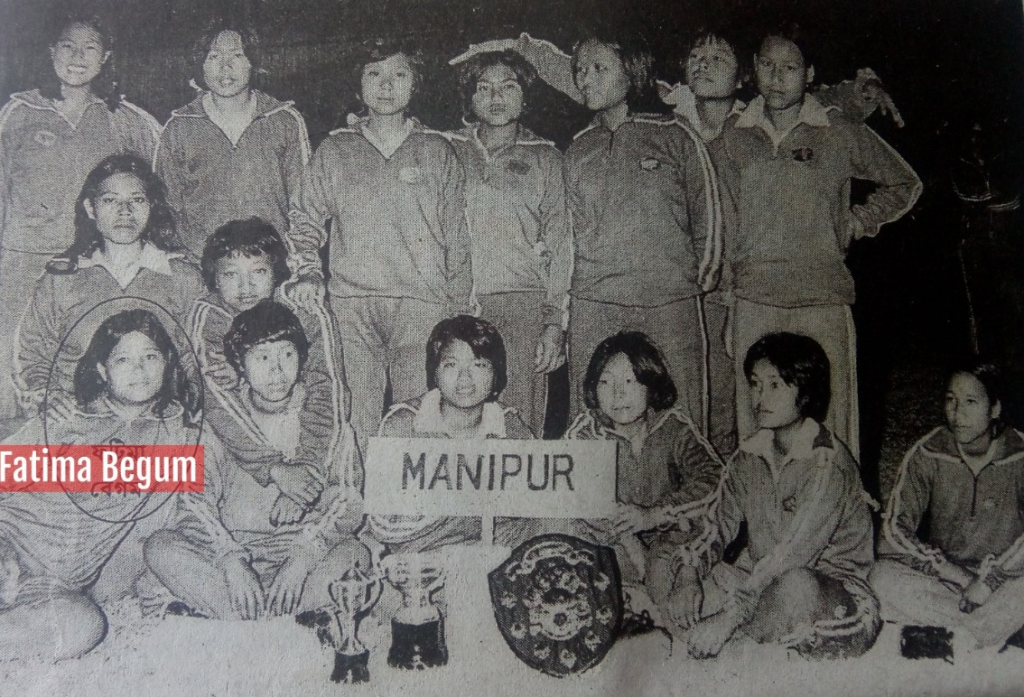
Fatima Begum: A Pioneer of Women’s Football in Manipur

Kshetri Awang Leikai (Porompat sub-division of Imphal East District), MANIPUR:

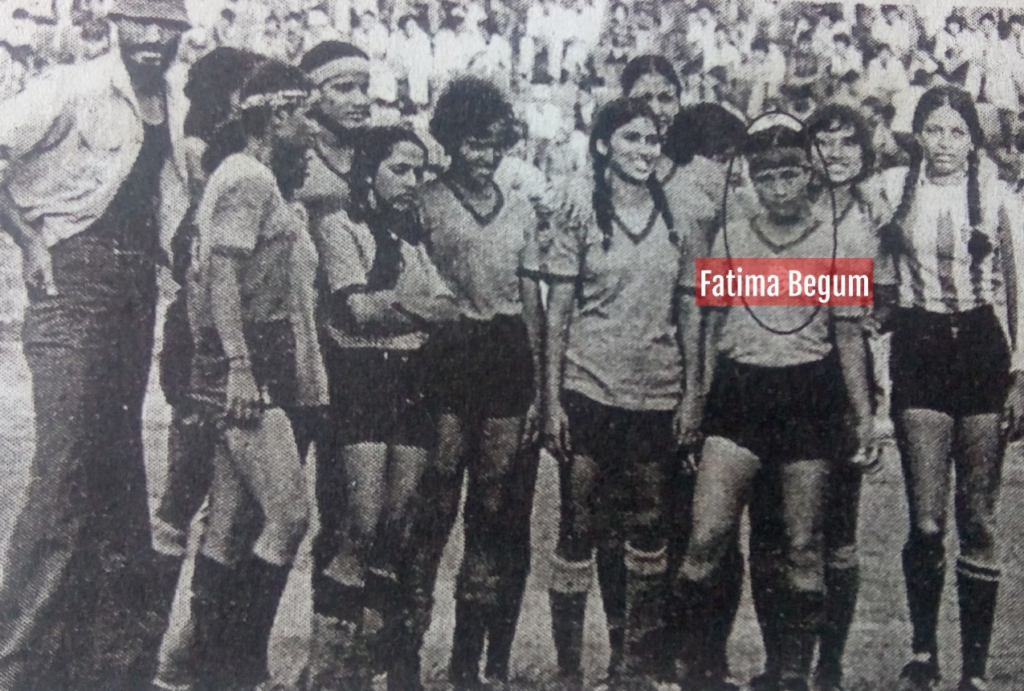
Fatima Begum, a pioneer of women’s football in Manipur, started playing football since her childhood days. She started playing football in a small playground in Kshetrigao among boys. They used to stuff torn footballs with clothes and sometimes even stole nobab (pomelo) and played with it. 

From State to International Level

When the women football tournament first started in Manipur, she joined the Eastern Sporting Union. She belonged to the first batch of women football players. Back in her days, the government did not spend much money in promoting sports and games in Manipur. She says that generous people like Yambung Nimai who were interested in football helped her buy boots and football. They even provided money for her diet as she could not afford it. She became part of the Manipur team around 1974-75 and also captained the team for three years. After playing at the national level, she was called to Kolkata for a camp. She says, “Amusana, late Chawui, late Bijyalakhsmi and I were called there and that was how we joined the Indian team.” 

At international level, she also played against the England team in Manipur. The match happened in Polo ground. It was a friendly match to raise some funds. She also played against the Nepal team in Kathmandu. Remembering her visit to Kathmandu, she says, “It was the first time I had gone to a foreign country. Earlier we had opportunities but given that we did not have money, I could not go. We always have seven-eight players from Manipur in the Indian team. In our time also, there would be five-six players.”

According to Salam Irene’s book, The Muslims of Manipur, “Fatima Begum of Kshetri Awang Leikai was a member of the India eleven team that played at Bhirt Nagar, Nepal in 1975. She captained the Manipur team that played against the UK football team at Imphal. Fatima was the first Muslim player of the North-east in this discipline.”

Paving Ways for Many

She laughed telling us that she failed the matriculation exam five times. Fatima recollects, “My family’s economic situation was not good. Playing football was very tiring. So, it was hard for me to study. I was not good in studies. Finally, I did clear the matric exam. I did not study much. I did not take much interest in it. Football was always on my mind. I liked sports.” She told us that she also played other sports such as handball, softball and other track sports at national level. According to her, there were not many good women athletes at that time. “I was good at those things,” she says, “so, I got selected.” Having said that, she feels that the situation of women in sports has improved considerably compared to those days. 

During those days, she says that she was the only pangal woman in the football team. After her, there were one or two pangal women who joined the team. She says, “Now, there are many good players. The one from Khutheibam, I do not remember her name. We call her Thoibi. She played in Eastern Sporting Union. There is another one called Bukshera.  Kashmina is also another one.  She is famous now. She lives in mainland India.”

Regarding the support she got from her family and community, she tells us, “My family was alright with me playing sports. The community was reluctant at that time. In the villages, there was purdah system. They did not like the clothes we were wearing while playing. So, they were a little unhappy. But I continued playing football anyway.” When asked about the situation of pangal women in sports these days, she says, “These days, things are much better. Now, we think that we should participate in sports. It is not about looking down at my community. We should also preserve our religion but at the same time, we should also be participating in these things.” Nowadays, she says, there are lots of pangal women in sports such as Judo, Taekwondo and racing. 

Experiences and Memories

Regarding her experiences while she was playing football, she says that “at times, we suffered because we had to travel without any reservation on the train in crowded compartments. There would be no place to stand even. On the other hand, there were also times when the whole compartment would be reserved for us. We would sing and play music and enjoy ourselves.” The most pleasant of the memories she says was her visit to Goa. She says, “They are good people. They welcomed us nicely. They played nicely and took care if we got injured. They have discipline.” Regarding her unpleasant experiences she had during her career, she says, “The most unpleasant experience I had was in Kolkata, Bengal. They did not care about us. They would kick on our knees, they would attack our calves. They wanted us to fall down and get injured. They would attack our good players like that.” Furthemore, she says, “Bengalis are a little cunning. They controlled the selection process for the Indian team. So, they selected mostly their people. They are not good people. Goa and Maharashtra are a little better. Manipur and Bengal will always confront in the finals at the national level. They are hard to deal with.”

When we asked her about the goals she scored, remembering her friend Amusana, she said, “When I was in Eastern Sporting Union, Amusana was a stopper. I was the striker.  Her long kick was beautiful. I can run really fast. People say that the horse is running. She would start the ball. I would give the ball back to her and she would immediately do a long kick. There was an understanding between us. The moment I passed the ball to her I would run really fast. And, she would pass it to me. That is how we scored easily. At that time, there were no good women players. I teamed up with her, that was why I could do that. She could do that because I was there. Given that we have two-three good players, we managed that. But it became boring if we scored a lot of goals. If we scored around twelve-thirteen goals, then it became boring.” When asked about the match when she scored the most goals, she says, “I think it was in Pondicherry. I scored seven goals. I was becoming famous that time. I could not score much against Goa and Bengal because they had better players.”

Post-Retirement Days

After she joined the state’s sports department, it became her responsibility to take the teams for matches as a coach.

At times, she would take a friend from another sports department as a manager if others did not agree to go with her. “If the people who work with me on football did not want to go,” she says, “I would take someone from other sports.”

Post her retirement from playing, she has been actively participating in improving sports facilities and helping those interested in football, especially women. She used to support the club KIYC in her locality monetarily. She is also supporting some women players in the locality. She proudly tells us one of the players she supported is playing in KRYPHSA, Naoremthong. She has also sent some Muslim women in Chaoba’s team. Chaoba is her junior, who is now the assistant coach of the Indian team. There are some women also from her locality in Eastern Sporting Union. Fatima is grooming them. 

source: http://www.weretrospect.com / We Retrospect / Home> History / by We Retrospect / January 25th, 2021

Success of Rahmani30 in Manipur NEET-UG 2023 – Date : 10th September 2023 –

MANIPUR :

 parents, guardians and well-wishers of Rahmani30,
Parents, guardians and well-wishers of Rahmani30

“The utmost service to the religion during these times is to educate our youth and upcoming generations with contemporary subjects while keeping their faith firmly established and their self-confidence high; so that, they excel in religion, are adorned with education, have appreciation of hard work and therefore are able to navigate and take confident decisions in their life.” ~Hazrat Maulana Mohammad Sayyid Wali Rahmani Sb.

Getting medical education and becoming a doctor to serve humanity is the dream of millions in the country. However every year only a few thousand fortunate students are able to realize their dream. Paying exorbitant fees of private medical colleges is not possible for everyone and seats are limited in government medical colleges. So the majority of students ended up losing hope in the absence of affordable resources and start considering other alternatives.

Admission in any government medical college is becoming tougher with every passing year with an increasing number of aspirants and limited medical seats. Its competitive exam (NEET) is one of the toughest exams in the country. It requires rigorous preparation.

In such a situation, Rahmani30 founder Hazrat Maulana Md Wali Rahmani Sahab started this program for meritorious students with a vision of providing free education for all and even sponsoring other expenses for those who can’t afford. Alhumdulillah, the vision of Hz. Ml. Md. Wali Rahmani sb ra has transformed into an educational movement, instilling hope & motivation in people who have remained deprived of such opportunities.

It is worth noting that 19 students (boys & girls) had participated in NEET-UG 2023 from Manipur state, in which all the students qualified NEET-UG 2023, while 11 students scored 500+ marks and got Government MBBS seats in Manipur viz. RIMS, JNIMS, CMC and SAHS which is a huge success. Also 7 students scored more than 400+ marks and got 2 BDS Government seats. Of course, this achievement is the guarantee of bright academic future of Rahmani30 students.

 parents, guardians and well-wishers of Rahmani30,
Parents, guardians and well-wishers of Rahmani30

RAHMANI30 – MERIT LIST OF NEET-UG 2023 OBC MEITEI-PANGAL


Sl. No. / State Rank / Roll Number / Name of candidate /Sex / Category NEET Score MBBS Seat @ NEET / Rank

1) 21 2712310378 RUHI SHEIKH Female OBC(MP) 590 RIMS 34771


2) 64 2712020164 MD SHAHA NAWAJ Male OBC(MP) 556 JNIMS 59424


3) 104 2712370251 SINGAMAYUM ROJA Female OBC(MP) 534 JNIMS 77000


4) 113 3201020441 MD MUSTAQUE Male OBC(MP) 530 JNIMS 80344


5) 115 2712070318 NAHEEDA KOMOL Female OBC(MP) 530 JNIMS 80844


6) 119 2712090506 MOHD ALTAF HUSSAIN Male OBC(MP) 528 JNIMS 82361


7) 122 2712360247 KHULLAKPAM AZMEERA SHAHNI Female OBC(MP) 528 JNIMS 82680


8) 136 3201140360 MD AZAMAN KHAN Male OBC(MP) 525 CMC 85530


9) 155 2712310365 NAZIA JASMIN Female OBC(MP) 519 CMC 90917


10) 174 3201120111 BASEIMAYUM NAJIA Female OBC(MP) 514 CMC 95306


11) 193 2712120167 MD IMRAN KHAN Male OBC(MP) 509 SAHS 100046

12) 271 2712050144 MD MUSHTAQ KHAN Male OBC(MP) 490 BDS – RIMS 118450


13) 463 1502390214 MD AQUIL GUFRAN Male OBC(MP) 439 BDS – JNIMS 177024

We Manipur state (NE Region) are really fortunate to be part Rahmani Program of Excellence, RAHMANI30 UNIQUE Educational Movement.

For us, it is our proud moment for whole Ummah RAHMANI30 has done so much for entire community in the field of EDUCATION.

Marhoom Hazrat Maulana Mohammad Sayyid Wali Rahmani Sb left behind some pleasant memories as dedicated his life in the efforts for uplifting the community as a scholar, as an educationalist, and with ‘never say die’ spirit.

So far, RAHMANI30 has produced 10000+ students in Engineering (IIT), Medical (NEET), Commerce (CA/CS), Law (CLAT), Defence (NDA), and Institutes of National Importance (INI) and tremendous noble cause initiatives.

The Rahmani Program of Excellence (Rahmani30), along with its mentor organization, The Rahmani Foundation, is effectively turning the educational desperation of the minority community into hope and confidence, making its learning process more effective with each passing year.

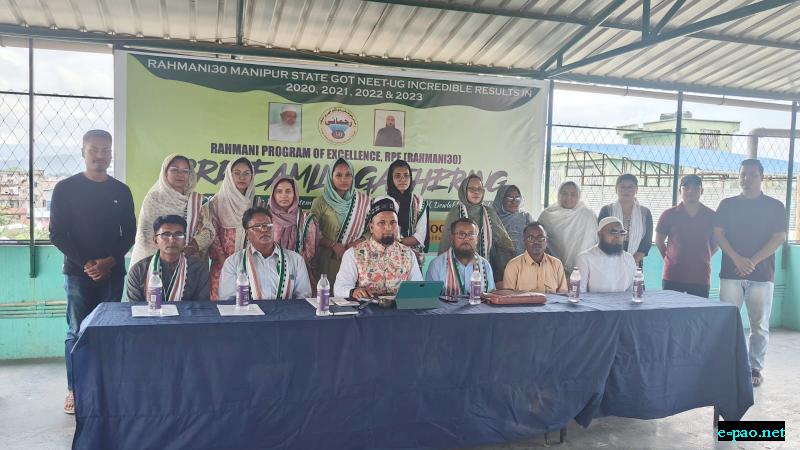
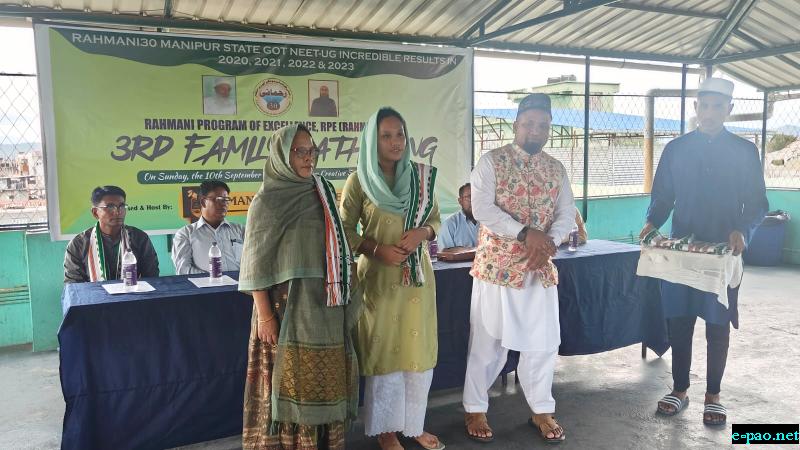
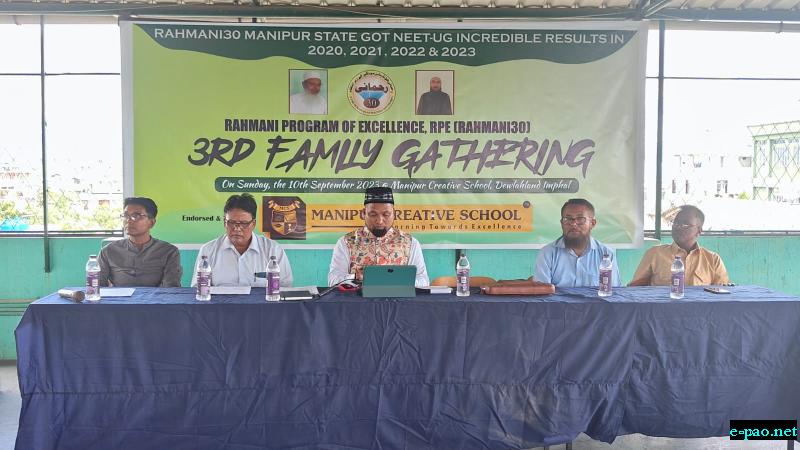
On this Family Gathering Occasion here at Manipur Creative School, Sermon Road, 5th Avenue, Dewlahland, Imphal East, Manipur 795001 on Sunday, the 10th September 2023, the parents, guardians and well-wishers of Rahmani30, congratulating and felicitating the successful students by Manipur State Coordinator Md Raees Ahamed Tampak, said in his speech that surely all the success and achievement are the results of hard work of team, students, and the prayers of all the stakeholders. So far, RAHMANI30 Manipur State produced 23 MBBS and 2 BDS Seats.

Md Raees Ahamed Tampak, Coordinator, Rahmani Program of Excellence, RAHMANI30, Manipur State said that this achievement is definitely achieved due to the tireless efforts of Mr. Fahad Rahmani (CEO Rahmani30), Ma’am Rafatur Rahmani (Team Lead, Maharashtra Girls program) and former DGP of Bihar, Janab. Abhyanand Sahab, by his efficient Academic leadership and guidance as well as the tireless hard work of the faculty, management and other staff. This has been possible only through identification of the target and recognition of the goal and mutual cooperation by the students and their parents.

“The Best way to predict your Future is to create it.” ~Abraham Lincoln

 parents, guardians and well-wishers of Rahmani30,
Parents, guardians and well-wishers of Rahmani30

Md Raees Ahamed Tampak / State Coordinator – Manipur State
Rahmani Program of Excellence / (RPE – RAHMANI30)

source: http://www.e-pao.net / E-Pao / Home> Education> Education Announcements / September 2023