Tag Archives: Abdul Rehman

How KA Abbas gave Amitabh Bachchan his big break in ‘Saat Hindustani’

Panipat (Undivided India), HARYANA / Mumbai, MAHARASHTRA :
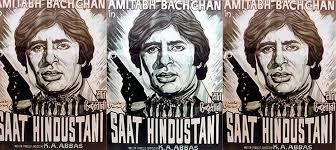
Multi-hyphenate talent Khwaja Ahmed Abbas worked in Urdu, Hindi and English and across writing mediums. Abbas, who died in 1987 at the age of 71, wrote social realist screenplays for Raj Kapoor and V Shantaram, directed films, published short stories and plays,and contributed a long-running weekly newspaper column. Among the best-known films he directed are Neecha Nagar, Sheharaur Sapna and Saat Hindustani. Set in Goa and tracing the efforts of seven revolutionaries to free the state from Portuguese rule, Saat Hindustani marks the debut of Amitabh Bachchan. An essay from the anthology Bread Beauty Revolution, edited by Iffat Fatima and Syeda Hameed, relates Abbas’s encounters with the “tall young man” and future screen icon. Bread Beauty Revolution includes writings from Abbas’s memoir I Am Not An Island: An Experiment in Autobiography as well as essays, stories,poems, photographs and columns.

The story of Saat Hindustani came out of the Goa struggle reminiscences of my assistant, Madhukar, who would often regale us with the adventures he had while trekking up with the non-violent commandos to hoist the tricolour on every police station they came across…

I was so excited when I finished the screenplay that I telephoned all my friends and informed all my assistants, including Madhukar, to come and hear it in my fourth floor office on the very next day. That was a ritual which they never missed and I would get their suggestions for casting the film.

I wanted to prove by my casting that there was no particular Hindu or Muslim, Tamilian, Maharashtrian or Bengali ethnic type. To begin with, I would transform the smart and sophisticated and versatile Jalal Agha into the Maharashtrian powada singer. Even Jalal was shocked to hear this. But I reassured him that, with the proper make-up and get-up, nobody would recognize him except as a rural Maharashtrian folk singer. Madhukar, who hails from Meerut, would be a Tamilian; Sharma (Brahmin by caste) would also undergo a similar transformation; and Utpal Dutt, the cigar-chewing admiral,would be the tractor-driving Punjabi farmer. So far the casting was clear in mymind. On one of my visits to Kerala I had met Madhu, the handsome hero of the Malayalam screen, and he had approached me and expressed his desire to work in a Hindi film with me. I would make him the sensitive Bengali; I wouldn’t have to work much on his Bengali accent for he had lived with a Bengali family. Now only the Hindi and Urdu fanatics were left. Jalal one day brought with him his friend Anwar Ali (brother of the comedian Mehmood), in whose eyes I saw the Jana Sanghi fanaticism. So I decided to make him the Swayam Sevak who hates Urdu and speaks jaw-breaking Hindi. That left one Indian, the Muslim Urdufanatic. Since I wanted these boys to be of different ages and different heights, the one vacancy left was for a tall and handsome man. He had to be thin, also corresponding to the thin image of my friend, the late Asrarul Haque “Majaz”.

One day someone brought a snapshot of a tall young man and I thought that the boy was in Bombay. I said, “Let me see him in person.” “He will be here day after tomorrow evening.” Again, presuming he was in Bombay, I thought he must be working somewhere and wouldn’t be free till the evening. On the third day, punctually at 6 pm, a tall young man arrived who looked taller because of the churidar pajama and Jawahar jacket that he was wearing. This young man would one day be known as Amitabh Bachchan, the heart-throb of millions. But I did not know his name. Roughly, the following dialogue took place between us:

“Sit down, please. Your name.”

“Amitabh.” (Not Bachchan.)

It was an unusual name — so I asked, “What does it mean?”

“The sun. It’s also one of the synonyms for the Gautama Buddha.”

“Education?”

“B.A. from Delhi University.”

“Have you worked in films before?”

“No one has taken me so far.”

“Who were they?”

He mentioned very prominent names.

“What did they find wrong with you?” The boy spoke with frankness. “They all said I was too tall for their heroines.”

“Well, we have no such trouble. In a way we have no heroine in our film. Even if we had, that wouldn’t prevent me from taking you.”

“Taking me? Are you really going to take me? Without even a test?”

“That depends. First I must tell you the story. Then I must tell you your role and see if you will be enthusiastic about playing it. Then I shall tell you what we can afford to pay you. Only then, if you agree, shall we sign the contract.”

I read him out the complete story and saw his face become alive with interest. I asked him which role he would like to play. He told me the two which particularly impressed him. The role of the Punjabi, and the role of the Muslim. I told him he was perhaps a Punjabi, and that made him unfit to play that role. He asked me why. I gave him the reason, the reason for having a scrambled cast. The idea appealed to him greatly. He said, “I think, I know what you mean. Then I would like to play the Muslim role, specially because he is under a cloud of suspicion. And only at the end the suspicions are removed and he is proved a patriot.” Then I told him we could pay him no more than five thousand rupees,which was the standard figure for all the roles.

He seemed a little hesitant, and I asked him, “Are you earning more than that?”

“I was,” he said.

I asked him what he meant.

He said that he was getting about sixteen hundred a month in a firm in Calcutta.

“I resigned the job and came over.”

I was astonished. “You mean to say that you resigned a job of sixteen hundred rupees a month, just on the chance of getting this role! Suppose we can’t give the role to you?”

He said, “One has to take such chances” with such conviction that I said, “The role is yours.”

Then I called my secretary, Abdul Rehman, to dictate the contract. I asked the tall young man for his name and address.

“Amitabh—” after some hesitation, “Amitabh Bachchan, son of Dr H.R. Bachchan.”

“Stop,” I said. “This contract cannot be signed until I telegraph and get your father’s consent. He is a colleague of mine on the Sovietland Nehru Award Committee. I wouldn’t like to have a misunderstanding with him. I am afraid you will have to wait for two days more.”

“You can ask my Dad, but frankly, do I look like a runaway?”

I told him that runaways don’t have any particular look. So I dictated, instead of the agreement, a telegram to Dr Bachchan in New Delhi and asked him if he was willing to let his son become an actor. Two days later a telegram came reading “No objection where you are concerned.” This is the whole story about how Amitabh Bachchan came into films.

Excerpted with permission from Bread Beauty Revolution, edited by Iffat Fatima and Syeda Saiyidain Hameed, Khwaja Ahmed Abbas Memorial Trust and Tulika Books.

source: http://www.scroll.in / Scroll.in / Home> Book Excerpt / by Khwaja Ahmed Abbas / November 14th, 2015
BJP’s Kausar Jahan Is Delhi’s New Haj Committee Chief, Wrests Post From AAP

NEW DELHI:

She received three of the five votes cast by the committee members in the election held at the Delhi Secretariat.

BJP's Kausar Jahan Is Delhi's New Haj Committee Chief, Wrests Post From AAP
Kausar Jahan is the second woman to be elected to the post.

New Delhi: 

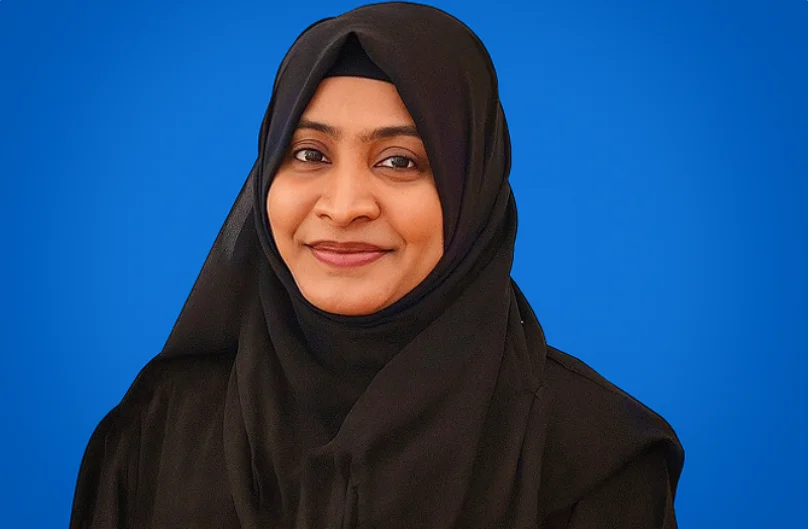
In a setback to the AAP, BJP leader Kausar Jahan was elected as the Delhi Haj Committee chairperson today.

Kausar Jahan is the second woman to be elected to the post.

She received three of the five votes cast by the committee members in the election held at the Delhi Secretariat.

The committee comprises six members — two each from the AAP and the BJP, Muslim theology expert Mohammad Saad and Congress councillor Nazia Danish. BJP MP Gautam Gambhir is among the committee members.

Delhi BJP working president Virendra Sachdeva said Ms Jahan’s victory shows the growing trust and faith of Muslims in the party.

“Congratulations to Kausar Jahan on being elected as the Delhi Haj Committee chairperson. The victory of the BJP-affiliated candidate in the Delhi Haj Committee makes it clear that now the Muslim community is also eager to join the country’s development stream Shri @narendramodi,” Mr Sachdeva said in a tweet in Hindi.

The three votes received by the BJP-affiliated candidate included those of Gambhir, Saad and Kausar herself. Nazia Danish abstained from voting.

AAP MLAs Abdul Rehman and Haji Yunus are also members of the committee.

(Except for the headline, this story has not been edited by NDTV staff and is published from a syndicated feed.)

source: http://www.ndtv.com / NDTV / Home> India News / by Press Trust of India / February 16th, 2023

The Muslim Martyrs of Royal Indian Naval Mutiny of 1946

BRITISH INDIA :

After the Second World War, soldiers of the Azad Hind Fauj (Indian National Army) were captured by the British forces. They were charged with treason and tried by tribunals as war criminals. Indians protested against this treatment given to the freedom fighters of Azad Hind Fauj.

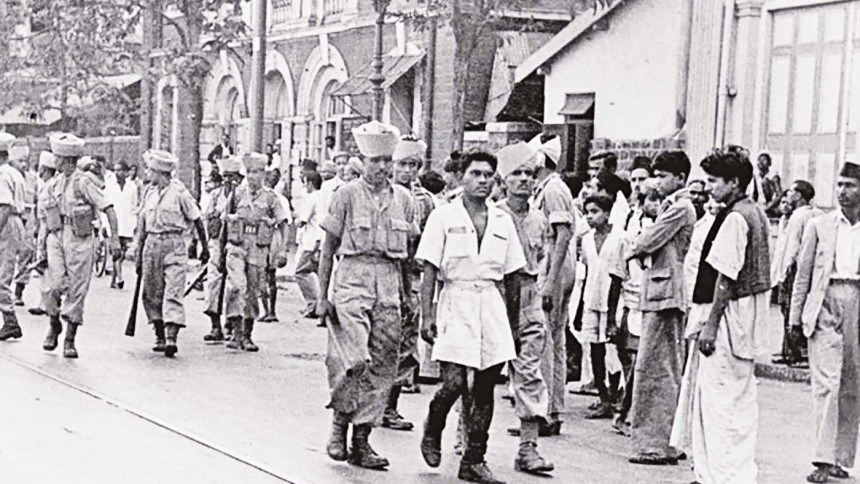
In February, 1945, soldiers and officers of the Royal Indian Navy mutinied in Mumbai and Karachi. English officials including the Viceroy took this mutiny as a sign of leaving India. The British forces killed many to quell the mutiny, many of which were Muslims.

Here, we are sharing names of the few Muslims we know, who attained martyrdom for taking part in the mutiny or supporting it.

Abdul, Ali, Din Mohammad: born 1929, took part in the popular demonstrations in support of the revolt by ratings of the Royal Indian Navy, received a bullet wound in firing by the police at Nagpada, Bombay, on 23 February 1946, died the same day.

Abdul Aziz: born 1921, domestic servant, hit by bullet in the premises of his employers as a result of firing by the police at Bombay on people demonstrating in support of the revolt by ratings of the Royal Indian Navy on 22 February 1946, died the same day.

Abdul Razak: born 1916, took part in the popular demonstrations in support of the revolt by ratings of the Royal Indian Navy, received a bullet wound on 22 February 1946 in firing by the police near Crawford market, Bombay, died on 24.2.46.

Abdul Rehman: born 1911, employee of private firm, hit by a bullet as a result of firing by the police at Doctor’s Street, Bombay, on people demonstrating in support of the revolt by rating of the Royal Indian Navy on 22 February 1946, died the same day.

Abdul Gani: born 1901, took part in the popular demonstrations in support of the revolt by ratings of the Royal Indian Navy, received a bullet wound in firing by police at Bombay on 22 February 1946, died the same day.

Abdul Karim: born 1926, took part in the popular demonstrations in support of the revolt by ratings of the Royal Indian Navy, received a bullet wound in firing by the police near Crawford Market, Bombay, on 22 February 1946, died the same day.

Abdul Sattar, Mohmmad Umar: born 1924, took part in the popular demonstrations in support of the revolt by ratings of the Royal Indian Navy, received a bullet wound in firing by the police on 22 February 1946 at Bombay, died the same day.

Abdulla, Abdul Kadar: born 1921, took part in the popular demonstrations in support of the revolt by ratings of the Royal Indian Navy, received a bullet wound in firing by the police at Bern- bay on 22 February 1946, died the same day.

Abdulla, Safi: born 1933, took part in the popular demonstrations in support of the revolt by ratings of the Royal Indian Navy, received a bullet wound on 22 February 1946 in firing by the police at Fort, Bombay, died in hospital the same day.

Adamji, Mohamed Hussain: born 1924, son of Allauddin Adamji, took part in the popular demonstrations in support of the revolt by ratings of the Royal Indian Navy, received a bullet wound on 22 February 1946, in firing by the police at Bombay, died in hospital.

Ali Mohammad: born 1906, hit by bullet in firing by the police at Dadar, Bombay, on people demonstrating in favour of the revolt by ratings of the RIN on 22 February 1946, died the same day.

Anwar Hossain: a student of Lahore College, hoisted the flags of revolt in the rating vessel Bahadur in Karachi, died with flags in hand on 23 February 1946.

Asgar Ismail: born 1934, received a bullet wound in firing by the police on people demonstrating in support of the revolt by ratings of the Hoyal Indian Navy on 23 February 1946, near the Paxsi Statue, at Byculla, Bombay, died on the spot.

Asghar Miya, Nawsati: born 1916, took part in the popular demonstrations in support of the revolt by ratings of the Royal Indian Navy, received a bullet wound in firing by the police near the J. J. Hospital, Bombay, on 23 February 1946, died in hospital.

Aziz, Chhotu: born 1921, took part in the popular demonstrations in support of the revolt by ratings of the Royal Indian Navy, received a bullet wound in firing by the police at Bombay on 23 February 1946, died in hospital the same day.

Dilawar, Abdul Malik: born 1931, son of Dilawar Muzawar, student, hit by bullet in firing by the police at Dongri, Bombay, on people demonstrating in support of the revolt by ratings of the Royal Indian Navy on 22 February 1946, died the same day.

Fida Ali, Kayam Ali: born 1933, received a bullet wound in firing by the police near J. J. Hospital, Bombay, on people demonstrating in favour of the revolt by ratings of the Royal Indian Navy on 23 February 1946, died the same day.

Gulam Hussain, Ali Mohammad: born 1906, took part in the popular demonstrations in support of the revolt by ratings of the Royal Indian Navy, received a bullet wound in firing by the police’ at Bombay on 22 February 1946, died the same day.

Haroon, Hamid: born 1931, took part in the popular demonstrations in support of the revolt by ratings of the Royal Indian Navy, received a bullet wound in firing by the police at Bombay, on 23 February 1946, died the same day.

Ibrahimji, Yusufali: born 1910, received a bullet wound in firing by the police at Bombay on people’s demonstrations in support of the revolt by ratings of the Royal Indian Navy on 22 February 1946, died the same day. 

Ismail Hussain: born 1932, hit by bullet as a result of firing by the police at Bombay on people demonstrating in support of the revolt by ratings of the Royal Indian Navy on 22 February 1946.

Ismail, Rahimtulla: bom 1911, took part in the popular demonstrations in support of the revolt by ratings of the Royal Indian Navy, received a bullet wound in firing by the police near the Imperial Bank, Abdul Rehman Street, Bombay, on 22 February 1946, died the same day.

Jamal Mohammed: born 1926, took part in the popular demonstrations in support of the revolt by ratings of the Royal Indian Navy, received a bullet wound in firing by the police at Bombay on 22 February 1946, died the same day.

Khuda Bakhsh, Pyare: born 1876, hit by bullet as a result of firing by the police at Bombay on people demonstrating in support of the revolt by ratings of the Royal Indian Navy on 23 February 1946, died the same day.

Manzoor Ahmed: born 1906, took part in the popular demonstrations in support of the revolt by ratings of the Royal Indian Navy, received a bullet wound; in firing by the police at Bombay on 22 February 1946, died in hospital the same day.

Mohammed, Aboobakar: born 1928, took part in the popular demonstrations in support of the revolt by ratings of the RIN, received a bullet wound in firing by the police near Crawford Market, Bombay on 22 February 1946, died in hospital the same day.

Mohammed Aziz: born 1911, took part in the popular demonstra- lions in support of the revolt by ratings of the Royal Indian Navy, received a bullet wound in firing by the police at Bombay on 22 February 1946, died in hospital the same day.

Mohammed Hussain: born 1931, son of Mulla Gulam Ali Abdul Hussain, took part in the popular demonstrations in support of the revolt by ratings of the Royal Indian Navy, received a bullet wound in firing by the police near J. J. Hospital, Bombay, on 22 February 1946, died the same day.

Mohammed Sheik, Sayed Hassan: born 1921, took part in the popular demonstrations in support of the revolt by ratings of the Royal Indian Navy, received a bullet wound in firing by the police near Null Bazar police station, Bombay, on 22 February 1946, died the same day.

Mohiddin, Sheik Ghulam: born 1928, took part in the popular demonstrations in support of the revolt by ratings of the Royal Indian Navy, received a bullet wound in firing by the police at Parel, Bombay, on 22 February 1916, died the same day.

Mohmed Samikh, Taja-Urkh: born 1920, hit by bullet as a result of firing by the police at Kamathipura, Bombay, on people’s demonstration in support of the revolt by ratings of the Royal Indian Navy on 23 February 1946, died the same day.

Moula Bakhsh, Abdul Aziz: born 1906, took part in the popular demonstrations in support of the revolt by ratings of the Royal Indian Navy, received a bullet wound in firing by the police at Kamathipura, Bombay, on 22 February 1946, died the same day.

Siddik Mohamed: born 1921, son of Isak Mohamed, took part in the popular demonstrations in support of the revolt by ratings of Royal Indian Navy, received a bullet wound in firing by the police at Kamathipura, Bombay, on 23 February 1946, died the same day.

Sulemanji, Zakiuddin: took part in the popular demonstrations in support of the revolt by ratings of the Royal Indian Navy, received a bullet wound in firing by the police at Bombay on 22 February 1946, died in the hospital the same day.

Taj Mohamed, Fazal Mohamed: born 1930, took part in the popular demonstrations in support of the revolt by ratings of the Royal Indian Navy, received a bullet wound in firing by the police near the Salvation Army office at Bombay, on 22 February 1946, died the same day.

Vazir, Mohamed: born 1891, took part in the popular demonstrations in favour of the revolt by ratings of the Royal Indian Navy, received a bullet wound in firing by the police near Hindmata Cinema, Bombay, on 22 February 1946, died the same day.

source: http://www.heritagetimes.in / Heritage Times / Home> Featured Posts> Freedom Movements / by Mahino Fatima / August 14th, 2021

Delhi polls: All five Muslim candidates of AAP won

NEW DELHI :

The victory by AAP clearly indicates that the minority voters from these segments prefer the ruling party.

AAPdelhiMPOs12feb2020

New Delhi :

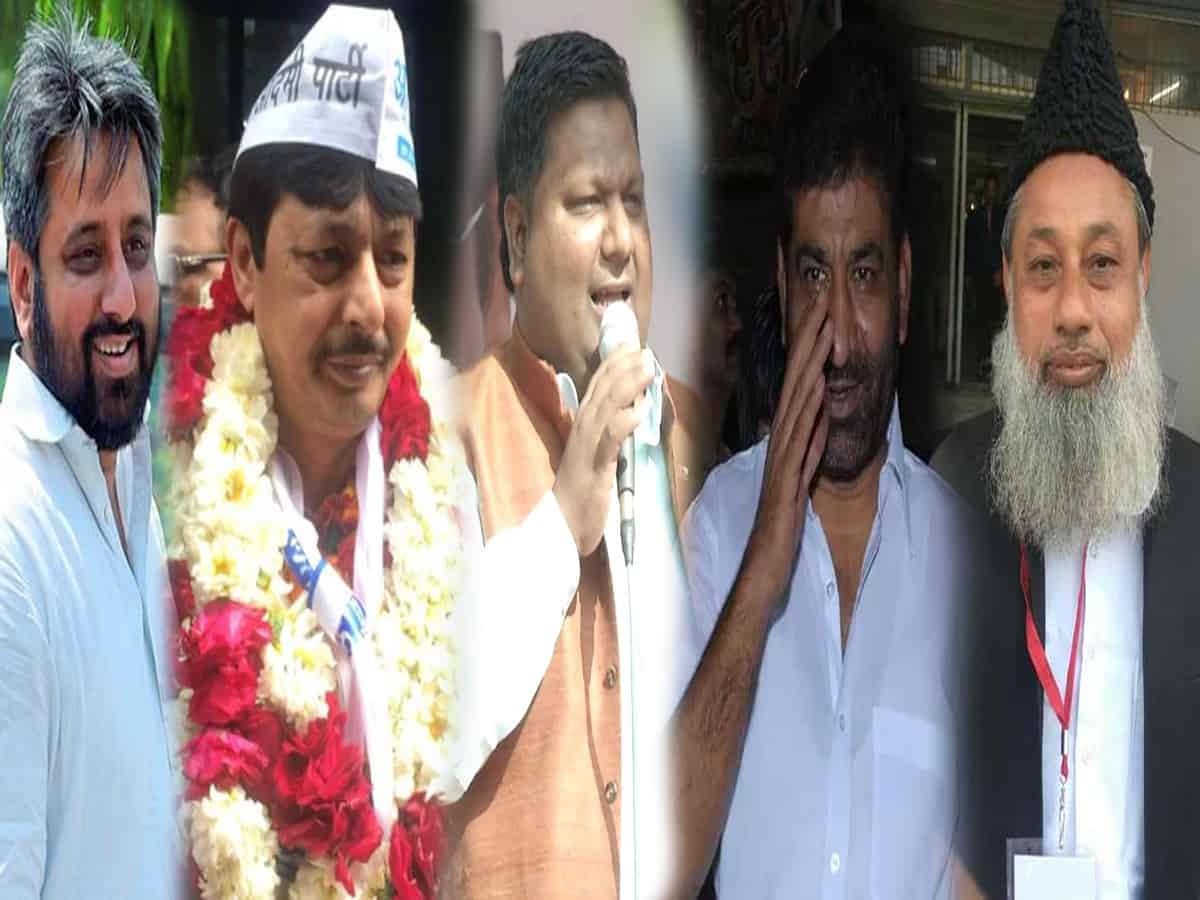
All five Muslim candidates of Arvind Kejriwal-led- Aam Aadmi Party who contested Delhi Assembly elections have won with significant margin.

The victory of five Muslim candidates put up by the AAP over their BJP and Congress rivals in community-dominated seats in Delhi clearly indicates that the minority voters from these segments prefer the ruling party.

AAP’s Amanatullah Khan again won from the Okhla seat by more than 70,000 votes where Congress candidate Parvez Hashmi failed to save his deposit.

In Seelampur , AAP’s Abdul Rehman defeated the BJP’s Sanjay Jain by the margin of 36,920 votes even as Congress rival Matin Ahmed, who has been a five-time MLA, came a poor third.

In the Ballimaran seat, AAP candidate Imran Hussain won over the BJP’s Lata Sodhi by 36,172 Votes, apart from five-time MLA and ex-minister Haroon Yusuf, who came third.

In Matia Mahal, Shoaib Iqbal won convincingly against Ravinder Gupta of the BJP by the margin of 50,241 votes and Mirza Javed Ali of the Congress .

In Mustafabad, AAP’s Haji Yunus defeated the BJP’s Jagdish Pradhan by a margin of 20,704, even as Congress candidate Ali Mehdi could not cross the five-digit vote figure. Ironically, Mustafabad was one of the three seats won by the BJP in the 2015 Assembly polls.

Reacting to the AAP victory in the Muslim-dominated segments, AAP leader Mehmood Ahmed from Zakir Nagar said: “It’s the work done by Chief Minister Arvind Kejriwal  that gave us this huge victory. We have devoted all our time to public welfare, be it drinking water, sewage, or installing CCTVs.”

source: with IANS inputs

source: http://www.siasat.com / The Siasat Daily / Home> News> Delhi / by Safoora / February 12th, 2020