Tag Archives: American Indians

Moradabad Native Sabih Khan, Now Apple’s COO

Moradabad, UTTAR PRADESH / U.S.A :
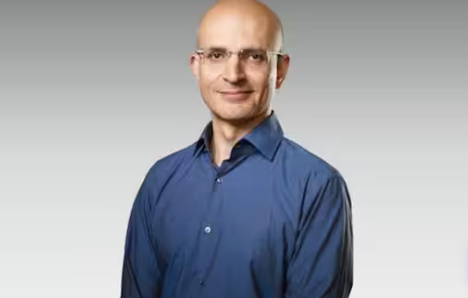
Indian origin Sabih Khan, a native of Moradabad in Uttar Pradesh brought laurels to India in general and his hometown in particular on being appointed as the new Chief Operating Officer (COO) at Apple. He replaces Jeff Williams. Currently, Khan serves as Senior Vice President of Operations. Indeed, an honour to Sabih Khan, known for his extraordinary skill and a brilliant strategist besides an architect of Apple’s supply chain.

Bringing glory to his native Moradabad in Uttar Pradesh, Sabih Khan (58) has been honoured with the post of Chief Operating Officer (COO) at Apple, marking a significant step in the company’s ongoing leadership transition. Notably, Khan has been with Apple for three decades and currently serves as Senior Vice President of Operations and will take over from Jeff Williams later this month, the iPhone maker announced in a statement.

Before joining Apple’s procurement group in 1995, he worked as an applications development engineer and key account technical leader at GE Plastics. A quick look into his biodata revealed that he was born in 1966 in Moradabad, Uttar Pradesh and later moved to Singapore during his school years before settling down in the US. Interestingly, he is armed with dual bachelor’s degrees in economics and mechanical engineering from Tufts University, and a master’s in mechanical engineering from Rensselaer Polytechnic Institute (RPI).

Sabih Khan’s father Saeed Ullah Khan was a resident of Rampur who had settled down in Singapore decades ago. Sabih received his primary education there, after which he moved to America and received higher education from there. Apple CEO Tim Cook described him as “a brilliant strategist and one of the central architects of Apple’s supply chain.”

“Sabih leads with heart and values, and I know he will make an exceptional chief operating officer,” Cook added. “He helped ensure that Apple can be nimble in response to global challenges.”

Moreover, Khan has been playing a vital role in shaping the global supply chain that powers Apple’s operations around the world. In 2019, he was promoted to Senior Vice President of Operations, reporting directly to Jeff Williams. In this role, he led key initiatives in advanced manufacturing, expanding Apple’s global footprint, and navigating complex supply chain challenges, especially during turbulent global events.

According to sources, Khan has also been a major force behind Apple’s environmental efforts. Under his leadership, the company has reportedly reduced its carbon footprint by over 60 per cent, thanks to stronger supplier partnerships and green manufacturing practices.

Further, he also oversees Apple’s supplier responsibility programmes, which aim to improve labour conditions, and provide education and training for workers at production facilities globally. In his new role, Khan will be playing a vital role in shaping the global supply chain that powers Apple’s operations around the world. He has also been a major force behind Apple’s environmental efforts. Under his leadership, the company has reportedly reduced its carbon footprint by over 60 per cent, thanks to stronger supplier partnerships and green manufacturing practices.

Jeff Williams, who has been with Apple for 27 years, will continue to report to CEO Tim Cook and oversee Apple’s design team and health initiatives until his planned retirement later this year. His transition also signals a shift in the structure of Apple’s leadership, with the design team set to report directly to Tim Cook after Williams steps down. Sabhih Khan has made not only his native Moradabad but also his home country India proud.

[The author is former Indian Express and Deccan Chronicle chief]

source: http://www.radiancenews.com / Radiance News / Home> Latest News> Pride of the Nation / by M Rafi Ahmed / July 10th, 2025
For the love of teaching

Bengaluru, KARNATAKA / Billings (Montana), USA :

A Full circle

Tasneem Fathima Khaleel

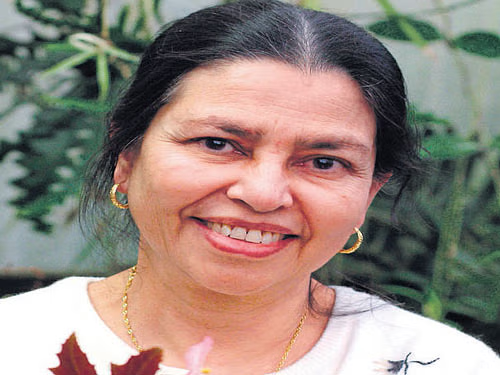
Tasneem Fathima Khaleel has had a successful career in academia. However, quite remarkably, she came back to where she started – teaching. M A Siraj reports.

Few people end their careers where they first began; Professor Tasneem Fathima Khaleel is among those few. “I am excited about the opportunity to finish my career in the classroom. And, with a little help, I will be teaching in a new state-of-the-art…facility,” says Tasneem, the first-ever woman to have obtained a doctorate in the State of Mysore in 1970. Prior to returning as a professor of Botany, she served as the dean of faculty at College of Arts & Sciences for a decade at the Montana State University at Billings (MUSB).

Paving a new path

Tasneem has been teaching Botany in the United States for over 40 years and has received many awards for her teaching and research. She has headed, or has been a member on as many as 23 different academic bodies or advisory councils in the US. For her contribution to research, with nearly 50 research publications on subjects ranging from cyto-embriology to plant reproduction, she was awarded the ‘Outstanding Research Award’ in 1995 by the Montana Research Academy and has also won the Faculty Excellence Award five times.

The year 2014 was a special year for Tasneem – she had the rare honour of an award being named after her, for mentoring at the MUSB. Reno Charette, director for American-Indian Education, was adjudged the winner of the first ‘Prof Tasneem Fathima Khaleel Award for Mentoring’.

Tasneem studied in Bengaluru, before heading to the US in 1975 after marriage. An alumna of Central College, Bengaluru, she has coveted every opportunity to visit her ‘City of Gardens’ – which she ruefully admits is more a part of nostalgia rather than reality.

A passionate researcher, she recalls that very few women could be seen in higher studies in those days. Only a couple of them were pursuing PhD while she was registered in Bangalore University as well as teaching biology as an assistant professor at the University of Agricultural Sciences at Hebbal between 1968 and 1975. Her study of ‘Flora at the GKVK Campus’ and ‘Weeds in Karnataka’ are still quoted as seminal works.

Writing her own destiny

Tasneem had finished her BSc and MSc by the time she was barely 19 years old. Wanting to be a teacher, she had put in her application, but was rejected, as the dean told her, “You look like a school girl, how would the students take you seriously?”

Instead, he directed her to register for a PhD programme, which had just been started in the Bangalore University. The Doctorate took longer than usual to complete because there was lack of guidance and direction, and the programme had several fits and starts.

Finally, at 26 when she got her her doctorate, she was being looked as ‘a confirmed spinster’ in her own cultural surroundings. Marriage was nowhere on her mental radar. It took her brother several sittings to convince her of getting married.

Tasneem travelled a long and twisted path – one shaped by her culture and her drive to excel, to become the distinguished professor that she is today. For most Americans who had only preliminary idea of Islam, a woman with covered head and such drive for excellence and perseverance was a combination of incongruities. “Women have rights in Islam. Muslim women didn’t even have to fight for those rights. The religion has given them those rights,” she says.

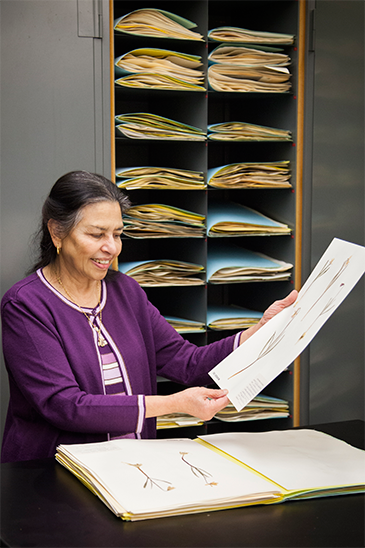
Dr Stn Waitr, her successor, says, “Dean Khaleel has raised the level of rigour, excellence and success in the College of Arts & Sciences to a standard that should serve as a model for the entire institution.” Interestingly, Tasneem even built a herbarium at the MUSB, which has around 17,000 specimens and is currently engaged in digitising it. She recalls with pride that she was the most productive member on the faculty of science at the MSU, which has nearly 22,000 students today in two campuses. Tasneem’s most significant discovery was the finding of mammalian steroids in plants, which she says, are responsible for sex expression in plants.

Author of four books, 10 external and 17 internal grants at the MSUB, Tasneem is excited about beginning her teaching career once again. “It had never ended. I had maintained a room in my department building, even while I headed the faculty,” she says.

source: http://www.deccanherald.com / Deccan Herald / Home> Content / by M.A. Siraj / June 26th, 2015

Dr. Tasneem Khaleel – Professor, botany and biology, Billings, MT

Bengaluru, KARNATAKA / Billings (Montana), USA :

Tell me about your education?

My Ph.D is from India, at Bangalore University and I was the first woman to get a Ph.D from that university. I started education at a very young age because I started school when I was about 3. In those days there was not an age limit to start school, when your parents felt you were ready they took you to school. From then on it was up to you. When I started off, there was no kindergarten or pre-school, it was first grade. I sat on the teacher’s lap most of the time because I was so little.

Why did you study botany?

When I was a student in India, botany was a man’s field. They did not really take women in graduate courses for botany because they look at botany as a field science. Since the graduate seats were so limited they didn’t take a whole lot of graduate students. They thought if they took in a girl student, the only option for her would be to teach botany, not go out to the field.  They still looked at women in those days as better at home and in the classroom than in the field. That was a challenge for me. I just wanted to prove to them one could be in the field as well.

When did you know you wanted to become an educator?

Oh I loved teaching right from the beginning. One of the reasons you do your masters in any discipline in India was so that you can teach in college. When I graduated with my masters degree in botany, I was 19 years old at the time and so I went off to find a job. There was one person who was in charge of recruiting and allocating all of the lecturer positions. So I talked to him and said, I need a job but he took one look at me and said, you look like you just came out of high school. He didn’t think I would be impressive enough in front of a classroom and to be able to control a classroom, the kids wouldn’t take me seriously. So I sat there and cried, I wanted the job and he refused to give me something that I had a passion to teach. I didn’t want to keep all the knowledge to myself. So then he said how about if you went and did a Ph.D. and then came back a few years later and by then you will have grown up a bit. I took him up on that option but there was no Ph.D. program at the university so he said he would help start one, which he did. And then we got the university grant fellowship to support me and I did my Ph.D. By then I wasn’t interested in going to him anymore to teach because people were after me to come and teach being I was the first woman with a Ph.D. there.

Tell us about your passion, building the herbarium at MSUB?

The value of the herbarium is based on what plant collections you have in it. When I first came here there were just two wooden cabinets here, with maybe 500 specimens. And they said, this is your herbarium. It was shocking because where I came from there is a whole building dedicated to the herbarium. So I challenged myself to build a herbarium here.  The very first grant I wrote was to buy herbarium cabinets. The next step I did was to call out to local agents here who had small collections to see if they were willing to consolidate to a central location. The US Forest Service, United States Department of Agriculture, Bureau of Land Management and Rocky Mountain College were all very willing to give collections and we incorporated those in our herbarium. Over the years, the herbarium is a part of the national database with about 16,000 specimens.

Of the classes you teach, what is your favorite?

All of my classes are my favorite classes. I love teaching. I teach freshman biology, in fact that’s one of my most favorite classes to be honest. That’s when students are first starting out and I’m introducing them to biology for the first time and to get them excited about that. I really enjoy doing that and it gives me opportunities to mentor students because they’re just starting out. My second most favorite is plant systematics, they are both equally enjoyable classes for me. I just love teaching botany.

source: http://www.msubillings.edu/snapshots/2015-16/Khaleel.htm / msubillings.edu / by Cassie Winter, University Communications and Marketing / October 09th, 2015 / Montana State Univeristy Billings