Tag Archives: Begum Sughra Humayun Mirza – Member – Royal Asiatic Society London

Muslim Women, Waqf, and the Power of Charitable Legacy: A Forgotten Force in the Shadows of Reform

INDIA :

A New Law, A Timeless Legacy

The Waqf Amendment Act 2025, recently passed by the Government of India, has stirred a wave of public discourse. Promising to regulate and modernize the administration of waqfproperties across the country, the law is being introduced as a means to improve transparency and benefit marginalized communities, especially Muslim women.

However, in this swirl of policy language, governance reform, and bureaucratic oversight, we must not forget a foundational truth: Muslim women have always been central to the waqftradition—not as passive recipients, but as active architects of community transformation.

Waqf as a Tool of Empowerment—Before the State Claimed It

Before governments created waqf boards, before institutional frameworks shaped their regulation, and long before women were officially recognized in policy narratives, Muslim women in India were shaping societies through charitable endowments.

They:

• Founded schools and madrasas for girls and boys alike

• Donated lands and properties for the construction of mosques, shrines, and Sufi lodges

• Built hospitals, water fountains, and orphanages

• Funded scholarships, welfare kitchens, and even public rest-houses for travelers.

This was not mere charity—it was strategic social intervention, embedded in Islamic ethics and guided by a vision of communal upliftment.

👑 Queens of Waqf: A Glimpse into Heroines of Charity and Community Leadership

🏛️ Razia Sultana (1205–1240, Delhi)

India’s only woman Sultan, Razia established educational and civic institutions supported by state waqf. Her leadership emphasized justice, learning, and infrastructure.

🏛️ Jahanara Begum (1614–1681, Delhi)

Daughter of Shah Jahan, she created waqf endowments for Sufi shrines, caravanserais, and public gardens. Her waqf documents are among the earliest female-authored ones preserved in India.

🏛️ Roshanara Begum (1617–1671, Delhi)

Sister to Jahanara, she built Roshanara Garden and a Sufi lodge. She maintained religious institutions through royal waqf.

🏛️ Sultan Jahan Begum (1858–1930, Bhopal)

The last Begum of Bhopal, she modernized education, built hospitals, supported madrasas, and legally registered many waqf properties to support her reforms.

🏛️ Begum Hazrat Mahal (1820–1879, Lucknow)

Regent of Awadh, she protected the city’s religious institutions and supported waqf-based welfare during the 1857 Rebellion.

🏛️ Khair-un-Nissa Begum (18th c., Hyderabad)

Established Khairtabad Mosque and other public works through her waqf. One of the early noblewomen to invest in education and water supply systems.

🏛️ Begum Rokeya Sakhawat Hossain (1880–1932, Kolkata)

A visionary educationist, she established the Sakhawat Memorial Girls’ School using her own resources and informal waqf practices. A true reformer of women’s rights.

🏛️ Begum Sughra Humayun Mirza (1884–1958, Hyderabad)

Urdu novelist and educationist who established the Safdariya Girls School through personal endowment. One of India’s earliest women school founders.

🏛️ Princess Durru Shehvar (1914–2006, Hyderabad)

Ottoman princess and daughter-in-law of the Nizam. Founded the Durru Shehvar Hospital, a major maternity and child-care waqf.

🏛️ Princess Niloufer (1916–1989, Hyderabad)

Ottoman royal by birth and philanthropist. Established Niloufer Hospital for women and children in response to maternal health tragedies.

🏛️ Dr. Uzma Naheed (Contemporary, Mumbai)

Thinker and leader who founded the IQRA International Women’s Alliance. Created vocational and educational centers for women through charitable trusts and waqf-like models.

🏛️ Begum Abadi Bano (Bi Amma) (1850–1924)

Mother of freedom fighters Maulana Mohammad Ali and Shaukat Ali, she supported the Khilafat movement and women’s education through charity and informal waqf support.

🏛️ Begum Qudsia Aizaz Rasul (1909–2001)

Only Muslim woman member of the Indian Constituent Assembly. Promoted educational waqfs and women’s legal rights in independent India.

🏛️ Hamida Habibullah (1916–2018, Lucknow)

Educator, politician, and philanthropist who helped establish Talimgah-e-Niswan, a leading girls’ school, partially supported by endowments and community waqf models.

🏛️ Tayyaba Begum (early 1900s, Hyderabad)

Co-founder of Anjuman-e-Khawateen-e-Deccan, she organized women’s welfare through educational trusts and neighborhood charities alongside Sughra Humayun Mirza.

These women are not anomalies in history. They are evidence of a forgotten mainstream—a rich legacy of Muslim women using waqf, education, and philanthropy to shape the public sphere.

What the Law Misses

The 2025 Amendment claims to create better access for women and transparency in waqfgovernance. Yet, many community members raise concerns about:

• Increased government control over waqf boards

• Reduced autonomy of local Muslim stakeholders

• Weak representation of women in decision-making roles

If reform is truly meant to benefit women, it must not just focus on current access. It must honor and preserve the legacy of those women who built the system through vision, sacrifice, and faith.

Reclaiming the Narrative

As students of history and as researchers in the contributions of Muslim women across disciplines—al-Muhaddithat, scholars, judges, educators, warriors, nurses, and philanthropists—we find it essential to reclaim and highlight this tradition in the current discourse.

This document delves into the intersections of gender, history, law, and social development, spotlighting women’s roles in charitable work and community building through waqf and related institutions.

Our goal is not just to preserve history, but to activate it: to inspire current and future generations to recognize the power of service, leadership, and waqf in reshaping communities. The struggle for recognition today stands on the shoulders of those who built with purpose and gave with dignity.

Conclusion: From Past to Future

Muslim women in India have been pioneers of welfare through the waqf system for centuries. Their work wasn’t performed for applause or public acclaim. It was done with quiet resolve, deep faith, and a vision for lasting impact.

As new policies reshape the landscape of waqf, let us not merely react—we must respond with wisdom, rooted in history and hope. Let the legacy of women like Razia, Jahanara, Durru Shehvar, Niloufer, Sughra, and Uzma guide us in reimagining waqf as a tool not only for preservation—but for progressive, inclusive development.


The author is a Social Worker, Student of History and Educator

source: http://www.muslimmirror.com / Muslim Mirror / Home> Education> Positive Story> Waqf> Women / by M A Lateef Atear / June 04th, 2025
Hyderabad’s Sughra Humayun Mirza has set an example via dedicated work

Hyderabad, TELANGANA :

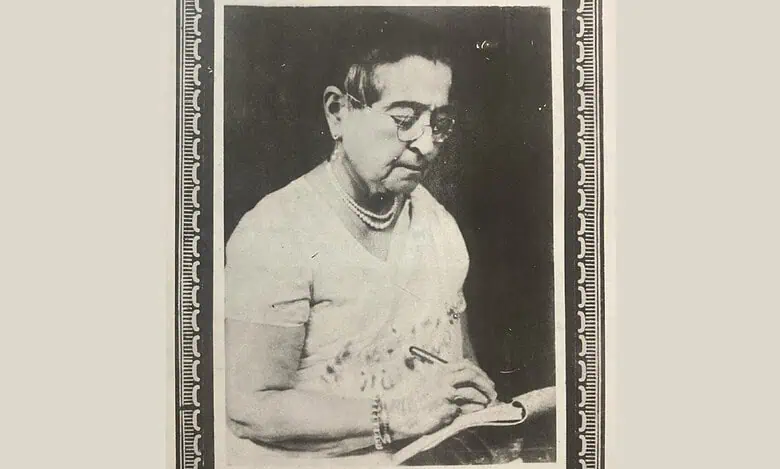
  Sughra Humayun Mirza; Photo courtesy: Safdaria school

Today, we honour the legacy of Sughra Humayun Mirza Begum, whose courage and vision paved the way for future generations.

Sughra Humayun Mirza was born in December 1882 in Hyderabad. Her father, Dr. Safdar Ali Mirza, was a Captain-Surgeon in the Nizam’s Army and a pious man of Sufi leanings. He had migrated to Hyderabad during the reign of Mir Nizam Ali Khan, Asaf Jah Il.

Growing up Begum Sughra was home tutored in Persian and Urdu. As a young woman, she was inspired by nationalist and reformist ideals. She was married to Barrister Syed Humayun Mirza, after whom the Humayun Nagar area in Hyderabad is named.

Edited magazines

After her marriage, she travelled widely and read extensively and became a person of wide knowledge. Sughra Mirza served as the editor of many journals related to women. They include Al-Nisa (The Woman), and Zaib-un-Nisa (Women’s Adornment). Al-Nisa focused on social issues like cleanliness, health, nursing, and critiqued outdated customs like child marriage and polygamy. The readers of the magazine extended beyond the Deccan region. It spread throughout the mainland of British India, which included Lahore, Delhi, Lucknow and Aligarh.

By 1913, Begum Sughra became the secretary of the Anjuman-e-Khawatin-e-Islam (Association for Muslim Women), contributing to the organization’s efforts toward improving the status of women. Soon after, she joined the Anjuman-e-Khawateen-e-Dakkan (Deccan Ladies’ Association).

She spread her work

She started similar organisations in Madras, Delhi and Aurangabad. They became platforms for discussing issues related to girls’ education, teaching trades and crafts, fundraising for educational initiatives, vocational training and arranging sports activities for women.

Begum Sughra contributed articles to various newspapers and magazines advocating for social reforms. Being a prominent Urdu language writer of her time she authored several books on women’s education, ‘Safarnamas’ or travelogues, novels, short stories, poetry, and essays.

Wrote books

Some of her well known literary works include – Sarguzisht-e-Hajra (1926), Mohini (1929), Musheer-e-Niswan ya Zohra (1930), Raaz-o-Niyaaz (1933), Bibi Toori ka Khwaab (Toori’s Dream–1952), Awaz-e-Ghaib (Voice of the Unknown).

Begum Sughra wrote her thoughts and authored most of her books by the pen name ‘Haya’.

Writing about Hindu-Muslim unity, encouraging the use of swadeshi goods, working towards setting up national universities and promoting education in the mother tongue, Begum Sughra’s achievements set her apart as a pioneer of her era.

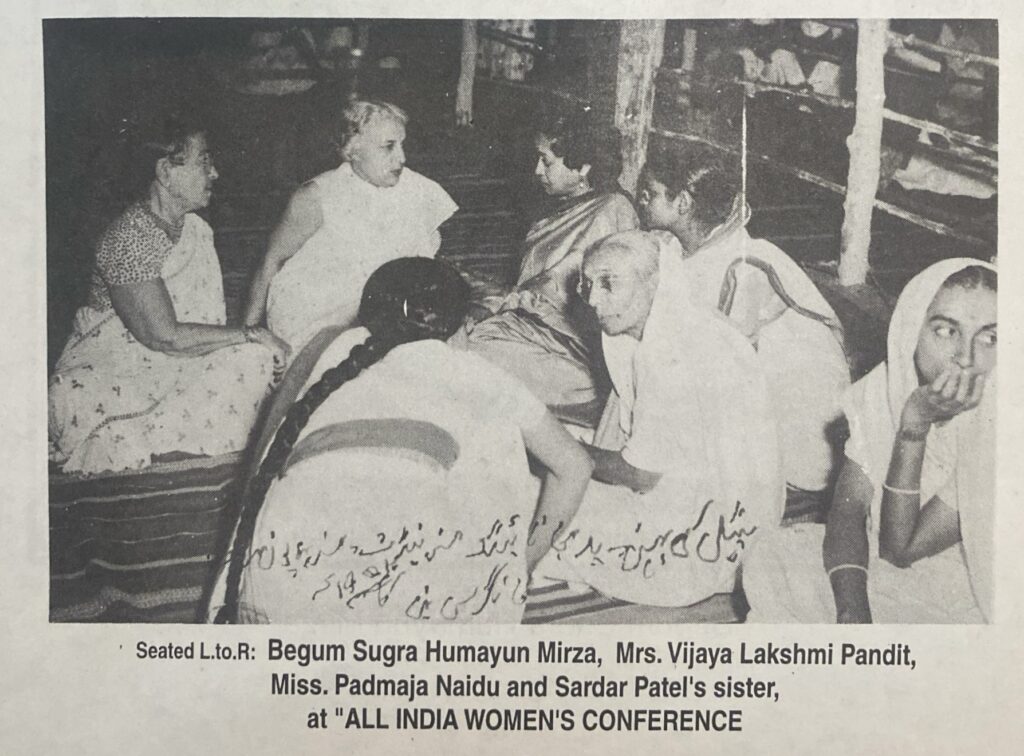
She extensively traveled in India as well as many countries in Europe meeting people of repute and broadening her horizons. She met prominent figures like Mahatma Gandhi, Kasturba Gandhi, Dr. Rajendra Prasad, Pandit Jawaharlal Nehru, Shah and Queen of Iran, Dr. Ravindranath Tagore, Vijaya Lakshmi Pandit, Sarojini Naidu and many others.

She expressed through her poems, books and letters. Begum Sughra wrote letters to Jawaharlal Nehru, and even to Adolf Hitler asking him to end the war.

She kept an autograph book which was filled with messages from her esteemed friends and acquaintances. On 11th April 1944, Vijaya Lakshmi Pandit penned a message in Sughra’s book–“India will progress in proportion to the progress of its women. Let us realize this and march forward boldly with faith in the future.”

Royal Asiatic Society, London

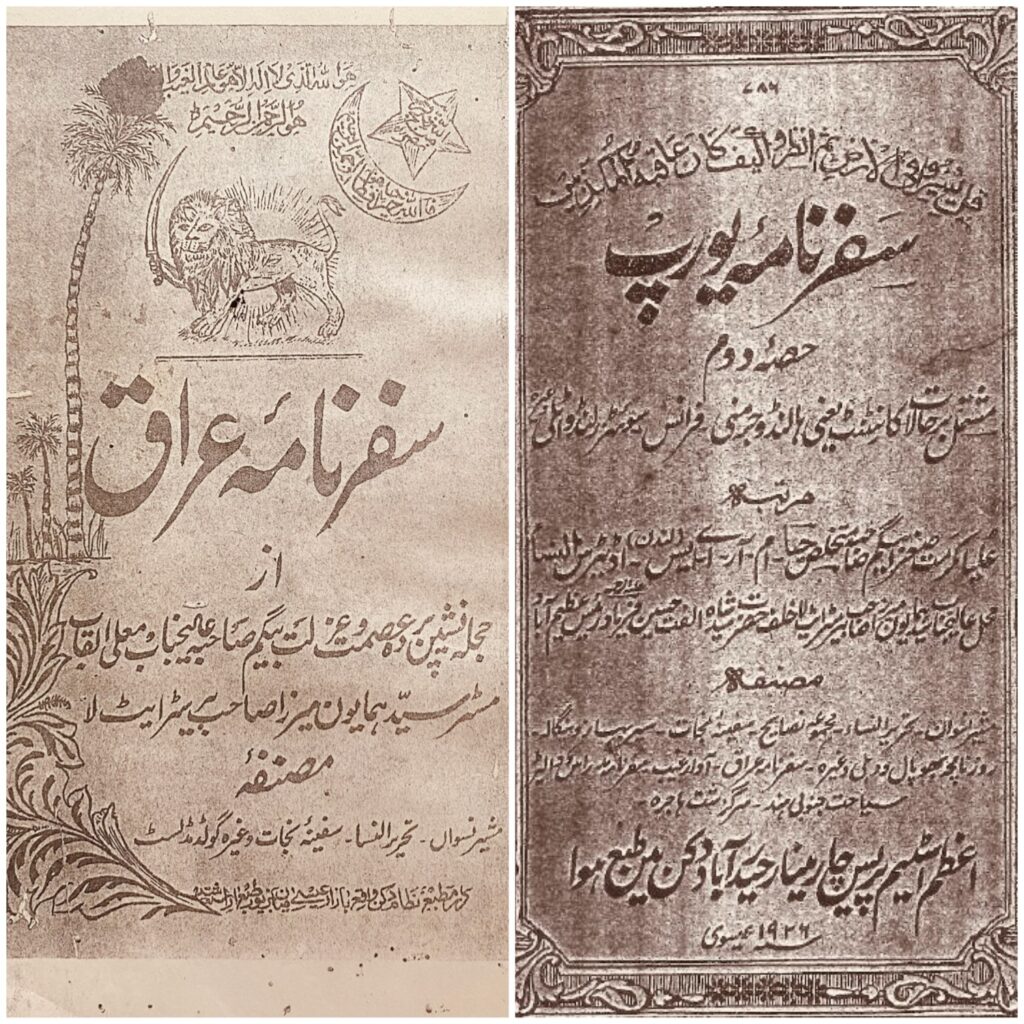
In 1923, she was made a member of the Royal Asiatic Society of London. Begum Sughra wrote five travelogues, three of which document her travels within India between 1914 and 1918, while two feature her journeys to Iraq in 1915 and through Europe in 1924.

Her domestic travel books focus more on social engagement and reformist ideas. Her international travels explore more her personal observations of the countries she visited, while discussing social issues.

In her travel book ‘Safarnama-yi Yurap’ published in 1926, she detailed her travels through England, Germany, France and Switzerland, and mentions about her time as a guest in Geneva of Sultan Abdulmejid II of Turkey, the last Ottoman caliph.

Madarasa-e-Safdaria

One of Sughra Begum’s most extensive educational projects was the Madarasa-e-Safdaria, which she founded in 1934, it has flourished since and is a beacon of education. Located in Humayun nagar

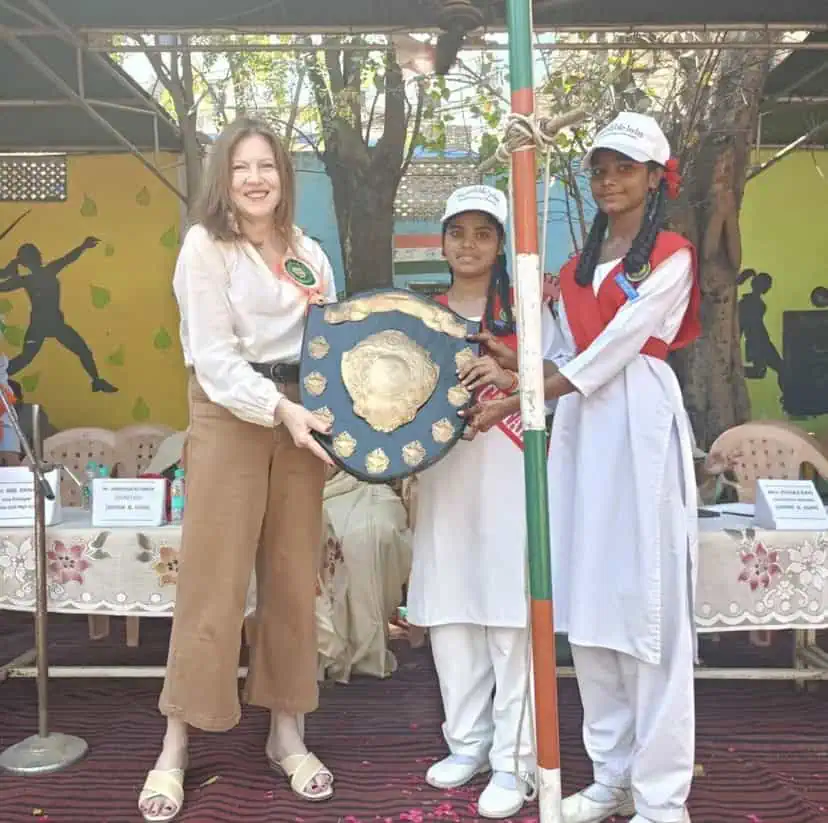
Safdaria school’s objective is to provide free of cost education to the girl child born in Hyderabad’s lowest socio-economic class families. Several dignitaries and luminaries have visited the school since its founding. They include Dr. C Rangarajan, former governor of A.P., Air Chief Marshal Idris Latif, former MP Denzil B. Atkinson, Kumudben Joshi, former governor of AP, Dr. Syed Abid Hussain, and very recently in 2025 U.S. Consul General of the US in Hyderabad, Jennifer Larson.

A few years back, the students of Safdaria school had the opportunity to visit Delhi to meet Dr A.P.J. Abdul Kalam at the Rashtrapati Bhavan.

Screenshot

Over the years, Safdaria School made rapid progress, achieving high standards of girls’ education at both Urdu and English medium levels.

When Begum Sughra founded the school, she had to donate her property for its maintenance to meet the expenses and give scholarships to orphans and girls from destitute families.

Her acts of kindness and service include directing her efforts in raising funds for Aligarh Muslim University, providing relief for those affected during the Musi floods of 1908, and even for the victims of an earthquake in Persia.

Standing firm

As one of the first woman activists in Hyderabad, Begum Sughra faced a great deal of challenges yet she stood firm in her resolve to work for women’s rights and their education. Her impact resonates far beyond her time, reminding us of the strength and resilience that women embody in every field and every corner of the world.

She’s a prominent figure in the history of Hyderabad who needs to be celebrated and recognised on a global platform.

Ameera Aaiza is based in Washington, DC, with her roots in Hyderabad, India. Her work explores history, culture, art, and architecture. She contributes columns and blogs and is currently in the process of writing/authoring a book.

source: http://www.siasat.com / The Siasat Daily / Home> News> Hyderabad / by Ameera Aaiza / March 12th, 2025