Tag Archives: Dr Muhammad Raziul Islam Nadvi

2022: 10 must-read stories on Muslim women

INDIA :

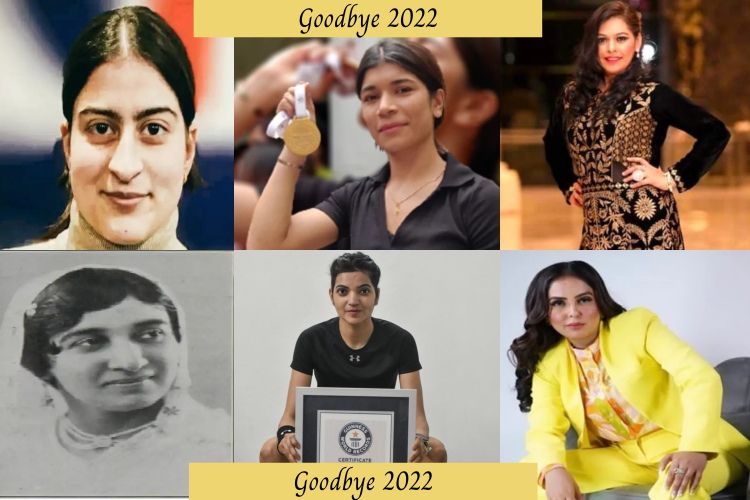
Influential Muslim Women of 2022

As we gear up to bid goodbye to the year 2022, here’s an about-turn to look at the most influential Muslim women who with their girt and strength have embedded their names in history.

Meet Mehr Sheikh from being a news anchor working with a company in Noida, Uttar Pradesh, to setting up her office in front of the same company, she has come a long way. She is presented as one of India’s youngest mainstream female motivational speakers, founder-director of Papr Network, and Editor-in-Chief of Nikology, a YouTube channel with nearly 2 million subscribers.

From being routed in regular corporate life to breaking the barriers and taking running as a full-time profession Sufiya Sufi set many records. From being the fastest female to run the Indian Golden Quadrilateral Road in 6 days, 12 hours, and 6 minutes to taking up the challenges of running continuously 200 km in Qatar and later running across the globe she has come a long way.

With many beauty pageants coming back to India in 2022, Tabassum took the podium a notch up when she represented India as one of the jury members in a beauty event held in South Korea’s Seoul

In the field of sports, Nikhat brought laurels to India as apart from winning the gold at the world championship, she won gold at the National Championship, the CWG and the Stranjde Memorial championship.

Do not marry your sisters, daughters, and other relations to men as their second wives or to those who are inclined on marrying another woman for no reason.” Hundreds of Muslim women unanimously passed the above resolution moved by Begum Jahanara Shahnawaz at the 7th All India Muslim Ladies Conference in 1920.

The All India Muslim Ladies Conference was established in 1914 under the presidentship of Begum Sultan Jahan, the ruler of Bhopal, and the leadership of women like Begum Waheed, Abru Begum, and Begum Shafi to bring social, educational, and economic reforms among Muslim women. Within six years of its inception membership of the Conference increased from a few dozens to hundreds. These women raised money to open and maintain girls’ schools in different parts of India and formed a public opinion in support of education.

Apart from the white robe of a doctor and the operation theatre, Dr. Jahanara Begum, a prominent obstetrician of Assam, also dons colourful costumes and has a wide stage to perform. Away from the hospitals and clinics, Dr. Begum has made theatre a part of her life despite her hectic professional schedule. While she has healed thousands of people as a doctor, she has also impressed numerous playwrights and audiences as an actor. 

Syeda Salva Fatima – Amazed at her confidence, he decided to give wings to her dreams and she was enrolled in the Andhra Pradesh Aviation Academy in 2007. Despite failures, she remained undeterred and finally completed her training. She logged in 200 hours of flying in the Cessna 152 aircraft and 123 Hours of solo flight. She says,My best moment was when I flew for the first time. Also, every time I fly the big bird Airbus 320 in command, that’s the best feeling ever!

Farida Jalees, the founder of Lucknow Mahila Sewa Trust, who had boldly four startups during the Covid-19 lockdown to sustain the livelihoods of some 2.5 lakh women associated with her self-help group, said, “we have never felt these two (festivals) are different. We endeavor to make Jeevika Bakers viable and for this, I have been making use of every festival to sell baked foods under a canopy in marketplaces.”

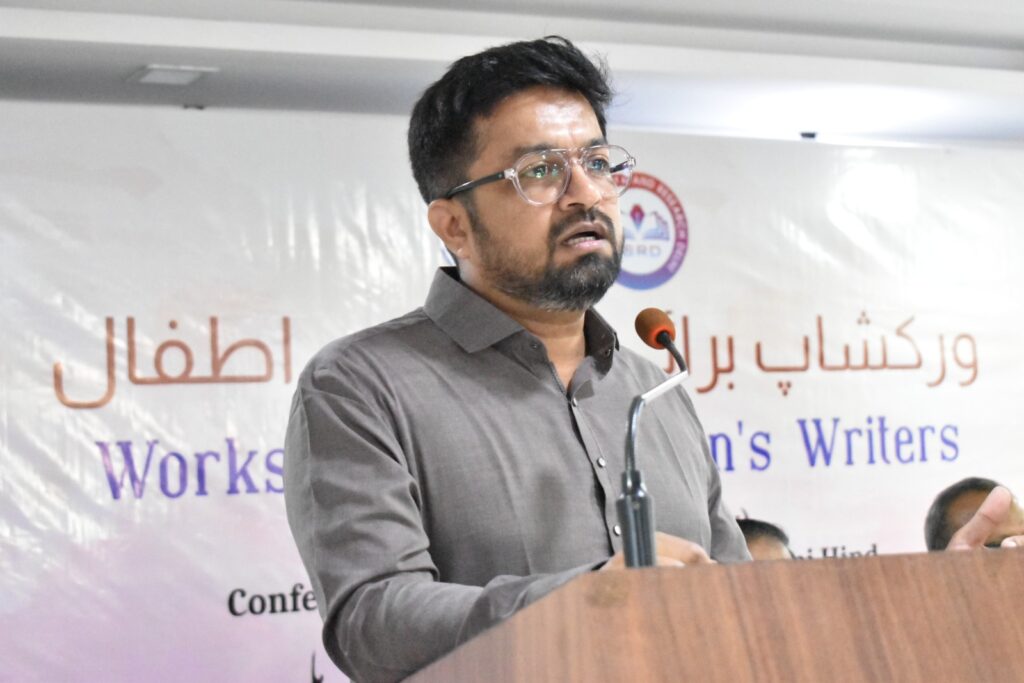
Dr.Muhammad Raziul Islam Nadvi is a renowned Urdu author advocates Muslim women’s participation in mosques and namaz

Naseem Shafaie, the only Kashmiri woman to get the Sahitya Akademi award and the recipient of this year’s State Award for Literature rues that the Kashmiri language is being ignored by natives who prefer to speak with their children in Urdu (Hindustani) and not in their mother tongue. She laments that the language was not getting due treatment by its natural speakers. “Let all read it and be it our language,” she told Awaz-the Voice. She said there is a general trend among people in Kashmir to speak in the Urdu (Hindustani) language to their children at their homes.

source: http://www.awazthevoice.in / Awaz, The Voice / Home> Stories / by Shaista Fatima, New Delhi / December 29th, 2022
Workshop urges creation of high-quality Islamic children’s literature

NEW DELHI :

New Delhi :

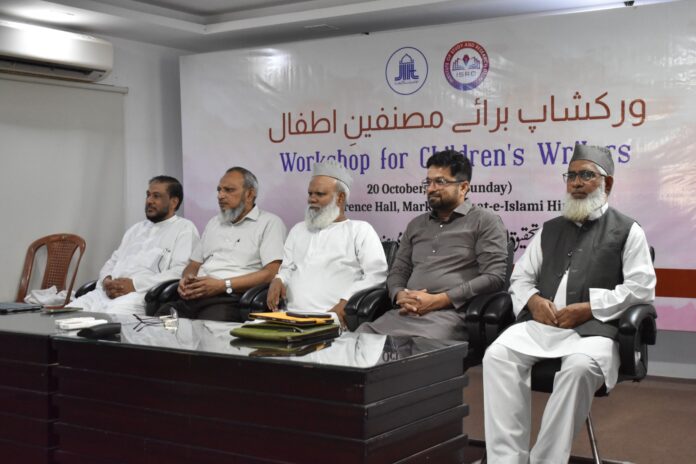
A recent workshop for children’s writers and authors, organized by the Institute of Study and Research Delhi (ISRD), highlighted the urgent need for quality Islamic literature for children and called for initiatives to train the youth and new generation in this endeavour.

Held at the Jamaat-e-Islami Hind headquarters here, the workshop was attended by over 50 research scholars and individuals interested in children’s literature, affiliated with institutions such as Jamia Millia Islamia, Jawaharlal Nehru University, National Council for Educational Research and Training (NCERT), and the Education Department of the Delhi Government, with nearly half of the participants being women, some of whom have been working in the field of children’s literature for several decades. ISRD, which conducted the workshop, has been actively promoting Islamic thought and encouraging writing and authorship through various programmes for the last more than five years.

Speaking on the occasion, AIMPLB spokesperson and editor of the monthly Urdu magazine Afkar-e-Milli Dr Syed Qasim Rasool  Ilyas, critically reviewed children’s Islamic literature under the title “Reimagining Children’s Islamic Literature: A Critical Analysis for Modern Needs.” He emphasized that today, the primary goal of acquiring knowledge and education has become mainly about obtaining good jobs and accumulating wealth, which fosters a materialistic approach and attitudes among children. He stressed that education should focus on developing children into good human beings, ethical individuals, and righteous Muslims.

ISRD secretary Asif Iqbal presented a survey conducted among 254 children in the area to understand their reading habits. Through a PowerPoint presentation, he highlighted key findings, noting that children demonstrate a keen interest in reading books and still place high value on printed materials. Both parents and teachers should adopt a positive and proactive role in fostering children’s reading habits. He pointed out that children tend to read more in Hindi and English compared to Urdu, indicating a need for special attention in this area, likely due to education in English schools.

While it is true that screen time on mobile devices reduces children’s reading time, authors and publishers should consider how to capture children’s attention through mobile platforms to make their content accessible.

The survey revealed that children enjoy reading adventure stories, Islamic history, and fiction, with a particular interest in Islamic heroes in the current context. Parents provide children with books, and they often receive books as gifts. Notably, children are also purchasing books with their pocket money, which is commendable and should be encouraged further. There remains a significant preference for reading printed books compared to e-books and audiobooks.

However, the question persists: to what extent are we meeting the needs of children in the community? While it is a fact that children engage with online games, social media, and various internet content, they also recognize that books play an essential role in their lives, and they express a desire to read. They prefer simple and accessible language along with colourful, graphic books available at affordable prices. Authors and publishers should focus on these aspects.

In his presidential address, renowned Islamic scholar and author of more than 100 books, Dr Muhammad Raziul-Islam Nadvi, Secretary of Jamaat-e-Islami Hind, emphasized that children’s authors should keep three key principles in mind: (1) While writing stories, consider the tastes and psychology of children, subtly incorporating Islamic values, teachings, and culture into their works; (2) present credible material, particularly regarding Islam, and avoid incorrect or misleading information; (3) use very simple and accessible language.

Dr Raziul-Islam Nadvi noted that during the initial period of Jamaat-e-Islami Hind, its members produced quality religious literature for children, but there has been a decline in this area over time. However, he affirmed that renewed attention is now being given to this vital aspect.

Renowned children’s author Mohammad Siraj Azeem, founder secretary of All India Adab-e-Atfal Society Delhi, delivered a lecture titled “Exploring Pluralistic Society and Its Impact on Children Amid Increasing Extremism.” He highlighted several factors contributing to extremist tendencies in children: 1) the destruction of the joint family system, 2) parents’ indifferent relationships and callous connections with their children, 3) uncontrolled technological advancements and excessive use of electronic gadgets, including mobile devices by children, and 4) various pressures from parents, the environment, or technology. Addressing the question of how tendencies towards violence arise in children, he urged parents to connect well with their children, give them ample attention, and focus on their all-round training and nurturing, as parents serve as crucial role models for their children, thus they should demonstrate the best conduct and behaviour.

The workshop commenced with welcoming remarks from Mr Saleemullah Khan, Delhi state president of Jamaat-e-Islami Hind. Following this, experts delivered insightful lectures on various aspects of children’s literature.

Maulana Inaamullah Falahi, associated with the JIH Markazi Taleemi Board, spoke on “The Need and Importance of Children’s Literature in the Light of Islamic Values.” Dr Shadab Musa, JIH Assistant Secretary, presented on ‘Understanding Stages of Cognitive and Intellectual Development in Children’.

Dr Faizan Shahid discussed “The Effects of Short Stories on the Psychological, Social, and Moral Growth of Children .”

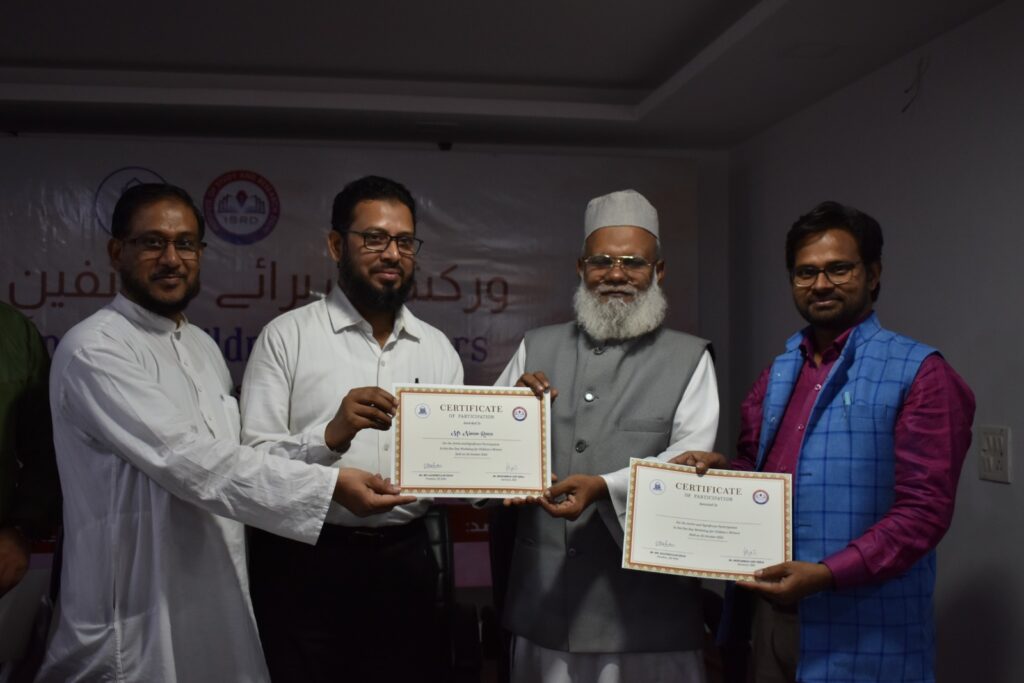
The workshop consisted of three sessions, moderated by Noor-ul-Islam Rahmani, Naim Raza, and Muhammad Maaz. All participants were awarded certificates.

source: http://www.indiatomorrow.net / India Tomorrow / Home> Education / by admin india tomorrow / October 23rd, 2024