Tag Archives: Ghulam Sarwar

Celebrating a Century of Educational Book House: An Enduring Legacy of Literature and Learning in Aligarh

Meerut / Aligarh, UTTAR PRADESH :

Responding to this need, Abdul Shaheed Khan, an alumnus of MAO College Aligarh from Meerut, opened a small stationery shop in 1925, named this establishment “Educational Book House”, marking the beginning of a new chapter in Aligarh’s literary landscape.

Aligarh Muslim University, renowned as a beacon of knowledge and service to the nation, has nurtured multiple institutions dedicated to education and culture since its inception. Among these, the Educational Book House (EBH) stands out as a distinguished establishment, symbolizing a century of dedication to the dissemination of literature and learning.
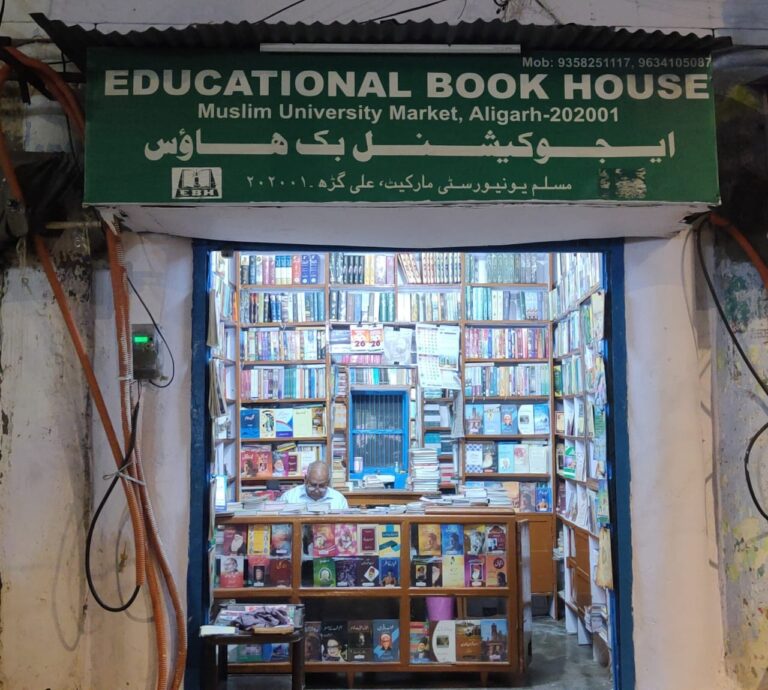
Established in 1925, EBH is more than an ordinary bookstore; it holds a revered position among bibliophiles, scholars, and literary circles both nationally and internationally. Over the past hundred years, EBH has played a pivotal role in spreading the literary and academic works of Aligarh across a broad audience, ensuring its legacy endures today. Its contribution to the development and promotion of Urdu language and literature is of profound importance in the history of book publishing

Historical Roots of Book House at Aligarh:

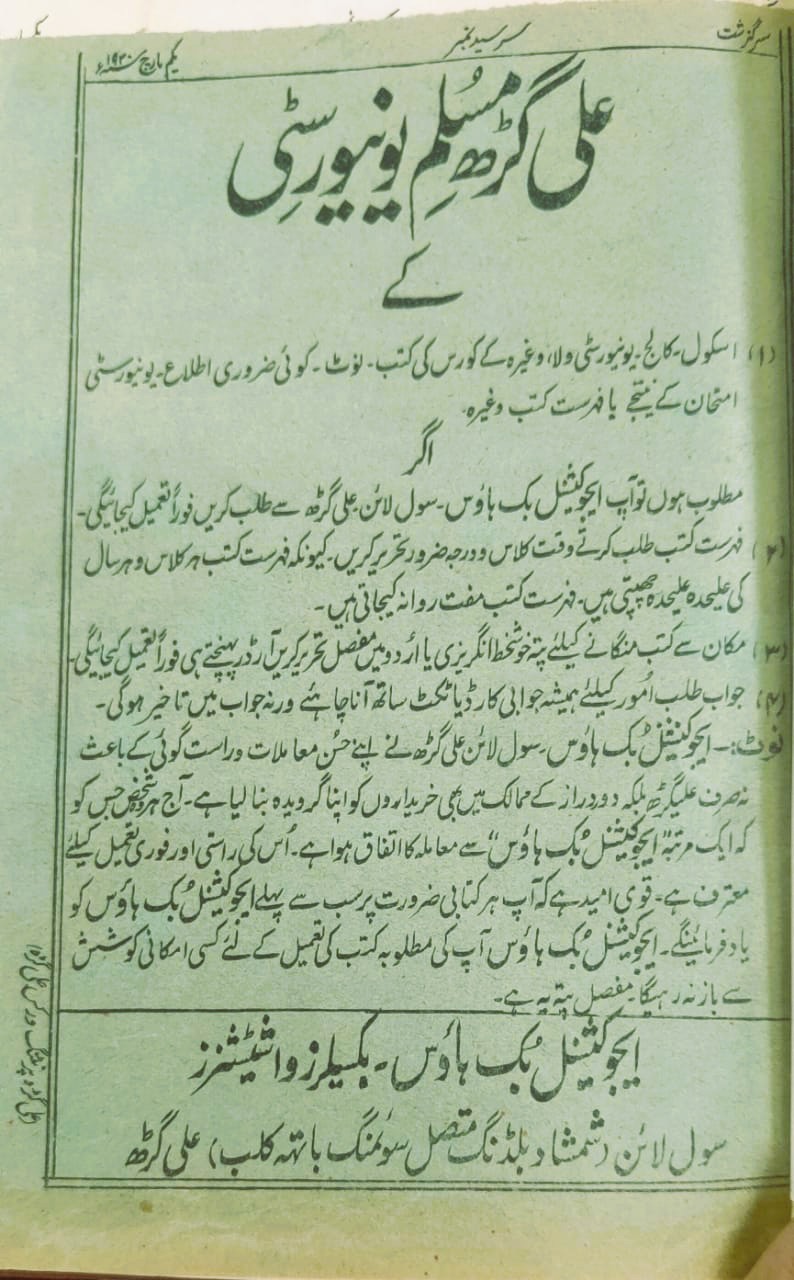
The story of Book house in Aligarh is intertwined with the visionary efforts of Sir Syed Ahmad Khan (1817-1898) and his pioneering movement to elevate Muslim education in India. As early as 1888, Sir Syed aimed to establish a bookstore in Aligarh to serve the students and teachers of his educational institutions.  He launched a campaign to establish a bookstore in Aligarh and even raised funds for this purpose.  An advertisement in the Aligarh Institute Gazette dated 7th July 1888 announced the opening of a bookshop: “Aik Tijarti Dukan Kitabon aur Stationary yani Saman Nosht wa Khwand Kay Farokht Ke Aligarh Mein” – a commercial shop for books and stationery in Aligarh. (see AIG, 7th July 1888)

This initial venture was called the “College Book Depot” which quickly became a vital hub for literature, academic materials, and stationary. It functioned as a bridge connecting scholars, students, and the wider community, fostering a culture of learning and intellectual curiosity in Aligarh. The original depot thrived under the stewardship of Mir Wilayat Hussain (1862-1949) but faced decline after his retirement in 1920, eventually closing down. (see Aap Beeti ya MAO College Ke Kahani, Mir Wilayat Hussain Ki Zubani, Sir Syed Academy, Aligarh, 2024, p.126).

The Birth of EBH

The establishment of Aligarh Muslim University in 1920 created a renewed demand for a dedicated bookstore that could cater to the needs of students and faculty alike. Responding to this need, Abdul Shaheed Khan (1898-1968), an alumnus of MAO College Aligarh from Meerut, opened a small stationery shop in 1925 near Fuller Road, close to Tasweer Mahal. He named this establishment “Educational Book House”, marking the beginning of a new chapter in Aligarh’s literary landscape. His vision was to provide affordable and accessible academic books and stationery, supporting the educational aspirations of students and teachers.

Abdul Shaheed Khan, Founder EBH

Moving to Shamshad Market:

In 1928, Sahibzada Shamshad Ahmed Khan (1888-1954), son of eminent educationist and vice-chancellor of AMU, Sahibzada Aftab Ahmed Khan (1867-1930), built a bustling commercial complex known as “Shamshad Building” in civil line Aligarh near AMU. This market was designed to serve the needs of the university community and local residents, housing shops for tailoring, groceries, milk, bread, bicycle repairs, and more. A mosque was also constructed within the complex, serving as a spiritual and community center.

Recognizing the importance of proximity and accessibility, Sahibzada Shamshad Ahmed Khan requested Abdul Shaheed Khan to relocate EBH to this new marketplace. The bookstore shifted there in 1929, anchoring itself within a vibrant hub of activity. This move significantly increased EBH’s visibility and accessibility, making it a central point for students and scholars seeking academic and literary materials.

The Aligarh Magazine (1929-30) praised Shamshad Market as a vital institution, emphasizing how it simplified the lives of students by providing essential books and stationery close to their place of study. In an editorial note, editor write:

“The Shamshad building has undoubtedly rendered an invaluable service to the student community of the University, for all the requirements of the students are to be found in the shops contained in the building and they have no more to worry themselves by running down to the city to fetch even the most ordinary things of everyday use. Sahibzada Shamshad Ahmad Khan deserves the thanks of all those whose life has been made easy and pleasant by the erection of this splendid building and we most cordially congratulate him on this.” (see Editorial Notes, Aligarh Magazine, 1929-30, p.11)
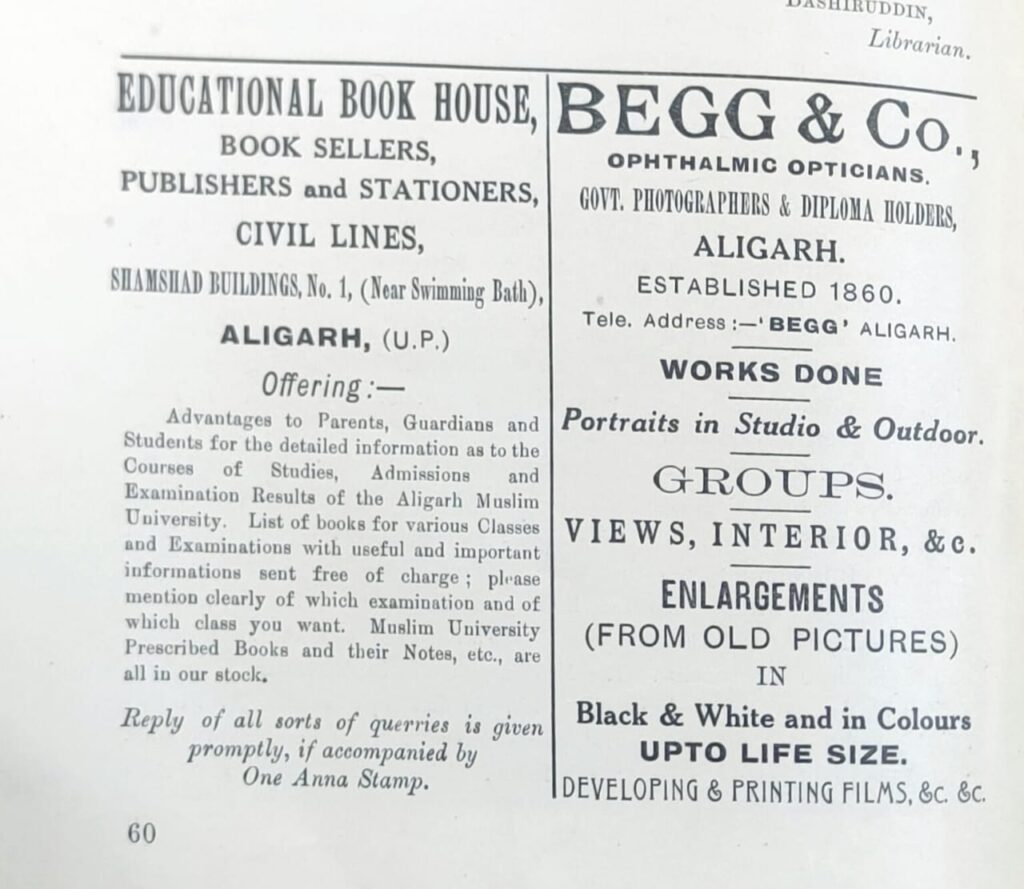
According to renowned historian Prof. Iftikhar Alam Khan, in his authoritative work “Muslim University Ki Kahani, Imarton Ke Zubani 1920 to 1947”, the Shamshad Building was constructed in 1929 at a cost of Rs. 30,000, financed by Sahibzada Shamshad Ahmed Khan’s mother. The building housed 18 shops, including EBH, and was a bustling center of commercial and cultural activity.

EBH’s shop within this complex charged the highest rent—Rs. 31—indicating its prominence and importance in the market. Its strategic location made it an essential resource for students, teachers, and literary enthusiasts, solidifying its reputation as a hub of education and culture. (See “Muslim University Ki Kahani, Imarton Ke Zubani 1920 to 1947”, EBH, Aligarh, 2006, pp. 161-165)

Early Contributions to Literature and Publishing:

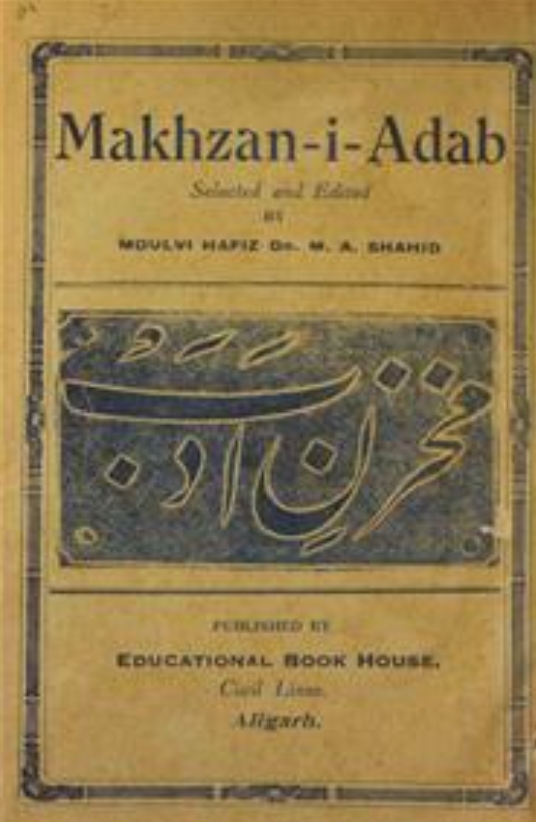
Even before India’s independence, EBH distinguished itself as a publisher committed to a broad spectrum of subjects. Unlike many publishers focused solely on literature or religion, EBH ventured into publishing works on children’s psychology, social sciences, philosophy, history, linguistics, and sciences. Its publications catered to the academic community and the general public, fostering a culture of knowledge dissemination. Notable early publications included: “Kainat Adab” by M. A. Hameed Alig (1935) editor Nazara Meerut,  “Ahsan-ul-Intikhab’’ by Ahsan Marehrawi, “Makhzan Adab” by M. A. Shahid, “Sukhna Nau”“Husn-e-Intikhab’’ by Abdul Jaleel Kidwai,  “Delhi Ka Ek Madar Akhiri Mushaira” by Mirza Farhatullah Beg, “Dastan Rani Ketki Aur Kanwar Uday Bhan Ki” by Syed Inshallah Khan Insha, “Bachhon Ki Tarbiyyah” by Musarrat Zamani, “Al-Aqeedah Al-Hasna” by Molvi Sham and Maulana Abdussalam etc.
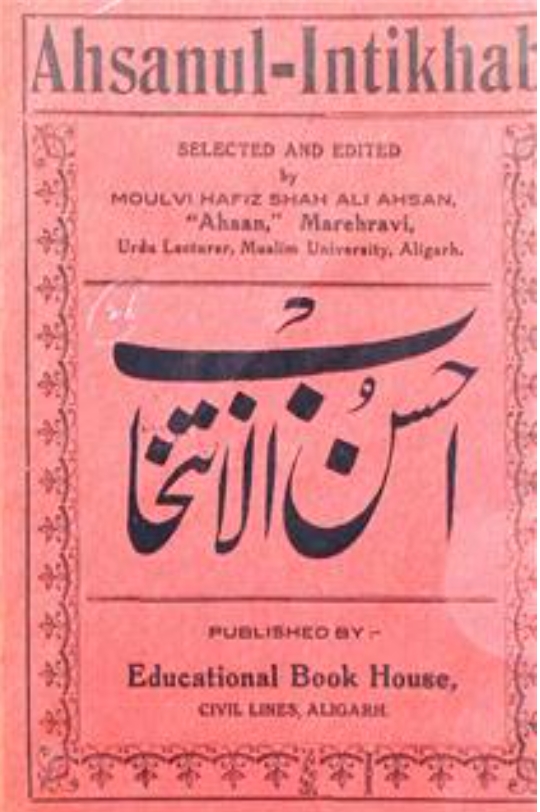
These works reflected EBH’s commitment to educational and literary growth, providing resources that supported scholarly pursuits and cultural development.

Post-Independence Challenges and Resilience:

The partition of India in 1947 was a tumultuous period that resulted in massive migrations and upheavals. Many families left their ancestral homes, but Abdul Shaheed Khan chose to remain in Aligarh. His son Asad Yar Khan says that just after independence many of his father’s relatives and friends asked him, he also migrate to Pakistan, but Professor Rashid Ahmed Siddiqui and Dr. Aale Ahmad Suroor advised him to continue his work from here, thus his father put this idea out of his mind.

His dedication ensured that EBH continued serving the community, moving from Shamshad Market to the Conference Market in 1951 to accommodate expanding operations.

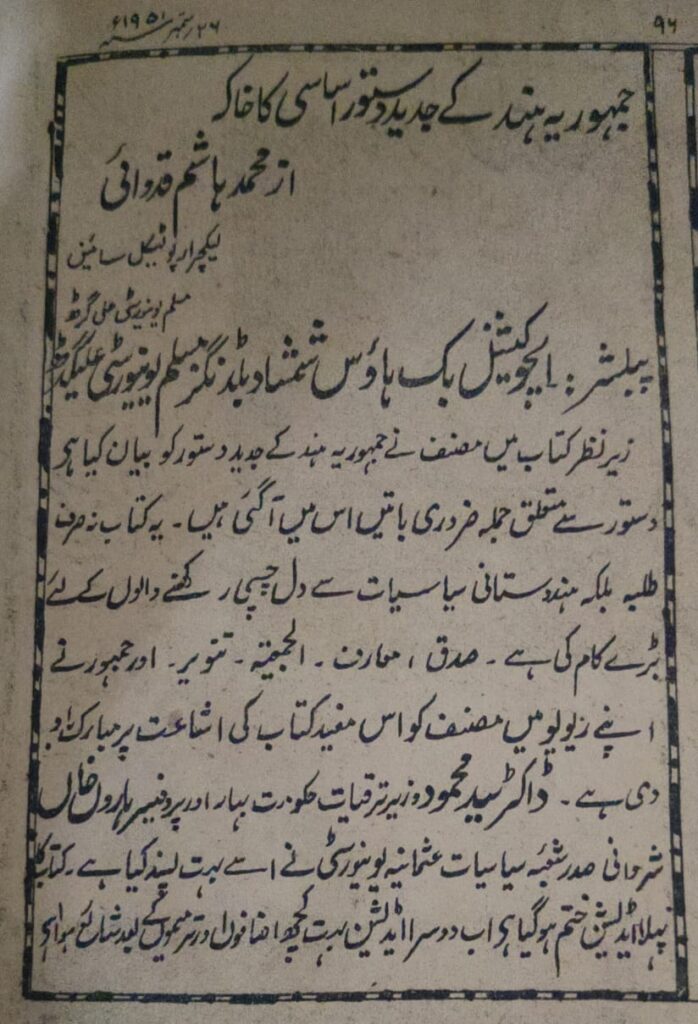
In this period, EBH expanded its publishing activities further. It published influential titles on Indian politics and governance, including Dr. Hashim Kidwai’s “Jhamooriya Hind” (1951), which analyzed India’s political system and constitution. Apart from Jhamooriya Hind, some of his titles are: Mubadiat Ilm Madniat (1951), Duniya Ke Hukoomatain(1961), Mubadi Siyasiyat (1971), Tareekh-e-Afkar siyasi (1982), Usool-e-Tammaddun, Usool-e-Siyasiyat (1988).
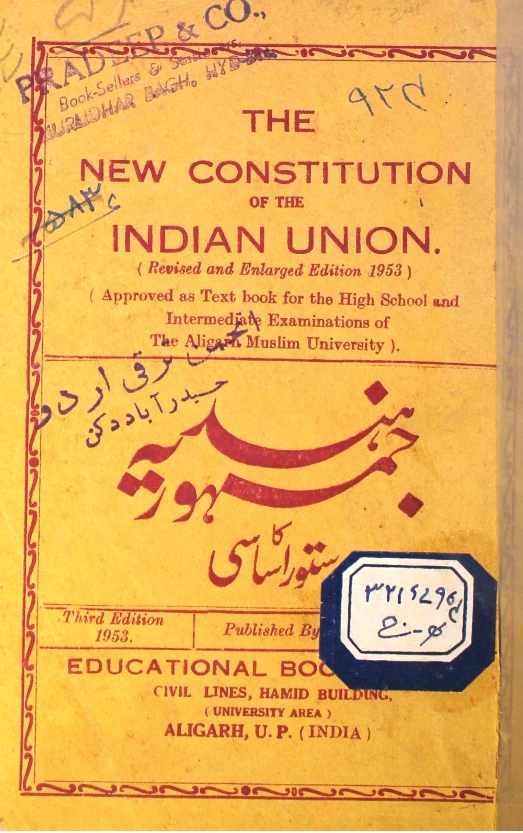
An Advertisements of book highlighted the importance of such works for students, scholars, and policymakers appeared in Weekly Jhamoor Aligarh dated 26th December 1955 states:

“In the book under consideration, the author has described the modern constitution of the Republic of India, all the essential things related to the constitution have been included in it. This book has done a great job not only for students but also for those interested in Indian political science. Sadq, Maarif, Jamiyat, Tanveer and Jamhur in their reviews congratulated the author for publishing this useful book.  Dr. Syed Mahmood, Minister for Development, Government of Bihar, and Professor Haroon Khan Sherwani, Head of the Department of Political Science, Osmania University, have liked it very much.”

Supporting Urdu Education and Literature:

A vital aspect of EBH’s mission was promoting Urdu language and education. The bookstore provided textbooks for institutions such as Jamia Osmania, Hyderabad, Aligarh Muslim University and Jamia Urdu, Aligarh and collaborated with teachers from Aligarh Muslim University to develop curricula that emphasized Urdu literature and linguistics.

This support helped to sustain and foster Urdu’s growth as a language of scholarship and culture across the region.
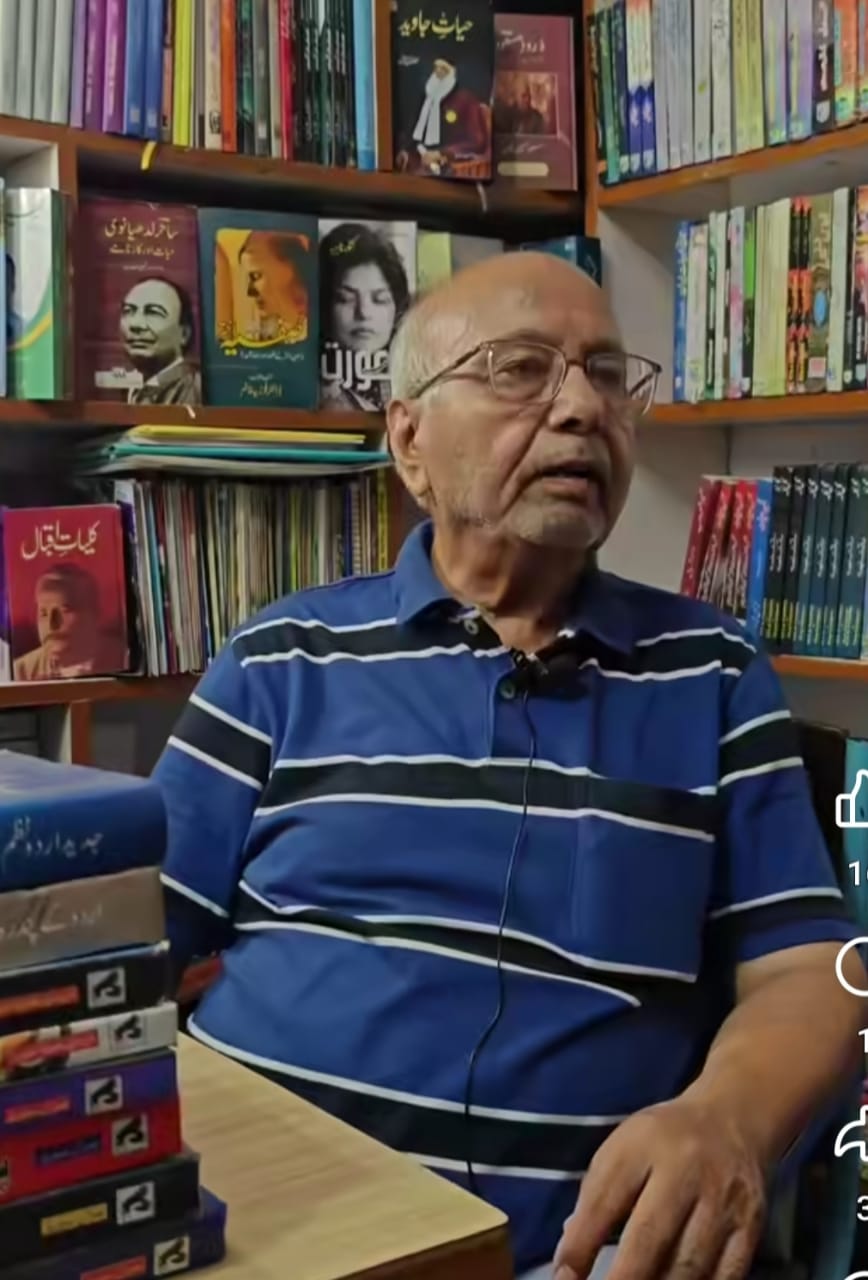
Asad Yar Khan

Following the death of Abdul Shaheed Khan in 1968, his sons, Asad Yar Khan (b. 1941, famously known as Kaptan Sb. as he served the Captain of Horse Riding in AMU several years) and Ahmed Saeed Khan (b.1948, affectionately Bhayya of all known people), inherited the legacy. Under their leadership, EBH grew into one of the most respected Urdu publishing houses in the subcontinent. They enhanced the quality of printing, expanded their catalog to include works of eminent poets, scholars, and political thinkers.
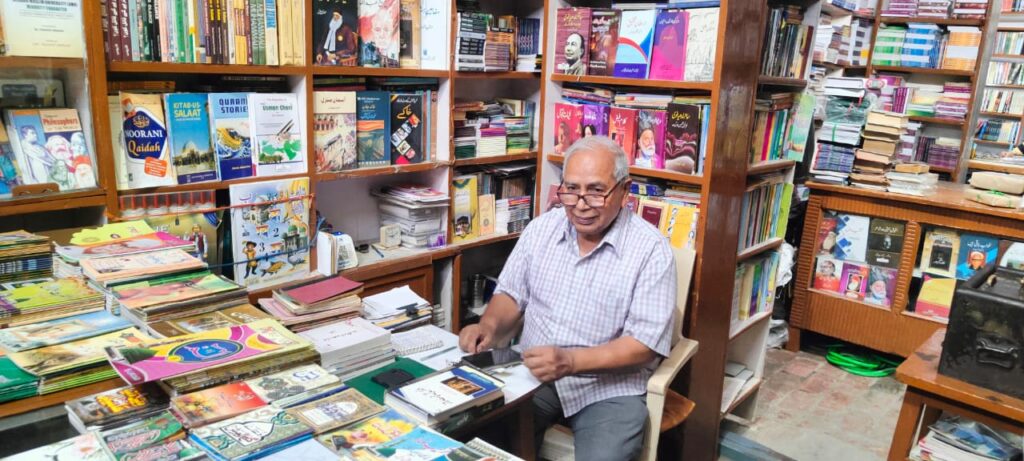
Ahmed Saeed Khan

Works of Prominent literary figures such as Iqbal, Faiz Ahmed Faiz, Khalifa Abdul Hakeem, and Ghulam Sarwar published and promoted through EBH, significantly contributing to the Urdu literary renaissance.

It also published works of  Wazir Agha, Abu Lais Siddiqui, Hassan Askari, Masood Hussain Khan, Akhtar Ansari, Syed Abdullah, Khaliq Ahmed Nizami, Muhammad Hashim Kidwai, Vaqar Azeem,  Majnoon Gorakhpur,  Ateeq Ahmad Siddiqui, Ibadat Barelvi, Raza Ali Abidi, Qurratul ain Haidar, Aal-e-Ahmad Suroor, Khurshid-ul-Islam,  Abdul Qadir Sarwari, Waheed Quraishi, Athar Parvez, Zaheer Ahmad Siddiqui, Khadeeja Mastoor, Ziauddin Alvi, Abdul Mughni, A.A. Hashmi, Rasheed Hasan Khan, Masood Hasan Khan, Masood Hassan Rizvi, Shaharyar,  Manzar Abbass Naqvi,  Mirza Khalil Beg, Abul Kalam Qasmi, Iftikhar Alam Khan, Asghar Abbas, Surraya Hussain, Sagheer Afrahim etc.

The Literary Magazine “Alfaaz”: A Cultural Milestone:

In 1975, Asad Yar Khan launched “Alfaaz”, a literary magazine dedicated to Urdu literature. Edited initially by Abul Kalam QasmiAlfaaz became a vital platform for poetry, literary criticism, and cultural dialogue. It provided a space for emerging writers and established intellectuals to exchange ideas, debate, and showcase their work.    
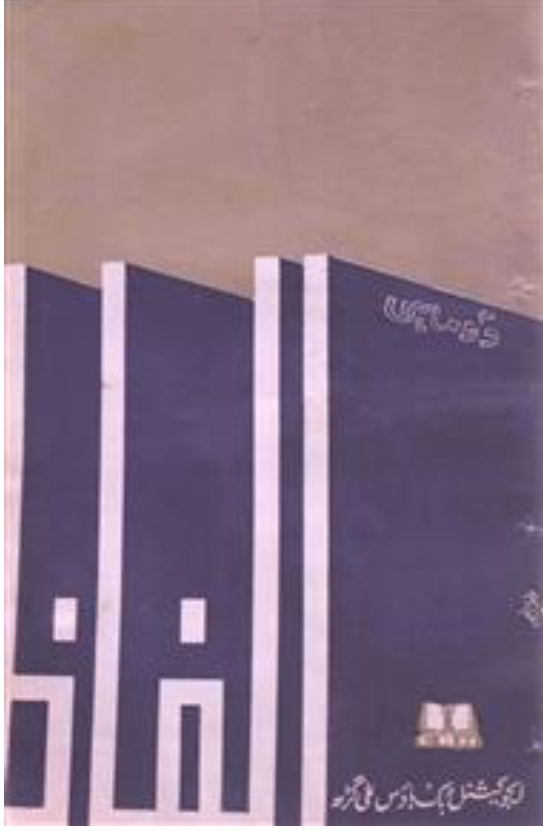
The magazine’s editorial board included notable scholars such as Khurshid-ul-Islam, Khalil-ur-Rehman Azmi, and Naseem Qureshi. Over nearly two decades, Alfaaz played an essential role in nurturing Urdu literature, fostering new talent, and preserving the cultural heritage of Urdu language and thought.

Personal Reflections:

The author’s personal association with EBH began in 1995, when as a seventh-grade student, he first visited the bookstore to buy storybooks and magazines. Over the years, this relationship deepened, leading to interactions with notable scholars, poets, and literary figures, including Professor Hashim Kidwai, Professor Mushir-ul-Hasan, Professor Qazi Abdul Sattar, Manzoor Hashmi, Professor Abul Kalam Qasmi, Qurban Ali (BBC Hindi), Tariq Hasan (Prominent Journalist), Mirza Masood Beg (Prominent Linguists) and many others.

In 2016, EBH published the author’s book on Aligarh’s journalism, “Aligarh Ke Urdu Sahafat”, a testament to their ongoing support for young writers and scholars.

Celebrating a Century of Service:

Today, as EBH celebrates its hundred years of existence, it stands as an integral part of Aligarh’s intellectual and cultural heritage. The dedication and honesty of Late Abdul Shaheed Khan and later his sons have made EBH a symbol of Urdu literature’s resilience and growth. Their efforts to promote Urdu, support education, and foster literary excellence have left an indelible mark on the Urdu circle.

A Legacy for the Future:

It is hoped that EBH continues to serve as a beacon of literary and educational excellence, nurturing new talents, publishing significant works, and promoting the Urdu language. As it celebrates a century of remarkable service, the entire community extends heartfelt congratulations and best wishes for its future endeavours.

The Educational Book House’s journey over the past hundred years stands as a shining example of dedication to knowledge, culture, and language. Its legacy is a reflection of the enduring power of literature to unite, educate, and inspire. May EBH continue to flourish and illuminate the path of learning for many more generations to come.

source: http://www.heritagetimes.in / Heritage Times / Home / by Dr Asad Faisal Farooqui / July 27th, 2025
Bihar Collective to Release Booklet “Remembering Muslim Makers of Modern Bihar” in Patna on Feb 23

Patna, BIHAR :

Patna :

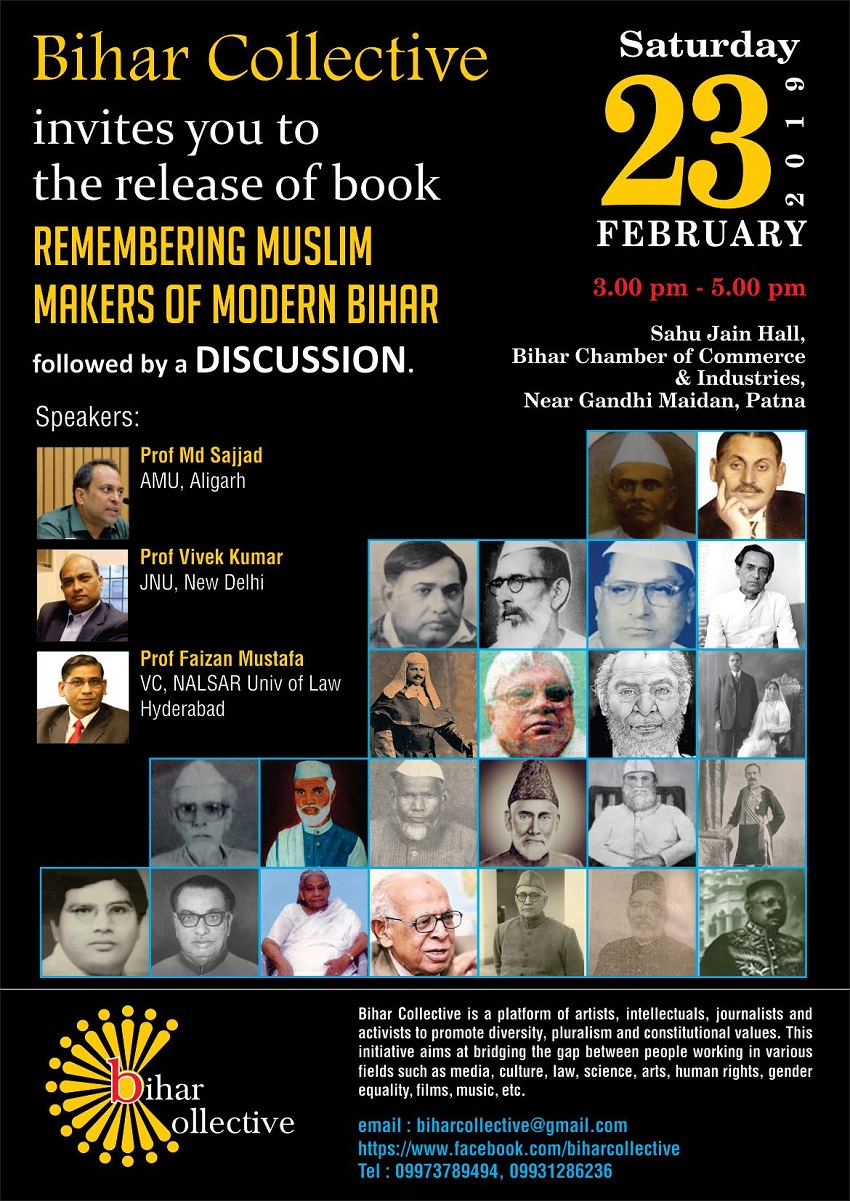
In an era of unprecedented majoritarian ascendance and anti-Muslim hatred, Bihar Collective, a platform of intellectuals and activists, has brought out a booklet highlighting the contribution of eminent Muslims in making the modern Bihar in the last 200 years.

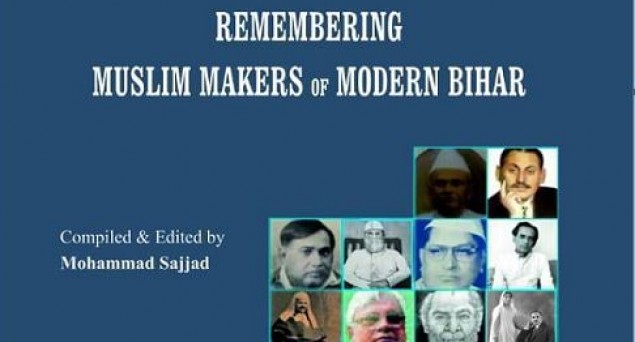
The booklet titled Remembering Muslim Makers of Modern Bihar has been compiled and edited by renowned academician and writer Prof. Mohammad Sajjad on the initiative of Bihar Collective.

The booklet will be released at an event in Patna on Saturday (February 23).

On the occasion, a discussion will also be held with Prof Faizan Mustafa, Vice Chancellor, NALSAR University of Law, Hyderabad; Prof Vivek Kumar, JNU, New Delhi; and Prof Mohammad Sajjad, AMU, Aligarh as panelists.

A Brief about Booklet:


Pre-empting a reasonable question about the title of the booklet, Prof Sajjad, who has compiled and edited it, writes in its preface: “A simple and obvious question that may readily arise is: why only Muslim makers of modern Bihar? Why not others too? This is indeed a valid and pertinent question.”

Responding to the question, he further says: “Candidly put, this is because of an unprecedentedly menacing rise of majoritarianism, bigotry, and anti-Muslim hatred, with open support of the state.

The Muslim identities are ominously threatened. There are also unabated attempts to dilute (or even take away) whatever little accomplishments have been made by the forces of social justice and secularism.

Only the Muslim segment however is threatened by the jingoist, exclusionary, violent nationalists, to be thrown out to another country. As if the other country is a dustbin, owned by these bigots, into which they can throw away everything they dislike! As if only the religious majority constitutes the nation! Notably, these jingoists had aligned with the British and had stayed away from the national movement.”

“Muslim contributions in the nation-making (and in the freedom movement) remain under-acknowledged, forgotten or even omitted. Erasure of their histories and memories seem to have become even more pronounced and vociferous, now, than ever before…The Bihar Collective therefore decided to compile a short profile of these inspiring role models, history-makers…This is small and humble step towards retrieving and restoring the nationalist provincial pantheons bearing Muslim identities,” says Prof Sajjad.

He, however, admits that the list of Muslim heroes of Bihar given in the booklet is not exhaustive as “…many have been left out essentially because of lack of documentations and researches. Not many have left their own accounts/memoirs; the available memoirs/accounts have not written much about all the personalities. In many cases, even otherwise “resourceful” descendants and/or associates of the history-makers have not been able to provide us with adequate (and credible/verifiable) details.”

Prof Sajjad hopes this small exercise may lead to some big academic work on these history-makers. “In short, this kind of venture may be said to be an ongoing exercise. This effort may hope to open up (and obtain) more details about such history-makers and would also get to know about many more of such peoples and processes, we failed to include here in this hastily prepared tiny volume, amidst constraints of resources and time.”

Names of Muslim Makers of Modern Bihar Mentioned in Booklet:
1. Syed Imdad Ali (d.1886]
2. Khuda Bakhsh (1842-1908)
3. Syed Amir Husain (1843-1910)
4. Imdad Imam Asar (1849-1934)
5. Shah Badruddin(1852-??)
6. Syed Ali Bilgrami (1853-1911)
7. Rasheed-un-Nesa (1855-1926)
8. Syed Noorul Huda (1855-1939)
9. Justice Syed Sharfuddin (1856-1921)
10. Shaikh Gulab (1857-1920)
11. Sarfaraz Husain Khan (1860-1931)
12. Maulana Mazharul Haque (1866-1930)
13. Batakh Miyan Ansari (1867-1957)
14. Sir Fakhruddin (1868-1933)
15. Syed Ali Imam (1869-1932)
16. Syed Hasan Imam (1871-1933)
17. Salahuddin Khuda Bakhsh (1875-1931)
18. Shafi Daudi(1875-1949)
19. Khwaja Md. Noor(1875-??)
20. Abdul Wadood (d.1955)
21. Syed Abul Hasan (1878-1960)
22. Sir Sultan Ahmad (1880-1963)
23. Maulana Sajjad (1880-1940)
24. Pir Mohammad Munis (1882-1949)
25. Abdul Bari (1882-1947)
26. Syed Sulaiman Nadvi (1884-1953)
27. Mohammad Yunus (1884-1952)
28. Shah Md. Zubair (1884-1930)
29. Syed Abdul Aziz (1885-1948)
30. Zubaida Begum Daudi (1886-1972)
31. Syed Tafazzul Karim (1886-1964)
32. Mr. Mohammad Shafi (1888-1955)
33. Qazi Ahmad Husain (1889-1961)
34. Dr. Syed Mahmud (1889-1971)
35. Ali Husain Aasim Bihari (1890-1953)
36. Shah Mohammad Umair (1894-1978)
37. Abdul Ahad Mohammad Noor (1894-1975)
38. Hakeem Md. Kabiruddin (1894-1976)
39. Maulana Usman Ghani (1896-1977)
40. Manzoor Ahsan Aijazi (1897-1969)
41. Shah Md Ozair Muni’mi (1899-1961)
42. Maghfur Aijazi (1900-1966)
43. Syed Jafar Imam (1900-1965)
44. Syed Badruddin Ahmad (1901-1983)
45. Mohammad Tahir (1903-???)
46. Syed Jafar Imam (1903-1979)
47. Syed Fida Husain (1904-80)
48. Abdul Qaiyum Ansari (1905-1974)
49. Wajihuddin Minhaji (1907-1984)
50. Syed Md. Aiyub (1910-1964)
51. Abdul Sami Nadvi (1913-????)
52. Abul Hayat Chand (1914-1958)
53. Ahad Fatmi(1915-1980)
54. Zawwar Husain (1916-80)
55. Shafiqullah Ansari (1917-1980)
56. Shah Mushtaq Ahmad (1917-2002)
57. Abdul Ghafoor (1918-2004)
58. Col. Mahboob Ahmad (1920-1992)
59. Taqi Raheem (1920-1999)
60. Zahra Daudi(1923-2003)
61. Shakoor Ahmad (1924-1981)
62. Syed Hasan (1924-2016)
63. Yunus Lohia (1925-2019)
64. Ghulam Sarwar (1926-2004)
65. Syed Shahabuddin (1935-2017)

A Brief about Author:


Prof Mohammad Sajjad teaches late-colonial and post-independent Indian history at the Centre for Advanced Study in History, Aligarh Muslim University. He has written several books including Muslim Politics in Bihar: Changing Contours; and Contesting Colonialism and Separatism: Muslims of Muzaffarpur since 1857.

His articles are published in reputed academic journals from Routledge, Sage, EPW etc. and also in anthologies from the Oxford University Press and Cambridge University Press.

Bihar Collective:
It is a platform of artists, intellectuals, journalists and activists to promote diversity, pluralism and constitutional values. It aims at bridging the gap between people working in various fields such as media, culture, law, science, arts, human rights, gender equality, films, music, etc.
Email: biharcollective@gmail.com
Facebook: https://www.facebook.com/biharcollective

source: http://www.indiatomorrow.net / India Tomorrow / Home> Society / by India Tomorrow / February 21st, 2019

Dr. Ijaz Ali is a surgeon who treats poor and seeks justice for Pasmanda Muslims

BIHAR :

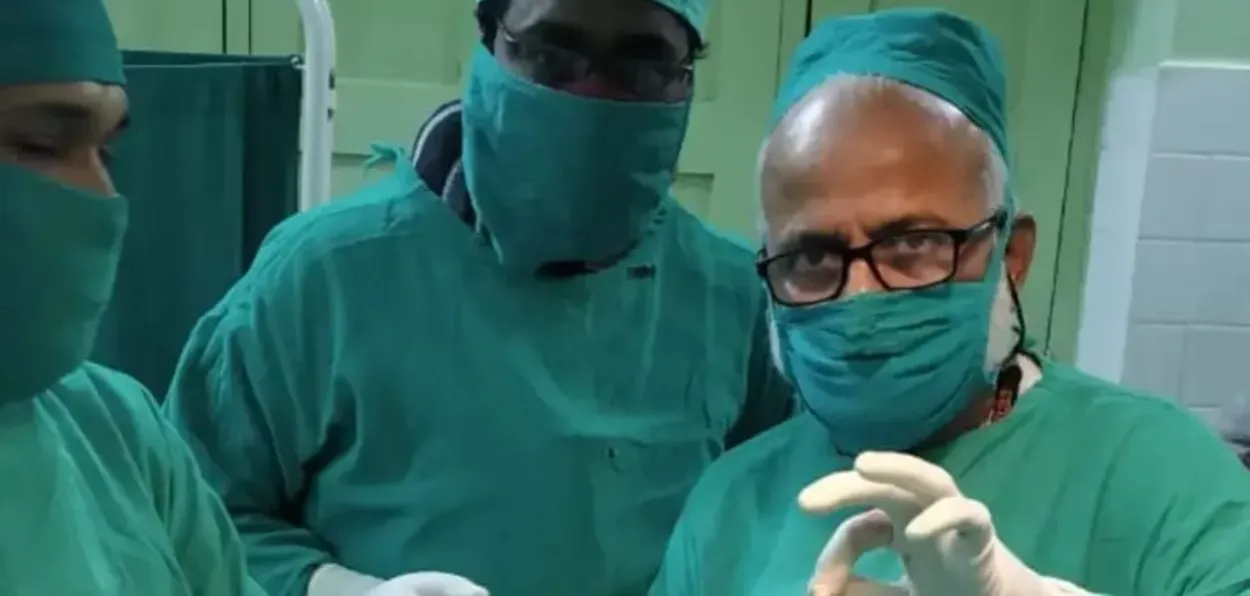
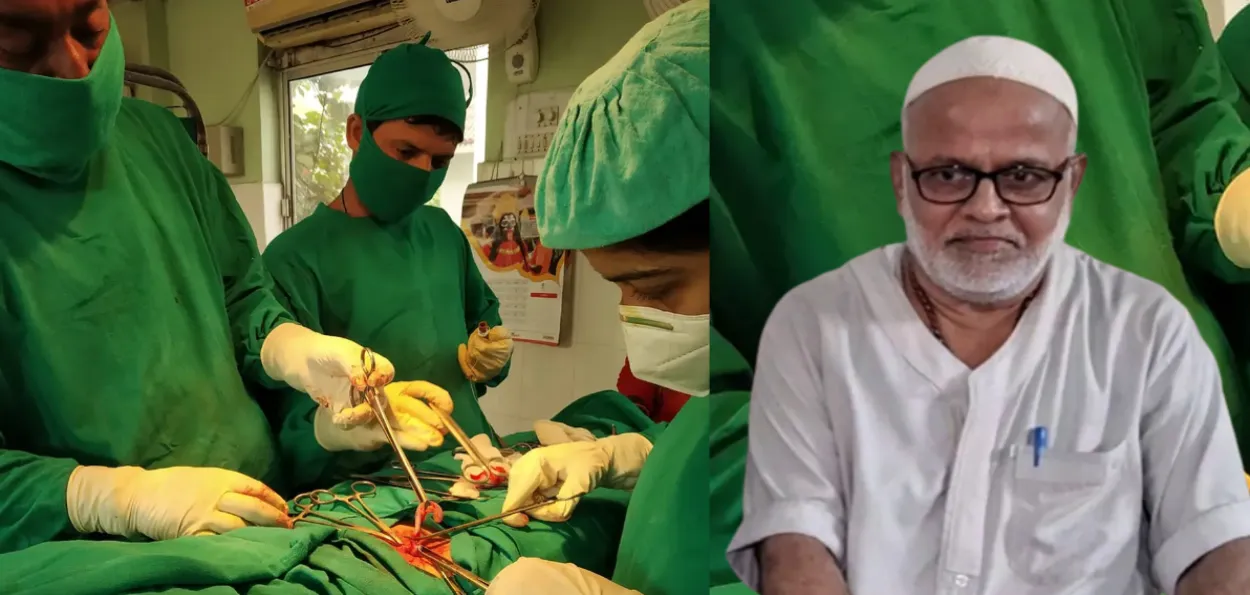
Dr Ijaz Ali performing a surgery

Dr. Ijaz Ali wears many hats: he is a well-known surgeon of Bihar, a former member of Parliament, and a crusader for the rights of marginalized people. As president of the All India United Muslim Morcha, he has extended his support to the BJP for its pro-Pasmanda stance, and, is thereby, supporting the NDA candidates in the ongoing Lok Sabha Elections, Mahfooz Alam spoke to Dr. Ijaz Ali on his life and mission.

Dr.Ijaz Ali was born in a lower-middle-class family in 1958. His father Sheikh Mumtaz Ali was the first in the family to have received an education and he rose to the position of BDO in the British Raj. Ijaz Ali started his education at a Madrasa Anjuman Islamia School associated with an orphanage in Munger town up to the seventh standard.

However, he joined the government school for his eighth standard and later cleared his matriculation examination from the Hazaribagh District School. He was always a topper in school and also topped the matriculation examination at the State level. 

Dr Ijaz Ali at his clinic

Ijaz Ali says that he was the sixth among 10 brothers and sisters. Though his father was paid well due to a large brood of children, the family lived hand to mouth. So as a father, he focused on giving education and imparting moral values to all his children.

Dr.Ijaz Ali says he studied in a school meant for orphans since his father could not afford to send him to a private school. “I was a very good student and stood first in every class,” he said proudly. 

Thereafter, he joined the prestigious Science College in Patna for further studies. “I loved mathematics, physics, and chemistry, but my parents wanted me to become a doctor and I shifted to biology. At first, I didn’t like it ( the idea of studying biology), but my family admitted me to the Science College in the Biology stream. 

“Studying biology was the turning point in my life,” says the surgeon, who is a name to reckon with in the state and outside.

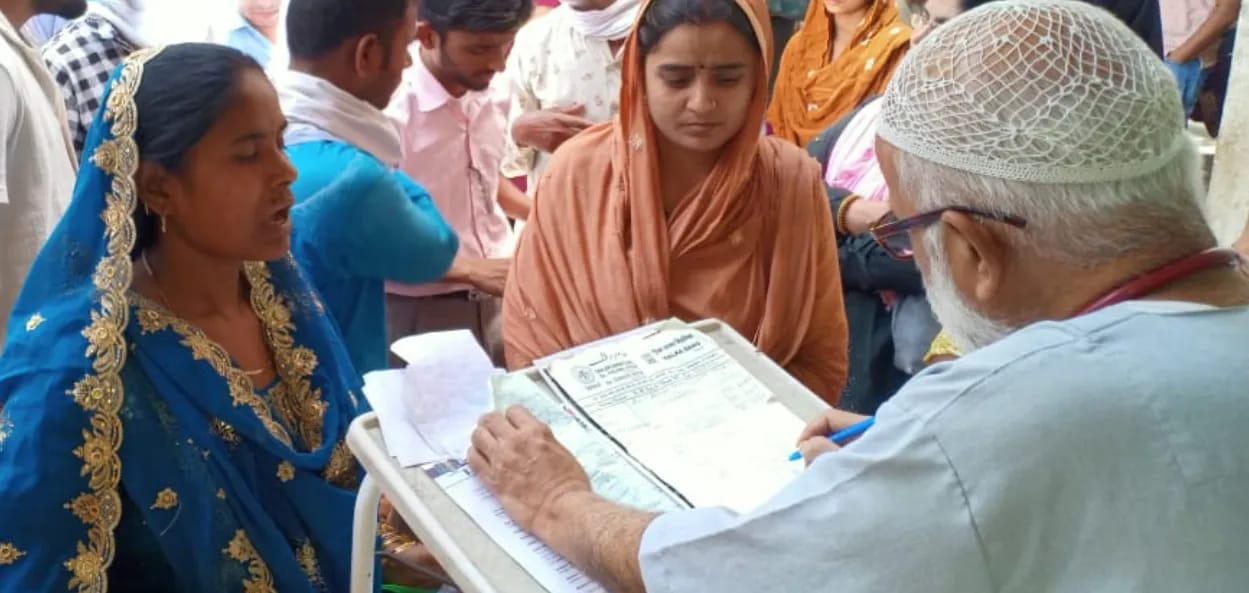
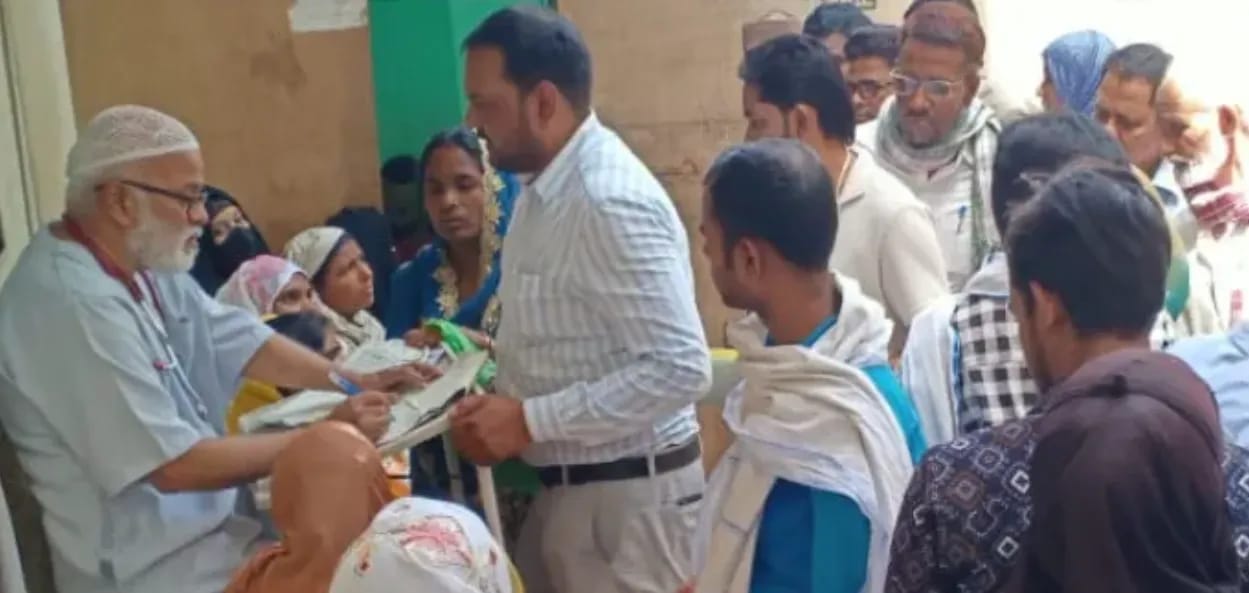
Dr Ijaz Ali is always surrounded by patients

For him, the first year of college was very difficult, as he had no interest in biology. Soon he realized there was a good future ahead for him if he studied well. “As a student, I never wasted time – he follows this routine even today. I worked hard, and soon I started enjoying the subject I once hated.  I also topped the higher secondary examination in the Patna Science College  I also was among three toppers of the entrance examination for the MBBS course in the Patna Medical College.”

When Ijaz Ali joined the Patna Medical College in 1975, his family was proud of him as he would be the first one among them to become a doctor. However, he faced financial difficulties while studying in the PMCH, “Food in PMCH canteen was expensive so I arranged to eat at another hostel, next to PMCH and spent two years studying and spending time in the crowded neighborhood. Buying books was also difficult for me. When he reached the second year”

He said, “Books were costly and I didn’t have money to buy them, so I used to manage my studies somehow. “Even during my medical studies, my passion for studies did not let any difficulty stand in the way. I was in the top three in MBBS in medical college and I got admission for M.S.”

Dr. Ijaz Ali says he got some relief while studying for his Master’s in Surgery. In 1980, he married the daughter of Ghulam Sarwar, a prominent political leader. Due to his in-law’s support, he was relieved of basic financial problems and also joined as an assistant to Dr. Kamal Ashraf, a well-known surgeon of the city.

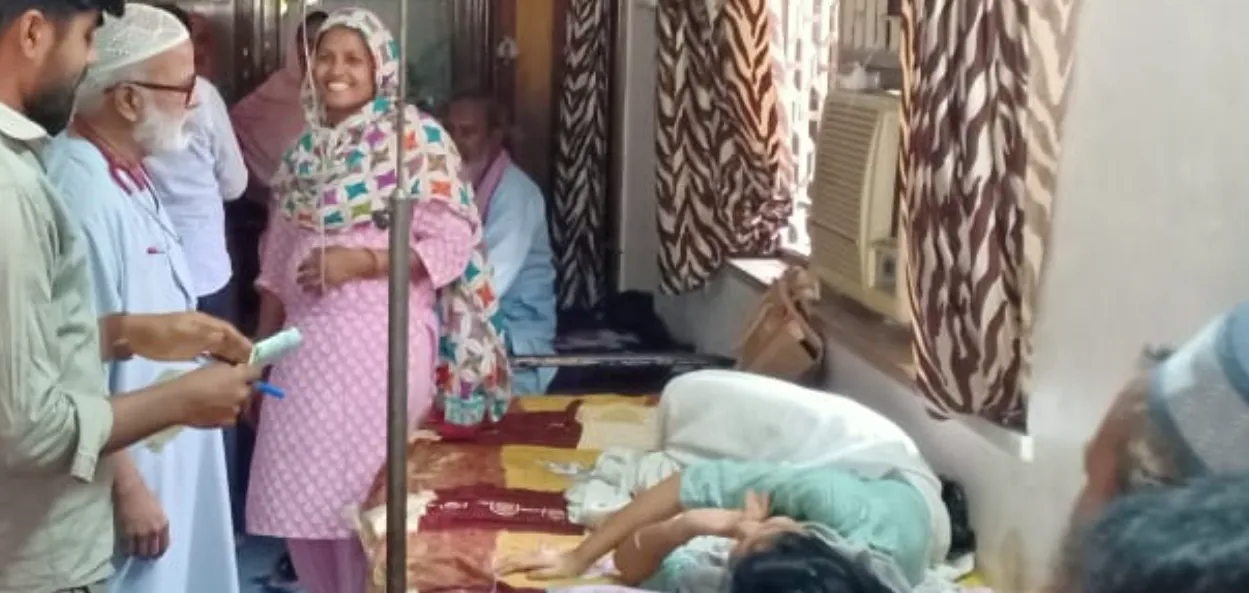
Dr. Ijaz Ali treating a hospitalised patient

“I used to get a Rs 400 stipend from PMCH and most importantly, I got the opportunity to stay with Ghulam Sarwar and learn from Dr. Kamal Ashraf. I was eating home-cooked food and was being trained as a surgeon by the best person.” He completed his MS degree from Patna Medical College and again topped the exams.

On the advice of Ghulam Sarwar, he opened a clinic in 1984 in his house in Patna. In the same year, Prime Minister Indira Gandhi was assassinated and there was uproar throughout the country. Slowly my picked up. “In 1990, Ghulam Sarwar became the Minister of the Bihar Government and he handed over his house to me for use as a clinic.

Dr. Ejaz Ali took up medicine as a social service and while all consultants in Patna charge Rs 300 as consultation fees he has kept it as low as Rs 10.

“A good doctor was available at a lower fee, so a caravan of people started arriving at the hospital. The rickshaw-pullers, thela-walas, sabzi-walas, and people from the rural areas started coming in droves,” he said.

“I was a surgeon but started all kinds of treatment. Many villagers who came to me had no money to eat and I wondered how they would buy medicines. Though I was a surgeon, I was treating patients with tuberculosis, kala azar, and everything.”

 He realized most of his patients were poor Muslims. He reduced his fees for surgery to a minimum. I understood that there is so much poverty among Muslims.

Dr. Ijaz Ali

Dr. Ijaz Ali says he became successful because of his hard work and discipline but he is pained to see that children in neighbourhood where he was born were living in the same conditions. “Children are still hurling abuses at each other while playing street games and indulging in Lathi Danda in Muharram

“After I became a doctor and started practicing, many poor Muslims came to me for treatment and consultations. I started visiting the villages to know their conditions. After visiting hundreds of villages and seeing the condition of people, I felt that I should fight for their development and welfare.”

For 44 years, Dr. Ijaz Ali has been traveling to a village every Friday to be with the people and understand their problems. “During 1990-92, the environment across the country was surcharged. Ghulam Sarwar Sahib was a great leader of the Muslims of Bihar, so many people used to visit him. He was my father-in-law, and I lived with him. He did not like people who seek political advantage by inflaming the feelings of Muslims. Under these circumstances, I felt that Muslims do not need emotional slogans but should get opportunities to become good and empowered citizens.”

Dr. Ijaz Ali says that to bring justice to the weaker sections of backward Muslims, he set up the All India Muslim United Morcha. “Our demand to the government is that the Dalit section of the Muslims should also be provided with the facility of Section 341 of the Constitution so that they can also raise their standard of living. 

“From what we have seen on the ground’, Dr. Ijaz Ali says, “There is a need for reservation for this section of the Indian population for the overall development of society and the nation If this large section of the population is facilitated to join the developmental mainstream, it will change the situation.”

Dr Ijaz Ali says that no one can be successful in life without clear goals and objectives. The greater the success, the more effort it will demand. Therefore, even in difficult situations, people should not leave the path of justice, patience, and peace.

He says that for a successful person, it is equally important that he thinks about the welfare of the society.

source: http://www.awazthevoice.in / Awaz, The Voice / Home> Story / by Mehfooz Alam, Pune / May 06th, 2024

Bihar Elections: 24 Muslim candidates win as AIMIM draws a blank

BIHAR :

Bihar :

The Mahagathbandhan (Garden Alliance) of JDU, RJD and Congress, led by Bihar Chief Minister Nitish Kumar romped into a landslide victory in Bihar, paving way for Nitish Kumar’s third stint as the Chief Minister.

The Bihar elections result has dealt a huge blow to BJP, who were upbeat since 2014 Lok Sabha elections and subsequent wins in some states. The Mahagathbandhan bagged almost a three-fourths majority, riding on the support of Yadav and Muslim voters.

courtesy: indian express

The Muslim candidates of the Grand Alliance managed to win 24 seats with 12 from RJD, six from Congress, five from JDU and one from CPI (ML). The number is five more than the last assembly elections, when 19 Muslims candidates were selected in the state Assembly.

All India Majlees-e-Ittehadul Muslimeen (AIMIM), the Hyderabad-based political party ended up winning nothing in its Bihar debut.

AIMIM fielded six candidates from Muslim-dominated constituencies in Seemanchal region but lost all the seats. Party chief Asaduddin Owaisi was very optimistic of opening an account in Bihar assembly camping in the area for a couple of weeks and campaigning door to door.

Owaisi had cautiously chosen only six seats fearing that if MIM fights on more seats and votes get divided then he will be tagged with ‘vote katwa’ for secular votes. However, nothing like happened.

MIM earned 80,248 total votes, constituting 0.2% of total votes in the election. The best performance was put forward by Akhtarul Imaan from Kochadhaman constituency where he stood second and lost to JD (U)’s Mujahid Alam with 18,843 votes. Imaan is MIM’s party chief in Bihar who was also a former member of Bihar assembly. He was earlier with the JDU and the Rashtriya Janata Dal.

Another candidate, Tasiruddin, earned 16,440 votes from Kishanganj and stood third, though he lagged by more than 40,000 votes when compared with BJP’s Sweety Singh, who came second to Dr. Muhammad Jawaid, who won with a margin of nearly 9,000 votes.

Ghulam Sarwar from Baisi constituency settled at fourth with only 16,723 votes. Remaining three of its candidates – Md Nawazish Alam (Armour), Mohammed Adil Hasan (Balrampur) and a non-Muslim face from SC seat of Raniganj Dr. Amit Kumar lost their deposits.

List of 24 Muslim Candidates who won in Bihar Assembly Elections 2015 :

Abdul Bari siddiqui (RJD, Ali Nagar)
Abdul Jaleel Mastan (Congress, Amour)
Abid ur Rehman (Congress, Arriah )
Mohd Nawaz Alam (RJD, Arra)
Tausif Alam (Congress, Bahadu Ganj)
Abdul Subhan (RJD, Basai)
Mahboob Alam (CPI ML, Balrampur)
Nematullah (RJD, Baruli )
Fayaz Alam (RJD, Bisfi )
Mohd Ilyas Hussain (RJD, Dehri )
Faisal ur Rehman (RJD, Dhaka )
Sarfaraz Alam(JDU, Jokihat )
Shakeel Ahmed Khan (Congress, Kadwa )
Afaq alam (Congress,Kasba)
Faraz Fatimi (RJD, Keoti)
Mohd Javed Alam (Congress, Kishan ganj )
Mujahid Alam (JDU, Kochadhaman)
Abdul Ghafoor (RJD, Mahisi)
Shamim Ahmed (RJD, Narkatia )
Akhtarul Islam Shaheen (RJD, Samasti pur)
Sharfuddin (JDU, Sheohar)
Khurdsheed Afroz Alam (JDU, Sikta )
Syed Abu Dujana (RJD, Sursana)
Naushad Alam (JDU, Thakurganj)

source: http://www.twocircles.net / Two Circles / Home> India News> India Politics> Indian Muslim> Top Story / by Raqib Hameed Naik , TwoCircles.net / November 08th, 2015