Tag Archives: Indian Muslim Authors

A Revolutionary Book On Islam That Non-Muslims Should Also Read

NEW DELHI :

Wealth of Muslim community and government spending on the rituals of Islam for centuries would have been better utilized for establishing universities and technical and research institutes.
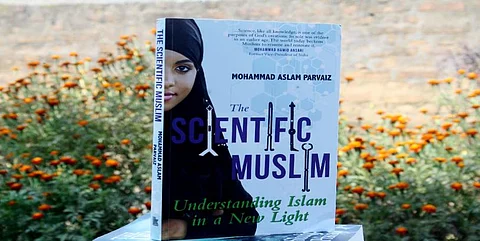
A Revolutionary Book On Islam That Non-Muslims Should Also Read

Title: The Scientific Muslim: Understanding Islam in a New Light

Author: Mohammad Aslam Parvaiz

Publishers: Konark Publishers

Pages: 184

Price: Rs 595

These are undoubtedly troubled times for India. Never before were the minorities, Muslims in particular, made to face such vicious communal hostility. The Hindu rightwing is at its aggressive best, combining facts with fiction to attack almost everything Muslims hold dear – their prayers, festivals, dress, even cuisine. Muslims are constantly provoked. If they respond even verbally, they face more wrath. It could not have been worse. 

Hats off to Mohammad Aslam Parvaiz for coming out with his book on the problems Islam faces now. No, this is not a book about how to deal with Hindutva forces; far from it. A man of science, Parvaiz complains that Muslims across the world have jettisoned Islam’s true nature by sticking to parts of the Quran while ignoring much of what it says on how one must lead one’s life. 

As a student of spirituality, I am convinced that the book will make waves in India and much of the Islamic world. 

Ignoring Quran

The Quran, the author says, tells people how to lead a peaceful and meaningful life. While it asks those who read it to understand and explore nature, these intellectual pursuits are almost missing in those who claim the Quran to be their guidebook.  

Parvaiz moans that Muslims born in Muslim households are taught to ‘read’ Quran without understanding it. Over the last many centuries, Muslim society has cherry-picked certain verses of Quran as binding on them. These include five-time prayers, fasting during Ramzan, offering ‘zakat’ and making a pilgrimage to Mecca. The Quran, he says, is much more. By deserting the Quran, “we ‘Muslims’ have deserted Islam”. 

This is the main reason the Muslim society seems to have turned its back to scientific principles in which it once excelled, giving a tough competition to Europe. A sizeable section of Muslims even feels that contemporary education churns out atheists. The result? Ignorance about Quranic teachings coupled with limited ‘religiosity’ has led to the curriculum which is followed in most madrasas today. 

In the process, Muslims are widely misunderstood by others. Non-Muslims think a Muslim must be one who sports a beard and a skull cap, goes to a mosque to pray five times a day and slaughters animals to eat. But these are visible symbols. Parvaiz contends that the one who follows the guidance given in the Quran and grooms himself accordingly is alone a true Muslim.

Also, some Muslim rulers had a knack of not tolerating any criticism about themselves or their religious beliefs. Consequently, wars and persistent battles rendered the once-prized academic atmosphere unfavourable.

Based on the Quran, Muslims must draw a road map for acquiring knowledge in every sphere and put it to the service of humanity. Parvaiz details what all the Quran says for human betterment. For instance, it underlines that one must meet his needs judiciously and avoid extravagance. As long as the Muslim followed the divine way, they ruled over the world and promoted justice, equity, peace and public welfare. When they began to neglect the Quranic system, it led to their disgrace and humiliation. 

Islamic decline 

Unfortunately, Muslims are at present unable to understand or act on the Quran. According to the author, the wealth of the Muslim community and government spending on the rituals of Islam for centuries would have been better utilized for establishing universities and technical and research institutes.

The absence of these is a key reason for the decline of Muslims as a productive part of the society or country where they live. “Their love for wealth, progeny and glory have made them indifferent to patronizing knowledge… It is time that we transcend sectarianism and shed false notions about our understanding of Islam and our intellectualism.” 

According to the author, one reason why Muslims were hooked to a ritualistic lifestyle is because of the birth of a plethora of confusing and contradicting literature based on different sects that began to flourish. Slowly, Islam began to get diluted.

Also, some Muslim rulers had a knack of not tolerating any criticism about themselves or their religious beliefs. Consequently, wars and persistent battles rendered the once-prized academic atmosphere unfavourable. Muslim mobs in 1857 plundered the library of Delhi College, tearing apart books on English and science; Arabic and Persian books were looted.  

Parvaiz without doubt has complete faith in the Quran. Yet he tears to shreds those who he feels are following it selectively, ignoring all that it has said about how to be in tune with Divine creations. “Soulless rituals cannot provide any food for thought. These may arouse our sentiments. Yet they cannot produce those Muslims who may lead communities of the world.”
He goes on: “Today, Muslim localities are notorious for their filth and rubbish. We throw all rubbish outside our homes and shops. The drainage system is rotten. We encroach upon roads, making life difficult for everyone. We erect all sorts of barriers on roads. We generate various forms of disorder. The industrial smoke coming out of small- scale work units in every house and alley adversely affect the entire atmosphere. All this amounts to disobeying God’s commands.” (It is another matter that much of what the author says about Muslim neighbourhoods can be said to be true for areas populated by other communities in India too.)  

Way forward 

Parvaiz explains what needs to be done. “Water, air, earth and all that is inside the planet are God’s signs. As Muslims we should not even think of disrespecting or destroying these signs.” His complaint is not directed at one section or country of Muslims. “No group, community or country of Muslims has ever prepared its progress model which is in accordance with the Quranic principles of justice, equity and selfless service.” 

God, he says, has subjected everything to His laws. Indeed, all creatures who abide by divine commands can be called believers. Lip service and verbal claims alone will not and cannot help Muslims discharge their duty towards God. In real life, humans who are blessed by God seek to hold and hoard resources provided to them. Ownership and monopoly, he warns, are satanic concepts. 

Parvaiz feels that the time has come to free Muslim educational agenda from religious and sectarian bias. Muslims should welcome all beneficial branches of knowledge. Character development has to be encouraged. One needs to train and produce Muslims who will follow Islam in full and not confine it to only a mosque or prayers. 

“Islam will be their guide and mentor in every activity of life. This is the Muslim community which lost its way one thousand years ago.” 

Non-Muslims too must read this eye-opener of a book as much as Muslims.  

(The reviewer is a veteran journalist and author)

(Published under an arrangement with South Asia Monitor)

source: http://www.thenewsagency.in / The News Agency / Home> News Pops> India / by M R Narayan Swamy / April 28th, 2022
‘Born a Muslim: Some Truths about Islam in India’ review: A sense of disillusionment

Agra, UTTAR PRADESH :

Ghazala Wahab explains what it is to be a Muslim, a member of the largest religious minority in India today, and why the community lives in fear as prejudices persist.

Soma Basu reviews Born a Muslim: Some Truths about Islam in India, by  Ghazala Wahab - The Hindu

The book opens with an unputdownable 42-page introduction that delves into the root of fear and despair among Muslims who have embraced the country as theirs but are polarised because of the identity they bear.

The shock and shame of communal riots, orchestrated mass violence and lynchings that served political agendas and led to societal divisions during the past decades hits you, as journalist Ghazala Wahab lays bare instances from her life.

Balanced narrative

She meticulously balances her narrative because she wishes to build a bridge of conversation. While she addresses fellow Muslims asking them to embrace modernity and be an integral part of positive change, she also alerts non-Muslim Indians about their perception of Muslims based on prejudice and hearsay, not facts.

Self-examining her own community members, she admits it never struck her how an average Muslim struggles to stay alive because she looked at things from her position of privilege. As she researched, she found equal opportunity and justice are only concepts and that law- making and law-enforcing agencies act in contradiction to vilify and stigmatise Muslims.

It is a vicious cycle, writes Ghazala, because the post-partition Muslims have remained an irrelevant votebank and sought security in their ghettos perpetuated by illiteracy, poverty and unemployment. The mullahs and clergy have easily taken them under their religious fold to exploit them. The general backwardness of the community has fed into a sense of loss of identity and unmet aspirations for Muslim youth, men and women.

Personal experience

In the mid-80s, Ghazala’s father shifted from their ancestral home in a middle class mohalla to an upscale Hindu-majority neighbourhood in Agra. His successful business and hobnobbing with the powerful, gave him the comfort of keeping his family under a security net. But that was till Agra was engulfed in violence post-kar seva after BJP leader L.K. Advani rolled out his rath yatra from Somnath to Ayodha in October, 1990, and was subsequently arrested. As sporadic violence spread across north India, Ghazala’s family wondered where they would be more secure — in their new neighbourhood or in a Muslim majority insulated mohalla.

Ghazala’s father called his brothers to safety and her mohalla uncles requested them to move back to the old Muslim locality. Ultimately everybody stayed where they were as fury was unleashed on their community everywhere. A young collegian then, Ghazala, her parents and three siblings were at home when an angry mob led by a neighbour shouted slogans, smashed windows, pelted stones and damaged their car. Desperate phone calls for help went unanswered.

When Ghazala’s father went to the police station to enquire about the adult males who were forcibly picked up from the mohalla during search operations, senior officials known to him avoided him. Those he thought had accepted him treated him as nothing more than a Muslim when it came to communal division. For Ghazala’s father it was not about being a victim but it was more about the humiliation, a betrayal of belief.

Turning point

Her family survived the riots but it left a scar. Her parents chose to go silent and it irked Ghazala that a victim should feel ashamed. She saw the same resignation and defeatist attitude when the Babri Masjid was razed. It unnerved her because she sensed it was a turning point not just for her family but for most Indian Muslims.

“Civility was the first casualty, replaced by communal prejudice and demonstrative religion,” she writes.

Many members in her extended family began to draw comfort from religious conservatism. She talks about a cousin who started wearing a headscarf and told her she was more comfortable with her Muslim friends as they didn’t have to pretend with one another, whereas to her Hindu friends she was a validation of their liberal outlook.

The conversation disturbed Ghazala as she never perceived two distinct identities in herself — a Muslim and an Indian. The issue was complex and so were several disparate questions.

Ghazala leans on poignant narration about the average Muslim being confused and scared through examples of those who have hidden their identity and reverted to Hinduism under perceived coercion. “They could never participate as equal partners in the country’s development. Only 2.6 per cent of Muslims are in senior-level jobs and a small number have achieved a reasonable upward mobility,” she writes.

On a positive note, Ghazala says Muslim society is changing. The protests against CAA/NRC in December 2019, she feels, has given rise to an assertive community even though her 1990 experience returned to haunt her in February 2020 when her paternal aunt’s family panicked as a mob reached their northeast Delhi colony. Anger and helplessness resurfaced when her aunt called her for help and her uncle refused to escape or abandon his life’s savings. The sense of fear doesn’t leave, she says.

Born a Muslim: Some Truths about Islam in India ; Ghazala Wahab, Aleph Book Company, ₹999.

soma.basu@thehindu.co.in

source: http://www.thehindu.com / The Hindu / Home> Books. Reviews / by Soma Basu / May 15th, 2021

Khalid Jawed’s ‘The Paradise of Food’ wins the JCB Prize for Literature 2022

NEW DELHI :

The literary work is the fourth translation and the first Urdu work to win the JCB Prize

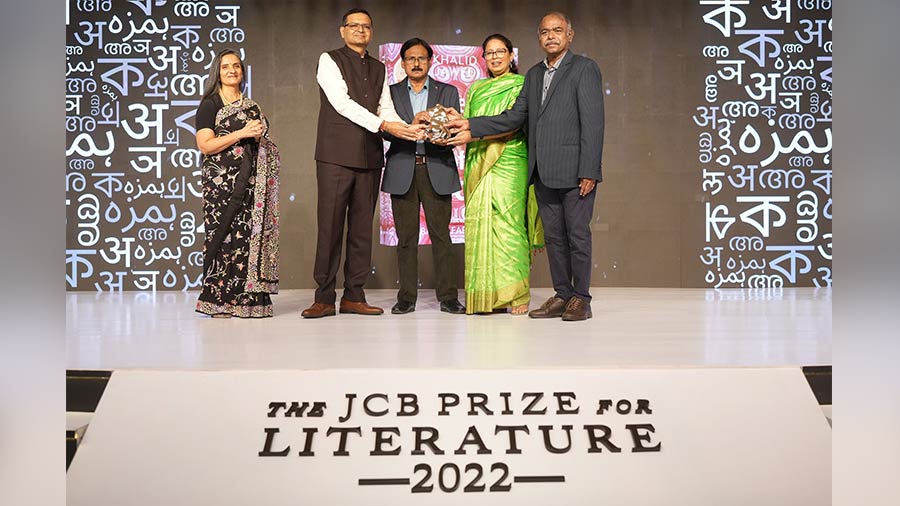
(Left to right) Mita Kapur, literary director, The JCB Prize for Literature; Sunil Khurana, chief operating officer, JCB India; winning author Khalid Jawed; translator of ‘The Paradise of Food’ Baran Farooqi and jury member AS Panneerselvan
JCB Prize

Khalid Jawed’s The Paradise of Food has been awarded the JCB Prize for Literature 2022. The book was chosen by a panel of five judges. 

The Paradise of Food has been translated into English from Urdu by Baran Farooqi and published by Juggernaut. The Rs 25 lakh prize was awarded to the author virtually by Sunil Khurana, chief operating officer, JCB India, and A.S. Panneerselvan, chair of the jury for 2022, at a hybrid event organised at The Oberoi, New Delhi. Khalid Jawed also received the trophy — a sculpture titled ‘Mirror Melting’ by Delhi artist duo Thukral and Tagra.

The Paradise of Food, which is the fourth translation to win the JCB Prize and the first in Urdu, is a bildungsroman that traces the narrator’s journey through life anchored in a middle-class Muslim joint family. 

The jury comprised Panneerselvan, journalist, editor and columnist; author Amitabha Bagchi; J Devika, historian, feminist, social critic and academician; author Janice Pariat and Rakhee Balaram, assistant professor, Global Art and Art History at the University of  Albany, State University of New York. The award ceremony began with a welcome note from Mita Kapur, literary director of the JCB Prize, and an address by Deepak Shetty, CEO & managing director, JCB India. Classical dance performances by Shriram Bhartiya Kala Kendra led up to the grand announcement.

Speaking about the merit of The Paradise of Food as a piece of literature, Bagchi commented, “This singular and moving book shines a scintillating light on the violence at the heart of human civilisation. The language contains several beautiful and unusual formulations that are a literary achievement by both the author and the extremely skilled translator. A literary landmark in a less-celebrated genre of Urdu’s grand literary tradition, this work deserves to be widely read in India and beyond.” 

Other members of the jury, too, unanimously appreciated Jawed’s book. Rakhee Balaram described the work as a “book of indescribable brilliance” and to J. Devika, it was a “powerful ice-pick in the winter of civilisational crisis that has engulfed the countries of South Asia”.

source: http://www.telegraphindia.com / Telegraph India / Home> My Kolkata> Events> Literary Event / by My Kolkata Web Desk / November 20th, 2022

Jamaat-e-Islami Hind President mourns demise of renowned economist Dr Nejatullah Siddiqui

Gorakhpur / Aligarh /UTTAR PRADESH / U.S.A. :

New Delhi : 

Jamaat-e-Islami Hind (JIH) President Syed Sadatullah Husaini has mourned the passing away of renowned economist Dr. Nejatullah Siddiqui

In a media statement, the JIH President said that Dr. Nejatullah Siddiqui’s contribution to the field of Islamic economics was unparalleled and he pioneered the concept of Islamic banking and laid the foundations of what is currently a thriving multi-billion-dollar industry.

Mr.Husaini held that Dr. Nejatullah was a very versatile personality dedicated to learning and development and, despite living abroad, he contributed intellectually to many forums and institutions in India. Calling his demise, a great loss to the Muslim world and the Islamic Movement, Mr.Husaini said, “his passing away leaves a great vacuum in the field of Islamic economics and finance.”

Offering his heartfelt condolences to the bereaved family members, the JIH leader said, “May Allah forgive him, grant him the highest position in Paradise and bestow patience upon his family members.”

Dr. Mohammad Nejatullah Siddiqui, an Indian economist, was awarded the King Faisal International Prize (Saudi Arabia) for Islamic Studies in 1982. Born in India in 1931, he was educated at Aligarh Muslim University as well as Rampur and Azamgarh.

He served as Associate Professor of economics and Professor of Islamic studies at the Aligarh Muslim University and as Professor of economics at the King Abdul Aziz University, Jeddah, Saudi Arabia, in its Center for Research in Islamic Economics.

He later became a Fellow at the Center for Near Eastern Studies at the University of California, Los Angeles (USA), and after that a visiting scholar at the Islamic Research and Training Institute, Islamic Development Bank, Jeddah.

He was a prolific writer in Urdu and English with 63 works in 177 publications and 1301 library holdings to his credit. Several of his works have been translated into Arabic, Persian, Turkish, Indonesian, Malaysian, and Thai languages. He was also the recipient of the Shah Waliullah Award in New Delhi for contributions to Islamic Economics.

Some of his notable books are Recent Theories of Profit: A Critical Examination, Economic Enterprise in Islam, Muslim Economic Thinking, Banking Without Interest, Partnership and profit-sharing in Islamic law, Insurance in an Islamic Economy, Teaching Economics from in Islamic Perspective, Role of the State in Islamic Economy, Dialogue in Islamic Economics, and Islam’s View on Property.

source: http://www.indiatomorrow.net / India Tomorrow / Home> National Interest / November 12th, 2022

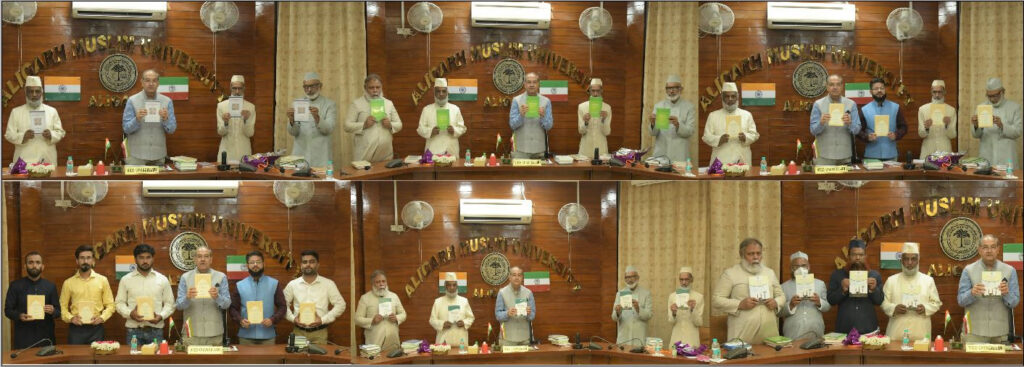
AMU Vice Chancellor releases eight books published by K.A. Nizami Centre

Aligarh, UTTAR PRADESH :

Eight books published by the K A Nizami Centre for Quranic Studies, Aligarh Muslim University (AMU) addressing key themes on the history of South Asian Muslims, diverse responses to the scholarly contributions and rationalist traditions of Islamic scholarship were released today at the Vice Chancellor’s Office.

They are ‘Contemporary Islamic Scholarship in South Asia: An Assessment’, ‘Humanness of Prophets: The Quranic Prophetology’ and ‘Contribution of Dar-ul-Uloom Deoband to Tafasir’ by Dr Abdul Kader Choughley; ‘Dil Jo tha Zulmat Kadah, Ma’ah-e-Munawwar Hogaya’ by Dr Mohammad Haris Mansoor; ‘Qurani Ulum ka Irtiqa Ahd-i-Islami ke Hindustan Mein’ by Prof Zafarul Islam; ‘How to Promote the Study of Quran among Women’, edited by Dr Nazeer Ahmad Ab. Majeed and Dr Arshad Iqbal; ‘Tarjumani Rahmani’ by Prof A R Kidwai and ‘Allah ki Kitab ki Paanch Mangay’ by Prof Fazlur Rahman Gunnouri.          

“These books will answer some of the most frequently asked questions about traditions in Islamic faith, offer a new understanding on the works of Islamic scholars, explore key Islamic events and provide an understanding of important traditions in Islamic philosophy and the intellectual movement that emerged from South Asian Islam”, said AMU Vice Chancellor, Prof Tariq Mansoor while releasing the books. 

Prof A R Kidwai (Honorary Director, K A Nizami Centre for Quranic Studies) pointed out: “The K A Nizami Centre has published over 80 titles on Quran-related scholarship since 2013. Publications of the Centre represent contemporary literature on furthering Quranic understanding and research in Hindi, English and Urdu by authors from various disciplines including translations from various languages”.

source: http://www.amu.ac.in / Aligarh Muslim University / Home / by Public Relations Department / Aligarh, July 13th, 2022