Tag Archives: Positive News of Muslims of Agra

Inayat Khan IAS – The Cynosure of Indian Muslim Girls

Agra, UTTAR PRADESH / BIHAR :

Inayat Khan, the young IAS officer from Agra, came to Bihar when she was just 25 years old.
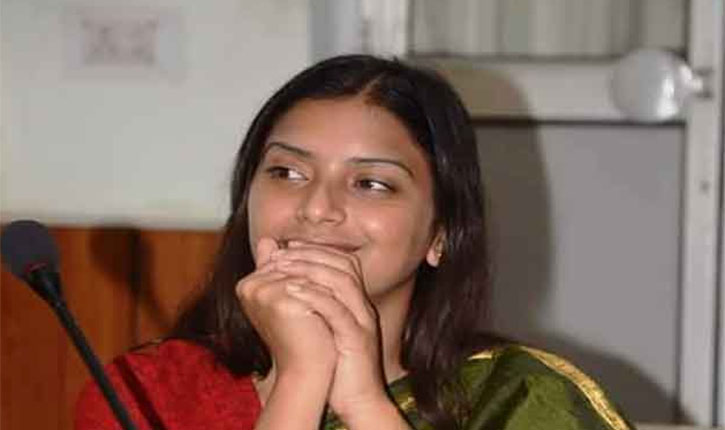
She is dynamic, she is young, she is upright, she is energetic, she is flamboyant, meet Ms Inayat Khan, IAS, and the new District Magistrate (DM) of Shiekhpura district of Bihar state. She is a 2012 batch IAS officer of Bihar cadre. The 31-year-old new district collector of Shiekhpura represents the aspiration of modern Indian Muslim middle class girls. She had cracked UPSC Civil Services Examination in 2011 and got the rank of 176 and secured IAS ranking along with Bihar Cadre.

Inayat is basically from Agra Uttar Pradesh. After completing her school education, she took admission in Anand Engineering College AEC, Agra. She completed B. Tech in 2007 with Electronics Engineering and started working with a software consultancy company.

But after one year, she realized that she is getting no satisfaction from the current job. She resigned and came to Delhi for the preparation of Civil Services exam. She took a room at Gandhi Vihar, near Mukherji Nagar, quite close to Delhi University and started preparing for the coveted exam.

Inayat wrote the UPSC Civil Service exam first time in 2009. She qualified Prelims and Mains but could not find her name in the Interview list. Thereafter in 2010 she qualified the Gramin Bank exam but she did not join the job and moved to Delhi for the preparation of the Civil Service exam. Inayat cracked the prestigious exam in 2011 and secured IAS ranking and Bihar cadre. Bihar is adjacent to her home state UP.

The young IAS officer came to Bihar when she was just 25 years old. She came to limelight during her probation period when she was sent to field for 6 months training program.

It was the election year. She took notice that there was no excitement among rural people about the election. She wrote few plays about election and convinced many folk artists to enact her plays. She organized plays in the rural area and her hard work was well appreciated and she hogged the limelight of the media.

Then her first posting was as the BDO of Pandarak, Patna District. After that she was got transferred to Rajgir, where she worked as the SDO. Then she got transferred to Bhojpur District where she worked as a District Development Commissioner DDC. Here, she single handedly transformed the face of MNREGA project. This employment scheme was deemed as a failure in Bhojpur but Inayat ensured that people get benefit of this social sector initiative. Her tireless and transparent work resulted in the huge increase in the completion of MNREGA project.

That is not enough, she was constantly working in a very praiseworthy manner. She is responsible for installing CCTV cameras and bio matrix machines to register in and out timing of the staff members in each circle offices of Bhojpur. She was also used to go for inspection every now and then and catch officers who are negligent of their duties. Many a time she was seen parking her jeep and walking with officials for assessing the ongoing development work.

Inayat Khan’s, last posting was as Managing Director of the Bihar State Tourism Development Corporation (BSTDC). She variously focused on eco-tourism and rural tourism and even cruises on river Ganga. She is reported to have said that Bihar actually is gods own place.

“We are rich in monuments, culture and heritage. Almost the entire Buddhist tourist circuit is here in places like Bodhgaya, Nalanda, Vaishali, Vikramsila and Rajgir. Among these, Bodhgaya alone gets five million plus visitors annually. We have Takht Sri Patna Sahib – the birthplace of the 10th guru of Sikhism, Guru Gobind Singh; Jain pilgrimage spots like Jalmandir in Pawapuri and several Hindu temples like the Janki Mandir at Sitamarhi,” she is reportted to have said in an interview.

Inayat Khan is widely regarded as an honest officer who is working tirelessly for the development of the society. There is lot of expectation by the people of Shiekhpura that she will do wonders for this backward district.

Every Indian Muslim should be proud of the officer like Inayat Kan. This dynamic officer whose date of birth is 17th May, 1987 is expected to reach greater heights of the glory of Civil Service Administration of India. She serves as a role model for the Muslim girls of our country. It is expected that more and more Muslim girls should take inspiration from Inyat Khan and aspire to join the Civil Services of India.

[Syed Ali Mujtaba is a journalist based in Chennai. He hails from a farming family of Shiekhpura. He can be contacted at syedalimujtaba2007@gmail.com.]

source: http://www.ummid.com / Ummid.com / Home> Education & Career / by Syed Ali Mujtaba / February 07th, 2019

Ghazal Khan”s dedication helped disabled cricket come of age in India

Agra, UTTAR PRADESH:

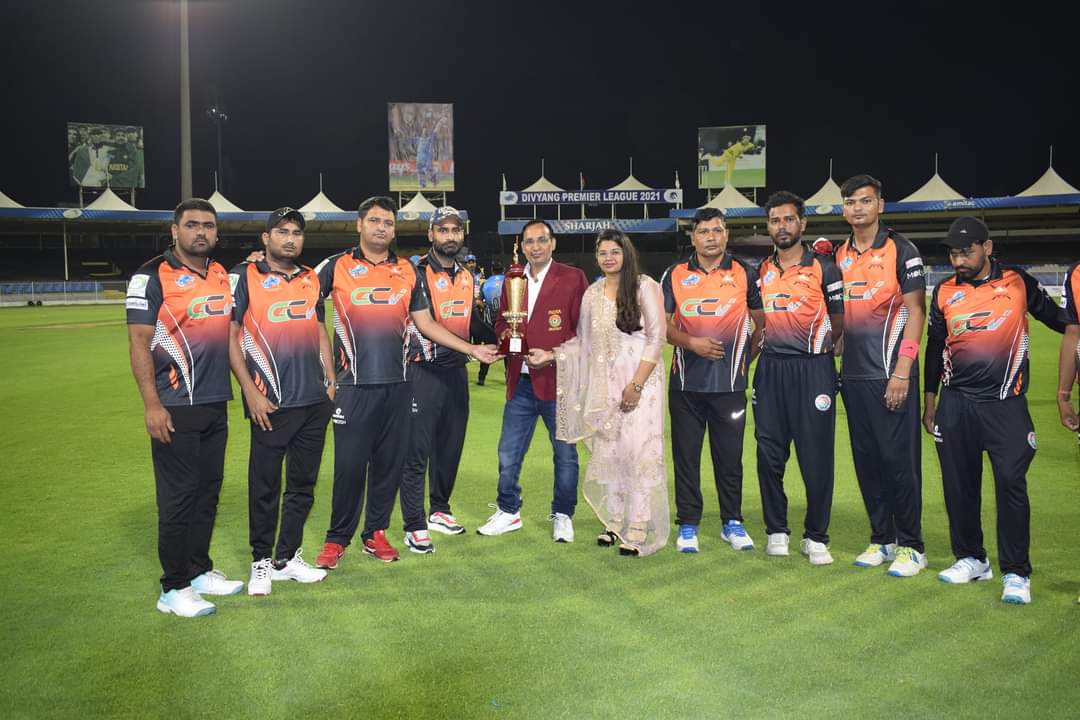
Ghazal Khan with a trophy

“I dedicated my second life to specially-abled people; especially helping the wheel-chair bound cricketers make their careers. Nowadays they are the talk of the town; they are scoring runs and playing well,” Ghazal Khan, CEO of Divyang Cricket Control Board of India (DCCBI), says.

Ghazal Khan, 28, from Agra, Uttar Pradesh, is the youngest woman in the world to be involved in the promotion of wheelchair cricket. She is also the Vice Chairperson of the International Council of Wheelchair Cricket and the Secretary of International Affairs of the International Cricket Council for the Physically Challenged.

Ghazal Khan narrated an incident from her childhood that changed the course of her life,

At the age of 21, Ghazal had a close shave with death. “On 22 December 2015 when I was preparing for the examination of the second semester of the MBA my blood pressure suddenly fell. I was riding a scooter when it happened. I fainted and fell off it. I opened my eyes after 9 days in the ICU of a hospital in Agra.”

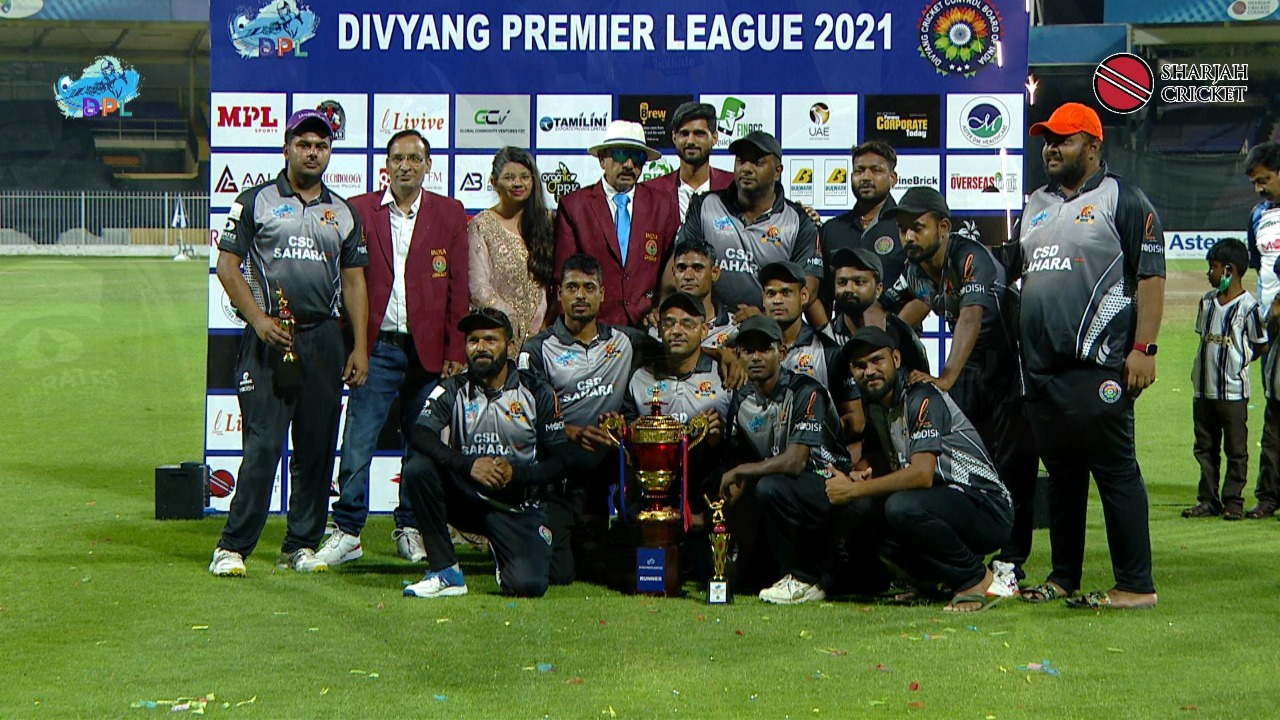
Ghazal Khan with the winning team after a tournament

Ghazal spent 20 days in the ICU. He was told that she was in critical condition and on a ventilator for 2 days. Doctors had declared her almost dead and given her only a 2% chance of survival.

“I was reborn on December 24 that year on my birthday. I had been in a coma for 9 days. My face was sewn up to close the injuries. I lost the beauty of my face. When I looked in the mirror, I couldn’t recognize myself.”

After this experience, Ghazal wondered why she survived even after doctors had given her a 2 percent chance.

“I asked myself, why did He (Allah) save me..? During this period, I received several calls from disabled cricketers from my father’s association.”

Ghazal Khan with her father Haroon Rashid (right) and another official

Ghazal’s father Haroon Rashid was a famous pacer of the Indian team. He too met with a mishap and had to give up cricket on doctors’ advice.

He founded the Divyang Cricket Control Board of India (DCCBI) to enable cricketers facing disabilities to pursue their interests. He is the general secretary of the Board and Ghazal the CEO.

Ghazal says, “I volunteered to help them during the first Asia Cup in 2015. It also helped me develop a good relationship with disabled cricketers.

“I realized that I had lost the beauty of my face, but they lost their body parts and yet they are very happy and thankful to the almighty. So, why should I be ashamed of my ugly face?

 “I realized that Allah has saved me for a reason; I decided to prepare for UPSC civil services examination and become an IFS officer.

“I was sure of cracking the examination on the first attempt. However, I day before my preliminary exam, I fought with my fiancé. Thereafter I became depressed and was diagnosed with severe clinical depression. 

Ghazal Khan posing with officials and the winning team

“Suddenly I behaved like a child of 8-9 years’; had a loss of memory. Biologically, I was 23 but mentally I was 8 years old. I had lost all senses.

 “One day while playing with the wheelchair cricketers before the IWPL tournament, a miracle happened. I felt normal. It was a pleasant shock for my family.”

Ghazal decided to work for the disabled cricketers. “This was the moment when I realized why Allah saved me. From that day till now I have given all my time and energy to Divyangjan’s cricket.

Ghazal is also Vice President of the International Council for Wheelchair Cricket (ICWC) and is secretary, International Affairs in the International Council for the Physically Challenged Cricket (ICPCC).

Almost four years ago she launched the Divyang Premier League DPL T-20.

Ghazal says she aims to elevate disabled cricketers to the status of others. Due to her efforts, on the lines of IPL, the Divyang Premier League IPL was played between 6 teams in 2021 at the Sharjah International Cricket Stadium in Dubai.

Ghazal Khan with players

She gives the credit for her success to her father.

Ghazal Khan said she is also influenced by Prime Minister Narendra Modi. She was impressed by Modi’s remarks in o address ‘Mann Ki Baat’ on December 27, 2015, which said that physically challenged people have a divine ability and for this, they should be called Divyangjan and not disabled.

Ghazal Khan recently received the Global Excellence Award from the Samarth Seva Sansthan of Rajasthan. Last year she received the Icons of Asia Award.

Ghazal Khan told Awaz-The Voice that she is also planning to work for women’s disability cricket, improving the commentary of the game and setting up a sports business industry.

source: http://www.awazthevoice.in / Awaz, The Voice / Home> Story / by Onika Maheshwari, New Delhi / March 29th, 2023

‘Born a Muslim: Some Truths about Islam in India’ review: A sense of disillusionment

Agra, UTTAR PRADESH :

Ghazala Wahab explains what it is to be a Muslim, a member of the largest religious minority in India today, and why the community lives in fear as prejudices persist.

Soma Basu reviews Born a Muslim: Some Truths about Islam in India, by  Ghazala Wahab - The Hindu

The book opens with an unputdownable 42-page introduction that delves into the root of fear and despair among Muslims who have embraced the country as theirs but are polarised because of the identity they bear.

The shock and shame of communal riots, orchestrated mass violence and lynchings that served political agendas and led to societal divisions during the past decades hits you, as journalist Ghazala Wahab lays bare instances from her life.

Balanced narrative

She meticulously balances her narrative because she wishes to build a bridge of conversation. While she addresses fellow Muslims asking them to embrace modernity and be an integral part of positive change, she also alerts non-Muslim Indians about their perception of Muslims based on prejudice and hearsay, not facts.

Self-examining her own community members, she admits it never struck her how an average Muslim struggles to stay alive because she looked at things from her position of privilege. As she researched, she found equal opportunity and justice are only concepts and that law- making and law-enforcing agencies act in contradiction to vilify and stigmatise Muslims.

It is a vicious cycle, writes Ghazala, because the post-partition Muslims have remained an irrelevant votebank and sought security in their ghettos perpetuated by illiteracy, poverty and unemployment. The mullahs and clergy have easily taken them under their religious fold to exploit them. The general backwardness of the community has fed into a sense of loss of identity and unmet aspirations for Muslim youth, men and women.

Personal experience

In the mid-80s, Ghazala’s father shifted from their ancestral home in a middle class mohalla to an upscale Hindu-majority neighbourhood in Agra. His successful business and hobnobbing with the powerful, gave him the comfort of keeping his family under a security net. But that was till Agra was engulfed in violence post-kar seva after BJP leader L.K. Advani rolled out his rath yatra from Somnath to Ayodha in October, 1990, and was subsequently arrested. As sporadic violence spread across north India, Ghazala’s family wondered where they would be more secure — in their new neighbourhood or in a Muslim majority insulated mohalla.

Ghazala’s father called his brothers to safety and her mohalla uncles requested them to move back to the old Muslim locality. Ultimately everybody stayed where they were as fury was unleashed on their community everywhere. A young collegian then, Ghazala, her parents and three siblings were at home when an angry mob led by a neighbour shouted slogans, smashed windows, pelted stones and damaged their car. Desperate phone calls for help went unanswered.

When Ghazala’s father went to the police station to enquire about the adult males who were forcibly picked up from the mohalla during search operations, senior officials known to him avoided him. Those he thought had accepted him treated him as nothing more than a Muslim when it came to communal division. For Ghazala’s father it was not about being a victim but it was more about the humiliation, a betrayal of belief.

Turning point

Her family survived the riots but it left a scar. Her parents chose to go silent and it irked Ghazala that a victim should feel ashamed. She saw the same resignation and defeatist attitude when the Babri Masjid was razed. It unnerved her because she sensed it was a turning point not just for her family but for most Indian Muslims.

“Civility was the first casualty, replaced by communal prejudice and demonstrative religion,” she writes.

Many members in her extended family began to draw comfort from religious conservatism. She talks about a cousin who started wearing a headscarf and told her she was more comfortable with her Muslim friends as they didn’t have to pretend with one another, whereas to her Hindu friends she was a validation of their liberal outlook.

The conversation disturbed Ghazala as she never perceived two distinct identities in herself — a Muslim and an Indian. The issue was complex and so were several disparate questions.

Ghazala leans on poignant narration about the average Muslim being confused and scared through examples of those who have hidden their identity and reverted to Hinduism under perceived coercion. “They could never participate as equal partners in the country’s development. Only 2.6 per cent of Muslims are in senior-level jobs and a small number have achieved a reasonable upward mobility,” she writes.

On a positive note, Ghazala says Muslim society is changing. The protests against CAA/NRC in December 2019, she feels, has given rise to an assertive community even though her 1990 experience returned to haunt her in February 2020 when her paternal aunt’s family panicked as a mob reached their northeast Delhi colony. Anger and helplessness resurfaced when her aunt called her for help and her uncle refused to escape or abandon his life’s savings. The sense of fear doesn’t leave, she says.

Born a Muslim: Some Truths about Islam in India ; Ghazala Wahab, Aleph Book Company, ₹999.

soma.basu@thehindu.co.in

source: http://www.thehindu.com / The Hindu / Home> Books. Reviews / by Soma Basu / May 15th, 2021