Tag Archives: Javed Akhtar

Safia Akhtar: An Underrated Genius And Connoisseur Of Urdu Literature #IndianWomenInHistory

Rudali / Lucknow, UTTAR PRADESH :

Safia Akhtar was a brilliant writer, poet, author, teacher, critic, and connoisseur of Urdu literature, who remains underrated.
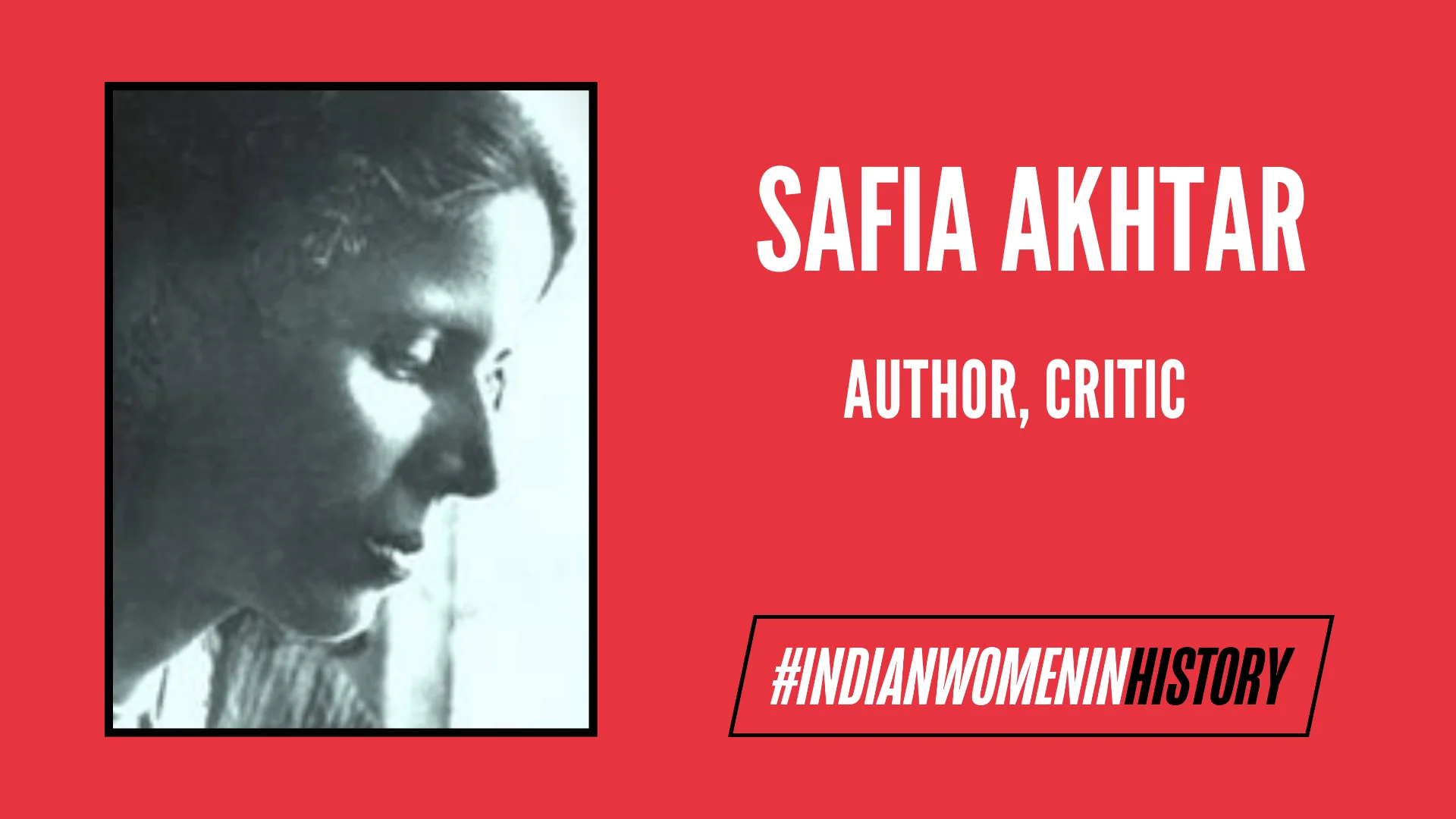
If you know who Safia Akhtar is you would probably know her as Javed and Salman Akhtar’s mother, Jan Nisar Akhtar’s wife, or Asrar-ul-Haq, better known as Majaz Lakhnawi’s sister but Safia was quite the personality herself. She was a brilliant writer, poet, author, teacher, critic, and connoisseur of Urdu literature.

The best of Safia Akhtar’s work includes the letters that she wrote to her husband while they were apart. Her letters which were written over a period of nine years were published after her death by her husband as “Hurf-e-Ashna” and “Zer-e-lab” translating to “familiar words” and “below the lips” respectively. Safia Akhtar also wrote, “Andaz-e-Nazar” (The way to look at it) which is a collection of short essays.

Safia’s sister Hamida Salim was also a talented writer having authored many books like “Hum Saath the”(We were together) which gives an account of the lives of the siblings. Javed Akhtar, her son who lost Safia only when he was eight years old calls his mother a “nayaab aurat” during her time.

She set foot into education and pursued it at a time when women were rarely given the choice or opportunity to do so. Safia Akhtar chose her life partner, she worked and financially supported her family as well as her husband who was in another state, looking for work. To top it all off, she also took care of her two sons.
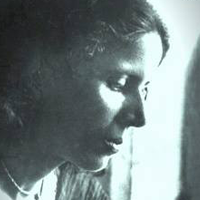
Safia Akhtar Image: Rekhta

Childhood, education, and early life

Safia Siraj-ul-Haq was born in Rudauli, Uttar Pradesh. Safia was an educated Muslim woman, one of the first of her time, in the 1940s. As Javed Akhtar recalls, his Nana (maternal grandfather) mentioned to him that someone once visiting couldn’t locate their house and asked for directions to the house of the girl who graduated and was easily guided to Safia Akhtar’s place.

Safia’s primary education took place at home where her father, Chowdhary Seraj-ul-Haq, taught her English, Urdu, and Farsi. Her brother, Majaz, assisted her with mathematics and she was tutored in the Quran by a female teacher. Owing to her father’s transfer, who was a law graduate, a door opened for Safia Akhtar and her siblings for further education. She was admitted to Karamat Hussain Muslim Girls college in the fourth grade. However, soon after, her father was transferred again from Agra, where Safia was studying living at a hostel, to Aligarh.

Safia Akhtar then started studying at Abdullah College and excelled in her academics. After completing high school, she had to wait a year for the B.A. classes to start in the girls’ college. Safia stayed in a hostel during her B.A. and after completing it, worked as a supervisor of a training program with her teachers as they were amazed by Safia’s caliber. After completing her undergraduate course, she studied further and got a Master’s degree in education from Aligarh Muslim University.

Safia grew up imbibing a progressive ideology. She set foot into education and pursued it at a time when women were rarely given the choice or opportunity to do so. Safia Akhtar chose her life partner, she worked and financially supported her family as well as her husband who was in another state, looking for work. To top it all off, she also took care of her two sons. Safia’s brother and husband were also part of the progressive writers’ movement at the time.
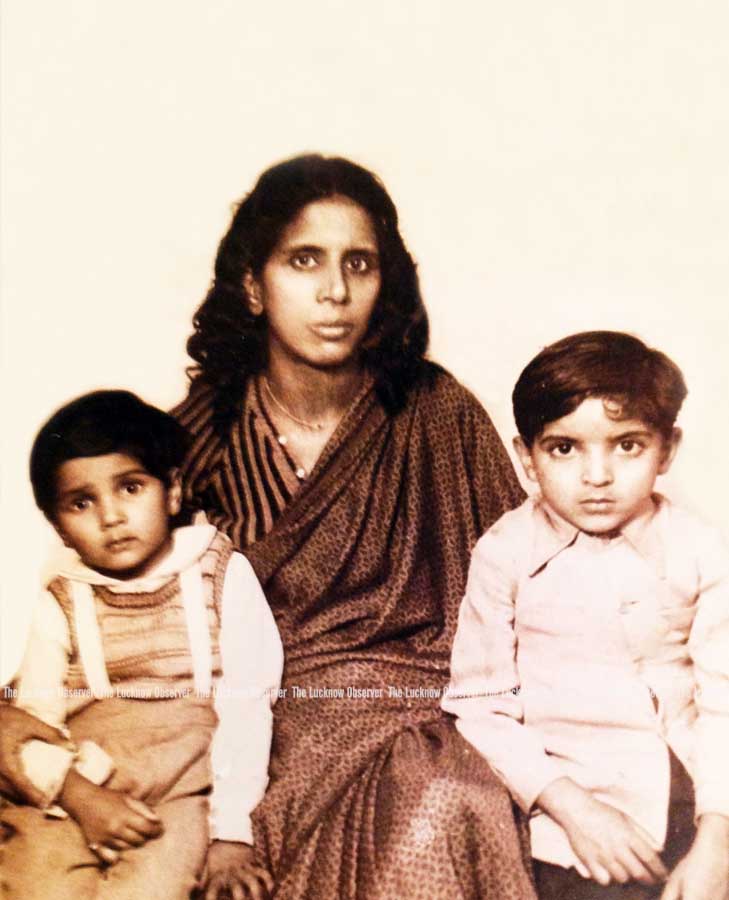
pix: lucknowobserver.com

Safia and Jan Nisar Akhtar

Jan Nisar Akhtar, the famous poet and Bollywood lyricist was a friend of Safia Akhtar’s brother Majaz and also the cousin of Salma, her roommate while she was staying in the hostel in Aligarh. Salma recounts Jan Nisar coming to the girls’ college randomly to meet Safia and introducing himself as a friend of her brother’s. Safia fell in love at first sight. However, the love seemed to be one-sided as Jan Nisar did not get in touch with her for quite a while and this disheartened Safia.

After some time passed, Jan Nisar wrote to Safia about his work, interests and disinterests, and himself. Soon after, Safia’s family received a marriage proposal from Jan Nisar’s side. As the culture still prevails, the girl’s family did a background check on Jan Nisar and his family. Salma, his cousin, testified for Jan Nisar’s family (even though she wasn’t too well informed about them) that they had a legacy of poets; his father Muztar Khairabadi was a well-known shayar of the time.

The letters give a glimpse of Safia’s immense love and optimism toward Jan Nisar. They also give an insight into episodes of her life events including her job, their two children Javed and Salman, her life at home, and towards the end, her suffering. These letters stand proof of what a literary genius Safia Akhtar was

Jan Nisar himself was well accomplished and was an Urdu literature lecturer in Gwalior. With no time wasted, Safia Akhtar’s parents sent their acceptance as they did not find any flaws as such in Jan Nisar. But to their disappointment, the Akhtars did not respond for a considerable amount of time.

This silence motivated Safia to take a rather valiant step. She poured her heart out to Jan Nisar in a letter and also enquired about the holdback from their side. Jan Nisar reverted with a confession about his feeling for another woman, his older, widowed relative who helped him during a rough patch after his first relationship came to an end. Safia appreciated Jan Nisar’s honesty. The proposal was re-established and the nikkah followed soon after, although there were some odd happenings during the time.

source: youtube.com / Letters Of Love & Loss | Jaan Nisar Akhtar Aur Safia Ke Khat | Rekhta Studio

In 1949, Jan Nisar switched cities from Bhopal to Bombay in the pursuit of becoming a lyricist in Bollywood. Safia Akhtar chose to stay back and continue with her teaching post at Hamidiya College, thus, supporting her husband money-wise and also rearing their two children. The distance between the two encouraged Safia to write letters to him.

She wrote to him consistently, multiple times a week in some instances. The letters give a glimpse of Safia’s immense love and optimism toward Jan Nisar. They also give an insight into episodes of her life events including her job, their two children Javed and Salman, her life at home, and towards the end, her suffering. These letters stand proof of what a literary genius Safia Akhtar was. Safiya suffered from an unconfirmed terminal illness (it was either blood cancer or skin cancer, not conclusive). Unfortunately, fate had other plans and Safia passed away prematurely in 1953 when she just was in her late 30s.

Without a doubt, Safia’s letters were and to this day are, a gem in Urdu literature. She expresses her feelings so very aesthetically and makes the most mundane of her daily tasks seem something literary and intriguing. About her letters being published, there seems to be a difference of opinion.

On one hand, there is the stance that the letters were something intimate, personal, and not meant to be out for the public. Salma, her roommate, calls it a “Dastan-e-Gham”, the saga of sorrows that she shared with her husband and would not want to be disclosed. While others appreciate the sheer brilliance of her words and feel lucky to have access to them. 

source: http://www.feminisminindia.com / Feminism In India (FII) / Home> Culture> Books / by Tuba Chauhan / August 04th, 2022
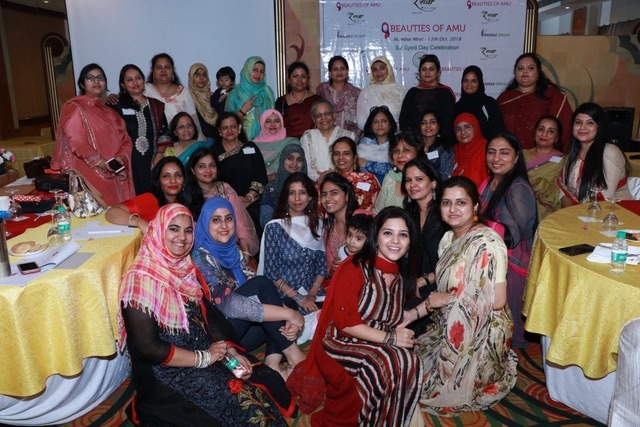
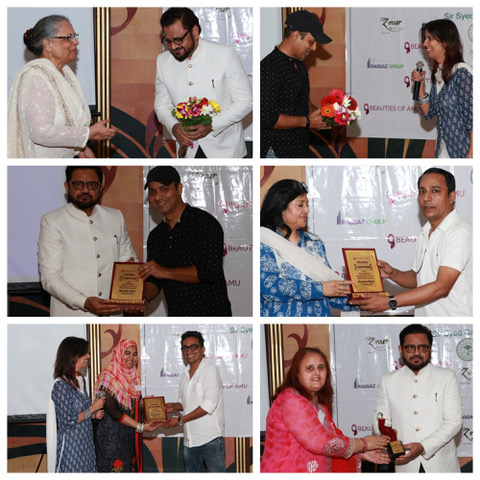
Mumbai : Felicitation of AMU Achievers by Beauties of AMU

Mumbai, MAHARASHTRA :

Mumbai :

The Aligarh Muslim University Alumni Group formed by female community of this iconic citadel of modern education, known as Beauties of AMU held its Mumbai Meet  towards the Sir Syed Day celebrations on 13th October at Hotel Marine Plaza, Mumbai.

Noted philanthropist, business giant and AMU alumni, Raees Ahmad, MD, Rassaz Group was the Guest of Honour at the event. Faridoon Shehryar, a well known Bollywood journalist was among the AMU stars which illuminated the galaxy of AMU achievers at the event. Faraz Haider, director of War Chhod Na Yaar fame attended the meet in capacity of another AMU stars while famous lyricist Arafat Mehmood stole the show with his magical spell of beautiful words in perfect sync with the event.

The event saw a huge turnout including personalities from all walks of life who build up the social circuit of Mumbai.

Sir Syed lived briefly in the city which now boasts of being the financial capital of India, hence it is imperative to take the message to this very city which had alumni association focussing on male alumni.

Since it couldn’t offer much space to the female alumni based in the city for the nostalgic networking over chai. Beauties of AMU took the plunge and brought them all on the same page, allowing them their own space for discussing and dealing with issues of societal concerns.

At the event Mrs Farrukh Sayyeda highlighted the importance of space for women. She said it’s good to be ‘Mrs Somebody’ but anything that gives you self identity is rather more important and brings self-satisfaction. This identity is not necessarily connected to financial income, added Mrs Farrukh (former principal).

Extending the thoughts, Mr Rais Ahmed (Guest of Honor) talked about the role of Sir Syed in Women Empowerment.

Mumbai is more popularly known for the Indian film industry which has considerable contribution from Aligarh, such as Khwaja Ahmad Abbas, Saeed Jafri, Javed Akhtar, Surekha Sikri, Naseeruddin Shah, Dilip Tahil and to name recent additions, there are Anubhav Sinha, Faraz Haider, Faridoon Sheheryaar and Arafat Mehmood.

Alumni of AMU are front runners in every industry in every corner of the country and the world as well, whether it is Frank Islam of USA, who was the member of Barack Obama’s contingent to deliberate with Muslim world, being a key figure in the economy of USA or the pharma giant Cipla’s founder Khalid Hameed, who has served humanity in Africa so well that nobody would ever find an example like it.

Aligarh has come out of its cocoon with the first and second generations and prepares its next generations following the footsteps of Ismat Chugtai and Qurratulain Haider.

Beauties of AMU is playing the catalyst in this inferno which would reassure the paying back to the great institution of Aligarh, which has contributed largely for the cause of nation building.

Felicitation for AMU Achievers in Bollywood

  1. Faridoon Shahryar- An award winning journalist and known face as an anchor for popular chat show Talking Film, Mr Faridoon was felicitated for his achievements. He participated in event with exuded fervor reminiscing his AMU days with a mention of jumping walls and taste of fritters
  2. Mehmood Arafat- Inspired by his father who is a well known trade unionist, political figure, writer and a popular poet of west Bengal, Mr Arafat is a popular Bollywood Lyricist. His famous work includes songs from Loveyatri, Half Girlfriend, Heartless, Housefull 3, Welcome Back, Sarabjit, Kis kis ko pyar Karen, Machine, Jalebi etc. Mehmood Arafat relived the AMU days by reciting a poem filled with complete nostalgia of AMU, Abdullah Hall, Shamshad Market , Kennedy Hall
  3. Faraz Haider is a well known director of war na chod yaar and Nanu ki Jaanu movie fame attended the event and filled the vibes with laughter and fun by recalling an incident where he got a chance to visit Abdullah Hall

Beauties of AMU(BOA)  is a social welfare organization formed by female alumni of Aligarh Muslim University that functions to spread awareness about education and empowerment of women of all sections of society.

Started off as a Facebook group in 2017, by Iram Raza, a graduate of Department of Mass Communication, Aligarh Muslim University, Aligarh, this group has done meets in 3 cities (New Delhi, Lucknow, Aligarh) so far and the Mumbai Meet Up towards Sir Syed Day was a part of the reunion initiative of the group in the time span of 1 year.

The organization now plans to hold similar events in other parts of country for reuniting the female alumni of the university living in those cities, spreading out the message of goodness and universality.

BOA has been organizing meet-ups in different cities of India for the female alumni who haven’t been included in the old boys associations, providing them a platform to meet and greet and share happiness and nostalgia of their days at Aligarh furthering the reunions to social causes.

BOA has been instrumental in organising several events that contributed well to the cause of social welfare in general and AMU alumni in particular, that makes it stand apart from other alumni associations concerned with AMU.

source: http://www.muslimmirror.com / Muslim Mirror / Home> Exclusive Reports> Indian Muslim / by Faisal Hasan / October 18th, 202

Global Urdu Day Awards 2025 Announced

DELHI :

Prof. Bilqis Bano to receive Lifetime Achievement Award, Dr. Raouf Khair to be honoured with Allama Iqbal Award.

New Delhi:

An important meeting of the Global Urdu Day Awards Committee (organised by the Global Urdu Day Organising Committee) was held under the chairmanship of senior journalist Jalaluddin at Daryaganj here.

The awards jury included Dr. Syed Ahmed Khan, Ashraf Ali Bastavi (Chief Editor, Asia Times, New Delhi), Suhail Anjum (former correspondent, Voice of America), and Javed Akhtar (Editor, D.W. Urdu, Germany, Delhi Bureau).

As per tradition, the awardees for the upcoming Global Urdu Day on 9 November 2025 have been selected.

The recipients are Prof. Bilqis Bano (Department of Biochemistry, Faculty of Life Sciences, Aligarh Muslim University) – Lifetime Achievement Award; Dr. Raouf Khair (Hyderabad) – Allama Muhammad Iqbal Award for Literature; Prof. Kauser Mazhari (Jamia Millia Islamia, New Delhi) – Mirza Ghalib Award for Poetry; Prof. Zehra Khatoon (Jamia Millia Islamia, New Delhi) – Maulana Ali Mian Award for Urdu-Persian Language;  Dr. Aqeel Ahmad (Secretary, Ghalib Academy, New Delhi) – Maulana Abdul Majid Daryabadi Award for Language and Literature;  K.L. Narang Saqi (New Delhi) – Kunwar Mahendra Singh Bedi Award for Literature; Yaseen Momin (Mumbai) – Qazi Mohammad Adeel Abbasi Award for Promotion of Urdu Language; Syeda Talat Nasreen (TN Bharti, New Delhi) – Noor Jahan Sarwat Award for Journalism; Syed Zubair (Muslim Mirror, New Delhi) – Maulana Usman Farqaleet Award for Journalism; Maulana Abdul Hameed Numani (New Delhi) – Maulana Sanaullah Amritsari Award for Column Writing; Abdul Mannan (Editor, Yojana Urdu, New Delhi) – Maulana Mohammad Muslim Award for Journalism; Jamshed Khan (Aaj Tak, New Delhi) – Ameen Sayani Award for Electronic Media; Saurabh Shukla (Red Manak, New Delhi) – Pandit Devnarayan Pandey Award for Journalism; Abid Anwar (UNI Urdu, New Delhi) – Mahfuzur Rahman Award for Journalism; Shohrat Ansari (Khalilabad, U.P.) – Imdad Sabri Award for Journalism; Hafeezur Rahman (Sharq Adeel, Marahra, Etah District, U.P.) – Ismail Merathi Award for Poetry; Mohammad Yamin Zaki (Editor, Hilal, Rampur) – Dr. Zakir Hussain Award for Children’s Literature; Farooq Ahmad (Doordarshan, Delhi) – Ilmat Yasin Award for Promotion of Urdu; Prof. Dr. Ziaur Rahman Siddiqui (Aligarh) – Mazharuddin Khan Award for Teaching; Master Iqbal Ahmad (Former Headmaster, Jamia Middle School, New Delhi) – Maqbool Ahmad Siddiqui Award for Best Teacher; Prof. Abdul Majid Mohammad Siddiq Siddiqui (Malegaon) – Maulana Azad Award for National Integration; Prof. Khalid Mubashshir (Jamia Millia Islamia, New Delhi) – Hafeez Merathi Award for Naat Poetry; Dr. Ibrahim Afsar (Meerut) – Naseeruddin Hashmi Award for Urdu Research; Dr. Azeer Ahmad (Islampur, West Bengal) – Maulvi Abdul Haq Award for Literature; Dr. Nihal Nazim (Moradabad) – Dr. Abul Faiz Usmani Award for Promotion of Literature; Dr. Abu Saad Asari (Jhanda Nagar, Nepal) – Indo-Nepal Friendship Award; and Hidayat Publications, New Delhi (Syed Abul A’la Subhani) – Munshi Naval Kishore Award for Publishing.

Dr. Syed Ahmed Khan, the convener of the Global Urdu Day Organising Committee, expressed hope that the selected awardees will continue to play a significant role in the promotion of the Urdu language.

source: http://www.radiancenews.com / Radiance News / Home> Pride of the Nation> Awards> Latest News / by Radiance News Bureau / July 15th, 2025

National seminar on Prof. Abdul Qavi Desnavi on Apr. 1-2 in Bhopal

Desna Village (Block Asthawan – Nalanda District), BIHAR / Mumbai, MAHARASHTRA / Bhopal, MADHYA PRADESH :

Prof. Abdul Qavi Desnavi (November 1, 1930 – July 7, 2011)

Bhopal:

A two-day National seminar is being organised on “Prof. Abdul Qavi Desnavi Hyat Aur Adabi Khidmat” here on April 1 and 2 at Mulla Ramuzi Sanskriti Bhavan, the headquarters of Madhya Pradesh Urdu Academy, (MPUA).

The seminar is being organised by Ilma Education Society, Bhopal under the joint aegis of National Council for the Promotion of Urdu Language, (NCPUL) and MPUA.

Mr. Kailash Sarang, former Rajya Sabha member, will inaugurate the seminar on April 1 at 10 am which will be presided over by Urdu litterateur Prof. Afaq Ahmad.

AThe guests of honour on the occasion include: Mr. Aziz Qureshi, ex-member of Lok Sabha, Mr. Iqbal Majeed, Prof. Shakoor Khan, Prof. Muzaffar Hanafi and Prof. Ateequllah.

Prof. Afaq Husain Siddiqui will deliver the keynote address in the inaugural function while Kausar Siddiqui, director of the organising committee shall welcome the guests. Mr. Ali Mutaqqui Desnavi, the eldest son of late Prof. Abdul Qavi Desnavi will propose vote of thanks.

After the inaugural function there would be two sessions on April 1 and three on the next day. Two-and-a-half dozen scholars and writers from all over India will present their papers in different sessions of the seminar.

They include: Prof. Muzaffar Hanafi (Delhi), Mr. Ayub Waqif (Mumbai), Master Akhtar, Mr. Arif Aziz & Dr. Arjumand Bano Afshan (all three from Bhopal), Prof. Ateequllah (Delhi), Prof. Khalid Mahmood (Delhi), Maulana Syed Sharafat Ali Nadwi (Bhopal), Dr. Yaqoob Yawar (Banaras), Mr. Iqbal Masood, Mr. Rasheed Anjum & Dr. (Mrs.) Razia Hamid (all three from Bhopal), Dr. Saifi Sironji (Sironj), Prof. Manzar Husain (Ranchi), Prof. Afaq Ahmad (Bhopal), Dr. Maula Baqsh (Delhi), Mr. Naseem Ansari (Bhopal), Mr. Zia Farooqui, Mr. Ashfaq Mashhadi, Mr. Khalid Abidi, Dr. Mahtab Alam & Mr. Javed Yazdani (all six from Bhopal), Dr. Mohammad Nauman & Dr. Khalid Mubashshir (both from Delhi), Dr. Abdul Waheed Khan (Jabalpur), Mr. Naeem Kausar, Mr. Khursheed Akhtar (both from Bhopal), Dr. Shan Fakhri (Sironj), Mr. Habib Ahmad & Mr. Inamullah Lodhi (both from Bhopal).

Meanwhile, it may be stated here that Prof. Abdul Qavi Desnavi (November 1, 1930 – July 7, 2011) was an Indian eminent Writer, Critic, Bibliographist, Linguist and Scholar of Urdu language. He has authored more than 50 books on Urdu literature. His books were also translated in other languages. His important work was about Maulana Abul Kalam Azad, Mirza Ghalib, Allama Muhammad Iqbal and litterateurs of Bhopal.

He was recipient of several awards. He received Senior Fellowship from the Union Ministry of Culture, Govt. of India. His great treatise was a voluminous book on one of India’s frontline freedom fighter and first Union Education Minister Maulana Abul Kalam Azad over 900 pages titled “Hayat-e-Abul Kalam Azad” which he penned in the year 2000. It was acclaimed nationally and internationally.

Desnavi was born in Nalanda
Prof. Desnavi was born on November 1, 1930 in village Desna of block Asthawan in Nalanda district Bihar. He belonged to the family of Great Muslim scholar Syed Sulaiman Nadvi, who was one of the eminent historian and biographers of the Islamic Prophet Muhammad (PBUH), during his times. He was the second son of late Prof. S. M. Saeed Raza, who was Professor of Urdu, Arabic and Persian languages in St. Xavier’s College, Mumbai. His elder brother was Prof. Syed Mohi Raza and younger brother was Syed Abdul Wali Desnavi.

Education
Prof. Desnavi had his primary education in Arrah town of Bihar state. After completing his graduation & post-graduation in First Division from St. Xavier’s College, Mumbai, he joined Department of Urdu in Saifia Post Graduate College, Bhopal in February 1961. He went on to become Professor and Head of the Urdu Department of Saifia Post Graduate College. He was well-known literary figure in India and in the Urdu world.

His shining disciples
Many scholars, poets and teachers of today such as lyricist Javed Akhtar, Poet Mushtaq Singh, Prof. Muzaffar Hanafi, Selani Silwatte, Prof. Khalid Mehmood, Prof. Mohammed Naumaan Khan, Prof. Afaq Husain Siddiqui, poet Iqbal Masood, Dr. Iqbal Masood Nadvi, Ahsanuddin Farooqui, Khurshid Akhtar, Mohammed Naseem, Dr. Qamar Ali Shah, Prof. Yaqoob Yawar, Maulana Syed Sharafat Ali Nadvi, Prof. Arjumand Bano Afshan etc. were under his tutelage during their student days in Bhopal and are now sparkling in the Urdu world. Under his guidance many students attained Ph.D. degrees.

He retired in 1990. He was also holding many Honorary positions such as: • Additional Principal of Saifia Post Graduate College, Bhopal.(1983–1985); • Secretary of Madhya Pradesh Urdu Academy, Bhopal (1991–92); • Elected Member Majlis-e-Aam Anjuman Taraqqui Urdu (Hind), New Delhi (1979–1984); • Member of All India Anjuman Taraqui Urdu Board, New Delhi, (1977–1978); • Member of Program Advisory Committee, All India Radio, Bhopal (1978–1979); • Member Executive Council, Barkatullah University Bhopal, (1980–1982); • Chairman of Board of Studies, Urdu, Persian & Arabic, Barkatullah University Bhopal, (1977–1980) and (1984–1985); • Dean Faculty of Arts, Barkatullah University Bhopal, (1980–1982) & • Member Working Committee, Taj-ul-Masajid, Bhopal (1997-2007)

Awards
Prof. Desnavi received many awards in his lifetime such as Shibli Award, Mumbai, 1957; Senior Fellowship, Ministry of Education & Culture, Government Of India for 4 Years, 1979-1983; Sanad “Imteyaz Meer” All India Meer Academy, Lucknow 1981; Nawab Siddique Hasan Khan Provincial Award, Bhopal 1986; Bihar Urdu Academy Award, for recognition of Urdu services (1988–89) & (1989–90); All India “Parvez Shahidi Award” West Bengal Urdu Academy, Calcutta 1998.

His books
The books Prof. Desnavi authored to enrich the Urdu literary world included: Ek Aur Mashriqi Kutub Khana (1954); Hasrat Ki Siyasi Zindagi (1956); Aur Hindustan Jag Utha (1963); Allama Iqbal Bhopal Mein (1967); Mazameen Lisan-un-Sidque (1967); Bhopal Aur Ghalib (1969); Ghalibyaat (1969); Nuskha-e-Bhopal Aur Nuskha-e-Bhopal Sani (1970); Qadir Nama-e—Ghalib (1971); Anis Numa (1973); Ek Shahar Panch Mushahir (1973); Nazr—e-Sajjad (1974); Mota’ala—e—Khotoot—e—Ghalib 1975, (Edition 2nd 1979); Saat TahrireiN (1975); Hindustan MeiN Iqbaliat (1976); Talash-o—Taasur (1977); Mehdi Hassan Efadi (1977); Iqbal Uneesween Sadi MeiN(1977); Mirza Salaamat Ali Dabeer (1977); Bachon Ka Iqbal (1978); Iqbal Aur Dilli (1978); Abdul Haque Banam Mahvi (1980); Nazr-e-Takhallus (1981); Mota’ala-e-Ghobar-e—Khatir (1981); Dhanpat Rai Nawab Rai Premchand (1981); Iqbal Aur Darul Iqbal Bhopal (1983); Iqbaliat Ki Talash (1984); Yadgar—e—Sulaiman (1984); Iqbaliat Ki Talash Publisher, Globe Publishers, Urdu Bazar Lahore, Pakistan (1985); Armoghane-Saifia (Co—Editor) (1986); Abul Kalam Azad (1987); Maulana Abul Kalam Mohiuddin Ahmad Azad Dehlavi (1988); Mahanama Lisan-un-Sidque (1988); Yadgar—e—Azad (1989); Mataihiyat (1989); Talash—e—Azad; Talash-e-Azad, Shaqsiyat, Khidmat, Chand JhalkiaN (1990); Jawaharlal—o—Azad (Co—Editor) (1990); Ajnabi Shahar (1992); Fakhernama (Co—Editor) (1997); Urdu Shairi Ki Gayarah AwazaiN; Masreen wa Mutaliqat Azad; Hayat Abul Kalam Azad (2000); Bombai Se Bhopal Tak (2004); Dur Dais Se (2005); MaiN Urdu Hoon (2006).

His books translated in other languages are: Abul Kalam Azad in Hindi language Translated by Janki Prashad Sharma, Publisher Sahitya Akademi (1987); Abul Kalam Azad in Punjabi language Translated Inder Singh Raz Publisher Sahitya Akademi (1988); Abul Kalam Azad in English language translated by Syeda Syedain Hamid Publisher Sahitya Akademi(1991); Abul Kalam Azad in Maithili language translated by Fazlur Rehman Hashmi, Publisher Sahitya Akademi (1994)

The awards Prof. Desnavi received on his books are: Saat TahrireiN – Uttar Pradesh Urdu Academy Lucknow, 1975; Uneesween Sadi Mein Iqbal – Bihar Urdu Academy Patna, 1977; Mota’ala-e-Khotoot Ghalib – Bihar Urdu Academy Patna, 1979; Mota’ala-e-Ghobar-e-Khatir – Bihar Urdu Academy Patna, 1981; Iqbaliat Ki Talash – Bihar Urdu Academy Patna, 1984, Abul Kalam Azad Academy, Bihar Urdu Academy Patna, 1987; Yadgar—e—Sulaiman – Maghribi Bengal Urdu Academy Calcutta, 1984; Talash—e—Azad – Uttar Pradesh Urdu Academy Lucknow, 1991; Talash—e—Azad – Bihar Urdu Academy Patna, 1991; Talash—e—Azad – West Bengal Urdu Academy Calcutta, 1993; Urdu Shairi Ki Gayarah AwazaiN – Uttar Pradesh Urdu Academy, Lucknow, 1993; & Urdu Shairi Ki Gayarah AwazaiN – Bihar Urdu Academy, Patna, 1993.

Under his guidance the Ph.D. degrees were awarded by Barkatullah University to • Dr. Muzaffar Hanafi – “Shad Arfi Shaksiat Aur Fun” 1974 Published – 1977; • Dr. Hadiqa Begum – “Abdul Rehman Bijnori Hayat Aur Khidmat” 1981 Published – 1984; • Dr. Naseem Shanvi- “Urdu Tanquid Ka Marxi Dabistan” 1981; • Dr. Mohammed Ayub Khan – “Iqbal Aur Gazal Goi” 1982; • Dr. Safia Wadood – “Takhalus Bhopali Hayat Aur Khidmat” 1984 Published – 1993; • Dr. Arjumand Bano – “Riasat Bhopal Aur Mushahir Urdu” 1989; • Dr. Shan Ahmed Fakhri – “Sironj Ki Khidmat” 1990 Published – 1999; • Dr. Yaqoob Ali Khan – “Taraqqui Pasand Shairi Aik Jaiza” 1990 Published – 1997 and • Dr. Mohammed Naumaan Khan – “Bhopal MeiN Urdu Inzamam Ke Baid”1990.

Poems
The poems composed on Prof. Desnavi include: • Pasban-e-Urdu by Rahbar Jaunpuri; • Nazre Abdul Qavi Desnavi by Arshad Siddiqui; • Anjuman Ilm-O-Kamal by Zafar Sahbai; • Herf-e-Khuloos by Kausar Siddiqui; • Shan-e-Imtiaz by Zafar Naseemi; • Qandil-e-Hikmat, Abdul Qavi Desnavi by Wafa Siddiqui;

• Kharaj-e-Tehsin by Arman Akberabadi; • Pahchaan Hai Saifia by Kamil Baihzadi; • Prof. Abdul Qavi Desnavi by Mateen Qurashi Shaheed and • Aik Nazem by Iqbal Masood.

Last breath
Prof. Desnavi died at about 5 am on 7 July 2011 in a private hospital where he was admitted following complaints of old age related diseases. He is survived by his wife, three sons and four daughters and a large number of relatives and literary friends to mourn his loss.

(pervezbari@eth.net)

source: http://www.twocircles.net / TwoCircles.net / Home> Indian Muslim> Literature / by Pervez Bari, TwoCircles.net / March 30th, 2012

Hyderabad’s Dr. Abid Moiz Bags Delhi Urdu Academy Award for Excellence in Science Literature

Hyderabad, TELANGANA :

Hyderabad:

Renowned Hyderabad-based writer and doctor, Dr. Abid Moiz, has been conferred the prestigious Delhi Urdu Academy Award for his outstanding contributions to science literature in Urdu. He is the only recipient from South India to receive this recognition for 2023-24, which includes a cash prize of ₹2 lakh.

As per Siyasat daily, Dr. Moiz’s ground-breaking work has made scientific concepts more accessible to Urdu-speaking audiences, fostering a deeper appreciation for science within the community. Known for his unique ability to merge science with literature, he has authored 23 science books and 17 humour and satire books, carving a distinct niche in the Urdu literature.

Dr. Moiz’s journey into science writing began with Diabetes Ke Saath Saath (Living with Diabetes), aimed at promoting health awareness. His repertoire includes books like Chiknai Aur Hamari Sehat (Fats and Our Health), Cholesterol Kam Kijiye (Reduce Cholesterol), Namak Kam Karen (Reduce Salt), and Ramzan Aur Hamari Sehat (Ramzan and Our Health). These books focus on health management and dietary choices, blending scientific knowledge with simple language and engaging graphics.

Dr. Moiz’s works, such as Motapa (Obesity) and Tarkari aur Phal Khayen (Eat Vegetables and Fruits), emphasise balanced nutrition and healthy living, solidifying his legacy as a visionary in the underrepresented genre of Urdu science literature.

In addition to his literary contributions, Dr. Moiz serves on the advisory board of Science Urdu, a popular science monthly magazine edited by Dr. Aslam Parvez, former Vice-Chancellor of Maulana Azad National Urdu University. His involvement underscores his commitment to promoting scientific awareness among Urdu readers.

The Delhi Urdu Academy also honoured several other luminaries this year, including Javed Akhtar for promoting Urdu, Taha Naseem for children’s literature, Anee Aazmi for drama, Prof. Ahmed Mahfooz for research and criticism, and Rakshanda Roohi for prose.

Previously, Dr. Moiz received Lifetime Achievement Award from the Telangana State Urdu Academy in 2019 for his sustained contributions to Urdu literature and science writing.

Dr. Moiz’s achievements exemplify how science and literature can harmoniously coexist, even in languages traditionally associated with arts and culture. By simplifying complex scientific ideas, he continues to empower readers and enrich the legacy of Urdu literature.

source: http://www.radiancenews.com / Radiance News / Home>Pride of the Nation> Awards> Latest News / by Radiance News Bureau / January 09th, 2025

Remembering Majaz Lakhnavi, the Keats of Urdu poetry

Rudauli (British India / Lucknow, UTTAR PRADESH :

Majaz, uncle of lyricist Javed Akhtar, was one of those rare gems whose poetry reflected two most important aspects: romance and revolution.

Born in Rudauli (then in Barabanki, UP) during Diwali celebrations, he was named Asrarul Haque and later took up the name ‘Majaz Lakhnavi’. (Photo: Wikimedia Commons)

Two days ago, a nazm reverberated across Aligarh Muslim University as the institution celebrated its founder’s day on October 17. Alumni across the globe, who proudly address themselves as ‘Alig’, sang: Ye Mera Chaman, Ye Mera Chaman.

The author of this famous nazm, Asrarul Haque, popularly known as ‘Majaz Lakhnavi’, whose poetry still rules the heart of millions, was born on October 19, 1911.

Regarded as the Keats of Urdu poetry, Majaz was one of those rare gems whose poetry reflected two most important aspects: romance and revolution. In an era when legendary Urdu poets as Faiz, Jazbi, Sardar Jafri, Sahir Ludhiyanvi were in their prime, Majaz rose to fame and carved a niche for himself.

Born in Rudauli (then in Barabanki, UP) during Diwali celebrations, he was named Asrarul Haque and later took up the name ‘Majaz Lakhnavi’. He belonged to a zamindar family. At a young age, Majaz had an inclination towards Urdu poetry. His fame came when he reached AMU as a student where he got the company of literary legends as Ali Sardar Jafri, Ismat Chugtai, and others. During one of the mushairas, Majaz, dressed in sherwani, delivered his famous poem:

Khoob Pehchan lo Asrar Hoon Main,
Jinse-Ulfat ka talabghar hoon, Main,
Ishq hi Ishq hai Duniya Meri,
Fitna-e-Aql se Bezar hoon Main,
Ek Lapakta ho Shola ho, Ek Chalti Hui Talwar Hoon Main.

The audience was mesmerised; the silence established that Majaz had arrived on the scene. There was no looking back. Majaz gave his alma mater a famous nazm, which is now the university tarana (anthem).

Majaz’s popularity rose by leaps and bounds and there were more females than males among his admirers. At AMU, girls used to keep his book ‘Aahang’ beneath their pillows. They would commit to keeping ‘Majaz’ as the name of their children.

Himanshu Bajpai, Daastango, who has rendered several daastans on Majaz, recalls one incident: “Once, Ismat Chugtai told Majaz that girls love him and Majaz quickly replied, ‘And they marry a rich person’.”

Truly, Majaz had a failed love life, and the dejection got him admitted to a mental asylum at Ranchi. His addiction to liquor took its toll. Chugtai asked him, “Liquor or wine, who destroyed your life, Majaz?” Witty and humorous as always, he replied, “I have given this right to both of them.”

His poem Awara was also an instant hit.

Shahar ki raat aur main naashaad o nakara phirun
Jagmagati jagti sadko pe awara phirun
Ghair ki basti hai kab tak dar-badar maara phurin
Ai Gham-e-Dil kya karun, Ai Vahshat-e-Dil kya karun.

Majaz had recited this nazm on the request of people at White Baradari in Lucknow, which eventually turned out to be his last public gathering before his demise.

His poetry, as said earlier, had both romance and revolution. Some of his lines for women empowerment are still relevant.

Tere Mathe pe ye anchal bahut hi khub hai lekin,
Tu is aanchal se ek parcham bana leti toh achcha tha.

Bajpai narrates an incident: “Once, famous film actress Nargis came to meet Majaz. She requested for his autograph and Majaz obliged by writing the above lines on her white dupatta. He identified himself with every deprived person — perhaps this brought him closer to the progressive movement.” In his poetry, Majaz had raised the issues of women liberation and feminism, which are still discussed today.

Majaz’s revolutionary couplets, too, ruled the masses. While other poets raised the pitch in their revolutionary couplets, Majaz rendered his lines that could be sung with revolution. ‘Bol, Ari O Dharti Bol, Raj Sinhasan Daanwa Dol‘ is one such poem. It is simply unbelievable to see anyone write on the worldly intricacies so beautifully — ‘Bahut Mushkil hai Duniya ka Sanwarna, Teri Zulfo ka Pencho Kham nahi Hai‘.

Alas, Majaz remained a loner. Josh Malihabadi even advised him to keep a ghadi (watch) with him while drinking, but Majaz laughed it off, saying, “You drink keeping a ghadi, I drink keeping a ghada (pitcher).”

In December 1955, his end came abruptly, after he collapsed in Lucknow, and passed away before reaching Balrampur Hospital. The present generation may recall him as the uncle of Bollywood lyricist Javed Akhtar.

The poet, whose kingdom was in the hearts of millions, is buried in a six-feet grave at Nishatganj graveyard with his own lines from a nazm on the epitaph.

Ab iske baad subah hai aur subah-e-Nau Majaz
Ham par hai khatm Sham-e-Gareebaan-e-Lucknow

source: http://www.indianexpress.com / The Indian Express / Home> Books & Literature / by Faisal Fareed, New Delhi / October 19th, 2021

A credible role model for Indian Muslims

INDIA :

When Sania Mirza burst upon the global scene, the London-based New Statesman saw this “slender 18-year-old Muslim tennis player from India” as one of the 10 people who could change the world.

Jason Cowley, who wrote the article, believed that she had the “potential to change the world” for the following reasons: 1. She was the first Indian female tennis player to be ranked among the world’s Top 40. 2. She had made a breakthrough in sport despite coming from a country that usually discouraged women in sport. 3. She had discipline, tenacity, flamboyance. And all of this amounted to 4. She was going to “inspire a whole new generation of Indian girls”. Cowley’s article was written in October 2005, soon after a fatwa stipulated that Mirza should be prevented from playing tennis in skirts and T-shirts. Mirza instantly became a symbol of defiance, a “slender 18-year-old” girl who could stand up to Muslim hardliners. At around the same time, Time magazine hailed her as one of Asia’s heroes. AndThe New York Times said the weight of the country’s expectations rested on her.

I am at a loss to explain how or why the Sania phenomenon fizzled out in mainstream media. To be sure, she remains a remarkable player who will continue to inspire a whole generation of young women. But Mirza is no longer feted and hailed for her potentially transformative powers. I thought of Muslim role models once again when I saw the modest, self-effacing Allah Rakha Rahman accept his twin Oscars in Los Angeles.

There he was, up on stage in his very Indian designer sherwani singing Jai Ho, the song from Slumdog Millionaire. Or there he was on the red carpet with his wife, her head covered as she shyly posed for photographs. On stage, he was thanking God (“all glory and fame to God”) and his mother, talking of the path of love rather than hate that he had opted to follow. There was quiet dignity about him rather than the usual over-the-top Oscar exuberance. I suspected he would have had the same quiet smile had he lost.

Rahman is not known to be a man of many words. So, it was the subtext of what he said (or didn’t), that struck me as significant. Here was a Muslim who was confident in his identity as an Indian Muslim (in fact, with Maa Tujhe Salaam, he has done more to popularize Vande Mataram than the entire Sangh parivaar put together). Like the majority of Muslims everywhere, he believes in his God, in family values, in love and brotherhood. He was not out of place on the world stage performing with artistes drawn from all over the globe.

Rahman does not conform to any of the Muslim stereotypes. But he is undeniably an adherent of Islam, converting to the faith at the age of 21 along with his family. His views on politics are not widely known. But as a believing Muslim, he is reported to earmark one-third of his earnings to charity. Significantly, one of his first acts on returning home to India was to visit the Ameen Peer dargah at Kadappa in Andhra Pradesh to offer special prayers.

India’s Muslims have been singled out for their many unique qualities.

Thomas Friedman recently hailed the community’s decision to refuse burial in Mumbai to the Pakistani terrorists killed in the 26/11 attack. By denying terrorists the status of martyrs, the world’s second largest Muslim community was doing a “great service to Islam”, he said. Yet, one of the laments among Muslims is the lack of credible role models.

Bollywood within its secular framework has been able to throw up some figures—Javed Akhtar and Shabana Azmi most notably speak up for a pluralistic, democratic framework, but they’re not necessarily seen as strong adherents of Islam. Aamir Khan is the sensitive voice for the marginalized, not really a strong Muslim figure. Azim Premji is probably the richest Muslim in India but, once again, his success is defined in business, not religious terms.

In cricket, you could certainly look at the Pathan brothers who straddle both worlds—cricket and Islam. The sons of a poor muezzin who couldn’t afford even a pair of shoes, they now symbolize a can-do spirit. In a TV ad, they refer to their father as “abba”. It’s as if they’re saying, like Omar Abdullah, “We are Indians and Muslims and see no contradiction between the two.”

With his stunning Oscar win, Rahman reaffirms the same message to emerge as a new role model for young Indian Muslims. In equal parts a proud Muslim, proud Indian and proud professional, he stands as a counter to both the fanatic and the stereotype of the fanatic that many believe represent the average Muslim.

For this reason alone, I’m singing the new anthem: Jai Ho.

Namita Bhandare writes every other Tuesday on social trends. Respond to this column at lookingglass@livemint.com

source: http://www.livemint.com / Live Mint / Home> Explore> Looking Glass / by Namita Bhandare / March 02nd, 2009

Shabana congratulates Javed Akhtar for receiving award

UTTAR PRADESH / Mumbai, MAHARASHTRA :

JavedMPOs07apr2018

Actress-socialist Shabana Azmi has congratulated veteran writer-lyricist Javed Akhtar
for being feted with the Shanti Dhoot citation and award.

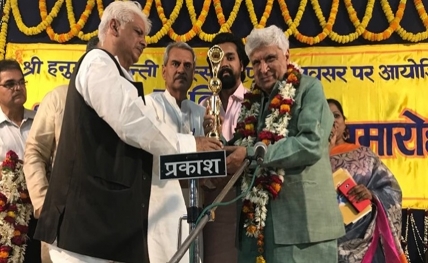
Shabana shared a photograph of Akhtar receiving the award and captioned it: “Congratulations Javed Akhtar for receiving the prestigious Shanti Dhoot citation and Award from (On the left in black jacket) the Kashi Mahant Shri Vishwamber Nath Mishra.”

Shabana married Akhtar in 1984. Akhtar was previously married to Honey Irani, with whom he had two children, Farhan Akhtar and Zoya Akhtar.

source: http://www.ianslive.in / IANSLive.in /  Home> Entertainment> Bollywood Country Report / April 07th, 2018

Javed Akhtar pens CRPF’s new theme song

The Central Reserve Police Force has now come up with a theme song penned by renowned lyricist Javed Akhtar, composed by Raju Singh and and sung by Javed Ali.

The song was released by President Pranab Mukherjee on Friday to mark the diamond jubilee celebrations of India’s largest paramilitary force. Complimenting Javed Akhtar and the team for their creative effort in capturing through lyrics and composition the sentiments of the CRPF, Mr. Mukherjee said it would inspire each jawan of the force, the President added.

source: http://www.thehindu.com / The Hindu / Home> National> New Delhi / by Special Correspondent / New Delhi – March 04th, 2014