Tag Archives: Khas Bagh

Rampur Royals were patrons of art, literature and cuisine

Rampur, UTTAR PRADESH :

The Rampur Nawabi family with former Prime Minister Dr. Manmohan Singh

In December 2021, I came across a report in a newspaper that said, “After almost 50 years of legal battle, the Rampur District Court has ruled in the Rampur Nawab family’s property dispute. The property will now be divided among 16 legal heirs. Raza Ali Khan, the last Nawab of Rampur, died in 1966. After a long legal battle, the court has announced the division of his property worth Rs 2,664 crore.”

The Nawab family of Rampur with its glorious history is still important played in Rampur and its surrounding districts. While the family ruled the state for a long time, its members joined the institutions of independent India like Parliament and legislative Assembly. Former Members of Parliament Mickey Mian and Noor Begum belong to the family. Many members of this Royal family have played an important role not only in politics but also in promoting the culture, patronizing poets, writers, musicians, and other creative artists.

Khandaan

The Nawabi family of Rampur State

Before the independence, India was dotted with small states and one of them happened to be the state of Rampur, located in today’s state of Uttar Pradesh. It was founded by Nawab Ali Mohammad Khan, a Pushtun leader on 7 October 1774. There have been 11 Nawabs in the state including Nawab Faizullah Khan, Nawab Hafiz Rehmat Khan Barish, Nawab Muhammad Ali Khan, Nawab Ghulam Muhammad Khan, Nawab Ahmad Ali Khan, Nawab Muhammad Saeed Khan, Nawab Yusuf Ali Khan, Nawab Club Ali Khan. Nawab Muhammad Mushtaq Ali Khan, Nawab Hamid Ali Khan.

Raza Ali Khan was the last Nawab of Rampur. Rampur was one of the important States of the British in India as its rulers were plaint and supported the Raj even during the 1857 revolt. It was a 15 cannons gun salute State and its rulers owned a lot of wealth.

Before the independence, the Nawabs of Rampur used to have their own railway station with two special coaches always in readiness in the service of the Royal family. Whenever the Nawab family had to travel by train to Delhi, Lucknow, or elsewhere, they would board their coach and that was added to the passenger train. During the tenure of the ninth Nawab, Hamid Ali Khan the railway line was laid in the district. At that time, he had built a separate railway station for his use. It was close to the main railway station.

The Royal Coach full of Luxuries and modern appliance

Interestingly the two railway coaches that have immense historic and antique value today are among the assets sought to be distributed among the progeny of the Raza Ali Khan. These were originally valued at Rs. 117.42 million. However, due to almost no maintenance, the price was halved.

Interestingly, these coaches had so many modern conveniences that even the heads of the state today can’t dream of. The coaches were equipped with 33mm and 16mm cinema projectors, cameras, imported radio transistors, and tape recorders. These provided all the luxuries like Bedding, chair, carburetor pillow, seat, silverware, glass, whiskey, beer bottles, English crockery, large cigarette and cigar box, silver footstep, eagle, silver canteen set, silver hooka, silver bed, sword, and various kinds of guns, etc.

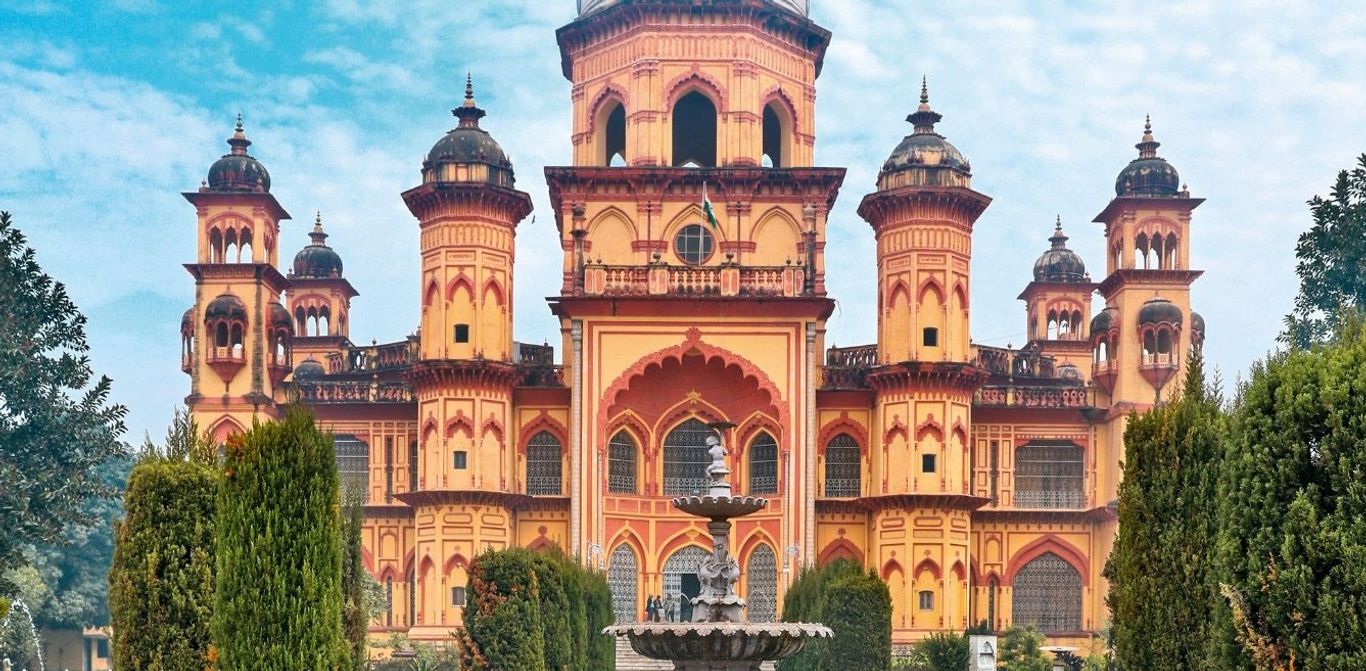
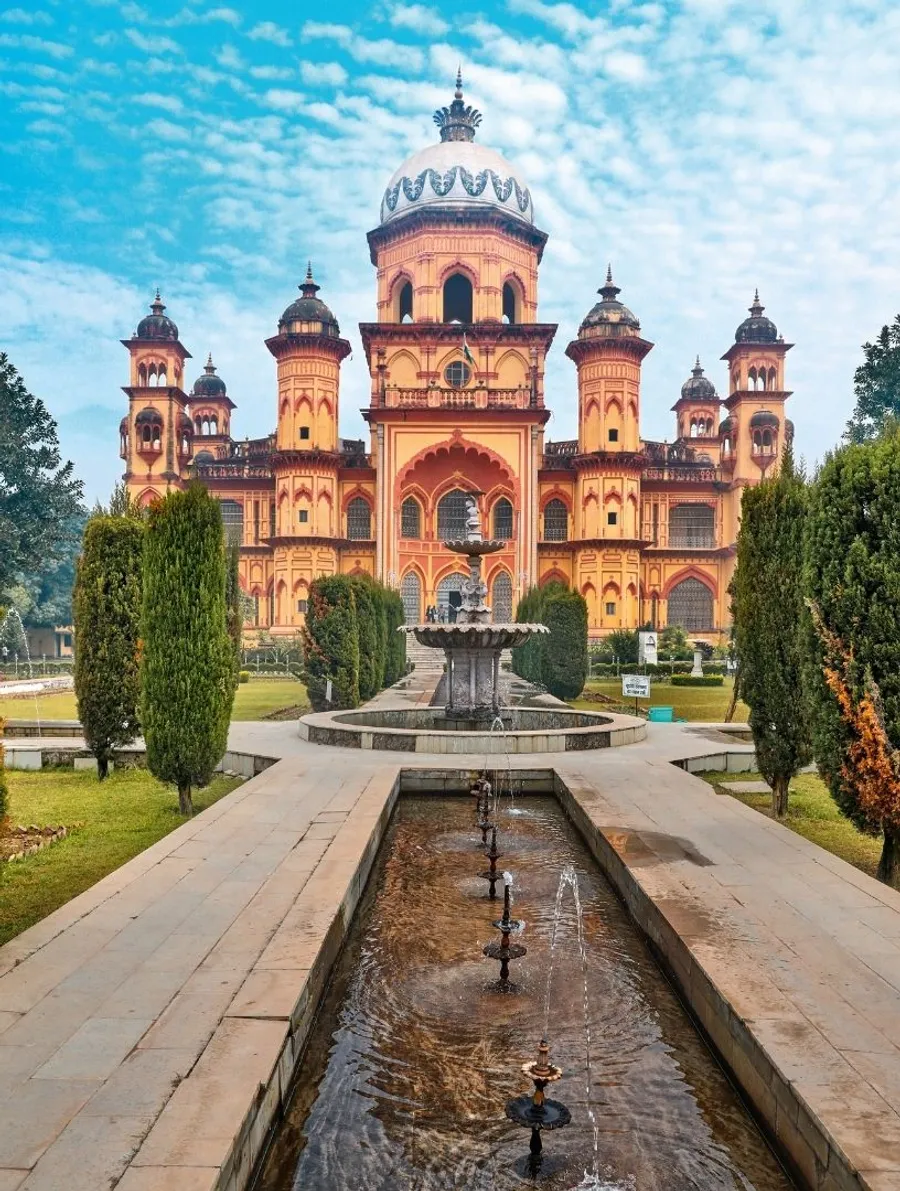
The Nawab family’s properties include 1073 acres of land, mansions, palaces like Khas Bagh, Kothi Benazir, Lakhi Bagh, Kanda, and Nawab Railway Station, and immovable assets like arms, jewelry, etc. The valuables include silverware like six silver beds, 20 silver pandans, six khasdans, and 20 cigar boxes, and four hookas. Former Member of Parliament Begum Nurbano says that when she came to Khas Bagh in 1956 as a bride she slept on a silver bed. Khas Bagh was India’s first air-conditioned palace.

Khas Bagh Palace was the first air-conditioned palace in India.

Khas Bagh Palace, Rampur

The state of Rampur was not only a political state but also a great patron of education, art, and culture. Nawab Yusuf Ali Khan was a friend of knowledge and also gave scholarships to scholars and students. He made Mirza Ghalib his consultant on literary matters and he became a student of Ghalib. He used to send a reasonable amount of money to Mirza as a stipend. In addition, hundreds of poets, including Mirzadagh Dehlavi, were patronized by the Nawabs of Rampur.

The Library

The Nawab of Rampur was a friend of knowledge. The symbol of his friendliness of knowledge is Raza Library which was once the largest library in India and it is still very important today. Thousands of rare books and manuscripts in Urdu, Persian and Turkish languages ​​are available here.

The Nawab of Rampur was also an epicurean. He had a whole army of cooks and chefs. These chefs would spend the whole day preparing high-quality food and experimenting with new flavors. Elders were invited to the Nawabi Dastkhwan. After the dissolution of the state, it became difficult for the Nawab to continue the Dasthar Khan.

The Nawabs of Rampur patronized traditional music at their court. Mehboob Khan was one of the greatest thinkers of the royal court of Rampur state. This tradition was followed by his sons Inayat Hussain Khan and Inayat’s brother-in-law Haider Khan and Mushtaq Hussain. It was here that the Rampur-Sahswan family of Indian classical music was born. Sahswan is in the present Badaun district.

One of the Palaces of rampur Nawab family

After independence, the Nawab family took an active part in politics and Major Nawab Syed Zulfiqar Ali Khan Bahadur was the first from the family to be elected to the Lok Sabha. He was known as Mickey Mian. He was the second son of Nawab Sir Syed Raza Ali Khan Bahadur. In 1984 and 1989, he was elected to the Rampur Lok Sabha seat on a Congress ticket. It is also interesting to note that Mickey Mian represented Rampur in Lok Sabha for a long time but never spoke in the House.

After Mickey Mian, his wife Begum Noor Bano served as Member of Parliament in the 11th and 13th Lok Sabha. She was elected from Rampur on a Congress party ticket. Begum Noor Bano alias Mehtab Zamani Begum was born to Nawab Aminuddin Ahmed Khan who was the last ruling Nawab of Loharo (Bhiwani-Haryana). She was educated at Maharani Gayatri Devi Girls Public School, Jaipur.

She joined the All India Congress Committee in 1992 and was elected to the Lok Sabha in 1996. In the next election, she lost to BJP’s Mukhtar Abbas Naqvi. An aficionado of music and dance, Noor Banu is the patron of the Devi Foundation and the Rampur family. Bano is interested in historical and cultural Persian and Arabic books and research on environment and forest protection. She enjoys reading, painting, gardening, and music and is a member of several sports clubs across the country.

Micky Mian and Noor Bano with their children

Micky Mian and Begum Noor Bano have three children. One of them is Nawabzada Syed Muhammad Kazim Ali Khan Bahadur. He was elected MLA several times and is also a Congress candidate in the current Assembly elections. His son Nawabzada Syed Haider Ali Khan Bahadur is also contesting the Assembly elections 2022.

In the current elections in Uttar Pradesh, the reputation and honour of the Royal family is also at stake. Samajwadi Party veteran Azam Khan, who has been elected an MLA from Rampur city nine times is contesting from inside the jail against his traditional rival from the Royal family Mohammad Kazim Ali Khan. Kazim Khan popularly known by his nickname of Navid Miyan is contesting as a candidate of Congress Party and is hoping to defeat the ‘tainted’ Azam Khan.

Besides, Azam Khan’s son Abdullah Azam is contesting from the Suar constituency where he is pitted against Naveed Mian’s son Hamza Mian.

The Nawab of Rampur

Azam Khan has dominated the politics of Rampur for 42 years. He has also held ministerial positions in the Samajwadi government four times. He has also been Leader of the Opposition and Member of Rajya Sabha. On the other hand, the Nawab family has also a great influence on Rampur. Naveed Mian Sawar has been MLA four times from the Tanda seat. Once he was also elected to Legislative Assembly from Bilaspur and was a minister too.

His father Nawab Zulfiqar Ali Khan alias Miki Mian has been a Member of Parliament five times and his mother Begum Noor Bano has been a Member of Parliament twice. Both the Congress and the SP have given tickets to the members of the Rampur Royal family. This time, Congress has given tickets to former MLA Naveed Mian as well as his son Haider Ali Khan alias Hamza Mian.

source: http://www.awazthevoice.in / Awaz, The Voice / Home> Stories / by Ghaus Siwani / February 04th, 2022
Unraveling The Rich History Of Noor Mahal Palace With Nawab Kazim Ali Khan

Rampur, UTTAR PRADESH :

Nawab Kazim Ali Khan tells the tale of the dynasty, its Raza Library, and years of progressive thinking that expanded the region and its many enterprises.

Luxury realtor Sush Clays takes us to a royal wedding in the Noor Mahal Palace, home to the Nawab of Rampur.

Nawab Kazim Ali Khan tells the tale of the dynasty, its magnificent Raza Library, and years of progressive thinking that expanded the region and its many enterprises.

His obsidian eyes halt you till you reach the twinkle in their midst. You look again, and those deep dimples flanking his wide smile reach right into your heart. And then he speaks: he tells you tales of conquering heroes and lands won and lost; princesses from far lands who made India’s sons and daughters; gemstones and swords that filled coffers; a land, united and forged as one by the many layers of the legacy of the past.

Nawab Kazim Ali Khan, much loved among his friends as Navaid bhai, is one of the most precious custodians of India’s history and some of its invaluable treasures.

Raza library in Rampur is one of the most important repositories of Indo-Islamic learning in South Asia

I met him first as Nawab Sahib, in his full reglia, when he leaned down with his statuesque Pathan grandiosity and said gently, “Call me Kazim.” I was facetiously outraged. “I love calling you ‘Nawab Sahib’,” I spluttered laughing. That didn’t last long. The bonhomie that the nawab exudes makes it hard to retain deference and address him by his title.

This was also the first of many conversations on the history of the Rampur dynasty, rewinding its track through accession and succession, the British Raj and India’s Independence, right back to the Marathas and the Mughals.

The Rampur royal family bedecked in heirlooms at the wedding

The Rampur state was created by the Rohila Afghan Pathans of Kandahar. The Yusufzai clan were originally traders. Their leader had two sons, Dawood and Kaisaf Khan. This was when the Marathas, a Hindu warrior sect, were fighting back the Mughal dynasty in the subcontinent. They had reached up to what is now northern Uttar Pradesh in victory.

By the 1700s, the Mughals engaged the services of the Pathans and the first battle pitted the Marathas against the Pathans in Fatehganj. The Maratha Peshwas were defeated and pushed down to Gwalior. In honour of this victory, the Mughals gave the Pathans eight districts in Rohilkhand. Dawood Khan moved to India, and this marked the beginning of the Rohila family saga in India. Faizullah Khan, one of the eight grandsons of Dawood Khan, inherited the kingdom of Rampur and was established as its first nawab.

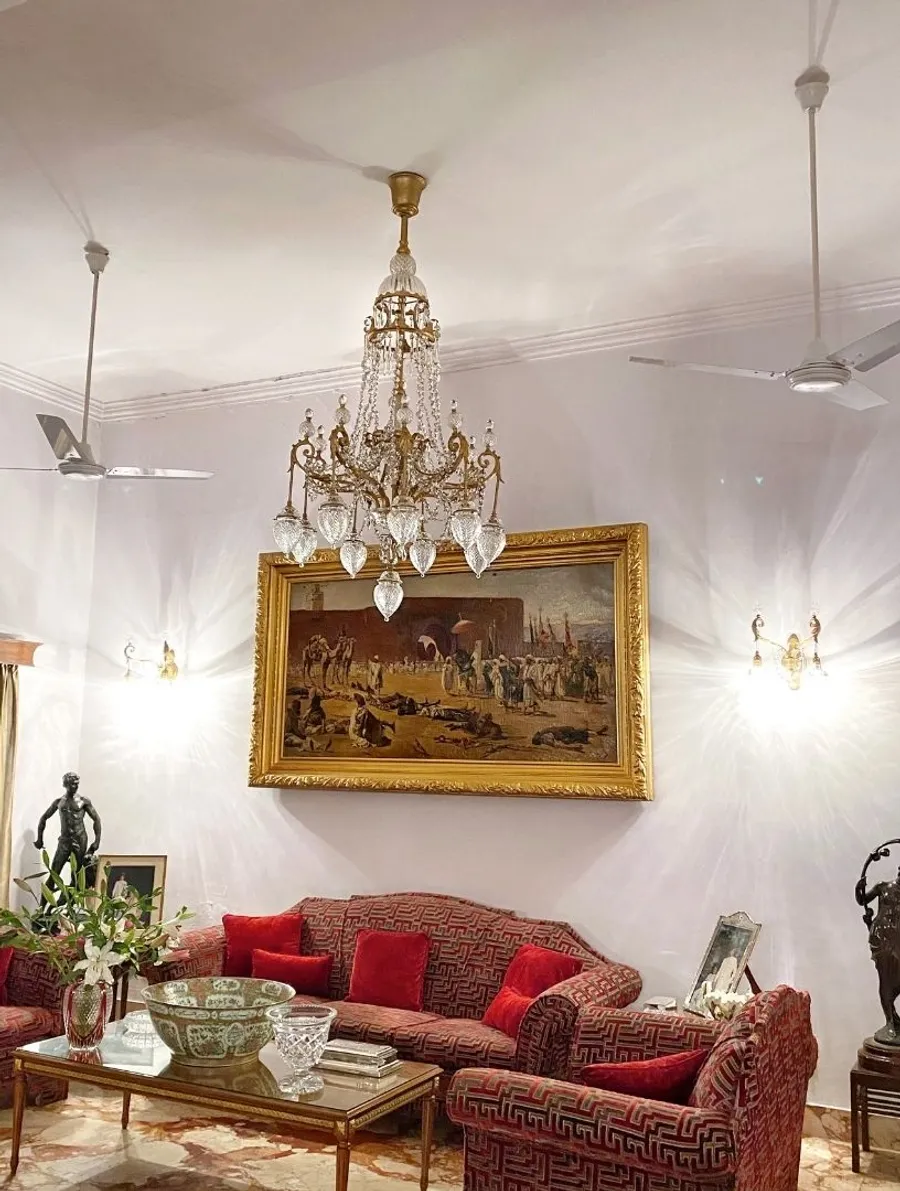
The drawing room in Noor Mahal

During the British Raj, as the city of Rampur expanded, a new undertaking of building the Khas Bagh palace was begun. Built over several years and completed in 1930, it marries a variety of architectural styles. With India’s Independence came a new strain of history into the Rampur family. Nawab Raza Ali Khan was the first to merge his state into the Indian Union in May 1949.

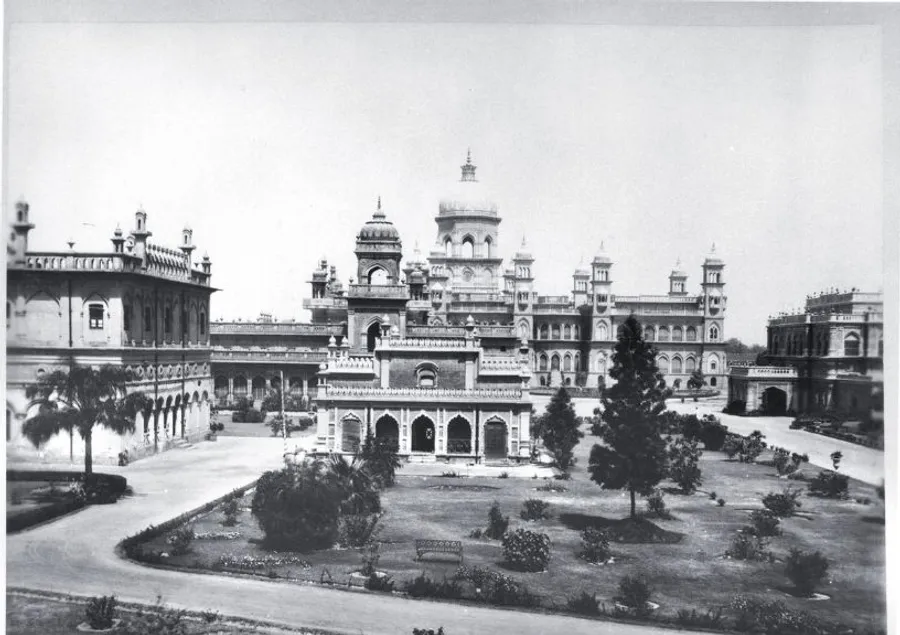
The Raza Library is ensconed in acres of manicured gardens

And finally, in 1960, Noor Mahal, formerly the Viceroy’s representative’s palace, was turned into a haveli—as it stands now—for the birth of Nawab Kazim Ali Khan. He grew up there surrounded by his governess and staff, was fed food cooked in copper vessels, and had a daily appointment between 6 pm and 8 pm with his grandfather in Khas Bagh.

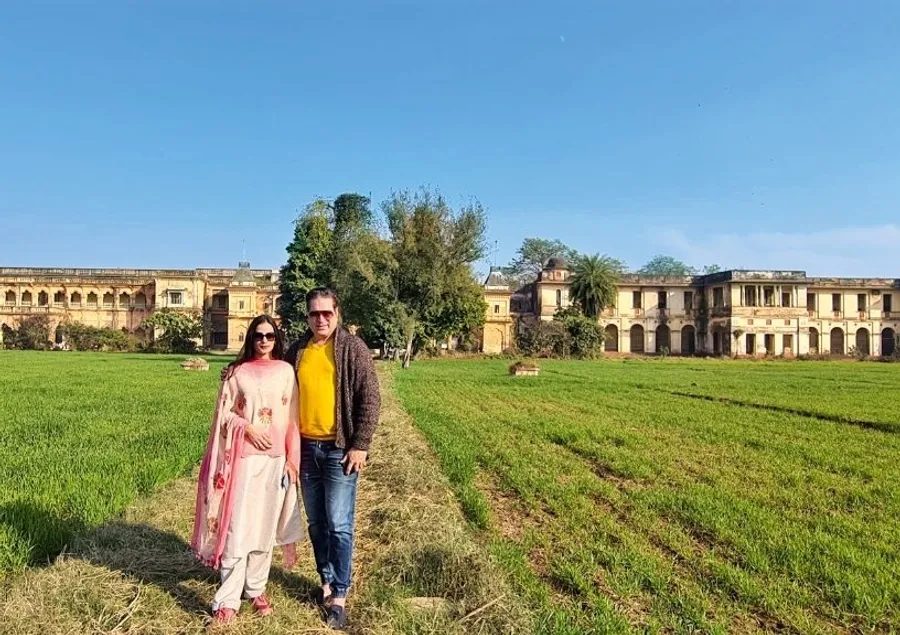
Noor Mahal, where Navaid bhai lives to this day, stands surrounded by his lush never-ending acres of farmland. The haveli holds priceless treasures: intricate vases, jade pieces of pottery, and photographs of the family beautifully installed by Queen Mother Begum Noor Bano and the current queen of Rampur, Begum Yaseen Ali Khan. Built in the classic British Raj style of architecture, with open verandahs circling the palace, Noor Mahal is where the heart of the family resides.

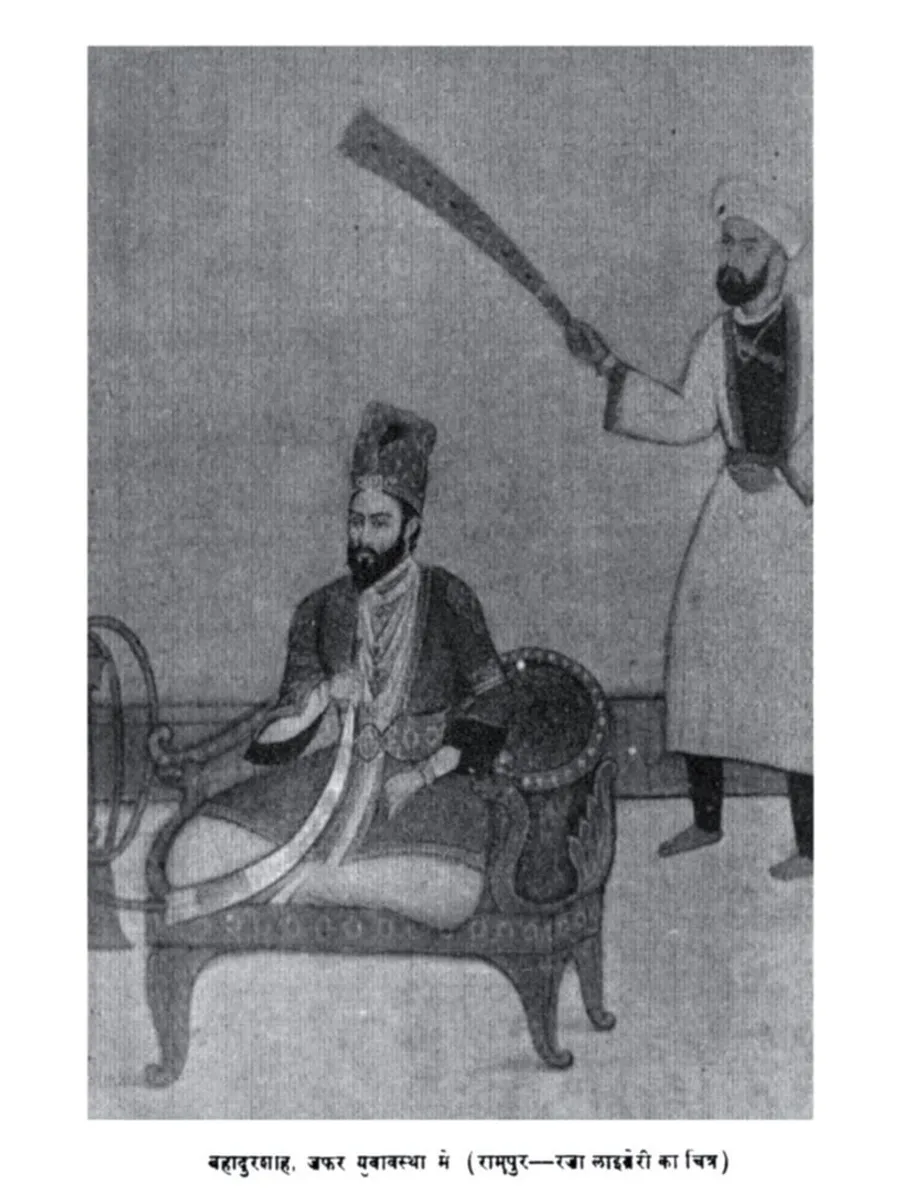
A painting of Bahadur Shah Zafar from the collection of the library

The Raza Library is the crown jewel of the Rampur dynasty. It stands tall and imposing, a precursor to the Indo-Saracenic architectural style, ensconced in acres of manicured gardens. The erudite Rampur nawabs had a passion for learning and collected over 22,000 manuscripts since the library was established in 1774 by Nawab Faizullah Khan.

They were also great promoters of women’s education. Begum Noor Bano, a descendant of Uzbekistan royalty, brought several manuscripts to Rampur as her bridal gift to the family. Today, the Raza Library remains one of the most important repositories of Indo-Islamic learning in South Asia. Its range of manuscripts stretches from Persian to Arabic, Pashto, Sanskrit, and Urdu. The collection includes the al-Qurani Majid, a priceless manuscript dating to the seventh century AD, and an illustrated Ramayana translated to Persian around 1715 AD.

Navaid bhai takes his daughter-in-law on a tour of the treasures of Rampur

Firm believers in the value of secularism and progressive thinking, the Rampur Nawabs were the only Islamic kingdom where the coronation ceremony was performed by a Hindu Brahmin pandit. With the advent of industrialisation, the far-sighted rulers realised that agriculture alone could not sustain the economy. Hence, the land was leased out to several manufacturers, including a distillery that produces the fabulous Rampur Single Malt Whisky today. With the birth of democracy in India, the instinct of the sovereign ruler of the time was to enter politics or the armed forces. Navaid bhai’s grandfather, Nawab Raza Ali Khan, was the honorary colonel of two infantries and an armoured regiment that participated in World War II to protect what was to become Indian territory post Independence.

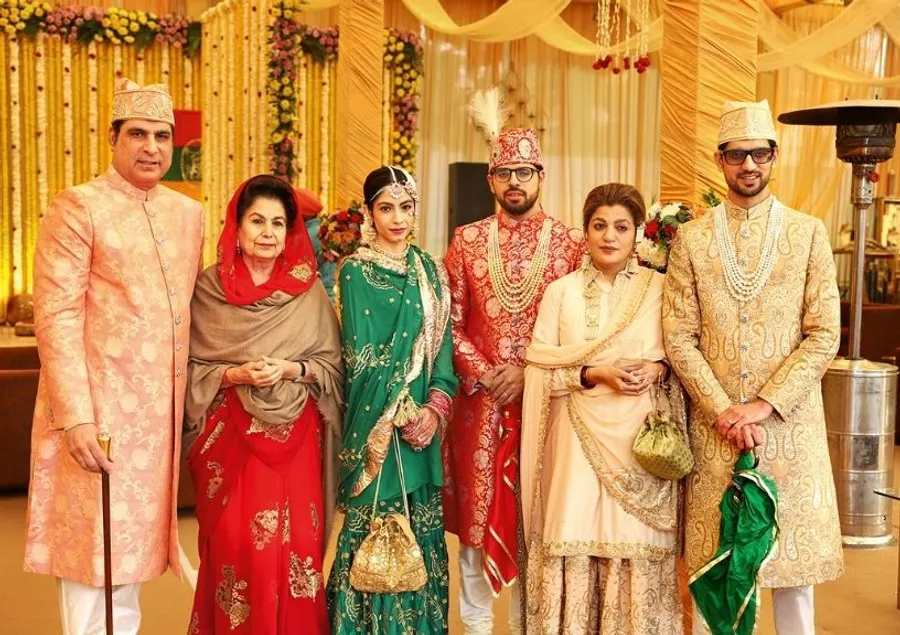
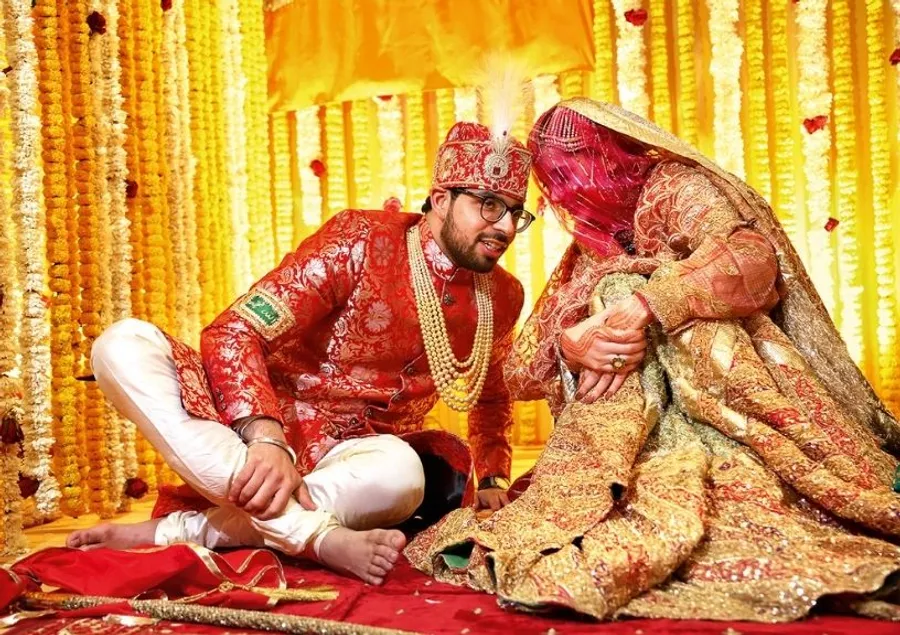
Nawabzada Haider Ali Khan and his bride Shaukat Zamani Begum

Queen Mother Begum Noor Bano was the first female member of the family to successfully contest elections and win the seat of Rampur. This began a new era in the lives of the Rampur family. The seat of the nawabs was then moved to Noor Mahal so that they could move a little away from the swiftly expanding city of Rampur. This brings us to the present day when I find myself at this stunningly historic haveli to celebrate the wedding of Nawab Kazim Ali Khan’s second son.

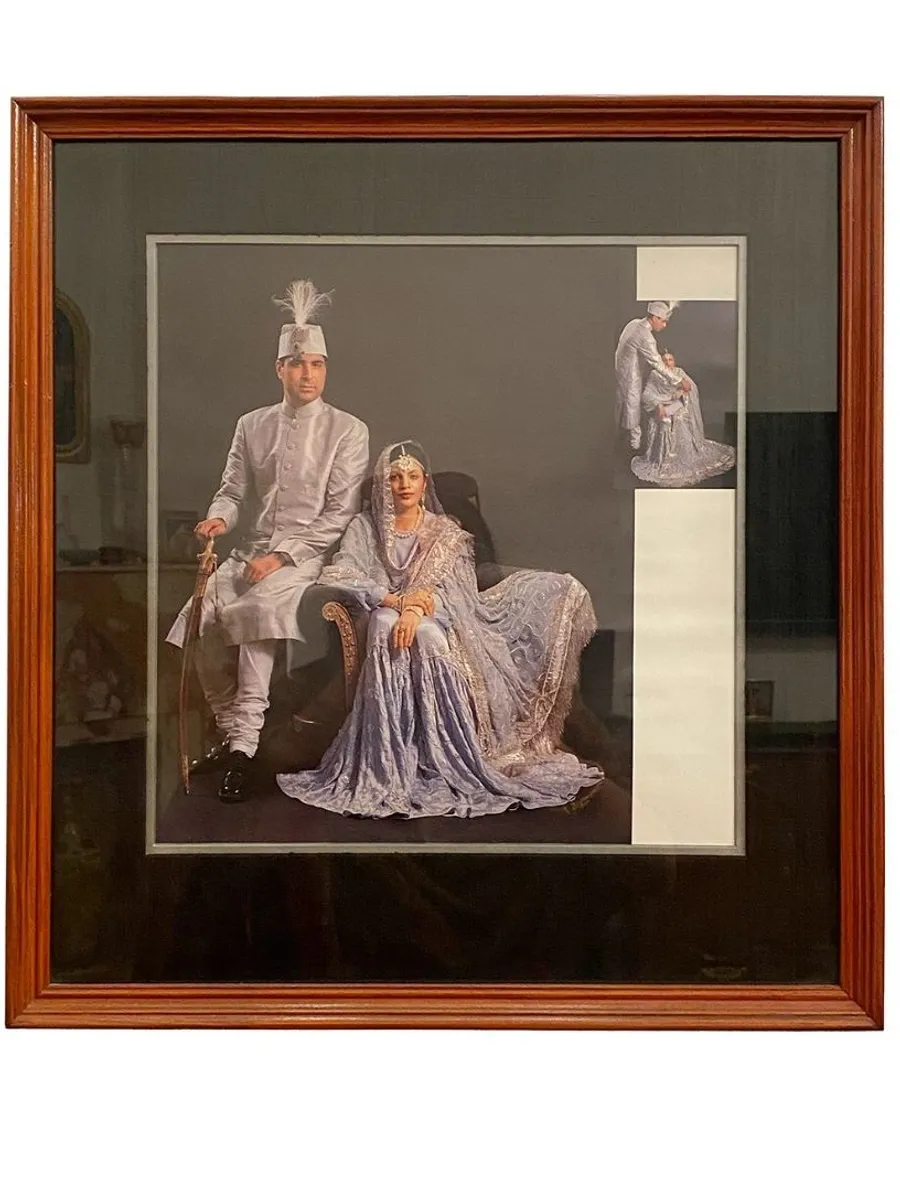
The wedding portrait of Nawab Kazim Ali Khan and Begum Yaseen Ali Khan

The year 2020, with all its woes, brought this one joyous occasion for Navaid bhai to gather an intimate group of family and friends and celebrate the nikah of his second son, Haider Ali Khan, to the beautiful Shaukat Zamani Begum. Sufi music composed by Navaid bhai’s grandfather fills the haveli. An incredible performance of a whirling Sufi dancer puts us in a delicious trance. The exotic aroma of Rampur’s extraordinary cuisine titillates our olfactory nerves. And the melting flavours of the famous chapli kebab make our palates spiral into ecstasy. As our senses are soothed into sublime languor through three days of feasting, dancing, laughter, and love, we awake to the nikah on the final morning.

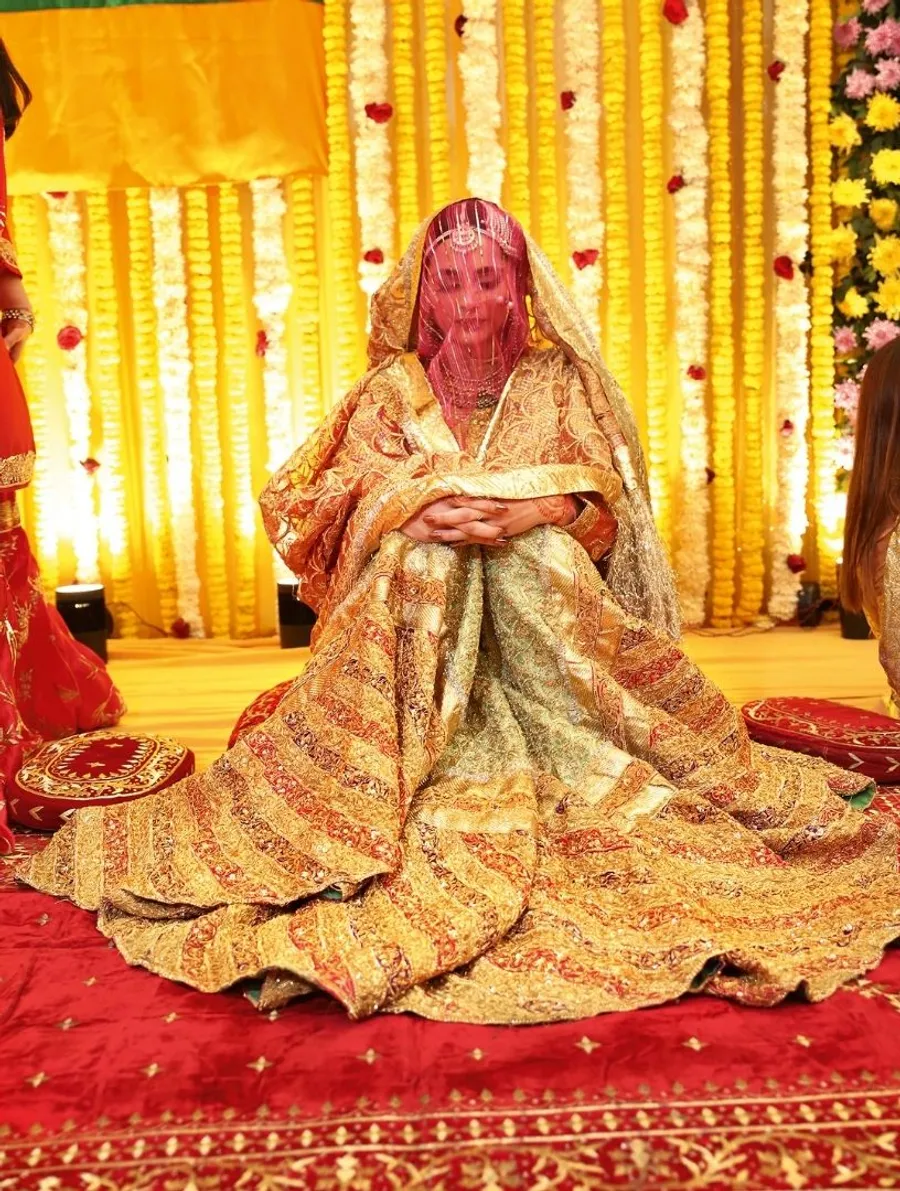
The pure pageantry of the ceremony is a joy to behold. Begum Zamani is clad in an intricately embroidered sharara that requires three bridesmaids to carry it; Nawabzada Haider is dressed up in his Pathan grandeur, with the family’s bejewelled heirloom sword; Navaid bhai is in a stunning rose ensemble and Begum Yaseen in delicate beige—the scene belongs to a different time, a few thousand years before 2020.

The dynasty is inclusive as always, and the rites are performed in Shia and Sunni traditions. And then the gentle, lilting sound of “Qubool hai” from the bride’s veil confirms her assent to the marriage to Nawabzada Haider, sending the guests into raptures.

The Pathani nawabs of Rampur have always adopted the Hindu rituals of their homeland, so they include a henna ceremony and an evening of dancing to celebrate the union.

Begum Zamani clad in intricately embroidered sharara for her nikah

The ceremony verifies everything the nawab has told me about his family, “Of the 300-odd sovereign states of the Union of modern India, there are only a dozen Islamic royal families. Ours has always believed in educating our women, and we have forever held a deep passion for art, literature, and music.” Rampur sparkles as a shining example of myriad traditions evolved into a singular culture, which spans thousands of years and retains a resplendence of its own in modern India.

The writer is the founding partner of  Welcome Home Luxury Real Estate Services in New Delhi.

source: http://www.travelandleisureasia.com / Travel and Leisure / Home> Hotels / by Sush Clays / January 20th, 2021