Tag Archives: M A Siraj

The kernel of rice conservation

Kirugavalu Village (Malvadi Taluk, Mandya District), KARNATAKA :

Passionate efforts
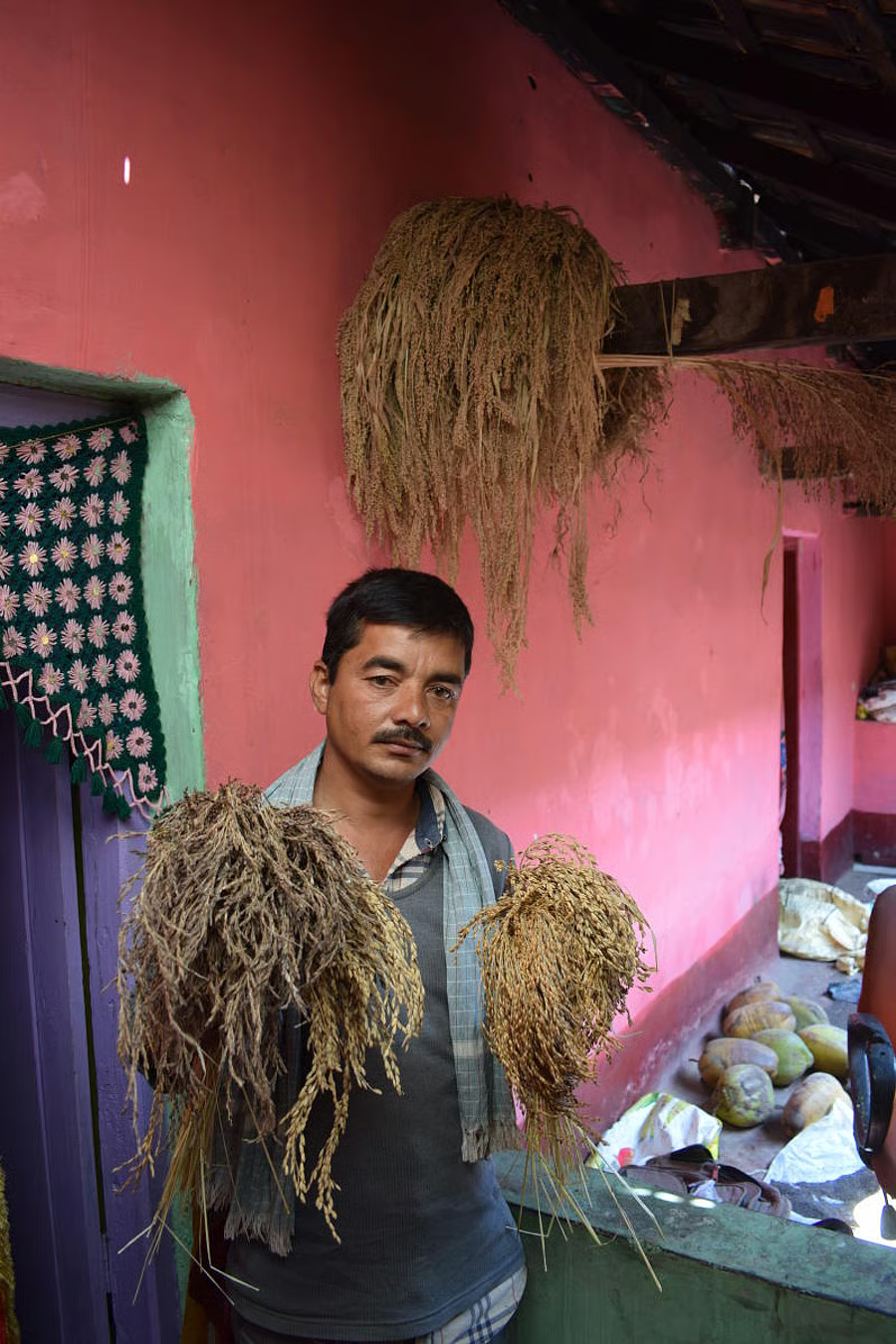
Farmer Syed Ghani Khan has brought back the use of traditional varieties even as farmers are lured into buying unsustainable varieties.

Some farmers have been the victims of forceful marketing and have opted for commercial varieties of rice and other crops promoted by seed firms.

In effect, they have switched from native varieties — which suit the soil and climatic conditions — to the ones that consume more water and fertilisers, and are easy prey for insects and pests. But it does not take farmers long to realise that the yield comes down after a few years, leaving the soil toxic.

Remedy lies in returning to traditional grains. But wooing farmers away from commercially promoted seeds, fertilisers and insecticides is a task.

Syed Ghani Khan, a farmer from Kirugavalu, a village in Mandya district, has been pursuing that task as a lifetime passion.

He has set up a museum in his village home by setting apart two rooms for the purpose.

He has conserved over 700 varieties across 15 and more acres of land. These crops are harvested carefully, and the panicles laden with grain are bunched, marked with names and numbers, and arranged systematically on the walls of the two-room museum.

Some of them are even stored in bottles to be given away to farmers around the village to experiment with the heritage crops they lost in the race to boost harvest with new varieties.

Khan is a graduate from Mysore University with a degree in Archaeology and Museology. After completing his studies in Mysuru, Khan joined his father in tending to his farm.

He was pained at the sight of farmers getting addicted to industrial products and giving up the traditional varieties and practices.

He took up the task of preserving traditional seeds in packets and supplying them to those who were converts to his cause. Yet, he was not satisfied with what he did. He thought he needed more systematic efforts to create awareness about the usefulness of the old varieties and the supply of seeds.

According to Khan, continuous onslaught of publicity for industrial farm products has misled farmers into switching over to newer seeds — be it cereals, lentils, vegetables or fruits. This has led to enmasse shift to high-yielding varieties like MTU-1001, IR-64, Jaya etc.

Khan says traditional varieties hold the key to sustainable farming that is less expensive, does not erode the fertility of the soil. “In our pursuit of bumper harvest, we have damaged the soil and have made paddy an aquatic crop, which it is not,” he laments.

He began collecting varieties like Rajmudi, Ghamgadale, Doddibatta, Parimala Sanna, Basmati, Ratnachudi, Gandhasale, Mysore Mallige, Jeerige Sanna, Burma Black, Rasakdam, Thai Jasmine etc in earnest. Several of these varieties harbour medicinal properties while others emit aroma while being cooked.

According to Khan, varieties such as Doddibatta, Ghamgadale and Biddi Doddi can be grown in farms that receive just one or two spells of shower.

Ratnachudi, HMT, NMS-II are high-yielding traditional varieties while Jeerige Sanna, Rasakdam, Gandha Sale, Parimala Sanna and Mugadh Sugandh turn aromatic while being cooked.

He says most of the seeds of paddy varieties collected by him have a shelf life of 18 months. In contrast to the practice of preserving seeds in freezers, he applied on-field conservation methods where no synthetic chemicals were used.

Propagator

Farmers from all over South India have been approaching him for seeds of the native varieties.

Shiv Prasad, who has a farm in the outskirts of Hyderabad, took seeds of nearly 200 varieties from him. He has since been a promoter of the cause in his region.

Khan maintains a meticulous record of all those who have procured seeds from him. During the last two decades, nearly 10,000 farmers have accessed supplies from him.

Krishna, a farmer from a village in Maddur taluk, is a regular visitor to his farms. Rachanna, from Hosamalangi village in T Narsipura taluk, successfully grows around 25 varieties in his farm. He had visited him a decade ago.

A corner of his museum displays several medals, certificates and awards. He was conferred with Krishi Pandit Prashasti by the Govt of Karnataka (2008). National Genome Seed-saver Recognition Award was conferred on him a year later by Plant Protection Variety Forum. Govt of Karnataka chose him for ‘Biodiversity Award’ in 2010, while Directorate of Rice Research in Hyderabad presented him ‘Rice Innovative Farmer Award’ for the year 2011-12.

Ghani Khan says one should not be surprised to find one variety being replaced by another after every 40 km as India is home to thousands of varieties of rice.

He says several of them carry medicinal properties.

He says while Karigajivili and Ambe Mohur from Karnataka are said to be good for lactating mothers, Navara of Kerala is good for those who have joint pain. While Mappillai Samba from Tamil Nadu improves virility, Mehdi is held to be good for healing of bone fracture. Khaima provides relief for those suffering from piles.

Mangoes, too

Ghani Khan has taken up the conservation of native varieties of mango, too. He has registered himself with the National Bureau for Plant Genetics, New Delhi.

He has trees that have been there in the family farm for the last six to seven generations. These trees yield native varieties like mosambi ka aam (tastes like sweet lime); seb ka aam (tastes like apple); pheeka aam (bland mango) for those with diabetes; kaale malghoba, bada gola; mangamari; manji bi pasand and mittmia pasand.

His family has been supportive of his efforts and to this day help him in maintaining their farms and marketing the produce.

Womenfolk of his family use paddy in making decorative art.

Syed Ghani Khan can be reached on 9901713351 or muhinuha786@gmail.com

source: http://www.deccanherald.com / Deccan Herala / Home> India> Karnataka / by M A Siraj / October 12th, 2019
A doughty warrior builds a mosque for women

Lucknow, UTTAR PRADESH :

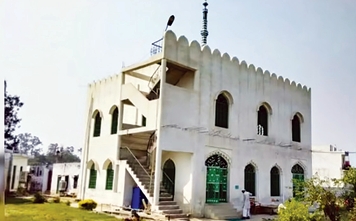
Mosques in Hindi heartland states are an exclusive male preserve. Though Islam doesn’t barentry of women into mosques, they are scrupulously kept away from the holy precincts all across north India. But Amber Mosque in the outskirts of Lucknow challenges this shibboleth. It was founded and built by Ms. Shaista Ambar, a social activist from Lucknow who wouldn’t take such taboos lying down.

Wife of a bureaucrat in Uttar Pradesh, Shaista conceived the idea of a mosque where women could also offer namaz alongside men, in 1995. As a young woman, Shaista would take up social causes during the 1980s and 90s. Construction of a mosque was certainly not on her mental screen. But the rebel in her got awakened when she took a child inside a mosque to introduce him to the collective prayers.

For the imam the sight of woman inside the mosque was no less than a sacrilege. She was ordered out. The outrageous behaviour left a deep imprint on her. Beating a hasty retreat, she vowed to build a mosque where both men and women could pray. She drove straight to Nadwatul Uloom, the world famous centre of Islamic learning in Lucknow seeking an audience with Maulana Ali Miyan, the 7th Chancellor of the seminary and a world re nowned scholar of Islam.

The revered Maulana signalled her to go ahead pledging his full support. Pouring the family’s savings, a 26,000 square feet plot of land was bought in Teli Bagh, 15 kms away from the city centre on the road going to Rae Bareli. She sold away her car and ornaments to raise the required funds. The move gathered support from wider circle of relatives and acquaintances.

Lo and behold! The mosque came up opposite the trauma care centre of the Sanjay Gandhi Post Graduate Institute of Medical Sciences. And it was none other than Maulana Ali Miyan Nadwi who presided over the consecration of the mosque in 1999. (He passed away on December 31, 1999). The mosque can host a congregation of over a thousand persons on a Friday when doughty Shaista Amber ensures her weekly presence.

She presides over the committee taking care of the mosque as the chief mutawalli with several other members of the family. She has resolutely stood against traditional maulvis taking over the management of the mosque. There have been pleas to start a madrassa (Islamic theological school) within the precincts.

She has declined permission and has instead started a dharamshala (stay-homes for wayfarers) within the boundary of the mosque where women attendants of inmates at the Sanjay Gandhi Institute find accommodation at a very reasonable rent. And they could belong to any faith. She says Uttar Pradesh has several thousands of madrassas but no dharamshalas and other such key civic facilities set up by Muslims.

The mosque is open for namaz to Sunnis as well as Shias, the major sects within Muslims. The mosque also runs a counselling centre where family disputes, mainly post-marital, are referred for resolution. Shaista has had differences with the All India Muslim Personal Law Board on several issues pertaining to women’s rights in Islam.

Critical about the rigidity on its outmoded stances, she and several of her supporters set up the All India Muslim Women Personal Law Board nearly a decade ago. The Board has appreciated the law banning the practice of triple talaq at one sitting and has suggested several progressive reforms. One who completed her graduation from the Aligarh Muslim University and later acquired Adib and Kamil certificates, Shaista has willed that her two daughters and son would look after the management of the mosque after her passing away.

Shaista came visiting Bengaluru last May at the invitation of the Azim Premji University for a seminar where this author had a chance meeting as a participant. Log onto www.shaista ambar.com for an overview of her vision and activities. 

source: http://www.newstrailindia.com / News Trail / Home / by M A Siraj / October 19th, 2025

English daily ‘News Trail’ launches Mangaluru edition

Bengaluru, KARNATAKA :

Mangaluru:

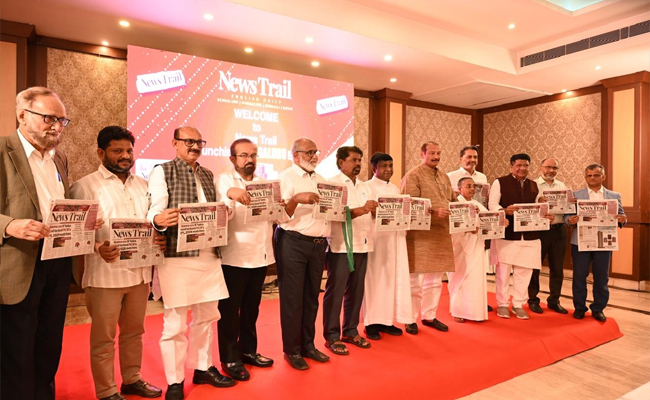
English daily News Trail has launched its Mangaluru edition. The launch function was held on Friday at The Ocean Pearl in the city.

The new edition will cater to readers in coastal and Malenadu regions of Karnataka. The publication is already being brought out from Bengaluru, Qatar and Hubballi.

Among those present at the event were Dr. U.T. Ifthikar Fareed, Chairman, Karnataka State Allied and Healthcare Council; Ivan D’Souza, MLC; Fr Sudeep Paul, Director, Sandesha Foundation; Sister Vishweshwari of Brahmakumari International Centre, Mangaluru; M.A. Gafoor, Chairman, Coastal Development Board; T.M. Shahid Thekkil, Chairman, Minimum Wage Advisory Board; Adoor Ibrahim, former Deputy Commissioner of Mangaluru; S.M. Arshad, Managing Director, Mohtisham Complexes Pvt. Ltd.; and S.M. Rasheed Haji, President, Bearys Chamber of Commerce and Industry.

K.M. Siddique, Director, News Trail; Ashraf Ali Basheer Ahmed, Associate Director; M.A. Siraj, Associate Editor; and Aftab H. Kola, Regional Business Head for the Mangaluru edition, were also present.

source: http://www.english.varthabharati.in / Vartha Bharati / Home> Karavali / February 14th, 2026

For the love of teaching

Bengaluru, KARNATAKA / Billings (Montana), USA :

A Full circle

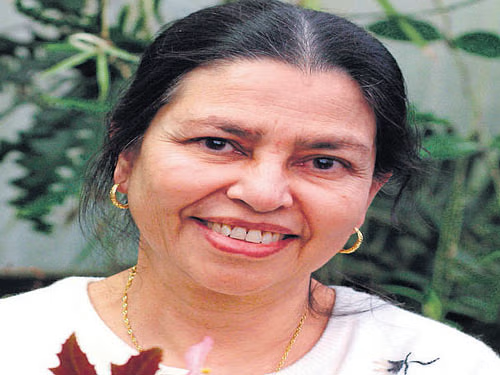
Tasneem Fathima Khaleel

Tasneem Fathima Khaleel has had a successful career in academia. However, quite remarkably, she came back to where she started – teaching. M A Siraj reports.

Few people end their careers where they first began; Professor Tasneem Fathima Khaleel is among those few. “I am excited about the opportunity to finish my career in the classroom. And, with a little help, I will be teaching in a new state-of-the-art…facility,” says Tasneem, the first-ever woman to have obtained a doctorate in the State of Mysore in 1970. Prior to returning as a professor of Botany, she served as the dean of faculty at College of Arts & Sciences for a decade at the Montana State University at Billings (MUSB).

Paving a new path

Tasneem has been teaching Botany in the United States for over 40 years and has received many awards for her teaching and research. She has headed, or has been a member on as many as 23 different academic bodies or advisory councils in the US. For her contribution to research, with nearly 50 research publications on subjects ranging from cyto-embriology to plant reproduction, she was awarded the ‘Outstanding Research Award’ in 1995 by the Montana Research Academy and has also won the Faculty Excellence Award five times.

The year 2014 was a special year for Tasneem – she had the rare honour of an award being named after her, for mentoring at the MUSB. Reno Charette, director for American-Indian Education, was adjudged the winner of the first ‘Prof Tasneem Fathima Khaleel Award for Mentoring’.

Tasneem studied in Bengaluru, before heading to the US in 1975 after marriage. An alumna of Central College, Bengaluru, she has coveted every opportunity to visit her ‘City of Gardens’ – which she ruefully admits is more a part of nostalgia rather than reality.

A passionate researcher, she recalls that very few women could be seen in higher studies in those days. Only a couple of them were pursuing PhD while she was registered in Bangalore University as well as teaching biology as an assistant professor at the University of Agricultural Sciences at Hebbal between 1968 and 1975. Her study of ‘Flora at the GKVK Campus’ and ‘Weeds in Karnataka’ are still quoted as seminal works.

Writing her own destiny

Tasneem had finished her BSc and MSc by the time she was barely 19 years old. Wanting to be a teacher, she had put in her application, but was rejected, as the dean told her, “You look like a school girl, how would the students take you seriously?”

Instead, he directed her to register for a PhD programme, which had just been started in the Bangalore University. The Doctorate took longer than usual to complete because there was lack of guidance and direction, and the programme had several fits and starts.

Finally, at 26 when she got her her doctorate, she was being looked as ‘a confirmed spinster’ in her own cultural surroundings. Marriage was nowhere on her mental radar. It took her brother several sittings to convince her of getting married.

Tasneem travelled a long and twisted path – one shaped by her culture and her drive to excel, to become the distinguished professor that she is today. For most Americans who had only preliminary idea of Islam, a woman with covered head and such drive for excellence and perseverance was a combination of incongruities. “Women have rights in Islam. Muslim women didn’t even have to fight for those rights. The religion has given them those rights,” she says.

Dr Stn Waitr, her successor, says, “Dean Khaleel has raised the level of rigour, excellence and success in the College of Arts & Sciences to a standard that should serve as a model for the entire institution.” Interestingly, Tasneem even built a herbarium at the MUSB, which has around 17,000 specimens and is currently engaged in digitising it. She recalls with pride that she was the most productive member on the faculty of science at the MSU, which has nearly 22,000 students today in two campuses. Tasneem’s most significant discovery was the finding of mammalian steroids in plants, which she says, are responsible for sex expression in plants.

Author of four books, 10 external and 17 internal grants at the MSUB, Tasneem is excited about beginning her teaching career once again. “It had never ended. I had maintained a room in my department building, even while I headed the faculty,” she says.

source: http://www.deccanherald.com / Deccan Herald / Home> Content / by M.A. Siraj / June 26th, 2015

Civil Services Exams: Muslim candidates maintain success level

44 Muslims figure among the 829 successful candidates.

Civil Services Exams: Muslim candidates maintain success level

Bengaluru: 

The UPSC results were declared on Tuesday (August 4) and 829 candidates were selected for the top civil services across the nation. Of the 829 successful, 44 are stated to be Muslims. Reports have however put the figure of successful Muslim candidates between 42 and 45. Of the total, 180 will be joining the Indian Administrative Services (IAS); 24 will be going for Indian Foreign Services (IFS) and 150 will be taken into the Indian Police Service (IPS).

The Residential Coaching Academy (RCA) under the Jamia Millia Islamia has claimed that 30 of its candidates were successful. Fourteen of them are Muslims. Twenty five of them were residing at the Academy while another five received the coaching while residing outside the campus. The Zakat Foundation of India has claimed that 27 candidates were successful. Of these 23 are Muslims. Six candidates coached by the Jamia Hamdard are among the successful ones. Of these two are Muslims. Last year, there were 28 Muslims among the 759 successful candidates.

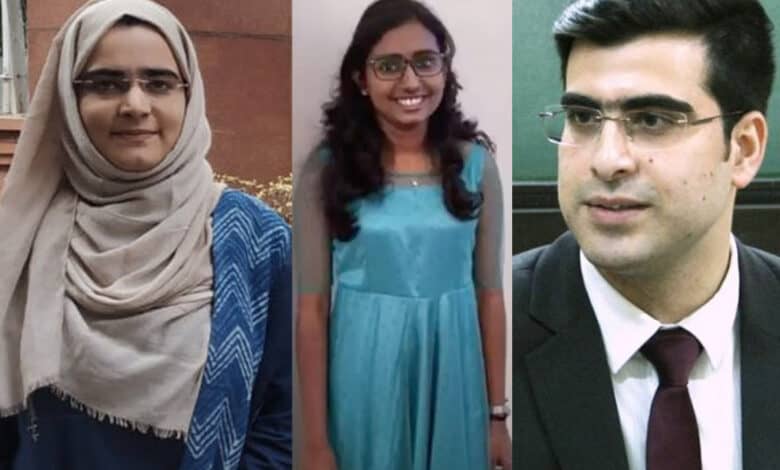
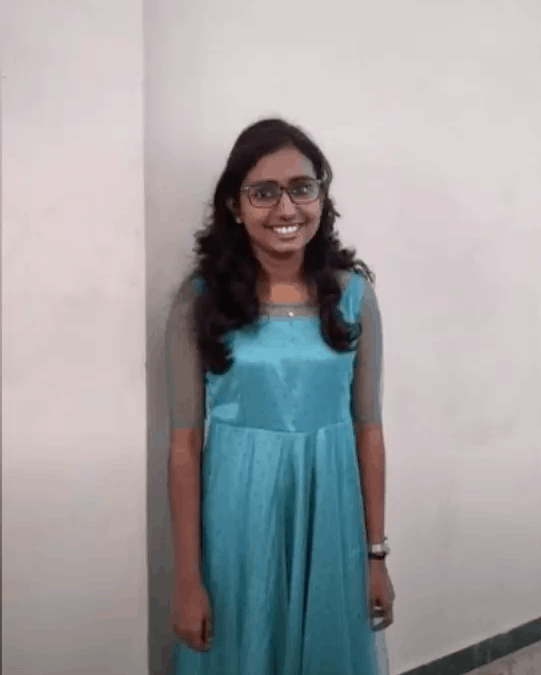
However, the results are disappointing from the angle of toppers. Only a single Muslim candidate, Safna Nazruddeen from Kerala has been awarded 45th rank. There is no other Muslim candidate among the top hundred. Jamia press released claimed that out of the 30 of its selected candidates, six are expected to get IAS, eight are likely to get IPS and remaining candidates will get IRS, Audit & Account services, IRTS and other allied services of Group-A. Six of the 30 candidates are girls. The RCA’s performance has dipped this year. Last year Junaid Ahmed emerged as the third rank-holder in the UPSC competitive exams.  The RCA has so far produced 230 civil servants for the topmost bureaucracy. Besides, 285 of its trained candidates have been selected for various other Central and State Government services such as Reserve Bank of India, scheduled banks, Jammu & Kashmir State services etc.

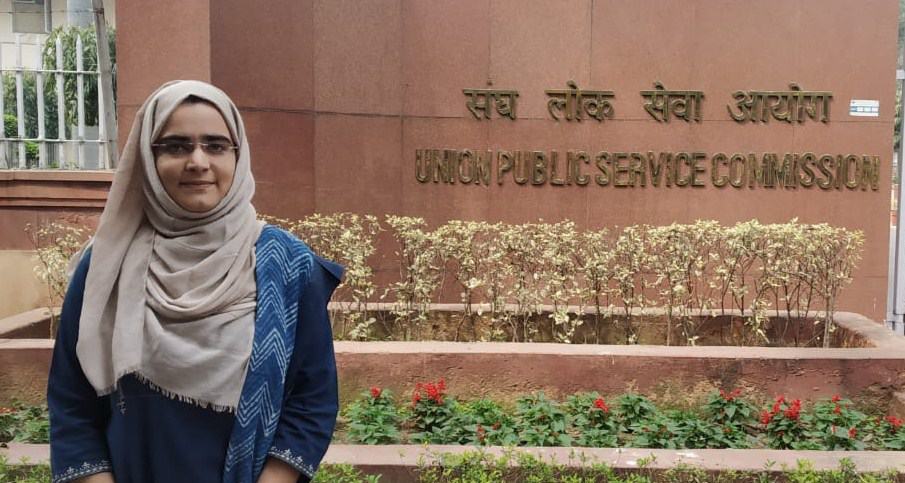
Safna Nazruddeen

The Muslim representation took a dip in 2018 when only 29 Muslims figured among 759 successful candidates. In 2017, there were 44 Muslims among 990 cleared for the services. It was in 2016 that the representation began showing upward trend with success of 50 Muslim candidates that year. Of the 50, ten figured among the top hundred. Since then the proportion of Muslims in the UPSC exams has hovered around 5%, a twofold increase from 2.5% for several decades. This is owing to concerted efforts by some institutions, notably Jamia Millia Islamia’s RCA, Zakat Foundation of India, Jamia Hamdard and the Central Haj Committee, Mumbai. However, majority of the successful Muslims this year are from southern States, although 60% of India’s Muslims live in Uttar Pradesh, Bihar, West Bengal and Assam (and their splinter states). This is where attention needs to be focused and efforts should be taken to improve standard of coaching in schools and colleges where the majority of Muslim students head.

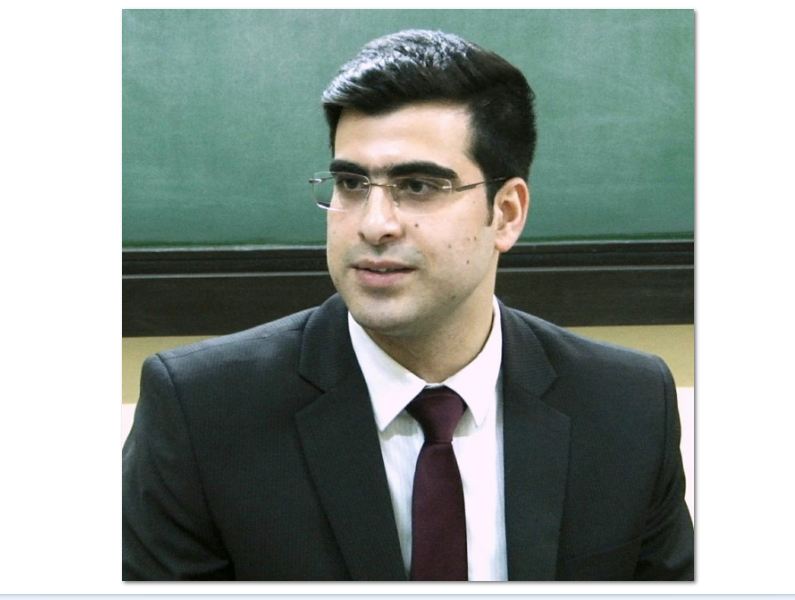
Among the successful candidates is Dr. Asrar Ahmed Kichloo, a 27-year old doctor from Dodda district of Jammu. He is one among the 14 who cracked the Civil Services exam this year from the State. He completed his MBBS from GMC in Jammu. He is son of a Veterinarian mother and a father who is a retired official from the Animal Husbandry Department in the State.

Dr. Asrar Ahmed Kichloo

Kichloo told the media that he decided to go for Civil Services after he saw a man from a rural area in Jammu had applied cowdung on his wounds. He found to his horror that patients in rural areas in the State had to travel 24 hours to reach the doorsteps of a hospital and therefore resort to superstitious practices or approach quacks. Incidentally, a Muslim girl, Nadia Beig also figures among those who were successful from the State. Nadia hails from Ramhal village in Kupwara district of the State. At 23, she is the youngest to crack the UPSC. An Economics Honours graduate from Jamia Millia, Nadia had tried for the Civil Services for the second time. She took coaching at the RCA. 

Nadia Beig

List of successful Muslim candidates for UPSC Result-2019

S. No.NameRank
1Safna Nazarudeen45
2Shaikh Mohd Zaib Zakir153
3Jithin Rahman176
4Rumaiza Fathima R V185
5Nongjai Mohd Ali Akram Shah188
6Samir Ahmad193
7Suthan Abdullah209
8Sofia*241
9Asrar Ahmad Kichloo248
10Noorul Quamer252
11Ajmal Shahzad Aliyar Rawther254
12Farman Ahmad Khan258
13Mohd Shafiq292
14Sufiyan Ahmed303
15Azharuddin Zahiruddin Quazi315
16Asif Yousuf Tantray328
17Ahmad Belal Anwar332
18Nadia Beig350
19Ashik Ali P I367
20S Mohammed Yakub385
21Shahul Hameed A388
22Shaheen C396
23Md Shabbir Alam403
24Aftab Rasool412
25Shiyaz K M422
26Ahamed Ashik O S460
27Mohammad Nadeemuddin461
28Syed Zahed Ali476
29Mohammed Danish K487
30Md Qamaruddin Khan511
31Maaz Akhter529
32Hassan Usaid N A542
33Mohammad Aaquib579
34Rehan Khatri596
35C Sameer Raja*603
36Faisal Khan611
37Saifullah623
38Sabzar Ahmad Ganie628
39Majid Iqbal Khan638
40Firoj Alam645
41Ruheena Tufail Khan718
42Rayeas Hussain747
43Mohammed Nawas Sharaf Uddin778
44Shaik Shoeb823
45Syed Junaid Aadil

M.A. Siraj is a senior journalist based in Bengaluru 

source: http://www.siasat.com / The Siasat Daily / Home> Featured News / by M.A. Siraj / August 05th, 2020