Tag Archives: Mansooruddin Faridi

Tania Parveen’s journey from village transformer to special invitee to R-Day Parade

Siswa Purvi Panchayat (East Champaran District), BIHAR :
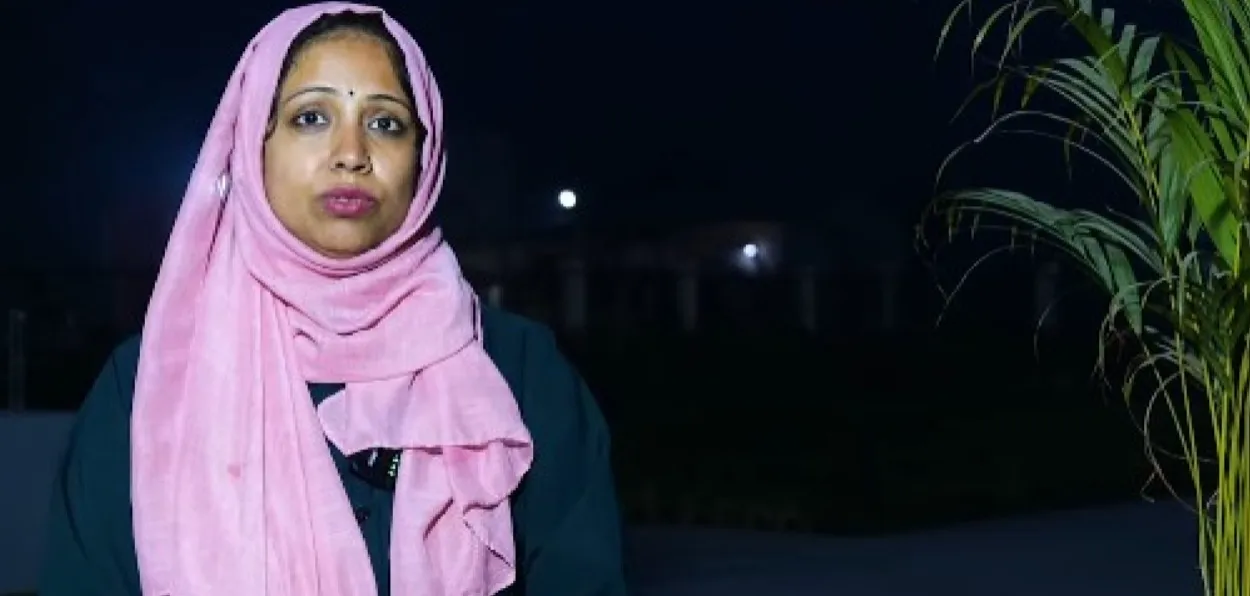
Tania Parveen, Sarpanch of Siswa Purvi Panchayat in Bihar

Tania Parveen, head of the Siswa Purvi Panchayat in East Champaran district of Bihar, will be seated among the special invitees of the President of India to witness the ceremonial Republic Day Parade in Delhi on Monday.

Tania, an engineering graduate, is among the guests of honour at the 77th Republic Day Parade due to her work in transforming her village through her vision and work as an elected head of the Panchayat.

Today, the Siswa Purvi Panchayat is a model for the rest of the country and a living proof that villages too can have amenities enjoyed by people in cities.

Tania Parveen left her government job to take up the leadership of her village. She contested the Panchayat election with a clear idea that this position could help her in changing the poor living conditions of her village.

Her trigger for giving up a well-paying and stable government job was the air pollution caused by sugar mills. Taniya has been the head of the village Panchayat since 2016.
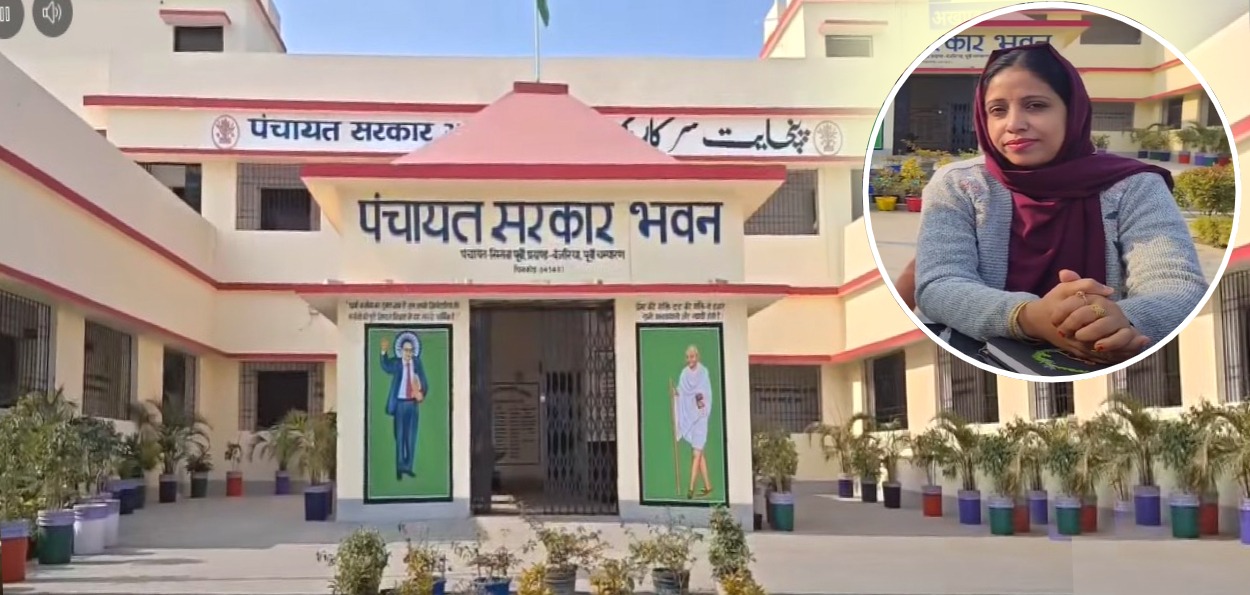
Panchatay Office of Siswa Purvi, Bihar 

The Panchayat has about 48 per cent of the Muslim population. She recalls that earlier, girls in the village showed little interest in education. Today, the situation has changed, with girls eagerly preparing to go to school.

When Taniya took charge, she had a lot of problems to tackle. Child labour, the trend of early marriages and the violence against women were immediate issues demanding her attention.

During the COVID period, she had to dispel rumours and misconceptions about the disease and its treatment. People were afraid of taking vaccines and tried to avoid quarantine. Through her strong leadership, Tania Parveen created awareness, and gradually, villagers began following the protocols.

The invite to Taniya is under the Central Government’s Panchayat Empowerment Scheme, which honours the outstanding panchayat representatives from across the country.

Tania Parveen became Mukhiya at the age of just 32 and, within the last three years, has transformed Siswa Purvi from a backward area into a model gram panchayat. Even former sarpanch Faizal Rahman, 50, openly praises her work and leadership.
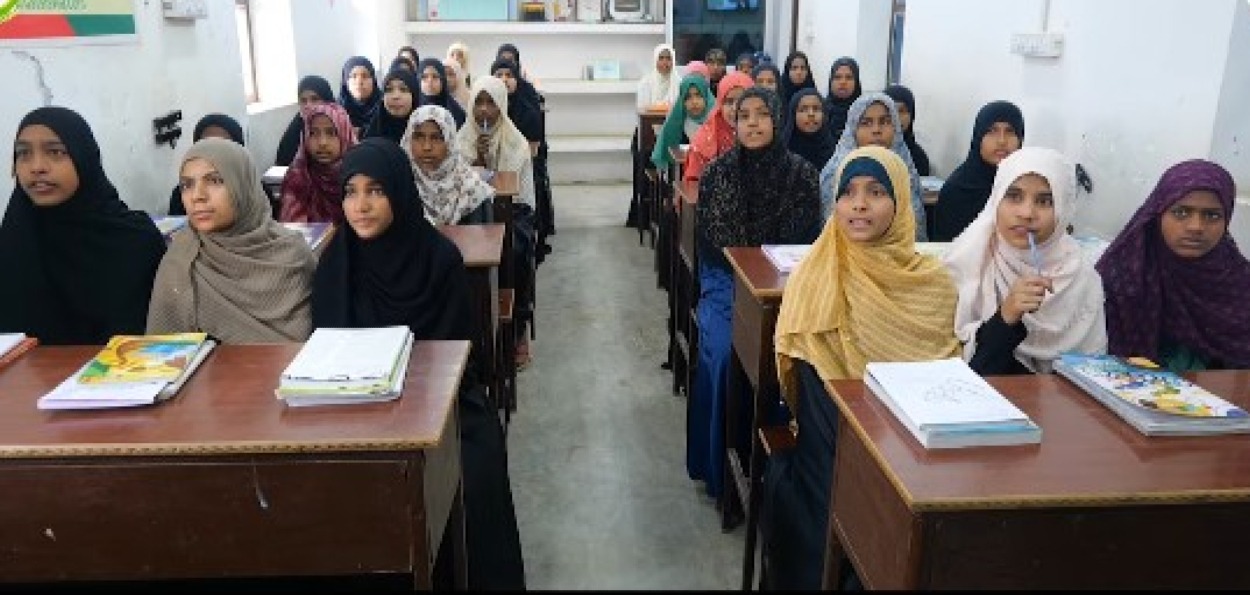
Girls attending school in Siswa Purvi village

Her focus is on health, employment, education and empowerment of women in the panchayat.

Her efforts showed significant improvements in the health sector. Regular health check-ups are conducted for the elderly, pregnant women, and girls. ASHA workers go door to door to fulfil their responsibilities. Women are encouraged to join schemes such as MGNREGA, PM Vishwakarma Yojana, and Jeevika to make them earn.

Tania introduced smart classes and computers in schools, and paid attention to high dropouts among girls. After the Beti Bachao Beti Padhao campaign, girls developed a strong interest in education. With the installation of streetlights, women feel safer even at night.

Tania Parveen says that when she became Mukhiya in 2016, the condition of the panchayat was poor. Roads had potholes, drains were clogged, and sanitation systems were weak.

Today, Siswa has better roads, organised drainage, proper water disposal, and improved cleanliness.

She injected transparency in the spending and ended a culture of bribery and commissions in public works. She says her vision was to bring the basic amenities in her village to the level of a city.

An RTPS counter has now been set up at the Siswa Panchayat Sarkar Bhavan, where birth certificates, death certificates, pensions, residence certificates, caste and income documents are issued. Every day, 20 to 35 people come to get their work done without needing to visit the block office. Led by Tania, all employees attend regularly.

Tania Parveen is now working towards setting up a women-friendly panchayat. She believes that women will become strong only when they have self-employment opportunities. She has plans for conducting tailoring, computer training, and martial arts classes to make women and girls self-reliant and confident.

Asking her peers across the country to adopt honesty as the best policy, Tania says, when a panchayat changes, society will change. Then cities will change, and eventually, Bihar will change. Panchayat development, she says, is true national development.

She also notes that women’s participation has increased significantly in social security schemes such as pension schemes, ration schemes, housing schemes, and the “toilet in every home” initiative.

The construction of the Panchayat Sarkar Bhavan has also been completed in her village.

Tania Parveen is not ready to sit on her laurels. She is working towards creating newer employment opportunities, strengthening women’s education, and digitising the panchayat system. “If panchayats are to be made dignified and strong, it is essential to provide women with equal opportunities and full respect,” she says.

source: http://www.awazthevoice.in / Awaz, The Voice / Home> Stories / by Mansooruddin Faridi, New Delhi / January 25th, 2026

Anwar Mehdi gave up AMU job to keep Sherwani alive

Aligarh, UTTAR PRADESH :

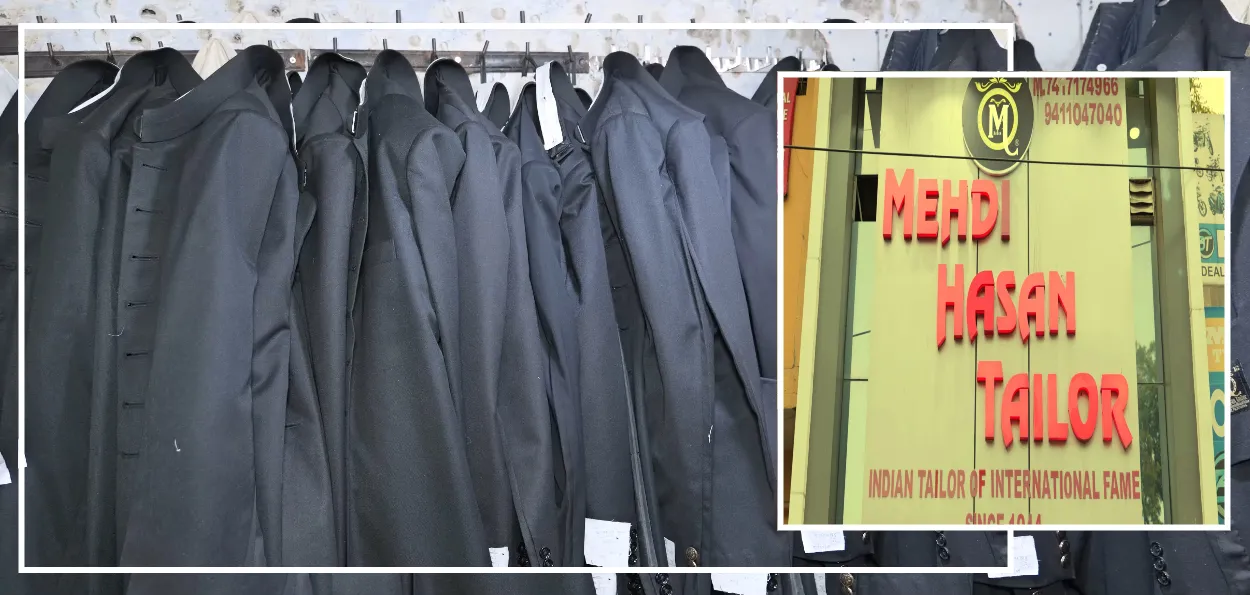
Mehdi Hassan at work

With a sparkle in his eyes and his hand holding a pair of scissors over a piece of cloth with the precision of a surgeon, on the long cutting board, he paused for a moment, looked up and said, “I was a lecturer in the Department of Mechanical Engineering, but my father’s death changed everything. A mechanical engineer became a tailor to keep his family art and inheritance alive.”

He is Anwar Mehdi, whose tone shows no disappointment or regret at his decision to change careers. This is because not only in Aligarh, he is known across the world as a ‘sherwani expert,’ as he, proudly, carried on the tradition at Mehdi Hasan Tailors – after his father’s name – alive.

Mehdi Hasan Tailors is a brand name and the pride of Aligarh Muslim University for 80 years. It’s also popular across India for its unique sherwani. Several Presidents, Prime Ministers, political and social figures, and Bollywood stars have had their Sherwanis stitched from this place.

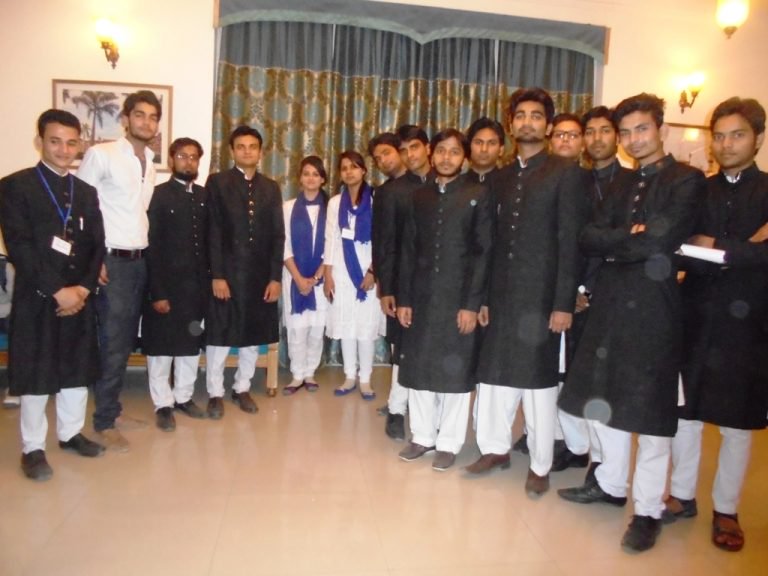
AMU students in Sherwani

Speaking to Awaz-The Voice at Mehdi Hassan Tailors in the Katara Mahal area of ​​Civil Lines, Aligarh, Anwar Mehdi says that his father was an ordinary tailor who went to Mumbai in search of employment around 1944. He met Abdul Rais, an expert sherwani tailor, from whom he learned the art. Before partition, sherwanis were not very common in the country, but wearing sherwanis was a custom in Aligarh Muslim University, so his father came to Aligarh. In 1947, he opened that shop, which is today an iconic tailoring shop.

“I completed my M. Tech. While I had mastered the cutting of sherwani with my father during my student days, I took it over completely after he died in 1995. Although by then I had become a lecturer in the Mechanical Engineering Department, the passion to keep a family art alive took me from the Mechanical Engineering Department to the tailoring shop.”

Mehdi Hasan and tailors

Anwar Mehdi said that Sherwani is actually a garment of the Mughal era and later the British, which has its roots in the clothing of the Turkish and Mughal courts. During the Ottoman Empire, the coat and cap of the Turks were very popular. The same style was later changed in India, the coat was lengthened and given a new look, which we know today as “Sherwani”.

He says that from the end of the 19th century until after independence, most of the Nawabs, Rajas, and big landowners of India wore a Sherwani. If you look at their photos, almost all of them will be seen in a Sherwani, the reason being that this garment was considered a symbol of dignity and honour.

According to Anwar Mehdi, as far as Aligarh is concerned, due to the educational environment and the influence of the Muslim elite, the sherwani became a part of educational and cultural prestige. Therefore, it is often said that the “Aligarh sherwani” actually became a symbol of Indian elite culture, be it a doctor, a politician or a scholar. I can say that the sherwani is not a dress, but a symbol of culture, history and identity.

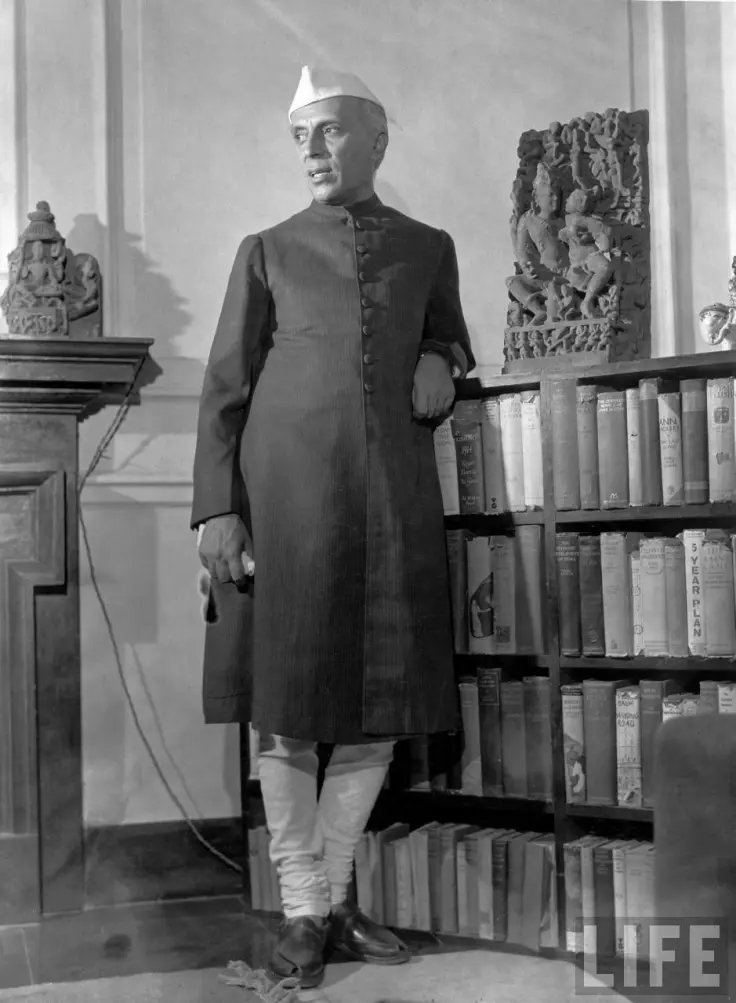
He says that leaders like Pandit Jawaharlal Nehru adopted the sherwani, and later many Presidents of India, Dr Rajendra Prasad, Dr Zakir Hussain and Dr APJ Abdul Kalam also wore it. Anwar Mehdi says that Mehdi Hasan Tailors has the honour of having made sherwanis for many Presidents of the country and other important personalities.

Jawaharlal Nehru in Sherwani

Anwar Mehdi says that not only honoured his enterprise, but also gave it recognition. He recalls making sherwanis for former Presidents VV Giri, R Venkata Raman, Dr APJ Abdul Kalam, late President Pranab Mukherjee, former President Ram Nath Kovind, former Prime Minister Manmohan Singh, Chief Ministers of various states like Mufti Sayeed, ND Tiwari, Farooq Abdullah, besides Governor Arif Muhammad Khan, Syed Sabt Razi, and other members of Parliament. Besides, he has stitched the dress for some judges of the Supreme Court.

When we met him, Anwar Mehdi was busy completing the sherwani orders on time before Sir Syed Day. He said while cutting the black sherwani, “When Dr Zakir Hussain was the Vice Chancellor of Jamia Millia Islamia, my paternal uncle was in the Department of Islamic Studies. He introduced Zakir Hussain to my father. After that, Zakir Hussain became the Governor of Bihar, then the Vice President of the country and finally the President of the Republic of India. During these 18 years, a record 178 sherwanis were sewn for Dr Zakir Hussain. Which is a testament to our quality.”

Speaking of Bollywood, Anwar Mehdi says that Majroh Sultanpuri loved sherwanis. Besides him, Javed Akhtar and Raj Babbar have also been using sherwanis made by him.

Recently, Saif Ali Khan’s sherwani was also made by him. He says that one day, Saif Ali Khan’s mother, Sharmila Tagore, called. She had requested that Saif Ali Khan be in Lucknow, so that he could give measurements for his sherwani. Saif Ali Khan called Mehdi, and he travelled to Lucknow to do the follow-up.

Anwar Mehdi said the youth have the same enthusiasm for this traditional dress as they did in the past. He says that in view of Sir Syed Day, the order from the AMU, where it’s a formal dress, increased. He says that he has seen respect and enthusiasm for the Sherwani in every era. “This is never going to end,” he says.

source: http://www.awazthevoice.in / Awaz, The Voice / Home> Stories / by Mansooruddin Faridi and Saqib Salim (Aligarh) / October 18th, 2025