Tag Archives: Mehboob Khan

Rampur Royals were patrons of art, literature and cuisine

Rampur, UTTAR PRADESH :

The Rampur Nawabi family with former Prime Minister Dr. Manmohan Singh

In December 2021, I came across a report in a newspaper that said, “After almost 50 years of legal battle, the Rampur District Court has ruled in the Rampur Nawab family’s property dispute. The property will now be divided among 16 legal heirs. Raza Ali Khan, the last Nawab of Rampur, died in 1966. After a long legal battle, the court has announced the division of his property worth Rs 2,664 crore.”

The Nawab family of Rampur with its glorious history is still important played in Rampur and its surrounding districts. While the family ruled the state for a long time, its members joined the institutions of independent India like Parliament and legislative Assembly. Former Members of Parliament Mickey Mian and Noor Begum belong to the family. Many members of this Royal family have played an important role not only in politics but also in promoting the culture, patronizing poets, writers, musicians, and other creative artists.

Khandaan

The Nawabi family of Rampur State

Before the independence, India was dotted with small states and one of them happened to be the state of Rampur, located in today’s state of Uttar Pradesh. It was founded by Nawab Ali Mohammad Khan, a Pushtun leader on 7 October 1774. There have been 11 Nawabs in the state including Nawab Faizullah Khan, Nawab Hafiz Rehmat Khan Barish, Nawab Muhammad Ali Khan, Nawab Ghulam Muhammad Khan, Nawab Ahmad Ali Khan, Nawab Muhammad Saeed Khan, Nawab Yusuf Ali Khan, Nawab Club Ali Khan. Nawab Muhammad Mushtaq Ali Khan, Nawab Hamid Ali Khan.

Raza Ali Khan was the last Nawab of Rampur. Rampur was one of the important States of the British in India as its rulers were plaint and supported the Raj even during the 1857 revolt. It was a 15 cannons gun salute State and its rulers owned a lot of wealth.

Before the independence, the Nawabs of Rampur used to have their own railway station with two special coaches always in readiness in the service of the Royal family. Whenever the Nawab family had to travel by train to Delhi, Lucknow, or elsewhere, they would board their coach and that was added to the passenger train. During the tenure of the ninth Nawab, Hamid Ali Khan the railway line was laid in the district. At that time, he had built a separate railway station for his use. It was close to the main railway station.

The Royal Coach full of Luxuries and modern appliance

Interestingly the two railway coaches that have immense historic and antique value today are among the assets sought to be distributed among the progeny of the Raza Ali Khan. These were originally valued at Rs. 117.42 million. However, due to almost no maintenance, the price was halved.

Interestingly, these coaches had so many modern conveniences that even the heads of the state today can’t dream of. The coaches were equipped with 33mm and 16mm cinema projectors, cameras, imported radio transistors, and tape recorders. These provided all the luxuries like Bedding, chair, carburetor pillow, seat, silverware, glass, whiskey, beer bottles, English crockery, large cigarette and cigar box, silver footstep, eagle, silver canteen set, silver hooka, silver bed, sword, and various kinds of guns, etc.

The Nawab family’s properties include 1073 acres of land, mansions, palaces like Khas Bagh, Kothi Benazir, Lakhi Bagh, Kanda, and Nawab Railway Station, and immovable assets like arms, jewelry, etc. The valuables include silverware like six silver beds, 20 silver pandans, six khasdans, and 20 cigar boxes, and four hookas. Former Member of Parliament Begum Nurbano says that when she came to Khas Bagh in 1956 as a bride she slept on a silver bed. Khas Bagh was India’s first air-conditioned palace.

Khas Bagh Palace was the first air-conditioned palace in India.

Khas Bagh Palace, Rampur

The state of Rampur was not only a political state but also a great patron of education, art, and culture. Nawab Yusuf Ali Khan was a friend of knowledge and also gave scholarships to scholars and students. He made Mirza Ghalib his consultant on literary matters and he became a student of Ghalib. He used to send a reasonable amount of money to Mirza as a stipend. In addition, hundreds of poets, including Mirzadagh Dehlavi, were patronized by the Nawabs of Rampur.

The Library

The Nawab of Rampur was a friend of knowledge. The symbol of his friendliness of knowledge is Raza Library which was once the largest library in India and it is still very important today. Thousands of rare books and manuscripts in Urdu, Persian and Turkish languages ​​are available here.

The Nawab of Rampur was also an epicurean. He had a whole army of cooks and chefs. These chefs would spend the whole day preparing high-quality food and experimenting with new flavors. Elders were invited to the Nawabi Dastkhwan. After the dissolution of the state, it became difficult for the Nawab to continue the Dasthar Khan.

The Nawabs of Rampur patronized traditional music at their court. Mehboob Khan was one of the greatest thinkers of the royal court of Rampur state. This tradition was followed by his sons Inayat Hussain Khan and Inayat’s brother-in-law Haider Khan and Mushtaq Hussain. It was here that the Rampur-Sahswan family of Indian classical music was born. Sahswan is in the present Badaun district.

One of the Palaces of rampur Nawab family

After independence, the Nawab family took an active part in politics and Major Nawab Syed Zulfiqar Ali Khan Bahadur was the first from the family to be elected to the Lok Sabha. He was known as Mickey Mian. He was the second son of Nawab Sir Syed Raza Ali Khan Bahadur. In 1984 and 1989, he was elected to the Rampur Lok Sabha seat on a Congress ticket. It is also interesting to note that Mickey Mian represented Rampur in Lok Sabha for a long time but never spoke in the House.

After Mickey Mian, his wife Begum Noor Bano served as Member of Parliament in the 11th and 13th Lok Sabha. She was elected from Rampur on a Congress party ticket. Begum Noor Bano alias Mehtab Zamani Begum was born to Nawab Aminuddin Ahmed Khan who was the last ruling Nawab of Loharo (Bhiwani-Haryana). She was educated at Maharani Gayatri Devi Girls Public School, Jaipur.

She joined the All India Congress Committee in 1992 and was elected to the Lok Sabha in 1996. In the next election, she lost to BJP’s Mukhtar Abbas Naqvi. An aficionado of music and dance, Noor Banu is the patron of the Devi Foundation and the Rampur family. Bano is interested in historical and cultural Persian and Arabic books and research on environment and forest protection. She enjoys reading, painting, gardening, and music and is a member of several sports clubs across the country.

Micky Mian and Noor Bano with their children

Micky Mian and Begum Noor Bano have three children. One of them is Nawabzada Syed Muhammad Kazim Ali Khan Bahadur. He was elected MLA several times and is also a Congress candidate in the current Assembly elections. His son Nawabzada Syed Haider Ali Khan Bahadur is also contesting the Assembly elections 2022.

In the current elections in Uttar Pradesh, the reputation and honour of the Royal family is also at stake. Samajwadi Party veteran Azam Khan, who has been elected an MLA from Rampur city nine times is contesting from inside the jail against his traditional rival from the Royal family Mohammad Kazim Ali Khan. Kazim Khan popularly known by his nickname of Navid Miyan is contesting as a candidate of Congress Party and is hoping to defeat the ‘tainted’ Azam Khan.

Besides, Azam Khan’s son Abdullah Azam is contesting from the Suar constituency where he is pitted against Naveed Mian’s son Hamza Mian.

The Nawab of Rampur

Azam Khan has dominated the politics of Rampur for 42 years. He has also held ministerial positions in the Samajwadi government four times. He has also been Leader of the Opposition and Member of Rajya Sabha. On the other hand, the Nawab family has also a great influence on Rampur. Naveed Mian Sawar has been MLA four times from the Tanda seat. Once he was also elected to Legislative Assembly from Bilaspur and was a minister too.

His father Nawab Zulfiqar Ali Khan alias Miki Mian has been a Member of Parliament five times and his mother Begum Noor Bano has been a Member of Parliament twice. Both the Congress and the SP have given tickets to the members of the Rampur Royal family. This time, Congress has given tickets to former MLA Naveed Mian as well as his son Haider Ali Khan alias Hamza Mian.

source: http://www.awazthevoice.in / Awaz, The Voice / Home> Stories / by Ghaus Siwani / February 04th, 2022
Throwback: Filmfare’s last interview with late actress Nimmi

Fatahbad (Agra), UTTAR PRADESH / Mumbai, MAHARASHTRA :

Throwback: Filmfare's last interview with late actress Nimmi

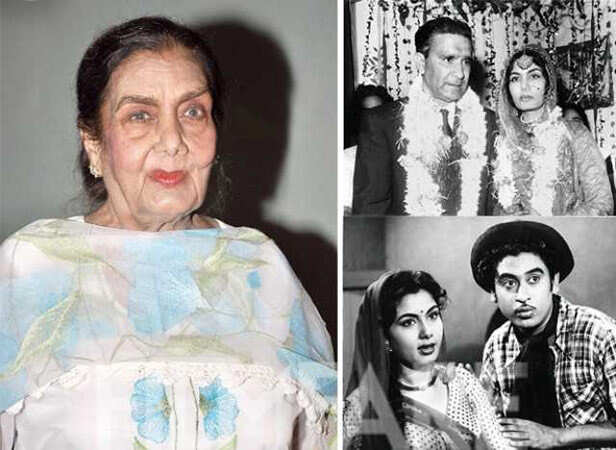
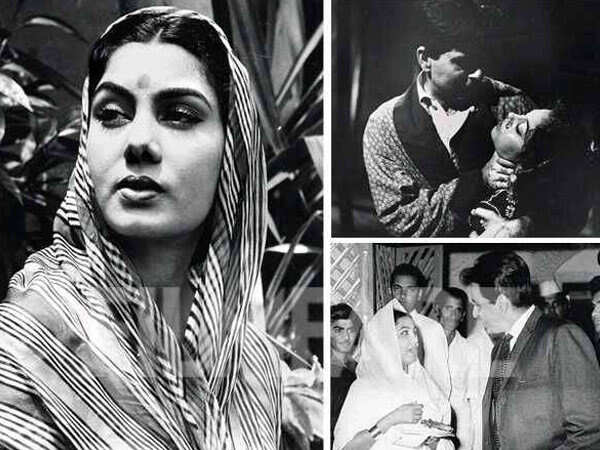
Veteran actress Nimmi passed away in a local hospital in Mumbai on March 25, 2020. She was 88 and had been ailing for some time. The last rites of the actress took place this afternoon. Nimmi acted in films from 1949 to 1965 and has some memorable films to her name like Barsaat, Aan Udan Khatola, Basant Bahar  Mere Mehboob and Love and God. The actress’ captivating smile still remains fresh in the minds of the audience. As an ode to her, Filmfare presents to you our last interview with her, read on…

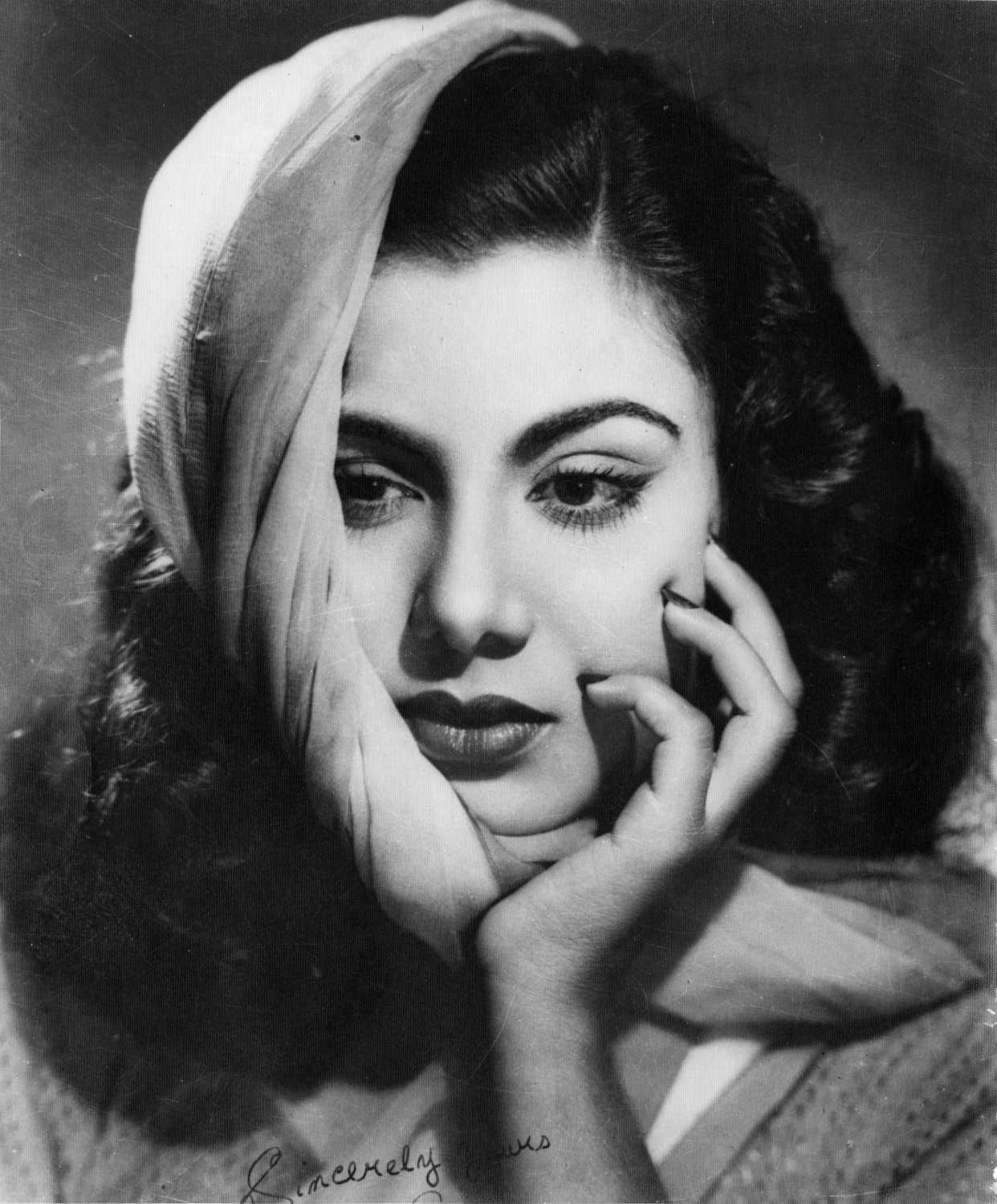
She’s the last of the begums. The golden girl of the golden era. The 1950s… where music, poetry, romance… all serenaded hope in a neo-independent nation. In an age, dominated by statuesque beauties like Nargis, Madhubala, Meena Kumari and Vyjayanthimala, came in the petite and crystal-eyed Nimmi. The second lead in Barsaat, she walked away with all the hit songs and the sympathy. While she went on to play heroine to Raj Kapoor and Dev Anand, it was her tragic chemistry with Dilip Kumar in Deedar, Daag, Amar and Udan Khatola that made her the delight of the ticket-window and tabloids. The larger-than-life histrionics eventually gave way to mellow performances in films like Sohrab Modi’s Kundan and V Raman’s Bhai Bhai. K Asif’s colossal but time-lagged love and God is remembered perhaps for an odd reason – the stills of the film remain the hard copies of Nimmi’s beauty.
Today, her face holds a resonance of yesterday. The Lucknowi Urdu, is intact and so is her penchant for shayri. She laughs as she reveals her unabashed admiration for Dilip Kumar, her vibe with Raj Kapoor. Yet there’s no clinging to the past. No tales of heartbreak define her narrative. Having lost her writer husband S Ali Raza in 2007, she’s accepted the reality of living alone. The emotion that emboldens her is gratitude. “For an artiste, the saddest, the most miserable thing is when people no longer recognise you. Khuda ka shukr hai… someone or the other recognises me when I step out.”

Dilip Kumar ke aashiq hum bhi the

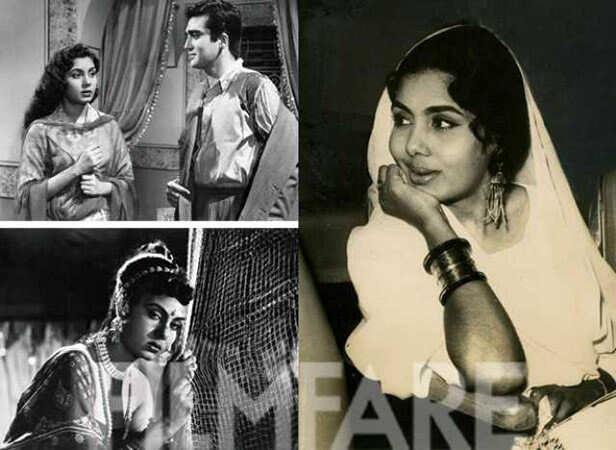
With Sunil Dutt in Kundan (top) and Nimmiji in Anjali (bottom)

Train from Agra
To escape the volatile atmosphere post Mahatma Gandhi’s assassination in 1948, 15-year-old Nawab Banoo (Nimmi’s original name) with her grandmother, left Fatahbad near Agra for Mumbai. “Nana (grandfather) told nani, ‘Take Lali (her pet name) to Bombay’!” recalls Nimmi who had lost her mother, singer/actress Wahidan at the age of 10. The two stayed with Nawab’s aunt, actress Jyoti, married to musician/filmmaker GM Durrani. Later, they approached Mehboob Khan for help, since Nimmi’s mother, Wahidan, had worked with him. The legendary filmmaker put them up in a spare room. “It was comfortable. But the toilet was outside. My servant would stand in the queue and call out when my chance came,” she laughs.

Barsaat of offers
Those days Mehboob Khan was shooting Andaz (1949) with Raj Kapoor, Nargis and Dilip Kumar. Once, Nimmi and her grandmother visited the set to watch the shooting. “Nargis’ mother, Bibiji (Jaddanbai), was also present. On seeing her, Rajji (Kapoor) rushed to touch her feet. He saw me sitting next to her and asked, ‘Aye ladki naam ky hai tumhara?’ It took me five minutes to utter my name,” she recalls. Raj Kapoor was looking for a fresh face for Barsaat (1949). Something about the unrehearsed Nimmi appealed to him. “Few days later he sent across a posh car and asked me to come for an audition. I was so nervous that I started crying during the test. Rajji thought that I was such an emotional artiste,” she smiles.
Raj gave her the screen name Nimmi and cast her as the mountain girl who dies heartbroken in Barsaat. “Initially, I was scared of Rajji. To make me comfortable, one day, he got a kalawa (a coloured thread) and said, ‘Do you understand the meaning of rakhi? Tie this thread on my hand’.  Since then I tied a rakhi to Rajji every year.” The film’s title song Barsaat mein hum se mile and others like Jiya bekarar hai, Hawa me udta jaaye and Patli kamar hai were filmed on her. Later Sazaa and Aandhiyan with Dev Anand endorsed her viability. “I never saw Dev Anand idle on the set. He only spoke when necessary and with respect. After the shot, he’d go to his make-up room,” she remembers.

The ‘Un-kissed Girl of india’

Her big ticket film however was Mehboob Khan’s Aan (1952) with Dilip Kumar, Prem Nath and Nadira – a film evocative of Quo Vadis. Reportedly, the first edit of the film had Nimmi’s character, Mangala, die early. But on the demand of distributors, a dream sequence was added to give her more screen time. At the London premiere of the film, Western film personalities, including Errol Flynn, were standing to receive the team. “On seeing me, Errol bent down to kiss my hand. I pulled it away saying, ‘Don’t you know I’m an Indian girl?’ The next day newspapers carried the headline, ‘The un-kissed girl of India’,” she laughs. Given her fame the English version of Aan was titled Savage Princess. When the film was dubbed in French, it was titled Mangala, Fille des Indes (Mangala, Girl Of India). “I received a couple of Hollywood offers including from Cecil B DeMille but I wasn’t interested.”

Dilip Kumar ke aashiq hum bhi the

A recent picture of Nimmi, With husband and writer S Ali Raza (on top) and with Kishore Kumar in Bhai Bhai (bottom)

Girl talk
She later did Mehboob Khan’s Amar (1954) where she played a milkmaid raped by a lawyer (Dilip Kumar). Narrating an incident regarding Meena Kumari who was initially to be part of Amar. She says,“One day at Central Studio, I found Meena Kumari sitting on a bench crying. ‘I wanted to do this film’,” she said.  “Meenaji was slated to play Madhubala’s role in Amar but her dates were clashing with Kamal Amrohi saab’s film.” Years later, Nimmi did Char Dil Char Rahen (1959) with the actress. Though she says, “Sabse zyada dosti Nargis se thi,” Nimmi shared a warm equation with others too.  “There was a rule that no one could sit on Madhubala’s chair. But one day, during the shoot of Amar, I happened to sit on it. My maid nudged me saying, “She’s come, get up!” On seeing me, Madhubala said, ‘Sit’. We grew friendly. Her skin was velvety. She had a long Iranian nose. She was tall and had beautiful hands and feet. Her eyes were ordinary but her smile was extraordinary. Lipstick suited her,” she says of the actress.

The Dilip Kumar saga

Like others, Nimmi too was awed by thespian Dilip Kumar’s acting skills. “He internalised a scene. That’s why his shot looked natural. He had scholarly knowledge on all subjects. He could express things beautifully. He’s a miracle of nature.” The duo did five films together in the ’50s, Aan, Amar, Deedar, Daag and Uran Khatola. While their ill-fated love on screen wowed audiences, off-screen too there were rumours linking them up. She explains the ‘attractiveness of his personality’, “God has blessed Dilip saab with a maqnatis (magnet). Everyone got pulled towards him. In fact, one maharani was willing to leave her all to be with him. I will not deny that I was also pulled towards him. Mujhe bhi woh bahut pasand the. Unke aashiq hum bhi the. I was his fan too,” she gushes. “Beautiful women – like Madhubala and others were in love with him. How could I ever be at par with them? I’d have been left heartbroken had I desired something unattainable. I stayed away from any such thought.”
She elaborates, “Once we were shooting a scene for Aan where I, seated on a horse, had to throw a sword to Dilip saab. The tip of the sword hurt him.  I was apologetic. But in his poetic style he said, ‘Hum sochenge zindagi mein ek chot aur khayee (I’ll consider it as yet another wound in life)’. On hearing this any girl would have been floored. That night I too kept thinking about it. I’m not an angel, I’m human after all. But I collected myself thinking ‘how can he ever like me. I’m so ordinary’.” Her realistic stance, she insists, is the reason that she enjoys a ‘beautiful friendship with Saira Banu and him’ today.

Later years
Career wise, an ambitious Nimmi produced the film Danka (1954). Kundan (1955) with Sunil Dutt, gave her a double role as a mother and daughter. But in the ’60s, a few wrong choices harmed her career. She rejected films like BR Chopra’s Sadhna and Raj Khosla’s Woh Kaun Thi? both of which did wonders for Vyjayanthimala and Sadhana respectively. “Mujh pe shaadi ka bhoot sawaar tha. I refused films in the hope of getting married. I even refused Saraswati Chandra though my costumes were ready,” confides the actor who was in love with writer S Ali Raza who had written the dialogue for her Barsaat, Aan and Amar. “Raza saab wanted to become a filmmaker. He wanted to prove himself before marrying me.” She was also offered the lead in Mere Mehboob but she opted for the sister’s role believing it to be more important. With actors like Sadhana, Nanda, Asha Parekh, Saira Banu and Mala Sinha making headway, Nimmi opted for offbeat roles such as that of the blind girl in Pooja Ke Phool (1964) and Ashok Kumar’s mute wife in Akashdeep (1965), which was technically her last film.

One film that remains significant in her career, albeit for other reasons, is K Asif’s Love And God (1986). It took 26 years to complete. “Love And God was first shot in black and white with Bharat Bhushan. But later, Mughal-E-Azam took precedence. It was then restarted with Guru Dutt. For seven years it remained in the cans.  Then Guru Dutt passed away. So Asif saab took Sanjeev Kumar. But then Asif saab passed away. Later it was edited heavily. The final print seemed a cut paste job,” she laments.

MARRIAGE and more
She gives a realistic perspective on her marriage. “No husband performs aarti of his wife – whether you are Queen Elizabeth or a star. You have to nibhao. Khushi and ranjh is part of life.  It’s not that I never felt sad. I missed work. Reza saab used to write during the day and in the evening he’d enjoy his drinks with his friends. Main bewakoof ne kaam chodh diya tha. But I enjoyed looking after my bungalow in Worli.” She never stopped dreaming though. “I wanted to launch my production house.
I wanted Raza saab to be a director like Kamal saab.

I was ambitious, he was the opposite. But with time I resigned. I didn’t want trouble in my marriage.” Later, the couple shifted to an apartment in Juhu. “Here, he was diagnosed with blocked arteries. Raza saab passed away in 2007.” The couple didn’t have children. But she’s been mother to her sister’s son. “My younger sister passed away young. Her last wish was that I bring up her son. So I brought Parvez here from Pakistan,” shares Nimmi whose Barsaat was to release then. “He lives in the UK with his family now,” says Nimmi revealing the most laudable role of her life.

source: http://www.filmfare.com / Filmfare.com / Home> Features / by Farhana Farook / March 26th, 2020

Birthday special: How Nawab Banu became Nimmi

Agra, UTTAR PRADESH / Mumbai, MAHARASHTRA :

NimmiMPOs18feb2020

As the Barsaat (1949) and Aan (1952) actress turns 85, a closer look at how a fortuitous visit to a film set one day, led to an offer to join the movie industry.

Filmindia magazine called Nimmi’s rise to stardom “a fairy tale”. It’s easy to see why. The actress had a spectacular launch in Hindi cinema under RK Films with Barsaat (1949) with Raj Kapoor, Nargis and Prem Nath. She played the second lead in her first film.

Nimmi was born as Nawab Banu in Agra on 18 February 1933. In a 1993 interview, the actress explained her origins. “My maternal grandfather was a small zamindar in pre-independent India. Those days few people acquired the title of Nawab. My grandfather always craved for one, without success. So, when I was born he gave me the title and insisted on calling me Nawabsaab, till he died. But my nani called me Banu,” she said.

The young Nawab Banu came to visit Mumbai (then Bombay) from Lahore with her aunt Jyothi, the wife of singer GM Durrani. She took the young girl to the sets of Andaz (1949), directed by Mehboob Khan, where a scene was being filmed between Raj Kapoor and Dilip Kumar. Banu’s mother, Wahidan, had acted in Khan’s films in small roles during the 1930s.

When Nimmi turned down Errol Flynn’s kiss

On set, she sat next to Jaddanbai, mother of Nargis, who was the leading lady of the film. When Kapoor came over to them during takes, he noticed the newcomer.

“He saw me sitting next to her and asked, ‘Aye ladki naam kya hai tumhara?’ It took me five minutes to utter my name. Few days later he sent across a posh car and asked me to come for an audition. I was so nervous that I started crying during the test. Rajji thought that I was such an emotional artiste,” the actress told Filmfare magazine about her first encounter with the Showman.

The actor-director was looking for a new face to play the simple, naive village belle for his second film and after conducting a few other screen tests, he selected Nawab Banu as his heroine and changed her name to Nimmi for her debut.

With hit songs composed by Shankar-Jaikishan for Barsaat (1949), the film was a success and Nimmi followed up with more memorable film roles in Deedar (1951), Aan (1952) and Kundan (1955).

In 1965, as her acting career was winding down, Nimmi married S Ali Raza, known for his writing on Andaz (1949), Mother India (1957), Saraswatichandra (1968) and Reshma Aur Shera (1971). The actor-comedian Mukhri played matchmaker for two. However, in a television interview show, Guftagoo, she remembered that her makeup artiste, seeing his photo in Filmindia magazine, had remarked to her that she should marry him.

The couple did not have children, though Nimmi adopted her younger sister’s son after her death. Raza died on 1 November 2007.

source: http://www.cinestaan.com / Cinestaan / Home>News>  Article> Hindi / by Sonal Pandya / Mumbai – February 18th, 2020