Tag Archives: Mohammad Rafi

The actual Taj story: how a monument’s history has been warped

Agra, UTTAR PRADESH :

Tushar Goel’s film, ‘The Taj Story’, has reignited controversy over the Taj Mahal’s origins, claiming it is a Hindu temple rather than a mausoleum built by Mughal emperor Shah Jahan. The film’s debut highlights debates about the interplay of history and ideology in contemporary India.
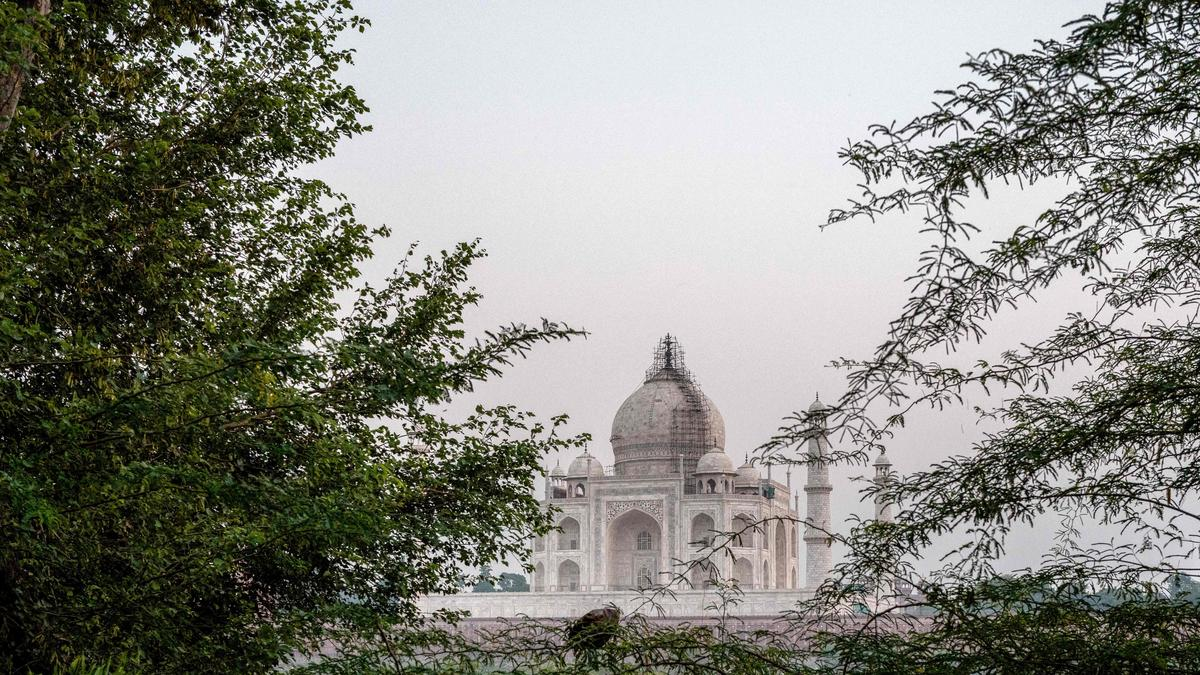
Scaffoldings are pictured as restoration work goes on at the dome of the Taj Mahal in Agra on October 17. | Photo Credit: AFP

A little over 60 years ago, Purushottam Nagesh Oak slept and dreamt. He woke up and claimed that the Taj Mahal in Agra was actually a Hindu palace going back all the way to 4th century. Friends of Mr. Oak, an English teacher-turned-lawyer-turned-journalist but never a historian, told him that the Taj Mahal couldn’t have been a fourth century structure as the technology employed in building the Taj in the 17th century didn’t exist back then. The fantasist turned a pragmatist, and Oak brought his argument forward by a few centuries. The Taj was now claimed to be a Hindu temple. This was in 1989. He wrote articles and a book too, but found no support from historians. Even the Supreme Court dismissed his claims as “a bee in his bonnet” in 2000.

But post-2014, history is like a revolving door, you enter and exit at your ease and pleasure. You pick and choose, you circumvent and invent. Dress it up as a movie and claim you are looking at history anew. That is how we get a movie like Tushar Amrish Goel’s The Taj Story, starring former BJP MP Paresh Rawal; just like we had The Kashmir Files and The Bengal Files, starring Anupam Kher and Mithun Chakraborty, all ideological partners of the Bharatiya Janata Party (BJP).

With The Taj Story, Goel goes where no historian has gone. Proof, evidence and knowledge amount for nothing as the director makes a case for the Mughal monument being actually a Hindu temple, much like the BJP leader Sangeet Som who called it alternately a Shiva temple and a monument built by a man who incarcerated his father. Mr. Som obviously couldn’t make out a Shah Jahan from an Aurangzeb and hence got mixed up. Much like Oak, oops, Goel, who sees no difference between history and mythology, facts and fantasy.

Recorded history

Talking of facts, the Taj Mahal was built by the Mughal emperor Shah Jahan after his favourite wife Arjumand Bano Begum breathed her last after bearing the last of their 14 children. Its chief architect was Ustad Ahmed Lahori. The land for her last resting place was procured from Mirza Raja Jai Singh of Amber who had inherited it from Raja Man Singh, a celebrated general of Akbar, who was Shah Jahan’s grandfather. Shah Jahan compensated Jai Singh with four havelis from the royal property for the massive haveli in which rests Mumtaz Mahal. His firman to Jai Singh, the latter’s agreement and the Mughal emperor’s subsequent letter of granting him four havelis in lieu of one, are all part of history; unlike the claim of The Taj Story which talks in terms of a massacre and genocide of the locals for fulfilling the wishes of an emperor and his consort!

The work on the tomb started in 1632 with the finest craftsmen from across the country and West Asia. The chief mason was Mohammed Hanif from Baghdad who earned ₹1000 a month for his efforts. The pinnacle was built by Qayam Khan of Lahore and its Quranic inscriptions were done by Amanat Khan Shirazi. The mosaic work was done by local Hindu workers. Above all, some 20,000 workmen toiled for 22 years to build the monument to love. Its white marble came from Jaipur, lapis lazuli from Sri Lanka, crystal from China and coral from Arabia. The monument uses the double dome technique, previously seen only in the Humayun’s tomb in Delhi, and never seen in the country before the arrivals of the Turks.

Not the first time

Over the years, many have tried to appropriate credit for its beauty and majesty. In the 17th century, it was claimed by many in the West that the architect of the Taj was Venetian Geronimo Veroneo, a jeweller by profession. Then came the claim by Mughal Beg in Tarikh-e-Taj Mahal that it was designed by Muhammad Effendi, an architect supposedly sent by the Sultan of Turkey. Effendi though was as much an architect as Oak was a historian. In the mid 19th century it was claimed that the monument was the result of the genius of Frenchman Austin de Bordeaux, a jeweller. However, Austin died in 1632, the year the work on the Taj began. With his death all claims of Austin being the Taj’s architect were buried. And facts began to be raised.

As for fantasy, well there is Goel’s film, never mind its claim of presenting the “untold history of the Taj Mahal”. The film, replete with stereotypes of kohl-lined, skullcap-donning Muslims aims at building a nation’s memory on unreasoned mythology, far removed from the well argued debates of history. Much like Oak’s view that Christianity was nothing but Krishan-Niti. Not game for any ridiculous claims in an insipid film which opened with a mere 14% attendance in the first show? Watch M. Sadiq’s 1963-saga Taj Mahal. Sure, you would remember its song, ‘Jo wada kiya woh nibhana padega’, penned by Sahir Ludhianvi and sung with much love by Mohammad Rafi and Lata Mangeshkar. Sadiq’s film with Pradip Kumar and Bina Rai in the lead cast, made no effort at replacing history with mythology.

source: http://www.thehindu.com / The Hindu / Home> Entertainment> Movies> In the limelight / by Zia Us Salam / November 07th, 2025
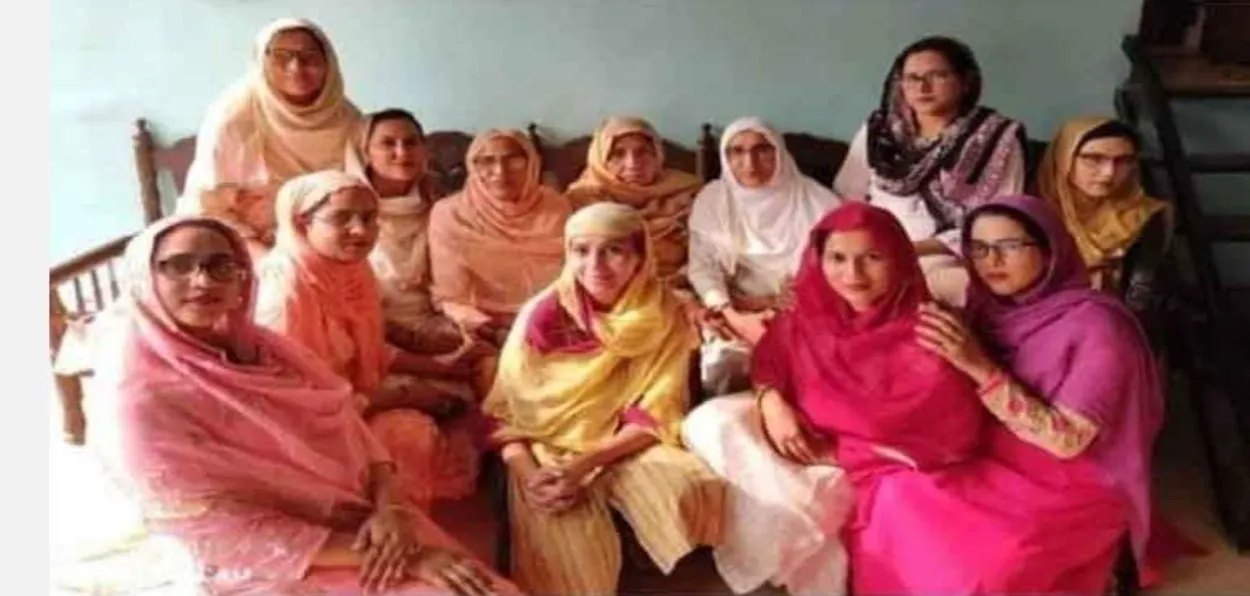
Nuh’s Niyaz Khan and his 11 daughters who swam against the tide for education

Nuh, HARYANA:

11 daughters of Niyaz Khan

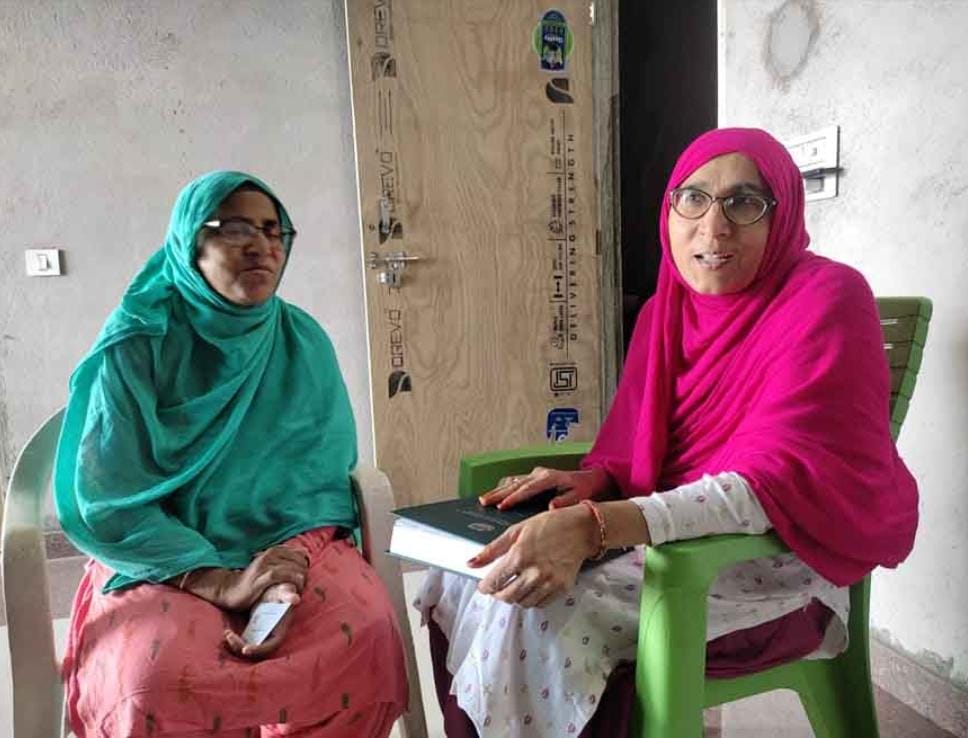
When I met Shabnam and her elder sister Nafisa after a flight of 37 steps of a half-built high-rise building on the Nuh-Tawadu road, I couldn’t gauge the high spirits of these two women, their nine sisters, and late father Niyaz Khan in our brief meeting.

Niyaz Khan, a former revenue officer in the Punjab Waqf Board, has left this world, but he is remembered for bringing about the change in the mindset of Muslims in Nuh through his act of giving a good education to all his 11 daughters.

Not only he educated his daughters but 8 of them became teachers and are carrying on the mission of spreading education in one of the most backward areas of India.

In a conversation with Awaz-The Voice, Shabnam says, “I and my sisters who are teachers make efforts to ensure that girl students in our respective schools do not give up on their studies midway and drop out of school. We also make extra efforts to see that besides retaining the numbers, more girls are enrolled in the school.”

Shabnam says that to retain girl students they call the parents of students to school to make them aware of the importance of education.

Shabnam, who worked in an NGO for a long time before joining the government school, says, “Due to my experience with an NGO, I face lesser difficulties in this job (retaining girl students in school) in comparison to other sisters. My experience of working on child education in an NGO is helping me.”

She says that increasing the number of students helps in upgrading schools. Shabnam is now TGT i.e. Trained Graduate Teacher in Rithoda vuillage. The primary school where she worked earlier has since been converted into a middle school.

Shabnam and Nafisa

Shabnam’s elder sister Nafisa says that many parents come to consult her and all her teacher-siblings. They ask them how to ensure a good future for their daughters. “Many times strangers stop them at the bus stand for paying compliments and telling us that they want their daughters to be like us.”

Nuh remains one of the most backward districts of Haryana, where women are struggling to rise amidst diehard patriarchy, old-fashioned thoughts, rampant illiteracy, and a lack of basic facilities. The dropout rate of girl students is the highest in the state.

Although there are many schools and colleges in Nuh, it has no university and women must go outside for higher education.

Asif Ali Chandaini, General Secretary of Mewat Vikas Manch, says, about 70 to 80 percent of the population of the district survives by doing petty and menial jobs. In such a situation, parents have financial constrains, and safety of daughters as issues in their minds while deciding on educating their daughters. In the end they prefer to keep their girls at home.

Defying such conservative traditions in the decade of nineties, Niyaz Khan decided to send his daughters for higher education.

Nafisa, the eldest of the sisters, who spoke with Awaz-the voice said their father had a transferable job. As long as the family was living outside Mewat, he did not face any problems in educating his daughters. However, after he met with an accident, took voluntary retirement and shifted permanently to Nuh in 1993, he faced stiff opposition to sending his daughters to colleges and universities.

Her father was a resident of Chandaini village, about four kilometers from Nuh. The people there are progressive and clear about the aware of education.

Praising her father and grandfather, Shabnam says, “Both were very great people. Dada (paternal grandfather) never stopped us from going to college and school. In the nineties, when the environment was worse than what you see today, he not only continued to give higher education to his daughters but also sent them out of Nuh for studies.”

Shabnam has also studied law; her husband is a practicing advocate in Sohna.

Despite the regressive environment around them, Niyaz Khan’s eight daughters became teachers. They are employed in government schools. Shabnam says teaching was their choice.

Shabnam has five children. One of her daughters has a Master’s degree in Fine Arts from Banaras. Her other children are also into masters and other higher education courses.

Nafisa’s elder son is pursuing a Ph.D. in Physics.

Shabnam and Nafisa say that they care least about others’ opinions when it comes to their children’s education. “Our children are moving forward by choosing their careers. We are only supporting them,” they said almost in unison.

 According to Nafisa, the children of the younger sisters are also pursuing education at different levels.

She tells that things are changing for Mewati Muslims on the education of girls. However, the change is quite slow.

Nafisa says that there is a trend of girls dropping out after fifth or eighth standard and being sitting at home.

Many parents prefer to send their daughters to Maktab, local Madrasa, instead of sending them to school.

Shabnam’s disciple Mohammad Rafiq, who has done his Ph.D. on the topic of Mewat’s female Sarpanch, says that the picture of Mewat can change if the authorities present these eleven sisters as ‘role models’.

The 11 sisters becoming the face of women’s education and empowerment can bring down the dropout rate significantly. However, both the sisters do not agree on this.

They feel the thrust on women’s education has to begin from their homes of Muslims.”Everything cannot be left to the government; the politicians of Mewat have to show willpower,” Shabnam says.

She said once she invited the local politicians to a meeting of Urdu teachers, but none of them came. She also this was the most discouraging since most of them are her relatives.

Despite this, they do not show any special seriousness towards education.

Niyaz Khans’s daughters:

Nafisa: JBT & B.Ed, Govt Teacher

Shabnam: MA, LLB, JBT, government teacher

Afsana: JBT, MA, B.Ed.

Farhana: JBT, MA, B.Ed. government teacher

Shahnaz: JBT, MA, B.Ed teacher in private school

Ishrat: B.A

Nusrat: Lecturer in JBT, MA, MEd and employed in a Polytechnic

Ana: JBT, MA B.Ed, Govt Teacher

Razia: MBA and working in private sector

Nazia: Diploma in Architecture, works in private sector

Bushra: MA, B.Ed

source: http://www.awazthevoice.in / Awaz, The Voice / Home> Stories / by Malick Asghar Hashmi / May 04th, 2023

40 Muslims among 704 who get Police Medals on R-Day

ALL INDIA :

New Delhi:

This year 40 Muslims were among 704 personnel who have been awarded Police Medals on the occasion of the Republic Day.

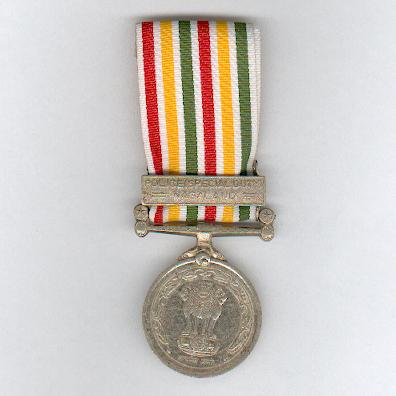
The Police Medals are given in four categories; President’s Police Medals for Distinguished Service, President’s Police Medals for Gallantry, Police Medals for Gallantry and Police Medals for Meritorious Service.

PoliceMedalsMPOs21mar2018

On this R-Day 77 got President’s Police Medals for Distinguished Service. Of them, four were Muslims. Seven got President’s Police Medals for Gallantry wherein one is Muslim, Police Medals for Gallantry have been given to 98 including 11 Muslims while Police Medals for Meritorious Service have been awarded to 522, of them 24 are Muslims.

List of Muslim winners of police medals

S.N Names Awards Posts States/Organizations
1 Mr. Abdul Rasheed Khan President’s Police Medal for distinguished services Deputy Inspector General of Police, Raipur, Chattisgarh
2 Mr. Abdul Qayoom Manhas = = Deputy Inspector General of Police, North Kashmir Renge, Baramulla Jammu & Kashmir
3 Mr. Shaikh Abdul Khader = = Deputy Superintendent of Police, Finger Print Bureau, W.R, Mangalore Karnatka
4 Mr. Nasir Kamal = = Inspector General/ Joint Director, East Block-7, RK Puram, New Delhi National Crime Record Bureau
5 Mohammad Rafi President’s Police Medal for Gallantry Head Constable Jammu & Kashmir
6 Mohammad Arshad Police Medal for Gallantry Superintendent of Police Jammu & Kashmir
7 Jameel Ahmad Khatana = = Deputy Superintendent of Police Jammu & Kashmir
8 Ishaq Ahmad = = Constable Jammu & Kashmir
9 Ajaz Ahmad Amir = = Constable Jammu & Kashmir
10 Mohammad Imran Lone = = Constable Jammu & Kashmir
11 Abdul Majid Najar = = Constable Jammu & Kashmir
12 Kafil Ahmad = = Head Constable Jammu & Kashmir
13 Peerzada Naveed = = Deputy Superintendent of Police Jammu & Kashmir
14 Shamshad Alam Shamshi = = Sub Inspector Jharkhand
15 Shahab Rashid Khan = = Deputy Superintendent of Police Uttar Pradesh
16 K. Sajjanuddin = = Commandant Central Reserve Police Force
17 Mr. Sayed Athar Quadri Police Medal for Meritorious Service Additional Superintendent of Police,Intelligence Securty Wing Andhra Pradesh
18 Mr. Ismail Khan = = Sub Inspector, Intelligence Department, Hyderabad Andhra Pradesh
19 Mr. Abdul Rasheed = = Head Constable, Greyhounds, Hyderabad Andhra Pradesh
20 Mr. Junaid Ahmad = = Sergeant Major, Patna Rail Bihar
21 Mr. Hilal Ahmad Shah = = Senior Superintendent of Police, Telecom, Jammu Zone, PCR Complex, Jammu Jammu & Kashmir
22 Mr. Mohammad Aslam = = Deputy Superintendent of Police, PHQ, Jammu & Kashmir Jammu & Kashmir
23 Mr. Abdur Rashid Shah = = Inspector, Security HQRS, Jammu and Kashmir Jammu & Kashmir
24 Mr. Aurengzeb Rather = = Sub Inspector, DSB Poonch Jammu & Kashmir
25 Mr. Mohammad Rafiq Bhat = = Sub Inspector, Police Component Srinagar Jammu & Kashmir
26 Mr. Mohammad Shafi = = Sub Inspector, SSG, Jammu & Kashmir Jammu & Kashmir
27 Mr. Parvaiz Ahmad Malik = = Head Constable, JKAP 13th BN. Doda Jammu & Kashmir
28 Mr. Nizam Hasan Mahagonde = = Head Constable, L.A.III, Worli Mumbai City Maharashtra
29 Mr. Zaheed Mohammad = = Deputy Commandment, SOG, Orissa Orissa
30 Mr. Aliyas Khan = = Assistant Sub Inspector, P.S. Salasar, Distt. Church Rajisthan
31 Mr. Rehman Khan = = Head Constable, 11th BN RAC (I.R), Vijay Ghat, Rajisthan
32 Mr. Mohammad Haneef = = Head Constable, 39 BN, PAC, Mirzapur Uttar Pradesh
33 Mr. Ishtiyaq Ahmad = = Head Constable, XI BN, PAC, Sitapur Uttar Pradesh
34 Mr. K.I. Ahmad = = Inspector of Police, Police, HGRS Kavaratti Lakshdweep
35 Mr. Sayed Ruhul Amin = = Sub Inspector, Oil Duliajan, Distt. Dibrugarh, Assam Central Industrial Security Force
36 Mr. Irfan Ahmad = = Head Constable, RGI Airport, Hyderabad Central Industrial Security Force
37 Mr. Shafi Mohammad = = Sub Inspector, RTC, Dharampur, Solan , Himachal Pradesh Central Industrial Security Force
38 Mr. Gulam Hussain Shah = = Head Constable, 2 BN. Sabri Nagar, Sukma, Dantewada, Chattisgarh Central Industrial Security Force
39 Mr. Shaik Mastan Vali = = Assistant, Sub Inspector/Special Intelligence Branch, SCR. Secunderabad, Andhra Pradesh Ministry of Railway
40 Mr. Zahur Haidar Zaidi = = DIG/PS MOS for Railways, Rail Bhawan, Raisina Road, New Delhi Ministry of Railway

source: http://www.twocircles.net / TwoCircles.net / Home> Indian Muslims / by TCN News / January 27th, 2010

Indra on Wajid Ali Shah’s throne!

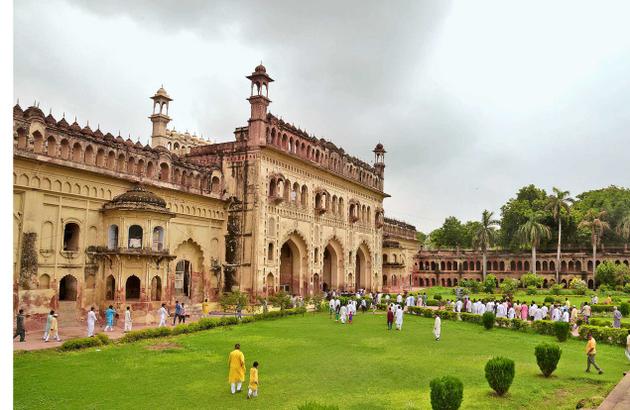
The city of etiquette -Bada Imambara complex of Lucknow / Photo: Rajeev Bhatt

“The Other Lucknow” captures the syncretic traditions of the city

Guru Dutt’s immensely popular film Chaudhvin Ka Chand opens with a Shakeel Budayuni song sung by Mohammad Rafi and composed by Ravi. The song  Ye Lakhnau Ki Sarzameen sums up Lucknow and the essence of its famed cultural heritage. Perhaps, no other city in the sprawling Hindi-speaking region evokes such nostalgia, romance, devotion and attachment as Banaras and Lucknow do.

So far, for nearly a century, we used to go back to Abdul Halim Sharar’s classic “Guzishta Lakhnau” that vividly describes the city’s cultural and social life, customs, traditions and history in great detail. This was serialised in the form of articles between 1913 and 1920 in Urdu literary journal “Dilgudaz” that Sharar had launched in 1887. Later, the articles were brought out as a book with a rather longish title “Hindustan mein mashriqi tamaddun ka akhiri namoona: Lakhnau” (Lucknow: The last example of Oriental culture in India). However, the world knows it simply as “Guzishta Lakhnau” (The Lucknow of the Old). National Book Trust published a Hindi translation in 1971 titled “Purana Lakhnau” (The Old Lucknow) with a scholarly introduction written by eminent Urdu critic Mohammad Hasan.

Born in 1860, Abdul Halim went to Matiaburz when he was nine years old. Matiaburz was the place near Calcutta (now Kolkata) where the deposed Nawab of Lucknow, Wajid Ali Shah, had shifted in 1856. How close his family was with the Nawab can be gauged from the fact that his maternal grandfather had gone to London to present Wajid Ali Shah’s case before Queen Victoria.

When still in his teens, Abdul Halim started writing and adopted the nom de plume ‘Sharar’ (spark). His book is a treasure trove of information about the history and culture of Lucknow which was a truly unique city representing the famed Ganga-Jamuni culture.

Wajid Ali Shah, the last Nawab, was an accomplished poet, musician, dancer, actor and dramatist. Urdu drama owes its beginning to him and dance-dramas like “Inder Sabha”, which he commissioned, where Indra, the king of Hindu gods, would sit on a throne wearing a dress that resembled that of the Nawab himself and fairies would sing thumris in Braj bhasha while conversing in chaste Urdu. What better picture of a syncretic culture can we find elsewhere?

Sharar divided the book into three parts and devoted the first two parts to the history of Awadh and Lucknow and that of the nawabs of Awadh. The third and the last part is the one that introduces us to the way people of Lucknow dressed, talked, ate, sang and danced, set new standards of cultured behaviour and etiquette, gathered to celebrate religious and social festivals at fairs, and offered an example of harmonious communal living. It was also a great centre of the Shias.

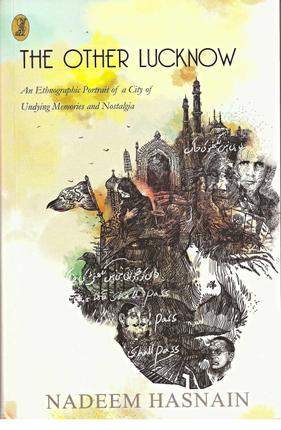
TheOtherLucknowMPOs16jul2016

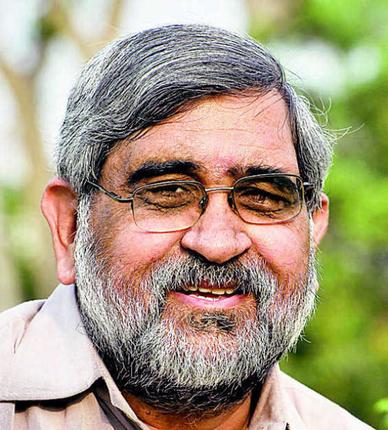
Now, Vani Prakashan, which is essentially a publishing house of Hindi books, has come out with a book on Lucknow in English in collaboration with the Ayodhya Research Institute, an autonomous organisation of the Uttar Pradesh government. Titled “The Other Lucknow: An Ethnographic Portrait of a City of Undying Memories and Nostalgia”, it is the outcome of a research project headed by social anthropologist Professor Nadeem Hasnain, who has put the book together.

NadeemHasnainMPOs17jul2016

The book appropriately opens with a poem that the Jnanpith award winning poet Kunwar Narain, who spent most of his creative life in the city, has written on Lucknow. It has been reproduced in Hindi which lends a special flavour to the book as the rest of it is a collection of articles, reports and analysis written in English. It is a sort of counterfoil to Sharar’s book as it brings the story of Lucknow in its fullness up to the present times.

“The Other Lucknow” is in a class of its own as it can equally serve a tourist as a guide book and an intellectual who wants to know and understand the history, culture, politics, arts and crafts, business and trade, literature, music and dance, architecture and religion – both past and present.

The book opens with a scholarly article “A Short Cultural History” by noted scholar Sandria Freitag followed by an excellent survey of the city’s social fabric underling its diversity. The survey is based on field research and informs us that Kashmiri Pandits, Bengalis, Punjabis, Sindhis, Malayalis, Oriyas, Maharashtrians and Assamese have also become an integral part of Lucknow’s population. It also offers a detailed description of the religious and caste communities residing in the city. In addition to paying close attention to the mohallas, mandis, bastis, landmarks, arts and craft, music and dance, religious places, Ram Leela, qawwalis and danstangoi, the book brings out the city’s Bollywood connection.

It concludes with an article on Dalit imaginations, laying bare the story of the mega monuments and parks created by former Chief Minister Mayawati to commemorate Dalit icons.

One is not surprised to read, as quoted by Nadeem Hasnain to begin his introduction, what William Russel, correspondent of The Times, London wrote in 1858 about Lucknow: “Not Rome, not Athens, nor Constantinople, not any city I have ever seen appears to me so striking and so beautiful as this.”

The writer is a senior literary critic

Corrections & Clarifications:

This article has been edited for a factual error.

source: http://www.thehindu.com / The Hindu / Home> Metroplus / by Kuldeep Kumar / July 09th, 2016