It was a cold day in February 2016. A woman from a small town of Uttar Pradesh received her Ph.D. at the 63rd Annual Convocation of Aligarh Muslim University (AMU), Aligarh. She was the first from her clan to have taken admission to AMU in 2003. Her parents never attended college; her four brothers took up family businesses at a younger age. The woman in the discussion is me. I am Mahino Fatima, a Muslim girl from a backward caste who became a scientist against all odds.
pix: heritagetimes.in / Dr. Mahino Fatima
Friends, relatives, and peers celebrated my becoming a scientist as a consequence of my hard work and perseverance. In my heart of hearts, I knew this day has not come only because of me; I was grateful for the privilege of education that I was born with.
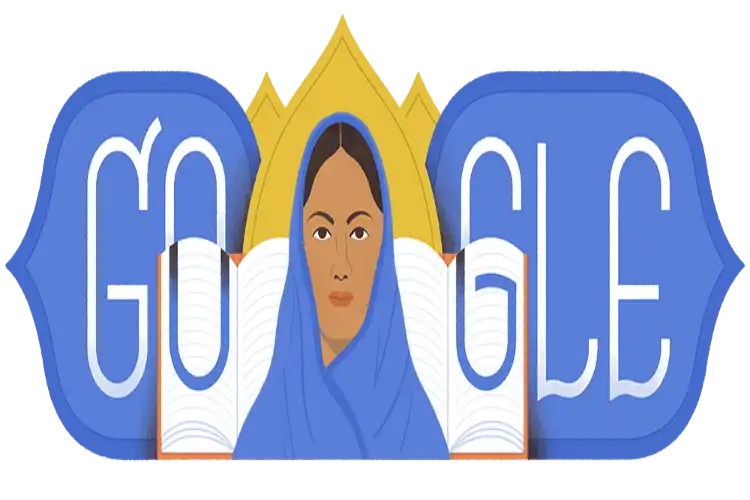
Most importantly, I should not forget Fatima Sheikh. If not for her, I would never have become a scientist. Lakhs of women who are successful because of education would have remained illiterate but for Fatima Sheikh’s pioneering work.
How can I, a woman, forget that my foremothers were not allowed to learn how to write? How can I, a backward caste woman, forget that my forefathers were not allowed to receive an education? Today, when we look at our curriculum, we find that women scientists, economists, philosophers, and intellectuals are negligible in comparison to men. Famous philosopher, Jaques Derrida, once remarked that no woman was a philosopher. His observation was true, but he did not delve into the reason. How can a woman become a philosopher when men for centuries controlled the development of her intellectual capacities in the name of culture?
In our society, men would not let women learn the art of writing for the fear that if literate these women would communicate to ‘lovers’ through letters. Bibi Ashraf, a late 19th-century educationist, recalled how she was not allowed to learn reading and writing like male members of her family. She secretly learned to write. The secret came out when during the revolt of 1857; she had to write a letter to her father and uncle. Instead of receiving accolades, she was abhorred by men in her family. Her uncle was furious and made her take an oath that she would never write a letter to a man. Similar was the story of Rassundari Devi, who secretly learned writing by stealing books from her son. How do we expect women scientists in such a society? Still, a large section of our society would not let women study more than what is needed in the ‘marriage market’.
In this society, Fatima Sheikh, along with Savitribai Phule, started a school for girls in 1848. Yes, 1848. 26 years before Sheikh Abdullah, who later founded a women’s college at Aligarh, and 32 years before Begum Rukaiya Sakhawat, doyen of women education, were born, Fatima had started a girls’ school and taught herself. Today, that small classroom of 9 girls has prepared lakhs of educated women.
Today women are asking for gender parity in opportunities and pay scales. Thanks to Fatima, women today are educated to understand their worth and assert their rights.
Fatima was a pioneer; she was followed by Begum Rukaiya, Begum Wahid, Muhammadi Begum. A revolution starts with an idea. Fatima’s was the idea that put women of India in general and Muslim women in particular, on the march to empowerment through education.
Today, I thank Fatima for making me a scientist. Nobody knows how many bright women before 1848 had been deprived of education and were not allowed to dream of becoming a scientist. But, we surely know that after 1848, women have slowly entered different fields through education and are today competing with men to have their rightful place in the books, laboratories, and society.
(Author is a neurobiologist with her major research on depression and Alzheimer’s)
source: http://www.awazthevoice.in / Awaz, The Voice / Home> Stories / by Mahino Fatima / Saquib Salim / January 09th, 2022
Women’s education in nineteenth-century India was no easy task. In the case of Muslim women, the task was even more difficult due to their triply marginal identity: as colonial subjects, as women, and as Muslims. Not only did the custom of purdah added to their seclusion from the social and cultural changes, their men hated everything about the western cultural influence (being displaced as rulers by the British). As a result, the middle class (the initiators of reform) was to develop late among the Indian Muslims than their Hindu counterparts. Nevertheless, by the late nineteenth century, a middle-class among the Indian Muslims was fledging. For this, no institution of the nineteenth-century can be given more commendation than Aligarh Muslim University.
Formed in 1920, the Aligarh Muslim University just completed its hundred years as a modern residential university. There has been a perception that the Aligarh Movement, for whatever reasons, neglected the issue of modern education to Muslim women. But there is more to this argument, some things to be explored, some to be re-interpreted.
This article, therefore, attempts to trace the genesis and trajectory of women’s educational reform in Aligarh through the profile of a woman reformer – Waheed Jahan (1886-1939), wife of Shaikh Abdullah (1874-1965), and the co-founder of Aligarh’s first girls’ school. Waheed Jahan was a pioneer of Muslim women’s education at Aligarh in the early twentieth century. Her role in ending the relative isolation of Indian Muslim women, while at the same time preserving the Muslim identity of the community, is worthwhile to recall. Her biography was published in Urdu by her husband in 1954. [1]
The educational reforms among Indian women were mostly started by men. Such men started with writings advocating women’s education. In this regard, among Muslims, Nazir Ahmad (1833-1912) published his novel, Mirat-ul-Arus, in 1869; Altaf Hussain Hali (1837-1914) published Majlis-un-Nissa, in 1874. Soon, magazines and journals followed, like the Tahzib un-Niswan by Sayyid Mumtaz Ali (1860-1935), the Khatoon by Shaikh Abdullah and Waheed Jahan, and the Ismat by Rashid-ul- Khairi (1868-1936). Gail Minault regards these as ’The Big Three.’ [2] Apart from literary activism, others tried more practical measures, like opening schools for Muslim girls.
As the movement intensified, so did the opposition against it. In such an atmosphere, even the talk of women’s education by a woman herself was quite a chivalry.
Yet, unexpectedly, there were women who defied the odds and broke the ground. Rashid-un-Nissa of Patna, became the first Muslim woman to write an Urdu novel, Islah-un-Nissa in 1881 (published in 1894), when writing was a distant dream for Muslim women. Rokeya Sakhawat Husain (1880-1932), a widow herself, pioneered Muslim women’s education in Bengal. Muhammadi Begam (1878-1908) edited one of the leading ladies’ home journals, Tahzib-un-Niswan. One such icon of women’s education at Aligarh was Waheed Jahan.
Waheed was born in 1874 in a landholding family in Delhi. Her father Mirza Ibrahim Beg was of Mughal ancestry, serving as a minor municipal official in Delhi. Her only brother, Bashir Mirza went to the Mohammadan Anglo-Oriental College (MAO Colege), Aligarh, where he befriended Shaikh Abdulla (a Kashmiri convert to Islam, named Thakur Das before conversion).
As was the custom, Waheed received no formal schooling. She learnt Urdu and Persian from her father and arithmetic and elementary English from a visiting English tutoress.
Ismat Chughtai, in her autobiography, Kagazi hai Pairahan, records, how Waheed Jahan, before her marriage, had dreamt of establishing a school for the girls. She would gather the servants’ children and teach them, and soon the rudimentary school became popular among her neighbours. It is noteworthy that, at a time when others (mostly men) were still imagining a school for girls (that too only in their writings), Waheed, in her own limited capacity, was practically making a difference.
In 1902, Waheed married Shaikh Abdullah – a lawyer at Aligarh, and an ardent supporter of women’s education since his school days. Following the marriage to a woman with some education, he began to consider concrete ways to promote Muslim women’s education. The Mohammadan Education Conference (MEC, founded at Aligarh by Sir Syed Ahmad in 1886) had established a Women’s Education Section (WES) in 1896 to start a Normal School for girls and to train female (zenana) teachers. In 1902, Shaikh became the secretary of WES, which by then had merely achieved anything beyond discussions and debates around women’s education.
Luckily, Waheed’s marriage to a reformist like Abdullah helped her materialize her dream. To champion women’s education, they started an Urdu monthly, the Khatoon, in 1904 with Waheed Jahan as editor. Begum Sultan Jahan (1858-1930) of Bhopal, Binnat Nazir-al-Baqir, Suharwardiya Begum, and Binnat Nasiruddin Haider were some important female contributors to the journal.
The paucity of funds made it impossible to start a Normal School. Waheed Jahan advised her husband to start a primary school for the elite (Sharif) girls. In 1904, the Mohammadan Educational Conference passed a resolution to start a girls’ school in Aligarh. Waheed proved to be an efficient manager and fund-raiser for the cause.
Her capacities as a fund-raiser and organizer were displayed in 1905, when she organized a meeting of Muslim women in Aligarh, with participants from far corners of Lahore and Bombay. Judging from the context of the time when purdah among Muslims was so harsh, even the idea of organizing such an event was quite revolutionary.
Aware of women education in Turkey and Egypt and its benefits to society, she tried to convince other women; she said:
When women meet among themselves, there will be more solidarity. . . Now there is a division between educated and uneducated women. Uneducated women, who do not go out, think that respectability is confined to the four walls of their houses. They think that people who live beyond those walls are not respectable and not worthy of meeting. But God has ordained education for both men and women, so that such useless ideas can be dispensed with. . . [3]
The meeting was a success, the exhibition of women’s craft secured good funds; finally, the women passed a resolution favouring a girls’ school in Aligarh. In October 1906, Aligarh Zenana Madrasa (girls’ school) opened its doors, and seventeen students were enrolled. Urdu, arithmetic, needlework, and the Quran formed the curriculum. Leaving her own children in servants’ care, Waheed took the responsibility of supervising the school. Within six months, the number of students increased to fifty-six. Waheed’s efforts secured the school a cumulative grant of Rs. 15,000 and a monthly grant of Rs. 250. By 1909, the school taught 100 students and shifted to a larger building.
The opposition to girls’ school took new forms. One amusing story is recorded in Shaikh Abdullah’s Urdu memoir (1969), Mushahedaat o Taaassuraat. [4] Maintaining purdah, the girls were carried in daulis (curtained carriages) to school, and some street urchins started harassing the school going girls by lifting the curtains of their daulis. The mischief only stopped when Shaikh gave one of the miscreants a good thrashing. In another incident, Shaikh confronted a tehsildar who had accused the school of making the girls insolent.
When the Abdullahs proposed a girls’ boarding school, it invited opposition from elite corners. The European principal of MAO College, W.A.J Archbold; Ziauddun Ahmad (1873-1947); and Viqar-ul-Mulk (1841-1917) opposed vehemently.
The couple, however, succeeded in 1914, witnessing the transformation of the school into a boarding school. The same year saw the culmination of Muslim women’s activism by the foundation of Anjuman-i-Khavatin-i-Islam (AKI) at the same venue. Begum Sultan Jahan (1858-1930) of Bhopal graced the foundational ceremony of the boarding school, felicitating Waheed; she urged other women to follow her example. Fyzee sisters, Abru Begum, Begum Shafi, and Begum Shah Nawaz were the other dignitaries.
The Begum was already active in various social and educational reform projects. She served as the first chancellor of AMU from 1920 until her death in 1930. Having a woman as the first chancellor was indeed a historic feat.
Only nine girls became the residents, most of them from Waheed’s own family. By the end of the year, the enrollment rose up to twenty-five. This was the result of what the historian Gail Minault calls as Abdullahs’ portrayal of girls’ school as an extension of girls’ families and also of their own. To make the school successful, Waheed used to invite the parents of girls to Aligarh, for a few days stay in the hostel, to convince them that the conditions there were safe enough to let their daughters stay, records Sheikh Abdullah, in his Mushahedaat o Taaassuraat. She supervised everything – housekeeping, laundry, shopping, and even tasted each dish cooked for the girls.
It could be said that Waheed Jahan acted as a foster mother to these girls, counselling, nursing, and treating them as a part of her own extended family. They called each other as Apa (sister), Shaikh Abdullah as Papa Mian, and Waheed Jahan as Ala Bi. This created a sense of sisterhood among the girls.
This familial system of ethos still remains unique to the Aligarh Women’s College.
The boarding school project contained other complex problems, such as maintaining proper purdah. Both Shaikh and Waheed agreed that the purdah practiced in the Sharif society was more restrictive than purdah sanctioned by the Shari’a (Islamic Law). But to secure social acceptance for their school, they chose to go with strict purdah, building fortress-like walls to fend off the male gaze, students’ mails were scrutinized, and only close relatives were allowed inside.
This accommodation of purdah within the gamut of their reformist agenda, to gain social acceptance, was indeed very astute of the Abdullahs. Thus, Waheed Jahan succeeded in preserving both the elite and the “Muslim” identity of herself and her community while simultaneously breaking the relative isolation of Indian Muslim women. The girls’ school became an intermediate college in 1925 and started degree classes in 1937 (with 250 students). Waheed passed away in 1939, only after seeing her school becoming a degree college.
The relation between education and social change is complex, varying from culture to culture and among different classes in the same culture.
True, that Aligarh movement was late to include women’s education in its fold. Even the school founded by the Abdullahs did not fulfil all its expectations – their choosing an exclusively elite (Sharif) clientele limited the impact of their reforms.
But their efforts indeed bore fruits; the educational reforms for Muslim women at Aligarh contributed to many social developments. After the formation of AKI in 1914, the number of meetings and associations (for women-only) increased rapidly in the 1930’s. The growth in the number of educated women created a market for new publications for and by women.
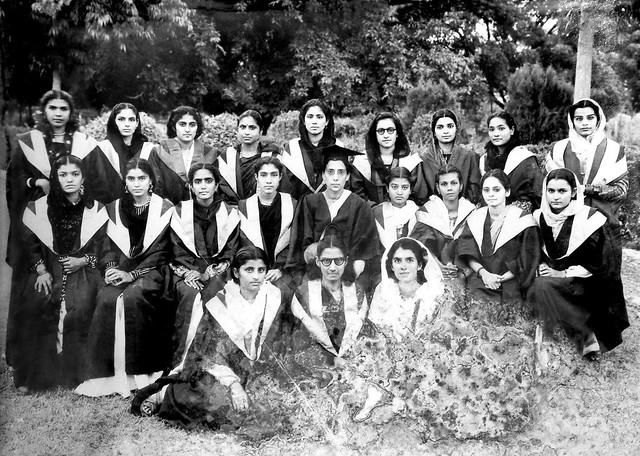
The Aligarh Women’s College produced many women of substance, who made sure to shine above and beyond purdah, some figuratively and others literally. These ladies excelled in various fields, from teaching to medicine to writing.
Rashid Jahan, Waheed Jahan’s daughter, became a successful physician, a radical writer, and a staunch communist. Her short stories in Angare (1932) became the opening salvo of the Urdu Progressive Writers Movement (1936). Rakhshanda Jalil, in her biographical work on Rashid, A Rebel and her Cause: The Life and Work of Rashid Jahan, writes that Angare was a “document of disquiet”; a self-conscious attempt “to shock people out of their inertia, to show how hypocrisy and sexual oppression had so crept in everyday life”. Rashid became an inspiration for a generation of women writers such as Ismat Chughtai, Attia Hosain, Sadia Begum Sohravi, and Razia Sajjad Zaheer, among others.
Like all other reform movements of that time period, the Aligarh movement had its limitations too. For a start, it did prioritize men’s education over women’s, for various reasons (a story that needs to be told elsewhere), but by the early twentieth century, things were changing. The Aligarh movement not only took up the cause of women’s education actively, but it also let women (Like Wahid Jahan) be a part of the process.
Notes
[1] Shaikh Abdullah, Savanih-i- Umri-i- Abdullah Begum, Aligarh, 1954
[2] Gail Minault, Gender, Language, and Learning: Essays in Indo-Muslim Cultural History, Permanent Black Publications, Ranikhet, 2009, p. 87
(Ishrat Mushtaq is PhD Candidate, Centre of Advanced Study in History, Aligarh Muslim University and Sajad Hassan Khan is PhD. Candidate, Centre of Advanced Study in History, Aligarh Muslim University. Article courtesy: Mainstream Weekly.)
Janata Weekly does not necessarily adhere to all of the views conveyed in articles republished by it. Our goal is to share a variety of democratic socialist perspectives that we think our readers will find interesting or useful. —Eds.
source: http://www.janataweekly.org / Janata Weekly / Home / by Ishrat Mushtaq and Saad Hassan Khan / January 24th, 2021
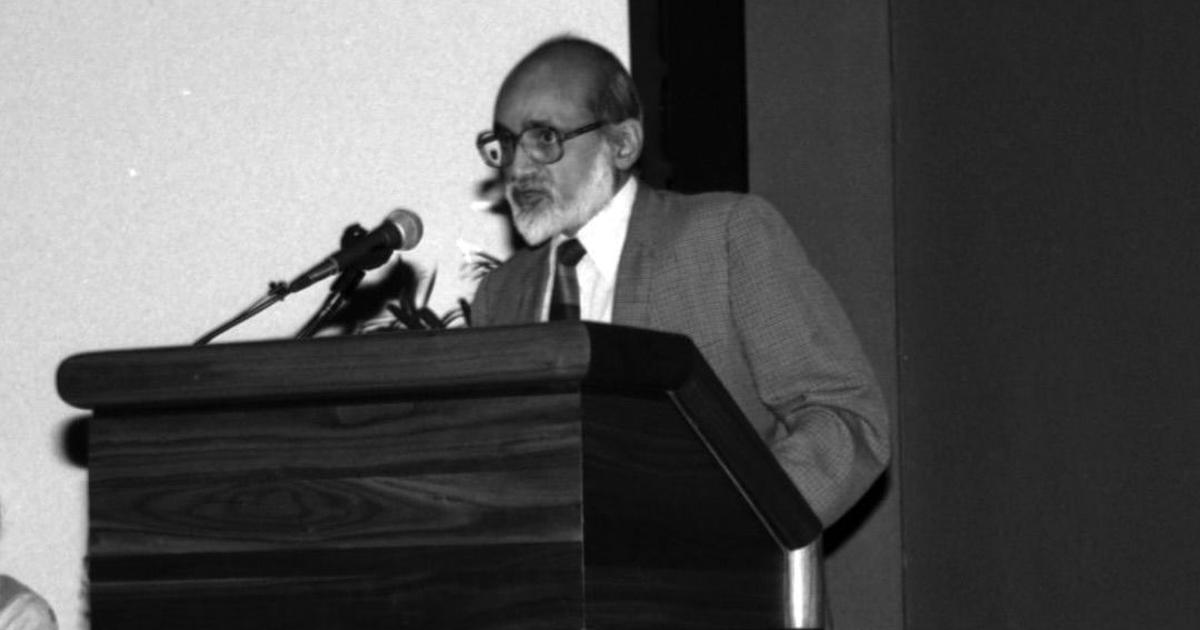
CM Naim’s translation of 19th-century reformer Ashrafunnisa Begum’s biography was published in 2021. Naim, a translator and scholar of Urdu, died on July 9.
Choudhri Mohammed Naim, aka CM Naim, a prominent scholar of Urdu language and literature, died on July 9 at the age of 89. He was a professor emeritus at the University of Chicago.
Naim was also the founding editor of the Annual of Urdu Studies and Mahfil (now Journal of South Asian Literature), as well as the author of the definitive textbook for Urdu pedagogy in English.
He was born on June 3, 1936, in Barabanki, Uttar Pradesh and educated at Lucknow University, Lucknow, Deccan College, Poona, and the University of California, Berkeley. In 1961, he joined the faculty of the Department of South Asian Languages and Civilizations at the University of Chicago, which he chaired from 1985 to 1991. He retired in 2001. He was a national fellow at the Indian Institute of Advanced Study, Shimla, in 2009, and a visiting professor at the Jamia Millia Islamia, New Delhi, in 2003.
Some of his best-known works are Ambiguities of Heritage (1999), Urdu Texts and Contexts (2004), and The Muslim League in Barabanki (2013). He also translated Urdu writings into English some of which are Ghalib’s Lighter Verse (1972), Inspector Matadeen on the Moon: Selected Satires (1994), Curfew in the City (1998), and A Most Noble Life: The Biography of Ashrafunnisa Begum (1840–1903) (2021).
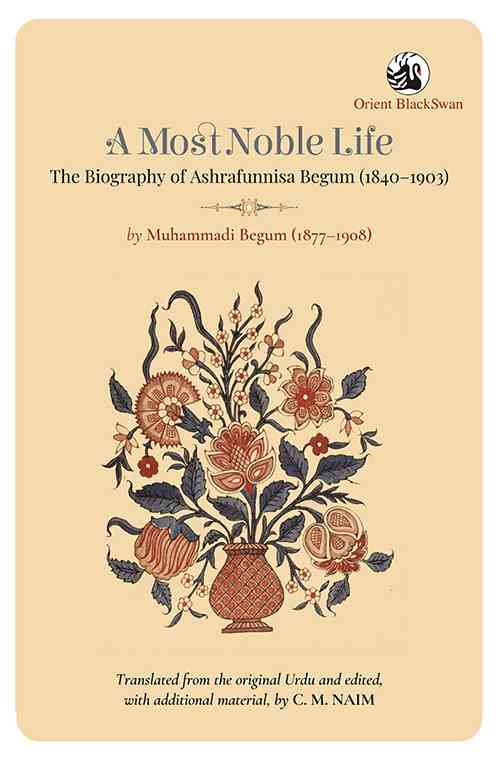
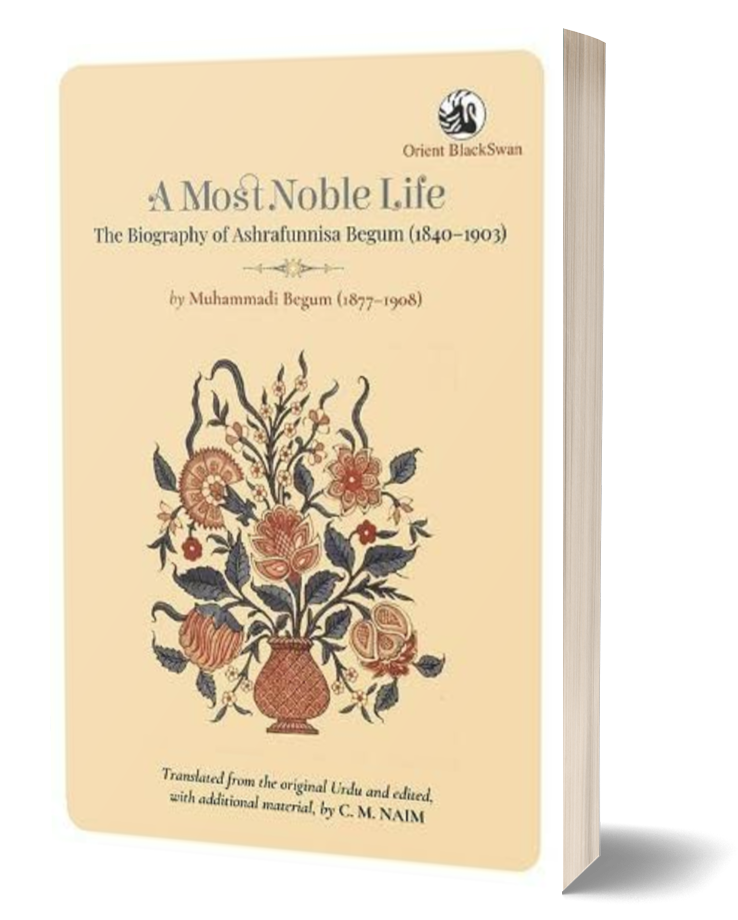
A Most Noble Life: The Biography of Ashrafunnisa Begum (1840–1903)by Muhammadi Begum (1877–1908) is the first complete English translation of Hayat-e Ashraf (1904), the extraordinary story of Ashrafunnisa Begum. Ashrafunnisa, born in a village in Bijnor, Uttar Pradesh, taught herself to read and write in secret, against the wishes of her elders and prevailing norms. She went on to teach and inspire generations of young girls at the Victoria Girls’ School – the first school for girls in Lahore. Her unusual life was written about with great poignancy by Muhammadi Begum – the first woman to edit a journal in Urdu, the weekly Tahzib-i-Niswan. Muhammadi Begum was a prolific writer of fiction and poetry for adults and children, and instructional books for women during her brief life. She aptly titled the biography Hayat-e Ashraf: it echoes the name of her subject, but also means “the noblest life”. Indeed, both biographer and subject may be described, says Professor CM Naim, as “noble lives”.
The two women, who met by chance at a wedding, instantly developed a strong mutual affinity, which grew into a lifelong bond. In Ashrafunnisa Begum, Muhammadi Begum saw not only the mother she had lost as a child, but also an inspiring role model who had led a principled life of her own making, and shown amazing grace and strength against grave odds.
This annotated translation by CM Naim, an eminent scholar of Urdu literature and culture, also provides the first detailed study of the life and works of its author, Muhammadi Begum, and highlights, in an “Afterword”, two key social issues of the time, women’s literacy and widow remarriage, which remain as relevant today.
In this conversation with writer Githa Hariharan (in 2022), CM Naim spoke of the lives and times of Muhammadi Begum and Ashrafunnisa Begum, their work, and the unique friendship that nurtured both of them.
Let me begin with asking you to comment on the ways in which this slim biography of Ashrafunnisa by Muhammadi Begum dispels the gloomy image of the silent and secluded Muslim woman of the 19th and possibly 20th century.
The trouble, as I see it, lies in the “totality” and “exclusivity” we allow to these claims. In the 19th century, a huge number of Muslim men were not literate, just as a huge number of Muslim women were not secluded, or not any more secluded than the non-Muslim women of the same class, occupation or region. The wives of Muslim weavers and barbers and food-sellers may have kept their faces covered while toiling alongside men but their lives were not secluded the way we assume them to be – rightly – for the women of the upper classes. Then there were the differences we see in Bibi Ashraf’s life. Her family was Shi’ah; the women of the household held weekly majlis where they read out texts from religious books. She lost her mother when she was only eight; otherwise, she would have learnt to read and write the way other girls in the family did. We also see a young Muslim widow, a Pathan, taking up employment with the family as a Qur’an instructress.
I found A Most Notable Life a fascinating entry point into the lives of two women I want to know more about. But I also want to know more about the context of their times and work. Ashrafunnisa’s account of how she learnt to read and write is, for me, the most moving section of the book. She encounters obstacles in learning how to read, but the challenges she faces in learning how to write seem far more severe. I am curious about this. Is it far-fetched to conclude that a writing woman presents a greater threat to the patriarchal establishment, because she assumes the power of an “inscriber” rather than merely being a body (or mind) to be inscribed upon?
The chief obstacles are the wilful grandfather and uncle. The grandfather holds the most authority, and the uncle is more immediately present in the lives of the women in the household. The grandfather is not against female literacy in principle. He willingly allows it until the widowed female teacher gets remarried. That is a worse “sin” in his eyes than reading and writing. But then he considers the fact of his son, Bibi Ashraf’s father, taking up a pesha, a profession – he moved to Gwalior and became a lawyer – an equal threat to his honour. The family’s attitude toward writing is complex. Her grandfather tolerated some girls in the family learning writing from their mothers; her father rejoiced when he learned that Bibi Ashraf could read and write so well, but her uncle became more furious and punitive. I feel writing in the upper classes, where seclusion was more closely observed, was seen as an instrument that could make it possible for women to break out of that seclusion. We should not assume that writing was then considered an integral element of education. Transmission of essential or requisite knowledge to a majority of males and females could be done orally. Or so, arguably, the society believed at the time.
I am amazed by the use of multiple genres by both women – poetry, essays, memoir, biography, novels, stories for children, “instruction” manuals. Was this characteristic of the “educated” of the times, or was it driven by the need to be useful to a range of readers? And would you say that in the case of women, or these two women at least, the autobiographical element links all the genres they make use of?
That’s a very interesting question, and I don’t have a clear answer. I can only assert with some confidence that before the 20th century, most prose writings also contained verses. Very often, these were original verses by the author of the text, alongside quoted verses by well-known or obscure poets. The purpose could have been to emphasise a point by reiteration in a more memorable form, or adding the authority of the past to the point being made. The same is done, for instance, by using proverbs. Nazir Ahmad, the reformist novelist, was a great versifier and public orator. His lectures and long poems at the annual sessions of the organisations he supported were hugely popular. So, anyone who learned to read in those days encountered poetry from day one. And if you had creative impulses, you trained yourself to write verses as well as sentences. In the case of Muhammadi Begum, she was indeed driven by a powerful urge to be useful to other women – her sisters, bahneñ – in particular her contemporaries, i.e. young wives, and girls, and wrote in several genres.
Since the education of women is so crucial in the context of the two women’s lives and work, the writing does a balancing act between the creative and the expression of the self on the one hand, and the didactic on the other. To what extent does such didactic literature – or “instructional books” – differ when authored by men (such as Nazir Ahmad, whose work took up women’s education as well as conduct), and women such as Ashrafunnisa and Muhammadi Begum? My friend, writer and critic Aamer Hussein, writes that “Muhammadi Begum reworks and amends, with affection and insight, the reforms suggested by Nazir Ahmad.” In what ways do the women, Muhammadi in particular, take the project forward, not only as writers, but as journalists, teachers and publishers?
What we now label “didactic fiction” was not thought of as merely instructional by its authors; they meant it to entertain too. It would have been Khel khel meñ kam ki bateñ, “useful words in playtime”. The authors simply called them novels. And this applies to female writers and readers too, until they began to learn English.
As for your core question, I can best answer it by exaggerating my response. Nazir Ahmad, Hali and other male reformists wanted to educate women so that they would be good mothers to their children and proficient in managing their homes. Bibi Ashraf and Muhammadi Begum prize these goals too, but they also prize education as a means of mental and spiritual self-improvement. For better self-expression, even. But the most important thing with Muhammadi Begum is that she lays great emphasis on a commonality of sorts, on a sisterhood of peers. She also wishes to make women proficient beyond her kinfolk, and even beyond the threshold of her own home. To that extent, it may be more the aspiration of an upper-class woman. But it also suggests that for her, female literacy was a given. As indeed it was by that time for the salaried middle-class.
It’s clear that propriety is the framework within which these two women, and others like them, have to work to reap some gains. Keeping this in mind, may I ask you to unpack the word “hayat” for us? The biography is called Hayat-e Ashraf, and you have translated it as A Most Noble Life. I am thinking of the difference in English between “respectable” and “noble” when I ask you to explain “hayat” for those of us who do not know Urdu.
“Unpacking” hayat would require explaining what “life” meant to Muhammadi Begum or to an Urdu writer in the 19th century – a tall order. I can only say that Muhammadi Begum seems to have chosen the most apt title for her book. It echoes the title of Altaf Husain Hali’s iconic biography of Sir Syed, Hayat-i-Javaid (An Everlasting Life), published only three years earlier. Hayat-i-Ashraf can be read as “The Life of Ashraf[unnisa Begum]” or as “An Ashraf Life,” i.e. “A Most Noble Life.” Ashraf is the superlative of sharif, and the latter, of course, is a marker of numerous presumed personal attributes, ranging from nobility of birth to modesty in speech and much more. Muhammadi Begum organised her book in a similar manner: first, a chronological account, followed by short sections on what she considered her subject’s exemplary traits or, as she put it, her “Disposition, Habits and Manners.” Throughout the text, she never fails to remind her readers – her “sisters” – to exert themselves and follow Bibi Ashraf’s example.
Pioneers have to be remembered not only for what they did – given their times – but also in connection with their descendants. Would you speculate on the ways in which Muhammadi opened doors for the Urdu women writers who came after her in the 20th century?
Muhammadi Begum was not the first woman poet in Urdu, nor the first fiction writer. She was, however, the first in several other ways. She was the first woman to edit an Urdu journal and to write on many of the issues that were of great concern to women of her community and class. She also wrote “manuals” for women – on writing letters, on managing the household, or on meeting their peers outside the kinship network. In everything she wrote, she made it clear there were no limits to women’s abilities. And most importantly, she made it clear that women can help each other in discovering and putting to use these abilities. I should emphasise one point here. It was her husband’s dream to publish a journal for sharif women that was also edited by a sharif woman – contra the two journals that had appeared earlier and failed. Mumtaz Ali was a champion of Muslim women’s causes, and he strongly believed in gender equality. No doubt he viewed himself as a wise guide, and never hesitated to publish in the journal his own views on some subjects of concern; but what impressed me was his readiness to give space to opposing views, never adopting a patronising or dismissive tone in his responses.
Coming back to your question, Muhammadi Begum’s journal, Tahzib-i-Niswan, gained wide circulation, though subscriptions were slow in coming. But it soon became the journal of choice for aspiring female writers. Hijab Imtiaz Ali, Qurratulain Hyder and Rasheed Jahan made their debut in its pages. And Ismat Chughtai made her first appearance in print as an excited reporter from Aligarh informing the “Tahzib Sisters” that Rasheed Jahan had completed her medical course. So I think it is not so much the matter of opening doors that makes Muhammadi Begum’s journal important; it is the spirit of confident sisterhood that she identified and fostered.
I don’t want the two women, Ashrafunnisa and Muhammadi, to get lost in the jungle of history though, whether it is the history of women’s education or journalism or literature. I want to pay a tribute to their friendship – which allowed them to have a rich relationship that encompasses a role model, a colleague and a surrogate family. And this despite their age difference, despite one being Sunni and the other, Shia. Would you say their friendship gives an edge to their interest in writing memoir and biography?
Their close friendship, their deep trust in each other, was to my mind the most thought-provoking and inspiring thing about them. No doubt, they both had very painful childhoods – having lost their mothers at a tender age. But they also seemed to see in each other a kind of partner-in-arms, joined in some cause. The much older Bibi Ashraf unhesitatingly treated Muhammadi Begum, barely out of her teens, almost as her leader in a cause that concerns all women.
We should also recall that the “seclusion” of sharif women in those days was stricter. It even meant seclusion from the company of a great many females within the extended families as well their neighbourhoods. Muhammadi Begum started her journal Tahzib-i-Niswan in 1898, and amazingly, from the very beginning, she thought of it as a gathering place where women, previously strangers to each other, could meet and become “sisters”. She coined the expression tahzibi bahnen, ‘Tahzibi Sisters’, to describe this coming together. Then, acutely aware of the larger issue, she quickly proceeded to write a manual on the art of Mulaqat, explaining how a sensible woman should behave in the company of other women outside her own family, complete strangers. It was, of course, the time when men in government jobs at all levels, including the salariat middle- and lower-middle class jobs, were liable to be transferred from one district to another, requiring their wives to also move from place to place with them. They led a very lonely life unless they made an effort to know their neighbours – strangers or peers – with no past experience to guide them.
An excerpt from ‘A Most Noble Life: The Biography of Ashrafunnisa Begum (1840–1903)’, by Muhammadi Begum, translated from the Urdu by CM Naim.
Victoria Girl’s School, Lahore was established by Ashrafunnisa Begum. | The school’s Facebook page.
Why was I so eager to read Urdu? At our house, during the 40 observance of Muharram, separate majālis for men and women were held every day. In addition, all year long, a majlis was held every Thursday in fulfilment of someone-or-other’s vow. That was the reason I was so keen to read Urdu. All the ladies in my family knew Urdu quite well. When, on some occasion, happy or sad, they visited other homes, or when other ladies came similarly to our place, my female relatives would read aloud from books on matters of faith and religious observances.
Listening to them, I came to know many of the same by heart – just as one learns stories. It did not, however, lessen my keen desire to be blessed with the gift of reading.
Once I went to all the ladies in the family one by one and implored each to teach me to read. I said, “Teach me just a little bit every day; I would be your slave for life.” But not one was moved in the slightest way by my pleadings. All of them gave the same response: “Have you gone mad, girl? Better find some cure for it. First of all, what would you do with it even if you learned how to read? Secondly, what makes you think it is easy to teach someone to read? It’s not. It is hard work. Who do you think has the time and energy to waste on you?”
I lost all hope when I heard those words, and began to weep. In fact, I felt so hurt that I burst into loud wailing. That made the ladies even angrier. “How nice!” they said, “Now you’re trying to scare us with tears. Well, your silly tears don’t scare anyone. It’s not nice to go around whining all the time just because you want to read. Who ever saw a girl like you? Most girls run and hide if someone even mentions a book. Children your age are scolded and spanked to make them study, but you, on the contrary, weep and wail, wanting to read! Look, you’ve already lost your mother on account of your wretched crying for lessons, who knows what might happen next. Go away! Don’t sit here crying. It gives me the chills.”
I was devastated, and my tears just kept pouring out. Then the ladies said, “For God’s sake, girl, go away! If your grandmother were to see you crying she would immediately assume that one of us had said something nasty to her darling.” God alone knows how I felt when I heard those words. I was not accustomed to such cruel remarks. My parents had brought me up with much love. They had always spoken kindly in my presence, never saying a harsh word to anyone and always treating everyone with patience and civility.
Those words of the ladies were like salt on my already wounded heart. I wiped my tears and, obedient to their command, walked away. But when I was by myself, I prayed to God: “Most Benevolent God, be merciful to me. Guide me to my goal across this dreadful chasm. I promise that if I ever learn how to read, I shall teach that skill to anyone who desires it – even forcibly, God willing, to those who might be unwilling – for so long as I live I shall never forget the pain I feel right now.”
Later one night, when I was beset with similar thoughts, it occurred to me, had I the text of a salām or mujrā, I could myself figure out the words. “It isn’t that great a matter,” I said to myself, “I already know the letters of the alphabet. Let them not teach me. What do I care?” The idea so enhanced my courage and hope that the very next morning I sent a maid to all my friends with this request: “I need some salām and mujre. Please loan me a few. I shall return them after getting them copied.” May God bless them, for each of them sent me one or two.
But who was there to copy them for me? It was only an excuse. I used it again, and said to my grandmother, “Please get me some paper. I shall ask Māmūñ Sahib to make copies of these poems.” She immediately sent someone to the market and got me some paper. Now the question was: how should I make the copies, and where should I hide while I was doing so? I well knew what a disaster it would be if someone became suspicious.
Writing was strictly forbidden to girls, and I had no mother to cover up for me. How was I to reach my goal and also keep it a secret? My aunt was already furious, and called me nasty names for reading the Qur’an so much. “Thank God, this girl hasn’t learned anything else,” she would grumble, “for then she would have time for nothing at all.” God alone knows what my aunt might have said had she ever caught me writing!
Thinking over all this at some length, I finally decided that at midday, when everyone else lay down to rest, I would make some ink with the blacking from the tawā and start copying. And that is exactly what I did. You have to believe me. I scraped some blacking off the tawā, took the ceramic lid from one of the water pots, and grabbed a fistful of twigs from the broom. Thus equipped I went up on our roof, pretending that I was going there to sleep, and excitedly began copying. I cannot describe my happiness at that moment. Childhood is a time of such innocence!
No sooner had I copied a few words than I felt I had won the battle. Before returning downstairs, I broke the lid in which I had made my ink and threw away the pieces. That was the routine I followed every day, using a fresh lid each time to make my ink. The ladies would find the water pot uncovered, and grumble: “What wretch steals the lid every day? May God break her arms!”
I felt so ashamed of my bad deed; I was also scared someone might find out what I was doing. I feared people, for I did not yet have enough sense to consider my misplaced boldness a sin and to fear God. The intensity of my desire made me blind to such matters. I did not give up my improper ways, and continued to blacken sheets of paper with my scribbles. But I had no idea what I was writing. I did not have the sense to know that one cannot learn to read without the help of a teacher. I believed it was like any other skill, that it was something one could learn just by watching others and imitating them. And so I continued to spend much time and effort even if it was for nothing. I still could not read Urdu. Consequently, my crying spells started again. Then God sent me a teacher.
Excerpted with permission from A Most Noble Life: The Biography of Ashrafunnisa Begum (1840–1903), Muhammadi Begum, translated from the Urdu by CM Naim, Orient Black Swan.
source: http://www.scroll.in / Scroll.in / Home> Book Excerpt / by Muhammadi Begum / February 27th, 2023