Showcasing the brilliance and legacy of the Aligarh Muslim University (AMU) Faculty of Law, Akbar Siddiqui has secured the top position in the Delhi Higher Judicial Services Examination.
Aligarh Muslim University:
Showcasing the brilliance and legacy of the Aligarh Muslim University (AMU) Faculty of Law, Akbar Siddiqui has secured the top position in the Delhi Higher Judicial Services Examination.
The result of the Delhi Higher Judicial Services Examination 2024, along with the merit list, was announced on August 20, 2025.
“A Distinguished Lawyer”
An alumnus of AMU 2007 batch, Akbar Siddiqui, is Advocate-on-Record, Supreme Court of India. He is celebrated for his distinguished practice before the Supreme Court of India.
Siddiqui’s role in the landmark Satender Kumar Antil case, which significantly shaped the jurisprudence on bail, is also noteworthy.
His achievement yet again cements the Faculty of Law, Aligarh Muslim University as a cradle of some of the finest legal minds in the country.
“A Matter of Great Pride”
AMU Vice-Chancellor, Prof. Naima Khatoon, has congratulated Akbar Siddiqui on this remarkable feat.
“Siddiqui’s accomplishment is a matter of great pride for AMU and its Faculty of Law. His journey from Aligarh to the Supreme Court and now to the higher judiciary is an inspiring example of academic rigor, professional excellence, and perseverance. We wish him continued success in serving the cause of justice.”
Akbar Siddiqui has obtained a total of 712 marks out of the total 1,000 marks to secure the first position in the merit list.
Siddiqui’s success adds another illustrious chapter to AMU’s rich tradition of producing leaders in the legal fraternity, inspiring future generations of aspiring jurists.
source: http://www.ummid.com / Ummid.com / Home> Education & Career / by ummid.com news network / August 22nd, 2025
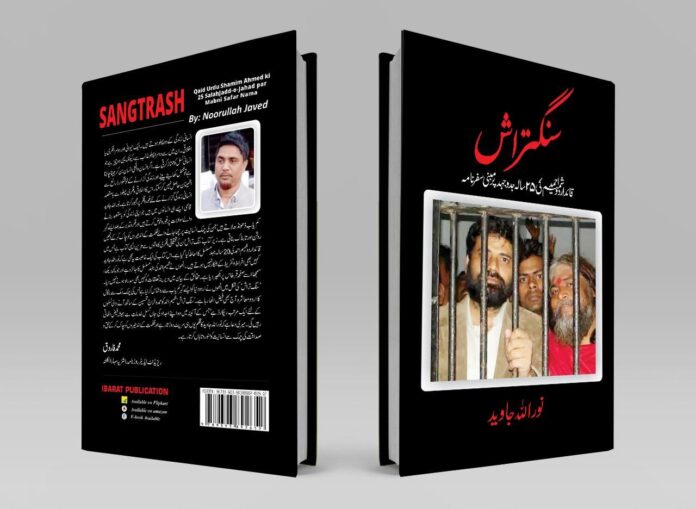
“The Book SangTrash: Shamim Ahmed’s account of the fight for human rights and Urduh” penned by Nurullah Jawaid is an immersive and powerful exploration of the life and activism of Shamim Ahmed, one of India’s most distinguished human rights advocates. As a pioneer of the Urdu movement, Shamim Ahmed’s story is one of unwavering dedication to social justice, human rights, and the preservation of cultural identity in the face of systemic injustice and political turbulence. This book, rich in historical and cultural context, offers an in-depth look at the life of a man who was not only a visionary leader but also a symbol of courage and resilience in the fight for equality and dignity.
The book delves into Shamim Ahmed’s lifelong struggle to address some of the most pressing socio-political issues of his time. Set against the backdrop of India’s dynamic and ever-evolving socio-political landscape, “SangTrash” chronicles Shamim Ahmed’s tireless efforts to combat the deeply ingrained inequalities that plagued the country, particularly the discrimination faced by marginalized communities. These efforts were not limited to his work as a human rights advocate but extended to his role as a cultural leader, educator, and innovator. Through the lens of his activism, the book paints a vivid picture of the complexities of Indian society during times of immense political and social upheaval.
Shamim Ahmed was not merely a passive observer of the struggles faced by the oppressed and underprivileged. He was a relentless force working to bring about tangible change. From his early days as a young idealist, Shamim Ahmed was deeply moved by the plight of the marginalized—those whose voices were suppressed by both society and the political elite. His passion for human rights led him to establish the Human Rights Protection Association (HRPA), an organization dedicated to addressing human rights violations across India. Through this platform, Shamim Ahmed sought to mobilize citizens to stand up for justice, regardless of their background, religion, or ethnicity.
In addition to his advocacy for human rights, Shamim Ahmed is best known for his work with the Urdu Movement. At a time when the Urdu language was facing marginalization and disintegration due to political pressures, Shamim Ahmed took it upon himself to revitalize and protect the language as an integral part of India’s cultural and literary heritage. His campaigns to promote Urdu literacy and its inclusion in educational institutions were not just about language preservation; they were about the empowerment of communities who saw Urdu as an essential part of their identity. Through this movement, Shamim Ahmed demonstrated that language is not merely a means of communication but also a symbol of cultural resistance and resilience.
As the narrative unfolds, “SangTrash” brings into focus the challenges Shamim Ahmed faced along the way. His activism was not without its detractors. Political opposition, societal resistance, and personal sacrifices were all part of the price Shamim Ahmed paid for his unwavering commitment to justice. The book sheds light on the obstacles he encountered, from the government’s attempts to suppress his initiatives to the skepticism and hostility from those who feared change. Yet, despite these challenges, Shamim Ahmed’s resolve remained unshaken. His determination to bring about social change and protect the rights of the disenfranchised never faltered, even when his own safety was threatened.
Shamim Ahmed’s legacy is further immortalized through his initiatives such as the “Food for All” campaign, which aimed to address hunger and poverty in India’s rural and urban areas. The campaign sought to ensure that food was available to every citizen, regardless of their social status, and to promote sustainable agricultural practices that would reduce reliance on outside aid. Through his leadership, the campaign brought together communities, activists, and policymakers, resulting in significant strides towards alleviating food insecurity in many regions.
Nurullah Jawaid’s writing not only brings Shamim Ahmed’s efforts to life but also contextualizes them within the broader historical and cultural milieu of India. By delving into the political, social, and economic landscape of Shamim Ahmed’s era, the book offers readers a nuanced understanding of the obstacles that activists and marginalized groups faced during this turbulent period.
“SangTrash” is a deeply informative and educational work that highlights the interconnectedness of human rights, cultural preservation, and social justice. It challenges readers to reflect on the ways in which systemic inequalities continue to shape society and the moral responsibility that each individual bears in addressing them.
The book also pays tribute to the human rights defenders who, like Shamim Ahmed, dedicate their lives to advocating for justice in an often hostile environment.
In telling Shamim Ahmed’s story, Nurullah Jawaid brings to the forefront the importance of collective action. The struggles faced by Shamim Ahmed were not his alone; they were shared by countless others who, inspired by his work, joined in the fight for a more equitable and just society. This collective action is central to the book’s message—individual activism can spark movements, but only through solidarity and collective efforts can lasting change be achieved.
“SangTrash” is not merely a biography of a prominent figure in Indian history. It is a call to action. By recounting Shamim Ahmed’s life and the impact of his work, the book challenges readers to engage with the pressing social issues of today, particularly those related to human rights, inequality, and cultural identity. The lessons of Shamim Ahmed’s life are timeless, and the values he fought for—equality, dignity, and mutual respect—remain as relevant as ever.
This book is also a reminder that activism is not always glamorous or celebrated in its time. Often, it is the courage of individuals like Shamim Ahmed, whose actions go against the grain of societal norms that change the world for the better. “SangTrash” is, therefore, more than just the story of one man; it is an inspiration for anyone who believes in the power of activism to bring about positive, meaningful change. It challenges readers to question the status quo and to take responsibility for shaping the future in a way that is more inclusive and just for all.
In conclusion, “SangTrash” is a tribute to Shamim Ahmed’s life and legacy. It is a book that encourages readers to consider the ways in which activism, grounded in human rights and social justice, can transform society. By examining the key moments in Shamim Ahmed’s life and the challenges he overcame, the book underscores the enduring importance of standing up for what is right, even in the face of adversity. Through this compelling narrative, “SangTrash” becomes not just a biography but a powerful call for activism in today’s world.
source: http://www.muslimmirror.com / Muslim Mirror / Home> Books> Positive Story / Reviewed by Kulsum Farooque / February 14th, 2025