Belonging to a conservative Muslim family, it was hard for Fatima Ahmed to break the shackles but she made sure to follow her dreams and do all that she ever wanted. From travelling the world to living like a “gypsy” and creating her very own niche in the world of art, Ahmed has lived her life on her terms. Read about this feisty and inspiring artist.
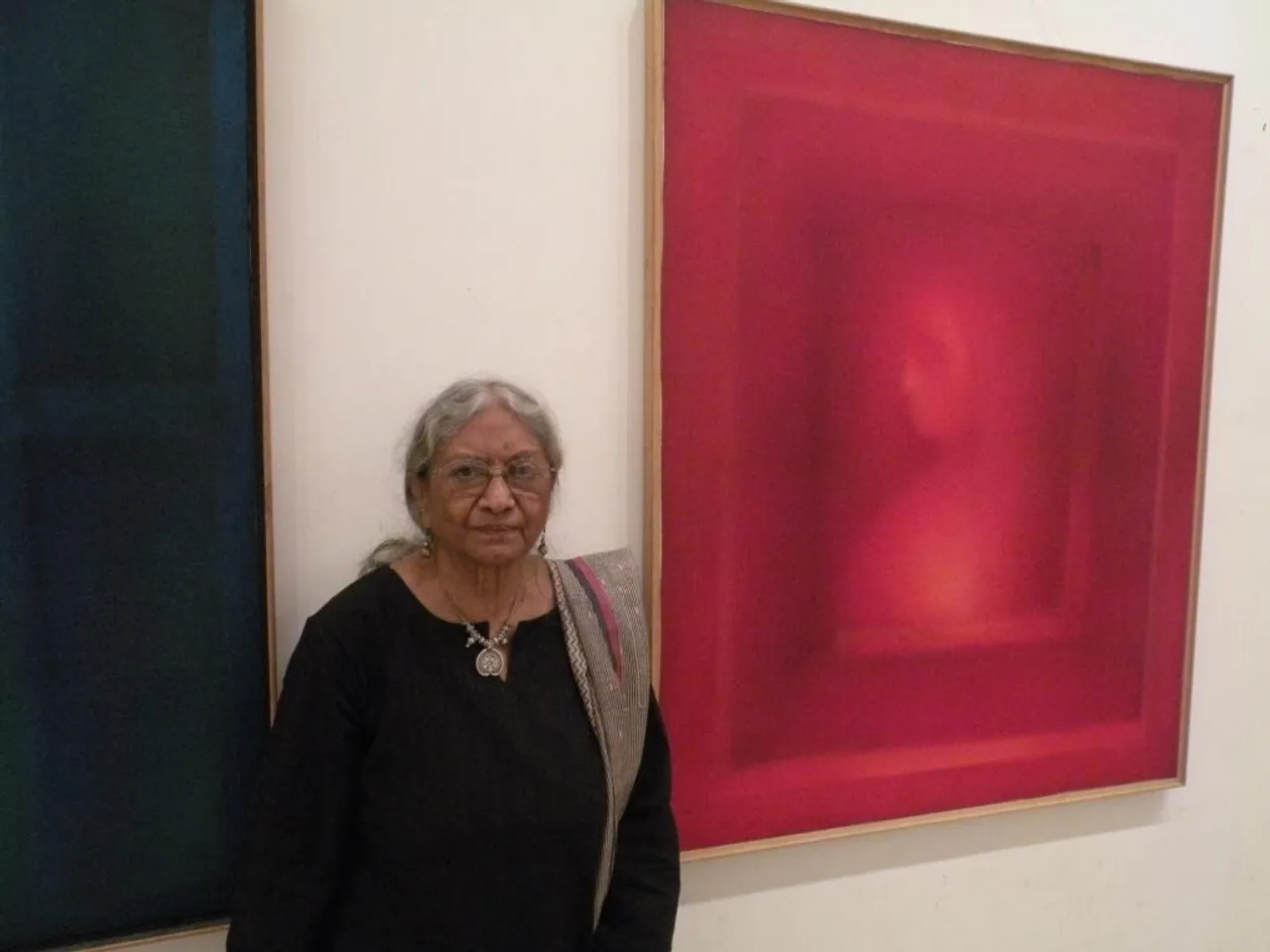
Legendary rebel artist and writer Fatima Ahmed, who is nearing 80, is a picture of contrasts. While she is fun-loving and full of life, her paintings are still and silent. (Credit: Surekha Kadapa- Bose\WFS)
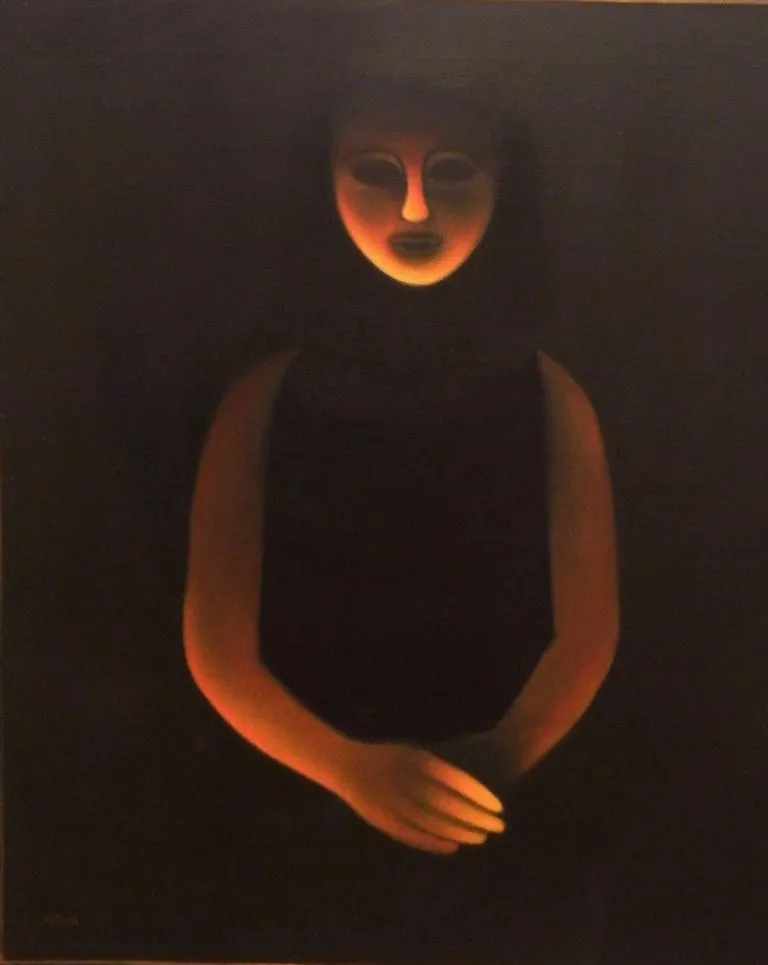
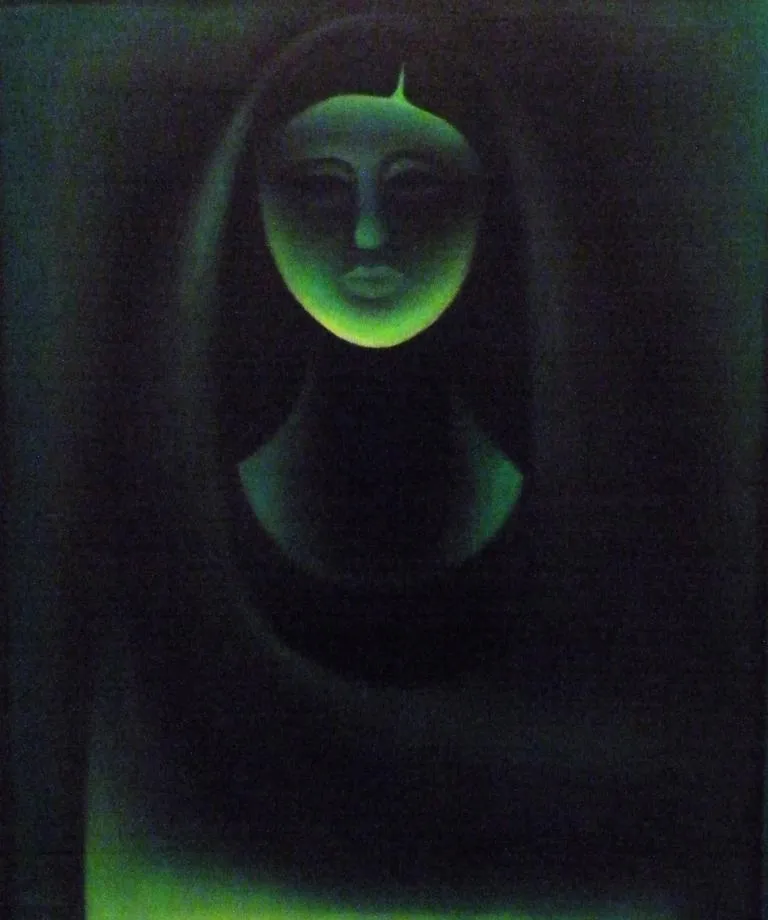
‘If only silence could speak’ goes the adage. Well, here silence does speak – and how! Soft, hazy, elusive images of women gaze steadily from the confines of their canvas making the much-mesmerised onlooker feel as though they would simply vanish if s/he so much as blinked. The women in red, pink, beige oil paints look ethereal, delicate and yet they convey power, strength – much like the woman who has created them.
“Space and light are very important to any work of art, especially paintings,” explains legendary rebel artist and writer Fatima Ahmed, whose latest oil canvases were on display in Mumbai recently. She continues, “In life, there has to be some mystery. Everything shouldn’t be very obvious and spoken out loud. In my works I don’t like clutter, loud colours or screaming. I like my paintings to be as subtle as a whisper.”
“Let me start by saying I simply love to eat the crisp crust of a samosa,” she says, with twinkle in her eyes, before adding, “Now as far as the silence in my work is concerned, throughout my life I have been more of an observer. I was a recluse during my childhood as I didn’t have anyone to share my thoughts and feelings with. I was a rebel for everyone around me and way back in the middle of last century it wasn’t a good sign.”
Coming from a conservative Muslim family in Hyderabad, Ahmed never really fit in because she was a free spirit who believed in equality. Her father was a Collector under Nizam Osman Ali Khan, Asif Jah VII, the last Nizam of Hyderabad.
In her joint family, daughters were married off in their early teens within the extended family. Moreover, as the Ahmed family was very highly placed within the Nizam’s palace, its members, too, were treated as royalty, which was never acceptable to her.
“I just couldn’t tolerate treating those employed in our household as slaves. Besides, women in that era didn’t have any say in any sphere of life and were forced to blindly follow all the dictates of men without questioning them. I certainly wasn’t going to do that,” she says emphatically, her voice betraying the anger she still feels towards the strict patriarchal rules they were made to adhere to in that period.
The women in red, pink, beige oil paints look ethereal, delicate and yet they convey power, strength. (Credit: Surekha Kadapa-Bose\WFS)
So Ahmed grew up with vivid visions of freeing everyone who was treated as a lesser human being. “Quite unknowingly, I was influenced by socialism,” she remarks. And at that age she had also made up her mind that she would rather die than marry one of her cousins. According to her, the one good thing her father did was to enrol her in the Government Mahaboobia Girls School, the foremost learning institution at that time. “Our teachers taught us out of syllabus and gave us the freedom to think. I didn’t like Hyderabad then but I loved my school,” says the artist, who is nearing 80.
It was there that she developed a deep love for drawing, painting and the classical Indian dance form Kathak, all of which she learnt without the approval of the family elders. The dance classes came to an end as soon as her father came to know.
“Unfortunately, my mother had a stroke at the time. And though I did have a large family of sisters, brothers, cousins and aunts, I could never really converse with any of them or share my true feelings,” she elaborates.
After school, as Ahmed refused marriage outright, she was grudgingly allowed to join college. But there again she met with another hurdle. She wasn’t interested in any of the usual subjects of science and wanted to join College of Fine Arts, which, of course, wasn’t permitted. So she found a way to get in. Mischievously she narrates, “I forged my father’s signature on the application form but the principal detected my lie and quizzed me. When he understood that I was really interested in the arts and saw a painting I had done of a litter of puppies, he relented.”
The demise of her parents made her leave home and Hyderabad for good. “I certainly didn’t want to stay back and be bossed around by my brothers and other family members,” she says about her escape to Bombay in early 1960s.
Admitting that the Hyderabad of today has changed considerably, the ageing artist nonetheless doesn’t think there is much difference still in the way girls from poor Muslim families are treated, “While girls from well-to-do homes get an education, are fashionable, go abroad, mingle with the rest of the world, this is not true of the low income Muslim families. They still live in a very male dominated society and this is not only restricted to Hyderabad or India but all over the world.”
Her arrival in Bombay and the “gypsy lifestyle” she led for the next two decades saw her engage closely with the world of art and writing. “I really didn’t exploit the kind of opportunities that came my way. I just took life one day at a time by living it on my own terms,” recalls Ahmed especially referring to her two-year stint in London where she painted, went through a financial crisis and then discovered spiritualism.
Fatima Ahmed, whose latest works were part of a recent exhibition, ‘If only silence could speak’, likes her paintings to be as subtle as a whisper. (Credit: Surekha Kadapa- Bose\WFS)
Despite those struggles, great success has come to her. She has held innumerable exhibitions in Mumbai, Delhi, Chennai, Hyderabad, Bhopal, London, Mauritius, Dubai, Hong Kong, Russia and South Africa, among many other places. Her works have been auctioned by Christies and are part of several private collections and state galleries, including the National Gallery of Modern Art (NGMA) in Delhi, Birla Art Akademi, Kolkata, the Stuttgart State Library and Masanori Fukuoka Museum in Japan.
What or who has influenced her art over the years? Initially, Ahmed says she was influenced by Gauguin, Cezanne, Van Gogh and Modigliani. But she consciously stayed away from those influences, as she felt “there was no fun in copying others”, and developed her own style.
Once she got back from London to Mumbai she caught up with many of her journalist friends. One of them was late Khushwant Singh, with whom she argued, fought and enjoyed interacting. It was he who encouraged her to get into writing. She started by translating works of Ismat Chugtai, Saadat Hassan Manto, Kaifi Azmi and other Urdu literary greats into English. This paved the way for to her write the semi-autobiographical, ‘In Haleema’s Words’. It was on one of her reporting assignments that she visited the Rajneesh Ashram in Pune, which has become her permanent home now.
Personally, Ahmed may be less of a rebel these days but her works more than make up – though still and silent they exude the quiet strength of women.
Written by Surekha Kadapa-Bose for Women’s Feature Service (WFS) and republished here in arrangement with WFS.
source: http://www.thebetterindia.com / The Better India / Home> Art / by Surekha Kadapa-Bose / December 14th, 2014
Rasheed Artist is one among these people in Malegaon, who despite all odds went on to achieve such a position, which is difficult for many even under most favourable conditions
Rasheed Artist – renowned artist of Malegaon
The powerloom factories in Malegaon might have been the only available option for the Malegaonians, the deprived people of the Muslim dominated textile town in North Maharashtra. Yet the amount earned after working in these factories was sufficient till a few decades ago to make one’s end meet easily. This perhaps is the reason why the town has surprising number of poets, laureates, scholars and artists who would work in these factories like petty labourers during the day and then indulge themselves in creative activities till late in the evening.
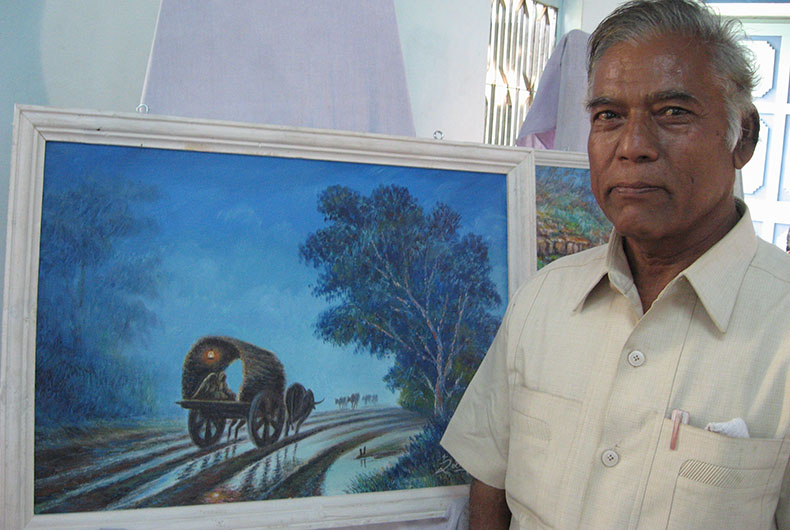
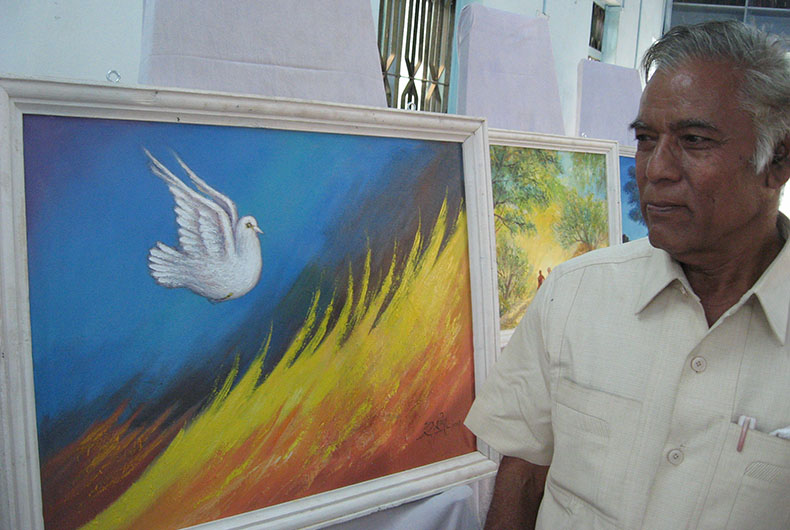
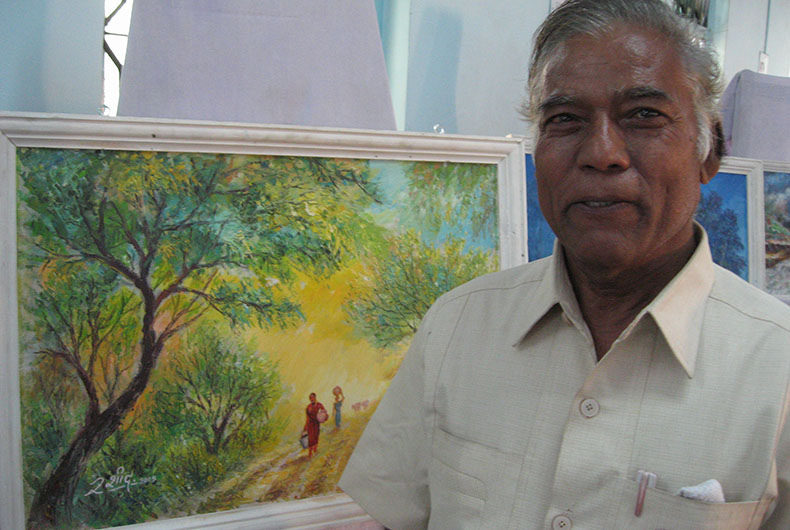
Rasheed Artist is one among these people in Malegaon, who despite all odds went on to achieve such a position, which is difficult for many even under most favourable conditions. Hanging against the walls of the main halls inside the plush bungalows owned by the dignitaries in India as well as in various other countries in the world, Rasheed Artist’s paintings are point of attraction for visitors since many years. Fabulous achievement indeed! However the journey that led to these walls was not easy, and for Rasheed Artist, it needed a matchless and unprecedented effort since childhood.
Malegaon in the sixties though had quite a good number of schools, managements could hardly find a good drawing teacher during those difficult days. Under these circumstances having a professional artist to teach the art of painting to students using watercolor was beyond one’s imaginations. However Rasheed Artist was resolute. He was just 15 but when he failed in fulfilling his strong desire for commercial art in the corridors of the education campus, he decided to quit schooling.
“It was my craze for paintings that forced me to drop out of the school in the early age”, he recalled.
Holding brush in one hand and color box in the other, he began roaming here and there to satisfy his lust for Art. It was then that Wad Saheb, a Director at Camel, the stationary giant famous for manufacturing pencils, watercolor and other stationary items till recently, came to Malegaon. Wad Saheb, as Rasheed Artist described the renowned artist from Shimla, visited Malegaon as part of his nation-wide talent-search program.
“He visited Malegaon for consecutive years in the seventies, shared valuable tips with the students like us and organised painting and drawing competitions to encourage us”, Rasheed Artist said adding:
“In his second visit to Malegaon in 1968, I won the competition. Wad Saheb was thrilled watching the improvement I had attained in one year.”
In Wad Saheb, Rashid Artist found a mentor. But he was not a lord and any further continuation from now had become unbearable for his parents. To bear the expenses hence Rasheed Artist began working in a local powerloom factory along with his father – without of course sharing hardly any money with him for regular household needs. Rasheed Artist would work for three to four days in a week and the moment he would get some cash would rush to Mumbai and wander around the city’s art galleries in his humble and simple attire which is part of his persona even now.
“Jahangir and Taj Art Galleries in Mumbai were my favorite hunting grounds”, he recalled.
His encounter with the masters of the time – including the legendaries Jahangir Sabhawala and Sarvayya at these galleries are still the precious moments of his life.
“My comments and discussions would make them dumb. They could not believe a humble looking person like me had such a sound knowledge of canvas paintings.”, he said.
Rasheed Artist
In 1970, Rasheed Artist permanently moved to Mumbai,and started working on banners, sketches and art works for the upcoming films at V. Shantaram’s Mumbai Central Film Department. He was earning reasonably well now. But to earn was never in his priority list. Therefore he decided to leave Mumbai and return back to Malegaon where his talent soon witnessed a surprising turnaround.
“Innovation and creativity have always been my passions. Back in Malegaon, I began working on popular couplets of Urdu poets and tried to portray them in my paintings”, he recalled.
There was no looking back after that. He soon acquired perfection in transferring Urdi couplets over the canvas with amazing interpretational skills. Hundreds of canvas paintings portraying Urdu couplets by the poets like Mirza Ghalib, Firaq Gorakhpuri, Meer Taqi Meer, Majrooh Sultanpuri, Rahat Indori, Shabina Adeeb, Parvin Shakir and others were ready in quick succession. Subsequently, it became customary for the Malegaonians to gift Rasheed Artist’s paintings to the dignitaries who would visit the town.
While the one gifted to veteran musician Naushad painted on the famous couplet Aabadiyon main dasht ka manzar bhi ayega; Guzroge shaher se to mera ghar bhi ayega is still greeting the visitors in his hall, Shabana Azmi has put the one presented to her father Kaifi Azmi portrayed on Aik woh keh jinko fikre nashaib o faraz hai; Aik hum keh chal pade toh behr haal chal pade in her office.
Rashid Artist with his paintings.
Majrooh Sulatnpuri was lucky to get two paintings. Of these two, the one on Sutoone daar pe rakhte chalo saron ke charaag; Jahan talak yeh sitam ki siyah raat chale is in Canada and the other on Phir koi masloob hua sare rahe tamnna; Aawaze jaras pichle pahar taiz bahut hai is part of the splendid collection at Dubai Urdu Library.
Simultaneously, Rasheed Artist also perfectly worked on portraits of the people he loved the most. They included freedom fighters, world leaders, artists and poets. When Dilip Kumar visited Malegaon in 1980, he was thrilled to see his portrait. The portrait presented to him is now greeting the people at his Bandra residence. The portraits of Iranian leader Ayatollah Khomeini and Mirza Ghalib presented to Ferhad Parizaad of the Iranian Cultural Centre in Mumbai in 1985 are in Iran.
Today Rasheed Artist is the ultimate and globally recognized name when it comes to canvas paintings. In fact, he is perhaps the only artist in the Indian sub continent who portrays Urdu couplets over the canvas with such a sound interpretational skills. Yet Rasheed Artist has few more dreams in his life.
“Apart from writing a book on Sketching and Painting, it’s my dream to transfer the history of Urdu Ghazals from Ameer Khusroo till date over the canvas”, he said in a determined tone.
Rasheed Artist at this stage of his life is finding it easier to run the expenses of his family. However to run his dream project is of course an expensive affair. Moreover, looking at him who resolutely turned down the offers by popular art galleries in London and Australia to auction his paintings, it seems impossible for him to make any compromises merely for the sake of arranging funds needed to work on these projects. Yet one thing is certain. The stubborn in him would not let him sit idle. It would be really interesting to see how he achieves these targets.
[An abridged version of this article was published by The Times of India, on August 25, 2010 in its Nashik edition.]
source: http://www.ummid.com / Ummid.com / Home> India> Life & Style / by Aleem Faizee, ummid.com / June 13th, 2009