From Facebook posts to life-saving campaigns, he built a community rooted in purpose
Bengaluru :
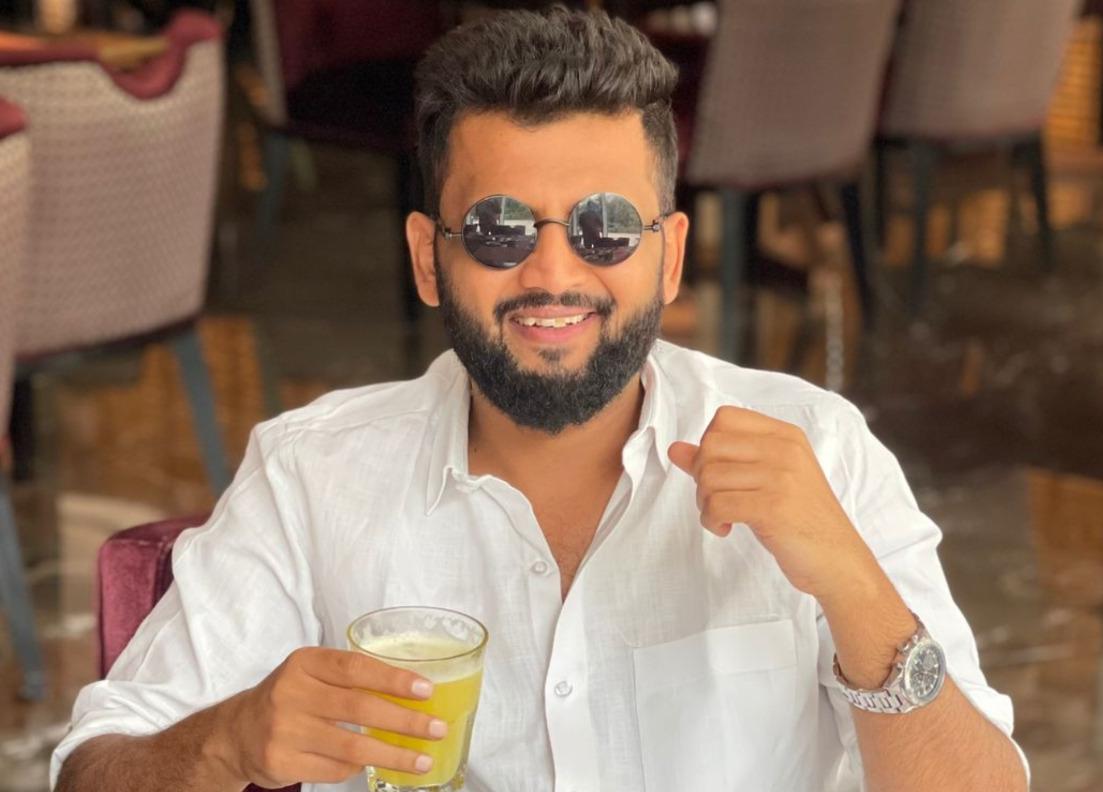
Do you remember when Instagram was just about pictures, with no reels, stories, or videos? Suhail Rasool vividly remembers it; it feels like yesterday. A Bengaluru-based content creator, Suhail began his digital journey on Facebook in 2009, long before the term ‘influencer’ became common, and carried that momentum onto Instagram, where he carved out his own space.
Currently known online as @suhailrasool on Instagram, he has grown into one of Bengaluru’s most recognised digital storytellers. What sets him apart is not just the numbers but the heart behind his work. His content brims with energy, relatability and an unmistakable sincerity. From lifestyle and travel to personal vlogs, Suhail weaves stories that feel lived in and real. He has consistently mobilised his audience to support medical treatments, social causes, and relief efforts, proving that influence can spark genuine change when guided by empathy.
Stormy start “I had a Facebook page in 2009-10. Most of the posts on that page reached nearly 60,000 likes,” recalls Suhail. He joined Instagram on March 10, 2014, when the platform was still basic. “There were no Reels, no IGTV, no collaborations, no links, just photos,” he explains the struggle of the lack of features. Later, Instagram added 10-second videos.
“You had to fit everything into those 10 seconds, and there was no sharing option. People had to follow you to watch.” “In 2016, Snapchat introduced Stories, and Instagram quickly adopted the feature. That’s when I really started posting daily Stories, 10 to 15 a day,” he says. “I’ve kept it up ever since. Back then, I was a lot more energetic too,” he laughed and highlighted how consistency is key on social media.
Using platform for a purpose Suhail Rasool began raising funds in 2020, focusing on life-saving procedures such as heart, kidney, liver, and lung transplants. Over the years, these efforts grew into a community movement that helped save countless lives. Looking back, he sums it up simply: “We saved a lot of lives.” During the peak of the COVID crisis, he and his team mobilised resources at an extraordinary scale.
They distributed nearly 7,500 ration kits, each worth about Rs 1,200, raising close to Rs 75 lakh in just three days. “Every Bangalorean who was in trouble with COVID made sure they reached us,” he recalls. Beyond food relief, the team organised ventilator beds, ICU beds, and other essential medical support for those in urgent need. Suhail also mentioned how a friend’s trust, later taken forward in his memory, enabled them to expand their efforts.
Among the initiatives was donating ambulances, made free of cost at a time when prices had soared and access was limited. “Even now, that ambulance has been kept free of service in our area,” he says, a lasting reminder of their work during the pandemic.
A creator who speaks He admits inspiring many followers through his platform to speak out on sensitive issues, particularly around communal harmony. He emphasises that political agendas have created unnecessary divides and distracted the youth from focusing on progress. His message remains consistent and simple: “We are all one. It is one country, and we need to stand together for its development.”
“I’m very active on my Stories, I have the highest reach there, and even on IGTV. I still call it IGTV,” says Suhail with a smile. His Instagram Stories draw some of the largest audiences in Karnataka and even across South India. On average, each story is watched by nearly 1,80,000 people, and even his daily updates often cross the one lakh mark. Unlike many creators, he focuses less on Reels or posts and instead relies on the consistency of his Stories, which his followers watch religiously. This is how he has managed to build a strong base of loyal followers.
Idea over a chai “Mehfil is one big concept in my life,” said Suhail. For years, he and his friends, Fazal and Fanoos, created lighthearted content, but as they grew older, they wanted something more sustainable. At the time, few brands believed in Instagram marketing, yet Suhail kept supporting small businesses and young influencers. By 2021, his Stories reached nearly 1,50,000 viewers, and creators constantly sought his support. That inspired him to bring everyone under one roof.
Along with his friends, he registered a company and built a platform for bakers, designers, makeup artists, and entrepreneurs to showcase their work. “As we are gathering everyone, I called it Mehfil,” he says with pride. The first gathering took off like a rocket, with a sea of people storming in and all the businesses booming. Then they held three more Mehfils, and the next one is at the end of this year. By forging his own path, he has not only built his own success but also opened doors for countless aspiring creators online.
source: http://www.newstrailindia.com / News Trail / Home / by Bhavana M / September 07th, 2025
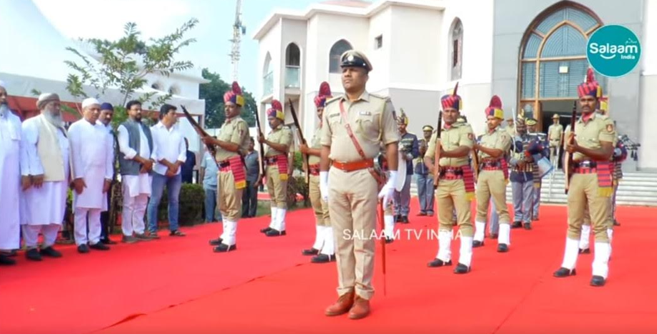
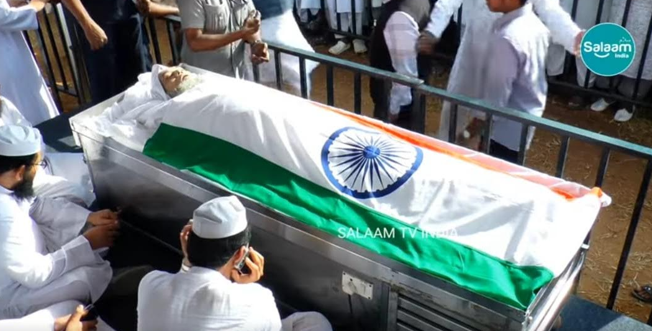
Chief Minister Siddaramaiah paid his last respects to Hazrat Maulana Sagheerr Ahmed Khan Rashadi, Amir-e-Shariat of Karnataka and rector of Darul Uloom Sabilur Rashad, expressing deep grief over his passing. He conveyed condolences to the bereaved family and prayed for strength and patience during the period of mourning.
Recalling the life and work of the late scholar, the Chief Minister said Maulana Rashadi devoted his entire life to Islamic education, moral guidance, and the cause of communal harmony. He described him as a respected religious scholar and social leader whose influence reached far beyond classrooms and institutions. According to Siddaramaiah, the Maulana’s scholarship and counsel shaped generations of students and earned respect across religious and social communities.
Several senior leaders and officials attended the prayers, including Ministers K J George and Zameer Ahmed, Chief Minister’s Political Secretary Naseer Ahmed, and Additional Chief Secretary Anjum Pervez. Their presence underlined the regard held for the late Maulana within the administration and public life.
Community leaders also joined the gathering. Among them were Dr Belgami Mohammed Sa’ad, state president of Jamaat-e-Islami Hind Karnataka, Maulana Ifteqar Qasmi, president of Jamiat ul Ulema Karnataka, along with scholars and representatives from different walks of life.
The mortal remains of Maulana Sagheerr Ahmed Khan Rashadi were laid to rest at the burial ground within the Darul Uloom Sabilur Rashad campus.
The funeral prayer drew thousands of students from across Karnataka, fellow scholars, and members of the public.
His son, Maulana Zubair Ahmed Khan, led the prayer in an atmosphere marked by grief and reverence.
Speakers described the late Maulana as a symbol of knowledge, humility, and lifelong service whose legacy will guide future generations.
source: http://www.radiancenews.com / Radiance News / Home> Latest News> Report / by Radiance News Bureau / January 14th, 2026
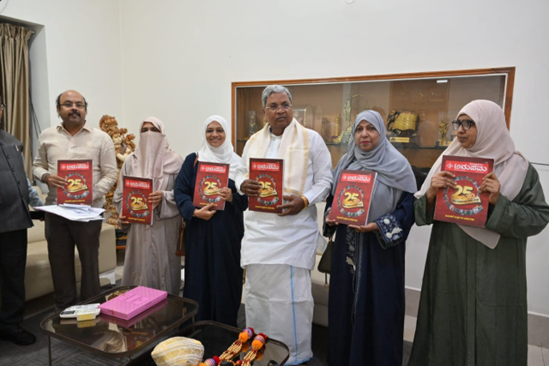
Anupama, the state’s only women’s monthly Kannada magazine run entirely by Muslim women, has completed 25 years. To mark this milestone, Chief Minister Siddaramaiah released a special silver jubilee issue, reflecting on its 25-year journey of success, in Bengaluru on Thursday.
Speaking at the event, the Chief Minister congratulated the team, saying, “There are only a handful of Muslim women in journalism. In such a scenario, it is highly commendable that the Anupama Women’s Monthly, run by women from the Muslim community and has successfully completed 25 years.”
Shahnaz M., the editor of Anupama, also spoke at the occasion. “The implementation of the ‘Guarantee’ schemes for women in the state has brought about significant changes in their lives. On behalf of the Anupama team and all women, I extend my gratitude to the government led by CM Siddaramaiah for their commitment to women’s development,” she stated.
The event was attended by Naseer Ahmed (Political Secretary to the CM), MLA Dr. Yathindra Siddaramaiah, BMTC Vice-Chairman Niket Raj Maurya, and Anupama’s sub-editors Samina Uppinangady, Sajida Momin, and Kulsum Abubakkar. Other notable attendees included S.M. Muthalib, Faisal Ismail, and Saleem Bolangadi.
source: http://www.radiancenews.com / Radiance News / Home> Latest News> Report/ by Radiance News Bureau / January 10th, 2026
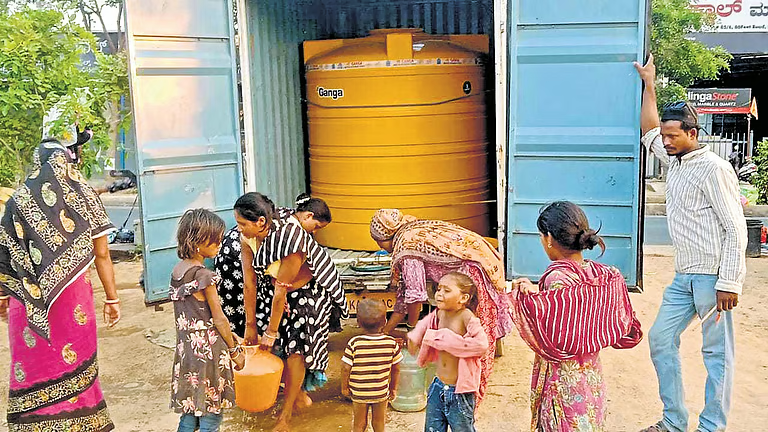
The residents of these slums are prone to infection. Lack of water could cause dehydration in residents. Hence, we took up this initiative.”
‘Active Bengaluru’ supplies water to a slum in North Bengaluru. It has come as a saviour to the residents of several slums in the city Photo | Express
Bengaluru :
‘Active Bengaluru’, a non-profit organisation, has come as a saviour to the residents of several slums in the city this summer. The organisation is supplying water to these residents to tide over this harsh summer.
‘Active Bengaluru’ is supplying 50,000 litres of water at the doorsteps of the residents of slums in North Bengaluru, including in areas like Thanisandra, Hegde Nagar, and Saraipalya, every alternate day.
Like other parts of the city, close to 6,000 public borewells in these areas have gone dry this year. Members of ‘Active Bengaluru’ supply water in four water tanks (2,500-litre capacity each) mounted on mini-tempos.
Speaking to The New Indian Express, Tauseef Ahmed, a volunteer with ‘Active Bengaluru’, said, “Under ‘Project Zam Zam’, the slum population in North Bengaluru is being supplied water free of charge. The project began in March, and till date, over 12 lakh litres of borewell water has been supplied. The residents of these slums are prone to infection. Lack of water could cause dehydration in residents. Hence, we took up this initiative.”
“The water is collected from good Samaritans from their borewells, and the same is then supplied to the slums. The residents have been told to call the emergency number of the NGO to place a request. Based on the number of calls received from an area, a vehicle is sent. In each tank, about four taps are fixed, and residents are asked to come in a queue and collect water,” said another member of ‘Active Bengaluru’.
“The NGO mostly deals with policy issues, women’s empowerment, health, and education. Shortage of water directly impacts the health and education of children. We decided to do our bit to address the same and joined hands to supply water to the needy,” said another member of the organisation.
source: http://www.newindianexpress.com / The New Indian Express / Home> Karnataka / by Mohammed Yacoob / April 23rd, 2024
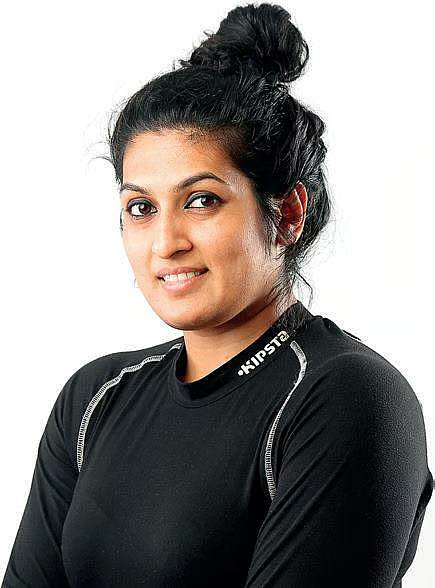
When she joined the Indian Combat Academy (ICSA) on Bannerghatta Road to learn Jujitsu and self-defence, little did Nabila Birjis (29), know that this would be a turning point in her life.
Bengaluru :
When she joined the Indian Combat Academy (ICSA) on Bannerghatta Road to learn Jujitsu and self-defence, little did Nabila Birjis (29), know that this would be a turning point in her life. On April 2, she turned out to be the only girl selected from Karnataka to compete in the South Asia Open Jujitsu Championship 2019, in Chennai.
Born and brought up in Mysuru, she moved to Bengaluru seven years ago to work for an architecture firm. At the age of 25, after undergoing rigorous training under coach Jitesh Banjan, she started competing seriously. So far, she has won six golds at the national-level JAI Jiu Jitsu events under 68kg and 70 kg categories; two silver medals at South Asian Championships; and gold at Body power Expo Open Weight.
She is also the only Indian woman to have secured two silver medals at South Asia Open Jujitsu Championship 2019. “I always wanted to achieve something in sports. My mother Noor Fathima Khan, HOD and professor at Maharanis Science College, Mysuru wanted me to complete my graduation before pursuing sports. I started my sporting career only at 25.”
It was not easy for Birjis in the field. She has quit her job, moved cities, so she could be able to devote more time for training. “I remember when I travelled for three hours just to be able to train for an hour. After struggling for years, I now seem to have struck some sort of balance between being an architect and an athlete,” she added.
Jujitsu is a team sport, and the biggest challenge she finds is to keep up with the energy levels of younger athletes. To stay fighting fit, she follows a strict sports diet. For Birjis, losing teaches more than winning. “My loss at the South Asia Championship has taught me how to move forward. My teammates have always encouraged me to do better. I will learn from my previous experiences,” she added.
source: http://www.newindianexpress.com / The New Indian Express / Home> Bengaluru / by K Rathna / August 20th, 2019
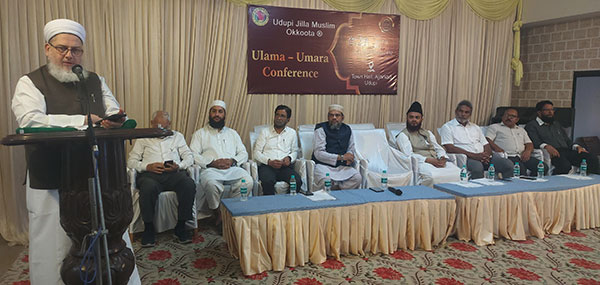
“There is growing concern among communal forces regarding the progress of the Muslim community, and this has led to them being increasingly targeted,” said Maulana Syed Tanveer Hashmi, a member of the Karnataka State Waqf Board and All India Muslim Personal Law Board. He stressed that the community must intensify its efforts towards educational and overall development, especially encouraging the youth to aspire for civil services.
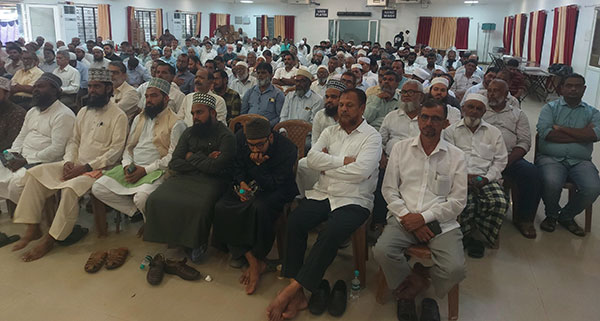
He was addressing a seminar titled “Current scenario and our responsibilities” organised by the Udupi District Muslim Federation at the mini auditorium of the Udupi Town Hall on Tuesday.
Maulana Hashmi highlighted the need to integrate Islamic values deeply into daily life to reform the challenges prevailing in society. “The community must actively engage in social service, extend help to the underprivileged, and foster harmonious relationships with people of other religions. During festivals, we must invite our non-Muslim brothers and share the joy of the celebration with them,” he said.
He further emphasised that Muslims should fully practice religious values and instil Islamic principles within their families, including children, women, and men. Education must be prioritized, with awareness cultivated within the community to promote academic growth.
Cautioning against objectionable behaviour on social media, he urged the youth to be responsible and avoid provocative posts. “We must stay away from the hateful narratives of ‘Godi Media’, communal provocations, and toxic online environments,” he stated.
Sulaiman Khan Sahib from Bengaluru, assistant general secretary of the All India Milli Council and Karnataka co-coordinator of the “Save Waqf, Save Constitution” movement, also addressed the gathering.
The event was presided over by Udupi District Muslim Federation president Muhammad Wawla. During the seminar, a book titled ‘Dharmadharma’ authored by federation member and writer Mustaq Hennabail was released.
The stage was graced by senior vice president Rafiq Kundapur, vice presidents Shabhi Qazi, Fareed Sheikh, and Fayyaz Byndur. The programme began with a recitation from the Holy Quran by Udupi Jamia Masjid Imam Maulana Rasheed Umri.
The event was welcomed by Maulana Zamir Ahmad Rashadi. Former district president M P Modinabba delivered the introductory address.
General secretary Ismail Hussain Katapady extended the vote of thanks, while Yaseen Kodibengre compered the event.
source: http://www.daijiworld.com / Daijiworld.com / Home> Karnataka / by Daijiworld Media News Network – Udupi / July 29th, 2025
Pasha Bhai’s journey from the Muslim ghetto of Neelasandra to the posh clubs of Bengaluru is as much a story about his art as about Dakhni Urdu, the language he consciously chooses to rap in, making it both a quest for selfhood and for his mother tongue’s history.
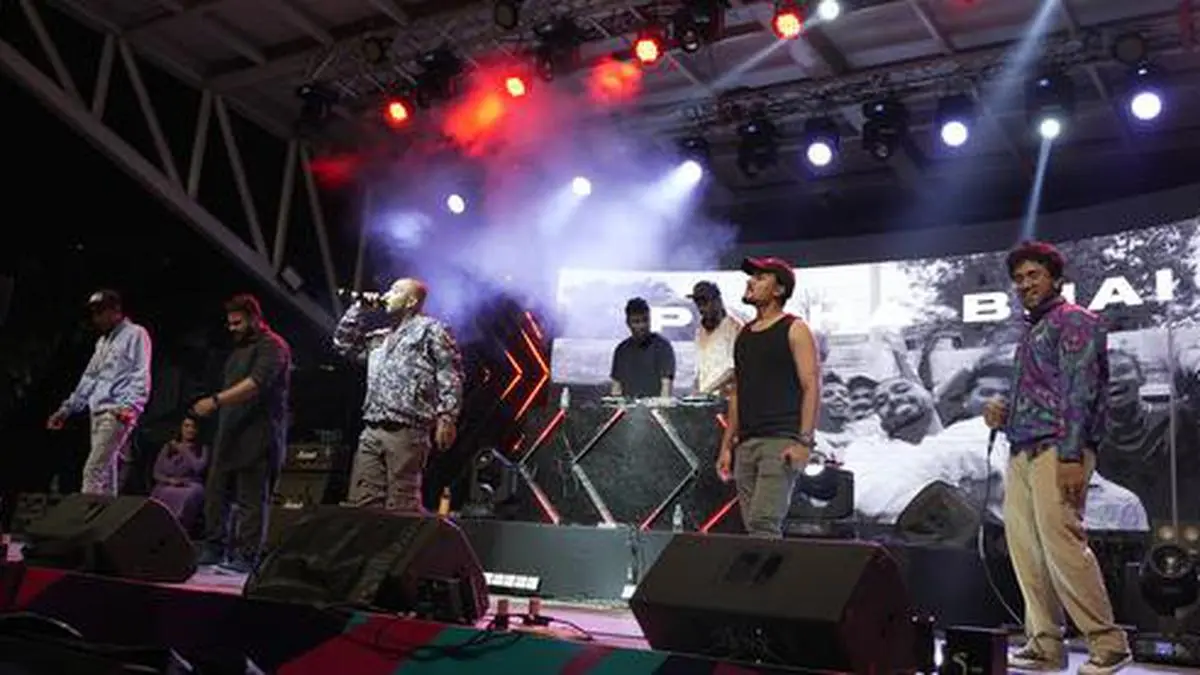
Pasha Bhai and members of Clan Bokka Phod performing at Bowring Club on May 7.
Bowring Institute, one of Bengaluru’s oldest social clubs, is pulsing with energy. Raftaar, a sensation in the Hindi and Punjabi rap scene, is the marquee act. Warming up the audience before he comes on is a bunch of Bengaluru-based rappers with funky monikers such as MC Truth, Ray, and Quake. Third in line is Pasha Bhai and his Clan Bokka Phod (CBP). On the evening of May 7, Bowring
When his turn comes, Pasha Bhai bounds onto the stage with his trademark energy. His hair cropped short and wearing a loose, full-sleeved T-shirt with baggy trousers that hang low on his waist, he opens with ‘Eid ka Chand’ (The Moon of Eid), one of his popular songs. A rousing cheer goes up from the audience, which is familiar with this number that has garnered more than 45,000 views on YouTube.
When Pasha Bhai sings the lines: “ ” (I’m my father’s spoilt brat/ My heart is like wax, but I have the courage of steel), some of his fans hum along. Pasha raps in street-Dakhni, and he raps at warp speed, which means that many in the crowd cannot grasp the lyrics but they are bound up in the frenzied covenant between singer and audience, which is part of the frantic mood of a rap concert. Even his band’s name is a Dakhni phrase for ‘ball-breakers’. Ladila Bawa Ka, Bigda Huwa Beta/ Moum Ka Dil, Par Jigra Loha Mera
Pasha follows up the first song with a few more popular solo numbers such as ‘Haraanya’n’ and ‘Kumbhakarana’. Then he is joined by his gang, the infamous Ball-Breakers, and they rap to ‘Khuda Gawah’.
Pasha screams ‘I love you Bangalore!’ before getting off the stage after his set. T-shirt soaked in sweat, he chugs down a bottle of water as fans walk up to him to take selfies. While the 23-year-old rapper has performed in several spaces in Bengaluru, being part of the opening act for Raftaar has added to the growing reputation of this savvy singer. There are some distinct reasons for Pasha Bhai’s success. First, his originality as a lyricist and his intuitive ability to vocalise in Dakhni; second, his moorings in a marginalised social and economic Muslim stratum in Bengaluru that resonates with the ethos of the early Black rappers who emerged from the ghettos of American cities; and third, his conscious use of Dakhni, his mother tongue, which some linguistic scholars argue is a language on its own but which is often dismissed as a dialect of Urdu.
Spoken mainly by Muslims in Karnataka, Telangana, Andhra Pradesh and parts of Tamil Nadu, Dakhni, translated as ‘Deccani’, traces its provenance to the reigns of the Bahmani and Deccan Sultanates between the 14th and 17th centuries whose territories sprawled across the Deccan plateau from the Arabian Sea to the Bay of Bengal. In certain parts of Hyderabad and Bengaluru and across urban centres in south India (except Kerala), Dakhni continues to be the lingua franca of a wide section of the non-Muslim population as well.
Says Bengaluru-based Arjun Sharma a.k.a Quake, the rapper who curated the event: “Pasha Bhai is one of the best thinkers/ writers out there. He’s talking sense and he’s talking reality. People should start understanding Dakhni to listen to him; that’s the only way our language will grow and get recognition. He is the only person representing Dakhni now.”
Pasha Bhai, whose non-rapping name is Mohammed Affan Pasha, has a simple studio, christened ‘Dakhnistan’, on the fourth floor of a nondescript building in the largely Muslim ghetto of Neelasandra in central Bengaluru. To get there, one has to negotiate a maze of narrow, meandering roads dotted with meat stalls, tiny mosques, and food kiosks. Minimally furnished, the most interesting thing in the dingy hangout is a carrom board around which Syed, Demixx, Nimbu Da, Marwan, Shoaib and Maddy of the CBP gang has gathered.
Pasha was born in 1998 and grew up in Neelasandra. “We are the children of rowdies,” he said, referring not to his father, who was an auto-driver and passed away when Pasha was still in school, but to the grimy milieu of violence that engulfed him and his clan members growing up in Neelasandra. Pasha always had an ear for music and as a high schooler he began to listen to American and Indian rappers such as Eminem, 50 Cent, Yo Yo Honey Singh, Raftaar, IKKA and Machas with Attitude.
The Hindi rappers were a tremendous influence on him. Among his greatest inspirations was Mumbai’s Naezy because he “is also a Muslim from the ghettoes of Mumbai”. Pasha began rapping in Hindi at the same time, and the 2019 film about a rapper also had an impact on his nascent career. At this time, Pasha was doing “chhatri kaaman” (petty jobs) for easy money. Having failed in Class 12 and with a floundering love affair to boot, Pasha began working in a garment factory as a helper. His mother worked there too. It took a year of hard work before he realised the importance of education and enrolled himself in evening college. Gully Boy
Amid this tumult, Pasha’s cachet as a rapper was soaring, as he continued to rap in Hindi and began fledgling attempts at rapping in Dakhni. For Pasha, the hip hop and rap culture was alluring because the genre “does not ask you to be anyone but to be real and true to yourself”. Pasha adds that there were “no restrictions while rapping and there is no structure to the music”. Connoisseurs of rap will disagree with this assessment, but Pasha’s confidence only reiterates the intuitiveness with which he has grasped the technicalities of the medium. Pasha says rap gave him the freedom to become a musician without learning music.
He also started a cypher (a gathering of rappers making music extemporaneously) called ‘Wanandaf’ (a shortening of ‘one and a half’) in 2019, the name inspired by the refrain of Bengaluru auto-drivers demanding an inflated fare. Held weekly in open spaces such as Cubbon Park and Lalbagh, Wanandaf attracted budding rappers, hip hop artists, beat boxers and graffiti artists before the pandemic stepped in. Part of why Pasha began Wanandaf was to democratise hip hop in India.
“Hip hop is owned by marginalised African Americans, but when it came to India it was acquired by the elite. It was a closed group of artists and I couldn’t enter its exclusive space. When we’d go to rap concerts wearing slippers, we weren’t allowed in. It made me hate the culture of rap music,” Pasha said. But by 2019, Pasha had surmounted these class barriers and become a respected member of a network of fellow rappers who appreciated him for his ingenuity, which led to creative collaborations and caught the attention of aficionados. Counting singles and collaborations, Pasha has made almost 30 songs so far. He was also a sought-after act during the anti-CAA (Citizenship [Amendment] Act) protests in Bengaluru.
Pasha is India’s first rapper in Dakhni, and this was not accidental. When he “did not find a representation of his language in the rap industry”, he consciously chose to rap in Dakhni and the exercise has turned into a quest to know more about his mother tongue. “As a child I would proudly speak Dakhni even though it was mocked and patronisingly referred to as ‘Broken Urdu’. I was ignorant that the dialect had a name, unaware of its origins, history or associations. Like others around me, I grew up calling it ‘Bangalori Urdu’. As I researched further, I realised that Dakhni has always been under threat of being erased, misnamed or compelled to become a ‘dialect’ of a larger language and cultural group. The legacy of Dakhni poets and artists has been one fraught with constant struggle to keep Dakhni-ness alive.”
Hyderabad-based journalist and researcher Yunus Lasania argues that it is wrong to describe Dakhni as ‘Urdu’ or ‘Hyderabad Hindi’. “Dakhni (or Deccani) is usually mistaken to be a ‘dialect’ of Urdu, especially among northern Urdu speakers. Both Dakhni and Urdu have roots in Dehalvi (also known as ‘Old Urdu’), which existed in Delhi for around a century before it reached the Deccan in the 14th century through the conquests of Mohammed Tughlaq. Dakhni is a mix of Persian, Old Urdu (Dehalvi), Kannada, Marathi and Telugu. It was created when Dehalvi mixed with the three aforementioned languages,” he said.
Karthik Malli, an independent researcher and writer working on south Indian language histories, said, “Dakhni has, in all likeliness, been part of Bengaluru’s social landscape for many centuries now. Numerous Sufi shrines in Chickpet dating back to the 1700s catered to local Dakhni-speaking Muslims. Tipu Sultan [who was born in Devanahalli on the outskirts of modern Bengaluru] was a Dakhni speaker as well, and even commissioned literary works in the Classical Dakhni register cultivated earlier in Bijapur and Golkonda.”
Malli added, “Despite Dakhni’s presence and history in the city, it has seldom found any serious artistic expression. Digital media is helping change that by giving voice to artists like actor and comedian Danish Sait who utilises Dakhni to great effect in his highly popular comedic skits. Sarah Fazal, an RJ, also makes Dakhni skits on Instagram. There are also a number of social media meme pages that utilise Bangalore Dakhni, directly addressing a large local audience that uses the language in everyday life.” Pasha’s name must be added to this short list as someone who is furthering Dakhni in popular culture through rap.
India Foundation for the Arts (IFA) has awarded Pasha a grant for his project titled “ ”, which seeks to “keep Dakhni language and culture alive through the art practice of rap and hip hop”. Said Sumana Chandrashekar of IFA, “With the privileging of certain cultures to the exclusion of many others, there is always the danger of losing sight of the rich multi-textured nature of experiences, narratives, people and languages that collectively form the fabric of this city. From this point of view, IFA is delighted to implement a project with Pasha to explore and engage with Dakhni expressions in Bengaluru’s popular culture. What is special about this project is that it embraces and embodies Pasha’s deeply personal lived experiences with Dakhni and moves on to excavate the deep cultural bond that this language has with the city. For us, the project is not just a celebration of Dakhni as a language but also a reaffirmation of the many cultures, histories and languages that make our city ” Apnich Bol, Dakhnich Bolnamma Bengaluru.
With his rising popularity and the support of respectable patrons such as IFA, Pasha has made the leap from Neelasandra to exclusive music spaces in the city. Looking at his talent and verve, his journey so far seems like the first chapter of a long book. This cocky segment in the collaborative rap piece ‘56’ illustrates his persona and talent more clearly:Pasha bhi aako hin dekho sabbi jane khamush rhao,Gunna ginne scene ni scene huit’ long uthao,Tada dek’ tadpatin kisse to b uska taaluk rhaoChillar’an ku baazu b ni rakhte, chalo baazuk’ jao.
(Pasha bhai has arrived, everybody pipe down!
A scene breaking out, brandish your swords, strictly
no guns
You’re going to get it good – doesn’t matter who you
know,
Now move, you’re loose change, not worth my time,
now go!)
—Translated by Sahar Adil
Street smart
First rapper in Dakhni
source: http://www.frontline.thehindu.com / The Hindu / Home> Lead Story> Cover Story : Pasha Bhai / by Vikhar Ahmed Sayeed / May 17th, 2022
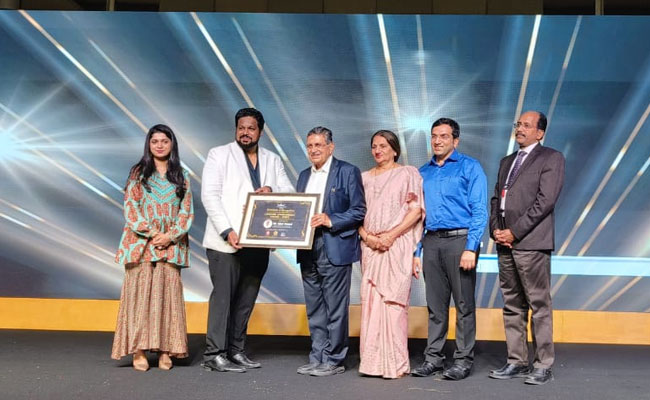
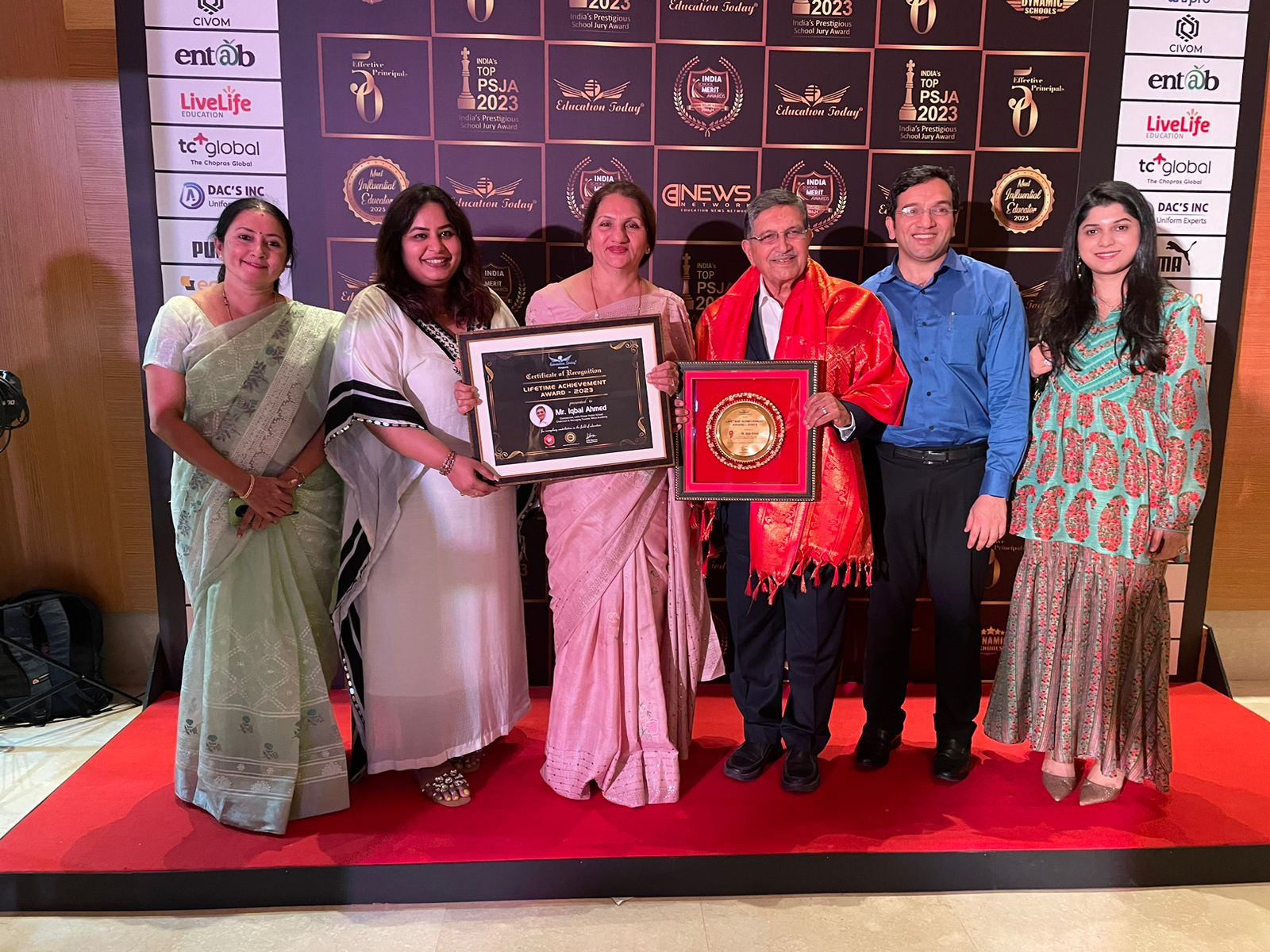
In recognition of his outstanding contributions to the field of education, Iqbal Ahmed, Chairperson of Little Flower Public School and Chairman of Mitra Academy in Bengaluru, was bestowed with the prestigious Lifetime Achievement Award – 2023 by Education Today Magazine.
The ceremony, held at the Taj Hotel Kempegowda International Airport Rd, Bengaluru, on December 11, 2023, celebrated Ahmed’s commitment to educational excellence.
“The accolade is a testament to Mr. Ahmed’s deep-rooted passion for education, driven by a sense of social responsibility. His leadership has not only elevated academic standards within the schools but has also prioritized holistic development, shaping students into well-rounded individuals with both knowledge and character. His dedication to excellence serves as an inspiration to educators and learners alike,” a press release stated.
The Lifetime Achievement Award recognizes Iqbal Ahmed’s impact on the educational landscape, acknowledging his role in providing exceptional education at an accessible cost.
Expressing gratitude upon receiving the award, Iqbal Ahmed attributed the honour to the collective efforts of the school’s faculty, staff, students, and parents.
In addition to Iqbal Ahmed’s Lifetime Achievement Award, the ceremony also celebrated Tanveer Ahmed, CEO of Mitra Academy and Little Flower Public School, and his wife, Nafeesa Ahmed, Director of Presidency Group of Institutions Bengaluru/Mangaluru, who were honoured with the Power Couple Award for 2023 by Education Today Magazine.
source: http://www.english.varthabharati.in / Vartha Bharati / Home> India / by Vartha Bharati / December 12th, 2023
The Presidency Group of Institutions (PGI) hosted INSPIR’Ed Awards 2025 on Saturday on the Presidency University campus. The event honoured teaching and non-teaching staff for their contributions to education and service within the Presidency Institutions.
Author Anita Nair and former IPS officer and cybersecurity expert Sanjay Sahay were chief guests at the event. They emphasised the significant role educators play in national development.
Nafeesa Ahmed, Director of the Presidency Group of Institutions, spoke about the central role of teachers in guiding students and strengthening communities.
Kauser Nissar Ahmed, Founder Trustee, expressed appreciation for everyone involved in the growth of the Presidency Schools. Dr. Nissar Ahmed, Chairman of PGI and Founder Chancellor of Presidency University, reflected on his five-decade journey in the field of education.
Awards were presented in several categories, including: Long Service Award, Institutional Legacy Award, Best Teacher Award, Rising Star Award.
source: http://www.thehindu.com / The Hindu / Home> News> Cities> Bengaluru / by The Hindu Bureau / April 14th, 2025
In a historic moment, Hamza Hussain and Altaf Hussain, two brothers serving in Karnataka’s law enforcement, have been honored with the President’s Award for Meritorious Service on India’s 76th Republic Day.
Hamza Hussain, Superintendent of Police (S.P.) Commandant, 12th Battalion, KSRP, Tumkur, has been recognized for his leadership in critical police operations and public safety. His brother, Altaf Hussain, Assistant Sub-Inspector (ASI) at Wilson Garden Police Station, Bangalore, has played a vital role in crime prevention and community policing.
The award, one of the highest honors in Indian law enforcement, acknowledges their dedication, integrity, and commitment to justice. Their achievement is a proud moment for Karnataka and the nation, inspiring future generations of police officers.
The brothers expressed their gratitude, stating, “This award is a tribute to all officers who tirelessly serve the nation. We dedicate it to our department, colleagues, and family for their unwavering support.”
Their recognition on Republic Day underscores their exceptional service in upholding law and order, marking a milestone in Karnataka’s police history.
source: http://www.islamicvoice.com / Islamic Voice / Home> Cover Story / Vol. 37-03, No. 448 March 2025