Exhibition showcases rare literary treasures, including 1937 Osmania University textbook and 1931 Urdu translation of Goethe’s Faust.
Rare books and manuscripts on display at exhibition in Hyderabad
Hyderabad:
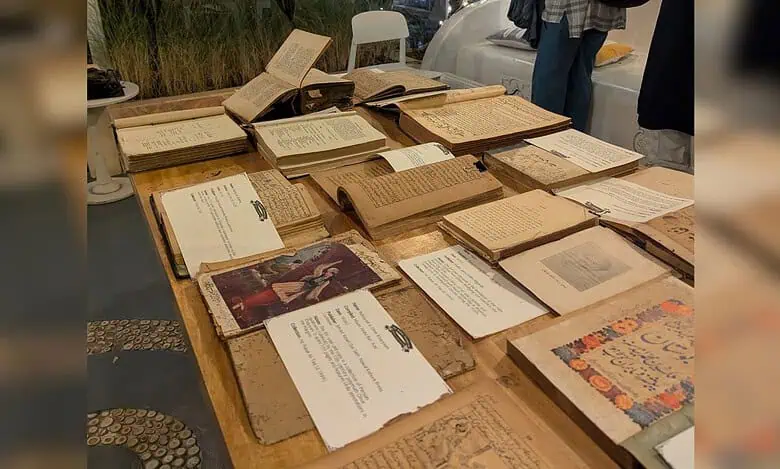
Book lovers and history enthusiasts in Hyderabad were in for a rare treat as The Kabikaj Foundation in collaboration with the Deccan Archives Foundation hosted an exhibition of rare books and manuscripts on Friday, February 7.
The exhibition took place at Thrivesome Cafe and Community, Jubilee Hills which showcased a curated selection of literary treasures, including a 1937 Osmania University history textbook, a 1931 Urdu translation of Goethe’s Faust, Masnavis of Maulana Rumi works from the historic Nawal Kishore Publications, and rare prints from Hyderabad’s now-extinct presses.
The exhibition was organised to commemorate the birth anniversary of renowned Hyderabad poet Riasat Ali Taaj (1930–1999). The exhibition featured a curated selection of books from his collection, preserved by his family and presented by his grandson, founder of The Kabikaj Foundation, Riasath Ali Asrar.
Rare literary gems on display at Hyderabad exhibition
The Hyderabad exhibition showcased a remarkable collection of rare books and manuscripts, including:
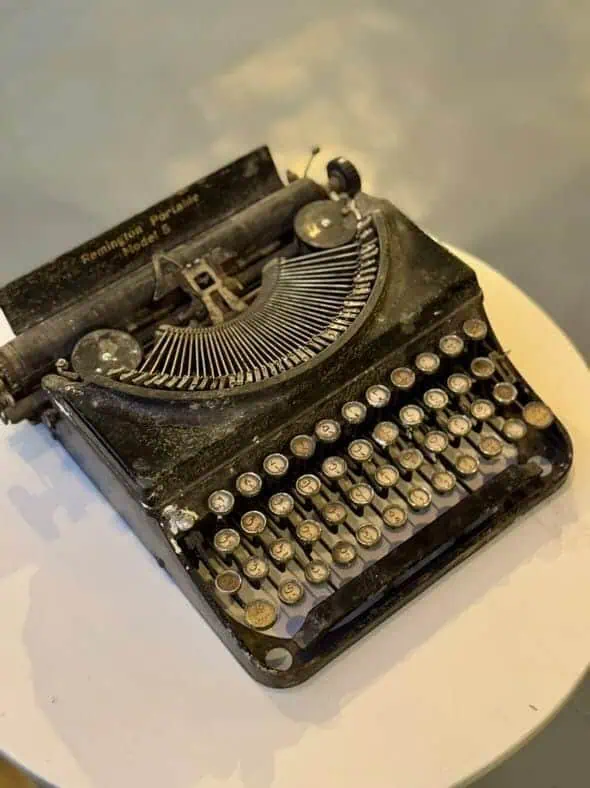
A mid-1900s Urdu typewriter (Remington Portable 5), a rare artefact highlighting the evolution of Urdu script in typewriting technology
A 100-year-old Masnavi of Mawlana Rumi, Mirat-ul-Masnavi, published by Azam Steam Press, Hyderabad
A 1937 history textbook for matriculation, from Osmania University, featuring a 1937 South Asia map and the original Osmania University logo
Early and first editions of Urdu translations of Goethe’s Faust and Conan Doyle’s The Poison Belt from the early 1900s.
Rare lexicons, including:
Farhang-e-Asafiya (1970)
Dakhni Urdu ki Lughat (1969)
Lughat un Nisa (1917)
Kalaam-e-Nanak ma’ Farhang (1970)
Ruq‘at-e-Alamgeeri, a collection of letters by Mughal Emperor Aurangzeb, published in Hyderabad in 1911, with references to the first Asaf Jah of the Asaf Jahi dynasty.
An 1893 Ottoman-era Arabic edition of Alf Laylah wa Laylah (The Arabian Nights), published in Egypt.
Nawal Kishore publications, including:
Singhasan Batteesi (a collection of Indian folklore, 1953).
Masnavi-e-Bustan of Saadi Shirazi (a 150-year-old edition).
Tulsi Das’s Ramayan in Perso-Arabic script, published in 1913.
Justice Syed Mahmood’s Urdu translation of the 1872 Law of Evidence Act, published in 1893.
Transactions of the Indian History Congress: Fifth Hyderabad Session (1941) and The Hyderabad Code (1951).
A mid-1900s Urdu typewriter (Remington Portable 5), a rare artefact highlighting the evolution of Urdu script in typewriting technology.
A mid-1900s Urdu typewriter (Remington Portable 5) (Photo: By Arrangement)
Young Urdu poet Riasath Ali Asrar provided a detailed commentary on each book, guiding visitors through their historical and literary significance.
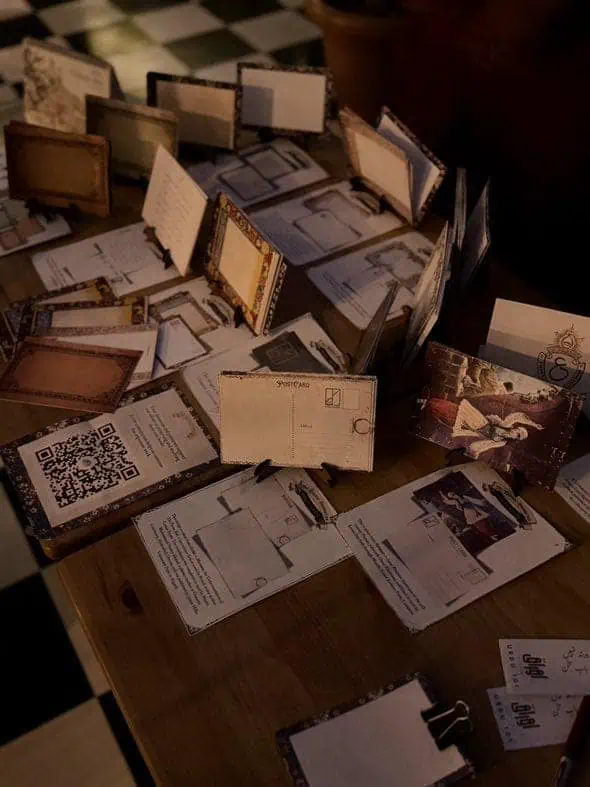
As part of the Kabikaaj Foundation’s ongoing efforts to raise funds for book preservation, a series of postcards featuring artwork and inscriptions from the rare books on display were available for purchase at the Hyderabad exhibition. Those with a passion for history, preserving culture and literature would be able to take home a unique piece of literary history which would in turn help in supporting the foundation’s vital work in archiving, digitising, and restoring rare manuscripts.
A series of postcards featuring artwork and inscriptions from the rare books on display (Photo: By Arrangement
Established in Hyderabad in December 2021, The Kabikaj Foundation is dedicated to preserving and promoting rare books and manuscripts of literary, cultural, historical, academic, religious, and traditional significance, organising exhibitions and events bringing together people with similar passion.
source: http://www.siasat.com / The Siasat Daily / Home> News> Hyderabad / by News Desk X / February 08th, 2025
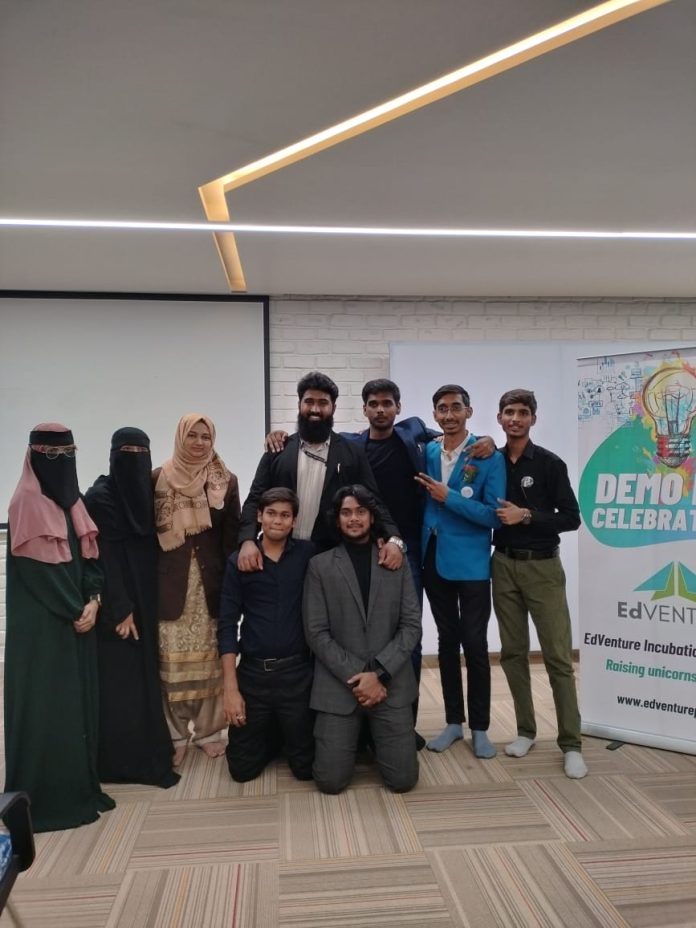
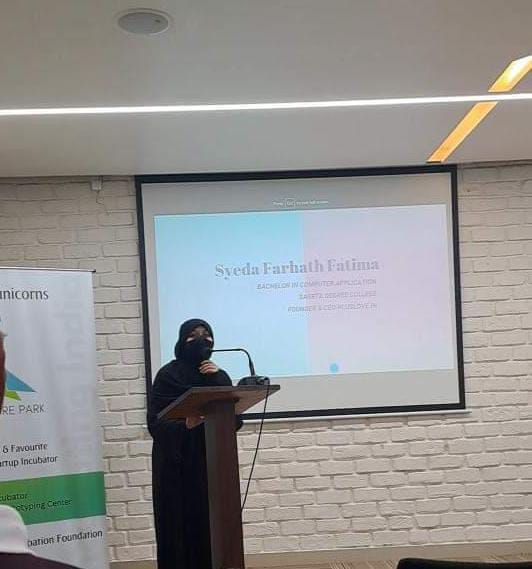
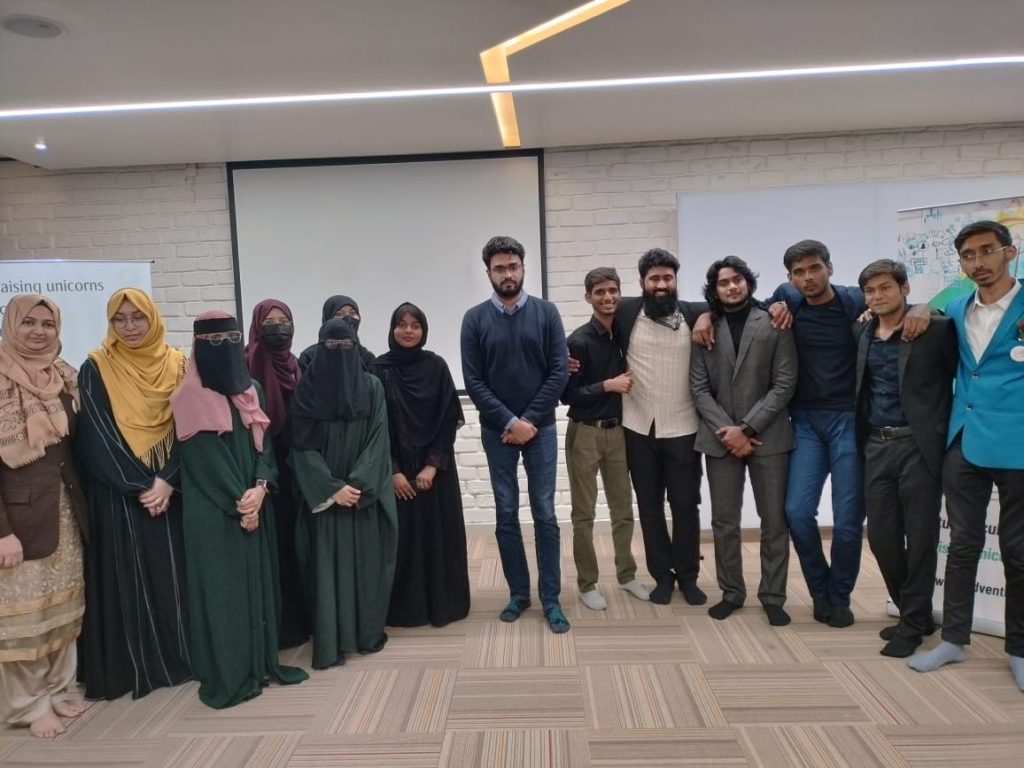
Syeda Farhath Fatima, Founder and CEO of Pluslove.in, is a role model for many young people. She is currently a first-year BCA student at Saketa Degree College and a member of incubator cohort A-23.
Plus Love is a plus-size-focused clothing brand based in India. “WE CREATE, CRAFT, AND CUSTOMIZE CLOTHES.” At Pluslove.in, they are dedicated to providing an exceptional and empowering fashion experience for individuals of all sizes. One standout feature is their custom design service, allowing you to become the designer of your own fashion journey.
The Interesting Journey of Entrepreneur Syeda Farhath Fatima
In today’s world, it’s challenging to find plus-size clothing. Syeda noticed her loved ones who were a little overweight struggling to find the perfect fit, and she thought, “Why am I not doing anything for them?” or as the saying goes, “Jaha chah hai waha rah hai” (Where there is a will, there is a way).
“Business Development Service EdVenturepark opened an application for cohort A23, and I applied for it. Alhamdulillah (praise be to the almighty), I got selected. I knew about EdVenturepark since my time at Code for India Foundation, where I was learning data analysis with machine learning. So, yes, I’m a data analyst too. My journey started during the 3-month cohort at Code for India when I completed my course in data analysis. Then I applied for the EVP pre-incubation program. A person like me, without business knowledge, still had that spark to do something for people and solve their problems, which led to the creation of the clothing brand Pluslove.”
“It is true that everyone has problems, and it is also true that every problem has a solution. If this is the reality of life, then why not focus on solutions rather than problems.”
Pluslove.in is a size-inclusive clothing brand where you can find your perfect fit. They provide stylish, designer ready-to-wear clothes. They create, craft, and customize just for you. Their goal is to see smiles on their customers’ faces and boost their confidence. They believe that what we wear can make us feel better, more comfortable, and more confident.
One of their standout features is the customization service, allowing you to become the designer of your own fashion journey.
Challenges Faced on the Journey
Syeda faced numerous challenges while building her brand, such as being unfamiliar with the textile industry and struggling to find fabric and tailors. She was the sole person responsible for end-to-end tasks in the company and had to oversee every aspect.
Throughout this journey from a raw idea to Pluslove.in, her mother (Ammi) provided immense support and encouragement. She is deeply grateful to her mother and her family members, especially her aunt, siblings, and her mama.
Syeda also mentioned Meraj Faheem sir, who gave her the opportunity at “EdVenturepark” where she fulfilled her dream. Her dream and passion to solve people’s problems in finding their perfect fit were supported by Ilyas sir, who was always there for her when she needed help, and her friend Huda Hajera, her entire EVP team, and her fellow A23 cohort mates.
She expressed her feelings of joy, saying, “I’m very grateful to have such people in my life. Thank you, everyone, for being a part of my life.”
Soon, they will be launching their catalog and opening up opportunities for designers, tailors, and B2B collaborations.
Their mission is to empower women by providing employment opportunities without the need for education certificates or degrees, focusing solely on skills that enhance creativity and innovative ideas. Training facilities are also available for students and others.
For more details or inquiries, please contact +91 9390782010, Email ID: farhath@pluslove.in
source: http://www.thehindustangazette.com / The Hindustan Gazette / Home> News> Motivational Story / by Shifa / October 26th, 2023
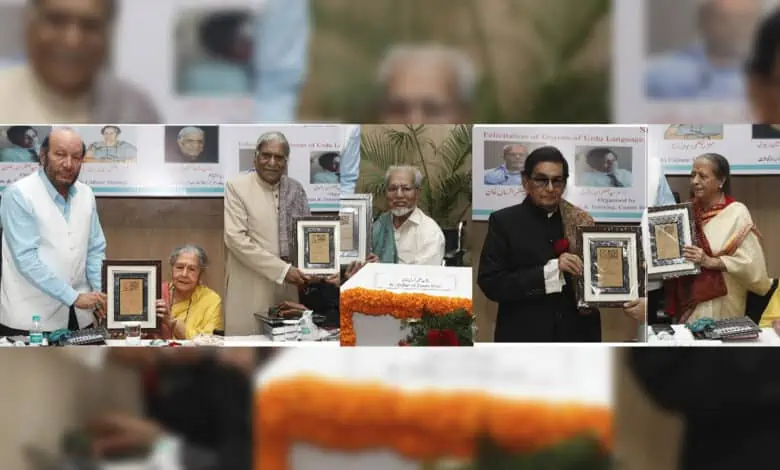
MANUU VC Syed Ainul Hasan presenting mementos to Lakshmi Devi Raj, Shahid Husain Zuberi, Mazhar uz Zaman Khan, Syed Jafar Amir Rizvi, and Oudesh Rani Bawa
Hyderabad:
Urdu lovers exist and MANUU will bring them to its platform and honour them, said Prof. Syed Ainul Hasan, Vice-Chancellor, Maulana Azad National Urdu University (MANUU).
He was honoring five eminent personalities from Hyderabad as “Sitara-e-Urdu” (Doyens of Urdu). The university presented Lakshmi Devi Raj, Syed Jafar Amir Rizvi, Shahid Husain Zuberi, Oudesh Rani Bawa and Mazhar uz Zaman Khan with a memento, a shawl, and a flower plant in recognition of their contribution towards Urdu language, literature and culture on Monday.
The ‘Sitara-e-Urdu’ programme was organized by Centre for Urdu Culture Studies on the occasion of Teacher’s Day at CPDUMT auditorium.
source: http://www.siasat.com / The Siasat Daily / Home> News> Hyderabad / by News Desk X / September 05th, 2022
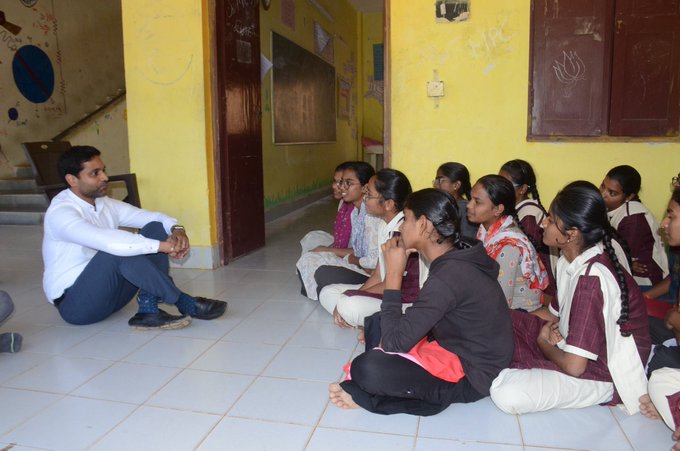
Khammam district Collector Muzammil Khan stepped beyond formalities to sit down on the floor with students to interact with them during his inspection of Dr. B.R. Ambedkar Centenary Social Welfare Residential Girls’ Junior College.
The Collector’s gesture created an open and approachable atmosphere. The interaction was marked by genuine curiosity and encouragement as Muzammil Khan listened to their aspirations and challenges.
This simple yet heartfelt gesture bridged the gap between authority and youth, inspiring the students to share their thoughts with confidence. The Collector advised students to utilise educational opportunities to achieve great heights.
The Collector reviewed online coaching for IIT and JEE and emphasised providing expert career guidance. He discussed improving facilities, addressing issues like insufficient toilets and kitchen leaks and suggested setting up gym equipment and planting greenery as batch markers. He encouraged students to focus on their goals, support others after achieving success, and maintain good health. The visit concluded with the Collector and officials joining students for lunch.
Muzammil Khan, an IAS officer of 2017 batch, is son of Abdul Khayyum Khan, retired Indian Police Service (IPS) officer, who served as Director General of Anti-Corruption Bureau (ACB).
Muzammil Khan had secured 22nd rank at all India level and top rank in Telangana in UPSC exam.
After retirement Abdul Khayyum Khan had also served as the advisor to the state government during BRS rule.
Muzammil’s grandfather Abdul Kareem Khan was also an IAS officer.
source: http://www.radiancenews.com / Radiance News / Home> Latest News> Report / by Radiance News Bureau / January 21st, 2025
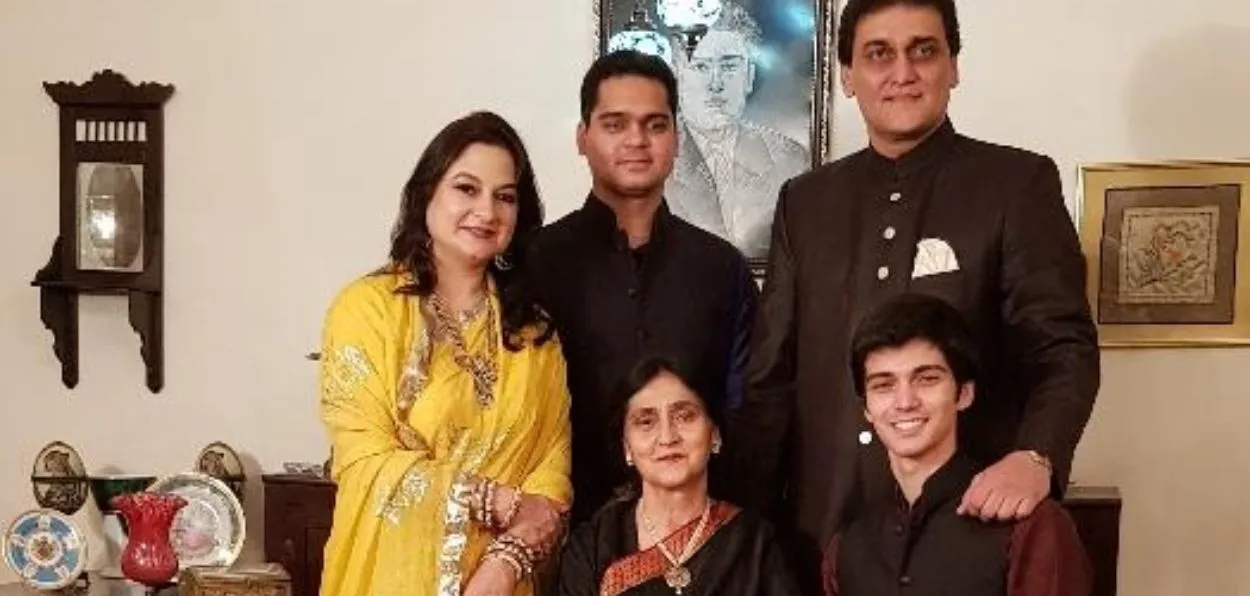
Paigah decendent Faiz Khan with mother Begum Tahira Sirajuddin Khan, wife Nida Fatima Khan, sons Dr. Mohammed Faraaz Khan and Mohammed Kamil Khan
A visit to the scion of the Paigah family and the great-great-grandson of H.E. Nawab Sir Vicar- Ul-Umara Bahadur, Amir-e-Paigah and former Prime Minister of erstwhile Hyderabad state M A Faiz Khan grew up seeing their family as ardent patrons of homegrown textiles, superior garments, and spectacular gems even as history is witness to the global influence of Indian Prince and Princesses.
He says that a visit to Hyderabad’s Salarjung Museum is an exciting part of a scholar’s life, it becomes more meaningful and engaging to realize that the museum itself is an astounding part of history for those researching elite Indian menswear. A visit to his house can easily get one an insight into the Nizam and Paigah family pictures which gives one a peek into the refined taste of the family and made the family stand out in the pages of history.
Faiz Khan says, “India boasts of a rich tapestry of cultural diversity, each thread intricately woven into the fabric of its magnificent royal heritage but the royal families have since long been the custodians of not just history and tradition but also of opulent style and regal elegance.
“Their grandeur, opulence, and penchant for fashion continue to inspire modern-day designers, setting the stage for some stupendous ensembles that blend the allure of the past with contemporary flair.”
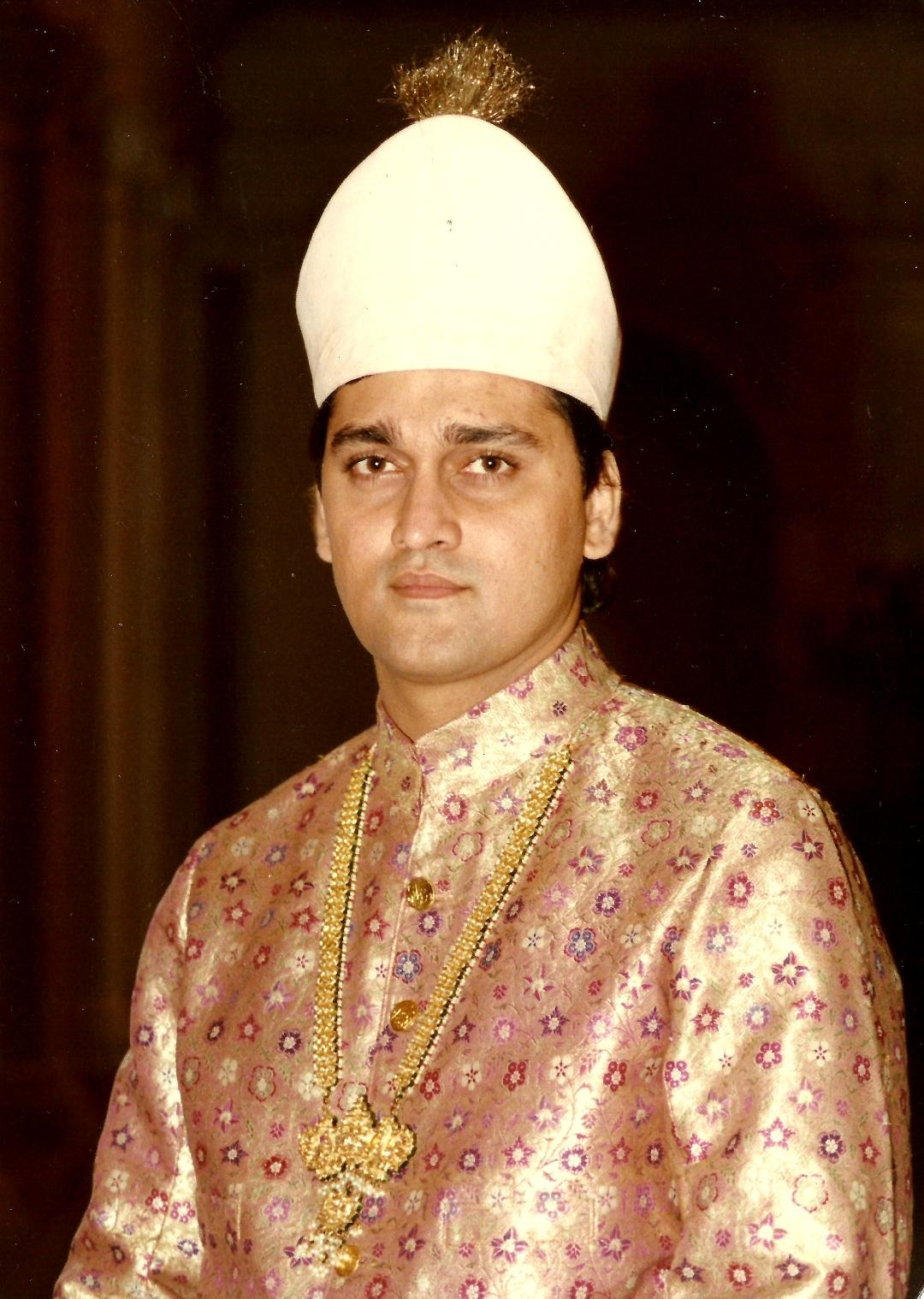
Scion of Paigah Mohammed Abul Faiz Khan wearing a sherwani of his great great grandfather H.E. Nawab Sir Vicar-ul-Umara Bahadur, the fifth Amir of Paigah
He says that the Dress and fashion during the era of the Nizams and the Paigahs included ‘angrakhas’, ‘neema’ and ‘jama’. During the last quarter of the 19th century the ‘achkan’, a fitted cape, and ‘angrakha’ developed with a few improvements into the sherwani which extended slightly below the knee and had four pockets, two upper and two on the sides, and seven buttons in front.
He said that the royals paid homage to the grandeur of their dynasty through their attire. Sherwanis were crafted from rich and regal fabrics like brocade, silk, and velvet which boasted of works like Karchobi, a kind of raised metallic thread embroidery, or Kimkhab a kind of brocade woven with silk and gold or silver threads sometimes set in precious stones too. Gold and silver metals were used in surface ornamentation. Even the weft yarns are said to be of gold and silver wire in himru, mashru and brocade fabrics.
These sherwanis reminiscent of historical figures like the 6th Nizam H.H. Nawab Mir Mahboob Ali Khan or the Paigahs were characterized by intricate embroidery and elaborate embellishments creating an aura of regal elegance. The ‘sherwani’ became very popular among all the public in Hyderabad during the rule of Nizam VI and Nizam VII during the first half of the 20th century. It used to be worn with ‘dastar’ (headgear). The Zari work the timeless elegance and regal grandeur of the noble including the Paigahs added a touch of luxury and opulence.
The colour palettes were inspired by the grandeur of the Nizam’s Palace or the Chowmohalla Palace the first official palace of the Nizam where darbars were held and dignitaries received and from where the administrative offices of the Nizam functioned, which included deep vibrant colours like rich maroon, royal blue and emerald green which symbolized grandeur and elegance then.
Faiz Khan says that the safa an important component of the royal’s attire added a touch of grandeur and lush. Intricately draped, it complemented the colour scheme of the ensemble and featured ornate broaches, echoing the meticulous elegance of the royal era then. Traditional pearls or jewelry including head broaches, often adorned with precious and semi-precious stones evoked the splendor celebrated by royalty and nobility.
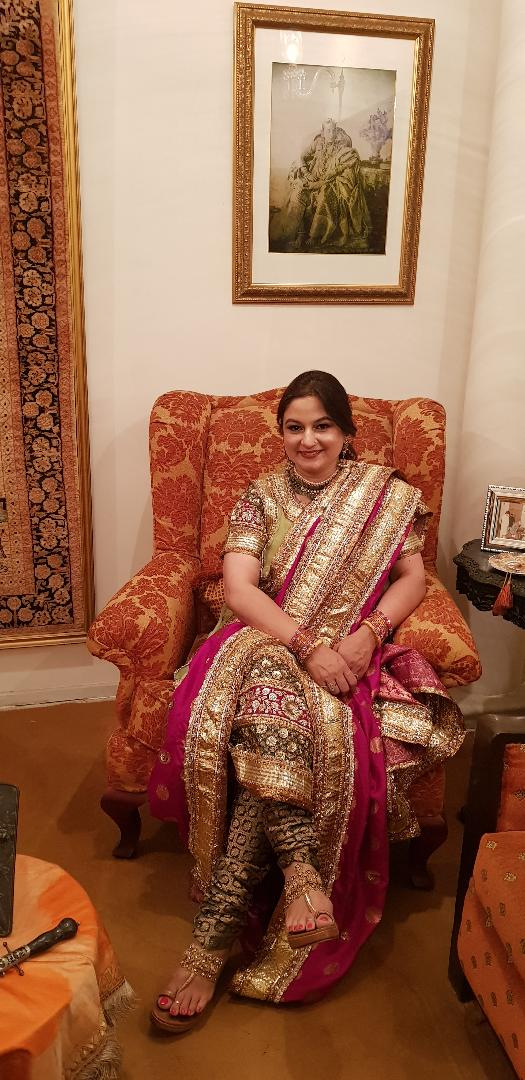
Nida Fatima Khan Granddaughter of Major General Nawab Khusru Jung Bahadur CIE married to Faiz Khan of Paigah is wearing a Chowhashya/ Khafa Dupatta and traditional Jewelry.
Footwear like Mojris or juthis showcased elaborate embroidery and designs These designs continue to embrace these elements by grooms honouring the regal legacy of the then royals and embodying the same style during their weddings even today.
The Jama‘angrakhas’, ‘neema’ the Fez caps and even the head gears known as Dastaar or the Rumi topi have been taken over by the Western attire for day-to-day dressing. Though Sherwani continues to be still popular and worn with a loose ankle-length pyjama or a churidar (legging-like) during festive occasions and Friday prayers sadly it is no longer the power dressing of the 19th century
The Paigah grooms inspired by the then-historical figures adorned themselves with elaborate Polki jewellery head ornament, bajuband, armlets all featuring precious gemstones, which accentuated their royal allure The vibrant colour palette exuded grandeur with bright ruby reds, deep blues, and rich greens transforming grooms into timeless symbols of regal elegance.
The Kimkhab choga the achkans woven in luxury was a different ball game for these men.
Although in possession of immense wealth, it was their refined taste that made some of this Indian royalty and nobility stand out in the pages of history. While the Nizam was the more familiar figure who immediately comes to mind, the Paigahs and their predecessors like Faiz were equally proficient. Faiz Khan adds that the royals were also instrumental in deliberately straying from conventional style norms and introducing it to the women of Indian society at a time when restrictive customs such as the pardah system existed. Here we talk of the cohesive picture of Princess Durru Shehvar, Princess Niloufer, H.E.Lady Vicar –Ul-Umara their iconic style, and how it garnered the attention of designers, legacy brands, and publications from all over the world.
He says that the contribution of the Nizams to textiles is especially noteworthy as he was passionate about good clothes jewellery and delicacies. Nizam Mir Mahboob Ali Khan to store his large collections of clothes built a 240 feet long wardrobe at Purani Haveli Hyderabad in the hallway on either side it had 133 built-in cupboards to accommodate his large collections of clothes shoes, headgear, hats, and accessories.
Today the legacy of the Nizam and the Paigah royals lives on the fashion choices of modern brides and grooms. Inspired by the timeless style of their ancestors, modern brides opt for gharara, sarisKhadaDupatta and sharara that pay homage to the intricate embroidery in zardozi gotta patti work.
The safa reminiscent of the ornate turbans complete their royal look. Traditional leather jootis often in coordinating colours, offer a touch of authenticity making the ensemble a bridge between the past and present.
source: http://www.awazthevoice.in / Awaz, The Voice / Home> Story / by Raja Chotrani / January 05th, 2025
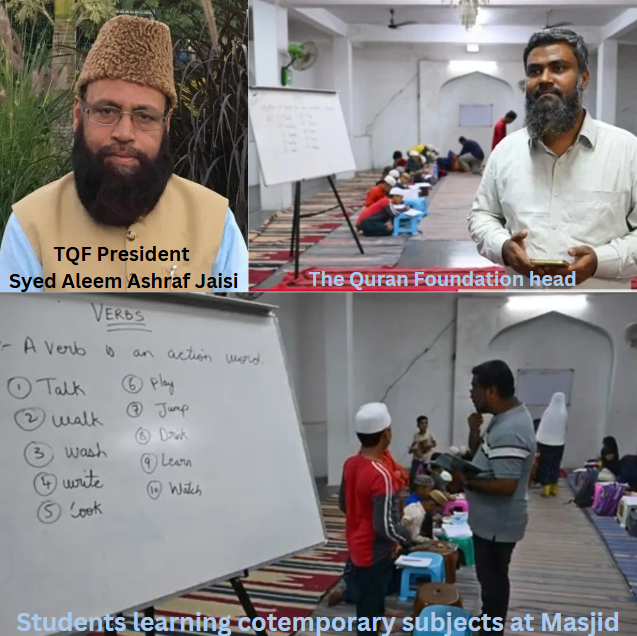
Little girls and boys carrying the school bags also rush to the Masjids along with the believers but with twin objectives – Namaz and Tuition.
After Salah, children move to the Masjid’s basement in three different rooms, where they are taught Mathematics, English and Telugu by different tutors.
Usually one associates Masjids with learning of theological subjects – Arabic, Quran and Urdu. But at Masjid-e-Meraj, the things are different. They are now after-school Mohalla tuition centres.
It was initiated by The Quran Foundation (TQF), a non-profit organisation run by a team of professionals working in the field of information technology, education and healthcare.
Neighbourhood networks play a crucial role. Masjid management committees, tutors and students are drawn from within Masjids’ neighbourhood. The committee ensures regular attendance, quality tuition and timely discussions about performance of both students and tutors.
Syed Munawwar, TQF general secretary, says there are 2500 students studying in 50 Masjids across Telangana. Most of them are either students of government schools or low-cost private schools, popularly known as budget schools that have a mushroom growth in Hyderabad.
The idea, conceptualised in 2020 in consultation with Masjid management committees, is to have free tuition classes for the students who find it difficult to pay school fees and can’t afford private tuitions.
WhattsApp groups for parents and tutors are created. Information connecting to the students’ performance is shared with parents. Regular attendance is ensured by incentive prizes. Closer ties between tutors, students, parents and Masjid committees create a conducive atmosphere in neighbourhoods. Comprehension about core subjects has improved in the students.
TQF, headquartered in Hyderabad, is a registered non-profit organisation committed to fostering the educational, economic, social, and cultural advancement of marginalised and underprivileged communities.
TQF operates in collaboration with other NGOs, combining efforts and resources to implement programmes that resonate with core objectives. Through collective action, they strive to enhance livelihoods, nurture intellects, and catalyse positive transformation within society.
Educational development, economic development, social development, health and wellbeing are the core areas TQF works in.
source: http://www.radiancenews.com / Radiance News / Home> Focus / by Radiance News Bureau / December 13th, 2024
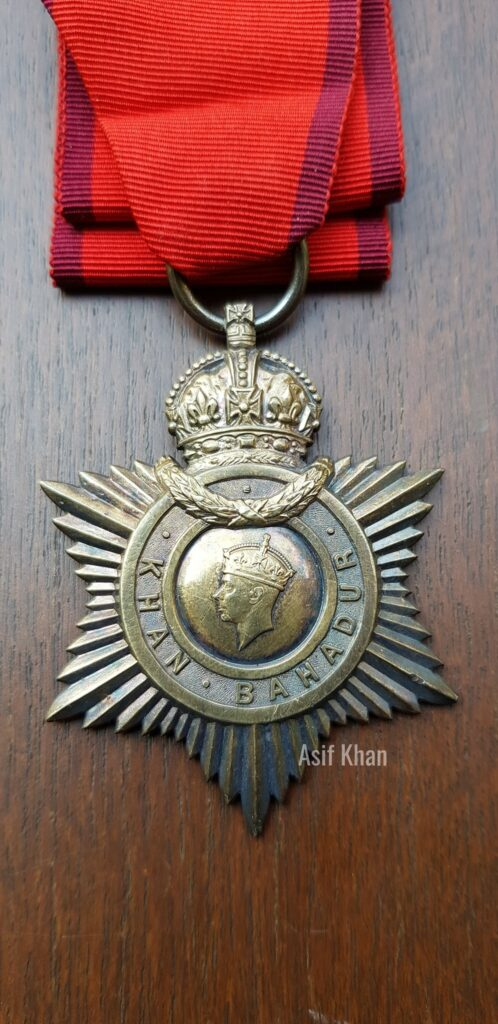
In year 1945, he was conferred with the title of “Khan Bahadur” by British Viceroy
Hyderabad:
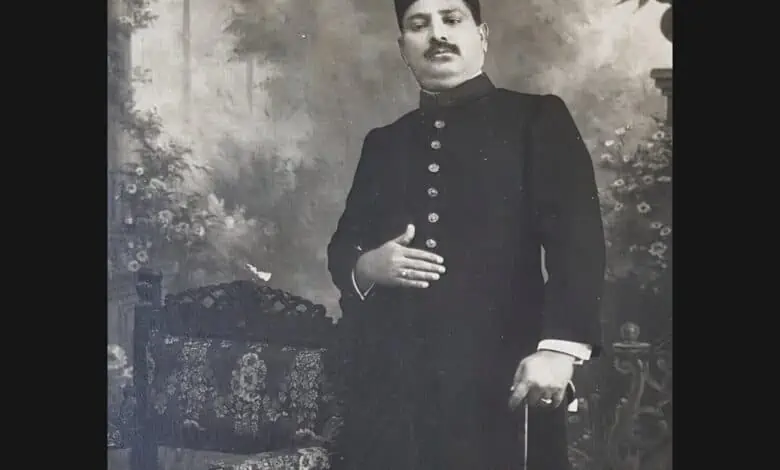
In the 1920s after his father’s demise, Khan Bahadur Abdul Karim Babukhan took over the construction business and in later years attained remarkable credentials for his contribution towards the infrastructure and industrial development in the growth of erstwhile “Hyderabad State” during the rule of 7th Asaf Jah, Nizam Of Hyderabad, Mir Osman Ali Khan Bahadur.
He established “Hyderabad Construction Company” in the early 1930s under which, many architectural and engineering wonders were constructed under the rule and order of Nizam of Hyderabad as listed under.
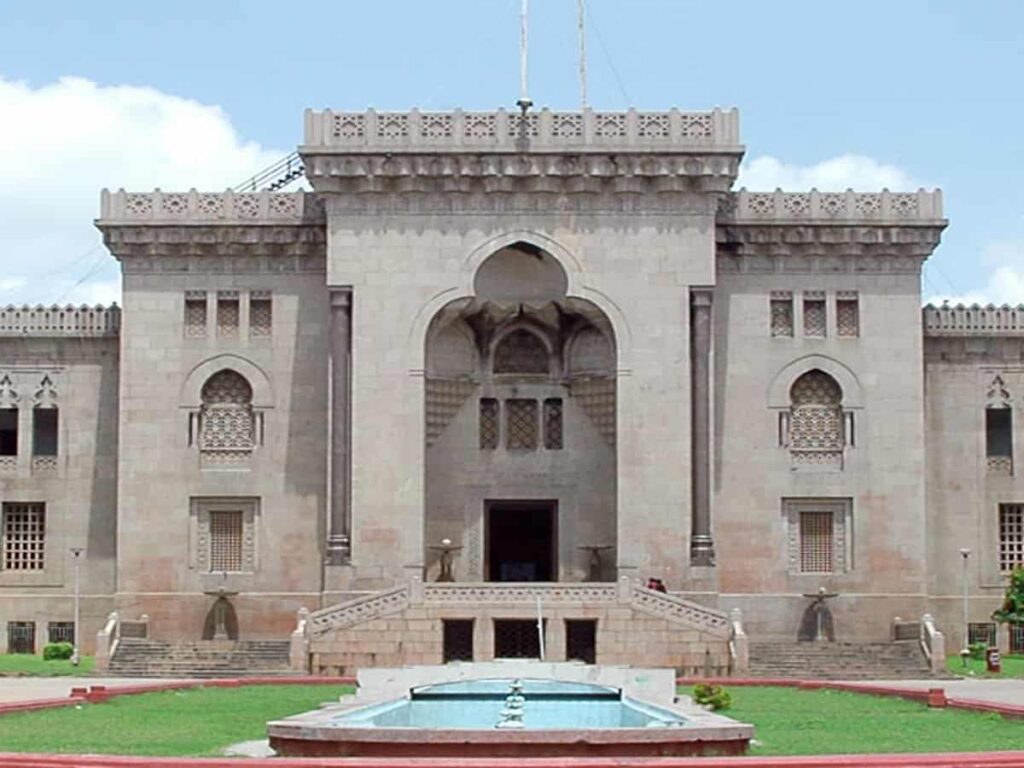
Arts College – Osmania University, Hyderabad.
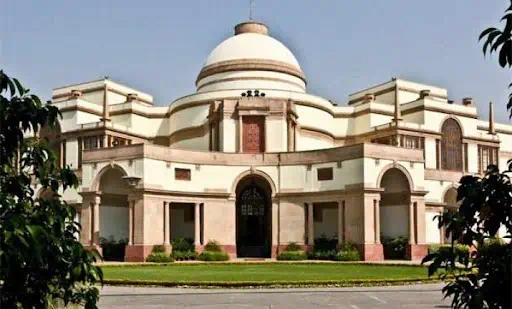
Hyderabad House – Nizam’s Palace, Delhi.
Gandhi Bhavan – Hyderabad, was his private property, later gifted to the Congress party for its headquarters.
Soan Bridge – Across the River Godavari , Adilabad.
Kadam Dam – Adilabad.
Tungabhadra Dam – Substantial part of it, presently in Karnataka State.
Ramagundam Power Station – First phase, Karimnagar.
A file photo of the Arts College building, which is considered to be the face of Osmania University.
Hyderabad House [Twitter]
Industries attributed and promoted by him
Nizam Sugar Factory – Nizamabad (He held a large portion of shareholding in it).
Sir Silk Mills
Sirpur Paper Mill
Hyderabad Vanaspati
Hyderabad Vegetable Oil Mill
Singerini collieries , etc.
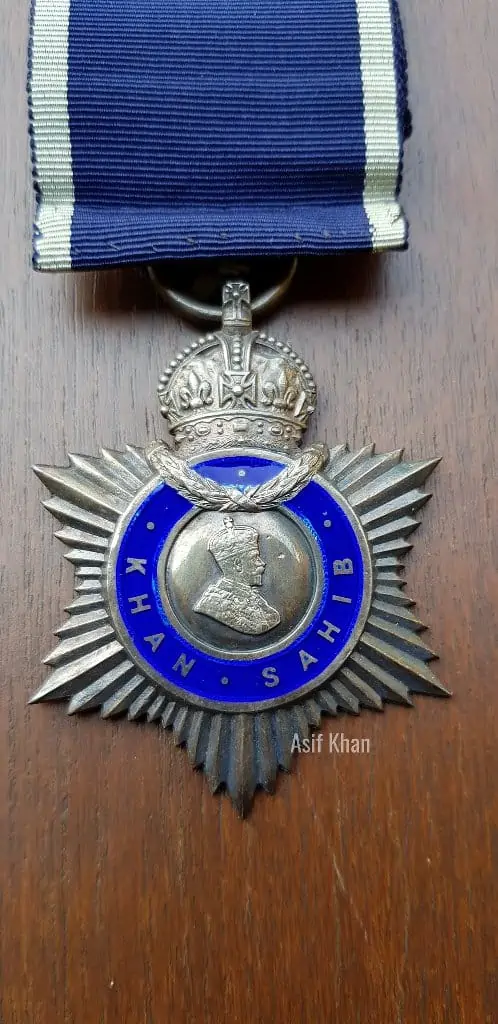
In the year 1930, he was conferred with the title of “Khan Sahib” by British Viceroy “Lord Irwin” on behalf of King George V of England.
In the year 1930, he was conferred with the title of “KHAN SAHIB” by British Viceroy “Lord Irwin” on behalf of KING GEORGE THE V of England.
In the year 1945, he was conferred with the title of “KHAN BAHADUR” by British Viceroy “Viscount Wavell” on behalf of KING GEORGE THE VI of England.
“Khan Bahadur” title holds a higher rank and position and had superseded the earlier one “Khan Sahib”. It’s very rare to confer two titles to the same person.
Both titles were conferred for his recognition towards CIvil/Public services.
He attained high regard and respect, and maintained close relationships with prominent dignitaries, nobles, members of royal families, politicians, and businessmen.
He was appointed as Honorary Special Magistrate, Secunderabad. He was appointed as a Member of the Governer’s Staff as Oregon’s Ambassador to Hyderabad.
source: http://www.siasat.com / The Siasat Daily / Home> News> Hyderabad / by Guest Contributor, posted by Sameer Khan / September 11th, 2022
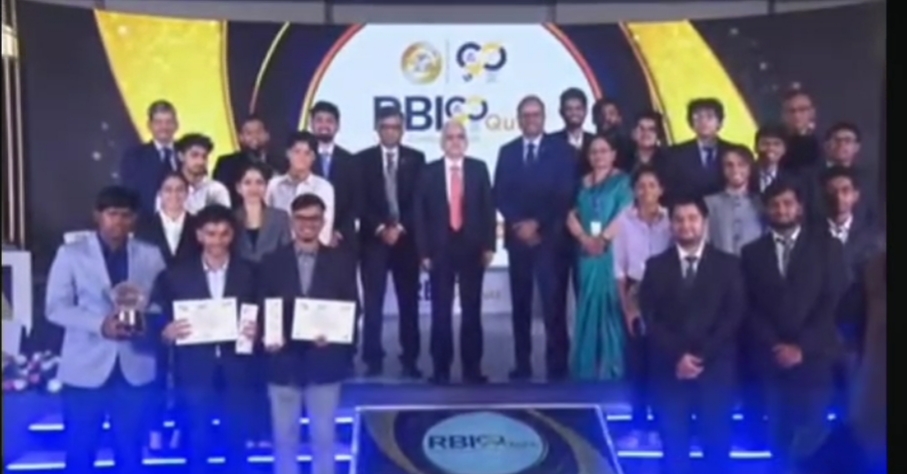
Team Telangana comprising Syed Mohammed Hashmi and Husain Ahmed from Osmania Medical College won the final of National RBI90 Quiz conducted by the Reserve Bank of India (RBI).
The RBI, India’s central bank, was established on April 1, 1935. This year marks the 90th year of the Bank’s operations. A series of events are being held to commemorate this historic milestone. As part of the events a nationwide quiz was conducted for undergraduate students. The quiz was general in nature and open for participation by students pursuing bachelor’s degree courses across all streams.
In the prize distribution programme held here on December 6, the RBI Governor Shaktikanta Das gave away the trophy, citation and the prize money Rs.10 lakhs to winner team.
In the first round countrywide online contest was conducted.
Students took MCQ format quiz in teams of two. Teams which qualified through the online contest participated in an in-person quiz for the state level round.
State level winners faced Zonal levels-five different zones. This was held in Chandigarh, Kochi, Guwahati, Indore and Bhuvneshwar.
The Zonal winners competed for the top prizes in the final contest.
source: http://www.radiancenews.com / Radiance News / Home> Latest News / by Radiance News Bureau (headline edited) / December 11th, 2024
Diwali melas, Ramzan fasts and Christmas feasts went together at Hyderabad’s Nasr School. With her passing on August 16, a quixotic idea seems to have died too.
Courtesy Nasr School/Facebook
Once a week around midday, Maulvi Sah’b would come in through the gates of our school in Hyderabad and class would divide briskly into two and troop off to different parts of the building. Those who were Muslim would be at religious instruction classes with him for the next half hour while the others trudged through moral science lessons. Something similar happened during language classes. We would hear a singsong chorus of “A-salaam-aleikum, Aunty”, from the Urdu classroom as we sat at our Sanskrit or Telugu lessons.
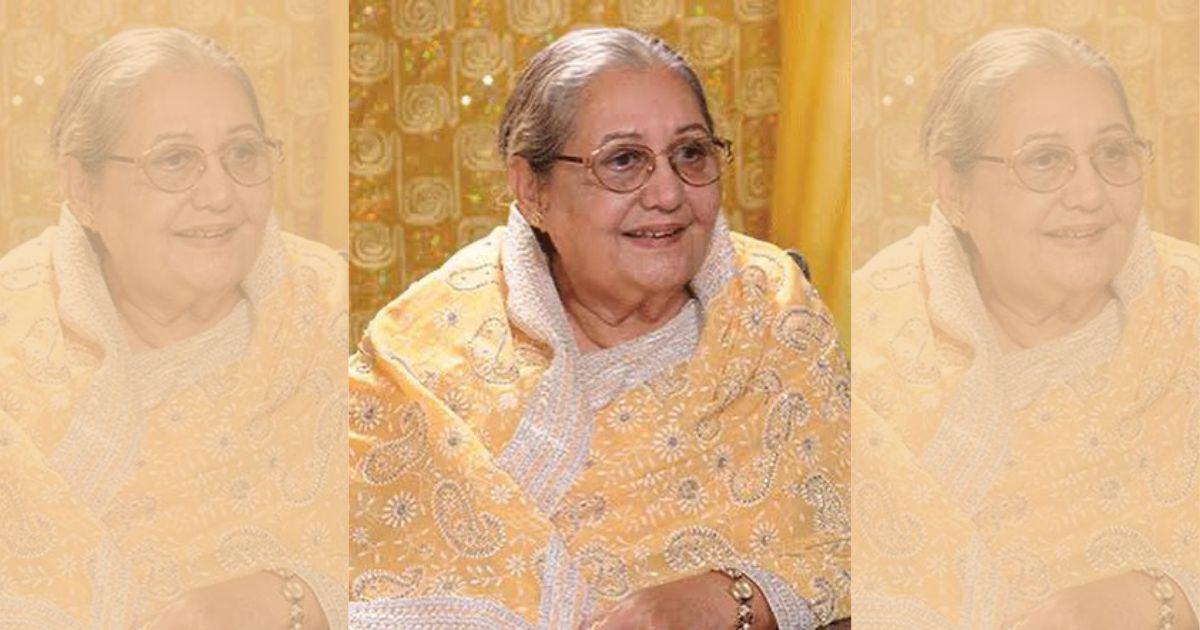
Through my nomadic childhood, I’ve been at many schools. None exemplified the idea of secular India as intensely as this Muslim school in Hyderabad. Begum Anees Khan, who made it so, died in Hyderabad on August 16. Her passing feels symbolic, as if it signifies the death of a quixotic idea.
Anees Khan was not given to seeking the limelight or making speeches. She never spelled out her secularism. It was instinctive: instead of words, there was action. Students of different faiths did their namaz or prayers separately, everything else together. Religion was not denied, but it was shown its rightful place.
When we were at Nasr School, we took all of it for granted, never suspecting goals or visions or manifestoes. It seemed natural for us that school should have both namaz and Diwali melas, that our classmates would fast during Ramzan and feast at Christmas. Maybe this is the reason for my rage and incomprehension when people around me casually describe neighbourhoods and towns as having “too many Muslims” in the way people might say “too many mosquitoes”.
It was not an easy act to pull off in the Hyderabad of the 1980s. Communal riots began on the flimsiest of pretexts and fear would ripple through the school. I remember panic-stricken phone calls to car-owning parents, who arrived and carried away groups of girls to drop them home before the riot came too close. The next day, we would return to school as if nothing had happened.
The school was identifiably Muslim: there was a signboard over the main gate with the name of the school, which means “Victory” in Arabic, inscribed below with a line in Arabic from the Koran, that means, “With God’s help victory is near.” Though murderous vigilantes didn’t roam the streets then, as they do now in certain parts of India, it was still a city divided down religious lines. Creating a school like Nasr was an act of wild courage and imagination.
Begum Anees Khan was born into the Muslim aristocracy of Hyderabad, and was an outlier who broke away from the feudal indolence that, according to an insider, characterised this world. Running a business was unheard of, the genteel lived off inheritances. It was in this milieu that Anees Khan began Nasr in 1965 as a small school in her garden. It became a family enterprise where gradually her sister, her husband, her two daughters and her son became involved. (There are now four branches, including a charitable school.)
Courtesy Nasr School/Facebook
My classmate Saira Ali Khan, whose older sister Fauzia was in that first lot of students along with Anees Khan’s youngest daughter, says there were few other English-medium options for girls then. Most schools were convents where Muslims didn’t want to send their children. Because Anees Khan was one of their own, conservative Muslims felt safe enough to send their daughters to Nasr School even though it was not a religious institution, nor was it exclusively for Muslims. In an act of daring, Anees Khan made it co-educational, but perhaps this was the one dream she had to sacrifice. By my time it was all-girls, though some of the teachers were men.
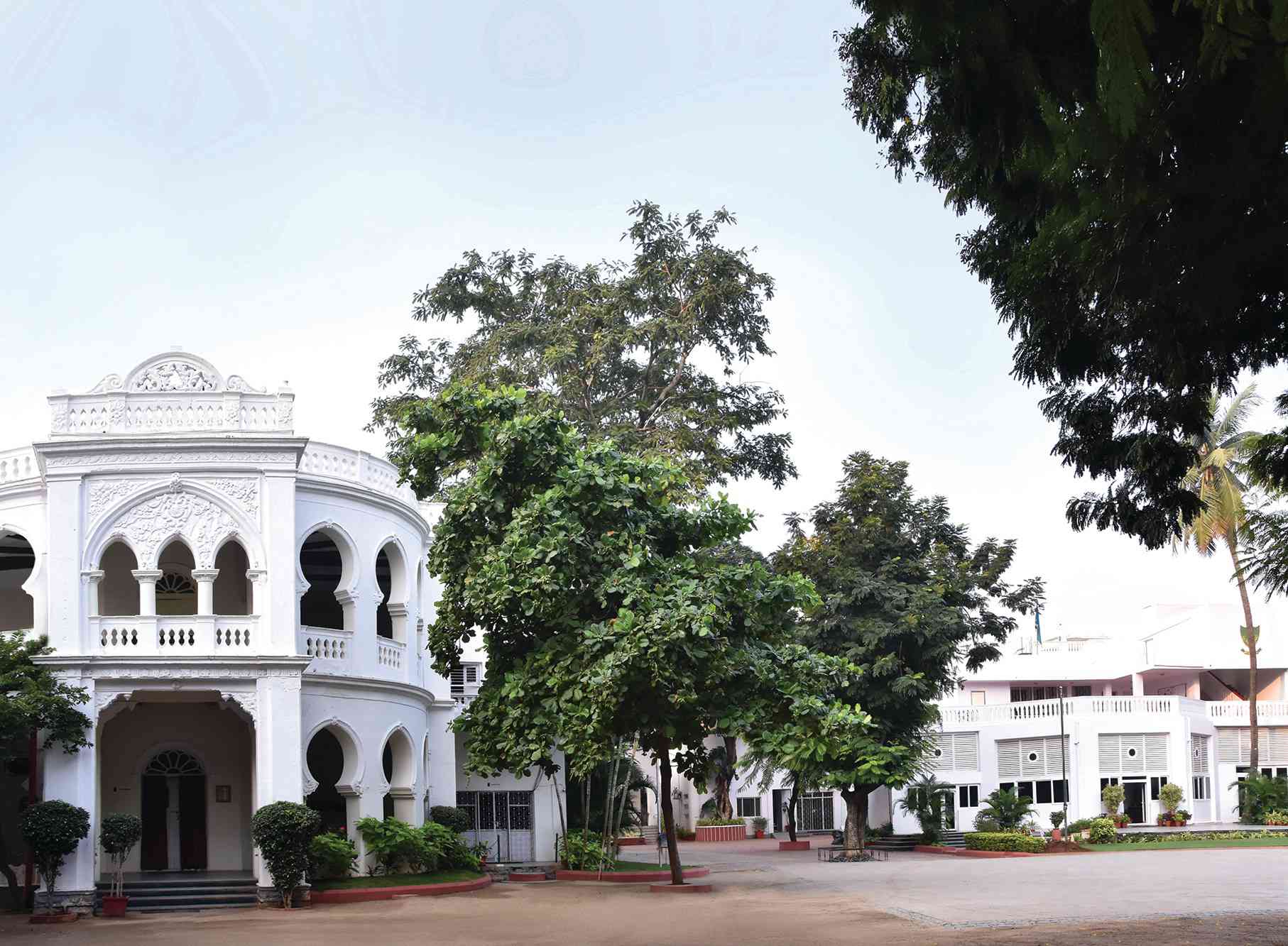
When I joined it in the 1980s, Anees Khan’s own home stood to the right of the school building. This was an old white mansion with an inner courtyard behind the raised entrance, and a playground in front of it. Lines of casuarina trees stood like sentries along the playground, and at the gate was a shack for us to buy deliciacies such as churan and sweets.
Mrs Khan presided over this little empire with the elegance and style that the British queen with her dumpy handbag and hat could only have aspired to. Elahé Hiptoola, a classmate of mine (producer of films such as Hyderabad Blues, Dhanak and Modern Love Hyderabad), has a vivid memory of Mrs Khan’s chiffon saris, her perfume, the remarkable way she exuded authority without ever raising her voice. I remember her telling us to give time and thought to our written signature – it had to make a statement, it was not merely the writing of your name. I wonder now if these were ways in which she had to assert her own identity, with calm firmness, within her deeply conservative world.
Reconciling differences in the school must have taken a great deal of effort for Anees Khan. A few of my classmates arrived in burqas, which they swiftly shed to reveal our standard-issue olive-green tunics or the white sports uniform. There were great disparities in income levels – many students were from landed, feudal families, while others came from humbler backgrounds. There was much swapping at lunch between tiffin-boxes containing venison, dry fruits, and salan, and those with parathas or idlis.
To make sure everyone could afford the school, fees were kept absurdly low, exercise books and stationery were free. Textbooks were handed down from one class to the next until they fell apart from doodles and grease. Even those who could afford new books had to have used ones. Each of us had a desk with a lock and key and we had to leave our books at school, carrying home only the ones we needed.
I now marvel at the imaginative ways by which Mrs Khan taught us to be spirited and daring, to look after our possessions, start small businesses, care for animals, and most of all, enjoy life. During the cool months, classes were cut in half and you could do what you pleased – provided you actually did something, such as painting or gardening or acting.
She made us start a plant nursery, look after animals such as rabbits and geese, collect money and cook food to sell during the Diwali melas. The teachers were given a free hand and some, like Chandra Dorai, our brilliant English teacher, spent whole afternoons making us write stories instead of attending to our grammar books or set texts.
Long before words like creativity and can-do became common currency, Anees Khan had made them a way of being. “It was a girls’ school,” said Elahé Hiptoola, “but she did not keep us secluded or confined. We were sent off to dance at the Asian Games. There was a school trip to Kashmir. She emphasised creativity and originality. She was far ahead of her time.” Very little discipline was enforced, though Hiptoola remembers being summoned to the principal’s room on occasion, and standing outside the thick green curtain at the door of her office, heart thumping, wondering what she had done.
My own memory of this ordeal has crept into my novel, The Earthspinner, which has a character based on Anees Khan. In the book she is called Tasneem Khan, and she has summoned a young student to her room. After their conversation, “she dismissed me with a wearily elegant motion which was both a wave and a gesture towards the door… Her green-blue eyes, usually watchful and impersonal, seemed amused, and maybe she was even smiling a little as she returned her gaze to the open file in front of her.”
What mattered to Begum Anees Khan was humanity, not religion. The school she created was in miniature the secular country that was dreamed up in 1947. With her death, she no longer has to suffer witnessing the destruction of that ideal.
With inputs from Elahé Hiptoola and Saira Ali Khan.
Anuradha Roy is a writer.
source: http://www.scroll.in / Scroll.in / Home> Idea of India / by Anuradha Roy / August 20th, 2023
The philanthropist transformed neglected Wakf properties into exemplary educational institutions
Hyderabad :
Khaja Mohammed Arifuddin, celebrated academician, dynamic educationist and one of the founding members of the 1969 Telangana agitation movement, popularly known as KM Arifuddin, breathed his last on Monday. He was 77.
Arifuddin is irrefutably regarded as one of the most powerful educationists in the history of Hyderabad who helped thousands of families fight darkness by illuminating their minds and homes with education, in the process pioneering ‘modern and Islamic education’, a concept that has now promoted by many institutions largely for commercial merits.
The institutions he founded continue to benefit scores of students, including those from society’s weaker sections at different educational strata.
An advocate by profession in his early career, he employed his legal acumen to prevent the misuse and illegal occupancy of Wakf properties in Hyderabad. As a young activist, Arifuddin raised slogans, protested against exploitation and encroachment of Wakf lands, and pioneered an educational movement nearly 40 years ago that continues its momentum in the form of the Madina Group of Institutions and Global Group of Institutions, where thousands of Muslim and even non-Muslim students had the privilege to access modern education in an institution built on Muslim values and Islamic teachings.
He successfully led the movement in freeing the Wakf properties from illegal occupancy in 1977, and was instrumental in transforming them into educational centres with academic and disciplinary standards unprecedented for any minority institution of the time.
By fighting for winning the case and transforming the Wakf land into an educational centre, he set a prime example on how Wakf properties can be rightly used for the benefit of the community. In his own words, social success can be achieved by “conventional reimbursement of the Waqf properties and education”.
On August 15, 1982, former Governor of Orissa Padmabhushan Mir Akbar Ali Khan laid the foundation stone of the Madina Public School. He set up Madina Public School under the aegis of Madina Education and Welfare Society (MEWS), followed by Madina Degree College for Girls in 1983. Promoting education of girls, and making them self-reliant was his dream. In 1984, Prince Muffakham Jah Bahadur inaugurated the new block of Madina Public School.
His uncompromising academic standards and meticulous discipline helped his altruistic yet relentless educational pursuits in establishing 14 educational institutions from K.G. to P.G., including Madina Public Schools, Global College of Pharmacy, Global College of Business Management, and Global College of Engineering and Technology.
These educational power houses over the years have become the pride of the community under his tenure as the Secretary of Madina Group of Institutions. Several notable leaders of national repute, including former Prime Minister of India Chandrashekhar, former President of India Dr A P J Abdul Kalam, Dr Shankar Dayal Sharma, Farooq Abdullah, Indian’s Union Law Minister Ram Jethmalani were among several others who visited the Madina Public School in the past and appreciated its standards of education.
His patriotic fervour reflected in the several initiatives he pioneered with nationalist sentiment. He conceptualised and granted monthly pensions for freedom fighters of Hyderabad, instituted an educational scholarship of Rs 1 lakh in the name of his deceased son K.M. Razi (IRS) Memorial scholarship for helping aspiring civil service aspirants qualifying the preliminary exams. The Madina IAS Hostel was built for this purpose.
MEWS, as part of its philanthropic initiatives, also provides pensions to widows, funds Muslim and non-Muslim welfare organisations.
In 1989, he constituted the Madina Gold Medal to recognise the talents and achievements of outstanding students at regional and state levels. The first medal was awarded to Dr Ausaf Sayeed in 1989, who is currently the Indian Ambassador to Saudi Arabia. The tradition still continues even after more than 30 years.
He was the co-founder and Editor of Awam, an Urdu daily in the late 90s. His weekly column titled Zara Ghaur Kijiye published in Urdu newspapers in Telangana inculcated social activism among the masses by throwing light on the pressing social and economic issues.
Arifuddin, born to Mohammed Qamaruddin in August of 1944, hopped different government Urdu medium schools to complete his schooling, and post-graduated in Law from the Osmania University in 1974. He was the first Muslim graduate to be elected as the Vice President of Students Union of the Osmania University, and was one of the founding members of the Telangana Separation movement in 1969, for which he served a brief time in jail.
Even until a few weeks before his demise, he kept discussing empowering Muslims and the weaker sections with education, knowledge and by securing berths in Indian Civil Services. Arifuddin is survived by two sons K.M. Fasihuddin, K.M. Minhajuddin and daughter Maria Tabassum who must shoulder the burden of great responsibility Arifuddin left behind in his legacy, while living the life of an ascetic despite all the talents and many intellectual virtues.
Earlier, his body was kept at the Madina Public School he founded in Himayathnagar to allow the public to pay homage. In the evening, Arifuddin’s funeral prayers were offered at the Royal Mosque of Pubic Gardens where a large number of intellectuals, academicians, heads of different educational institutions, former lawmakers, civil servants, alumni of the institution and senior community members were present. He was laid to rest at the Osman Nagar graveyard. The great scholar’s departure is an irreparable loss to the Hyderabadi and the Indian education community.
source: http://www.clarionindia.com / Clarion India / Home> India> Politics / by Syed Khaled Shahbaaz, Clarion India / December 07th, 2020