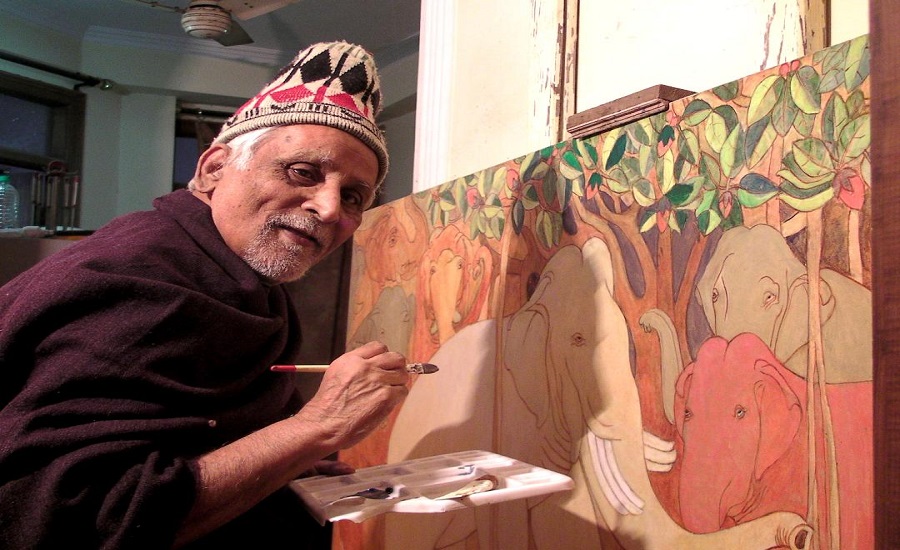
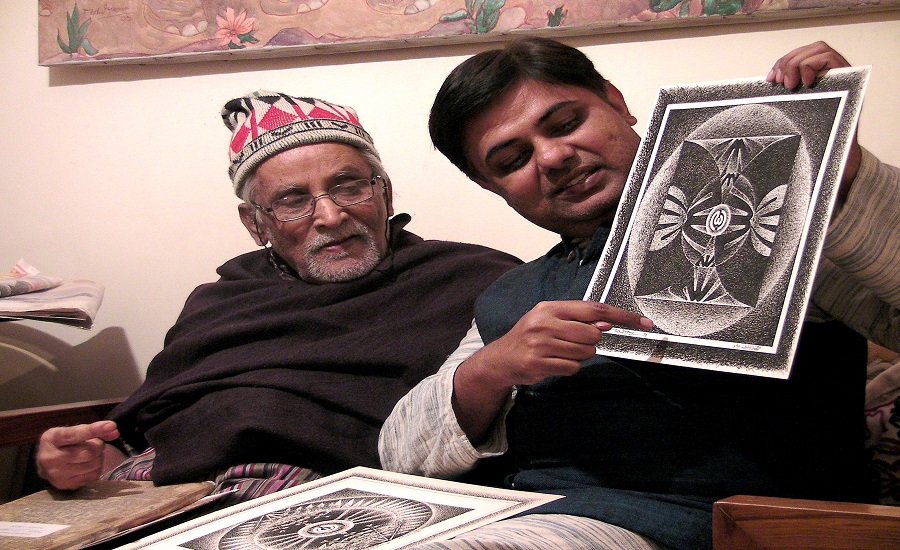
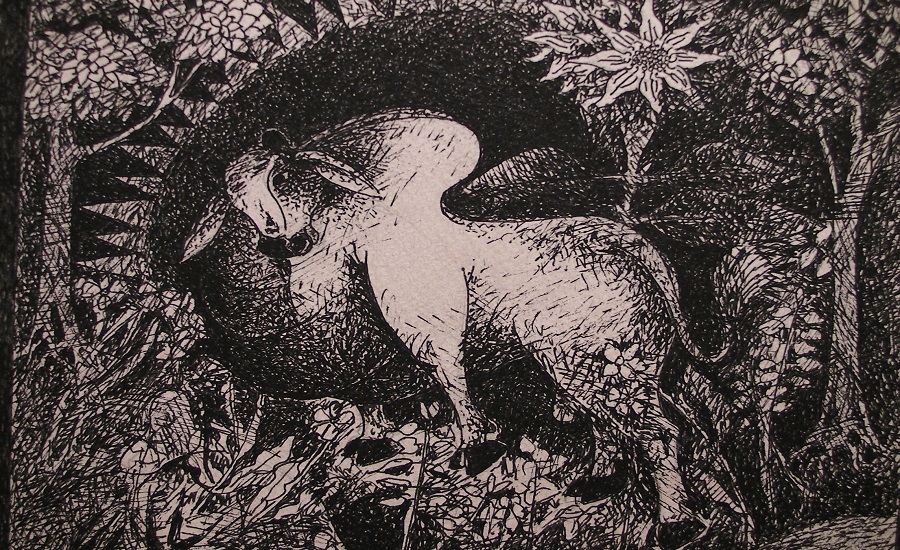
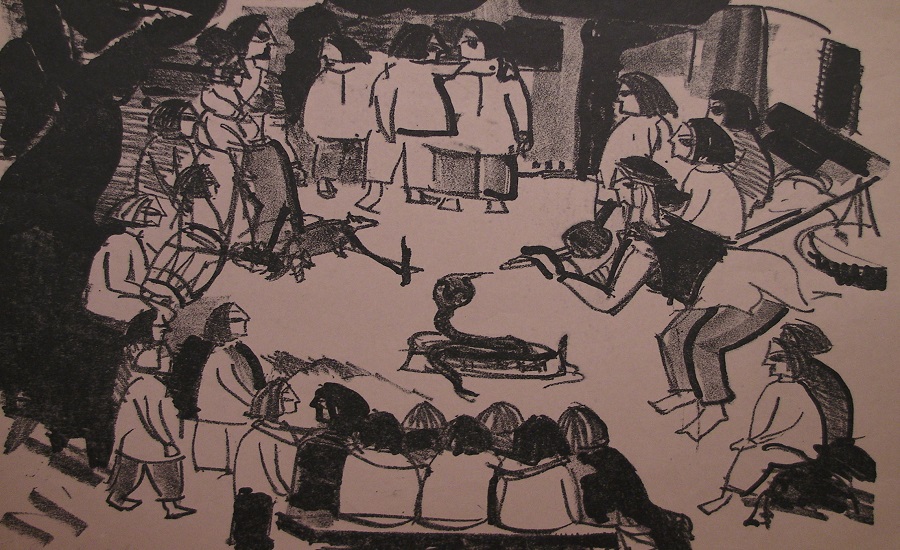
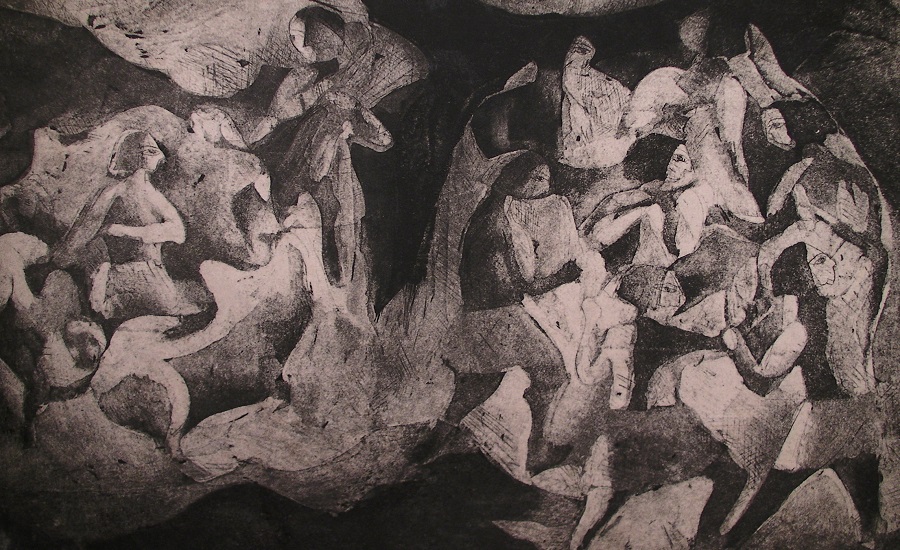
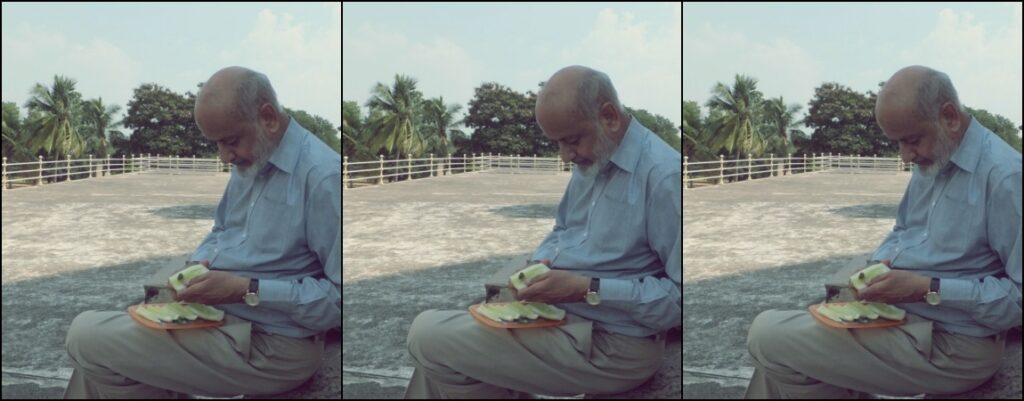
Mohammed Yasin, veteran painter and one of the best calligraphers in the subcontinent.
OBITUARY
Yasin’s early works have explored all available mediums from lithography, etching, aquatint, engraving, dry point, serigraphy, mezzotint water colours, oils, gouache and egg tempera.
“85-year-old veteran artist Mohammed Yasin’s character impresses as a person and his characteristics as an artist. Perhaps the distinction is unreal, for, in his case, it is the same integrity that reveals itself in the structure of life and in self-expression through art.”
These were the words said a few years ago by a noted art critic for Mohammed Yasin, veteran painter and one of the best calligraphers in the subcontinent, who passed away on August 19.
Yasin was born in Mogalgidda, a village near Shadnagar, 30 km from Hyderabad. As a young school boy, he felt an aptitude for Art when he was just 14 years old. After passing his elementary and intermediate drawing examinations, he moved to Hyderabad city with his family members from his birthplace Mogalgidda.
Showcasing art work.
Though quiet in his demeanour, Yasin has had seriously tragic experiences. His father passed away when he was only 14 months old. He was brought up under his mother’s care and guidance. He had to grow up with many hardships. While as a boy, he was affected by tuberculosis of the spine which has left a limp which necessitates the use of a stick to aid in walking. But through a sustained musing, he has won an inner serenity.
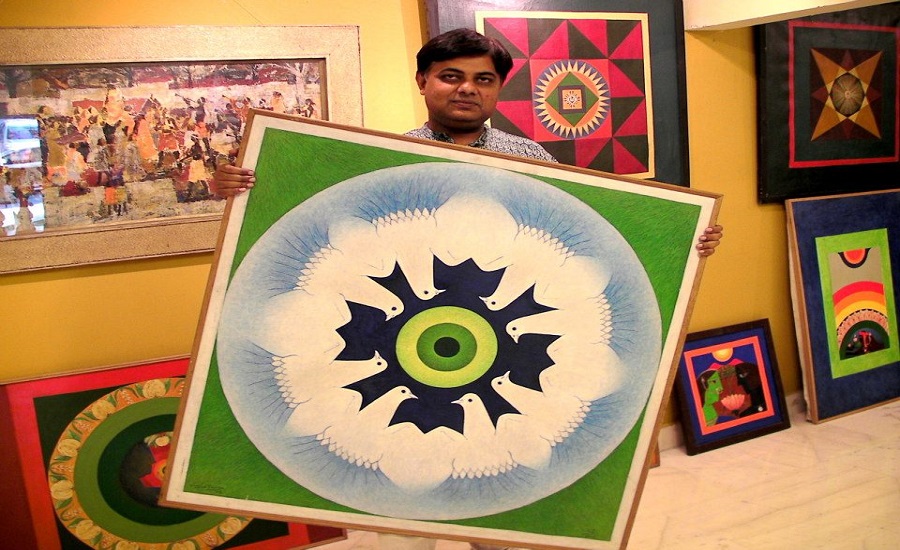
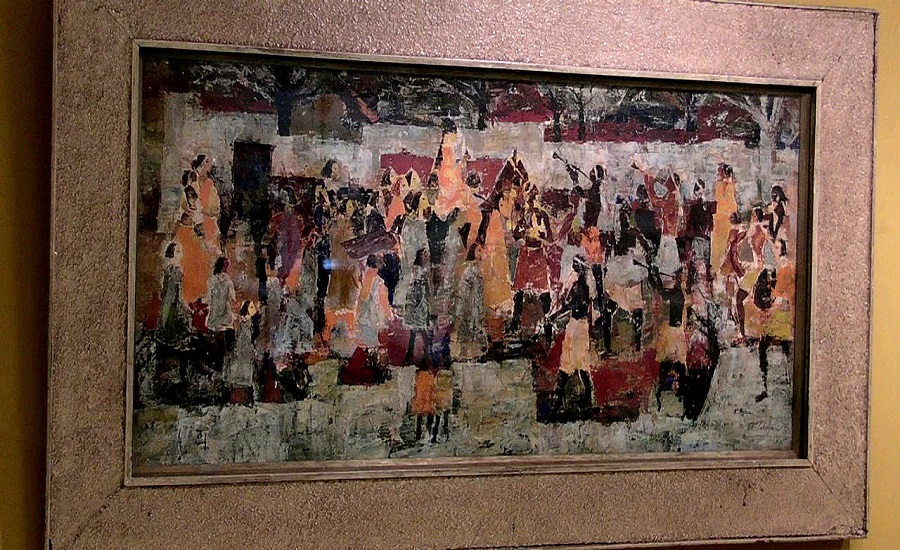
Art works displayed in an art gallery
His most important contribution goes to the art of calligraphy. He chose to work in an abstract symbolic manner. Geometrical elements like the circle within the square, concentric circles, etc. comprise the basic structure emphasizing a symmetrical arrangement and abstract formal values–calm and quiet but they are, nevertheless, active fields. They seem to be deeply influenced by the Buddhist art. They generate impulses of colour and focus attention on the symbolic images they contain.
The use of circle, square, triangle adds to his innovation a transparency, a water colour. The orthodox prohibition of representational figuration in art made the Islamic tradition turn to calligraphy. Yasin has brought to this tradition a modernist love of abstraction and monumental geometricism.
His early works have explored all available mediums from lithography, etching, aquatint, engraving, dry point, serigraphy, mezzotint water colours, oils, gouache and egg tempera.
His works are very poetic and also dramatic; actually they are calligraphic in nature. Tantric symbolism, Sufi mysticism, echoes of the miniature schools, shades of thankas and pictorialised Arabic Calligraphy are all inspirations which could be identified in Yasin’s work.
Aseem Asha Usman is founding director of Aseem ASHA Foundation, and has been documenting the life and works of the veteran calligrapher and painter.
source: http://www.clarionindia.net / Clarion India / Home / by Aseem Asha Usman / August 20th, 2020
Shabnam Khatoon has been felicitated as best athlete of Maulana Azad National Urdu University (MANUU) on Friday. Prof. Syed Ainul Hasan, Vice-Chancellor, presented a cash award in recognition of her all round performance in sports events held recently during Jashn-e-Baharan, an annual event.
Shabnam, a student of B.Tech III Year, emerged as the fastest running girl of MANUU winning both 100 and 200 meter sprints. She also bagged first place in 50 kgs weight lifting event and led the Department of Computer Science & Information Technology girls’ Kabbadi team to the title.
Prof. Ainul Hasan lauded her performance and announced special coaching facility particularly for girl students at MANUU. He also felicitated Dr. A Kaleemulla, Deputy Director, Directorate of Physical Education & Sports for efficiently organizing the sports competitions.
Prof. Mohammed Abdul Azeem, Proctor, and Chairman Sports Committee informed that MANUU has availed the services of well known badminton coach Mr. Ziaur Rahman for the students. Mr. Muzaffar Ali is the football coach.
source: http://www.siasat.com / The Siasat Daily / Home> News> Hyderabad / by News Desk / July 22nd, 2022
A tribute to a polymath historian who recently passed away.
Dr Ziauddin Ahmed Shakeb at the Qutb Shahi tombs in Hyderabad, October 2013. Photo: Author provided
I first met Dr Mohammed Ziauddin Ahmed Shakeb in the summer of 2011, as a naïve PhD student who’d arrived in Hyderabad from Los Angeles wanting to “read Shah Jahan’s documents”. He asked me the very standard question asked of research students in India, “What is your topic?”
I only had a rather incoherent answer to give to Shakeb, the man who had, among other things, created the Mughal Record Room, in what is today known as the Telangana State Archives. Located in a nondescript building at the periphery of the Osmania University campus in the dusty precinct of Tarnaka, this institution has undergone numerous transformations over the course of a half-century of its existence in Hyderabad. But institutions were often narrow and unimaginative places for sustaining a towering figure such as Shakeb. He went on to have a long and eclectic life and career that consistently defied the logic and constraints of institutions, for he was himself an institution. The loss of Shakeb is thus far more than the loss of an individual.
His was a formidable generation of post-Independence intellectuals from different parts of the subcontinent who, from the 1950s, devoted themselves to preserving its languages, repairing and reconstructing our scattered archives and libraries, and re-imagining our past(s) long before colonialism. Shakeb embodied, above all, a boundless curiosity coupled with a complete disregard for trends, ‘schools,’ cliques, and fancy theories.
He was not interested in being a Marxist or a nationalist nor in chasing the Western academy’s greener pastures. In some ways, his foremost allegiance was to the detritus of the past itself – to what paper, ink, and materiality mean and what they can tell us about our past and present selves. He asked, what a document or manuscript had gone through over centuries, how had it come to be, and how can we best preserve thousands of paper fragments for future generations so we can continue to tell their stories?
This rare commitment to the study and preservation of archival knowledge led him to write the landmark catalog, Mughal Archives Vol I: A Descriptive Catalogue of the Documents Pertaining to the Reign of Shah Jahan, in 1977, followed by many publications for The British Library, State Archives Andhra Pradesh, and other repositories, universities, and auction houses. I remember asking Shakeb once why he was so committed to creating reference tools to access rare historical materials, and he answered, “because I know no one will care to read them in the future!” In some ways, he was right.
Today, when the stakes for writing about the subcontinent’s pasts are fraught and closely tied to an ongoing project of hollowing out academic institutions, it’s worth remembering a very different kind of Indian historian.
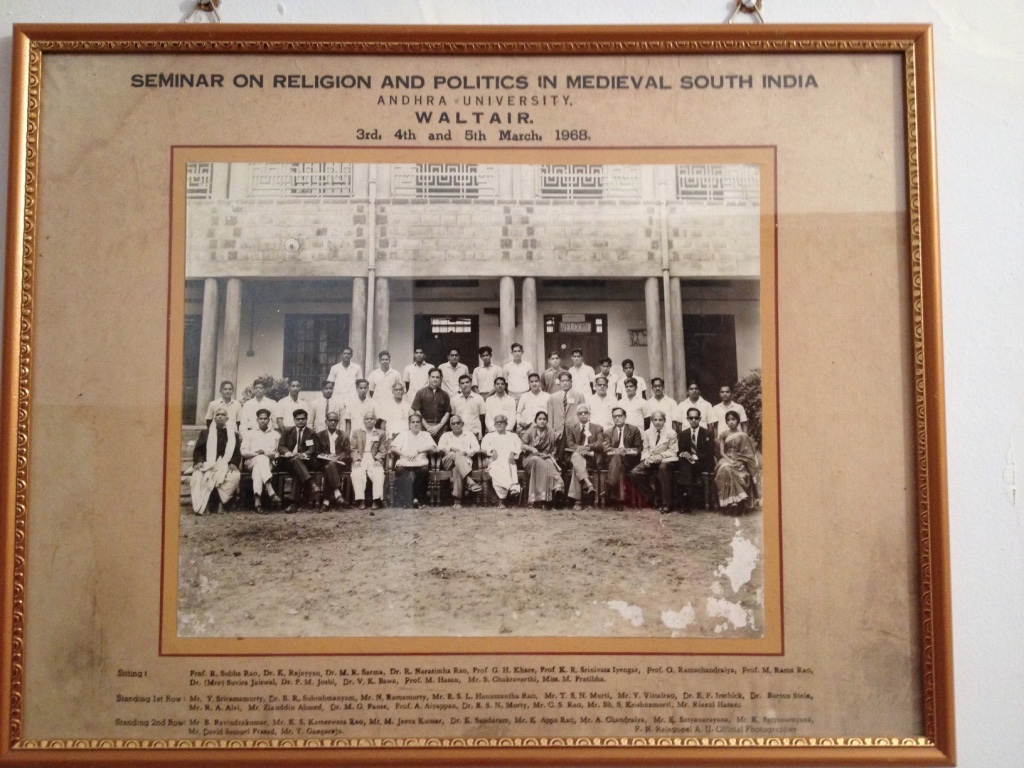
Shakeb standing in the second row, in a group photo from a conference in March 1968 at Andhra University, Visakhapatnam. Also pictured are G.H. Khare, Mohibbul Hasan, V.K. Bawa, P.M. Joshi, Suvira Jaiswal, Burton Stein, and Eugene Irschick, among others. Photo: Author provided
Born on October 21, 1933, Shakeb grew up in Hyderabad and Aurangabad. He studied Political Science and English at Osmania University before heading to Aligarh Muslim University in 1956 for his Masters, where he was taught by Mohammed Habib and S. Nurul Hasan. In 1962, he returned to the south where he was employed as an archivist at what was then known as the State Archives Andhra Pradesh. There, Shakeb acquired the unique training of deciphering documents and identifying their categories, genres, and forms from the last generation of the traditional jagirdari staff of the Nizam’s state who were retiring when he joined the archives. He also worked under Yusuf Husain Khan who had begun the work of processing Mughal administrative documents. The archives thrived under the directorship of committed scholar-administrators such as Hadi Bilgrami and V.K. Bawa.
As rich documentary caches from families, Sufi shrines, and samsthanams were discovered and deposited into state institutions, post-independence archivists and historians confronted challenges, including the reluctance of individuals to part with materials that had been in their homes for centuries. Debates and disputes ensued about what constituted a ‘valuable’ manuscript or document, how to classify materials, and to which regional-linguistic nationalism a remnant ‘belonged.’
These were debates that had already begun in the pre-Independence period, in the work of institutions like the Indian Historical Records Commission. Recent studies of the debates between Jadunath Sarkar and the Maratha historians have traced the longer history of such tensions. Part of the problem was the mutual suspicion between scholars oriented to modern social sciences and those with a more ‘traditional’ orientation and training. Shakeb, the archivist-historian, was at once both and neither.
At a distance from the halls of JNU and Aligarh, where the Mughal state’s merits were being debated, Shakeb inhabited yet another set of worlds. He was at ease reconstructing the household library of Chishti Sufi Abu’l Faiz Minallah in Bidar, discussing the southern India Cholas with the American historian Burton Stein, and discovering a shipwreck off the coast of Masulipatnam in the late 1960s.
Based on newly-processed materials, in 1976, he would complete his doctorate under P.M. Joshi at Deccan College in Pune, a connected history that examined circulation and political diplomacy between Safavid Iran, Mughal India, and the Golkonda sultanate. Shakeb’s study brought the question of mobility and exchange to the centre stage at a time when the norm was to study either the Mughal heartland (often synonymous with Delhi or the northern Indian plains) or select one province of the empire. After many years in archives and universities, Shakeb charted his own path beyond academia. His forensic ability for assessing manuscript provenance, material objects, and documentary genres, allowed him to thrive in other professional contexts, leading to work as a consultant for Christie’s in London.
But, to restrict myself to Shakeb the historian would fail to capture the range of subjects, languages, and disciplines over which he had complete mastery – Persian and Urdu literature, Islamic studies, geography, philosophy, linguistics, and art history. Shakeb always kept the historian’s arrogance in check by reminding her of the literary critic’s skills. The study of prosody and poetics was just as important for making sense of an India without and before English.
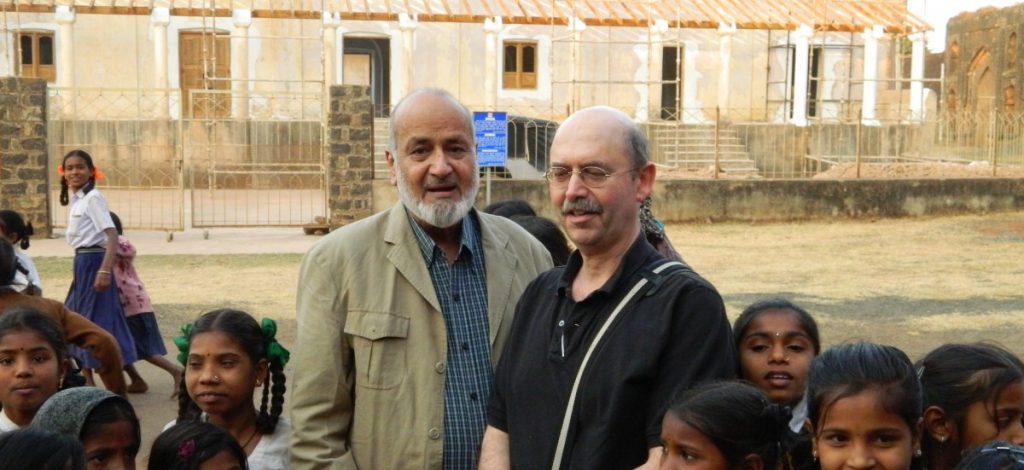
Dr Ziauddin Ahmed Shakeb (L) with his friend Dr Leonard Lewisohn (R) at Bidar fort in January 2012. Photo: Author provided
Literary circuits would light up the minute Shakeb landed back in Hyderabad (as they often would in London). He had been working for many years on translating Iqbal’s Persian poetry into Urdu. He was equally committed to the study of Bedil, Ghalib, Dagh, and Amir Minai. He would unveil to students the unique phonetics and cadence of Dakani, the pan-regional literary idiom of southern India, with many living poets and a long literary history, which he emphasised, is yet to be fully understood for its role in shaping classical and modern Urdu.
When he published his dissertation, Relations of Golkonda with Iran, in book form in 2017, he dedicated it to his grandchildren – Itrat, Taha, Mahamid, Khadija, Tawsin, Mahd, Istafa, Fatima, ‘Ali, Nuha – all of whom embody their dadasaab’s fortitude and resilience. I haven’t sufficient words to describe the patience of his wife, Farhat Ahmed, and the enormity of what she has taught me over many years about balancing the scholarly life with everyday living. It was this reminder that grounded Shakeb’s engagement with multiple worlds. His hands that treated every piece of archival paper like a newborn child. Lethal scoldings hurled at junior scholars too convinced of their own greatness. And, never forgetting to make fun of people who take themselves too seriously. With Shakeb’s passing, we are reminded how fragile the threads are that connect us to the past, and how dependent we are on a handful of such individuals. It’s difficult to imagine what, if anything, might come after such larger-than-life figures.
Subah Dayal is Assistant Professor at New York University’s Gallatin School of Individualized Study. Her research is on social and cultural histories of the Deccan and the Indian Ocean world.
source: http://www.thewire.in / The Wire / Home> English> Culture> History / by Subah Dayal / February 10th, 2021
The unit is being run under medical supervision of Dr Shoeb Ali Khan, leading consultant nephrologist and a kidney transplant surgeon.
A patient undergoes dialysis at the unit
Hyderabad :
Probably for the first time in the world, a mosque in Hyderabad has allotted space on its premises for establishing a full-fledged haemodialysis unit. Masjid-e-Mohammadia, located in Langar Houz area now houses a state-of-the-art free dialysis centre that mainly caters to the weaker sections of the society, regardless of caste and creed.
The centre, set up by two NGOs – Helping Hand Foundation and SEED US, has five latest Fresenius brand machines and will acquire five more machines in the next three months. The swanky centre, designed like a corporate hospital, has a separate access for dialysis patients and it is equipped with high quality equipment, clinical care as well as facility to manage onsite emergencies.
The unit is being run under medical supervision of Dr Shoeb Ali Khan, leading consultant nephrologist and a kidney transplant surgeon.A medical doctor, ANMs, dialysis technicians and an ambulance will be available at the centre from 8 am to 8 pm on any given day. “We have invested about Rs 45 lakh for the initial setup of this unit. About Rs 2 lakh per month will be managed by Helping Hand Foundation,” said Mazhar Hussaini of SEED.
To register for free dialysis, one can call Ph: 9603540864.
source: http://www.newindianexpress.com / The New Indian Express / Home> Good News / by Express News Service / July 22nd, 2022
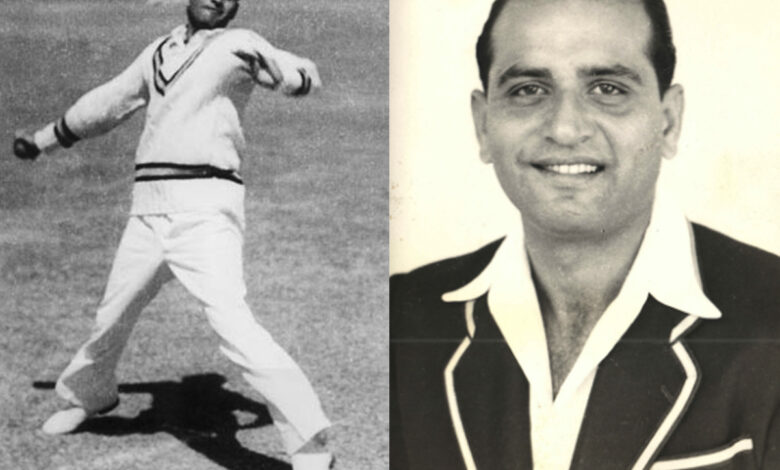
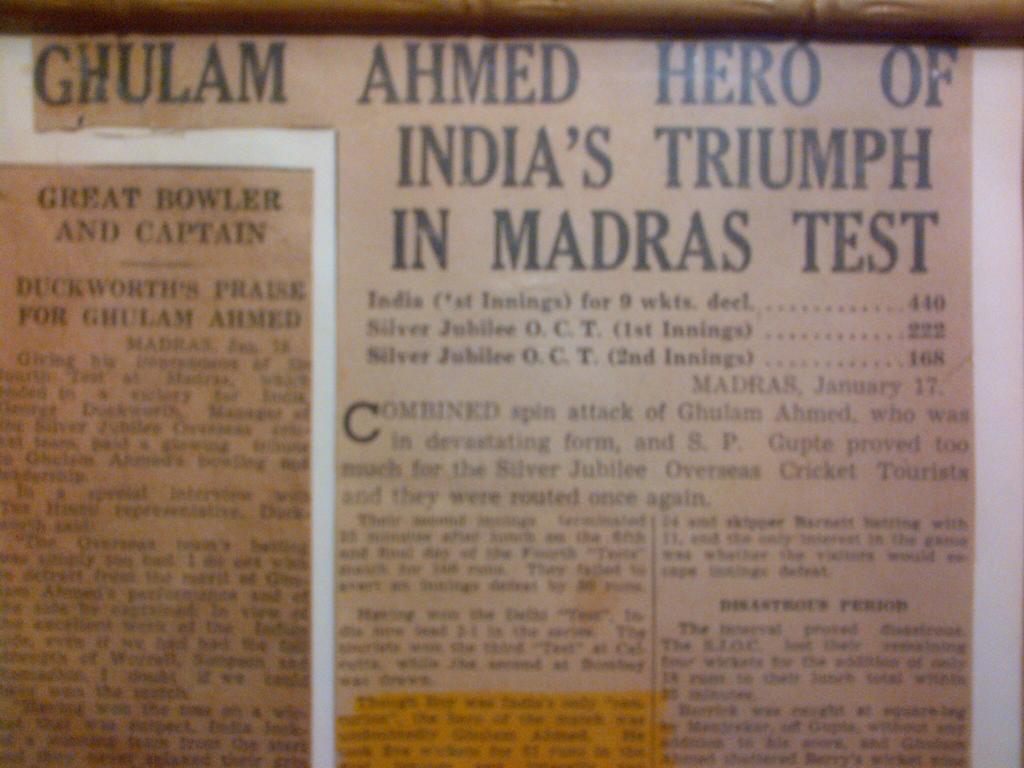
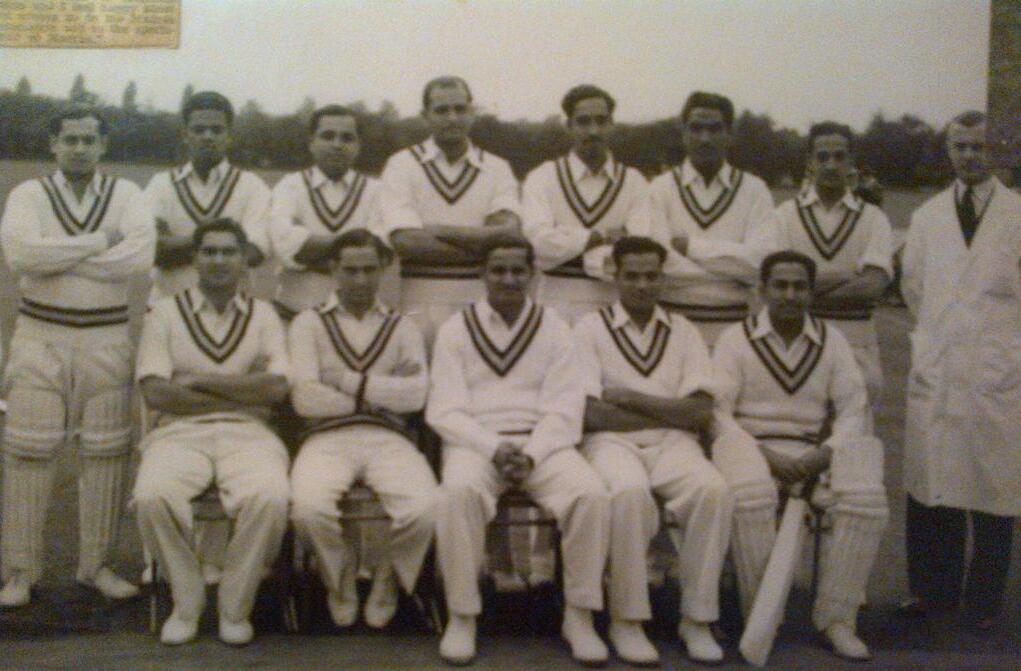
The contribution of Ghulam Ahmed to cricket in Hyderabad and India is extremely difficult to quantify in mere words.
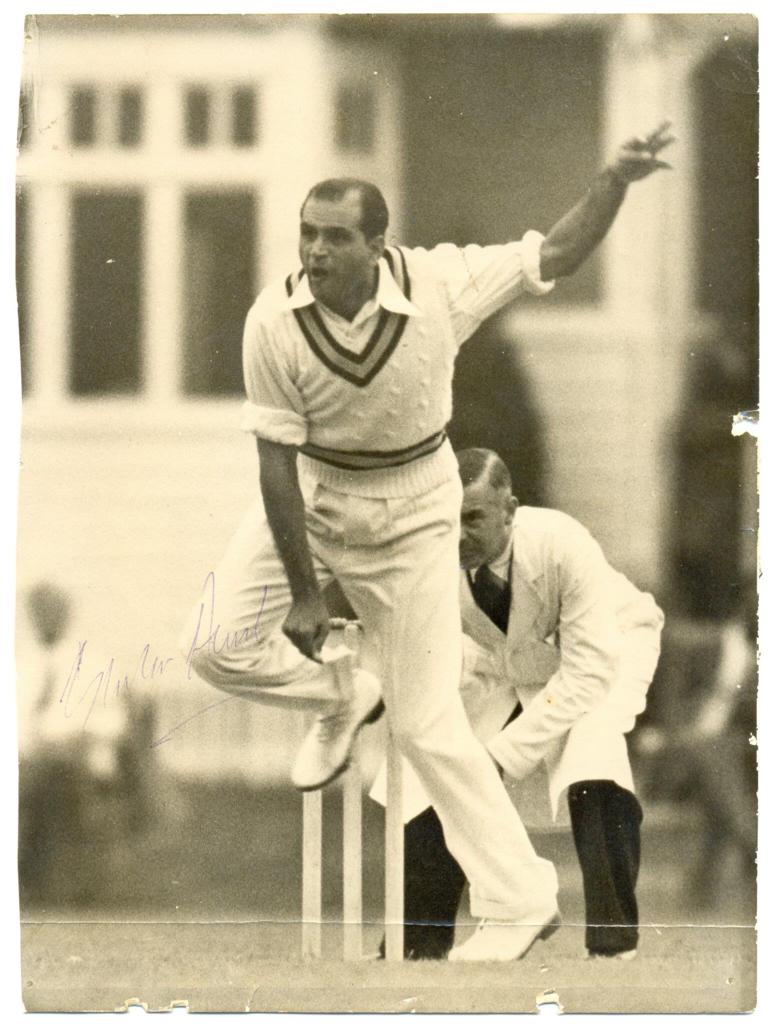
He was a legendary player, inspirational leader, far thinking administrator and a very capable manager. Whichever role he played, he did so with a measure of excellence that was unmatchable. The Greek philosopher Aristotle once said: “Excellence is never an accident. It is always the result of high intention, sincere effort and intelligent execution. Choice, not chance, determines our destiny.” The words can be applied most aptly to the life and career of Ghulam Ahmed, one of Indian cricket’s most accomplished off spinners and administrators, whose 100th birth anniversary falls on 4th of July, 2022.
But any person who knows about the family from which Ghulam Ahmed emerged, will not be surprised by the fact that this gentleman cricketer achieved so much in his lifetime.
In a way, this illustrious family can be called the first family of Hyderabad sports. Others who are connected to the Razvi family are Pakistan’s former captain Asif Iqbal, India’s former captain Mohammed Azharuddin and tennis champion Sania Mirza. Since Sania’s husband is an ace Pakistan cricketer Shoaib Malik, he too is connected to this family by marriage. So that makes it two captains of India, two captains of Pakistan and a tennis Grand Slam winner in doubles and mixed doubles, all belonging to or connected to one family.
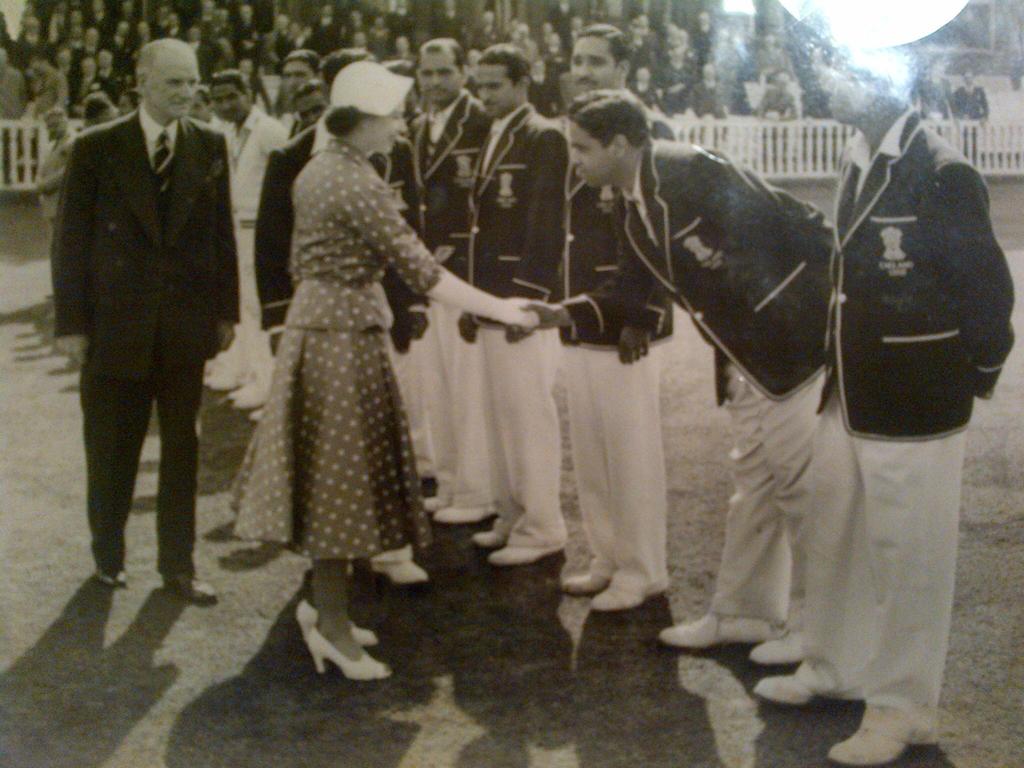
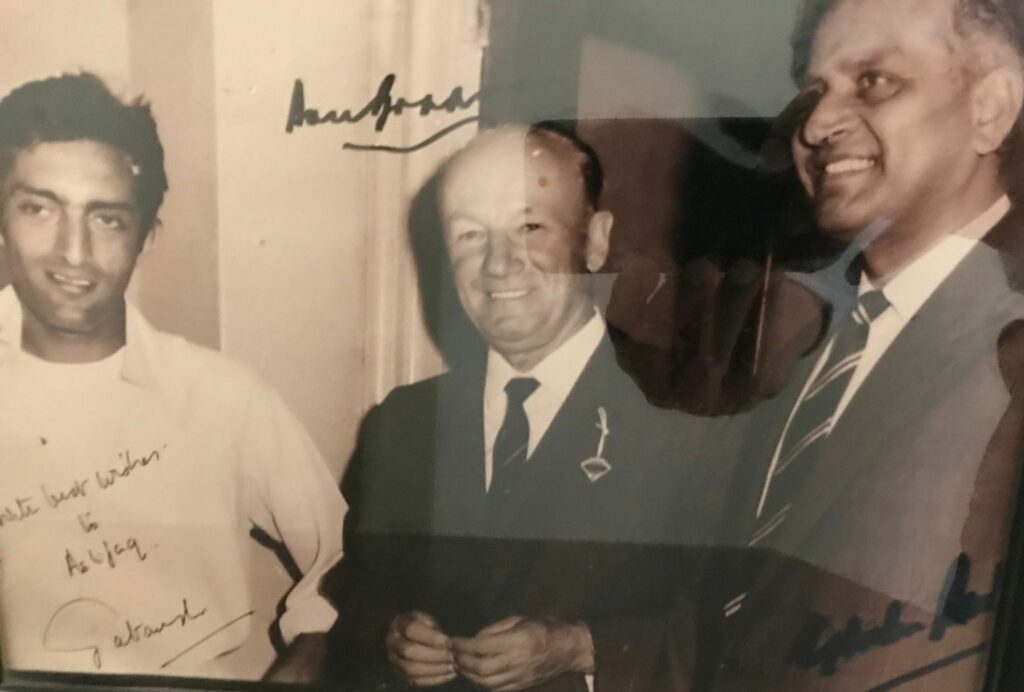
Ghulam Ahmed meets the queen
We all know about the famous off spinner’s exploits on the cricket field. But what was he like as a person? Was he a disciplinarian or was he indulgent? Was he a strict parent or a friendly person who could be addressed as Dad? After siasat.com spoke to several persons who knew him well, an interesting picture emerged.
Apparently Ghulam Ahmed was a person whose character and conduct were unblemished. It was his most outstanding trait. He was painstakingly honest and fair in his thought and judgement. If he made a decision, everyone would accept it because they knew his reputation for being impartial and equitable. As a parent he was not the old fashioned taskmaster. Instead he obtained the love, affection and friendship of all his children. As a person he stuck to his principles but did so with a measure of kindness and tact that earned the willing cooperation of his colleagues.
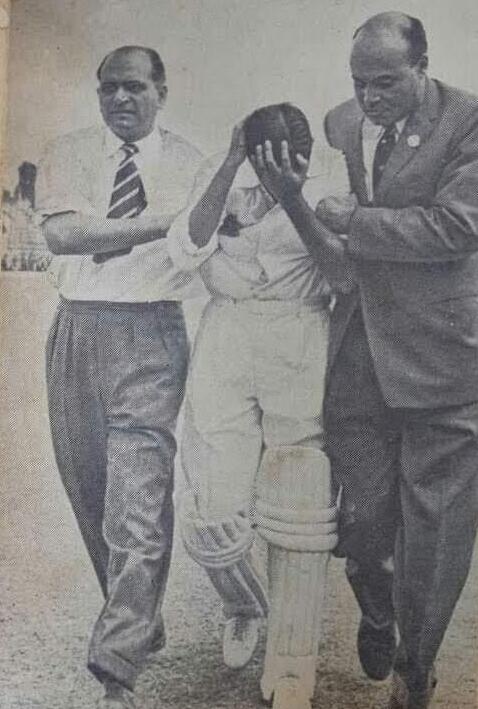
When Nari Contractor was injured
He hailed from a family wherein the male members had mostly served in the civil services. Ghulam Ahmed himself chose the same path. He was the chairman of the A.P. Public Service Commission and then also the Hyderabad Race Club. He handled sensitive issues with graceful prudence. He had a large group of friends and was well loved and respected by all. Often there would be large gatherings of his friends at his house. The men would play cards and sometimes go out on hunting trips which was a popular pastime among young men of those days.
Ghulam Ahmed studied at the famous Madrasa-E-Aliya and then at Nizam College. In his cricket career, his seniors were the well known brothers S.M. Hussain and S.M. Hadi. The latter was an all round sportsman who excelled at many sports while the former was a member of the Indian cricket team. When he was a raw beginner, he once sought permission to bowl against Hussain. After he was allowed to do so, he bowled the experienced batter with his very first delivery leaving Hussain highly impressed.
Later Ghulam Ahmed grew up and became a very renowned player himself. He grew to be very close to some of the most famous names of those days. They often dropped in at his house. Cricket administrators such as M.A. Chidambaram, M. Chinnaswamy and Kishan Rungta visited him regularly.
The legendary Lala Amarnath, Test cricketers C.D Gopinath, Hemu Adhikary and Polly Umrigar – all these people used to visit his house.
Later, Ghulam Ahmed also served as a cricket administrator both in Hyderabad as well as the BCCI.
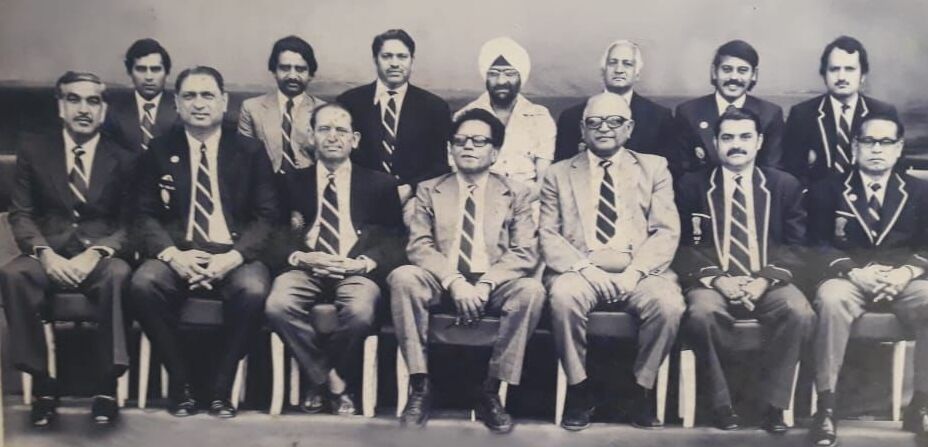
Besides serving as the Secretary and Vice President of the BCCI, he was the Chairman of the BCCI selection committee which selected the Indian team that won the World Cup in 1983. He was also given honorary membership of the prestigious Marylebone Cricket Club (MCC).
When Ghulam Ahmed passed away after a long and illustrious life, encomiums flowed in from all parts of the world.
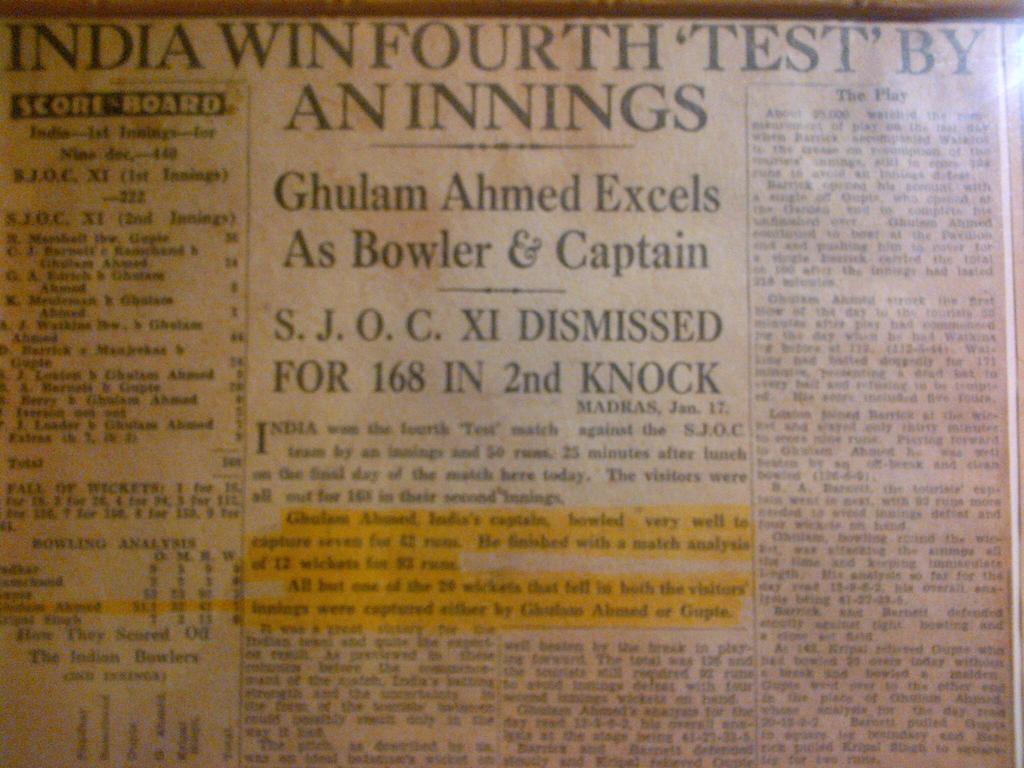
This is what The Independent (UK) wrote: “His smooth action enabled him to bowl for long spells while his clever flighting and variations of pace, length and line brought him comparisons with Jim Laker. He made his debut at 17 for Hyderabad but the second world war interrupted his further progress so that he did not appear in Test cricket until 1948 when he was chosen for the third Test against West Indies in Calcutta. He captained India against New Zealand in 1955 and also twice against the West Indies in 1958-59.”
In Shakespeare’s play Caesar, the character of Mark Antony says about his dear departed friend: “Here was a Caesar! When comes such another?” Meaning that Rome will probably never have another outstanding and upright personality like Caesar. The same can be said of Ghulam Ahmed. Like Caesar, Ghulam Ahmed too can never be replaced. His 100th birth anniversary is an occasion to remember with pride and affection, the excellent achievements of the man who was the first cricketer from Hyderabad to lead the nation in the international cricket arena.
source: http://www.siasat.com / The Siasat Daily / Home> News> Sports / by Abhijit Sen Gupta / July 04th, 2022
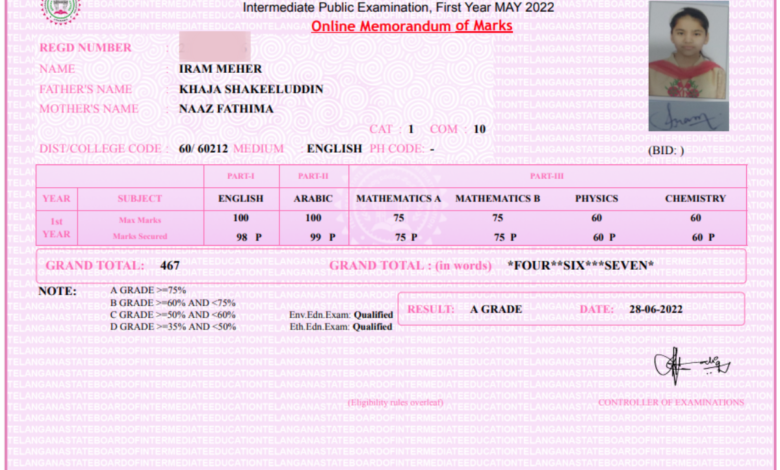
Iram Meher, is a first-year intermediate student who topped in the state by scoring all A’s in the subjects of Mathematics, Physics, and Chemistry.
Iram Meher Khaja Sahkeeluddin is a student at the St. Joseph’s Junior College in Hyderabad’s Tolichowki Branch. Meher’s first-year tests resulted in a 467 out of 470.
She received 75 out of 75 in maths scoring an A grade and the same in maths scoring a B, 60 out of 60 in physics, the same in chemistry, and 98 and 99 out of 100 in English and Arabic languages.
The TSBIE Intermediate First and Second Year Results 2022 were released at a press conference hosted by the Telangana State Education Board at 11 AM, on Tuesday. 63.32 percent of the overall number of students who took the TS Inter examinations in 2022 passed and were promoted from the first year, while 67.16 percent passed the second year.
Girls once again outperformed males in the Telangana Intermediate examinations, according to the board’s website, tsbie.cgg.gov.in, where students can also view their scorecards and TSBIE IPE scores memo.
source: http://www.siasat.com / The Siasat Daily / Home> News> Telangana / by News Desk / posted by Marziya Sharif / June 30th, 2022
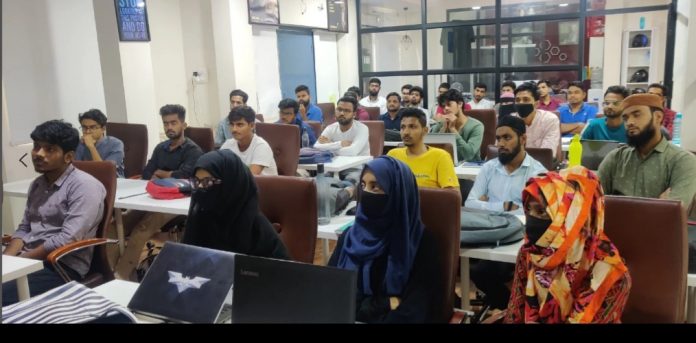
Employment opportunities have dipped down drastically but students of Fullstack Academy have been placed in esteemed companies with jobs fetching as high as RS.7 lac per annum.
Fullstack Academy is an institute that imparts the right courses in software technology that are always in demand in the software industry.
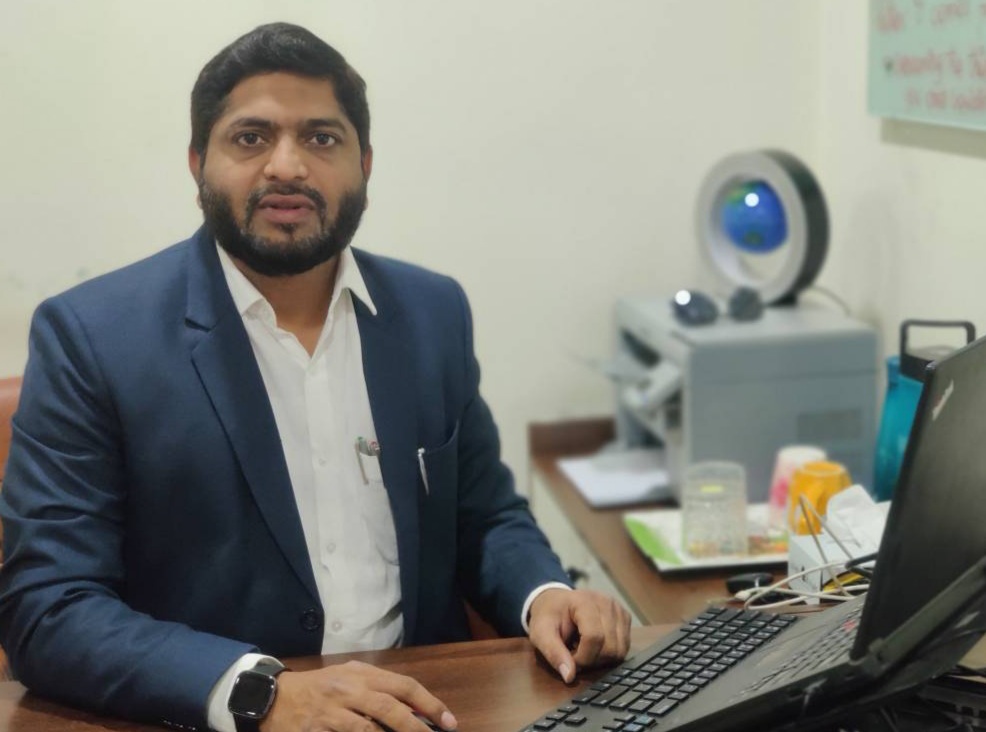
In the words of the founder of Fullstack Academy Md Aijaz, “There is a huge gap between the IT industry and the academia. There are a lot of opportunities to build successful careers but the newly graduated youth lacked the necessary skills. We wanted to fill that gap, hence we started our academy.”
Md Aijaz , the founder of Fullstack Academy.
“Hardly 1% of the youth were employed in the top companies like cognizant, Microsoft, Mindtree, Infosys, HCL, Accenture, Skuad, TATA consultancy services and so on, explained Aijaz Ahmed, while talking to Muslim Mirror “More so in Hyderabad despite the fact that there are so many top multi nationals here. Some even have their Head Office in Hyderabad. But still we could see that there were no takers in our own city”, he added.
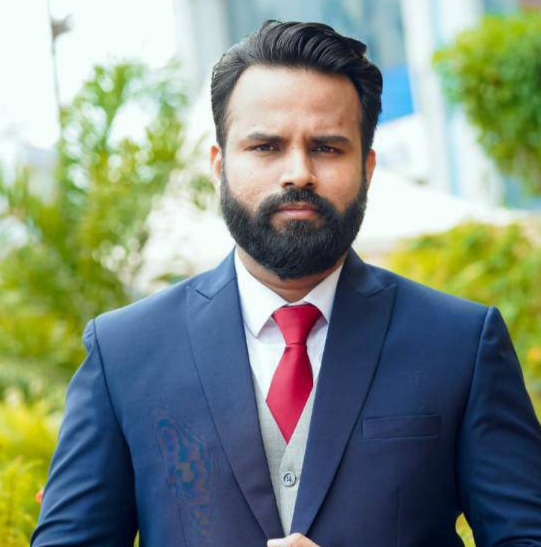
Abu Bakar , co-founder of Fullstack Academy, also owns a software company.
So, in order to ensure that the youth from the Muslim community are not left out, Mohammad Aijaz and Abu Bakar Aijaz started the Fullstack Academy.
The academy has been founded in the year 2019 by industry veterans who have more than 25 years of experience in Microsoft and Tech Mahindra. They wanted to ensure that the youth of the community are not lagging behind in terms of skills required in communication, spoken English, software skills. Students coming out of college lack the qualification or skills needed to crack the type of jobs that are in demand and land up in mediocre jobs.
But unfortunately within months of initiating this dream venture, the lockdown was announced. But instead of being disheartened by this, the duo went ahead with their plan and announced online courses. Interested youth began enrolling for the online classes and the academy functioned smoothly.
Today they have gone offline and admissions are on filling every batch. So far they have trained 800 Youth and placed 55% in top companies. Some have gone abroad to pursue higher studies armed with the courses from FSA with which they get good paying jobs while they continue their studies.
Most of the courses students going abroad do courses in programming and development area. These courses are in demand globally.
“Web application is the latest technology and in high demand with every company wanting to develop web applications. Fullstack Academy specializes in mobile app technology the resource of which is not commonly available” explained Mohammed Aijaz.
Another salient feature of this academy is that the trainers are working professionals who come and demonstrate the real time scenarios. This helps the students while applying for jobs. Every course offered by the academy has different professionals already employed in top positions in world class companies.
The courses offered by the Full Stack Academy that are the need of the present times for software industries can be broadly categorized are programming, MERN, cloud computing, Data science – predictive business analytics, Android App development, Amazon web services, UI/UX designing courses, Selenium Automation testing and many more.
Khaja Wasiq Mohiuddin, a student who passed out in December 2021 shared that he has been employed in Skuad with a salary of 7 lacs per annum, the highest so far among the students placed in jobs. “I took the training in MERN from Full Stack Academy and I had not even completed the course when I was interviewed and was selected by Skuad. After completion I joined them as developer. I received full support from the trainers and today I have made my parents happy with my achievement” said Khaja.
The students are not taught just the professional courses, Aijaz and Abu Bakar ensure that they are groomed for interviews and also learn to communicate in English which is another weak area of most of the students from the community.
Another student Ayesha Moiz who has been employed as Assistant system engineer at Infosys said, “ I received support from Fullstack academy not only when I was doing the course but even now when I am employed. I am in a probation period here and whenever I am stuck with some programming, I call up my Aijaz sir and seek his support to trouble shoot the problem. I am very happy with the training and assistance in job placement and I highly recommend Fullstack Academy, she told Muslim Mirror.
The students from economically poor backgrounds are provided with an opportunity to apply for scholarship from IMRC (Indian Muslim Relief and charities). The Full Stack Academy (FSA) facilitates a written exam for the applicants to qualify for scholarship from IMRC. After the written tests there is an interview after which qualifying students are assisted with scholarship wherein they pay just 25% of the fees while the IMRC pays 75% of the fees.
Students enroll here not just from Hyderabad but also from different states of India.
“Every time one of our students gets a placement in a coveted company, it is like we have climbed one notch of the high ladder of success. The success of our students is like our own success, it is as if we have bagged the job. Each success story fills our hearts with happiness and makes us want to better ourselves” shared Md Aijaz.
source: http://www.muslimmirror.com / Muslim Mirror / Home> Education> Positive Story / by Nikhat Fatima, Muslim Mirror / June 24th, 2022
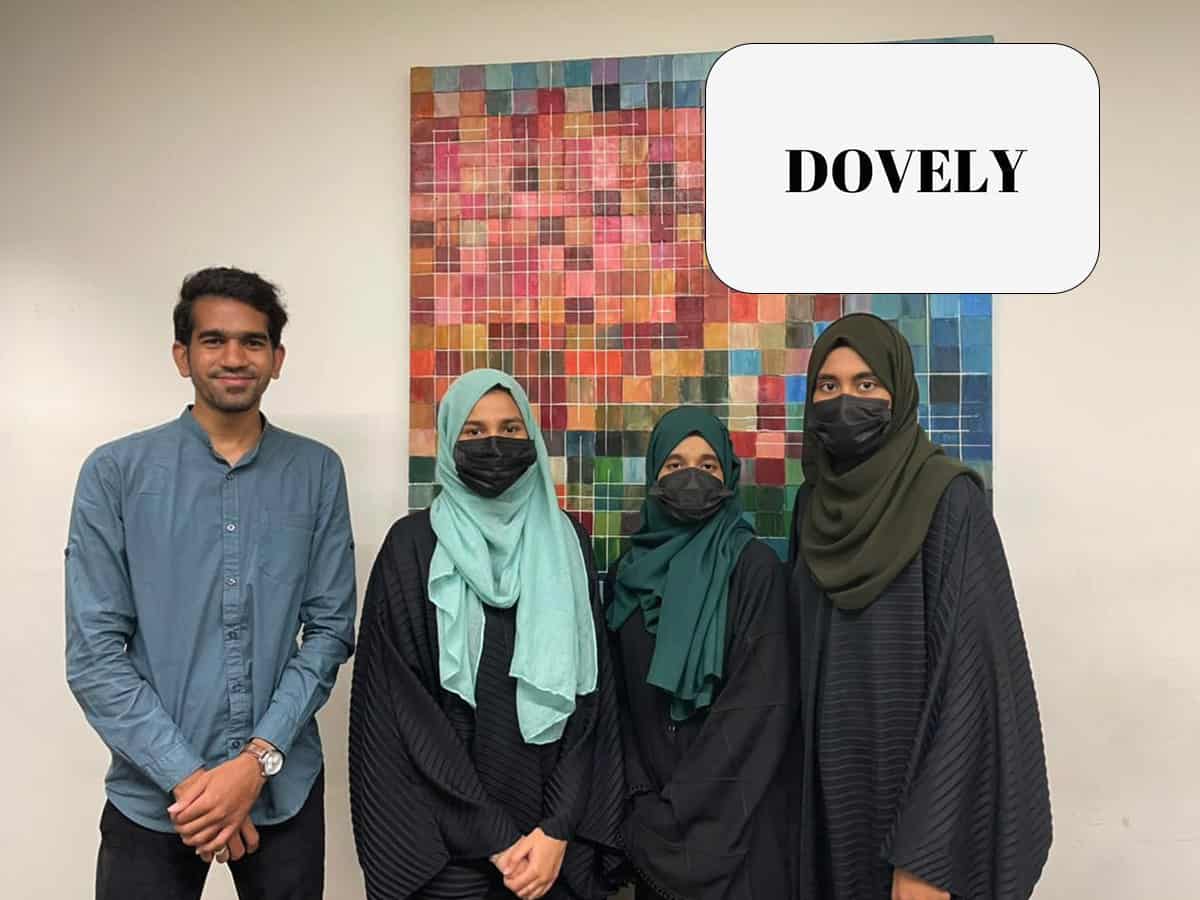
Team Dovely (from Left to Right Mohammed Obaidulla Khan, Zainab Khatoon, Uzma Khatoon and Masarrat Fatima)
Hyderabad:
How often do casual conversations on women’s safety get realised into full-fledged businesses focusing on women empowerment? One such conversation led to the creation of the ‘Dovely’ app by-city-based siblings Uzma Khatoon and Zainab Khatoon.
Concerned over women’s safety, Uzma and Zainab thought of coming up with a solution to address the issue. The Dovely app provides a bike taxi service exclusively run by and for women. Apart from ensuring women’s safety, the entrepreneurs also aim to make women financially independent.
The four-person run application comprises founder Zainab who is a final year B. Pharmacy student, Uzma, a final year B.com Computers student, and Masarrath Fatima and Obaidulla Khan who are final year B. Tech students.
As of now the platform has 20 riders and over 400 users and functions through its website and connects riders and passengers through WhatsApp.
The app is still undergoing improvements. “We will be able to develop a full-fledged app only after we reach a certain milestone like 200 rides,” said Masarrat.
She further added that the company can’t risk putting up the app on the app store or the play store since users may face challenges as it is manually operated at present.
Speaking to Siasat.com the founder and CEO of Dovely, Zainab Khatoon said, “The idea to create Dovely first struck me and originated from a conversation between me and my mom, who wanted to visit my granny and was looking for cost-effective and safe rides.”
The idea only came into existence following an unpleasant autorickshaw experience, aimed at ensuring women feel safe and secure during their journey.
“The idea struck me once again while I was travelling with my friend in an autorickshaw when the driver looked at us from the rear view mirror making me feel uncomfortable,” Zainab added.
“We sat down with our parents to discuss the name of the company. After going through about 400 names, our father came up with the name Dovely,” said Chief Operating Officer and co-founder Uzma.
“Apart from providing rides for women, the app also allows women to connect with us as Dovely partners. To access information regarding the platform one may visit the Dovely website. At the time of filing the story, Dovely successfully completed 37 rides,” Zainab said.
Addressing the query regarding profit sharing, Chief Marketing Officer (CMO) Obaid Ulla Khan said, “Currently all the money earned is being kept with the riders themselves, and we aren’t earning any commission.”
Bootstrapping for funding Dovely:
Running a startup is not an easy task and requires consistent funding. However, Obaid believes in “Bootstrapping”, where entrepreneurs fund their own ventures. “Even if we approach venture capitalists at this stage they would set milestones based on which they would provide the money, hence it is better that we set a milestone for ourselves before we reach out to investors.”
“In order to pitch the business idea, we are collecting all the information ranging from the number of riders to the number of users along with the IDs of our riders in an excel sheet, this will make it easier for us to attract investors,” he explained.
With regards to the credibility of the riders, Zainab said, “I personally handle the onboarding process for Dovely. As part of the hiring process we ourselves take long distance rides with the candidates to test their driving skills.”
On Safety
Shedding light on the steps taken to ensure the safety of the riders and passengers, Uzma said, “One of us is constantly checking on the live location from the beginning to the end of the ride, and the riders are only supposed to switch off the live location after completing the ride.”
Adding to Zainab’s response, Obaid said “More than the candidate’s driving skills, we focus on their behaviour since we want to provide the best possible service to our customers”
Addressing the query on whether riders have to be logged in for a specific period of time on a daily basis, he said, “Keeping in mind the household responsibilities of our partners, we don’t have any specific login timings for now.”
A few Dovely partners were also present during the interview and they shared their experience with Siasat.com. Nahera Lohreen, one of the partners said,” The first ride was a bit challenging since I was hesitant as to how it would go, but after a while, I felt comfortable and it has been a great experience.”
Nahera is also the first partner to be roped in by Dovely.
Zareena Begum, another partner with the firm said,” It is a great opportunity since it gives us financial independence and I was looking forward to such an opportunity”
Speaking of future plans, the company’s CEO Zainab said, “As of now we are focusing on a minimum of 10 rides per day, we will gradually expand into three and four-wheeler markets.”
She further said, “Apart from bike taxis, we are planning to deal with transport and logistics which will also be led by women. The greater vision of the company is to empower women across India and make them financially independent.”
www.dovely.org
source: http://www.siasat.com / The Siasat Daily / Home> News> Hyderabad / by Mohammed Baleegh / June 19th, 2022
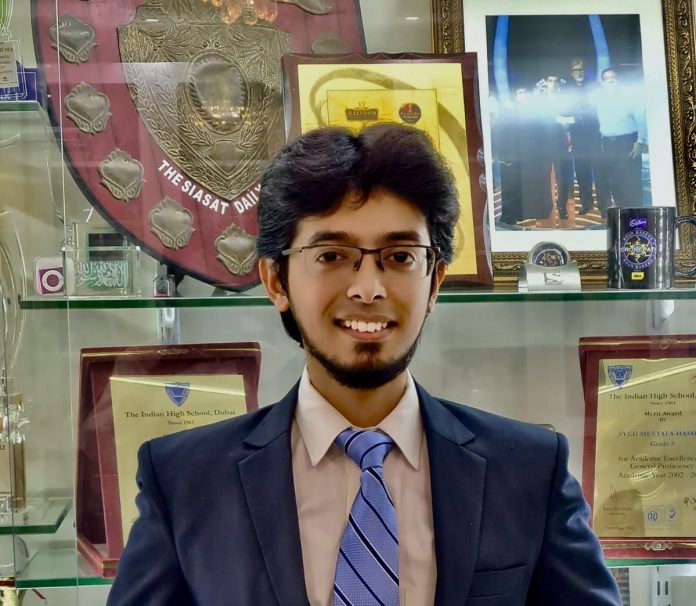
Dr Mustafa Hashmi is the only Muslim candidate from the south Indian state of Telangana making the UPSC list.
He is one among the total of 22 Muslim candidates who cracked the UPSC exams this year.
After completing his MBBS in 2016, Dr Hashmi pursued his MS degree at Osmania Medical College, Hyderabad. He graduated in 2020 and joined the district hospital, King Koti, as a surgeon. | Picture by arrangement
Hyderabad :
Of the total 685 candidates who have cracked this year’s Union Public Service Commission (UPSC) exams, only 22 are Muslim. 29-year-old Dr Mustafa Hashmi is one of them. He is the only Muslim candidate from Telangana who has cracked the prestigious UPSC, which is India’s highest civil services exam. He has bagged 162nd rank.
Talking to TwoCircles.net, Dr Hashmi, who was a practicing surgeon at Government District Hospital King Koti, Hyderabad, said that he was very happy to crack UPSC.
He said his motivation to crack UPSC came from seeing the experiences of economically backward people while accessing health care. “It dawned on me that the problems of these people are not confined to health alone and that I should do something else to ease their problems and serve the society in a much more beneficial way,” he said.
Dr Hashmi cracked UPSC exams on his fourth attempt after preparing for more than a year without attending any coaching institute.
“The first three attempts were like practice tests for me so I could get to know the pattern of the tests. I don’t have any regrets about that. It was only during my 4th attempt that I dedicated more time after my hours at the hospital,” Dr Hashmi said.
Maintaining a balance between work and studying for UPSC wasn’t easy. After an exhausting day at the hospital, where he was sometimes posted in the intensive care unit (ICU), performing surgeries and treating Covid-19 patients, he would come home and devote the remainder of his time to studies.
“I was determined and remained focused,” he said.
Dr Hashmi said that during his studies, his parents supported him by running his errands and doing his chores. “It is not just my hard work but even my parents’ put in so much to ensure that I was not disturbed while studying. They took care of every little need of mine. I owe my success to them and their upbringing,” he shared.
Born in an educated family, Dr Hashmi said that he was inclined towards science from his childhood because of his grandfather. “My grandfather was a Deputy General Manager in the Water Works Department, and used to advise me to become an administrative officer because he would say I could serve people better in that way,” he said.
After completing his MBBS in 2016, Dr Hashmi pursued his MS degree at Osmania Medical College, Hyderabad. He graduated in 2020 and joined the district hospital, King Koti, as a surgeon.
Besides excelling in academics, Dr Hashmi has memorized the entire Quran.
Eldest of the four siblings, who are also doctors, Dr Hashmi said his parents were working comfortable jobs in the Gulf before deciding to return to India. “My parents wanted me to serve the country. I am thankful to Allah for this result,” he said.
Dr Hashmi believes that after counselling, it is more likely that he will be posted in the Indian Police Service (IPS).
“Whatever is assigned to me, I will serve the people. I will be able to reach out to more people who are underprivileged and I am happy with that,” he said.
Dr Hashmi said that the youth of the country who wanted to pursue UPSC should not think of serving themselves but “serve society at large and contribute to nation-building.”
“Youth (cracking UPSC) should think about improving the lives of the less privileged in whatever way they can. Understanding the larger purpose and working hard towards that is the key to success and satisfaction,” he added.
Nikhat Fatima is a correspondent with TwoCircles.net based in Hyderabad, Telangana. She tweets at @snikhatf
source: http://www.twocircles.net / TwoCircles.net / Home> Lead Story / by Nikhat Fatima / June 02nd, 2022
The Imperial Sweet House in Hyderabad’s Sultanpur area was started by Nafees and her daughter-in-law Nasreen Hussaini in the 1960s. Over the years, they’ve expanded their business across India and the world.
A paradise for food lovers, history geeks and street shopaholics, the Charminar city of Hyderabad has a special place for everyone. Being the soul of Hyderabad, Nawabi dawats (delicacies) like Biryani, Qubani ka Meetha and Kaddu ki Kheer are certain to tickle the taste buds of tourists and locals alike.
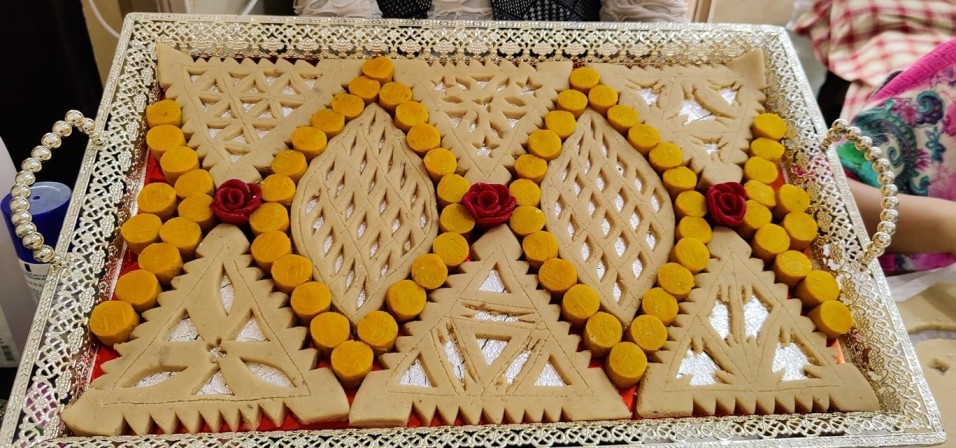
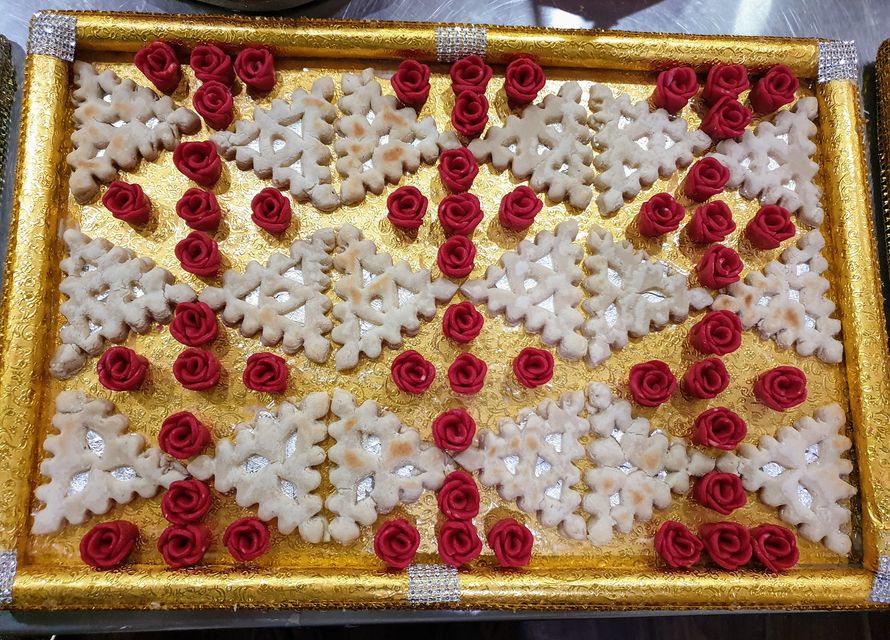
But among the popular dishes, there is a lesser-known sweet dish called ‘Badam ki Jali’ that often goes undetected by foodies. Primarily made with almonds, cashews and sugar, the recipe of this confection is known to have been passed on from one generation to another.
However, according to reports, there are only a handful of families left in the city that serve Badam ki Jali, which originated in the old Madras and Acrot areas of Tamil Nadu. It travelled to Hyderabad through inter-community marriages, where brides also had their closely guarded recipes in their elaborate wedding trousseau.
One of the few remaining families that make this dish in its authentic form is the Hussaini. As per the family’s accounts, Syeda Aijaz Fatima brought the recipe with her when her family moved to Hyderabad 60 years ago. She passed her recipie to her daughter-in-law, Nafees.
She would make the dish during family gatherings, festivals and weddings but she never considered selling them or making a business out of it.
Cut to 2022, the women of the house run a successful store, ‘Imperial Sweet House’, in the Sultanpur area near Noorkhan Bazar. With an average daily turnover of Rs 20,000, the family supplies their best seller Badam ki Jali and other sweets not just across India but the world.
A Woman’s World
The Hussaini matriarch turned into homepreneurs in the ’60s when their community and the society was reluctant to see women of the house earning money.
It was with the entry of Nafees’ daughter-in-law, Nasreen, that they decided to sell the sweets during festivals. They converted the ground floor of their house into a store to save money on rent. This also ensured they were able to manage both household work and sweet making.
Recalling the early days of their business, Nafees says, “It is a Nawabi mithai that we made accessible to everyone. Initially, we started with a few orders of 1-2 kg and gradually increased to 10 [kg]. I still remember that cashews were priced at Rs 8 per kg and almonds were Rs 10 when we started. The help we hired 50 years ago is still with us. But nowadays there are grinders to grind almonds and cashews but back then it was a tedious process.”
Now 87, Nafees credits her husband, Syed Mohammed, who supported her dream to expand the store’s business.
“Whether it was completing an order of 52 trays of Badam ki Jali, delivering the sweets on his way back from work or working overnight while streaming movies on VCDs [to accompany the sweetmakers], he always helped,” she adds.
As part of their expansion plan, Nasreen introduced new colours, shapes and sizes like stars, betel leaves, flowers and fruits, to the recipe with help from her husband, Mansoor. Meanwhile, Nafees added an ‘ashrafi’ design, which is achieved by pressing the dough between two Nizami coins to get their inscriptions.
Explaining the process of preparing Badam ki Jali without revealing much, she says, “We soak almonds in hot water and then dry it. Cashews and almonds are then ground into flour and then made into dough with sugar. The mould is then given different shapes and kept for baking. The whole process takes around 4-5 hours. The texture of the sweet is like cookies but the taste is similar to Kaju Katli.”
Nafees passed down the recipe to her daughter-in-law Nasreen who then taught her daughter-in-law, Aisha. Under the late Nasreen, the orders multiplied and she was the one to get new machines like grinders for easing the cooking process.
To ensure the quality of the ingredients, Nasreen and Nafees would themselves visit the Begum market to taste cashews and almonds.
When Aisha, the fourth-generation entrant, took over six years ago, she expanded the deliveries outside the city and country. She used online platforms like Whatsapp and social media for marketing. She was also instrumental in customising trays to get special shapes.
“Currently, our selling capacity is 300-400 kg per month. We also make Puran Poli, Gajar Halwa and other sweets. Every dish is made fresh and if there is an exhibition in the city, we do not sell in bulk and make fresh sweets if they get over. Although the shelf-life of this sweet is four to five days if covered in butter paper and packed properly. In case a customer is unhappy with the quality, we replace the entire order. We care about our reputation and family legacy more than anything,” says Aisha, who is a software engineer.
Over the years many competitors have arrived who make the same dish but the Husaainis are not worried.
“We prefer forgoing profits over compromising on taste and consistency. My grandmother, Nafees taught us this. It is due to these principles that we have a global footprint. Even actor Dia Mirza Rekhi had ordered our Badam ki Jali for her wedding last year,” says Ali, Aisha’s husband.
Both Aisha and Ali left their respective jobs in Dubai to continue the family’s legacy.
“The women of this house have a business acumen without having any business-related degrees. They hold magic in their hands to be able to make thousands of people smile with delight with their Badam ki Jali. So leaving a job abroad was totally worth it. We hope our next generation continues the family tradition,” he adds.