Tag Archives: Muslims of Hyderabad

How the pandemic is depriving lovers of Urdu literature of their environment for enjoyment

INDIA:

Discussions and debates, critiques and readings, held at haunts of Urdu books and writing around the country have been interrupted rudely.
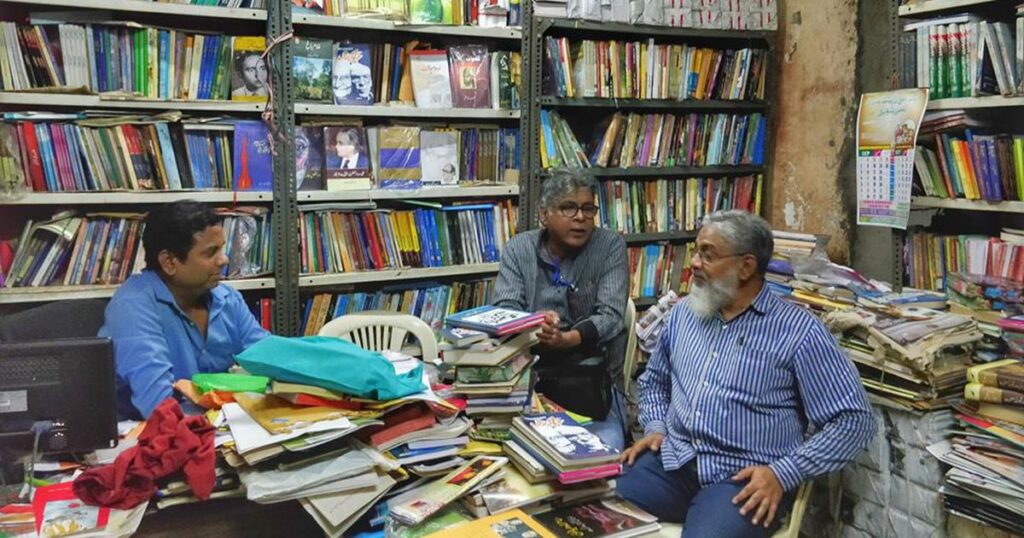
(From left) Shadab Rashid, Urdu drama writer Aslam Parvez, and Shakeel Rasheed at Kitabdaar | Mahtab Alam

In Malegaon

On the first Saturday of every month, the textile city of Malegaon in northern Maharashtra used to become home for lovers of Urdu literature, who meet to discuss, debate and critique new writings in the language, mostly by local writers. Organised under the aegis of Anjuman Muhibban e Adab (Association of Literature Lovers), the gathering began at around 9 pm, and went on till midnight.

Between 30 and 50 people – both writers and readers – would come together, a number that would at times go up to as many as 100 or even 150. Asif Iqbal Mirza, the secretary of the Anjuman, said the practice began 25 years ago on the suggestion of local journalist and editor Samiullah Ansari, who published new Urdu fiction in his weekly, Hashmi Awaz.

Over the years, the publication had emerged as a popular local magazine for young and budding writers to publish their works. The weekly, now in its 35th year of publication, had a considerable fan following and readership at the time. Ansari then suggested that admirers of the magazine form a group comprising readers as well as writers.

The group was initially named Anjuman Muhibban e Hashmi Awaz (Association of Admirers of Hashmi Awaz), but within a few years, its following grew to encompass more than just the readers of the magazine, and in 1998 it was rechristened Anjuman Muhibban e Adab, Malegaon. “Ansari sahib formed the Anjuman so that writers could get their new works critiqued by readers before getting them published in the weekly,” Mirza ssid.

Back then, Mirza himself wrote for a local children’s newspaper called Khair Andesh. But his association with the Anjuman helped him grow into a prolific Afsana Nigar, a short story writer. He was 17 when the group was formed; in the past 25 years, he has written and published more than 200 short stories in different publications.

Apart from Anjuman Muhibban e Adab, there are two more literary groups in Malegaon that held regular meetings until the lockdown was declared in March. No such meetings have been held since then. “Unlike earlier, we now have enough time to read and write. But the irony is we don’t have the opportunity to discuss and publish them,” said Mirza, who also runs a printing business. Several local publications had to halt their issues, including Hashmi Awaz, owing to the lockdown.

According to Mirza, although social media outlets such as WhatsApp and Facebook have, to some extent, helped to keep in touch with fellow writers and readers, the literary life of Malegaon has come to a standstill, since a large number of local writers and readers came from the working class and worked in local looms. “The year 2020 is the silver jubilee of my literary career. I had plans to publish a collection of my short stories, but thanks to the pandemic, that will not happen this year,” Mirza said with a great sense of despair.

In Mumbai

Both readers and writers have felt a deep loss during the pandemic. His love of books took Shakeel Rasheed, editor of the Urdu daily Mumbai Urdu News, to various bookshops in and around the Mohammad Ali Road area of Bombay. “Visiting bookshops was a part and parcel of my life. I feel a deep loss when I don’t visit them,” he said. For him, bookstores are not just spaces to buy books, but they also served as addas for readers and writers. As soon as some relaxations were in place, he rushed to the stores. “Par ab pahle wali baat nahi rahi,” said Rasheed. “Things are not as they were before.” The pandemic has made it more difficult to meet new people.

Shadab Rashid’s Kitabdaar publications and bookstore in Temkar Street of Nagpada was one such adda for Urdu writers in Mumbai, as was Maktaba Jamia on Sandhurst Road West. Today, Kitabdaar and a few other bookshops have opened their stores for a few hours every few days, while Maktaba Jamia remains closed. “Due to lack of public transport and fear of the pandemic, people cannot come to Kitabdaar,” Shadab said. He also edits the quarterly literary magazine Naya Waraq, founded by his late father and noted journalist and writer Sajid Rasheed.

Shadab Rashid said the lockdown brought significant hardships and losses to Urdu publishers and distributors. “It is not that people don’t want to read Urdu books anymore – the problem is they cannot buy them,” he said. “I have received lots of online orders, but I cannot fulfill them because I rely on postal services as they are the cheapest means of delivery, but the services are not fully functional yet.” His online Urdu bookshop kitabdaar.com is one of the few digital distribution platforms for Urdu books exclusively in India. Another such platform, urdubazaar.in, was recently launched from Delhi.

Owing to the discontinuation of physical interactions between readers and writers, people have lost touch with each other, since not all Urdu writers are active on social media, Shakeel Rasheed told me. “We have lost many good writers during this period and found out about their demise several days later,” he added. “Moreover, we could not participate in their last journeys.”

In Hyderabad

Another writer recounted similar thoughts after the death of noted Urdu satirist Mujtaba Hussain in Hyderabad on May 27. Hussain was awarded the Padma Shri in 2007 for his contributions to Urdu literature, but in December 2019, he announced he was returning the award to protest the enactment of the contentious Citizenship Amendment Act. “[T]he democracy for which I fought is under attack now and the government is doing that,” he had said, “that’s why I don’t want to associate the government with me.”

In Hyderabad, another centre of Urdu writing, literary activities have come to a similar halt due to the pandemic. Publications like Shagoofa, a monthly magazine of satirical writing, have been temporarily discontinued since the lockdown.

In Delhi

In Delhi, too, the pandemic has left an adverse impact on Urdu writing. Khan Rizwan, a poet and a known “addebaaz” from Delhi, loved participating in and organizing adabi addas (literary gatherings). He misses visiting the Nai Kitab book store, located in one of the many bylanes of Jamia Nagar, which is one of the famous addas for Urdu lovers in the city. Run by veteran writer and publisher Shahid Ali Khan, Nai Kitab is a haven for young and old writers alike, Rizwan said, as Shahid sahib treated them alike. “It is not just a bookshop but an institution where one got to meet noted writers and lovers of Urdu literature,” he said.

Rizwan would visit the shop at least twice a week, and meet a new literature enthusiast or writer, or find out about a new book or risala /parcha (journal/magazine). “I miss the black tea and chips that Shahid sahib served us with love and affection,” he recalled. “He is a storehouse of information, and several veteran writers were his friends, so he would tell us stories all the time.”

I couldn’t agree more with Rizwan. I have been visiting Nai Kitab once every few months for more than a decade now, and on each of my visits, after asking khabar-khairyat, Shahid sahib would say, “Achcha aap bahut dino baad aayen hain, ye nayi kitaabein aayi hai dekh lein (Since you’ve come after a long time, here are some new books).” Last year, when I visited the bookshop around this time, he directed me towards dozens of books written by noted Urdu satirist Fikr Taunsvi and Shaukat Thanvi. I immediately bought all of them, as they were usually out of print and seldom available.

As the person in charge of the Maktaba Jamia, the publication division of Jamia Millia Islamia in Bombay, Shahid Sahib befriended writers and poets like Jan Nisar Akhtar, Meena Kumari, Sahir Ludhianvi and Jagan Nath Azad. Some of them were regular visitors to the Maktaba Jamia. Though he moved to Delhi after serving the Maktaba for several decades, he did not stop hosting literature lovers. He then founded Nai Kitab publishers and a quarterly journal by the same name.

It was in 2007 at his bookshop that I first chanced upon Shamsur Rahman Faruqi’s celebrated novel Kai Chand The Sare Aasman, later translated into English as The Mirror of Beauty by the author himself. The novel went on to become a major critical and commercial success.

Faruqi was also associated with the Nai Kitab journal as chairperson of its advisory council and would visit the shop once in a while. The journal eventually stopped publication owing to Shahid sahib’s failing health, but he continued with the bookstore as it was like “oxygen for him”, he had once told me.

Waiting for freedom

Some writers have managed to turn the lockdown into a creatively productive period. “Personally, the pandemic has proved as a blessing in disguise as I read books I wanted to for years and finish other important work, such as recording videos of Urdu literature lectures,” says Khalid Mubashir, a poet and assistant professor of Urdu literature at Jamia. He quickly added, however, this was not common, as most writers and poets were stuck at home, either because of their age or in fear of the pandemic. “Moreover, not all writers have access to technology and books like I do. I am fortunate enough to have friends who helped me with technology to do something substantial during this period.”

Mubashir’s videos, as many as 60 of them, are each about 30 minutes long, and cover the history, evolution and development of Urdu and its literature in the subcontinent. Though the lectures are prepared keeping in mind the need and syllabus of Urdu literature students, ordinary Urdu lovers can also benefit from them. All lectures are available on the YouTube channel Safeer e Adab.

Similarly, although younger poets like Mohammed Anas Faizi from old Delhi have been trying to keep Urdu literature gatherings going by using social media, online addas do not have the feel and impact of offline and in-person gatherings. “Technology and social media can only help to a certain extent. Online gatherings, mushairas and addas cannot substitute for the real ones, no matter how well they are done,” he said.

With apologies to Faiz Ahmad Faiz, what the Urdu writers, poets and addebaaz seem to be telling the pandemic is:

Gulon Mein Rang Bhare Baad e Nau Bahar Chale
Chale Bhi Jao Ki Gulshan Ka Karobar Chale

Mahtab Alam is a multilingual journalist and until recently was the executive editor of The Wire Urdu. His Twitter handle is @MahtabNama.

This series of articles on the impact of the coronavirus pandemic on publishing is curated by Kanishka Gupta.

source: http://www.scroll.in / Scroll.in / Home> Publishing and the Pandemic / by Mahtab Alam / July 14th, 2020
Hyderabad: Haziq and Mohi Rare Books planning to sell collection

Hyderabad, TELANGANA :

Among the patrons of Haziq and Mohi Rare Book Sellers, back when its founder Awad Bafana was running it, also includes author (of White Mughals) William Dalrymple.

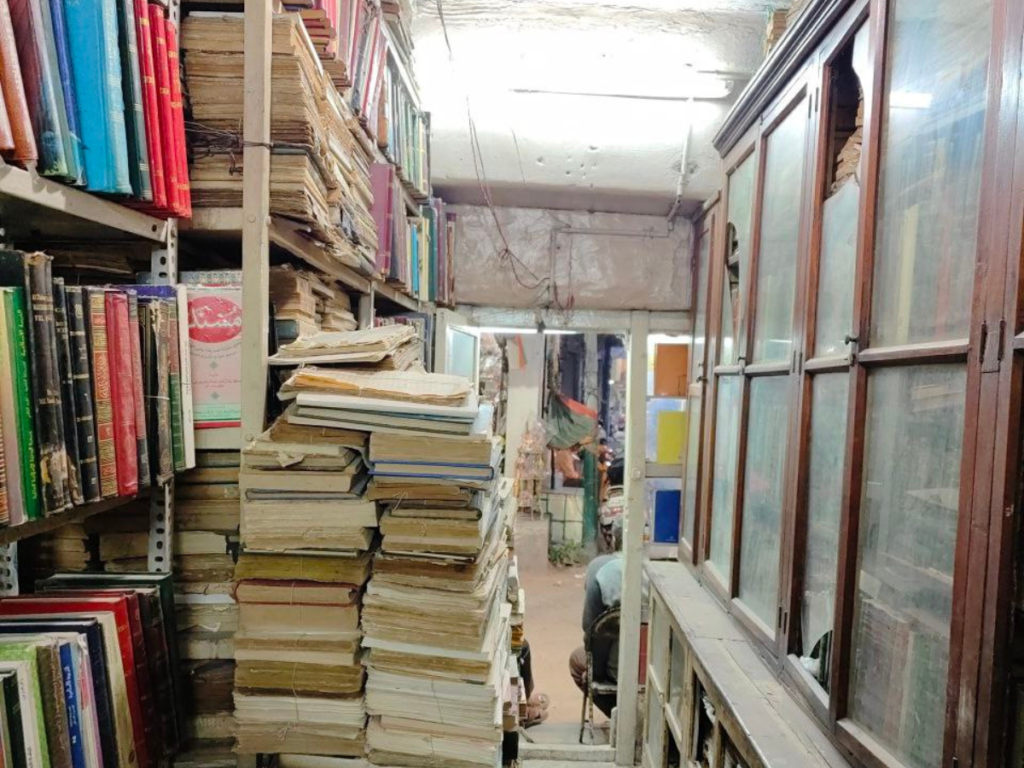
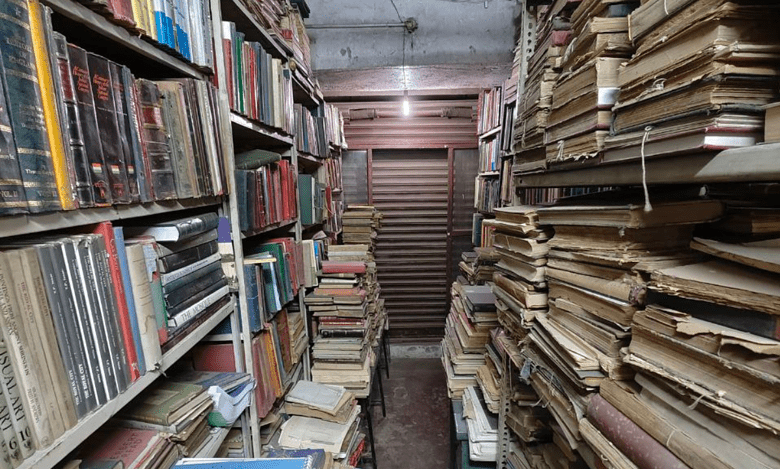
 An inside view of Haziq and Mohi rare book sellers. (Image: Yunus Lasania)

Hyderabad: 

For over four decades, Awad Bin Mohd Bafana ran a book store selling rare books in the Old City. A man of Arab descent, he had inherited the books from his grandfather’s personal library. Over a period of time, it became a go-to place for research scholars, and anyone else looking to buy something interesting and old. Haziq and Mohi Rare Book Sellers today is one of those ‘secrets’ that many love to discover among the city’s heritage.

Awad Bafanna, as he was known, passed away suddenly in 2015 over half a decade ago at the age of 74. He left behind thousands of books in his shop, which only he mentally kept track of. His nephews who run the shop today in Hyderabad, painstakingly have only managed to organise a section of the collection. “There was no inventory but he knew exactly where every book was in his head,” said Ibrahim, one of his nephews.

One can understand the enormity of the rare book collection at Haziq and Mohi while walking through it. There is literally space for only one person to walk in its hallway, and to then turn right into another section. Thankfully, Awad Bafana’s family have partially sorted out books based on subjects like history, politics, on Hyderabad etc. The bookstore is a haven for bibliophiles and research scholars who require particular titles.

A favourite of collectors and scholars

Among the patrons of Haziq and Mohi Rare Book Sellers, back when Awad Bafana was running it, also included author (of White Mughals) William Dalrymple. Ibrahim and his brothers still receive calls from abroad for specific books customers want. Awad Bafana’s grandfather had worked as a Jamadar in Barkas. for the Al-Quaiti family that headed the Yemeni community in Hyderabad.

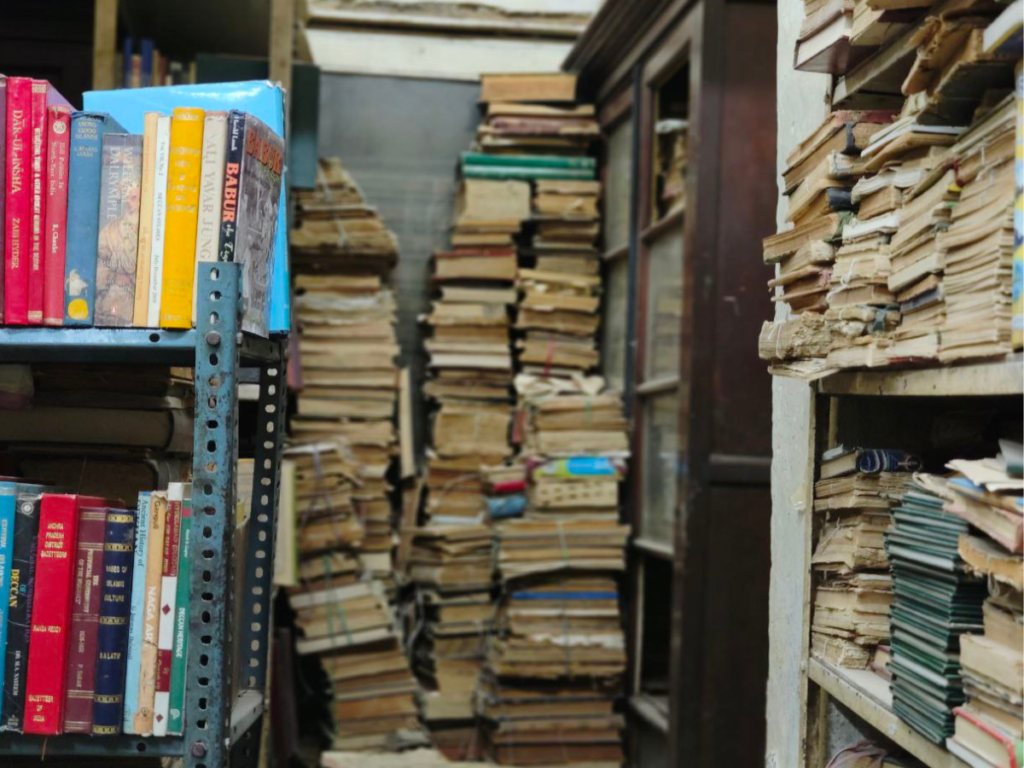
Haziq and Mohi rare book sellers. (Image: Yunus Lasania)

Hyderabad’s Barkas, where their descendants live even today, is believed to be a corrupt word of the word barracks. It is essentially a mini Yemen of sorts and is a go-to place for foodies who want to eat authentic Yemeni cuisine.

Partial book collection up for sale

Now, seven years Mr. Bafanna’s demise, Awad Bafana’s extended family that runs Haziq and Mohi Rare Book Sellers is looking to part with a chunk of its collection. The Bafana family runs the rare book store in Hyderabad’s old city near the Chowk Ki Masjid at Hussaini Alam road. The collection is huge, and the family still has to go through the entire thing in order to catalogue it.

“We are not selling away all our books, nor are we shutting down the store. However, there are some monetary requirements at home due to which we decided to do this. Anyone who is interested can come take a look and discuss it with us,” Ibrahim told Siasat.com.

Haziq and Mohi has a treasure trove of books in mainly Urdu, English, Persian and Arabic. Many book lovers who wander there usually end up sticking around for hours, mostly going back with books they never knew they wanted in the first place. The collection of rare books include several official gazettes, and other publications that are even a century old. One will have to sift through it to even figure out what is there.

Anyone interested in purchasing the collection that is up for grabs can contact the Bafana family for the same (finding it is easy on Google Maps) on +919160161301.

Haziq and Mohi rare book sellers. (Image: Yunus Lasania)

source: http://www.siasat.com / The Siasat Daily / Home> News> Hyderabad / by Yunus Lasania / December 14th, 2022

Intelligence and education of Hyderabad’s Hakim helped raise level of Indian football

Hyderabad, TELANGANA:

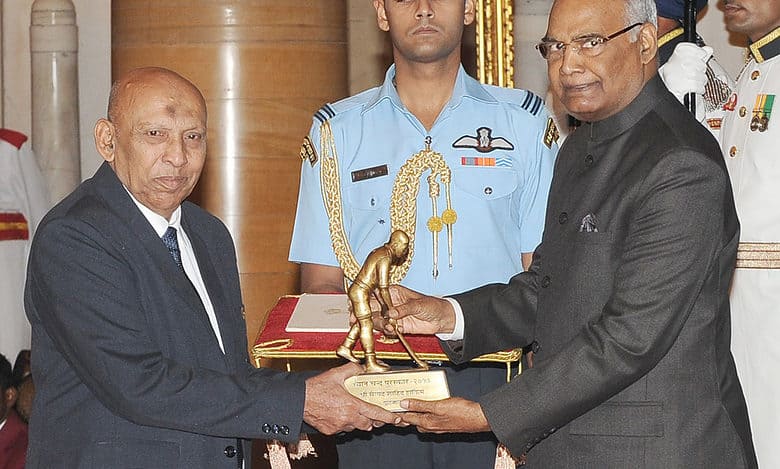
 The President, Shri Ram Nath Kovind presenting the Dhyan Chand Award, 2017 to Shri Syed Shahid Hakim for Football, in a glittering ceremony, at Rashtrapati Bhavan, in New Delhi on August 29, 2017. Photo: Wikipedia

The name of Syed Shahid Hakim is familiar to the entire football fraternity of India. He was one of the most accomplished personalities who graced Hyderabad and Indian football as a player, referee and coach. Indeed it would not be wrong to say that there were few people in India who could match his knowledge and acumen about the different aspects of football. Besides being a well known personality in football, he also served as an officer in the Indian Air Force.

Being one of the sons of the great coach S.A. Rahim, he grew up in a football related environment. Hakim belonged to that period when Hyderabad was at the zenith of Indian football. He played with the illustrious players of India. Among his teammates were the famous goalkeeper Peter Thangaraj, D. Kannan, S.A. Latif, Yousuf Khan, S. Narayanan, H H Hamed and others. All these players were from the twin cities of Hyderabad and Secunderabad.

As a player, Hakim’s talent bloomed at an early age. He was at his peak in the late 1950s. He was a member of the Hyderabad state team which won the Santosh Trophy in 1957. Due to his prodigious talent and his rising status in Indian football, he was selected to represent India in the Pre-Olympic tournaments in Jakarta, Singapore and Malaysia.

It was not a surprise when he was also selected in the Indian team for the 1960 Olympic Games in Rome. That was the last time that India qualified for the Olympic Games. Although India narrowly failed to enter the knockout stage of the tournament, the Games were a great learning opportunity for Hakim.

The close interaction that Hakim had with the world’s best players and coaches gave his keen intelligence some valuable insights into the tactics and training of European and South American players. These he later put into use when guiding his own trainees. This is where his education and learning proved to be a big asset. Having studied at All Saints HS, Nizam College and then Osmania University, his level of education was above many other footballers. This enabled him to interact easily with foreigners and learn from everything that he observed.

Later, after he joined the Indian Air Force, he played for the defence services team and went on to be appointed captain of the All India Services team.

After retiring from the game as a player, he continued to serve Indian football in various capacities. He became a well known referee who was among the best in India. Starting from 1970 he continued to serve as a referee for many years. In 1974 he was selected to be a member of the FIFA Referees panel which was a great honour for an Indian referee.

Thereafter, he officiated in 33 international matches and it is a record which is still not broken. No other Indian referee has officiated in 33 international matches.

But that was not the end of his distinguished career. Thereafter, Hakim became a reputed coach and coached the Indian team from 1980 to 1982 for the Merdeka Cup and Delhi Asian Games along with other coaches.

When he was 80, he fell prey to the rampaging COVID pandemic but recovered. However, despite winning the battle against the dreaded virus, his life did not last long thereafter. He suffered two strokes in rapid succession and passed away in Gulbarga where he had been admitted to a hospital in August 2021. His death left a void in Indian football which will perhaps never be fulfilled.

source: http://www.siasat.com / The Siasat Daily / Home> News> Hyderabad / by Abhijit Sen Gupta / December 09th, 2022

Unique autograph museum of Hyderabad’s Imtiazuddin

Hyderabad, TELANGANA :

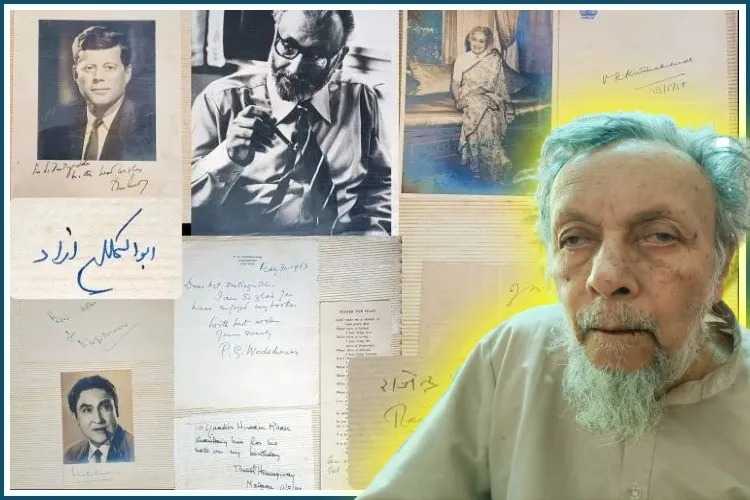
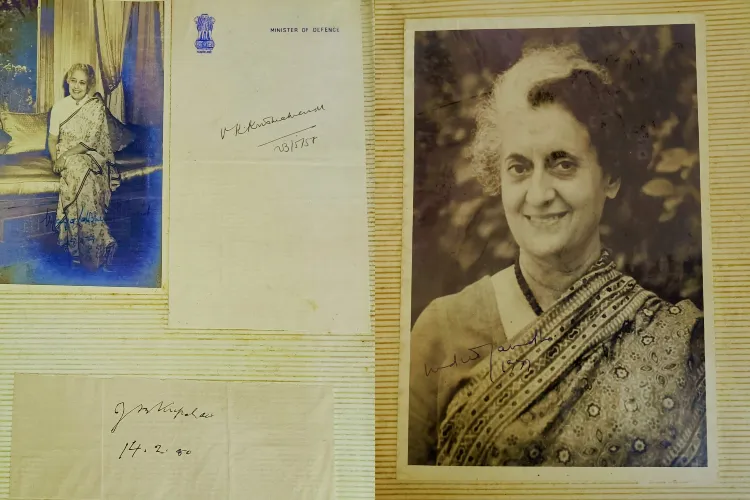
Syed Imtiazuddin with his collection of autographs

Syed Imtiazuddin of Hyderbad has turned his hobby of collecting autographs of famous personalities into a body of work that is bound to be of great historic value for the future generations.

His collection of autographs of important world and Indian personalities has reached up to 200 so far.

The famous people whose signatures are part of Syed Imtiazuddin’s proud collection include Nobel laureates, politicians, writers and poets of Urdu and English, the heads of state and prime ministers of many countries, and film stars.

His passion for collecting the signatures of important and famous people transcends borders. Syed Imtiazuddin says he had to be patient while waiting for the signatures of famous personalities to whom he wrote letters requesting the same inside India and abroad.

Syed Imtiazuddin narrated an interesting incident from his student days. He was a 7th-grade student at Gandhi Bhavan Middle School, Nampally, Hyderabad. He says it was triggered when he was learning a chapter on India’s renowned Nobel laureate, Physicist-scientist Sir C.V. Raman. Dr. Raman discovered what is now known as the ‘Raman Effect.’

awazthevoice
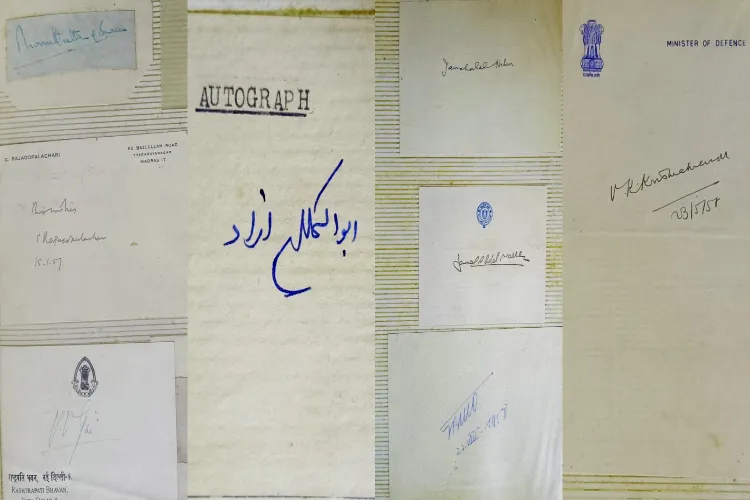
Dr Rajendra Prasad’s signature in Urdu

When the school teacher was imparting the lesson on the life of Sir C. Raman in the classroom, Imtiaz Ahmed thought of if only he could write to the great scientist. He tried to search for his mailing address with no success.

Finally, he did write to Sir C V Raman and posted it to on the address: Sir CV Raman, Bangalore.’ In the postcard addressed to the scientist, he wrote, ‘I was very impressed when I read about you today and I want your signature.’

To his pleasant surprise, a few days later he received a letter from Sir CV Raman. Dr Raman appreciated his passion.

Syed Imtiazuddin says that this was the first ‘happy and memorable day’ for him and it sparked his passion for getting autographs from celebrities.

After receiving Raman’s reply letter and signature, his happiness knew no end.

awazthevoice
Prime Minister Indira Gandhi’s signature

Syed Imtiazuddin said that he passed the class 10 examination from a famous school – Chadar Ghat High Schoo and graduated from Osmania University.

He worked in the Andhra Pradesh State Electricity Department (APSEB) and simultaneously completed his MBA. He retired as Superintending Engineer in year 2001.

The famous poet of Hyderabad, Shaz Tamkant was Syed Imtiazuddin’s elder brother. Shaz Tamkunat was invited to mushairas in Delhi, Lucknow, and other states of the country

Syed Imtiazuddin says, “When Shaz went to Delhi to participate in Mushaira, he also carried an autograph book with him, in which he obtained the signatures of many well-known poets.”

Seeing this, I also decided to follow him. In late 1957, I wrote to the former President of India Dr. Rajendra Prasad expressing my desire to meet him. I received a reply from the Rashtrapati Bhawan that the President is due to visit Hyderabad in June 1958 and I would come to him there at his residence.”

awazthevoice
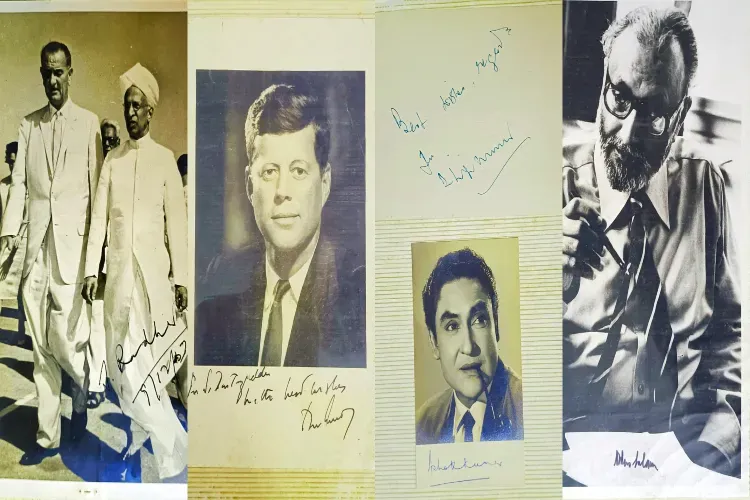
A glimpse of Syed Imtiazuddin’s collection

“As the day of my meeting with Dr Rajendra Prasad was approaching, my anxiety knew no bounds. When I got the message that Rajendra Prasad had come to Hyderabad, I reached Hyderabad Resident with my elder brother Shaz Tamkant and met Rajendra Prasad. I was very happy to meet him. Even Rajendra Prasad appreciated my passion. He had already kept his signatures – in Hindi and English – on an expensive paper ready for me.”

The President also penned his signature in Urdu on his request.

Syed Imtiazuddin is fond of Allama Iqbal’s poetry. He is invited for delivering talks in the ‘Mahfil Iqbal Shanahi’ held every Wednesday.

Syed Imtiazuddin obtained the signatures of more than 200 personalities including Lord Mountbatten, the last Viceroy of India and first Governor-General of India.

Apart from them, the forty-second president of the United States, Jimmy Carter, the second president of Egypt, Gamal Abdel Nasser, the former president of Yugoslavia Josip Broz Tito, the Thirty-fifth US President John F. Kennedy, Indonesia’s first President Abdul Rahim Sukarno.

awazthevoice
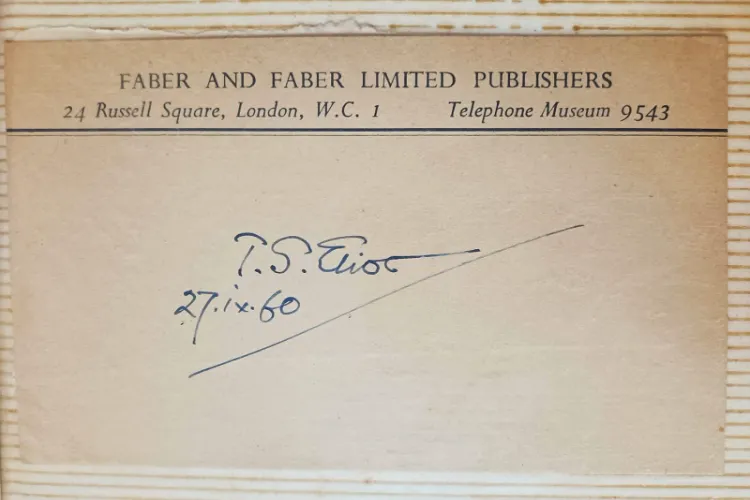
Signature of Writer T S Eliot

Israel’s first Prime Minister David Ben-Gurion, former King Hussein bin Talal of Jordan, famous American actress Elizabeth Taylor, her husband, famous Hollywood actor Richard Burton, Mother Teresa, and Charlton Heston, the hero of the famous American film The Ten Commandments.

Syed Imtiazuddin also obtained signatures from Pakistan’s first Nobel laureate Dr. Abdus Salam. Many of these personalities presented him with their photo as a gift.

Among the Indian leaders’ collection, Syed Imtiazuddin has the signatures of Pandit Jawaharlal Nehru, Indira Gandhi, Dr. Zakir Hussain, Maulana Abul Kalam Azad, Vijaya Lakshmi Pandit, VK Krishna Menon, Moraraji Desai, V. V. Giri, Dr. Sarvapalli Radhakrishnan, Neelam Sanjeeva Reddy.

Syed Imtiazuddin says he feels literature, film, and sports are close to human life and this is the reason why most of his collection relates to personalities from these fields.

He has an unenviable collection of signatures of TS Eliot, American writer John Steinbeck, British mathematician and Nobel laureate Bertrand Russell, Novelist Ernest Hemingway, Dr. AJ Cronin (Scotland), American writer Pearl S. Buck, English writer Aldous Huxley, Josh Malihabadi, Rashid Ahmad Siddiqui, Jigar Moradabadi, Faiz Ahmed Faiz, Khalilur Rahman Azmi, Sohail Azimabadi, Ahmad Nadeem Qasmi, Makhdoom Mohiuddin, Qaratul Ain Haider Krishna Chandra, Rajendra Singh Bedi, Maulana Syed Abul Hasan Ali Nadvi and Maulana Abdul Majid Dariyabadi.

Besides he has the signatures of Bollywood legends Dilip Kumar, Ashok Kumar, Sunil Gavaskar, Sachin Tendulkar, and Amitabh Bachchan.Syed Imtiazuddin said he used to study at an American library near the famous Muazzam Jahi Market in Hyderabad. While going through the book “Who’s Who in America” made him familiar with many top personalities.

Syed Imtiazuddin says success comes only if a person has passion and true dedication to a cause.

source: http://www.awazthevoice.in / Awaz, The Voice / Home> India / by Abdul Rahman Pasha, Hyderabad / by awazthevoice.in / November 26th, 2022

Mariam Afifa Ansari becomes India’s youngest female Muslim neurosurgeon

Hyderabad, TELANGANA / MAHARASHTRA :

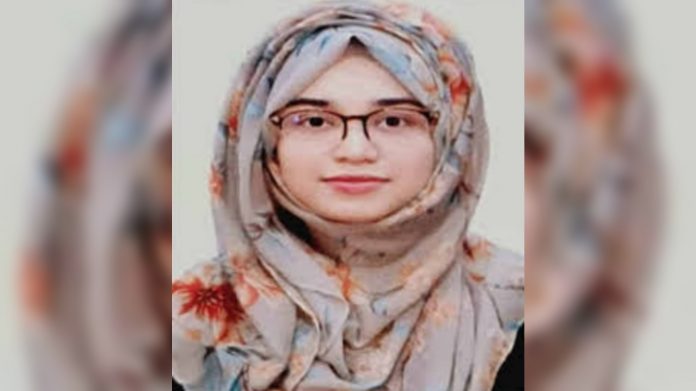
Mariam Afifa Ansari

New Delhi :

Success comes to those who believe in hard work and dedication and this sentence fits the case of Dr Mariam Afifa Ansari, the youngest female neurosurgeon in the Muslim community in India, as per the state president of MSO Maharashtra.

Mariam Afifa Ansari always dreamed of becoming a doctor, and this dream of hers became a reality when she secured 137th rank in the All India NEET exam in 2020.

Mariam said, “Now I have become Dr Afifa from Miss Afifa and my dream of wearing a white coat and examining patients with a stethoscope has come true”.

Since her school days, she has always been a top performer. Mariam completed her primary education in an Urdu medium school in Malagao.

Having been educated in Urdu medium schools till the 10th class, Mariam has left many amazed with her consistent successes. Mariam took her primary education from an Urdu medium school in Malegaon. After that, she came to Hyderabad.

In Hyderabad, she studied till 10th at Rajkumari Durushevar Girls High School, where she won a gold medal in class 10th. Mariam did MBBS from Osmania Medical College and then obtained a master’s degree in general surgery from the same college, said the state president of MSO Maharashtra.

Mariam five gold medals during his MBBS course. After completing her course in 2017, she managed to get free admission for a master’s course in general surgery at the same college.

In 2019, she completed her postgraduate degree, MRCS from the Royal College of Surgeons, England. In 2020, she did the Diploma of National Board course.

It is a special postgraduate degree awarded to specialist doctors in India. After scoring high in the 2020 NEET SS exam, she was granted free admission to MCh at Osmania Medical College.

Mariam’s continuous hard work has helped her cross every hurdle on the path to success. Dr Mariam Afifa Ansari is an inspiration for the young generation in India.

She added also, “My success is a gift from Allah and now a responsibility,”.

Mariam said that she would try to serve the community through her profession. Giving a message to Muslim girls, she said, “Don’t give up, never let anyone tell you that you can’t do it, prove them wrong, by getting it.”

Mariam’s mother is a single mother and a teacher. She is proud of her daughter. Apart from studies, Mariam also excels in painting, calligraphy and Islamic teaching.

source: http://www.muslimmirror.com / Muslim Mirror / Home> Indian Muslim> Women / by Muslim Mirror Desk / November 21st, 2022

Sajida breaks into male bastion to become first woman music technician

Hyderabad, TELANGANA:

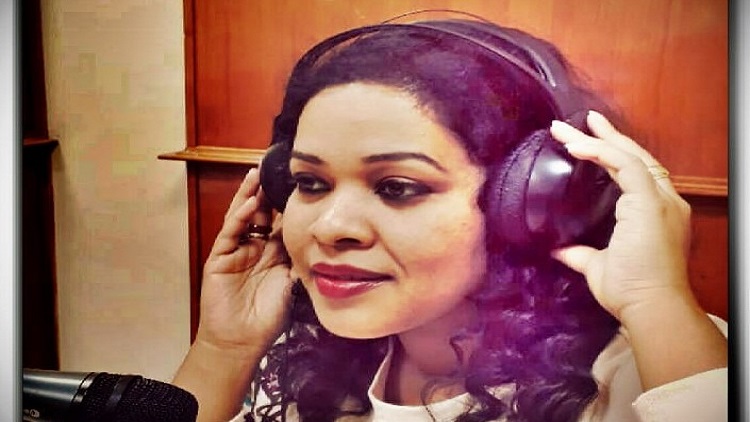
Sajida Khan has served in many Tamil, Telugu and Malayalam films as a sound engineer over the past 10 years

Hyderabad:

Since the time Indian women got the liberty to pursue jobs, most have fulfilled their ambitions by working in the government sector, banks and multinational companies. However, Sajida Begum from the Maula Ali suburb of Hyderabad, Andhra Pradesh, has broken a new glass ceiling by establishing herself in ‘musical acoustics and audio engineering.’ She has not just learnt the ropes of the industry, but become an expert in her field.

For the same reason, President Ram Nath Kovind presented her the ‘Ladies Award’ recognising her as “India’s first female music technician” in 2018.

Every part of her life journey reflects her love for music.  

Interest in sound mixing and engineering

Sajida says she wanted to enter the music industry right from her school days. Alongside pursuing studies, she would often participate in competitions held at Hyderabad’s famous Ravindra Bharathi Theatre. She demonstrated her talent at various programmes and contests on Doordarshan and All India Radio as well.  

She recounted an incident when a folk singer from Andhra, once, spotted her passion and told her about the various genres of music — folk, classical, Bollywood, and others. Her interest grew and she became determined to try something new.

Sajida says that she completed an animation course and then a PG diploma in the subject while finishing her XIIth Standard studies.

Meanwhile, she had the opportunity to go to a studio with her friend. Here, she displayed such great technical knowledge of the devices and equipment, that the owners were impressed and offered her a job. She worked here as an assistant to the music director for about five years.

Making a mark in the industry over a decade

Talking about her current projects, Sajida says she aims to bring as many stories on the digital audio format as possible. This allows authors and societies to preserve their knowledge. She has recently helped 40 children record their poems in audio format.

Sajida has served in many Tamil, Telugu and Malayalam films as a sound engineer over the past 10 years. She has done dubbing, background music and complete audio mix. Besides, she is responsible for the success of several jingles, music albums and TV serials.

She has worked with leading film directors like Dasari Narayana Rao, Teja and Puri Jagannadh.

The only female music technician in the country, Sajida has also found her way into the ‘International Audiobook.’ This is a collection of interviews with women achievers in the audio field from across the globe. It’s called ‘Women in Audio.’

Despite this, Sajida says that it will still take some time for India and the world to recognise the contributions of women sound engineers.

Encouraging more women to venture into the field

Sajida says there’s no gender discrimination in the music industry. In fact, she got more work and with more confidence from her employers due to her being a woman. She said families must encourage their girls if they take interest in music, just like her parents did.

For Muslim women she said, a lot of them get into Mehndi application, beautician and tailoring courses; but they can explore fields beyond these as well. Muslim women need to be provided education so they are empowered and made more aware of all the career avenues available to them.

Sajida said she wishes to start her own post-production studio and a music school. She would like to employ as many women as she can in them, she said.     

source: http://www.awazthevoice.in / Awaz The Voice / Home> Women / by awazthevoice.in / January 24th, 2021

How this 21-year-old created robotic gloves to help paralysed patients get their groove back

Hyderabad, INDIA / SAUDI ARABIA :

As a sweet little six-year-old, when Zain Samdani saw his mother taking care of the household like a pro, he decided to lend her a robotic hand. In all his innocence, he went up to her and said, “I will build you a robot that can do everything.” Today, the same boy has grown into an entrepreneur whose invention goes behind the peripheries of any household.

IMG_8293_(1)
Meet Zain | (Pic:  Zain Samdani)

He won the Young Entrepreneur Award from the Indian Business Forum, Riyadh in January 2018


But before the result came the hard, gruelling work of learning everything there is to learn about robotics.

Born in Hyderabad and brought up in Saudi Arabia, Zain started by reading. And then some. Then came a series of instruction videos and only after he turned 14 came his first robotics kit. In 2013, he pursued the PSSO Robotics Programme at the King Salman Science Oasis in Riyadh apart from participating in international competitions. He topped it off with pursuing online courses leading up to the summer of 2015. 

But it is usually when pain hits home that you really put your power into play. And that’s what happened with Zain. “A distant uncle of mine was paralysed and what upset me was that there was hardly any technological help that could be rendered to help him move around. In a quest to help my uncle, I decided to create ExoHeal,” says the youngster.  

Zain with Sundar Pichai

Started in May 2016, this start-up offers a modular robotic device based on the concept of neuroplasticity. There are two gloves — one that is sensory and one that is robotic. The sensory one goes on the good hand and the robotic on the other. When you move the good hand, the paralysed hand is almost forced to mimic the action which actually tricks the brain into believing that the paralysed hand is actually okay, forming new neural connections. With consistent usage, movement may gradually be restored in the paralysed hand. 

In 2016, his working prototype helped his uncle and since then, the Ashoka Young Changemaker has been trying to perfect the device. He has been adding little touches and enhancements like going wireless, with the help of Bluetooth and radio waves, and the latest, launching an app. “Because of the lockdowns, patients are unable to travel to their physiotherapists and hence, the app helps the doctor track the progress of their patients in real-time,” he explains. The app has a list of exercises the patient can choose from. With the team of five and machine learning, they are trying to adjust the level of assistance offered with the involvement of the doctors so that the latter puts only that much effort as is required from him.  


Selected as a Global Teen Leader by We Are Family Foundation in New York, USA in March 2019


Dr KV Rao Scientific Society in Hyderabad has also been of mighty help to this entrepreneur who is pursuing his Higher Secondary Course from the National Institute of Open Schooling due to medical reasons.

The Society started supporting his project in November last year. Currently, the 3D printed model is ready and they hope to conduct clinical trials for further validation. By the way, this innovation has been to the Google Science Fair twice (2016 and 2019) and both times, Zain was the Global Finalist. Even Google’s CEO Sundar Pichai has tried them out too. Now, how’s that for some validation?

www.zainsamdani.org

source: http://www.edexlive.com / edexlive, The New Indian Express / Home> Start-Up / by Seema Rajpal, EdexLive / June 09th, 2021

Shotgun Shooting World C’ship: Muffadal Deesawala, Bhavtegh Gill win junior skeet mixed team bronze

Hyderabad, INDIA /Osijek,CROATIA :

The Indian duo beat the American pair of Aidin Burns and Mikena Grace Fulton 5-1 in the second bronze medal match.

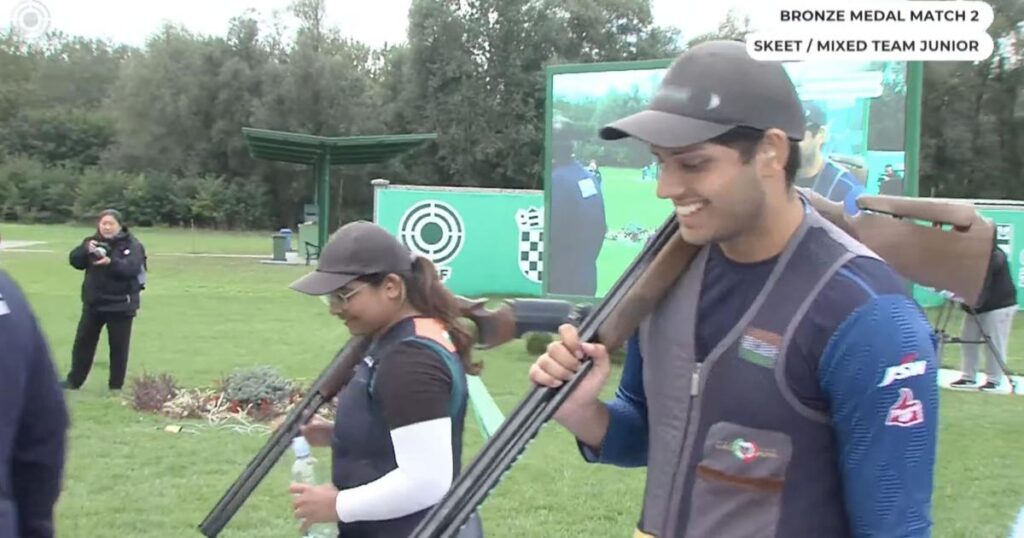
Muffadal Zahra Deesawala & Bhavtegh Singh Gill | ISSF YouTube

Muffadal Zahra Deesawala and Bhavtegh Singh Gill won India’s third medal of the International Shooting Sport Federation Shotgun World Championship in Osijek, Croatia. The duo picked up a bronze in the Skeet Mixed Team Junior event here at the Olympic Shooting Range ‘Pampas’ on Tuesday.

They beat the American pair of Aidin Burns and Mikena Grace Fulton 5-1 in the second bronze medal match. They were declared winners by Golden Hit after Bhavteg and Mufaddal shot seven out of eight targets in the last series, enough to ensure that the Americans cannot win the series after Burns missed one out of his four targets.

The first pair to six points usually wins the match but the Indians were up 5-1 already and a tied last series would have given the Indians the point needed to win.

Deesawala and Gill finished sixth in the qualifiers shooting a combined 132 out of 150 targets. Deesawala shot 62 out of 75 and Gill shot 72 out of 75 shots to secure the last position for the bronze medal matches.

The British pairing of Mitchell Brooker Smith and Sophie Herrmann won the Gold in the event beating Haolei Zhao and Dan Wang of China 6-4.

Areeba Khan, on Tuesday, had won India’s second medal of the World Championship after the Junior Men’s Trap Team had won a gold. 

Bhowneesh Mendiratta had also won a Paris Olympic quota, India’s first for the 2024 Games, earlier in the championship. He finished fourth in the event.

source: http://www.scroll.in / Scroll.in / Home> The Field> Shooting World Championships / by Scroll Staff / October 04th, 2022

Hyderabad: Exhibition of Muslim women achievers at Salar Jung Museum

Hyderabad, TELANGANA:

 Dr Lateef of ILM Foundation

Hyderabad: 

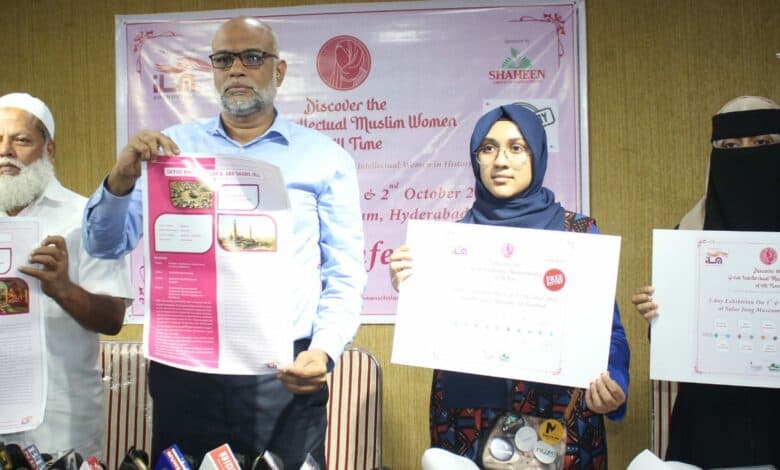
Women are the largest untapped reservoir of talent in the world. There is no limit to what they can accomplish. Now, one can learn all about the achievements of Muslim women at a two-day exhibition being organised at the Salar Jung Museum on October 1 and 2 by the Intellectual Learning Methodologies (ILM) Foundation in association with the Shaheen Group of Educational Institutions, Islah and Asli Talbina.

Maulana Khalid Saifullah Rahmani, general secretary, All India Muslim Personal Law Board, will inaugurate the exhibition which showcases the achievements of 40 women in different fields. Details of their accomplishment will be explained through posters, said Dr Lateef of ILM Foundation.

The main objective of holding the exhibition is to inform the common man about the achievements of women, particularly Muslim women.

A study of early Islamic history showed that women enjoyed the freedom of movement and took an active part in all walks of life. They excelled as rulers, warriors, nurses, scholars, jurists, teachers, traders and companions of the Prophet (Sahabiat).

In fact, they defined success on their own terms and proved that they are the real architects of society. When he started working on the subject some one-and-half years ago, Dr Lateef said, he stumbled upon the names of at least 10,000 women who had made immense contributions in their chosen field of activity.

These details he accessed through four books. They are  Al Muhaddthat written by Oxford scholar of Indian origin, Dr Akram Nadvi, Muslim Women Biography Dictionary of Aisha Bewley, Great Women of Islam written by Mehmood Ahmed Ghazanfar and Achievements of Muslim Women in Religious and Scholarly Field by Maulana Qazi Athar Mubarakpuri.

Some of the well-known names whose exploits and achievements are being showcased include Hazrath Aisha, wife of the Prophet Muhammed, who made an enormous contribution to the cause of Islam through her intelligence and scholarship. Besides being an important narrator of Prophetic traditions (Hadith), she proved to be more learned than many men of her period.

Many male companions of the Prophet used to approach her for clarification of Hadith. Similarly, Hazrath Zainab, daughter of Hazrath Ali, was also a great scholar. Eminent Islamic scholar, Ibn Hajar, is stated to have studied under 53 women while Al Suyuti is under 33 women. All this is history now. Other prominent women are Queen Zubaida, Princess Razia Sultana, Durru Shehvar, and Princess Niloufer.

These women could leave their indelible marks as Muslim society gave them their fundamental rights to education and self-development.

“Lives of early Muslim women represent exemplary models, transcending time and boundaries. And they are a great source of inspiration,” Lateef said.

Organisers plan to take the exhibition to other parts of the country after Hyderabad. The exhibition on the inspiring women achievers is the result of the hard work put in by two talented girls -Juveria Sabir and Zoha Ansari. The latter is working at Edventure Park, a start-up incubator.

The two-day exhibition is being held in the eastern block of the Salar Jung Museum from 11 am to 5 pm. Entry is free.

source: http://www.siasat.com / The Siasat Daily / Home> Featured News / by J S Ifthekhar / September 27th, 2022

Watch Mahboob Khan’s journey: A hidden gem in India’s combat sports

Hyderabad, TELANGANA :

Hyderabad: 

Although known primarily for its food and culture, Hyderabad is fast emerging as a centre for Mixed Martial Arts (MMA). All over the country, those looking to make their mark in the sport make the city their home as the Hyderabad MMA Gym on Kali Khabar Road in Chaderghat churns out well-rounded, technically sound fighters. The man responsible for this, Head Coach Shaik Khalid, creates fighters adept at grappling and striking.

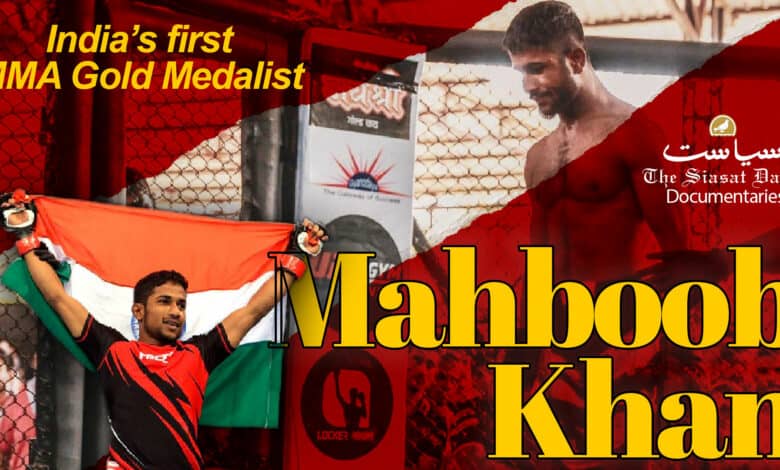
Among his earlier students is India’s first gold medallist in the sport, Mahboob Khan. Originally from Gulbarga, Karnataka, he moved to Hyderabad with his family at the age of 10. To help make ends meet, he began working from a very young age at an onion shop in Madannapet. His work ethic improved even further as helped provide for his family.

But a chance visit to Shaik Khalid’s gym would change his life as Khalid recognized that Mahboob incorporated the same discipline from his previous jobs into his training.

Seeing this potential, Khalid asked Mahboob to quit his job and paid for his daily expenses. The result has been a gold medal on the international stage and more than 10 within the country’s domestic scene. He hopes to also make a professional debut soon. Do check out Siasat.com’s mini-documentary about Khan’s journey.

source: http://www.siasat.com / The Siasat Daily / Home> News> Hyderabad / by Daneesh Majid / September 05th, 2022