Twenty passengers burnt alive, 16 critically injured in Jaisalmer-Jodhpur bus fire Tuesday.
A devastating tragedy unfolded on the Jaisalmer–Jodhpur highway on Tuesday evening when a private air-conditioned sleeper bus carrying nearly 50 passengers went up in flames near Thaiyat village in Rajasthan.
Amid the panic, bus conductor Rafiq Khan displayed extraordinary bravery. Positioned near the back when the smoke appeared, he rushed forward to open the main gate and allow passengers to flee. As he moved toward the front, the ceiling burst into flames and an explosion knocked him down.
Despite sustaining severe burns, Khan crawled through the aisle, managed to unlatch the door, and helped several passengers escape before collapsing. He is now battling for his life at Dr. S. N. Medical College in Jodhpur, where doctors say he has suffered extensive burn injuries.
The fire, which is believed to have started from the rear of the vehicle, spread rapidly, trapping dozens inside. At least 21 people have been confirmed dead, while several others sustained critical burns and remain hospitalized.
According to preliminary reports, the incident occurred shortly after the bus left Jaisalmer for Jodhpur. Passengers noticed smoke rising from the back, prompting the driver to stop on the roadside. However, before most could react, a sudden blast shook the bus and flames engulfed the upper berths. Survivors described chaotic scenes as people screamed for help, some breaking windows in a desperate attempt to escape. The situation was worsened by the fact that the bus had only one functional exit door, which became jammed as the fire spread, leaving passengers trapped inside.
Medical officials confirmed that fifteen injured passengers were brought from Jaisalmer late Tuesday night. Five of them, including Khan, are on ventilator support with burns exceeding 70 percent of their bodies. The remaining have burns between 40 and 50 percent. Identification of the deceased has been difficult due to the extent of the burns, and DNA testing is being carried out to help families claim the bodies. Ten bodies have been kept at the S. N. Medical College mortuary, while others are at AIIMS Jodhpur.
Eyewitnesses and local residents who rushed to the scene recalled horrific visuals of the burning bus and passengers trapped inside. One survivor, Peer Mohammad, managed to smash a window to rescue his wife, sister-in-law, and a child but lost two of his young children who were asleep on the upper berth. “I could see them burning, but the flames were too strong. I tried to go back, but I couldn’t,” he said, breaking down.
Officials suspect that an electrical short-circuit in the air-conditioning system may have triggered the fire, though a detailed forensic and mechanical investigation is underway. The bus owner, driver, and the vehicle body-builder have been detained for questioning, while a technical team from the Central Institute of Road Transport (Pune) has been called to examine possible safety lapses. Authorities are also probing whether the bus had been illegally modified and if its emergency exits met regulatory standards.
The Rajasthan government has announced financial compensation for the victims’ families and injured passengers, but the relief policy has already drawn criticism over the cap imposed on payments to households that lost multiple members. District Collector Pratap Singh stated that a helpline has been set up for the families and that DNA matching and identification will be expedited.
As the state mourns one of its worst transport tragedies in recent years, questions are being raised about the enforcement of passenger safety rules, particularly in private buses converted into AC sleepers. Critics say the incident highlights the urgent need for mandatory fire-safety mechanisms, functional emergency exits, and stricter monitoring of vehicle modifications.
In the midst of this overwhelming loss, the courage of conductor Rafiq Khan stands out. A man who risked his own life so others could live. His selfless act amid the chaos has earned him praise across the state and beyond, a rare moment of humanity in an otherwise grim tragedy that exposed fatal gaps in India’s passenger transport safety system.
source: http://www.muslimmirror.com / Muslim Mirror / Home> Indian Muslim> Positive Story / by Muslim Mirror Network / October 18th, 2025
Advocate Faiz Syed leads new regional initiative inspired by Abdul Wahid Shaikh’s movement for justice and reform.
On 28th September, the Aurangabad (Chhatrapati Sambhaji Nagar) chapter of the Innocence Network, India was formally established, with an ad-hoc committee of 14 advocates led by Advocate Faiz Syed.
Speaking to Muslim Mirror, Syed said, “We felt the urgent need to start this chapter due to the widespread issues of wrongful incarceration, false implication, filing of bogus cases, and arbitrary arrests across the country. When a sole breadwinner or a poor individual is drawn into this legal labyrinth, it becomes incredibly difficult for them to navigate their freedom.”
He added, “Our aim is to provide legal aid and guidance across the Marathwada region and ensure that no instance of wrongful implication goes unchallenged.”
The Innocence Network was founded by Abdul Wahid Shaikh, one of the accused in the 2006 Mumbai train bombings (7/11 case), following his acquittal by the Maharashtra Control of Organised Crime Act (MCOCA) court in 2015. Shaikh spent nine years in Arthur Road Jail before being acquitted. “We had fought the case to the best of everyone’s ability,” he recalled. “Yet, we were convicted. That experience made me question the limits of legal struggle alone.”
As he was released, Shaikh’s co-accused urged him to continue the fight for their freedom—a moral responsibility that, he says, became his life’s mission. After returning to work as a teacher, Shaikh began assisting Advocate Yug Mohit Chaudhry, who led the 7/11 defense in the Bombay High Court. It was during this time that he met Advocate Pari Jata and researcher Sharib Ali, both deeply involved in civil rights work.
Inspired by the global Innocence Network movement, Ali proposed launching an Indian chapter. Together, they began mobilizing civil society to challenge wrongful convictions, especially in terrorism cases. Their first public gathering in Delhi—attended by lawyers, students, scholars, and activists—marked the formal establishment of the Innocence Network India.
The Network describes itself as “an all-India collective of individuals and organisations working for the rights of those wrongfully prosecuted or convicted, especially under charges of terrorism.” Led by exonerees and supported by lawyers, researchers, and civil rights groups, it focuses on criminal justice reform, rehabilitation, and policy advocacy. Its website also archives documents related to the 7/11 case.
Shaikh’s first book, “Innocent Prisoners,” exposed what he described as fabricated evidence by the Anti-Terrorism Squad (ATS) in framing 13 innocent men. The book was widely discussed as a crucial work highlighting the pattern of false implication of young Muslims in terrorism cases.
In 2016, the Network organized its first Innocent People’s Tribunal at the Constitution Club of India, where 16 wrongfully prosecuted individuals testified publicly about their ordeal. The report from this tribunal later informed the Law Commission’s Report No. 277. Another tribunal followed in Kolkata in 2018.
Since 2017, the Network has hosted two annual programs in Mumbai—one on the anniversary of the 7/11 bombings and another, the Shahid Azmi Memorial Lecture, in memory of the lawyer who represented the 7/11 accused. These events feature legal experts, journalists, and filmmakers such as Justice Abhay Thipsay, Hansal Mehta, Yug Mohit Chaudhry, Susan, Nazia Sayed, and Faisal Qazi, among others.
Shaikh has also used books, media, and digital platforms to expand his advocacy. His YouTube channel “Begunah Qaidi” features over 250 videos documenting cases of wrongful incarceration. His “Mobile Legal Aid” helpline operates 24×7, offering immediate support to those facing fabricated charges. “It has already helped prevent several cases of wrongful incarceration,” he noted.
Beyond advocacy, Shaikh continues to assist exonerees with legal representation, education, and rehabilitation. His upcoming books include an autobiography with Roli Books and a collaborative work profiling his co-accused.
Recently, the Innocence Network launched a think-tank to document wrongful incarcerations and misuse of draconian laws. “Our team includes researchers, professors, and lawyers,” Shaikh said, adding that a detailed report is in progress.
Sohail Shaikh, one of the 7/11 exonerees, told Muslim Mirror: “The Innocence Network may have been formally established in 2016, but its roots go back to Arthur Road Jail. Shaikh has only continued the work we all started in prison. The Network’s work made it possible for society to finally recognize our innocence.”
Advocate Shruti, a researcher with the network, emphasized, “The kind of miscarriage of justice in the 7/11 case represents a double injustice—innocent people are tortured while real perpetrators remain free. The Network’s work is vital to restoring ordinary citizens’ faith in justice.”
Shaikh revealed that new chapters of the Innocence Network are being planned in Bangalore, Jalgaon, Jalna, and Hyderabad, set to be launched later this month.
source: http://www.muslimmirror.com / Muslim Mirror / Home> Human Rights> Indian Muslim> Positive Story / by Osama Rawal / October 20th, 2025
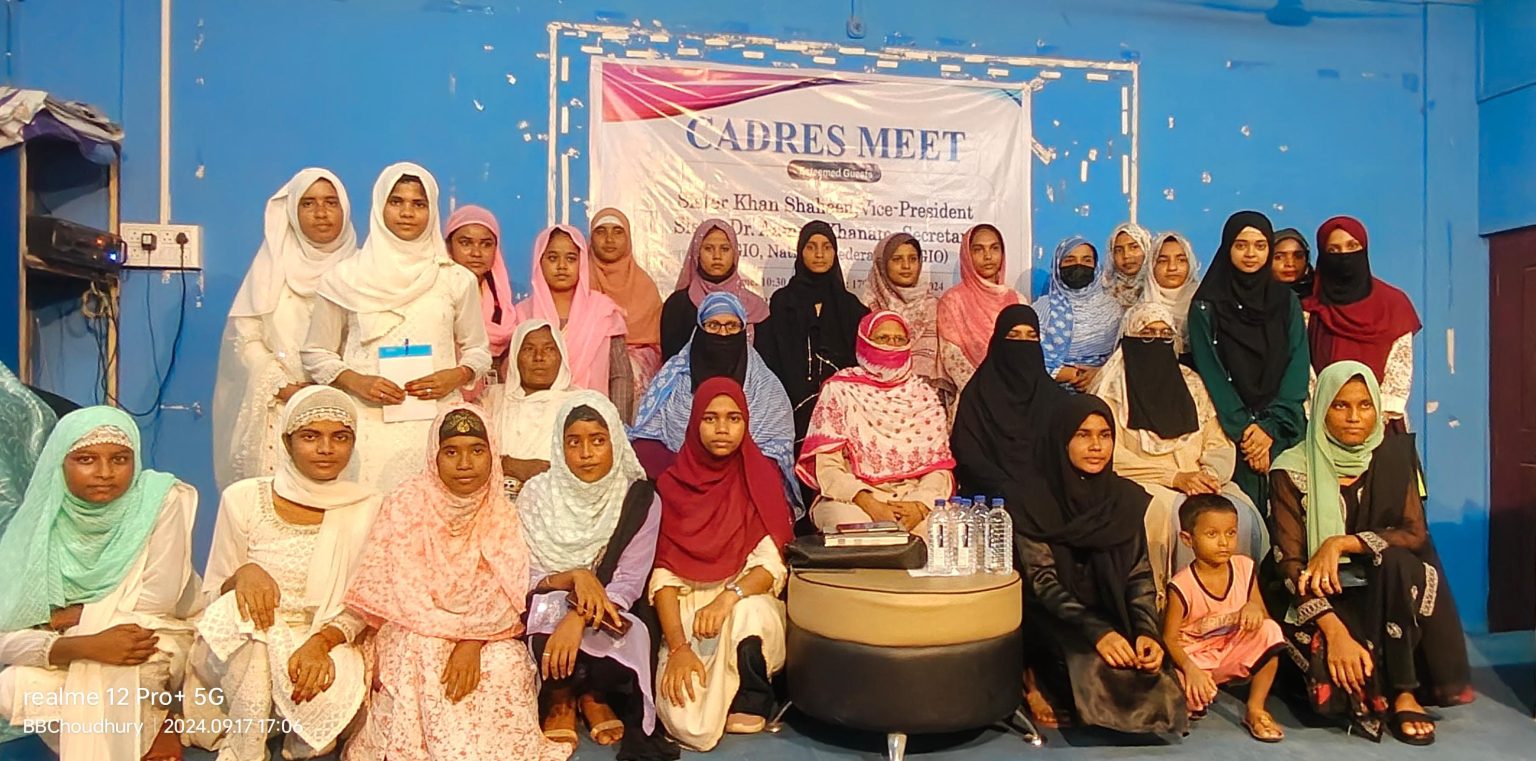
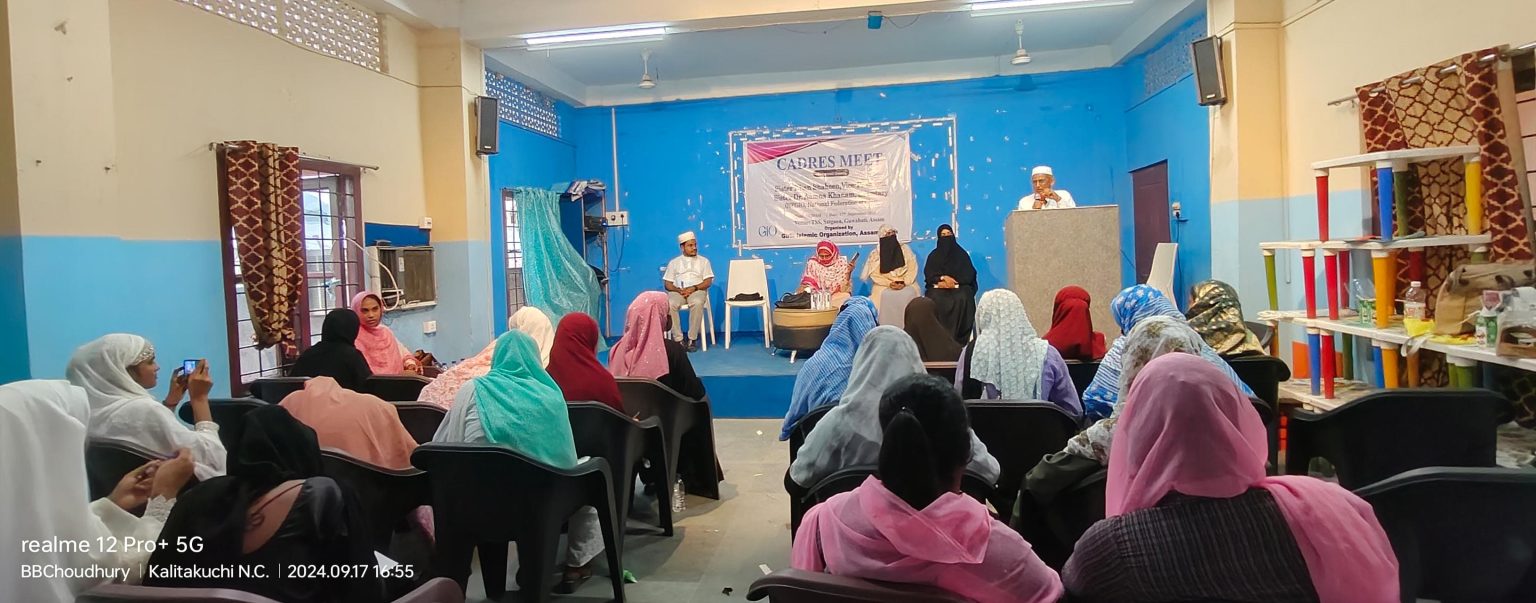
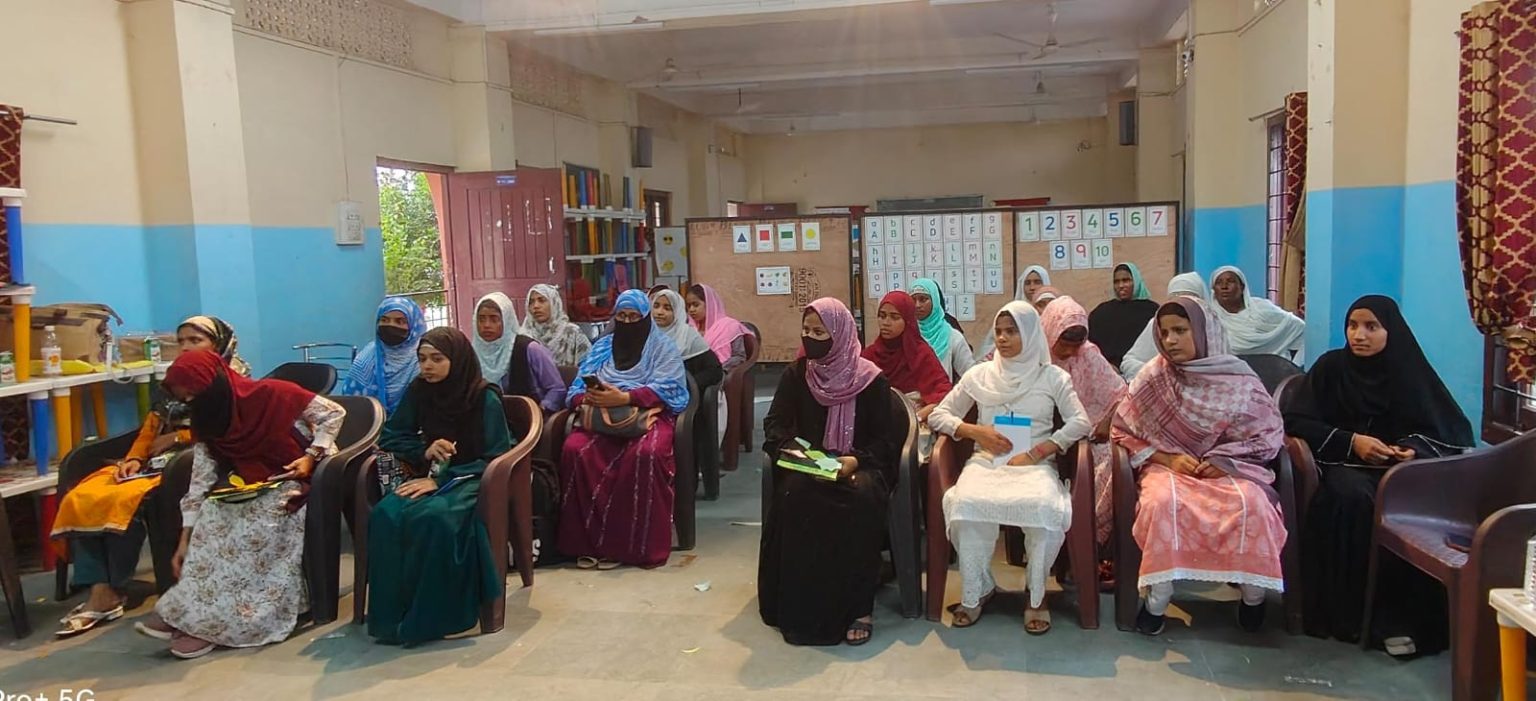
In a milestone for the Girls Islamic Organisation (GIO), the first-ever cadre meet for GIO Assam North took place in Guwahati, marking a new chapter in the organization’s efforts to empower young women in the region.
Under the patronage of Zahida Batul, Secretary of JIH Assam North Women’s Wing, GIO has been making strides in Assam over the past few years. The event commenced with the recitation of the Quran by Sumiya Begom, setting a spiritual tone for the day-long program.
Zahida Batul, the GIO Assam North Coordinator, delivered the inaugural speech, emphasizing the organization’s commitment to fostering leadership among young women. The gathering featured an invaluable address on the “Purpose of Life” by Khan Shaheen, Vice-President of the National Federation of Girls Islamic Organisation (NFGIO).
Dr. Aamna Khanam, Secretary of NFGIO, followed with a presentation on “GIO: Aims and Objectives & Organisational Setup,” outlining the structure and mission of the GIO.
Khan Shaheen further introduced the NFGIO, detailing its functions and activities, which aim to promote education and empowerment for girls across the nation.
Dr. Aamna Khanam also delivered a speech on the “Etiquette of Organisational Life,” highlighting the importance of discipline and collaboration within the GIO framework.
The open session featured esteemed guests, including Prof. Zohurul Islam Mullah, Ameer-e-Halqua; and Bazlul Basit Choudhury, Halqa Office Secretary and HRD Secretary, who delivered valuable insights.
Ameer-e-Halqua JIH Assam North congratulated the newly elected Convener and Core Committee Members, encouraging them to lead with dedication and vision.
Following detailed discussions, an Ad-hoc Coordination Committee for GIO Assam North was formed to advance the organization’s objectives.
The committee includes:
Convener: Jubaida Khatun (Tezpur) – MA in Political Science and Sociology, currently a lecturer at a private college.
Co-convener: Sujana Sultana (Guwahati) – Bachelor of Optometry, working in primary eye care.
Core Committee Members:
Selima Akhtara (Goalpara) – MA (Double), M.Ed., currently principal of a private HS school.
Jinnatara Yeasmin (Darrang) – BDS First Year student.
Sumaiya Begom (Hojai) – HS Final Year student.
The concluding remarks were delivered by Khan Shaheen, who reiterated the importance of unity and proactive engagement in the community.
This historic gathering not only strengthened the foundation of GIO in Assam but also ignited a sense of purpose among the participants, paving the way for future initiatives aimed at empowering girls across the region.
source: http://www.radiancenews.com / Radiance News / Home> Latest News> Report / by Radiance News Bureau / September 29th, 2024
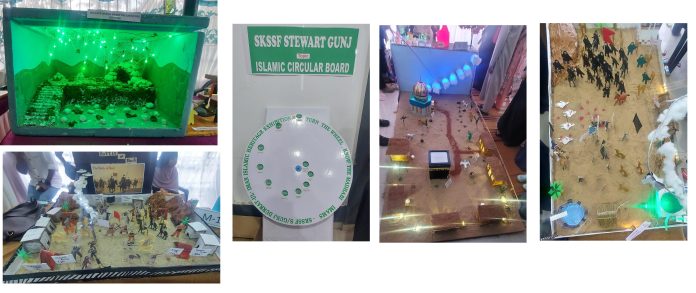
An Islamic Heritage Exhibition titled “Durrat-ul-Iman” was organised by the SKSSF Stewart Gunj Unit in South Andaman between 17 to 19 October, with the active participation of all Madrassas under ARJM . The event served as a vibrant platform for students to present creative and educational displays reflecting Islamic history, knowledge, and spirituality.
The exhibition featured a range of thematic models and interactive setups, including an artificial Qabr (grave) designed by youth members, a matching board circuit highlighting the teachings and details of the four Imams of Islam, a quiz corner, a selfie point, and a video presentation on “The Signs of Qayamat.”
Among the exhibits, the Isra-wal-Meraj display drew particular attention for its detailed depiction of the Prophet’s journey from Mecca to the heavens. Visitors praised the effort and imagination that went into the presentation, which combined learning with deep spiritual reflection.
The exhibition was organized to foster Islamic education, encourage creativity among students, and strengthen community engagement through faith-based learning. With overwhelming response from people, the exhibition was widely appreciated by the public for its innovative displays and spiritually enriching atmosphere.
source: http://www.radiancenews.com / Radiance News / Home> Latest News> Report / by Radiance News Bureau / October 23rd, 2025
It was a hot, restless afternoon in New Delhi – the kind where the sun presses down with such fury that even the breeze seems to hide. The air was thick with chants, placards, and purpose. Students from across the capital’s universities had gathered in protest – a voice of defiance against the rising wave of mob lynchings sweeping through India, backed by extremist ideologies. Amid the sea of young faces, I noticed a small group that stood out. They were not university students in jeans and t-shirts, but madrasa students in simple white kurtas and skullcaps, holding banners of peace and justice.
They had come all the way from Deoband, a quiet town that has long been a lighthouse of Islamic learning, to stand shoulder to shoulder with victims’ families. Among them was a young scholar whose calm presence carried a certain gravity: Moulana Mehdi Hasan Aini Qasmi.
Our meeting was brief, just a few words exchanged, a handshake perhaps, but something about him stayed with me. I didn’t know then that this quiet madrasa graduate would one day become the face of a remarkable educational revolution in India.
The Seeds of Brotherhood
Two years later, in 2018, the Students Islamic Organisation of India (SIO) held its grand All India Conference in New Delhi, themed “Reclaiming Dignity | Designing the Future.” Among the audience of fiery youth and intellectuals, Mehdi Hasan was invited as a representative of madrasa students – being the President of the Abna-e-Madaris (Old Boys’ Association of Deoband).
When he spoke, his words carried the depth of tradition and the urgency of modern times. After the session, we found ourselves in a long conversation about faith, education, and the future of Muslim youth. That day, a brotherhood was born – one that would travel far beyond Delhi’s conference halls.
Soon, he invited me to Deoband. What began as a visit turned into a revelation. We walked through the majestic gates of Darul Uloom Deoband, met students immersed in their studies, and discussed the evolving role of Islamic education in a rapidly changing India. It was there I saw the spark – Mehdi’s vision was clear: to bridge the gap between traditional Islamic scholarship and the demands of modern society.
From Streets to Seminars
Between 2019 and 2020, our journey turned into a mission. Together, we travelled across India – from the quiet corners of Tripura to the bustling lanes of Telangana – addressing crowds, organising awareness drives, and speaking against hate, Islamophobia, and discrimination.
Then came the storm – COVID-19. India went silent. The streets emptied. Institutions shut their doors. But we refused to stop. Our activism simply changed form. While the world was locked down, we were reaching out – distributing relief, helping stranded students, and connecting youth through virtual spaces.
One late-night discussion during those months became the turning point.
“If people have time,” I said thoughtfully, “why can’t we bring madrasa education online? Why can’t we empower teachers who have no income now? Why can’t we teach our youth skills to survive?”
That one why became a revolution.
Over the next two years, the spark spread like wildfire. Under Mehdi’s leadership, IIAD organised over ten national workshops across India, reaching thousands of students from Aurangabad to Delhi. These workshops covered topics far beyond theology – from Education to Entrepreneurship and Islamic Thought to Social Leadership.
One such event, the Aurangabad Education Expo, became a milestone in connecting madrasa students with mainstream educational opportunities. Through these sessions, IIAD began to carve a new narrative for Islamic learning – one that embraced progress without compromising on principles.
The Birth of an Idea
Our first online programme, “Education to Entrepreneurship,” was meant to be a small initiative – a bridge between learning and livelihood. But the response was beyond imagination. Hundreds of madrasa students and teachers joined from every corner of India.
We realised we had touched a nerve – there was a hunger for knowledge, a thirst for relevance. In 2022, we organised an offline workshop in Bidar at Shaheen Group of Institutions for madrasa students. To our surprise, several attendees were already running small businesses – many of whom had attended our first online sessions back in 2020.
One night, Moulana Mehdi and I sat in deep conversation till Fajr. The sky turned from ink to gold as we reached a decision that would change everything: to start a full-fledged online institute for Islamic education and leadership and the name finalised was “India Islamic Academy Deoband” and now it is a brand in Madaris Circles.
But Mehdi had already taken the first step. Before our official launch, he had begun teaching small groups online – offering a Basic Islamic Foundation Course (3 months) and an Advanced Islamic Studies Course (6 months). Within weeks, the response exploded. Students from across India – and even abroad – joined.
And then, in 2021, the dream took shape.
Multi-Dimensional Mehdi
Many madrasa teachers benefited from IIAD’s programmes and became self-sustained, empowered to teach and earn through digital platforms. Watching this transformation unfold, I became deeply impressed by Moulana Mehdi Hasan’s multifaceted personality.
As a student, he had marched with his friends in protests; later, he organised them. As a social activist, he raised his voice fearlessly and even faced police cases. Through his advocacy work within Muslim organisations, he united madrasa youth under a shared purpose – to stand up for justice, particularly during the anti-CAA movement, where he became a leading voice representing madrasa student unions.
During the pandemic, the COVID-19 crisis his alumni group at Darul Uloom Deoband established a help-desk that handled thousands of calls, distributed oxygen cylinders and fought misinformation – reinforcing his role as a frontline community leader, he turned compassion into action as a social worker, extending relief to the needy.
As a writer and journalist, he penned articles and books that shaped public discourse in Urdu media. And as an entrepreneur, he became the very example he urged others to follow – transforming his vision for empowering madrasa students into a thriving digital institution.
The Rise of IIAD – India Islamic Academy Deoband
The official launch of India Islamic Academy Deoband (IIAD) was not just the founding of an institution; it was the dawn of a new era. For the first time, a madrasa-based initiative had embraced technology to take classical Islamic education to every home.
The story of IIAD began in 2017, when a vision was realised – to bridge authentic Islamic scholarship with modern accessibility. What started as a modest initiative soon blossomed into a movement that redefined faith-based learning for the digital era.
By 2019, IIAD proudly celebrated the first wave of scholars graduating from its inaugural Aalim programme, ready to serve their communities with knowledge and integrity. The academy’s turning point came in 2021, when it launched its Global Digital Campus – a state-of-the-art online learning platform that connected students and scholars across continents.
And by 2024, that vision had grown into a vibrant global community – a growing Ummah of over 5,000 students from diverse countries, all united by the pursuit of knowledge and purpose.
The journey of IIAD stands as a testament to how faith, when paired with foresight and innovation, can transform education and empower generations.
What began with few offline and online courses soon expanded into a vast ecosystem. Today, IIAD offers 15 specialised courses – blending Islamic scholarship with modern subjects like media, leadership, and entrepreneurship. The courses are taught in Urdu and English.
From the official website, one can see how IIAD evolved with a clear mission – to empower the next generation of Muslim scholars, entrepreneurs, and thought leaders. The vision was simple yet revolutionary: “To make Islamic learning accessible, practical, and globally relevant.”
But Mehdi’s ambition didn’t stop there.
The Expanding Vision
He founded the Abna-e-Madaris Educational Trust, a platform that supports social and educational initiatives across India. Through it, he organised relief programmes, training sessions, and mentorship circles for youth.
He also launched Deoband Dastak, an online Urdu news portal that amplifies the voices of the unheard and highlights stories of reform within the madrasa ecosystem. His pen became his sword – through articles, opinions, and books – shaping discourse and reclaiming narratives.
Now, as IIAD moves forward, the academy is preparing to launch a course on Artificial Intelligence for Madrasa Students and a Crash Course on Entrepreneurship, opening doors that were once unimaginable in traditional settings.
To further strengthen academic and intellectual pursuits, Moulana Mehdi established another pioneering platform – the Deoband Educational and Research Foundation (DERF). The foundation aims to promote rigorous scholarship, interfaith dialogue, and academic research rooted in Islamic tradition while engaging contemporary challenges. Through DERF, Mehdi envisions nurturing a new generation of Muslim researchers who can think critically, write powerfully, and contribute meaningfully to global discourse.
A Bridge Between Two Worlds
What makes Moulana Mehdi Hasan Aini Qasmi truly remarkable is not merely what he built – but what he bridged.
For centuries, madrasa and modern education were seen as parallel lines – never meeting. But through his courage, vision, and relentless work, Mehdi made them intersect. He became the bridge, connecting heritage with progress, theology with technology, tradition with transformation.
From joining protests as a young activist to leading educational innovation as an entrepreneur, his journey is not just a personal success story; it is a blueprint for a generation.
Today, when I see students from humble madrasa backgrounds speaking about startups, media literacy, and AI ethics, I see his reflection in every one of them.
He has proven that change doesn’t always come from power or privilege. Sometimes, it begins with a simple idea shared between two friends – on a sleepless night – under a sky just beginning to brighten.
Humanitarian Impact
Beyond education and activism, Mehdi Hasan’s compassion flows into the heart of social service. Through his initiatives and trusts, hundreds of struggling families found hope. 300 families had their kitchens lit through ration kits during Ramadan-ul-Mubarak; 100 families were gifted festive joy on Eid al-Fitr; and 50 Imams and Mu’azzins were honoured with Eid gifts. During Eid al-Adha, 200 households were provided Qurbani meat and essentials, while 15 destitute women received full maternity care with dignity.
Each month, 15 orphaned madrasa students are sponsored, 50 talented youth receive scholarships, and teachers of five Makatib-e-Qurani are paid regular salaries, ensuring that the flame of knowledge never dims.
Even during disasters, his team reached out, sending 100 blankets and supplies to flood victims in Punjab, a testament to his unshakeable belief that service to humanity is service to faith.
And that, perhaps, is the story of Moulana Mehdi Hasan Aini Qasmi – a madrasa graduate who dreamed beyond walls, taught beyond classrooms, and built bridges where there were once only divides.
source: http://www.radiancenews.com / Radiance News / Home> Entrepreneurship> Features> Focus / by Syed Azharuddin / October 23rd, 2025
Recently, Home Minister Amit Shah claimed during an election campaign that the Muslim population in India is growing uncontrollably. He presented statistics to support this claim. Later, he said this increase is happening due to infiltrators and asked the audience, “Will you allow infiltrators to vote?” People responded, “No.” In Bihar, the Election Commission had claimed that there were many infiltrators in the state, but when the Election Commission published the SIR report, not a single infiltrator was found. The claim proved hollow. India’s census data over the past seven decades tells a different story.
Between 1951 and 2011, India’s Muslim population grew in absolute numbers from 3.54 crore to 17.23 crore. However, during the same period, the fertility rate has been continuously declining. The Muslim population growth rate decreased from 32.77% in the 1950s to 24.67% by 2011. Data from the National Family Health Survey (NFHS) confirms this trend. According to NFHS-2 (1998–99), the fertility rate among Muslims was 3.59, which fell to 3.09 in NFHS-3 (2005–06), then to 2.61 in NFHS-4 (2015–16), and further to 2.36 in NFHS-5 (2019–21). This decline is clear, continuous, and quite complex. Why did it drop from 3.59 to 2.36? The current fertility rate is unknown because the government has neither conducted a census in recent years nor released any updated data. In reality, Muslims in India are facing economic stagnation and backwardness, yet their fertility rate continues to fall.
This declining fertility rate among Indian Muslims presents an interesting paradox. It has occurred despite the community’s limited economic progress compared to other communities. The 2006 Sachar Committee Report and subsequent studies have repeatedly shown that Muslims remain economically and educationally disadvantaged. They face lower access to education, fewer employment opportunities, and higher poverty levels than national averages. Yet their fertility rate continues to decline, suggesting that this change is being driven by broader social and economic factors rather than economic prosperity alone.
Improved public health across the country has been a major factor. After independence, government efforts expanded vaccination, maternal healthcare, and access to clean drinking water to most people, including economically weaker sections. These government initiatives dramatically reduced child mortality, which was one of the key drivers of large family sizes in the past. When parents are more confident that their children will survive, they tend to have fewer children. Alongside this, there has been gradual progress in education among Muslims, particularly in female literacy, which has grown considerably since 1951 in several regions such as Kerala, Tamil Nadu, and Maharashtra. Even modest educational gains, especially for women, play a decisive role in shaping family planning decisions and promoting smaller families.
The economic environment also influences this change. As living costs rise and employment opportunities shrink, families across all communities are rethinking the size of their households. Among Muslims, urban migration has brought exposure to new social trends, increased living expenses, and housing shortages, creating problems. Now many families feel that raising and educating multiple children is becoming increasingly difficult in the current economy. Ironically, economic insecurity and limited opportunities discourage larger families, not because of affluence, but due to a sense of resource scarcity.
In addition to these socio-economic factors, the reach of media, mobile phones, and social awareness campaigns has extended to almost everyone, regardless of income or education level. Information about health, contraception, and family planning circulates freely through television, social media, and community networks, influencing social attitudes about ideal family size. As families become more aware of these issues, they tend to adopt modern reproductive behaviors (fewer children).
However, the reasons for declining fertility rates are different for different communities in India, and experts continue to debate the exact mix of factors responsible. In the case of Muslims, the declining fertility rate may also be linked to the uncertainty and insecurity that Muslims have experienced in recent years. Several social scientists have observed that the ruling political party’s creation of a climate of fear, legislation against Muslims, the use of bulldozers, the Waqf Amendment Bill, and debates around the proposed Uniform Civil Code generate apprehensions among Muslims. Analysts also point to the impact of negative portrayals in sections of the mainstream media and the use of religious polarization in political campaigns, which according to them have contributed to creating a sense of alienation. Moreover, concerns have been raised about the limited inclusion of Muslims in policy frameworks focused on education, employment, and business sectors. Living under prolonged social and political pressure, many Muslim families may have become more cautious and less optimistic about expanding their households. Therefore, their demographic change may not reflect prosperity or modernity but rather a cautious adaptation to an environment perceived as uncertain or exclusionary.
Demographic experts and social scientists should engage in an open, data-driven debate on the causes behind the declining fertility rates among Indian Muslims, as this trend raises complex social and political questions that go beyond mere numbers. While census and NFHS data clearly show a consistent decline in fertility over the decades, the underlying reasons remain contested. Some experts attribute it to improved health facilities, educational progress, and urban issues, while others argue that deepening economic insecurity, social marginalization, and limited representation in development policies are equally responsible.
A national dialogue among demographers, economists, sociologists, and policymakers is urgently needed to examine how socio-economic factors, Muslim perceptions, and policy frameworks are influencing demographic behavior within the country’s largest minority community, and what this means for the nation’s inclusive development.
*The author is associated with the Welfare Party of India.
source: http://www.indiatomorrow.net / India Tomorrow / Home> National Interest / by Sheikh Saleem / October 22nd, 2025
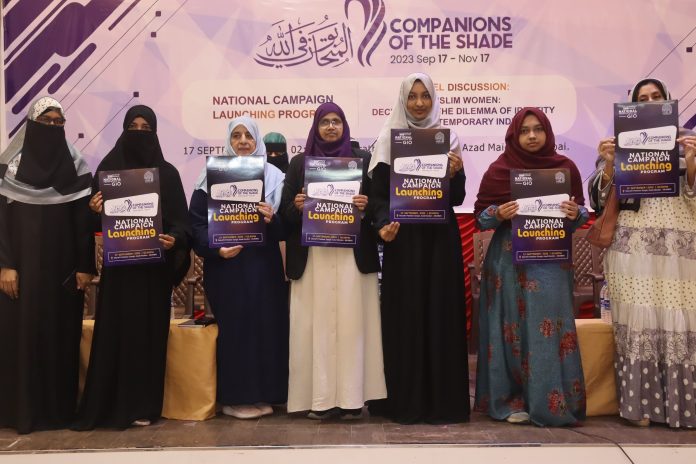
The National Federation of Girls Islamic Organisation (NFGIO) organised a national campaign titled “Connecting Hearts Eternally in Relishing Islamic Sisterhood’ (CHERISH)” with the theme المتحابون في الله which translates to ‘those who love each other for the sake of Allah’.
Mumbai :
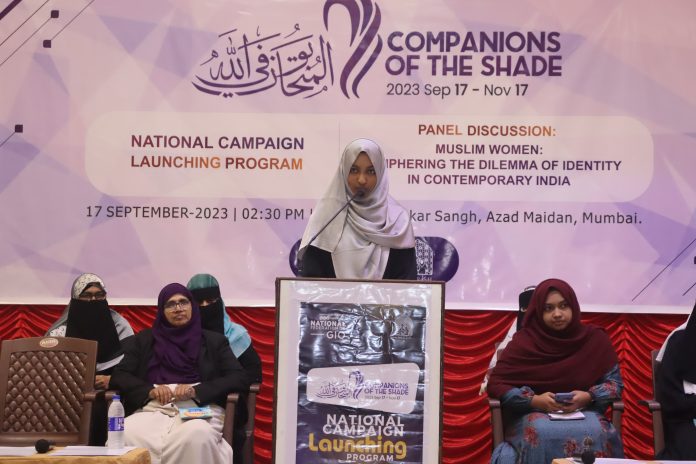
The National Federation of Girls Islamic Organisation (NFGIO) organised a national campaign titled “Connecting Hearts Eternally in Relishing Islamic Sisterhood’ (CHERISH)” with the theme المتحابون في الله which translates to ‘those who love each other for the sake of Allah’. The launching program of the campaign was held at Marathi Patrakar Sangh here Sunday.
The program commenced with the soulful recitation of the verses from the Holy Quran by Uzma Sagri (Regional In-charge, GIO Mumbai Region), followed by the welcoming words by Anamtha Ahmed (General Secretary, GIO MSZ).
Sister Samar Ali (General Secretary, NFGIO) shed light on the aims and objectives of the campaign.
Advocate Sumaiya Roshan, National President NFGIO addressing the program
The launching program was inaugurated by Adv. Sumaiya Roshan, (President, NFGIO), detailing the core intentions planned to be achieved through the campaign.
Adv. Sumaiya explained the goal of the campaign as to establish a secure and encouraging community for Muslim sisters. They must unite to confront the world’s obstacles and thrive with their steadfast faith. Unfortunately, in present times, practising and expressing one’s faith can be arduous and often unaccepted. This leaves many Muslim women feeling alienated from society.
Through sisterhood, women can discover and embrace their authentic selves as creations of the Almighty. They can find their purpose in life and ways to achieve it. The Almutahabbuna Fillah – Companions of the Shade campaign aims to promote righteous friendships among sisters. These friendships go beyond selfish worldly needs and are blessed by Allah. They can be a means of earning His pleasure and becoming successful in both this life and the Hereafter.
The phrase Almutahabbuna Fillah means “those who love each other for the sake of Allah.” It is narrated that on the Day of Judgement, there will be no shade except for the shade of Allah. Among the seven types of people who will be under His shade are two people who love each other for the sake of Allah.
The program further had felicitation addresses by Mrs. Rahmathunnissa A., National Secretary, JIH. She mentioned the contributions put forth by the Girls Islamic Organization from its formation in 1984 in developing and enhancing a healthy society. The organization has been working towards the goal of enhancing the community and developing them to serve for the betterment of the whole of humanity.
It was followed by the address of Mr. Mohammed Zafar Ansari, Secretary, JIH Maharashtra, followed by the concluding address of Khan Shaheen Jattu, Vice President, NFGIO.
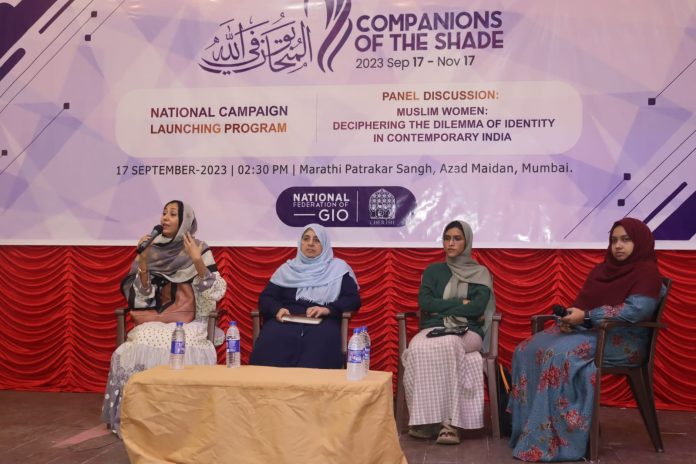
The panel discussion held with Advocate Huriya Patel, Uzma Naheed, Haniya Anwar and Samar Ali
A panel discussion titled “Muslim Women: Deciphering the Dilemma of Identity in Contemporary India” was conducted with Samar Ali as the moderator as part of the event. Samar stated the aim of the discussion as to bring forth powerful and socially engaging Muslim women icons and establish the idea of empowerment through their presence in the public sphere.
The panellists included Mrs. Uzma Nahid (Executive Director, Iqra Education Foundation), Adv. Huriya Patel (Advocate, Bombay High Court) and Ms Haniya Anwar (Student leader, TISS Mumbai).
Uzma Nahid encouraged the audience to be revolutionary thinkers and to focus on getting educated and enlightened on the necessity of financial development for the overall empowerment of women.
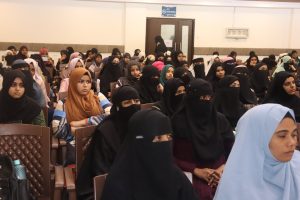
The audience listening to the discussion at Marathi Patrakar Sangh, Mumbai
Adv. Huriya Patel mentioned the lack of legal awareness among the women community and pointed out the importance of embracing one’s identity and beliefs without compromising values and ethics to build successful career platforms.
Haniya Anwar inspiringly brought forth the challenges faced by Muslims in general and women with visible Muslim identity in particular on Indian campuses. She shared her experience faced while contesting for the post of Equal Opportunity Cell of Students Union, TISS Mumbai.
The panel discussion was concluded by Mrs. Rahmathunnissa A., who highlighted that if one is ready to change the society, nothing can stop them.
The program concluded with a vote of thanks by Aamna Khanam (Secretary, NFGIO) who thanked everyone for their enormous support for the historical event.
source: http://www.radiancenews.com / Radiance News / Home> Latest News / by Aaliyah Rumane / September 20th, 2023
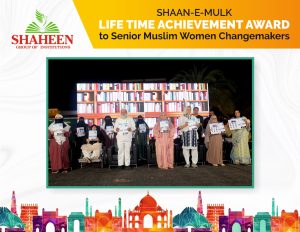
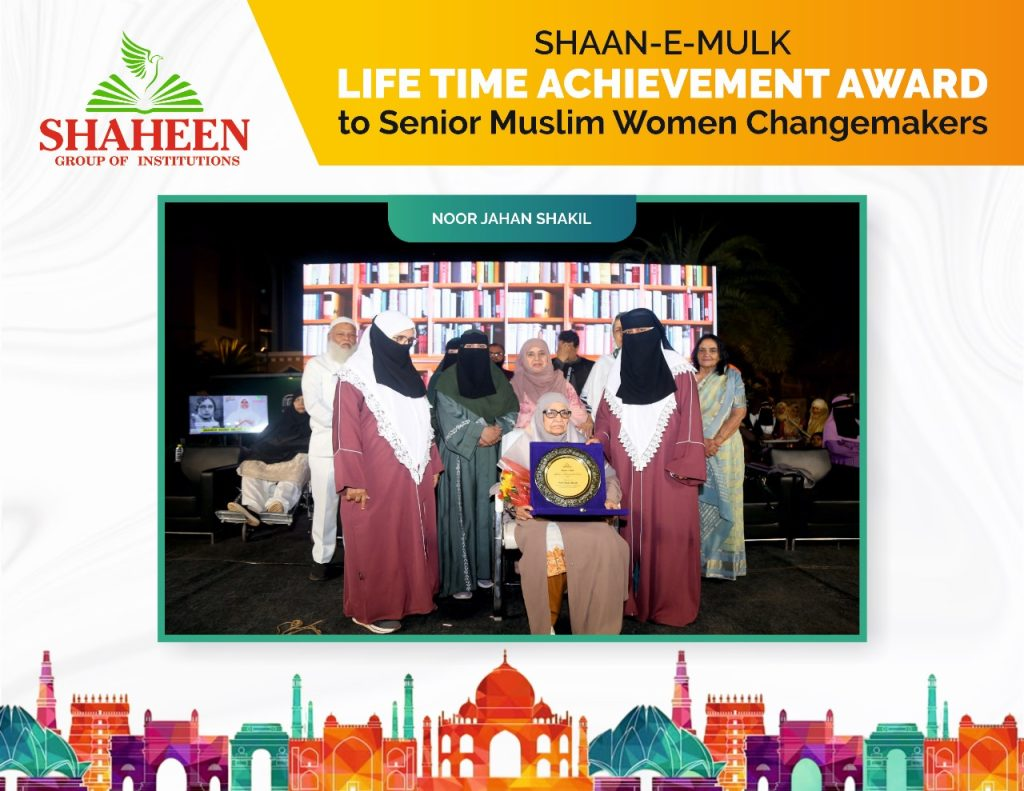
On India’s 76th Republic Day, Shaheen Group of Institutions, Bidar, organized the “Shaan-e-Mulk” Lifetime Achievement Award to honor five distinguished women for their contributions to education, business, humanitarian services, and healthcare.
Dr. Abdul Qadeer, Chairman of Shaheen Group, emphasized the vital role of women in society, stating, “Women are the backbone of families and communities, yet their contributions often go unrecognized. It is crucial to celebrate their achievements and inspire future generations.
Honorees
The award was presented to:
Ms. Shaukat Begum (Institutional Development)
Ms. Noor Jahan Shakeel (Humanitarian Services)
Dr. Rana Noor Siddiqui (Education & Research)
Ms. Uzma Naheed (Entrepreneurship)
Dr. Noor Jahan Sagheer (Healthcare)
The event, attended by thousands of female students, showcased academic performances and aimed to challenge stereotypes, inspire young women, and foster community pride.
Key attendees included Managing Director Abdul Haseeb, Academic Director Abdul Muqeet, and directors Shaista, Wafa, Zakia, Meher Sultana, Afra Naaz, and Munir Deshmukh.
source: http://www.thehindustangazette.com / The Hindustan Gazette / Home> Education / by The Hindustan Gazette / January 29th, 2025
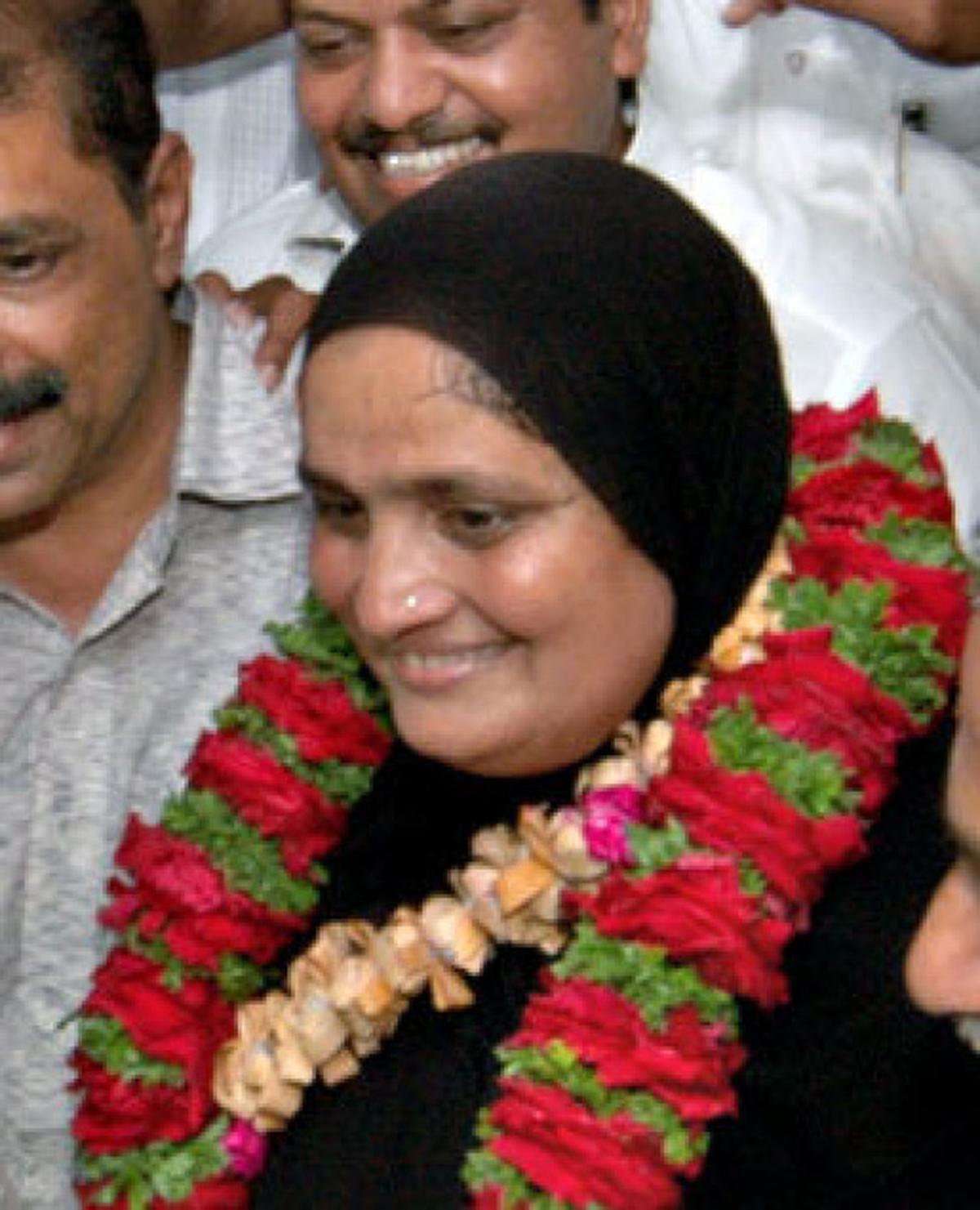
Gulzaar Banu of Congress being offer a bouquet by B.Ramanath Rai, MLA (second left) and Vijayakumar shetty fomer MLA (second right) after she was elected unopposed as the new Mayor of Mangalore City Corporation surrounded and greeted by Congress councillors and and supporters in Mangalore on March 07, 2012. Photo: R.Eswarraj
The ruling Bharatiya Janata Party (BJP) in the council of Mangalore City Corporation faced an embarrassment on Wednesday as a councillor from the Opposition Congress was elected Mayor unopposed.
Rejection of the nomination papers of the official nominee from the BJP led to this fiasco. However, a BJP candidate was elected Deputy Mayor.
M. V. Jayanthi, Regional Commissioner, Mysore, who was the Election Officer, rejected the nomination papers of the BJP candidate Roopa D. Bangera on the grounds that she had not submitted her caste certificate in the prescribed format within the given time. There was no dummy candidate of the BJP in the fray. Hence, the Opposition Congress candidate Gulzaar Banu (49) was declared unopposed.
Ms. Banu became the first Muslim Mayor of Mangalore.
The Government had reserved the post of Mayor to a woman councillor from Backward Caste 2 A category.
In the 60-member House, the BJP 35 councillors, the Congress 21, the Janata Dal (Secular) and the Communist Party of India (Marxists) one each. There are two Independent councillors.
Thus, the BJP had 36 votes (including Mangalore South MLA N. Yogish Bhat) on Wednesday. But it could not get its candidate elected against the Congress which had 21 votes. After the Election Officer announced that Ms. Banu had been elected unopposed as the Mayor, Mr. Bhat left the council hall while the other BJP councillors continued to participate in the meeting. Ms. Bangera’s ward (Kadri North) falls under the limits of Mangalore City South Assembly constituency represented by Mr. Bhat. In the election held for the post of Deputy Mayor later, Amitakala of the BJP defeated S. Appi of the Congress by a margin of 14 votes. Ms. Amitakala secured 35 votes and Ms. Appi 21 votes.
The Election Officer conducted the election to four standing committees of the council which went on smoothly.
After the election process was completed by about 5 p.m. all BJP councillors, including the Deputy Mayor, and officials walked out of the meeting presided by the new Mayor. Only one official was present at the meeting.
The Congress councillors alleged that outgoing the Mayor Praveen did not hand over the Mayor’s gown to Ms. Banu. Independent councillor Mariyamma Thomas, an advocate, told The Hindu that there was no provision in the Karnataka Municipal Corporations Act, 1976, to move a no-confidence motion against the Mayor. Hence the BJP could not overthrow the new Mayor.
source: http://www.thehindu.com / The Hindu / Home> News> Cities> Mangaluru / March 08th, 2012
Karnire Town (Mangaluru Taluk, Dakshina Kannada District), KARNATAKA :
Padubidri:
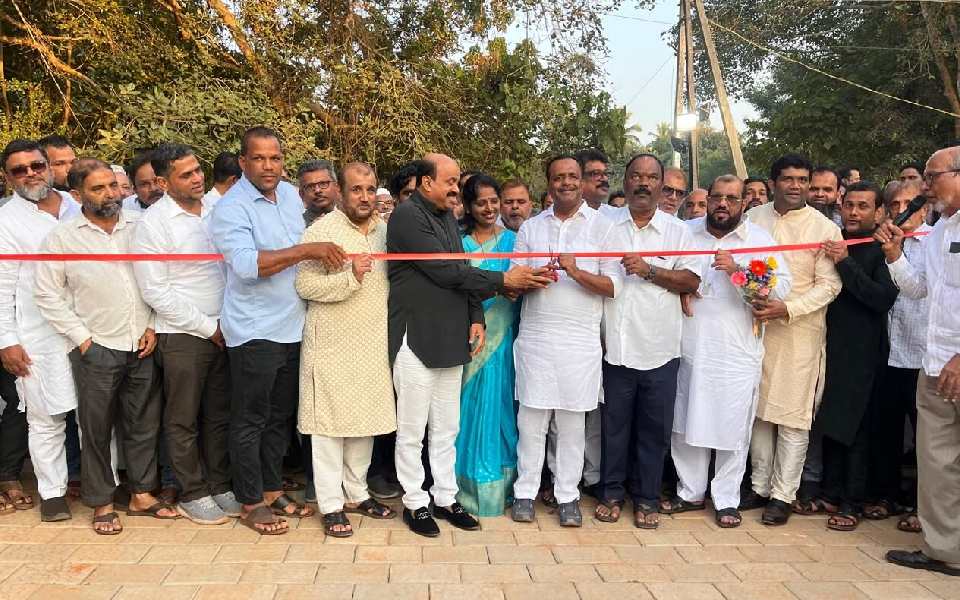
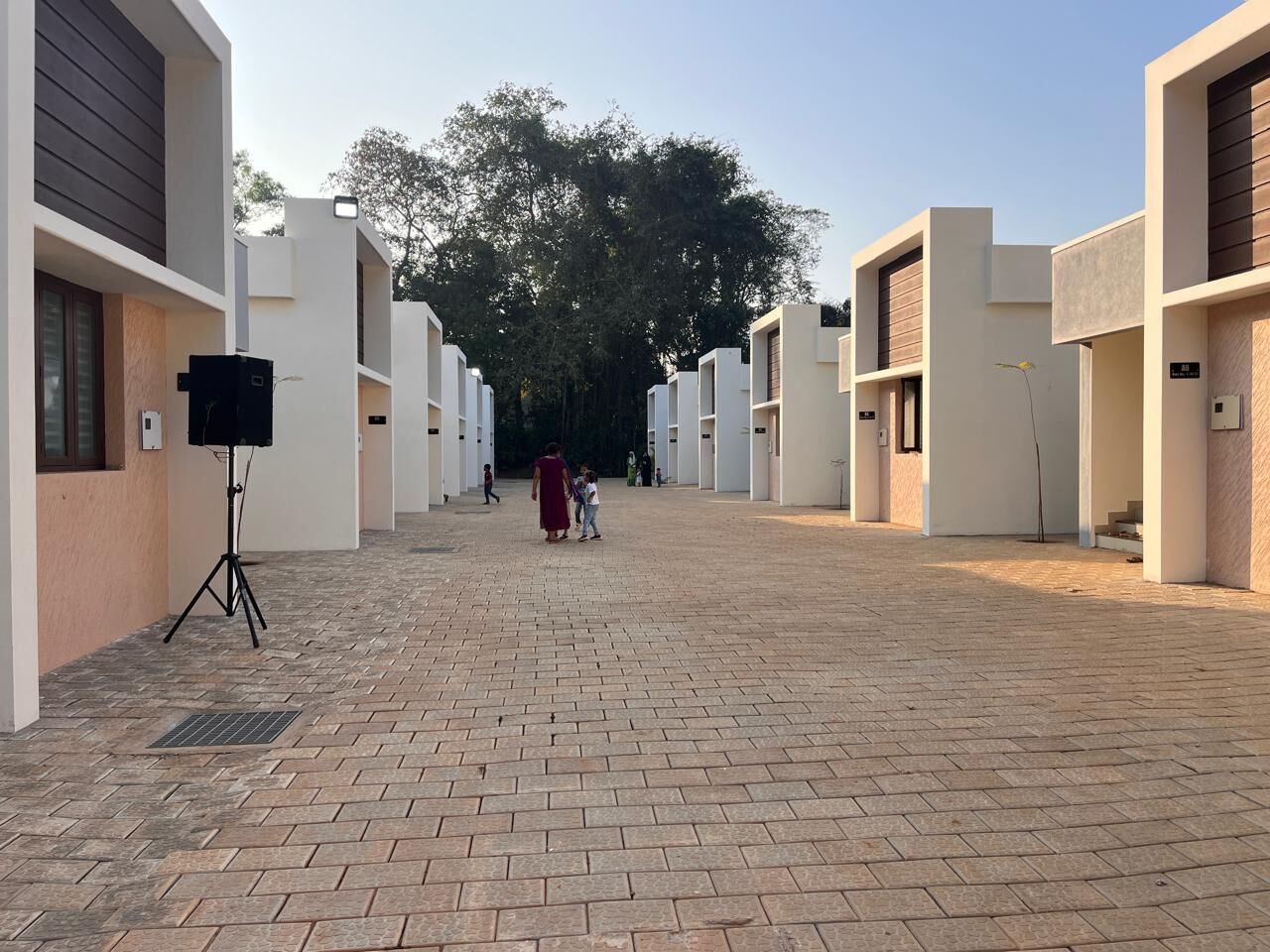
The Haji KS Sayeed Karnire Charitable Trust handed over seven newly constructed houses and laid the foundation stone for fourteen more in Karnire on Sunday.
Assembly Speaker U.T. Khader, who inaugurated the houses, highlighted the significant impact of this initiative, noting that while owning a home is a universal dream, many are unable to realize it.
He commended the project as a model of compassion and inspiration, emphasizing that such achievements go beyond financial capability and reflect a commitment to serving marginalized communities. He expressed hope for more transformative projects from the trust in the future and wished the beneficiaries a life of peace and harmony in their new homes.
Managing Trustee K.S. Sheikh, presiding over the event, detailed the trust’s ambitious project to construct 50 houses on two and a half acres of land. Each house, valued at approximately ₹20 lakh, is fully furnished with modern amenities, including a kitchen, hall, two bedrooms, and a washing machine. Sheikh explained that these homes are provided to deserving families in Karnire who lack proper housing.
He further revealed that with the foundation stone being laid for the construction of 14 more houses. There is a plan to build 50 houses on this land again, on two and a half acres of land.
Kaup MLA Gurme Suresh Shetty lauded the trust for its compassionate service in sheltering the underprivileged.
Former MLA Mohiuddin Bava praised the legacy of Syeed Haji’s hard work, which has turned his family into a beacon of service and harmony. He remarked that the family’s actions have become a model for communal unity.
Federation of World Bunts Vice President Karnire Vishwanath Shetty said, “Even though I have added Karnire to my name, the credit for taking the small village of Karnire to the world level belongs to the Syeed Haji family. Karnire is a town where everyone lives in harmony, regardless of caste, religion or difference. While Hindus have helped in the reconstruction of the mosque here, the Muslim community has also joined hands in the construction of the Hindu temple.”
Speaking in the opening remarks, K.S. Ashraf recalled the guidance of his late parents, expressed his gratitude for their teachings of kindness and service, which continue to inspire the family’s charitable efforts. He said, “We should do good to people. Our father used to preach to wish others well. Seeing his preaching and service, we have continued it. It is a great loss that our father and mother are not with us today. If they were here, they would have been happy now.”
On this occasion, U.T. Khader honored K.S. Sheikh on behalf of Karnire Juma Masjid and Karnire Khidma Young Men’s Association.
Abdul Jalil MH of Design Plus Architects, contractor H.N.G.C. Hussain, and supervisor Ramesh Kotian were also recognized for their contributions.
Karnire Juma Masjid Qatheeb Umarul Farooq Saquafi performed the dua. Family elders M.K. Abdul Hamid Mulki, K.S. Aboobacker were present.
Also present during the program were Balkunje Grama Panchayat President Mamata D. Poonja, Harishchandra Shetty, Karnire Juma Masjid President Muhammad Ali, Adv. Bhaskar Shetty, Kote Shekhabba Kannangar, T.K. Muhammad Kote Palimaru, Karnire Harishchandra Shetty, Khidma Youngmen’s President Khidma B.N, Ismail, K.S. Ashfak.
K.S. Ashraf delivered the welcome address, K.S. Abdul Rahim offered a vote of thanks, and Muhammad Ali Kammaradi moderated the event.
source: http://www.english.varthabharati.in / Vartha Bharati / Home> Karavali / by Vartha Bharati / October 05th, 2025