Tag Archives: Muslims of Punjab

Punjab mosque to honour Muslims who died while distributing flood relief

Raizada Village (Ajnala Tehsil, Amritsar District), PUNJAB :
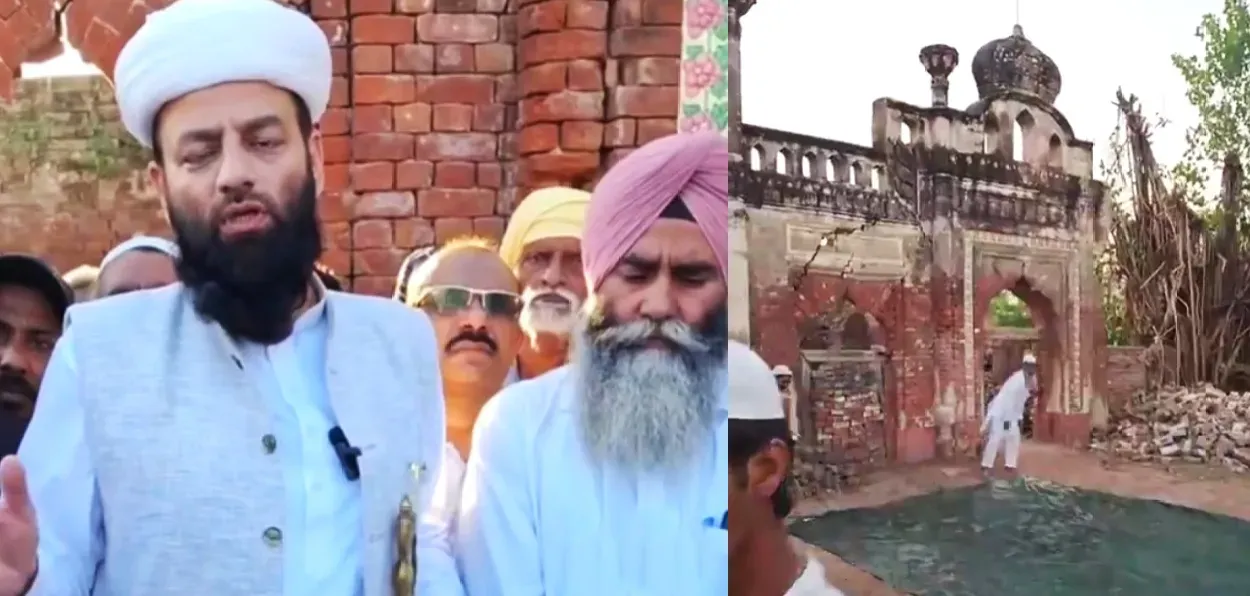
Shahi Imam of Punjab Maulana Usman Rehmani Ludhianvi taking charge of the mosque in village Raizada of Amritsar, Punjab

The Sikhs and Hindus of a village in the Amritsar district of Punjab have handed over a mosque which lay in a run-down state since no Muslims lived there after the partition of India in 1947, to the Muslims for restoration.

In a ceremony attended by Shahi Imam of Punjab, Maulana Muhammad Usman Ludhianvi, in the small village of Raizada in Ajnala tehsil of Amritsar, locals formally handed over the mosque to the Muslim community.

The initiative was led by the village sarpanch, Sardar Omkar Singh. Closed since the partition of 1947, the mosque, for the first time on Friday, echoed with the sounds of the Azaan, the call for prayers.

Sikhs, Hindus, Muslims, Christians and Dalits all stood together inside the mosque located on the banks of the River Ravi.

The mosque is in a dilapidated condition, wild grass and vegetation covered it; its walls collapsed. A school running inside it was closed 11 years ago.

Yet the non-Muslims of the village believed the mosque was not just a Muslim heritage, but that of the village. One of them remarked, “In Punjab, we are connected not by religion, but by heart.”
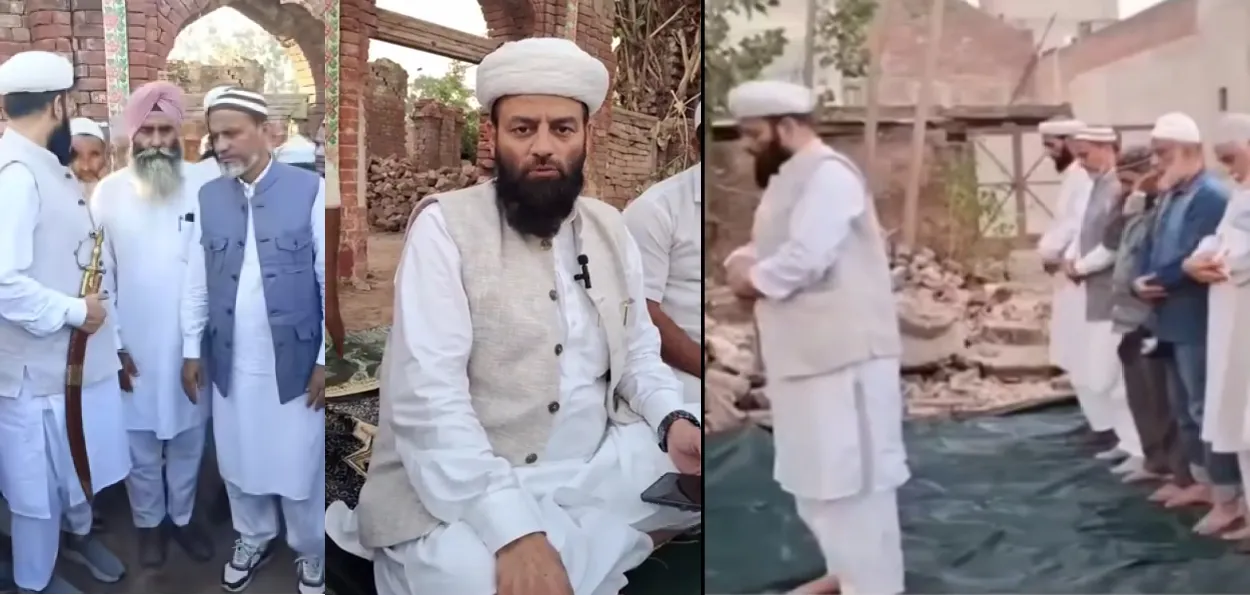
Shahi Imam of Punjab Maulana Muhammad Usman Rahmani Ludhianvi with villagers of Raizada

In his address, Maulana Muhammad Usman Rahmani Ludhianvi narrated the history of harmony in Punjab. He said Guru Nanak Dev, whom Muslims remember as “Baba Nanak”, was carried to a safe place by Muslim brothers Nabi Khan and Ghani Khan in his palanquin during the war.

He also mentioned Diwan Todarmal, a minister in Akbar’s Court, who dedicated his land for the burial of the Guru’s sons.

The Shahi Imam said that this is the real strength of Punjab, Sikhs, Hindus and Muslims have stood together for centuries. The greatest beauty of India is its “unity in individuation”.

He announced that the restoration of the village mosque was being done as a tribute to two Muslim volunteers who sacrificed their lives during relief work in the recent floods.

These youths were Shamshad Bhagwanpuri (Uttarakhand) and Zakaria Mewati (Rajasthan). Both of them distributed ration and medicines in the affected areas for a week, but met with an accident on their return journey. Shahi Imam said that they did not just deliver goods, but also conveyed a message of love and brotherhood. Punjab will never forget their sacrifice.

The mosque will be named ‘Masjid-e-Shamshad Bhagwan Puri’ to honour the sacrifice of the flood relief volunteers in the name of humanity.

He said while the foundation of the mosque will be laid this month, the story of Shamshad’s life and service will be engraved on the wall of the mosque.

The second mosque, “Masjid-e-Zakaria” will be built in Fagan Majra village of Mewati-Patiala district, the land for which was acquired this week. The parents of these two martyrs have been invited to lay the foundation. The Shahi Imam prayed that for love to spread throughout the country.

The incident comes amid a wider humanitarian effort that has been seen during the recent floods. Volunteers from Mewat in Haryana, traditionally allies of Punjab farmers, sent more than 300 truckloads of relief supplies to the states of Punjab, Himachal Pradesh and Jammu and Kashmir. It reflects agricultural ties that predate the separation of Haryana and Punjab in 1966. Organisations like Khalsa Aid have been on the ground since August, rescuing families and providing water and medical aid in affected areas like Gurdaspur and Ferozepur. 

The event took place in a backdrop of peaceful harmony. As the sounds of Gurbani recitation echoed from the gurdwara during evening prayers, the call to prayer for Maghrib was soon heard from the mosque, symbolizing the harmonious heartbeat of Punjab. The villagers distributed sweets to celebrate. As the sun was setting over the Ravi River, the Shahi Imam concluded the ceremony with a prayer. He said, “May this love spread throughout the country and every corner be illuminated like a lamp of brotherhood.”

According to media reports, more than 30 such mosques have been restored so far through interfaith cooperation, with most of them led by Sikhs in providing financial support, labour, and land.

According to Shahbaz Ahmed Zahoor, leader of the Idara Mosques, there have been about 200 such incidents across the state in which Sikh families have donated land for mosques and graveyards.

In 2018, in village Moom, Baranala district, while Hindus provided the land, the Sikhs raised funds for the construction of a mosque that shares a wall with their gurdwara.

This created a rare combination of Hindu, Muslim and Sikh places of worship in one place. In 2022, in the Bakhatgarh district, Barnala, farmer Amandeep Singh donated 250 square yards of land for the Noorani Masjid. Other Sikhs and Hindus shouldered a major part of the construction cost of Rs 12 lakh so that 15 Muslim families would not have to travel 5 km to offer prayers.

In January of the same year, former Sarpanch Sukhjinder Singh Noni and his brother Avininder Singh donated 5.5 biswas (worth Rs 7-8 lakh) of valuable roadside land for a new mosque in Umarpura village of Malirkotla district. They were joined by donors like Tejwant Singh (Rs 2 lakh) and Ravinder Singh Grewal (Rs 1 lakh).

In Malla village of Ludhiana district, in 2016, Sikhs and Hindus renovated the old mosque for the only Muslim family in the village and provided financial assistance while locals worked as labour for its construction.

In Nathuwal village of Sangrur district, in 2015, non-Muslims bore more than 65% of the Rs 25 lakh cost for the renovation of the Jama Masjid and the addition of a second floor.

source: http://www.awazthevoice.in / Awaz, The Voice / Home> Story / by Mansooruddin Faridi, New Delhi / October 27th, 2025
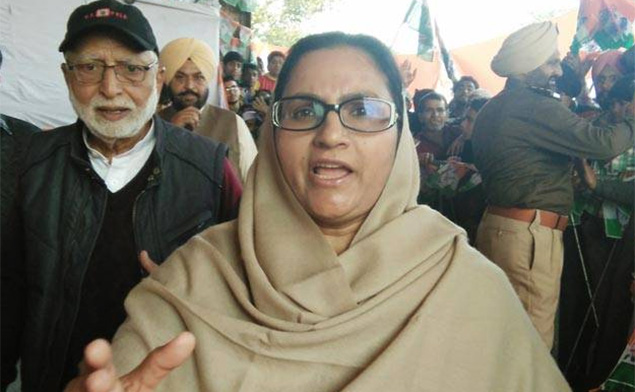
Third time MLA Raziya Sultana is only Muslim legislator in 117-member Punjab Assembly

PUNJAB :

Raziya Sultana, wife of a top cop and third time MLA, is the only Muslim legislator in the 117-member Punjab Assembly]

Malerkotla (Punjab): 

Raziya Sultana, wife of a top cop and third time MLA, is the only Muslim legislator in the 117-member Punjab Assembly. Congress is set to form its government in the state, and Raziya Sultana as one of the seniormost members in the party, eyes for a key post in the government.

Raziya Sultana, who contested the 2017 Punjab Assembly elections as Congress candidate, defeated her nearest rival Mohammad Owais of Akali Dal by over 12,000 votes. Raziya Sultana is wife of Mohammad Mustafa DGP Punjab who was bestowed with with five gallantry medals.

According to the final result of Punjab Assembly elections declared by the State Election Commission, Raziya Sultana polled a total of 58.982 votes whereas Mohammad Owais could bag just 46,280 votes.

Mohammad Arshad contesting from Malerkotla was the only Muslim candidate of the Aam Aadmi Party (AAP). Mohammad Arshad came a distant third bagging 17,635 votes.

Raziya Sultana was defeated by F. Nesara Khatoon (Farzana Alam) of Akali Dal in the 2012 elections in Malerkotla – the seat she won in 2002 and 2007.

Malerkotla has been represented by Muslims most of the time since 1957. Yusuf Zaman Begum was the first Muslim to win from Malerkotla in 1962. She was followed by H. H. N. I. A. Khan in 1967, Nawab Iftikhar Ali Khan in 1969, Sajida Begum in 1972 and 1980, Anwar Ahmad Khan in 1977, Nusrat Ali Khan in 1985 and 1997 and Abdul Ghaffar in 1992 state elections.

The Punjab Assembly had 02 Muslim MLAs in 2012. Besides, F. Nesara Khatoon (Farzana Alam) of Akali Dal who won from Malerkotla in 2012, Mohammad Sadique of the Congress won from Bhadaur Assembly seat in 2012.

Congress MLA Mohammad Sadique contested the 2017 elections from Jaito Assembly seat. But, he lost the elections to Baldev Singh of the Aam Aadmi Party (AAP) by some 10,000 votes. Baldev Singh polled 45,344 votes and Mohammad Sadique bagged 35,351 votes.

In Qadia, hub of Ahmadiyas, Fatehjang Singh Bajwa of Aam Aadmi Party (AAP) won the elections. No muslim candidate was in fray in this constituency.

Congress has fielded 02 Muslim candidates in 2017 Punjab Assembly elections, Aam Aadmi Party (AAP) and Akali Dali has given party ticket to 01 Muslim each. The BJP has not fielded any Muslim in the 2017 state elections

Overall, the Congress has won 77 of the total 117 seats of the Punjab Assembly. AAP is a distant second with 20 seats.

Akali Dal and BJP, ruling the state since last ten years, ended with 15 and 03 seats respectively. Lok Insaaf Party won 02 seats.

source: http://www.ummid.com / Ummid.com / Home> Politics / by ummid.com & Agencies / March 13th, 2017

Remembering Maulana who hoisted Tricolour in front of 300 British cops

Ludhiana, PUNJAB:

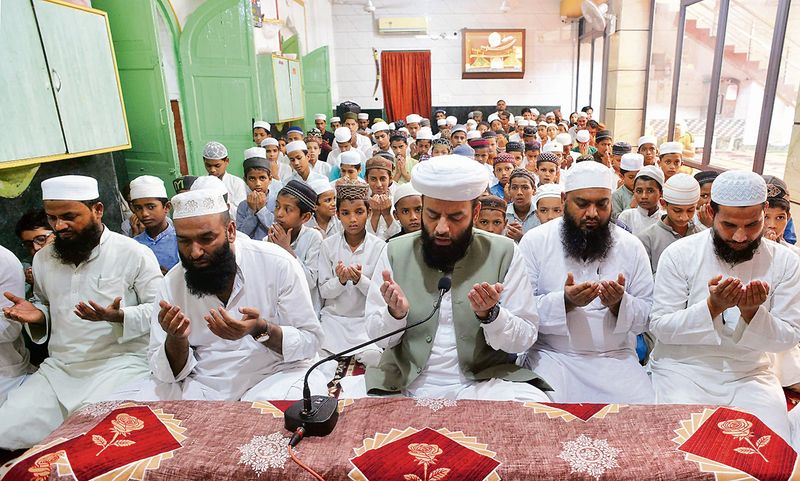
Prayers being offered at Jama Masjid in memory of Maulana Habib-ur-Rehman Ludhianvi. Tribune photo: Himanshu Mahajan

Ludhiana :

A prayer was organised at the local Jama Masjid in remembrance of Maulana Habib-ur-Rehman Ludhianvi, the man who stood up and raised his voice against the Divide and Rule policy of the British. Today, was his 68th death anniversary.

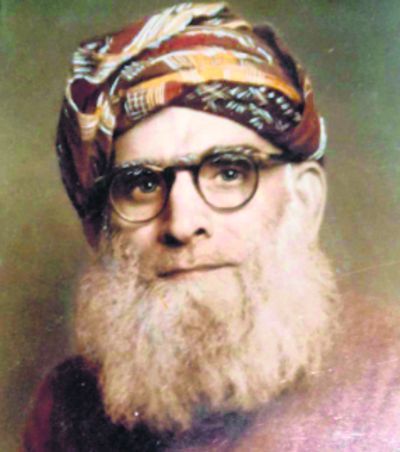
Maulana Habib-ur-Rehman Ludhianvi

Ludhianvi was one of the founders of Majlis-e-Ahrar-e-Islam and was the direct descendant of Shah Abdul Qadir Ludhianvi, who fought against the British colonial rule during the Indian Rebellion of 1857. In British records, he has been described as a fiery speaker who exercised considerable influence on people in the region.

In 1929, to oppose the idea of partition, Pandit Jawaharlal Nehru hoisted the Tricolour on the banks of Ravi for the first time and at the same time, Ludhianvi hoisted the same flag at Jama Masjid in Ludhiana in the presence of over 300 British policemen and was arrested.

“When the entire nation was suffering under the Divide and Rule policy of the British, it was he who stood up and raised his voice,” said Mohammad Usman Rehmani Ludhianvi, the Shahi Imam of Punjab, remembering his great grandfather.

Voices calling out “Hindu paani lelo, Muslim paani lelo” were common at the railway stations as there were separate pitchers of water for the Hindus and the Muslims. But in 1929, Maulana Habib-ur-Rehman Ludhianvi raised his voice against this and protested at Ghaas Mandi Chowk, Ludhiana and, with the help of his volunteers, broke earthen pots.

As a result, the British government was forced to install one common pitcher at all railway stations across the country giving the message “sabka paani ek hai”. In this activity, nearly 50 volunteers were arrested and sent to jail, he shared.

“My great grandfather decided to stay back in this part of Punjab although many of their relatives migrated to Pakistan. He was deeply pained by the Partition and later in order to help women to get back to their respective families, he had set up a ‘Phir Basau’ committee. Thousands of women returned to their parents under this exchange programme,” he said. Maulana, though not a poet, was well-versed in poetry and used to host poetic evening once a month, he shared.

Subhash Chandra Bose took refuge for three days at his home while on his way to Japan. Similarly, Bhagat Singh’s mother, brother and sister also stayed at his place during the freedom struggle.

Habib-ur-Rehman had to spend 14 years in prison in various places including Shimla, Mianwali, Multan, Ludhiana and Dharamsala.

He was confined in cold places during winters and hot ones in summer. He contracted a serious infection in jail due to which he died on September 2, 1956.

source: http://www.tribuneindia.com / The Tribune / Home> Ludhiana / by Manav Mander / Tribune News Service / September 03rd, 2024

Izaan glides into India Book of Records

Ludhiana, PUNJAB:

Izaan glides into India Book of Records

Ludhiana: 

Izaan Ali, a 12-year old from the city, has made an entry into India Book of Records by making the smallest functional model of hovercraft measuring 10 inches x 6 inches.

Izaan’s hovercraft is remotely controlled and is connected to a GPS system. It uses four brushless motors and 3D printed components to run. This initiative that leverages smart technologies to revolutionise healthcare services was approved by the India Book of Records.

Currently studying in Class 7 at a private school in Ludhiana, Izaan thought of the idea years ago when he lost his grandfather to cardiac arrest. He said the family could not get urgent medical aid during the golden hour.

The hovercraft has been envisioned to seamlessly fill in the current lags in access to essential supplies which are currently restricted by operational constraints like working hours of delivery platforms, thus saving precious lives. An official launch and commercialisation are awaited.

Izaan’s parents are committed to his ambitions. While his father, Imtiaz Ali is an educational consultant, his mother Seher Imtiaz, is a rehabilitation psychologist. Residents of Dugri phase III, his parents shared that Izaan worked on this idea for around six-eight months and burnt the midnight oil (even during) his exams to achieve his goal.

Sharing details, Izaan Ali told TOI, “This hovercraft operates by creating a cushion of air underneath itself, allowing it to float above a surface. The main propulsion and lift for this hovercraft are provided by four brushless motors. The structure was enhanced using 3D printed components, making it customisable and relatively easy to repair or modify.”

His parents said the project is a demonstration of his commitment to renewable and sustainable technology and their importance in modern engineering. The project’s use of four brushless motors for propulsion and lift showcases its commitment to efficiency and performance. This design allows the hovercraft to glide smoothly over various terrains, opening up new possibilities for transportation in diverse environments.

“Furthermore, the project’s approach not only makes the hovercraft more adaptable to different needs but also emphasizes the importance of eco-friendly manufacturing practices.” Izaan added. Aiming to become an automobile engineer, he said, “ It me took around 6-8 months of time and around Rs 20,000 to create the prototype.”

Dimple Verma, Izaan’s mentor said, “This is a 4th generation mode of transport which reduces friction by 20-30% and can be beneficial for medical deliveries to rescue people who do not have connectivity, or are disadvantaged and die in challenging terrain.”

source: http://www.timesofindia.indiatimes.com / The Times of India / Home> News> City News> Ludhiana News / April 04th, 2024

Remembering 4 Muslim women who fought for Indian independence

UTTAR PRADESH / PUNJAB :

Hyderabad: 

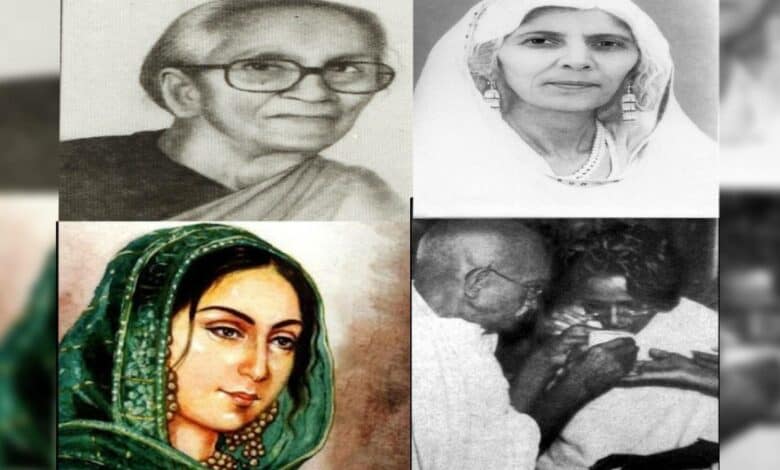
On the occasion of 74th Independence Day, let us remember these Muslim women who proved their strength, enthusiasm and determinism in the fight for freedom.

These women broke the stereotype of Muslim women in the society, who are merely perceived to be clad in Burqha and were never let out of the house. They participated in the India’s struggle for independence and emerged victorious.

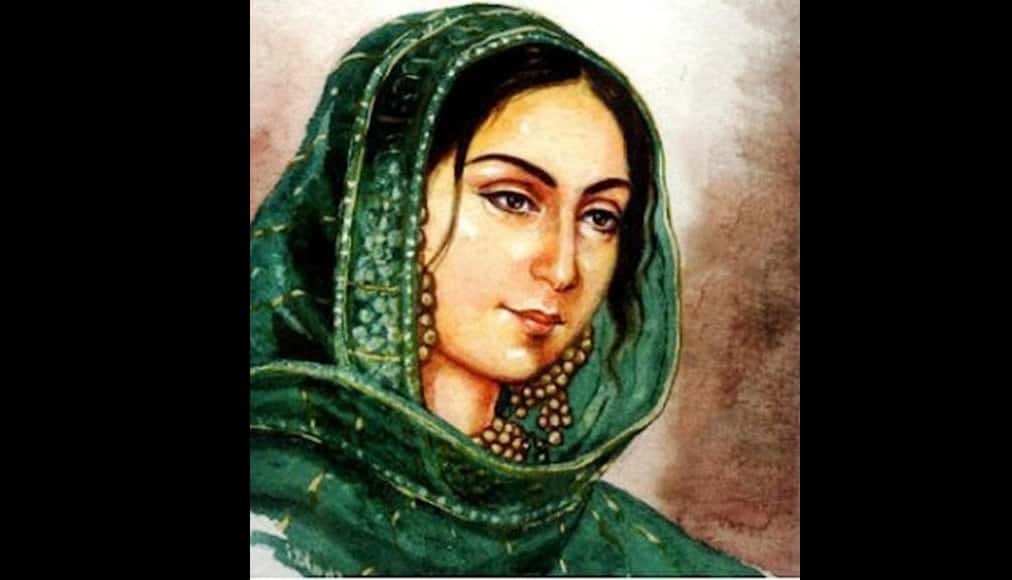
Begum Hazrat Mahal (1830–1879)

Begum Hazrat Mahal, a prominent woman of 1857 rebellion, was born in 1830 Faizabad of Uttar Pradesh. Her actual name was Muhammadi Khanum. Her father is Gulam Hussain of Faizabad. At her tender age itself, she showed good talent in literature.

She was married to Wajid Ali Shah, the Nawab of Awadh. They were blessed with a son Mirza Birjis Khadir Bahadur. On 13 February, 1856, the British troops imprisoned Wajid Ali Shah. They sent him to Calcutta on 13 March and occupied Awadh illegitimately. This irked the people and native rulers.

They revolted against the British under the leadership of Begum Hazrat Mahal. The native rulers and people met at Chavani area of Lucknow, the capital of Awadh on 31May, 1857 and declared independence. They taught a lesson to the British troops and wiped out their power in Lucknow. Later, Begum Hazrat Mahal declared her son Birjis Khadir as the Nawab of Awadh on 7 July, 1857.

As the King’s mother, she gathered 1,80,000 troops and renovated the Lucknow fort spending huge amount of money. She established a high level committee for the good governance of the state. Hazarat Mahal ruled the state on behalf of her son for about ten months and challenged the British force by inspiring patriotism among the people and the fellow native rulers. She issued a historic statement on 31 December, 1858 challenging the proclamation issued by the Queen Victoria on November 1, 1858.

But, when Delhi, the prime center for the First War of Independence was captured, the British troops surrounded and attacked Lucknow in March 1859. There was a fierce battle between the Company troops and the Begum troops. When defeat became inevitable, Begum Hazrat Mahal retreated to the Nepal forests along with the co-revolutionary leaders like Nana Sahib Peshwa and others.

The British rulers offered her huge amount of money and luxurious facilities in order to bring her back to Lucknow. But, the Begum denied them and made it clear that nothing else was acceptable to her except Independent Awadh state. Begum Hazarath Mahal was struggling for the independence of her state till her last breath. She passed away at Khathmound of Nepal on 7 April, 1879. In 1984 Government of India released a postal stamp in her honour.

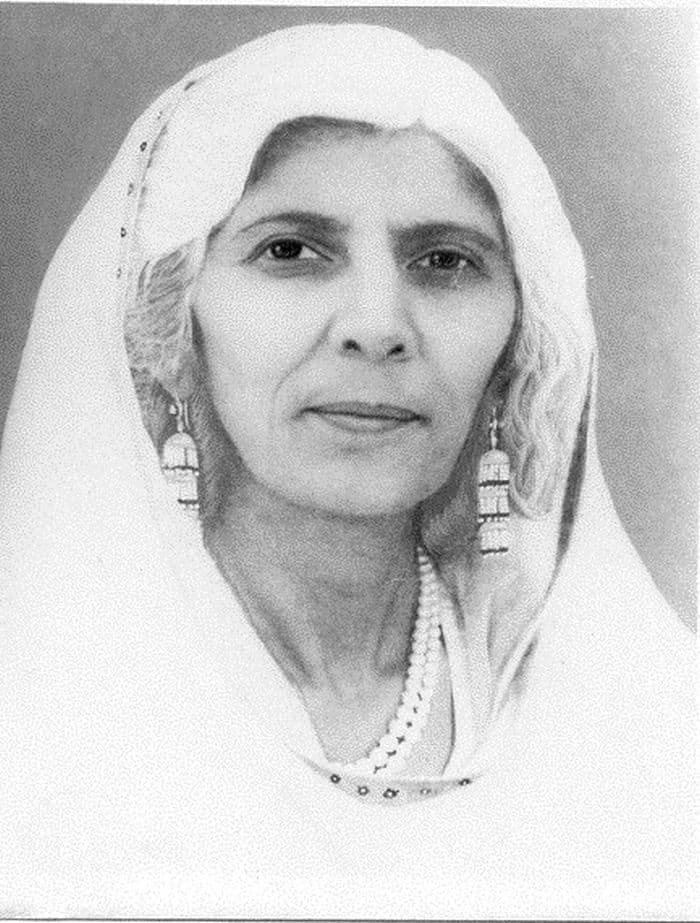
Abadi Bano Begum (1852-1924)

Abadi Bano Begum, who took active part at par with men in the Indian National Movement, was born in 1852 in Amroha village, Moradabad district of Uttar Pradesh. She was married to Abdul Ali Khan of the Princely State Rampur.

Though she lost her husband at a young age, she did not remarry. She had two sons Moulana Mohammed Ali and Moulana Showkath Ali, who were famous as ‘Ali Brothers’. She nurtured her children, into becoming memorable leaders of the Indian Independence Movement. Her involvement in the freedom movement began with the Home Rule Movement, to which she rendered moral and most importantly, financial support.

When the British government detained the Ali Brothers in Chindanwad village, under the Indian Defence Regulations, she went along with them. When a police official proposed for the surrender of her sons, she bluntly refused saying, ‘If my sons agree to the proposal of the government, I will kill them by strangulation. I hope God will bestow enough energy into this old woman’s hands’. Abadi Bano met Mahatma Gandhi in 1917 for the first time.

There after Mahatma Gandhi always addressed her ‘Ammijan’, and all other freedom fighters followed Gandhi’s address. She helped Mahatma Gandhi and other Khilafath leaders financially for undertaking all India tours.

She attended the Indian National Congress and the All India Muslim League sessions in 1917, held at Calcutta. She spoke in those meetings emphasising that complete freedom could be achieved through unity between Hindus and Muslims.

She also played a constructive role in the Khilafat and Non[1]Cooperation Movement in 1919. She declared in several meetings that ‘it was her ambition that even the dogs and cats of her country should not be under the slavery of the British’.

The fact that the British government official records treated her as a ‘dangerous person’, which established the kind of challenge she hurled at the colonial rule.

 Apart from participating in politics she also guided several women’s organisations all over India. So intensely patriotic and nationalist that Abadi Bano Begum who played an active role in national movement without caring old age, ill health and cruel atrocities of police, breathed her last on 13 November, 1924.‹

BIBI AMATUS SALAM (1907-1985)

Bibi Amatus Salam, who strongly believed that freedom from the slavery of British could be achieved, through the Gandhian methods only, was born in 1907 in Patiala of Punjab in Rajputhana family.

Her father was Colonel Abdul Hamid and her mother Amatur Rehaman. Amatus Salam was the younger sister of six elder brothers. Her health was very delicate since her childhood. She was inspired by her eldest brother, freedom fighter Mohammad Abdur Rashid Khan.

Following the footsteps of her brother, she decided to serve the people of the country.

Amatus Salam participated in the Khadi Movement and attended the meetings of the Indian National Movement along with her brother. She was attracted towards the Non[1]Violence theory of Mahathma Gandhi and Sevagram Ashram.

She decided to join Sevagram Ashram, and went there in 1931. She joined Ashram and followed the strict principles of the Ashram. With her selfless service she became very close to Gandhi couple.

They considered Amatus Salam as their beloved daughter. During the Indian National Movement, she went to jail along with other women in 1932 despite her illness with the permission of Gandhi.

After being released from Jail, she reached Sevagram and took over the responsibilities as Personal Assistant of Gandhi. She said that besides achieving independence, harmony between the Hindus and Muslims, Welfare of the Harijans and Women were her life ambitions. When communal riots erupted, she toured North-West Frontier, Sindh and Noukhali areas as an ambassador of Gandhi.

She held Satyagraha for 20 days to normalize the situation in those areas. After Independence, she rededicated herself to the Public Service. She published an Urdu Magazine called ‘Hindustan’ to promote national integration and communal harmony. When Khan Abdul Gaffar Khan toured in India in 1961, she travelled with him as his personal assistant. When India was at war with

China in 1962 and with Pakistan in 1965, she took all the pains in reaching the mountains or war area along with her adopted son Sunil Kumar to encourage our soldiers and to serve them. Bibi Amatus Salam, who spent all her life following the Gandhian ideology, breathed her last on 29 October, 1985.‹

HAJARA BEGUM (1910-2003)

Hajara Begum, who fought against the British to liberate the Nation and worked for the welfare of the toiling masses of the country, was born on 22 December, 1910 at Saharanpur in Uttar Pradesh. She came to know about the sacrifices of the freedom fighters who were fighting against the British from her father, who was a police officer.

After the failure of her marriage, she went to London to pursue her higher education, where she got acquainted with the anti-British forces. This led her to decide to fight against the British Imperialist forces to liberate the nation. She had to face the anger of the British Government as she was criticizing their acts in several International fora.

She returned to India and joined as a lecturer in the Karamat Hussain women’s College at Lucknow in 1935.

She also worked along with famous poet Sajjad Zahir in the formation of All India Progressive Writers’ Association.

She got married to a nationalist leader Dr. Zainul Abedeen Ahmed in 1935 and in the same year both of them took membership in the Indian National Congress. Since the police were after them for their anti-British activities, they resigned their jobs and dedicated themselves totally to the Indian National Movement.

While participating in the activities of the Indian National Congress, Hajara Begum also campaigned for the Communist Party without the knowledge of the Police. She actively took part in the election campaign in those days, and as a result of this a number of Congress leaders could get elected. She attended a secret political workshop at Kotthapatnam in Andhra Pradesh in 1937.

 She spoke on different subjects in the workshop as a lecturer. Hajara Begum was against the gender bias since her younger age. She fought against all types of inequalities successfully. She left the Indian National Congress in 1940 along with her husband. Since then, she played a vital role in organizing the unorganized labour sector.

She became very popular as ‘Hajara Aapa’ in the circles of toiling people and women. The Soviet Union honoured her with ‘Supreme Soviet Jubilee Award’ in 1960 in recognition of her work for the downtrodden people on the eve of the birth centenary of Lenin. Hajara Begum, who spent her entire life in the service of the country, breathed her last on 20 January, 2003.


Syed Naseer Ahamed can be contacted at Phone: +91 94402 41727

source: http://www.siasat.com / The Siasat Daily / Home> Featured News / by Nihad Ahmed / Input by Syed Naseer Ahmed / August 15th, 2020

Malerkotla, Where Tolerance is a Way of Life

Malerkotla, PUNJAB :

In the darkest hour of partition, when the whole of East Punjab was engulfed in a frenzy of communal violence, the town remained calm. And has stayed that way ever since.

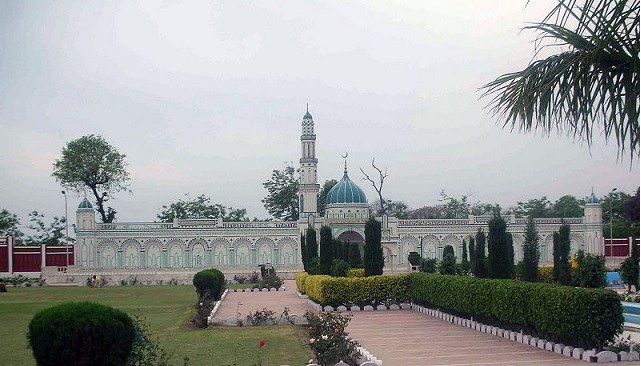
Idgah, Malerkotla: a remembered history of co-existence. Credit: Mohd. Imran, GNU license

Ten years ago, my wife Amarinder and I moved to Bathinda, her home town, to manage a rural school started by her family. For me, a Tamil speaking person originally from Bangalore, it marked a sea change of place and culture. As I gradually acquainted myself with the new rhythms of everyday life in present-day Punjab, I came across sights such as abandoned monuments and ruins battling undergrowth and living Sufi dargahs (shrines) that spoke of the past in an intriguing manner.

It was the shrines that first caught my attention. During my travels in Punjab, I noticed Sufi shrines frequented by people from all communities, the famous Haji Ratan Dargah in Bathinda being one such example. If asked about any dargah dotting the local landscape, people would refer to its past and say that the Muslims who had looked after it originally had all left. In Bathinda itself, of the two schools that were well known before partition – the Khalsa School and Islamia School – the latter no longer exists, for the city has a minuscule Muslim population. In the erstwhile princely state of Kapurthala, the regal Moorish Mosque built in 1930 by Jagatjit Singh for his Muslim subjects – 60 % of the population then – is mostly deserted except for the odd tourist.

The overall demographic of Punjab in the pre- and post-partition period is revealing: Muslims comprise 1.9% of Punjab’s population today in contrast to 51% in undivided Punjab. The Muslim families that one came across in several villages of rural Punjab weren’t usually locals but migrants from Uttar Pradesh or Bihar.  My curiosity about Punjabi Muslims remained unabated.

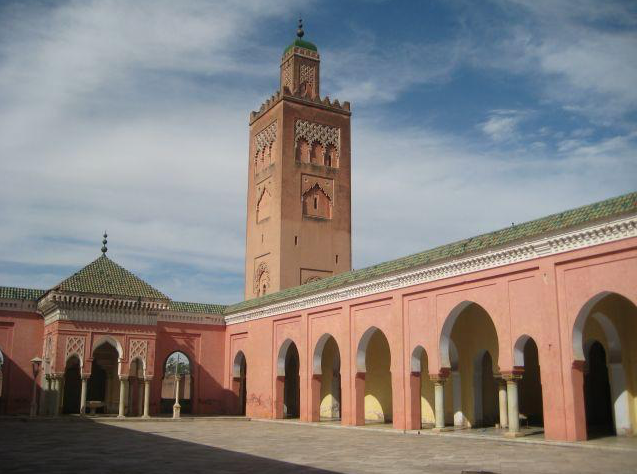
The inner courtyard of the Moorish Mosque, Kapurthala. Credit: Wikimapia

It was during a discussion with my wife’s late grandfather that I first heard the name of Malerkotla – Punjab’s only ‘Muslim pocket’ as he put it, located in Sangrur District. A princely state before Independence, in fact the only  Muslim ruled state in erstwhile East Punjab, it was now the sole Muslim majority city in Punjab, he said. And then he told me something that left me stunned: In the darkest hour of partition, when the whole of East Punjab, including the princely states of Nabha, Jind and Patiala, was engulfed in a frenzy of communal violence, Malerkotla remained calm. Not just that, it became a life-saving refuge for Muslims on their way to Pakistan. Anybody I spoke to on this topic echoed the same sentiment.

Around that time I happened to watch Ajay Bhardwaj’s Punjabi documentary, Rabba Hun Ki Kariye (Thus Departed Our Neighbours), based on the memories of the partition generation. In the film, a resident of Malerkotla recounts how Muslims were chased by mobs till the borders of the state and no further, as if something stopped them from crossing the line.

What I gleaned from conversations, articles and scholarly writings was that even after independence, during several critical flash points in the history of the state and the nation, such as during the years of militancy in Punjab or the Ramjanambhoomi movement leading to the Babri Masjid demolition, Malerkotla remained committed to the spirit of communal harmony that has been a defining aspect of its history. An aspect all communities choose to remember as part of their local history, folk memory  and heritage.

Not that this place has been in an eternally idyllic state. As scholar Anna Bigelow notes in an illuminating paper, the conditions that provide fodder for social conflict and make communities “riot-prone” in South Asia have existed in Malerkotla as well, be it flash points  between religious groups or economic and political rivalries between communities. The difference, she emphasises, lies in the proactive intent of  “local authorities and residents to make the unique history of the town a symbolically significant resource for community building and pluralism in the present.”

Living in times of increasing intolerance for the notion of pluralism, this aspect struck me as being of immense importance. Among the myriad strands that make up local histories and folk memory, some are positive and create common ground, while others are  contentious. That the communities of a particular place should choose to recognise their shared history of mutual cooperation as their biggest strength and work towards resolving conflicts in the interests of mutual co-existence was incredible.

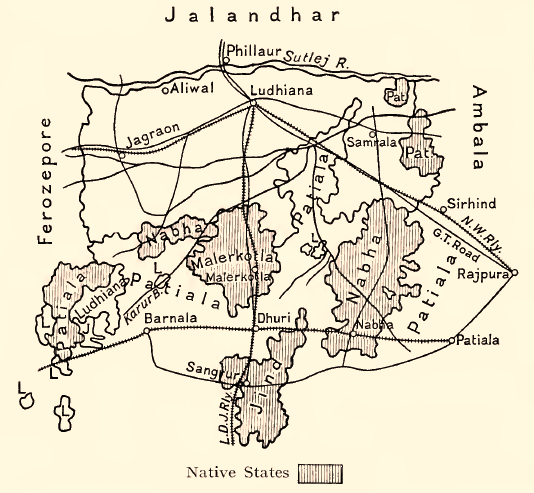
A 1911 map of Ludhiana District showing Malerkotla and the neighbouring princely states.  Credit: Government of India

Unravelling the 500 year old skein of Malerkotla, ruled by nawabs of Afghan Pathan descent, was an instructive exercise. In 1454, the Maler settlement was granted to the Sufi saint Shaikh Sadruddin Sadar-i-Jahan, commonly known as Haider Shaikh, by the Lodis who preceded the Mughals in Delhi. The princely state of Malerkotla (the fortress city) came into being in 1657 when Haider Shaikh’s descendant, Bayzid Khan was given the title of nawab by the Mughals.

Thereafter, the fortunes of the tiny princely state kept see-sawing as it went through a series of alignments and realignments in a time of shifting politics common to the region in the 18th century – local kingdoms fought each other repeatedly in different permutations, sometimes on the say-so of more powerful powers, be it the Mughals, Marathas, invaders such as Ahmad Shah Abdali, or Maharaja Ranjit Singh. With the gradual waning of Mughal power after Aurangzeb, the nawabs sought to assert their independence – in the mid-18th century they supported Ahmad Shah Abdali. During the time of Ranjit Singh (1799 – 1839), they allied  with the Sikh kingdoms of Nabha, Jind and Patiala to stay out of his grasp, ultimately accepting British protection in 1809. In January 1872, during the Kuka rebellion by the Namdharis, who were opposed to the British, 69 members of the sect, including some women and children, were strapped to a cannon and blown away on the orders of the British Resident. The nawab of the day was still a minor.

As independence brought British rule to an end and partition became a reality, Malerkotla, the sole Muslim ruled state in erstwhile East Punjab, found itself in a vulnerable position. Yet it survived virtually intact.

The most common explanation given by locals and people across Punjab is the role played by Malerkotla’s celebrated ruler, Nawab Sher Mohammad Khan (1672-1712), during a significant period of Sikh history. It was a time when the increasing following commanded by the Sikh gurus posed a serious challenge to Mughal authority. Although the nawab supported the Mughals in their campaigns against the Sikh gurus, he protested the decision of the Mughal governor to brick alive two sons of Guru Gobind Singh who were captured in Sirhind in 1705. In the nawab’s eyes, it was  an un-Islamic act to punish the children when the battle was  against their father.

Though this nuanced and principled stand fell on deaf ears, Malerkotla came to command a special place in the hearts of Sikhs.  In the popular imagination, Guru Gobind Singh’s blessings ensured that the princely state remained virtually untouched by the communal violence that engulfed the neighbouring Sikh kingdoms. The protective power of saints across denominations, including figures such as Haider Shaikh, is also cited as one of the reasons for its good fortune.

Bigelow adds that the enlightened policies pursued by the Nawabs at critical junctures fostered the spirit of harmony and co-existence in the kingdom. For example, when Bayzid Khan established the foundation of Malerkotla, he summoned a Chishti Sufi saint, Shah Fazl, and a Bairagi Hindu saint, Baba Atma Ram, to bless the site, thereby declaring his faith in pluralism.

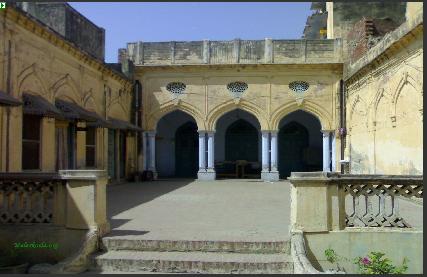
Nawab Sher Mohammad Institute of Advanced Studies in Urdu, Persian and Arabic, started in 1988. Credit: Abdur Punjabi/Wikimedia Commons, CC BY-SA 3.0

The princely state is a thing of the past, but Malerkotla continues to be in a league of its own even in democratic India (at the time of independence, it had a population of 85,000 in an area of 432 sq km). The fact that it has survived in its present demographic form is an indicator that the spirit of co-existence is still alive: as per the 2011 Census, Muslims, a minority in India and a tiny minority in Punjab, comprise 68% of the city’s population of 1.35 lakh; Hindus, the majority community across India, are placed at 20%, while Sikhs, who comprise the majority in Punjab, are only 10%.  The current MLA, Farzana Alam (Akali Dal), has the distinction of being Punjab’s first non-Punjabi state legislator (she is originally from Uttar Pradesh).

Punjab has witnessed communal conflicts between Hindus and Muslims, and Sikhs and Muslims as well as between Hindus and Sikhs in more recent times during the days of militancy. Malerkotla has not been entirely free of flash points arising out of these  developments.What sets it apart is that the focus of local authorities and community leaders at all times has been not only to defuse the situation but to approach it in a way as to foster greater solidarity, in keeping with its heritage.

Over a period of time, integrative practices like communal celebration of festivals, visits to each other’s sacred sites and mixed residential localities and joint businesses have helped immensely. Heritage organisations too have done their best to keep alive the memory of the city’s plural traditions.  Bigelow cites two examples to illustrate how incidents threatening to upset the peace have been contained: In the aftermath of the Babri Masjid demolition in 1992, some Muslim youths vandalised a Hindu temple and Jain Sabha hall. Local Muslim leaders promptly checked them; some Muslims came forward to pay for the damage, while the Muslim MLA ensured that funds from the state were used for the complete restoration of the damaged buildings. The local Hindus too opted to work with local peace committees. The final message that was sent out was that there was no place for such acts in Malerkotla.

In the other incident, the destruction of the Bamiyan Buddhas by the Taliban in 2000 led to several anti-Muslim actions – in one place the Quran was burnt, at another place pig meat was hurled into a mosque. To protest the Bamiyan Buddhas’ destruction and the local acts against Muslims, the Hindus, Muslims and Sikhs went on a general strike for a day. Says Bigelow, a potentially divisive issue was “transformed into an act of symbolic  solidarity against a variety of injustices.”

In the ultimate analysis much of the credit goes to the general population which has proved to be far wiser than it is sometimes perceived to be. The lived reality of Punjab’s sole Muslim-majority city, echoing aspects of a Punjabiyat that once exemplified the region, is a pointer to the fact that pluralism is the strongest weave for a democracy like India, and the strongest antidote to the intolerance of majoritarianism.

Karthik Venkatesh runs a rural school in Bathinda, Punjab

source: http://www.thewire.in / The Wire / Home> Culture / by Karthik Venkatesh / January 16th, 2016