Tag Archives: Abadi Bano Begum

There is no history of India’s freedom without its Muslims

INDIA :

At 80, revisiting the Muslim lives, movements and sacrifices that shaped India’s struggle for freedom, and the politics of forgetting them.

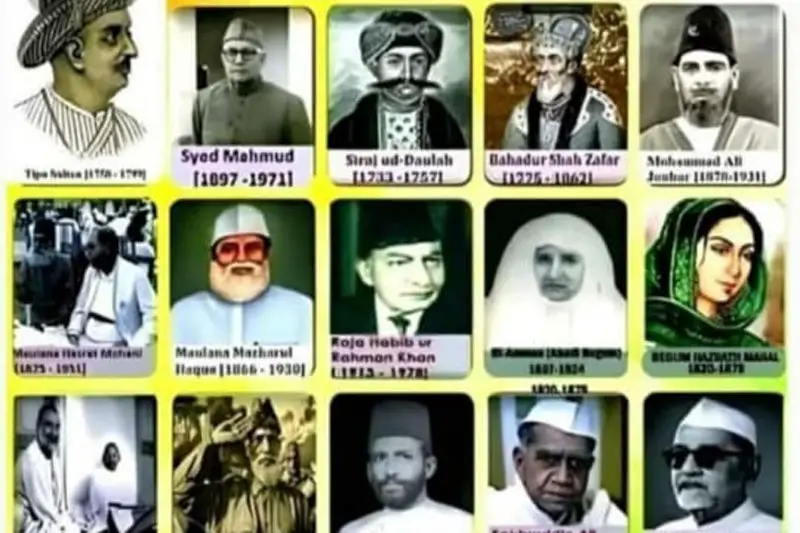
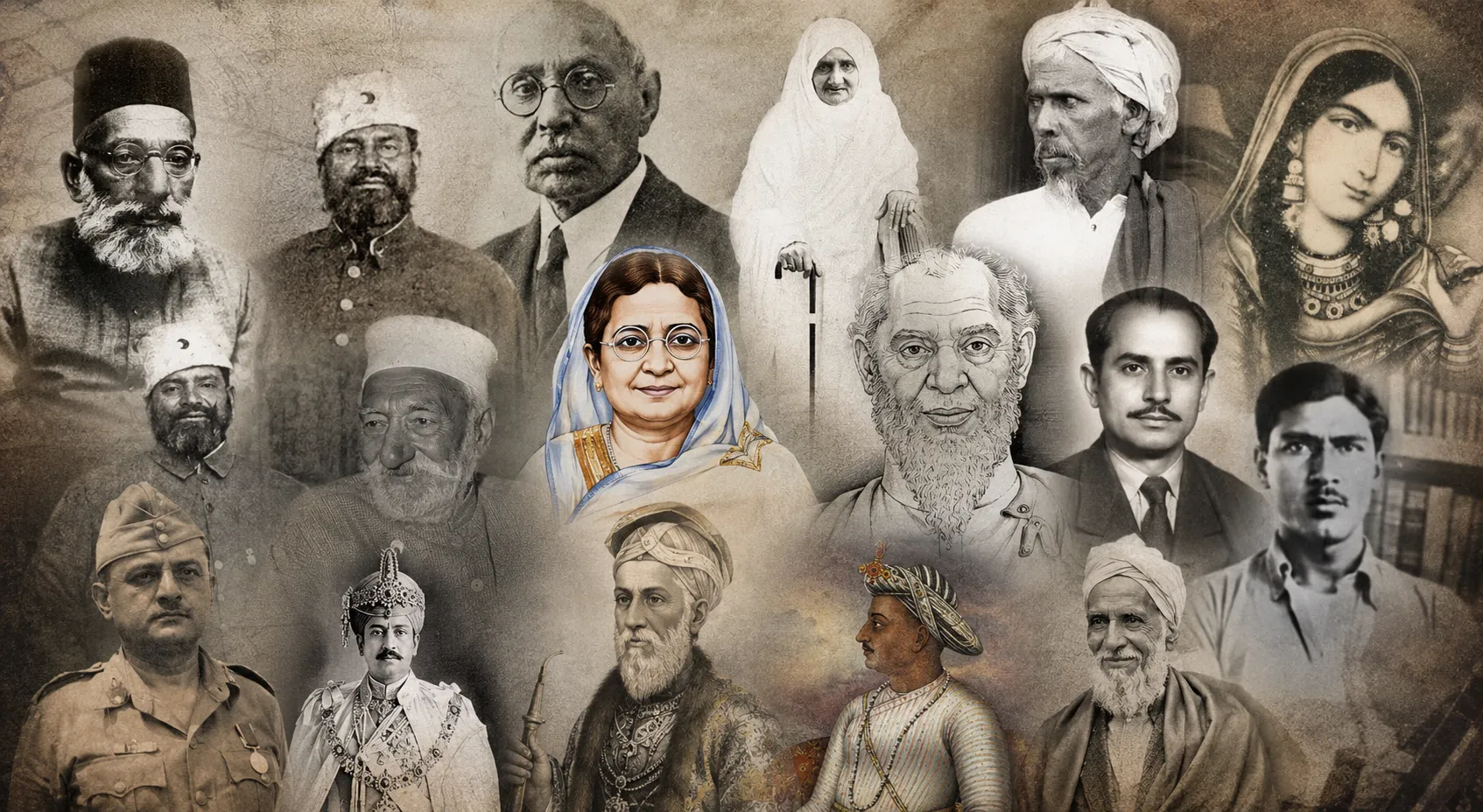
Stroll through the pages of India’s history, because academia has failed to acknowledge some names and contributions in the Indian freedom struggle. From the Taj Mahal, Red Fort, Qutub Minar, Humayun’s Tomb, Gol Gumbaz, Charminar, to Fatehpur Sikri and the bustling lanes of Chandni Chowk, they all speak volumes louder. But the cultural pattern of ‘selectively remembering’ and ‘selectively forgetting’ has downplayed nation’s history into one-dimensional narratives , while external sources of learning like cinemas, textbooks, public places re-branding, etc,  are getting colored with contemporary political dynamics, to legitimize their plans and policies. 

To fathom India’s past sincerely, we must be willing not only to learn but also to unlearn. Learning involves discovering forgotten contributions, while unlearning requires shedding inherited biases, political narratives, and simplified versions of history. Because, as eminent historians have speculated, the past is constantly reinterpreted in the light of new evidence and new questions. Consequently, the framing of our past will affect the present, which will further be read as a past in the future, thus entrusting us with sheer responsibility of weaving a lineage of conscience, not insidious storytelling.

The lost dots of the Indian freedom movements

Revisit in Indian history afresh because erasure never happens all at once, it happens slowly and systematically.

Independence Movements did not count from the very battles fought, but from the conditions laid down before and after to formulate and fixate Indian society and culture altogether. Resistance to the economization, politicisation, and, ultimately, colonization by the Britishers was confronted by the collective plurality which our country possessed with pride. Testifying that resistance was not always born on the battlefield, often it began with communities refusing to harbor animosity for one another. 

Hindu sanyasis and Muslim fakirs whom the British Company wanted to fragmentalise, chose each other instead. Naga ascetics of the Dashnami order like Pandit Bhabani Charan Pathak stood beside Muslim fakirs of the Madari and Burhana sects, Majnu Shah Fakir, Chirag Ali, Musa Shah, and together resisted the oppressive taxation and economic exploitation the Company had imposed. It was one of the earliest organized rebellions against British rule in India, and yet how many of us have even heard these names?
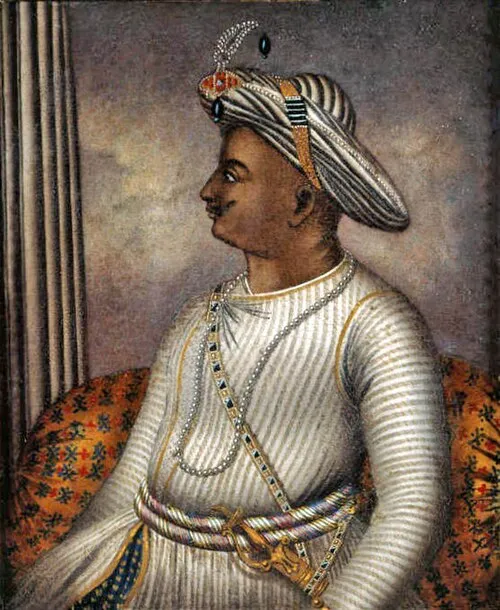
Tipu Sultan

That same defiance carried into Mysore, Tipu Sultan, a name antagonized in recent years that people even slipped away from the fact that he is the man who invented Missiles in India, a ruler who terrified the British. He built iron-cased rockets before most of the world imagined such a weapon, and fought the British across four wars, refusing again and again to let his kingdom bow. And what do we do with that legacy today? 

Islamic gallantry didn’t halt there. Moulvi Ahmadullah Shah, one of the key leaders of the First War of Indian Independence in 1857 was called the lighthouse of rebellion in Awadh, an epitome of the Ganga-Jamuna culture of Faizabad. The rebel army of Awadh was led by Barkat Ahmad and Maulvi Ahmadullah Shah, with Barkat Ahmad declared Chief Army Officer of the rebels after the Battle of Chinhat. ​​​​​​
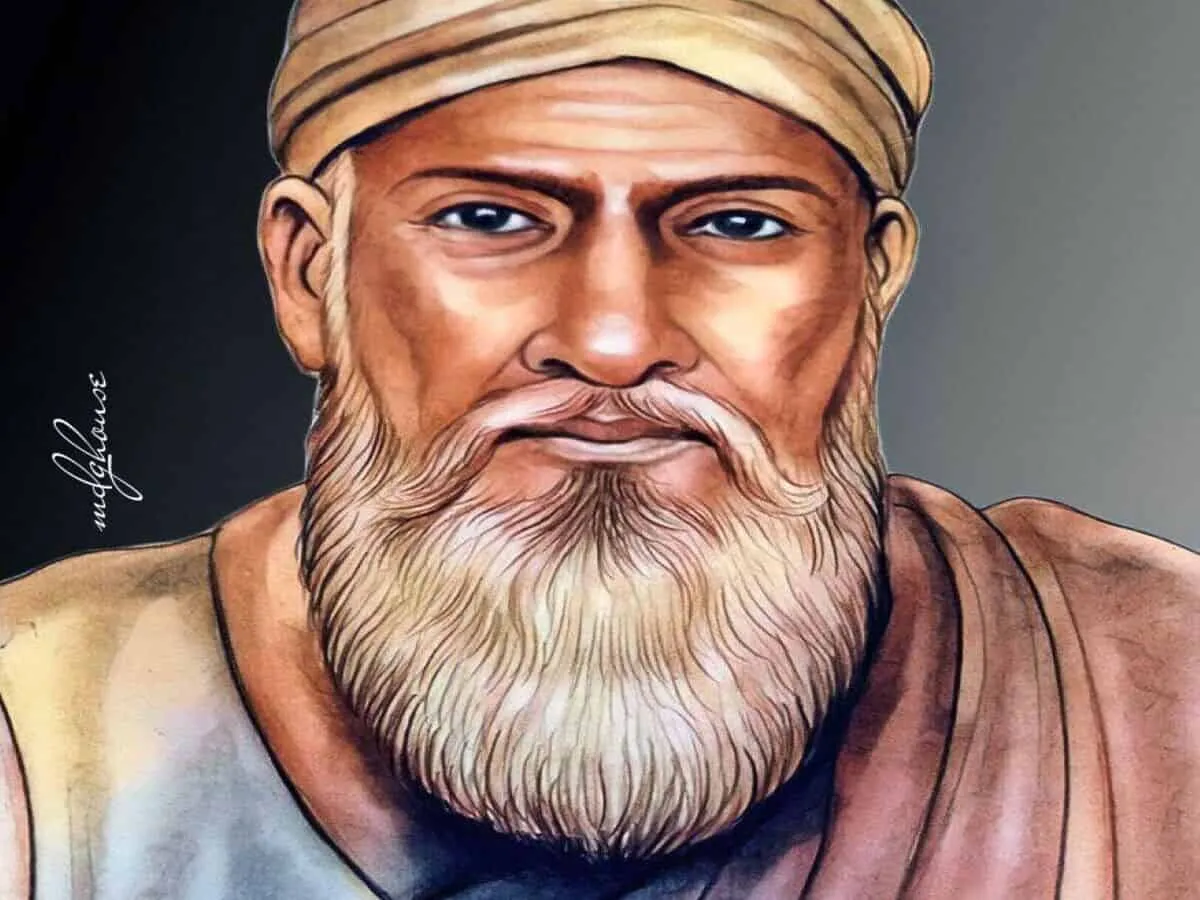
Moulvi Ahmadullah Shah

At the head of that same uprising stood Bahadur Shah Zafar, lending his name and his throne to the rebellion we call the Sepoy Mutiny. He gave everything a king could give, and the British broke him in the cruelest way. After his surrender, his sons Mirza Mughal and Mirza Khizr Sultan, and his grandson Mirza Abu Bakr, were stripped and shot in cold blood by Major William Hodson at what is now called Khooni Darwaza, and their severed heads were brought before their own father as a trophy. So many lives were lost in that struggle, so many families broken, and it is widely said that nearly 5 lakh Muslims were martyred, close to 50,000 of them ullema who chose the battlefield over silence. After rotating around 79 years of India’s independence, we are still cynical over the contributions carved by Indian Muslims.
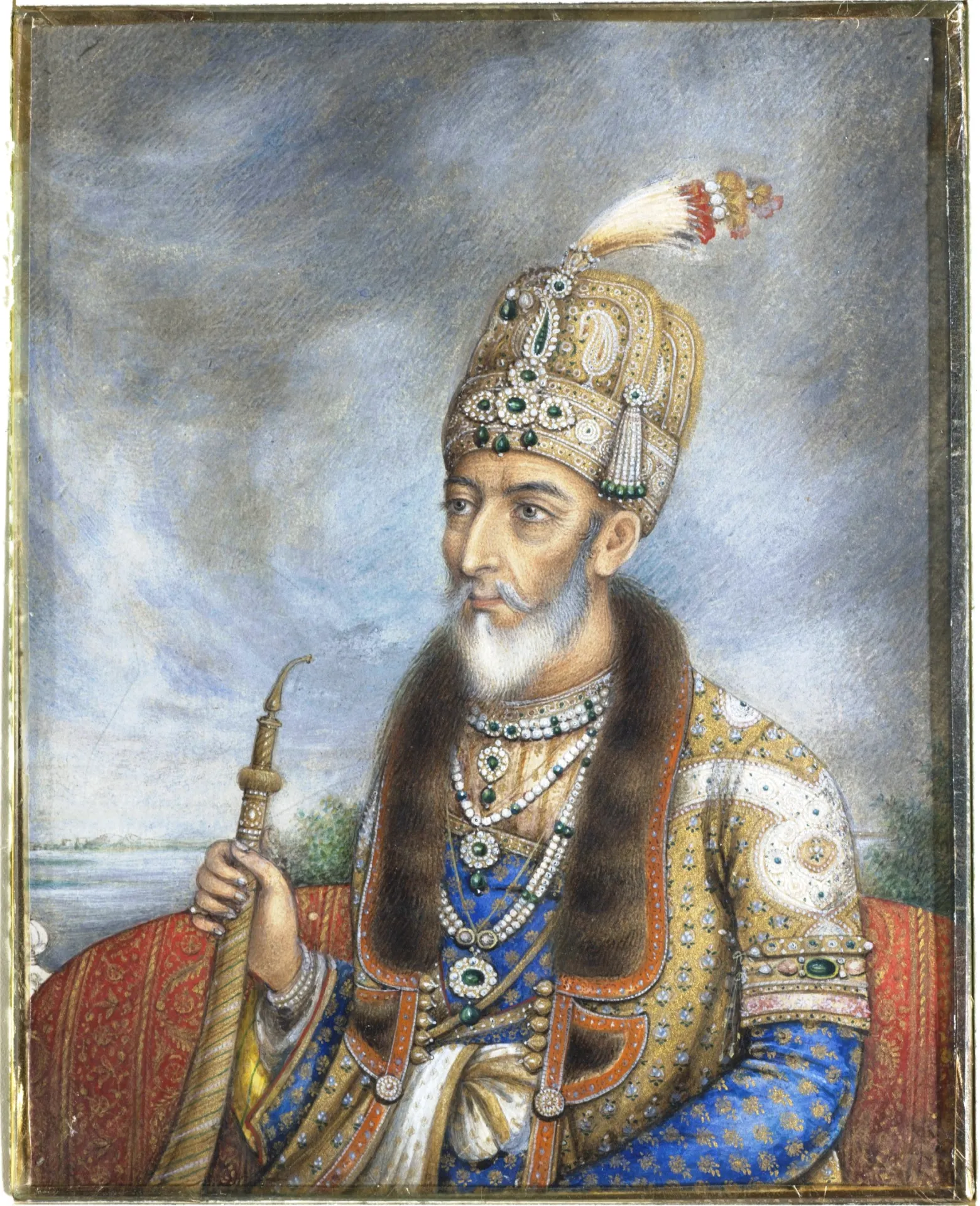
Bahadur Shah Zafar

Another buried name is of, Ashfaquallah Khan, was hanged on 19th December 1927, at just 27 years old, along with other Kakori comrades who were sent to the gallows. This Kakori robbery was to pull back the wealth of Indian soil to channelize it for the national struggle. Khan revolutionized nationalist movement with his participation in Hindustan Republican Association (HRA), founded by Ram Prasad Bismil along with two others. Like Kakori robbery, many other raids were rolled out to confront with required force rather than abstracting the notion of peace towards the gruesome tortures.   Have we ever lent an ear to these lines of Khan’s  ‘Hasrat’ poem- “Kuch aarzoo naheen hai, hai aarzoo to yeh hai, Rakh de koi zara si Khaak-e-watan kafan men” who as his last whim, recited this poem soaked in patriotism. Are we made to remember these lines by a Muslim freedom fighter when we are reminded about the terrified misapplication of the divine slogan “Allah-u-Akbar” to polarize the Islam?
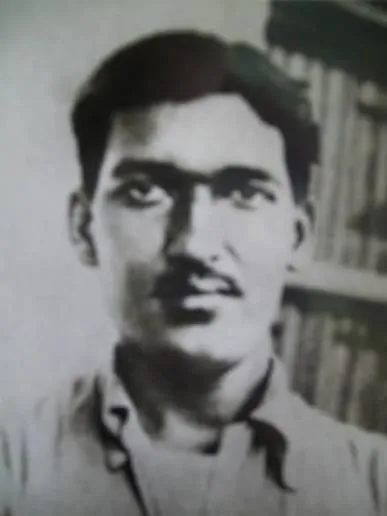
Ashfaqullah Khan

Walking further, Abdul Habeeb Yusuf Marfani, gave away his entire estate for a freedom he’d never see honoured. His courage was never separate from the cause, it was central to it, and it’s long overdue we remember it that way.
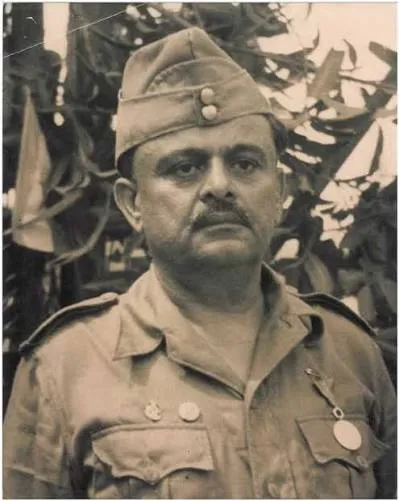
Abdul Habeeb Yusuf Marfani

Muslim participation in India’s freedom struggle was not boxed in a specific time or way, it encompassed armed resistance, societal reforms, mass mobilization, revolutionary events, and non-violent protests. The hurls on the invasions done by Muslims are widely made, but onlookers of the contributions by very same people, are tactfully airbrushed.

Sacrifices for the Indian motherland were proven on silent or loud battlefields,  not by the mere recital of ‘Patriotic Songs’ such as Vande Mataram as a contemporary reference. That is turned down by Indian Muslims lyrically, not soulfully, because of the religiosity which the Indian Constitution guarantees them. When did the recital of patriotic songs begin to outweigh the very acts of sacrifice they were meant to spring up?

Freedom fighters such as Maulvi Ahmadullah Shah, Begum Hazrat Mahal, Fazl-e-Haq Khairabadi (clarified the Jihad term through his war against the British), and Azimullah Khan were also important in the 1857 uprising. Barely, we learn or are made to learn about them? While vilifying other names of this very same community. 
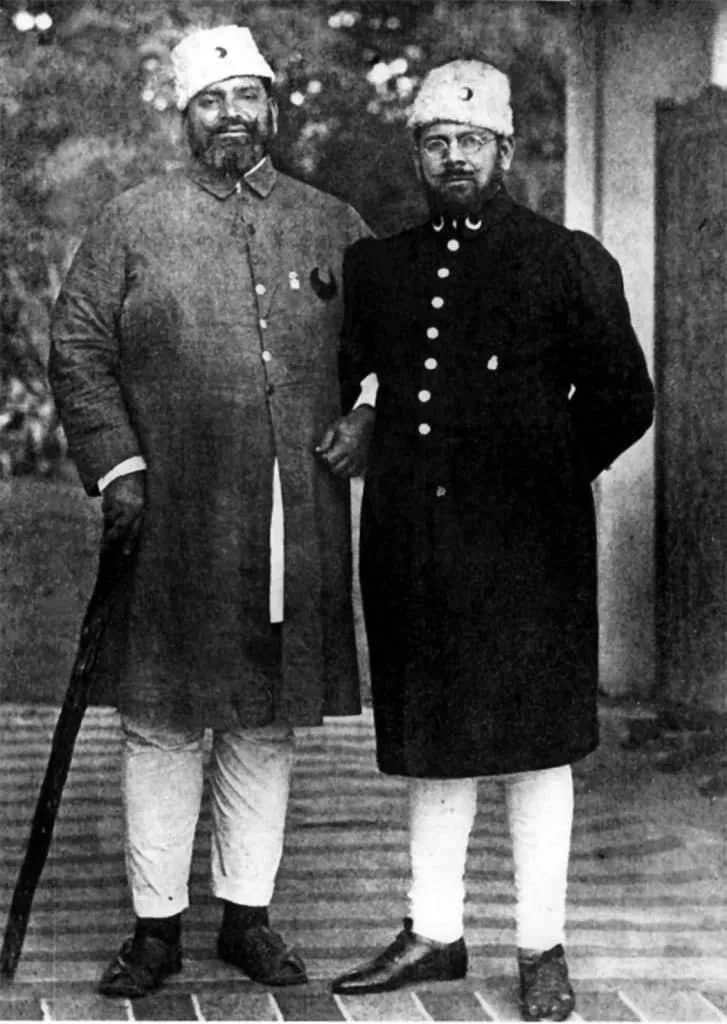
The Ali brothers, Shaukat Ali (1873-1938) and Mohamed Ali Jauhar (1878-1931)

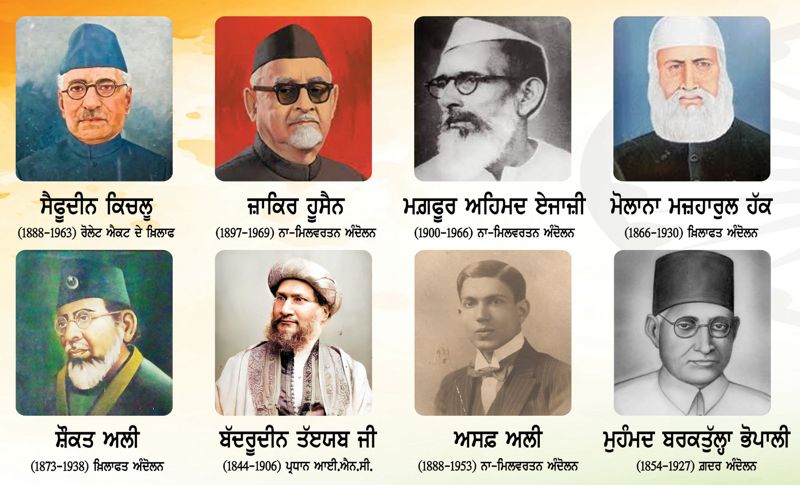
Even the popular moments like the non-cooperation movement and the Khilafat Movement were helmed by some unheeded names: Mohammad Ali Jauhar and Shaukat Ali. Erected on the former’s name, there stands a university in Rampur, U.P. which recently has fallen prey to the communal politics, staking Indian youth’s future at darker stage, thus disregarding the blood of these freedom fighters.
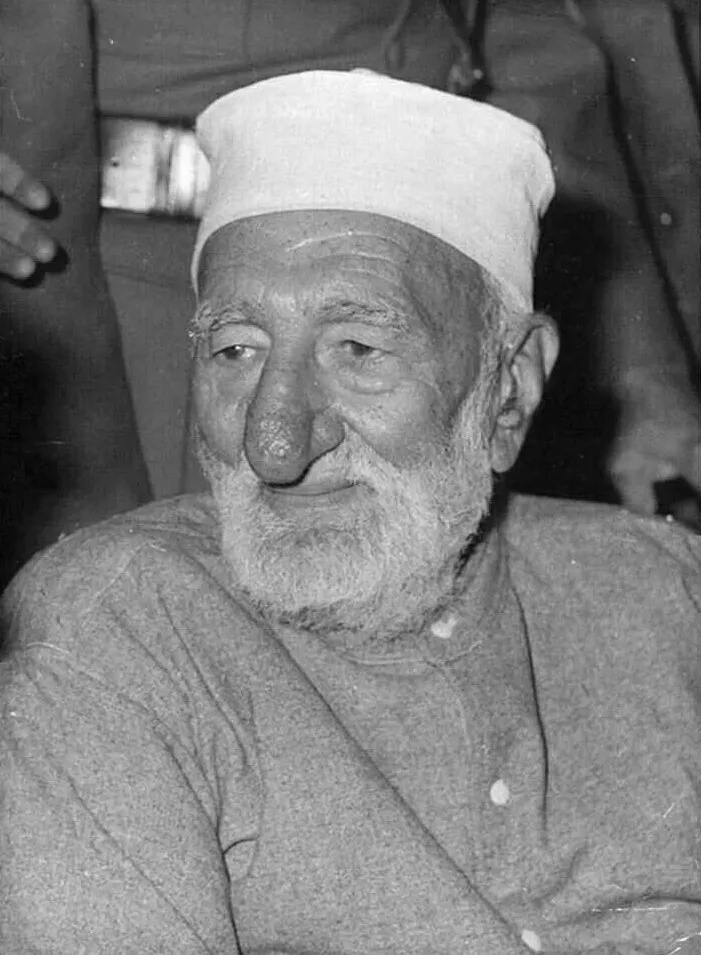
Khan Abdul Ghaffar Khan

Khan Abdul Ghaffar Khan who spent three decades in prison and headed the non-violent Khudai Khidmatgar Movement among Pashtuns against British rule, wherein he combined social reform, service, and discipline. His demise took place during his house arrest in Peshawar. 
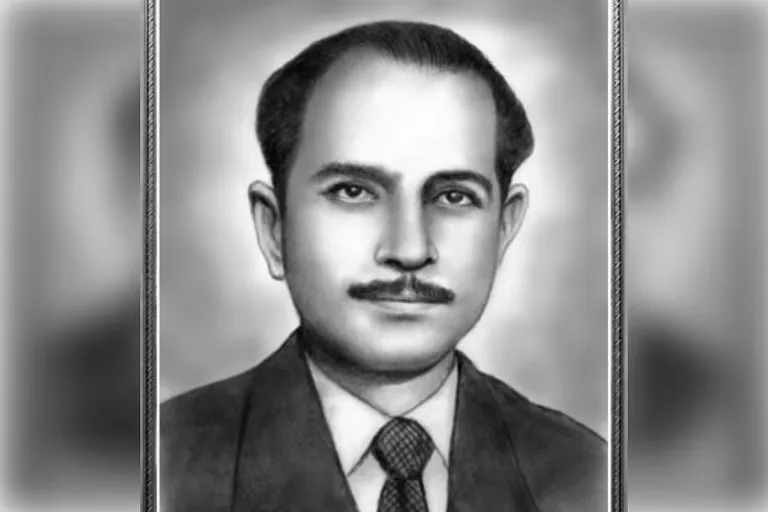
Abid Hasan Safrani

Without a single community-led leader, ideologies often find a loose hand to wrestle for their individual existence rather than collective results. Abid Hasan Safrani,  prominent INA member, mobilized the Muslim youth and committed to Subhas Chandra Bose’s movement (Azad Hind Fauj), which underpinned armed resistance in the Indian Freedom Struggle rather than non-violent means, brewing the unity for winning back the motherland.

Having said that, the famous Ghadar Party, founded in 1913, was pioneered by one more buried name- Maulana Barkatullah Bhopali. He was the first Prime Minister of the Provisional Government of India (Government-in-Exile), which was established in Kabul in 1915. He traversed across Europe, Asia, and North America to usher in the momentum for the Indian freedom struggle. His death took place in the US, leaving him deprived of bidding adieu to his motherland one last time.
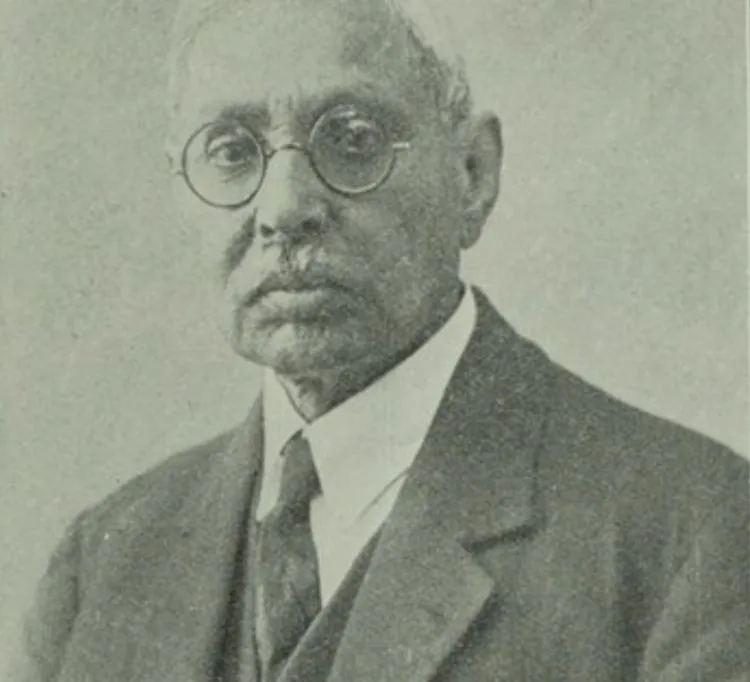
Maulana Barkatullah Bhopali

Then, “Inquilab Zindabad”, the popular hymn echoed at Jantar Mantar very recently, was originally coined by Urdu poet-politician Hasrat Mohani at the Congress’ Ahmedabad session, while Bhagat Singh solely made it popularized. Mohani had been a soulful Krishna Bhakt, leaving him writing eulogies for ‘Hazrat Krishna’ (Hazrat is not a religious tag; it is an honorary title).  He, being the co-prisoner of Gandhi ji, presented him with the USSR idea of federalism for empowering the localized and regional pockets of the agglomerate India. His courage and values proved his patriotism in the debates of the Constituent Assembly and confrontations with the Britishers. 
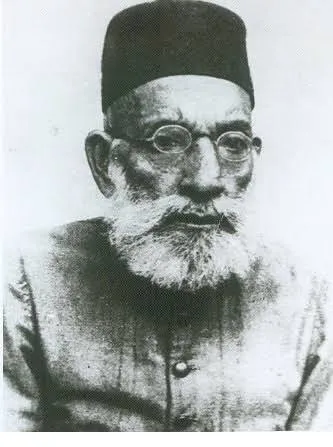
Hasrat Mohani

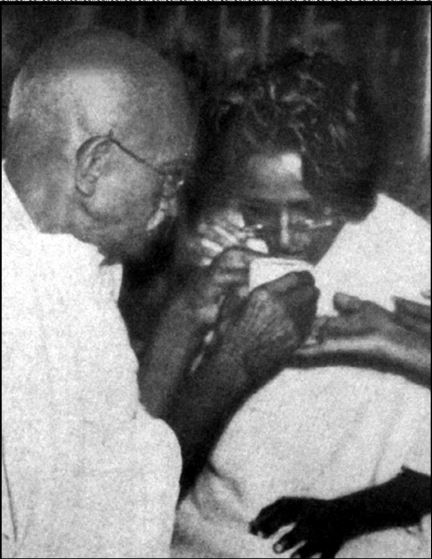
We remember Mahatma Gandhi more than any other freedom fighter, but are we mindful of the fact that the man who saved him was Batak Mian Ansari during the Champaran Satyagraha in 1917? He was the cook deployed by the Britishers, who then ordered Batak Mian Ansari to serve venomous milk to Gandhi ji. His integrity made him stake his life to save Gandhi ji. He sneakily warned Gandhi ji, and, as anticipated, he was kicked out of his job by the Britishers, further leaving him battered by the villagers and ousting him and his family from his residence. To date, his family couldn’t receive what was promised for his courage by India’s first president, Rajendra Prasad. Questioning how much we have honoured the honorable personalities on the ground?
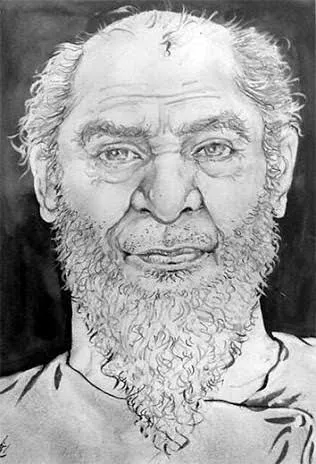
Batak Mian Ansari

The last Nizam of Hyderabad, Mir Osman Ali Khan, is also in this queue of the buried names. Independence movement is not merely the swing between direct confrontation with colonial regime, it too laps over the pre and post period that either nudged the movements or repaired the damages caused to India. He has reportedly granted mammoth donations across educational and religious institutions. From BHU, AMU, IISc, publication of critical editions of Mahabharata, Golden Temple, Amritsar and many more places . We rewind through cruel rulers who demolished Indian structures, to attack their community and make them accountable in the present, but are we awakened with these submerged realities as well? One-sided history or evolving history, rationality comes with the choices citizens make to discern their roots.
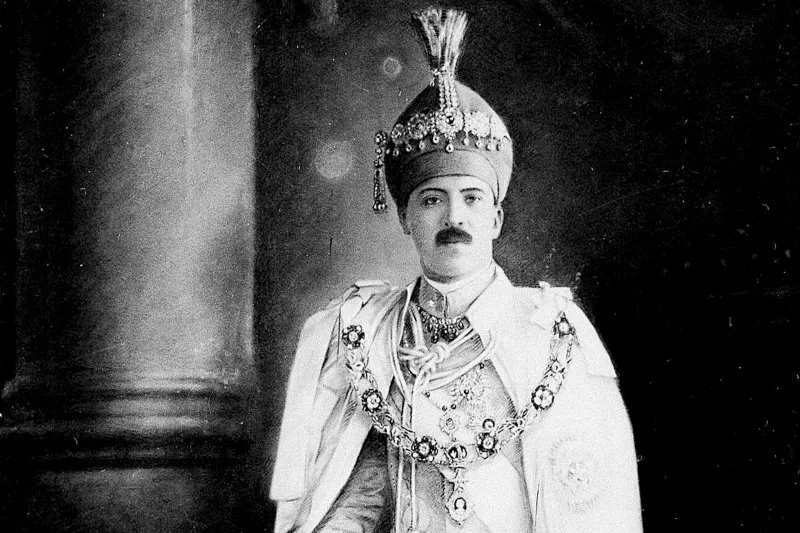
Mir Osman Ali Khan

The history of Muslim resistance to British colonial rule also travelled deep into Malabar in Kerala, where Variyankunnath Kunjahammad Haji, Ali Musliyar , and Sayyid Fazal Pookoya Thangal emerged as formidable names in a long tradition of anti-colonial mobilisation. Fazal Pookoya Thangal, the 19th-century Mappila spiritual leader of Malabar, became an influential voice against British authority and the oppressive agrarian order sustained under colonial rule, eventually being forced into exile in 1852. Decades later, that inheritance of resistance found powerful expression in the 1921 Malabar uprising, with Ali Musliyar, a religious scholar and Khilafat leader, and Variyankunnath Kunjahammad Haji becoming among its most prominent leaders. Haji challenged British authority in parts of Malabar and established a parallel administration in areas under rebel control, while Ali Musliyar mobilised people against colonial rule before being captured and executed by the British. Haji, too, was eventually captured and executed by firing squad in January 1922.
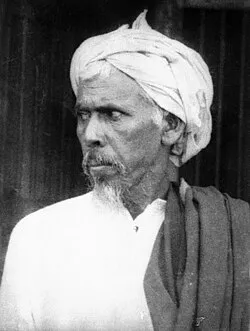
Ali Musliyar

Culture can marginalise women, but religion pours courage 

“Khoob Ladi Mardani thi, Wo Jhansi Wali Rani thi”, Whenever we speak of women who took up arms for this land, Rani Lakshmibai of Jhansi is the name that comes to every tongue, and she deserves every bit of that memory. But here’s what gnaws: she was not alone. There were other women just as fearless, standing in the same fire, and history simply didn’t bother to write their names down. 
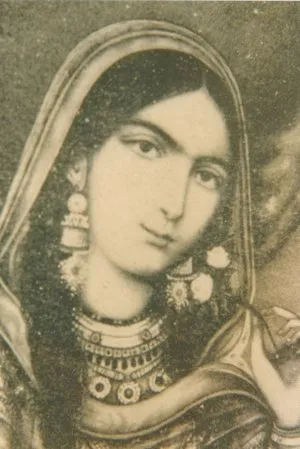
Begum Hazrat Mahal

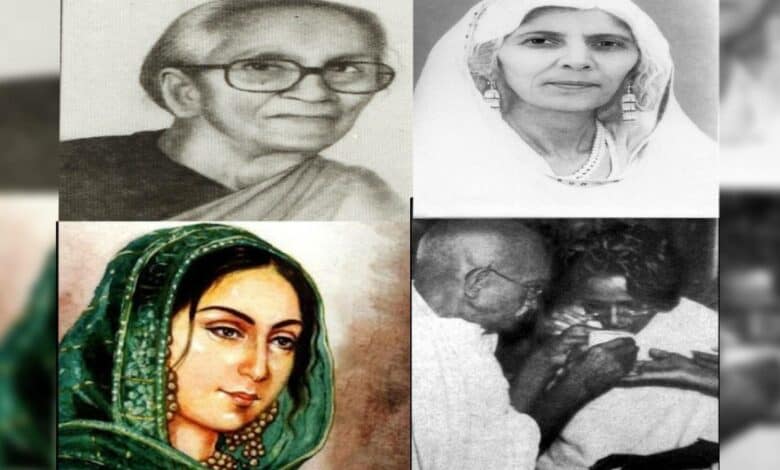
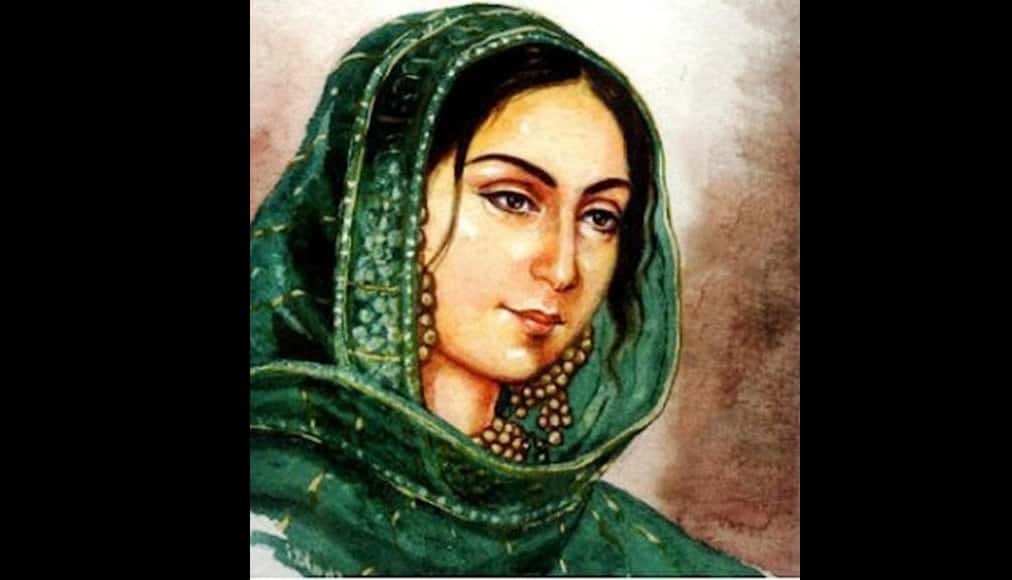
Begum Hazrat Mahal was one of them, and she wasn’t a side character, she was one of the rebellion’s most formidable forces. Even William Howard Russell, a British correspondent writing for his own side, couldn’t deny her fire. In his My Indian Mutiny Dairy, describing her as a woman of remarkable energy who had stirred all of Oudh into rising for her son’s cause and had herself declared undying war against the British. At Musa Bagh in Lucknow, she didn’t issue orders from a distance, she personally fought alongside and rallied nearly 9,000 rebel soldiers, moving from camp to camp, lifting morale with speeches that set entire camps on fire.
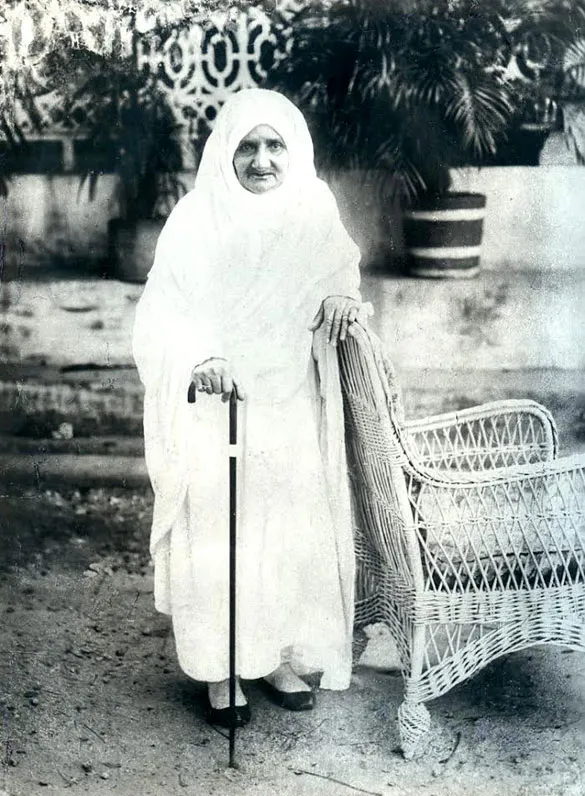
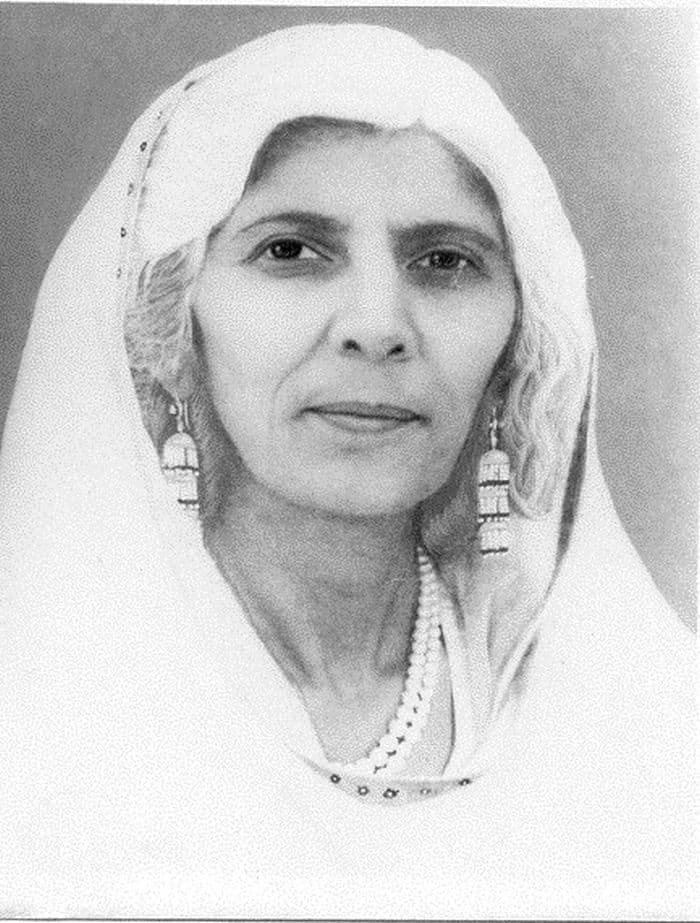
Abadi Bano Begum

And then there’s Abadi Bano Begum- the woman history remembers, if at all, only as “Bi Amma.” A widow with six children, one of the sons Maulana Shaukat Ali, and the other Mohammad Ali Jauhar, above-mentioned together known as the Ali Brothers. She could have used every excuse the world hands a woman to stay silent. widowhood, motherhood, the weight of raising children alone. She used none of them. When the country needed people brave enough to stand up to the British, she stood up too. She became the first woman to address a political rally while wearing a burqa and let that sink in for a moment. She didn’t have to remove a part of her identity to be taken seriously in public life; she broke the idea that a veiled woman couldn’t also be a fighter, a leader, or a voice loud enough to move a crowd. She urged women to stop hiding at home and join the struggle, organizing funds and meetings where they were addressed as political beings for the first time, and taught why boycotting foreign goods mattered. She convinced them to donate to the Tilak Swaraj Fund, set up by Bal Gangadhar Tilak to finance India’s freedom struggle.
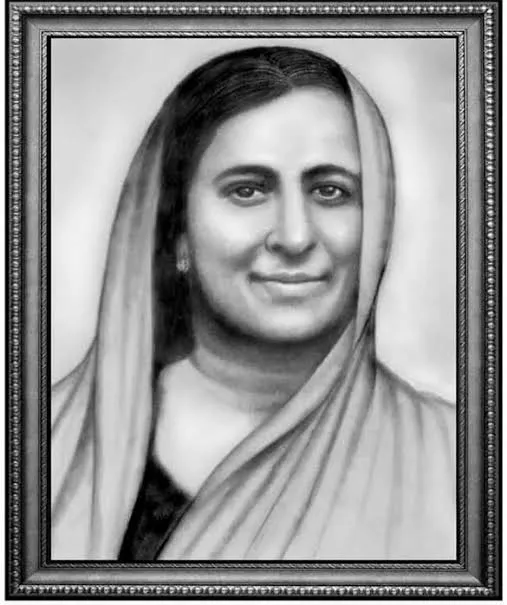
Kulsum Sayani

Not every battle was fought with a sword, some were fought with pen and paper. Kulsum Sayani, awarded the Padma Shri in 1960, waged her own war against illiteracy through the Jan Jagran movement, teaching under “each one, teach one” and leading centres for Muslim women that grew from 50 to 600 by sheer will. Begum Rokeya, a fiercely prolific feminist writer at a time when a woman dreaming was seen as rebellion, imagined a world turned upside down in Sultana’s Dream, then built that vision into reality, founding a girls’ school in 1909 and the Muslim Women’s Association in 1916, giving women space to learn and speak.
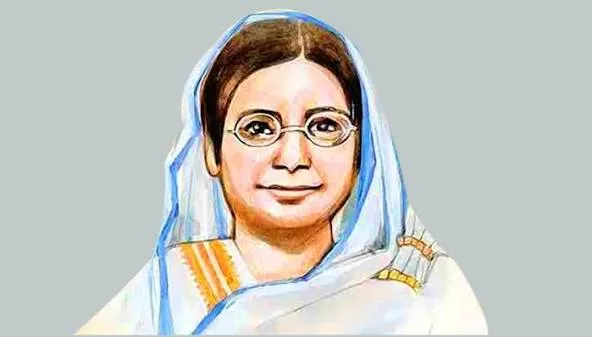
Begum Rokeya

80th Indian Independence Day’s call to unwind the narratives 

As the author of ‘Sare Jahan Sai Achcha, Hindustan Humara’– Allama Iqbal penned- “The freedom lovers of the nation stepped forward with such dignity that even those long imprisoned by deprivation watched in admiration.” It has been shouldered on the present generations to soak in the evolving history to sanitize the present from groans of hatred, rotting the Indian society. 

These lost chapters from Indian history wouldn’t have been possible to muster without the effulgent works of Salim Khan, Romila Thapar, Ramachandra Guha, S. Irfan Habib, Mushirul Hasan, A. G. Noorani, Rana Safvi, etc. Grinning us with the fact that the pluralistic framework of India is not only designed by the constituent makers, but it is also originally earned by all the freedom fighters, from pre- to post-independence.

Adeena Navaid is a law student and writer covering legal, social, and feminist issues, with work published in Maktoob, Bar & Bench, The Quint, Siasat, SheThePeople, and other platforms. Aiman Tabassum is a final-year LL.B. student at the University of Mumbai who writes on constitutional law, legal history, and socio-political issues, with work published in Bar & Bench.

source: http://www.maktoobmedia.com / Maktoob Media / Home> Opinion / by Adeena Navaid & Aiman Tabassum / August 14th, 2026
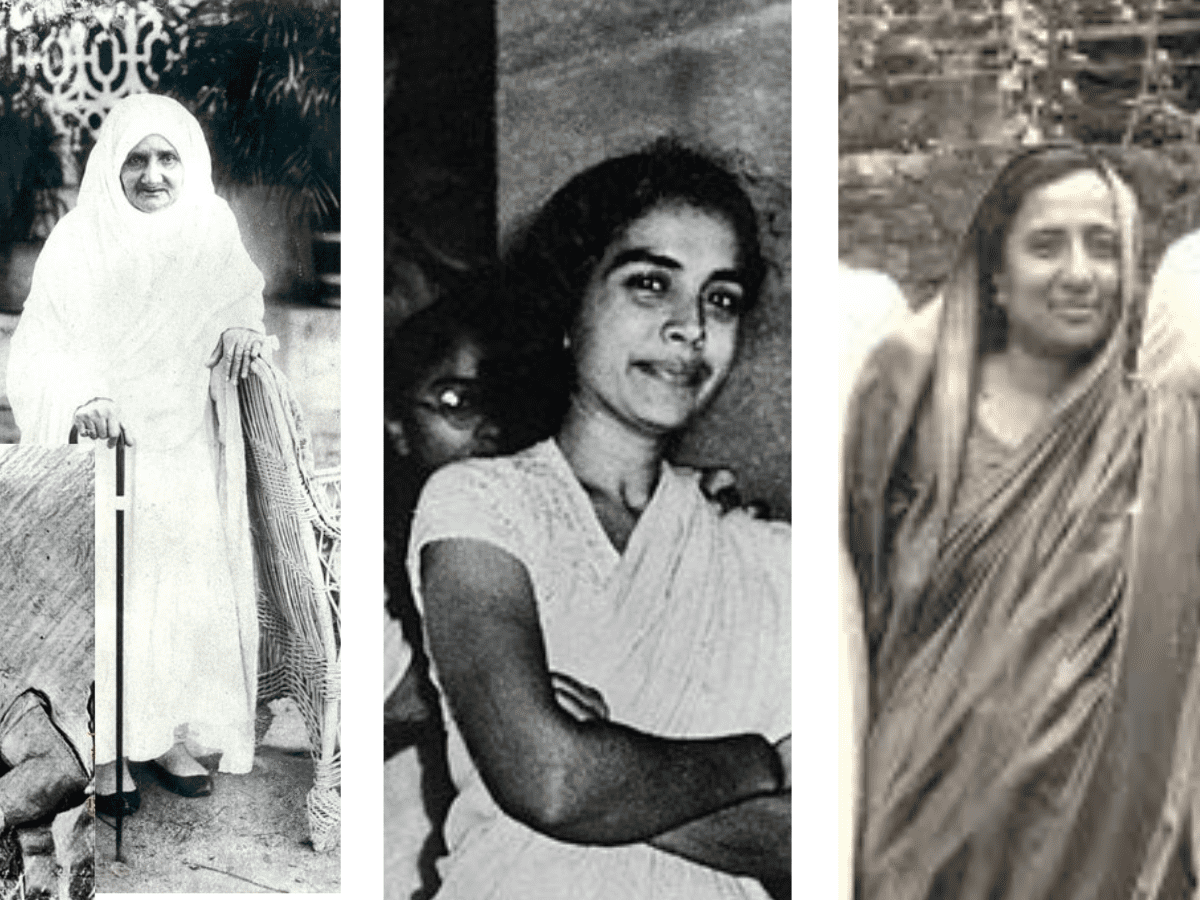
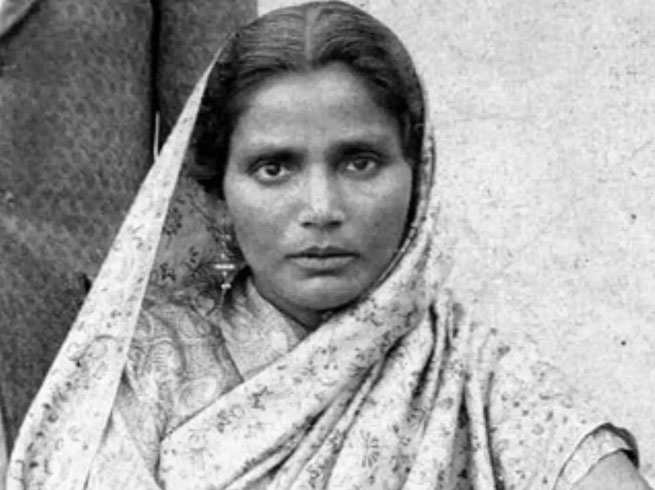
75 years of Independence: Muslim women in India’s freedom struggle

INDIA:

Several Muslim women were an active part of India’s freedom struggle, some of whom emerged from Hyderabad.

The list includes Abadi Bano Begum, Bibi Amtus Salam, Begum Anis Kidwai, Begum Nishatunnisa Mohani, Baji Jamalunnisa, Hajara Beebi Ismail, Kulsum Sayani, and Syed Fakrul Hajiya Hassan.

As India celebrates 75 years of Independence the country often recalls those that were instrumental in the country’s freedom struggle. But often those who aren’t talked about enough evanesce into the archives of history.

As men who took lead roles in the movement were put behind bars, the women ensured that the movement would not die down and the country attained the freedom a vast majority of it’s residents and citizens enjoy today.

The country’s Prime Minister Narendra Modi in his Independence Day speech, on Monday, hailed women and the part they played during the times including, Rani Laxmibai, Jhalkari Bai, Durga Bhabhi, Rani Gaidinliu and Begum Hazrat Mahal among others.

These are a few among the many names that are a part of the country’s Independence struggle. Apart from Begum Mahal, who made it to the list of the PM’s speech, today, Muslim women have made their mark in Indian history.

Abadi Bano Begum, Bibi Amtus Salam, Begum Anis Kidwai, Begum Nishatunnisa Mohani Baji Jamalunnisa, Hajara Beebi Ismail, Kulsum Sayani, and Syed Fakrul Hajiya Hassan are among those who are often forgotten or lost in public memory.

Abadi Bano Begum (Born 1852- Died 1924)

Abadi Bano Begum was the first Muslim woman who actively took part in politics and was also a part of the movement to free India from the British Raj. Abadi Bano Begum referred to by Gandhi as Bi Amma, was born in 1852, in Uttar Pradesh’s Amroha.

Bi Amman was married to a senior official in the Rampur State, Abdul Ali Khan.

After the death of her husband, Bano raised her children (two daughters and five sons) on her own. Her sons, Maulana Mohammad Ali Jouhar and Maulana Shaukat Ali become leading figures of the Khilafat Movement and the Indian Independence Movement. They played an important role during the non-cooperation movement against the British Raj.

Bi Amma, despite her poor financial condition, from 1917-1921, donated Rs 10 every month to protest against the British Defense Act, after Sarojini Naidu’s arrest.

In 1917, Bano also joined the agitation to release Annie Besant and her sons, who were arrested by the British after their failed attempts to silence her home rule movement in 1917, launched alongside, Bal Gangadhar Tilak.

Despite being a conservative Muslim for the most part of her life Bi Ammah was one of the most prominent faces of Muslim women in India’s freedom struggle.

To get the support of women, Mahatma Gandhi encouraged her to speak in a session of the all-Indian Muslim league, she gave a speech which left a lasting impression on the Muslims of British India.

Bano played an important role in fundraising for the khilafat movement and the Indian Independence movement.

Bibi Amtus Salam (Died 1985)

Mahatma Gandhi’s ‘adopted daughter’ from Patiala Bibi Amtus Salam was a social worker and his disciple who played an active role in combating communal violence in the wake of the partition and in the rehabilitation of refugees who came to India following the partition.

She has on several occasions risked her life by rushing to sensitive areas during the communal riots in Calcutta, Delhi and Deccan.

Bibi Salam was a Muslim inmate of the Gandhi ashram and had over time become an adopted daughter to Gandhi.

After the Noakhali riots, an article published in The Tribune on February 9, 1947, noted that Amtus Salam’s 25-day fast, which was intended to make offenders feel guilty, was one of the most significant outcomes of Gandhi and his disciples’ actions.

To protest the “negligence” of the state authorities in the effort to rescue kidnapped women and children, she sat on an indefinite fast at Dera Nawab in Bahawalpur.

Begum Hazrat Mahal (Born 1820-Died 1879)

An iconic figure of the 1857 uprising, Begum Hazrat Mahal fought against the British East India Company.

Begum, the wife of Nawab Wajid Ali Shah, the ruler of Awadh, refused to accept any favours or allowances from the British. Begum, with the aid of her commander Raja Jailal Singh, battled the British East India Company valiantly.

Muhammadi Khanum, the future Mahal, was born in Faizabad, Uttar Pradesh, in 1830. Gulam Hussain is her father. She had an early understanding of literature. The East India Company’s destruction of mosques and temples to make room for highways served as the catalyst for her uprising.

When the British East India Company invaded Awadh in 1856 and her husband, the last Nawab of Awadh, was exiled to Calcutta, the Begum made the decision to remain in Lucknow along with her son, Birjis Qadir.

On May 31, 1857, they convened in Lucknow’s Chavani neighbourhood to declare Independence and drive the British out of the city.

On July 7, 1857, Begum Hazrat Mahal proclaimed her son, Birjis Khadir, the Nawab of Awadh. She raised 1,80,000 soldiers and lavishly renovated the Lucknow fort as the Nawab’s mother.

She died there on 7 April 1879.

Begum Anis Kidwai (Born 1906- Died 1982)

Story all about freedom fighter Anis Kidwai

A politician and activist from Uttar Pradesh (UP) named Anis Kidwai devoted most of her life to serving the newly Independent India, working for peace and the rehabilitation of the victims of the terrible partition of India.

She represented the Indian National Congress (INC) in the Rajya Sabha from 1956 to 1962, serving two terms as a Member of the Parliament.

Anis Begum Kidwai remained active during the Indian National Movement. Despite gaining independence in 1947, India suffered from country division.

By then, her husband Shafi Ahmed Kidwai had been murdered by communal forces for his efforts to promote amity between Muslims and Hindus and to prevent the split of the country. She was deeply devastated by her husband’s passing.

She visited Mahatma Gandhi in Delhi following her husband’s passing as a result of this unfortunate tragedy.

In order to support and assist the women who were suffering similarly to her as a result of the country’s separation, she began working with women leaders like Subhadra Joshi, Mridula Sarabhai, and others under the direction of Mahatma Gandhi.

She also started rescue camps for the victims and supported them in all respects. They affectionately called her ‘Anis Aapa’. She penned her experiences during the division of the Nation in her book ‘Azadi Ki Chaon Mein’.

Begum Nishatunnisa Mohani (Born 1884- Died 1937)

Begum Nishatunnisa Mohani was born in 1884 in Awadh, Uttar Pradesh, and her notion of ultimate freedom was adopted by Gandhiji.

Married to Moulana Hasrat Mohani, a tenacious independence warrior and the one who gave the phrase “Inquilab Zindabad” its origin. Begum, a fierce opponent of British authority, supported the then-hardliner of the liberation struggle, Bal Gangadhar Tilak.

After his imprisonment for publishing an anti-British piece, she wrote to her husband, Hasrat Mohani, encouraging him and raising his spirits by saying, “Face the risks imposed upon you boldly. Do not give me any thought. No sign of weakness should come from you. ‘Be careful’.”

Later, when her husband was in prison, she took over the publication of his daily, Urdu-e-Mualla, and engaged in various legal disputes with the government.

Baji Jamalunnisa, Hyderabad (Born 1915- Died 2016)

Baji Jamalunnisa, who actively participated in the Telangana armed conflict, passed away in this city on July 22 2016, at the age of 101.

Jamalunnisa Baji was born in Hyderabad in 1915 and was a prominent advocate for racial peace and the independence cause.

She began reading the banned journal “nigar” and progressive literature as a young child after being raised by her parents in a liberal/progressive environment.

Despite being raised in the traditional religious traditions of the Nizam regime, a component of the British Raj, she actively participated in the nationalist movement.

She continued to participate in the independence movement despite the oppressive rule of the Nizam and the British rule over her in-laws’ objections.

Later, she met Maulana Hazrat Mohani (the man who coined the phrase “Inquilab Zindabad” and was known as “Thunder Bolt” in the Freedom struggle), who inspired her to join the anti-imperialist movement in the nation.

She provided sanctuary to freedom fighters trying to avoid being arrested by the Imperial Government while being a communist.

Despite lacking basic higher education, she was fluent in Urdu and English and founded the literary society Bazme Ehabab, which held debates in groups on socialism, communism, and unreasonable customs.

She is buried at the Hazrath Syed Ahmed Bad-e-Pah dargah in First Lancer. She was the sister of Syed Akthar Hasan, a former MLA and the founder of Payam Daily, and was better known as “Baji”.

She was a close friend and member of the Communist Party of Maqdoom Mohiuddin. Baji was also a founding member of the Progressive Writers Association and the Women’s Cooperative Society.

Hajara Beebi Ismail, Andhra Pradesh (Died 1994)

Mohammed Ismail Saheb’s wife, Hajara Beebi Ismail, was a freedom warrior from Tenali in the Guntur district of Andhra Pradesh.

Mahatma Gandhi had a significant impact on the pair, who committed themselves to the Khadi campaign movement. In the Guntur district, her husband Mohammed Ismail opened the first Khaddar Store, earning him the moniker “Khaddar Ismail.”

Tenali served as the Muslim League’s headquarters during that time in the Andhra area, where it was particularly active.

Since Hajara and her husband supported Gandhi, they encountered fierce hostility from the Muslim League. Despite her husband’s repeated arrests for his involvement in the national movement, Hajara Beebi never lost spirit.

Kulsum Sayani (Born 1900- Died 1987)

On October 21, 1900, in Gujarat, Kulsum Sayani was born. She participated in the Indian National Movement and battled against social injustices.

Kulsum and her father met Mahatma Gandhi in 1917. Since then, she has travelled Gandhi’s path. Throughout the Indian National Movement, she advocated for social changes.

Dr. Jaan Mohamad Sayani, a well-known liberation fighter, was the man she wed. She participated actively in a number of events of the Indian Freedom Struggle, with her husband’s backing.

She began working with the illiterate and joined the Charkha Class. She also had a significant impact on the Indian National Congress’s “Jan Jagaran” campaigns, which raised public awareness of social ills.

Sayani’s operations included the suburbs and the metropolis of Mumbai.

Syed Fakrul Hajiya Hassan (Died 1970)

Syed Fakrul Hajiyan Hassan, who not only took part in the Indian freedom fight but also urged her children to do so. She was born into a family that immigrated to India from Iraq. She raised her kids to be freedom fighters who later gained notoriety as the “Hyderabad Hassan Brothers.”

Hajiya wed Amir Hassan, who had relocated to Hyderabad from Uttar Pradesh.

She adopted Hyderabadi culture as a result. Amir Hassan, her spouse, had a senior position in the Hyderabad government. He was required to travel to several locations as part of his employment.

She noticed the suffering of women in India while on her visits. She put a lot of effort into the growth of female children.

She lived in Hyderabad, which was governed by the British, yet she actively engaged in the National Freedom Movement since she was a lady with strong national emotions.

She burned foreign clothing at her Abid Manzil in Hyderabad’s Troop Bazaar in response to the demand of the Mahatma Gandhi. She took part in the non-cooperation and Khilafat movements.

She regarded each soldier in the Indian National Army as one of her children. Along with Smt. Sarojini Naidu, and Fhakrul Hajiya put a lot of effort into getting the heroes of Azad Hind Fouz released.

source: http://www.siasat.com / The Siasat Daily / Home> Featured News / by Marziya Sharif / August 17th, 2022

Sabhi ka khoon hai shamil yaha ki mitti me: Muslim Freedom Fighters of India

INDIA:

Uncover the remarkable contributions of Muslim freedom Fighters of India to fight for freedom from British colonial rule.

In present times, Indian Muslims find themselves subjected to demonization and unwarranted questioning of their patriotism. Communal elements seek to manipulate history by intentionally excluding Muslims and disseminating false propaganda against them through social media. The vital contributions and sacrifices made by Indian Muslims in the struggle for India’s freedom from British colonial rule are systematically obscured. However, a closer examination of history reveals that not only did Indian Muslims play an essential role in the freedom movement, but they also made significant sacrifices for the cause of anti-colonial nationalism.

Indian Muslims: Unveiling Their Crucial Role

According to a report by the Milli Chronicle, the names of 95,300 freedom fighters are etched on the India Gate in Delhi, and remarkably, 61,945 of these names belong to Muslims, signifying that 65% of these brave individuals were Muslims. The significance of this statistic is eloquently captured by the renowned writer Mr. Kushwant Singh, who boldly states that the story of Indian freedom is etched in the blood of Muslims, emphasizing their disproportionately larger contribution to the struggle, considering their smaller population percentage.

Profiles of Courage: Muslim Freedom Fighters

The annals of history are adorned with the stories of Muslim freedom fighters who put their lives on the line to liberate India from the shackles of British oppression. These individuals, driven by an unwavering determination to secure their homeland’s independence, demonstrated exceptional courage and resilience.

Sultan Haidar Ali Salabat Jung: The First Freedom Fighter


   Sultan Haidar Ali, father of Tipu Sultan, pioneered the fight against British colonial forces. A secular leader, he united both Hindus and Muslims in his quest for freedom, although his efforts were eventually betrayed.

Tipu Sultan: A Trailblazer in Battle


   Son of India’s first freedom fighter Haider Ali, Tipu Sultan pioneered the use of iron-cased rockets, utilizing them effectively to defeat British forces in several historic battles over two decades.

Shaheed Ashfaqullah Khan: A Martyr’s Legacy


   Member of the Hindustan Republican Association (HRA), Ashfaqullah Khan paid the ultimate price for India’s freedom. Notable for his daring attacks on British government trains, his sacrifice remains etched in history.

Maulana Abul Kalam Azad: A Beacon of Unity


   Maulana Azad, a key leader in the anti-colonial nationalist movement, became the youngest President of the Indian National Congress. He rallied Hindus and Muslims alike against British oppression and launched Urdu Weekly Al-Hilal to expose British misrule.

Maulana Hasrat Mohani: Champion of Change

Mohani’s powerful Urdu speeches incited Indians to stand up against British rule. His unyielding spirit saw him arrested and jailed, but his impact on India’s fight for freedom remained profound.

Khan Abdul Ghaffar Khan: The Frontier Gandhi


   A pivotal figure in the Khilafat movement, Khan Abdul Ghaffar Khan established the Khudai Khitmatgars, promoting peace and unity. Jailed for 13 years by the British, his dedication was unwavering.

Sirajud Daula: Battling Against Betrayal


   The last Nawab of Bengal, Sirajud Daula, fought valiantly against British forces. Despite betrayal, he remained a symbol of resistance against British rule.

Vakkom Majeed: Courage Amidst Oppression


   Vakkom Majeed’s resilience during the Quit India movement earned him repeated jail terms, highlighting his unwavering commitment to India’s freedom.

Fazl-e-Huq Khairabadi: Life in Exile


   Sentenced to life in the notorious Kalapani jail on Andaman, Fazl-e-Huq Khairabadi continued his fight for freedom despite insurmountable odds.

Badruddin Tayabji: Founding the INC


    Badruddin Tyabji and Qamruddin Tyabji were instrumental in establishing the Indian National Congress (INC). Badruddin’s wife, Suraiya Tayabji, designed the present Indian flag.

Shah Nawaz Khan: A Triumphant Act


    Major of Azad Hind Force, Shah Nawaz Khan was the first to hoist the tricolor at the Red Fort, symbolizing India’s victorious struggle against British imperialism.

Barrister Saifuddin Kitchlew: A Voice for Justice


    Jailed for 14 years by the British for protesting against the Jallianwala Bagh massacre and the Rowlatt Acts, Kitchlew’s opposition to the two-nation theory set him apart.

Bakht Khan: A Gallant Defender


    Bakht Khan’s courageous defense against the British in Delhi, Bengal, and Lucknow showcased his unwavering dedication to India’s freedom.

Titu Mir: Bengali Rebel


    Titu Mir’s armed resistance against British colonial authorities exemplified his determination to free India from British rule.

Syed Ahmad Barelvi: Organizing Resistance


    Syed Ahmad Barelvi’s efforts in uniting native armies against the British from Delhi to Kabul showcased his strategic prowess.

Zain-ul-Abideen: INA Officer’s Patriotic Slogan


    Zain-ul-Abideen, an officer of the Indian National Army (INA), coined the iconic patriotic slogan “Jai Hind.”

Empowering Women in the Freedom Struggle

The fight for India’s freedom was not limited to men; several Muslim women also contributed significantly to the struggle.

Begum Hazrat Mahal: A Rebel Leader


   Rebelling against the British in 1857, Begum Hazrat Mahal seized control of Lucknow from British forces, showcasing her leadership and courage.

Surayya Tyabji: Designing India’s Flag


   Wife of freedom fighter Badruddin Tayyabji, Surayya Tyabji designed the Indian flag that we proudly hoist today.

Abadi Bano Begum: A Pioneer in Politics


   Abadi Bano Begum, known as Bi Amma, actively participated in politics, matching her male counterparts in the Indian National Movement. Her sons went on to become prominent leaders.

Azizan: A Warrior’s Spirit


   Azizan organized a battalion of warrior women, displaying her remarkable skill in the art of war and refusing to yield to British pressure.

A Timeless Legacy

The contributions and sacrifices of Indian Muslims in the fight against British colonialism are immeasurable. While recounting the names of every Muslim freedom fighter may be an impossible feat, their collective impact remains undeniable. The fact that many chose to remain in India underscores their deep-rooted connection to the land. Despite attempts to distort history, India will forever be the cherished home of its Muslim citizens.

Conclusion

Urdu poet Rahat Indori’s words,

“Sabhi ka khoon hai shamil yaha ki mitti me,

Kisi ke baap ka Hindustaan thodi hai,”

encapsulate the essence of Muslim Freedom Fighters of India’ unyielding commitment to their homeland. The sacrifices and contributions of Indian Muslims in the struggle for independence stand as a testament to their unwavering dedication and indomitable spirit. Their stories deserve to be acknowledged and celebrated, inspiring future generations to honor the diverse tapestry of individuals who fought for a free and united India.

source: http://www.munsifdaily.com / The Munsif Daily / Home> News> Indai> Pan India / by Munsif Web Desk / August 18th, 2023

Muslim freedom fighters to be remembered on Republic Day

INDIA:

Mandi Ahmedgarh :

With an intent to highlight the role of Islamic leaders in the pre-independence freedom struggle, a group of Muslim youths have decided to organise a function on the occasion of Republic Day, during which sacrifices of unsung heroes from their community would be highlighted.

Besides organising an elaborate programme after unfurling the Tricolour at the Dehliz Chowk on January 26, the enthusiasts will also install banners displaying portraits of more than 20 prominent Muslim freedom fighters at various locations.

The organisers say the gesture will motivate Muslim youths of the region to come forward and play active in nation building, irrespective of their political, social or religious allegiances.

Zeshan Haidar, the convener of the scheduled event, said youths from various Muslim organisations of the area had been roped in to work in tandem for restoring the lost glory of leaders from their community, who had made supreme sacrifices in struggle against the British Government and played a major role in getting freedom for the country.

“Unfortunately, successive governments have failed to recognise the contributions of Muslim leaders in the freedom struggle and a majority of Muslim freedom fighters and martyrs have remained unsung during functions held to celebrate national events such as Republic Day and Independence Day,” Zeshan Haidar said, adding that these names were also missing from history books.

The enthusiasts have shortlisted names of about 100 Muslim leaders of pre-Independence era and portraits of 20 from them will be displayed in the region.

Maulana Shah Abdul Qadir Ludhianvi (grandfather of Shahi Imam Punjab Maulana Usman Ludhianvi), Zakir Husain, Begum Hazrat Mehal, Maulvi Ahmadullah, Abadi Bano Begam, Ashfaqulla Khan and Husain Ahmed Madni were cited among more prominent Muslim freedom fighters whose portraits figure on the proposed banners.

source: http://www.tribuneindia.com / The Tribune / Home> Ludhiana / by the Correspondent, The Tribune / January 24th, 2023

Remembering 4 Muslim women who fought for Indian independence

UTTAR PRADESH / PUNJAB :

Hyderabad: 

On the occasion of 74th Independence Day, let us remember these Muslim women who proved their strength, enthusiasm and determinism in the fight for freedom.

These women broke the stereotype of Muslim women in the society, who are merely perceived to be clad in Burqha and were never let out of the house. They participated in the India’s struggle for independence and emerged victorious.

Begum Hazrat Mahal (1830–1879)

Begum Hazrat Mahal, a prominent woman of 1857 rebellion, was born in 1830 Faizabad of Uttar Pradesh. Her actual name was Muhammadi Khanum. Her father is Gulam Hussain of Faizabad. At her tender age itself, she showed good talent in literature.

She was married to Wajid Ali Shah, the Nawab of Awadh. They were blessed with a son Mirza Birjis Khadir Bahadur. On 13 February, 1856, the British troops imprisoned Wajid Ali Shah. They sent him to Calcutta on 13 March and occupied Awadh illegitimately. This irked the people and native rulers.

They revolted against the British under the leadership of Begum Hazrat Mahal. The native rulers and people met at Chavani area of Lucknow, the capital of Awadh on 31May, 1857 and declared independence. They taught a lesson to the British troops and wiped out their power in Lucknow. Later, Begum Hazrat Mahal declared her son Birjis Khadir as the Nawab of Awadh on 7 July, 1857.

As the King’s mother, she gathered 1,80,000 troops and renovated the Lucknow fort spending huge amount of money. She established a high level committee for the good governance of the state. Hazarat Mahal ruled the state on behalf of her son for about ten months and challenged the British force by inspiring patriotism among the people and the fellow native rulers. She issued a historic statement on 31 December, 1858 challenging the proclamation issued by the Queen Victoria on November 1, 1858.

But, when Delhi, the prime center for the First War of Independence was captured, the British troops surrounded and attacked Lucknow in March 1859. There was a fierce battle between the Company troops and the Begum troops. When defeat became inevitable, Begum Hazrat Mahal retreated to the Nepal forests along with the co-revolutionary leaders like Nana Sahib Peshwa and others.

The British rulers offered her huge amount of money and luxurious facilities in order to bring her back to Lucknow. But, the Begum denied them and made it clear that nothing else was acceptable to her except Independent Awadh state. Begum Hazarath Mahal was struggling for the independence of her state till her last breath. She passed away at Khathmound of Nepal on 7 April, 1879. In 1984 Government of India released a postal stamp in her honour.

Abadi Bano Begum (1852-1924)

Abadi Bano Begum, who took active part at par with men in the Indian National Movement, was born in 1852 in Amroha village, Moradabad district of Uttar Pradesh. She was married to Abdul Ali Khan of the Princely State Rampur.

Though she lost her husband at a young age, she did not remarry. She had two sons Moulana Mohammed Ali and Moulana Showkath Ali, who were famous as ‘Ali Brothers’. She nurtured her children, into becoming memorable leaders of the Indian Independence Movement. Her involvement in the freedom movement began with the Home Rule Movement, to which she rendered moral and most importantly, financial support.

When the British government detained the Ali Brothers in Chindanwad village, under the Indian Defence Regulations, she went along with them. When a police official proposed for the surrender of her sons, she bluntly refused saying, ‘If my sons agree to the proposal of the government, I will kill them by strangulation. I hope God will bestow enough energy into this old woman’s hands’. Abadi Bano met Mahatma Gandhi in 1917 for the first time.

There after Mahatma Gandhi always addressed her ‘Ammijan’, and all other freedom fighters followed Gandhi’s address. She helped Mahatma Gandhi and other Khilafath leaders financially for undertaking all India tours.

She attended the Indian National Congress and the All India Muslim League sessions in 1917, held at Calcutta. She spoke in those meetings emphasising that complete freedom could be achieved through unity between Hindus and Muslims.

She also played a constructive role in the Khilafat and Non[1]Cooperation Movement in 1919. She declared in several meetings that ‘it was her ambition that even the dogs and cats of her country should not be under the slavery of the British’.

The fact that the British government official records treated her as a ‘dangerous person’, which established the kind of challenge she hurled at the colonial rule.

 Apart from participating in politics she also guided several women’s organisations all over India. So intensely patriotic and nationalist that Abadi Bano Begum who played an active role in national movement without caring old age, ill health and cruel atrocities of police, breathed her last on 13 November, 1924.‹

BIBI AMATUS SALAM (1907-1985)

Bibi Amatus Salam, who strongly believed that freedom from the slavery of British could be achieved, through the Gandhian methods only, was born in 1907 in Patiala of Punjab in Rajputhana family.

Her father was Colonel Abdul Hamid and her mother Amatur Rehaman. Amatus Salam was the younger sister of six elder brothers. Her health was very delicate since her childhood. She was inspired by her eldest brother, freedom fighter Mohammad Abdur Rashid Khan.

Following the footsteps of her brother, she decided to serve the people of the country.

Amatus Salam participated in the Khadi Movement and attended the meetings of the Indian National Movement along with her brother. She was attracted towards the Non[1]Violence theory of Mahathma Gandhi and Sevagram Ashram.

She decided to join Sevagram Ashram, and went there in 1931. She joined Ashram and followed the strict principles of the Ashram. With her selfless service she became very close to Gandhi couple.

They considered Amatus Salam as their beloved daughter. During the Indian National Movement, she went to jail along with other women in 1932 despite her illness with the permission of Gandhi.

After being released from Jail, she reached Sevagram and took over the responsibilities as Personal Assistant of Gandhi. She said that besides achieving independence, harmony between the Hindus and Muslims, Welfare of the Harijans and Women were her life ambitions. When communal riots erupted, she toured North-West Frontier, Sindh and Noukhali areas as an ambassador of Gandhi.

She held Satyagraha for 20 days to normalize the situation in those areas. After Independence, she rededicated herself to the Public Service. She published an Urdu Magazine called ‘Hindustan’ to promote national integration and communal harmony. When Khan Abdul Gaffar Khan toured in India in 1961, she travelled with him as his personal assistant. When India was at war with

China in 1962 and with Pakistan in 1965, she took all the pains in reaching the mountains or war area along with her adopted son Sunil Kumar to encourage our soldiers and to serve them. Bibi Amatus Salam, who spent all her life following the Gandhian ideology, breathed her last on 29 October, 1985.‹

HAJARA BEGUM (1910-2003)

Hajara Begum, who fought against the British to liberate the Nation and worked for the welfare of the toiling masses of the country, was born on 22 December, 1910 at Saharanpur in Uttar Pradesh. She came to know about the sacrifices of the freedom fighters who were fighting against the British from her father, who was a police officer.

After the failure of her marriage, she went to London to pursue her higher education, where she got acquainted with the anti-British forces. This led her to decide to fight against the British Imperialist forces to liberate the nation. She had to face the anger of the British Government as she was criticizing their acts in several International fora.

She returned to India and joined as a lecturer in the Karamat Hussain women’s College at Lucknow in 1935.

She also worked along with famous poet Sajjad Zahir in the formation of All India Progressive Writers’ Association.

She got married to a nationalist leader Dr. Zainul Abedeen Ahmed in 1935 and in the same year both of them took membership in the Indian National Congress. Since the police were after them for their anti-British activities, they resigned their jobs and dedicated themselves totally to the Indian National Movement.

While participating in the activities of the Indian National Congress, Hajara Begum also campaigned for the Communist Party without the knowledge of the Police. She actively took part in the election campaign in those days, and as a result of this a number of Congress leaders could get elected. She attended a secret political workshop at Kotthapatnam in Andhra Pradesh in 1937.

 She spoke on different subjects in the workshop as a lecturer. Hajara Begum was against the gender bias since her younger age. She fought against all types of inequalities successfully. She left the Indian National Congress in 1940 along with her husband. Since then, she played a vital role in organizing the unorganized labour sector.

She became very popular as ‘Hajara Aapa’ in the circles of toiling people and women. The Soviet Union honoured her with ‘Supreme Soviet Jubilee Award’ in 1960 in recognition of her work for the downtrodden people on the eve of the birth centenary of Lenin. Hajara Begum, who spent her entire life in the service of the country, breathed her last on 20 January, 2003.


Syed Naseer Ahamed can be contacted at Phone: +91 94402 41727

source: http://www.siasat.com / The Siasat Daily / Home> Featured News / by Nihad Ahmed / Input by Syed Naseer Ahmed / August 15th, 2020

Bi – Amma Hostel

Rampur / UTTAR PRADESH / NEW DELHI  :

The name Bi Amma is given to new hostel on the name of Abadi Bano Begum who was born in 1850 in Rampur, (U.P.) in 1857.

Abadi Bano Begum , popularly known as Bi Amma was an ardent nationalist whose family members had suffered the trauma of 1857 revolt and she had a strong desire to see the country free from British rule.

Despite having no formal education, Bi Amma was an exceptionally devout, courageous and intelligent lady.

Widowed at young age, she shouldered her responsibility of raising her sons with utmost sincerity and dignity. She sold off her property and jewelry to educate her sons at Aligarh and Oxford.

Her sons Shaukat Ali and Muhammad Ali popularly known as Ali brothers joined Khilafat and Non-Cooperation Movement. After the arrest of nationalist leaders,  including Ali brothers, Bi Amma threw off her veil to play frontal part during the freedom struggle.

She collected funds, organized meetings and asked the Indian women to use khadi and boycott foreign goods. She addressed huge gathering and inspired women to play to greater participatory role in the freedom movement. She was a protagonist of Hindu-Muslim unity and campaigned hard for communal harmony and unity, which were imperative to win freedom.

She passed away on 13th November 1924.

The Foundation stone of the Bi Amma Girls hostel was laid on 18th February 2010 by late Mrs. Uma Khanna wife of Shri Tejender Khanna Honourable’ Lieutenant General of India. It took almost two years to complete.

It was inaugurated on 28 September 2012 by a woman of great eminence and protagonist of women’s education lok sabha speaker Mira Kumar on 28th September 2012. In her inaugural addresse and interaction with the hostel residents she has emphasized on women education.

source: http://www.jmi.ac.in / Jamia Millia Islamia Hostel Manual 2013-14 / Girls’ Residence, New Delhi