Tag Archives: Muslims of Rampur

Raffat Begum: How a begum’s emergence from the harem changed the lives of Rampur’s women

Rampur, UTTAR PRADESH :

Raffat Begum was a gifted poet and wrote with the pen name ‘Asmat’ and took advice from Azhar Inayati, a renowned poet of Rampur. She also wrote several barsaati folk songs celebrating monsoons as did Nawab Raza.
The names of brides have vanished from wedding cards in Rampur. So, we are cordially invited to the wedding of ‘Arif Khan, S/o Samiullah Khan to the daughter (no name) of Wahidullah Khan’. Even the names of women are concealed from vocalization by disrespectful male lips. The nameless miasma enveloping our girls is a recent trend in Muslim etiquette of this erstwhile princely state. It negates the ninety year journey the women of the city have traversed–all the tiny and large steps of emerging out of the zenanas, educating themselves and finding a voice. Maybe the unnamed daughter getting married was educated at one of the local women’s colleges established by the erstwhile Nawabs and has ambitions that involve a becoming.

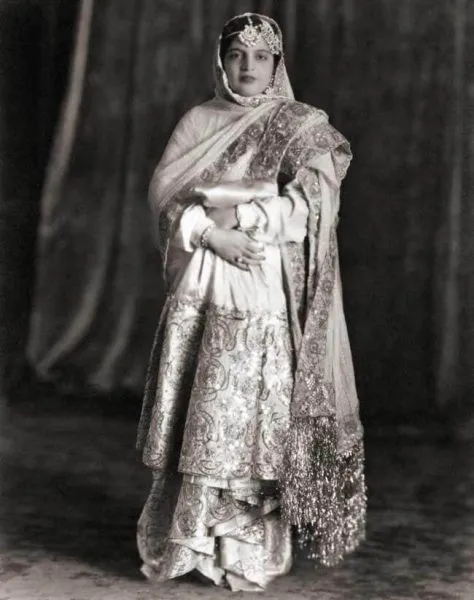
The emancipative journey of Rampur women began with the decision of a queen – Raffat Zamani Begum, wife of Nawab Raza Ali Khan– to leave the confines of the harem and become something more than a name. Nawab Raza (1930-1947), an enlightened ruler fully supported his wife in her decision and was possibly influenced by her in his very western and ‘modern’ outlook.  As the princesses and female members of the royal family followed Begum Raffat, there was a filtered down liberation among the women and girls of upper classes, and over the years a snowball effect that touched the lives of the of all classes of Rampur women.

Raffat Begum was the daughter of Sir Abdus Samad Khan, Prime Minister of Rampur under the colonial rule, an impeccable gentleman who traced his antecedents from the Najibabad royal family.  She was married to the crown prince, Raza Ali Khan, when she was five and he was six years old. The little bride sat on her grandmother’s lap, her heavy nath supported by her grandmother’s palm as the nikah ceremony was performed. The young daughter in law was granted all the paraphernalia of the future queen while still living with her father and had to attend court on special occasions. At a time when brides were given a new name and a title, her name was changed from Askari Begum to Raffat Zamani Begum.

When Raffat was thirteen, her father in law, Nawab Hamid Ali Khan (1894-1930) demanded that the rukhsati (going away ceremony) be performed. Raffat’s father insisted that they wait at least till the groom had completed his education. Raffat Begum wrote, and is quoted in her sister Jahanara Begum’s memoir, that the relations between the two gentlemen became strained. Finally, Nawab Hamid walked on foot from his Khas Bagh palace to the bride’s house, ‘Rosaville’, and the ceremony which usually took days was performed in a few hours; Raffat Begum left her paternal home amidst  songs extolling the valiant Rohilla Nawabs and martyrs of ancient battles.

The teenage couple began their married life often separated by the political intricacies and rules of the harem. Oral history says that they were not allowed to live together for seven years and Raffat Begum was declared infertile after her first son was born. Raza was forced to take a second wife by his father and stepmother. The women of Raffat Begum’s family did not practice strict purda. Her mother was the daughter of the regent of Rampur, General Azamuddin Khan (1888-1891) who had earned the ire of the maulvis of the time for his ‘kristaan’ viewpoint and his championing of female education. Some say he was murdered because of his radical outlook. It is therefore unsurprising that the educated Raffat Begum rejected the claustrophobic harem life she had endured for the first ten years of her married life as soon as Nawab Raza came to power. The couple showed a proclivity towards the ‘modern’ and western lifestyle in all areas and Raffat Begum became a major mover in the drastic transformation of the Rampur durbar, the zenana and Rampur culture. Though not documented in written histories, the influence of Raffat Begum on the dress, cuisine and court etiquettes finds testimony in oral history.

We get a vivid description of the Begum in her stepdaughter , Mehrunnisa Begum’s memoir, ‘An Extraordinary Life.’

Home tutored in English, Persian and Urdu, Raffat Begum entertained distinguished guests at royal banquets and sat for official pictures­­––the first pictures of women from the royal family. She wore latest western dresses, make up and was a chain smoker –– a ‘modern’ thing to do. In fact, she encouraged her children to smoke as it was considered fashionable. However, some women continued to live in the royal zenana ––more out of lack of choice and under confidence–– but there was no constraint on their movement. Given that Nawab Raza’s predecessor, Nawab Hamid confined his women to a sequestered life behind the laal purda, this was the beginning of a drastic change in the thought process and lifestyle of elite Rampur women.
The young princesses were sent to a boarding school after being brought up by British nannies in a strictly regimented nursery. Emulating the new trend, the elite landowning families and those associated with the court started educating their sons and daughters at boarding schools. So, my mother and her siblings were sent to La Martinere in the 1950s. The 1960’s saw Rampur’s first female doctors, teachers, writers and lawyers ––aspirational models for young girls studying in government colleges now housed in the old palaces and zenanas of yore. Nawab Raza gave a lot of emphasis to education particularly female education and the girls from ordinary families were now sent to girls’ schools in the city after initial misgivings. Covered rickshaws and thelas (carts) transported the burqa clad young ladies to schools. My mother became a doctor in 1967 and the women of my family practiced a flexi-veil where they would cover their heads, sit in curtained cars in Rampur and don sarees and bellbottoms outside of Rampur.

Raffat Begum was a gifted poet and wrote with the pen name ‘Asmat’ and took advice from Azhar Inayati, a renowned poet of Rampur. She also wrote several barsaati folk songs celebrating monsoons as did Nawab Raza. Some of her poetry was published.

Begum Noor Bano, her daughter in law and ex-Member of Parliament, recalls the after-dinner dastan sessions with the children and grandchildren gathered around their beloved ‘Mummy’.  The dastans were later written down by a scribe.

Mapara Begum, a court singer, says she would give importance to the lowliest person and welcome everyone with warmth. Which is why she was fondly called Raaj Maata, the queen mother of Rampur.

A few years after Nawab Raza’s death in 1966, Raffat Begum moved back to her father’s place, Rosaville, with her retinue of servants. It was an empty house. Her parents had passed away and her brothers and sisters had left in pursuit of their lives and careers. Life had come a full circle. She passed away at Rosaville in 1986 – an elegant begum, spirited and dignified till the end. Her plaintive lines are still echo on the lips of old timers:

“Aisey beemaar ki dava kya hai,jo batata nahi hua kya hai;

Kaun suntan hai is zamaney mein, kis se kahiye iltija kya hai.”

How can a person who cannot describe her ailment find a cure?

Even if I could find words for my pleas, would my entreaties find listeners.

Receiving yet another invite to the marriage of an anonymous daughter, I tried to remember the names of the wives of acquaintances and distant relatives. I came up with Naeem mamu ki biwi, Munney sahib ki ammi etc. etc. We are all guilty of using the blanket term bhabhi or khala to address the married women of various ages; we are introduced as wives, mothers and granddaughters. I used to laugh at the old style of explaining connections––‘Munney mian ki beti Shaddan Khan ke ghar mein hai’, indicating that Munney mian’s nameless daughter is married to Shaddan Khan. We have accepted an anonymous existence here and it is only logical that our girls get shrouded in namelessness on their wedding day.

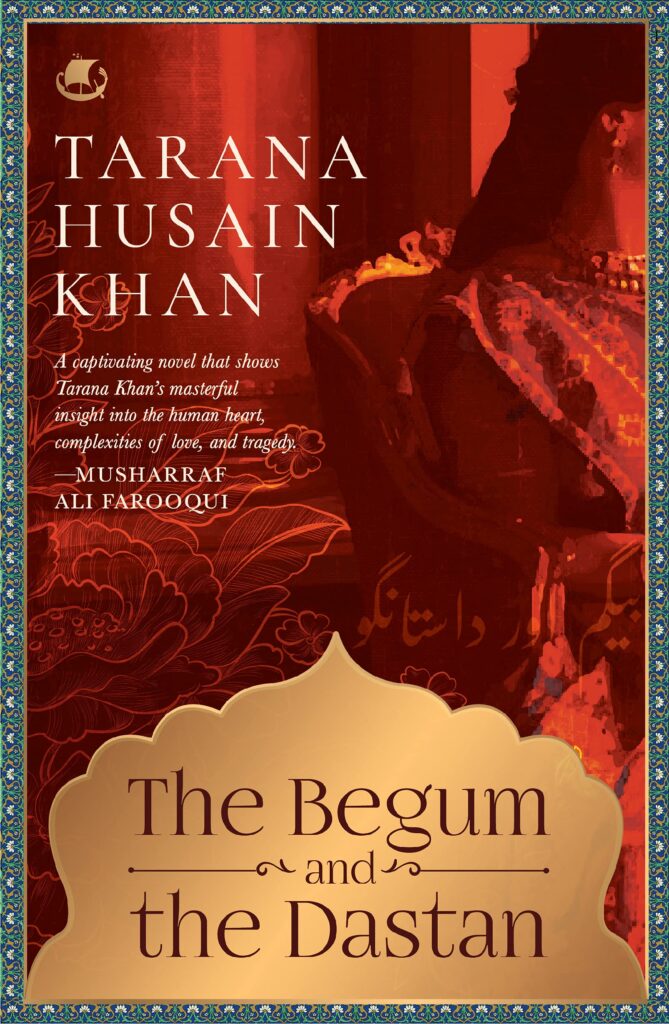
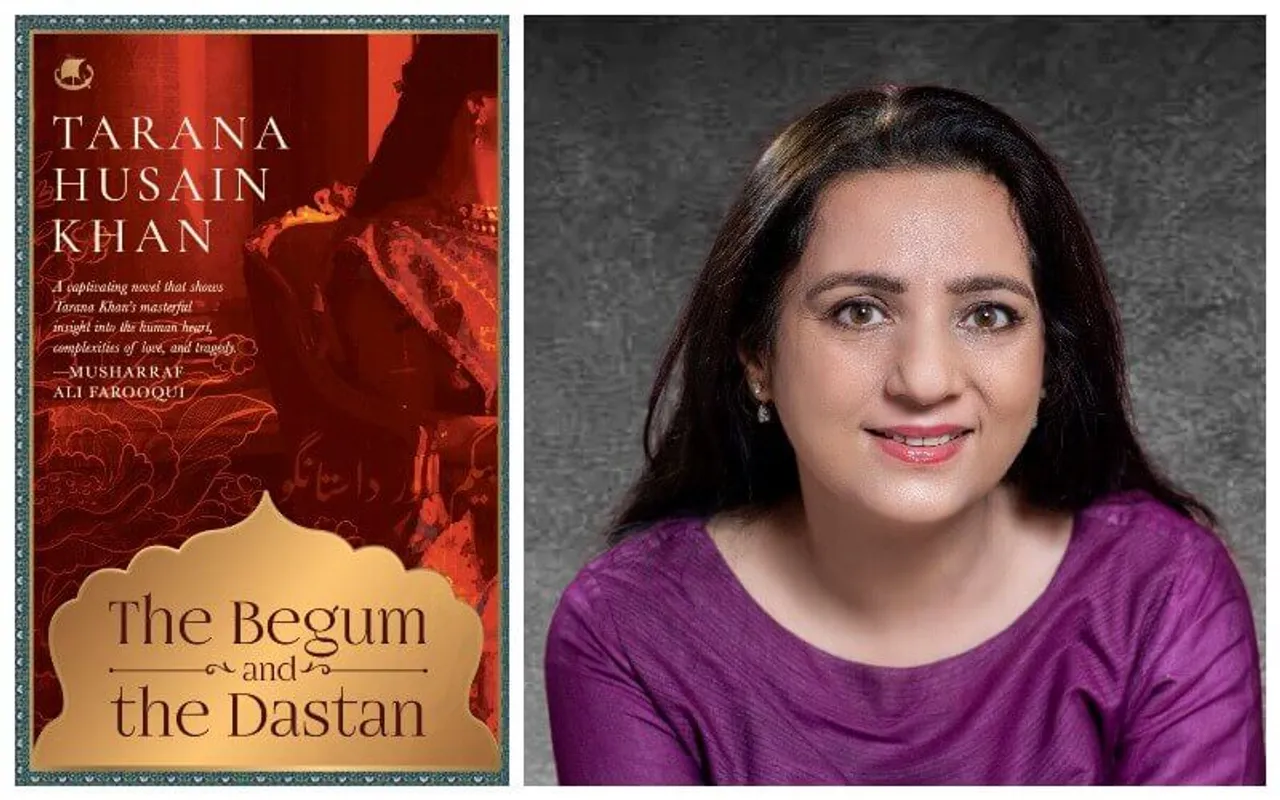
Tarana Husain Khan is a writer and researcher based in Rampur. Her historical fiction ‘The Begum and the Dastan’ has been recently published by Tranquebar. The views expressed are the author’s own.

source: http://www.shethepeople.com / SheThePeople / Home> Books / by Tarana Husain Khan / March 02nd, 2021
Dr. Tarana’s book on forgotten Rampur foods released

Rampur, UTTAR PRADESH :

New Delhi :

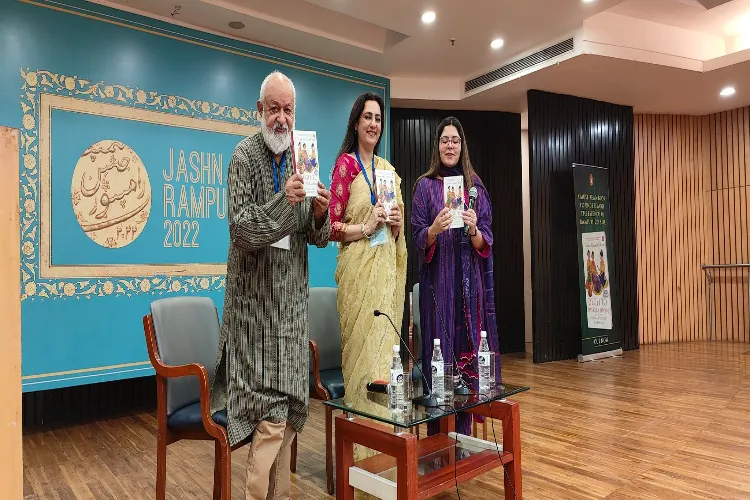
Away from the hustle and bustle of the national capital Delhi, the food lovers gathered in Delhi’s India International Center to discuss the food – delicacies, genres and history – all day. It was for the release of Dr. Tarana Hasan Khan’s book ‘Deg to Dastarkhwan: Stories and Recipes from Rampur.

In this era of pizza, burger, and fast foods, we seems to be forgetting traditions of the Shahi, Mughlai and old delicious food.

Dr. Tarana Hasan Khan is one of the few to write on Dastarkhwan – the Indian cusine. She is also cultural historian.

Dr. Tarana Hasan Khan and her book

Her other book is: The Begum and the Dastan.

Dr. Tarana says It took her three years to cover the forgotten recipes of Rampur for the book. There is a chapter on rice and spices in this book.

Famous food writer Pushpant Pant also participated in the book launch ceremony. The program started with welcome address by Swati Pal, Principal of Janki Devi Memorial College.

She also discussed the problems faced in writing the book on the ‘forgotten foods of Rampur’ were mentioned. Yusuf Saeed and Naseema Naqvi had a long conversation on this subject. This was followed by a discussion on the history of the foods between Dr. Tarana and Pushpant Pant.

Dr. Tarana specially thanked Pushpesh Pant for attending the program and joining the discussion on delicious food. He has written about Pushpent Pant by posting on Twitter:

This book has been published by Penguin.

source: http://www.awazthevoice.in / Awaz, The Voice / Home / by Aasha Khosa / October 31st, 2022

Moradabad Native Sabih Khan, Now Apple’s COO

Moradabad, UTTAR PRADESH / U.S.A :

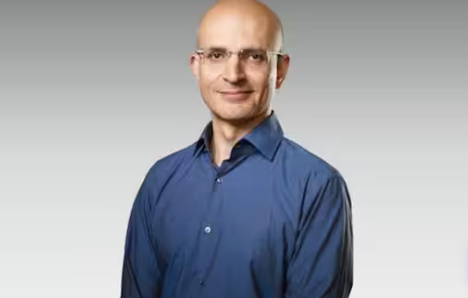
Indian origin Sabih Khan, a native of Moradabad in Uttar Pradesh brought laurels to India in general and his hometown in particular on being appointed as the new Chief Operating Officer (COO) at Apple. He replaces Jeff Williams. Currently, Khan serves as Senior Vice President of Operations. Indeed, an honour to Sabih Khan, known for his extraordinary skill and a brilliant strategist besides an architect of Apple’s supply chain.

Bringing glory to his native Moradabad in Uttar Pradesh, Sabih Khan (58) has been honoured with the post of Chief Operating Officer (COO) at Apple, marking a significant step in the company’s ongoing leadership transition. Notably, Khan has been with Apple for three decades and currently serves as Senior Vice President of Operations and will take over from Jeff Williams later this month, the iPhone maker announced in a statement.

Before joining Apple’s procurement group in 1995, he worked as an applications development engineer and key account technical leader at GE Plastics. A quick look into his biodata revealed that he was born in 1966 in Moradabad, Uttar Pradesh and later moved to Singapore during his school years before settling down in the US. Interestingly, he is armed with dual bachelor’s degrees in economics and mechanical engineering from Tufts University, and a master’s in mechanical engineering from Rensselaer Polytechnic Institute (RPI).

Sabih Khan’s father Saeed Ullah Khan was a resident of Rampur who had settled down in Singapore decades ago. Sabih received his primary education there, after which he moved to America and received higher education from there. Apple CEO Tim Cook described him as “a brilliant strategist and one of the central architects of Apple’s supply chain.”

“Sabih leads with heart and values, and I know he will make an exceptional chief operating officer,” Cook added. “He helped ensure that Apple can be nimble in response to global challenges.”

Moreover, Khan has been playing a vital role in shaping the global supply chain that powers Apple’s operations around the world. In 2019, he was promoted to Senior Vice President of Operations, reporting directly to Jeff Williams. In this role, he led key initiatives in advanced manufacturing, expanding Apple’s global footprint, and navigating complex supply chain challenges, especially during turbulent global events.

According to sources, Khan has also been a major force behind Apple’s environmental efforts. Under his leadership, the company has reportedly reduced its carbon footprint by over 60 per cent, thanks to stronger supplier partnerships and green manufacturing practices.

Further, he also oversees Apple’s supplier responsibility programmes, which aim to improve labour conditions, and provide education and training for workers at production facilities globally. In his new role, Khan will be playing a vital role in shaping the global supply chain that powers Apple’s operations around the world. He has also been a major force behind Apple’s environmental efforts. Under his leadership, the company has reportedly reduced its carbon footprint by over 60 per cent, thanks to stronger supplier partnerships and green manufacturing practices.

Jeff Williams, who has been with Apple for 27 years, will continue to report to CEO Tim Cook and oversee Apple’s design team and health initiatives until his planned retirement later this year. His transition also signals a shift in the structure of Apple’s leadership, with the design team set to report directly to Tim Cook after Williams steps down. Sabhih Khan has made not only his native Moradabad but also his home country India proud.

[The author is former Indian Express and Deccan Chronicle chief]

source: http://www.radiancenews.com / Radiance News / Home> Latest News> Pride of the Nation / by M Rafi Ahmed / July 10th, 2025

Rampur Royals were patrons of art, literature and cuisine

Rampur, UTTAR PRADESH :

The Rampur Nawabi family with former Prime Minister Dr. Manmohan Singh

In December 2021, I came across a report in a newspaper that said, “After almost 50 years of legal battle, the Rampur District Court has ruled in the Rampur Nawab family’s property dispute. The property will now be divided among 16 legal heirs. Raza Ali Khan, the last Nawab of Rampur, died in 1966. After a long legal battle, the court has announced the division of his property worth Rs 2,664 crore.”

The Nawab family of Rampur with its glorious history is still important played in Rampur and its surrounding districts. While the family ruled the state for a long time, its members joined the institutions of independent India like Parliament and legislative Assembly. Former Members of Parliament Mickey Mian and Noor Begum belong to the family. Many members of this Royal family have played an important role not only in politics but also in promoting the culture, patronizing poets, writers, musicians, and other creative artists.

Khandaan

The Nawabi family of Rampur State

Before the independence, India was dotted with small states and one of them happened to be the state of Rampur, located in today’s state of Uttar Pradesh. It was founded by Nawab Ali Mohammad Khan, a Pushtun leader on 7 October 1774. There have been 11 Nawabs in the state including Nawab Faizullah Khan, Nawab Hafiz Rehmat Khan Barish, Nawab Muhammad Ali Khan, Nawab Ghulam Muhammad Khan, Nawab Ahmad Ali Khan, Nawab Muhammad Saeed Khan, Nawab Yusuf Ali Khan, Nawab Club Ali Khan. Nawab Muhammad Mushtaq Ali Khan, Nawab Hamid Ali Khan.

Raza Ali Khan was the last Nawab of Rampur. Rampur was one of the important States of the British in India as its rulers were plaint and supported the Raj even during the 1857 revolt. It was a 15 cannons gun salute State and its rulers owned a lot of wealth.

Before the independence, the Nawabs of Rampur used to have their own railway station with two special coaches always in readiness in the service of the Royal family. Whenever the Nawab family had to travel by train to Delhi, Lucknow, or elsewhere, they would board their coach and that was added to the passenger train. During the tenure of the ninth Nawab, Hamid Ali Khan the railway line was laid in the district. At that time, he had built a separate railway station for his use. It was close to the main railway station.

The Royal Coach full of Luxuries and modern appliance

Interestingly the two railway coaches that have immense historic and antique value today are among the assets sought to be distributed among the progeny of the Raza Ali Khan. These were originally valued at Rs. 117.42 million. However, due to almost no maintenance, the price was halved.

Interestingly, these coaches had so many modern conveniences that even the heads of the state today can’t dream of. The coaches were equipped with 33mm and 16mm cinema projectors, cameras, imported radio transistors, and tape recorders. These provided all the luxuries like Bedding, chair, carburetor pillow, seat, silverware, glass, whiskey, beer bottles, English crockery, large cigarette and cigar box, silver footstep, eagle, silver canteen set, silver hooka, silver bed, sword, and various kinds of guns, etc.

The Nawab family’s properties include 1073 acres of land, mansions, palaces like Khas Bagh, Kothi Benazir, Lakhi Bagh, Kanda, and Nawab Railway Station, and immovable assets like arms, jewelry, etc. The valuables include silverware like six silver beds, 20 silver pandans, six khasdans, and 20 cigar boxes, and four hookas. Former Member of Parliament Begum Nurbano says that when she came to Khas Bagh in 1956 as a bride she slept on a silver bed. Khas Bagh was India’s first air-conditioned palace.

Khas Bagh Palace was the first air-conditioned palace in India.

Khas Bagh Palace, Rampur

The state of Rampur was not only a political state but also a great patron of education, art, and culture. Nawab Yusuf Ali Khan was a friend of knowledge and also gave scholarships to scholars and students. He made Mirza Ghalib his consultant on literary matters and he became a student of Ghalib. He used to send a reasonable amount of money to Mirza as a stipend. In addition, hundreds of poets, including Mirzadagh Dehlavi, were patronized by the Nawabs of Rampur.

The Library

The Nawab of Rampur was a friend of knowledge. The symbol of his friendliness of knowledge is Raza Library which was once the largest library in India and it is still very important today. Thousands of rare books and manuscripts in Urdu, Persian and Turkish languages ​​are available here.

The Nawab of Rampur was also an epicurean. He had a whole army of cooks and chefs. These chefs would spend the whole day preparing high-quality food and experimenting with new flavors. Elders were invited to the Nawabi Dastkhwan. After the dissolution of the state, it became difficult for the Nawab to continue the Dasthar Khan.

The Nawabs of Rampur patronized traditional music at their court. Mehboob Khan was one of the greatest thinkers of the royal court of Rampur state. This tradition was followed by his sons Inayat Hussain Khan and Inayat’s brother-in-law Haider Khan and Mushtaq Hussain. It was here that the Rampur-Sahswan family of Indian classical music was born. Sahswan is in the present Badaun district.

One of the Palaces of rampur Nawab family

After independence, the Nawab family took an active part in politics and Major Nawab Syed Zulfiqar Ali Khan Bahadur was the first from the family to be elected to the Lok Sabha. He was known as Mickey Mian. He was the second son of Nawab Sir Syed Raza Ali Khan Bahadur. In 1984 and 1989, he was elected to the Rampur Lok Sabha seat on a Congress ticket. It is also interesting to note that Mickey Mian represented Rampur in Lok Sabha for a long time but never spoke in the House.

After Mickey Mian, his wife Begum Noor Bano served as Member of Parliament in the 11th and 13th Lok Sabha. She was elected from Rampur on a Congress party ticket. Begum Noor Bano alias Mehtab Zamani Begum was born to Nawab Aminuddin Ahmed Khan who was the last ruling Nawab of Loharo (Bhiwani-Haryana). She was educated at Maharani Gayatri Devi Girls Public School, Jaipur.

She joined the All India Congress Committee in 1992 and was elected to the Lok Sabha in 1996. In the next election, she lost to BJP’s Mukhtar Abbas Naqvi. An aficionado of music and dance, Noor Banu is the patron of the Devi Foundation and the Rampur family. Bano is interested in historical and cultural Persian and Arabic books and research on environment and forest protection. She enjoys reading, painting, gardening, and music and is a member of several sports clubs across the country.

Micky Mian and Noor Bano with their children

Micky Mian and Begum Noor Bano have three children. One of them is Nawabzada Syed Muhammad Kazim Ali Khan Bahadur. He was elected MLA several times and is also a Congress candidate in the current Assembly elections. His son Nawabzada Syed Haider Ali Khan Bahadur is also contesting the Assembly elections 2022.

In the current elections in Uttar Pradesh, the reputation and honour of the Royal family is also at stake. Samajwadi Party veteran Azam Khan, who has been elected an MLA from Rampur city nine times is contesting from inside the jail against his traditional rival from the Royal family Mohammad Kazim Ali Khan. Kazim Khan popularly known by his nickname of Navid Miyan is contesting as a candidate of Congress Party and is hoping to defeat the ‘tainted’ Azam Khan.

Besides, Azam Khan’s son Abdullah Azam is contesting from the Suar constituency where he is pitted against Naveed Mian’s son Hamza Mian.

The Nawab of Rampur

Azam Khan has dominated the politics of Rampur for 42 years. He has also held ministerial positions in the Samajwadi government four times. He has also been Leader of the Opposition and Member of Rajya Sabha. On the other hand, the Nawab family has also a great influence on Rampur. Naveed Mian Sawar has been MLA four times from the Tanda seat. Once he was also elected to Legislative Assembly from Bilaspur and was a minister too.

His father Nawab Zulfiqar Ali Khan alias Miki Mian has been a Member of Parliament five times and his mother Begum Noor Bano has been a Member of Parliament twice. Both the Congress and the SP have given tickets to the members of the Rampur Royal family. This time, Congress has given tickets to former MLA Naveed Mian as well as his son Haider Ali Khan alias Hamza Mian.

source: http://www.awazthevoice.in / Awaz, The Voice / Home> Stories / by Ghaus Siwani / February 04th, 2022

Wazeer Ahmad Khan is Asian 65+ Champion

Rampur, UTTAR PRADESH:

The Myanmar Chess Federation organized the Asian Seniors Championship 2016 from 27 October to 04 November at Hotel Hazel, Mandalay, Myanmar.

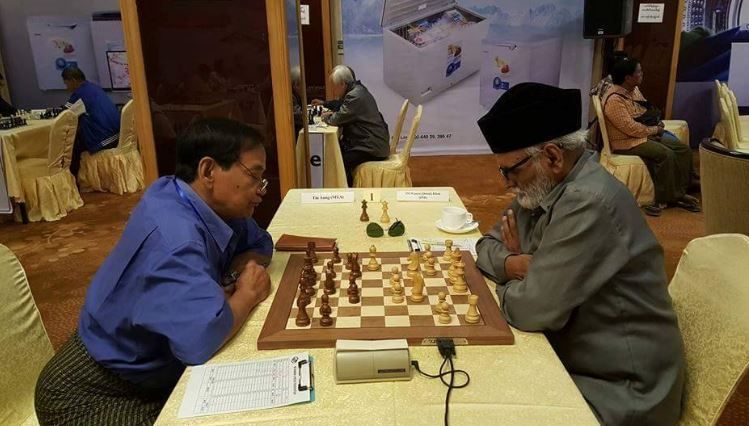
The tournament was held in two categories — for players aged above 50 and 65. India’s 69-year-old IM Wazeer Ahmad Khan won the gold in the 65+ category where 18 players competed.

The tournament had 56 players from 12 countries competing for the medals. We have a quick report.

Wazeer Ahmad Khan is Asian Seniors 65+ Champion

69-years-old IM Wazeer Ahmad Khan of Rampur in Uttar Pradesh is the Asian Seniors 65+ Champion. He began the event as the fifth seed…


…but rampaged to a perfect 9.0/9 to claim the title.
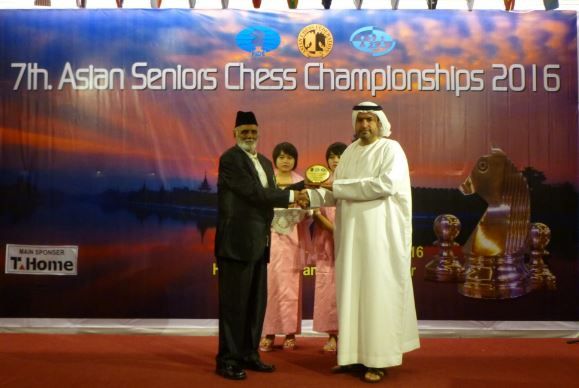
Khan receiving his trophy from the Asian Chess Federation Secretary General Hisham Al Taher.
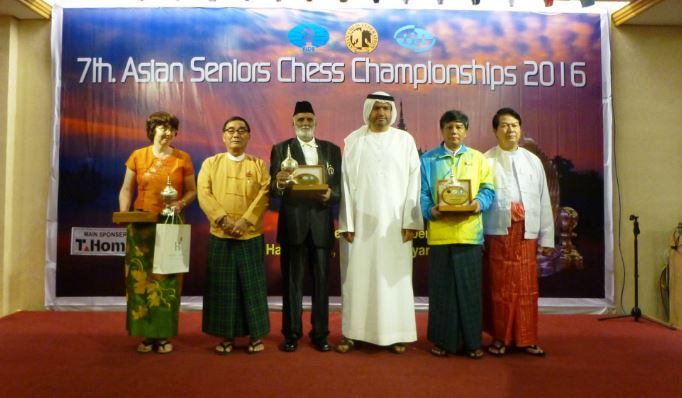
New Zealand’s CM Helen Milligan (2053; extreme left) was declared the women’s champion — she was the only woman competing in the entire 56-player event — while Myanmar’s Myint Han (2281; second from right) won the Asian Seniors 50+ Championship with 8.0/9.

New Zealand’s CM Helen Milligan (2053; extreme left) was declared the women’s champion — she was the only woman competing in the entire 56-player event — while Myanmar’s Myint Han (2281; second from right) won the Asian Seniors 50+ Championship with 8.0/9.

Final Ranking after 9 Rounds (65+)

Rk.SNo NamesexFEDRtgPts. TB1  TB2  TB3 
15IMWazeer Ahmad Khan IND18479,00,049,538,5
214 Saw Kyaw Nyein MYA06,50,047,035,0
31 Gibbons Robert NZL19546,01,045,036,5

Final Ranking after 9 Rounds (50+)

Rk.SNo NamesexFEDRtgPts. TB1  TB2  TB3 
13 Myint Han MYA22818,00,037,5433,0
21IMLodhi Mahmood PAK23407,50,539,5419,0
37IMMohandesi Shahin IRI21997,50,537,5410,5

source: http://www.chessbase.in / Chess Base / Home> India / by Priyadarshan Banjan / December 10th, 2016

‘The Begum and the Dastan’: A novel that shows how to write history without condoning it

Rampur, UTTAR PRADESH :

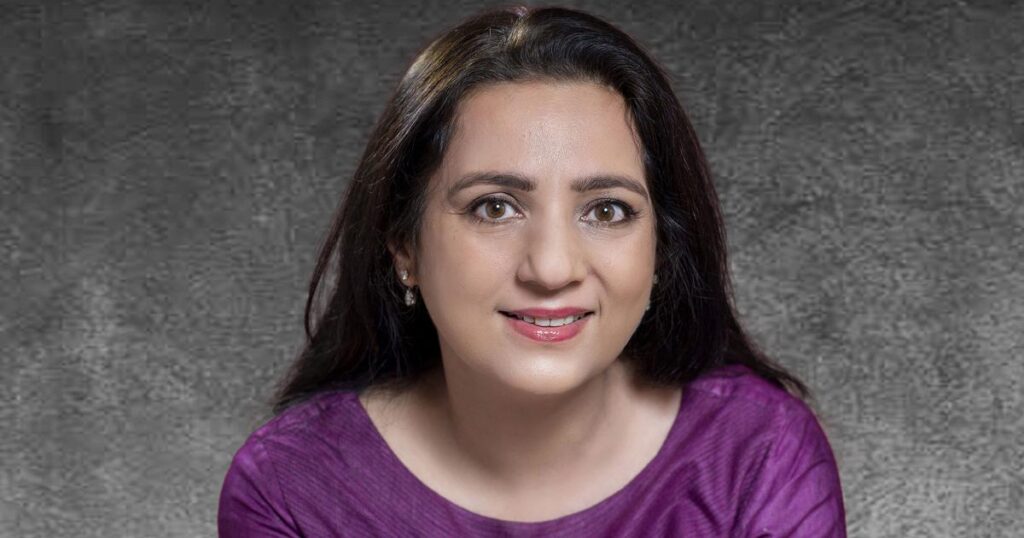
Tarana Husain Khan doesn’t write women only as damsels in distress, she writes them as women who challenge.

Tarana Husain Khan.

I don’t remember when my mother first told me, “Boys will be boys.” as an explanation. But I trusted it. The 20-year-old I am now knows it’s an eraser. A cleaning towel that wipes away the grim men produce. Over our words. Over our careers. Over our bodies. It’s an explanation that deletes a lived history with a swift and casual swipe. Tarana Husain Khan’s The Begum and the Dastan resists this erasure.

Khan’s character, Ameera’s grandmother, whom she calls Dadi, tells her the dastan about Feroza Begum, Ameera’s great-grandmother. Feroza Begum attended sawani celebrations at Nawab Shams Ali Khan’s Benazir Palace, defying her family, only to be kidnapped by the Nawab. Although the premise sounds simple, Khan crafts the dastan carefully, preserving the dynamics in Sherpur, a princely state, like one would sour pickle in a jar. Her writing serves as a citation for the overused “Show, don’t tell” technique, arranging the elements of time, location and character through a nuanced understanding of history.

She weaves together the stories of three women, Lalarukh, Feroza and Ameera, with the help of three dastangos, about Kallan Mirza, Ameera’s Dadi, and herself. Each story, within another story, surrenders as a cautionary tale. Sometimes, as a spoiler, that hands you the reins to ride through the rest of the story.

Blame slithers across each story, hissing at every woman who defies and exercises her need for independence. During the forced marriage to the Nawab, women around the bride were “tut-tutting over Feroza’s heartlessness”, believing she aborted her pregnancy from her previous marriage. The blame congeals on Feroza, a victim of forced abortion by the Nawab. In the rumours, the Nawab is a man she loves, not her abuser. The cruelty of these women steps outside the realm of gossip, nipping at Feroza’s right to refuse consent to her nikah.

“‘Feroza Begum, daughter of Altaf Khan urf Miya Jan Khan, your wedding has been arranged to Nawab Shams Ali Khan Bahadur, son of Nawab Murad Ali Khan Bahadur for a sum of two lakh rupees as meher. Do you agree?’

What if she just didn’t say anything?

‘She says “yes”!’ A middle-aged woman dressed in her bridal dress, suddenly shouted towards the curtains. Feroza turned towards the woman. The old lady in charge of her elbowed her ribs.

‘Uh?’ she turned sharply towards the offending lady.

‘I heard it too. She said “yes”!’ said the old lady, then another woman joined in bearing witness to her acquiesce and then another.”

“Why wouldn’t a divorced woman who aborted her child marry the Nawab?” is the rhetoric that these women echo. It’s a form of enabling, but Khan exerts dialogue, channelling prose to amplify Feroza’s reaction, forgotten amidst placeholder approval. She choreographs the myth “she asked for it” by excluding the chorus of the maulvi asking for consent thrice, as is tradition, to exacerbate the rumours that enable, and more terrifyingly, erase. Another dialogue chimes in to note this eager “consent” by Feroza. In these instances, Khan’s narrator, Dadi, is not just a storyteller; but an advocate for forgotten history.

But Khan doesn’t write women only as damsels in distress; she writes them as women who challenge. Feroza wears what she wants, despite the word that the patriarchy will impose on her: nautch. Khan examines how the question of her attire serves as a justification for the harassment. When Bibi, Feroza’s maid, asks her to “let it be”, as she was “wearing that dress”, Feroza doesn’t surrender to the blame. Instead, Feroza asks these questions: what if she was one of the common women? What if she was a nautch?

Khan tackles clothing not only as a form of rebellion but as an identifier of communion and the dismissal of “the other”. When Feroza sights a British woman wearing a “strange gown”, she argues that she should’ve worn “our dress” because she’s in “our country”. Other times, this divide is a form of empowerment.

“Strangely, guys don’t pester scarf-wearing girls with ‘I want to be your friend’ proposals. So us scarfed girls choose to talk to guys we like and make boyfriends on our own. It’s pretty cool that way, though I long to throw away the scarf and open up my hair like I used to at St Mary’s.”

Ameera’s perception of the scarf rewrites the reputation of the vilified veil, untying the folds that make it an oppressive tool while recognising how being “the other” means a kind of protection. A woman’s scarf, her dress, and her jewellery make an argument in this novel. But the expectations that pin a scarf around Ameera’s head, and a nath on Feroza’s nose, encourage a misplaced trust in the men in their lives.

Across the three stories in the novel, protagonists expect men to protect, not because they victimise themselves, but because that’s what’s taught to women: dependence is a desired trait. Khan acknowledges how patriarchy dribbles on the men, drawing out how Lalarukh, Feroza and Ameera feel betrayed by the men in their lives for not protecting them. The cadence of this betrayal morphs across the stories as Khan manipulates language like a glassblower does glass.

“I do believe that in this day and age nobody should bully you into selling your property – these are not the Nawab’s times; but if it was Jugnu’s fees and his exams, Abba would sell off the shops and chuck the case in a heartbeat. We females always depend on our fathers or males to rescue us – our default response to a crisis. Imagine, poor Feroza Begum’s father dumped her in the harem and ran away!”

Khan wields the tone of each story, carefully grafting the premise of a woman wronged in different periods and spaces. She uses the first-person perspective to narrate Ameera’s life, crumbling with her family’s negligence towards her, using a voice akin to a teenager simmering with anger. But for Lalarukh and Feroza, Khan, or rather Dadi and Kallan Mirza, uses the third-person perspective, a voice that is omniscient and viscous, dripping of superiority.

They narrate the violence of Nawab and Tareef Khan, Lalarukh’s kidnapper, without embellishments. The abusers are not kings or sorcerers in the chapters that harrow. They are written as, to no surprise, violators. Khan’s treatment of the dynamic between the Nawab and Feroza contradicts this claim sporadically. But when Feroza reciprocates the Nawab’s ‘love’ for her, he continues to dredge her in the limitations of his harem, remaining free himself, further testifying the degree of his abuse. Feroza is a flawed character, but she is not a flawed victim, and Khan asserts that.

Like Khan, both Dadi and Kallan Mirza are biased narrators, intervening to train their listener(s) to root for the protagonist. They collectively fuel a question: How does tradition, along with law, permit the violation of women? Unfortunately, the stories, or rather the lived experiences that ask this question, are muzzled. But the dastangos, both the real and the fictitious, bite through the labour that accompanies such storytelling. The story prompts the question: How can one write history without condoning it? In The Begum and the Dastan, history is an inspiration, a tool, and an anchor, but it is not a justification.

pix: amazon.in

source: http://www.scroll.in / Scroll.in / Home> Book Review / by Isa Ayidh / (book cover image edited in, amazon.in) /June 27th, 2021