Tag Archives: Omar Abdullah

Muslim Mirror Releases List of 100 Most Influential Indian Muslims 2025; Young Faces Gain Prominence

INDIA :

Muslim Mirror’s 100 Most Influential Muslims of 2025

New Delhi: 

Muslim Mirror has released its much-anticipated annual list of the “100 Most Influential Indian Muslims of 2025,” spotlighting individuals who have made significant contributions to India’s public life across a wide spectrum of fields including politics, culture, education, business, media, religion, sports, and social service. Now in its second edition, the list aims to document influence not merely as power or popularity, but as sustained impact, leadership, and the ability to shape public discourse.

A defining feature of the 2025 edition is the growing prominence of younger achievers, signalling a visible generational shift within Indian Muslim leadership. Alongside established national figures, the list includes emerging voices who have built influence through grassroots activism, professional excellence, digital platforms, legal advocacy, education, and community engagement. Editors associated with the project said this was a deliberate attempt to recognise new centres of influence beyond traditional hierarchies.

The list reflects the diversity and plural character of Indian Muslim society, cutting across geography, ideology, profession, and language. From seasoned politicians and religious scholars to artists, entrepreneurs, academics, and social reformers, the compilation offers a broad snapshot of leadership trends at a time when issues of representation, constitutional values, and social justice remain central to national debate.

Representation Across Sectors

The 2025 list features several eminent academicians and intellectuals who have shaped higher education, policy discourse, and social research. Among them are Abul Qasim Nomani, Ameerullah Khan, Furqan Qamar, Shahid Jamil, and Ubaid-ur-Rahman, recognised for their contributions to education, public policy, and academic leadership.

In the business and entrepreneurship category, the list includes influential names such as Azad Moopan, Azim Hashim Premji, Farah Malik, Irfan Razack, M. P. Ahammed, Mecca Rafiq Ahmed, Meraj Manal, Syed Mohamed Beary, P. Mohammed Ali, Shahnaz Hussain, Tausif Ahmad Mirza, Yusuff Ali, and Ziaullah Sharif. Their inclusion underlines the growing economic footprint of Indian Muslim entrepreneurs, both domestically and globally, spanning sectors from retail and healthcare to infrastructure and consumer goods.

Community leadership remains a strong pillar of the list, with figures such as Arshad Madani, Mahmood Madani, Malik Motasim Khan, Mehmood Pracha, Syedna Mufaddal Saifuddin, Navaid Hamid, Pirzada Md Abbas Siddiqui, Qasim Rasool Ilyas, Sadatullah Husaini, Umer Ahmed Ilyasi, and Yusuf Mohamed Abrahani recognised for their roles in religious guidance, legal advocacy, social mobilisation, and institutional leadership.

Culture, Media, and Public Discourse

In arts and entertainment, globally recognised names such as A. R. Rahman, Aamir Khan, Mammootty, Munawar Faruqui, and Shah Rukh Khan continue to command immense cultural influence, shaping narratives that extend well beyond cinema and music into social consciousness.

The list also acknowledges the growing importance of media and journalism in shaping opinion and challenging dominant narratives. Journalists and commentators such as Arfa Khanam, Irfan Meraj, and Seema Mustafa are recognised for their consistent engagement with issues of democracy, minority rights, and constitutional values.

Religious and Intellectual Scholarship

A significant section of the list is devoted to Islamic scholars and religious thinkers, reflecting their continued influence on moral leadership and intellectual discourse. Names such as A. P. Aboobacker Musliyar, Qasim Nomani, Prof. Akhtarul Wase, Asghar Ali Imam Mahdi Salafi, Asjad Raza Khan, Ibraheem Khaleel Al-Bukhari, Javed Jamil, Khalid Saifullah Rahmani, Khaleelur Rahman Sajjad Nomani, Qamaruzzaman Azmi, Rashid Shaz, Shakir Ali Noori, Shamail Nadvi, and Yasoob Abbas find place for their scholarly work, writings, and public engagement.

Politics and Governance

The political category features leaders cutting across party lines and regions, including Asaduddin Owaisi, Ghulam Nabi Azad, Hamid Ansari, Mehbooba Mufti, Omar Abdullah, Salman Khurshid, Najeeb Jung, Syed Naseer Hussain, Engineer Rashid, Akhtarul Iman, Iqra Hasan, Zameer Ahmed Khan, Rakibul Hasan, K. Rahman Khan, Kadir Mohideen, Mohibullah Nadvi, Md Shafi, Agha Mahadi, Asim Waqar, and Sadiq Ali Shihab Thangal. Their inclusion reflects influence exercised through electoral politics, governance, diplomacy, and legislative advocacy.

Changemakers and Social Reformers

One of the most dynamic sections of the 2025 list is that of changemakers and social reformers, featuring individuals such as Safeena Husain, Shahabuddin Yaqoob Quraishi, Syeda Hameed, Zameer Uddin Shah, Mahbubul Hoque, Sabahat S. Azim, Mehmood Pracha, Faiz Syed, and Zahir Ishaq Kazi, among others. Many of these figures have earned recognition through long-term grassroots work rather than formal authority.

International Booker Prize 2025 winner Banu Mushtaq for Heart Lamp, along with renowned poet Wasim Barelvi, has been placed in the category of Literary Figures.

In sports, iconic names Sania Mirza and Irfan Pathan continue to inspire younger generations through excellence and public engagement beyond the playing field.

Beyond Rankings

The editors emphasised that the list does not claim to be exhaustive, nor does it measure influence solely through fame, wealth, or official position. Instead, it seeks to capture real-world impact, moral authority, intellectual contribution, and the ability to shape conversations within and outside the community.

The annual list has increasingly become a reference point for understanding evolving leadership patterns among Indian Muslims. By foregrounding both established figures and rising talents, the 2025 edition reflects continuity as well as change, underscoring how Indian Muslims continue to contribute meaningfully to India’s democratic, cultural, and social field.

source: http://www.muslimmirror.com / Muslim Mirror / Home> Indian Muslim / by Muslim Mirror / January 15th, 2026
Gujjar leader, Padma Bhushan awardee Mian Bashir Ahmed dies at age 98

Wangat Village (Ganderbal District), JAMMU & KASHMIR :

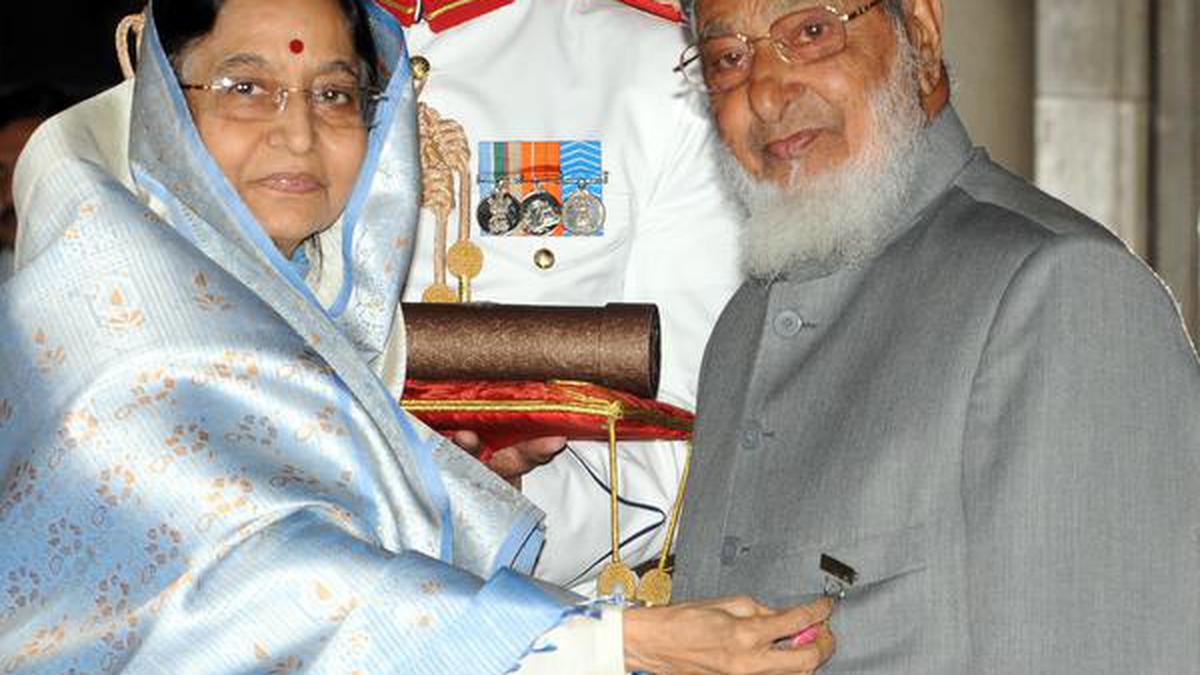
Former President Pratibha Patil presenting the Padma Bhushan Award to gujjar leader Mian Bashir Ahmed, during the presentation of Padma Awards at Rashtrapati Bhavan in New Delhi on May 10, 2008

A former minister in Sheikh Mohammad Abdullah’s cabinet, he was honoured with the Padma Bhushan for his extraordinary service for the Gujjar-Bakarwal community and other downtrodden groups.

Veteran Gujjar leader and Padma Bhushan awardee Mian Bashir Ahmed, a resident of Ganderbal district of Jammu and Kashmir, passed away on Saturday night after a prolonged illness. He was 98.

Ahmed, a resident of village Wangat in Kangan area of the central Kashmir district, breathed his last at about 10 pm, family sources said.

His Nimaz-e-Jinazah (funeral prayers) will be performed on Sunday at Mizar Shrief Baba ji Sahib Larvi located at Baba Nagari Wangat, they said.

Ahmed was the son of top Gujjar leader and saint Mian Nizam Din Larvi and father of former Minister and National Conference (NC) leader Mian Altaf Ahmad.

Born in November 1923, Mian Bashir Ahmed was a minister in Sheikh Mohammad Abdullah’s cabinet. Later, he left politics and started working for Islamic Sufi tradition and to help downtrodden people.

In 2008, he was honoured with the Padma Bhushan award for his extraordinary service for the Gujjar-Bakarwal community and other downtrodden groups.

Condolences to his family poured in from various quarters.

“Just heard about the sad demise of Mian Bashir Sahib, a spiritual leader & a mass leader revered by many especially in the Gujjar community. His demise will be deeply felt by many of us. My condolences to my colleague Mian Altaf Sb & his family,” NC vice president Omar Abdullah said in a tweet.

His party said Ahmed’s death has felt a void that cannot be filled.

“Grieved over the passing of Mian Bashir Ahmad Laaravi, a renowned spiritual leader & political figure. His death has felt a void that can’t be filled. Our condolences go out to Mian Altaf Laaravi, the entire family & Bashir Sb’s admirers. May Allah grant him a place in Jannat,” the NC wrote on Twitter.

Jammu and Kashmir Pradesh Congress committee (JKPCC) expressed profound grief over his passing, describing it as a great loss to the UT.

In his condolence message, JKPCC president Ghulam Ahmad Mir expressed deep sorrow over the passing of the eminent religious scholar, socio-political figure, saying Ahmed was known for his spirituality and social work he rendered to the people of Jammu and Kashmir.

“Saddened to learn about the passing away of Mian Bashir Saheb. I have no words to express my grief,” Mir said.

He expressed deepest condolences to Mian Altaf and other members of the bereaved family and Ahmed’s followers.

Praying for the eternal peace to the departed soul, the JKPCC president said, adding that Ahmed’s guidance and teachings shall continue to inspire generations.

Jammu and Kashmir Peoples Conference chairman Sajad Lone described Ahmed as an inspirational leader.

“Deepest and heartfelt condolences to the family of Mian Bashir Sahab. An inspirational leader, defined by simplicity who had a humbling effect on people he interacted with. May his soul rest in peace,” Lone said.

source: http://www.thehindu.com / The Hindu / Home> News> India> Other States / by PTI / August 15th, 2021

Ex-Army man Manzoor Ahmad Wagay shot dead in south Kashmir’s Kulgam; wife, daughter attacked too

Kulgam District, JAMMU & KASHMIR :

Ex-Army man shot dead in Kashmir: The family was attacked at their home in south Kashmir’s Kulgam on Monday. The ex-Army man succumbed to his injuries while the condition of his wife and daughter are said to be stable.

New Delhi: 

An ex-Army man, who along with his wife and daughter were attacked by terrorists in south Kashmir’s Kulgam district, succumbed to his injuries on Monday. The deceased has been identified as Manzoor Ahmad Wagay The family was attacked by terrorists in Behi Bagh area of Kulgam, earlier in the day.

The family was taken to a hospital where Wagay succumbed to his injuries. His wife and daughter are said to be stable.

“He used to stay at home. He retired in 2021. Our only demand is that we want justice and nothing else. He was running his own business,” said his younger brother while talking to news agency ANI.

Omar Abdullah expresses condolences

In a post on social media platform X, Jammu and Kashmir chief minister Omar Abdullah said that heinous violence has no place in our society. “Deeply saddened by the tragic killing of ex-serviceman Manzoor Ahmad Wagay Sahab in Kulgam. My heartfelt condolences to his family, and prayers for the swift recovery of his injured wife and daughter. Such heinous violence has no place in our society and must be condemned in the strongest terms. May peace and justice prevail,” he wrote on X.

Hazratbal MLA Salman Sagar condemned the attack, saying, “We condemn whoever is involved in it. We have been a victim of terrorism of cross-border sponsored terrorism. The LG and the Ministry of Home Affairs should look into it. There has been peace after a long time and it is their responsibility to maintain it. It is a UT and it comes under the domain of the LG and the MHA. They should make sure that no lives are lost.”

Area cordoned off, search on to nab attackers

While condemning the incident, J&K Minister Satish Sharma talked about giving befitting reply to the enemies of the nation. “There is a dire need to act on the promises the PM and the Defence Minister have made to us. We have to take strict action,” he said.

Meanwhile, the forces have cordoned off the area to nab the terrorists.

source: http://www.newsnine.com / News Nine / Home> India News / by Prabhakar Jha (headline edited) / February 03rd, 2025

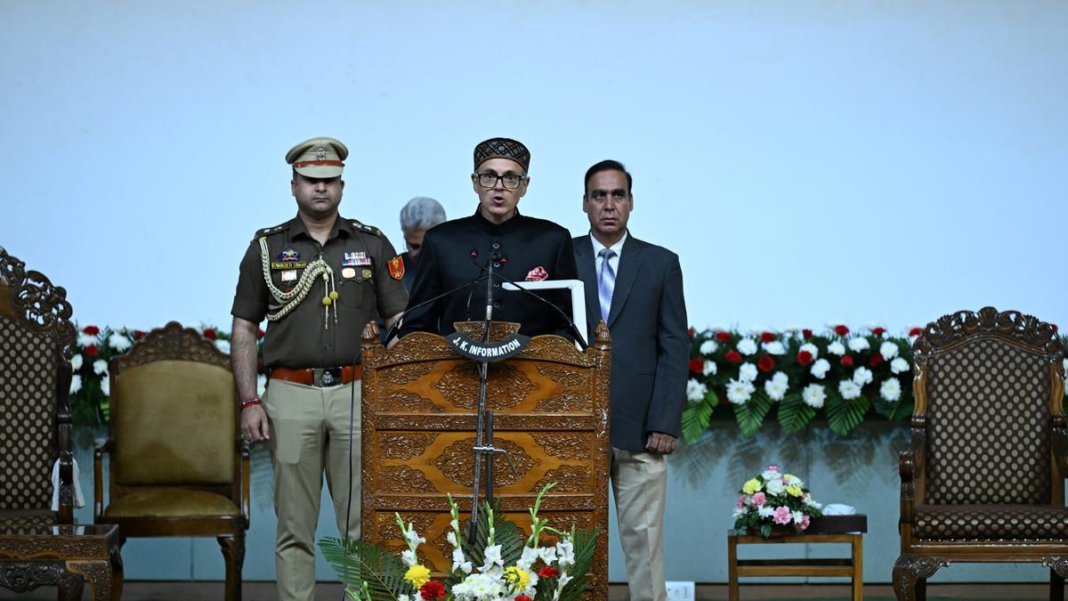
Omar Abdullah sworn in as first chief minister of union territory of Jammu and Kashmir

JAMMU & KASHMIR :

National Conference (NC) leader Omar Abdullah took oath as the first Chief Minister of Jammu and Kashmir since its reorganisation as a Union Territory. The swearing-in ceremony, held at the Sher-i-Kashmir International Convention Centre (SKICC) on the banks of Dal Lake in Srinagar, was administered by Lieutenant Governor Manoj Saxena.

The event marks a significant moment in the political landscape of Jammu and Kashmir, as it comes after a 6.5-year period without a locally elected government. “It is a red-letter day,” said NC spokesperson Imran Nabi Dar, adding, “May God give strength to Omar Abdullah to raise the people’s voice.”

The ceremony saw the presence of several top leaders from the INDIA alliance, including Congress President Mallikarjun Kharge, Rahul Gandhi, Priyanka Gandhi, Samajwadi Party leader Akhilesh Yadav, CPI(M) leader Prakash Karat, CPI leader D. Raja, DMK’s Kanimozhi, and NCP’s Supriya Sule.

Omar Abdullah paid homage to his grandfather, National Conference founder Sheikh Muhammad Abdullah, at his mausoleum before the swearing-in.

Speaking ahead of the ceremony, Abdullah acknowledged the challenges of leading Jammu and Kashmir as a Union Territory: “Being a Chief Minister of a Union Territory is a different matter altogether. It has its own challenges, but I hope this status is temporary.”

Abdullah emphasised that his government’s priority would be to work toward restoring Jammu and Kashmir’s statehood, which was revoked in 2019 following the abrogation of Article 370. He stated, “We look forward to working in cooperation with the government of India to resolve the people’s problems, and the best way to do that is by restoring statehood to J&K.”

The National Conference-Congress alliance secured 48 seats in the 90-member assembly , with NC winning 42 and Congress six. This decisive victory allowed Abdullah to form the government, which comes after Jammu and Kashmir had been under Presidential rule since 2018, following the collapse of the PDP-BJP coalition government led by Mehbooba Mufti.

source: http://www.maktoobmedia.com / MaktoobMedia.com / Home>India / by Maktoob Staff / October 16t, 2024

NEET 2020 | J&K topper Basit Bilal Khan is from trouble-torn area

Pulwana / Srinagar : JAMMU & KASHMIR :

Basit Bilal Khan.   | Photo Credit: NISSAR AHMAD

Amid conflict, Basit Khan was forced to leave Pulwama to pursue his studies.

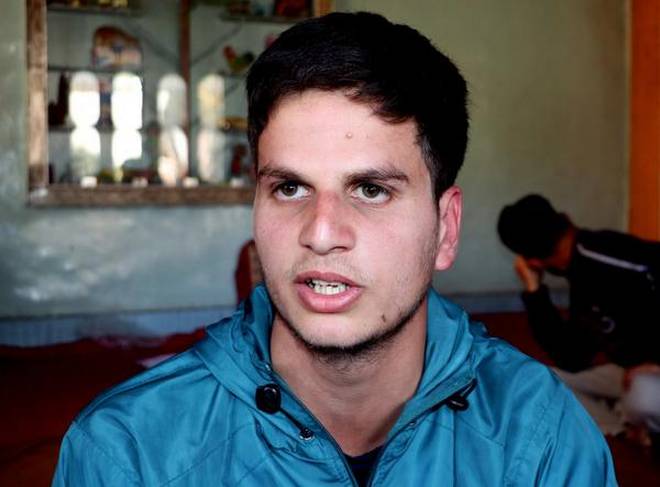
The Kashmir Valley’s most troubled and militancy-affected Pulwama district has earned a new distinction — that of being home to J&K’s National Eligibility cum Entrance Test (NEET) topper, Basit Bilal Khan. The 18-year-old Khan scored 695 marks out of 720.

“My parents had shifted me from Pulwama three years ago to Srinagar. I was insulated from what was happening in my district, whether favourable or unfavourable. It did contribute to my success,” Mr. Khan told The Hindu.

On the Internet ban and slow connectivity in J&K, Mr. Khan said students in Kashmir need to find new ways and means to achieve their goals.

“If your goal is important to you, find ways rather than excuses. We are not having favourable conditions for many many years now. We should be prepared to face the tough conditions, as we may face more hardships,” he said.

Advisor to the Lieutenant-Governor, Farooq Khan, felicitated Mr. Khan for his “historic feat of securing 99.98 percentile in the NEET-2020 exam”.

“I hope he (Khan) would inspire many other youth from the region to crack other prestigious exams in order to serve the society in the best possible way so that their energy would be utilized for the development of the nation,” the official said.

National Conference president Dr. Farooq Abdullah and vice-president Omar Abdullah also congratulated the topper.

“The-18-year-old boy has proved the youth of Kashmir are second to none in academic excellence and chasing dreams for a better tomorrow. If students like Bilal can do it despite all challenges due to the prevailing situation, other students can do it as well,” Dr. Abdullah said.

A credible role model for Indian Muslims

INDIA :

When Sania Mirza burst upon the global scene, the London-based New Statesman saw this “slender 18-year-old Muslim tennis player from India” as one of the 10 people who could change the world.

Jason Cowley, who wrote the article, believed that she had the “potential to change the world” for the following reasons: 1. She was the first Indian female tennis player to be ranked among the world’s Top 40. 2. She had made a breakthrough in sport despite coming from a country that usually discouraged women in sport. 3. She had discipline, tenacity, flamboyance. And all of this amounted to 4. She was going to “inspire a whole new generation of Indian girls”. Cowley’s article was written in October 2005, soon after a fatwa stipulated that Mirza should be prevented from playing tennis in skirts and T-shirts. Mirza instantly became a symbol of defiance, a “slender 18-year-old” girl who could stand up to Muslim hardliners. At around the same time, Time magazine hailed her as one of Asia’s heroes. AndThe New York Times said the weight of the country’s expectations rested on her.

I am at a loss to explain how or why the Sania phenomenon fizzled out in mainstream media. To be sure, she remains a remarkable player who will continue to inspire a whole generation of young women. But Mirza is no longer feted and hailed for her potentially transformative powers. I thought of Muslim role models once again when I saw the modest, self-effacing Allah Rakha Rahman accept his twin Oscars in Los Angeles.

There he was, up on stage in his very Indian designer sherwani singing Jai Ho, the song from Slumdog Millionaire. Or there he was on the red carpet with his wife, her head covered as she shyly posed for photographs. On stage, he was thanking God (“all glory and fame to God”) and his mother, talking of the path of love rather than hate that he had opted to follow. There was quiet dignity about him rather than the usual over-the-top Oscar exuberance. I suspected he would have had the same quiet smile had he lost.

Rahman is not known to be a man of many words. So, it was the subtext of what he said (or didn’t), that struck me as significant. Here was a Muslim who was confident in his identity as an Indian Muslim (in fact, with Maa Tujhe Salaam, he has done more to popularize Vande Mataram than the entire Sangh parivaar put together). Like the majority of Muslims everywhere, he believes in his God, in family values, in love and brotherhood. He was not out of place on the world stage performing with artistes drawn from all over the globe.

Rahman does not conform to any of the Muslim stereotypes. But he is undeniably an adherent of Islam, converting to the faith at the age of 21 along with his family. His views on politics are not widely known. But as a believing Muslim, he is reported to earmark one-third of his earnings to charity. Significantly, one of his first acts on returning home to India was to visit the Ameen Peer dargah at Kadappa in Andhra Pradesh to offer special prayers.

India’s Muslims have been singled out for their many unique qualities.

Thomas Friedman recently hailed the community’s decision to refuse burial in Mumbai to the Pakistani terrorists killed in the 26/11 attack. By denying terrorists the status of martyrs, the world’s second largest Muslim community was doing a “great service to Islam”, he said. Yet, one of the laments among Muslims is the lack of credible role models.

Bollywood within its secular framework has been able to throw up some figures—Javed Akhtar and Shabana Azmi most notably speak up for a pluralistic, democratic framework, but they’re not necessarily seen as strong adherents of Islam. Aamir Khan is the sensitive voice for the marginalized, not really a strong Muslim figure. Azim Premji is probably the richest Muslim in India but, once again, his success is defined in business, not religious terms.

In cricket, you could certainly look at the Pathan brothers who straddle both worlds—cricket and Islam. The sons of a poor muezzin who couldn’t afford even a pair of shoes, they now symbolize a can-do spirit. In a TV ad, they refer to their father as “abba”. It’s as if they’re saying, like Omar Abdullah, “We are Indians and Muslims and see no contradiction between the two.”

With his stunning Oscar win, Rahman reaffirms the same message to emerge as a new role model for young Indian Muslims. In equal parts a proud Muslim, proud Indian and proud professional, he stands as a counter to both the fanatic and the stereotype of the fanatic that many believe represent the average Muslim.

For this reason alone, I’m singing the new anthem: Jai Ho.

Namita Bhandare writes every other Tuesday on social trends. Respond to this column at lookingglass@livemint.com

source: http://www.livemint.com / Live Mint / Home> Explore> Looking Glass / by Namita Bhandare / March 02nd, 2009

Four policemen killed in militant attack in Kashmir’s Shopian

Shopian District, South Kashmir, JAMMU & KASHMIR :

Police officers said that the policemen who were killed were guarding a minority picket, meant for security of a few Kashmiri pandit families in Zainapora area of Shopian.

Three policemen were killed by militants in Shopian on Tuesday. (File photo)

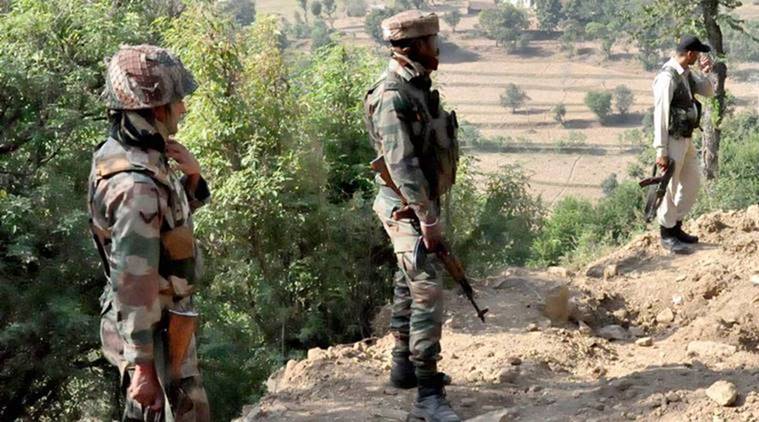
Four Jammu and Kashmir policemen were killed in a militant attack on a police picket in South Kashmir’s Shopian district on Tuesday. The attack was the first one by militants in the Valley after they suffered several blows in multiple encounters over the last one month in South Kashmir.

Police officers said that the policemen who were killed were guarding a minority picket, meant for security of a few Kashmiri pandit families in Zainapora area of Shopian. Four weapons belonging to the policemen were also taken by the militants after the attack, officials said. The four policemen have been identified as Abdul Majeed, Mehraj-ud-din, Anees and Hameed-ul-lah.

Majeed was a selection grade constable and a resident of Gandebal district, Mehraj-ud-din was a resident of Bandipora district in North Kashmir, while as Anees and Hameed-ul-lah were residents of Kulgam and Anantnag districts of South Kashmir respectively, officials said.

“We pay rich tributes to our colleagues Abdul Majeed, Mehraj-ud-din, Anees and Hameed-ul-lah who were #martyred in a #terror attack at #Shopian today. Our thoughts and prayers are with the grieving families at this juncture. RIP,” the state police tweeted.

Shopian district has witnessed a spurt in violence in the last one month. Apart from multiple encounters between security forces and militants, over a dozen civilians were abducted from South Kashmir villages by militants and two of them were killed on suspicion of being informers. The state police has recently claimed that they eliminated the top militant leadership in South Kashmir.

About the militant attack on Tuesday, police sources told The Indian Express that a group of militants entered the guard post of the minority picket. The militants fired indiscriminately, killing three policemen on the spot and injuring one. The injured policeman succumbed on way to the hospital, a senior police officer said.

After the attack on Tuesday, militants also posted pictures of the weapons taken by them from the police picket.

Senior state police officers, however, told The Indian Express that they are verifying the pictures that have appeared on social media. A senior police officer in Shopian said that they suspect JeM militants for the attack.

The mainstream political parties in the Valley condemned the killing.

National Conference leader Omar Abdullah said, “State has been at the receiving end with deaths, whether of a civilian, a policeman or a militant, becoming order of the day over the past three decades.”

Former CM Mehbooba Mufti tweeted, “Strongly condemn attack on policemen in Shopian claiming 3 precious lives…. Solidarity with families of jawans .Relieved that no harm caused to any civilians in the minority pocket they guarded.”

source: http://www.indianexpress.com / The Indian Express / Home> India / by Adil Akhzer / Srinagar – December 12th, 2018