Tag Archives: Zameeruddin Shah

Muslim Mirror Releases List of 100 Most Influential Indian Muslims 2025; Young Faces Gain Prominence

INDIA :

Muslim Mirror’s 100 Most Influential Muslims of 2025

New Delhi: 

Muslim Mirror has released its much-anticipated annual list of the “100 Most Influential Indian Muslims of 2025,” spotlighting individuals who have made significant contributions to India’s public life across a wide spectrum of fields including politics, culture, education, business, media, religion, sports, and social service. Now in its second edition, the list aims to document influence not merely as power or popularity, but as sustained impact, leadership, and the ability to shape public discourse.

A defining feature of the 2025 edition is the growing prominence of younger achievers, signalling a visible generational shift within Indian Muslim leadership. Alongside established national figures, the list includes emerging voices who have built influence through grassroots activism, professional excellence, digital platforms, legal advocacy, education, and community engagement. Editors associated with the project said this was a deliberate attempt to recognise new centres of influence beyond traditional hierarchies.

The list reflects the diversity and plural character of Indian Muslim society, cutting across geography, ideology, profession, and language. From seasoned politicians and religious scholars to artists, entrepreneurs, academics, and social reformers, the compilation offers a broad snapshot of leadership trends at a time when issues of representation, constitutional values, and social justice remain central to national debate.

Representation Across Sectors

The 2025 list features several eminent academicians and intellectuals who have shaped higher education, policy discourse, and social research. Among them are Abul Qasim Nomani, Ameerullah Khan, Furqan Qamar, Shahid Jamil, and Ubaid-ur-Rahman, recognised for their contributions to education, public policy, and academic leadership.

In the business and entrepreneurship category, the list includes influential names such as Azad Moopan, Azim Hashim Premji, Farah Malik, Irfan Razack, M. P. Ahammed, Mecca Rafiq Ahmed, Meraj Manal, Syed Mohamed Beary, P. Mohammed Ali, Shahnaz Hussain, Tausif Ahmad Mirza, Yusuff Ali, and Ziaullah Sharif. Their inclusion underlines the growing economic footprint of Indian Muslim entrepreneurs, both domestically and globally, spanning sectors from retail and healthcare to infrastructure and consumer goods.

Community leadership remains a strong pillar of the list, with figures such as Arshad Madani, Mahmood Madani, Malik Motasim Khan, Mehmood Pracha, Syedna Mufaddal Saifuddin, Navaid Hamid, Pirzada Md Abbas Siddiqui, Qasim Rasool Ilyas, Sadatullah Husaini, Umer Ahmed Ilyasi, and Yusuf Mohamed Abrahani recognised for their roles in religious guidance, legal advocacy, social mobilisation, and institutional leadership.

Culture, Media, and Public Discourse

In arts and entertainment, globally recognised names such as A. R. Rahman, Aamir Khan, Mammootty, Munawar Faruqui, and Shah Rukh Khan continue to command immense cultural influence, shaping narratives that extend well beyond cinema and music into social consciousness.

The list also acknowledges the growing importance of media and journalism in shaping opinion and challenging dominant narratives. Journalists and commentators such as Arfa Khanam, Irfan Meraj, and Seema Mustafa are recognised for their consistent engagement with issues of democracy, minority rights, and constitutional values.

Religious and Intellectual Scholarship

A significant section of the list is devoted to Islamic scholars and religious thinkers, reflecting their continued influence on moral leadership and intellectual discourse. Names such as A. P. Aboobacker Musliyar, Qasim Nomani, Prof. Akhtarul Wase, Asghar Ali Imam Mahdi Salafi, Asjad Raza Khan, Ibraheem Khaleel Al-Bukhari, Javed Jamil, Khalid Saifullah Rahmani, Khaleelur Rahman Sajjad Nomani, Qamaruzzaman Azmi, Rashid Shaz, Shakir Ali Noori, Shamail Nadvi, and Yasoob Abbas find place for their scholarly work, writings, and public engagement.

Politics and Governance

The political category features leaders cutting across party lines and regions, including Asaduddin Owaisi, Ghulam Nabi Azad, Hamid Ansari, Mehbooba Mufti, Omar Abdullah, Salman Khurshid, Najeeb Jung, Syed Naseer Hussain, Engineer Rashid, Akhtarul Iman, Iqra Hasan, Zameer Ahmed Khan, Rakibul Hasan, K. Rahman Khan, Kadir Mohideen, Mohibullah Nadvi, Md Shafi, Agha Mahadi, Asim Waqar, and Sadiq Ali Shihab Thangal. Their inclusion reflects influence exercised through electoral politics, governance, diplomacy, and legislative advocacy.

Changemakers and Social Reformers

One of the most dynamic sections of the 2025 list is that of changemakers and social reformers, featuring individuals such as Safeena Husain, Shahabuddin Yaqoob Quraishi, Syeda Hameed, Zameer Uddin Shah, Mahbubul Hoque, Sabahat S. Azim, Mehmood Pracha, Faiz Syed, and Zahir Ishaq Kazi, among others. Many of these figures have earned recognition through long-term grassroots work rather than formal authority.

International Booker Prize 2025 winner Banu Mushtaq for Heart Lamp, along with renowned poet Wasim Barelvi, has been placed in the category of Literary Figures.

In sports, iconic names Sania Mirza and Irfan Pathan continue to inspire younger generations through excellence and public engagement beyond the playing field.

Beyond Rankings

The editors emphasised that the list does not claim to be exhaustive, nor does it measure influence solely through fame, wealth, or official position. Instead, it seeks to capture real-world impact, moral authority, intellectual contribution, and the ability to shape conversations within and outside the community.

The annual list has increasingly become a reference point for understanding evolving leadership patterns among Indian Muslims. By foregrounding both established figures and rising talents, the 2025 edition reflects continuity as well as change, underscoring how Indian Muslims continue to contribute meaningfully to India’s democratic, cultural, and social field.

source: http://www.muslimmirror.com / Muslim Mirror / Home> Indian Muslim / by Muslim Mirror / January 15th, 2026
‘You are truly the enemies of Islam’: Indian Army ex officer’s open letter to Jaish-e-Mohammad

Kolkata, WEST BENGAL / NEW DELHI :

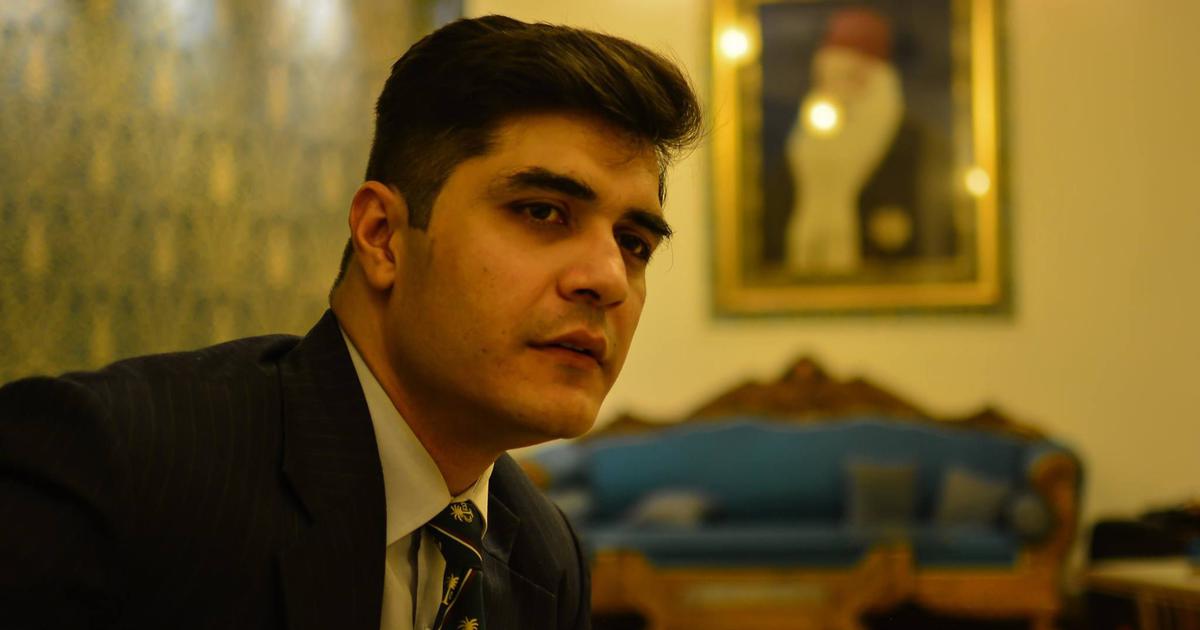
‘Any sensible person can see it’s not some cause you are fighting for, it is a racket you are running,’ writes Major Mohommed Ali Shah.

Mohommed Ali Shah | Facebook/Mohommed Ali Shah

How dare you bunch of cowards think of calling yourselves believers of Islam?

My name is Major Mohommed Ali Shah (veteran). My family has had a tradition of soldiering for 200 years. My father retired as the deputy chief of Army Staff and was vice chancellor of the Aligarh Muslim University thereafter. Because of his and his brilliant team’s back-breaking efforts, Aligarh Muslim University was ranked as India’s best university by the Times Higher Education Ranking, London, the most reliable ranking of universities in the world.

However, because of your ill actions, even such a fine university has to bear the brunt of having the word “Muslim” in its name. My father’s honest autobiography, The Sarkari Mussalman, which speaks very highly of the fine, secular organisation that is the Indian Army, was misunderstood because it had the word “Mussalman” in the title.

My ancestors were veterans of both the world wars. My family chose not to go to Pakistan during Partition but stay in India, for various reasons. We are the children of this soil. We are a family of proud Indians and have performed the pilgrimage of Haj.

So there cannot be a person more qualified to tell you cowards that nowhere in Islam does it say go kill anyone. You people are truly the enemies of Islam, giving it a bad name to the extent that the community is getting typecast. Today, every Hindi movie has a criminal or a gangster bearing a Muslim name.

I saw my father fight insurgency in Punjab in the early 1990s, in Manipur, Nagaland, and Jammu and Kashmir. I have risked my life on several occasions while serving in the Army in Jammu and Kashmir and the North East, in both Muslim and non-Muslim areas of insurgency. However, only one community is being branded as a terrorist community because of ignorant fools like you.

Peace-loving religion

My religion (I am not saying yours because you are not Muslims; you are terrorists and terror has no religion) is actually a very peace-loving religion and talks of unity in diversity. The term “jihad”, which actually means struggle and not terrorism, has been misunderstood and misinterpreted by non-Muslims to the extent that even the national media has started misrepresenting Islam, for which terror outfits like yours are responsible. Today, all good work the Muslim community is doing is being discredited because of the wrongdoings of a few misled, uneducated, disloyal enemies of humanity like you.

The brainless “fidayeen” you have been breeding are going to rot in hell and not to any heaven as you mislead and brainwash young, unemployed, ignorant youth who have absolutely no idea what the holy Quran says. Islam is a peace-loving, scientific, logical and simple religion. There has to be an end to this madness. You people have spoilt the name of such a beautiful religion that once even I, a right-thinking citizen of my motherland India, had to suffer personally. Fortunately, my parents had given me the best gift a parent can give to their child, the gift of education. I could stand tall and fight, and teach the perpetrators a lesson they would never forget in their life. Taking up arms and killing people is not the answer to anything.

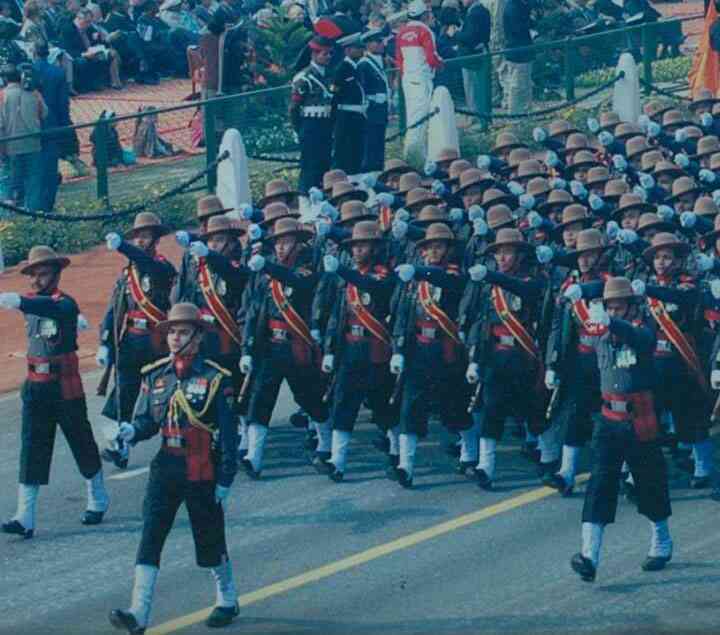
Major Mohommed Ali Shah leads an Army contingent at the Republic Day parade. Photo via Facebook

Education is the only key to progress. I am a proud Muslim and a very proud Indian, and I am qualified enough, not only because I was educated at the best school and the best college or an Indian Institute of Management but because I understand the religion much better than you do. I appeal for peace in order to be a true Muslim. You might have recruited people with little intellect who might be PhDs. However, there is a huge difference between being literate and being educated. Members of terrorist outfits like you are uneducated and should make an effort to analyse yourself, and face and understand the reality that you are not only doing great disservice to a peace-loving religion but to humanity itself. Shame on you!

My reason for writing this open letter is that I hope it reaches you somehow and, maybe, makes a difference somewhere. I truly believe the society will not change unless and until we change ourselves. I hope it reaches you and you do serious introspection, and the change begins. Violence in any form is not the answer to anything.

As Martin Luther King once said, “Darkness cannot fight darkness, only light can do that, hate can not fight hate, only love can do that.” Muslim terror outfits must realise they inflict casualties, directly and indirectly, on Muslims themselves. Any sensible person can see it is not some cause you are fighting for, it is a racket you are running. You are manufacturers of hate. The “fidayeen” whose video I saw will certainly not be going to heaven to enjoy the hospitality of hoors as he claimed. He will rot in hell. To quote a line from the film Khuda ke Liye (which made a lot of sense to me as a Muslim) that was delivered by a great actor playing the character of a maulvi, “Deen mein daari hai, daari mein deen nahi.” There is no need to wear one’s religion or patriotism on one’s sleeve. People are intelligent enough to see what is inside a person’s mind.

Root cause

Having spent considerable time combating insurgency in Jammu and Kashmir and the North East, and having risked my life multiple times in the process, I strongly believe the root cause of the militancy in Kashmir is not religion or “jihad”, as is widely believed. The real cause is that unemployed youth are extremely vulnerable and easily susceptible to brainwashing by vested interests from across the border. Educating and empowering them, making them self-sustaining will help weed out this problem once and for all. The use of arms or a show of strength can defeat them only temporarily – you kill one and 10 more will be ready to take his place. Our only hope is to win them over.

The next big question that arises is about prejudices against the Muslim community. Yes, prejudices exist, not only towards Muslims or any other community in particular, but for those who are less educated. Why would anyone employ someone who is not educated enough, or capable or suitable for the job? We have to admit that Muslims in India are not educated enough and that is the cause of all our woes. The only way forward is to educate our children.

If our children don’t get good education, they won’t have good jobs, then they won’t be able to educate their children, and so on. We will never be able to rise above the poverty line and will always be discriminated against. Education does not mean merely sending them to school. Making sure they have the right mindset is also extremely important. As Allama Mohammad Iqbal, who did great service to the Muslim community, said,

“Khudi ko kar buland itna ke har taqdeer se pehle,
Khuda bande se khud pooche bata teri raza kya hai.”

If one is educated, one can stand tall.

Finally, if we forget all our differences, if India is united, if we stand together, we have the ability to be a superpower – and we surely will be. Jai Hind!

Major Mohommed Ali Shah completed his short service commission in the Army in 2008, participating in counterinsurgency operations in Jammu and Kashmir and the North East. He is currently a defence analyst. He has also worked on and acted in several films, including Haider, Bajrangi Bhaijaan and Agent Vinod.

source: http://www.scroll.in / Scroll.in / Home> Open Letter / by Mohommed Ali Shah / February 20th, 2019

By the Book

NEW DELHI :

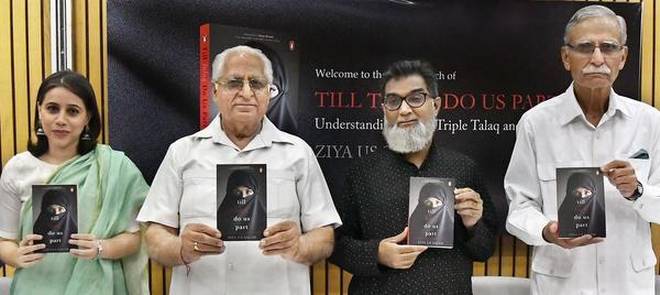
FOR A FAIR CONTRACT At the discussion that followed the book release, the panellists (from left) journalist Marya Shakil, lawyer J.C. Batra, author Ziya Us Salam and Lt. Gen. (Retd.) Zameeruddin Shah) discussed women’s rights in Islam

Ziya Us Salam’s “Till Talaq Do Us Part” defogs the miasma around the issue of instant triple talaq

Triple talaq is a phrase that the citizens of India became acutely aware of post the events of 2017, when seven women petitioners moved the Supreme Court against their instant divorce brought about through the uttering of the words ‘talaq, talaq, talaq.’ The apex Court had, on August 22, ruled that instant triple talaq was a practice not sanctioned in the Quran, yet a fog of confusion and obfuscation surrounds the general discourse and public understanding of what exactly constitutes an Islamic divorce. In this context, Till Talaq Do Us Part (Penguin Random House) by senior journalist Ziya Us Salam is a book that acquires much significance as it tries to brush the dust away and bring clarity to the issue by reverting to the most authentic source for Islamic knowledge — the Quran.

Released this past evening at the India International Centre by Lt. Gen. (Retd.) Zamiruddin Shah, the book defines nine types of divorce interpreted from Quranic verses.

Among them some of the most important ones are Khula, the inalienable right of the woman to instantly divorce her husband on the grounds of his inability to take care of her needs or even simply her dislike for him; Talaq e Ehsan where the man pronounces divorce once but the woman lives with him for the next three months, after which he can divorce her or they can reconcile; Talaq e Hasan where the man pronounces divorce three times in three months, but only in the interim periods of menstrual cycles; Mubarat which takes place through mutual consent, Faskh or judicial divorce; Talaq e Tafweez which is incorporated into the Nikahnama wherein the husband vests the rights of divorce in his wife.

Lack of information

“In the present scenario within the country, the right information on Islam was not reaching the masses,” says Salam. Which is why he decided to write this book that talks about numerous aspects of marriage including the model nikahnama that the AIMPLB spoke of circulating but never quite got down to the task. He also speaks of the importance of meher, the dower paid by the man to the woman at the time of marriage, and how it is entirely neglected among Muslims in India. The meher must be paid either in full to the woman at the time of nikah, or in part with the husband giving a written undertaking that he would pay the rest in future, he emphasises. “One of the most important things is to have one regular nikahnama for all Muslims — at the most two, one for Sunnis and the other for Shias — but ideally, just one.”

Understanding halala

The book also deals with the highly controversial issue of halala, which in truth has been contorted and disfigured heavily into an abhorrent act of female exploitation. Halala, explains Salam, actually gives a woman the right to choose.

If perchance a woman’s second husband either passes away or the second marriage too results in divorce, she has the right to go back and choose her first husband again. However, with the entirely invalid and un-Quranic practice of triple talaq, instant divorces are carried out in a fit of anger and when the man comes to his senses and wishes to reconcile with the woman, they are forced into a monstrous distortion of Halala. When triple talaq gets pushed out of the scene, the question of a one-night halala would not arise at all.

Several scholars state that triple talaq was made legal by Umar Ibn Khattab, the second Caliph in Islamic history. “The important fact which is overlooked, though, is that it was made legal upon the condition that the man giving triple talaq would be flogged,” he highlights. “So why do the maulanas forget to flog the men giving triple talaq?”

A very important point here is that instant triple talaq did not exist at the time of Prophet Mohammad at all, nor the time of the first Caliph. Equally pertinently, it was later made entirely invalid and illegal by Ali Ibn Abi Talib, the fourth Caliph of Islam.

Many Islamic countries have made the instant talaq illegal and it is non-existent among the Shia sect. In fact it is illegal in all other sects except the Hanafis, but as the author writes in his book, “there is no direct word from Imam Hanifa on triple talaq.”

But social structures are rigid and herd tendencies difficult to change, which is why the Supreme Court judgement against instant triple talaq cannot be enough, just as dowry and caste system still exist despite being grossly unconstitutional. In addition, the maulanas whom the masses look to for religious guidance are ill-equipped for the task, caught as they are between rote-recitation and following customs without an attempt at understanding. “Across the country, a vast number of Imams don’t even know (the meaning of) what they have read in namaz!” avers Salam. “They prevent women from coming to mosques but at the Kaaba in Mecca, women and men pray together, perform Hajj together. There is no restriction at all upon women praying in mosques.”

The important task, then, is for the community to be educated and made aware of their rights, for people to read translations of the Quran and develop a deeper understanding. One may pick any translation and exegesis among the many reputed ones, but the most important thing is to explore. In addition, the men must be made aware of the rights of women as much as the women themselves. As Salam says, “We have reduced the understanding of the Quran to the monopoly of some aalim. But the Quran came for all of humanity, not a select group of scholars.”

source: http://www.thehindu.com / The Hindu / Home> Books> Authors / by Zehra Naqvi / May 03rd, 2018