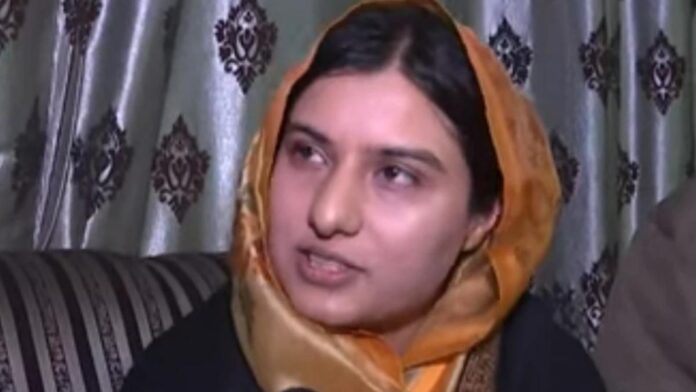
A majority, 13 of the 18 came from political families, and no southern state, including Kerala, Tamil Nadu, Karnataka, Andhra Pradesh, or Telangana, has ever elected a Muslim woman to the Lok Sabha.
Amid demands for reservation for Muslim and OBC women triggering sharp exchanges in the House, the stark underrepresentation of Muslim women is evident, with only 18 elected to the Lok Sabha since 1947 despite Muslims comprising about 7.1% of the population, and five Lok Sabhas having no Muslim woman MP at all.
A majority, 13 of the 18 came from political families, and no southern state, including Kerala, Tamil Nadu, Karnataka, Andhra Pradesh, or Telangana, has ever elected a Muslim woman to the Lok Sabha.
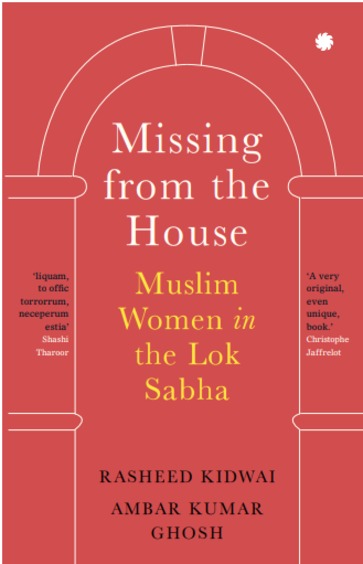
The issue is documented in the book “Missing from the House, Muslim Women in the Lok Sabha” by Rasheed Kidwai and Ambar Kumar Ghosh, which profiles these 18 leaders.
“It is a shockingly abysmal figure,” Kidwai notes, pointing out that in five of the 18 Lok Sabhas constituted till 2025, there was not a single Muslim woman member.
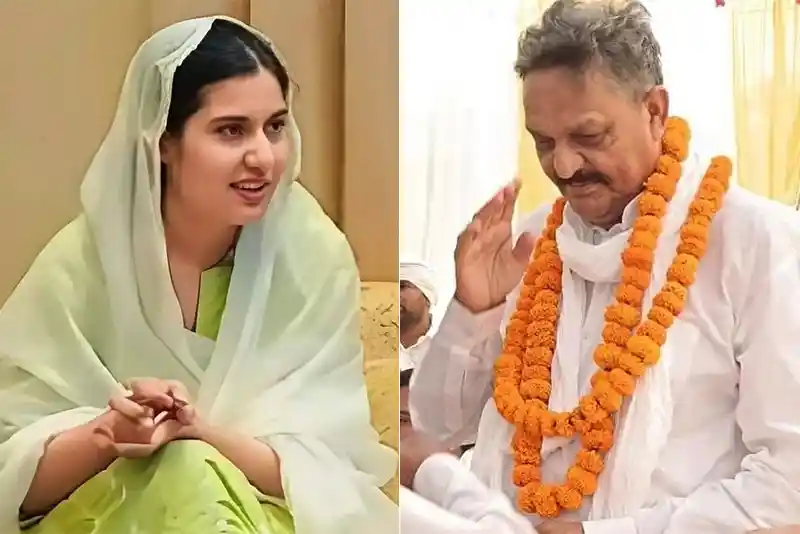
In the current Lok Sabha, there is only one Muslim woman MP, Iqra Hasan Choudhury of the Samajwadi Party.
The list of Muslim women MPs includes Mofida Ahmed of the Congress (1957), Zohraben Akbarbhai Chavda of the Congress (1962–67), Maimoona Sultan of the Congress (1957–67), Begum Akbar Jehan Abdullah of the National Conference (1977–79; 1984–89), Rashida Haque of the Congress (1977–79), Mohsina Kidwai of the Congress (1977–89), Abida Ahmed of the Congress (1981–89), Noor Bano of the Congress (1996; 1999–2004), Rubaab Sayda of the Samajwadi Party (2004–09), Mehbooba Mufti of the People’s Democratic Party (2004–09; 2014–19), Tabassum Hasan of the Samajwadi Party, Lok Dal and Bahujan Samaj Party (2009–14), Mausam Noor of the Trinamool Congress (2009–19), Kaisar Jahan of the Bahujan Samaj Party (2009–14), Mamtaz Sanghamita of the Trinamool Congress (2014–19), Sajda Ahmed of the Trinamool Congress (2014–24), Ranee Narah of the Congress (1998–2004; 2009–14), Nusrat Jahan Ruhi of the Trinamool Congress (2019–24), and Iqra Hasan Choudhury of the Samajwadi Party (2024–present).
On Thursday, a confrontation began in Lok Sabha when SP MP Dharmendra Yadav demanded that Muslim and OBC women be included within the reservation framework, saying the party would oppose the Bill otherwise and arguing that delinking delimitation from the Census was unconstitutional.
His remarks drew strong objections from the Treasury Benches, with Union Home Minister Amit Shah and Parliamentary Affairs Minister Kiren Rijiju asserting that reservation on religious grounds is unconstitutional. Rijiju said quota cannot be granted on the basis of religion and urged members to “talk about women of the whole country.”
SP president Akhilesh Yadav countered by asking whether Muslim women were not part of the “aadhi aabadi” and questioned whether the government was avoiding a caste census.
source: http://www.maktoobmedia.com / Maktoob Media / Home> India / by Maktoob / April 16th, 2026
Muslim Mirror’s 100 Most Influential Muslims of 2025
New Delhi:
Muslim Mirror has released its much-anticipated annual list of the “100 Most Influential Indian Muslims of 2025,” spotlighting individuals who have made significant contributions to India’s public life across a wide spectrum of fields including politics, culture, education, business, media, religion, sports, and social service. Now in its second edition, the list aims to document influence not merely as power or popularity, but as sustained impact, leadership, and the ability to shape public discourse.
A defining feature of the 2025 edition is the growing prominence of younger achievers, signalling a visible generational shift within Indian Muslim leadership. Alongside established national figures, the list includes emerging voices who have built influence through grassroots activism, professional excellence, digital platforms, legal advocacy, education, and community engagement. Editors associated with the project said this was a deliberate attempt to recognise new centres of influence beyond traditional hierarchies.
The list reflects the diversity and plural character of Indian Muslim society, cutting across geography, ideology, profession, and language. From seasoned politicians and religious scholars to artists, entrepreneurs, academics, and social reformers, the compilation offers a broad snapshot of leadership trends at a time when issues of representation, constitutional values, and social justice remain central to national debate.
Representation Across Sectors
The 2025 list features several eminent academicians and intellectuals who have shaped higher education, policy discourse, and social research. Among them are Abul Qasim Nomani, Ameerullah Khan, Furqan Qamar, Shahid Jamil, and Ubaid-ur-Rahman, recognised for their contributions to education, public policy, and academic leadership.
In the business and entrepreneurship category, the list includes influential names such as Azad Moopan, Azim Hashim Premji, Farah Malik, Irfan Razack, M. P. Ahammed, Mecca Rafiq Ahmed, Meraj Manal, Syed Mohamed Beary, P. Mohammed Ali, Shahnaz Hussain, Tausif Ahmad Mirza, Yusuff Ali, and Ziaullah Sharif. Their inclusion underlines the growing economic footprint of Indian Muslim entrepreneurs, both domestically and globally, spanning sectors from retail and healthcare to infrastructure and consumer goods.
Community leadership remains a strong pillar of the list, with figures such as Arshad Madani, Mahmood Madani, Malik Motasim Khan, Mehmood Pracha, Syedna Mufaddal Saifuddin, Navaid Hamid, Pirzada Md Abbas Siddiqui, Qasim Rasool Ilyas, Sadatullah Husaini, Umer Ahmed Ilyasi, and Yusuf Mohamed Abrahani recognised for their roles in religious guidance, legal advocacy, social mobilisation, and institutional leadership.
Culture, Media, and Public Discourse
In arts and entertainment, globally recognised names such as A. R. Rahman, Aamir Khan, Mammootty, Munawar Faruqui, and Shah Rukh Khan continue to command immense cultural influence, shaping narratives that extend well beyond cinema and music into social consciousness.
The list also acknowledges the growing importance of media and journalism in shaping opinion and challenging dominant narratives. Journalists and commentators such as Arfa Khanam, Irfan Meraj, and Seema Mustafa are recognised for their consistent engagement with issues of democracy, minority rights, and constitutional values.
Religious and Intellectual Scholarship
A significant section of the list is devoted to Islamic scholars and religious thinkers, reflecting their continued influence on moral leadership and intellectual discourse. Names such as A. P. Aboobacker Musliyar, Qasim Nomani, Prof. Akhtarul Wase, Asghar Ali Imam Mahdi Salafi, Asjad Raza Khan, Ibraheem Khaleel Al-Bukhari, Javed Jamil, Khalid Saifullah Rahmani, Khaleelur Rahman Sajjad Nomani, Qamaruzzaman Azmi, Rashid Shaz, Shakir Ali Noori, Shamail Nadvi, and Yasoob Abbas find place for their scholarly work, writings, and public engagement.
Politics and Governance
The political category features leaders cutting across party lines and regions, including Asaduddin Owaisi, Ghulam Nabi Azad, Hamid Ansari, Mehbooba Mufti, Omar Abdullah, Salman Khurshid, Najeeb Jung, Syed Naseer Hussain, Engineer Rashid, Akhtarul Iman, Iqra Hasan, Zameer Ahmed Khan, Rakibul Hasan, K. Rahman Khan, Kadir Mohideen, Mohibullah Nadvi, Md Shafi, Agha Mahadi, Asim Waqar, and Sadiq Ali Shihab Thangal. Their inclusion reflects influence exercised through electoral politics, governance, diplomacy, and legislative advocacy.
Changemakers and Social Reformers
One of the most dynamic sections of the 2025 list is that of changemakers and social reformers, featuring individuals such as Safeena Husain, Shahabuddin Yaqoob Quraishi, Syeda Hameed, Zameer Uddin Shah, Mahbubul Hoque, Sabahat S. Azim, Mehmood Pracha, Faiz Syed, and Zahir Ishaq Kazi, among others. Many of these figures have earned recognition through long-term grassroots work rather than formal authority.
International Booker Prize 2025 winner Banu Mushtaq for Heart Lamp, along with renowned poet Wasim Barelvi, has been placed in the category of Literary Figures.
In sports, iconic names Sania Mirza and Irfan Pathan continue to inspire younger generations through excellence and public engagement beyond the playing field.
Beyond Rankings
The editors emphasised that the list does not claim to be exhaustive, nor does it measure influence solely through fame, wealth, or official position. Instead, it seeks to capture real-world impact, moral authority, intellectual contribution, and the ability to shape conversations within and outside the community.
The annual list has increasingly become a reference point for understanding evolving leadership patterns among Indian Muslims. By foregrounding both established figures and rising talents, the 2025 edition reflects continuity as well as change, underscoring how Indian Muslims continue to contribute meaningfully to India’s democratic, cultural, and social field.
source: http://www.muslimmirror.com / Muslim Mirror / Home> Indian Muslim / by Muslim Mirror / January 15th, 2026
18 Muslim Women Made It To Lok Sabha Since Independence; 13 Of Them Dynasts: Book
New Delhi :
That women were always under-represented in the Lok Sabha is a known fact, but Muslim women members have been a greater rarity with only 18 making it to the Lower House since independence, according to a new book.
And while dynastic politics may not be conducive for democracy to deepen its roots, it has played a positive part in giving chances to Muslim women, with 13 out of the 18 being from political families.
pix: sapnaonline.com
From royalty to a tea vendor-turned-politician’s wife and from a first lady to a Bengali actress, the 18 Muslim women who treaded the hallowed corridors of power in the Lok Sabha are an eclectic mix, with each of them having an interesting backstory, but one common thread — their path to power was always strewn with struggle and hurdles.
The story of these 18 Muslim women has been chronicled in an upcoming book– ‘Missing from the House — Muslim women in the Lok Sabha’ by Rasheed Kidwai and Ambar Kumar Ghosh. Kidwai says he wanted to document the profile of 20 Muslim women who made it to the Lower House, but two of them — Subhasini Ali and Afrin Ali — had openly proclaimed that they did not follow Islam.
“Only eighteen Muslim women have made it to the Lok Sabha since the first parliamentary polls in 1951-52. It is a shockingly abysmal figure, considering Muslim women are about 7.1 per cent of India’s 146 crore population. Out of the 18 Lok Sabhas constituted till 2025, five times the Lok Sabha did not have a single Muslim woman member,” Kidwai and Ghosh write in their book, published by Juggernaut and will be released next month.
Equally shocking is the fact that the number of Muslim women elected to Parliament in one tenure never crossed the mark of four in the 543-seat lower house of Parliament, the book points out. The book also notes that none of the five southern states — Kerala, Tamil Nadu, Karnataka, Andhra Pradesh and Telangana — otherwise known for better political representation than the North and with better literary levels and other socio-economic indicators, have not yet sent a single Muslim woman MP to the Lok Sabha.
The 18 Muslim women who made it to the Lok Sabha include Mofida Ahmed (1957, Congress); Zohraben Akbarbhai Chavda (Congress, 1962-67); Maimoona Sultan (Congress, 1957-67); Begum Akbar Jehan Abdullah (National Conference, 1977-79, 1984-89); Rashida Haque (Congress 1977-79); Mohsina Kidwai (Congress, 1977-89); Abida Ahmed (Congress, 1981-89); Noor Bano (Congress, 1996, 1999-2004); Rubab Sayda (Samajwadi Party, 2004-09); and Mehbooba Mufti (People’s Democratic Party, 2004-09, 2014-19).
The other Muslim women who entered the Lower House are Tabassum Hasan (Samajwadi Party, Lok Dal, Bahujan Samaj Party 2009-14); Mausam Noor (Trinamool Congress 2009-19); Kaisar Jahan (Bahujan Samaj Party, 2009-14); Mamtaz Sanghamita (Trinamool Congress 2014-19); Sajda Ahmed (Trinamool Congress 2014-24); Ranee Narah (Congress, 1998-2004, 2009-14); Nusrat Jahan Ruhi (Trinamool Congress, 2019-24); and Iqra Hasan (Samajwadi Party, 2024-present).
A dominant political figure who made an indelible mark on Indian politics was Mohsina Kidwai. She not only entered the Lok Sabha but also went on to join the council of ministers and hold several portfolios, including labour, health and family welfare, rural development, transport and urban development.
Another fascinating personality that the book talks about is the wife of Mohammad Jasmir Ansari, a tea vendor-turned-politician. In 2009, Kaisar Jahan, wife of Ansari, won a fiercely fought four-corner contest even though she had barely thirty-five days to prepare and campaign. As 2009 Lok Sabha polls neared, Mayawati summoned MLA Jasmir and Kaisar Jahan to Lucknow. “Jasmir and Kaisar stopped at ‘Sharmaji ki Chai’ in Hazratganj before heading to the chief minister’s residence. Jasmir was anticipating a ministerial position, but instead, Mayawati came straight to the point by asking him to contest the polls. The lingering taste of chai vanished quickly as Jasmir struggled, looking tentatively at his wife for an answer. Mayawati, a politician among politicians, sensed his unease. She directly asked Kaisar: ‘Tu ladegi? The answer came immediately and spontaneously from both Jasmir and Kaisar-yes,” the book narrates.
There is also a first lady among the 18 Muslim women – Begum Abida Ahmed, wife of the country’s fifth president, Fakhruddin Ali Ahmed.
Over four years after Ahmed passed away in 1977, Abida Ahmed agreed to fight a Lok Sabha by-election from Bareilly, Uttar Pradesh, in 1981 and won, becoming the first and only First Lady of India to have entered the competitive arena of politics. She won again in 1984, making it two in a row from Bareilly.
Begum Noor Bano, originally Mahatab Zamani and the widow of the former ruler of Rampur, was royalty who was a key figure in the political landscape of that area and fought many battles with Azam Khan of the Samajwadi Party and Jaya Prada, who also contested on an SP ticket. Her husband, Nawab Syed Zulfikar Ali Khan Bahadur, belonged to the Rohilla dynasty and was popularly addressed as ‘Mickey Mian’. He was killed in a freak road accident in 1992 while returning from New Delhi to Rampur.
Noor Bano won the 1996 and 1999 Lok Sabha polls, but her electoral battles with Jaya Prada in 2004 and 2009 ended in defeats.
Among the 18 Muslim women, Bengali actress Nusrat Jahan Ruhi also broke a number of glass ceilings as she went on to win the Lok Sabha polls on a TMC ticket in 2019.
In the current Lok Sabha, there is just one Muslim woman MP, and that is SP’s Iqra Hasan Choudhury. From earning the distinction of being one of the youngest MPs after defeating a veteran leader from the BJP to becoming the centre of social media discussion as a young, London-educated Muslim woman leader, Iqra Hasan has appeared to have carved out a space for herself in the public imagination.
In his foreword to the book, Congress MP Shashi Tharoor writes, “Nearly seventy-eight years have passed since that portentous stroke of midnight on 15 August 1947, when Pandit Jawaharlal Nehru proclaimed a ‘tryst with destiny’ and India awakened to ‘life and freedom.’ …Yet even after almost eight decades, a shameful reality, which should deflate our self-congratulatory fervour over our democratic track record, still haunts us.”
“Not everyone has found ‘utterance’ in the world’s largest democracy, many of whose towering leaders eulogize it as the ‘Mother of Democracy.’ This self-serving description is enabled, in part, by a too-pliant news media, an ineffectual civil society and a menaced academic class, so that no one dares point out the irony inherent in the claim,” Tharoor says.
“Although we depict India as a doting mother nurturing and nourishing a clamorous, combative and chaotic republic, corrupt and inefficient, perhaps, but nonetheless flourishing, the truth is that throughout our democratic history, we have consistently failed our women citizens: failed to afford them, in the thoroughfares of our country, a life of dignity and decency,” he says. (Agencies)
source: http://www.dailyexcelsior.com / Daily Excelsior.com / Home> Latest News / by DailyExcelsior.com / book pix edited: sapnaonline.com / July 20th, 2025
The INDIA bloc’s Muslim candidates had a victory rate of 83 per cent in the Lok Sabha polls.
Afzal Ansari of the SP who won from Ghazipur (File photo| PTI)
Lucknow :
Muslim voters, who make up a considerable 19 per cent of the population in Uttar Pradesh and are a deciding factor in around a dozen Lok Sabha seats in the state, emerged as a homogenous entity consolidating in favour of the INDIA bloc in the 2024 polls.
The community stood so solidly behind the SP-Congress candidates that all the 20 Muslim candidates fielded by the Mayawati-led Bahujan Samaj Party (BSP) lost, getting only a miniscule fraction of their votes.
The INDIA bloc’s Muslim candidates had a victory rate of 83 per cent in the Lok Sabha polls. All the four Muslim candidates fielded by the Samajwadi Party won, while one of the two Congress candidates emerged victorious.
Although the BJP leadership including PM Modi exhorted the Muslim community in the recently concluded election to vote keeping in mind the future of their generations, yet the community backed the Congress and SP combo.
In the 2019 Lok Sabha polls, three of the six Muslims MPs who made it to Lok Sabha from UP — Danish Ali (Amroha), Afzal Ansari (Ghazipur) and Fazlur Rehman (Saharanpur) — were from the BSP.
Moreover, the INDIA bloc had fielded Muslim candidate strategically in constituencies with over 40 per cent Muslim electoral population except Ghazipur which has 27 per cent Muslim voters but with an added edge of being the bastion of gangster-turned-politician Mukhtar Ansari. Afzal Ansari sailed through from the constituency as SP candidate this time.
The other Muslim candidates who won in the state are Imran Masood of the Congress from Saharanpur which has approximately 42 per cent Muslim voters, Mohibullah Nadvi of the SP from Rampur which has around 51 per cent Muslim voters (the highest in UP), Iqra Hasan of the SP from Kairana, her family bastion, with 40 per cent Muslim voters and Zia-ur-Rehman of the SP from Sambhal which has around 45 per cent Muslim voters.
source: http://www.newindianexpress.com / The New Indian Express / Home> Nation / by Namita Bajpai / June 12th, 2024
All six Muslim Lok Sabha candidates fielded by mainstream parties in Uttar Pradesh have emerged victorious.
Among the winners is Imran Masood, who contested from Saharanpur on a Congress ticket. “This victory is not just mine, but of every individual who believes in secularism and democracy,” Masood stated emphatically after his win.
Similarly, Maulana Muhibullah Nadvi, representing the Samajwadi Party, also secured a win in Rampur. “The people’s faith in us has been reaffirmed, and we will work tirelessly to honour their trust,” Nadvi said after trouncing Ghanshyam Singh Lodhi of the BJP with a total of 4.81 lakh votes, a margin of 89,370 votes.
Ziaur Rehman Barq, who contested from the Sambhal Lok Sabha seat, is on the path to victory as well. The Congress party’s candidate from Amroha, Kanwar Danish Ali, also achieved victory.
Reflecting on his triumphant journey, Ali said his suspension from the Bahujan Samaj Party was a turning point. “The support from the Congress party and the voters of Amroha has been overwhelming,” he said.
Afzal Ansari, a Samajwadi Party candidate, is leading in Ghazipur. Iqra Hasan, another Samajwadi Party candidate from the Kairana parliamentary seat, has also registered victory.
Before the elections, Imran Masood was affiliated with the Samajwadi Party, and Afzal Ansari was a Bahujan Samaj Party Member of Parliament. Danish Ali, formerly with the Bahujan Samaj Party, was suspended and later nominated by the Congress party, which led to his victory in Amroha.
Despite this success, the Bahujan Samaj Party, which fielded around 22 Muslim candidates, did not secure any seat. This outcome highlights a broader issue of representation, as only 78 Muslim candidates contested across the country under the Congress and other parties’ tickets. The Congress party itself offered tickets to just 19 Muslim candidates nationwide in this election.
With vote counting continuing, early trends indicate that the ruling NDA would form the next government. Nonetheless, the victory of these six candidates marks a noteworthy moment in this Lok Sabha election.
source: http://www.clarionindia.net / Clarion India / Home> India Votes> Indian Muslims> Politics / by Mohammad Alamullah, Clarion India / June 04th, 2024
Despite the impressive show by the secular parties in the 2024 Parliamentary Elections, number of Muslim MPs in the new Lok Sabha has gone down by 04 as compared to their tally in the last house.
Iqra Hasan and Afzal Ansari – both have won from Uttar Pradesh
LS Election Result 2024:
Lok Sabha 2024 to have 23 Muslim MPs New Delhi: Despite the impressive show by the secular parties in the 2024 Parliamentary Elections, number of Muslim MPs in the new Lok Sabha has gone down by 04 as compared to their tally in the last house.
According to the final result released by the Election Commission of India (ECI), the 18th Lok Sabha will have a total of 23 Muslim MPs from different states of the country.
Of them a maximum 07 are from the Congress Party followed by 05 of the Trinamool Congress Party (TMC), 04 are of the Samajwadi Party (SP), 02 of the Indian Union Muslim League (IUML), 02 of the Jammu Kashmir National Conference, 01 of the All India Majlis e Ittehadul Muslimeen (AIMIM) and 02 Independents.
List of Muslims in 18th Lok Sabha
Congress
Rakibul Hussain Congress Dhubri, Assam
Mohammad Jawed Congress Kishanganj, Bihar
Tariq Anwar Congress Kathiar Bihar
Shafi Parambil Congress Vadakara, Kerala
Imran Masood Cngr Saharanpur, Uttar Pradesh
Isha Khan Choudhury Maldaha Dakshin, West Bengal
Muhammed Hamdullah Sayeed Lakshadweep
Samajwadi Party (SP)
Iqra Choudhary Kairna, Uttar Pradesh
Mohibbullah Rampur, Uttar Pradesh
Zia Ur Rehman Sambhal, Uttar Pradesh
Afzal Ansari Ghazipur, Uttar Pradesh
Trinamool Congress Party (TMC)
Khalilur Rahaman Jangipur, West Bengal
Yusuf Pathan Baharampu, West Bengal
Abu Taher Khan Murshidabad, West Bengal
Sk Nurul Islam Basirhat, West Bengal
Sajda Ahmed Uluberia, West Bengal
Indian Union Muslim League (IUML)
E.T. Mohammed Basheer Malappuram, Kerala
Dr. M.P Abdussamad Samadani, Ponnani, Kerala
Jammu Kashmir National Conference (JKNC)
Aga Syed Ruhullah Mehdi Srinagar, Jammu Kashmir
Mian Altaf Ahmad Anantnag-Rajouri. Jammu Kashmir
All India Majlis e Ittehadul Muslimeen (AIMIM)
Asaduddin Owaisi Hyderabad, Telangana
Independent
Abdul Rashid Sheikh Baramulla, Kashmir
Mohmad Haneefa Ladakh
Prominent losers
Kanwar Danish Ali Amroha, Uttar Pradesh
Badruddin Ajmal Qasmi, Dhubri, Assam
Omar Abdullah, Jammu Kashmir
Mehbooba Mufti, Jammu Kashmir
Imtiaz Jaleel, Aurangabad Maharashtra
Hena Shahab, Siwan, Bihar
Mohd Salim CPI(M) West Bengal
None of the Muslim MPs are from the ruling BJP. The party had fielded Dr Abdul Salam from Malappuram Parliamentary seat in Kerala. He however lost the election to the IUML candidate.
Rakibul Hussain of the Congress won the 2024 Lok Sabha elections by more than 10 lakh votes which is the highest victory margin in India.
The number of Muslim MPs in 2014 was 23. However, Muslims improved their tally in 2019 by 04 despite a huge Modi wave.
LS Election 2024 Final Result
The Election Commission of India announced the final result late in the night Tuesday. According to which, the BJP led NDA alliance has won a total of 292 seats which include a total of 240 seats won by the BJP.
According to the ECI final data, the Congress led INDIA alliance has won a total of 234 seats which include 99 seats won by the Congress, 37 won by SP, 29 won by TMC and 22 won by DMK Tamil Nadu.
source: http://www.ummid.com / Ummid.com / Home / by Ummid.com News Network / June 05th, 2024
Kairana (Shamli District) , UTTAR PRADESH / NEW DELHI :
New Delhi:
“I don’t comment on numbers, but it’s for sure that I got blessings of people who want me to represent them in Parliament,” said Iqra Hasan who seemed confident of her victory after her fate was sealed in electronic voting machines (EVMs) following first phase of the ongoing general elections that was held on April 19.
What led her to believe that she is poised to win? “There was no political wave unlike 2014 and 2019. Electorates were largely maintaining silence about which party or candidate they would vote for. Attempts to polarise voters on communal lines did not work,” she listed out.
Talking to TwoCircles.net, she claimed people this time voted on local problems. “I don’t see any major obstacles in this election as it is clear from engaging with people that there is no prevailing national narrative, unlike the narrative being pushed by the BJP,” she added.
The thirty-year-old belongs to a well-known political family of Kairana. Along with her grandfather Chaudhary Akhtar Hassan, father Chaudhary Munawwar Hasan and mother Tabassum Hassan, Iqra has a political legacy since they were all elected members of Parliament.
The Hasans and the Singhs (Hukam Singh and his daughter Mriganka Singh of the Bharatiya Janata Party or BJP) have over a century-old political rivalry. They were once a single Gujjar family connected to the Kalshyan Khap. This was more than a century ago.
But the Hasans chose to secede and convert to Islam, which led to a slew of disputes. This family’s descendants, Chaudhary Munawwar Hasan of the Samajwadi Party (SP) and Hukam Singh fought elections against each other in the 1990s.
In a similar vein, after their dads’ deaths, their offspring Mriganka and Nahid carried on the rivalry.
Thirty-year-old Iqra, Nahid’s sister, got back from London. She fought against BJP’s Pradeep Chaudhary — who had defeated her mother Tabassum Hasan in the 2019 general elections.
Though her family’s century-old feud with the Singhs has taken a short hiatus, she is still a competitor even though she has a new opponent.
The Hasans and Singhs have dominated the Kairana Assembly segment since the 1970s, with the exceptions of Rajeshwar Bansal in 1989 and Bashir Ahmed in 1977. Notably, starting in 1996, late Hukum Singh won the seat four times in a row.
In 2014, he moved to represent the constituency in the Lok Sabha. Since then, Nahid has won the Kairana Assembly seat twice, defeating Mriganka in 2017 and BJP candidate Anil Kumar in the 2014 by polls.
Iqra completed her primary education at New Delhi’s Queen Mary School and graduated from Delhi University’s Lady Shri Ram College in arts. She later went to London’s School of Oriental and African Studies (SOAS) to get her master’s degree in international politics and law.
Having been brought up outside Kairana for studies because the constituency lacks higher education institutes for women is one of the major issues around which Iqra contested elections.
In addition to other issues, one of the main components of her election campaign was providing resources for the women in the constituency to pursue higher education.
Iqra is one of the most talked-about candidates in this election because of her poise, positive outlook and grounded manner. She is also among this year’s youngest Muslim female candidates.
“Iqra might be a Muslim by faith, but she is a Gujjar first. She belongs to our community and is like a daughter to us. All 36 biradari (communities) supported her wholeheartedly. And therefore, only she will win and go to Lok Sabha. There are no longer any ifs and buts,” said an elderly man amid applause from the crowd that had gathered at a square in the constituency after the polling was over.
Others said she travelled from England to take over the Assembly election campaigning of Nahid who faced “unfair” imprisonment. Although Iqra is a new contender in this race, her experience with politics is not. While her brother Nahid was imprisoned by the UP government, she ran an effective campaign for him in the state Assembly elections of 2022 and secured a seat on his behalf.
“She has been a prominent character in this race, having devoted more than two years to her campaign. She is obviously in the lead in the race,” he said.
The Uttar Pradesh Police accused Nahid and his mother Tabassum Hasan of being Gangster Act suspects in February 2021. He was conspicuously absent from campaign events and meetings, even after being freed on bond.
The town with the largest concentration of Muslims — nearly 80%, many hold to the prophecy of the man quoted first.
Fifty-four-year-old Jitendra Singh, a former member of Zila Panchayat and a resident of Kandhla village, said, “She is young, dedicated and smart. We think highly of her.”
source: http://www.twocircles.net / TwoCircles.net / Home> Elections Update> Indian Muslim> Lead Story> April 20th, 2024