Tag Archives: Padma Shri

Padma Shri for Shafi Shauq: National Honour for a Lifetime Devoted to Kashmiri Literature

Kaprin Village (Shopian District), JAMMU & KASHMIR :
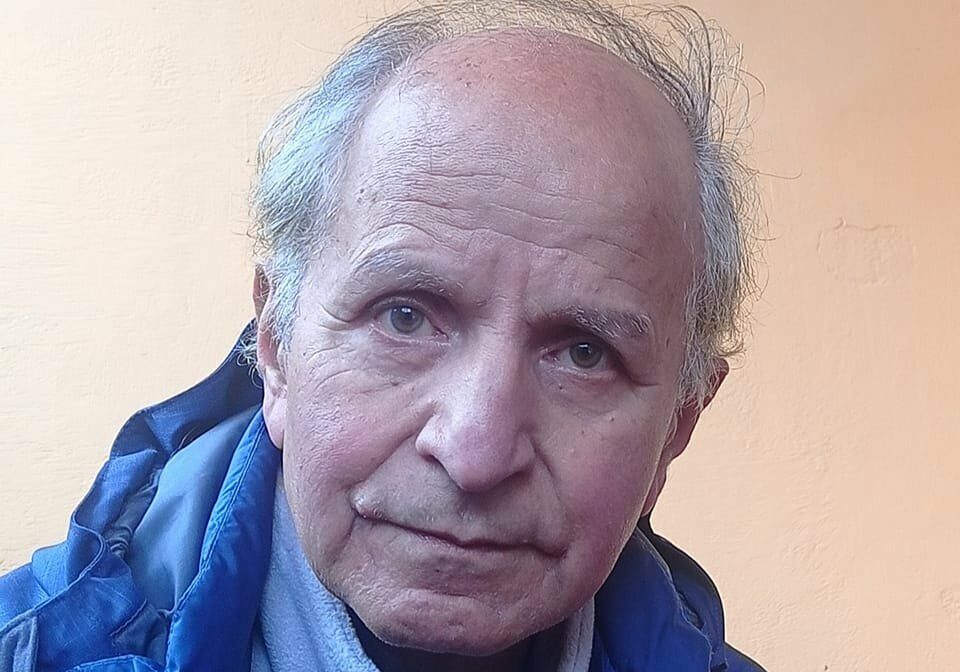
Shafi Shauq (Kashmiri poet and academic)

Srinagar :

Eminent Kashmiri scholar, poet, linguist and translator Prof Shafi Shauq has been named among the recipients of the Padma Shri Award 2026, India’s fourth-highest civilian honour, in recognition of his outstanding contribution to education and literature. The award places Shauq at the forefront of this year’s honourees from Jammu and Kashmir and Ladakh, marking a major national acknowledgement of his lifelong work in preserving and enriching the Kashmiri language and its literary heritage.

Born in 1950 in Kaprin village of Shopian district, Shafi Shauq is widely regarded as one of the most authoritative voices in Kashmiri studies. Over a distinguished academic career spanning more than three decades at the University of Kashmir, he authored, edited and translated over 100 books across Kashmiri, Urdu, Hindi and English. His seminal works—including Keeshur Lugaat (Kashmiri Dictionary), Keeshryuk Grammar, and Kaeshir Zaban ti Adibuk Tawaariekh (History of the Kashmiri Language and Literature), are considered foundational texts and remain indispensable to scholars, students and researchers.

The Padma Shri citation recognises not only Shauq’s scholarly output but also his role as a cultural custodian who ensured that Kashmir’s rich Sufi, poetic and intellectual traditions reached both national and international audiences. His celebrated series The Best of Kashmiri Literature, featuring iconic mystic-poets such as Lal Ded and Nund Reshi, played a crucial role in preserving and popularising Kashmir’s spiritual and literary canon beyond linguistic boundaries.

Alongside Prof Shafi Shauq, the Government of India has also announced Brij Lal Bhat (Social Work, Jammu and Kashmir) and Dr Padma Gurmeet (Medicine, Ladakh) as Padma Shri awardees for 2026, recognising exemplary service in their respective fields. However, Shauq’s inclusion has drawn particular attention in literary and academic circles, being seen as a long-overdue national honour for a scholar who devoted his life to safeguarding the linguistic soul of Kashmir.

Social worker Brij Lal Bhat has been conferred the Padma Shri 2026 for his sustained and wide-ranging contributions to social service. Known for his grassroots engagement, Bhat has worked extensively to strengthen spiritual and community institutions through yoga shiksha shivirs, spiritual retreats and Bhandara Seva. He has actively promoted social cohesion and communal harmony by organising inclusive festivals and community programmes, while also contributing to rural development by reclaiming barren land for apple and walnut orchards. His work is widely recognised for combining social service with spiritual outreach and environmental stewardship.

In addition to Shauq and Bhat, Dr Padma Gurmeet of Ladakh has been named a Padma Shri awardee in the field of medicine, underscoring the diverse range of contributions from the region honoured in 2026.

source: http://www.kashmirlife.net / Kashmir Life / Home> Kashmir Latest News / by KL News Network / January 25th, 2026
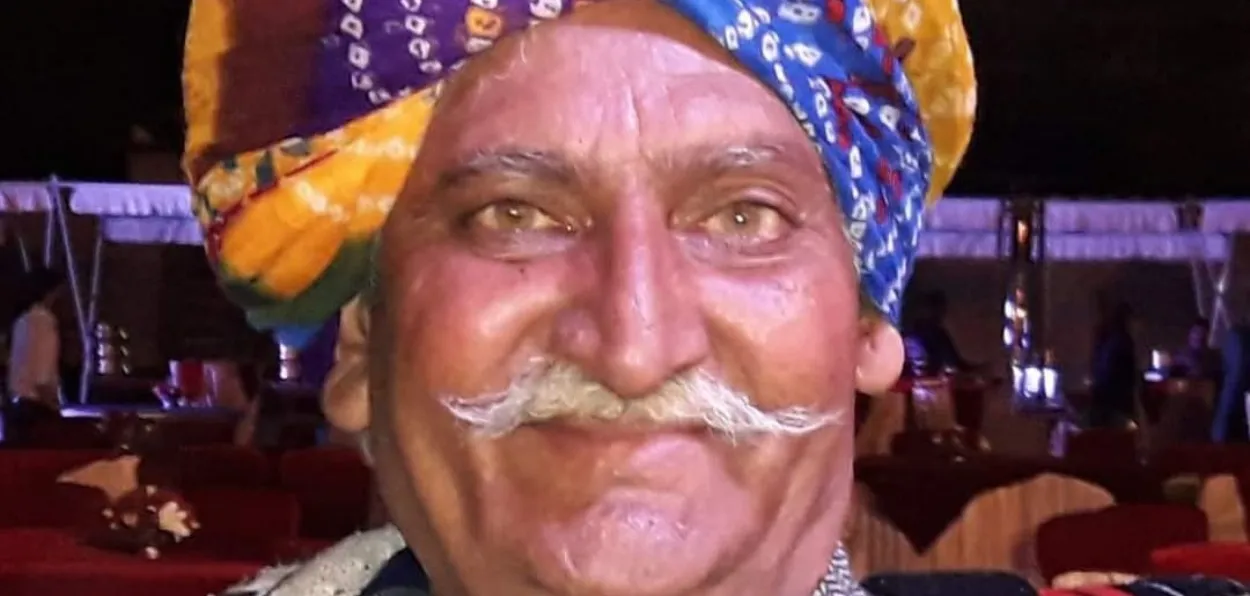
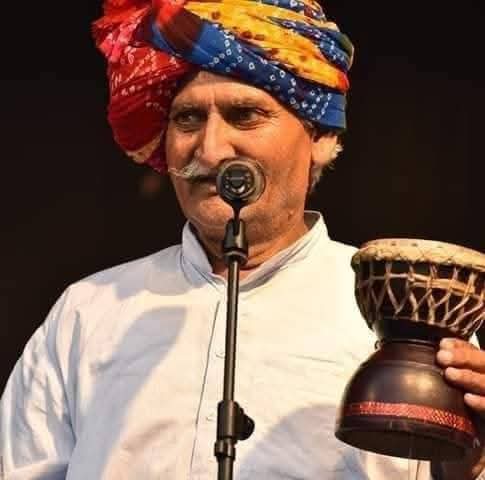
I received my wages for hard work of decades: Ghafruddin on Padma Shri

Alwar, RAJASTHAN :

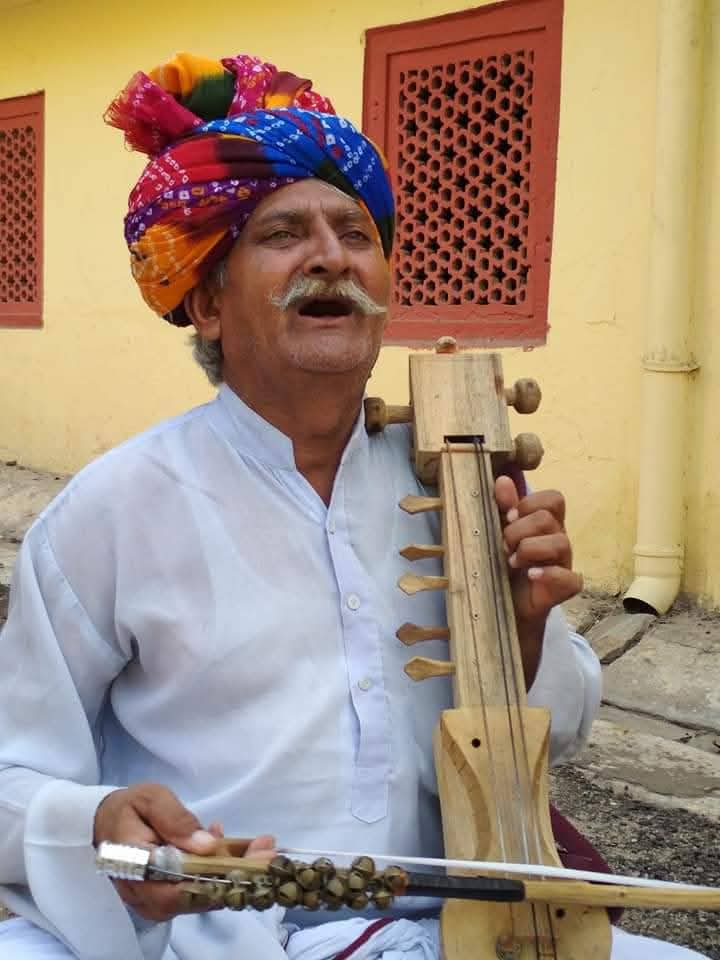
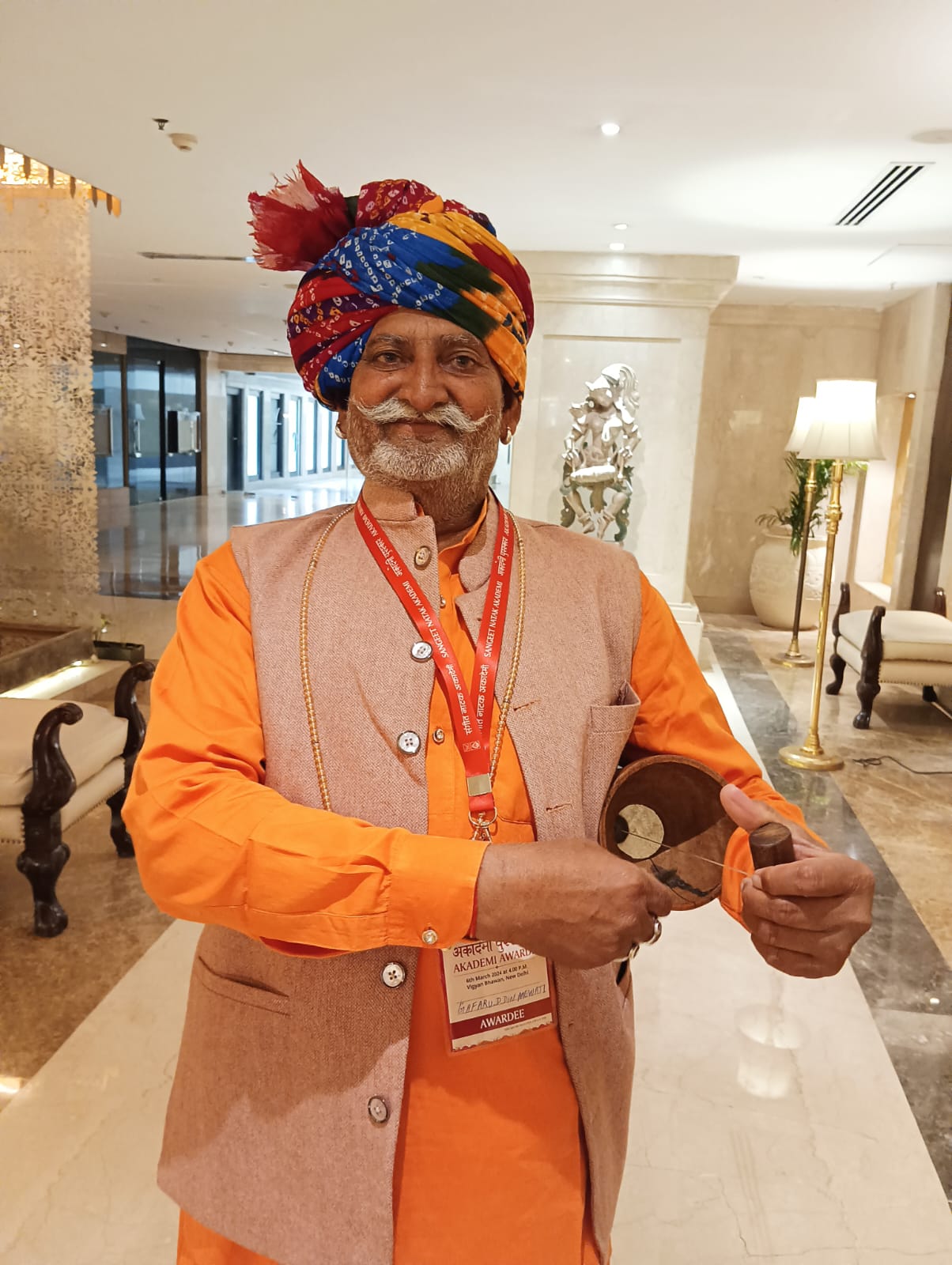
Gafaruddin Jogi Mewati

My joy is like that of a labourer who goes to work in the morning and receives his wages the same evening,” said Ghafruddin Jogi Mewati, a traditional singer, who has been selected for this year’s Padam Shri award by the government of India.  

Ghaffaruddin, 68, has showcased his art for more than half a century, from the rugged lanes of Mewat to the seven seas. As soon as the announcement of the coveted award poured in, Ghafruddin, a resident of Alwar, was overwhelmed with emotion.

Memories of him wandering barefoot through the villages of Mewat, playing the bhapang (A traditional string instrument) and begging for flour, flashed in his mind. Today, he feels that he has received the wages for all that hard work he did to keep a traditional art form alive.

He feels the Padam Shri is not just an honour for an individual, but for the centuries-old Mewati culture, the legacy of the Jogi community, and the rhythm of the bhapang, which is on the verge of extinction.

The Mewat region, which straddles the borders of Haryana and Rajasthan, possesses a unique identity as a syncretic culture.

Here, the Jogi community, who are Muslims, has, for generations, sung episodes from the Mahabharata and other folk tales.

#WATCH | Folk artist Gafruddin Mewati Jogi, awarded the Padma Shri in the field of art, said the honour marks the culmination of a lifelong struggle.


He recalled learning and preserving the art by travelling with his father, passing it on to others, and continuing the… pic.twitter.com/xiYDWTOqSQ— DD News (@DDNewslive) January 26, 2026

Ghafruddin is one of the strongest exponents of this tradition. He says, “Stay connected to your language, culture, and folk art; that is our true identity.” For him, this honour is a debt he owes to the soil of Mewat, which nurtured him during his days of struggle.

Born in Kaithwara village in the Deeg district of Rajasthan, Ghafruddin’s childhood was no less dramatic than a film script. His father, the late Budh Singh Jogi, was an accomplished artist. At the tender age of four, when children usually play with toys, his father placed a ‘bhapang’ in Ghaffaruddin’s hands.

The Bhapang, which resembles a small drum but has a single string, is considered an evolved form of Lord Shiva’s damru (a small hourglass-shaped drum). Playing it requires an extraordinary coordination of abdominal muscles, fingers, and vocal rhythm.

As a child, he learned by travelling from village to village with his father, sitting in village squares, and listening to folk tales.

They had to beg for grain and flour in villages to support the family. Those were difficult days, but the rhythm of the Bhapang never let him lose hope.

The most significant aspect of Gafruddin Jogi’s art is his rendition of the Mahabharata. Remarkably, a Muslim artist sings the epic of Lord Krishna and the Pandavas with such devotion and purity that the listener is completely captivated. Alwar and the surrounding areas are historically linked to ‘Viratnagar,’ where the Pandavas spent their period of exile.

When Gaffaruddin narrates these folk tales in the Mewati dialect, history comes alive. His art has proven that music and culture know no religious boundaries.

The year1992 marked a major turning point in his life. He travelled abroad and performed for the first time. There has been no looking back since then.

He carried the sound of Bhapang to over 60 countries, including England, Australia, Canada, France, and Dubai. When he played Mewati folk tunes at an event celebrating Queen Elizabeth’s birthday in London, even the foreign audience was captivated by the magical rhythm.

When the call on his mobile came, he initially thought someone was playing a prank on him, but when the news was confirmed, he was emotional. He dedicated the award to the Mewat region and the Jogi community.

#WATCH | Alwar, Rajasthan: On being conferred with the Padma Shri 2026 in the field of art, folk artist Gafruddin Mewati Jogi says, “I am very happy that the struggle of my life has finally yielded results, and I have received this recognition… For seven years, I went from… pic.twitter.com/66UQBRb4W5

— ANI (@ANI) January 25, 2026

Today, the eighth generation of his family is carrying on this art form. His son, Dr Shahrukh Khan Mewati Jogi, has not only learned music but also earned a PhD on the culture of Mewat. While many traditional art forms are fading away, Ghaffaruddin’s family is keeping this flame alive.

Ghafruddin Jogi Mewati wants to open a school for folk arts. He wants the government to provide him with land where he can teach the new generation the art of playing the Bhapang, Mewati folk singing, and their traditional stories.

He says that if the younger generation does not stay connected to its roots, we will lose our identity. He says receiving the Padma Shri is not the destination for him, but the beginning of a journey that he wants to continue until his last breath.

source: http://www.awazthevoice.in / Awaz, The Voice / Home> Stories / by Younus Ali, Alwar / January 28th, 2026

Remembering Ustad Shafaat Ahmed Khan

NEW DELHI :

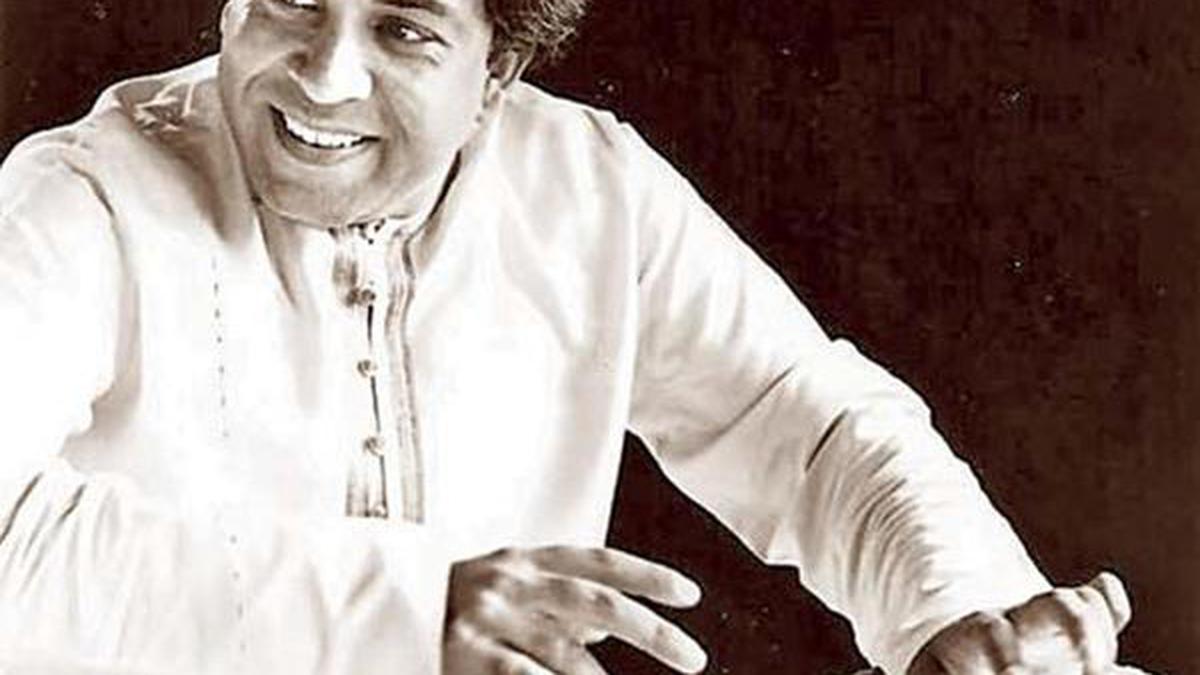
His own beat: Ustad Shafaat Ahmed Khan

Much before I became an admirer of Ustad Zakir Hussain, I was a devoted fan of Ustad Shafaat Ahmed Khan. The reason was simple. Growing up in New Delhi, I had the chance to see the tabla maestro regularly when I was a teenager, often with luminaries like santoor monarch Pandit Shivkumar Sharma, flautist Pandit Hariprasad Chaurasia and sarod maestro Ustad Amjad Ali Khan.

After moving to Mumbai, I continued to attend Khan’s shows, and interacted with him twice as a music journalist. It came as a huge shock when he passed away on July 24, 2005, at the untimely age of 51, after a bout of hepatitis. Among classical music lovers, memories of Khan’s music remains fresh. Coming Wednesday, on his 14th death anniversary, Pancham Nishad is organising a tribute concert at the Veer Savarkar auditorium, Shivaji Park. It will feature vocalist Sanjeev Chimmalgi and tabla maestro Swapan Choudhuri, whose performance was a highlight of the Ustad Allarakha birth centenary celebrations on April 29.

I first heard Khan perform in 1977 when I was 14, at the Shri Ram Centre, New Delhi. He was accompanying Shivkumar Sharma on Raag Bhoopali. It was the first time I heard the santoor and the experience was magical. I didn’t understand the technicalities, but was totally enraptured. Both Sharma and Khan became my heroes. The same show also featured violinist N. Rajam and vocalists Rajan and Sajan Mishra, with different tabla accompanists. So imagine my joy. I told my parents to take me to more concerts, and very often, Khan would perform.

Senior aficionados often talked about Khan representing the Delhi gharana, and Hussain being associated with the Punjab school. It made no difference to me, until I started writing about them. I also had the good fortune of seeing tabla players like Kishen Maharaj, Anindo Chatterjee and Suresh Talwalkar perform.

My first meeting with Khan took place in the early 2000s, when he was to perform at the Gunidas Sangeet Sammelan at Nehru Centre, Worli. While the interview was formal, he was delighted to see an ardent admirer like me. “People normally try to find fault in my technique. You are different,” he had joked. The second encounter was at Sharma’s birthday celebrations in 2004. It was a select gathering of about 25 people. This was where I discovered what a fantastic mimic Khan actually was.

He narrated hilarious incidents about musicians. One of them was about a senior instrumentalist who was yelled at by an elderly foreign lady at the Amsterdam airport because he was humming the notes of Raag Bageshri a tad loudly.

When Sharma pointed out that he was mimicking those not present at the party, prompt came the reply, “If I mimic you, you won’t let me play at your shows. My career will finish,” stated Khan clearly.

source: http://www.thehindu.com / The Hindu / Home> Entertainment> Music / by Narendra Kusnur / July 18th, 2019

PADMA SHRI : Farooq Ahmad Mir’s 60 years of artistry earn Padma Shri

Srinagar, JAMMU & KASHMIR :

Mir was among 139 Padma awardees announced on Saturday, making him one of only two Padma Shri awardees from Jammu and Kashmir this year

Farooq Ahmad Mir’s 60 years of artistry earn Padma Shri

Srinagar :

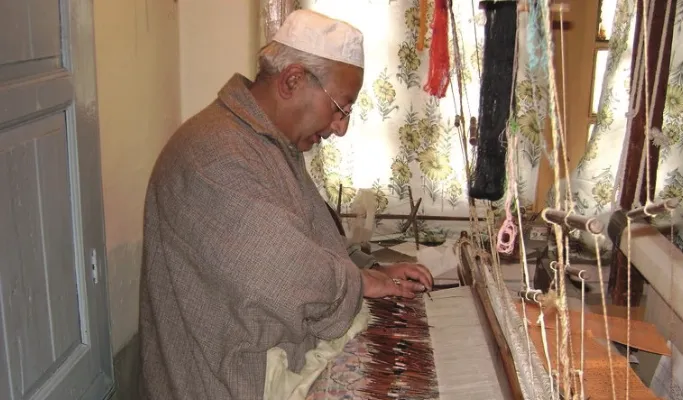
In a heartfelt tribute to the art of craftsmanship, Farooq Ahmad Mir, a master shawl weaver from Srinagar, was conferred the prestigious Padma Shri award on January 25. At 73 years old, Mir embodies the spirit of dedication, having devoted over six decades to a craft that intertwines patience with artistry.

Mir was among 139 Padma awardees announced on Saturday, making him one of only two Padma Shri awardees from Jammu and Kashmir this year.

Starting his journey at the tender age of 10, Mir’s story resonates through generations. “Pashmina artisans require patience, much like education. It teaches us about the intricate nuances of our craft,” he reflects, drawing parallels between learning and weaving. Hailing from a lineage of artisans, Mir has not only preserved but revitalised the Kani shawl tradition, once favored by Mughal, Afghan, Sikh, and Dogra rulers.

Mir’s influence extends beyond his family; he has painstakingly taught the art of Kani shawl weaving to over many individuals in Srinagar’s old city.

“In a world where modern careers are alluring, many aspiring artisans are deterred by societal perceptions and a lack of patience for traditional craft,” he notes. Yet, Mir’s commitment to his heritage has inspired not only his children, skilled weavers in their own right, but countless young men and women in his community.

“Your work should speak for itself,” Mir shares humbly when asked about his relative anonymity in a world that often celebrates flashy accolades over dedication. His contributions, however, haven’t gone unnoticed. He has received multiple national and state awards, including recognition from Prime Minister Narendra Modi himself.

The exquisite Kani shawls, woven using cane needles rather than shuttles, can take between four to eighteen months to create. However, the beauty of this art form is in jeopardy. As younger generations lean towards more modern occupations, the skills required to produce these heirlooms risk fading away. Mir’s tireless efforts aim to ensure this heritage is not lost.

Born into a weaver’s family in Srinagar, Mir’s start was modest. Despite barriers to formal education, he channeled his passion into honing his skills, becoming one of the finest artisans in Kashmir. Alongside his successful weaving career, he managed to educate his siblings and inspire a new wave of artisans dedicated to preserving Kani shawl weaving.

In an age driven by industrialisation, the importance of handmade products is gaining renewed appreciation globally. Mir stands as a pioneer in safeguarding this cultural legacy, instilling pride in his craft and ensuring its continuation across generations. His handcrafted Kani shawls have not only found a place in the hearts of locals but also captured the attention of international clientele, including the Ambani family and major corporations like Tata and Aditya Birla Group.

Farooq Ahmad Mir’s journey exemplifies resilience and dedication. As an unsung hero of the Kani shawl tradition, he reminds us that true artistry thrives in the shadows, waiting for the right moment to emerge into the light.

Director Handicrafts and Handloom, Mussarat Islam in a tweet on social media extended heartfelt congratulations to Farooq Ahmad Mir on being awarded #PadmaShri 2025 for his significant contributions to Kani Shawl weaving and the preservation of Jammu and Kashmir’s rich cultural heritage.

source: http://www.greaterkashmir.com / Greater Kashmir / Home> Business / by Mukeet Akmali (headline edited) / January 26th, 2025

Seyed Ehtesham Hasnain: scientist who changed the course of TB diagnosis in India

Gaya, BIHAR:

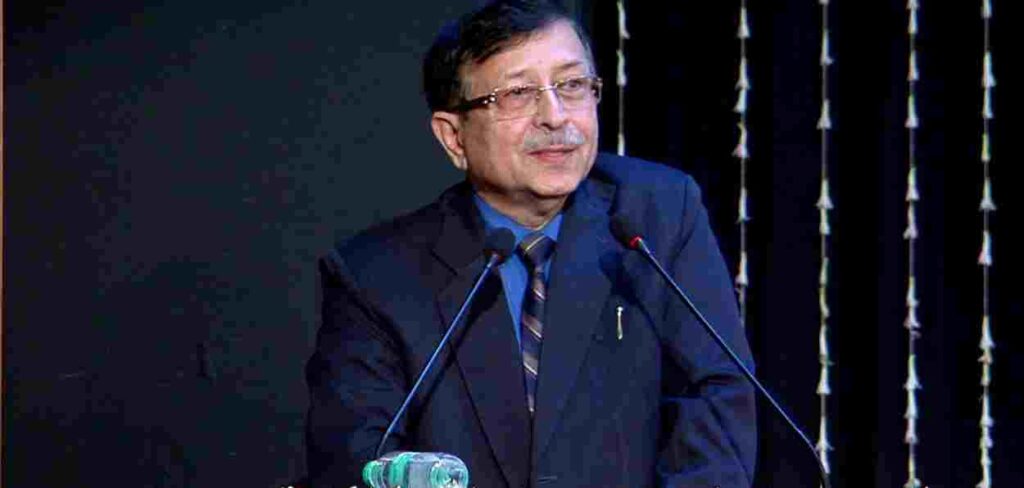
Prof Seyed Ehtesham Hasnain

Prof Seyed Ehtesham Hasnain’s scientific research has changed the complicated regimen for the diagnosis of Drug-Resistant Tuberculosis and the Indian Basmati getting its patent and trademark in the UK in the fight against the Pakistani variant. This Bihar-born scientists’ findings have saved patients suffering from Drug-Resistant TB money and time and helped the Indian government and farmers earn through exports of the Basmati.

He told Awaz-the Voice in an interview that the government of India has taken at least two major policy decisions based on his research. “One decision was that previously the testing of tuberculosis (TB) was based upon antibody-antigen reaction. So, the antibody formed was based on the antigen of a bacterial protein, and the sequence (genetic) used was mostly European or American isolates. 

“When I did sequencing in India, I found out that the Indian variant is completely different. Therefore, the test could give false positives or negatives…. I published this finding and had a meeting with the DG of ICMR (Indian Council for Medical Research) and recommended that the tests based on foreign kits be banned and that made a big impact.” 

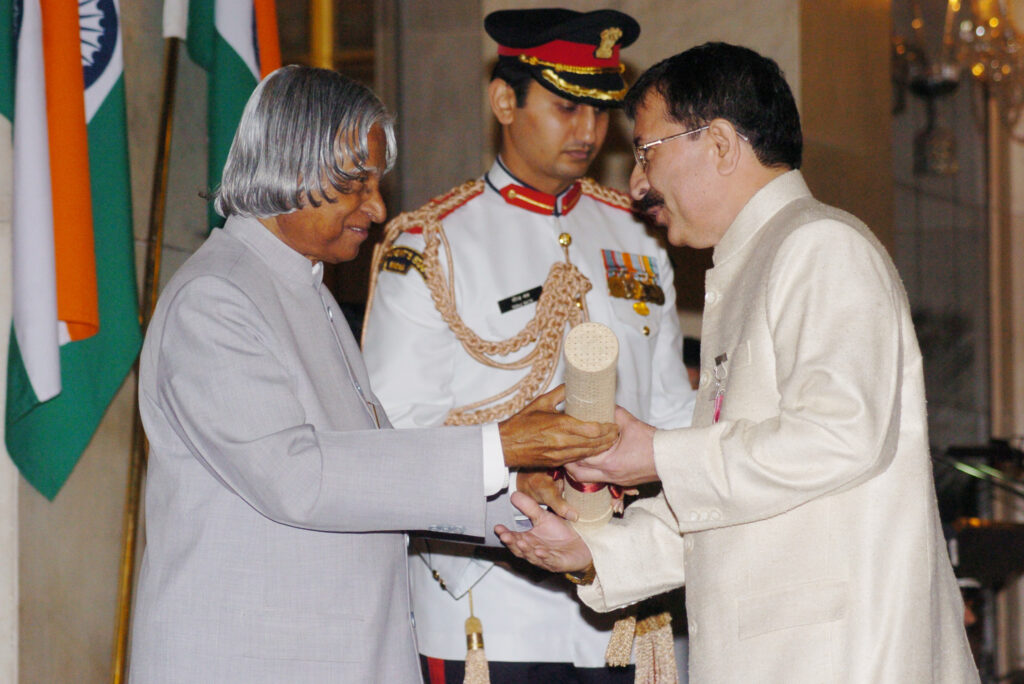
The President, Dr. A.P.J. Abdul Kalam presenting Padma Shri to Prof. Seyed E. Hasnain, renowned biologist, at an Investiture Ceremony at Rashtrapati Bhavan in New Delhi on March 29, 2006.

Padma Shri recipient Seyed Ehtesham Hasnain said. E. Hasnain was awarded the Order of Merit of the Federal Republic of Germany, the highest Civilian decoration of Germany in 2014. Nature, a famous scientific journal, reported on his receiving the award, “With the Order of Merit, he joins the league of outstanding personalities from various fields including Nobel laureate biologist Paul Herman Muller, former German Chancellor Helmut Kohl, former Japanese Prime Minister Yasuhiro Nakasone and music conductor John Crosby.” 

In 2006, he received Padma Shri in recognition of his scientific work. Shanti Swarup Bhatnagar Prize (1995) and J. C. Bose Fellowship (2006), two of the most prestigious Indian Awards in the field of science have also come his way apart from numerous other decorations.

Hasnain was born in Gaya, Bihar in 1954. He was born seven years after India had attained independence. At that time Bihar was not the most developed of the Indian states. Hasnain’s father was a college lecturer and he nursed a dream of studying abroad. He studied at the Nazareth Academy, an expensive school in the town. It’s said that almost 20% of his father’s salary would go into children’s school fees. 

He did his M.Sc. from the Jawaharlal Nehru University in New Delhi. However, though he was selected for his post-graduation studies by Harvard University, for some reason he could not join.

In 1981, Hasnain moved to Canada as a Post-doctoral Fellow (PDF). He worked in Canada and the USA for the next six years. At this stage, his father asked him to return home to serve his country and people. He was advised by many people that he must try to get his green card before moving back to India. 


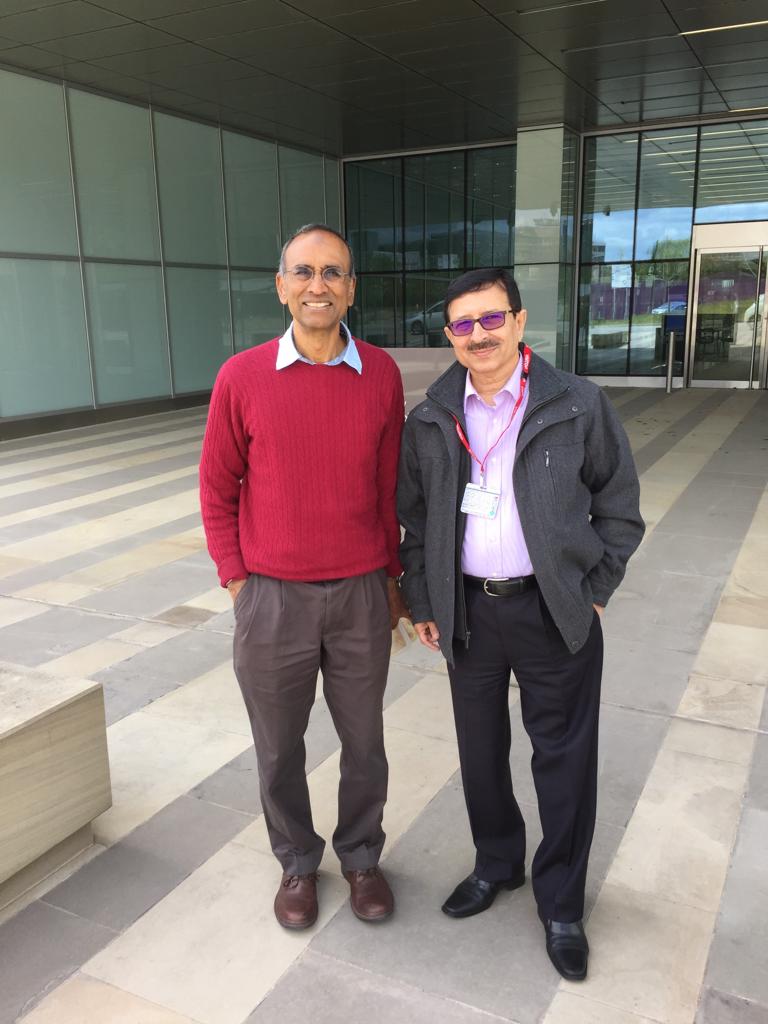
Seyed Ehtesham Hasnain with Dr Venky Ramakrishna, Nobel Prize Winner and President of Royal Society, UK, in Cambridge

In 1987, he joined the National Institute of Immunology (NII) as a scientist. Hasnain says, “I thought that after getting a green card, I would have a fall-back and a plan B. I did not want a plan B. My plan was the only plan A. I will work in India and do something good in India.”

Hasnain broke the convention by not continuing the research he was doing abroad. He started afresh and soon made a name for himself in research of baculoviruses. He established a baculovirus insect cell expression system (BEVS) for the first time in India and used this to express foreign genes and also to ask fundamental questions concerning gene expression in BEVS. The idea was to make India a scientific power.

Hasnain says that when his career was at the peak with research on baculovirus one day, Dr. Sandeep Basu, the then director of NII, asked him, “Seyed, you are publishing in good journals, it is fine, but how does humanity benefit? What is India gaining out of it? How are the common men benefiting from your papers? Doing research is good but do something which will benefit the common man.” 

This was the turning point in Hasnain’s life and career. He says “I decided to do something where I can do direct application.” He started his research on tuberculosis. 

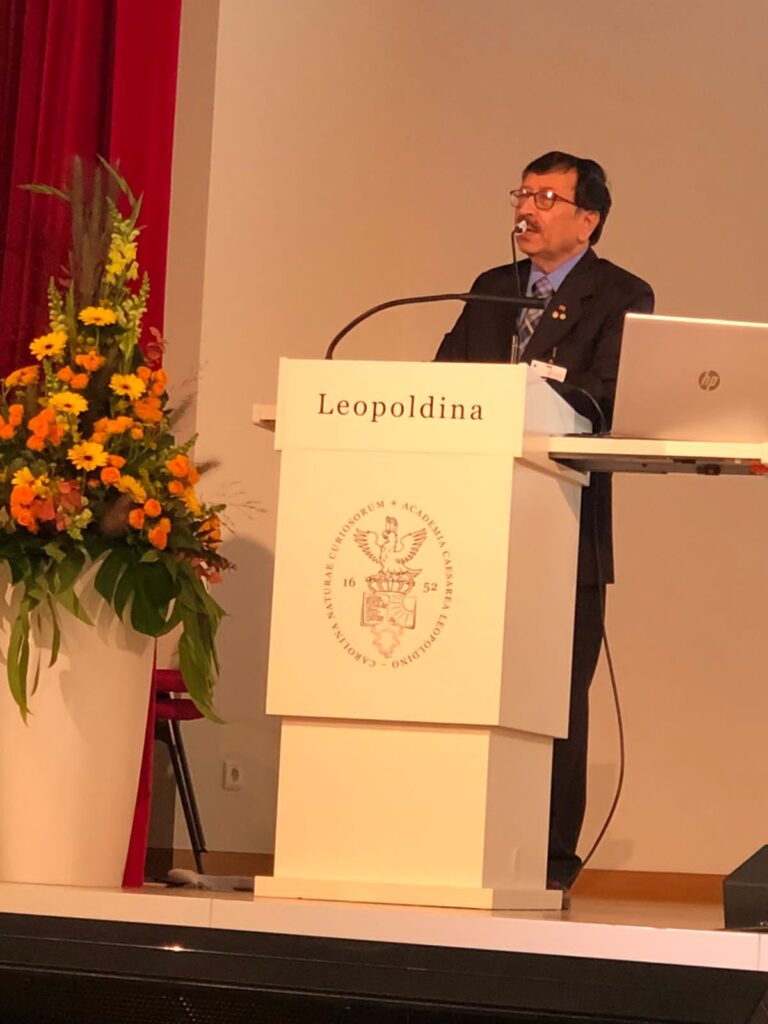
Seyed Ehtesham Hasnain at the Global Health Conference organized by the German National Academy of Sciences, Leopoldina, Halle, Germany

Hasnain initiated studies on molecular epidemiology and genetics of multi-drug resistant (MDR) M. tuberculosis (M.tb). He says, “second important observation that was published, again the first time in the world. We used to test TB for drug resistance. The bacteria was tested against each drug. I showed with my study that if the bacteria are resistant to one drug then it will be resistant to almost all other drugs. I established the correlation and proposed that you don’t need to do multi-drug resistance testing for all the drugs. Just test one drug rifampicin and if it is confirmed then 95%-99% of drugs will be resisted by the bacteria. That has become a standard treatment all over the world. He is still working on developing cheaper methods of diagnosing TB.

In 1999 Hasnain was invited as the first director of the Centre for DNA Fingerprinting and Diagnostics (CDFD), Hyderabad. It was based on his work on Indian Basmati Rice DNA fingerprinting that India won the Patent case against Pakistan enabling the export of the Indian Basmati to the UK. This prevented a major economic loss to India. Subsequently, the Ministry of Commerce established the CDFD-APEDA Basmati DNA Analysis Centre, where all Basmati exports are certified. 

Hasnain also served as Vice Chancellor of the University of Hyderabad (2005-11), and Vice Chancellor of Hamdard University and is currently A National Science Chair of SERB, at the Department of Biochemical Engineering and Biotechnology at IIT-Delhi. 

Hasnain Mantra is: “Nothing is a substitute for hard work.”  

source: http://www.awazthevoice.in / Awaz, The Voice / Home> Story / by Saquib Salim / November 03rd, 2023