Tag Archives: Positive News of Muslim Women of Bihar

Tania Parveen’s journey from village transformer to special invitee to R-Day Parade

Siswa Purvi Panchayat (East Champaran District), BIHAR :
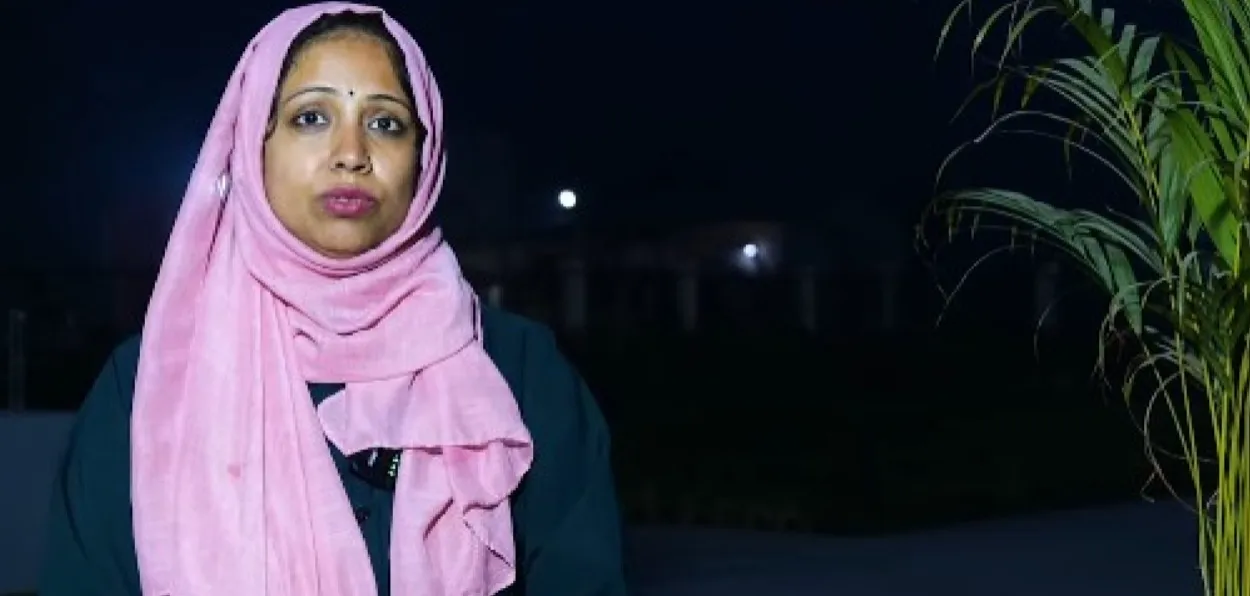
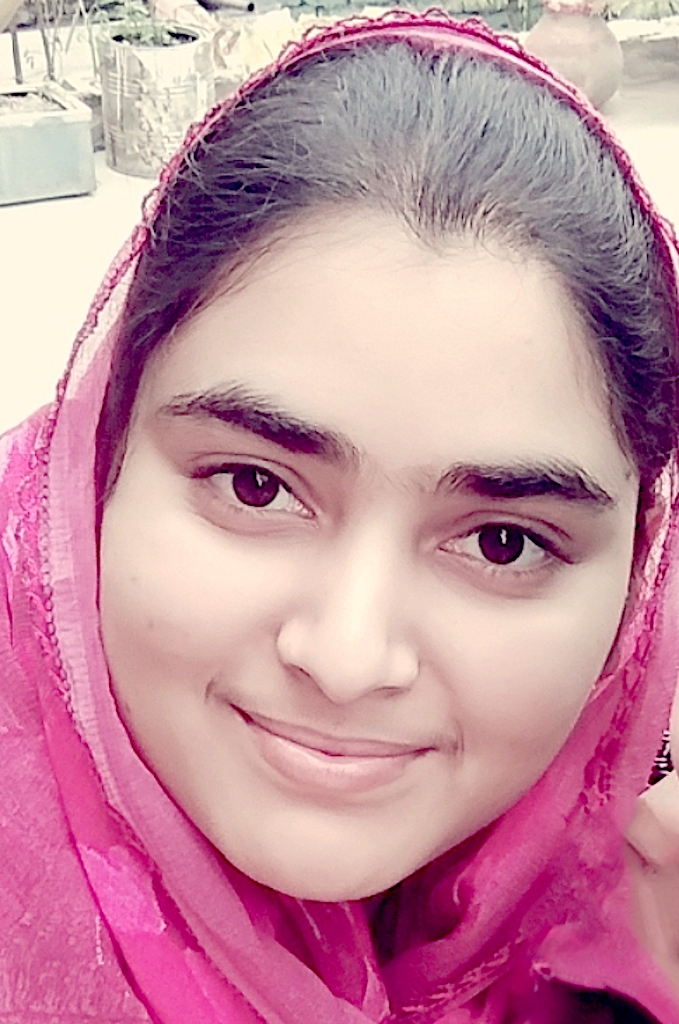
Tania Parveen, Sarpanch of Siswa Purvi Panchayat in Bihar

Tania Parveen, head of the Siswa Purvi Panchayat in East Champaran district of Bihar, will be seated among the special invitees of the President of India to witness the ceremonial Republic Day Parade in Delhi on Monday.

Tania, an engineering graduate, is among the guests of honour at the 77th Republic Day Parade due to her work in transforming her village through her vision and work as an elected head of the Panchayat.

Today, the Siswa Purvi Panchayat is a model for the rest of the country and a living proof that villages too can have amenities enjoyed by people in cities.

Tania Parveen left her government job to take up the leadership of her village. She contested the Panchayat election with a clear idea that this position could help her in changing the poor living conditions of her village.

Her trigger for giving up a well-paying and stable government job was the air pollution caused by sugar mills. Taniya has been the head of the village Panchayat since 2016.
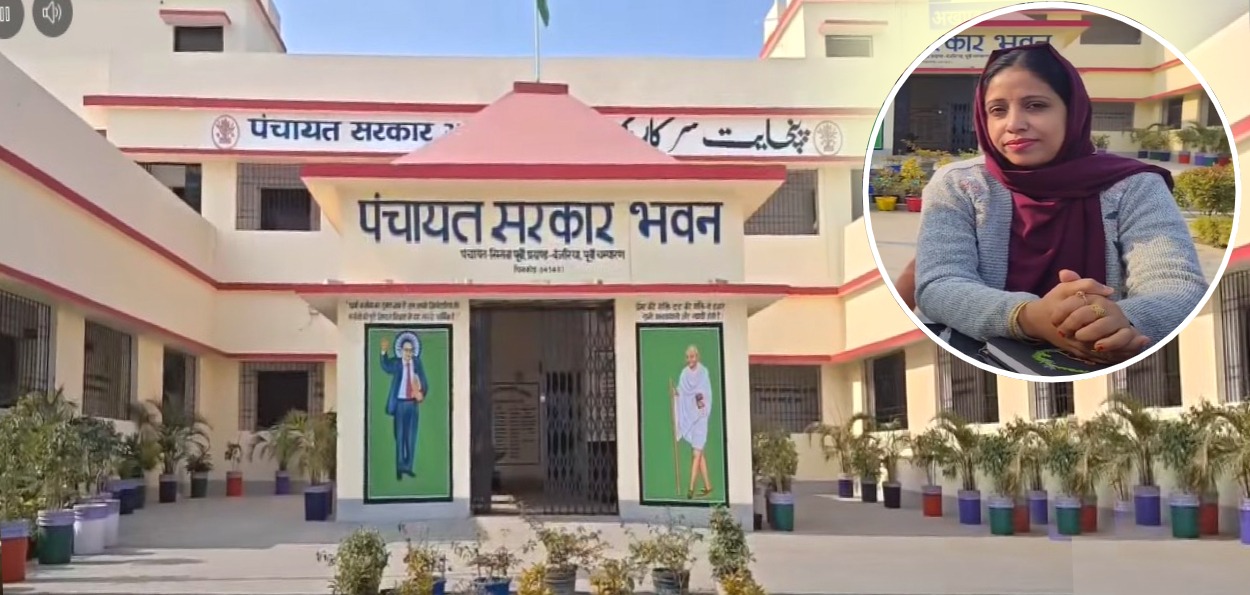
Panchatay Office of Siswa Purvi, Bihar 

The Panchayat has about 48 per cent of the Muslim population. She recalls that earlier, girls in the village showed little interest in education. Today, the situation has changed, with girls eagerly preparing to go to school.

When Taniya took charge, she had a lot of problems to tackle. Child labour, the trend of early marriages and the violence against women were immediate issues demanding her attention.

During the COVID period, she had to dispel rumours and misconceptions about the disease and its treatment. People were afraid of taking vaccines and tried to avoid quarantine. Through her strong leadership, Tania Parveen created awareness, and gradually, villagers began following the protocols.

The invite to Taniya is under the Central Government’s Panchayat Empowerment Scheme, which honours the outstanding panchayat representatives from across the country.

Tania Parveen became Mukhiya at the age of just 32 and, within the last three years, has transformed Siswa Purvi from a backward area into a model gram panchayat. Even former sarpanch Faizal Rahman, 50, openly praises her work and leadership.
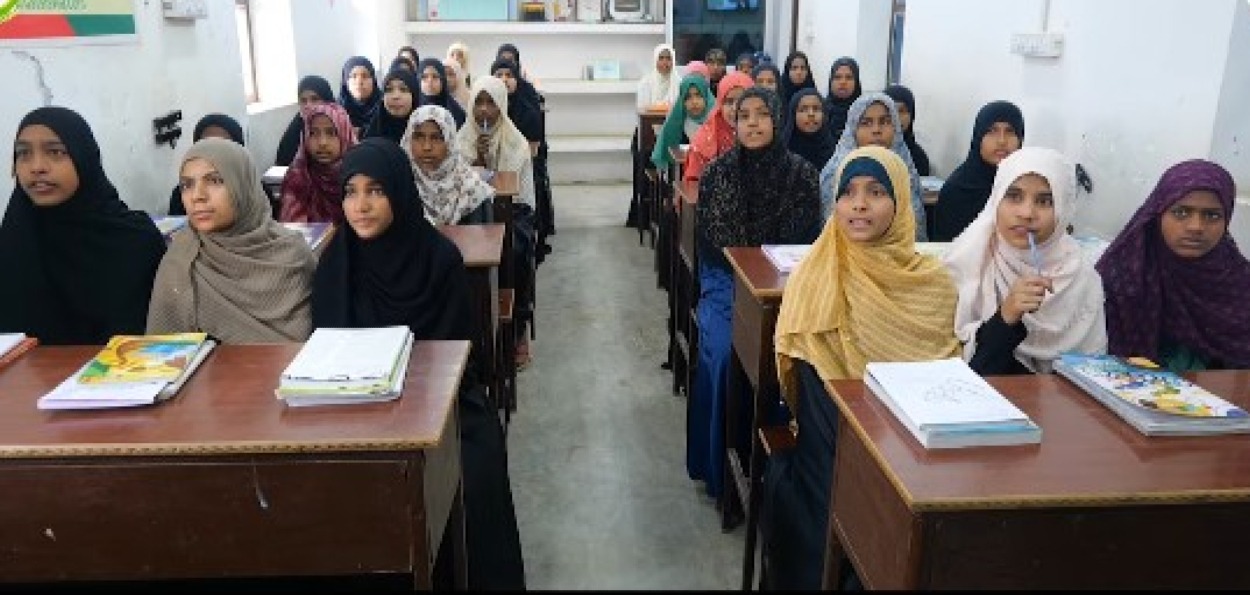
Girls attending school in Siswa Purvi village

Her focus is on health, employment, education and empowerment of women in the panchayat.

Her efforts showed significant improvements in the health sector. Regular health check-ups are conducted for the elderly, pregnant women, and girls. ASHA workers go door to door to fulfil their responsibilities. Women are encouraged to join schemes such as MGNREGA, PM Vishwakarma Yojana, and Jeevika to make them earn.

Tania introduced smart classes and computers in schools, and paid attention to high dropouts among girls. After the Beti Bachao Beti Padhao campaign, girls developed a strong interest in education. With the installation of streetlights, women feel safer even at night.

Tania Parveen says that when she became Mukhiya in 2016, the condition of the panchayat was poor. Roads had potholes, drains were clogged, and sanitation systems were weak.

Today, Siswa has better roads, organised drainage, proper water disposal, and improved cleanliness.

She injected transparency in the spending and ended a culture of bribery and commissions in public works. She says her vision was to bring the basic amenities in her village to the level of a city.

An RTPS counter has now been set up at the Siswa Panchayat Sarkar Bhavan, where birth certificates, death certificates, pensions, residence certificates, caste and income documents are issued. Every day, 20 to 35 people come to get their work done without needing to visit the block office. Led by Tania, all employees attend regularly.

Tania Parveen is now working towards setting up a women-friendly panchayat. She believes that women will become strong only when they have self-employment opportunities. She has plans for conducting tailoring, computer training, and martial arts classes to make women and girls self-reliant and confident.

Asking her peers across the country to adopt honesty as the best policy, Tania says, when a panchayat changes, society will change. Then cities will change, and eventually, Bihar will change. Panchayat development, she says, is true national development.

She also notes that women’s participation has increased significantly in social security schemes such as pension schemes, ration schemes, housing schemes, and the “toilet in every home” initiative.

The construction of the Panchayat Sarkar Bhavan has also been completed in her village.

Tania Parveen is not ready to sit on her laurels. She is working towards creating newer employment opportunities, strengthening women’s education, and digitising the panchayat system. “If panchayats are to be made dignified and strong, it is essential to provide women with equal opportunities and full respect,” she says.

source: http://www.awazthevoice.in / Awaz, The Voice / Home> Stories / by Mansooruddin Faridi, New Delhi / January 25th, 2026
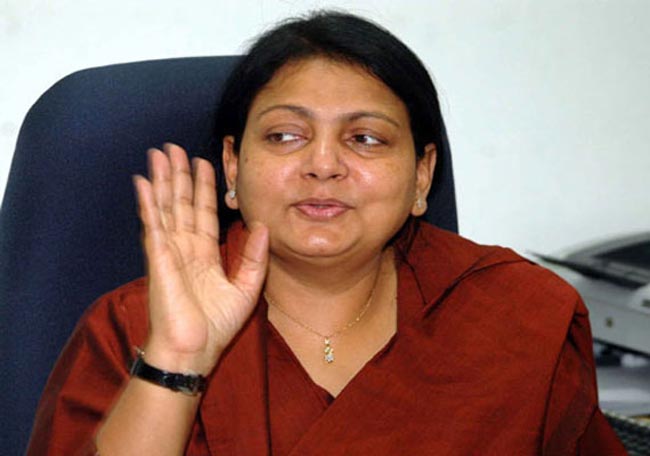

Former Bihar Minister Parveen Amanullah passes away

BIHAR :

Social activist and Former Bihar Minister Parveen Amanullah passed away today in New Delhi. She was suffering from cancer for some time.

The family had moved from Patna to Delhi for treatment. She also went to America for treatment and recovered from there. Her health had deteriorated for two-three days. she passed away today at seven PM.

Amanullah was the daughter of former Kishanganj MP Syed Shahabuddin and the wife of senior Bihar cadre IAS officer Afzal Amanullah.

Before entering politics she was known for her activism, especially in regard to her use of the Right to Information Act, 2005 to bring out the apathy prevalent in government institutions.

Amanullah was elected as a member of the Bihar Legislative Assembly in 2010 from the Sahebpur Kamal constituency in Begusarai district as a candidate of the Janata Dal (United) after defeating Rashtriya Janata Dal’s Shreenarayan Yadav.

She became the Social Welfare minister of Bihar in Nitish Kumar’s government and held the portfolio until February 2014 when she resigned from JD(U) citing “governance issues” and “lack of work satisfaction”. She joined Arvind Kejriwal’s Aam Aadmi Party two days later.

source: http://www.theindianawaaz.com / The Indian Awaaz / Home> Quami Awaaz / by Indian Awaaz / October 01st, 2023

Taiyba Afroz: The Muslim girl from Bihar can fly planes

Saran District, BIHAR :

Taiyba Afroz

Taiyba Afroz created history by becoming a commercial pilot. The Muslim girl hails from a modest family. Her father Motiul Haq runs a ration shop in the Madhoura locality in the Saran district of Bihar and her mother Samsun Nisha is a homemaker.

Despite such challenges, Taiyaba remained determined to achieve her dream of becoming a commercial pilot. Her journey began in 2019 when she joined the Government Aviation Training Institute in Bhubaneswar. There she logged 200 grueling flight hours, battling storms, monsoons, and self-doubt.

Taiyaba’s training was marathon-2-3 years of theory exams (scoring 70%+ in DGCA papers), simulator drills, and mastering the art of safe landings.

“Flying solo for 100 hours was terrifying but fear never griped my mind,” she recalls.

Later, in 2023, she completed 120 hours of training at Indore Flying Club. After all this, Taiyaba finally obtained her license from the DDCA. She was certified to become a commercial pilot and can fly any commercial plane.

As a Muslim woman in a crisp pilot’s uniform, Taiyaba faced catcalls: “Shouldn’t she be in a Burqa?” To this, she retorts: “The cockpit has no dress code. The aircraft doesn’t care about your surname.”

A pilot’s salary starts at ₹1.5 lakh,” but that’s not the trophy, Taiyaba aimed to achieve. Her real achievement is being a Muslim girl, coming from a backward region of Bihar, hailing from a weak financial family; she endured all these odds and has come out with flying colors. Her message is; “Look at this Muslim girl, she can fly planes.”

Taiba Afroz is not just a pilot; she’s a beacon for every Muslim girl who is told to shrink their dreams. Her success story is a matter of pride as she inspires many young Muslim girls to follow her career path. She is a role model for them.

Taiyaba’s achievement testifies that with perseverance and determination, any goal can be achieved.

Her story screams that; the sky is not the limit, it’s the beginning.

Syed Ali Mujtaba is a journalist. He can be contacted at syedalimujtaba2007@gmail.com

source: http://www.muslimmirror.com / Muslim Mirror / Home> Positive Story / by Muslim Mirror Network / March 05th, 2025

Where guns used to roar earlier, now ‘Shafqat Aamna’ has become an IAS

Adhakparia Village (East Champaran District), BIHAR :

Motihari: 

A village in East Champaran which was infamous for guns being pulled out on trivial matters and for fights, the village where last year a sarpanch was not only strangled by fearless criminals but also shot dead, now this same village will be known for the stories of Shafqat Amna becoming an IAS.  

Shafqat Amna, daughter of retired teacher Mohammad Zafir Alam of Adhakparia village of East Champaran, has not only brought glory to her family by securing 186th rank in the UPSC Civil Services exam, but has also shown a path to lakhs of Muslim girls with the light of education. 

The whole village is rejoicing at Shafqat’s success. 65-year-old Zafir is not tired of thanking people for this success. 

In an exclusive conversation with BeyondHeadlines, Zafir Alam says, ‘We would like my daughter to work as an honest servant. She should strive for peace and prosperity in the society. And most importantly, she should take today’s new generation forward in the field of education.’

Let us tell you that Zafir Alam has retired as a teacher from an Urdu middle school in Agarwa village near Motihari. 

24-year-old Shafqat Amna says in an exclusive interview with BeyondHeadlines that the backwardness of the village and the lack of infrastructure always bothered me. That is why since childhood I wanted to live among the people and do something for them so that I could change their thinking and circumstances. My father, sensing this desire of mine, inspired me to join the civil service. 

Aamna says that my first choice is IAS and I am hopeful that I will definitely get IAS Insha Allah. 

When asked what will you do first after becoming an IAS? 

In response to this question, Aamna says that my first effort will be that whichever district I go to, I will first try to focus on education in the village. Since my father was a teacher, I understand the politics of teachers very well. I will inspire them to teach children honestly, away from that politics.  

What if I get IPS instead of IAS? 

On this question, Aamna pauses for a while and then after thinking says – I am hopeful that I will get IAS and I have not thought of anything else apart from this. But still if I get IPS instead of IAS then first of all I will pay special attention to law and order. I will try to maintain communal harmony in my district at all costs. I will try my best that there is never any fight or quarrel in my district, there is always mutual harmony.

When asked about preparing for civil services, Aamna says that, I would definitely like to tell those who want to join civil services that they should not start preparing for it suddenly, but first understand the syllabus well. If possible, try to take guidance from an IAS or IPS. Then start preparing for it thoughtfully with full courage and passion. Try to study smartly instead of studying like donkeys.

However, she also says that everyone’s way of preparing is different. The positive thing for me was that I had read NCERT books properly in school itself. So all the concepts were clear. I studied Geography very well in graduation as well. And yes, during my entire studies, I always had the habit of making short notes. These notes were very useful in my preparation. I paid full attention to its revision. Apart from that, I participated a lot in test series. 

Let us tell you that Shafqat Amna passed 10th from Jawahar Navodaya Vidyalaya in Bettiah, West Champaran. Then she went to Bokaro for 12th, passed 12th from DPS there. After that, circumstances became such that she had to return to the village. Here she got a BA Honors degree in Geography from a college of Bhimrao Ambedkar University in Motihari. After that, she came to Delhi in 2016 to prepare for civil services. Here she prepared by staying in the residential coaching of Jamia Millia Islamia and after failing twice, she succeeded this time in the third attempt.

Apart from her parents, Shafqat Amna’s family also has three sisters and a brother. Her younger sister is pursuing BA LLB from Jamia Millia Islamia. Her two elder sisters have completed B.Ed and are currently living with their mother in the village. 

Aamna says that the situation at home was never good. My father was the only breadwinner in the house. But he never neglected our education. Whatever I am today is because of my father. 

What would you like to say to the girls of the country? 

On this question, Aamna says that I would like to say that it is very important for you to get educated. And never underestimate yourself. Your hard work, your efforts can change your fate. But yes, for success you will have to make your own policy and your own routing. You will have to decide for yourself what things matter in your life…

source: http://www.beyondheadlines.in / Beyond Headlines / Home> India> Real Heroes / by Afroz Alam Sahil, Beyond Headlines / April 06th, 2019

Fasihuddin Balkhi: the forgotten historian of Bihar

Patna, BIHAR :

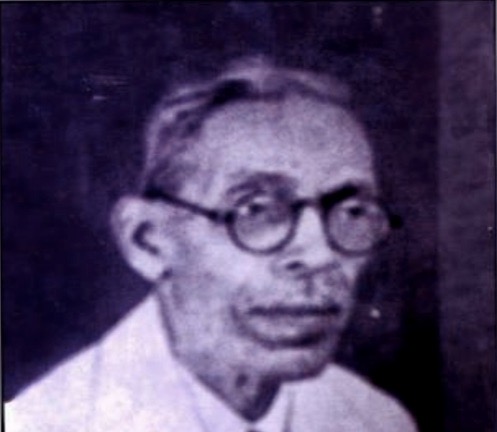
Fasihuddin Balkhi was born in 1885 in Bakshi Mohalla of Patna city. | Picture: Rekhta

Born in Patna, Bihar during the British era, Fasihuddin Balkhi made a tremendous contribution to history-writing in Urdu. Despite this feat, he remains largely unknown to this day. 

Many historians have written about the history of Bihar. After taking a cursory overview of the works written by different scholars, one finds that history writing on Bihar, especially in the Urdu language has not yet received due attention in academic circles. Among many others who have written on Bihar and its history, the notable ones include Fasihuddin Balkhi (1885-1962); Taqi Rahim (1921-99); and Shad Azimabadi (1901-1978).

This piece is an attempt to highlight the life and works of Fasihuddin Balkhi. His work has received scant attention from those working in the Bihar region. His contribution remains largely under-acknowledged and under-explored in the existing literature of the Bihar province.   

Balkhi was born in 1885, the same year that the Indian National Congress (INC) was founded, in Bakshi Mohalla of Patna city. After receiving his early education at home, he went to Calcutta where he completed his higher education. He became a teacher and initially taught at Poona Military School and later in Calcutta Fort William. Later on, he passed the law examination and was employed in the Bihar government. In 1914, he opted for military service which enabled him to visit different parts of the world like Palestine, Egypt, Iraq and Lebanon. 

As India’s independence movement was drawing more followers, Balkhi too joined the movement. In 1921, he became part of the non-cooperation movement. After refusing to accept the post of deputy in Jaunpur, he had to face many hardships. Between 1926-27 he worked as the revenue officer and magistrate in Sarai Kela state.

After retirement, he left his ancestral home and lived the rest of his life till 1962 in his new house in Guzri Bazar Patna city (just behind the present Mohammedan Anglo Arabic school). In the last two years of his life, he worked at Patna University in the department of manuscripts. His hardworking and organizational abilities infused a new spirit in the department. 

Although Balkhi was known as a good teacher and a successful officer, he was primarily a historian and researcher, as he stepped into some areas of research that were hitherto almost invisible. Even the noted Bihar-based historian, Syed Hasan Askari (1901-1990) has acknowledged Balkhi’s scholarly and literary abilities. Unfortunately, most of the works of Balkhi could not reach their desired audience. Some of his works remain unpublished even now.  

Balkhi’s first book Tarikh-e-Magadh was published by Anjuman-e-Taraqqi-Urdu-Hind (Delhi) in 1944. The second book, Tazkira, was published as Tazkira-e-Niswane Hind (1956).

According to one source, he wrote his first work at the age of 25 in 1910 in Urdu on astrology, a rare case in Urdu, titled as Ilmi-e-Najoom. This work is not easily available or accessible to the readers. A pamphlet on the poetry of Shad Azimabadi titled as Inshad-e-Shad (Qaumi Press Bankipore, Patna, 1939) is his signature piece. The pamphlet demonstrates his power of critique. 

Balkhi’s work only gained wider attention after his death. Well-known Urdu publisher Nadeem Bhatti published one of Balkhi’s works Tazkira-e-Hindu Shora-e-Bihar (Poets in Bihar/Urdu) in 1962. Some of Balkhi’s unpublished works such as Dastur-e-Sukhan, a collection of his works on historical places of Bihar province, Aasar-e-Balkhiya, are collected in the book. Several of his scholarly, literary and historical articles are also available in different magazines and journals. A well-researched article on Balkhi’s personality and research guidance was written by Qayyum Khazar for ‘All India Radio Patna.’ Khazar states that “Fasihuddin Balkhi was a great historian and researcher as well as a good poet.”  

Balkhi’s work as historian
Tarikh-e-Magadh is the first book that earned Balkhi fame as a historian. This seminal work in Urdu was published in 1944 by Anjuman Taraqqi Urdu (Delhi), which was then under the supervision of Maulvi Abdul Haq (Baab-e-Urdu). The book chronicles the history of Bihar province from the earliest times (642 BC) up to the second World War in 1943. The book contains as many as twenty chapters. The book is considered one of the most reliable accounts of the history of Bihar in the Urdu language. The work was constructed from authentic historical sources. 

Patna-based historian Imtiaz Ahmad, commenting on the significance of Tarikh-e-Magadh, has said, “It is written authentically and professionally, with proper references from sources (Persian texts).” 

Balkhi also wrote another significant work entitled Wahabi Movement, posthumously published in 1983. This book along with Qeyamuddin Ahmad’s seminal work The Wahhabi Movement in India (1966, reprinted 1994) are the most cited works on the history and role of the Wahhabi movement in India.

Balki’s slim book, despite being confined to the Bihar region, is distinctive in many new ways. The sources he cited are primary and useful, such as letters of Syed Ahmad Shah, Calcutta Review, Indian Muslim by Wilson Hunter, Tazkira-e Sadiqa and biographies of Syed Ismail and Syed Ahmad, the founding fathers of the movement in India.

Emphasizing the legacy left behind by the Wahhabi movement, Balkhi writes, “It is highly interesting to note that the use of three great weapons, namely, non-cooperation, passive resistance and establishing of parallel Govt. which the Congress leaders adopted in their fight against the bureaucracy, was originally advocated and preached by the Wahhabis in 1854.” (p. 16).

Apart from these historical accounts, Balkhi wrote another path-breaking book Tazkirah Niswan-e-Hind (1956) in which he documents the short biographical accounts of the notable women of India. He starts his book with Raziya Sultan of the early 13th century and covers the women from various fields across India such as Askari Begum ‘Hijab’ (Lucknow), Chander Mukhi Bose (Bengal), Lal Ded (Kashmir), Raziya Sajjad Zahir (Rajasthan/Bombay), Bibi ‘Tahira’ (Bihar), etc. This book serves as an important source of information on Indian women and their role in different times of history. 

Balkhi has also written about the lesser-known aspects of Bihar. This can be gauged from his book Patna Ke Katbe in Urdu, published by Khuda Bakhsh Library, Patna in 1993. This book is a unique study of inscriptions found on graves, mosques, and tombs located in Patna. 

Balkhi has made a tremendous contribution to writing the history of Bihar in Urdu. His work serves as a guiding light on the lesser known and under-explored aspects of Bihar. His work needs to be revisited and re-assessed to throw light on many ignored dimensions of Bihar history.

Mohd Hussain Ganie is a PhD student at Aligarh Muslim University (AMU). He tweets at  @GanaiHussain1

source: http://www.twocircles.net / TwoCircles.net / Home> Art-Culture / by Mohd Hussain Ganie, TwoCircles.net / August 12th, 2022

Bihar Collective to Release Booklet “Remembering Muslim Makers of Modern Bihar” in Patna on Feb 23

Patna, BIHAR :

Patna :

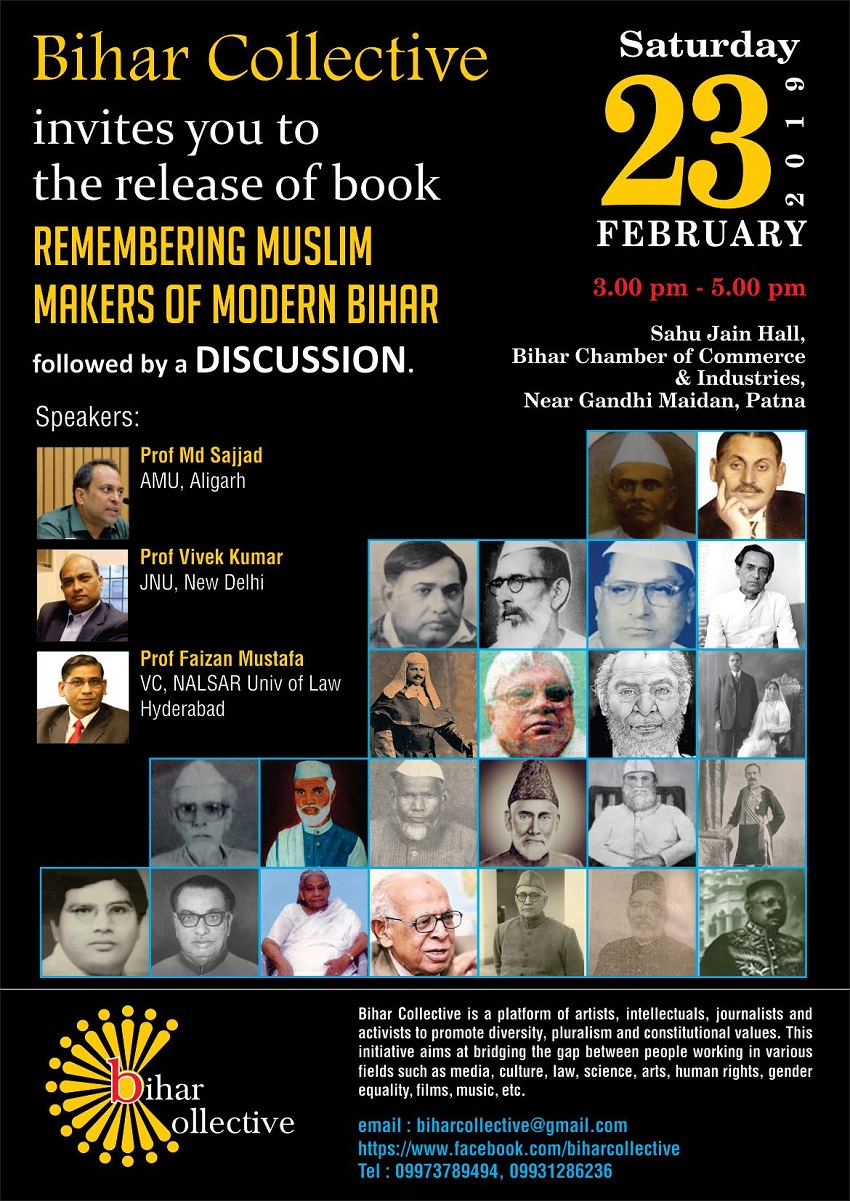
In an era of unprecedented majoritarian ascendance and anti-Muslim hatred, Bihar Collective, a platform of intellectuals and activists, has brought out a booklet highlighting the contribution of eminent Muslims in making the modern Bihar in the last 200 years.

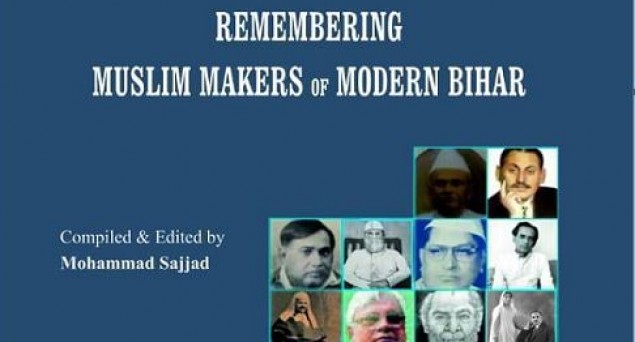
The booklet titled Remembering Muslim Makers of Modern Bihar has been compiled and edited by renowned academician and writer Prof. Mohammad Sajjad on the initiative of Bihar Collective.

The booklet will be released at an event in Patna on Saturday (February 23).

On the occasion, a discussion will also be held with Prof Faizan Mustafa, Vice Chancellor, NALSAR University of Law, Hyderabad; Prof Vivek Kumar, JNU, New Delhi; and Prof Mohammad Sajjad, AMU, Aligarh as panelists.

A Brief about Booklet:


Pre-empting a reasonable question about the title of the booklet, Prof Sajjad, who has compiled and edited it, writes in its preface: “A simple and obvious question that may readily arise is: why only Muslim makers of modern Bihar? Why not others too? This is indeed a valid and pertinent question.”

Responding to the question, he further says: “Candidly put, this is because of an unprecedentedly menacing rise of majoritarianism, bigotry, and anti-Muslim hatred, with open support of the state.

The Muslim identities are ominously threatened. There are also unabated attempts to dilute (or even take away) whatever little accomplishments have been made by the forces of social justice and secularism.

Only the Muslim segment however is threatened by the jingoist, exclusionary, violent nationalists, to be thrown out to another country. As if the other country is a dustbin, owned by these bigots, into which they can throw away everything they dislike! As if only the religious majority constitutes the nation! Notably, these jingoists had aligned with the British and had stayed away from the national movement.”

“Muslim contributions in the nation-making (and in the freedom movement) remain under-acknowledged, forgotten or even omitted. Erasure of their histories and memories seem to have become even more pronounced and vociferous, now, than ever before…The Bihar Collective therefore decided to compile a short profile of these inspiring role models, history-makers…This is small and humble step towards retrieving and restoring the nationalist provincial pantheons bearing Muslim identities,” says Prof Sajjad.

He, however, admits that the list of Muslim heroes of Bihar given in the booklet is not exhaustive as “…many have been left out essentially because of lack of documentations and researches. Not many have left their own accounts/memoirs; the available memoirs/accounts have not written much about all the personalities. In many cases, even otherwise “resourceful” descendants and/or associates of the history-makers have not been able to provide us with adequate (and credible/verifiable) details.”

Prof Sajjad hopes this small exercise may lead to some big academic work on these history-makers. “In short, this kind of venture may be said to be an ongoing exercise. This effort may hope to open up (and obtain) more details about such history-makers and would also get to know about many more of such peoples and processes, we failed to include here in this hastily prepared tiny volume, amidst constraints of resources and time.”

Names of Muslim Makers of Modern Bihar Mentioned in Booklet:
1. Syed Imdad Ali (d.1886]
2. Khuda Bakhsh (1842-1908)
3. Syed Amir Husain (1843-1910)
4. Imdad Imam Asar (1849-1934)
5. Shah Badruddin(1852-??)
6. Syed Ali Bilgrami (1853-1911)
7. Rasheed-un-Nesa (1855-1926)
8. Syed Noorul Huda (1855-1939)
9. Justice Syed Sharfuddin (1856-1921)
10. Shaikh Gulab (1857-1920)
11. Sarfaraz Husain Khan (1860-1931)
12. Maulana Mazharul Haque (1866-1930)
13. Batakh Miyan Ansari (1867-1957)
14. Sir Fakhruddin (1868-1933)
15. Syed Ali Imam (1869-1932)
16. Syed Hasan Imam (1871-1933)
17. Salahuddin Khuda Bakhsh (1875-1931)
18. Shafi Daudi(1875-1949)
19. Khwaja Md. Noor(1875-??)
20. Abdul Wadood (d.1955)
21. Syed Abul Hasan (1878-1960)
22. Sir Sultan Ahmad (1880-1963)
23. Maulana Sajjad (1880-1940)
24. Pir Mohammad Munis (1882-1949)
25. Abdul Bari (1882-1947)
26. Syed Sulaiman Nadvi (1884-1953)
27. Mohammad Yunus (1884-1952)
28. Shah Md. Zubair (1884-1930)
29. Syed Abdul Aziz (1885-1948)
30. Zubaida Begum Daudi (1886-1972)
31. Syed Tafazzul Karim (1886-1964)
32. Mr. Mohammad Shafi (1888-1955)
33. Qazi Ahmad Husain (1889-1961)
34. Dr. Syed Mahmud (1889-1971)
35. Ali Husain Aasim Bihari (1890-1953)
36. Shah Mohammad Umair (1894-1978)
37. Abdul Ahad Mohammad Noor (1894-1975)
38. Hakeem Md. Kabiruddin (1894-1976)
39. Maulana Usman Ghani (1896-1977)
40. Manzoor Ahsan Aijazi (1897-1969)
41. Shah Md Ozair Muni’mi (1899-1961)
42. Maghfur Aijazi (1900-1966)
43. Syed Jafar Imam (1900-1965)
44. Syed Badruddin Ahmad (1901-1983)
45. Mohammad Tahir (1903-???)
46. Syed Jafar Imam (1903-1979)
47. Syed Fida Husain (1904-80)
48. Abdul Qaiyum Ansari (1905-1974)
49. Wajihuddin Minhaji (1907-1984)
50. Syed Md. Aiyub (1910-1964)
51. Abdul Sami Nadvi (1913-????)
52. Abul Hayat Chand (1914-1958)
53. Ahad Fatmi(1915-1980)
54. Zawwar Husain (1916-80)
55. Shafiqullah Ansari (1917-1980)
56. Shah Mushtaq Ahmad (1917-2002)
57. Abdul Ghafoor (1918-2004)
58. Col. Mahboob Ahmad (1920-1992)
59. Taqi Raheem (1920-1999)
60. Zahra Daudi(1923-2003)
61. Shakoor Ahmad (1924-1981)
62. Syed Hasan (1924-2016)
63. Yunus Lohia (1925-2019)
64. Ghulam Sarwar (1926-2004)
65. Syed Shahabuddin (1935-2017)

A Brief about Author:


Prof Mohammad Sajjad teaches late-colonial and post-independent Indian history at the Centre for Advanced Study in History, Aligarh Muslim University. He has written several books including Muslim Politics in Bihar: Changing Contours; and Contesting Colonialism and Separatism: Muslims of Muzaffarpur since 1857.

His articles are published in reputed academic journals from Routledge, Sage, EPW etc. and also in anthologies from the Oxford University Press and Cambridge University Press.

Bihar Collective:
It is a platform of artists, intellectuals, journalists and activists to promote diversity, pluralism and constitutional values. It aims at bridging the gap between people working in various fields such as media, culture, law, science, arts, human rights, gender equality, films, music, etc.
Email: biharcollective@gmail.com
Facebook: https://www.facebook.com/biharcollective

source: http://www.indiatomorrow.net / India Tomorrow / Home> Society / by India Tomorrow / February 21st, 2019

Outstanding Students Honoured with Medals for Academic Excellence in Patna

Patna, BIHAR :

Patna :

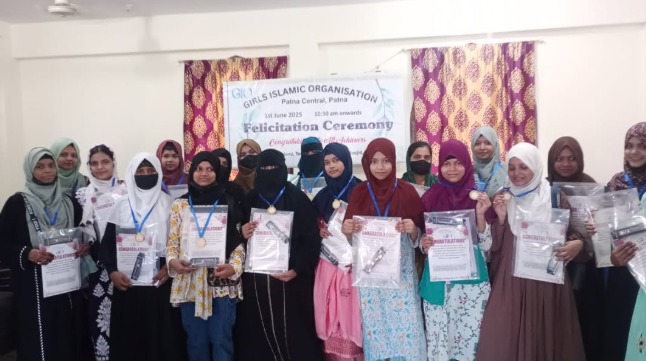
Girls Islamic Organisation (GIO), Sultan Ganj Unit, Patna, organised a felicitation ceremony on Sunday at Markaz-e-Islami, Tekari Road, to honour over 100 meritorious students who secured excellent marks in Class 10 and 12 examinations. The achievers were awarded medals and congratulatory cards in recognition of their academic accomplishments. The event also included guidance sessions to support their future educational journeys.

The chief guest, Mohammad Shehzad from Allied IAS, delivered a comprehensive guidance talk under the theme Care and Guidance, sharing professional and academic opportunities from an Islamic perspective along with practical insights.

Motivational speaker Shazia Ahsan emphasised the value of hard work, self-confidence, and positive thinking in her inspiring speech aimed at empowering the students.

Dr. Zubiesh Firdous, Secretary Women’s Wing Jamaat-e-Islami Hind Bihar, delivered a thought-provoking address on the topic Balancing Deen and Dunya (religion and worldly life). She stressed the need for a harmonious blend of religious and secular education.

Umme Kulsoom, President of GIO Sultan Ganj Unit, introduced the organisation and highlighted its mission of empowering girls and women through education and awareness.

The event was attended by teachers, students, and parents who appreciated the efforts taken by the organisation.

The program began with a spiritual reminder from the Qur’an by Anjum Mukhtar. A soul-stirring na’at (poem in praise of the Prophet ﷺ) was beautifully rendered by Musheerah Fatima, filling the atmosphere with a spiritual essence. Saima Parveen presented an emotionally resonant poem, which was well received by the audience.

The event concluded with closing remarks and a vote of thanks delivered by Shagufta Bano, City Secretary of Patna .

source: http://www.radiancenews.com / Radiance News / Home> Education> Report / by Radiance News Bureau / June 01st, 2025

Book Review: Reclaiming Syncretic Histories – A Journey Through Bihar’s Sufi Landscape

BIHAR :

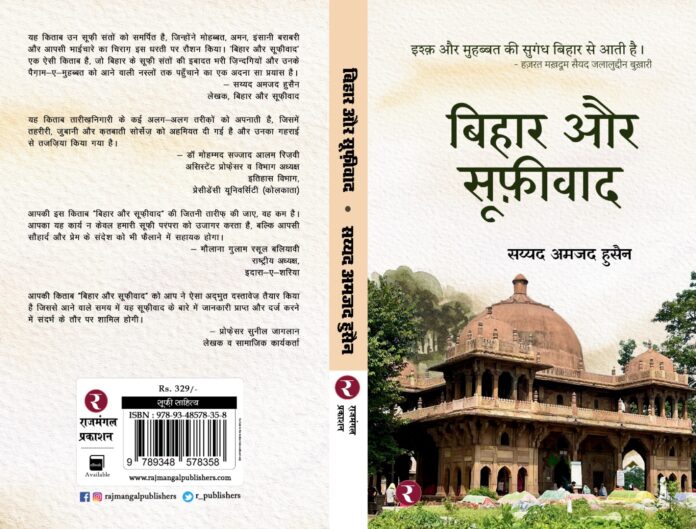
In a time marked by growing communal tensions and polarizing narratives, young author and scholar Syed Amjad Hussain’s book ‘Bihar Aur Sufivad’ arrives not only as a work of history but also as a much-needed spiritual intervention. Spanning more than 300 pages, the book immerses the reader in Bihar’s rich and pluralistic Sufi heritage, offering a profound counter-narrative rooted in peace, love and human dignity.

Bihar is generally remembered for its political agitations and socio-economic challenges, but beneath the surface lies an older, deeper history – a rich tapestry of sufi saints who arrived as early as the 12th century. Through systematic research and a respectful tone, Hussain revives this forgotten spiritual geography.

Beginning with the arrival of Hazrat Peer Shah Mushk Nafah, Hazrat Momin Arif Ansari Yemeni and Hazrat Imam Muhammad Taj Faqih Zubairi Hashmi, followed by the transformative presence of Hazrat Qazi Syed Shahabuddin Suhrawardi Peer Jagjot Kashgari in Fatuha (Patna), the book presents a chronologically overlapping map of Sufi presence in Bihar. These are not mere biographies; they are glimpses into a world where divine love was not only preached but lived, practiced and internalised.

Thematic Depth, Scholarly Rigor

Divided into well-organised sections, ‘Bihar Aur Sufivad’ details the lives of 20 influential sufi saints. Each chapter offers insights into their teachings (taalim), spiritual practices, miracles (karamaat) and most importantly, their social engagements. The saints in Hussain’s work are not passive mystics withdrawn from the world; they are reformers, healers, poets and bridges between communities.

The book also discusses the various sufi orders (silsilas) present in Bihar – Firdausi, Shattari, Husami, Warsi, Chishti, Qadri, Suhrawardi and Naqshbandi – illustrating how each infused its own spiritual philosophy into the soil of Bihar. Of special mention is Hussain’s inclusion of female figures such as Hazrat Bibi Kamal of Kako Sharif, a rare and valuable recognition of women’s contributions to Bihar’s mystic culture.

Language, Tone and Accessibility

Hussain’s writing flows with a gentle rhythm that recalls classical Urdu and Hindi scholarship yet remains accessible to contemporary readers. The prose is rich and poetic without sacrificing academic precision. His background as a researcher is evident in the meticulous citation of works in Persian, Urdu, Arabic, Hindi and English, many of which are obscure or little known to the general public.

This is not a dry academic treatise; it is a living, breathing narrative of spiritual heritage, crafted to engage scholars, young seekers and general readers alike.

Relevance in Today’s India

What makes the book particularly significant is its timing. At a moment when histories are being erased or rewritten to suit political agendas, this book affirms that India’s collective spiritual heritage must not be forgotten. The sufi saints of Bihar transcended caste, creed and religion. Their khanqahs were open to people of all faiths. They preached service, not supremacy.

In this age of ideological divisions, Hussain’s work reminds the bridges that once united communities. It is a call to return – not to nostalgia, but to the ethics of inclusiveness, humility and compassion that the sufis embodied.

‘Bihar Aur Sufivad’ is more than a book; it is a spiritual journey and a historical reclamation. In reviving the voices of Bihar’s forgotten sufi saints, Hussain does more than pay tribute; he builds a bridge for contemporary readers to reconnect with a heritage that offers solutions to some of our most pressing problems.

This book deserves a place not only on library shelves but also in classrooms, living rooms and community discussions. It is an invitation to think, to remember and to heal.

Hussain has not merely authored a book – he has attempted to revive a spiritual legacy and present it afresh to the modern world. This work warrants a place of honour in the study of Indian Islam, Sufism and regional spiritual histories. It is hoped that it will inspire further research, dialogue and, most importantly, personal transformation.

It is strongly recommended for scholars, spiritual seekers and anyone interested in the rich diversity of India’s syncretic traditions.

Book Name: Bihar Aur Sufivad / Author: Syed Amjad Hussain / Publisher: Rajmangal Prakashan / Published: April 27, 2025 / Language: Hindi / ISBN: 978-9348578358 / Pages: 308 / Price: Rs 329

(Dr. Shujaat Ali Quadri is an Indian journalist, deputy director of the Indo-Islamic Heritage Center and the chairman of the Muslim Students Organisation of India)

source: http://www.twocircles.net / TwoCircles.net / Home> Arts & Culture> Book Review / by Dr Shujaat Ali Quadri / May 07th, 2025

Come to Soghra Waqf Estate to Know How It Helps the Needy

Bihar Sharif (Nalanda District) Patna, BIHAR :

Patna:

Muqita, Fatima and Shakila are a few of the over hundred persons who get monthly pension from the Soghra Waqf Estate of Bihar Sharif in Bihar. They are quite thankful for the Waqf Estate but they are not aware about the controversial Waqf (Amendment) Act.

This is just one of the hundreds of Waqf Estates which is providing help to the needy in one or the other way. Apart from the monthly pension, it also provides financial help for medical treatment to the needy.

BBC Hindi recently made a video report about the financial help being provided by the Soghra Waqf Estate.

According to this report Muqita Khatoon is about to turn eighty. Sadly, mother of four sons Muqita lives alone. Twenty-five years back her husband Bashir passed away. Muqita has nothing but the memory of her husband and a few utensils in her rented house. She pays the rent of this single room from the pension of Rs. 600 she gets from Soghra Waqf Estate. She says that many a time she is forced to sleep without any food.

Sogra Waqf Estate was established in the year 1896. Bibi Sogra, an enlightened lady, donated land for Waqf in sixteen districts, including Nalanda, Muzaffarpur, Darbhanga and Nawadah. It is reported that Soghra Waqf Estate consists of around twenty-one thousand acres of land. It is said that Bibi Soghra set priority for women as beneficiary of the Waqf.

Fatima, 66, of village Sabbait in Nalanda district is dependent on the pension she gets from Soghra Waqf Estate. She was deserted by her husband only after three years of marriage. Fatima lived with her father but after he died, she was left helpless. Then she got a pension of Rs. 500.00 per month from the Soghra Waqf Estate. She is happy that someone from her neighbourhood also filled the form for the social welfare scheme of Bihar government from which she gets Rs. 400.00 per month. She is happy to get Rs. 900.00 per month and terms it as ‘bahut rahat’ (big relief).

Soghra Waqf Estate is providing monthly pension for 113 needy persons of Nalanda, Sheikhpura, Nawadah and Gaya districts.

Mokhtarul Haque, Mutawalli of Soghra Waqf Estate, says that there are talks of no representation of women and Pasmanda but it must be said that Bibi Soghra herself was the Mutawalli of this Waqf from 1896 to 17 March 1909. “Thus the leadership was in the hands of a woman.”

Shakila Khatoon lost her husband and son. She is forced to cover her face with a dupatta because of cancer. She is getting financial help from this Waqf Estate for her treatment. She used to make Bidis and smoke it also. She quite emotional says that she gets financial help from the ‘Estate’. “I used to get Rs. 1000-2000 for my treatment. Though it was not a big amount but when you get nothing from other sources, it becomes more important,” said Shakila.

source: http://www.radiancenews.com / Radiance News / Home> Features> Focus / by Md. Sami Ahmad / Radiance News Bureau / May 11th, 2025

Shakib Shah, Rukaiya Fatima Claim Top Spots in Bihar Board 12th Exam

BIHAR :

Remarkable achievements highlight talent and determination in Bihar’s intermediate results.

New Delhi :

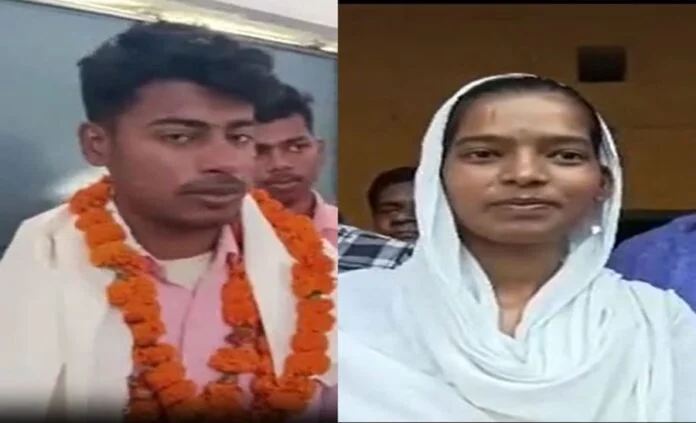
The Bihar School Examination Board (BSEB) on Tuesday revealed the 2025 Class 12 exam results, and this year, two Muslim students from modest backgrounds have made headlines by securing the first and second positions. Shakib Shah from Buxar district and Rukaiya Fatima from Begusarai have not only made their families proud but also demonstrated the power of hard work and ambition in overcoming challenges.

Shakib Shah, a student at Plus Two High School Koransarai in Buxar, achieved an impressive 473 out of 500 marks, securing the top position in the Arts stream. His 94.6% score has ignited celebrations in his village, with locals and teachers praising him as a source of inspiration. “I studied hard every day, and my teachers supported me throughout. My dream is to crack the Bihar Public Service Commission (BPSC) exam and serve as an administrative officer,” Shakib told Zee Media, his determination evident in his words.

Following the announcement of his results, Shakib received a flood of congratulations at his home in Koransarai. Teachers from his school, along with the District Education Officer, visited the school to honour their star student. “Shakib has always been a focused student. His success is a testament to his hard work and the guidance he received here,” said one of his teachers, beaming with pride.

Meanwhile, Rukaiya Fatima, a student at BN High School Teyai in Begusarai’s Teghra subdivision, earned the second position with 471 marks, achieving 94.2% marks. The daughter of Mohammad Abu Salem, a bidi trader from Kolkata, Rukaiya comes from a family of seven sisters, where she is the third child. Despite her father’s modest income and the challenges of supporting a large family, Rukaiya’s resolve to excel never wavered. “I want to become an IAS officer and work for the poor. Education is my way to change my family’s future,” she shared with local reporters.

Rukaiya’s success has brought joy to her community in Begusarai. Her school principal described her as a diligent and bright student who balanced her studies with household responsibilities. “She would often stay back after classes to clear her doubts. Her success shows what girls can achieve with determination,” the principal remarked.

The Bihar Board 12th exams, held between 1 and 15 February 2025, saw over 12.92 lakh students appear across 1,677 centres in the state. This year’s results reflect an overall pass percentage of 86.50%, with the Arts stream recording 82.75%. Shakib and Rukaiya’s stellar performances stand out, not only for their academic brilliance but also for their powerful message of resilience and hope.

For Shakib, topping the state is just the beginning. Growing up in a simple family in Koransarai, he credits his family’s encouragement and his own disciplined routine. “My parents never let me feel any pressure. They just told me to do my best,” he said. His ambition to join the administrative services stems from a desire to uplift his community and tackle local issues like education and employment.

Rukaiya’s journey is equally inspiring. Despite growing up in a family with limited resources, she often studied by candlelight during power cuts. Her father, Mohammad Abu Salem, expressed his pride over the phone from Kolkata: “I always knew Rukaiya was special. She has made us all proud, and I hope she achieves her dream of becoming an IAS officer.” Rukaiya’s six sisters also look up to her, with the youngest saying, “I want to study hard like Rukaiya Apa.”

The success of these two students has also highlighted the untapped potential within Bihar’s Muslim community, which often faces socio-economic challenges. Local leaders and educators have hailed their achievements as a beacon of hope. “Shakib and Rukaiya have shown that talent knows no boundaries. Their success will inspire countless others,” said a senior official from the BSEB during the result announcement press conference in Patna.

However, their triumphs stand in contrast to the broader narrative in Bihar, where tensions between communities have occasionally erupted. Critics have often pointed to the state’s history of communal friction, exacerbated by divisive politics and economic disparities. Some have accused Hindu groups of marginalising minority achievements in educational settings. Yet, Shakib and Rukaiya’s success challenges these narratives, proving that merit and perseverance can overcome prejudice.

To celebrate their achievements, the BSEB has announced cash prizes and scholarships for the toppers, with Shakib set to receive £2 lakh and Rukaiya £1.5 lakh, along with laptops to support their future academic pursuits. These rewards, doubled from last year, reflect the state’s commitment to nurturing talent. “We are proud of all our students, and these two have set an exceptional standard,” said BSEB Chairman Anand Kishore.

As Bihar celebrates its top achievers, the stories of Shakib Shah and Rukaiya Fatima resonate beyond their exam results. Their journeys embody the dreams of millions in a state where opportunities are scarce, and their success serves as a shining example of the transformative power of education. For now, the spotlight remains on these remarkable individuals, whose stories are only beginning to unfold.

source: http://www.clarionindia.net / Clarion India / Home> Editor’s Pick> Indian Muslim / by Mohammad Bin Ismail, Clarion India / March 26th, 2025