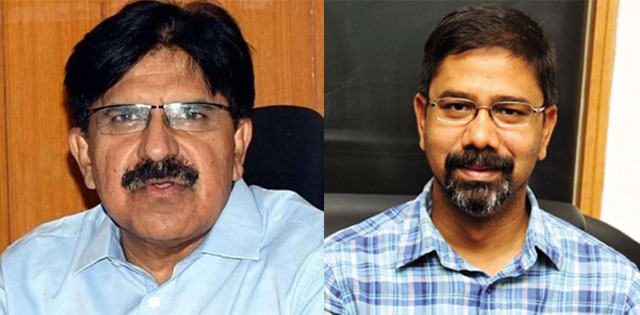
L K Atheeq, a trusted aide of chief minister Siddaramaiah and a 1991-batch IAS officer, has resigned from his post as Additional Chief Secretary (ACS) to the chief minister. He was serving on a contract basis after his superannuation on January 31.
Anjum Parwez, a 1994-batch IAS officer and currently the ACS in the rural development and panchayat raj department, has been appointed as his successor in the chief minister’s office.
Atheeq will continue as chairperson of Bengaluru Business Corridor Ltd, the special purpose vehicle for the Peripheral Ring Road project. Sources indicate he stepped down to spend time with family and pursue personal interests, including motorcycling and poetry.
source: http://www.daijiworld.com / Daijiworld.com / Home> Top Stories> Karnataka / by Daijiworld Media Network – Bengaluru / June 05th, 2025
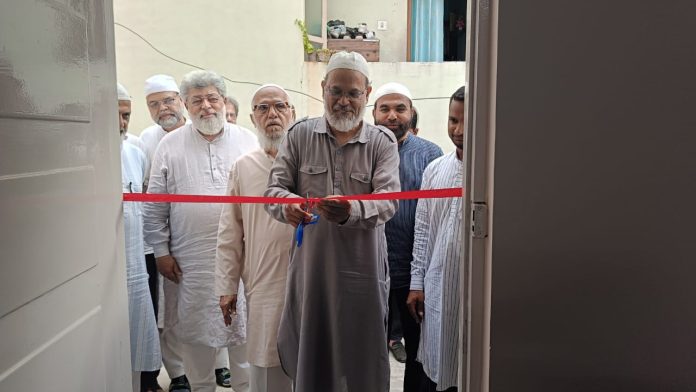
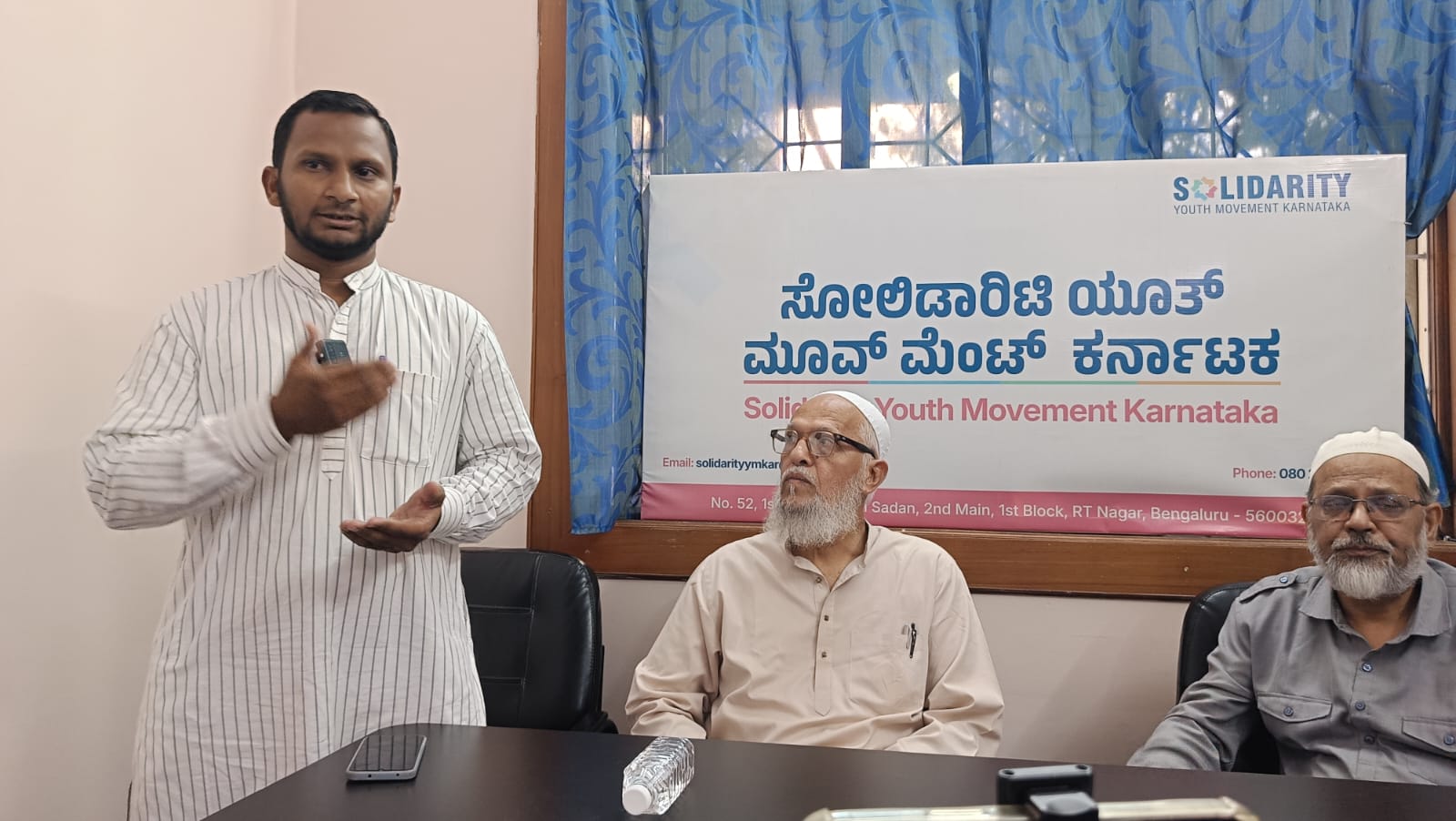
In a bold stride towards structured youth empowerment, the Solidarity Youth Movement Karnataka marked a significant milestone with the inauguration of its new state office in Bengaluru.
The formal opening ceremony was led by Dr. Mohammed Saad Belgami, Ameer-e-Halqa of Jamaat-e-Islami Hind, Karnataka, coinciding with the annual state Shura session.
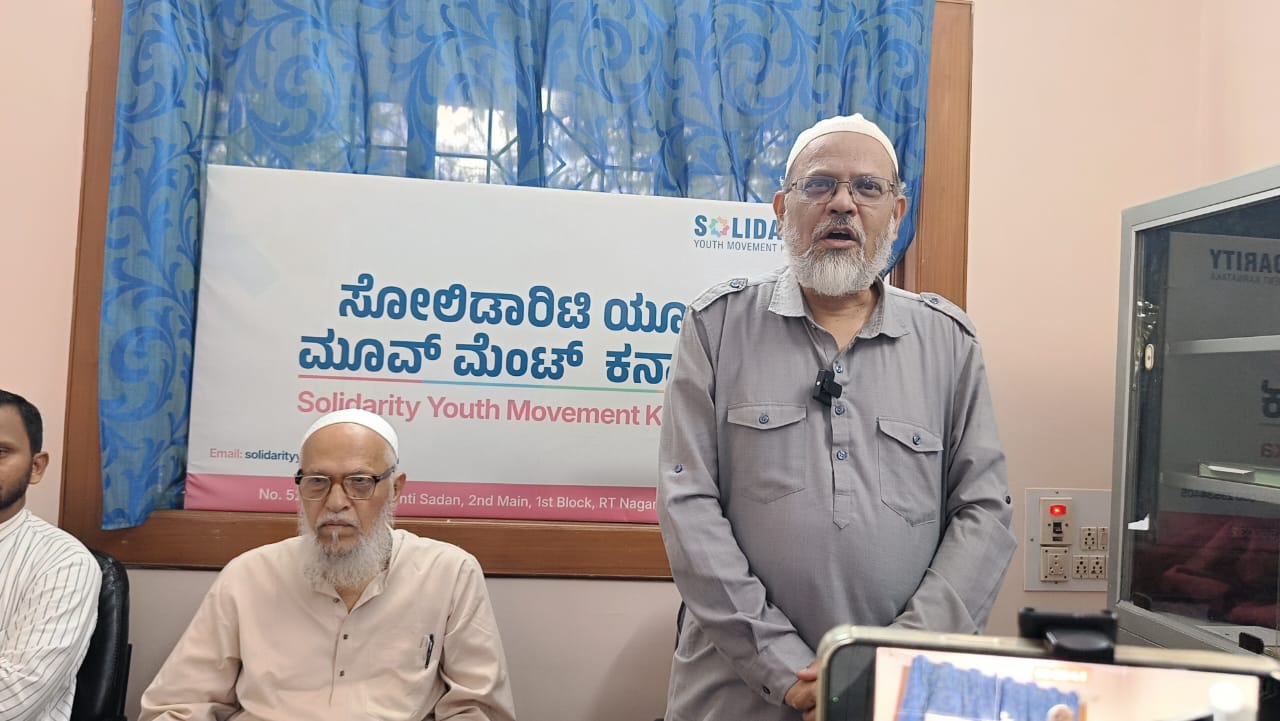
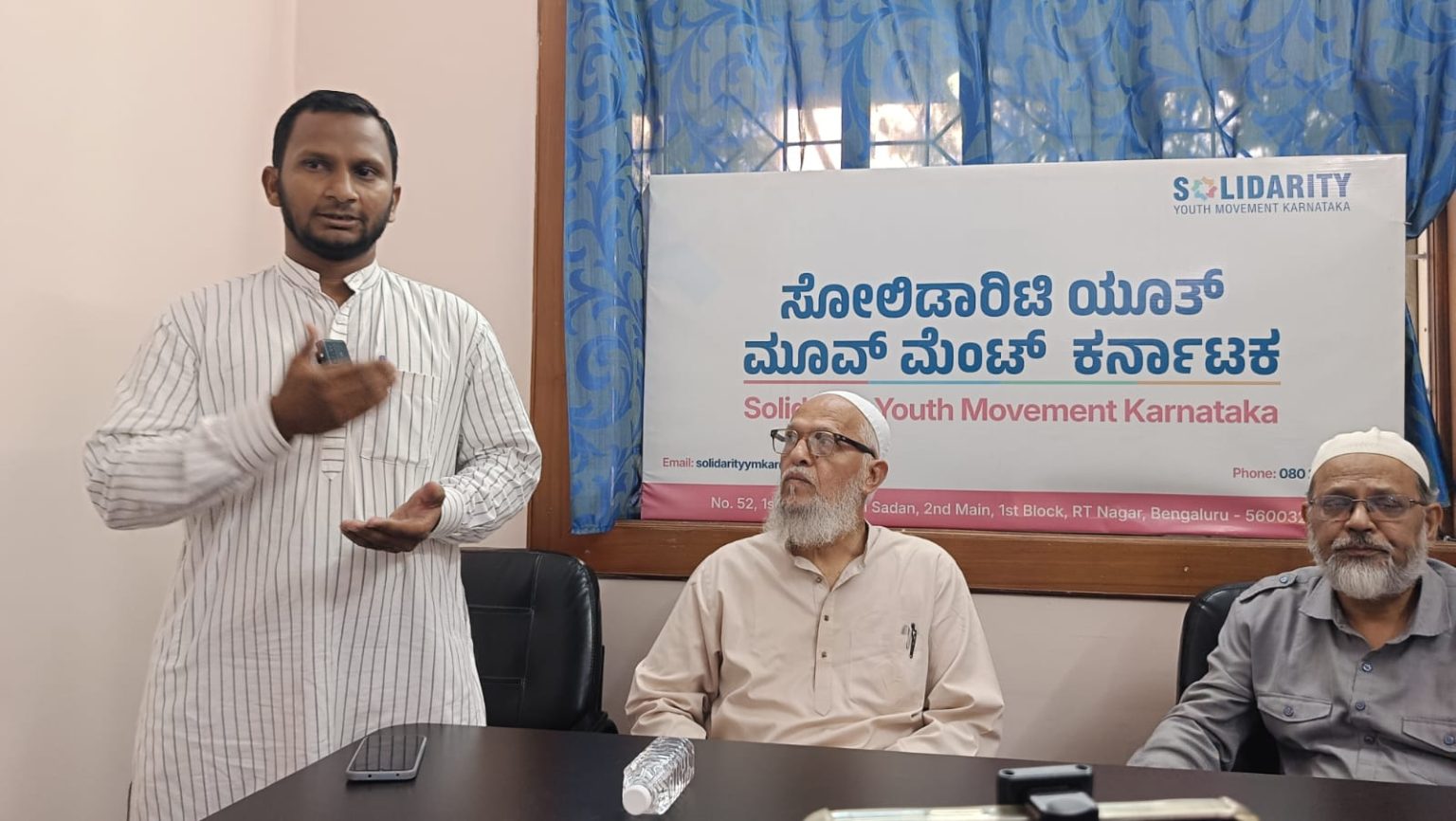
Far from being a mere administrative facility, the new office symbolises the growing institutional presence and ideological clarity of a movement that has evolved from grassroots activism to state-wide influence. Speaking at the event, Dr. Naseem, State President of Solidarity Youth Movement, described the organisation not just as a protest platform, but as “a transformative force for grooming morally conscious and socially responsible youth leaders.”
From a Youth Wing to a Mass Movement What began in 2008 as the “Youth Wing of JIH Karnataka” with just 250 members, formally transitioned into the Solidarity Youth Movement in 2016. Today, it boasts an expansive network across 27 districts with over 80 local units and a membership exceeding 7,000 – out of which more than 900 are actively engaged as trained “Activists.”
According to Dr. Naseem, this journey reflects the urgent need to channel the dynamism of youth towards constructive and long-term social reform. “We envision a generation of youth who are ethically upright and capable of leading society toward peace, progress, and justice,” he said. He emphasised the movement’s focus on skill development, employability training, and intellectual empowerment, aligning with both the constitutional ethos of India and the legacy of Islamic civilizational values.
Leadership Speaks Addressing the gathering, Dr. Saad Belgami remarked, “From its inception, the Islamic movement has placed youth at the centre of its mission. Solidarity Youth Movement is a natural extension of this vision – shaping minds and building character.” He added that the 2022 Youth Convention acted as a catalyst, significantly expanding the movement’s outreach and operational capacity across Karnataka.
The event was also graced by former state presidents of JIH, Mr. Iqbal Mulla and Mr. Atherulla Shariff, along with other senior functionaries from various wings of the organisation.
A Nerve Centre for Change With the establishment of this new state office, Solidarity Youth Movement is poised to further institutionalise its efforts in leadership training, civic engagement, and ideological grounding. The office is envisioned as a nerve centre for nurturing grassroots leadership, mentoring youth activists, and coordinating state-wide programs aimed at social justice and pluralistic harmony.
“This will be more than brick and mortar. It will be a lighthouse for Karnataka’s aspiring youth leadership,” said Dr. Naseem. “And a strategic base for long-term nation-building efforts,” he added with conviction.
As the curtain drew on the inaugural ceremony, the message was loud and clear: Solidarity Youth Movement is not just responding to the times – it is shaping them. And this new office stands as a testament to that mission. A platform today, a movement tomorrow. Indeed, a future-defining institution in the making.
source: http://www.radiancenews.com / Radiance News / Home> Latest News / by Mohammed Talha Siddi Bapa / May 12th, 2025
Pasha Bhai’s journey from the Muslim ghetto of Neelasandra to the posh clubs of Bengaluru is as much a story about his art as about Dakhni Urdu, the language he consciously chooses to rap in, making it both a quest for selfhood and for his mother tongue’s history.
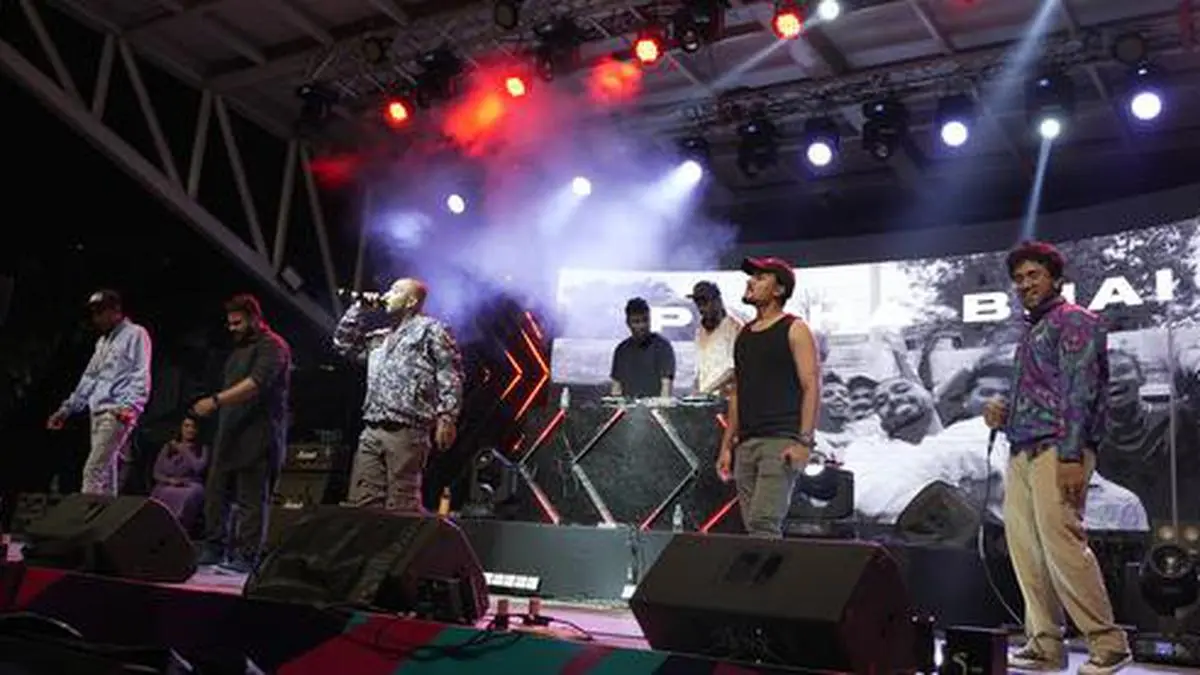
Pasha Bhai and members of Clan Bokka Phod performing at Bowring Club on May 7.
Bowring Institute, one of Bengaluru’s oldest social clubs, is pulsing with energy. Raftaar, a sensation in the Hindi and Punjabi rap scene, is the marquee act. Warming up the audience before he comes on is a bunch of Bengaluru-based rappers with funky monikers such as MC Truth, Ray, and Quake. Third in line is Pasha Bhai and his Clan Bokka Phod (CBP). On the evening of May 7, Bowring
When his turn comes, Pasha Bhai bounds onto the stage with his trademark energy. His hair cropped short and wearing a loose, full-sleeved T-shirt with baggy trousers that hang low on his waist, he opens with ‘Eid ka Chand’ (The Moon of Eid), one of his popular songs. A rousing cheer goes up from the audience, which is familiar with this number that has garnered more than 45,000 views on YouTube.
When Pasha Bhai sings the lines: “ ” (I’m my father’s spoilt brat/ My heart is like wax, but I have the courage of steel), some of his fans hum along. Pasha raps in street-Dakhni, and he raps at warp speed, which means that many in the crowd cannot grasp the lyrics but they are bound up in the frenzied covenant between singer and audience, which is part of the frantic mood of a rap concert. Even his band’s name is a Dakhni phrase for ‘ball-breakers’. Ladila Bawa Ka, Bigda Huwa Beta/ Moum Ka Dil, Par Jigra Loha Mera
Pasha follows up the first song with a few more popular solo numbers such as ‘Haraanya’n’ and ‘Kumbhakarana’. Then he is joined by his gang, the infamous Ball-Breakers, and they rap to ‘Khuda Gawah’.
Pasha screams ‘I love you Bangalore!’ before getting off the stage after his set. T-shirt soaked in sweat, he chugs down a bottle of water as fans walk up to him to take selfies. While the 23-year-old rapper has performed in several spaces in Bengaluru, being part of the opening act for Raftaar has added to the growing reputation of this savvy singer. There are some distinct reasons for Pasha Bhai’s success. First, his originality as a lyricist and his intuitive ability to vocalise in Dakhni; second, his moorings in a marginalised social and economic Muslim stratum in Bengaluru that resonates with the ethos of the early Black rappers who emerged from the ghettos of American cities; and third, his conscious use of Dakhni, his mother tongue, which some linguistic scholars argue is a language on its own but which is often dismissed as a dialect of Urdu.
Spoken mainly by Muslims in Karnataka, Telangana, Andhra Pradesh and parts of Tamil Nadu, Dakhni, translated as ‘Deccani’, traces its provenance to the reigns of the Bahmani and Deccan Sultanates between the 14th and 17th centuries whose territories sprawled across the Deccan plateau from the Arabian Sea to the Bay of Bengal. In certain parts of Hyderabad and Bengaluru and across urban centres in south India (except Kerala), Dakhni continues to be the lingua franca of a wide section of the non-Muslim population as well.
Says Bengaluru-based Arjun Sharma a.k.a Quake, the rapper who curated the event: “Pasha Bhai is one of the best thinkers/ writers out there. He’s talking sense and he’s talking reality. People should start understanding Dakhni to listen to him; that’s the only way our language will grow and get recognition. He is the only person representing Dakhni now.”
Pasha Bhai, whose non-rapping name is Mohammed Affan Pasha, has a simple studio, christened ‘Dakhnistan’, on the fourth floor of a nondescript building in the largely Muslim ghetto of Neelasandra in central Bengaluru. To get there, one has to negotiate a maze of narrow, meandering roads dotted with meat stalls, tiny mosques, and food kiosks. Minimally furnished, the most interesting thing in the dingy hangout is a carrom board around which Syed, Demixx, Nimbu Da, Marwan, Shoaib and Maddy of the CBP gang has gathered.
Pasha was born in 1998 and grew up in Neelasandra. “We are the children of rowdies,” he said, referring not to his father, who was an auto-driver and passed away when Pasha was still in school, but to the grimy milieu of violence that engulfed him and his clan members growing up in Neelasandra. Pasha always had an ear for music and as a high schooler he began to listen to American and Indian rappers such as Eminem, 50 Cent, Yo Yo Honey Singh, Raftaar, IKKA and Machas with Attitude.
The Hindi rappers were a tremendous influence on him. Among his greatest inspirations was Mumbai’s Naezy because he “is also a Muslim from the ghettoes of Mumbai”. Pasha began rapping in Hindi at the same time, and the 2019 film about a rapper also had an impact on his nascent career. At this time, Pasha was doing “chhatri kaaman” (petty jobs) for easy money. Having failed in Class 12 and with a floundering love affair to boot, Pasha began working in a garment factory as a helper. His mother worked there too. It took a year of hard work before he realised the importance of education and enrolled himself in evening college. Gully Boy
Amid this tumult, Pasha’s cachet as a rapper was soaring, as he continued to rap in Hindi and began fledgling attempts at rapping in Dakhni. For Pasha, the hip hop and rap culture was alluring because the genre “does not ask you to be anyone but to be real and true to yourself”. Pasha adds that there were “no restrictions while rapping and there is no structure to the music”. Connoisseurs of rap will disagree with this assessment, but Pasha’s confidence only reiterates the intuitiveness with which he has grasped the technicalities of the medium. Pasha says rap gave him the freedom to become a musician without learning music.
He also started a cypher (a gathering of rappers making music extemporaneously) called ‘Wanandaf’ (a shortening of ‘one and a half’) in 2019, the name inspired by the refrain of Bengaluru auto-drivers demanding an inflated fare. Held weekly in open spaces such as Cubbon Park and Lalbagh, Wanandaf attracted budding rappers, hip hop artists, beat boxers and graffiti artists before the pandemic stepped in. Part of why Pasha began Wanandaf was to democratise hip hop in India.
“Hip hop is owned by marginalised African Americans, but when it came to India it was acquired by the elite. It was a closed group of artists and I couldn’t enter its exclusive space. When we’d go to rap concerts wearing slippers, we weren’t allowed in. It made me hate the culture of rap music,” Pasha said. But by 2019, Pasha had surmounted these class barriers and become a respected member of a network of fellow rappers who appreciated him for his ingenuity, which led to creative collaborations and caught the attention of aficionados. Counting singles and collaborations, Pasha has made almost 30 songs so far. He was also a sought-after act during the anti-CAA (Citizenship [Amendment] Act) protests in Bengaluru.
Pasha is India’s first rapper in Dakhni, and this was not accidental. When he “did not find a representation of his language in the rap industry”, he consciously chose to rap in Dakhni and the exercise has turned into a quest to know more about his mother tongue. “As a child I would proudly speak Dakhni even though it was mocked and patronisingly referred to as ‘Broken Urdu’. I was ignorant that the dialect had a name, unaware of its origins, history or associations. Like others around me, I grew up calling it ‘Bangalori Urdu’. As I researched further, I realised that Dakhni has always been under threat of being erased, misnamed or compelled to become a ‘dialect’ of a larger language and cultural group. The legacy of Dakhni poets and artists has been one fraught with constant struggle to keep Dakhni-ness alive.”
Hyderabad-based journalist and researcher Yunus Lasania argues that it is wrong to describe Dakhni as ‘Urdu’ or ‘Hyderabad Hindi’. “Dakhni (or Deccani) is usually mistaken to be a ‘dialect’ of Urdu, especially among northern Urdu speakers. Both Dakhni and Urdu have roots in Dehalvi (also known as ‘Old Urdu’), which existed in Delhi for around a century before it reached the Deccan in the 14th century through the conquests of Mohammed Tughlaq. Dakhni is a mix of Persian, Old Urdu (Dehalvi), Kannada, Marathi and Telugu. It was created when Dehalvi mixed with the three aforementioned languages,” he said.
Karthik Malli, an independent researcher and writer working on south Indian language histories, said, “Dakhni has, in all likeliness, been part of Bengaluru’s social landscape for many centuries now. Numerous Sufi shrines in Chickpet dating back to the 1700s catered to local Dakhni-speaking Muslims. Tipu Sultan [who was born in Devanahalli on the outskirts of modern Bengaluru] was a Dakhni speaker as well, and even commissioned literary works in the Classical Dakhni register cultivated earlier in Bijapur and Golkonda.”
Malli added, “Despite Dakhni’s presence and history in the city, it has seldom found any serious artistic expression. Digital media is helping change that by giving voice to artists like actor and comedian Danish Sait who utilises Dakhni to great effect in his highly popular comedic skits. Sarah Fazal, an RJ, also makes Dakhni skits on Instagram. There are also a number of social media meme pages that utilise Bangalore Dakhni, directly addressing a large local audience that uses the language in everyday life.” Pasha’s name must be added to this short list as someone who is furthering Dakhni in popular culture through rap.
India Foundation for the Arts (IFA) has awarded Pasha a grant for his project titled “ ”, which seeks to “keep Dakhni language and culture alive through the art practice of rap and hip hop”. Said Sumana Chandrashekar of IFA, “With the privileging of certain cultures to the exclusion of many others, there is always the danger of losing sight of the rich multi-textured nature of experiences, narratives, people and languages that collectively form the fabric of this city. From this point of view, IFA is delighted to implement a project with Pasha to explore and engage with Dakhni expressions in Bengaluru’s popular culture. What is special about this project is that it embraces and embodies Pasha’s deeply personal lived experiences with Dakhni and moves on to excavate the deep cultural bond that this language has with the city. For us, the project is not just a celebration of Dakhni as a language but also a reaffirmation of the many cultures, histories and languages that make our city ” Apnich Bol, Dakhnich Bolnamma Bengaluru.
With his rising popularity and the support of respectable patrons such as IFA, Pasha has made the leap from Neelasandra to exclusive music spaces in the city. Looking at his talent and verve, his journey so far seems like the first chapter of a long book. This cocky segment in the collaborative rap piece ‘56’ illustrates his persona and talent more clearly:Pasha bhi aako hin dekho sabbi jane khamush rhao,Gunna ginne scene ni scene huit’ long uthao,Tada dek’ tadpatin kisse to b uska taaluk rhaoChillar’an ku baazu b ni rakhte, chalo baazuk’ jao.
(Pasha bhai has arrived, everybody pipe down!
A scene breaking out, brandish your swords, strictly
no guns
You’re going to get it good – doesn’t matter who you
know,
Now move, you’re loose change, not worth my time,
now go!)
—Translated by Sahar Adil
Street smart
First rapper in Dakhni
source: http://www.frontline.thehindu.com / The Hindu / Home> Lead Story> Cover Story : Pasha Bhai / by Vikhar Ahmed Sayeed / May 17th, 2022
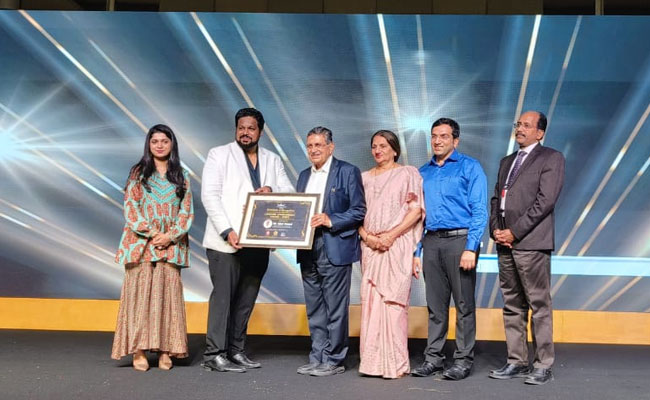
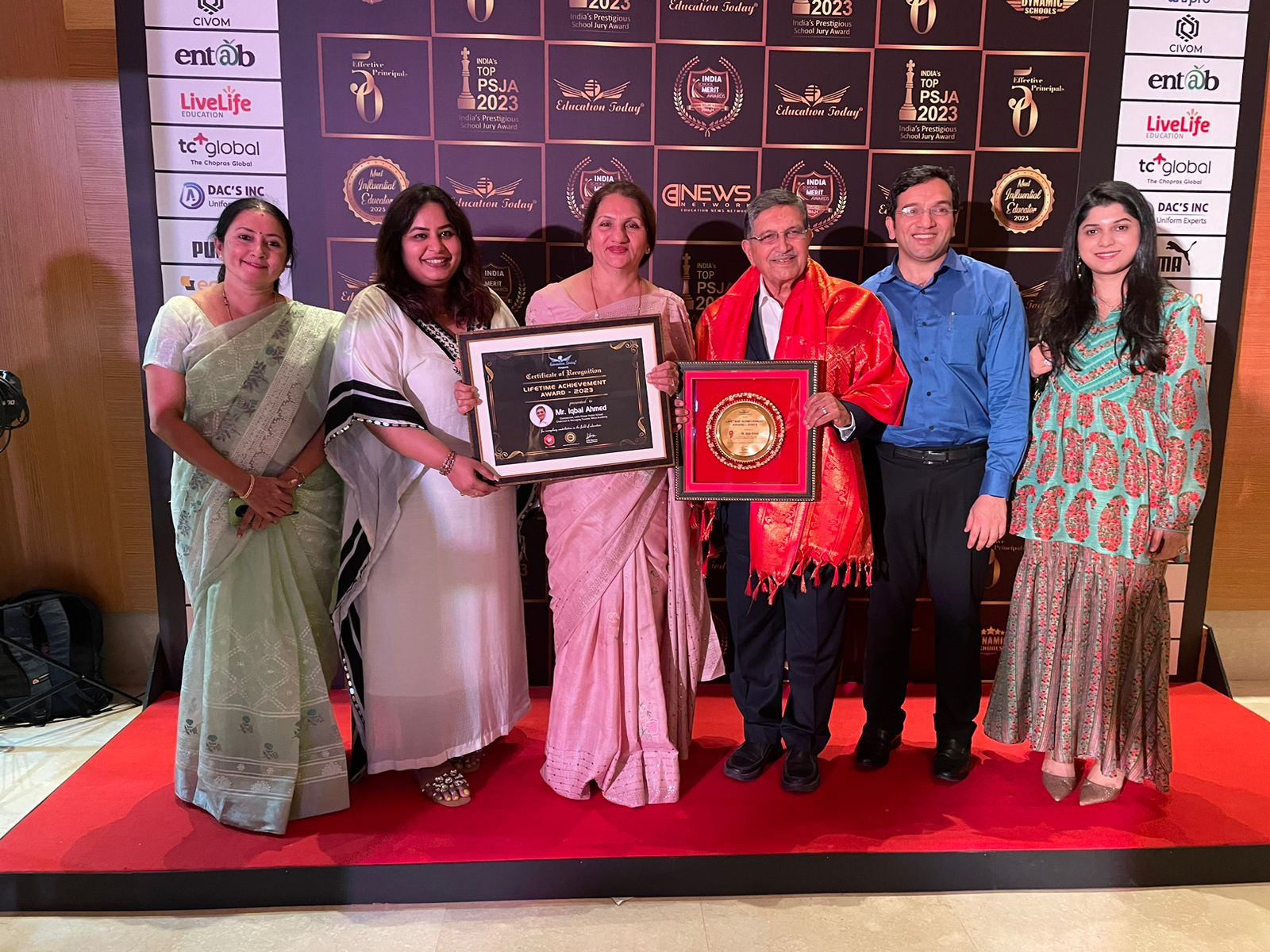
In recognition of his outstanding contributions to the field of education, Iqbal Ahmed, Chairperson of Little Flower Public School and Chairman of Mitra Academy in Bengaluru, was bestowed with the prestigious Lifetime Achievement Award – 2023 by Education Today Magazine.
The ceremony, held at the Taj Hotel Kempegowda International Airport Rd, Bengaluru, on December 11, 2023, celebrated Ahmed’s commitment to educational excellence.
“The accolade is a testament to Mr. Ahmed’s deep-rooted passion for education, driven by a sense of social responsibility. His leadership has not only elevated academic standards within the schools but has also prioritized holistic development, shaping students into well-rounded individuals with both knowledge and character. His dedication to excellence serves as an inspiration to educators and learners alike,” a press release stated.
The Lifetime Achievement Award recognizes Iqbal Ahmed’s impact on the educational landscape, acknowledging his role in providing exceptional education at an accessible cost.
Expressing gratitude upon receiving the award, Iqbal Ahmed attributed the honour to the collective efforts of the school’s faculty, staff, students, and parents.
In addition to Iqbal Ahmed’s Lifetime Achievement Award, the ceremony also celebrated Tanveer Ahmed, CEO of Mitra Academy and Little Flower Public School, and his wife, Nafeesa Ahmed, Director of Presidency Group of Institutions Bengaluru/Mangaluru, who were honoured with the Power Couple Award for 2023 by Education Today Magazine.
source: http://www.english.varthabharati.in / Vartha Bharati / Home> India / by Vartha Bharati / December 12th, 2023
The Presidency Group of Institutions (PGI) hosted INSPIR’Ed Awards 2025 on Saturday on the Presidency University campus. The event honoured teaching and non-teaching staff for their contributions to education and service within the Presidency Institutions.
Author Anita Nair and former IPS officer and cybersecurity expert Sanjay Sahay were chief guests at the event. They emphasised the significant role educators play in national development.
Nafeesa Ahmed, Director of the Presidency Group of Institutions, spoke about the central role of teachers in guiding students and strengthening communities.
Kauser Nissar Ahmed, Founder Trustee, expressed appreciation for everyone involved in the growth of the Presidency Schools. Dr. Nissar Ahmed, Chairman of PGI and Founder Chancellor of Presidency University, reflected on his five-decade journey in the field of education.
Awards were presented in several categories, including: Long Service Award, Institutional Legacy Award, Best Teacher Award, Rising Star Award.
source: http://www.thehindu.com / The Hindu / Home> News> Cities> Bengaluru / by The Hindu Bureau / April 14th, 2025
In a historic moment, Hamza Hussain and Altaf Hussain, two brothers serving in Karnataka’s law enforcement, have been honored with the President’s Award for Meritorious Service on India’s 76th Republic Day.
Hamza Hussain, Superintendent of Police (S.P.) Commandant, 12th Battalion, KSRP, Tumkur, has been recognized for his leadership in critical police operations and public safety. His brother, Altaf Hussain, Assistant Sub-Inspector (ASI) at Wilson Garden Police Station, Bangalore, has played a vital role in crime prevention and community policing.
The award, one of the highest honors in Indian law enforcement, acknowledges their dedication, integrity, and commitment to justice. Their achievement is a proud moment for Karnataka and the nation, inspiring future generations of police officers.
The brothers expressed their gratitude, stating, “This award is a tribute to all officers who tirelessly serve the nation. We dedicate it to our department, colleagues, and family for their unwavering support.”
Their recognition on Republic Day underscores their exceptional service in upholding law and order, marking a milestone in Karnataka’s police history.
source: http://www.islamicvoice.com / Islamic Voice / Home> Cover Story / Vol. 37-03, No. 448 March 2025
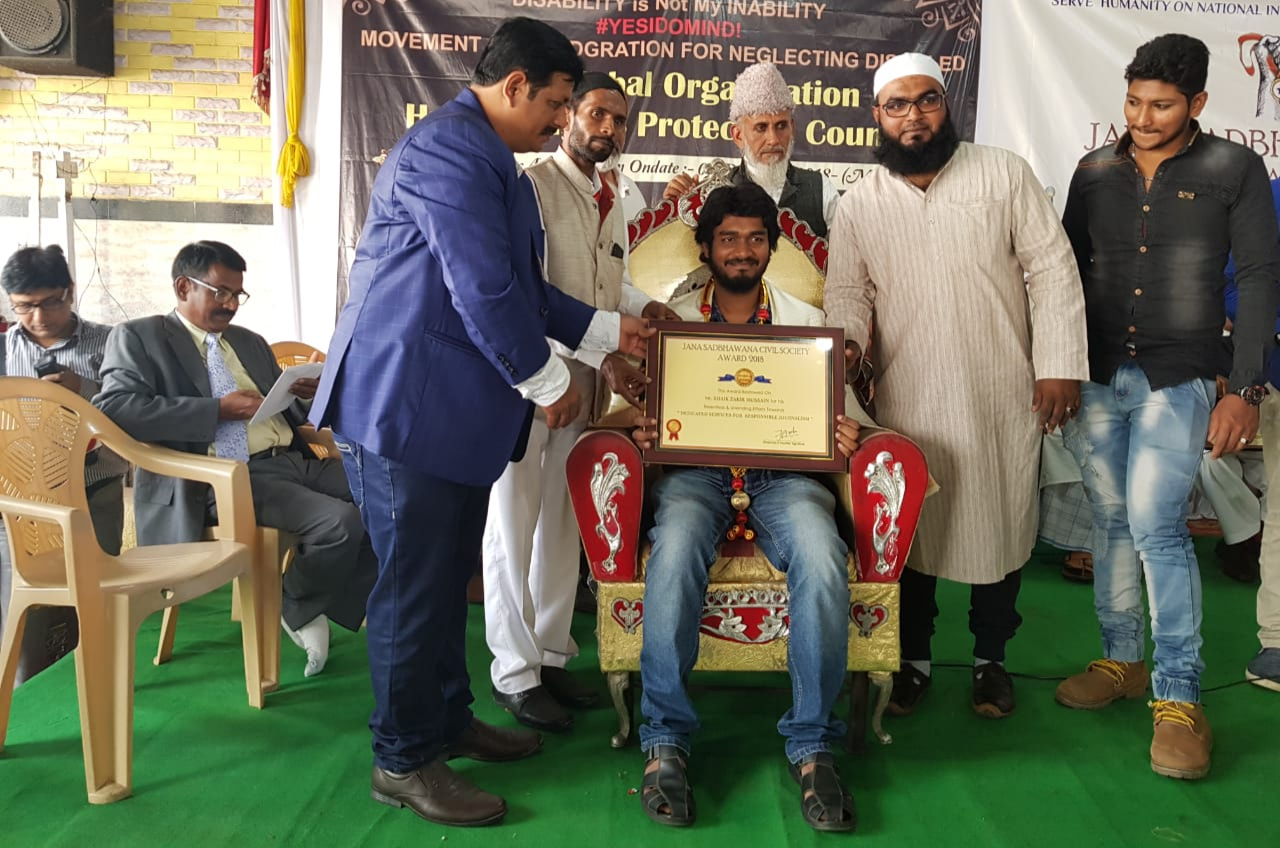
Shaik Zakeer Hussain receives the Janasadbhawana Civil Society Awards, 2018 in journalism.
Bengaluru:
The Cognate’s founder and editor, Shaik Zakeer Hussain, has been awarded the Janasadbhawana Civil Society Awards, 2018 in the category of journalism for his coverage on fraudulent ‘Halal’ investment companies in Bengaluru.
The awards have been instituted by Bengaluru-based NGO Janasadbhawana, which has been working for the reformation and rehabilitation of undertrial prisoners in the city’s Central Jail in Parappana Agrahara. The awards are designed to promote and recognise notable work in the field of journalism, social activism, and administration. The award was presented to Zakeer by Faiz Akram Pasha, the founder trustee of Janasadbhawana on December 3.
“Zakeer has been recognised for his relentless coverage of fraudulent companies in Bengaluru, who have systematically targeted and looted the Muslim community in the name of religion,” said Faiz Akram Pasha, while presenting the award.
The other recipients of the Janasadbhawana Civil Society Awards, 2018 in the field of journalism were, Vikhar Ahmed Sayeed of the Frontline Magazine, Muneer Ahmed Jami of The Siasat Daily, Shahid Qazi of Zee Salaam, Mohammed Asharaf Ali Rashadi of the Daily Salar, Neyamathulla Hameedi of Rashtriya Sahara, and Ansar Azeez Nadwi of Seedhi Baat.
source: http://www.thecognate.com / The Cognate / Home> News / by The Cognate News Desk / December 03rd, 2018
In an interview with The Global Hues, three cousins from Bengaluru – Zeeshan Javid, Zufishan Pasha, and Shehzar Sheriff shared their incredible journey of mission milk ensuring milk supply to impoverished kids in their city since the onset of the first lockdown in April 2020.
In what would arguably be the largest mass exodus in the history of independent India, the plight of migrant workers and their kids — stranded, exhausted, physically battered, mentally drained, forced to travel hundreds of miles on foot, often on hungry stomachs and with no money to get by — brought to the fore the vulnerability, dread, and agony of millions. As the centre and state governments tried their best to ensure the supply of essentials to the needy, milk (a basic source of nutrition for kids ) was being overlooked.
Realizing the urgency of this salient requirement, these young cousins from Bengaluru began Mission Milk in April 2020. The idea of Mission Milk originated with a ration distribution drive that was conducted by the families of this trio. Zufishan recounts how once while conducting these drives, a group of really poor migrant workers had approached them with the woes of their children who often had to go to bed hungry as it wasn’t always plausible to make arrangements to cook the dal and rice that they would receive through the ration kit distribution.
“We are lucky enough to be in a situation where we don’t necessarily have to worry about basic needs such as food,” says Zeeshan. It was a sense of empathy and personal responsibility they felt regarding the condition of poverty-stricken children going hungry during the pandemic that birthed the idea of “Mission Milk”. Today, they are distributing about 500 liters of milk a day throughout the city.
Why Milk?
While brainstorming ways to help out these kids, they came up with the idea of distributing milk. Compared to ration kits, which would sometimes cost up to 3000 rupees per kit, milk was relatively cheap. Moreover, distributing milk which costs around rupees 37 per liter would allow for more people to help out at their capacity. Even a child could help out the needy with milk by saving up some money from his weekly allowances. This would allow for a wider network to join hands with the initiative and amplify its reach.
Remaining faithful to their tagline “By the youth, For the children”, they aspired to take the mission in a direction that surged youth participation, not only for the sake of the children but also for their personal growth as humble individuals. Mission Milk believes in giving back to society by helping the distraught in times of need, such as the pandemic. It teaches one humility and compassion and makes one feel grateful about their own situation.
A Movement To Inspire
Zeeshan, the co-founder of Mission Milk tells us that their goal was to spark a nationwide movement where people felt stirred enough to organize similar initiatives in their cities to help out the needy. He tells us that theirs is not an organization with any secrets which aspires for popularity or recognition. They have put up several videos on their platform showcasing methods to implement such initiatives anywhere in the country. The idea behind its inception is to galvanize people, especially the youth, to take prompt actions in improving the condition of their immediate neighborhoods.
The goal is to allow this movement to set off the build-up of similar organizations like theirs which work dedicatedly in their areas & capacities for the benefit of those hit severely by the pandemic. In the words of Shehzar (co-founder, Mission Milk) “It has been the immense motivation received from donors, milk angels ( anybody who has been involved with mission milk), and the joy on children’s faces that has kept them going at it tirelessly”.
Functioning Of Mission Milk
The first step involves the collection of funds which is followed by a survey to analyze the number of families and kids in a designated area who could benefit from the initiative. To make this happen, local volunteers are chosen who have a better idea about the demographics of the area and are aware of the location of dairy points. An agreement is set up with the dairy partner regarding the designated packets that the local volunteers would be buying to distribute.
A decentralized and adaptable approach is used whereby the local volunteers are free to buy and distribute milk as per the requirement of the community. For example, migration workers who were leaving for train stations as the lockdown was announced last year, were provided with tetra milk packets that guaranteed longevity and did not require refrigeration or heating to be consumed. Taking assistance from the already available databases of various NGOs, they could ensure better reach to those in need. It helped them nearly double their reach.
A decentralized approach of Mission Milk makes local and NGO volunteers work hand in hand in surveying new places and estimating their requirements.
After getting repeated requests from orphanages throughout Bangalore, they have recently started distributing milk to around 5 orphanages in different parts of the city during the second wave of the pandemic.
source: youtube.com
COVID-19 Care :
Their job simply doesn’t end at distributing milk. With the help of local volunteers, information regarding covid-19 safety is spread throughout the communities they serve. The volunteers make sure to make use of masks, sanitizers, and gloves not just for their own safety but also to set an example for these communities.
Overcoming Barriers
“Funding was a roadblock initially but things fall in place once you get into the thick of things and begin the work”
Zeeshan exclaimed. Updates about their activities are regularly given to the donors through texts to maintain accountability and trust. The creation of a fundraising page was premier in helping them gather enough funds to get the mission started. With the second wave of the pandemic hitting people much closer to home, it was not feasible to gather enough volunteers to do the job. This situation was grappled with by seeking help from local NGO volunteers who were dedicated enough to carry out these services during the pandemic.
Delivering milk before it gets spoiled was another challenge that was overcome by coordinating timings with the local milk vendor and making timely deliveries. Future plans of this organization involve getting registered as an authentic company or a trust to spread their reach nationwide and help as many as possible.
source: http://www.theglobalhues.com / The Global Hues / Home> Interview> Magazine / by The Global Hues / May 31st, 2021
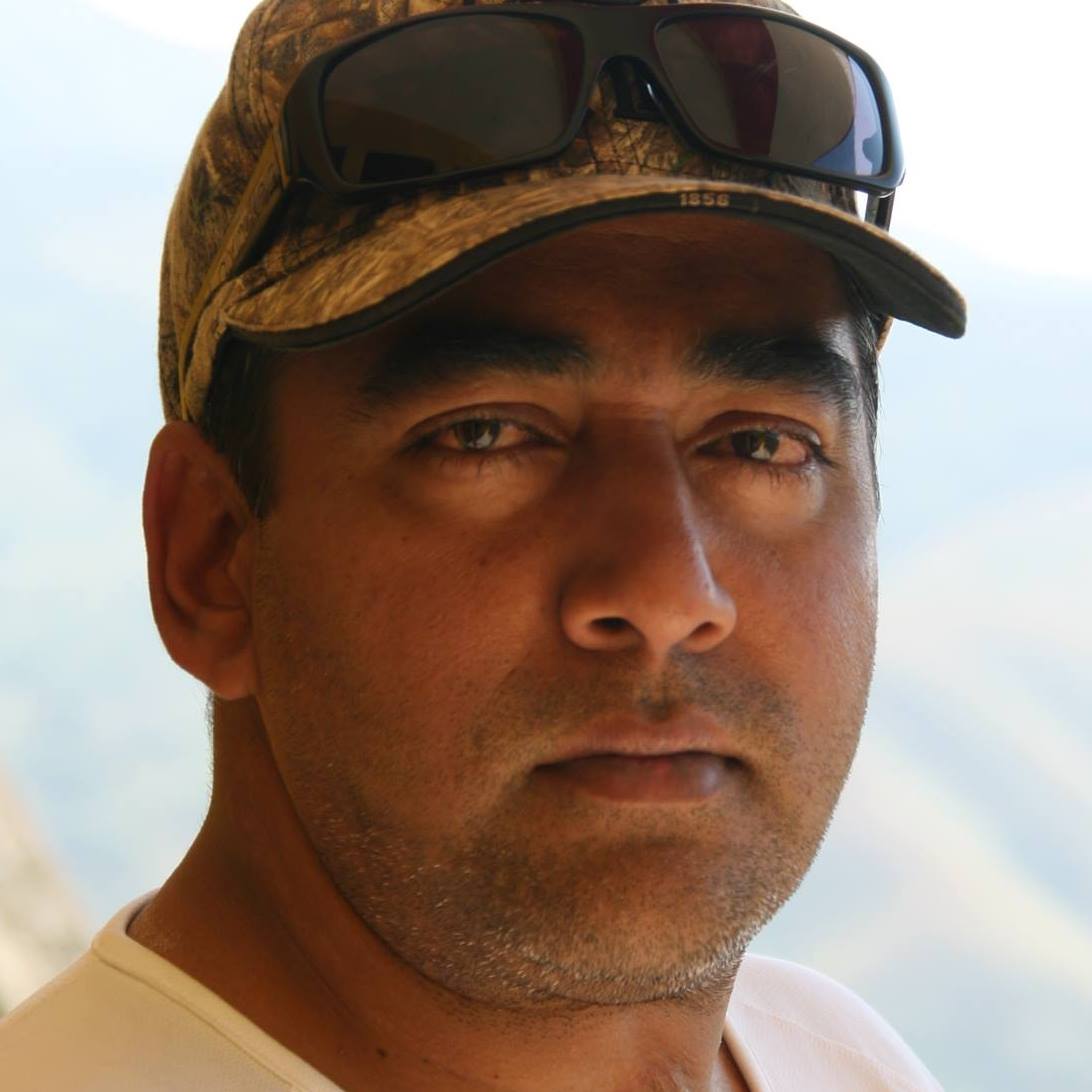
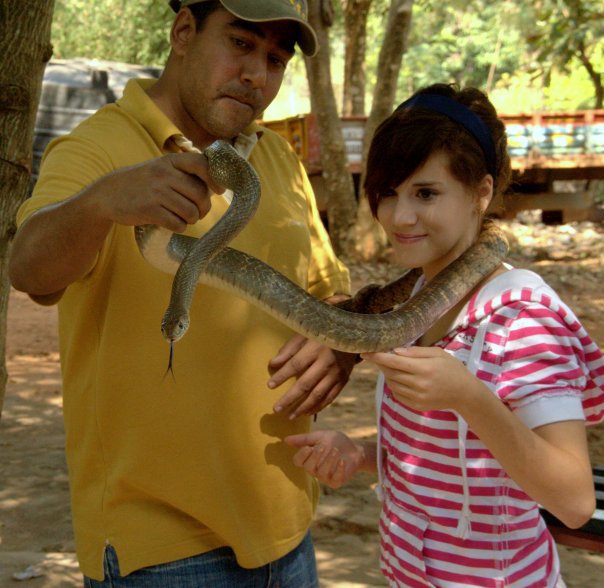
After catching thousands of snakes (venomous and non-venomous), featuring in several shows on Animal Planet, Discovery and National Geographic, shooting one-hour documentaries on snakes for the same channels and having acquired the status of a celebrity snake-catcher over 20 long years, what reason could Mohammed Anees have to be slightly bitter about it all? In his words, ‘the lack of respect people have for the profession’.
His passion for snakes began as a child, and he trained himself over the years through various books by respected herpetologists and experts and despite opposition from his family, he made long trips on his bike in the early days to follow up on calls from bite victims and people who wanted snakes removed from their property.
But Anees is quite upset with the government’s approach towards snakes and snake- catchers.
“They are not supporting them at all.
All their pleas have fallen on deaf ears for so long now. Unlike other professions, here you have to put in money from your own pocket to survive. I can’t pin the blame on a single person, it is the system to blame which doesn’t respect snakes or snake-catchers,” says Anees.
“It’s a thankless job, but I have stuck to it for the sake of the many lives which are at risk from snakes, and of course for the snakes too,” he says. It never did and still doesn’t pay enough to clear his overheads, and he addresses that problem with his construction business and by manufacturing billiards tables.
His life is a heady mix of many things, of course snakes figure predominantly, despite him not being able to go out on calls often due to a niggling back problem.
He loves cats and has several Persian cats, besides his beloved Lost-2, the cat he is most attached to. His son Shoaib, is following his footsteps, as is evident from a picture of the spirited kid with large snakes hanging from his body.
Just like any other day in his life which is flooded by calls from people wanting his expert advice regarding snakes, Tuesday began with a call from Tumkur at 6 am, from a family who wanted him to help their daughter, who was suspected to have been bitten by a snake. He gave them real-time advice and asked them to send him pictures of the bitten area. This was followed by a slew of calls from JP Nagar, HSR Layout and a lot of other places.
He now has a team of four boys he has trained personally, who go out on regular calls. When it comes to training people and raising awareness about the reptiles, he has trained over 300 people till now, who are now practising snake catchers across the state. One more thing that he is proud of is the fact that none of his students have ever got bitten.
“By god’s grace till now I have never been bitten by snakes and I have never even killed one in my life.” says Anees.
“A snake-catcher who knows his profession will never need to kill one,” he signs off.
source: http://www.newindianexpress.com / The New Indian Express / Home> Bengaluru / by The New Indian Express – Online Archive / pixs edited from facebook.com / May 16th, 2012
Mohammed Anees was in the 3rd standard and on his way to Baldwin Boys high School, where he studied, when he laid eyes on the first one. It was run over by a truck and the hind part of its tail smashed on the tarmac.
But, little Mohammed, picked it up, put it in his school bag and took it to school. During class, somehow it managed to wriggle out. In no time the whole class was screaming, and Mohammed got beaten by his class teacher, his Principal, and later in the day by his parents and then his uncles, in that order.
It was Mohammed’s first encounter with the species.
The snake.
Since that fateful day, which he remembers with a sheepish grin, Mohammed has rescued caught and rehabilitated more than 2500 snakes, earning him the title ” The Snake Charmer of Bangalore”.
From Majestic to Shivajinagar, residents remember him fondly as the man who ‘charmed’ hundreds of poisonous snakes out of their compounds and houses.
Online Bangalore met up with this extraordinary human who snaked his way into our hearts. He talks fondly of his undying love for snakes, their habitats and our relationship with the most misunderstood of God’s creatures. As we seated ourselves on his balcony, and sipped tea, Mohammed unwraps a cloth covered glass tank, and displays to us two baby snakes, each about 15 centimeters long.
With one eye on these beautiful specimens, and the other on Mohammed, their guardian, we start the conversation.
What Snakes are these? These are baby Trinkets. And this is for the first time in India that they are being bred in captivity. I found their mother almost dead. I brought her home, and nurtured her. She laid 8 eggs. These are the two which hatched ( He tosses in a baby lizard into the tank as feed).
Contrary to what the reptile theoreticians assume, it took 85 days for them to hatch. They said 45 to 50 days. I have proved them wrong. Until you do it by yourself, you’ll never know for sure.
Have you bred any other snakes in captivity before? Yes. I have incubated, hatched and raised 17 cobras in captivity.
When and where was your earliest contact with snakes? On my uncles farm in Chickballapur. It was punishment transfer according to my folks, ‘coz I’d fared badly in my 10th standard exams. But for me, it was some of the greatest days of my life, as I would catch lots of snakes and then release them in the nearby forests. I guess I became an expert from those days on the farm.
How did you become popular as a snake catcher in Bangalore? After I moved to Bangalore after the farm days, I used to help catch snakes initially from the houses of my friends and relatives. Gradually the word spread and then people from all parts of the city started calling me.
Which parts of Bangalore are most infested with snakes? The whole of Bangalore actually. But, the most densely infested areas are Kamanahalli, Bashweshwar Nagar, HAL – Indiranagar, Rajarajeshwari Nagar and Giri Nagar areas.
Which were your biggest and memorable catches upto date? The biggest catch was 57 snakes from the compound of the Drug Testing Laboratory and 21 snakes from the compound of the residence of the Chief Judicial Magistrate, then Mr. Bhaskar Rao, both on the same road.
What is the reaction of the people after you catch the snakes. Relieved naturally. But, I’m surprised at the concern that the people of Bangalore have for snakes. In some cases, after they find out that the snake is not poisonous, they have requested me to release it there itself. Having a non poisonous snake in your yard is actually a prevention against poisonous ones and they also get rid of all the rodents.
Do you have anybody to assist you? Earlier, I was alone, but now I have about 16 persons who have been trained by me.
What is your ‘modus operandi’ so to speak? We are alerted of the presence of snakes by phone calls. We then reach the spot immediately and trace out the snake. The catch is made usually with bare hands, but we use the hook at times when we have to get them out of holes or crevasses. We then put them into specially made snake bags that are 4 feet long and then bring them to my house where they are then placed in snake boxes. After a gap of 7-8 days, we then take them to the Banerghatta forest where they are released in the presence of the Government Forest officer.
Where do these snakes normally tend to hide? Almost anywhere actually. I have caught them from ceiling fans, inside car bonnets, motorbikes, suitcases…..practically everywhere.
What are the varieties common to Bangalore? Cobras, which are poisonous and rat snakes which are non-poisonous. In all there are 19 varieties of snakes in Bangalore, (though the theoreticians wrongly state 21) including the big four poisonous snakes. In fact after all these years I can tell where the snake is from when I see it. The ones from Bashweshwar Nagar area have a dark tinge to their skin, while those from other areas bear different characteristics.
What are the Big Four? They are the four most poisonous snakes in the world, and Bangalore has all four of them. The Cobra, Krait, Russell’s Viper and the Saw-scaled Viper.
Why do snakes attack humans? Actually snakes never attack unless they are provoked or attacked. So if you see a snake, just keep still and look at it in the eye. Don’t ever make a move towards it. 65% of all snake bite cases are those that take place when the snake is attacked. 25% when they are stamped upon unknowingly in the dark. 5% when people roll over them in their sleep, especially in the villages where the snake snuggles up to keep warm. And only 5% to so called ‘freak’ causes. Remember,snakes never bite that which they cannot swallow and all they know is eating, mating and hiding!
How do you manage without any public support? I love snakes. Somehow I feel it my duty to protect these lovely creatures from unwanted killing. By the grace of God or by the strangest of coincidences, every time I rescue a snake after a call, I manage to get an order for making a Billiard table, which is my line of business. So, touch wood, so far I have not felt the pinch. But I sincerely wish someone would come forward with help. It is always welcome. But somehow it is not in me to go around asking for it.
Have you won any awards for your meritorious service? One Government official has been telling me for the last 3 years that they propose to give me the Rajyotsava Award for the service I’m doing for the public. Nothing has happened. Nothing will, even for the next 3 years. ( He laughs) The S.P.C.A. gave me an award last year for my service .I attend to snake calls for the S.P.C.A. also.
Do you have any future plans? Yes. I have a lot of plans. But without funding It’s helpless. I have compiled all my experiences with snakes into a book, which I feel can be read and understood by both 3rd standard school kids as well as medical professionals. I hope to publish it someday, if somebody is willing to fund it.
As we thank him and get up to go, one of his assistants arrive with a cobra, caught that morning from Kamanahalli. Mohammed is suddenly alert as he inspects the snake and instructs the man to put it in one of the snake boxes.
We wonder if the cobra is aware that in a week’s time, it will be free again, in its own habitat, thanks to a 29 year old, who became their protector and guardian since that fateful morning 21 years ago.
Interviewed by Monu D. Surendran
If you wish to donate to the cause of rescuing and rehabilitating snakes or for snake rescue:
Contact: Mohammed Anees / No.15 Coles Road,/ Opp. Bank of Baroda Frazer Town / Bangalore 560 005 / Ph: 5487424, Mobile: 98440 37424
source: http://www.onlinebangalore.com / Online Bangalore.com / Home / by Monu B Surendran